
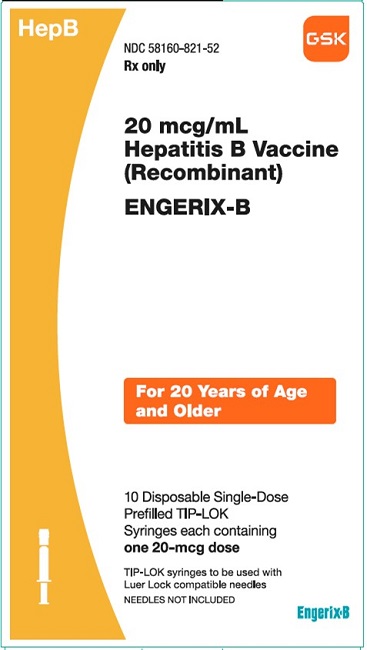
ENGERIX-B Hepatitis B Vaccine (Recombinant) 20 ug/mL Injection, Suspension, 10 vials
🆔 Identity & classification
Where does this data come from?
🏭 Manufacturer & labeler
Where does this data come from?
🩺 Clinical
Why get vaccinated? Hepatitis B (recombinant) vaccine may prevent infection of the liver by the hepatitis B virus. Infection with the hepatitis B virus can cause the following: inflammation of the liver that may go away within 6 months or a long-lasting infection that may cause liver disease and cancer of the liver. Hepatitis B recombinant) vaccine does not contain live virus. It works by triggering the body to produce antibodies to the virus to provide a defense against potential infection.
Read the full MedlinePlus article ↗- It's recommended for everyone, not just babies. Universal vaccination of all infants and children through age 18 is recommended, but adults who weren't vaccinated as kids should ge...
- Who actually needs the hepatitis B vaccine — isn't it just for babies?
- The standard series is three shots. You get the first one on a chosen date, the second one month later, and the third about six months after the first. Some people — like newborns...
- How many shots do I need, and how long does the series take?
Patient education
Supplement & herbal interactions
Where does this data come from?
Ask a licensed pharmacist directly — free, answered by our team.
💊 What it looks like
Where does this data come from?
🧪 Inactive Ingredients / Excipients
Inactive ingredients, also called excipients, are components of the drug product other than the active ingredient. They may include fillers, dyes, coatings, preservatives, flavors, or other formulation ingredients.
💡 Tap an ingredient (hover on desktop) to see what it is and why it’s used.
-
UNII 5QB0T2IUN0
Aluminum hydroxide is a white powder mineral compound used as an antacid ingredient in some formulations. It works as a buffer and pH regulator to help neutralize stomach acid in the medicine.
-
UNII 451W47IQ8X
Sodium chloride is common table salt. It's used in medicines as a buffer to maintain proper pH, as a filler to add bulk, or to adjust the osmotic balance in liquid formulations.
-
UNII 94255I6E2T
Sodium phosphate dibasic dihydrate is a salt that helps control the acidity level of a medicine. It acts as a buffer and pH regulator to keep the medication stable and effective.
-
UNII 5QWK665956
A salt derived from phosphoric acid and sodium, used primarily as a buffer to control the acidity or pH of a medication, helping keep it stable during storage and use.
4 inactive ingredients listed in the exact product block matched to this NDC.
Where does this data come from?
ingredient classCode="IACT" elements from the exact product block matched by this NDC. Label-section narrative from DailyMed / the openFDA label index is shown separately when available.Inactive ingredient FAQ
Are inactive ingredients the same for every manufacturer?
Why might an inactive ingredient be missing?
Can inactive ingredients matter?
💲 Pricing
A drug doesn't have one price. Each row is a different public payment system, and none is what you'd pay at the counter — that depends on your insurance. The ⓘ on each row explains what it measures.
| Price system | Per mL | Per package |
|---|---|---|
| Retail pharmacies payNADAC · weekly | Not in the retail survey — common for institutional, discontinued, or low-volume packs. | |
| Medicaid paysCMS SDUD · 12 mo | No recent Medicaid claims on file for this NDC — rare and low-volume NDCs are suppressed in the public data. | |
| Medicare drug plans payPart D · quarterly | No Part D plan price is available for this NDC in our data. | |
| Medicare Part B allowsASP · J3490 | No ASP payment limit on file for J3490 this quarter. | |
Where does this data come from?
🧾 Billing & reimbursement
Where does this data come from?
🔁 Therapeutic equivalents
| Product | Labeler | Pack | NADAC/unit | TE | Status | Price vs. this |
|---|---|---|---|---|---|---|
| Engerix-B 20 ug/mL 50090-1223-01 | A-S | 1 vial | — | — | FDA listed | — |
| Engerix-B 20 ug/mLthis 58160-0821-11 | GlaxoSmithKline | 10 vials | — | — | FDA listed | — |
Where does this data come from?
⏳ Availability & biosimilar status
Biologics have no small-molecule generics; biosimilar competition is tracked in the FDA Purple Book.
Where does this data come from?
📦 Packaging — all sizes for this product
| Package NDC | Description | Marketing start | Status |
|---|---|---|---|
| 58160-0821-11 You're viewing this | 10 VIAL in 1 CARTON (58160-821-11) / 1 mL in 1 VIAL (58160-821-01) | 2007-03-28 | Active |
| 58160-0821-34 | 1 SYRINGE in 1 CARTON (58160-821-34) / 1 mL in 1 SYRINGE (58160-821-05) | 2007-03-28 | Active |
| 58160-0821-52 | 10 SYRINGE in 1 CARTON (58160-821-52) / 1 mL in 1 SYRINGE (58160-821-43) | 2007-03-28 | Active |
Pack size FAQ
What quantity is in NDC 58160-0821-11?
What is the difference between NDC 58160-0821-11 and NDC 58160-0821-34?
What NDC number is used to bill for this package of ENGERIX-B Hepatitis B Vaccine (Recombinant) 20 ug/mL Injection, Suspension?
🧭 About this NDC listing & data coverage
What data is (and isn’t) available for this NDC — tap to expand
| NDC identity (package / product / labeler codes) | ✓ Available |
| Labeler | ✓ Available |
| Product & package description | ✓ Available |
| Marketing category & status | ✓ Available |
| Active ingredient / dosage form / route | ✓ Available |
| FDA label (SPL via DailyMed) | ✓ Available |
| Package photos | ✓ Available |
| Inactive ingredients (structured) | ✓ Available |
| NADAC pharmacy acquisition price (CMS) | — Not published for this NDC CMS publishes NADAC only for NDCs reported in its retail-pharmacy survey. |
| Orange Book / therapeutic-equivalence data | — Not published for this NDC Applies only to products approved under an NDA/ANDA; many listings are out of scope. |
| HCPCS J-code billing crosswalk | ✓ Available |
| Medicaid utilization (CMS SDUD) | — Not published for this NDC CMS reports utilization only for NDCs with Medicaid claims above its privacy threshold. |
Questions about this listing
Why is there no price listed?
Is the NDC printed on the package the same as the 11-digit billing NDC?
What do the three segments of this NDC mean?
Is this package still being marketed?
Does this product come in other package sizes?
Who lists this product with the FDA?
Does this product have a billing J-code?
Where does this data come from?
📄 Full FDA label FDA SPL
🎯 Indications and Usage ▾
INDICATIONS AND USAGE ENGERIX-B is indicated for immunization against infection caused by all known subtypes of hepatitis B virus. As hepatitis D (caused by the delta virus) does not occur in the absence of hepatitis B infection, it can be expected that hepatitis D will also be prevented by ENGERIX-B vaccination. ENGERIX-B will not prevent hepatitis caused by other agents, such as hepatitis A, C, and E viruses, or other pathogens known to infect the liver.
Immunization is recommended in persons of all ages, especially those who are, or will be, at increased risk of exposure to hepatitis B virus, 1 for example: Infants, Including Those Born of HBsAg-Positive Mothers (See DOSAGE AND ADMINISTRATION.) Adolescents (See CLINICAL PHARMACOLOGY.) Healthcare Personnel: Dentists and oral surgeons. Dental, medical, and nursing students. Physicians, surgeons, and podiatrists.
Nurses. Paramedical and ambulance personnel and custodial staff who may be exposed to the virus via blood or other patient specimens. Dental hygienists and dental nurses.
Laboratory and blood bank personnel handling blood, blood products, and other patient specimens. Hospital cleaning staff who handle waste. Selected Patients and Patient Contacts: Patients and staff in hemodialysis units and hematology/oncology units.
Patients requiring frequent and/or large volume blood transfusions or clotting factor concentrates (e.g., persons with hemophilia, thalassemia, sickle cell anemia, cirrhosis). Clients (residents) and staff of institutions for the mentally handicapped. Classroom contacts of deinstitutionalized mentally handicapped persons who have persistent hepatitis B surface antigenemia and who show aggressive behavior.
Household and other intimate contacts of persons with persistent hepatitis B surface antigenemia. Subpopulations With a Known High Incidence of the Disease, such as: Alaskan Eskimos. Pacific Islanders.
Indochinese immigrants. Haitian immigrants. Refugees from other HBV-endemic areas.
All infants of women born in areas where the infection is highly endemic. Individuals With Chronic Hepatitis C: Risk factors for hepatitis C are similar to those for hepatitis B. Consequently, immunization with hepatitis B vaccine is recommended for individuals with chronic hepatitis C.
Persons Who May Be Exposed to the Hepatitis B Virus by Travel to High-Risk Areas (See ACIP Guidelines, 1990.) Military Personnel Identified as Being at Increased Risk Morticians and Embalmers Persons at Increased Risk of the Disease Due to Their Sexual Practices, 1,16 such as: Persons with more than 1 sexual partner in a 6-month period. Persons who have contracted a sexually transmitted disease. Homosexually active males.
Female prostitutes. Prisoners Users of Illicit Injectable Drugs Others: Police and fire department personnel who render first aid or medical assistance, and any others who, through their work or personal life-style, may be exposed to the hepatitis B virus. Adoptees from countries of high HBV endemicity.
Use With Other Vaccines: The ACIP states that, in general, simultaneous administration of certain live and inactivated pediatric vaccines has not resulted in impaired antibody responses or increased rates of adverse reactions. 17 Separate sites and syringes should be used for simultaneous administration of injectable vaccines.
⏱️ Dosage and Administration ▾
DOSAGE AND ADMINISTRATION Injection: ENGERIX-B should be administered by intramuscular injection. Do not inject intravenously or intradermally. In adults, the injection should be given in the deltoid region but it may be preferable to inject in the anterolateral thigh in neonates and infants, who have smaller deltoid muscles.
ENGERIX-B should not be administered in the gluteal region; such injections may result in suboptimal response. The attending physician should determine final selection of the injection site and needle size, depending upon the patient's age and the size of the target muscle. A 1-inch, 23-gauge needle is sufficient to penetrate the anterolateral thigh in infants younger than 12 months of age.
A 5/8-inch, 25-gauge needle may be used to administer the vaccine in the deltoid region of toddlers and children up to, and including, 10 years of age. The 1-inch, 23-gauge needle is appropriate for use in older children and adults. 17 ENGERIX-B may be administered subcutaneously to persons at risk of hemorrhage (e.g., hemophiliacs).
However, hepatitis B vaccines administered subcutaneously are known to result in lower GMTs. Additionally, when other aluminum-adsorbed vaccines have been administered subcutaneously, an increased incidence of local reactions including subcutaneous nodules has been observed. Therefore, subcutaneous administration should be used only in persons who are at risk of hemorrhage with intramuscular injections.
Preparation for Administration: Shake well before withdrawal and use. Parenteral drug products should be inspected visually for particulate matter and discoloration prior to administration, whenever solution and container permit. If either of these conditions exists, the vaccine should not be administered.
With thorough agitation, ENGERIX-B is a slightly turbid white suspension. Do not administer if it appears otherwise. The vaccine should be used as supplied; no dilution is necessary.
The full recommended dose of the vaccine should be used. Any vaccine remaining in a single-dose vial should be discarded. Dosing Schedules: The usual immunization regimen (see Table 1) consists of 3 doses of vaccine given according to the following schedule: first dose: at elected date; second dose: 1 month later; third dose: 6 months after first dose.
Table 1. Recommended Dosage and Administration Schedules Group Dose Schedules Infants born of: HBsAg-negative mothers 10 mcg/0.5 mL 0, 1, 6 months HBsAg-positive mothers 10 mcg/0.5 mL 0, 1, 6 months Children: Birth through 10 years of age 10 mcg/0.5 mL 0, 1, 6 months Adolescents: 11 through 19 years of age 10 mcg/0.5 mL 0, 1, 6 months Adults (>19 years) 20 mcg/1.0 mL 0, 1, 6 months Adult hemodialysis 40 mcg/2.0 mL a 0, 1, 2, 6 months a Two × 20 mcg in 1 or 2 injections. For hemodialysis patients, in whom vaccine-induced protection is less complete and may persist only as long as antibody levels remain above 10 mIU/mL, the need for booster doses should be assessed by annual antibody testing.
40 mcg (2 × 20 mcg) booster doses with ENGERIX-B should be given when antibody levels decline below 10 mIU/mL. 1 Data show individuals given a booster with ENGERIX-B achieve high antibody titers. (See CLINICAL PHARMACOLOGY.) There are alternate dosing and administration schedules which may be used for specific populations (see Table 2 and accompanying explanations).
Table 2. Alternate Dosage and Administration Schedules Group Dose Schedules Infants born of: HBsAg-positive mothers 10 mcg/0.5 mL 0, 1, 2, 12 months a Children: Birth through 10 years of age 10 mcg/0.5 mL 0, 1, 2, 12 months a 5 through 10 years of age 10 mcg/0.5 mL 0, 12, 24 months b Adolescents: 11 through 16 years of age 10 mcg/0.5 mL 0, 12, 24 months b 11 through 19 years of age 20 mcg/1.0 mL 0, 1, 6 months 11 through 19 years of age 20 mcg/1.0 mL 0, 1, 2, 12 months a Adults (>19 years) 20 mcg/1.0 mL 0, 1, 2, 12 months a a This schedule is designed for certain populations (e.g., neonates born of hepatitis B–in…
⛔ Contraindications ▾
CONTRAINDICATIONS Hypersensitivity to any component of the vaccine, including yeast, is a contraindication (see DESCRIPTION). This vaccine is contraindicated in patients with previous hypersensitivity to any hepatitis B-containing vaccine.
⚠️ Warnings ▾
WARNINGS ENGERIX-B is available in vials and 2 types of prefilled syringes. One type of prefilled syringe has a tip cap which may contain natural rubber latex.The other type has a tip cap and a rubber plunger which contain dry natural latex rubber. Use of these syringes may cause allergic reactions in latex sensitive individuals.
The vial stopper does not contain latex. (See HOW SUPPLIED.) Apnea following intramuscular vaccination has been observed in some infants born prematurely. Decisions about when to administer an intramuscular vaccine, including ENGERIX-B, to infants born prematurely should be based on consideration of the individual infant’s medical status, and the potential benefits and possible risks of vaccination.
For ENGERIX-B, this assessment should include consideration of the mother’s hepatitis B antigen status and the high probability of maternal transmission of hepatitis B virus to infants born of mothers who are HBsAg positive if vaccination is delayed. Hepatitis B has a long incubation period. Hepatitis B vaccination may not prevent hepatitis B infection in individuals who had an unrecognized hepatitis B infection at the time of vaccine administration.
Additionally, it may not prevent infection in individuals who do not achieve protective antibody titers.
🤒 Adverse Reactions ▾
ADVERSE REACTIONS ENGERIX-B is generally well tolerated. As with any vaccine, however, it is possible that expanded commercial use of the vaccine could reveal rare adverse reactions. Ten double-blind studies involving 2,252 subjects showed no significant difference in the frequency or severity of adverse experiences between ENGERIX-B and plasma - derived vaccines.
In 36 clinical studies, a total of 13,495 doses of ENGERIX-B were administered to 5,071 healthy adults and children who were initially seronegative for hepatitis B markers, and healthy neonates. All subjects were monitored for 4 days post-administration. Frequency of adverse experiences tended to decrease with successive doses of ENGERIX-B.
Using a symptom checklist, † the most frequently reported adverse reactions were injection site soreness (22%) and fatigue † (14%). Other reactions are listed below. Incidence 1% to 10% of Injections: Nervous System Disorders: Dizziness † , headache. † General Disorders and Administration Site Conditions: Fever (>37.5°C), injection site erythema, injection site induration, injection site swelling. † Parent or guardian completed forms for children and neonates.
Neonatal checklist did not include headache, fatigue, or dizziness. Incidence <1% of Injections: Infections and Infestations: Upper respiratory tract illnesses. Blood and Lymphatic System Disorders: Lymphadenopathy.
Metabolism and Nutrition Disorders: Anorexia. Psychiatric Disorders: Agitation, insomnia. Nervous System Disorders: Somnolence, tingling.
Vascular Disorders: Flushing, hypotension. Gastrointestinal Disorders: Abdominal pain/cramps, constipation, diarrhea, nausea, vomiting. Skin and Subcutaneous Tissue Disorders: Erythema, petechiae, pruritus, rash, sweating, urticaria.
Musculoskeletal and Connective Tissue Disorders: Arthralgia, back pain, myalgia, pain/stiffness in arm, shoulder, or neck. General Disorders and Administration Site Conditions: Chills, influenza-like symptoms, injection site ecchymosis, injection site pain, injection site pruritus, irritability, malaise, weakness. Postmarketing Reports: Additional adverse experiences have been reported with the commercial use of ENGERIX-B.
Those listed below are to serve as alerting information to physicians. Infections and Infestations: Herpes zoster, meningitis. Blood and Lymphatic System Disorders: Thrombocytopenia.
Immune System Disorders: Allergic reaction, anaphylactoid reaction, anaphylaxis. An apparent hypersensitivity syndrome (serum sickness-like) of delayed onset has been reported days to weeks after vaccination, including: arthralgia/arthritis (usually transient), fever, and dermatologic reactions such as urticaria, erythema multiforme, ecchymoses, and erythema nodosum (see CONTRAINDICATIONS). Nervous System Disorders: Encephalitis, encephalopathy, migraine, multiple sclerosis, neuritis, neuropathy including hypoesthesia, paresthesia, Guillain-Barré syndrome and Bell’s palsy, optic neuritis, paralysis, paresis, seizures, syncope, transverse myelitis.
Eye Disorders: Conjunctivitis, keratitis, visual disturbances. Ear and Labyrinth Disorders: Earache, tinnitus, vertigo. Cardiac Disorders: Palpitations, tachycardia.
Vascular Disorders: Vasculitis. Respiratory, Thoracic and Mediastinal Disorders: Apnea, bronchospasm including asthma-like symptoms. Gastrointestinal Disorders: Dyspepsia.
Skin and Subcutaneous Tissue Disorders: Alopecia, angioedema, eczema, erythema multiforme including Stevens-Johnson syndrome, erythema nodosum, lichen planus, purpura. Musculoskeletal and Connective Tissue Disorders: Arthritis, muscular weakness. General Disorders and Administration Site Conditions: Injection site reaction.
Investigations: Abnormal liver function tests. Reporting Adverse Events: The National Childhood Vaccine Injury Act requires that the manufacturer and lot number of the vaccine administered be recorded by the healthcare provider in the vaccine recipient’s permanent medical record, along with the date of adm…
🤰 Pregnancy ▾
Pregnancy: Pregnancy Category C. Animal reproduction studies have not been conducted with ENGERIX-B. It is also not known whether ENGERIX-B can cause fetal harm when administered to a pregnant woman or can affect reproduction capacity. ENGERIX-B should be given to a pregnant woman only if clearly needed.
🧒 Pediatric Use ▾
Pediatric Use: ENGERIX-B has been shown to be well tolerated and highly immunogenic in infants and children of all ages. Newborns also respond well; maternally transferred antibodies do not interfere with the active immune response to the vaccine. (See CLINICAL PHARMACOLOGY for seroconversion rates and titers in neonates and children.
See DOSAGE AND ADMINISTRATION for recommended pediatric dosage and for recommended dosage for infants born of HBsAg - positive mothers.)
🧓 Geriatric Use ▾
Geriatric Use: Clinical studies of ENGERIX-B did not include sufficient numbers of subjects 65 years of age and older to determine whether they respond differently from younger subjects. Other reports from the clinical literature indicate that hepatitis B vaccines are less immunogenic in adults 65 years of age and older than in younger individuals. Other reported clinical experience has not identified differences in overall safety between these subjects and younger adult subjects.
🧬 Clinical Pharmacology ▾
CLINICAL PHARMACOLOGY Several hepatitis viruses are known to cause a systemic infection resulting in major pathologic changes in the liver (e.g., A, B, C, D, E, and G). The estimated lifetime risk of HBV infection in the United States varies from almost 100% for the highest-risk groups to less than 20% for the population as a whole. 1 Hepatitis B infection can have serious consequences including acute massive hepatic necrosis, chronic active hepatitis, and cirrhosis of the liver.
Up to 90% of neonates and 6% to 10% of adults who are infected in the United States will become hepatitis B virus carriers. 1 It has been estimated that 200 to 300 million people in the world today are persistently infected with hepatitis B virus. 1 The Centers for Disease Control and Prevention (CDC) estimates that there are approximately 1 to 1.25 million chronic carriers of hepatitis B virus in the United States.
1 Those patients who become chronic carriers can infect others and are at increased risk of developing primary hepatocellular carcinoma. Among other factors, infection with hepatitis B may be the single most important factor for development of this carcinoma. 1,2 Reduced Risk of Hepatocellular Carcinoma: According to the CDC, the hepatitis B vaccine is recognized as the first anti-cancer vaccine because it can prevent primary liver cancer.
3 A clear link has been demonstrated between chronic hepatitis B infection and the occurrence of hepatocellular carcinoma. In a Taiwanese study, the institution of universal childhood immunization against hepatitis B virus has been shown to decrease the incidence of hepatocellular carcinoma among children. 4 In a Korean study in adult males, vaccination against hepatitis B virus has been shown to decrease the incidence of, and risk of, developing hepatocellular carcinoma in adults.
5 Considering the serious consequences of infection, immunization should be considered for all persons at potential risk of exposure to the hepatitis B virus. Mothers infected with hepatitis B virus can infect their infants at, or shortly after, birth if they are carriers of the hepatitis B surface antigen (HBsAg) or develop an active infection during the third trimester of pregnancy. Infected infants usually become chronic carriers.
Therefore, screening of pregnant women for hepatitis B is recommended. 1 Because a vaccination strategy limited to high-risk individuals has failed to substantially lower the overall incidence of hepatitis B infection, the Advisory Committee on Immunization Practices (ACIP) recommends vaccination of all persons from birth to age 18. 6 The Committee on Infectious Diseases of the American Academy of Pediatrics (AAP) has also endorsed universal infant immunization as part of a comprehensive strategy for the control of hepatitis B infection.
7 The AAP, American Academy of Family Physicians (AAFP), and American Medical Association (AMA) also recommend routine vaccination of adolescents 11 to 12 years of age who have not been vaccinated previously. 8 The AAP further recommends that providers administer hepatitis B vaccine to all previously unvaccinated adolescents. 9 (See INDICATIONS AND USAGE.) There is no specific treatment for acute hepatitis B infection.
However, those who develop anti-HBs antibodies after active infection are usually protected against subsequent infection. Antibody titers ≥10 mIU/mL against HBsAg are recognized as conferring protection against hepatitis B. 1 Seroconversion is defined as antibody titers ≥1 mIU/mL.
Protective Efficacy: Protective efficacy with ENGERIX-B has been demonstrated in a clinical trial in neonates at high risk of hepatitis B infection. 10,11 Fifty-eight neonates born of mothers who were both HBsAg and HBeAg positive were given ENGERIX-B (10 mcg at 0, 1, and 2 months) without concomitant hepatitis B immune globulin. Two infants became chronic carriers in the 12-month follow-up period after initial inoculation.
Assuming an expected carrier rate of 70%, the pro…
📦 How Supplied / Storage and Handling ▾
HOW SUPPLIED ENGERIX-B is available in single-dose vials (contain no latex) and prefilled disposable TIP-LOK ® syringes (may contain latex) (packaged without needles) (Preservative Free Formulation): 10 mcg/0.5 mL Pediatric/Adolescent Dose NDC 58160-820-01 Vial (contains no latex) in Package of 10: NDC 58160-820-11 NDC 58160-820-43 Syringe (tip cap may contain latex) in Package of 10: NDC 58160-820-52 NDC 58160-820-32 Syringe (tip cap and plunger contain latex) in Package of 5: NDC 58160-820-46 NDC 58160-820-32 Syringe (tip cap and plunger contain latex) in Package of 10: NDC 58160-820-51 20 mcg/mL Adult Dose NDC 58160-821-01 Vial (contains no latex) in Package of 10: NDC 58160-821-11 NDC 58160-821-43 Syringe (tip cap may contain latex) in Package of 5: NDC 58160-821-48 NDC 58160-821-32 Syringe (tip cap and plunger contain latex) in Package of 1: NDC 58160-821-32 NDC 58160-821-31 Syringe (tip cap and plunger contain latex) in Package of 5: NDC 58160-821-46
📦 Storage and Handling ▾
STORAGE Store refrigerated between 2° and 8°C (36° and 46°F). Do not freeze ; discard if product has been frozen. Do not dilute to administer.
📋 Description ▾
DESCRIPTION ENGERIX-B [Hepatitis B Vaccine (Recombinant)] is a noninfectious recombinant DNA hepatitis B vaccine developed and manufactured by GlaxoSmithKline Biologicals. It contains purified surface antigen of the virus obtained by culturing genetically engineered Saccharomyces cerevisiae cells, which carry the surface antigen gene of the hepatitis B virus. The surface antigen expressed in Saccharomyces cerevisiae cells is purified by several physicochemical steps and formulated as a suspension of the antigen adsorbed on aluminum hydroxide.
The procedures used to manufacture ENGERIX-B result in a product that contains no more than 5% yeast protein. No substances of human origin are used in its manufacture. ENGERIX-B is supplied as a sterile suspension for intramuscular administration.
The vaccine is ready for use without reconstitution; it must be shaken before administration since a fine white deposit with a clear colorless supernatant may form on storage. ENGERIX-B is formulated without preservatives. ENGERIX-B is available in vials and 2 types of prefilled syringes.
One type of prefilled syringe has a tip cap which may contain natural rubber latex. The other type has a tip cap and a rubber plunger which contain dry natural latex rubber. The vial stopper does not contain latex.
(See HOW SUPPLIED.) Pediatric/Adolescent: Each 0.5-mL dose contains 10 mcg of hepatitis B surface antigen adsorbed on 0.25 mg aluminum as aluminum hydroxide. The pediatric formulation contains sodium chloride (9 mg/mL) and phosphate buffers (disodium phosphate dihydrate, 0.98 mg/mL; sodium dihydrogen phosphate dihydrate, 0.71 mg/mL). Adult: Each 1-mL adult dose contains 20 mcg of hepatitis B surface antigen adsorbed on 0.5 mg aluminum as aluminum hydroxide.
The adult formulation contains sodium chloride (9 mg/mL) and phosphate buffers (disodium phosphate dihydrate, 0.98 mg/mL; sodium dihydrogen phosphate dihydrate, 0.71 mg/mL).
💬 Information for Patients ▾
Information for the Patient: Patients, parents, or guardians should be informed of the potential benefits and risks of the vaccine, and of the importance of completing the immunization series. As with any vaccine, it is important when a subject returns for the next dose in a series that he or she be questioned concerning occurrence of any symptoms and/or signs of an adverse reaction after a previous dose of the same vaccine. Patients, parents, or guardians should be told to report severe or unusual adverse reactions to their healthcare provider.
The parent or guardian should be given the Vaccine Information Materials, which are required by the National Childhood Vaccine Injury Act of 1986 to be given prior to immunization.