
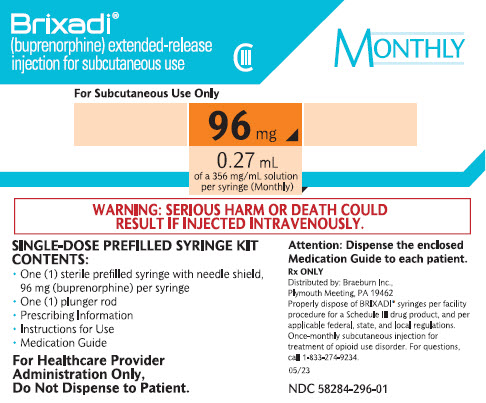
BRIXADI BUPRENORPHINE 96 mg/.27mL Injection, 1 syringe — NDC 58284-296-01 (Billing 58284-0296-01)
This is a package of 1 syringe of BRIXADI BUPRENORPHINE 96 mg/.27mL Injection from Braeburn Inc., marketed since Jun 2023 and currently FDA-listed. It is this product's only package size.
NDC database record
One package, one record: these facts belong to NDC 58284-296-01 alone.
- Record
- FDA NDC Directory package listing · Human prescription drug
- Code segments
- 58284 labeler · 296 product · 01 package
- Package marketed since
- Jun 6, 2023
- Sample package
- No — commercial package
- Listing certified through
- Dec 31, 2027
- Barcode (UPC-A, from the NDC)
- 3 5828429601 6
- Medicaid fills, this package
- 37,406 prescriptions in the last four reported quarters
- FDA record last changed
- Jul 24, 2026
Other active recalls for Buprenorphine (different manufacturers) — 1 · tap to view
Identity & classification
Regulatory identifiers FDA, NLM and CMS codes for this package
Drug-database identifiers Medi-Span GPI and First Databank GCN / HICL / AHFS classification
- GSN (GCN sequence number): 080371
- GCN: 47178
- GPI-14 (Medi-Span): 6520001000E518
- HICL (First Databank): 023438
- AHFS class code: 28:08.12.00
- RxCUI (RxNorm): 2639021
Where does this data come from?
- FDA openFDA NDC Directory · synced Oct 8, 2026
- FDA label on DailyMed · label index refreshed Oct 8, 2026
- RxNorm (NLM RxNav) · catalog refreshed Oct 1, 2026
- Medi-Span GPI (licensed)
- First Databank (licensed) · refreshed Oct 8, 2026
RxNorm drug class
This medicine belongs to the Partial Opioid Agonist class.
Where does this data come from?
- RxClass (NLM) · catalog refreshed Oct 1, 2026
Clinical
Buprenorphine injection is used to treat certain people who are addicted to opioid (narcotic) drugs. Buprenorphine injection is in a class of medications called opiate partial agonists. It works to prevent withdrawal symptoms when someone stops taking opioid drugs.
Read the full MedlinePlus article ↗- It depends on the product. Sublingual tablets, Sublocade and Brixadi treat opioid dependence. Belbuca, Butrans, patches and the injection treat severe pain that needs an opioid.
- Follow your label exactly. Sublingual tablets dissolve under the tongue once daily and must not be chewed or swallowed. Patches stay on for 7 days, and injections are given by a pr...
- Nausea, headache, dizziness, constipation, sleepiness and dry mouth are common. With patches, you may get itching or redness at the site. Call for help if breathing slows or you ca...
- No, not without your prescriber's guidance. Alcohol, benzodiazepines and other sedatives can cause dangerous sedation, slowed breathing, coma and death.
Patient education
Supplement & herbal interactions
Some supplements/herbs that may interact with Buprenorphine — tap one for details:
Where does this data come from?
- MedlinePlus (NLM) · refreshed Oct 8, 2026
- FDA label on DailyMed · label index refreshed Oct 8, 2026
Ask a licensed pharmacist directly — free, answered by our team.
Pricing
A drug doesn't have one price. Each row is a different public payment system, and none is what you'd pay at the counter — that depends on your insurance. The ⓘ on each row explains what it measures.
| Price system | Per each | Per package |
|---|---|---|
| Retail pharmacies payNADAC · weekly | Not in the retail survey — common for institutional, discontinued, or low-volume packs. | |
| Medicaid paysCMS SDUD · 12 mo | $5,732.79 | $5,732.79 / 1 syringe |
| Medicare drug plans payPart D · quarterly | No Part D plan price is available for this NDC in our data. | |
| Medicare Part B allowsASP · J0578 | $1,722.305 / J0578 unit | — |
Where does this data come from?
- CMS NADAC weekly file
- CMS ASP pricing files · refreshed Sep 20, 2026
- CMS Medicaid State Drug Utilization Data · through Q1 2026
- CMS Part D plan pricing files · refreshed Sep 24, 2026
- VA National Acquisition Center price file
Billing & reimbursement
Where does this data come from?
- CMS ASP NDC-HCPCS crosswalk · refreshed Sep 22, 2026
- DMEPDAC NDC-HCPCS crosswalk
- openFDA NSDE billing units · refreshed Oct 7, 2026
Packaging — all sizes for this product
| Package NDC | Description | Marketing start | Marketing end | Status |
|---|---|---|---|---|
| 58284-0296-01 You're viewing this Main listing | 1 SYRINGE, GLASS in 1 CARTON / .27 mL in 1 SYRINGE, GLASS | 2023-06-06 | — | Active |
Therapeutic equivalents
| Product | Labeler | Pack | NADAC/unit | TE | Status | Price vs. this |
|---|---|---|---|---|---|---|
| Brixadi 96 mg/.27mLthis 58284-0296-01 | Braeburn | 1 syringe | — | — | FDA listed | — |
Where does this data come from?
- FDA openFDA NDC Directory · synced Oct 8, 2026
- FDA Orange Book · refreshed Oct 3, 2026
- CMS NADAC weekly file
Availability & generic status
We did not find an FDA-approved generic match for this exact strength, form and route. Patent/protection dates below may affect future generic timing.
Why the date isn’t exact: Generic timing can change because patents may be challenged, settled, licensed, added, removed, or worked around with a narrower label — and FDA approval does not always mean a pharmacy can get the generic today.
🛈 What do these terms mean?
- Patent
- Legal protection listed in the Orange Book that may delay generic approval or launch. Issued by the U.S. Patent & Trademark Office.
- Substance patent
- Covers the active drug molecule itself — the hardest to design around. A generic generally can’t launch until it expires.
- Formulation (product) patent
- Covers a specific formulation or dosage form. A generic can sometimes work around it with a different formulation.
- Method-of-use patent
- A patent covering one specific approved use of the drug — not necessarily the whole molecule. A generic can sometimes launch with a “skinny label” that carves out the protected use and keeps the others.
- Skinny label
- A generic label that omits a still-patented use when the FDA allows it — letting a generic reach the market for the unprotected uses.
- Exclusivity
- FDA-granted marketing protection, separate from patents — e.g. 5-yr new chemical entity, 7-yr orphan drug, or a +6-month pediatric extension.
- Paragraph IV
- A generic applicant’s formal challenge to a listed patent. It can potentially lead to earlier generic entry, but often involves litigation or a settlement.
- RLD / RS
- Reference Listed Drug — the brand product the FDA uses as the reference for generic applications. Reference Standard — the product the FDA expects generics to compare against in bioequivalence testing.
- TE / AB rating
- FDA therapeutic-equivalence rating. An AB rating generally means the FDA considers a generic therapeutically equivalent to — and substitutable for — the brand.
- LOE (loss of exclusivity)
- The latest patent or exclusivity currently listed — the loss-of-exclusivity / latest-listed-protection date shown on this page. Paragraph-IV challenges and settlements can move the real date earlier; FDA approval and a manufacturer’s decision to market can move it later.
Built from the FDA Orange Book. The bars above are scaled to each protection’s expiry; the red LOE marker is the last one to lapse.
| Patent | Type | Use code | Expires |
|---|---|---|---|
| US 12318379 ↗ | Method of use | U-4100 | Jul 26, 2032 |
| US 12318379 ↗ | Method of use | U-4100 | Jul 26, 2032 |
| US 12318379 ↗ | Method of use | U-4100 | Jul 26, 2032 |
| US 12318379 ↗ | Method of use | U-4100 | Jul 26, 2032 |
| US 12318379 ↗ | Method of use | U-4100 | Jul 26, 2032 |
| US 12318379 ↗ | Method of use | U-4100 | Jul 26, 2032 |
| US 12318379 ↗ | Method of use | U-4100 | Jul 26, 2032 |
| US 12161640 ↗ | Method of use | U-4100 | Jul 26, 2032 |
| US 12161640 ↗ | Method of use | U-4100 | Jul 26, 2032 |
| US 12161640 ↗ | Method of use | U-4100 | Jul 26, 2032 |
| US 12161640 ↗ | Method of use | U-4100 | Jul 26, 2032 |
| US 12161640 ↗ | Method of use | U-4100 | Jul 26, 2032 |
| US 12161640 ↗ | Method of use | U-4100 | Jul 26, 2032 |
| US 12161640 ↗ | Method of use | U-4100 | Jul 26, 2032 |
| US 11110084 ↗ | Method of use | U-3616 | Jul 26, 2032 |
| US 11110084 ↗ | Method of use | U-3616 | Jul 26, 2032 |
| US 11110084 ↗ | Method of use | U-3616 | Jul 26, 2032 |
| US 11110084 ↗ | Method of use | U-3616 | Jul 26, 2032 |
| US 11110084 ↗ | Method of use | U-3616 | Jul 26, 2032 |
| US 11110084 ↗ | Method of use | U-3616 | Jul 26, 2032 |
| US 11110084 ↗ | Method of use | U-3616 | Jul 26, 2032 |
| US 10912772 ↗ | Method of use | U-3617 | Jul 26, 2032 |
| US 10912772 ↗ | Method of use | U-3617 | Jul 26, 2032 |
| US 10912772 ↗ | Method of use | U-3617 | Jul 26, 2032 |
| US 10912772 ↗ | Method of use | U-3617 | Jul 26, 2032 |
| US 10912772 ↗ | Method of use | U-3617 | Jul 26, 2032 |
| US 10912772 ↗ | Method of use | U-3617 | Jul 26, 2032 |
| US 10912772 ↗ | Method of use | U-3617 | Jul 26, 2032 |
| US 9937164 ↗ | Method of use | U-3618 | Jul 26, 2032 |
| US 9937164 ↗ | Method of use | U-3618 | Jul 26, 2032 |
| US 9937164 ↗ | Method of use | U-3618 | Jul 26, 2032 |
| US 9937164 ↗ | Method of use | U-3618 | Jul 26, 2032 |
| US 9937164 ↗ | Method of use | U-3618 | Jul 26, 2032 |
| US 9937164 ↗ | Method of use | U-3618 | Jul 26, 2032 |
| US 9937164 ↗ | Method of use | U-3618 | Jul 26, 2032 |
| US 8236755 ↗ | Method of use | U-3620 | Jul 31, 2026 |
| US 8236755 ↗ | Method of use | U-3620 | Jul 31, 2026 |
| US 8236755 ↗ | Method of use | U-3620 | Jul 31, 2026 |
| US 8236755 ↗ | Method of use | U-3620 | Jul 31, 2026 |
| US 8236755 ↗ | Method of use | U-3620 | Jul 31, 2026 |
| US 8236755 ↗ | Method of use | U-3620 | Jul 31, 2026 |
| US 8236755 ↗ | Method of use | U-3620 | Jul 31, 2026 |
| US 8236292 ↗ | Method of use | U-3619 | Jan 10, 2027 |
| US 8236292 ↗ | Method of use | U-3619 | Jan 10, 2027 |
| US 8236292 ↗ | Method of use | U-3619 | Jan 10, 2027 |
| US 8236292 ↗ | Method of use | U-3619 | Jan 10, 2027 |
| US 8236292 ↗ | Method of use | U-3619 | Jan 10, 2027 |
| US 8236292 ↗ | Method of use | U-3619 | Jan 10, 2027 |
| US 8236292 ↗ | Method of use | U-3619 | Jan 10, 2027 |
| US 11135215 ↗ | Drug product | — | Jul 26, 2032 |
| US 11135215 ↗ | Drug product | — | Jul 26, 2032 |
| US 11135215 ↗ | Drug product | — | Jul 26, 2032 |
| US 11135215 ↗ | Drug product | — | Jul 26, 2032 |
| US 11135215 ↗ | Drug product | — | Jul 26, 2032 |
| US 11135215 ↗ | Drug product | — | Jul 26, 2032 |
| US 11135215 ↗ | Drug product | — | Jul 26, 2032 |
| Code | What it grants | Expires |
|---|---|---|
| NP | New Product | May 23, 2026 |
| NP | New Product | May 23, 2026 |
| NP | New Product | May 23, 2026 |
| NP | New Product | May 23, 2026 |
| NP | New Product | May 23, 2026 |
| NP | New Product | May 23, 2026 |
| NP | New Product | May 23, 2026 |
Is there a generic version of BRIXADI MONTH 96 MG/0.27ML SYR?
The FDA approved a generic — why can’t I get it at my pharmacy yet?
Why do different websites show different generic release dates?
What does “FDA listed” mean?
What does a patent or protection date mean here?
What does “current Orange Book estimate” mean?
Can a generic come out before the last patent expires?
Can a generic come out after the listed dates?
What is the difference between patents and exclusivity?
Why are there multiple patent dates?
Where does this data come from?
- FDA Orange Book · refreshed Oct 3, 2026
Inactive Ingredients / Excipients
Inactive ingredients, also called excipients, are components of the drug product other than the active ingredient. They may include fillers, dyes, coatings, preservatives, flavors, or other formulation ingredients.
🧪 Avoiding an ingredient? See Buprenorphine inactive ingredients by manufacturer: every current product's list side by side, so you can ask your pharmacy for the version that does not list it.
💡 Tap an ingredient (hover on desktop) to see what it is and why it’s used.
-
UNII Z3MP1W91CW
A fatty substance derived from glycerin and oleic acid. It acts as an emulsifier to help blend oil and water-based ingredients, and may serve as a lubricant or thickening agent in the formulation.
-
UNII 1DI56QDM62
A natural fatty substance from soybeans that helps mix oil and water-based ingredients together. It acts as an emulsifier and lubricant in medicines to improve texture and help the product break down properly in your body.
-
UNII JR9CE63FPM
Methyl pyrrolidone is a synthetic liquid solvent used in pharmaceutical formulations. It helps dissolve and deliver active ingredients in topical products and some oral medicines.
3 inactive ingredients listed in the exact product block matched to this NDC.
Where does this data come from?
ingredient classCode="IACT" elements from the exact product block matched by this NDC. Label-section narrative from DailyMed / the openFDA label index is shown separately when available.- FDA label on DailyMed · label index refreshed Oct 8, 2026
- FDA openFDA NDC Directory · synced Oct 8, 2026
Inactive ingredient FAQ
Are inactive ingredients the same for every manufacturer?
Why might an inactive ingredient be missing?
Can inactive ingredients matter?
Manufacturer & labeler
More NDCs from Braeburn Inc. labeler code 58284
- BRIXADI BUPRENORPHINE 8 mg/.16mL Injection NDC 58284-208-01
- BRIXADI BUPRENORPHINE 16 mg/.32mL Injection NDC 58284-216-01
- BRIXADI BUPRENORPHINE 24 mg/.48mL Injection NDC 58284-224-01
- BRIXADI BUPRENORPHINE 128 mg/.36mL Injection NDC 58284-228-01
- BRIXADI BUPRENORPHINE 32 mg/.64mL Injection NDC 58284-232-01
- BRIXADI BUPRENORPHINE 64 mg/.18mL Injection NDC 58284-264-01
Where does this data come from?
- FDA openFDA NDC Directory · synced Oct 8, 2026
- Drugs@FDA
Full prescribing information FDA SPL
🚨 Boxed Warning ▾
WARNING: RISK OF SERIOUS HARM OR DEATH WITH INTRAVENOUS ADMINISTRATION; BRIXADI RISK EVALUATION AND MITIGATION STRATEGY Serious harm or death could result if administered intravenously. BRIXADI forms a liquid crystalline gel upon contact with body fluids and may cause occlusion, local tissue damage, and thrombo‐embolic events, including life-threatening pulmonary emboli, if administered intravenously. (5.1) Because of the risk of serious harm or death that could result from intravenous self‐administration, BRIXADI is only available through a restricted program called the BRIXADI REMS.
Healthcare settings and pharmacies that order and dispense BRIXADI must be certified in this program and comply with the REMS requirements. (5.2) WARNING: RISK OF SERIOUS HARM OR DEATH WITH INTRAVENOUS ADMINISTRATION; BRIXADI RISK EVALUATION AND MITIGATION STRATEGY See full prescribing information for complete boxed warning. Serious harm or death could result if administered intravenously.
( 5.1 ) BRIXADI is only available through a restricted program called the BRIXADI REMS. Healthcare settings and pharmacies that order and dispense BRIXADI must be certified in this program and comply with the REMS requirements. ( 5.2 )
🎯 Indications and Usage ▾
1 INDICATIONS AND USAGE BRIXADI is indicated for the treatment of moderate to severe opioid use disorder in patients who have initiated treatment with a single dose of a transmucosal buprenorphine product or who are already being treated with buprenorphine. BRIXADI should be used as part of a complete treatment plan that includes counseling and psychosocial support. BRIXADI contains buprenorphine, a partial opioid agonist.
BRIXADI is indicated for the treatment of moderate to severe opioid use disorder in patients who have initiated treatment with a single dose of a transmucosal buprenorphine product or who are already being treated with buprenorphine. ( 1 ) BRIXADI should be used as part of a complete treatment plan that includes counseling and psychosocial support. ( 1 )
⏱️ Dosage and Administration ▾
2 DOSAGE AND ADMINISTRATION Only healthcare providers should prepare and administer BRIXADI. ( 2.1 ) BRIXADI (weekly) and BRIXADI (monthly) are different formulations. Doses of BRIXADI (weekly) cannot be combined to yield an equivalent BRIXADI (monthly) dose.
( 2.1 ) BRIXADI should be injected slowly, into the subcutaneous tissue of the buttock, thigh, abdomen, or upper arm ( 2.1 ) Strongly consider recommending or prescribing an opioid overdose reversal agent (e.g., naloxone, nalmefene) at the time BRIXADI is initiated or renewed because patients being treated for opioid use disorder have the potential for relapse, putting them at risk for opioid overdose. ( 2.2 ) Injection sites for BRIXADI (weekly) should be alternated/rotated for each injection. ( 2.7 ) See Full Prescribing Information for administration instructions.
( 2.7 )
2.1Important Dosage and Administration Instructions FOR SUBCUTANEOUS INJECTION ONLY. DO NOT ADMINISTER BRIXADI INTRAVENOUSLY, INTRAMUSCULARLY, OR INTRADERMALLY [see Warnings and Precautions (5.1) , Instructions for Use (2.6) ]. BRIXADI exists in two formulations.
Doses of BRIXADI (weekly) cannot be combined to yield a monthly dose. Only healthcare providers should prepare and administer BRIXADI. Administer BRIXADI as a single injection.
Do not divide. BRIXADI should be injected slowly, into the subcutaneous tissue of the buttock, thigh, abdomen, or upper arm. In patients who are not currently receiving buprenorphine treatment, for BRIXADI (weekly), the upper arm site should only be used after steady-state has been achieved (4 consecutive doses) [see Instructions for Use (2.6) ].
Injection in the arm site was associated with approximately 10% lower plasma levels than other sites. Injection sites should be alternated/rotated between injections for BRIXADI (weekly) [see Instructions for Use (2.6) ]. For all patients, the dose of BRIXADI must be individualized based on patient tolerability and/or efficacy.
BRIXADI (weekly) should be administered in 7-day intervals. BRIXADI (monthly) should be administered in 28-day intervals. For patients not currently receiving buprenorphine treatment, begin with a test dose of 4 mg transmucosal buprenorphine to establish that buprenorphine is tolerated without precipitated withdrawal, and then transition to BRIXADI (weekly).
Initiating treatment with BRIXADI as the first buprenorphine product has not been studied. Initiating treatment with BRIXADI (monthly) in new entrants to treatment has not been studied [see Dosage and Administration (2.3) ] . Patients who are currently being treated with other buprenorphine-containing products can start treatment with either BRIXADI (weekly) or BRIXADI (monthly) [see Dosage and Administration (2.3) ] .
Administer each injection using only the syringe and safety needle included with the product [see Instructions for Use (2.6) ] . Caution: The BRIXADI needle cap is synthetically derived from natural rubber latex which may cause allergic reactions in latex-sensitive individuals [see Warnings and Precautions (5.10) ] . To avoid missed doses, the weekly dose may be administered up to 2 days before or after the weekly time point, and the monthly dose may be administered up to 1 week before or after the monthly time point.
If a dose is missed, the next dose should be administered as soon as practically possible.
2.2Patient Access to an Opioid Overdose Reversal Agent for the Emergency Treatment of Opioid Overdose Inform patients and caregivers about opioid overdose reversal agents (e.g., naloxone, nalmefene) and discuss the importance of having access to an opioid overdose reversal agent. Because patients being treated for opioid use disorder have the potential for relapse, putting them at risk for opioid overdose, strongly consider prescribing or recommending an overdose reversal agent for the emergency treatment of opioid overdose, both when initiating and renewing treatment with BRIXADI.
Also consider prescribing or recommending such a… [Excerpted — this section continues on DailyMed.]
💊 Dosage Forms and Strengths ▾
3 DOSAGE FORMS AND STRENGTHS BRIXADI is a sterile, yellowish to yellow-clear liquid solution and is provided as two different formulations, one for weekly and one for monthly administration in pre-filled, single-dose, syringes, with 23 gauge ½ inch needles, available in the following dosage strengths. Table 3: BRIXADI (weekly) Strengths BRIXADI (weekly) 50 mg/mL buprenorphine Dosage Strength Dosage Volume 8 mg 0.16 mL 16 mg 0.32 mL 24 mg 0.48 mL 32 mg 0.64 mL Table 4: BRIXADI (monthly) Strengths BRIXADI (monthly) 356 mg/mL buprenorphine Dosage Strength Dosage Volume 64 mg 0.18 mL 96 mg 0.27 mL 128 mg 0.36 mL BRIXADI is a weekly and monthly injection provided in a pre-filled single-dose syringe with a 23 gauge ½ inch needle.
( 3 ) BRIXADI (weekly) is available in 8 mg/0.16 mL, 16 mg/0.32 mL, 24 mg/0.48 mL, and 32 mg/0.64 mL; BRIXADI (monthly) is available in 64 mg/0.18 mL, 96 mg/0.27 mL, and 128 mg/0.36 mL.
⛔ Contraindications ▾
4 CONTRAINDICATIONS BRIXADI is contraindicated in patients with hypersensitivity (e.g., anaphylactic shock) to buprenorphine, or any other ingredients in the solution for injection [see Warnings and Precautions (5.10) ]. Hypersensitivity to buprenorphine or any other ingredients in BRIXADI. ( 4 )
⚠️ Warnings and Cautions ▾
5 WARNINGS AND PRECAUTIONS Addiction, Abuse, and Misuse: Buprenorphine can be abused in a manner similar to other opioids. Monitor patients for conditions indicative of diversion or progression of opioid dependence and addictive behaviors. ( 5.3 ) Respiratory Depression: Life-threatening respiratory depression and death have occurred in association with buprenorphine.
Warn patients of the potential danger of self-administration of benzodiazepines or other CNS depressants while under treatment with BRIXADI. ( 5.4 , 5.5 ) Neonatal Opioid Withdrawal Syndrome: Neonatal opioid withdrawal syndrome (NOWS) is an expected and treatable outcome of prolonged use of opioids during pregnancy. ( 5.6 ) Adrenal Insufficiency: If diagnosed, treat with physiologic replacement of corticosteroids, and wean patient off of the opioid.
( 5.7 ) Risk of Opioid Withdrawal with Abrupt Discontinuation: If treatment with BRIXADI is discontinued, monitor patients for withdrawal and treat appropriately. ( 5.8 ) Risk of Hepatitis, Hepatic Events: Monitor liver function tests prior to and during treatment. ( 5.9 ) Latex Allergy: The packaging of this product contains natural rubber latex which may cause allergic reactions.
( 5.10 ) Risk of Withdrawal in Patients Dependent on Full Agonist Opioids: Administer a test dose of transmucosal buprenorphine and monitor for precipitated withdrawal before injecting BRIXADI. ( 5.11 ) Treatment of Emergent Acute Pain: Treat pain with a non-opioid analgesic whenever possible. If opioid therapy is required, monitor patients closely because higher doses may be required for analgesic effect.
( 5.12 )
5.1Risk of Serious Harm or Death with Intravenous Administration Intravenous injection presents significant risk of serious harm or death as BRIXADI forms a liquid crystalline gel upon contact with body fluids. Occlusion, local tissue damage, and thrombo-embolic events, including life-threatening pulmonary emboli, could result if administered intravenously [see Warnings and Precautions (5.2) , Drug Abuse and Dependence (9.2) ] . Do not administer intravenously, intramuscularly, or intradermally.
5.2BRIXADI Risk Evaluation and Mitigation Strategy (REMS) BRIXADI is available only through a restricted program called the BRIXADI REMS because of the risk of serious harm or death that could result from intravenous self-administration. The goal of the REMS is to mitigate serious harm or death that could result from intravenous self-administration by ensuring that healthcare settings and pharmacies are certified and only dispense BRIXADI directly to a healthcare provider for administration by a healthcare provider.
Notable requirements of the BRIXADI REMS include the following: Healthcare Settings and Pharmacies that order and dispense BRIXADI must be certified in the BRIXADI REMS. Certified Healthcare Settings and Pharmacies must establish processes and procedures to verify BRIXADI is provided directly to a healthcare provider for administration by a healthcare provider, and the drug is not dispensed to the patient. Certified Healthcare Settings and Pharmacies must not distribute, transfer, loan, or sell BRIXADI.
Further information is available at www.BRIXADIREMS.com or by calling 1-833-274-9234.
5.3Addiction, Abuse, and Misuse BRIXADI contains buprenorphine, a Schedule III controlled substance that can be abused in a manner similar to other opioids. Buprenorphine is sought by people with opioid use disorder and is subject to criminal diversion. Monitor all patients for progression of opioid use disorder and addictive behaviors [see Drug Abuse and Dependence (9.2) ] .
5.4Life-Threatening Respiratory and Central Nervous System (CNS) Depression Buprenorphine has been associated with life-threatening respiratory depression and death. Many, but not all, postmarketing reports regarding coma and death involved misuse by self-injection or were associated with the concomitant use of buprenorphine and benzodiazepines or other CNS depressant… [Excerpted — this section continues on DailyMed.]
🤒 Adverse Reactions ▾
6 ADVERSE REACTIONS The following adverse reactions are discussed in more detail in other sections of the labeling: Addiction, Abuse, and Misuse [see Warnings and Precautions (5.3) ] Respiratory and CNS Depression [see Warnings and Precautions (5.4) ] Neonatal Opioid Withdrawal Syndrome [see Warnings and Precautions (5.6) ] Adrenal Insufficiency [see Warnings and Precautions (5.7) ] Opioid Withdrawal [see Warnings and Precautions (5.8 , 5.11) ] Hepatitis, Hepatic Events [see Warnings and Precautions (5.9) ] Hypersensitivity Reactions [see Warnings and Precautions (5.10) ] Orthostatic Hypotension [see Warnings and Precautions (5.17) ] Elevation of Cerebrospinal Fluid Pressure [see Warnings and Precautions (5.18) ] Elevation of Intracholedochal Pressure [see Warnings and Precautions (5.19) ] Adverse reactions commonly associated with BRIXADI administration (in ≥5% of patients) were injection site pain, headache, constipation, nausea, injection site erythema, injection site pruritus, insomnia, and urinary tract infection.
( 6.1 ) To report SUSPECTED ADVERSE REACTIONS, contact Braeburn at 1-833-274-9234 or FDA at 1-800-FDA-1088 or www.fda.gov/medwatch .
6.1Clinical Trials Experience Because clinical trials are conducted under widely varying conditions, adverse reaction rates observed in the clinical trials of a drug cannot be directly compared to rates in the clinical trials of another drug and may not reflect the rates observed in practice. The safety of BRIXADI was evaluated in 440 opioid-dependent patients across two, Phase 3 clinical studies: one double-blind, active-control (n=213) and one open-label (n=227). In these studies, a total of 305 patients were exposed to BRIXADI for at least 24 weeks and 132 patients were exposed for at least 48 weeks.
In the first 12-week phase of the double-blind, double-dummy, active-controlled study, patients received BRIXADI (weekly) (16, 24, 32 mg) or matching placebo injections after a one-week titration. In the second 12-week phase of the study, patients remaining in the study received BRIXADI (monthly) (64, 96, 128, or 160 mg) or matching placebo injections. The 160 mg monthly dose is not an approved dose.
Those randomized to receiving placebo injections were the active control groups and received sublingual buprenorphine/naloxone tablets at corresponding doses to BRIXADI. Patients receiving active BRIXADI injections also received placebo sublingual tablets. Adverse reactions led to premature discontinuation in 10 (4.7%) patients in the group receiving BRIXADI compared to 5 (2.3%) patients in the sublingual buprenorphine/naloxone group, during the double-blind study.
Adverse reactions commonly reported after BRIXADI administration (≥5%, regardless of dose and regimen) in the double-blind study, were injection site pain (9.9%), headache (7.5%), constipation (7.5%), nausea (7.0%), injection site erythema (6.6%), injection site pruritus (6.1%), Insomnia (5.6%), and urinary tract infection (5.2%). Table 5 shows the adverse reactions for BRIXADI compared with the active-control group (SL BPN/NX) in the double-blind study. Table 5: Adverse Reactions in the Phase 3 Double-Blind Study: ≥ 2% of Patients Receiving BRIXADI (Excluding Injection Site Reactions).
System Organ Class (SOC) BRIXADI Total = This group includes all subjects exposed to varying doses of both the BRIXADI (weekly) and BRIXADI (monthly) formulations. SL BPN/NX = SL BPN/NX denotes the active comparator: patients assigned to daily buprenorphine with sham (placebo) injections. Patients randomized to this group could also receive a 'booster' injection of BRIXADI (weekly), 8mg, per protocol.
All patients in Study 421 received a single test dose of 4mg SL BPN/NX before randomization into either arm. Preferred Term (PT) = report of adverse reactions that occurred in ≥ 2% of the patients randomized to BRIXADI in Study HS-11-421. Patients are represented once per PT (N=213) n(%) (N=215) n(%) Cardiac disorders 6 (2.8%) 9 (4.2%) Tachycard… [Excerpted — this section continues on DailyMed.]
🔄 Drug Interactions ▾
7 DRUG INTERACTIONS Table 7: Clinically Significant Drug Interactions Benzodiazepines and other Central Nervous System (CNS) Depressants Clinical Impact: Due to additive pharmacologic effects, the concomitant use of benzodiazepines or other CNS depressants, including alcohol, increases the risk of respiratory depression, profound sedation, coma, and death. Intervention: Cessation of benzodiazepines or other CNS depressants is preferred in most cases of concomitant use. In some cases, monitoring in a higher level of care for taper may be appropriate.
In others, gradually tapering a patient off a prescribed benzodiazepine or CNS depressant or decreasing to the lowest effective dose may be appropriate. Similarly, cessation of other CNS depressants is preferred when possible. Before co-prescribing benzodiazepines for anxiety or insomnia, ensure that patients are appropriately diagnosed and consider alternative medications and non-pharmacologic treatment [see Warnings and Precautions (5.5) ] .
If concomitant use is warranted, strongly consider recommending or prescribing an opioid overdose reversal agent, as is recommended for all patients on buprenorphine treatment for opioid use disorder [see Warnings and Precautions (5.4) ]. Examples: Alcohol, non-benzodiazepine sedatives/hypnotics, anxiolytics, tranquilizers, muscle relaxants, general anesthetics, antipsychotics, gabapentinoids (gabapentin or pregabalin), and other opioids. Inhibitors of CYP3A4 Clinical Impact: The effects on buprenorphine exposure in patients treated with BRIXADI have not been studied, and the effects may be dependent on the route of administration.
Buprenorphine is metabolized to norbuprenorphine primarily by CYP3A4; therefore, potential interactions may occur when BRIXADI is given concurrently with agents that affect CYP3A4 activity [see Clinical Pharmacology (12.3) ]. The concomitant use of buprenorphine and CYP3A4 inhibitors can increase the plasma concentration of buprenorphine, resulting in increased or prolonged opioid effects, particularly when an inhibitor is added after a stable dose of BRIXADI is achieved. Intervention: Patients Converted to BRIXADI Treatment from a Regimen of Transmucosal Buprenorphine used Concomitantly with CYP3A4 Inhibitors: Monitor to ensure that the plasma buprenorphine level provided by BRIXADI is adequate.
Patients Already on BRIXADI who Require Newly-Initiated Treatment with a CYP3A4 Inhibitor : Monitor for signs and symptoms of over-medication. If signs and symptoms of buprenorphine toxicity or overdose occur but the concomitant medication cannot be reduced or discontinued, reduce the dose of BRIXADI. If available doses do not permit achievement of the desired dose, it may be necessary to discontinue treatment with BRIXADI and treat the patient with a formulation of buprenorphine that permits more precise dose adjustments.
Patients Stabilized on BRIXADI in the Setting of Concomitant Medication That is a CYP3A4 Inhibitor, and the Concomitant Medication is Discontinued : Monitor for withdrawal and consider a dosage adjustment of BRIXADI. If the dose of BRIXADI cannot be adjusted to an adequate level in the absence of the concomitant medication, transition the patient back to a formulation of buprenorphine that permits more precise dose adjustments. Examples: azole antifungals (e.g., ketoconazole), macrolide antibiotics (e.g., erythromycin), and protease inhibitors (e.g., ritonavir, indinavir, and saquinavir) CYP3A4 Inducers Clinical Impact: The effects of co-administered CYP3A4 inducers on buprenorphine exposure in patients treated with BRIXADI have not been studied.
Buprenorphine is metabolized to norbuprenorphine primarily by CYP3A4; therefore, potential interactions may occur when BRIXADI is given concurrently with agents that affect CYP3A4 activity [see Clinical Pharmacology (12.3) ] . CYP3A4 inducers may induce metabolism of buprenorphine and, therefore, may cause increased clearance of the drug which could lead to a de… [Excerpted — this section continues on DailyMed.]
👥 Use in Specific Populations ▾
8 USE IN SPECIFIC POPULATIONS Lactation : Buprenorphine passes into the mother's milk. ( 8.2 ) Geriatric Patients: Monitor for sedation or respiratory depression. ( 8.5 ) Moderate to Severe Hepatic Impairment: Not recommended. ( 5.14 , 8.6 )
8.1Pregnancy Risk Summary The data on use of buprenorphine, the active ingredient in BRIXADI in pregnancy, are limited; however, these data do not indicate an increased risk of major malformations specifically due to buprenorphine exposure. There are limited data from randomized clinical trials in women maintained on sublingual buprenorphine that were not designed appropriately to assess the risk of major malformations [see Data ]. Embryofetal death was observed in both rats and rabbits administered buprenorphine during the period of organogenesis at doses 21 times and equal to, respectively, the mean daily dose of 4.6 mg buprenorphine delivered by either 32 mg BRIXADI (weekly) or 128 mg BRIXADI (monthly).
Pre- and post-natal development studies in rats demonstrated increased neonatal deaths at doses approximately equal to and above and dystocia at 11 times the mean daily dose of 4.6 mg buprenorphine. No clear teratogenic effects were seen when buprenorphine was administered during organogenesis with a range of doses 4 times and greater than the mean daily dose of 4.6 mg of buprenorphine. However, increases in skeletal abnormalities were noted in rats and rabbits administered buprenorphine daily during organogenesis at doses 2 and 21 times the mean daily dose of 4.6 mg of buprenorphine, respectively.
In a few studies, some events such as acephalus and omphalocele were also observed but these findings were not clearly treatment-related [see Data ]. Based on animal data, advise pregnant women of the potential risk to a fetus. The estimated background risk of major birth defects and miscarriage for the indicated population are unknown.
In the U.S. general population, the estimated background risk of major birth defects and miscarriage in clinically recognized pregnancies is 2-4% and 15-20%, respectively. BRIXADI should be used during pregnancy only if the potential benefit justifies the potential risk to the fetus Clinical Considerations Disease-associated maternal and embryo-fetal risk Untreated opioid addiction in pregnancy is associated with adverse obstetrical outcomes such as low birth weight, preterm birth, and fetal death. In addition, untreated opioid addiction often results in continued or relapsing illicit opioid use.
Dose Adjustment during Pregnancy and the Postpartum Period Dosage adjustments of buprenorphine may be required during pregnancy, even if the patient was maintained on a stable dose prior to pregnancy. Withdrawal signs and symptoms should be monitored closely, and the dose adjusted as necessary. Fetal/neonatal adverse reactions Neonatal opioid withdrawal syndrome may occur in newborn infants of mothers who are receiving treatment with BRIXADI.
Neonatal opioid withdrawal syndrome presents as irritability, hyperactivity, and abnormal sleep pattern, high pitched cry, tremor, vomiting, diarrhea, and/or failure to gain weight. Signs of neonatal withdrawal usually occur in the first days after birth. The duration and severity of neonatal opioid withdrawal syndrome may vary.
Observe newborns for signs of neonatal opioid withdrawal syndrome and manage accordingly [see Warnings and Precautions (5.6) ]. Labor or Delivery Opioid-dependent women on buprenorphine maintenance therapy may require additional analgesia during labor. As with all opioids, use of buprenorphine prior to delivery may result in respiratory depression in the newborn.
Closely monitor neonates for signs of respiratory depression. An opioid antagonist such as naloxone or nalmefene, should be available for reversal of opioid induced respiratory depression in the neonate. Data Human Data Studies have been conducted to evaluate neonatal outcomes in women exposed to buprenorphine during pregnancy.
Limited data from… [Excerpted — this section continues on DailyMed.]
🤰 Pregnancy ▾
8.1Pregnancy Risk Summary The data on use of buprenorphine, the active ingredient in BRIXADI in pregnancy, are limited; however, these data do not indicate an increased risk of major malformations specifically due to buprenorphine exposure. There are limited data from randomized clinical trials in women maintained on sublingual buprenorphine that were not designed appropriately to assess the risk of major malformations [see Data ]. Embryofetal death was observed in both rats and rabbits administered buprenorphine during the period of organogenesis at doses 21 times and equal to, respectively, the mean daily dose of 4.6 mg buprenorphine delivered by either 32 mg BRIXADI (weekly) or 128 mg BRIXADI (monthly).
Pre- and post-natal development studies in rats demonstrated increased neonatal deaths at doses approximately equal to and above and dystocia at 11 times the mean daily dose of 4.6 mg buprenorphine. No clear teratogenic effects were seen when buprenorphine was administered during organogenesis with a range of doses 4 times and greater than the mean daily dose of 4.6 mg of buprenorphine. However, increases in skeletal abnormalities were noted in rats and rabbits administered buprenorphine daily during organogenesis at doses 2 and 21 times the mean daily dose of 4.6 mg of buprenorphine, respectively.
In a few studies, some events such as acephalus and omphalocele were also observed but these findings were not clearly treatment-related [see Data ]. Based on animal data, advise pregnant women of the potential risk to a fetus. The estimated background risk of major birth defects and miscarriage for the indicated population are unknown.
In the U.S. general population, the estimated background risk of major birth defects and miscarriage in clinically recognized pregnancies is 2-4% and 15-20%, respectively. BRIXADI should be used during pregnancy only if the potential benefit justifies the potential risk to the fetus Clinical Considerations Disease-associated maternal and embryo-fetal risk Untreated opioid addiction in pregnancy is associated with adverse obstetrical outcomes such as low birth weight, preterm birth, and fetal death. In addition, untreated opioid addiction often results in continued or relapsing illicit opioid use.
Dose Adjustment during Pregnancy and the Postpartum Period Dosage adjustments of buprenorphine may be required during pregnancy, even if the patient was maintained on a stable dose prior to pregnancy. Withdrawal signs and symptoms should be monitored closely, and the dose adjusted as necessary. Fetal/neonatal adverse reactions Neonatal opioid withdrawal syndrome may occur in newborn infants of mothers who are receiving treatment with BRIXADI.
Neonatal opioid withdrawal syndrome presents as irritability, hyperactivity, and abnormal sleep pattern, high pitched cry, tremor, vomiting, diarrhea, and/or failure to gain weight. Signs of neonatal withdrawal usually occur in the first days after birth. The duration and severity of neonatal opioid withdrawal syndrome may vary.
Observe newborns for signs of neonatal opioid withdrawal syndrome and manage accordingly [see Warnings and Precautions (5.6) ]. Labor or Delivery Opioid-dependent women on buprenorphine maintenance therapy may require additional analgesia during labor. As with all opioids, use of buprenorphine prior to delivery may result in respiratory depression in the newborn.
Closely monitor neonates for signs of respiratory depression. An opioid antagonist such as naloxone or nalmefene, should be available for reversal of opioid induced respiratory depression in the neonate. Data Human Data Studies have been conducted to evaluate neonatal outcomes in women exposed to buprenorphine during pregnancy.
Limited data from trials, observational studies, case series, and case reports on buprenorphine use in pregnancy do not indicate an increased risk of major malformations specifically due to buprenorphine. Several factors may complicate the interpretation of in… [Excerpted — this section continues on DailyMed.]
🧒 Pediatric Use ▾
8.4Pediatric Use The safety and effectiveness of BRIXADI have not been established in pediatric patients.
🧓 Geriatric Use ▾
8.5Geriatric Use Clinical studies of BRIXADI did not include sufficient numbers of subjects aged 65 or older to determine whether they respond differently to the drug than younger patients. Other reported clinical experience with buprenorphine has not identified differences in responses between the geriatric and younger patients. Due to possible decreased hepatic, renal, or cardiac function and of concomitant disease or other drug therapy in geriatric patients, the decision to prescribe BRIXADI should be made cautiously in individuals 65 years of age or older and these patients should be monitored for signs and symptoms of toxicity or overdose.
🆘 Overdosage ▾
10 OVERDOSAGE Clinical Presentation The manifestations of acute buprenorphine overdose include pinpoint pupils, sedation, hypotension, hypoglycemia, respiratory depression, and death. Toxic leukoencephalopathy has been reported after opioid overdose and can present hours, days, or weeks after apparent recovery from the initial intoxication. Treatment of Overdose In the event of overdose, the respiratory and cardiac status of the patient should be monitored carefully.
When respiratory or cardiac functions are depressed, primary attention should be given to the re‐establishment of adequate respiratory exchange through provision of a patent airway and institution of assisted or controlled ventilation. Oxygen, IV fluids, vasopressors, and other supportive measures should be considered as indicated. An opioid overdose reversal agent may be of value for the management of buprenorphine overdose.
Higher than normal doses and repeated administration may be necessary. Clinicians should consider the potential role and contribution of buprenorphine, other opioids, and other CNS depressant drugs in a patient's clinical presentation.
🧬 Clinical Pharmacology ▾
12 CLINICAL PHARMACOLOGY
12.1Mechanism of Action BRIXADI contains buprenorphine, a partial agonist at the mu-opioid receptor and an antagonist at the kappa-opioid receptor.
12.2Pharmacodynamics Opioid Blockade The opioid blockade study assessed the blockade of subjective opioid drug-liking effects and pharmacokinetics (PK) of BRIXADI (weekly) in 47 patients with moderate or severe opioid dependence. The primary endpoint was the maximum rating (E max ) on the visual analogue scale (VAS) for drug-liking. After stabilization on immediate-release morphine, all patients completed a 3-day qualification/baseline hydromorphone challenge session consisting of 3 intramuscular doses of hydromorphone (0 mg, [placebo], 6 mg, and 18 mg) once daily for 3 consecutive days in a randomized, double-blind, crossover manner.
Following the qualification phase, eligible patients received 2 injections of BRIXADI (weekly) for two weeks at either the 24 mg or 32 mg level. Two hydromorphone challenge sessions (3 consecutive days each) were conducted throughout the week after each weekly injection of BRIXADI (weekly). On average, the subjective effects (e.g., drug liking [E max ]) of 6 mg or 18 mg hydromorphone was blocked following injections of BRIXADI (weekly) at the 24 mg or 32 mg levels.
The variability in drug-liking scores was wider for the 18 mg than the 6 mg hydromorphone dose level. In addition, for the 18 mg hydromorphone dose challenge, the drug-liking score variability was wider towards the end of the BRIXADI (weekly) dosing interval compared to earlier in the interval (e.g. Days 4-6 versus Days 1-3; Day 11-13 versus Day 8-10).
Drug-liking score variability was wider for the 24 mg BRIXADI (weekly) dose level compared to 32 mg [see Clinical Studies (14.1) ] . Figure 14 illustrates the relationship between buprenorphine plasma level and drug liking after 18 mg hydromorphone where data from the 24 mg BRIXADI (weekly) arm is pooled with data from the 32 mg BRIXADI (weekly) arm. The observed plateau for maximal response of drug-liking was reached at buprenorphine concentrations of approximately 1.5-2 ng/mL plasma levels.
Figure 14: Placebo-Corrected Drug Liking VAS vs. Plasma Buprenorphine Concentration Following 18 mg Hydromorphone Challenges for Pooled 24 mg and 32 mg Arms Figure 14 Androgen Deficiency Chronic use of opioids may influence the hypothalamic-pituitary-gonadal axis, leading to androgen deficiency that may manifest as low libido, impotence, erectile dysfunction, amenorrhea, or infertility. The causal role of opioids in the clinical syndrome of hypogonadism is unknown because the various medical, physical, lifestyle, and psychological stressors that may influence gonadal hormone levels have not been adequately controlled for in studies conducted to date.
Patients presenting with symptoms of androgen deficiency should undergo laboratory evaluation. Cardiac Electrophysiology Thorough QT studies with buprenorphine products have demonstrated modest QT prolongation ≤15 msec. Two categorical analyses of cardiovascular-specific adverse events among patients exposed to buprenorphine demonstrated no proarrhythmic potential.
One Holter monitoring study demonstrated no arrhythmia. An analysis of medical literature provided no evidence for causal association between buprenorphine and Torsades de Pointes. Physiological Effects Buprenorphine in IV (2, 4, 8, 12 and 16 mg) and sublingual (12 mg) doses have been administered to opioid-experienced subjects who were not physically dependent to examine cardiovascular, respiratory, and subjective effects at doses comparable to those used for treatment of opioid use disorder.
Compared to placebo, there were no statistically significant differences among any of the treatment conditions for blood pressure, heart rate, respiratory rate, O 2 saturation, or skin temperature across time. Systolic BP was higher in the 8 mg group than placebo (3-hour AUC values). Minimum and maximum effects were similar across… [Excerpted — this section continues on DailyMed.]
🧬 Mechanism of Action ▾
12.1Mechanism of Action BRIXADI contains buprenorphine, a partial agonist at the mu-opioid receptor and an antagonist at the kappa-opioid receptor.
📦 How Supplied / Storage and Handling ▾
16 HOW SUPPLIED/STORAGE AND HANDLING Weekly and monthly BRIXADI is available as a sterile, yellowish to yellow clear liquid solution in a single dose, prefilled safety syringe. The BRIXADI needle cap is synthetically derived from natural rubber latex, which may cause allergic reactions in latex sensitive individuals. Store BRIXADI at room temperature at 20°C to 25°C (68°F to 77° F); with excursions permitted at 15°C to 30° C (59°F to 86°F) [see USP Controlled Room Temperature].
BRIXADI is a Schedule III drug product. Handle with adequate security and accountability. After administration, syringes should be properly disposed, per facility procedure for a Schedule III drug product, and per applicable federal, state, and local regulations.
BRIXADI Weekly 50 mg/mL buprenorphine Dosage Volume NDC 8 mg 0.16 mL 58284-208-01 58284-208-91 16 mg 0.32 mL 58284-216-01 58284-216-91 24 mg 0.48 mL 58284-224-01 58284-224-91 32 mg 0.64 mL 58284-232-01 58284-232-91 BRIXADI Monthly 356 mg/mL buprenorphine Dosage Volume NDC 64 mg 0.18 mL 58284-264-01 58284-264-91 96 mg 0.27 mL 58284-296-01 58284-296-91 128 mg 0.36 mL 58284-228-01 58284-228-91
📦 Storage and Handling ▾
Store BRIXADI at room temperature at 20°C to 25°C (68°F to 77° F); with excursions permitted at 15°C to 30° C (59°F to 86°F) [see USP Controlled Room Temperature]. BRIXADI is a Schedule III drug product. Handle with adequate security and accountability.
After administration, syringes should be properly disposed, per facility procedure for a Schedule III drug product, and per applicable federal, state, and local regulations. BRIXADI Weekly 50 mg/mL buprenorphine Dosage Volume NDC 8 mg 0.16 mL 58284-208-01 58284-208-91 16 mg 0.32 mL 58284-216-01 58284-216-91 24 mg 0.48 mL 58284-224-01 58284-224-91 32 mg 0.64 mL 58284-232-01 58284-232-91 BRIXADI Monthly 356 mg/mL buprenorphine Dosage Volume NDC 64 mg 0.18 mL 58284-264-01 58284-264-91 96 mg 0.27 mL 58284-296-01 58284-296-91 128 mg 0.36 mL 58284-228-01 58284-228-91
📋 Description ▾
11 DESCRIPTION BRIXADI (buprenorphine) extended-release injection is a sterile, yellowish to yellow clear liquid provided in a single-dose, pre-filled syringe intended for subcutaneous injection only . BRIXADI is designed to deliver buprenorphine at a controlled rate over either one week or one month. The active ingredient in BRIXADI is buprenorphine free base, a partial opioid agonist.
BRIXADI is provided in multiple doses with two durations (weekly and monthly). BRIXADI (weekly; 8, 16, 24, 32 mg) consists of 50 mg/mL buprenorphine. The inactive ingredients include dehydrated alcohol (12% v/v), glycerol dioleate (43% v/v), and soybean phosphatidylcholine (41% w/v).
BRIXADI (monthly; 64, 96, 128 mg) consists of 356 mg/mL buprenorphine. The inactive ingredients include glycerol dioleate (24% v/v), methylpyrrolidone (31% v/v), and soybean phosphatidylcholine (15% w/v). Upon injection, BRIXADI spontaneously transforms from a low viscous solution to a liquid crystalline gel that encapsulates buprenorphine and releases it at a steady rate as the depot biodegrades.
Different drug product strengths, or doses, are accomplished by different syringe fill volumes [see Dosage Forms and Strengths (3) ]. The molecular weight of buprenorphine free base is 467.65 g/mol, and its molecular formula is C29H41NO4. Chemically, buprenorphine is: (2S)-2-[17-(Cyclopropylmethyl)-4,5α-epoxy-3-hydroxy-6α,14-ethano-14α-morphinan-7α-yl]-3,3-dimethylbutan-2-ol.
The structural formula is: Chemical Structure
💬 Information for Patients ▾
17 PATIENT COUNSELING INFORMATION Advise the patient to read the FDA-approved patient labeling (Medication Guide). Instruct patients to read the Medication Guide each time BRIXADI is administered because new information may be available. Safe Use Before initiating treatment with BRIXADI, explain the points listed below to patients and caregivers.
BRIXADI Risk Evaluation and Mitigation Strategy (REMS) Advise patients that because of the risk of serious harm or death due to intravenous self-administration, BRIXADI is available only through a restricted distribution program called the BRIXADI REMS. Healthcare settings and pharmacies are certified and only dispense BRIXADI directly to a healthcare provider for administration by a healthcare provider [see Warnings and Precautions (5.2) ] . Life Threatening Respiratory Depression Educate patients and caregivers on how to recognize respiratory depression and emphasize the importance of calling 911 or getting emergency medical help right away in the event of a known or suspected overdose [see Warnings and Precautions 5.4) ] .
Patient Access to an Opioid Overdose Reversal Agent for the Emergency Treatment of Opioid Overdose Inform patients and caregivers about opioid overdose reversal agents (e.g., naloxone, nalmefene) and discuss the importance of having access to an opioid overdose reversal agent. Because patients being treated for opioid use disorder are at risk for relapse, discuss the importance of having access to an opioid overdose reversal agent. Also discuss the importance of having access to an opioid overdose reversal agent if there are householdmembers (including children) or other close contacts at risk for accidental ingestion or opioid overdose.
Discuss with the patient the options for obtaining an opioid overdose reversal agent (e.g., prescription, over-the-counter (some products), or as part of a community-based program) [see Dosage and Administration (2.2) , Warnings and Precautions (5.4) ]. There are important differences among the opioid overdose reversal agents, such as route of administration, product strength, approved patient age range, and pharmacokinetics. Be familiar with these differences, as outlined in the approved labeling for those products, prior to recommending or prescribing such an agent.
Educate patients and caregivers on how to recognize the signs and symptoms of an opioid overdose. Explain to patients and caregivers that effects of opioid overdose reversal agents like naloxone and nalmefene are temporary, and that they must call 911 or get emergency medical help right away in all cases of known or suspected opioid overdose, even if an opioid overdose reversal agent is administered. Repeat administration may be necessary, particularly for overdose involving buprenorphine. [see Dosage and Administration (2.2) , Warnings and Precautions (5.4) , Overdosage (10) ].
Advise patients and caregivers: how to treat with an opioid overdose reversal agent in the event of an opioid overdose to tell family and friends about their opioid overdose reversal agent and to keep it in a place where family and friends can easily access it in an emergency to read the Patient Information (or other educational material) that will come with their opioid overdose reversal agent. Emphasize the importance of doing this before an opioid emergency happens, so the patient and caregiver will know what to do.
Interaction with Benzodiazepines and other CNS Depressants Inform patients and caregivers that potentially fatal additive effects may occur if BRIXADI is used with benzodiazepines or other CNS depressants, including alcohol, and not to use these concomitantly unless supervised by a healthcare provider [see Warnings and Precautions (5.5) and Drug Interactions (7) ]. Serotonin Syndrome Inform patients that BRIXADI could cause a rare but potentially life-threatening condition resulting from concomitant administration of serotonergic drugs.
Warn patients of the symptoms of seroton… [Excerpted — this section continues on DailyMed.]
💬 Medication Guide ▾
Medication Guide BRIXADI ® (brix-a-dee) (buprenorphine) extended-release injection, for subcutaneous use (CIII) This Medication Guide has been approved by the U. S. Food and Drug Administration.
BRX-MG-002 Issued: 12/2025 What is the most important information I should know about BRIXADI? Because of the serious risk of potential harm or death from self-injecting BRIXADI into a vein (intravenously), it is only available through a restricted program called the BRIXADI REMS Program. BRIXADI is not available in retail pharmacies.
Your BRIXADI injection will only be given to you by a healthcare provider. BRIXADI contains a medicine called buprenorphine. Buprenorphine is an opioid that can cause serious and life-threatening breathing problems, especially if you take or use certain other medicines or drugs.
Ask your healthcare provider about medicines like naloxone or nalmefene that can be used in an emergency to reverse opioid overdose. If a medication is given to reverse opioid overdose, you must call 911 or get emergency medical help right away to treat an overdose or accidental use of an opioid. BRIXADI can cause serious and life-threatening breathing problems.
Get emergency help right away if you: feel faint feel dizzy are confused feel sleepy or uncoordinated have blurred vision have slurred speech are breathing slower than normal cannot think well or clearly Do not take BRIXADI with certain medicines. Taking BRIXADI with other opioid medicines, benzodiazepines, gabapentinoids (gabapentin or pregabalin), alcohol, other central nervous system depressants (including street drugs) can cause severe drowsiness, decreased awareness, breathing problems, coma, and death. In an emergency, have family members tell the emergency department staff that you are physically dependent on an opioid and are being treated with BRIXADI.
You may have detectable levels of BRIXADI in your body for several months after stopping treatment with BRIXADI. What is BRIXADI? BRIXADI is a prescription medicine used to treat moderate to severe opioid addiction (dependence) to opioid drugs (prescription or illegal) in people: who have started treatment with a single dose of a buprenorphine medicine in the form of a sublingual tablet or buccal film (transmucosal), OR who are already being treated with buprenorphine BRIXADI should be used as part of a complete treatment plan that also includes counseling and behavioral therapy.
It is not known if BRIXADI is safe and effective in children. Who should not receive BRIXADI? Do not receive BRIXADI if you are allergic to buprenorphine or any ingredients in BRIXADI.
See the end of this Medication Guide for a list of ingredients in BRIXADI . Before receiving BRIXADI, tell your healthcare provider about all of your medical conditions, including if you have: trouble breathing or lung problems a curve in your spine that affects your breathing Addison's disease an enlarged prostate (men) problems urinating liver, kidney, or gallbladder problems a history of alcoholism a head injury or brain problem mental health problems adrenal gland or thyroid gland problems a latex allergy. The BRIXADI needle cap contains latex.
Tell your healthcare provider if you are: pregnant or plan to become pregnant. If you receive BRIXADI while pregnant, your baby may have symptoms of opioid withdrawal at birth that could be life-threatening if not recognized and treated. Talk to your healthcare provider if you are pregnant or become pregnant. breastfeeding.
BRIXADI can pass into your breast milk and may harm your baby. Talk to your healthcare provider about the best way to feed your baby during treatment with BRIXADI. Monitor your baby for increased drowsiness and breathing problems if you breastfeed during treatment with BRIXADI.
Tell your healthcare provider about all the medicines you take, including prescription and over-the-counter medicines, vitamins and herbal supplements. Talk with your healthcare provider before starting any new medicines… [Excerpted — this section continues on DailyMed.]
🧬 Pharmacokinetics ▾
12.3Pharmacokinetics Absorption BRIXADI is an extended-release formulation of buprenorphine designed for subcutaneous administration. BRIXADI is available in two regimens: weekly and monthly. Following single doses of BRIXADI (weekly) or BRIXADI (monthly), the buprenorphine C max and AUC inf increase dose-proportionally.
The steady-state PK of buprenorphine following BRIXADI (weekly), BRIXADI (monthly) and their comparison to sublingual SUBUTEX across three studies are shown in Table 8 . In these studies, BRIXADI (weekly) was administered for 4 or 4 to 7 weekly doses, BRIXADI (monthly) was administered for 4 monthly doses, and SUBUTEX was administered for 7 daily doses. After BRIXADI subcutaneous injection, the buprenorphine plasma concentration increases with a median time to maximum plasma concentration (t max ) of about 24 hours for BRIXADI (weekly) and 6-10 hours for BRIXADI (monthly).
Based on trough levels after each dose, steady-state exposure is reached at administration of the fourth weekly or monthly dose. After four repeated doses of BRIXADI (weekly) (16 mg) AUCτ (0-7d), C max and C trough values are ~40% higher exposure compared to the first dose. Based on cross-study comparisons, four repeated doses of BRIXADI (monthly) (128 mg) results in 68%, 65%, and 124% higher AUCτ (0-28d), C max and C trough values, respectively compared to the first dose.
Table 8: Summary of steady-state PK parameters of buprenorphine after subcutaneous buttock injections of BRIXADI (weekly) and BRIXADI (monthly) and sublingual (SL) administration of SUBUTEX Drug product dose C av (ng/mL) C max (ng/mL) C trough C 168h after 4 th dose for BRIXADI (weekly), C 28d after 4 th dose for BRIXADI (monthly) and C 24h after 7 th daily dose for Subutex (ng/mL) SL BPN Brixadi (weekly) Brixadi (monthly) SL BPN Average value of two studies Brixadi (weekly) Brixadi (monthly) SL BPN Brixadi (weekly) Brixadi (monthly) SL BPN Brixadi (weekly) Brixadi (monthly) 8 mg 16 mg 64 mg 1.2 2.1
2.0Simulated 4.7 4.3 4.0 0.7 0.8 1.3 16 mg 24 mg 96 mg 1.8 2.9 2.9 6.5 5.5 6.0 1.0 1.4 2.0 24 mg 32 mg 128 mg 2.5 4.2 3.9 8.2 6.9 11.1 1.4 2.6
2.1Effect of injection Site on PK of BRIXADI After multiple dose subcutaneous injections of 32 mg BRIXADI weekly product at different injection sites (abdomen, thigh, buttock or upper arm), a comparable PK exposure was observed. However, injection in the arm site was associated with approximately 10% lower plasma levels than other sites. Distribution: Buprenorphine is approximately 96% protein bound, primarily to alpha and beta globulin.
Elimination : Buprenorphine is metabolized and eliminated in urine and feces. The apparent terminal plasma half-life of buprenorphine following subcutaneous injection of BRIXADI ranged between 3 to 5 days for BRIXADI (weekly) and 19 to 26 days for BRIXADI (monthly) as a result of the slow release of buprenorphine from the subcutaneous depot. Metabolism: Buprenorphine undergoes both N-dealkylation to norbuprenorphine and glucuronidation.
The N-dealkylation pathway is mediated primarily by the CYP3A4. Norbuprenorphine, the major metabolite, can further undergo glucuronidation. Norbuprenorphine has been found to bind opioid receptors in vitro; however, it has not been studied clinically for opioid-like activity.
Norbuprenorphine steady-state plasma concentrations in humans after subcutaneous injection of BRIXADI (weekly or monthly) are low compared to buprenorphine (AUC norbuprenorphine/ buprenorphine ratio of 0.35). Excretion: A mass balance study of buprenorphine showed complete recovery of radiolabel in urine (30%) and feces (69%) collected up to 11 days after dosing. Almost all of the dose was accounted for in terms of buprenorphine, norbuprenorphine, and two unidentified buprenorphine metabolites.
In urine, most of the buprenorphine and norbuprenorphine was conjugated (buprenorphine, 1% free and 9.4% conjugated; norbuprenorphine, 2.7% free and 11% conjugated). In feces, almost all of the buprenorphi… [Excerpted — this section continues on DailyMed.]
🧬 Pharmacodynamics ▾
12.2Pharmacodynamics Opioid Blockade The opioid blockade study assessed the blockade of subjective opioid drug-liking effects and pharmacokinetics (PK) of BRIXADI (weekly) in 47 patients with moderate or severe opioid dependence. The primary endpoint was the maximum rating (E max ) on the visual analogue scale (VAS) for drug-liking. After stabilization on immediate-release morphine, all patients completed a 3-day qualification/baseline hydromorphone challenge session consisting of 3 intramuscular doses of hydromorphone (0 mg, [placebo], 6 mg, and 18 mg) once daily for 3 consecutive days in a randomized, double-blind, crossover manner.
Following the qualification phase, eligible patients received 2 injections of BRIXADI (weekly) for two weeks at either the 24 mg or 32 mg level. Two hydromorphone challenge sessions (3 consecutive days each) were conducted throughout the week after each weekly injection of BRIXADI (weekly). On average, the subjective effects (e.g., drug liking [E max ]) of 6 mg or 18 mg hydromorphone was blocked following injections of BRIXADI (weekly) at the 24 mg or 32 mg levels.
The variability in drug-liking scores was wider for the 18 mg than the 6 mg hydromorphone dose level. In addition, for the 18 mg hydromorphone dose challenge, the drug-liking score variability was wider towards the end of the BRIXADI (weekly) dosing interval compared to earlier in the interval (e.g. Days 4-6 versus Days 1-3; Day 11-13 versus Day 8-10).
Drug-liking score variability was wider for the 24 mg BRIXADI (weekly) dose level compared to 32 mg [see Clinical Studies (14.1) ] . Figure 14 illustrates the relationship between buprenorphine plasma level and drug liking after 18 mg hydromorphone where data from the 24 mg BRIXADI (weekly) arm is pooled with data from the 32 mg BRIXADI (weekly) arm. The observed plateau for maximal response of drug-liking was reached at buprenorphine concentrations of approximately 1.5-2 ng/mL plasma levels.
Figure 14: Placebo-Corrected Drug Liking VAS vs. Plasma Buprenorphine Concentration Following 18 mg Hydromorphone Challenges for Pooled 24 mg and 32 mg Arms Figure 14 Androgen Deficiency Chronic use of opioids may influence the hypothalamic-pituitary-gonadal axis, leading to androgen deficiency that may manifest as low libido, impotence, erectile dysfunction, amenorrhea, or infertility. The causal role of opioids in the clinical syndrome of hypogonadism is unknown because the various medical, physical, lifestyle, and psychological stressors that may influence gonadal hormone levels have not been adequately controlled for in studies conducted to date.
Patients presenting with symptoms of androgen deficiency should undergo laboratory evaluation. Cardiac Electrophysiology Thorough QT studies with buprenorphine products have demonstrated modest QT prolongation ≤15 msec. Two categorical analyses of cardiovascular-specific adverse events among patients exposed to buprenorphine demonstrated no proarrhythmic potential.
One Holter monitoring study demonstrated no arrhythmia. An analysis of medical literature provided no evidence for causal association between buprenorphine and Torsades de Pointes. Physiological Effects Buprenorphine in IV (2, 4, 8, 12 and 16 mg) and sublingual (12 mg) doses have been administered to opioid-experienced subjects who were not physically dependent to examine cardiovascular, respiratory, and subjective effects at doses comparable to those used for treatment of opioid use disorder.
Compared to placebo, there were no statistically significant differences among any of the treatment conditions for blood pressure, heart rate, respiratory rate, O 2 saturation, or skin temperature across time. Systolic BP was higher in the 8 mg group than placebo (3-hour AUC values). Minimum and maximum effects were similar across all treatments.
Subjects remained responsive to low voice and responded to computer prompts. Some subjects showed irritability, but no other changes were observed. The respir… [Excerpted — this section continues on DailyMed.]
🔬 Clinical Studies ▾
14 CLINICAL STUDIES The key studies from the BRIXADI clinical development program that support its use in the treatment of moderate to severe opioid use disorder are a Phase 3, double-blind, active control (sublingual buprenorphine/naloxone), efficacy and safety study (NCT02651584), and an opioid blockade study (NCT02611752). Additionally, a Phase 3, open-label safety study (NCT0267211) provides data to support the safety of converting from daily transmucosal buprenorphine, buprenorphine/naloxone or generic equivalents.
14.1Opioid Blockade Study, NCT02611752 The opioid blockade study assessed the blockade of subjective opioid effects, PK, and safety of BRIXADI weekly in 47 patients with moderate or severe opioid use disorder. Forty-six patients completed the study. Subjects were randomized to receive two injections of BRIXADI (weekly) once weekly for 2 weeks either at a 24 mg or 32 mg dose level.
After stabilization on immediate-release morphine, all patients completed a 3-day qualification/baseline hydromorphone (HM) challenge session, which included intramuscular administration of 3 doses of HM (0 mg [placebo], 6 mg and 18 mg) once daily for 3 consecutive days. Patients were not exposed to buprenorphine during the baseline/qualification phase. Following the qualification phase, eligible patients were randomly assigned to receive 2 doses of either 24 mg (22 patients) or 32 mg (24 patients) BRIXADI (weekly) with each dose administered one week apart.
Two HM challenge sessions (Days 1-3 and 4-6 for the first session and Days 8-10 and 11-13 for the second session, respectively) were conducted after each dose of BRIXADI (weekly). The primary endpoint was the peak effect (E max ) on a 100-mm bipolar (i.e., 50=neutral response) "Drug Liking" Visual Analog Scale (VAS). The pre-defined upper bound of the 95% CI for complete blockade of drug liking was an 11 mm difference between VAS E max scores obtained for HM doses compared with placebo.
During the qualification/baseline phase, mean E max scores for placebo were neutral while intramuscular hydromorphone 6 and 18 mg produced dose-related increases in the scores. Beginning with the first injection of BRIXADI (weekly) 24 mg or 32 mg weekly, no active intramuscular hydromorphone dose resulted in a mean drug liking VAS E max score of 11 mm or greater when compared to placebo, which demonstrated complete blockade that was sustained throughout the first and second dosing intervals (see Figure 15 ). Individual subject scores are shown in Figure 16 .
Figure 15: Mean Difference in Placebo-Corrected Peak Drug Liking Figure 16: Mean Difference in Placebo-Corrected Peak Drug Liking with Individual Scores Figure 15 Figure 16
14.2Phase 3 Double-Blind Study, NCT02651584 The efficacy and safety of BRIXADI for the treatment of opioid use disorder was evaluated in a Phase 3, 24-Week, randomized, double-blind, double-dummy, active controlled, multicenter study in patients who met the DSM-5 criteria for moderate or severe opioid use disorder and who were actively seeking but not currently receiving buprenorphine treatment. Patients were randomized to receive either BRIXADI injections with placebo sublingual tablets or sublingual buprenorphine/naloxone (SL BPN/NX) tablets with placebo injections.
All patients received individual drug counseling for the duration of the study. On the first day of treatment patients received an open-label 4 mg test dose of sublingual buprenorphine. Patients who tolerated the test dose (two patients did not tolerate the test dose) were randomized and given a 16 mg injection of BRIXADI (weekly) or matched placebo.
During the next 6 days patients were allowed up to two further 8 mg injections as needed. Patients received an injection of 16, 24, or 32 mg on Day 8 matched to the dose they received in the previous seven days. Patients received injections weekly (every 7 days +/- 2-day window) for twelve weeks total and then transitioned to an equivalent dose of BRIXADI (monthl… [Excerpted — this section continues on DailyMed.]
🔒 Drug Abuse and Dependence ▾
9 DRUG ABUSE AND DEPENDENCE
9.1Controlled Substance BRIXADI contains buprenorphine, a Schedule III substance under the Controlled Substances Act.
9.2Abuse Abuse is the intentional, non-therapeutic use of a drug, even once, for its desirable psychological or physiological effects. Misuse is the intentional use, for therapeutic purposes, of a drug by an individual in a way other than prescribed by a healthcare provider or for whom it was not prescribed. BRIXADI contains buprenorphine, a Schedule III controlled substance that can be abused similar to other opioids.
Patients who continue to misuse, abuse, or divert buprenorphine products or other opioids should be provided with or referred for more intensive and structured treatment. Abuse of buprenorphine poses a risk of overdose and death. This risk is increased with the abuse of buprenorphine and alcohol and other substances, especially benzodiazepines [see Warnings and Precautions (5.5) ].
BRIXADI is distributed through a restricted distribution program, which is intended to prevent the direct distribution to a patient. BRIXADI should only be dispensed directly to a healthcare provider for administration by a healthcare provider. It is supplied in prefilled syringes and is intended for administration only by subcutaneous injection by a healthcare provider.
The entire contents of the prefilled syringe should be administered. After administration, a small amount of BRIXADI may remain in the needle and syringe should be properly disposed of [see How Supplied/Storage and Handling (16) ]. Upon injection, BRIXADI spontaneously transforms from a low viscous solution to a liquid crystalline gel that encapsulates buprenorphine and releases it at a steady rate as the depot biodegrades [see Warnings and Precautions (5.1) ].
Clinical monitoring for evidence at the injection site of tampering or attempting to remove the depot should be ongoing throughout treatment. No attempts to remove BRIXADI have been reported in clinical trials.
9.3Dependence Physical dependence is a state that develops as a result of physiological adaptation in response to repeated drug use, manifested by withdrawal signs and symptoms after abrupt discontinuation or a significant dose reduction of a drug. Buprenorphine is a partial agonist at the mu-opioid receptor and chronic administration produces physical dependence of the opioid type, characterized by moderate withdrawal signs and symptoms upon abrupt discontinuation or rapid taper. The withdrawal syndrome is typically milder than seen with full agonists and may be delayed in onset.
Monitor patients during discontinuation of BRIXADI for symptoms of withdrawal [see Warnings and Precautions (5.8) ]. Due to the long-acting nature of BRIXADI, withdrawal signs and symptoms may not be evident immediately following the discontinuation of treatment. Neonatal opioid withdrawal syndrome (NOWS) is an expected and treatable outcome of prolonged use of opioids during pregnancy [see Warnings and Precautions (5.6) ].
🔒 Controlled Substance ▾
9.1Controlled Substance BRIXADI contains buprenorphine, a Schedule III substance under the Controlled Substances Act.
🧪 Nonclinical Toxicology ▾
13 NONCLINICAL TOXICOLOGY
13.1Carcinogenesis, Mutagenesis, Impairment of Fertility Carcinogenicity Carcinogenicity studies of buprenorphine were conducted in Sprague-Dawley rats and CD-1 mice. Buprenorphine was administered in the diet to rats for 27 months at doses of 0.6, 5.5, and 56 mg/kg/day (0.3, 1.4 and 11.3 times the highest daily exposure from 32 mg BRIXADI (weekly) on an AUC basis and 0.2, 0.9 and 6.9 times the highest daily exposure from 128 mg BRIXADI (monthly) on an AUC basis). A statistically significant dose-related increase in Leydig cell tumors occurred.
In an 86-week study in CD-1 mice, buprenorphine was not carcinogenic at dietary doses up to 100 mg/kg/day (7 and 4 times the highest daily exposure from 32 mg BRIXADI (weekly) or 128 mg BRIXADI (monthly), respectively, on an AUC basis). NMP, an excipient in BRIXADI (monthly) produced an increase in hepatocellular adenomas and carcinomas in male and female mice at 47 and 60 times, respectively, the maximum daily dose (MDD) of NMP via 128 mg BRIXADI (monthly) on a mg/m 2 basis. The clinical significance of these findings is unclear.
No tumors were noted in male or female mice at 7.4 and 9.5 times the MDD on a mg/m 2 basis. In 2-year inhalation and dietary studies in rats, NMP did not result in evidence of carcinogenicity. Mutagenicity Buprenorphine was studied in a series of tests utilizing gene, chromosome, and DNA interactions in both prokaryotic and eukaryotic systems.
Results were negative in yeast ( S. cerevisiae ) for recombinant, gene convertant, or forward mutations; negative in Bacillus subtilis " rec" assay; negative for clastogenicity in CHO cells, Chinese hamster bone marrow and spermatogonia cells, and negative in the mouse lymphoma L5178Y assay. Results were equivocal in the Ames test: negative in studies in two laboratories, but positive for frame shift mutation at a high dose (5 mg/plate) in a third study. Results were positive in the Green-Tweets ( E. coli ) survival test, positive in a DNA synthesis inhibition (DSI) test with testicular tissue from mice, for both in vivo and in vitro incorporation of [ 3 H]thymidine, and positive in unscheduled DNA synthesis test using testicular cells from mice.
Impairment of Fertility Reproduction studies of buprenorphine in rats demonstrated no evidence of impaired fertility at daily oral doses up to 80 mg/kg/day (169 times the mean daily dose of 4.6 mg buprenorphine as delivered by 32 mg BRIXADI (weekly) or 128 mg BRIXADI (monthly) on a mg/m 2 basis) or up to 5 mg/kg/day IM (11 times the mean daily dose of 4.6 mg buprenorphine as delivered by 32 mg BRIXADI (weekly) or 128 mg BRIXADI (monthly) on a mg/m 2 basis) or 5 mg/kg/day SC (16 or 10 times the highest daily exposure from 32 mg BRIXADI (weekly) or 128 mg BRIXADI (monthly), respectively, on an AUC basis).
📄 Carcinogenesis, Mutagenesis, Impairment of Fertility ▾
13.1Carcinogenesis, Mutagenesis, Impairment of Fertility Carcinogenicity Carcinogenicity studies of buprenorphine were conducted in Sprague-Dawley rats and CD-1 mice. Buprenorphine was administered in the diet to rats for 27 months at doses of 0.6, 5.5, and 56 mg/kg/day (0.3, 1.4 and 11.3 times the highest daily exposure from 32 mg BRIXADI (weekly) on an AUC basis and 0.2, 0.9 and 6.9 times the highest daily exposure from 128 mg BRIXADI (monthly) on an AUC basis). A statistically significant dose-related increase in Leydig cell tumors occurred.
In an 86-week study in CD-1 mice, buprenorphine was not carcinogenic at dietary doses up to 100 mg/kg/day (7 and 4 times the highest daily exposure from 32 mg BRIXADI (weekly) or 128 mg BRIXADI (monthly), respectively, on an AUC basis). NMP, an excipient in BRIXADI (monthly) produced an increase in hepatocellular adenomas and carcinomas in male and female mice at 47 and 60 times, respectively, the maximum daily dose (MDD) of NMP via 128 mg BRIXADI (monthly) on a mg/m 2 basis. The clinical significance of these findings is unclear.
No tumors were noted in male or female mice at 7.4 and 9.5 times the MDD on a mg/m 2 basis. In 2-year inhalation and dietary studies in rats, NMP did not result in evidence of carcinogenicity. Mutagenicity Buprenorphine was studied in a series of tests utilizing gene, chromosome, and DNA interactions in both prokaryotic and eukaryotic systems.
Results were negative in yeast ( S. cerevisiae ) for recombinant, gene convertant, or forward mutations; negative in Bacillus subtilis " rec" assay; negative for clastogenicity in CHO cells, Chinese hamster bone marrow and spermatogonia cells, and negative in the mouse lymphoma L5178Y assay. Results were equivocal in the Ames test: negative in studies in two laboratories, but positive for frame shift mutation at a high dose (5 mg/plate) in a third study. Results were positive in the Green-Tweets ( E. coli ) survival test, positive in a DNA synthesis inhibition (DSI) test with testicular tissue from mice, for both in vivo and in vitro incorporation of [ 3 H]thymidine, and positive in unscheduled DNA synthesis test using testicular cells from mice.
Impairment of Fertility Reproduction studies of buprenorphine in rats demonstrated no evidence of impaired fertility at daily oral doses up to 80 mg/kg/day (169 times the mean daily dose of 4.6 mg buprenorphine as delivered by 32 mg BRIXADI (weekly) or 128 mg BRIXADI (monthly) on a mg/m 2 basis) or up to 5 mg/kg/day IM (11 times the mean daily dose of 4.6 mg buprenorphine as delivered by 32 mg BRIXADI (weekly) or 128 mg BRIXADI (monthly) on a mg/m 2 basis) or 5 mg/kg/day SC (16 or 10 times the highest daily exposure from 32 mg BRIXADI (weekly) or 128 mg BRIXADI (monthly), respectively, on an AUC basis).
📄 Recent Major Changes ▾
Dosage and Administration ( 2.2 ) 12/2025 Warnings and Precautions ( 5.4 , 5.5 ) 12/2025
📄 Package Label / Principal Display Panel ▾
Carton - Single-dose Prefilled Syringe Kit - 8 mg Weekly Dose - BRIXADI PRINCIPAL DISPLAY PANEL Brixadi ® (buprenorphine) extended-release injection for subcutaneous use CIII WEEKLY For Subcutaneous Use Only 8 mg 0.16 mL of a 50 mg/mL solution per syringe (Weekly) WARNING: SERIOUS HARM OR DEATH COULD RESULT IF INJECTED INTRAVENOUSLY. SINGLE-DOSE PREFILLED SYRINGE KIT CONTENTS: One (1) sterile prefilled syring with needle shield. 8 mg (buprenorphine) per syringe One (1) plunger rod Prescribing Information Instructions for Use Medication Guide For Healthcare Provider Administration Only.
Do Not Dispense to Patient. Attention: Dispense the enclosed Medication Giude to each patient. Rx ONLY Distributed by: Braeburn Inc.
Plymouth Meeting, PA 19462 Properly dispose of BRIXADI ® syringes per facility procedure for a Schedule III drug product, and per applicable federal, state, and local regulations. Once-weekly subcutaneous injection for treatment of opiod use disorder. For questions, call 1-833-274-9234.
05/23 NDC 58284-208-01 Carton - Principal Panel - 8 mg Weekly Dose
Carton - Single-dose Prefilled Syringe Kit - 16 mg Weekly Dose - BRIXADI PRINCIPAL DISPLAY PANEL Brixadi ® (buprenorphine) extended-release injection for subcutaneous use CIII WEEKLY For Subcutaneous Use Only 16 mg 0.32 mL of a 50 mg/mL solution per syringe (Weekly) WARNING: SERIOUS HARM OR DEATH COULD RESULT IF INJECTED INTRAVENOUSLY. SINGLE-DOSE PREFILLED SYRINGE KIT CONTENTS: One (1) sterile prefilled syring with needle shield. 16 mg (buprenorphine) per syringe One (1) plunger rod Prescribing Information Instructions for Use Medication Guide For Healthcare Provider Administration Only.
Do Not Dispense to Patient. Attention: Dispense the enclosed Medication Giude to each patient. Rx ONLY Distributed by: Braeburn Inc.
Plymouth Meeting, PA 19462 Properly dispose of BRIXADI ® syringes per facility procedure for a Schedule III drug product, and per applicable federal, state, and local regulations. Once-weekly subcutaneous injection for treatment of opiod use disorder. For questions, call 1-833-274-9234.
05/23 NDC 58284-216-01 Carton - Principal Panel - 16 mg Weekly Dose
Carton - Single-dose Prefilled Syringe Kit - 24 mg Weekly Dose - BRIXADI PRINCIPAL DISPLAY PANEL Brixadi ® (buprenorphine) extended-release injection for subcutaneous use CIII WEEKLY For Subcutaneous Use Only 24 mg 0.48 mL of a 50 mg/mL solution per syringe (Weekly) WARNING: SERIOUS HARM OR DEATH COULD RESULT IF INJECTED INTRAVENOUSLY. SINGLE-DOSE PREFILLED SYRINGE KIT CONTENTS: One (1) sterile prefilled syring with needle shield. 24 mg (buprenorphine) per syringe One (1) plunger rod Prescribing Information Instructions for Use Medication Guide For Healthcare Provider Administration Only.
Do Not Dispense to Patient. Attention: Dispense the enclosed Medication Giude to each patient. Rx ONLY Distributed by: Braeburn Inc.
Plymouth Meeting, PA 19462 Properly dispose of BRIXADI ® syringes per facility procedure for a Schedule III drug product, and per applicable federal, state, and local regulations. Once-weekly subcutaneous injection for treatment of opiod use disorder. For questions, call 1-833-274-9234.
05/23 NDC 58284-224-01 Carton - Principal Panel - 24 mg Weekly Dose
Carton - Single-dose Prefilled Syringe Kit - 32 mg Weekly Dose - BRIXADI PRINCIPAL DISPLAY PANEL Brixadi ® (buprenorphine) extended-release injection for subcutaneous use CIII WEEKLY For Subcutaneous Use Only 32 mg 0.64 mL of a 50 mg/mL solution per syringe (Weekly) WARNING: SERIOUS HARM OR DEATH COULD RESULT IF INJECTED INTRAVENOUSLY. SINGLE-DOSE PREFILLED SYRINGE KIT CONTENTS: One (1) sterile prefilled syring with needle shield. 32 mg (buprenorphine) per syringe One (1) plunger rod Prescribing Information Instructions for Use Medication Guide For Healthcare Provider Administration Only.
Do Not Dispense to Patient. Attention: Dispense the enclosed Medication Giude to each patient. Rx ONLY Distributed by: Braeburn Inc.
Plymouth Meeting,… [Excerpted — this section continues on DailyMed.]
Medicaid utilization & spend
Medicare Part D spend CMS · PART D · 2026 (Q1)
About this NDC listing & data coverage
What data is (and isn’t) available for this NDC — tap to expand
| NDC identity (package / product / labeler codes) | ✓ Available |
| Labeler | ✓ Available |
| Product & package description | ✓ Available |
| Marketing category & status | ✓ Available |
| Active ingredient / dosage form / route | ✓ Available |
| FDA label (SPL via DailyMed) | ✓ Available |
| Package photos | ✓ Available |
| Inactive ingredients (structured) | ✓ Available |
| NADAC pharmacy acquisition price (CMS) | — Not published for this NDC CMS publishes NADAC only for NDCs reported in its retail-pharmacy survey. |
| Orange Book / therapeutic-equivalence data | ✓ Available |
| HCPCS J-code billing crosswalk | ✓ Available |
| Medicaid utilization (CMS SDUD) | ✓ Available |