
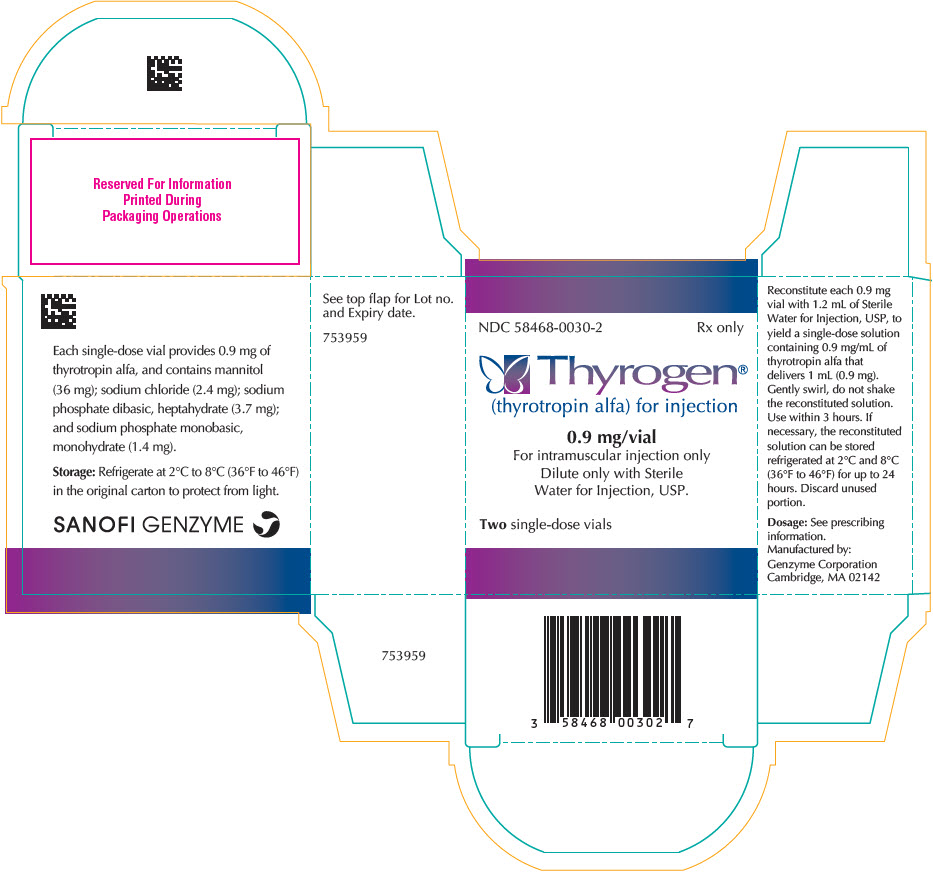
Thyrogen THYROTROPIN ALFA .9 mg/mL Injection, Powder, Lyophilized, For Solution, 2 vials
🆔 Identity & classification
Where does this data come from?
🏷️ RxNorm drug class
This medicine belongs to the Thyroid Stimulating Hormone class.
Where does this data come from?
🏭 Manufacturer & labeler
Where does this data come from?
🩺 Clinical
Patient education
Supplement & herbal interactions
Where does this data come from?
Ask a licensed pharmacist directly — free, answered by our team.
🧪 Inactive Ingredients / Excipients
Inactive ingredients, also called excipients, are components of the drug product other than the active ingredient. They may include fillers, dyes, coatings, preservatives, flavors, or other formulation ingredients.
💡 Tap an ingredient (hover on desktop) to see what it is and why it’s used.
-
30 mg / 1 mL
UNII 3OWL53L36A
A natural sugar alcohol derived from seaweed or synthesized in the lab. It's used as a filler to add bulk, a sweetener in sugar-free formulas, and a disintegrant to help tablets break apart in the stomach.
-
2 mg / 1 mL
UNII 451W47IQ8X
Sodium chloride is common table salt. It's used in medicines as a buffer to maintain proper pH, as a filler to add bulk, or to adjust the osmotic balance in liquid formulations.
-
4.25 mg / 1 mL
UNII SE337SVY37
A mineral salt used as a buffer to help maintain the medicine's pH level and prevent breakdown of active ingredients. It also acts as a thickening agent in liquid formulations.
3 inactive ingredients listed in the exact product block matched to this NDC.
Where does this data come from?
ingredient classCode="IACT" elements from the exact product block matched by this NDC. Label-section narrative from DailyMed / the openFDA label index is shown separately when available.Inactive ingredient FAQ
Are inactive ingredients the same for every manufacturer?
Why might an inactive ingredient be missing?
Can inactive ingredients matter?
💲 Pricing
A drug doesn't have one price. Each row is a different public payment system, and none is what you'd pay at the counter — that depends on your insurance. The ⓘ on each row explains what it measures.
| Price system | Per mL | Per package |
|---|---|---|
| Retail pharmacies payNADAC · weekly | Not in the retail survey — common for institutional, discontinued, or low-volume packs. | |
| Medicaid paysCMS SDUD · 12 mo | $1,904.58 | $3,809.15 / 2 ml |
| Medicare drug plans payPart D · quarterly | No Part D plan price is available for this NDC in our data. | |
| Medicare Part B allowsASP · J3240 | $2,158.661 / J3240 unit | — |
Where does this data come from?
🧾 Billing & reimbursement
Where does this data come from?
🔁 Therapeutic equivalents
| Product | Labeler | Pack | NADAC/unit | TE | Status | Price vs. this |
|---|---|---|---|---|---|---|
| Thyrogen .9 mg/mLthis 58468-0030-02 | Genzyme | 2 vials | — | — | FDA listed | — |
Where does this data come from?
⏳ Availability & biosimilar status
Biologics have no small-molecule generics; biosimilar competition is tracked in the FDA Purple Book.
Where does this data come from?
🗺️ Medicaid utilization & spend
📊 Medicare Part D spend CMS · PART D · 2026 (Q1)
📦 Packaging — all sizes for this product
| Package NDC | Description | Marketing start | Status |
|---|---|---|---|
| 58468-0030-02 You're viewing this | 2 VIAL, SINGLE-DOSE in 1 CARTON (58468-0030-2) / 1 mL in 1 VIAL, SINGLE-DOSE (58468-0030-1) | 1998-11-30 | Active |
🧭 About this NDC listing & data coverage
What data is (and isn’t) available for this NDC — tap to expand
| NDC identity (package / product / labeler codes) | ✓ Available |
| Labeler | ✓ Available |
| Product & package description | ✓ Available |
| Marketing category & status | ✓ Available |
| Active ingredient / dosage form / route | ✓ Available |
| FDA label (SPL via DailyMed) | ✓ Available |
| Package photos | ✓ Available |
| Inactive ingredients (structured) | ✓ Available |
| NADAC pharmacy acquisition price (CMS) | — Not published for this NDC CMS publishes NADAC only for NDCs reported in its retail-pharmacy survey. |
| Orange Book / therapeutic-equivalence data | — Not published for this NDC Applies only to products approved under an NDA/ANDA; many listings are out of scope. |
| HCPCS J-code billing crosswalk | ✓ Available |
| Medicaid utilization (CMS SDUD) | ✓ Available |
Questions about this listing
Why is there no price listed?
Is the NDC printed on the package the same as the 11-digit billing NDC?
What do the three segments of this NDC mean?
Is this package still being marketed?
Who lists this product with the FDA?
Do I need a prescription for this product?
Does this product have a billing J-code?
Where does this data come from?
📄 Full prescribing information FDA SPL
🎯 Indications and Usage ▾
1 INDICATIONS AND USAGE THYROGEN ® is a thyroid stimulating hormone indicated for: Adjunctive Diagnostic Tool for Well-Differentiated Thyroid Cancer: Use as an adjunctive diagnostic tool for serum thyroglobulin (Tg) testing with or without radioiodine imaging in the follow-up of patients with well-differentiated thyroid cancer who have previously undergone thyroidectomy. ( 1.1 ) Limitations of Use : THYROGEN-stimulated Tg levels are generally lower than, and do not correlate with Tg levels after thyroid hormone withdrawal.
Even when THYROGEN-Tg testing is performed in combination with radioiodine imaging, there remains a risk of missing a diagnosis of thyroid cancer or underestimating the extent of the disease. Anti-Tg Antibodies may confound the Tg assay and render Tg levels uninterpretable. Adjunct for Thyroid Remnant Ablation in Well-Differentiated Thyroid Cancer: Use as an adjunctive treatment for radioiodine ablation of thyroid tissue remnants in patients who have undergone a near-total or total thyroidectomy for well-differentiated thyroid cancer and who do not have evidence of distant metastatic thyroid cancer.
( 1.2 ) Limitations of Use : The effect of THYROGEN on thyroid cancer recurrence greater than 5 years post-remnant ablation has not been evaluated.
1.1Adjunctive Diagnostic Tool for Well-Differentiated Thyroid Cancer THYROGEN ® is indicated for use as an adjunctive diagnostic tool for serum thyroglobulin (Tg) testing with or without radioiodine imaging in the follow-up of patients with well-differentiated thyroid cancer who have previously undergone thyroidectomy. Limitations of Use : THYROGEN-stimulated Tg levels are generally lower than, and do not correlate with, Tg levels after thyroid hormone withdrawal [see Clinical Studies (14.1) ] . Even when THYROGEN-stimulated Tg testing is performed in combination with radioiodine imaging, there remains a risk of missing a diagnosis of thyroid cancer or of underestimating the extent of disease.
Anti-Tg antibodies may confound the Tg assay and render Tg levels uninterpretable [see Clinical Studies (14.1) ] . Therefore, in such cases, even with a negative or low-stage THYROGEN radioiodine scan, consideration should be given to further evaluating patients.
1.2Adjunct for Thyroid Remnant Ablation in Well-Differentiated Thyroid Cancer THYROGEN is indicated for use as an adjunctive treatment for radioiodine ablation of thyroid tissue remnants in patients who have undergone a near-total or total thyroidectomy for well-differentiated thyroid cancer and who do not have evidence of distant metastatic thyroid cancer. Limitations of Use : The effect of THYROGEN on thyroid cancer recurrence greater than five years post-remnant ablation has not been evaluated [see Clinical Studies (14.2) ] .
⏱️ Dosage and Administration ▾
2 DOSAGE AND ADMINISTRATION THYROGEN should be used by physicians knowledgeable in the management of patients with thyroid cancer. ( 2.1 ) A two-injection regimen is recommended: THYROGEN 0.9 mg is administered intramuscularly, followed by a second 0.9 mg intramuscular injection 24 hours later. ( 2.1 )
2.1Recommended Dosage THYROGEN should be used by physicians knowledgeable in the management of patients with thyroid cancer. THYROGEN is indicated as a two-injection regimen. The recommended dosage of THYROGEN is a 0.9 mg intramuscular injection to the buttock followed by a second 0.9 mg intramuscular injection to the buttock 24 hours later.
THYROGEN should be administered intramuscularly only. THYROGEN should not be administered intravenously. Pretreatment with glucocorticoids should be considered for patients in whom tumor expansion may compromise vital anatomic structures [see Warnings and Precautions (5.3) ] .
Routine measurement of serum TSH levels is not recommended after THYROGEN use.
2.2Reconstitution, Preparation, and Administration of THYROGEN The supplied lyophilized powder must be reconstituted with Sterile Water for Injection, USP. THYROGEN should be prepared, and administered in the following manner: Reconstitute each 0.9 mg vial of THYROGEN with 1.2 mL of Sterile Water for Injection, USP to yield a single-dose solution containing 0.9 mg/mL of thyrotropin alfa that delivers 1 mL (0.9 mg). Gently swirl the contents of the vial until all the material is dissolved.
Do not shake the solution. Visually inspect the reconstituted solution for particulate matter and discoloration prior to administration. The reconstituted THYROGEN solution should be clear and colorless.
Do not use if the solution has particulate matter or is cloudy or discolored. Withdraw 1 mL of the reconstituted THYROGEN solution (0.9 mg of thyrotropin alfa) and inject intramuscularly in the buttocks. Discard any unused portions.
The reconstituted THYROGEN solution must be injected within 3 hours unless refrigerated. If necessary, the reconstituted solution can be stored refrigerated at a temperature between 2°C and 8°C (36°F to 46°F) for up to 24 hours, while avoiding microbial contamination. Do not mix with other substances.
2.3Timing of Serum Thyroglobulin Testing Following THYROGEN Administration For serum thyroglobulin testing, the serum sample should be obtained 72 hours after the final injection of THYROGEN [see Clinical Studies (14.1) ] .
2.4Timing for Remnant Ablation and Diagnostic Scanning Following THYROGEN Administration Oral radioiodine should be given 24 hours after the second injection of THYROGEN in both remnant ablation and diagnostic scanning. The activity of 131 I is carefully selected at the discretion of the nuclear medicine physician. Diagnostic scanning should be performed 48 hours after the radioiodine administration.
💊 Dosage Forms and Strengths ▾
3 DOSAGE FORMS AND STRENGTHS For injection: 0.9 mg white to off-white lyophilized powder in a single-dose vial For injection: 0.9 mg of thyrotropin alfa as a lyophilized powder in a single-dose vial. ( 3 )
⛔ Contraindications ▾
4 CONTRAINDICATIONS If THYROGEN is administered with radioiodine, the contraindications to radioiodine also apply to this combination regimen. Refer to the radioiodine prescribing information for a list of contraindications for radioiodine. If THYROGEN is administered with radioiodine, the contraindications to radioiodine also apply to this combination regimen. ( 4 )
⚠️ Warnings and Cautions ▾
5 WARNINGS AND PRECAUTIONS THYROGEN-induced hyperthyroidism: Hospitalization for administration of THYROGEN and postadministrative observation should be considered for patients at risk. ( 5.1 ) Stroke: Stroke in female patients as well as other neurologic events in patients with central nervous system metastases. ( 5.2 , 5.3 ) Sudden rapid tumor enlargement: Sudden, rapid and painful enlargement in distant metastatic thyroid cancer.
( 5.3 ) Risks associated with radioiodine (RAI) combination treatment: If THYROGEN is administered with RAI, the warnings and precautions for RAI also apply to this combination regimen. ( 5.4 )
5.1THYROGEN-Induced Hyperthyroidism When given to patients who have substantial thyroid tissue still in situ or functional thyroid cancer metastases, THYROGEN is known to cause a transient (over 7 to 14 days) but significant rise in serum thyroid hormone concentration. There have been reports of death in non-thyroidectomized patients and in patients with distant metastatic thyroid cancer in which events leading to death occurred within 24 hours after administration of THYROGEN. Patients with residual thyroid tissue at risk for THYROGEN-induced hyperthyroidism include the elderly and those with a known history of heart disease.
Hospitalization for administration of THYROGEN and postadministration observation in patients at risk should be considered.
5.2Stroke There are postmarketing reports of radiologically-confirmed stroke and neurological findings suggestive of stroke unconfirmed radiologically (e.g., unilateral weakness) occurring within 72 hours (range 20 minutes to three days) of THYROGEN administration in patients without known central nervous system metastases. The majority of such patients were young women taking oral contraceptives at the time of their event or had other risk factors for stroke, such as smoking or a history of migraine headaches. The relationship between THYROGEN administration and stroke is unknown.
Patients should be well-hydrated prior to treatment with THYROGEN.
5.3Sudden Rapid Tumor Enlargement Sudden, rapid and painful enlargement of residual thyroid tissue or distant metastases can occur following treatment with THYROGEN. This may lead to acute symptoms, which depend on the anatomical location of the tissue. Such symptoms include acute hemiplegia, hemiparesis, and loss of vision one to three days after THYROGEN administration.
Laryngeal edema, pain at the site of distant metastasis, and respiratory distress requiring tracheotomy have also been reported after THYROGEN administration. Pretreatment with glucocorticoids should be considered for patients in whom tumor expansion may compromise vital anatomic structures.
5.4Risks Associated with Radioiodine Treatment If THYROGEN is administered with radioiodine (RAI), the warnings and precautions for RAI, apply to this combination regimen. Refer to the RAI prescribing information for a full list of the warnings and precautions for RAI.
🤒 Adverse Reactions ▾
6 ADVERSE REACTIONS The most common adverse reactions (>5%) reported in clinical trials were nausea and headache. ( 6.1 ) To report SUSPECTED ADVERSE REACTIONS, contact Genzyme Corporation at 800-745-4447 or FDA at 1-800-FDA-1088 or www.fda.gov/medwatch.
6.1Clinical Trials Experience Because clinical trials are conducted under widely varying conditions, adverse reaction rates observed in the clinical trials of a drug cannot be directly compared to rates in the clinical trials of another drug and may not reflect the rates observed in practice. The data described below reflect exposure to THYROGEN in 481 thyroid cancer patients who participated in a total of 6 clinical trials of THYROGEN: 4 trials for diagnostic use and 2 trials for ablation. In clinical trials, patients had undergone near-total thyroidectomy and had a mean age of 46.1 years.
Thyroid cancer diagnosis was as follows: papillary (69.2%), follicular (12.9%), Hurthle cell (2.3%) and papillary/follicular (15.6%). Most patients received 2 intramuscular injections of 0.9 mg of THYROGEN injection gin 24 hours apart [see Clinical Studies (14.1 , 14.2) ] . The safety profile of patients who have undergone thyroidectomy and received THYROGEN as adjunctive treatment for radioiodine ablation of thyroid tissue remnants for well-differentiated thyroid cancer did not differ from that of patients who received THYROGEN for diagnostic purposes.
Reactions reported in ≥1% of patients in the combined trials are summarized in Table 1. In some studies, an individual patient may have participated in both THYROGEN and thyroid hormone withdrawal [see Clinical Studies (14.1 , 14.2) ] . Table 1: Summary of Adverse Reactions by THYROGEN and Thyroid Hormone Withdrawal in Pooled Clinical Trials (≥1% of Patients in any Phase) THYROGEN Thyroid Hormone Withdrawal (N=481) (N=418) Preferred Term n (%) n (%) Nausea 53 (11) 2 (<1) Headache 29 (6) 0 Fatigue 11 (2) 2 (<1) Vomiting 11 (2) 0 Dizziness 9 (2) 0 (0.0) Asthenia 5 (1) 1 (<1)
6.2Postmarketing Experience The following adverse reactions have been identified during postapproval use of THYROGEN. Because these reactions are reported voluntarily from a population of uncertain size, it is not always possible to reliably estimate their frequency or establish a causal relationship to drug exposure. Transient (<48 hours) influenza-like symptoms, including fever (>100°F/38°C), chills/shivering, myalgia/arthralgia, fatigue/asthenia/malaise, headache, and chills.
Hypersensitivity including urticaria, rash, pruritus, flushing, and respiratory signs and symptoms. Injection site reactions, including pain, erythema, bruising, and pruritus.
👥 Use in Specific Populations ▾
8 USE IN SPECIFIC POPULATIONS Pregnancy: Concomitant use of THYROGEN and radioiodine (RAI) is contraindicated in pregnancy. ( 4 , 8.1 ) Lactation: Concomitant use of THYROGEN and therapeutic RAI is contraindicated in lactating women. ( 4 , 8.2 ) Renal Impairment: Elimination of THYROGEN is significantly slower in dialysis-dependent end-stage renal disease patients, resulting in prolonged elevation of TSH levels. ( 8.6 )
8.1Pregnancy Risk Summary THYROGEN may be used in combination with radioiodine (RAI). If THYROGEN is administered with RAI, the combination regimen is contraindicated in pregnant women because fetal exposure to RAI can lead to neonatal hypothyroidism, which in some cases is severe and irreversible. Refer to the RAI prescribing information for more information on use during pregnancy.
Available data from case reports and postmarketing experience with THYROGEN use in pregnant women are insufficient to evaluate for a drug-associated risk of major birth defects, miscarriage, or adverse maternal or fetal outcomes. Animal reproduction studies have not been conducted with THYROGEN. The estimated background risk of major birth defects and miscarriage for the indicated population is unknown.
In the U.S. general population, the estimated background risk of major birth defects and miscarriage in clinically recognized pregnancies is 2% to 4% and 15% to 20%, respectively.
8.2Lactation Risk Summary The concomitant use of THYROGEN and therapeutic radioiodine (RAI) is contraindicated in lactating women because RAI concentrates in the breast tissue and increases the risk of radiation breast toxicity (refer to the therapeutic RAI Prescribing Information). If THYROGEN is administered with RAI for diagnostic use, discontinue breastfeeding after RAI administration because of the potential for serious adverse reactions from RAI in the breastfed infant (refer to the diagnostic RAI Prescribing Information).
If THYROGEN is not administered with RAI, the developmental and health benefits of breastfeeding should be considered along with the mother's clinical need for THYROGEN and any potential adverse effects on the breastfed child from THYROGEN or from the underlying maternal condition. There are no available data on the presence of thyrotropin alfa in human milk, the effects on the breastfed infant, or the effects on milk production.
8.3Females and Males of Reproductive Potential THYROGEN may be used in combination with radioiodine (RAI). If THYROGEN is administered with RAI, the information for RAI regarding pregnancy testing, contraception, and infertility also applies to the combination regimen. Refer to the RAI prescribing information for additional information.
8.4Pediatric Use Safety and effectiveness in pediatric patients have not been established.
8.5Geriatric Use In pooled clinical studies of THYROGEN, 60 patients (12%) were >65 years, and 421 (88%) were ≤65 years of age . Results from controlled trials do not indicate a difference in the safety and efficacy of THYROGEN between adult patients less than 65 years and those over 65 years of age [see Warnings and Precautions (5.1) ] .
8.6Renal Impairment Elimination of THYROGEN is significantly slower in dialysis-dependent end-stage renal disease (ESRD) patients, resulting in prolonged elevation of TSH levels.
🤰 Pregnancy ▾
8.1Pregnancy Risk Summary THYROGEN may be used in combination with radioiodine (RAI). If THYROGEN is administered with RAI, the combination regimen is contraindicated in pregnant women because fetal exposure to RAI can lead to neonatal hypothyroidism, which in some cases is severe and irreversible. Refer to the RAI prescribing information for more information on use during pregnancy.
Available data from case reports and postmarketing experience with THYROGEN use in pregnant women are insufficient to evaluate for a drug-associated risk of major birth defects, miscarriage, or adverse maternal or fetal outcomes. Animal reproduction studies have not been conducted with THYROGEN. The estimated background risk of major birth defects and miscarriage for the indicated population is unknown.
In the U.S. general population, the estimated background risk of major birth defects and miscarriage in clinically recognized pregnancies is 2% to 4% and 15% to 20%, respectively.
🧒 Pediatric Use ▾
8.4Pediatric Use Safety and effectiveness in pediatric patients have not been established.
🧓 Geriatric Use ▾
8.5Geriatric Use In pooled clinical studies of THYROGEN, 60 patients (12%) were >65 years, and 421 (88%) were ≤65 years of age . Results from controlled trials do not indicate a difference in the safety and efficacy of THYROGEN between adult patients less than 65 years and those over 65 years of age [see Warnings and Precautions (5.1) ] .
🆘 Overdosage ▾
10 OVERDOSAGE In clinical trials of THYROGEN, three patients experienced symptoms after receiving THYROGEN doses higher than those recommended. Two patients had nausea after a 2.7 mg IM dose (3 times the recommended dose), and in one of these patients, the event was accompanied by weakness, dizziness and headache. Another patient experienced nausea, vomiting and hot flashes after a 3.6 mg IM dose (4 times the recommended dose).
There is no specific therapy for THYROGEN overdose. Supportive care is recommended.
🧬 Clinical Pharmacology ▾
12 CLINICAL PHARMACOLOGY
12.1Mechanism of Action Thyrotropin (TSH) is a pituitary hormone that stimulates the thyroid gland to produce thyroid hormone. Binding of thyrotropin alfa to TSH receptors on normal thyroid epithelial cells or on well-differentiated thyroid cancer tissue stimulates iodine uptake and organification, and synthesis and secretion of thyroglobulin (Tg), triiodothyronine (T3) and thyroxine (T4). The effect of thyroid stimulating hormone activation of thyroid cells is to increase uptake of radioiodine to allow scan detection or radioiodine killing of thyroid cells.
TSH activation also leads to the release of thyroglobulin by thyroid cells. Thyroglobulin functions as a tumor marker which is detected in blood specimens.
12.3Pharmacokinetics The pharmacokinetics of THYROGEN was studied in 16 patients with well-differentiated thyroid cancer given a single 0.9 mg IM dose. Mean peak serum TSH concentrations of 116±38 mU/L were reached between 3 and 24 hours after injection (median of 10 hours). The mean apparent elimination half-life was 25±10 hours.
The organ(s) of TSH clearance in man have not been identified, but studies of pituitary-derived TSH suggest the involvement of the liver and kidneys.
🧬 Mechanism of Action ▾
12.1Mechanism of Action Thyrotropin (TSH) is a pituitary hormone that stimulates the thyroid gland to produce thyroid hormone. Binding of thyrotropin alfa to TSH receptors on normal thyroid epithelial cells or on well-differentiated thyroid cancer tissue stimulates iodine uptake and organification, and synthesis and secretion of thyroglobulin (Tg), triiodothyronine (T3) and thyroxine (T4). The effect of thyroid stimulating hormone activation of thyroid cells is to increase uptake of radioiodine to allow scan detection or radioiodine killing of thyroid cells.
TSH activation also leads to the release of thyroglobulin by thyroid cells. Thyroglobulin functions as a tumor marker which is detected in blood specimens.
📦 How Supplied / Storage and Handling ▾
16 HOW SUPPLIED/STORAGE AND HANDLING THYROGEN (thyrotropin alfa) for injection is as a sterile white to off-white lyophilized powder in a single-dose vial. Each carton (NDC 58468-0030-2) contains two 0.9 mg single-dose vials of THYROGEN (NDC 58468-0030-1). Store THYROGEN refrigerated at 2°C to 8°C (36°F to 46°F) in the original carton to protect from light.
📦 Storage and Handling ▾
Store THYROGEN refrigerated at 2°C to 8°C (36°F to 46°F) in the original carton to protect from light.
📋 Description ▾
11 DESCRIPTION Thyrotropin alfa, a recombinant human thyroid stimulating hormone, is a heterodimeric glycoprotein comprised of two non-covalently linked subunits, an alpha subunit of 92 amino acid residues containing two N-linked glycosylation sites and a beta subunit of 118 residues containing one N-linked glycosylation site. The amino acid sequence of thyrotropin alfa is identical to that of human pituitary TSH. Thyrotropin alfa is synthesized in a genetically modified Chinese hamster ovary cell line.
Both thyrotropin alfa and naturally occurring human pituitary TSH are synthesized as a mixture of glycosylation variants. Unlike pituitary TSH, which is secreted as a mixture of sialylated and sulfated forms, thyrotropin alfa is sialylated but not sulfated. The biological activity of thyrotropin alfa is determined by a cell-based bioassay.
In this assay, cells expressing a functional TSH receptor and a cAMP-responsive element coupled to a heterologous reporter gene, luciferase, enable the measurement of thyrotropin alfa activity by measuring the luciferase response. The specific activity of thyrotropin alfa is determined relative to an internal Genzyme reference standard that was calibrated against the World Health Organization (WHO) human TSH reference standard. THYROGEN (thyrotropin alfa) for injection is a sterile, white to off-white lyophilized powder in a single-dose vial for intramuscular use after reconstitution .
Each single-dose vial provides 0.9 mg of thyrotropin alfa, and contains mannitol (36 mg); sodium chloride (2.4 mg);sodium phosphate dibasic, heptahydrate (3.7 mg); and sodium phosphate monobasic, monohydrate (1.4 mg). After reconstitution with 1.2 mL of Sterile Water for Injection, USP, the concentration is 0.9 mg/mL with a deliverable volume of 1 mL (0.9 mg) and a pH of approximately 6.5 to 7.5.
💬 Information for Patients ▾
17 PATIENT COUNSELING INFORMATION Adverse Reactions Inform patients that the most common adverse events from clinical experience were nausea and headache. Advise patients to seek immediate medical attention should they experience severe symptoms. Important Information Prior to THYROGEN administration, counsel patients to seek care immediately for any neurologic symptoms occurring after administration of the drug.
Inform patients for whom THYROGEN induced hyperthyroidism could have serious consequences, hospitalization for administration of THYROGEN and postadministrative observation should be considered. Dosing and Administration Patients should be instructed that THYROGEN is for intramuscular administration into the buttock only. THYROGEN should not be administered intravenously.
Inform patients the treatment regimen is two doses of THYROGEN administered at a 24 hour interval. Encourage patients to remain hydrated prior to treatment with THYROGEN. Schedule of Procedures Inform patients that if diagnostic scanning will be performed, radioiodine will be given 24 hours after the second injection of THYROGEN, and patients should return for the scan 48 hours after radioiodine administration.
Inform patients that if serum Tg testing is performed, blood will be drawn 72 hours or later after the second injection of THYROGEN. Inform patients that if remnant ablation is performed radioiodine will be administered 24 hours after the second injection of THYROGEN. Pregnancy and Lactation Risks Associated with Radioiodine Treatment When THYROGEN is administered in combination with radioiodine (RAI), refer to the RAI prescribing information for patient counseling information.
Inform patients to notify their healthcare provider immediately in the event of a pregnancy [see Warnings and Precautions (5.4) and Use in Specific Populations (8.1 , 8.3) ].