
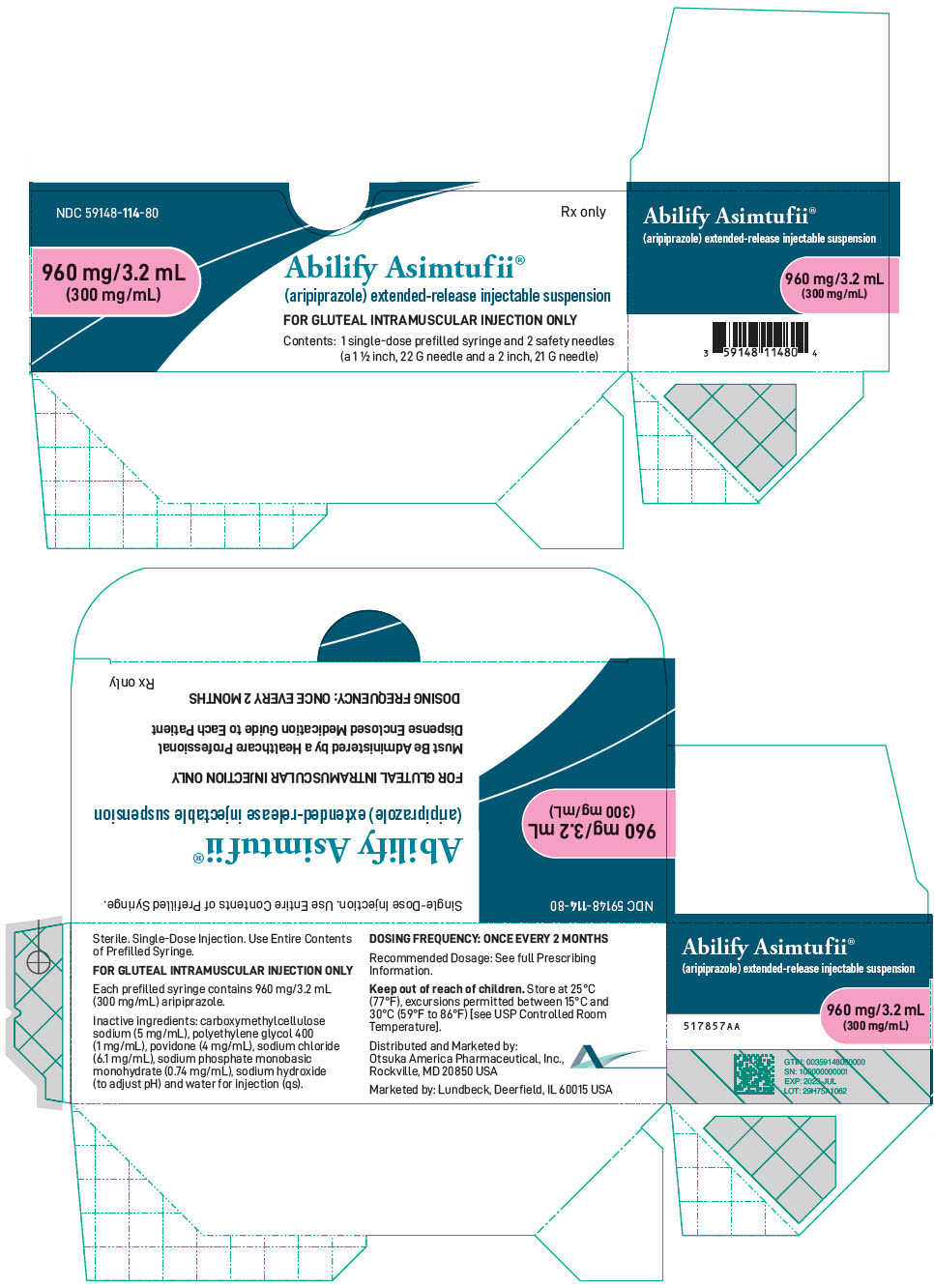
Abilify Asimtufii Aripiprazole 960 mg/3.2mL Injection, Suspension, Extended Release, 1 syringe
Other active recalls for Aripiprazole (different manufacturers) — 6 · tap to view
🆔 Identity & classification
Where does this data come from?
🏷️ RxNorm drug class
This medicine belongs to the Atypical Antipsychotic class.
Where does this data come from?
🏭 Manufacturer & labeler
Where does this data come from?
🩺 Clinical
Aripiprazole extended-release injection is used to treat schizophrenia (a mental illness that affects how a person thinks, feels and behaves) and bipolar I disorder (a disease that causes depression, mania, and other abnormal moods). Aripiprazole is in a class of medications called atypical antipsychotics. It works by changing the activity of certain natural substances in the brain.
Read the full MedlinePlus article ↗- These long-acting injections are designed to make treatment more consistent. Instead of remembering a pill every day, you get one shot every one to two months, and the medication r...
- Why is my doctor giving me an injection instead of a pill?
- Some pain at the injection site is common, especially after the first shot — that's very normal. In studies, most people found the pain was most noticeable with the first injection...
- Will the injection hurt? What should I expect at the injection site?
Patient education
Supplement & herbal interactions
Some supplements/herbs that may interact with Aripiprazole — tap one for details:
Where does this data come from?
Ask a licensed pharmacist directly — free, answered by our team.
🧪 Inactive Ingredients / Excipients
Inactive ingredients, also called excipients, are components of the drug product other than the active ingredient. They may include fillers, dyes, coatings, preservatives, flavors, or other formulation ingredients.
💡 Tap an ingredient (hover on desktop) to see what it is and why it’s used.
-
UNII K679OBS311
Carboxymethylcellulose sodium is a plant-derived thickening agent made from cellulose. In medicines, it acts as a binder to hold ingredients together, a disintegrant to help the tablet break apart, or a thickener in liquids.
-
UNII B697894SGQ
Polyethylene glycol 400 is a clear, thick liquid made from petroleum-derived polymers. It acts as a solvent and humectant in medicines, helping dissolve active ingredients and retain moisture in the formulation.
-
UNII FZ989GH94E
Povidone is a synthetic polymer made from a plastic-like material. It acts as a binder to hold tablet ingredients together and as a disintegrant to help the tablet break apart in your stomach so the medicine can be absorbed.
-
UNII 451W47IQ8X
Sodium chloride is common table salt. It's used in medicines as a buffer to maintain proper pH, as a filler to add bulk, or to adjust the osmotic balance in liquid formulations.
-
UNII 55X04QC32I
A strong alkaline chemical used to adjust and maintain the pH balance of liquid medicines. It helps keep the medicine stable and ensures it stays effective during storage.
-
UNII 593YOG76RN
A salt made from sodium and phosphate that helps regulate acidity and maintain proper pH balance in the medicine. It also acts as a buffer to keep the product stable.
-
UNII 059QF0KO0R
Water is a liquid solvent that dissolves and mixes ingredients together in liquid medicines, syrups, and injections. It helps distribute the active drug evenly throughout the product.
7 inactive ingredients listed in the exact product block matched to this NDC.
Where does this data come from?
ingredient classCode="IACT" elements from the exact product block matched by this NDC. Label-section narrative from DailyMed / the openFDA label index is shown separately when available.Inactive ingredient FAQ
Are inactive ingredients the same for every manufacturer?
Why might an inactive ingredient be missing?
Can inactive ingredients matter?
💲 Pricing
A drug doesn't have one price. Each row is a different public payment system, and none is what you'd pay at the counter — that depends on your insurance. The ⓘ on each row explains what it measures.
| Price system | Per mL | Per package |
|---|---|---|
| Retail pharmacies payNADAC · weekly | Not in the retail survey — common for institutional, discontinued, or low-volume packs. | |
| Medicaid paysCMS SDUD · 12 mo | No recent Medicaid claims on file for this NDC — rare and low-volume NDCs are suppressed in the public data. | |
| Medicare drug plans payPart D · Q2 2026 | $1,825.16 | $5,840.52 / 3.2 ml |
Where does this data come from?
🔁 Therapeutic equivalents
| Product | Labeler | Pack | NADAC/unit | TE | Status | Price vs. this |
|---|---|---|---|---|---|---|
| Abilify Asimtufii 960 mg/3.2mLthis 59148-0114-92 | Otsuka | 1 syringe | — | — | FDA listed | — |
Where does this data come from?
⏳ Availability & generic status
We did not find an FDA-approved generic match for this exact strength, form and route. Patent/protection dates below may affect future generic timing.
Why the date isn’t exact: Generic timing can change because patents may be challenged, settled, licensed, added, removed, or worked around with a narrower label — and FDA approval does not always mean a pharmacy can get the generic today.
🛈 What do these terms mean?
- Patent
- Legal protection listed in the Orange Book that may delay generic approval or launch. Issued by the U.S. Patent & Trademark Office.
- Substance patent
- Covers the active drug molecule itself — the hardest to design around. A generic generally can’t launch until it expires.
- Formulation (product) patent
- Covers a specific formulation or dosage form. A generic can sometimes work around it with a different formulation.
- Method-of-use patent
- A patent covering one specific approved use of the drug — not necessarily the whole molecule. A generic can sometimes launch with a “skinny label” that carves out the protected use and keeps the others.
- Skinny label
- A generic label that omits a still-patented use when the FDA allows it — letting a generic reach the market for the unprotected uses.
- Exclusivity
- FDA-granted marketing protection, separate from patents — e.g. 5-yr new chemical entity, 7-yr orphan drug, or a +6-month pediatric extension.
- Paragraph IV
- A generic applicant’s formal challenge to a listed patent. It can potentially lead to earlier generic entry, but often involves litigation or a settlement.
- RLD / RS
- Reference Listed Drug — the brand product the FDA uses as the reference for generic applications. Reference Standard — the product the FDA expects generics to compare against in bioequivalence testing.
- TE / AB rating
- FDA therapeutic-equivalence rating. An AB rating generally means the FDA considers a generic therapeutically equivalent to — and substitutable for — the brand.
- LOE (loss of exclusivity)
- The latest patent or exclusivity currently listed — the loss-of-exclusivity / latest-listed-protection date shown on this page. Paragraph-IV challenges and settlements can move the real date earlier; FDA approval and a manufacturer’s decision to market can move it later.
Built from the FDA Orange Book. The bars above are scaled to each protection’s expiry; the red LOE marker is the last one to lapse.
| Patent | Type | Use code | Expires |
|---|---|---|---|
| US 12016927 ↗ | Method of use | U-3245 | Apr 23, 2033 |
| US 12016927 ↗ | Method of use | U-543 | Apr 23, 2033 |
| US 12016927 ↗ | Method of use | U-543 | Apr 23, 2033 |
| US 12016927 ↗ | Method of use | U-3245 | Apr 23, 2033 |
| US 11638757 ↗ | Method of use | U-3245 | Apr 23, 2033 |
| US 11638757 ↗ | Method of use | U-814 | Apr 23, 2033 |
| US 11638757 ↗ | Method of use | U-814 | Apr 23, 2033 |
| US 11638757 ↗ | Method of use | U-3245 | Apr 23, 2033 |
| US 11097007 ↗ | Method of use | U-3245 | Apr 23, 2033 |
| US 11097007 ↗ | Method of use | U-814 | Apr 23, 2033 |
| US 11097007 ↗ | Method of use | U-814 | Apr 23, 2033 |
| US 11097007 ↗ | Method of use | U-3245 | Apr 23, 2033 |
| US 10517951 ↗ | Method of use | U-3245 | Apr 23, 2033 |
| US 10517951 ↗ | Method of use | U-814 | Apr 23, 2033 |
| US 10517951 ↗ | Method of use | U-814 | Apr 23, 2033 |
| US 10517951 ↗ | Method of use | U-3245 | Apr 23, 2033 |
Is there a generic version of ABILIFY ASIMTUFII 960 MG/3.2ML?
The FDA approved a generic — why can’t I get it at my pharmacy yet?
Why do different websites show different generic release dates?
What does “FDA listed” mean?
What does a patent or protection date mean here?
What does “current Orange Book estimate” mean?
Can a generic come out before the last patent expires?
Can a generic come out after the listed dates?
What is the difference between patents and exclusivity?
Why are there multiple patent dates?
Where does this data come from?
💊 Medicaid utilization by pack size
📊 Medicare Part D spend CMS · PART D · 2026 (Q1)
🔬 Reported adverse events (FAERS)
Top reported reactions
Age at onset
Reporter sex
Serious outcomes
Where does this data come from?
📦 Packaging — all sizes for this product
| Package NDC | Description | Per unit | Per pack | Marketing start | Status |
|---|---|---|---|---|---|
| 59148-0114-80 | 1 SYRINGE in 1 CARTON (59148-114-80) / 3.2 mL in 1 SYRINGE | $1,783.75 / mL | $5,708.00 | 2023-04-27 | Active |
| 59148-0114-92 You're viewing this | 1 SYRINGE in 1 CARTON (59148-114-92) / 3.2 mL in 1 SYRINGE | — | — | 2023-04-27 | Active |
This pack shows little to no recent Medicaid volume — a different pack size carries most fills. See all packs ↓
Pack size FAQ
What quantity is in NDC 59148-0114-92?
What is the difference between NDC 59148-0114-92 and NDC 59148-0114-80?
What NDC number is used to bill for this package of Abilify Asimtufii Aripiprazole 960 mg/3.2mL Injection, Suspension, Extended Release?
Prices are the latest CMS NADAC pharmacy acquisition cost per NDC; per-pack figures are per-unit × pack quantity, shown only when the pack is denominated in the same measure NADAC prices.
🧭 About this NDC listing & data coverage
What data is (and isn’t) available for this NDC — tap to expand
| NDC identity (package / product / labeler codes) | ✓ Available |
| Labeler | ✓ Available |
| Product & package description | ✓ Available |
| Marketing category & status | ✓ Available |
| Active ingredient / dosage form / route | ✓ Available |
| FDA label (SPL via DailyMed) | ✓ Available |
| Package photos | ✓ Available |
| Inactive ingredients (structured) | ✓ Available |
| NADAC pharmacy acquisition price (CMS) | — Not published for this NDC CMS publishes NADAC only for NDCs reported in its retail-pharmacy survey. |
| Orange Book / therapeutic-equivalence data | ✓ Available |
| HCPCS J-code billing crosswalk | — Not published for this NDC Most self-administered / retail products have no J-code — that is normal. |
| Medicaid utilization (CMS SDUD) | — Not published for this NDC CMS reports utilization only for NDCs with Medicaid claims above its privacy threshold. |
Questions about this listing
Why is there no price listed?
Is the NDC printed on the package the same as the 11-digit billing NDC?
What do the three segments of this NDC mean?
Is this package still being marketed?
Does this product come in other package sizes?
Who lists this product with the FDA?
Do I need a prescription for this product?
Where does this data come from?
📄 Full prescribing information FDA SPL
🚨 Boxed Warning ▾
WARNING: INCREASED MORTALITY IN ELDERLY PATIENTS WITH DEMENTIA-RELATED PSYCHOSIS Elderly patients with dementia-related psychosis treated with antipsychotic drugs are at an increased risk of death. ABILIFY ASIMTUFII is not approved for the treatment of patients with dementia-related psychosis [see Warnings and Precautions (5.1) ]. WARNING: INCREASED MORTALITY IN ELDERLY PATIENTS WITH DEMENTIA-RELATED PSYCHOSIS See full prescribing information for complete boxed warning.
Elderly patients with dementia-related psychosis treated with antipsychotic drugs are at an increased risk of death ( 5.1 ) ABILIFY ASIMTUFII is not approved for the treatment of patients with dementia-related psychosis ( 5.1 )
🎯 Indications and Usage ▾
1 INDICATIONS AND USAGE ABILIFY ASIMTUFII is indicated: for the treatment of schizophrenia in adults for maintenance monotherapy treatment of bipolar I disorder in adults ABILIFY ASIMTUFII is an atypical antipsychotic indicated: for the treatment of schizophrenia in adults ( 1 ) as maintenance monotherapy treatment of bipolar I disorder in adults ( 1 )
⏱️ Dosage and Administration ▾
2 DOSAGE AND ADMINISTRATION For patients naïve to aripiprazole, establish tolerability with oral aripiprazole prior to initiating treatment with ABILIFY ASIMTUFII ( 2.1 ) Administer by intramuscular injection in the gluteal muscle by a healthcare professional. Do not administer by any other route ( 2.1 ) Recommended dosage is 960 mg administered once every 2 months as a single injection. Dose can be reduced to 720 mg in patients with adverse reactions ( 2.2 ) For patients currently receiving an oral antipsychotic, there are two ways to initiate treatment with ABILIFY ASIMTUFII 1-day initiation: Administer one injection of ABILIFY ASIMTUFII 960 mg, one injection of Abilify Maintena 400 mg and a single oral dose of aripiprazole 20 mg ( 2.2 ) 14-day initiation: In conjunction with first ABILIFY ASIMTUFII 960 mg dose, take 14 consecutive days of concurrent oral aripiprazole (10 mg to 20 mg) or current oral antipsychotic ( 2.2 ) For patients currently receiving Abilify Maintena Administer ABILIFY ASIMTUFII 960 mg in place of the next scheduled injection of the Abilify Maintena.
Missed doses: Dosage adjustment may be required ( 2.3 ) Known CYP2D6 poor metabolizers: Recommended dosage is 720 mg administered once every 2 months as a single injection ( 2.4 ) See Full Prescribing Information for important preparation and administration information ( 2.5 )
2.1Important Administration Information For patients who have never taken aripiprazole, establish tolerability with oral aripiprazole prior to initiating treatment with ABILIFY ASIMTUFII. Due to the half-life of oral aripiprazole (i.e., 75 hours and 94 hours for aripiprazole and dehydro-aripiprazole, respectively), it may take up to 2 weeks to fully assess tolerability. ABILIFY ASIMTUFII must be administered as an intramuscular gluteal injection by a healthcare professional.
Do not administer by any other route . For detailed preparation and administration instructions, [see Dosage and Administration (2.5) ] .
2.2Recommended Dosage for ABILIFY ASIMTUFII The recommended dosage of ABILIFY ASIMTUFII is 960 mg, administered once every 2 months (56 days after previous injection). Patients Receiving Oral Antipsychotics There are two ways to initiate treatment with ABILIFY ASIMTUFII in patients receiving oral antipsychotics: 1-day initiation: Administer one intramuscular injection of ABILIFY ASIMTUFII 960 mg in the gluteal muscle, one injection of Abilify Maintena 400 mg in a separate gluteal or deltoid muscle, and one dose of oral aripiprazole 20 mg, on the first day of treatment with ABILIFY ASIMTUFII.
Do not administer both injections into the same muscle. 14-day initiation: Administer one intramuscular injection of ABILIFY ASIMTUFII 960 mg in the gluteal muscle and continue treatment with oral aripiprazole (10 mg to 20 mg) for 14 consecutive days. For patients already stable on another oral antipsychotic (and known to tolerate aripiprazole), administer one intramuscular injection of ABILIFY ASIMTUFII 960 mg in the gluteal muscle and continue treatment with the oral antipsychotic for 14 consecutive days.
Patients Receiving Abilify Maintena For patients receiving Abilify Maintena 400 mg (once monthly dosing), administer ABILIFY ASIMTUFII 960 mg (once every 2 month dosing) in place of the next scheduled injection of the Abilify Maintena. The first ABILIFY ASIMTUFII injection may be administered in place of the second, or later injection of Abilify Maintena. If there are adverse reactions with the ABILIFY ASIMTUFII 960 mg dosage, the dosage may be reduced to 720 mg once every 2 months.
Patients may be given the ABILIFY ASIMTUFII injection up to 2 weeks before or 2 weeks after the 2-month scheduled timepoint.
2.3Missed Doses If more than 8 weeks and less than 14 weeks have elapsed since the last injection, administer the next dose of ABILIFY ASIMTUFII as soon as possible. The once every 2 month schedule should be resumed. If more than 14 weeks have elapsed since the last injection, restart…
💊 Dosage Forms and Strengths ▾
3 DOSAGE FORMS AND STRENGTHS Extended-release injectable suspension: sterile, white to off-white, aqueous suspension in a single-dose, pre-filled syringe. Table 2: ABILIFY ASIMTUFII Presentations Dose Strength Volume Label Color Syringe Tip Wrap 720 mg 2.4 mL Light Blue Aqua 960 mg 3.2 mL Pink Light Blue Extended-release injectable suspension: 960 mg/3.2 mL and 720 mg/2.4 mL single-dose pre-filled syringes ( 3 )
⛔ Contraindications ▾
4 CONTRAINDICATIONS ABILIFY ASIMTUFII is contraindicated in patients with a known hypersensitivity to aripiprazole, or any of the excipients. Hypersensitivity reactions ranging from pruritus/urticaria to anaphylaxis have been reported in patients receiving aripiprazole [see Adverse Reactions (6.1) ] . Known hypersensitivity to aripiprazole, or to any excipients of ABILIFY ASIMTUFII ( 4 )
⚠️ Warnings and Cautions ▾
5 WARNINGS AND PRECAUTIONS Cerebrovascular Adverse Reactions in Elderly Patients with Dementia-Related Psychosis : Increased incidence of cerebrovascular adverse reactions (e.g., stroke, transient ischemic attack, including fatalities) ( 5.2 ) Neuroleptic Malignant Syndrome : Manage with immediate discontinuation and close monitoring ( 5.3 ) Tardive Dyskinesia : Discontinue if clinically appropriate ( 5.4 ) Metabolic Changes : Monitor for hyperglycemia/diabetes mellitus, dyslipidemia, and weight gain ( 5.5 ) Pathological Gambling and Other Compulsive Behaviors : Consider dose reduction or discontinuation ( 5.6 ) Orthostatic Hypotension and Syncope : Monitor heart rate and blood pressure and caution in patients with known cardiovascular or cerebrovascular disease, and risk of dehydration or syncope ( 5.7 ) Leukopenia, Neutropenia, and Agranulocytosis: Perform complete blood counts (CBC) in patients with history of clinically significant low white blood cell count (WBC) or a history of leukopenia or neutropenia.
Consider discontinuing ABILIFY ASIMTUFII if clinically significant decline in WBC in the absence of other causative factors ( 5.9 ) Seizures : Use cautiously in patients with a history of seizures or with conditions that lower the seizure threshold ( 5.10 ) Potential for Cognitive and Motor Impairment : Use caution when operating machinery ( 5.11 )
5.1Increased Mortality in Elderly Patients with Dementia-Related Psychosis Elderly patients with dementia-related psychosis treated with antipsychotic drugs are at an increased risk of death. Analyses of 17 placebo-controlled trials (modal duration of 10 weeks), largely in patients taking atypical antipsychotic drugs, revealed a risk of death in drug-treated patients of between 1.6 to 1.7 times the risk of death in placebo-treated patients. Over the course of a typical 10-week controlled trial, the rate of death in drug-treated patients was about 4.5%, compared to a rate of about 2.6% in the placebo group.
Although the causes of death were varied, most of the deaths appeared to be either cardiovascular (e.g., heart failure, sudden death) or infectious (e.g., pneumonia) in nature. Observational studies suggest that, similar to atypical antipsychotic drugs, treatment with conventional antipsychotic drugs may increase mortality. The extent to which the findings of increased mortality in observational studies may be attributed to the antipsychotic drug as opposed to some characteristic(s) of the patients is not clear.
ABILIFY ASIMTUFII is not approved for the treatment of patients with dementia-related psychosis [see Boxed Warning and Warnings and Precautions (5.2) ] .
5.2Cerebrovascular Adverse Reactions, Including Stroke in Elderly Patients with Dementia-Related Psychosis In placebo-controlled clinical studies (two flexible-dose and one fixed-dose study) of dementia-related psychosis, there was an increased incidence of cerebrovascular adverse reactions (e.g., stroke, transient ischemic attack), including fatalities, in oral aripiprazole-treated patients (mean age: 84 years; range: 78 to 88 years). In the fixed-dose study, there was a statistically significant dose response relationship for cerebrovascular adverse reactions in patients treated with oral aripiprazole.
ABILIFY ASIMTUFII is not approved for the treatment of patients with dementia-related psychosis [see Warnings and Precautions (5.1) ].
5.3Neuroleptic Malignant Syndrome Neuroleptic Malignant Syndrome (NMS), a potentially fatal symptom complex has been reported with antipsychotic drugs, including aripiprazole. Rare cases of NMS have been reported during aripiprazole treatment in the global clinical database. Clinical manifestations of NMS are hyperpyrexia, muscle rigidity, altered mental status, and evidence of autonomic instability (irregular pulse or blood pressure, tachycardia, diaphoresis, and cardiac dysrhythmia).
Additional signs may include elevated creatine phosphokinase, myoglobinuria (rhabdomyolysis) and…
🤒 Adverse Reactions ▾
6 ADVERSE REACTIONS The following adverse reactions are discussed in more detail in other sections of the labeling: Increased Mortality in Elderly Patients with Dementia - Related Psychosis Use [see Boxed Warning and Warnings and Precautions (5.1) ] Cerebrovascular Adverse Reactions, Including Stroke in Elderly Patients with Dementia-Related Psychosis [see Warnings and Precautions (5.2) ] Neuroleptic Malignant Syndrome [see Warnings and Precautions (5.3) ] Tardive Dyskinesia [see Warnings and Precautions (5.4) ] Metabolic Changes [see Warnings and Precautions (5.5) ] Pathological Gambling and Other Compulsive Behaviors [see Warnings and Precautions (5.6) ] Orthostatic Hypotension and Syncope [see Warnings and Precautions (5.7) ] Falls [see Warnings and Precautions (5.8) ] Leukopenia, Neutropenia, and Agranulocytosis [see Warnings and Precautions (5.9) ] Seizures [see Warnings and Precautions (5.10) ] Potential for Cognitive and Motor Impairment [see Warnings and Precautions (5.11) ] Body Temperature Regulation [see Warnings and Precautions (5.12) ] Dysphagia [see Warnings and Precautions (5.13) ] Most commonly observed adverse reactions (incidence ≥5% and at least twice the rate of placebo) were increased weight, akathisia, injection site pain, and sedation ( 6.1 ) To report SUSPECTED ADVERSE REACTIONS, contact Otsuka America Pharmaceutical, Inc. at 1-800-438-9927 or FDA at 1-800-FDA-1088 or www.fda.gov/medwatch.
6.1Clinical Trials Experience Because clinical trials are conducted under widely varying conditions, adverse reaction rates observed in the clinical trials of a drug cannot be directly compared to rates in the clinical trials of another drug and may not reflect the rates observed in practice. The safety of ABILIFY ASIMTUFII for the treatment of schizophrenia in adults and maintenance monotherapy treatment of bipolar I disorder in adults is based on adequate and well-controlled studies of Abilify Maintena. The safety data from those studies is presented below.
Safety Database of Abilify Maintena (once monthly dosing) and Oral Aripiprazole. Oral aripiprazole has been evaluated for safety in 16,114 adult patients who participated in multiple-dose, clinical trials in schizophrenia and other indications, and who had approximately 8,578 patient-years of exposure to oral aripiprazole. A total of 3,901 patients were treated with oral aripiprazole for at least 180 days, 2,259 patients were treated with oral aripiprazole for at least 360 days, and 933 patients continuing aripiprazole treatment for at least 720 days.
Abilify Maintena (once monthly dosing) has been evaluated for safety in 2,128 adult patients in clinical trials in schizophrenia, with approximately 2,633 patient-years of exposure to Abilify Maintena. A total of 1,229 patients were treated with Abilify Maintena for at least 180 days (at least 7 consecutive injections) and 935 patients treated with Abilify Maintena had at least 1 year of exposure (at least 13 consecutive injections). Abilify Maintena has been evaluated for safety in 804 adult patients in clinical trials in bipolar I disorder, with approximately 530 patient-years of exposure to Abilify Maintena.
A total of 419 patients were treated with Abilify Maintena for at least 180 days (at least 7 consecutive injections) and 287 patients treated with Abilify Maintena had at least 1 year of exposure (at least 13 consecutive injections). Safety Database of ABILIFY ASIMTUFII (once every 2 month dosing) In a 32 week open-label study of ABILIFY ASIMTUFII in adult patients with schizophrenia or bipolar I disorder, 266 patients were randomized to receive either ABILIFY ASIMTUFII 960 mg (132 patients) or Abilify Maintena 400 mg (134 patients).
A total of the 132 patients received at least one injection of ABILIFY ASIMTUFII, a total of 114 patients received at least two consecutive injections (4 months treatment) of ABILIFY ASIMTUFII, and a total of 104 patients received at least four consecutive injections (8 months t…
🔄 Drug Interactions ▾
7 DRUG INTERACTIONS Dosage adjustments for patients taking CYP2D6 inhibitors, CYP3A4 inhibitors, or CYP3A4 inducers for greater than 14 days ( 2.4 , 7.1 ): Factors Dosage Recommendation CYP2D6 Poor Metabolizers taking concomitant CYP3A4 inhibitors Avoid use Patients taking strong CYP2D6 or CYP3A4 inhibitors 720 mg For the 1-day initiation regimen, administer a single 20 mg oral aripiprazole, 300 mg Abilify Maintena and 720 mg ABILIFY ASIMTUFII on Day 1. Patients taking CYP2D6 and CYP3A4 inhibitors Avoid use Patients taking CYP3A4 inducers Avoid use
7.1Drugs Having Clinically Important Interactions with ABILIFY ASIMTUFII Table 7 presents clinically significant drug interactions with ABILIFY ASIMTUFII. Table 7: Clinically Important Drug Interactions with ABILIFY ASIMTUFII Strong CYP3A4 Inhibitors AND/OR strong CYP2D6 inhibitors Clinical Rationale Concomitant use of oral aripiprazole with strong CYP3A4 AND/OR CYP2D6 inhibitors increased the exposure of aripiprazole [see Clinical Pharmacology (12.3) ]. Clinical Recommendation Concomitant use of a strong CYP3A4 inhibitor OR a strong CYP2D6 inhibitor Reduce the dosage of ABILIFY ASIMTUFII when administered concomitantly with a strong CYP3A4 inhibitor OR a strong CYP2D6 inhibitor for more than 14 days [see Dosage and Administration (2.4) ].
Concomitant Use of a strong CYP3A4 inhibitor AND a strong CYP2D6 inhibitor Avoid use of ABILIFY ASIMTUFII when administered concomitantly with a strong CYP3A4 inhibitor AND a strong CYP2D6 inhibitor for more than 14 days [see Dosage and Administration (2.4) ]. Strong CYP3A4 Inducers Clinical Rationale Concomitant use of oral aripiprazole and carbamazepine decreased the exposure of aripiprazole [see Clinical Pharmacology (12.3) ]. Clinical Recommendation Avoid use of ABILIFY ASIMTUFII in combination with a strong CYP3A4 inducer (e.g., carbamazepine) for greater than 14 days [see Dosage and Administration (2.4) ] .
Antihypertensive Drugs Clinical Rationale Due to its alpha-adrenergic antagonism, aripiprazole has the potential to enhance the effect of certain antihypertensive agents. Clinical Recommendation Monitor blood pressure and adjust dose accordingly [see Warnings and Precautions (5.7) ]. Benzodiazepines Clinical Rationale The intensity of sedation was greater with the combination of oral aripiprazole and lorazepam as compared to that observed with aripiprazole alone.
The orthostatic hypotension observed was greater with the combination as compared to that observed with lorazepam alone [see Warnings and Precautions (5.7) ]. Clinical Recommendation Monitor sedation and blood pressure. Adjust dose accordingly.
7.2Drugs Having No Clinically Important Interactions with ABILIFY ASIMTUFII Based on pharmacokinetic studies with oral aripiprazole, no dosage adjustment of ABILIFY ASIMTUFII is required when administered concomitantly with famotidine, valproate, lithium, lorazepam [see Clinical Pharmacology (12.3) ] . In addition, no dosage adjustment is necessary for substrates of CYP2D6, CYP2C9, CYP2C19, or CYP3A4 when coadministered with ABILIFY ASIMTUFII. Additionally, no dosage adjustment is necessary for valproate, lithium, lamotrigine, lorazepam, or sertraline when coadministered with ABILIFY ASIMTUFII [see Clinical Pharmacology (12.3) ] .
👥 Use in Specific Populations ▾
8 USE IN SPECIFIC POPULATIONS Pregnancy: May cause extrapyramidal and/or withdrawal symptoms in neonates with third trimester exposure ( 8.1 ) Lactation: Monitor the breastfed infant for dehydration and lack of appropriate weight gain ( 8.2 )
8.1Pregnancy Pregnancy Exposure Registry There is a pregnancy exposure registry that monitors pregnancy outcomes in women exposed to atypical antipsychotics, including ABILIFY ASIMTUFII, during pregnancy. Healthcare providers are encouraged to register patients by contacting the National Pregnancy Registry for Atypical Antipsychotics at 1-866-961-2388 or visit http://womensmentalhealth.org/clinical-and-research-programs/pregnancyregistry/ . Risk Summary Neonates exposed to antipsychotic drugs, including ABILIFY ASIMTUFII, during the third trimester of pregnancy are at risk for extrapyramidal and/or withdrawal symptoms (see Clinical Considerations ) .
Overall available data from published epidemiologic studies of pregnant women exposed to aripiprazole have not established a drug-associated risk of major birth defects, miscarriage, or adverse maternal outcomes. There are risks to the mother associated with untreated schizophrenia or bipolar I disorder and with exposure to antipsychotics, including ABILIFY ASIMTUFII, during pregnancy (see Clinical Considerations ). Aripiprazole exposure during pregnancy may decrease milk supply in the post-partum period [see Use in Specific Populations (8.2) ].
In animal reproduction studies, oral and intravenous aripiprazole administration during organogenesis in rats and/or rabbits at doses 10 and 11 times, respectively, the maximum recommended human oral dose (MRHD) produced fetal death, decreased fetal weight, undescended testicles, delayed skeletal ossification, skeletal abnormalities, and diaphragmatic hernia. Oral and intravenous aripiprazole administration during the pre- and post-natal period in rats at doses 10 times the oral MRHD produced prolonged gestation, stillbirths, decreased pup weight, and decreased pup survival (see Data ) .
The background risk of major birth defects and miscarriage for the indicated population are unknown. All pregnancies have a background risk of birth defect, loss, or other adverse outcomes. In the U.S. general population, the estimated background risk of major birth defects and miscarriage in clinically recognized pregnancies is 2 to 4% and 15 to 20%, respectively.
Clinical Considerations Disease-associated maternal and/or embryo/fetal risk There is a risk to the mother from untreated schizophrenia or bipolar I disorder, including increased risk of relapse, hospitalization, and suicide. Schizophrenia and bipolar I disorder are associated with increased adverse perinatal outcomes, including preterm birth. It is not known if this is a direct result of the illness or other comorbid factors.
Fetal/Neonatal Adverse Reactions Extrapyramidal and/or withdrawal symptoms, including agitation, hypertonia, hypotonia, tremor, somnolence, respiratory distress and feeding disorder have been reported in neonates who were exposed to antipsychotic drugs, including oral aripiprazole, during the third trimester of pregnancy. These symptoms have varied in severity. Some neonates recovered within hours or days without specific treatment; others required prolonged hospitalization.
Monitor neonates exhibiting extrapyramidal and/or withdrawal symptoms and manage symptoms appropriately. Data Animal Data No developmental toxicity studies were conducted with intramuscular aripiprazole suspension. In animal oral or intravenous studies, aripiprazole demonstrated developmental toxicity, including possible teratogenic effects in rats and rabbits.
Pregnant rats were treated with oral doses of 3, 10, and 30 mg/kg/day which are approximately 1 to 10 times the oral MRHD of 30 mg/day on mg/m 2 basis of aripiprazole during the period of organogenesis. Treatment at the highest dose caused a slight prolongation of gestation and delay in fetal development,…
🤰 Pregnancy ▾
8.1Pregnancy Pregnancy Exposure Registry There is a pregnancy exposure registry that monitors pregnancy outcomes in women exposed to atypical antipsychotics, including ABILIFY ASIMTUFII, during pregnancy. Healthcare providers are encouraged to register patients by contacting the National Pregnancy Registry for Atypical Antipsychotics at 1-866-961-2388 or visit http://womensmentalhealth.org/clinical-and-research-programs/pregnancyregistry/ . Risk Summary Neonates exposed to antipsychotic drugs, including ABILIFY ASIMTUFII, during the third trimester of pregnancy are at risk for extrapyramidal and/or withdrawal symptoms (see Clinical Considerations ) .
Overall available data from published epidemiologic studies of pregnant women exposed to aripiprazole have not established a drug-associated risk of major birth defects, miscarriage, or adverse maternal outcomes. There are risks to the mother associated with untreated schizophrenia or bipolar I disorder and with exposure to antipsychotics, including ABILIFY ASIMTUFII, during pregnancy (see Clinical Considerations ). Aripiprazole exposure during pregnancy may decrease milk supply in the post-partum period [see Use in Specific Populations (8.2) ].
In animal reproduction studies, oral and intravenous aripiprazole administration during organogenesis in rats and/or rabbits at doses 10 and 11 times, respectively, the maximum recommended human oral dose (MRHD) produced fetal death, decreased fetal weight, undescended testicles, delayed skeletal ossification, skeletal abnormalities, and diaphragmatic hernia. Oral and intravenous aripiprazole administration during the pre- and post-natal period in rats at doses 10 times the oral MRHD produced prolonged gestation, stillbirths, decreased pup weight, and decreased pup survival (see Data ) .
The background risk of major birth defects and miscarriage for the indicated population are unknown. All pregnancies have a background risk of birth defect, loss, or other adverse outcomes. In the U.S. general population, the estimated background risk of major birth defects and miscarriage in clinically recognized pregnancies is 2 to 4% and 15 to 20%, respectively.
Clinical Considerations Disease-associated maternal and/or embryo/fetal risk There is a risk to the mother from untreated schizophrenia or bipolar I disorder, including increased risk of relapse, hospitalization, and suicide. Schizophrenia and bipolar I disorder are associated with increased adverse perinatal outcomes, including preterm birth. It is not known if this is a direct result of the illness or other comorbid factors.
Fetal/Neonatal Adverse Reactions Extrapyramidal and/or withdrawal symptoms, including agitation, hypertonia, hypotonia, tremor, somnolence, respiratory distress and feeding disorder have been reported in neonates who were exposed to antipsychotic drugs, including oral aripiprazole, during the third trimester of pregnancy. These symptoms have varied in severity. Some neonates recovered within hours or days without specific treatment; others required prolonged hospitalization.
Monitor neonates exhibiting extrapyramidal and/or withdrawal symptoms and manage symptoms appropriately. Data Animal Data No developmental toxicity studies were conducted with intramuscular aripiprazole suspension. In animal oral or intravenous studies, aripiprazole demonstrated developmental toxicity, including possible teratogenic effects in rats and rabbits.
Pregnant rats were treated with oral doses of 3, 10, and 30 mg/kg/day which are approximately 1 to 10 times the oral MRHD of 30 mg/day on mg/m 2 basis of aripiprazole during the period of organogenesis. Treatment at the highest dose caused a slight prolongation of gestation and delay in fetal development, as evidenced by decreased fetal weight and undescended testes. Delayed skeletal ossification was observed at 3 and 10 times the oral MRHD on mg/m 2 basis.
At 3 and 10 times the oral MRHD on mg/m 2 basis, delivered offspring had decreased body…
🧒 Pediatric Use ▾
8.4Pediatric Use Safety and effectiveness of ABILIFY ASIMTUFII in pediatric patients have not been established. Juvenile Animal Studies No juvenile animal studies were conducted with intramuscular aripiprazole suspension. A study with oral aripiprazole in juvenile rats caused mortality, CNS clinical signs, impaired memory and learning, and delayed sexual maturation when administered at doses of 10, 20, 40 mg/kg/day from weaning (21 days old) through maturity (80 days old).
At 40 mg/kg/day, mortality, decreased activity, splayed hind limbs, hunched posture, ataxia, tremors and other CNS signs were observed in both genders. In addition, delayed sexual maturation was observed in males. At all doses and in a dose-dependent manner, impaired memory and learning, increased motor activity, and histopathology changes in the pituitary (atrophy), adrenals (adrenocortical hypertrophy), mammary glands (hyperplasia and increased secretion), and female reproductive organs (vaginal mucification, endometrial atrophy, decrease in ovarian corpora lutea) were observed.
The changes in female reproductive organs were considered secondary to the increase in prolactin serum levels. A No Observed Adverse Effect Level (NOAEL) could not be determined and, at the lowest tested dose of 10 mg/kg/day, there is no safety margin relative to the systemic exposures (AUC 0-24 ) for aripiprazole or its major active metabolite in adolescents at the maximum recommended oral pediatric dose of 15 mg/day. All drug-related effects were reversible after a 2-month recovery period, and most of the drug effects in juvenile rats were also observed in adult rats from previously conducted studies.
Aripiprazole in juvenile dogs (2 months old) caused CNS clinical signs of tremors, hypoactivity, ataxia, recumbency and limited use of hind limbs when administered orally for 6 months at 3, 10, 30 mg/kg/day. Mean body weight and weight gain were decreased up to 18% in females in all drug groups relative to control values. A NOAEL could not be determined and, at the lowest tested dose of 3 mg/kg/day, there is no safety margin relative to the systemic exposures (AUC 0-24 ) for aripiprazole or its major active metabolite in adolescents at the maximum recommended oral pediatric dose of 15 mg/day.
All drug-related effects were reversible after a 2-month recovery period.
🧓 Geriatric Use ▾
8.5Geriatric Use Clinical studies of ABILIFY ASIMTUFII did not include sufficient numbers of subjects aged 65 years and over to determine whether they respond differently from younger subjects. Other reported clinical experience and pharmacokinetic data have not identified differences in responses between the elderly and younger patients [see Clinical Pharmacology (12.3) ] . In general, dose selection for an elderly patient should be cautious, usually starting at the low end of the dosing range, reflecting the greater frequency of decreased hepatic, renal, or cardiac function, and of concomitant disease or other drug therapy.
In single-dose and multiple-dose pharmacokinetic studies with oral aripiprazole, there was no detectable age effect in the population pharmacokinetic analysis in schizophrenia patients [see Clinical Pharmacology (12.3) ] . No dosage adjustments are recommended based on age alone. ABILIFY ASIMTUFII is not approved for the treatment of patients with dementia-related psychosis [see also Boxed Warning and Warnings and Precautions (5.1) ].
🆘 Overdosage ▾
10 OVERDOSAGE Human Experience Common adverse reactions (reported in at least 5% of all overdose cases) reported with oral aripiprazole overdosage (alone or in combination with other substances) include vomiting, somnolence, and tremor. Other clinically important signs and symptoms observed in one or more patients with aripiprazole overdoses (alone or with other substances) include acidosis, aggression, aspartate aminotransferase increased, atrial fibrillation, bradycardia, coma, confusional state, convulsion, blood creatine phosphokinase increased, depressed level of consciousness, hypertension, hypokalemia, hypotension, lethargy, loss of consciousness, QRS complex prolonged, QT prolonged, pneumonia aspiration, respiratory arrest, status epilepticus, and tachycardia.
Management of Overdosage In case of overdosage, call the Poison Control Center immediately at 1-800-222-1222 or medical toxicologist for additional overdosage management recommendations.
🧬 Clinical Pharmacology ▾
12 CLINICAL PHARMACOLOGY
12.1Mechanism of Action The mechanism of action of aripiprazole in the treatment of schizophrenia and bipolar I disorder is unknown. The efficacy of aripiprazole could be mediated through a combination of partial agonist activity at dopamine D 2 and serotonin 5-HT 1A receptors and antagonist activity at 5-HT 2A receptors.
12.2Pharmacodynamics Aripiprazole exhibits high affinity for dopamine D 2 and D 3 (K i s 0.34 and 0.8 nM, respectively), serotonin 5-HT 1A and 5-HT 2A receptors (K i s 1.7 and 3.4 nM, respectively), moderate affinity for dopamine D 4 , serotonin 5-HT 2C and 5-HT 7 , alpha 1 -adrenergic and histamine H 1 receptors (K i s of 44 nM, 15 nM, 39 nM, 57 nM, and 61 nM, respectively), and moderate affinity for the serotonin reuptake site (K i= 98 nM). Aripiprazole has no appreciable affinity for cholinergic muscarinic receptors (IC 50 >1000 nM).
Actions at receptors other than D 2 , 5-HT 1A , and 5-HT 2A could explain some of the other adverse reactions of aripiprazole (e.g., the orthostatic hypotension observed with aripiprazole may be explained by its antagonist activity at adrenergic alpha 1 receptors). ABILIFY ASIMTUFII activity is presumably primarily due to the parent drug, aripiprazole, and to a lesser extent, to its major metabolite, dehydro-aripiprazole, which has been shown to have affinities for D 2 receptors.
12.3Pharmacokinetics ABILIFY ASIMTUFII delivers aripiprazole over a 2-month period. ABILIFY ASIMTUFII has linear pharmacokinetics in the approved dose range. Steady-state aripiprazole exposures were reached by the fourth dose.
Plasma exposures at steady state were compared between ABILIFY ASIMTUFII (960 mg, once every 2 months) and Abilify Maintena (400 mg, once every month). The average plasma concentrations (C avg ) of aripiprazole were 263 ng/mL and 280 ng/mL for ABILIFY ASIMTUFII and Abilify Maintena, respectively. The C max of aripiprazole were 342 ng/mL and 344 ng/mL for ABILIFY ASIMTUFII and Abilify Maintena, respectively.
Figure 9: Mean Plasma Concentration of Aripiprazole Following the Fourth Administration of ABILIFY ASIMTUFII 960 mg versus the Seventh and Eighth Administration of Abilify Maintena 400 mg Figure 9 Absorption Aripiprazole absorption into the systemic circulation is prolonged following gluteal intramuscular injection due to low solubility of aripiprazole particles. The release profile of aripiprazole from ABILIFY ASIMTUFII results in sustained plasma concentrations over 2 months following gluteal injection(s). Following multiple doses, the median peak:trough ratio for aripiprazole following an ABILIFY ASIMTUFII dose is 1.3, resulting in a flat plasma concentration profile with T max ranging between 1 to 49 days following multiple gluteal administrations of 960 mg.
Distribution Based on results from trials with oral administration of aripiprazole, aripiprazole is widely distributed throughout the body with an apparent volume of distribution of
4.9L/kg, indicating extensive extravascular distribution. At therapeutic concentrations, aripiprazole and dehydro-aripiprazole are greater than 99% bound to serum proteins, binding primarily to albumin. Elimination Following single dose administration of ABILIFY ASIMTUFII, the mean apparent terminal elimination half-life of aripiprazole was 21 days.
Metabolism Aripiprazole is metabolized primarily by three biotransformation pathways: dehydrogenation, hydroxylation, and N-dealkylation. Based on in vitro studies, CYP3A4 and CYP2D6 enzymes are responsible for dehydrogenation and hydroxylation of aripiprazole, and N-dealkylation is catalyzed by CYP3A4. Aripiprazole is the predominant drug moiety in the systemic circulation.
Following administration of multiple doses of ABILIFY ASIMTUFII, dehydro-aripiprazole, the active metabolite, represents approximately 29% of aripiprazole AUC in plasma. Excretion Following a single oral dose of [14C]-labeled aripiprazole, approximately 25% and 55% of the administered radioactiv…
🧬 Mechanism of Action ▾
12.1Mechanism of Action The mechanism of action of aripiprazole in the treatment of schizophrenia and bipolar I disorder is unknown. The efficacy of aripiprazole could be mediated through a combination of partial agonist activity at dopamine D 2 and serotonin 5-HT 1A receptors and antagonist activity at 5-HT 2A receptors.
📦 How Supplied / Storage and Handling ▾
16 HOW SUPPLIED/STORAGE AND HANDLING How Supplied ABILIFY ASIMTUFII (aripiprazole) is available as white to off-white, sterile aqueous extended-release injectable suspension in single-dose, pre-filled syringes in 720 mg/2.4 mL or 960 mg/3.2 mL strengths. The single-use kit contains 1 pre-filled syringe and 2 safety needles (a 1.5 inch 22 gauge needle and a 2 inch 21 gauge needle). 720 mg aripiprazole kit with aqua colored syringe tip wrap (NDC 59148-102-80) 960 mg aripiprazole kit with light blue colored syringe tip wrap (NDC 59148-114-80) Storage Store at 25°C (77°F), excursions permitted between 15° and 30°C (59° to 86°F) [see USP Controlled Room Temperature].
📦 Storage and Handling ▾
Storage Store at 25°C (77°F), excursions permitted between 15° and 30°C (59° to 86°F) [see USP Controlled Room Temperature].
📋 Description ▾
11 DESCRIPTION Aripiprazole is an atypical antipsychotic which is present in ABILIFY ASIMTUFII as its monohydrate polymorphic form. Aripiprazole monohydrate is 7-[4-[4-(2,3-dichlorophenyl)-1-piperazinyl] butoxy]-3,4 dihydrocarbostyril monohydrate. The empirical formula is C 23 H 27 Cl 2 N 3 O 2∙ H 2 O and its molecular weight is 466.40.
The chemical structure is: ABILIFY ASIMTUFII (aripiprazole) is available as a white to off-white, sterile, aqueous extended-release suspension for intramuscular injection in 720 mg or 960 mg dose strength, pre-filled syringes. The labeled strengths are calculated based on the anhydrous form (aripiprazole). Inactive ingredients are carboxymethylcellulose sodium (5 mg/mL), polyethylene glycol 400 (1 mg/mL), povidone (4 mg/mL), sodium chloride (6.1 mg/mL), sodium phosphate monobasic monohydrate (0.74 mg/mL), sodium hydroxide (to adjust pH) and water for injection (q.s.).
Chemical Structure
💬 Information for Patients ▾
17 PATIENT COUNSELING INFORMATION Advise the patient to read the FDA-approved patient labeling ( Medication Guide ) Neuroleptic Malignant Syndrome Counsel patients about a potentially fatal adverse reaction, Neuroleptic Malignant Syndrome (NMS) that has been reported in association with administration of antipsychotic drugs. Advise patients, family members, or caregivers to contact a health care provider or report to the emergency room if they experience signs and symptoms of NMS [see Warnings and Precautions (5.3) ] .
Tardive Dyskinesia Counsel patients on the signs and symptoms of tardive dyskinesia and to contact their health care provider if these abnormal movements occur [see Warnings and Precautions (5.4) ] . Metabolic Changes Educate patients about the risk of metabolic changes, how to recognize symptoms of hyperglycemia and diabetes mellitus, and the need for specific monitoring, including blood glucose, lipids, and weight [see Warnings and Precautions (5.5) ]. Pathological Gambling and Other Compulsive Behaviors Advise patients and their caregivers of the possibility that they may experience compulsive urges to shop, increased urges to gamble, compulsive sexual urges, binge eating and/or other compulsive urges and the inability to control these urges while taking ABILIFY ASIMTUFII.
In some cases, but not all, the urges were reported to have stopped when the dose was reduced or stopped [see Warnings and Precautions (5.6) ] . Orthostatic Hypotension and Syncope Educate patients about the risk of orthostatic hypotension and syncope, especially early in treatment, and also at times of re-initiating treatment or increases in dosage [see Warnings and Precautions (5.7) ]. Leukopenia/Neutropenia Advise patients with a pre-existing low WBC count or a history of drug-induced leucopenia/neutropenia that they should have their CBC monitored while receiving ABILIFY ASIMTUFII [see Warnings and Precautions (5.9) ].
Potential for Cognitive and Motor Impairment Inform patients that ABILIFY ASIMTUFII has the potential to impair judgment, thinking, or motor skills. Caution patients about performing activities requiring mental alertness, such as operating hazardous machinery or operating a motor vehicle, until they are reasonably certain that ABILIFY ASIMTUFII therapy does not affect them adversely [see Warnings and Precautions (5.11) ] . Heat Exposure and Dehydration Educate patients regarding appropriate care in avoiding overheating and dehydration [see Warnings and Precautions (5.12) ].
Concomitant Medication Advise patients to inform their health care providers of any changes to their current prescription or over-the-counter medications because there is a potential for clinically significant interactions [see Drug Interactions (7.1) ] . Pregnancy Advise patients to notify their healthcare provider if they become pregnant or intend to become pregnant during treatment with ABILIFY ASIMTUFII. Advise patients that ABILIFY ASIMTUFII may cause extrapyramidal and/or withdrawal symptoms (agitation, hypertonia, hypotonia, tremor, somnolence, respiratory distress, and feeding disorder) in a neonate.
Advise patients that there is a pregnancy exposure registry that monitors pregnancy outcomes in women exposed to ABILIFY ASIMTUFII during pregnancy [see Use in Specific Populations (8.1) ]. Lactation ABILIFY ASIMTUFII use during pregnancy may affect milk supply. Advise the lactating patient to discuss any plans for breastfeeding with their healthcare provider, and to monitor the breastfed infant for dehydration and lack of appropriate weight gain [see Use in Specific Populations (8.2) ].
💬 Medication Guide ▾
This Medication Guide has been approved by the U.S. Food and Drug Administration. Revised: 03/2025 MEDICATION GUIDE ABILIFY ASIMTUFII ® (a-BIL-i-fy AH-SIM-TUH-FYE) (aripiprazole) for extended-release injectable suspension, for intramuscular use What is the most important information I should know about ABILIFY ASIMTUFII?
ABILIFY ASIMTUFII may cause serious side effects, including: Increased risk of death in elderly people with dementia-related psychosis. ABILIFY ASIMTUFII increases the risk of death in elderly people who have lost touch with reality (psychosis) due to confusion and memory loss (dementia). ABILIFY ASIMTUFII is not for the treatment of people with dementia-related psychosis.
What is ABILIFY ASIMTUFII? ABILIFY ASIMTUFII is a prescription medicine given by injection by a healthcare provider: for the treatment of schizophrenia in adults alone as maintenance treatment of bipolar I disorder in adults It is not known if ABILIFY ASIMTUFII is safe and effective in children under 18 years of age. Who should not receive ABILIFY ASIMTUFII?
Do not receive ABILIFY ASIMTUFII if you are allergic to aripiprazole or any of the ingredients in ABILIFY ASIMTUFII. See the end of this Medication Guide for a complete list of ingredients in ABILIFY ASIMTUFII. Before receiving ABILIFY ASIMTUFII, tell your healthcare provider about all of your medical conditions, including if you: have never taken aripiprazole before have or had diabetes or high blood sugar or a family history of diabetes or high blood sugar have or had high levels of total cholesterol, LDL cholesterol, or triglycerides, or low levels of HDL cholesterol have or had low or high blood pressure have or had heart problems or a stroke have or had a low white blood cell count have or had seizures (convulsions) have problems that may affect you receiving an injection in your buttocks are pregnant or plan to become pregnant.
ABILIFY ASIMTUFII may harm your unborn baby. Receiving ABILIFY ASIMTUFII during your third trimester of pregnancy may cause your baby to have abnormal muscle movements or withdrawal symptoms after birth. Talk to your healthcare provider about the risk to your unborn baby if you receive ABILIFY ASIMTUFII during pregnancy.
Tell your healthcare provider right away if you become pregnant or think that you are pregnant during treatment with ABILIFY ASIMTUFII. If you become pregnant during treatment with ABILIFY ASIMTUFII, talk to your healthcare provider about registering with the National Pregnancy Registry for Atypical Antipsychotics. You can register by calling 1-866-961-2388 or visit http://womensmentalhealth.org/clinical-and-research-programs/pregnancyregistry/. are breastfeeding or plan to breastfeed.
ABILIFY ASIMTUFII can pass into your breast milk and it is not known if it may harm your baby. Talk to your healthcare provider about the best way to feed your baby during treatment with ABILIFY ASIMTUFII. Tell your healthcare provider about all the medicines you take, including prescription medicines and over-the-counter medicines, vitamins, and herbal supplements.
ABILIFY ASIMTUFII and other medicines may affect each other causing possible serious side effects. ABILIFY ASIMTUFII may affect the way other medicines work, and other medicines may affect how ABILIFY ASIMTUFII works. Your healthcare provider can tell you if it is safe to receive ABILIFY ASIMTUFII with your other medicines.
Do not start or stop any medicines during treatment with ABILIFY ASIMTUFII without first talking to your healthcare provider. Know the medicines you take. Keep a list of them to show your healthcare provider and pharmacist when you get a new medicine.
How should I receive ABILIFY ASIMTUFII? Follow your ABILIFY ASIMTUFII treatment schedule exactly as your healthcare provider tells you to. Your healthcare provider will tell you how much ABILIFY ASIMTUFII you will receive and when you will receive it.
ABILIFY ASIMTUFII is an injection given only in your buttock by your healthcare p…