
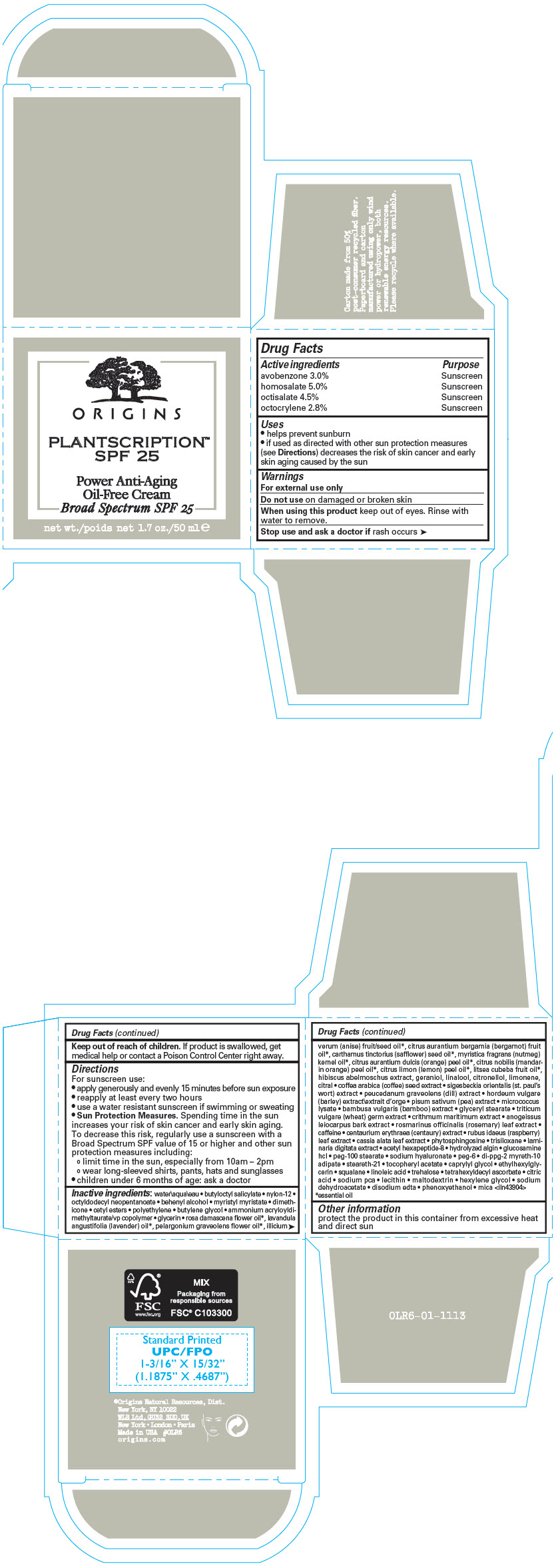
PLANTSCRIPTION SPF 25 POWER ANTI-AGING oil FREE BROAD SPECTRUM AVOBENZONE, HOMOSALATE, OCTISALATE, and OCTOCRYLENE 30 mg/mL; 50 mg/mL; 45 mg/mL; 28 mg/mL Cream — NDC 59427-012-01 (Billing 59427-0012-01)
This is a package of PLANTSCRIPTION SPF 25 POWER ANTI-AGING oil FREE BROAD SPECTRUM AVOBENZONE, HOMOSALATE, OCTISALATE, and OCTOCRYLENE 30 mg/mL; 50 mg/mL; 45 mg/mL; 28 mg/mL Cream from ORIGINS NATURAL RESOURCES INC., marketed since Nov 2017 and currently FDA-listed. It is this product's only package size.
NDC database record
One package, one record: these facts belong to NDC 59427-012-01 alone.
- Record
- FDA NDC Directory package listing · Human OTC drug
- Code segments
- 59427 labeler · 012 product · 01 package
- Package marketed since
- Nov 15, 2017
- Sample package
- No — commercial package
- Listing certified through
- Dec 31, 2026
- Barcode (UPC-A, from the NDC)
- 3 5942701201 2
- FDA record last changed
- Jul 24, 2026
Identity & classification
Regulatory identifiers FDA, NLM and CMS codes for this package
Where does this data come from?
- FDA openFDA NDC Directory · synced Oct 8, 2026
- FDA label on DailyMed · label index refreshed Oct 8, 2026
- RxNorm (NLM RxNav) · catalog refreshed Oct 8, 2026
- Medi-Span GPI (licensed)
- First Databank (licensed) · refreshed Oct 8, 2026
Clinical
Plantscription SPF 25 Power Anti-Aging Oil Free is a topical cream sunscreen marketed as an OTC monograph product. It contains four UV-filtering ingredients (avobenzone, homosalate, octisalate, and octocrylene) that are commonly used together to provide broad-spectrum protection against ultraviolet radiation. This oil-free formulation is designed to be applied to the skin to help block sun exposure.
Patient education
Supplement & herbal interactions
Where does this data come from?
- MedlinePlus (NLM) · refreshed Oct 8, 2026
- FDA label on DailyMed · label index refreshed Oct 8, 2026
Ask a licensed pharmacist directly — free, answered by our team.
Pricing
A drug doesn't have one price. Each row is a different public payment system, and none is what you'd pay at the counter — that depends on your insurance. The ⓘ on each row explains what it measures.
| Price system | Per g | Per package |
|---|---|---|
| Retail pharmacies payNADAC · weekly | Not in the retail survey — common for institutional, discontinued, or low-volume packs. | |
| Medicaid paysCMS SDUD · 12 mo | No recent Medicaid claims on file for this NDC — rare and low-volume NDCs are suppressed in the public data. | |
| Medicare drug plans payPart D · quarterly | No Part D plan price is available for this NDC in our data. | |
Where does this data come from?
- CMS NADAC weekly file
- CMS ASP pricing files · refreshed Sep 20, 2026
- CMS Medicaid State Drug Utilization Data · refreshed Oct 9, 2026
- CMS Part D plan pricing files · refreshed Sep 24, 2026
- VA National Acquisition Center price file
Packaging — all sizes for this product
| Package NDC | Description | Marketing start | Marketing end | Status |
|---|---|---|---|---|
| 59427-0012-01 You're viewing this Main listing | 1 JAR in 1 CARTON / 50 mL in 1 JAR | 2017-11-15 | — | Active |
Therapeutic equivalents
| Product | Labeler | Pack | NADAC/unit | TE | Status | Price vs. this |
|---|---|---|---|---|---|---|
| PLANTSCRIPTION SPF 25 POWER ANTI-AGING oil FREE BROAD SPECTRUM 30 mg/mL; 50 mg/mL; 45 mg/mL; 28 mg/mLthis 59427-0012-01 | ORIGINS | 1 jar | — | — | FDA listed | — |
Where does this data come from?
- FDA openFDA NDC Directory · synced Oct 8, 2026
- FDA Orange Book · refreshed Oct 3, 2026
- CMS NADAC weekly file
Availability & generic status
We did not find an FDA-approved generic match for this exact strength, form and route.
Where does this data come from?
- FDA Orange Book · refreshed Oct 3, 2026
Inactive Ingredients / Excipients
Inactive ingredients, also called excipients, are components of the drug product other than the active ingredient. They may include fillers, dyes, coatings, preservatives, flavors, or other formulation ingredients.
💡 Tap an ingredient (hover on desktop) to see what it is and why it’s used.
-
UNII 9E8X80D2L0
A synthetic form of vitamin E used as an antioxidant and preservative in medications. It helps prevent the active ingredients from degrading when exposed to oxygen or light.
-
UNII P01OUT964K
A fragrant plant-derived alcohol used as a flavoring agent and fragrance component in medicines. It provides taste and aroma to make the product more pleasant to use.
-
UNII L4EL31FWIL
A synthetic peptide (short chain of amino acids) used as a conditioning or texture-enhancing agent in topical formulations. It helps improve product feel and skin compatibility in creams and lotions.
-
UNII W59H9296ZG
A synthetic polymer made from acrylic compounds and vinylpyrrolidone. It works as a film-former and thickener in topical products, helping create a smooth texture and improve how the medication spreads on skin.
-
UNII U5TP1X38RH
A plant-derived ingredient from the bark of Anogeissus leiocarpus, a tree native to Africa. It is used in formulations as a binder and thickening agent to help hold the medicine together and adjust texture.
-
UNII 3SW678MX72
A natural flavoring derived from roasted arabica coffee beans. It adds coffee taste and aroma to the medicine, making it more palatable for patients who need to swallow or chew the product.
-
UNII FIW80T6P6V
A plant extract from bamboo that acts as a natural filler and texture agent in medications. It helps give the product structure and consistency while being derived from plant material.
-
UNII 39W1PKE3JI
Bergamot oil is a citrus extract from bergamot orange peel. It's used as a flavoring and fragrance agent to improve taste and aroma in medicines.
-
UNII 3XUS85K0RA
Butylene glycol is a clear liquid derived from petroleum or plants that acts as a humectant, solvent, and preservative booster in medicines. It helps keep formulations stable, dissolve active ingredients, and maintain moisture in topical products.
-
UNII 2EH13UN8D3
A synthetic compound used as a solvent and penetration enhancer in topical formulations. It helps dissolve active ingredients and allows them to penetrate the skin more effectively.
-
UNII 3G6A5W338E
Caffeine is a natural stimulant compound commonly extracted from coffee beans and tea leaves. In medicines, it serves as an active booster in pain relievers and cold products to enhance alertness and improve the effectiveness of other ingredients.
-
UNII 00YIU5438U
Caprylyl glycol is a clear liquid derived from coconut oil. In medicines, it acts as a humectant to retain moisture, a preservative booster to prevent microbial growth, and a solvent to help dissolve or mix other ingredients.
-
UNII 7TXA8K9WAE
A protein enzyme from the bacterium Micrococcus luteus that breaks down hydrogen peroxide into water and oxygen. It may be used in formulations to remove hydrogen peroxide residue left from manufacturing or sterilization processes.
-
UNII 57X4TSH58S
Centaurium erythraea is a plant extract used in some formulations as a flavoring agent or botanical ingredient. It may help provide taste or contribute to the overall composition of the medicine.
-
UNII D072FFP9GU
Cetyl esters wax is a waxy substance made from natural or synthetic fatty acids. It's used as a binder, hardening agent, and coating material to give tablets and capsules their structure and texture.
-
UNII T7EU0O9VPP
Citral is a natural oil compound found in lemon and citrus plants. It's used in medicines as a flavoring agent and to add pleasant lemon or citrus scent to the product.
-
UNII 2968PHW8QP
A weak organic acid derived from citrus fruits or made through fermentation. It works as a buffer to control pH, a preservative to extend shelf life, and a flavoring agent in medications.
-
UNII J7IHY79BKY
A plant extract from glasswort, a coastal herb. It's used in formulations as a humectant to help retain moisture and may serve as a skin-conditioning agent in topical products.
-
UNII 4IN301M0KJ
A synthetic oily compound made from plant-derived and petroleum-based ingredients. It acts as an emulsifier and solvent in topical or oral formulations, helping blend oil and water-based components together.
-
UNII Y05PC4JZRH
Dill is a plant-derived flavoring ingredient that adds taste and aroma to medicines. It helps mask unpleasant flavors in oral medications, making them easier to take.
-
UNII 92RU3N3Y1O
Dimethicone is a silicone-based oil that acts as an anti-foaming agent and lubricant in medicines. It reduces gas bubbles in liquid formulations and helps coat and protect the stomach lining when ingested.
-
UNII 9G1OE216XY
Docosanol is a waxy, fatty alcohol derived from plant sources. It acts as an emollient and thickener in topical medicines, helping to soften the skin and improve product texture and stability.
-
UNII 8NLQ36F6MM
Edetate disodium anhydrous is a chemical compound that binds to metal ions in a medicine. It's used as a stabilizer to prevent unwanted chemical reactions and help keep the drug product effective during storage.
-
UNII 147D247K3P
Ethylhexylglycerin is a synthetic preservative used to prevent bacteria and mold from growing in medicines and personal care products. It helps keep the product safe and stable throughout its shelf life.
-
UNII L837108USY
Geraniol is a natural fragrant compound found in plants like roses and lemons. It's used in medicines as a flavoring agent and to improve the taste or aroma of the product.
-
UNII 750W5330FY
Glucosamine hydrochloride is an amino sugar derived from shellfish or produced synthetically. In medicines, it serves as an active nutritional ingredient rather than a typical inactive excipient, used to support joint and cartilage function.
-
UNII PDC6A3C0OX
Glycerin is a clear, thick liquid derived from plant oils or fats. It acts as a humectant to retain moisture, a sweetener, and a solvent in medications.
-
UNII 230OU9XXE4
A waxy substance made from glycerin and stearic acid that acts as an emulsifier to blend oily and watery ingredients together. It also helps thicken and stabilize the medicine's texture.
-
UNII KEH0A3F75J
Hexylene glycol is a clear liquid alcohol used as a solvent and preservative in medicines. It helps dissolve other ingredients and keeps the product stable during storage.
-
UNII UG00KM4WR7
A plastic polymer used as a container material and film coating. It helps protect the medicine from moisture and air exposure during storage and shipping.
-
UNII 8JBE478M5Q
A plant-derived ingredient made from whole barley grain. It's used as a filler to add bulk and texture to the medicine form.
-
UNII YSE9PPT4TH
Hyaluronate sodium is a natural carbohydrate that holds moisture. It's used in medicines as a lubricant, thickener, and moisture-retaining agent to improve texture and delivery of the active ingredient.
-
UNII 15E7C67EE8
A natural seaweed extract used as a thickener and gelling agent in medicines. It helps create the right texture and consistency in liquid or semi-solid formulations.
-
UNII 9E3P882579
A seaweed-derived thickening and gelling agent made from brown kelp. It helps stabilize the medicine's texture and may be used as a binder or suspending agent to keep ingredients evenly mixed.
-
UNII ZBP1YXW0H8
A fragrant oil extracted from lavender plants, used as a flavoring and scent agent in medicines to improve taste and aroma.
-
UNII 1DI56QDM62
A natural fatty substance from soybeans that helps mix oil and water-based ingredients together. It acts as an emulsifier and lubricant in medicines to improve texture and help the product break down properly in your body.
-
UNII I9GRO824LL
Lemon oil is a natural fragrant extract from lemon peel. It's used in medicines as a flavoring agent to mask unpleasant tastes and improve how the medicine tastes to patients.
-
UNII GFD7C86Q1W
A natural oil extracted from citrus peels, (+)-limonene is used as a flavoring agent and solvent in medicines. It helps dissolve active ingredients and provides a lemon or orange taste.
-
UNII D81QY6I88E
Linalool is a natural fragrant oil found in plants like lavender and citrus. It's used in medicines as a flavoring agent and to mask unpleasant tastes or smells.
-
UNII 9KJL21T0QJ
Linoleic acid is an omega-6 fatty acid derived from plant oils. It serves as an emulsifier and skin conditioning agent in topical formulations, helping ingredients mix smoothly and improving product texture.
-
UNII 2XIW34BN6O
A fragrant oil derived from litsea cubeba fruit, used as a flavoring agent and aromatic ingredient to improve the taste and smell of the medicine.
-
UNII 7CVR7L4A2D
A starch-derived carbohydrate produced by breaking down corn, potato, or tapioca starch. It functions as a filler and binder to give the medicine bulk and texture, and sometimes as a mild sweetener or texture enhancer in powders and tablets.
-
UNII NJO720F72R
Mandarin oil is a natural essential oil extracted from mandarin orange peel. It's used as a flavor and aroma agent to make medicines taste and smell more pleasant.
-
UNII V8A1AW0880
Mica is a naturally occurring mineral that's ground into fine powder. It's used in medicines as a colorant and anti-caking agent to improve appearance and prevent clumping in tablets or powders.
-
UNII 4042ZC00DY
A waxy ester derived from myristic acid, used as an emollient and lubricant in topical formulations. It helps soften skin contact, reduce friction during application, and improve the texture and spreadability of creams and ointments.
-
UNII Z1CLM48948
Nutmeg oil is a natural aromatic extract from nutmeg seeds. It's used in medicines as a flavoring agent to improve taste and sometimes as a fragrance to mask bitter or unpleasant odors.
-
UNII 446U8J075B
Nylon-12 is a synthetic plastic polymer used as a coating or film-forming agent in medicines. It helps create a protective barrier around tablets or capsules to control how and when the medicine is released in the body.
-
UNII X8725R883T
A synthetic oily liquid derived from branched carboxylic acids, used as an emollient and skin-conditioning agent in topical formulations. It helps soften and smooth the product's texture while improving how it spreads on skin.
-
UNII AKN3KSD11B
Orange oil obtained by cold pressing orange peel. It serves as a flavoring agent and fragrance in medicines to improve taste and aroma.
-
UNII W4X7H8GYFM
Polyethylene glycol (PEA) is a synthetic polymer derived from petroleum. It functions as a solvent, lubricant, and binder in medications to improve texture, reduce sticking, and help bind ingredients together.
-
UNII YD01N1999R
A waxy substance made from polyethylene glycol and stearic acid. It helps mix oil and water-based ingredients together and serves as an emulsifier and solubilizer in liquid and semi-solid medicines.
-
UNII 8CU46UJ38C
A waxy compound made from polyethylene glycol and stearic acid. It acts as an emulsifier to blend oil and water-based ingredients, and helps form a smooth, consistent texture in the medication.
-
UNII 3K0J1S7QGC
A fragrant essential oil derived from geranium flowers, used as a flavoring and fragrance agent to improve the taste and aroma of medicines.
-
UNII HIE492ZZ3T
Phenoxyethanol is a synthetic preservative and antimicrobial agent used to prevent bacterial and fungal growth in medicines and cosmetic products, extending shelf life and maintaining product safety.
-
UNII GIN46U9Q2Q
Phytosphingosine is a naturally derived fatty compound that helps stabilize and thicken skincare and cosmetic formulations. It works as an emollient and conditioning agent to improve texture and skin feel in topical products.
-
UNII 5655G9Y8AQ
A synthetic liquid polymer used as a solvent and humectant in medications. It helps dissolve active ingredients, maintain moisture in the formulation, and improve how the medicine flows and is absorbed.
-
UNII 18920M3T13
Rosa damascena flower oil is a fragrant plant oil extracted from damask rose petals. It's used in medicines as a flavoring and aromatic agent to improve taste and scent.
-
UNII IJ67X351P9
A natural plant extract from rosemary leaves used as a preservative to help prevent oils and fats in the medicine from spoiling or becoming rancid during storage.
-
UNII 8O2V33JG64
A plant extract from red raspberry leaves, used as a natural flavoring or coloring agent in medicines. It may also serve as a mild preservative or provide antioxidant properties to the formulation.
-
UNII 65UEH262IS
Safflower oil is a plant-based oil extracted from safflower seeds. It's used in medicines as a solvent and carrier to help dissolve or suspend active ingredients, and sometimes as an emollient to improve texture.
-
UNII 4BXR6YZN92
Senna alata leaf is a plant-derived ingredient used as a natural colorant and flavoring agent in medicines. It may also serve as a mild botanical filler in some formulations.
-
UNII 6UL878YAR7
A plant extract from Sigesbeckia orientalis, a flowering herb used in traditional medicine. In medications, it may serve as an active botanical ingredient or natural additive for texture and formulation stability.
-
UNII 8W46YN971G
Sodium dehydroacetate is a salt derived from dehydroacetic acid, a compound used as a preservative. It helps prevent mold, bacteria, and yeast growth in medicines, extending shelf life and maintaining product safety.
-
UNII 469OTG57A2
Sodium pyrrolidone carboxylate is a synthetic polymer derived from pyrrolidone chemistry. It functions as a solubilizer and binder in medications, helping dissolve poorly water-soluble drugs and hold tablet ingredients together.
-
UNII GW89575KF9
Squalane is a lightweight oil derived from plant sources or synthesized. It acts as an emollient and lubricant in formulations, helping ingredients blend smoothly and improving product texture and spreadability.
-
UNII 6RXP35EIRE
A fragrant oil extracted from star anise seeds, used primarily as a flavoring agent to mask bitter tastes and improve the smell of medicines.
-
UNII 53J3F32P58
A synthetic detergent derived from stearic acid, a fatty substance. It helps dissolve or distribute oil-based ingredients evenly throughout the medicine, acting as an emulsifier and solubilizer in tablets and capsules.
-
UNII 9LBV3F07AZ
A synthetic, oil-soluble form of vitamin C used as an antioxidant to prevent degradation of the medicine and maintain its stability during storage.
-
UNII B8WCK70T7I
Trehalose is a natural sugar made from two glucose molecules linked together. It's used in medicines as a filler to add bulk, a sweetener for taste, and a stabilizer to help keep active ingredients effective during storage.
-
UNII 9G1ZW13R0G
A silicone-based polymer that reduces surface tension and improves how liquid medicines spread and are absorbed. It acts as a wetting agent and surfactant in topical formulations.
-
UNII 059QF0KO0R
Water is a liquid solvent that dissolves and mixes ingredients together in liquid medicines, syrups, and injections. It helps distribute the active drug evenly throughout the product.
-
UNII YR3G369F5A
Wheat germ is the nutrient-rich central part of the wheat kernel. It's used in medications as a natural filler and source of vitamins and oils that can help bind and preserve the product.
72 inactive ingredients listed in the exact product block matched to this NDC.
Label-section wording can be broader than the structured product block and may mention additional formulation ingredients.
Where does this data come from?
ingredient classCode="IACT" elements from the exact product block matched by this NDC. Label-section narrative from DailyMed / the openFDA label index is shown separately when available.- FDA label on DailyMed · label index refreshed Oct 8, 2026
- FDA openFDA NDC Directory · synced Oct 8, 2026
Inactive ingredient FAQ
Are inactive ingredients the same for every manufacturer?
Why might an inactive ingredient be missing?
Can inactive ingredients matter?
Manufacturer & labeler
More NDCs from ORIGINS NATURAL RESOURCES INC. labeler code 59427
- SUPER SPOT REMOVER ACNE TREATMENT SALICYLIC ACID 15 mg/mL Gel NDC 59427-005-01
- A PERFECT WORLD SPF 40 AGE DEFENSE BROAD SPECTRUM MOISTURIZER WITH WHITE TEA AVOBENZONE, HOMOSALATE, OCTINOXATE, OCTISALATE, and OCTOCRYLENE 30 mg/mL; 80 mg/mL; 75 mg/mL; 45 mg/mL; 50 mg/mL Cream NDC 59427-010-01
- VITAZING SPF 15 ENERGY BOOSTING MOISTURIZER WITH MANGOSTEEN BROAD SPECTRUM SPF 15 avobenzone, octisalate, and octocrylene 30 mg/mL; 30 mg/mL; 27 mg/mL Cream NDC 59427-013-01
- CLEAR IMPROVEMENT PORE CLEARING MOISTURIZER Salicylic acid 10 mg/mL Lotion NDC 59427-015-01
- ORIGINS GINZING ENERGY-BOOSTING TINTED MOISTURIZER BROAD SPECTRUM SPF 40 OCTINOXATE, OCTISALATE, OCTOCRYLENE, TITANIUM DIOXIDE, and ZINC OXIDE 75 mg/mL; 20 mg/mL; 20 mg/mL; 30 mg/mL; 30 mg/mL Liquid NDC 59427-016-01
- DR. ANDREW WEIL FOR ORIGINS MEGA-BRIGHT SPF 30 SKIN TONE CORRECTING oil FREE MOISTURIZER BROAD SPECTRUM SPF 30 HOMOSALATE, OCTISALATE, AVOBENZONE, and OCTOCRYLENE 50 mg/mL; 50 mg/mL; 30 mg/mL; 27 mg/mL Cream NDC 59427-112-01
- DR ANDREW WEILS FOR ORIGINS MEGA-DEFENSE ADVANCED DAILY UV DEFENDER BROAD SPECTRUM SPF 45 TITANIUM DIOXIDE and ZINC OXIDE 63 mg/mL; 40 mg/mL Lotion NDC 59427-113-01
- PLANTSCRIPTION SPF 25 POWER ANTI AGING BROAD SPECTRUM 25 AVOBENZONE, HOMOSALATE, OCTISLATE, and OCTOCRYLENE 30 mg/mL; 50 mg/mL; 45 mg/mL; 28 mg/mL Cream NDC 59427-114-01
Where does this data come from?
- FDA openFDA NDC Directory · synced Oct 8, 2026
- Drugs@FDA
FDA label — Drug Facts FDA SPL
🎯 Indications and Usage ▾
Uses helps prevent sunburn if used as directed with other sun protection measures (see Directions ) decreases the risk of skin cancer and early skin aging caused by the sun
⏱️ Dosage and Administration ▾
Directions For sunscreen use: apply generously and evenly 15 minutes before sun exposure reapply at least every two hours use a water resistant sunscreen if swimming or sweating Sun Protection Measures. Spending time in the sun increases your risk of skin cancer and early skin aging. To decrease this risk, regularly use a sunscreen with a Broad Spectrum SPF value of 15 or higher and other sun protection measures including: limit time in the sun, especially from 10am – 2pm wear long-sleeved shirts, pants, hats and sunglasses children under 6 months of age: ask a doctor
⚠️ Warnings ▾
Warnings For external use only Do not use on damaged or broken skin When using this product keep out of eyes. Rinse with water to remove. Stop use and ask a doctor if rash occurs Keep out of reach of children. If product is swallowed, get medical help or contact a Poison Control Center right away.
📦 Storage and Handling ▾
Other information protect the product in this container from excessive heat and direct sun
🧪 Active Ingredient ▾
Active ingredients Purpose avobenzone 3.0% Sunscreen homosalate 5.0% Sunscreen octisalate 4.5% Sunscreen octocrylene 2.8% Sunscreen
🧪 Inactive Ingredients ▾
Inactive ingredients water\aqua\eau • butyloctyl salicylate • nylon-12 • octyldodecyl neopentanoate • behenyl alcohol • myristyl myristate • dimethicone • cetyl esters • polyethylene • butylene glycol • ammonium acryloyldimethyltaurate/vp copolymer • glycerin • rosa damascena flower oil essential oil , lavandula angustifolia (lavender) oil , pelargonium graveolens flower oil , illicium verum (anise) fruit/seed oil , citrus aurantium bergamia (bergamot) fruit oil , carthamus tinctorius (safflower) seed oil , myristica fragrans (nutmeg) kernel oil , citrus aurantium dulcis (orange) peel oil , citrus nobilis (mandarin orange) peel oil , citrus limon (lemon) peel oil , litsea cubeba fruit oil , hibiscus abelmoschus extract, geraniol, linalool, citronellol, limonene, citral • coffea arabica (coffee) seed extract • sigesbeckia orientalis (st. paul's wort) extract • peucedanum graveolens (dill) extract • hordeum vulgare (barley) extract\extrait d'orge • pisum sativum (pea) extract • micrococcus lysate • bambusa vulgaris (bamboo) extract • glyceryl stearate • triticum vulgare (wheat) germ extract • crithmum maritimum extract • anogeissus leiocarpus bark extract • rosmarinus officinalis (rosemary) leaf extract • caffeine • centaurium erythraea (centaury) extract • rubus idaeus (raspberry) leaf extract • cassia alata leaf extract • phytosphingosine • trisiloxane • laminaria digitata extract • acetyl hexapeptide-8 • hydrolyzed algin • glucosamine hcl • peg-100 stearate • sodium hyaluronate • peg-6 • di-ppg-2 myreth-10 adipate • steareth-21 • tocopheryl acetate • caprylyl glycol • ethylhexylglycerin • squalane • linoleic acid • trehalose • tetrahexyldecyl ascorbate • citric acid • sodium pca • lecithin • maltodextrin • hexylene glycol • sodium dehydroacetate • disodium edta • phenoxyethanol • mica <iln43904>
🎯 Purpose ▾
Active ingredients Purpose avobenzone 3.0% Sunscreen homosalate 5.0% Sunscreen octisalate 4.5% Sunscreen octocrylene 2.8% Sunscreen
📄 Do Not Use ▾
Do not use on damaged or broken skin
📄 When Using This Product ▾
When using this product keep out of eyes. Rinse with water to remove.
📄 Stop Use and Ask a Doctor If ▾
Stop use and ask a doctor if rash occurs
📄 Keep Out of Reach of Children ▾
Keep out of reach of children. If product is swallowed, get medical help or contact a Poison Control Center right away.
📄 Package Label / Principal Display Panel ▾
PRINCIPAL DISPLAY PANEL - 50 ml Jar Carton ORIGINS PLANTSCRIPTION™ SPF 25 Power Anti-Aging Oil-Free Cream Broad Spectrum SPF 25 net wt. 1.7 oz./50 ml e PRINCIPAL DISPLAY PANEL - 50 ml Jar Carton
Reported adverse events (FAERS)
Top reported reactions
Age at onset
Reporter sex
Serious outcomes
Where does this data come from?
About this NDC listing & data coverage
What data is (and isn’t) available for this NDC — tap to expand
| NDC identity (package / product / labeler codes) | ✓ Available |
| Labeler | ✓ Available |
| Product & package description | ✓ Available |
| Marketing category & status | ✓ Available |
| Active ingredient / dosage form / route | ✓ Available |
| FDA label (SPL via DailyMed) | ✓ Available |
| Package photos | ✓ Available |
| Inactive ingredients (structured) | ✓ Available |
| NADAC pharmacy acquisition price (CMS) | — Not published for this NDC CMS publishes NADAC only for NDCs reported in its retail-pharmacy survey. |
| Orange Book / therapeutic-equivalence data | — Not published for this NDC Applies only to products approved under an NDA/ANDA; many listings are out of scope. |
| HCPCS J-code billing crosswalk | — Not published for this NDC Most self-administered / retail products have no J-code — that is normal. |
| Medicaid utilization (CMS SDUD) | — Not published for this NDC CMS reports utilization only for NDCs with Medicaid claims above its privacy threshold. |