
Fetroja Cefiderocol sulfate tosylate 1 g/10mL Injection, Powder, For Solution
🆔 Identity & classification
Where does this data come from?
🏷️ RxNorm drug class
This medicine belongs to the Cephalosporin Antibacterial class.
Where does this data come from?
🏭 Manufacturer & labeler
Where does this data come from?
🩺 Clinical
Cefiderocol injection is used to treat certain types of infections from bacteria including urinary tract infections and pneumonias. Cefiderocol injection is in a class of medications called cephalosporin antibiotics. It works by killing bacteria. Antibiotics such as cefiderocol injection will not work for colds, flu, or other viral infections. Taking or using antibiotics when they are not needed increases your risk of getting an infection later that resists antibiotic treatment.
Read the full MedlinePlus article ↗- Fetroja is used for serious infections caused by certain gram-negative bacteria — the kind that are often resistant to many common antibiotics. Your doctors chose it because the ba...
- Why am I getting this antibiotic instead of a regular one?
- No pills with this one. Fetroja is given directly into your vein through an IV line, usually over about 3 hours, several times a day. The exact schedule depends on how your kidneys...
- How is Fetroja given — do I have to swallow a pill?
Patient education
Supplement & herbal interactions
Some supplements/herbs that may interact with Cefiderocol Sulfate Tosylate — tap one for details:
Cefiderocol Sulfate Tosylate may be associated with lower levels of 7 nutrients — worth a chat with your pharmacist, not a cause for alarm.
Where does this data come from?
Ask a licensed pharmacist directly — free, answered by our team.
🧪 Inactive Ingredients / Excipients
Inactive ingredients, also called excipients, are components of the drug product other than the active ingredient. They may include fillers, dyes, coatings, preservatives, flavors, or other formulation ingredients.
💡 Tap an ingredient (hover on desktop) to see what it is and why it’s used.
-
UNII N762921K75
A colorless, odorless gas that makes up most of the air we breathe. In medicines, it's used as a packaging gas or propellant to protect products from oxidation and maintain freshness.
-
216 mg / 10 mL
UNII 451W47IQ8X
Sodium chloride is common table salt. It's used in medicines as a buffer to maintain proper pH, as a filler to add bulk, or to adjust the osmotic balance in liquid formulations.
-
UNII 55X04QC32I
A strong alkaline chemical used to adjust and maintain the pH balance of liquid medicines. It helps keep the medicine stable and ensures it stays effective during storage.
-
900 mg / 10 mL
UNII C151H8M554
A natural sugar derived from sugar cane or sugar beets. It's used as a sweetener, filler, and binder to improve taste, add bulk, and help hold tablet or capsule ingredients together.
4 inactive ingredients listed in the exact product block matched to this NDC.
Where does this data come from?
ingredient classCode="IACT" elements from the exact product block matched by this NDC. Label-section narrative from DailyMed / the openFDA label index is shown separately when available.Inactive ingredient FAQ
Are inactive ingredients the same for every manufacturer?
Why might an inactive ingredient be missing?
Can inactive ingredients matter?
💲 Pricing
A drug doesn't have one price. Each row is a different public payment system, and none is what you'd pay at the counter — that depends on your insurance. The ⓘ on each row explains what it measures.
| Price system | Per mL | Per package |
|---|---|---|
| Retail pharmacies payNADAC · weekly | Not in the retail survey — common for institutional, discontinued, or low-volume packs. | |
| Medicaid paysCMS SDUD · 12 mo | $274.46 | $27,446.31 / 100 ml |
| Medicare drug plans payPart D · quarterly | No Part D plan price is available for this NDC in our data. | |
| Medicare Part B allowsASP · J0699 | $2.548 / J0699 unit | — |
Where does this data come from?
🧾 Billing & reimbursement
Where does this data come from?
🔁 Therapeutic equivalents
| Product | Labeler | Pack | NADAC/unit | TE | Status | Price vs. this |
|---|---|---|---|---|---|---|
| Fetroja 1 g/10mLthis 59630-0266-10 | Shionogi | 10 vials | — | — | FDA listed | — |
Where does this data come from?
⏳ Availability & generic status
We did not find an FDA-approved generic match for this exact strength, form and route. Patent/protection dates below may affect future generic timing.
Why the date isn’t exact: Generic timing can change because patents may be challenged, settled, licensed, added, removed, or worked around with a narrower label — and FDA approval does not always mean a pharmacy can get the generic today.
🛈 What do these terms mean?
- Patent
- Legal protection listed in the Orange Book that may delay generic approval or launch. Issued by the U.S. Patent & Trademark Office.
- Substance patent
- Covers the active drug molecule itself — the hardest to design around. A generic generally can’t launch until it expires.
- Formulation (product) patent
- Covers a specific formulation or dosage form. A generic can sometimes work around it with a different formulation.
- Method-of-use patent
- A patent covering one specific approved use of the drug — not necessarily the whole molecule. A generic can sometimes launch with a “skinny label” that carves out the protected use and keeps the others.
- Skinny label
- A generic label that omits a still-patented use when the FDA allows it — letting a generic reach the market for the unprotected uses.
- Exclusivity
- FDA-granted marketing protection, separate from patents — e.g. 5-yr new chemical entity, 7-yr orphan drug, or a +6-month pediatric extension.
- Paragraph IV
- A generic applicant’s formal challenge to a listed patent. It can potentially lead to earlier generic entry, but often involves litigation or a settlement.
- RLD / RS
- Reference Listed Drug — the brand product the FDA uses as the reference for generic applications. Reference Standard — the product the FDA expects generics to compare against in bioequivalence testing.
- TE / AB rating
- FDA therapeutic-equivalence rating. An AB rating generally means the FDA considers a generic therapeutically equivalent to — and substitutable for — the brand.
- LOE (loss of exclusivity)
- The latest patent or exclusivity currently listed — the loss-of-exclusivity / latest-listed-protection date shown on this page. Paragraph-IV challenges and settlements can move the real date earlier; FDA approval and a manufacturer’s decision to market can move it later.
Built from the FDA Orange Book. The bars above are scaled to each protection’s expiry; the red LOE marker is the last one to lapse.
| Patent | Type | Use code | Expires |
|---|---|---|---|
| US 9238657 ↗ | Drug substance | U-282 | Nov 14, 2033 |
| US 9238657 ↗ | Drug substance | U-3470 | Nov 14, 2033 |
| US 9238657 ↗ | Drug substance | U-3471 | Nov 14, 2033 |
| US 10004750 ↗ | Drug substance | — | Sep 3, 2035 |
| US 9949982 ↗ | Drug product | — | Sep 3, 2035 |
| Code | What it grants | Expires |
|---|---|---|
| NCE | New Chemical Entity (5-year) | Nov 14, 2024 |
| GAIN | Qualified Infectious Disease Product (+5-year) | Nov 14, 2029 |
Is there a generic version of FETROJA 1 GRAM VIAL?
The FDA approved a generic — why can’t I get it at my pharmacy yet?
Why do different websites show different generic release dates?
What does “FDA listed” mean?
What does a patent or protection date mean here?
What does “current Orange Book estimate” mean?
Can a generic come out before the last patent expires?
Can a generic come out after the listed dates?
What is the difference between patents and exclusivity?
Why are there multiple patent dates?
Where does this data come from?
🗺️ Medicaid utilization & spend
📊 Medicare Part D spend CMS · PART D · 2026 (Q1)
🔬 Reported adverse events (FAERS)
Top reported reactions
Age at onset
Reporter sex
Serious outcomes
Where does this data come from?
📦 Packaging — all sizes for this product
| Package NDC | Description | Marketing start | Status |
|---|---|---|---|
| 59630-0266-10 You're viewing this | 10 VIAL, SINGLE-USE in 1 CARTON (59630-266-10) / 10 mL in 1 VIAL, SINGLE-USE (59630-266-01) | 2020-01-31 | Active |
🧭 About this NDC listing & data coverage
What data is (and isn’t) available for this NDC — tap to expand
| NDC identity (package / product / labeler codes) | ✓ Available |
| Labeler | ✓ Available |
| Product & package description | ✓ Available |
| Marketing category & status | ✓ Available |
| Active ingredient / dosage form / route | ✓ Available |
| FDA label (SPL via DailyMed) | ✓ Available |
| Package photos | ✓ Available |
| Inactive ingredients (structured) | ✓ Available |
| NADAC pharmacy acquisition price (CMS) | — Not published for this NDC CMS publishes NADAC only for NDCs reported in its retail-pharmacy survey. |
| Orange Book / therapeutic-equivalence data | ✓ Available |
| HCPCS J-code billing crosswalk | ✓ Available |
| Medicaid utilization (CMS SDUD) | ✓ Available |
Questions about this listing
Why is there no price listed?
Is the NDC printed on the package the same as the 11-digit billing NDC?
What do the three segments of this NDC mean?
Is this package still being marketed?
Who lists this product with the FDA?
Do I need a prescription for this product?
Does this product have a billing J-code?
Where does this data come from?
📄 Full prescribing information FDA SPL
🎯 Indications and Usage ▾
1 INDICATIONS AND USAGE FETROJA is a cephalosporin antibacterial indicated in patients 18 years of age or older for the treatment of the following infections caused by susceptible Gram-negative microorganisms: Complicated Urinary Tract Infections (cUTI), including Pyelonephritis ( 1.1 ) Hospital-acquired Bacterial Pneumonia and Ventilator-associated Bacterial Pneumonia (HABP/VABP) ( 1.2 ) To reduce the development of drug-resistant bacteria and maintain the effectiveness of FETROJA and other antibacterial drugs, FETROJA should be used only to treat or prevent infections that are proven or strongly suspected to be caused by bacteria.
( 1.3 )
1.1Complicated Urinary Tract Infections (cUTIs), Including Pyelonephritis FETROJA ® is indicated in patients 18 years of age or older for the treatment of complicated urinary tract infections (cUTIs), including pyelonephritis caused by the following susceptible Gram-negative microorganisms: Escherichia coli , Klebsiella pneumoniae , Proteus mirabilis , Pseudomonas aeruginosa , and Enterobacter cloacae complex [see Clinical Studies (14.1) ] .
1.2Hospital-acquired Bacterial Pneumonia and Ventilator-associated Bacterial Pneumonia (HABP/VABP) FETROJA is indicated in patients 18 years of age or older for the treatment of hospital-acquired bacterial pneumonia and ventilator-associated bacterial pneumonia, caused by the following susceptible Gram-negative microorganisms: Acinetobacter baumannii complex, Escherichia coli , Enterobacter cloacae complex, Klebsiella pneumoniae , Pseudomonas aeruginosa , and Serratia marcescens [see Clinical Studies (14.2) ].
1.3Usage To reduce the development of drug-resistant bacteria and maintain the effectiveness of FETROJA and other antibacterial drugs, FETROJA should be used only to treat or prevent infections that are proven or strongly suspected to be caused by susceptible bacteria. When culture and susceptibility information are available, they should be considered in selecting or modifying antibacterial therapy. In the absence of such data, local epidemiology and susceptibility patterns may contribute to the empiric selection of therapy.
⏱️ Dosage and Administration ▾
2 DOSAGE AND ADMINISTRATION Administer 2 grams of FETROJA for injection every 8 hours by intravenous (IV) infusion over 3 hours in patients with creatinine clearance (CLcr) 60 to 119 mL/min. ( 2.1 ) Dose adjustments are required for patients with CLcr less than 60 mL/min, (including patients receiving intermittent hemodialysis (HD) or continuous renal replacement therapy (CRRT)), and for patients with CLcr 120 mL/min or greater. ( 2.2 ) See full prescribing information for instructions on preparation of FETROJA doses.
( 2.3 ) See full prescribing information for drug compatibilities. ( 2.4 )
2.1Recommended Dosage The recommended dosage of FETROJA is 2 grams administered every 8 hours by intravenous (IV) infusion over 3 hours in adults with a creatinine clearance (CLcr) of 60 to 119 mL/min. Dosage adjustment of FETROJA is recommended for patients with CLcr less than 60 mL/min, including patients receiving intermittent hemodialysis (HD) or continuous renal replacement therapy (CRRT), and for patients with CLcr 120 mL/min or greater [see Dosage and Administration (2.2) ]. The recommended duration of treatment with FETROJA is 7 to 14 days.
The duration of therapy should be guided by the patient's clinical status.
2.2Dosage Adjustments in Patients with CLcr Less Than 60 mL/min (Including Patients Undergoing Intermittent HD or CRRT), and CLcr 120 mL/min or Greater Dosage Adjustments in Patients with CLcr Less Than 60 mL/min Including Patients Receiving Intermittent HD Dosage adjustment of FETROJA is recommended in patients with CLcr less than 60 mL/min (Table 1). For patients undergoing intermittent HD, start the dosing of FETROJA immediately after the completion of HD. For patients with fluctuating renal function, monitor CLcr and adjust dosage accordingly.
Table 1 Recommended Dosage of FETROJA for Patients with CLcr Less Than 60 mL/min Including Patients Receiving Intermittent HD Estimated Creatinine Clearance (CLcr) CLcr = creatinine clearance estimated by Cockcroft-Gault equation. Dose Frequency Infusion Time HD = hemodialysis. CLcr 30 to 59 mL/min 1.5 grams Every 8 hours 3 hours CLcr 15 to 29 mL/min 1 gram Every 8 hours 3 hours CLcr less than 15 mL/min, with or without intermittent HD Cefiderocol is removed by HD; administer FETROJA immediately after HD for patients receiving intermittent HD.
0.75grams Every 12 hours 3 hours Dosage Adjustments in Patients Receiving CRRT For patients receiving CRRT, including continuous venovenous hemofiltration (CVVH), continuous venovenous hemodialysis (CVVHD), and continuous venovenous hemodiafiltration (CVVHDF), the dosage of FETROJA should be based on the effluent flow rate in CRRT (see Table 2 ). These recommendations are intended to provide initial dosing in patients receiving CRRT. Dosing regimens may need to be tailored based on residual renal function and patient's clinical status [see Use in Specific Populations (8.6) ] .
Table 2 Recommended Dosage of FETROJA for Patients Receiving CRRT Effluent Flow Rate Ultrafiltrate flow rate for CVVH, dialysis flow rate for CVVHD, ultrafiltrate flow rate plus dialysis flow rate for CVVHDF. Recommended Dosage of FETROJA CRRT = continuous renal replacement therapy. 2 L/hr or less 1.5 grams every 12 hours 2.1 to 3 L/hr 2 grams every 12 hours 3.1 to 4 L/hr 1.5 grams every 8 hours
4.1L/hr or greater 2 grams every 8 hours Dosage Adjustments in Patients with CLcr 120 mL/min or Greater For patients with CLcr greater than or equal to 120 mL/min, FETROJA 2 grams administered every 6 hours by IV infusion over 3 hours is recommended [see Use in Specific Populations (8.6) ] .
2.3Preparation of FETROJA Solution for Administration FETROJA is supplied as a sterile, lyophilized powder that must be reconstituted and subsequently diluted using aseptic technique prior to intravenous infusion. Preparation of Doses Reconstitute the powder for injection in the FETROJA vial with 10 mL of either 0.9% sodium chloride injection, USP or 5% dextrose injection, USP and ge…
💊 Dosage Forms and Strengths ▾
3 DOSAGE FORMS AND STRENGTHS FETROJA 1 gram for injection is supplied as a white to off-white, sterile, lyophilized powder for reconstitution in single-dose, clear glass vials; each vial contains 1 gram of cefiderocol. For injection: 1 gram of cefiderocol as a lyophilized powder for reconstitution in single-dose vials. ( 3 )
⛔ Contraindications ▾
4 CONTRAINDICATIONS FETROJA is contraindicated in patients with a known history of severe hypersensitivity to cefiderocol or other beta-lactam antibacterial drugs, or any other component of FETROJA [see Warnings and Precautions (5.2) and Adverse Reactions (6.1) ] . FETROJA is contraindicated in patients with a known history of severe hypersensitivity to cefiderocol and other beta-lactam antibacterial drugs or other components of FETROJA. ( 4 )
⚠️ Warnings and Cautions ▾
5 WARNINGS AND PRECAUTIONS Increase in All-Cause Mortality in Patients with Carbapenem-Resistant Gram-Negative Bacterial Infections: An increase in all-cause mortality was observed in FETROJA-treated patients compared to those treated with best available therapy (BAT). Closely monitor the clinical response to therapy in patients with cUTI and HABP/VABP. ( 5.1 ) Hypersensitivity Reactions: Serious and occasionally fatal hypersensitivity (anaphylactic) reactions have been reported in patients receiving beta-lactam antibacterial drugs.
Hypersensitivity was observed with FETROJA. Cross-hypersensitivity may occur in patients with a history of penicillin allergy. If an allergic reaction occurs, discontinue FETROJA.
( 5.2 ) Clostridioides difficile -associated Diarrhea (CDAD): CDAD has been reported with nearly all systemic antibacterial agents, including FETROJA. Evaluate if diarrhea occurs. ( 5.3 ) Seizures and Other Central Nervous System (CNS) Adverse Reactions: CNS adverse reactions such as seizures have been reported with FETROJA.
If focal tremors, myoclonus, or seizures occur, evaluate patients to determine whether FETROJA should be discontinued. ( 5.4 )
5.1Increase in All-Cause Mortality in Patients with Carbapenem-Resistant Gram-Negative Bacterial Infections An increase in all-cause mortality was observed in patients treated with FETROJA as compared to best available therapy (BAT) in a multinational, randomized, open-label trial in critically ill patients with carbapenem-resistant Gram-negative bacterial infections (NCT02714595). Patients with nosocomial pneumonia, bloodstream infections, sepsis, or cUTI were included in the trial. BAT regimens varied according to local practices and consisted of 1 to 3 antibacterial drugs with activity against Gram-negative bacteria.
Most of the BAT regimens contained colistin. The increase in all-cause mortality occurred in patients treated for nosocomial pneumonia, bloodstream infections, or sepsis. The 28-Day all-cause mortality was higher in patients treated with FETROJA than in patients treated with BAT [25/101 (24.8%) vs.
9/49 (18.4%), treatment difference 6.4%, 95% CI (-8.6, 19.2)]. All-cause mortality remained higher in patients treated with FETROJA than in patients treated with BAT through Day 49 [34/101 (33.7%) vs. 10/49 (20.4%), treatment difference 13.3%, 95% CI (-2.5, 26.9)].
Generally, deaths were in patients with infections caused by Gram-negative organisms, including non-fermenters such as Acinetobacter baumannii complex, Stenotrophomonas maltophilia , and Pseudomonas aeruginosa , and were the result of worsening or complications of infection, or underlying comorbidities. The cause of the increase in mortality has not been established. Closely monitor the clinical response to therapy in patients with cUTI and HABP/VABP.
5.2Hypersensitivity Reactions Serious and occasionally fatal hypersensitivity (anaphylactic) reactions and serious skin reactions have been reported in patients receiving beta-lactam antibacterial drugs. Hypersensitivity was observed in FETROJA-treated patients in clinical trials [see Adverse Reactions (6.1) ] . These reactions are more likely to occur in individuals with a history of beta-lactam hypersensitivity and/or a history of sensitivity to multiple allergens.
There have been reports of individuals with a history of penicillin hypersensitivity who have experienced severe reactions when treated with cephalosporins. Before therapy with FETROJA is instituted, inquire about previous hypersensitivity reactions to cephalosporins, penicillins, or other beta-lactam antibacterial drugs. Discontinue FETROJA if an allergic reaction occurs.
5.3Clostridioides difficile -associated Diarrhea (CDAD) Clostridioides difficile -associated diarrhea (CDAD) has been reported for nearly all systemic antibacterial agents, including FETROJA. CDAD may range in severity from mild diarrhea to fatal colitis. Treatment with antibacterial agents alters the normal flora of the col…
🤒 Adverse Reactions ▾
6 ADVERSE REACTIONS The following serious adverse reactions are described in greater detail in the Warnings and Precautions section: Increase in All-Cause Mortality in Patients with Carbapenem-Resistant Gram-Negative Bacterial Infections [see Warnings and Precautions (5.1) ] Hypersensitivity Reactions [see Warnings and Precautions (5.2) ] Clostridioides difficile -associated Diarrhea (CDAD) [see Warnings and Precautions (5.3) ] Seizures and Other Central Nervous System Adverse Reactions [see Warnings and Precautions (5.4) ] cUTI: The most frequently occurring adverse reactions in greater than or equal to 2% of cUTI patients treated with FETROJA were diarrhea, infusion site reactions, constipation, rash, candidiasis, cough, elevations in liver tests, headache, hypokalemia, nausea, and vomiting.
( 6.1 ) HABP/VABP: The most frequently occurring adverse reactions in greater than or equal to 4% of HABP/VABP patients treated with FETROJA were elevations in liver tests, hypokalemia, diarrhea, hypomagnesemia, and atrial fibrillation. ( 6.1 ) To report SUSPECTED ADVERSE REACTIONS, contact Shionogi Inc. at 1-800-849-9707 or FDA at 1-800-FDA-1088 or www.fda.gov/medwatch .
6.1Clinical Trials Experience Because clinical trials are conducted under widely varying conditions, adverse reaction rates observed in the clinical trials of a drug cannot be directly compared to rates in the clinical trials of another drug and may not reflect the rates observed in practice. Complicated Urinary Tract Infections (cUTIs), Including Pyelonephritis FETROJA was evaluated in an active-controlled, randomized clinical trial in patients with cUTI, including pyelonephritis (Trial 1). In this trial, 300 patients received FETROJA 2 grams every 8 hours infused over 1 hour (or a renally-adjusted dose), and 148 patients were treated with imipenem/cilastatin 1gram/1gram every 8 hours infused over 1 hour (or a renally-adjusted dose).
The median age of treated patients across treatment arms was 65 years (range 18 to 93 years), with approximately 53% of patients aged greater than or equal to 65. Approximately 96% of patients were White, most were from Europe, and 55% were female. Patients across treatment arms received treatment for a median duration of 9 days.
Serious Adverse Reactions and Adverse Reactions Leading to Discontinuation In Trial 1, a total of 14/300 (4.7%) cUTI patients treated with FETROJA and 12/148 (8.1%) of cUTI patients treated with imipenem/cilastatin experienced serious adverse reactions. One death (0.3%) occurred in 300 patients treated with FETROJA as compared to none treated with imipenem/cilastatin. Discontinuation of treatment due to any adverse reaction occurred in 5/300 (1.7%) of patients treated with FETROJA and 3/148 (2.0%) of patients treated with imipenem/cilastatin.
Specific adverse reactions leading to treatment discontinuation in patients who received FETROJA included diarrhea (0.3%), drug hypersensitivity (0.3%), and increased hepatic enzymes (0.3%). Common Adverse Reactions Table 4 lists the most common selected adverse reactions occurring in ≥ 2% of cUTI patients receiving FETROJA in Trial 1. Table 4 Selected Adverse Reactions Occurring in ≥ 2% of cUTI Patients Receiving FETROJA in Trial 1 Adverse Reaction FETROJA 2 grams IV over 1 hour every 8 hours (with dosing adjustment based on renal function).
(N = 300) Imipenem/Cilastatin 1 gram IV over 1 hour every 8 hours (with dosing adjustment based on renal function and body weight). (N = 148) cUTI = complicated urinary tract infection. Diarrhea 4% 6% Infusion site reactions Infusion site reactions include infusion site erythema, inflammation, pain, pruritus, injection site pain, and phlebitis.
4% 5% Constipation 3% 4% Rash Rash includes rash macular, rash maculopapular, erythema, skin irritation. 3% < 1% Candidiasis Candidiasis includes oral or vulvovaginal candidiasis, candiduria. 2% 3% Cough 2% < 1% Elevations in liver tests Elevations in liver tests include alanine aminotransferase,…
🔄 Drug Interactions ▾
7 DRUG INTERACTIONS Use alternate testing methods to confirm positive results of dipstick tests (urine protein, ketones, or occult blood). ( 7.1 )
7.1Drug/Laboratory Test Interactions Cefiderocol may result in false-positive results in dipstick tests (urine protein, ketones, or occult blood). Use alternate clinical laboratory methods of testing to confirm positive tests.
👥 Use in Specific Populations ▾
8 USE IN SPECIFIC POPULATIONS
8.1Pregnancy Risk Summary There are no available data on FETROJA use in pregnant women to evaluate for a drug-associated risk of major birth defects, miscarriage, or adverse maternal or fetal outcomes. Available data from published prospective cohort studies, case series, and case reports over several decades with cephalosporin use in pregnant women have not established drug-associated risks of major birth defects, miscarriage, or adverse maternal or fetal outcomes (see Data ) . Developmental toxicity studies with cefiderocol administered during organogenesis to rats and mice showed no evidence of embryo-fetal toxicity, including drug-induced fetal malformations, at doses providing exposure levels 0.9 times (rats) or 1.3 times (mice) higher than the average observed in patients receiving the maximum recommended daily dose.
The estimated background risk of major birth defects and miscarriage for the indicated population is unknown. All pregnancies have a background risk of birth defect, loss, or other adverse outcomes. In the U.S. general population, the estimated background risk of major birth defects and miscarriage in clinically recognized pregnancies is 2% to 4% and 15% to 20%, respectively.
Data Human Data While available studies cannot definitively establish the absence of risk, published data from prospective cohort studies, case series, and case reports over several decades have not identified an association with cephalosporin use during pregnancy and major birth defects, miscarriage, or other adverse maternal or fetal outcomes. Available studies have methodologic limitations, including small sample size, retrospective data collection, and inconsistent comparator groups. Animal Data Developmental toxicity was not observed in rats at intravenous doses of up to 1000 mg/kg/day or mice at subcutaneous doses of up to 2000 mg/kg/day given during the period of organogenesis (gestation days 6-17 in rats and 6-15 in mice).
No treatment-related malformations or reductions in fetal viability were observed. Mean plasma exposure (AUC) at these doses was approximately 0.9 times (rats) and 1.3 times (mice) the daily mean plasma exposure in patients that received 2 grams of cefiderocol infused intravenously every 8 hours. In a pre- and postnatal development study, cefiderocol was administered intravenously at doses up to 1000 mg/kg/day to rats from Day 6 of pregnancy until weaning.
No adverse effects on parturition, maternal function, or pre- and postnatal development and viability of the pups were observed. In pregnant rats, cefiderocol-derived radioactivity was shown to cross the placenta, but the amount detected in fetuses was a small percentage (< 0.5%) of the dose.
8.2Lactation Risk Summary It is not known whether cefiderocol is excreted into human milk; however, cefiderocol-derived radioactivity was detected in the milk of lactating rats that received the drug intravenously. When a drug is present in animal milk, it is likely that the drug will be present in human milk. No information is available on the effects of FETROJA on the breastfed infant or on milk production.
The developmental and health benefits of breastfeeding should be considered along with the mother's clinical need for FETROJA and any potential adverse effects on the breastfed child from FETROJA or from the underlying maternal condition. Data Cefiderocol-derived radioactivity was detected in milk following intravenous administration to lactating rats. The peak level in rat milk was approximately 6% of the peak plasma level.
8.4Pediatric Use Safety and effectiveness of FETROJA in pediatric patients younger than 18 years of age have not been established.
8.5Geriatric Use cUTI Of the 300 patients treated with FETROJA in the cUTI trial, 158 (52.7%) were 65 years of age and older, and 67 (22.3%) were 75 years of age and older. No overall differences in safety or efficacy were observed between these patients and younger patients. HABP/V…
🤰 Pregnancy ▾
8.1Pregnancy Risk Summary There are no available data on FETROJA use in pregnant women to evaluate for a drug-associated risk of major birth defects, miscarriage, or adverse maternal or fetal outcomes. Available data from published prospective cohort studies, case series, and case reports over several decades with cephalosporin use in pregnant women have not established drug-associated risks of major birth defects, miscarriage, or adverse maternal or fetal outcomes (see Data ) . Developmental toxicity studies with cefiderocol administered during organogenesis to rats and mice showed no evidence of embryo-fetal toxicity, including drug-induced fetal malformations, at doses providing exposure levels 0.9 times (rats) or 1.3 times (mice) higher than the average observed in patients receiving the maximum recommended daily dose.
The estimated background risk of major birth defects and miscarriage for the indicated population is unknown. All pregnancies have a background risk of birth defect, loss, or other adverse outcomes. In the U.S. general population, the estimated background risk of major birth defects and miscarriage in clinically recognized pregnancies is 2% to 4% and 15% to 20%, respectively.
Data Human Data While available studies cannot definitively establish the absence of risk, published data from prospective cohort studies, case series, and case reports over several decades have not identified an association with cephalosporin use during pregnancy and major birth defects, miscarriage, or other adverse maternal or fetal outcomes. Available studies have methodologic limitations, including small sample size, retrospective data collection, and inconsistent comparator groups. Animal Data Developmental toxicity was not observed in rats at intravenous doses of up to 1000 mg/kg/day or mice at subcutaneous doses of up to 2000 mg/kg/day given during the period of organogenesis (gestation days 6-17 in rats and 6-15 in mice).
No treatment-related malformations or reductions in fetal viability were observed. Mean plasma exposure (AUC) at these doses was approximately 0.9 times (rats) and 1.3 times (mice) the daily mean plasma exposure in patients that received 2 grams of cefiderocol infused intravenously every 8 hours. In a pre- and postnatal development study, cefiderocol was administered intravenously at doses up to 1000 mg/kg/day to rats from Day 6 of pregnancy until weaning.
No adverse effects on parturition, maternal function, or pre- and postnatal development and viability of the pups were observed. In pregnant rats, cefiderocol-derived radioactivity was shown to cross the placenta, but the amount detected in fetuses was a small percentage (< 0.5%) of the dose.
🧒 Pediatric Use ▾
8.4Pediatric Use Safety and effectiveness of FETROJA in pediatric patients younger than 18 years of age have not been established.
🧓 Geriatric Use ▾
8.5Geriatric Use cUTI Of the 300 patients treated with FETROJA in the cUTI trial, 158 (52.7%) were 65 years of age and older, and 67 (22.3%) were 75 years of age and older. No overall differences in safety or efficacy were observed between these patients and younger patients. HABP/VABP Of the 148 patients treated with FETROJA in the HABP/VABP trial, 83 (56.1%) were 65 years of age and older, and 40 (27%) were 75 years of age and older.
The incidence of adverse reactions in patients treated with FETROJA was similar in patients under 65 years of age as compared to older patients (65 years of age and older and 75 years of age and older). The incidence of adverse reactions in older patients (65 years of age and older and 75 years of age and older) was also similar between treatment groups. Clinical cure rates at the Test-of-Cure visit (TOC) in FETROJA-treated adult patients younger than 65 years of age, 65 years of age to younger than 75 years of age, and 75 years of age and older were 60%, 77.5%, and 60%, respectively.
In comparison, the clinical cure rates at the TOC visit in the meropenem-treated patients for each of these subgroups were 65.5%, 64.4%, and 70.5%, respectively. The observed all-cause mortality rates at Day 14 in the FETROJA-treated patients for each of these subgroups were 12.3%, 7.5%, and 17.5%, respectively. In comparison, in the meropenem-treated patients for each of these subgroups, they were 10.3%, 17.8%, and 9.1%, respectively. cUTI and HABP/VABP FETROJA is known to be substantially excreted by the kidney, and the risk of adverse reactions to this drug may be greater in patients with impaired renal function.
Because elderly patients are more likely to have decreased renal function, care should be taken in dose selection, and it may be useful to monitor renal function. No dosage adjustment is required based on age. Dosage adjustment for elderly patients should be based on renal function [see Dosage and Administration (2.2) , Use in Specific Populations (8.6) , and Clinical Pharmacology (12.3) ] .
🆘 Overdosage ▾
10 OVERDOSAGE There is no information on clinical signs and symptoms associated with an overdose of FETROJA. Patients who receive doses greater than the recommended dose regimen and have unexpected adverse reactions possibly associated with FETROJA should be carefully observed and given supportive treatment, and discontinuation or interruption of treatment should be considered. Approximately 60% of cefiderocol is removed by a 3- to 4-hour hemodialysis session [see Clinical Pharmacology (12.3) ].
🧬 Clinical Pharmacology ▾
12 CLINICAL PHARMACOLOGY
12.1Mechanism of Action FETROJA is an antibacterial drug [see Microbiology (12.4) ] .
12.2Pharmacodynamics The percent time of dosing interval that unbound plasma concentrations of cefiderocol exceed the minimum inhibitory concentration (MIC) against the infecting organism best correlates with antibacterial activity in neutropenic murine thigh and lung infection models with E. coli , K. pneumoniae , P. aeruginosa , A. baumannii , and S. maltophilia . Compared to a 1-hour infusion, a 3-hour infusion increased the percent time of dosing interval that unbound plasma concentrations of cefiderocol exceed the MIC.
The in vivo animal pneumonia studies showed that the antibacterial activity of cefiderocol was greater at the human equivalent dosing regimen of 3-hour infusion compared to that of 1-hour infusion. Cardiac Electrophysiology At doses 1 and 2 times the maximum recommended dosage, FETROJA does not prolong the QT interval to any clinically relevant extent.
12.3Pharmacokinetics Cefiderocol exposures (C max and daily AUC) in cUTI patients, HABP/VABP patients, and healthy volunteers are summarized in Table 6. Cefiderocol C max and AUC increased proportionally with dose. Table 6 Cefiderocol Exposures Mean (±SD) in Patients and Healthy Volunteers with CLcr 60 mL/min or Greater PK Parameters cUTI Patients After multiple (every 8 hours) FETROJA 2-gram doses infused over 3 hours or adjusted based on renal function.
(N = 21) HABP/VABP Patients (N = 146) Healthy Volunteers After a single FETROJA 2-gram dose was infused over 3 hours. (N = 43) C max = maximum concentration. AUC 0-24 hr = area under the concentration time curve from 0 to 24 hours.
C max (mg/L) 115 (±57) 111 (±56) 91.4 (±17.9) AUC 0-24 hr (mg∙hr/L) 1944 (±1097) 1773 (±990) 1175 (±203) Distribution The geometric mean (±SD) cefiderocol volume of distribution was 18.0 (±3.36) L. Plasma protein binding, primarily to albumin, of cefiderocol is 40% to 60%. Following a FETROJA 2-gram dose (or renal function equivalent dose) at steady state in patients with pneumonia requiring mechanical ventilation with a 3-hour infusion, the cefiderocol concentrations in epithelial lining fluid ranged from 3.1 to 20.7 mg/L and 7.2 to 15.9 mg/L at the end of infusion and at 2 hours after the end of infusion, respectively.
Elimination Cefiderocol terminal elimination half-life is 2 to 3 hours. The geometric mean (±SD) cefiderocol clearance is estimated to be 5.18 (±0.89) L/hr. Metabolism Cefiderocol is minimally metabolized [less than 10% of a single radiolabeled cefiderocol dose of 1 gram (0.5 times the approved recommended dosage) infused over 1 hour].
Excretion Cefiderocol is primarily excreted by the kidneys. After a single radiolabeled cefiderocol 1-gram (0.5 times the approved recommended dosage) dose infused over 1 hour, 98.6% of the total radioactivity was excreted in urine (90.6% unchanged) and 2.8% in feces. Specific Populations No clinically significant differences in the pharmacokinetics of cefiderocol were observed based on age (18 to 93 years of age), sex, or race.
The effect of hepatic impairment on the pharmacokinetics of cefiderocol was not evaluated. Patients with Renal Impairment Approximately 60% of cefiderocol was removed by a 3- to 4-hour hemodialysis session. Cefiderocol AUC fold changes in subjects with renal impairment compared to subjects with CLcr 90 to 119 mL/min are summarized in Table 7.
Table 7 Effect of Renal Impairment on the AUC of Cefiderocol After a single FETROJA 1-gram dose (0.5 times the approved recommended dosage). CLcr (mL/min) Cefiderocol AUC Geometric Mean Ratios (90% CI) Compared to AUC in subjects with CLcr 90 to 119 mL/min (N = 12). CI = confidence interval.
60 to 89 (N = 6) 1.37 (1.15, 1.62) 30 to 59 (N = 7) 2.35 (2.00, 2.77) 15 to 29 (N = 4) 3.21 (2.64, 3.91) < 15 (N = 6) 4.69 (3.95, 5.56) Patients Receiving CRRT In an in vitro study, effluent flow rate was the major determinant of cefiderocol clearance by CRRT. Variables…
🧬 Mechanism of Action ▾
12.1Mechanism of Action FETROJA is an antibacterial drug [see Microbiology (12.4) ] .
📦 How Supplied / Storage and Handling ▾
16 HOW SUPPLIED/STORAGE AND HANDLING
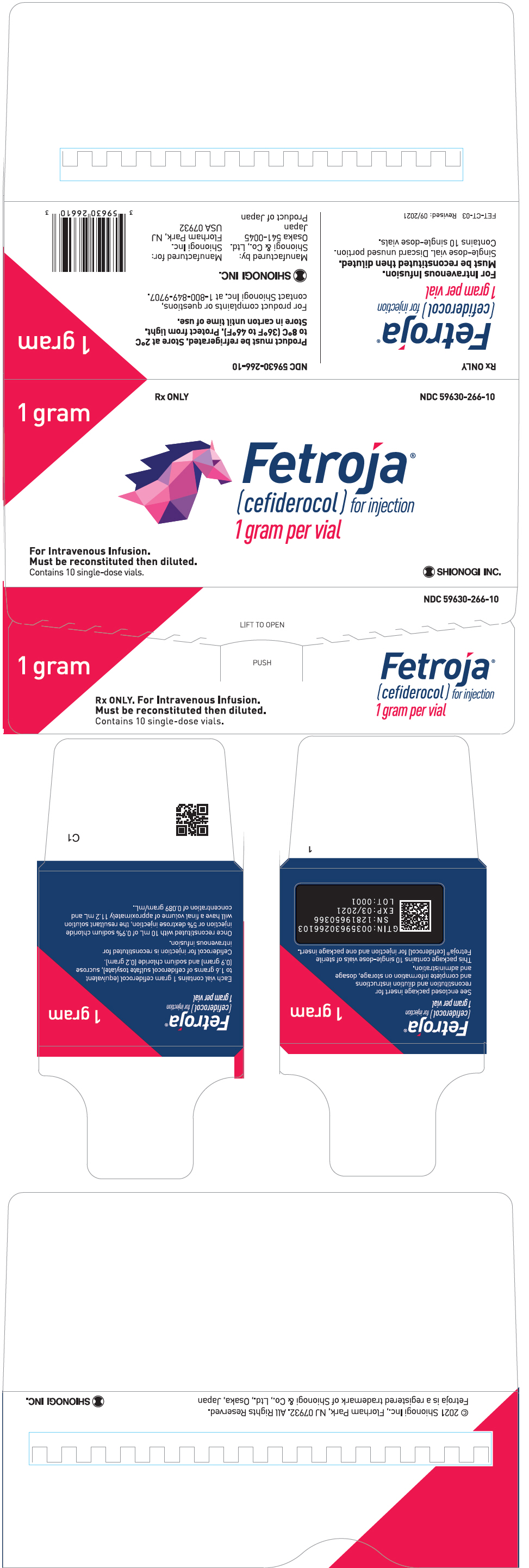
16.1How Supplied FETROJA 1 gram (cefiderocol) for injection is supplied as a white to off-white sterile lyophilized powder for reconstitution in single-dose, clear glass vials (NDC 59630-266-01) sealed with a rubber stopper (not made with natural rubber latex) and an aluminum seal with flip-off cap. Each vial is supplied in cartons containing 10 single-dose vials. NDC 59630-266-10 FETROJA (cefiderocol) 1 gram/vial, 10 vials/carton
16.2Storage and Handling FETROJA vials should be stored refrigerated at 2°C to 8°C (36°F to 46°F). Protect from light. Store in the carton until time of use. Store reconstituted solutions of FETROJA at room temperature [see Dosage and Administration (2.5) ] .
📦 Storage and Handling ▾
16.2Storage and Handling FETROJA vials should be stored refrigerated at 2°C to 8°C (36°F to 46°F). Protect from light. Store in the carton until time of use. Store reconstituted solutions of FETROJA at room temperature [see Dosage and Administration (2.5) ] .
📋 Description ▾
11 DESCRIPTION FETROJA is a cephalosporin antibacterial drug product consisting of cefiderocol sulfate tosylate for intravenous infusion. Cefiderocol functions as a siderophore [see Microbiology (12.4) ] . The chemical name of cefiderocol sulfate tosylate is Tris[(6 R ,7 R )-7-[(2 Z )-2-(2-amino-1,3-thiazol-4-yl)-2-{[(2-carboxypropan-2-yl)oxy]imino}acetamido]-3-({1-[2-(2-chloro-3,4-dihydroxybenzamido)ethyl]pyrrolidin-1-ium-1-yl}methyl)-8-oxo-5-thia-1-azabicyclo[4.2.0]oct-2-ene-2-carboxylate] tetrakis(4-methylbenzenesulfonate) monosulfate hydrate, and the molecular weight is 3043.50 (anhydrous).
The molecular formula is 3C 30 H 34 ClN 7 O 10 S 2 ∙4C 7 H 8 O 3 S∙H 2 SO 4 ∙xH 2 O. Figure 1 Chemical Structure of Cefiderocol Sulfate Tosylate FETROJA for injection is a white to off-white, sterile, lyophilized powder formulated with 1 gram of cefiderocol (equivalent to 1.6 grams of cefiderocol sulfate tosylate), sucrose (900 mg), sodium chloride (216 mg), and sodium hydroxide to adjust pH. The sodium content is approximately 176 mg/vial.
The pH of the reconstituted solution of 1 gram cefiderocol (1 vial) dissolved in 10 mL water is 5.2 to 5.8. Figure 1
💬 Information for Patients ▾
17 PATIENT COUNSELING INFORMATION Serious Allergic Reactions Advise patients and their families that allergic reactions, including serious allergic reactions, could occur with FETROJA and that serious reactions require immediate treatment. Ask patients about any previous hypersensitivity reactions to FETROJA, other beta-lactams (including cephalosporins), or other allergens [see Warnings and Precautions (5.2) ] . Potentially Serious Diarrhea Advise patients and their families that diarrhea is a common problem caused by antibacterial drugs, including FETROJA.
Sometimes, frequent watery or bloody diarrhea may occur and may be a sign of a more serious intestinal infection. If severe watery or bloody diarrhea develops, tell patient to contact his or her healthcare provider [see Warnings and Precautions (5.3) ] . Seizures Counsel patients on the implication of cephalosporins, including FETROJA, in triggering seizures, particularly in patients with renal impairment when the dosage was not reduced and in patients with a history of epilepsy [see Warnings and Precautions (5.4) ] .
Antibacterial Resistance Patients should be counseled that antibacterial drugs including FETROJA should only be used to treat bacterial infections. They do not treat viral infections (e.g., influenza, common cold). When FETROJA is prescribed to treat a bacterial infection, patients should be told that although it is common to feel better early in the course of therapy, the medication should be taken exactly as directed.
Skipping doses or not completing the full course of therapy may (1) decrease the effectiveness of the immediate treatment and (2) increase the likelihood that bacteria will develop resistance and will not be treatable by FETROJA or other antibacterial drugs in the future [see Warnings and Precautions (5.5) ] .