
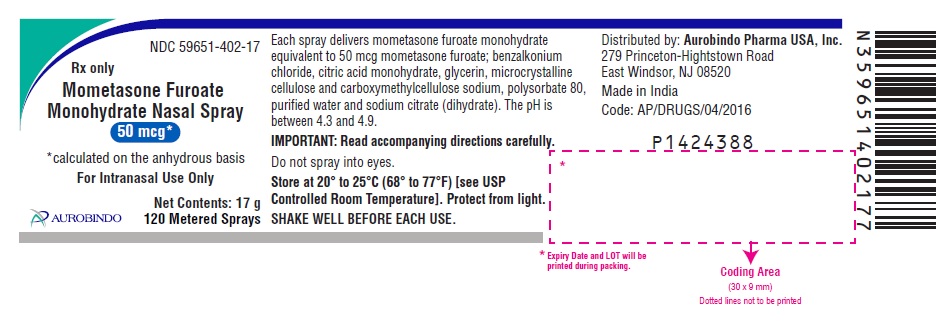
MOMETASONE FUROATE MONOHYDRATE 50 ug Spray, Metered
🆔 Identity & classification
Where does this data come from?
🏷️ RxNorm drug class
This medicine belongs to the Corticosteroid class.
Where does this data come from?
🏭 Manufacturer & labeler
Where does this data come from?
🩺 Clinical
Mometasone nasal spray is used to prevent and relieve symptoms of sneezing, runny, stuffy, or itchy nose caused by hay fever or other allergies. It is also used to treat nasal polyps (swelling of the lining of the nose). Mometasone nasal spray should not be used to treat symptoms (e.g., sneezing, stuffy, runny, itchy nose) caused by the common cold. Mometasone nasal spray is in a class of medications called corticosteroids. It works by blocking the release of certain natural substances that cause allergy symptoms.
Read the full MedlinePlus article ↗- For the nasal spray, it can help with allergy symptoms, but it works best as a daily preventive — not a quick-fix spray you grab when symptoms hit suddenly. For the inhalers (Asman...
- Can I use my mometasone nasal spray or inhaler when I'm having an allergy attack or asthma flare right now?
- That's actually normal — it can take one to two weeks or even longer to feel the full benefit from an inhaled corticosteroid like Asmanex. These medications work by gradually reduc...
- I've been using the Asmanex inhaler for a week and I still feel the same. Is it working?
Patient education
Supplement & herbal interactions
Where does this data come from?
Ask a licensed pharmacist directly — free, answered by our team.
💊 What it looks like
Where does this data come from?
🧪 Inactive Ingredients / Excipients
Inactive ingredients, also called excipients, are components of the drug product other than the active ingredient. They may include fillers, dyes, coatings, preservatives, flavors, or other formulation ingredients.
💡 Tap an ingredient (hover on desktop) to see what it is and why it’s used.
-
UNII F5UM2KM3W7
Benzalkonium chloride is a chemical compound that works as a preservative and antimicrobial agent in medications. It prevents bacterial and fungal growth in liquid formulations to keep the product safe during storage and use.
-
UNII K679OBS311
Carboxymethylcellulose sodium is a plant-derived thickening agent made from cellulose. In medicines, it acts as a binder to hold ingredients together, a disintegrant to help the tablet break apart, or a thickener in liquids.
-
UNII 2968PHW8QP
A weak organic acid derived from citrus fruits or made through fermentation. It works as a buffer to control pH, a preservative to extend shelf life, and a flavoring agent in medications.
-
UNII PDC6A3C0OX
Glycerin is a clear, thick liquid derived from plant oils or fats. It acts as a humectant to retain moisture, a sweetener, and a solvent in medications.
-
UNII OP1R32D61U
Microcrystalline cellulose is a purified form of cellulose, a natural fiber from plant sources. It acts as a binder and filler in tablets and capsules, helping hold ingredients together and give the medicine its shape and size.
-
UNII 6OZP39ZG8H
Polysorbate 80 is a synthetic emulsifier derived from sorbitol and oleic acid. It helps mix oil and water-based ingredients together in medications and improves how the product disperses in the body.
-
UNII B22547B95K
A salt derived from citric acid that helps maintain the proper acid-base balance in the medicine. It's used as a buffer to keep the product stable and at the right pH level.
-
UNII 059QF0KO0R
Water is a liquid solvent that dissolves and mixes ingredients together in liquid medicines, syrups, and injections. It helps distribute the active drug evenly throughout the product.
8 inactive ingredients listed in the exact product block matched to this NDC.
Where does this data come from?
ingredient classCode="IACT" elements from the exact product block matched by this NDC. Label-section narrative from DailyMed / the openFDA label index is shown separately when available.Inactive ingredient FAQ
Are inactive ingredients the same for every manufacturer?
Why might an inactive ingredient be missing?
Can inactive ingredients matter?
💲 Pricing
A drug doesn't have one price. Each row is a different public payment system, and none is what you'd pay at the counter — that depends on your insurance. The ⓘ on each row explains what it measures.
| Price system | Per g | Per package |
|---|---|---|
| Retail pharmacies payNADAC · weekly | $1.590 | — |
| Medicaid paysCMS SDUD · 12 mo | $2.33 | — |
| Medicare drug plans payPart D · Q2 2026 | $2.46 | — |
Where does this data come from?
🔁 Therapeutic equivalents
| Product | Labeler | Pack | NADAC/unit | TE | Status | Price vs. this |
|---|---|---|---|---|---|---|
| Nasonex 50 ug 00113-1720-02 | L. | 1 bottle | $1.193 | — | Availability likely | save 25% |
| Mometasone Furoate Monohydrate 50 ugthis 59651-0402-17 | Aurobindo | 1 bottle | $1.590 | AB | Availability likely | — |
| Mometasone Furoate 50 ug 60505-0830-01 | Apotex | 1 bottle | $1.590 | AB | Availability likely | — |
| Mometasone Furoate 50 ug 65162-0891-29 | Amneal | 1 bottle | $1.590 | AB | Availability likely | — |
| Childrens Nasonex 50 ug 00113-1999-01 | L. | 1 bottle | — | — | FDA listed | — |
| allergy nasal 50 ug 00363-2060-02 | Walgreen | 1 bottle | — | — | FDA listed | — |
| Rugby mometasone furoate nasal 50 ug 00536-1381-30 | Rugby | 1 bottle | — | — | FDA listed | — |
| Allergy 50 ug 11822-7099-00 | Rite | 1 bottle | — | — | Discontinued | — |
| allergy 50 ug 42507-0182-02 | HyVee | 1 bottle | — | — | FDA listed | — |
| allergy 50 ug 51316-0117-11 | CVS | 1 bottle | — | — | FDA listed | — |
| Allergy Relief 50 ug 51316-0172-11 | CVS | 1 bottle | — | — | FDA listed | — |
| Mometasone Furoate 50 ug 58602-0522-44 | Aurohealth | 1 bottle | — | — | FDA listed | — |
| Mometasone Furoate 50 ug 60429-0664-17 | Golden | 1 bottle | — | AB | FDA listed | — |
| Leader Allergy Nasal 50 ug 70000-0635-01 | Cardinal | 1 bottle | — | — | FDA listed | — |
| basic care allergy 50 ug 72288-0610-02 | Amazon.com | 1 bottle | — | — | FDA listed | — |
| topcare allergy 50 ug 76162-0134-02 | Topco | 1 bottle | — | — | FDA listed | — |
Where does this data come from?
⏳ Availability & generic status
This product is an FDA-approved generic. Other versions of the same drug are listed under Therapeutic equivalents, least expensive first.
Where does this data come from?
🗺️ Medicaid utilization & spend
🔬 Reported adverse events (FAERS)
Top reported reactions
Age at onset
Reporter sex
Serious outcomes
Where does this data come from?
📦 Packaging — all sizes for this product
| Package NDC | Description | Marketing start | Status |
|---|---|---|---|
| 59651-0402-17 You're viewing this | 1 BOTTLE, SPRAY in 1 CARTON (59651-402-17) / 120 SPRAY, METERED in 1 BOTTLE, SPRAY | 2024-03-18 | Active |
📄 Full prescribing information FDA SPL
🎯 Indications and Usage ▾
1 INDICATIONS AND USAGE Mometasone Furoate Monohydrate Nasal Spray is a corticosteroid indicated for: Prophylaxis of Nasal Symptoms of Seasonal Allergic Rhinitis in adult and pediatric patients 12 years of age and older ( 1.1 ) Treatment of Chronic Rhinosinusitis with Nasal Polyps in adult patients 18 years of age and older ( 1.2 )
1.1Prophylaxis of Seasonal Allergic Rhinitis Mometasone furoate monohydrate nasal spray is indicated for the prophylaxis of the nasal symptoms of seasonal allergic rhinitis in adult and pediatric patients 12 years and older.
1.2Treatment of Chronic Rhinosinusitis with Nasal Polyps Mometasone furoate monohydrate nasal spray is indicated for the treatment of chronic rhinosinusitis with nasal polyps in adult patients 18 years of age and older.
⏱️ Dosage and Administration ▾
2 DOSAGE AND ADMINISTRATION For Nasal Use Only. Prophylaxis of Seasonal Allergic Rhinitis in Adult and Pediatric Patients 12 Years of Age and Older: 2 sprays in each nostril once daily ( 2.2 ) Treatment of Chronic Rhinosinusitis with Nasal Polyps in Adults (18 years and older): 2 sprays in each nostril twice daily. 2 sprays in each nostril once daily may also be effective in some patients ( 2.3 )
2.1Preparation and Administration Administer mometasone furoate monohydrate nasal spray by the nasal route only. Initial Priming Prior to initial use of mometasone furoate monohydrate nasal spray, the pump must be primed by actuating ten times or until a fine spray appears. The pump may be stored unused for up to 1 week without repriming. Repriming (as needed) If unused for more than 1 week, reprime by actuating two times, or until a fine spray appears.
2.2Recommended Dosage for Prophylaxis of Seasonal Allergic Rhinitis The recommended dosage for prophylaxis treatment of nasal symptoms of seasonal allergic rhinitis in adult and pediatric patients 12 years and older is mometasone furoate monohydrate nasal spray 2 sprays (2 sprays deliver a total of 100 mcg of mometasone furoate) in each nostril once daily (total daily dose of 200 mcg). In patients with a known seasonal allergen that precipitates nasal symptoms of seasonal allergic rhinitis, prophylaxis with 2 sprays (2 sprays deliver a total of 100 mcg of mometasone furoate) in each nostril once daily (total daily dose of 200 mcg) is recommended 2 to 4 weeks prior to the anticipated start of the pollen season.
2.3Recommended Dosage for Treatment of Chronic Rhinosinusitis with Nasal Polyps The recommended dosage for the treatment of chronic rhinosinusitis with nasal polyps in adults 18 years and older is mometasone furoate monohydrate nasal spray 2 sprays (2 sprays deliver a total of 100 mcg of mometasone furoate) in each nostril twice daily (total daily dose of 400 mcg). A dose of 2 sprays (2 sprays deliver a total of 100 mcg of mometasone furoate) in each nostril once daily (total daily dose of 200 mcg) is also effective in some patients.
💊 Dosage Forms and Strengths ▾
3 DOSAGE FORMS AND STRENGTHS Nasal spray: 50 mcg of mometasone furoate in each spray. Nasal spray: 50 mcg of mometasone furoate in each spray ( 3 )
⛔ Contraindications ▾
4 CONTRAINDICATIONS Mometasone furoate monohydrate nasal spray is contraindicated in patients with known hypersensitivity to mometasone furoate or any of its ingredients [see Warnings and Precautions (5.3) , Description (11) ]. Patients with known hypersensitivity to mometasone furoate or any of the ingredients of mometasone furoate monohydrate nasal spray. ( 4 )
⚠️ Warnings and Cautions ▾
5 WARNINGS AND PRECAUTIONS Epistaxis, nasal ulceration, Candida albicans infection, nasal septal perforation, impaired wound healing. Monitor patients periodically for signs of adverse effects on the nasal mucosa. Avoid use in patients with recent nasal ulcers, nasal surgery, or nasal trauma.
( 5.1 ) Glaucoma and cataracts. Consider referral to an ophthalmologist in patients who develop ocular symptoms or use mometasone furoate monohydrate nasal spray long term. ( 5.2 ) Potential worsening of existing tuberculosis; fungal, bacterial, viral, or parasitic infections; or ocular herpes simplex.
More serious or even fatal course of chickenpox or measles in susceptible patients. Use caution in patients with the above because of the potential for worsening of these infections. ( 5.4 ) Hypercorticism and adrenal suppression with higher than recommended dosages or at the regular dosage in susceptible individuals.
If such changes occur, discontinue mometasone furoate monohydrate nasal spray slowly. ( 5.5 ) Potential reduction in growth velocity in children. Monitor growth routinely in pediatric patients receiving mometasone furoate monohydrate nasal spray.
( 5.6 , 8.4 )
5.1Local Nasal Adverse Reactions Epistaxis Epistaxis was observed more frequently in patients with allergic rhinitis and patients with chronic rhinosinusitis with nasal polyps who received mometasone furoate monohydrate nasal spray than those who received placebo [see Adverse Reactions (6.1) ]. Candida Infection Localized infections of the nose and pharynx with Candida albicans has occurred from nasal administration of mometasone furoate. When such an infection develops, use of mometasone furoate monohydrate nasal spray should be discontinued and appropriate local or systemic therapy instituted, if needed.
Nasal Septum Perforation Instances of nasal septum perforation occurred in patients following the nasal application of corticosteroids, including mometasone furoate monohydrate nasal spray. As with any long-term topical treatment of the nasal cavity, patients using mometasone furoate monohydrate nasal spray over several months or longer should be examined periodically for possible changes in the nasal mucosa. Impaired Wound Healing Because of the inhibitory effect of corticosteroids on wound healing, patients who have experienced recent nasal septum ulcers, nasal surgery, or nasal trauma should not use a nasal corticosteroid until healing has occurred.
5.2Glaucoma and Cataracts Glaucoma and cataracts may be reported with systemic and topical (including nasal, inhaled and ophthalmic) corticosteroid use. Consider referral to an ophthalmologist in patients who develop ocular symptoms or use mometasone furoate monohydrate nasal spray long term [see Adverse Reactions (6) ] .
5.3Hypersensitivity Reactions Hypersensitivity reactions including instances of wheezing may occur after the nasal administration of mometasone furoate monohydrate. Discontinue mometasone furoate monohydrate nasal spray if such reactions occur [see Contraindications (4) ] .
5.4Immunosuppression and Risk of Infections Persons who are on drugs which suppress the immune system are more susceptible to infections than healthy individuals. Chickenpox and measles, for example, can have a more serious or even fatal course in nonimmune children or adults on corticosteroids. In such children or adults who have not had these diseases, particular care should be taken to avoid exposure.
How the dose, route, and duration of corticosteroid administration affect the risk of developing a disseminated infection is not known. The contribution of the underlying disease and/or prior corticosteroid treatment to the risk is also not known. If exposed to chickenpox, prophylaxis with varicella zoster immune globulin (VZIG) may be indicated.
If exposed to measles, prophylaxis with pooled intramuscular immunoglobulin (IG) may be indicated. (See the respective Prescribing Information for VZIG and IG.) If chickenpox develops, t…
🤒 Adverse Reactions ▾
6 ADVERSE REACTIONS The following clinically significant adverse reactions are described elsewhere in labeling: Epistaxis, Ulcerations, Candida albicans Infection, Impaired Wound Healing [see Warnings and Precautions (5.1) ] Glaucoma and Cataracts [see Warnings and Precautions (5.2) ] Immunosuppression and Risk of Infections [see Warnings and Precautions (5.4) ] Hypercorticism and Adrenal Suppression, including Growth Reduction [see Warnings and Precautions (5.5 , 5.6) , Use in Specific Populations (8.4) ] The most common adverse reactions (incidence ≥5%) included headache, viral infection, pharyngitis, epistaxis and cough.
( 6 ) To report SUSPECTED ADVERSE REACTIONS, contact Aurobindo Pharma USA, Inc. at 1-866-850-2876 or FDA at 1-800-FDA-1088 or www.fda.gov/medwatch.
6.1Clinical Trials Experience Because clinical trials are conducted under widely varying conditions, adverse reaction rates observed in the clinical trials of a drug cannot be directly compared to rates in the clinical trials of another drug and may not reflect the rates observed in practice. Allergic Rhinitis Adults and pediatric patients 12 years of age and older In controlled U.S. and international clinical studies, a total of 3210 adult and pediatric patients 12 years and older with allergic rhinitis received treatment with mometasone furoate monohydrate nasal spray at doses of 50 to 800 mcg/day.
The majority of patients (n=2103) were treated with 200 mcg/day. A total of 350 adult and pediatric patients 12 years and older have been treated for one year or longer. Adverse reactions did not differ significantly based on age, sex, or race.
Four percent or less of patients in clinical trials discontinued treatment because of adverse events and the discontinuation rate was similar for the vehicle and active comparators. All adverse reactions (regardless of relationship to treatment) reported by 5% or more of adult and pediatric patients ages 12 years and older who received mometasone furoate monohydrate nasal spray, 200 mcg/day vs. placebo and that were more common with mometasone furoate monohydrate nasal spray than placebo, are displayed in Table 1 below.
Table 1: Adult and Pediatric Patients 12 Years and Older – Adverse Reactions from Controlled Clinical Trials in Seasonal Allergic and Perennial Allergic Rhinitis (Percent of Patients Reporting) Mometasone Furoate Monohydrate Nasal Spray 200 mcg (n=2103) % VEHICLE PLACEBO (n=1671) % Headache 26 22 Viral Infection 14 11 Pharyngitis 12 10 Epistaxis/Blood-Tinged Mucus 11 6 Coughing 7 6 Upper Respiratory Tract Infection 6 2 Dysmenorrhea 5 3 Musculoskeletal Pain 5 3 Sinusitis 5 3 Other adverse reactions which occurred in less than 5% but greater than or equal to 2% of adult and pediatric patients (ages 12 years and older) treated with mometasone furoate monohydrate nasal spray 200 mcg/day (regardless of relationship to treatment), and more frequently than in the placebo group included: arthralgia, asthma, bronchitis, chest pain, conjunctivitis, diarrhea, dyspepsia, earache, flu-like symptoms, myalgia, nausea, and rhinitis.
Chronic Rhinosinusitis with Nasal Polyps Adults 18 years of age and older In controlled clinical studies, the types of adverse reactions observed in patients with chronic rhinosinusitis with nasal polyps were similar to those observed in patients with allergic rhinitis. A total of 594 adult patients (ages 18 to 86 years) received mometasone furoate monohydrate nasal spray at doses of 200 mcg once or twice daily for up to 4 months for treatment of chronic rhinosinusitis with nasal polyps. The overall incidence of adverse reactions for patients treated with mometasone furoate monohydrate nasal spray was comparable to patients with the placebo except for epistaxis, which was 9% for 200 mcg once daily, 13% for 200 mcg twice daily, and 5% for the placebo.
Nasal ulcers and nasal and oral candidiasis were also reported in patients treated with mometasone furoate monohydrate nasal spray primarily in pati…
🔄 Drug Interactions ▾
7 DRUG INTERACTIONS No formal drug-drug interaction studies have been conducted with mometasone furoate monohydrate nasal spray. Inhibitors of Cytochrome P450 3A4: Studies have shown that mometasone furoate is primarily and extensively metabolized in the liver of all species investigated and undergoes extensive metabolism to multiple metabolites. In vitro studies have confirmed the primary role of cytochrome CYP3A4 in the metabolism of this compound.
Concomitant administration of CYP3A4 inhibitors may inhibit the metabolism of, and increase the systemic exposure to, mometasone furoate and potentially increase the risk for systemic corticosteroid side effects. Caution should be exercised when considering the coadministration of mometasone furoate monohydrate nasal spray with long-term ketoconazole and other known strong CYP3A4 inhibitors (e.g., ritonavir, cobicistat-containing products, atazanavir, clarithromycin, indinavir, itraconazole, nefazodone, nelfinavir, saquinavir, telithromycin) [see Clinical Pharmacology (12.3) ] .
Consider the benefit of coadministration versus the potential risk of systemic corticosteroid effects, in which case patients should be monitored for systemic corticosteroid side effects.
👥 Use in Specific Populations ▾
8 USE IN SPECIFIC POPULATIONS
8.1Pregnancy Risk Summary Mometasone is minimally absorbed systemically following nasal use, and maternal use is not expected to result in fetal exposure to the drug. Available data from observational studies of mometasone use in pregnant women are insufficient to evaluate for a drug-associated risk of major birth defects, miscarriage or other adverse maternal or fetal outcomes. In animal reproduction studies with pregnant mice, rats, or rabbits (subcutaneous, subcutaneous/topical dermal/oral, and topical dermal/oral, respectively), mometasone furoate caused increased fetal malformations and decreased fetal survival and growth following administration of doses that produced exposures approximately 1/3 to 8 times the maximum recommended human dose (MRHD) on a mcg/m 2 or AUC basis [see Data] .
However, experience with oral corticosteroids suggests that rodents are more prone to teratogenic effects from corticosteroid exposure than humans. The estimated background risk of major birth defects and miscarriage for the indicated population is unknown. All pregnancies have a background risk of birth defect, loss, or other adverse outcomes.
In the U.S. general population, the estimated risk of major birth defects and miscarriage in clinically recognized pregnancies is 2% to 4% and 15% to 20%, respectively. Data Animal Data In an embryofetal development study with pregnant mice dosed throughout the period of organogenesis, mometasone furoate produced cleft palate at a dose less than the maximum recommended daily intranasal dose (MRDID) (on a mcg/m 2 basis with maternal subcutaneous doses of 60 mcg/kg and above) and decreased fetal survival at approximately 2 times the MRDID (on a mcg/m 2 basis with a maternal subcutaneous dose of 180 mcg/kg).
No toxicity was observed with a dose that produced an exposure less than the MRDID (on a mcg/m 2 basis with maternal topical dermal doses of 20 mcg/kg and above). In an embryofetal development study with pregnant rats dosed throughout the period of organogenesis, mometasone furoate produced fetal umbilical hernia at exposures approximately 10 times the MRDID (on a mcg/m 2 basis with maternal topical dermal doses of 600 mcg/kg and above) and delays in fetal ossification at a dose approximately 6 times the MRDID (on a mcg/m 2 basis with maternal topical dermal doses of 300 mcg/kg and above).
In another reproductive toxicity study, pregnant rats were dosed with mometasone furoate throughout pregnancy or late in gestation. Treated animals had prolonged and difficult labor, fewer live births, lower birth weight, and reduced early pup survival at a dose less than the MRDID (on a mcg/m 2 basis with a maternal subcutaneous dose of 15 mcg/kg). There were no findings at a dose less than the MRDID (on a mcg/m 2 basis with a maternal subcutaneous dose of 7.5 mcg/kg).
Embryofetal development studies were conducted with pregnant rabbits dosed with mometasone furoate by either the topical dermal route or oral route throughout the period of organogenesis. In the study using the topical dermal route, mometasone furoate caused multiple malformations in fetuses (e.g., flexed front paws, gallbladder agenesis, umbilical hernia, hydrocephaly) at doses approximately 6 times the MRDID (on a mcg/m 2 basis with maternal topical dermal doses of 150 mcg/kg and above). In the study using the oral route, mometasone furoate caused increased fetal resorptions and cleft palate and/or head malformations (hydrocephaly and domed head) at a dose approximately 30 times of the MRDID (on a mcg/m 2 basis with a maternal oral dose of 700 mcg/kg).
At approximately 110 times the MRDID (on a mcg/m 2 basis with a maternal oral dose of 2800 mcg/kg), most litters were aborted or resorbed. No effects were observed at a dose approximately 6 times the MRDID (on a mcg/m 2 basis with a maternal oral dose of 140 mcg/kg).
8.2Lactation Risk Summary There are no available data on the presence of mometasone furoate monohydr…
🤰 Pregnancy ▾
8.1Pregnancy Risk Summary Mometasone is minimally absorbed systemically following nasal use, and maternal use is not expected to result in fetal exposure to the drug. Available data from observational studies of mometasone use in pregnant women are insufficient to evaluate for a drug-associated risk of major birth defects, miscarriage or other adverse maternal or fetal outcomes. In animal reproduction studies with pregnant mice, rats, or rabbits (subcutaneous, subcutaneous/topical dermal/oral, and topical dermal/oral, respectively), mometasone furoate caused increased fetal malformations and decreased fetal survival and growth following administration of doses that produced exposures approximately 1/3 to 8 times the maximum recommended human dose (MRHD) on a mcg/m 2 or AUC basis [see Data] .
However, experience with oral corticosteroids suggests that rodents are more prone to teratogenic effects from corticosteroid exposure than humans. The estimated background risk of major birth defects and miscarriage for the indicated population is unknown. All pregnancies have a background risk of birth defect, loss, or other adverse outcomes.
In the U.S. general population, the estimated risk of major birth defects and miscarriage in clinically recognized pregnancies is 2% to 4% and 15% to 20%, respectively. Data Animal Data In an embryofetal development study with pregnant mice dosed throughout the period of organogenesis, mometasone furoate produced cleft palate at a dose less than the maximum recommended daily intranasal dose (MRDID) (on a mcg/m 2 basis with maternal subcutaneous doses of 60 mcg/kg and above) and decreased fetal survival at approximately 2 times the MRDID (on a mcg/m 2 basis with a maternal subcutaneous dose of 180 mcg/kg).
No toxicity was observed with a dose that produced an exposure less than the MRDID (on a mcg/m 2 basis with maternal topical dermal doses of 20 mcg/kg and above). In an embryofetal development study with pregnant rats dosed throughout the period of organogenesis, mometasone furoate produced fetal umbilical hernia at exposures approximately 10 times the MRDID (on a mcg/m 2 basis with maternal topical dermal doses of 600 mcg/kg and above) and delays in fetal ossification at a dose approximately 6 times the MRDID (on a mcg/m 2 basis with maternal topical dermal doses of 300 mcg/kg and above).
In another reproductive toxicity study, pregnant rats were dosed with mometasone furoate throughout pregnancy or late in gestation. Treated animals had prolonged and difficult labor, fewer live births, lower birth weight, and reduced early pup survival at a dose less than the MRDID (on a mcg/m 2 basis with a maternal subcutaneous dose of 15 mcg/kg). There were no findings at a dose less than the MRDID (on a mcg/m 2 basis with a maternal subcutaneous dose of 7.5 mcg/kg).
Embryofetal development studies were conducted with pregnant rabbits dosed with mometasone furoate by either the topical dermal route or oral route throughout the period of organogenesis. In the study using the topical dermal route, mometasone furoate caused multiple malformations in fetuses (e.g., flexed front paws, gallbladder agenesis, umbilical hernia, hydrocephaly) at doses approximately 6 times the MRDID (on a mcg/m 2 basis with maternal topical dermal doses of 150 mcg/kg and above). In the study using the oral route, mometasone furoate caused increased fetal resorptions and cleft palate and/or head malformations (hydrocephaly and domed head) at a dose approximately 30 times of the MRDID (on a mcg/m 2 basis with a maternal oral dose of 700 mcg/kg).
At approximately 110 times the MRDID (on a mcg/m 2 basis with a maternal oral dose of 2800 mcg/kg), most litters were aborted or resorbed. No effects were observed at a dose approximately 6 times the MRDID (on a mcg/m 2 basis with a maternal oral dose of 140 mcg/kg).
🧒 Pediatric Use ▾
8.4Pediatric Use The safety and effectiveness of mometasone furoate monohydrate nasal spray for prophylaxis of the nasal symptoms of seasonal allergic rhinitis in pediatric patients 12 years of age and older have been established [see Adverse Reactions (6.1) and Clinical Studies (14.1) ] . Use of mometasone furoate monohydrate nasal spray for this indication is supported by evidence from controlled trials in adult and pediatric patients 12 years of age and older [see Clinical Studies (14.1) ]. The safety and effectiveness of mometasone furoate monohydrate nasal spray for the treatment of chronic rhinosinusitis with nasal polyps in pediatric patients less than 18 years of age have not been established.
Effectiveness was not demonstrated in one 4-month trial conducted to evaluate the safety and efficacy of mometasone furoate monohydrate nasal spray in the treatment of chronic rhinosinusitis with nasal polyps in pediatric patients 6 to 17 years of age. The primary objective of the study was to evaluate safety; efficacy parameters were collected as secondary endpoints. A total of 127 patients with chronic rhinosinusitis with nasal polyps were randomized to placebo or mometasone furoate monohydrate nasal spray 100 mcg once or twice daily (patients 6 to 11 years of age) or 200 mcg once or twice daily (patients 12 to 17 years of age).
The results of this trial did not support the efficacy of mometasone furoate monohydrate nasal spray in the treatment of chronic rhinosinusitis with nasal polyps in pediatric patients. The adverse reactions reported in this trial were similar to the adverse reactions reported in patients 18 years of age and older with chronic rhinosinusitis with nasal polyps. Effect on Growth Controlled clinical studies have shown nasal corticosteroids may cause a reduction in growth velocity in pediatric patients.
This effect has been observed in the absence of laboratory evidence of hypothalamic-pituitary-adrenal (HPA) axis suppression, suggesting that growth velocity is a more sensitive indicator of systemic corticosteroid exposure in pediatric patients than some commonly used tests of HPA axis function. The long-term effects of this reduction in growth velocity associated with nasal corticosteroids, including the impact on final adult height, are unknown. The potential for “catch up” growth following discontinuation of treatment with nasal corticosteroids has not been adequately studied.
The growth of pediatric patients receiving nasal corticosteroids, including mometasone furoate monohydrate nasal spray, should be monitored routinely (e.g., via stadiometry). The potential growth effects of prolonged treatment should be weighed against clinical benefits obtained and the availability of safe and effective noncorticosteroid treatment alternatives. To minimize the systemic effects of nasal corticosteroids, including mometasone furoate monohydrate nasal spray, each patient should be titrated to his/her lowest effective dose.
A clinical study to assess the effect of mometasone furoate monohydrate nasal spray (100 mcg total daily dose) on growth velocity has been conducted in pediatric patients 3 to 9 years of age with allergic rhinitis. No statistically significant effect on growth velocity was observed for mometasone furoate monohydrate nasal spray compared to placebo following one year of treatment. No evidence of clinically relevant HPA axis suppression was observed following a 30-minute cosyntropin infusion.
The potential of mometasone furoate monohydrate nasal spray to cause growth suppression in susceptible patients or when given at higher doses cannot be ruled out.
🧓 Geriatric Use ▾
8.5Geriatric Use A total of 280 patients above 64 years of age with allergic rhinitis or chronic rhinosinusitis with nasal polyps (age range 64 to 86 years) have been treated with mometasone furoate monohydrate nasal spray for up to 3 or 4 months, respectively. No observed differences in safety and/or effectiveness in geriatric patients compared to younger adult patients.
🆘 Overdosage ▾
10 OVERDOSAGE There are no data available on the effects of acute or chronic overdosage with mometasone furoate monohydrate nasal spray. Because of low systemic bioavailability, and an absence of acute drug-related systemic findings in clinical studies, overdose is unlikely to require any therapy other than observation. Chronic overdosage with any corticosteroid may result in signs or symptoms of hypercorticism [see Warnings and Precautions (5.5) ] .
🧬 Clinical Pharmacology ▾
12 CLINICAL PHARMACOLOGY
12.1Mechanism of Action Mometasone furoate monohydrate nasal spray is a corticosteroid demonstrating potent anti-inflammatory properties. The precise mechanism of corticosteroid action on allergic rhinitis is not known. Corticosteroids have been shown to have a wide range of effects on multiple cell types (e.g., mast cells, eosinophils, neutrophils, macrophages, and lymphocytes) and mediators (e.g., histamine, eicosanoids, leukotrienes, and cytokines) involved in inflammation.
In two clinical studies utilizing nasal antigen challenge, mometasone furoate monohydrate nasal spray decreased some markers of the early- and late-phase allergic response. These observations included decreases (vs. placebo) in histamine and eosinophil cationic protein levels, and reductions (vs. baseline) in eosinophils, neutrophils, and epithelial cell adhesion proteins. The clinical significance of these findings is not known.
The effect of mometasone furoate monohydrate nasal spray on nasal mucosa following 12 months of treatment was examined in 46 patients with allergic rhinitis. There was no evidence of atrophy and there was a marked reduction in intraepithelial eosinophilia and inflammatory cell infiltration (e.g., eosinophils, lymphocytes, monocytes, neutrophils, and plasma cells).
12.2Pharmacodynamics Adrenal Function in Adults: Four clinical pharmacology studies have been conducted in humans to assess the effect of mometasone furoate monohydrate nasal spray at various doses on adrenal function. In one study, daily doses of 200 and 400 mcg of mometasone furoate monohydrate nasal spray and 10 mg of prednisone were compared to placebo in 64 patients (22 to 44 years of age) with allergic rhinitis. Adrenal function before and after 36 consecutive days of treatment was assessed by measuring plasma cortisol levels following a 6-hour Cortrosyn (ACTH) infusion and by measuring 24-hour urinary free cortisol levels.
Mometasone furoate monohydrate nasal spray at both the 200 and 400 mcg dose, was not associated with a statistically significant decrease in mean plasma cortisol levels post-Cortrosyn infusion or a statistically significant decrease in the 24-hour urinary free cortisol levels compared to placebo. A statistically significant decrease in the mean plasma cortisol levels post-Cortrosyn infusion and 24-hour urinary free cortisol levels was detected in the prednisone treatment group compared to placebo. A second study assessed adrenal response to mometasone furoate monohydrate nasal spray (400 and 1600 mcg/day), prednisone (10 mg/day), and placebo, administered for 29 days in 48 male volunteers (21 to 40 years of age).
The 24-hour plasma cortisol area under the curve (AUC 0-24 ), during and after an 8-hour Cortrosyn infusion and 24-hour urinary free cortisol levels were determined at baseline and after 29 days of treatment. No statistically significant differences in adrenal function were observed with mometasone furoate monohydrate nasal spray compared to placebo. A third study evaluated single, rising doses of mometasone furoate monohydrate nasal spray (1000, 2000, and 4000 mcg/day), orally administered mometasone furoate (2000, 4000, and 8000 mcg/day), orally administered dexamethasone (200, 400, and 800 mcg/day), and placebo (administered at the end of each series of doses) in 24 male volunteers (22 to 39 years of age).
Dose administrations were separated by at least 72 hours. Determination of serial plasma cortisol levels at 8 AM and for the 24-hour period following each treatment were used to calculate the plasma cortisol area under the curve (AUC 0-24 ). In addition, 24-hour urinary free cortisol levels were collected prior to initial treatment administration and during the period immediately following each dose.
No statistically significant decreases in the plasma cortisol AUC, 8 AM cortisol levels, or 24-hour urinary free cortisol levels were observed in volunteers treated with either mometasone furoate monohydrat…
🧬 Mechanism of Action ▾
12.1Mechanism of Action Mometasone furoate monohydrate nasal spray is a corticosteroid demonstrating potent anti-inflammatory properties. The precise mechanism of corticosteroid action on allergic rhinitis is not known. Corticosteroids have been shown to have a wide range of effects on multiple cell types (e.g., mast cells, eosinophils, neutrophils, macrophages, and lymphocytes) and mediators (e.g., histamine, eicosanoids, leukotrienes, and cytokines) involved in inflammation.
In two clinical studies utilizing nasal antigen challenge, mometasone furoate monohydrate nasal spray decreased some markers of the early- and late-phase allergic response. These observations included decreases (vs. placebo) in histamine and eosinophil cationic protein levels, and reductions (vs. baseline) in eosinophils, neutrophils, and epithelial cell adhesion proteins. The clinical significance of these findings is not known.
The effect of mometasone furoate monohydrate nasal spray on nasal mucosa following 12 months of treatment was examined in 46 patients with allergic rhinitis. There was no evidence of atrophy and there was a marked reduction in intraepithelial eosinophilia and inflammatory cell infiltration (e.g., eosinophils, lymphocytes, monocytes, neutrophils, and plasma cells).
📦 How Supplied / Storage and Handling ▾
16 HOW SUPPLIED/STORAGE AND HANDLING Mometasone Furoate Monohydrate Nasal Spray: 50 mcg mometasone furoate monohydrate per spray is supplied in a white, high-density, polyethylene bottle fitted with a white metered-dose, manual spray pump, and translucent dust cap contains 17 g of product formulation (NDC 59651-402-17). 120 sprays, each delivering 50 mcg of mometasone furoate per actuation Store at 20º to 25ºC (68º to 77ºF); excursions permitted to 15° to 30°C (59° to 86°F) [See USP Controlled Room Temperature]. Protect from light.
When mometasone furoate monohydrate nasal spray is removed from its cardboard container, prolonged exposure of the product to direct light should be avoided. Brief exposure to light, as with normal use, is acceptable. SHAKE WELL BEFORE EACH USE.
📋 Description ▾
11 DESCRIPTION Mometasone furoate monohydrate, the active component of Mometasone Furoate Monohydrate Nasal Spray, 50 mcg, is an anti-inflammatory corticosteroid having the chemical name, 9,21-Dichloro-11ß,17-dihydroxy-16α-methylpregna-1,4-diene-3,20-dione17-(2 furoate) monohydrate, and the following chemical structure: Mometasone furoate monohydrate is a white to off-white powder, with a molecular formula of C 27 H 30 Cl 2 O 6 •H 2 O, and a molecular weight of 539.45. It is practically insoluble in water; slightly soluble in methanol, ethanol, and isopropanol; soluble in acetone and chloroform; and freely soluble in tetrahydrofuran.
Its partition coefficient between octanol and water is greater than 5000. Mometasone Furoate Monohydrate Nasal Spray is a metered-dose, manual pump spray. After initial priming (10 actuations), each actuation of the pump delivers a metered spray containing 100 mg or 100 microliter of aqueous suspension of mometasone furoate monohydrate equivalent to 50 mcg (0.05% w/w) mometasone furoate calculated on the anhydrous basis; in an aqueous medium containing benzalkonium chloride, citric acid monohydrate, glycerin, microcrystalline cellulose and carboxymethylcellulose sodium, polysorbate 80, purified water and sodium citrate (dihydrate).
The pH is between 4.3 and 4.9. structure
💬 Information for Patients ▾
17 PATIENT COUNSELING INFORMATION Advise the patient to read the FDA-approved patient labeling ( Patient Information and Instructions for Use ). Local Nasal Adverse Reactions Patients should be informed that treatment with mometasone furoate monohydrate nasal spray may be associated with adverse reactions which include epistaxis (nose bleed) and nasal septum perforation. Candida infection may also occur.
Because of the inhibitory effect of corticosteroids on wound healing, patients who have experienced recent nasal septum ulcers, nasal surgery, or nasal trauma should not use a nasal corticosteroid until healing has occurred [see Warnings and Precautions (5.1) ] . Patients should be cautioned not to spray mometasone furoate monohydrate nasal spray directly onto the nasal septum. Glaucoma and Cataracts Advise patients that long-term use of nasal and inhaled corticosteroids may increase the risk of some eye problems (glaucoma or cataracts); regular eye examinations should be considered.
Patients should be cautioned not to spray mometasone furoate monohydrate nasal spray into the eyes [see Warnings and Precautions (5.2) ] . Immunosuppression and Risk of Infections Persons who are on immunosuppressant doses of corticosteroids should be warned to avoid exposure to chickenpox or measles, and patients should also be advised that if they are exposed, medical advice should be sought without delay [see Warnings and Precautions (5.4) ] . Use Regularly for Best Effect Patients should use mometasone furoate monohydrate nasal spray on a regular basis for optimal effect.
Improvement in nasal symptoms of allergic rhinitis has been shown to occur within 1 to 2 days after initiation of dosing. Maximum benefit is usually achieved within 1 to 2 weeks after initiation of dosing. Patients should not increase the prescribed dosage but should contact their physician if symptoms do not improve, or if the condition worsens.
Administration to young children should be aided by an adult. If a patient missed a dose, the patient should be advised to administer the dose as soon as they remember. The patient should not use more than the recommended dose for the day.
Distributed by: Aurobindo Pharma USA, Inc. 279 Princeton-Hightstown Road East Windsor, NJ 08520 Manufactured by: Aurobindo Pharma Limited Hyderabad-500 032, India Issued: July 2022