
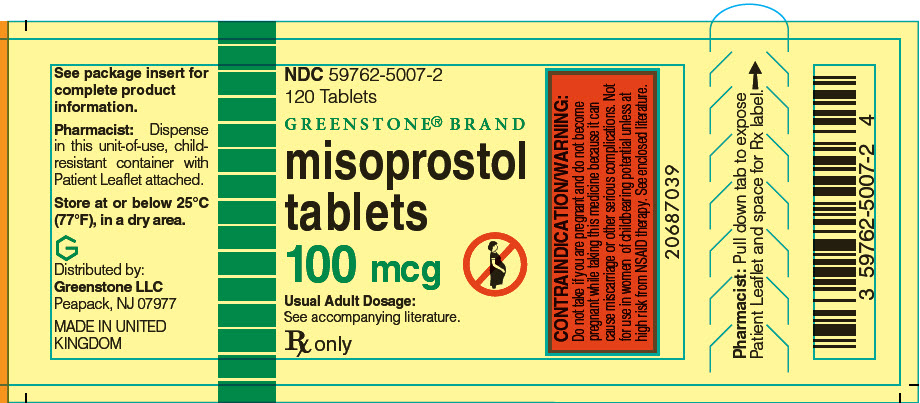
misoprostol 100 ug Tablet, 120-count
🆔 Identity & classification
Where does this data come from?
🏷️ RxNorm drug class
This medicine belongs to the Prostaglandin E1 Analog class.
Where does this data come from?
🏭 Manufacturer & labeler
Where does this data come from?
🩺 Clinical
- Your pain reliever — an NSAID like ibuprofen, aspirin, or diclofenac — is effective, but it can reduce your stomach's natural defenses and raise the risk of stomach ulcers over tim...
- Why was I prescribed misoprostol along with my pain reliever?
- Unfortunately, no — and it's worth knowing this upfront. Misoprostol is designed to prevent ulcers from forming, not to relieve the everyday stomach discomfort or pain that NSAIDs...
- Will misoprostol help with the stomach pain my pain reliever causes?
Patient education
Supplement & herbal interactions
Some supplements/herbs that may interact with Misoprostol — tap one for details:
Where does this data come from?
Ask a licensed pharmacist directly — free, answered by our team.
💊 What it looks like
Where does this data come from?
🧪 Inactive Ingredients / Excipients
Inactive ingredients, also called excipients, are components of the drug product other than the active ingredient. They may include fillers, dyes, coatings, preservatives, flavors, or other formulation ingredients.
💡 Tap an ingredient (hover on desktop) to see what it is and why it’s used.
-
UNII ZF94AP8MEY
Hydrogenated castor oil is a processed plant oil made by adding hydrogen to castor oil. It's used as a binder to help hold tablet ingredients together and as a lubricant to prevent sticking during manufacturing.
-
UNII 3NXW29V3WO
Hypromellose is a plant-based thickener made from cellulose. It's used in medicines as a binder to hold ingredients together, a coating for tablets, and a thickener for liquids.
-
UNII OP1R32D61U
Microcrystalline cellulose is a purified form of cellulose, a natural fiber from plant sources. It acts as a binder and filler in tablets and capsules, helping hold ingredients together and give the medicine its shape and size.
3 inactive ingredients listed in the exact product block matched to this NDC.
Where does this data come from?
ingredient classCode="IACT" elements from the exact product block matched by this NDC. Label-section narrative from DailyMed / the openFDA label index is shown separately when available.Inactive ingredient FAQ
Are inactive ingredients the same for every manufacturer?
Why might an inactive ingredient be missing?
Can inactive ingredients matter?
💲 Pricing
A drug doesn't have one price. Each row is a different public payment system, and none is what you'd pay at the counter — that depends on your insurance. The ⓘ on each row explains what it measures.
| Price system | Per ea | Per package |
|---|---|---|
| Retail pharmacies payNADAC · weekly | $0.482 | $57.79 / 120 tablets |
| Medicaid paysCMS SDUD · 12 mo | No recent Medicaid claims on file for this NDC — rare and low-volume NDCs are suppressed in the public data. | |
| Medicare drug plans payPart D · Q2 2026 | $0.8629 | $103.55 / 120 tablets |
Where does this data come from?
🔁 Therapeutic equivalents
| Product | Labeler | Pack | NADAC/unit | TE | Status | Price vs. this |
|---|---|---|---|---|---|---|
| misoprostol 100 ugthis 59762-5007-02 | Mylan | 120 tablets | $0.482 | AB | Availability likely | — |
| Misoprostol 100 ug 60687-0735-01 | American | 100 tablets | $0.482 | AB | Availability likely | — |
| Misoprostol 100 ug 70954-0443-10 | ANI | 60 tablets | $0.482 | AB | Availability likely | — |
| Misoprostol 100 ug 43386-0160-06 | Lupin | 60 tablets | $0.487 | — | FDA listed | +1% |
| Cytotec 100 ug 00025-1451-34 | Pfizer | 100 tablets | — | AB | FDA listed | — |
| Misoprostol 100 ug 40032-0160-06 | Novel | 60 tablets | — | — | FDA listed | — |
| Misoprostol 100 ug 42571-0253-12 | Micro | 120 tablets | — | AB | Discontinued | — |
| Misoprostol 100 ug 68071-3762-03 | NuCare | 30 tablets | — | AB | FDA listed | — |
| Misoprostol 100 ug 71335-2455-01 | Bryant | 28 tablets | — | AB | FDA listed | — |
| misoprostol 100 ug 71335-9631-01 | Bryant | 28 tablets | — | AB | FDA listed | — |
Where does this data come from?
⏳ Availability & generic status
FDA-approved generic versions are listed, and recent pricing/market data suggests they may be available — see Therapeutic equivalents.
Where does this data come from?
💊 Medicaid utilization by pack size
📊 Medicare Part D spend CMS · PART D · 2026 (Q1)
🔬 Reported adverse events (FAERS)
Top reported reactions
Reporter sex
Serious outcomes
Where does this data come from?
📦 Packaging — all sizes for this product
| Package NDC | Description | Per unit | Per pack | Marketing start | Status |
|---|---|---|---|---|---|
| 59762-5007-01 | 60 TABLET in 1 BOTTLE (59762-5007-1) | $0.4816 / ea | $28.90 | 2009-12-27 | Active |
| 59762-5007-02 You're viewing this | 120 TABLET in 1 BOTTLE (59762-5007-2) | $0.4816 / ea | $57.80 | 2009-12-27 | Active |
You're viewing the largest of 2 pack sizes for this product.
This pack effectively ties for the lowest per-ea cost of the 2 priced pack sizes ($0.4816 NADAC).
This pack shows little to no recent Medicaid volume — the 60 tablets pack carries most fills. See all packs ↓
Pack size FAQ
What quantity is in NDC 59762-5007-02?
What is the difference between NDC 59762-5007-02 and NDC 59762-5007-01?
What NDC number is used to bill for this package of misoprostol 100 ug Tablet?
Prices are the latest CMS NADAC pharmacy acquisition cost per NDC; per-pack figures are per-unit × pack quantity, shown only when the pack is denominated in the same measure NADAC prices.
📄 Full prescribing information FDA SPL
🚨 Boxed Warning ▾
WARNINGS MISOPROSTOL ADMINISTRATION TO WOMEN WHO ARE PREGNANT CAN CAUSE BIRTH DEFECTS, ABORTION, PREMATURE BIRTH OR UTERINE RUPTURE. UTERINE RUPTURE HAS BEEN REPORTED WHEN MISOPROSTOL WAS ADMINISTERED IN PREGNANT WOMEN TO INDUCE LABOR OR TO INDUCE ABORTION. THE RISK OF UTERINE RUPTURE INCREASES WITH ADVANCING GESTATIONAL AGES AND WITH PRIOR UTERINE SURGERY, INCLUDING CESAREAN DELIVERY (see also PRECAUTIONS and LABOR AND DELIVERY ).
MISOPROSTOL SHOULD NOT BE TAKEN BY PREGNANT WOMEN TO REDUCE THE RISK OF ULCERS INDUCED BY NONSTEROIDAL ANTI-INFLAMMATORY DRUGS (NSAIDs) (see CONTRAINDICATIONS , WARNINGS , and PRECAUTIONS ). PATIENTS MUST BE ADVISED OF THE ABORTIFACIENT PROPERTY AND WARNED NOT TO GIVE THE DRUG TO OTHERS. Misoprostol should not be used for reducing the risk of NSAID-induced ulcers in women of childbearing potential unless the patient is at high risk of complications from gastric ulcers associated with use of the NSAID, or is at high risk of developing gastric ulceration.
In such patients, misoprostol may be prescribed if the patient • has had a negative serum pregnancy test within 2 weeks prior to beginning therapy. • is capable of complying with effective contraceptive measures. • has received both oral and written warnings of the hazards of misoprostol, the risk of possible contraception failure, and the danger to other women of childbearing potential should the drug be taken by mistake. • will begin misoprostol only on the second or third day of the next normal menstrual period.
🎯 Indications and Usage ▾
INDICATIONS AND USAGE Misoprostol is indicated for reducing the risk of NSAID (nonsteroidal anti-inflammatory drugs, including aspirin)–induced gastric ulcers in patients at high risk of complications from gastric ulcer, e.g., the elderly and patients with concomitant debilitating disease, as well as patients at high risk of developing gastric ulceration, such as patients with a history of ulcer. Misoprostol has not been shown to reduce the risk of duodenal ulcers in patients taking NSAIDs. Misoprostol should be taken for the duration of NSAID therapy.
Misoprostol has been shown to reduce the risk of gastric ulcers in controlled studies of 3 months' duration. It had no effect, compared to placebo, on gastrointestinal pain or discomfort associated with NSAID use.
⏱️ Dosage and Administration ▾
DOSAGE AND ADMINISTRATION The recommended adult oral dose of misoprostol for reducing the risk of NSAID-induced gastric ulcers is 200 mcg four times daily with food. If this dose cannot be tolerated, a dose of 100 mcg can be used (see Clinical Pharmacology: Clinical studies ). Misoprostol should be taken for the duration of NSAID therapy as prescribed by the physician.
Misoprostol should be taken with a meal, and the last dose of the day should be at bedtime. Renal impairment Adjustment of the dosing schedule in renally impaired patients is not routinely needed, but dosage can be reduced if the 200-mcg dose is not tolerated (see Clinical Pharmacology ).
⛔ Contraindications ▾
CONTRAINDICATIONS See boxed WARNINGS . Misoprostol should not be taken by pregnant women to reduce the risk of ulcers induced by nonsteroidal anti-inflammatory drugs (NSAIDs). Misoprostol should not be taken by anyone with a history of allergy to prostaglandins.
⚠️ Warnings ▾
WARNINGS See boxed WARNINGS . For hospital use only if misoprostol were to be used for cervical ripening, induction of labor, or for the treatment of serious post-partum hemorrhage, which are outside of the approved indication.
🤒 Adverse Reactions ▾
ADVERSE REACTIONS The following have been reported as adverse events in subjects receiving misoprostol: Gastrointestinal In subjects receiving misoprostol 400 or 800 mcg daily in clinical trials, the most frequent gastrointestinal adverse events were diarrhea and abdominal pain. The incidence of diarrhea at 800 mcg in controlled trials in patients on NSAIDs ranged from 14–40% and in all studies (over 5,000 patients) averaged 13%. Abdominal pain occurred in 13–20% of patients in NSAID trials and about 7% in all studies, but there was no consistent difference from placebo.
Diarrhea was dose-related and usually developed early in the course of therapy (after 13 days), usually was self-limiting (often resolving after 8 days), but sometimes required discontinuation of misoprostol (2% of the patients). Rare instances of profound diarrhea leading to severe dehydration have been reported. Patients with an underlying condition such as inflammatory bowel disease, or those in whom dehydration, were it to occur, would be dangerous, should be monitored carefully if misoprostol is prescribed.
The incidence of diarrhea can be minimized by administering after meals and at bedtime, and by avoiding coadministration of misoprostol with magnesium-containing antacids. Gynecological Women who received misoprostol during clinical trials reported the following gynecological disorders: spotting (0.7%), cramps (0.6%), hypermenorrhea (0.5%), menstrual disorder (0.3%) and dysmenorrhea (0.1%). Postmenopausal vaginal bleeding may be related to misoprostol administration.
If it occurs, diagnostic workup should be undertaken to rule out gynecological pathology (see boxed WARNINGS ). Elderly There were no significant differences in the safety profile of misoprostol in approximately 500 ulcer patients who were 65 years of age or older compared with younger patients. Additional adverse events which were reported are categorized as follows: Incidence greater than 1% In clinical trials, the following adverse reactions were reported by more than 1% of the subjects receiving misoprostol and may be causally related to the drug: nausea (3.2%), flatulence (2.9%), headache (2.4%), dyspepsia (2.0%), vomiting (1.3%), and constipation (1.1%).
However, there were no significant differences between the incidences of these events for misoprostol and placebo. Causal relationship unknown The following adverse events were infrequently reported. Causal relationships between misoprostol and these events have not been established but cannot be excluded: Body as a whole: aches/pains, asthenia, fatigue, fever, chills, rigors, weight changes.
Skin: rash, dermatitis, alopecia, pallor, breast pain. Special senses: abnormal taste, abnormal vision, conjunctivitis, deafness, tinnitus, earache. Respiratory: upper respiratory tract infection, bronchitis, bronchospasm, dyspnea, pneumonia, epistaxis.
Cardiovascular: chest pain, edema, diaphoresis, hypotension, hypertension, arrhythmia, phlebitis, increased cardiac enzymes, syncope, myocardial infarction (some fatal), thromboembolic events (e.g., pulmonary embolism, arterial thrombosis, and CVA). Gastrointestinal: GI bleeding, GI inflammation/infection, rectal disorder, abnormal hepatobiliary function, gingivitis, reflux, dysphagia, amylase increase. Hypersensitivity: anaphylactic reaction Metabolic: glycosuria, gout, increased nitrogen, increased alkaline phosphatase.
Genitourinary: polyuria, dysuria, hematuria, urinary tract infection. Nervous system/Psychiatric: anxiety, change in appetite, depression, drowsiness, dizziness, thirst, impotence, loss of libido, sweating increase, neuropathy, neurosis, confusion. Musculoskeletal: arthralgia, myalgia, muscle cramps, stiffness, back pain.
Blood/Coagulation: anemia, abnormal differential, thrombocytopenia, purpura, ESR increased.
🔄 Drug Interactions ▾
Drug interactions See Clinical Pharmacology . Misoprostol has not been shown to interfere with the beneficial effects of aspirin on signs and symptoms of rheumatoid arthritis. Misoprostol does not exert clinically significant effects on the absorption, blood levels, and antiplatelet effects of therapeutic doses of aspirin.
Misoprostol has no clinically significant effect on the kinetics of diclofenac or ibuprofen. Prostaglandins such as misoprostol may augment the activity of oxytocic agents, especially when given less than 4 hours prior to initiating oxytocin treatment. Concomitant use is not recommended.
🤰 Pregnancy ▾
Pregnancy Teratogenic effects See boxed WARNINGS . Congenital anomalies sometimes associated with fetal death have been reported subsequent to the unsuccessful use of misoprostol as an abortifacient, but the drug's teratogenic mechanism has not been demonstrated. Several reports in the literature associate the use of misoprostol during the first trimester of pregnancy with skull defects, cranial nerve palsies, facial malformations, and limb defects.
Misoprostol is not fetotoxic or teratogenic in rats and rabbits at doses 625 and 63 times the human dose, respectively. Nonteratogenic effects See boxed WARNINGS . Misoprostol may endanger pregnancy (may cause abortion) and thereby cause harm to the fetus when administered to a pregnant woman.
Misoprostol may produce uterine contractions, uterine bleeding, and expulsion of the products of conception. Abortions caused by misoprostol may be incomplete. If a woman is or becomes pregnant while taking this drug to reduce the risk of NSAID-induced ulcers, the drug should be discontinued and the patient apprised of the potential hazard to the fetus.
🧒 Pediatric Use ▾
Pediatric use Safety and effectiveness of misoprostol in pediatric patients have not been established.
🆘 Overdosage ▾
OVERDOSAGE The toxic dose of misoprostol in humans has not been determined. Cumulative total daily doses of 1600 mcg have been tolerated, with only symptoms of gastrointestinal discomfort being reported. In animals, the acute toxic effects are diarrhea, gastrointestinal lesions, focal cardiac necrosis, hepatic necrosis, renal tubular necrosis, testicular atrophy, respiratory difficulties, and depression of the central nervous system.
Clinical signs that may indicate an overdose are sedation, tremor, convulsions, dyspnea, abdominal pain, diarrhea, fever, palpitations, hypotension, or bradycardia. Symptoms should be treated with supportive therapy. It is not known if misoprostol acid is dialyzable.
However, because misoprostol is metabolized like a fatty acid, it is unlikely that dialysis would be appropriate treatment for overdosage.
🧬 Clinical Pharmacology ▾
CLINICAL PHARMACOLOGY Pharmacokinetics Misoprostol is extensively absorbed, and undergoes rapid de-esterification to its free acid, which is responsible for its clinical activity and, unlike the parent compound, is detectable in plasma. The alpha side chain undergoes beta oxidation and the beta side chain undergoes omega oxidation followed by reduction of the ketone to give prostaglandin F analogs. In normal volunteers, misoprostol is rapidly absorbed after oral administration with a T max of misoprostol acid of 12 ± 3 minutes and a terminal half-life of 20–40 minutes.
There is high variability of plasma levels of misoprostol acid between and within studies but mean values after single doses show a linear relationship with dose over the range of 200–400 mcg. No accumulation of misoprostol acid was noted in multiple dose studies; plasma steady state was achieved within two days. Maximum plasma concentrations of misoprostol acid are diminished when the dose is taken with food and total availability of misoprostol acid is reduced by use of concomitant antacid.
Clinical trials were conducted with concomitant antacid, however, so this effect does not appear to be clinically important. Mean ± SD C max (pg/ml) AUC(0–4) (pg∙hr/ml) T max (min) Fasting 811 ± 317 417 ± 135 14 ± 8 With Antacid 689 ± 315 349 ± 108 Comparisons with fasting results statistically significant, p<0.05. 20 ± 14 With High Fat Breakfast 303 ± 176 373 ± 111 64 ± 79 After oral administration of radiolabeled misoprostol, about 80% of detected radioactivity appears in urine.
Pharmacokinetic studies in patients with varying degrees of renal impairment showed an approximate doubling of T 1/2 , C max , and AUC compared to normals, but no clear correlation between the degree of impairment and AUC. In subjects over 64 years of age, the AUC for misoprostol acid is increased. No routine dosage adjustment is recommended in older patients or patients with renal impairment, but dosage may need to be reduced if the usual dose is not tolerated.
Drug interaction studies between misoprostol and several nonsteroidal anti-inflammatory drugs showed no effect on the kinetics of ibuprofen or diclofenac, and a 20% decrease in aspirin AUC, not thought to be clinically significant. Pharmacokinetic studies also showed a lack of drug interaction with antipyrine and propranolol when these drugs were given with misoprostol. Misoprostol given for 1 week had no effect on the steady state pharmacokinetics of diazepam when the two drugs were administered 2 hours apart.
The serum protein binding of misoprostol acid is less than 90% and is concentration-independent in the therapeutic range. After a single oral dose of misoprostol to nursing mothers, misoprostol acid was excreted in breast milk. The maximum concentration of misoprostol acid in expressed breast milk was achieved within 1 hour after dosing and was 7.6 pg/ml (CV 37%) and 20.9 pg/ml (CV 62%) after single 200 µg and 600 µg misoprostol administration, respectively.
The misoprostol acid concentrations in breast milk declined to < 1 pg/ml at 5 hours post-dose. Pharmacodynamics Misoprostol has both antisecretory (inhibiting gastric acid secretion) and (in animals) mucosal protective properties. NSAIDs inhibit prostaglandin synthesis, and a deficiency of prostaglandins within the gastric mucosa may lead to diminishing bicarbonate and mucus secretion and may contribute to the mucosal damage caused by these agents.
Misoprostol can increase bicarbonate and mucus production, but in man this has been shown at doses 200 mcg and above that are also antisecretory. It is therefore not possible to tell whether the ability of misoprostol to reduce the risk of gastric ulcer is the result of its antisecretory effect, its mucosal protective effect, or both. In vitro studies on canine parietal cells using tritiated misoprostol acid as the ligand have led to the identification and characterization of specific prostaglandin receptors.
Receptor binding is satur…
📦 How Supplied / Storage and Handling ▾
HOW SUPPLIED Misoprostol 100-mcg tablets are white, round, with G and 5007 debossed on one side; supplied as: NDC Number Size 59762-5007-1 unit-of-use bottle of 60 59762-5007-2 unit-of-use bottle of 120 Misoprostol 200-mcg tablets are white, hexagonal, with G debossed above and 5008 debossed below the line on one side; supplied as: NDC Number Size 59762-5008-1 unit-of-use bottle of 60 59762-5008-2 unit-of-use bottle of 100 Store at or below 25°C (77°F), in a dry area.
📦 Storage and Handling ▾
Store at or below 25°C (77°F), in a dry area.
📋 Description ▾
DESCRIPTION Misoprostol oral tablets contain either 100 mcg or 200 mcg of misoprostol, a synthetic prostaglandin E 1 analog. Misoprostol contains approximately equal amounts of the two diastereomers presented below with their enantiomers indicated by (±): C 22 H 38 O 5 M.W. = 382.5 (±) methyl 11α, 16-dihydroxy-16-methyl-9-oxoprost-13E-en-1-oate Misoprostol is a water-soluble, viscous liquid. Inactive ingredients of tablets are hydrogenated castor oil, hypromellose, microcrystalline cellulose, and sodium starch glycolate.
Chemical Structure
💬 Information for Patients ▾
Information for patients Women of childbearing potential using misoprostol to decrease the risk of NSAID-induced ulcers should be told that they must not be pregnant when misoprostol therapy is initiated, and that they must use an effective contraception method while taking misoprostol. See boxed WARNINGS . Misoprostol is intended for administration along with nonsteroidal anti-inflammatory drugs (NSAIDs), including aspirin, to decrease the chance of developing an NSAID-induced gastric ulcer.
Misoprostol should be taken only according to the directions given by a physician. If the patient has questions about or problems with misoprostol, the physician should be contacted promptly. THE PATIENT SHOULD NOT GIVE MISOPROSTOL TO ANYONE ELSE.
Misoprostol has been prescribed for the patient's specific condition, may not be the correct treatment for another person, and may be dangerous to the other person if she were to become pregnant. The misoprostol package the patient receives from the pharmacist will include a leaflet containing patient information. The patient should read the leaflet before taking misoprostol and each time the prescription is renewed because the leaflet may have been revised.
Keep misoprostol out of the reach of children. SPECIAL NOTE FOR WOMEN: Misoprostol may cause birth defects, abortion (sometimes incomplete), premature labor or rupture of the uterus if given to pregnant women. Misoprostol is available only as a unit-of-use package that includes a leaflet containing patient information.
See Patient Information at the end of this labeling.