
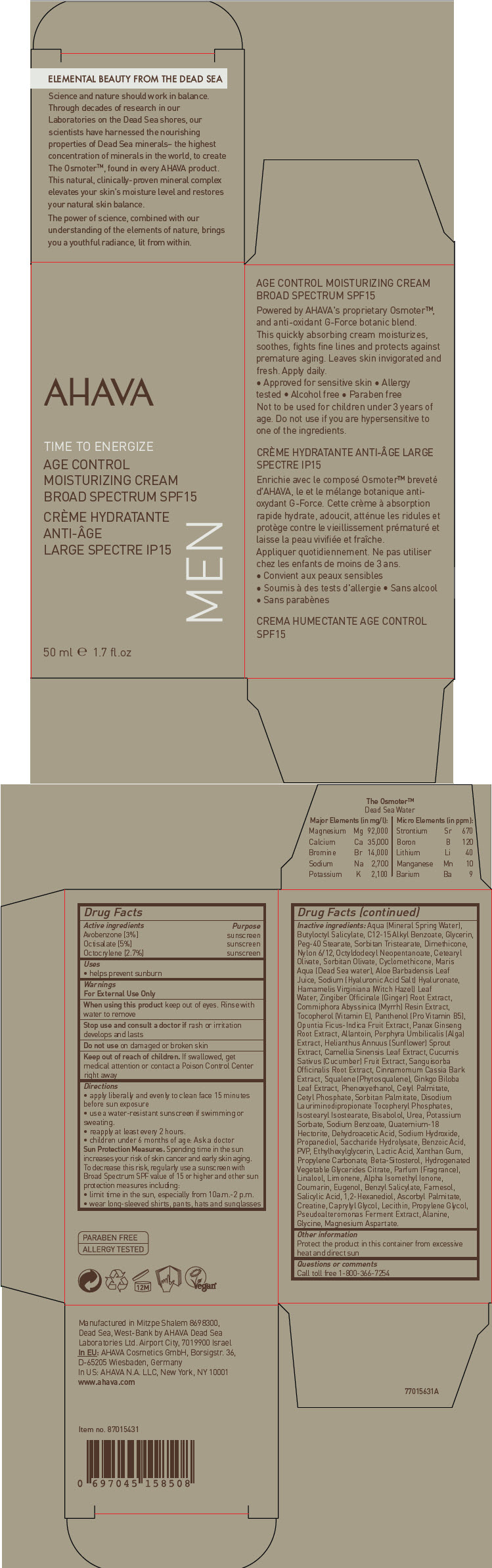
AHAVA ACTIVE DEADSEA MINERALS TIME TO ENERGIZE AGE CONTROL MOISTURIZING BROAD SPECTRUM SPF15 Avobenzone, Octisalate, and Octocrylene 30 mg/mL; 50 mg/mL; 27 mg/mL Cream
🆔 Identity & classification
Where does this data come from?
🏭 Manufacturer & labeler
Where does this data come from?
🩺 Clinical
This is a topical moisturizing cream that combines sunscreen active ingredients with cosmetic minerals. Avobenzone, octisalate, and octocrylene are ultraviolet (UV) filters typically used in sunscreen products to help protect skin from sun exposure. The cream is formulated as an over-the-counter monograph product, meaning it follows FDA guidelines for sunscreen and moisturizer combinations, and is intended to be applied to the skin.
Patient education
Supplement & herbal interactions
Where does this data come from?
Ask a licensed pharmacist directly — free, answered by our team.
🧪 Inactive Ingredients / Excipients
Inactive ingredients, also called excipients, are components of the drug product other than the active ingredient. They may include fillers, dyes, coatings, preservatives, flavors, or other formulation ingredients.
💡 Tap an ingredient (hover on desktop) to see what it is and why it’s used.
-
UNII S347WMO6M4
Beta-sitosterol is a plant-derived sterol (waxy substance from vegetable oils and seeds). In medicines, it acts as an emulsifier or thickening agent to help blend oil and water-based ingredients and improve texture.
-
UNII TR046Y3K1G
A liquid alcohol derived from petroleum or plant sources. It acts as a solvent and humectant in medicines, helping dissolve active ingredients and retain moisture in the formulation.
-
UNII OF5P57N2ZX
Alanine is a naturally occurring amino acid used in medicines as a buffering agent and pH stabilizer. It helps maintain the proper acidity level in liquid formulations to improve stability and taste.
-
UNII A9EJ3J61HQ
A synthetic liquid derived from benzoic acid and long-chain alcohols. It functions as a solvent and penetration enhancer in topical formulations, helping active ingredients dissolve and absorb into the skin.
-
UNII 344S277G0Z
Allantoin is a naturally derived compound that helps soften and soothe skin. In medicines, it works as a skin-conditioning agent and may help support wound healing and reduce irritation in topical formulations.
-
UNII ZY81Z83H0X
Aloe vera leaf is a plant extract derived from the aloe plant. It is used in medicines as a natural moisturizer and skin-soothing agent in topical formulations.
-
UNII QN83US2B0N
Ascorbyl palmitate is a fat-soluble form of vitamin C used as an antioxidant in medicines. It prevents oils and fats in the product from breaking down and becoming less stable over time.
-
UNII CUQ3A77YXI
Panax ginseng root is a plant extract traditionally used in herbal preparations. In medications, it may serve as an active botanical ingredient or be included for flavoring and as a natural preservative or binder in formulations.
-
UNII WAO5MNK9TU
Benzyl salicylate is a fragrant chemical compound used as a flavor and scent ingredient in medicines. It helps mask unpleasant tastes or odors in liquid or oral formulations.
-
UNII 2EH13UN8D3
A synthetic compound used as a solvent and penetration enhancer in topical formulations. It helps dissolve active ingredients and allows them to penetrate the skin more effectively.
-
UNII 00YIU5438U
Caprylyl glycol is a clear liquid derived from coconut oil. In medicines, it acts as a humectant to retain moisture, a preservative booster to prevent microbial growth, and a solvent to help dissolve or mix other ingredients.
-
UNII 58B69Q84JO
A plant-derived emulsifier made from olive oil and fatty alcohols. It helps blend oil and water ingredients together and stabilizes the product's texture in creams, lotions, and similar formulations.
-
UNII 5ZA2S6B08X
Cetyl palmitate is a waxy substance made from natural fats. It works as a binder and thickener to help hold the medicine together and control how it dissolves in your body.
-
UNII VT07D6X67O
Cetyl phosphate is a waxy substance derived from fatty acids. It acts as an emulsifier to help mix oil and water-based ingredients, and may also serve as a thickener or stabilizer in creams and lotions.
-
UNII WS4CQ062KM
A plant-derived spice from cinnamon bark, used as a flavoring agent to mask bitter tastes and add pleasant aroma to medicines.
-
UNII WCM0X628RY
A sticky plant resin extracted from a tree native to Madagascar. It functions as a binder and thickening agent in medicines, helping hold ingredients together and improve texture.
-
UNII A4VZ22K1WT
Coumarin is a fragrant organic compound derived from plants or made synthetically. It adds pleasant flavor and aroma to medicines and is used as a flavoring agent in some formulations.
-
UNII MU72812GK0
Creatine is an organic compound that helps supply energy to muscle cells. In medicines, it may be used as a nutritional supplement ingredient or to support muscle function and performance.
-
UNII YY7C30VXJT
A natural plant extract from cucumber that adds flavor and freshness to medicines. It may also serve as a moisturizing agent or mild preservative in topical or oral formulations.
-
UNII NMQ347994Z
Cyclomethicone is a silicone-based fluid that acts as a lubricant and solvent in medicines. It helps products flow smoothly, reduces friction between particles, and aids in even distribution of active ingredients.
-
UNII 92RU3N3Y1O
Dimethicone is a silicone-based oil that acts as an anti-foaming agent and lubricant in medicines. It reduces gas bubbles in liquid formulations and helps coat and protect the stomach lining when ingested.
-
UNII 0K5Y9U1P6M
A synthetic compound combining vitamin E derivative with fatty acid chemistry, used as an antioxidant and preservative to prevent ingredient degradation and extend shelf life in medications.
-
UNII 147D247K3P
Ethylhexylglycerin is a synthetic preservative used to prevent bacteria and mold from growing in medicines and personal care products. It helps keep the product safe and stable throughout its shelf life.
-
UNII 3T8H1794QW
Eugenol is a natural oil extracted from clove and other plants. It's used in medicines as a flavoring agent and to provide a mild anesthetic effect in topical products, particularly in dental formulations.
-
UNII 413TVZ4919
A natural alcohol compound found in plant oils and used as a preservative to prevent bacterial and fungal growth in medicines.
-
UNII C5529G5JPQ
Ginger is a plant-derived ingredient used as a flavoring agent to add taste and aroma to medicines. It may also provide mild soothing properties to support product palatability.
-
UNII 19FUJ2C58T
Ginkgo biloba leaf is a plant extract used as a flavoring or coloring agent in some medicines. It may also serve as a natural ingredient to support the product's formulation.
-
UNII PDC6A3C0OX
Glycerin is a clear, thick liquid derived from plant oils or fats. It acts as a humectant to retain moisture, a sweetener, and a solvent in medications.
-
UNII TE7660XO1C
Glycine is an amino acid used in medicines as a buffer to help stabilize pH and improve taste. It may also serve as a filler or binder to give the product proper form and consistency.
-
UNII W2ZU1RY8B0
A plant extract from green tea leaves. It's used as an antioxidant ingredient to help preserve the medicine and maintain its stability during storage.
-
UNII NT00Y05A2V
A liquid extract from witch hazel plant leaves and twigs. It's used in topical products as an astringent agent and to help deliver other active ingredients into the skin.
-
UNII 4P26HG1S5W
A plant extract from sunflower sprouts used in formulations as an antioxidant and preservative to help maintain product stability and prevent degradation of active ingredients.
-
UNII YSE9PPT4TH
Hyaluronate sodium is a natural carbohydrate that holds moisture. It's used in medicines as a lubricant, thickener, and moisture-retaining agent to improve texture and delivery of the active ingredient.
-
UNII ED959S6ACY
A sweet liquid made by breaking down regular sugar into simpler sugars. It's used in medicines as a sweetener and to improve taste, and also helps control moisture and texture in the product.
-
UNII 9XP4LC555B
A fragrance compound derived from natural plant sources or made synthetically. It's added to medicines as a flavoring agent to mask bitter tastes and improve how the medicine smells and tastes.
-
UNII IV0Z586Z4Y
A synthetic oil derived from isostearic acid, used as an emollient and lubricant in topical formulations to soften the skin and improve the texture and spreadability of creams, lotions, and ointments.
-
UNII 1DI56QDM62
A natural fatty substance from soybeans that helps mix oil and water-based ingredients together. It acts as an emulsifier and lubricant in medicines to improve texture and help the product break down properly in your body.
-
UNII 24WE03BX2T
Levomenol is a naturally derived alcohol compound used as a skin-conditioning and anti-inflammatory agent in topical formulations. It helps soothe and protect the skin while improving product texture and absorption.
-
UNII 47MAJ1Y2NE
A natural citrus-derived oil and flavoring agent. Used to enhance taste and aroma, improve ingredient dissolution, and serve as a solvent in liquid medicines and supplements.
-
UNII D81QY6I88E
Linalool is a natural fragrant oil found in plants like lavender and citrus. It's used in medicines as a flavoring agent and to mask unpleasant tastes or smells.
-
UNII R17X820ROL
Magnesium aspartate is magnesium combined with the amino acid aspartate. It is used as a mineral supplement ingredient and may help with tablet binding and nutrient delivery in formulations.
-
UNII X8725R883T
A synthetic oily liquid derived from branched carboxylic acids, used as an emollient and skin-conditioning agent in topical formulations. It helps soften and smooth the product's texture while improving how it spreads on skin.
-
UNII WV9CM0O67Z
Panthenol is a humectant and skin-conditioning agent derived from pantothenic acid. It's added to medicines to help retain moisture and soothe skin irritation.
-
UNII ECU18C66Q7
PEG-40 stearate is a synthetic compound made by combining polyethylene glycol with stearic acid. It acts as an emulsifier and solubilizer to help mix oil and water-based ingredients together and improve how the medicine dissolves and is absorbed.
-
UNII HIE492ZZ3T
Phenoxyethanol is a synthetic preservative and antimicrobial agent used to prevent bacterial and fungal growth in medicines and cosmetic products, extending shelf life and maintaining product safety.
-
UNII 14AN0J70WO
A red seaweed extract used as a natural binder and thickener in medications. It helps hold tablet ingredients together and may improve the texture of liquid formulations.
-
UNII 1VPU26JZZ4
Potassium sorbate is a salt derived from sorbic acid, a naturally occurring preservative. It prevents growth of mold, yeast, and some bacteria, extending the medicine's shelf life.
-
UNII U725QWY32X
Povidone K30 is a synthetic polymer made from petroleum. It acts as a binder to hold tablet ingredients together and as a disintegrant to help the tablet break apart in the stomach so the medicine can be absorbed.
-
UNII 18V8PAQ629
Prickly pear fruit is a natural plant extract used as a flavor and color ingredient in medicines. It adds taste and visual appeal to oral products like tablets and liquids.
-
UNII 5965N8W85T
Propanediol is a clear liquid organic compound derived from vegetable sources or synthesized chemically. It acts as a humectant to retain moisture, a solvent to dissolve active ingredients, and a preservative booster in liquid medications and supplements.
-
UNII 8D08K3S51E
Propylene carbonate is a clear liquid solvent derived from propylene. It helps dissolve or suspend active ingredients in liquid medicines and can improve how well the product flows and mixes.
-
UNII 6DC9Q167V3
Propylene glycol is a clear liquid derived from petroleum or vegetable sources. It acts as a solvent, humectant, and preservative in medicines, helping dissolve active ingredients and maintain product stability.
-
UNII IIS3YBV1XX
Quaternium-18 Hectorite is a clay mineral modified with a quaternary ammonium compound. It acts as a thickening agent and suspending aid in liquid formulations, helping to keep ingredients evenly distributed and improve texture.
-
UNII O414PZ4LPZ
A beta hydroxy acid derived from willow bark or synthesized chemically. In topical medicines, it acts as a keratolytic agent that helps soften and shed dead skin cells, improving penetration of active ingredients.
-
UNII 4NYV2HT01X
A plant extract from the roots of Sanguisorba officinalis (burnett). Used in formulations as a natural thickener, preservative, or conditioning agent to improve texture and stability.
-
UNII OJ245FE5EU
Sodium benzoate is a salt derived from benzoic acid, a preservative. It's added to medicines to prevent growth of bacteria, fungi, and other microorganisms that could spoil the product.
-
UNII 8W46YN971G
Sodium dehydroacetate is a salt derived from dehydroacetic acid, a compound used as a preservative. It helps prevent mold, bacteria, and yeast growth in medicines, extending shelf life and maintaining product safety.
-
UNII 55X04QC32I
A strong alkaline chemical used to adjust and maintain the pH balance of liquid medicines. It helps keep the medicine stable and ensures it stays effective during storage.
-
UNII 77K6Z421KU
Sorbitan monopalmitate is an emulsifier made from sorbitol, a natural sugar alcohol, combined with palmitic acid. It helps mix oil and water ingredients together in medications and keeps them evenly blended throughout the product's shelf life.
-
UNII MDL271E3GR
Sorbitan olivate is an emulsifier derived from sorbitol and olive oil. It helps blend water and oil ingredients together to maintain consistent texture and appearance throughout the medicine.
-
UNII 6LUM696811
A waxy substance derived from sorbitol and stearic acid. It acts as an emulsifier and stabilizer to help mix oil and water components evenly throughout the medicine and prevent separation.
-
UNII 7QWM220FJH
Squalene is a natural oil-like substance found in shark liver and some plants. It's used in medicines as an emulsifier to help mix oil and water-based ingredients together.
-
UNII R0ZB2556P8
Tocopherol is a form of vitamin E derived from plant oils. It acts as an antioxidant in medicines to prevent oils and fats from breaking down and spoiling during storage.
-
UNII 8W8T17847W
A nitrogen-containing chemical compound used in pharmaceuticals as a humectant to retain moisture, and sometimes as a keratolytic agent in topical formulations to help soften and remove dead skin cells.
-
UNII 059QF0KO0R
Water is a liquid solvent that dissolves and mixes ingredients together in liquid medicines, syrups, and injections. It helps distribute the active drug evenly throughout the product.
-
UNII TTV12P4NEE
Xanthan gum is a thickening and stabilizing ingredient made from fermented corn or other sugars. It's added to medicines to improve texture, prevent separation of liquids and solids, and help the product stay consistent.
66 inactive ingredients listed in the exact product block matched to this NDC.
Label-section wording can be broader than the structured product block and may mention additional formulation ingredients.
Where does this data come from?
ingredient classCode="IACT" elements from the exact product block matched by this NDC. Label-section narrative from DailyMed / the openFDA label index is shown separately when available.Inactive ingredient FAQ
Are inactive ingredients the same for every manufacturer?
Why might an inactive ingredient be missing?
Can inactive ingredients matter?
💲 Pricing
A drug doesn't have one price. Each row is a different public payment system, and none is what you'd pay at the counter — that depends on your insurance. The ⓘ on each row explains what it measures.
| Price system | Per g | Per package |
|---|---|---|
| Retail pharmacies payNADAC · weekly | Not in the retail survey — common for institutional, discontinued, or low-volume packs. | |
| Medicaid paysCMS SDUD · 12 mo | No recent Medicaid claims on file for this NDC — rare and low-volume NDCs are suppressed in the public data. | |
| Medicare drug plans payPart D · quarterly | No Part D plan price is available for this NDC in our data. | |
Where does this data come from?
🔁 Therapeutic equivalents
| Product | Labeler | Pack | NADAC/unit | TE | Status | Price vs. this |
|---|---|---|---|---|---|---|
| Ahava Active Deadsea Minerals Time To Energize Age Control Moisturizing Broad Spectrum Spf15 30 mg/mL; 50 mg/mL; 27 mg/mLthis 60289-0282-24 | AHAVA | 1 bottle | — | — | FDA listed | — |
Where does this data come from?
⏳ Availability & generic status
We did not find an FDA-approved generic match for this exact strength, form and route.
Where does this data come from?
🔬 Reported adverse events (FAERS)
Top reported reactions
Reporter sex
Where does this data come from?
📦 Packaging — all sizes for this product
| Package NDC | Description | Marketing start | Status |
|---|---|---|---|
| 60289-0282-24 You're viewing this | 1 BOTTLE, PUMP in 1 CARTON (60289-282-24) / 50 mL in 1 BOTTLE, PUMP | 2013-07-25 | Active |
🧭 About this NDC listing & data coverage
What data is (and isn’t) available for this NDC — tap to expand
| NDC identity (package / product / labeler codes) | ✓ Available |
| Labeler | ✓ Available |
| Product & package description | ✓ Available |
| Marketing category & status | ✓ Available |
| Active ingredient / dosage form / route | ✓ Available |
| FDA label (SPL via DailyMed) | ✓ Available |
| Package photos | ✓ Available |
| Inactive ingredients (structured) | ✓ Available |
| NADAC pharmacy acquisition price (CMS) | — Not published for this NDC CMS publishes NADAC only for NDCs reported in its retail-pharmacy survey. |
| Orange Book / therapeutic-equivalence data | — Not published for this NDC Applies only to products approved under an NDA/ANDA; many listings are out of scope. |
| HCPCS J-code billing crosswalk | — Not published for this NDC Most self-administered / retail products have no J-code — that is normal. |
| Medicaid utilization (CMS SDUD) | — Not published for this NDC CMS reports utilization only for NDCs with Medicaid claims above its privacy threshold. |
Questions about this listing
Is this NDC FDA-approved?
Why is there no price listed?
Is the NDC printed on the package the same as the 11-digit billing NDC?
What do the three segments of this NDC mean?
Is this package still being marketed?
Who lists this product with the FDA?
Do I need a prescription for this product?
Where does this data come from?
📄 FDA label — Drug Facts FDA SPL
🎯 Indications and Usage ▾
Uses helps prevent sunburn
⏱️ Dosage and Administration ▾
Directions apply liberally and evenly to clean face 15 minutes before sun exposure use a water-resistant sunscreen if swimming or sweating. reapply at least every 2 hours. children under 6 months of age: Ask a doctor Sun Protection Measures Spending time in the sun increases your risk of skin cancer and early skin aging. To decrease this risk, regularly use a sunscreen with Broad Spectrum SPF value of 15 or higher and other sun protection measures including: limit time in the sun, especially from 10a.m.-2 p.m. wear long-sleeved shirts, pants, hats and sunglasses
⚠️ Warnings ▾
Warnings For External Use Only When using this product keep out of eyes. Rinse with water to remove Stop use and consult a doctor if rash or irritation develops and lasts Do not use on damaged or broken skin Keep out of reach of children. If swallowed, get medical attention or contact a Poison Control Center right away
📦 Storage and Handling ▾
Other information Protect the product in this container from excessive heat and direct sun
🧪 Active Ingredient ▾
Active ingredients Purpose Avobenzone [3%] sunscreen Octisalate [5%] sunscreen Octocrylene [2.7%] sunscreen
🧪 Inactive Ingredients ▾
Inactive ingredients Aqua (Mineral Spring Water), Butyloctyl Salicylate, C12-15 Alkyl Benzoate, Glycerin, Peg-40 Stearate, Sorbitan Tristearate, Dimethicone, Nylon 6/12, Octyldodecyl Neopentanoate, Cetearyl Olivate, Sorbitan Olivate, Cyclomethicone, Maris Aqua (Dead Sea water), Aloe Barbadensis Leaf Juice, Sodium (Hyaluronic Acid Salt) Hyaluronate, Hamamelis Virginiana (Witch Hazel) Leaf Water, Zingiber Officinale (Ginger) Root Extract, Commiphora Abyssinica (Myrrh) Resin Extract, Tocopherol (Vitamin E), Panthenol (Pro Vitamin B5), Opuntia Ficus-Indica Fruit Extract, Panax Ginseng Root Extract, Allantoin, Porphyra Umbilicalis (Alga) Extract, Helianthus Annuus (Sunflower) Sprout Extract, Camellia Sinensis Leaf Extract, Cucumis Sativus (Cucumber) Fruit Extract, Sanguisorba Officinalis Root Extract, Cinnamomum Cassia Bark Extract, Squalene (Phytosqualene), Ginkgo Biloba Leaf Extract, Phenoxyethanol, Cetyl Palmitate, Cetyl Phosphate, Sorbitan Palmitate, Disodium Lauriminodipropionate Tocopheryl Phosphates, Isostearyl Isostearate, Bisabolol, Urea, Potassium Sorbate, Sodium Benzoate, Quaternium-18 Hectorite, Dehydroacetic Acid, Sodium Hydroxide, Propanediol, Saccharide Hydrolysate, Benzoic Acid, PVP, Ethylhexylglycerin, Lactic Acid, Xanthan Gum, Propylene Carbonate, Beta-Sitosterol, Hydrogenated Vegetable Glycerides Citrate, Parfum (Fragrance), Linalool, Limonene, Alpha Isomethyl Ionone, Coumarin, Eugenol, Benzyl Salicylate, Farnesol, Salicylic Acid, 1,2-Hexanediol, Ascorbyl Palmitate, Creatine, Caprylyl Glycol, Lecithin, Propylene Glycol, Pseudoalteromonas Ferment Extract, Alanine, Glycine, Magnesium Aspartate.
🎯 Purpose ▾
Active ingredients Purpose Avobenzone [3%] sunscreen Octisalate [5%] sunscreen Octocrylene [2.7%] sunscreen