
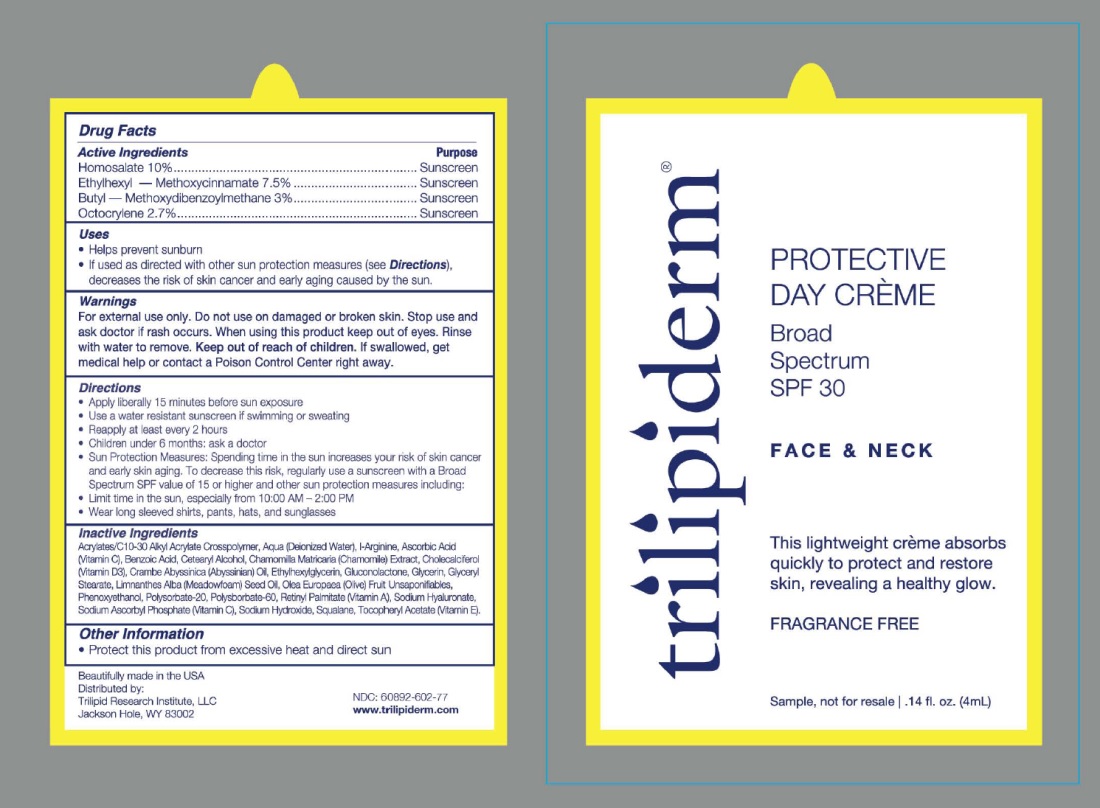
TriLipiderm Protective Day Homosalate, Ethylhexyl methoxycinnamate,Butyl Methoxydibenzoylmethane, Octocrylene 7.5 g/100mL; 3 g/100mL; 10 g/100mL; 2.7 g/100mL Cream, 4 mL — NDC 60892-602-77 (Billing 60892-0602-77)
This is a package of 4 mL of TriLipiderm Protective Day Homosalate, Ethylhexyl methoxycinnamate,Butyl Methoxydibenzoylmethane, Octocrylene 7.5 g/100mL; 3 g/100mL; 10 g/100mL; 2.7 g/100mL Cream from TriLipid Research Institute, LLC, marketed since Dec 2018 and currently FDA-listed.
NDC database record
One package, one record: these facts belong to NDC 60892-602-77 alone.
- Record
- FDA NDC Directory package listing · Human OTC drug
- Code segments
- 60892 labeler · 602 product · 77 package
- Package marketed since
- Dec 12, 2018
- Sample package
- Yes — professional sample, not for sale
- Listing certified through
- Dec 31, 2026
- Barcode (UPC-A, from the NDC)
- 3 6089260277 6
- FDA record last changed
- Aug 27, 2026
Identity & classification
Regulatory identifiers FDA, NLM and CMS codes for this package
Where does this data come from?
- FDA openFDA NDC Directory · synced Oct 1, 2026
- FDA label on DailyMed · label index refreshed Oct 6, 2026
- RxNorm (NLM RxNav) · catalog refreshed Oct 1, 2026
- Medi-Span GPI (licensed)
- First Databank (licensed) · refreshed Oct 1, 2026
Clinical
TriLipiderm Protective Day is a topical cream marketed as an over-the-counter sunscreen product under FDA's monograph rules for UV-protective agents. It contains four active ingredients that function as ultraviolet (UV) filters: homosalate, octinoxate, avobenzone, and octocrylene. These ingredients are commonly used together in sunscreen formulations to help absorb and scatter UVA and UVB radiation from sunlight. This type of product is typically applied to skin as part of daily sun protection routines.
Patient education
Supplement & herbal interactions
Where does this data come from?
- MedlinePlus (NLM) · refreshed Oct 1, 2026
- FDA label on DailyMed · label index refreshed Oct 6, 2026
Ask a licensed pharmacist directly — free, answered by our team.
Pricing
A drug doesn't have one price. Each row is a different public payment system, and none is what you'd pay at the counter — that depends on your insurance. The ⓘ on each row explains what it measures.
| Price system | Per g | Per package |
|---|---|---|
| Retail pharmacies payNADAC · weekly | Not in the retail survey — common for institutional, discontinued, or low-volume packs. | |
| Medicaid paysCMS SDUD · 12 mo | No recent Medicaid claims on file for this NDC — rare and low-volume NDCs are suppressed in the public data. | |
| Medicare drug plans payPart D · quarterly | No Part D plan price is available for this NDC in our data. | |
Where does this data come from?
- CMS NADAC weekly file
- CMS ASP pricing files · refreshed Sep 20, 2026
- CMS Medicaid State Drug Utilization Data · refreshed Oct 6, 2026
- CMS Part D plan pricing files · refreshed Sep 24, 2026
- VA National Acquisition Center price file
Packaging — all sizes for this product
| Package NDC | Description | Marketing start | Marketing end | Status |
|---|---|---|---|---|
| 60892-0602-16 60892-602-16 Main listing | 1 BOTTLE in 1 BOX / 15 mL in 1 BOTTLE | 2018-12-23 | — | Active |
| 60892-0602-33 60892-602-33 | 1 BOTTLE, PUMP in 1 BOX / 50 mL in 1 BOTTLE, PUMP | 2018-12-12 | — | Active |
| 60892-0602-77 You're viewing this | 4 mL in 1 PACKET Sample | 2018-12-12 | — | Active |
Pack size FAQ
What quantity is in this package?
What NDC number is used to bill for this package of TriLipiderm Protective Day Homosalate, Ethylhexyl methoxycinnamate,Butyl Methoxydibenzoylmethane, Octocrylene 7.5 g/100mL; 3 g/100mL; 10 g/100mL; 2.7 g/100mL Cream?
Therapeutic equivalents
| Product | Labeler | Pack | NADAC/unit | TE | Status | Price vs. this |
|---|---|---|---|---|---|---|
| TriLipiderm Protective Day 7.5 g/100mL; 3 g/100mL; 10 g/100mL; 2.7 g/100mLthis 60892-0602-77 | TriLipid | 4 ml | — | — | FDA listed | — |
Where does this data come from?
- FDA openFDA NDC Directory · synced Oct 1, 2026
- FDA Orange Book · refreshed Oct 3, 2026
- CMS NADAC weekly file
Availability & generic status
We did not find an FDA-approved generic match for this exact strength, form and route.
Where does this data come from?
- FDA Orange Book · refreshed Oct 3, 2026
Inactive Ingredients / Excipients
Inactive ingredients, also called excipients, are components of the drug product other than the active ingredient. They may include fillers, dyes, coatings, preservatives, flavors, or other formulation ingredients.
💡 Tap an ingredient (hover on desktop) to see what it is and why it’s used.
-
UNII 9E8X80D2L0
A synthetic form of vitamin E used as an antioxidant and preservative in medications. It helps prevent the active ingredients from degrading when exposed to oxygen or light.
-
UNII 8Z5ZAL5H3V
A synthetic polymer made from acrylate compounds. It acts as a thickener and stabilizer in topical formulations, helping create the right texture and prevent separation of ingredients.
-
UNII 94ZLA3W45F
Arginine is an amino acid used in medicines as a buffer and pH adjuster. It helps maintain the proper acidity level and stability of liquid formulations.
-
UNII PQ6CK8PD0R
Ascorbic acid, also known as vitamin C, is a white crystalline powder. It serves as an antioxidant to prevent degradation of other ingredients and may also function as a preservative in the formulation.
-
UNII 8SKN0B0MIM
Benzoic acid is a naturally occurring organic acid used as a preservative in medicines and foods. It helps prevent bacterial and fungal growth to extend shelf life and maintain product stability.
-
UNII 2DMT128M1S
A waxy solid derived from plant or animal sources. It acts as an emulsifier to blend oil and water components, and also thickens the medicine to give it the right texture and consistency.
-
UNII FGL3685T2X
Chamomile is a plant extract used in medications as a flavoring agent and for its mild soothing properties in formulations. It helps improve taste and aroma of the medicine.
-
UNII 1C6V77QF41
Cholecalciferol is vitamin D3, a fat-soluble vitamin added to medicines as a nutritional supplement or active ingredient fortification. It helps the body absorb calcium and support bone health.
-
UNII 3885PD1IZ8
A plant-derived ingredient from the Abyssinian crambe plant. It functions as a natural binder or filler to help hold the medicine's components together and give the tablet or capsule its shape and structure.
-
UNII 147D247K3P
Ethylhexylglycerin is a synthetic preservative used to prevent bacteria and mold from growing in medicines and personal care products. It helps keep the product safe and stable throughout its shelf life.
-
UNII WQ29KQ9POT
Gluconolactone is a mild organic acid derived from glucose. It functions as a buffer and pH regulator in medicines, helping maintain stable acidity levels and improve product stability.
-
UNII PDC6A3C0OX
Glycerin is a clear, thick liquid derived from plant oils or fats. It acts as a humectant to retain moisture, a sweetener, and a solvent in medications.
-
UNII 230OU9XXE4
A waxy substance made from glycerin and stearic acid that acts as an emulsifier to blend oily and watery ingredients together. It also helps thicken and stabilize the medicine's texture.
-
UNII YSE9PPT4TH
Hyaluronate sodium is a natural carbohydrate that holds moisture. It's used in medicines as a lubricant, thickener, and moisture-retaining agent to improve texture and delivery of the active ingredient.
-
UNII 412ZHA4T4Y
A plant-derived oil extracted from meadowfoam seeds. It acts as an emollient and skin-conditioning agent, helping soften and smooth the product texture while improving how it spreads on skin.
-
UNII XO45V955LT
A natural oil extract from olives that contains compounds resistant to saponification. Used as an emollient and skin-conditioning agent to improve product texture and spreadability in topical formulations.
-
UNII HIE492ZZ3T
Phenoxyethanol is a synthetic preservative and antimicrobial agent used to prevent bacterial and fungal growth in medicines and cosmetic products, extending shelf life and maintaining product safety.
-
UNII 7T1F30V5YH
A synthetic emulsifier derived from sorbitol and oleic acid. It helps mix oil and water-based ingredients together and keeps them from separating in liquid formulations.
-
UNII CAL22UVI4M
A synthetic emulsifier derived from sorbitol and fatty acids. It helps mix oil and water-based ingredients together and improves the texture and stability of the medicine.
-
UNII 836SJG51DR
Sodium ascorbyl phosphate is a derivative of vitamin C that acts as an antioxidant and preservative in medications. It helps protect the drug's active ingredients from degradation caused by air and light exposure.
-
UNII 55X04QC32I
A strong alkaline chemical used to adjust and maintain the pH balance of liquid medicines. It helps keep the medicine stable and ensures it stays effective during storage.
-
UNII GW89575KF9
Squalane is a lightweight oil derived from plant sources or synthesized. It acts as an emollient and lubricant in formulations, helping ingredients blend smoothly and improving product texture and spreadability.
-
UNII 81G40H8B0T
Vitamin A is a fat-soluble nutrient that acts as a colorant and antioxidant in medications. It prevents oxidation of other ingredients and may add nutritional value to the formulation.
-
UNII 059QF0KO0R
Water is a liquid solvent that dissolves and mixes ingredients together in liquid medicines, syrups, and injections. It helps distribute the active drug evenly throughout the product.
24 inactive ingredients listed in the exact product block matched to this NDC.
Label-section wording can be broader than the structured product block and may mention additional formulation ingredients.
Where does this data come from?
ingredient classCode="IACT" elements from the exact product block matched by this NDC. Label-section narrative from DailyMed / the openFDA label index is shown separately when available.- FDA label on DailyMed · label index refreshed Oct 6, 2026
- FDA openFDA NDC Directory · synced Oct 1, 2026
Inactive ingredient FAQ
Are inactive ingredients the same for every manufacturer?
Why might an inactive ingredient be missing?
Can inactive ingredients matter?
Manufacturer & labeler
More NDCs from TriLipid Research Institute, LLC labeler code 60892
- TriLipiderm Broad Spectrum SPF 30 Butyl Methoxydibenzoylmethane, Ethylhexyl methoxycinnamate, Homosalate, Octocrylene 3 g/100mL; 7.5 g/100mL; 10 g/100mL; 2.7 g/100mL Cream NDC 60892-601-00
- TRILIPIDERM All-Body Moisture Retention Cream SPF-30 HOMOSALATE, OCTINOXATE, AVOBENZONE, OCTOCRYLENE 30 mg/mL; 100 mg/mL; 75 mg/mL; 27 mg/mL Cream NDC 60892-605-00
Where does this data come from?
- FDA openFDA NDC Directory · synced Oct 1, 2026
- Drugs@FDA
FDA label — Drug Facts FDA SPL
🎯 Indications and Usage ▾
Uses Helps Prevent Sunburn If used as directed with other sun protection measures (see Directions ), decreases the risk of skin cancer and early skin aging caused by the sun.
⏱️ Dosage and Administration ▾
Directions: Apply liberally 15 minutes before sun exposure Use a water resistant sunscreen if swimming or sweating Reapply at least every 2 hours Children under 6 months: ask a doctor Sun Protection Measures . Spending time in the sun increases your risk of skin cancer and early skin aging. To decrease this risk, regularly use a sunscreen with a Broad Spectrum SPF value of 15 or higher and other sun protection measures including: Limit time in the sun, especially from 10:00 AM – 2:00 PM Wear long sleeved shirts, pants, hats, and sunglasses
⚠️ Warnings ▾
Warnings For external use only.
📦 Storage and Handling ▾
Other Information Protect this product from excessive heat and direct sun
🧪 Active Ingredient ▾
Active Ingredients Homosalate 10%, Ethylhexyl Methoxycinnamate 7.5%, Butyl Methoxydibenzoylmethane 3%, Octocrylene 2.7%
🧪 Inactive Ingredients ▾
Inactive Ingredients Acrylates/C10-30 Alkyl Acrylate Crosspolymer, Aqua (Deionized Water), I-Arginine, Ascorbic Acid (Vitamin C), Benzoic Acid, Cetearyl Alcohol, Chamomilla Matricaria (Chamomile) Extract, Cholecalciferol (Vitamin D3), Crambe Abyssinica (Abyssinian) 0il, Ethylhexylglycerin, Gluconolactone, Glycerin, Glyceryl Stearate, Limnanthes Alba (Meadowfoam) Seed Oil, Olea Europaea (Olive) Fruit Unsaponifiables, Phenoxyethanol, Polysorbate-20, Polysorbate-60, Retinyl Palmitate (Vitamin A), Sodium Hyaluronate, Sodium Ascorbyl Phosphate (Vitamin C), Sodium Hydroxide, Squalane, Tocopheryl Acetate (Vitamin E)
🎯 Purpose ▾
Purpose Sunscreen
📄 Do Not Use ▾
Do not use on damaged or broken skin.
📄 When Using This Product ▾
When using this product Keep out of eyes. Rinse with water to remove
📄 Stop Use and Ask a Doctor If ▾
Stop use and ask a doctor if rash occurs.
📄 Keep Out of Reach of Children ▾
Keep out of reach of children. If swallowed get medical help or contact a Poison Control Center right away
📄 Package Label / Principal Display Panel ▾
TriLipiderm Protective Day Creme Sample Image
About this NDC listing & data coverage
What data is (and isn’t) available for this NDC — tap to expand
| NDC identity (package / product / labeler codes) | ✓ Available |
| Labeler | ✓ Available |
| Product & package description | ✓ Available |
| Marketing category & status | ✓ Available |
| Active ingredient / dosage form / route | ✓ Available |
| FDA label (SPL via DailyMed) | ✓ Available |
| Package photos | ✓ Available |
| Inactive ingredients (structured) | ✓ Available |
| NADAC pharmacy acquisition price (CMS) | — Not published for this NDC CMS publishes NADAC only for NDCs reported in its retail-pharmacy survey. |
| Orange Book / therapeutic-equivalence data | — Not published for this NDC Applies only to products approved under an NDA/ANDA; many listings are out of scope. |
| HCPCS J-code billing crosswalk | — Not published for this NDC Most self-administered / retail products have no J-code — that is normal. |
| Medicaid utilization (CMS SDUD) | — Not published for this NDC CMS reports utilization only for NDCs with Medicaid claims above its privacy threshold. |