
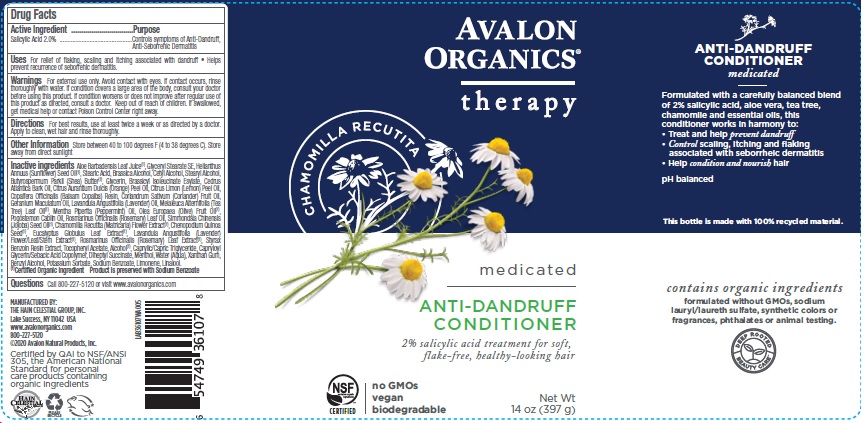
Avalon Organics Antidandruff Conditioner Salicylic Acid 2 g/397g Rinse, 325 g
🆔 Identity & classification
Where does this data come from?
🏭 Manufacturer & labeler
Where does this data come from?
🩺 Clinical
Avalon Organics Antidandruff Conditioner is a rinse-on topical product containing salicylic acid, an ingredient commonly used in over-the-counter dandruff and scalp care products. Salicylic acid is typically included to help soften and loosen flaky skin buildup on the scalp. This is an OTC monograph drug, meaning it is marketed under FDA's established rulebook for nonprescription dandruff treatments rather than through individual product approval.
Patient education
Supplement & herbal interactions
Where does this data come from?
Ask a licensed pharmacist directly — free, answered by our team.
🧪 Inactive Ingredients / Excipients
Inactive ingredients, also called excipients, are components of the drug product other than the active ingredient. They may include fillers, dyes, coatings, preservatives, flavors, or other formulation ingredients.
💡 Tap an ingredient (hover on desktop) to see what it is and why it’s used.
-
UNII 9E8X80D2L0
A synthetic form of vitamin E used as an antioxidant and preservative in medications. It helps prevent the active ingredients from degrading when exposed to oxygen or light.
-
UNII 3K9958V90M
A liquid solvent derived from fermentation or chemical synthesis. In medicines, alcohol dissolves active ingredients, helps preserve the product, and improves how the body absorbs certain drugs.
-
UNII ZY81Z83H0X
Aloe vera leaf is a plant extract derived from the aloe plant. It is used in medicines as a natural moisturizer and skin-soothing agent in topical formulations.
-
UNII LKG8494WBH
Benzyl alcohol is a clear liquid used as a preservative and solvent in medicines. It helps prevent bacterial and fungal growth and dissolves other ingredients to create uniform liquid formulations.
-
UNII 4D13WHP5F7
A natural oil extracted from brown mustard seeds, used as a solvent and carrier to help distribute active ingredients evenly throughout the medicine.
-
UNII U72Q2I8C85
A mixture of fats derived from coconut oil that acts as an emulsifier and solubilizer. It helps blend oil and water-based ingredients together and improves how the body absorbs certain drugs.
-
UNII N7YC58165T
A synthetic polymer made from glycerin and sebacic acid, used as a film-former and binder in medications. It helps hold tablet or capsule ingredients together and may coat the product for controlled release.
-
UNII ZX5QRE4U60
A fragrant plant oil derived from cedar bark, used as a natural flavoring and aroma agent in medicines. It helps mask unpleasant tastes and adds pleasant scent to the product.
-
UNII 936JST6JCN
Cetyl alcohol is a waxy, fatty substance derived from plant or animal sources. It acts as an emulsifier and thickener in medicines, helping blend oil and water components and giving products a smooth, creamy texture.
-
UNII FGL3685T2X
Chamomile is a plant extract used in medications as a flavoring agent and for its mild soothing properties in formulations. It helps improve taste and aroma of the medicine.
-
UNII OO4K72NZ2X
A plant-derived powder from quinoa seeds, used as a filler and binding agent to give the tablet or capsule structure and help hold its ingredients together during manufacturing and storage.
-
UNII 1VH544O5AT
A natural resin derived from the copaiba tree, used as a binder and film-former in medications. It helps hold tablet ingredients together and can create protective coatings on solid dosage forms.
-
UNII 7626GC95E5
A natural aromatic oil extracted from coriander seeds. Used as a flavoring agent to mask bitter tastes and improve the overall taste of medicines, making them easier to take.
-
UNII 057N7SS26Y
A clear, oily liquid derived from succinic acid and alcohol chains. It functions as a plasticizer and solvent in formulations, helping soften coatings and improve flexibility of film-coated tablets.
-
UNII S546YLW6E6
Eucalyptus globulus leaf is a plant-derived ingredient that may serve as a flavoring agent or aromatic component in medications. It is commonly used to add taste or scent to oral formulations.
-
UNII LFG25P7V8M
A plant-based ingredient derived from the whole geranium maculatum plant. It is used in formulations as a binder or filler to add bulk and help hold tablet or capsule ingredients together.
-
UNII PDC6A3C0OX
Glycerin is a clear, thick liquid derived from plant oils or fats. It acts as a humectant to retain moisture, a sweetener, and a solvent in medications.
-
UNII FCZ5MH785I
A waxy substance made from glycerin and stearic acid. It works as an emulsifier to help mix oil and water ingredients together, and as a thickener to give the medicine its proper texture and consistency.
-
UNII 724GKU717M
Jojoba oil is a natural liquid wax extracted from jojoba plant seeds. It's used in medicines as an emollient and lubricant to soften and smooth the product, and sometimes as a carrier or penetration enhancer.
-
UNII 19AH1RAF4M
A plant extract from lavender flowers used as a flavoring and fragrance agent in medicines. It adds taste and aroma to make the product more pleasant to take.
-
UNII ZBP1YXW0H8
A fragrant oil extracted from lavender plants, used as a flavoring and scent agent in medicines to improve taste and aroma.
-
UNII I9GRO824LL
Lemon oil is a natural fragrant extract from lemon peel. It's used in medicines as a flavoring agent to mask unpleasant tastes and improve how the medicine tastes to patients.
-
UNII GFD7C86Q1W
A natural oil extracted from citrus peels, (+)-limonene is used as a flavoring agent and solvent in medicines. It helps dissolve active ingredients and provides a lemon or orange taste.
-
UNII D81QY6I88E
Linalool is a natural fragrant oil found in plants like lavender and citrus. It's used in medicines as a flavoring agent and to mask unpleasant tastes or smells.
-
UNII G43C57162K
A natural plant extract from tea tree leaves used in topical formulations. It acts as a fragrance, preservative, and antimicrobial agent to help maintain product freshness and sensory appeal.
-
UNII 79M2M2UDA9
Mentha piperita is peppermint, a plant extract used in medicines as a flavoring agent and to provide a cooling or soothing taste. It helps make the medication more pleasant to take.
-
UNII L7T10EIP3A
A cooling compound from mint plants used as a flavoring agent and to create a fresh sensation in medicines. It helps mask bitter tastes and improve how the product feels in the mouth.
-
UNII 6UYK2W1W1E
A natural oil extracted from olives. It acts as an emollient and lubricant in formulations, helping to soften ingredients and improve how the medicine spreads or flows.
-
UNII AKN3KSD11B
Orange oil obtained by cold pressing orange peel. It serves as a flavoring agent and fragrance in medicines to improve taste and aroma.
-
UNII H6UKY25H2P
A plant extract from patchouli leaves used as a fragrance and flavoring agent in medicines to improve taste and scent.
-
UNII 1VPU26JZZ4
Potassium sorbate is a salt derived from sorbic acid, a naturally occurring preservative. It prevents growth of mold, yeast, and some bacteria, extending the medicine's shelf life.
-
UNII 8LGU7VM393
Rosemary leaf oil is a natural aromatic oil extracted from rosemary plants. It's used in medicines as a flavoring agent and preservative to help protect the product from spoilage.
-
UNII NR1A27F29O
A plant extract from rosemary flowers used as a natural preservative and antioxidant. It helps prevent oils and fats in the medicine from spoiling, keeping the product fresh during storage.
-
UNII K49155WL9Y
Shea butter is a fat extracted from shea tree nuts. It's used in medicines as an emollient and lubricant to soften the product, improve texture, and help ingredients blend smoothly together.
-
UNII OJ245FE5EU
Sodium benzoate is a salt derived from benzoic acid, a preservative. It's added to medicines to prevent growth of bacteria, fungi, and other microorganisms that could spoil the product.
-
UNII 4ELV7Z65AP
Stearic acid is a fatty acid derived from plant or animal sources. It acts as a binder and lubricant in tablets and capsules, helping them hold together and flow smoothly during manufacturing.
-
UNII 2KR89I4H1Y
Stearyl alcohol is a waxy, fatty substance derived from natural oils or made synthetically. It acts as an emulsifier and thickener in medicines, helping mix ingredients together and give the product the right texture.
-
UNII FE663Z8IRO
A resinous gum extracted from the styrax tree, used as a preservative and binder in medicines. It helps prevent spoilage and holds ingredients together in solid formulations.
-
UNII 3W1JG795YI
Sunflower oil is a natural vegetable oil derived from sunflower seeds. It serves as a solvent, lubricant, and carrier in medicines, helping dissolve active ingredients and improve how the medication flows and absorbs in the body.
-
UNII 059QF0KO0R
Water is a liquid solvent that dissolves and mixes ingredients together in liquid medicines, syrups, and injections. It helps distribute the active drug evenly throughout the product.
-
UNII TTV12P4NEE
Xanthan gum is a thickening and stabilizing ingredient made from fermented corn or other sugars. It's added to medicines to improve texture, prevent separation of liquids and solids, and help the product stay consistent.
41 inactive ingredients listed in the exact product block matched to this NDC.
Label-section wording can be broader than the structured product block and may mention additional formulation ingredients.
Where does this data come from?
ingredient classCode="IACT" elements from the exact product block matched by this NDC. Label-section narrative from DailyMed / the openFDA label index is shown separately when available.Inactive ingredient FAQ
Are inactive ingredients the same for every manufacturer?
Why might an inactive ingredient be missing?
Can inactive ingredients matter?
💲 Pricing
A drug doesn't have one price. Each row is a different public payment system, and none is what you'd pay at the counter — that depends on your insurance. The ⓘ on each row explains what it measures.
| Price system | Per each | Per package |
|---|---|---|
| Retail pharmacies payNADAC · weekly | Not in the retail survey — common for institutional, discontinued, or low-volume packs. | |
| Medicaid paysCMS SDUD · 12 mo | No recent Medicaid claims on file for this NDC — rare and low-volume NDCs are suppressed in the public data. | |
| Medicare drug plans payPart D · quarterly | No Part D plan price is available for this NDC in our data. | |
Where does this data come from?
🔁 Therapeutic equivalents
| Product | Labeler | Pack | NADAC/unit | TE | Status | Price vs. this |
|---|---|---|---|---|---|---|
| Avalon Organics Antidandruff Conditioner 2 g/397gthis 61995-1607-09 | The | 325 g | — | — | FDA listed | — |
Where does this data come from?
⏳ Availability & generic status
We did not find an FDA-approved generic match for this exact strength, form and route.
Where does this data come from?
📊 Medicare Part D spend CMS · PART D · 2026 (Q1)
🔬 Reported adverse events (FAERS)
Top reported reactions
Age at onset
Reporter sex
Serious outcomes
Where does this data come from?
📦 Packaging — all sizes for this product
| Package NDC | Description | Marketing start | Status |
|---|---|---|---|
| 61995-1607-08 | 397 g in 1 BOTTLE (61995-1607-8) | 2016-08-24 | Active |
| 61995-1607-09 You're viewing this | 325 g in 1 BOTTLE (61995-1607-9) | 2025-07-01 | Active |
You're viewing the smallest of 2 pack sizes for this product.
Pack size FAQ
What quantity is in NDC 61995-1607-09?
What is the difference between NDC 61995-1607-09 and NDC 61995-1607-08?
What NDC number is used to bill for this package of Avalon Organics Antidandruff Conditioner Salicylic Acid 2 g/397g Rinse?
🧭 About this NDC listing & data coverage
What data is (and isn’t) available for this NDC — tap to expand
| NDC identity (package / product / labeler codes) | ✓ Available |
| Labeler | ✓ Available |
| Product & package description | ✓ Available |
| Marketing category & status | ✓ Available |
| Active ingredient / dosage form / route | ✓ Available |
| FDA label (SPL via DailyMed) | ✓ Available |
| Package photos | ✓ Available |
| Inactive ingredients (structured) | ✓ Available |
| NADAC pharmacy acquisition price (CMS) | — Not published for this NDC CMS publishes NADAC only for NDCs reported in its retail-pharmacy survey. |
| Orange Book / therapeutic-equivalence data | — Not published for this NDC Applies only to products approved under an NDA/ANDA; many listings are out of scope. |
| HCPCS J-code billing crosswalk | — Not published for this NDC Most self-administered / retail products have no J-code — that is normal. |
| Medicaid utilization (CMS SDUD) | — Not published for this NDC CMS reports utilization only for NDCs with Medicaid claims above its privacy threshold. |
Questions about this listing
Is this NDC FDA-approved?
Why is there no price listed?
Is the NDC printed on the package the same as the 11-digit billing NDC?
What do the three segments of this NDC mean?
Is this package still being marketed?
Does this product come in other package sizes?
Who lists this product with the FDA?
Do I need a prescription for this product?
Where does this data come from?
📄 FDA label — Drug Facts FDA SPL
🎯 Indications and Usage ▾
For relief of flaking, scaling and itching associated with dandruff. Helps prevent Seborrheic Dermatitis
⏱️ Dosage and Administration ▾
For the best results use at least three times each week. Apply to clean, wet hair. Rinse throughly.
⚠️ Warnings ▾
For external use only. Avoid contact with eyes. Rinse eyes throughly with water in case contact ossurs. Discontinue to use and contact your physician if irritation develops.
🧪 Active Ingredient ▾
Salicylic Acid 2.0%
🧪 Inactive Ingredients ▾
Aloe Barbadensis Leaf Juice (1), Glyceryl Stearate SE, Helianthus Annuus (Sunflower) Seed Oil (1), Stearic Acid, Brassica Alcohol, Cetyl Alcohol, Stearyl Alcohol, Butyrospermum Parkii (Shea) Butter (1), Glycerin, Brassicyl Isoleucinate Esylate, Cedrus Atlantica Bark Oil, Citrus Aurantium Dulcis (Orange) Peel Oil, Citrus Limon (Lemon) Peel Oil, Copaifera Officinalis (Balsam Copaiba) Resin, Coriandrum Sativum (Coriander) Fruit Oil, Geranium Maculatum Oil, Lavandula Angustifolia (Lavender) Oil, Melaleuca Alternifolia (Tea Tree) Leaf Oil (1), Mentha Piperita (Peppermint) Oil, Olea Europaea (Olive) Fruit Oil (1), Pogostemon Cablin Oil, Rosmarinus Officinalis (Rosemary) Leaf Oil, Simmondsia Chinensis (Jojoba) Seed Oil (1), Chamomilla Recutita (Matricaria) Flower Extract (1), Chenopodium Quinoa Seed (1), Eucalyptus Globulus Leaf Extract (1), Lavandula Angustifolia (Lavender) Flower/Leaf/Stem Extract (1), Rosmarinus Officinalis (Rosemary) Leaf Extract (1), Styrax Benzoin Resin Extract, Tocopheryl Acetate, Alcohol (1), Caprylic/Capric Triglyceride, Capryloyl Glycerin/Sebacic Acid Copolymer, Diheptyl Succinate, Menthol, Water (Aqua), Xanthan Gum, Benzyl Alcohol, Potassium Sorbate, Sodium Benzoate, Limonene, Linalool.
(1) Certified Organic Ingredients
🎯 Purpose ▾
Controls symptoms of dandruff, seboric dermatitis and psoriasis