
TROGARZO ibalizumab 150 mg/mL Injection, Solution, 2 vials — NDC 62064-122-02 (Billing 62064-0122-02)
This is a package of 2 vials of TROGARZO ibalizumab 150 mg/mL Injection, Solution from Theratechnologies Inc., marketed since Apr 2018 and currently FDA-listed. It is this product's only package size.
Identity & classification
Regulatory identifiers FDA, NLM and CMS codes for this package
Drug-database identifiers Medi-Span GPI and First Databank GCN / HICL / AHFS classification
- GSN (GCN sequence number): 078218
- GCN: 44504
- GPI-14 (Medi-Span): 12102240302020
- HICL (First Databank): 044791
- AHFS class code: 08:18.08.04
- RxCUI (RxNorm): 2043317
Where does this data come from?
- FDA openFDA NDC Directory · synced Oct 1, 2026
- FDA label on DailyMed · label index refreshed Oct 1, 2026
- RxNorm (NLM RxNav) · catalog refreshed Oct 1, 2026
- Medi-Span GPI (licensed)
- First Databank (licensed) · refreshed Oct 1, 2026
RxNorm drug class
This medicine belongs to the CD4-directed Blocking Antibody class.
Where does this data come from?
- RxClass (NLM) · catalog refreshed Oct 1, 2026
Clinical
Ibalizumab-uiyk is used to treat human immunodeficiency virus (HIV) infection in people whose HIV could not be successfully treated with other medications, including their current therapy. Ibalizumab-uiyk is in a class of medications called monoclonal antibodies. It works by blocking HIV from infecting cells in the body. Although ibalizumab-uiyk does not cure HIV, it may decrease your chance of developing acquired immunodeficiency syndrome (AIDS) and HIV-related illnesses Taking these medications and making other life-style changes may decrease the risk of giving the HIV virus to other people.
Read the full MedlinePlus article ↗Patient education
Supplement & herbal interactions
Where does this data come from?
- MedlinePlus (NLM) · refreshed Oct 1, 2026
- FDA label on DailyMed · label index refreshed Oct 1, 2026
Ask a licensed pharmacist directly — free, answered by our team.
Pricing
A drug doesn't have one price. Each row is a different public payment system, and none is what you'd pay at the counter — that depends on your insurance. The ⓘ on each row explains what it measures.
| Price system | Per mL | Per package |
|---|---|---|
| Retail pharmacies payNADAC · weekly | Not in the retail survey — common for institutional, discontinued, or low-volume packs. | |
| Medicaid paysCMS SDUD · 12 mo | $1,088.35 | $2,895.02 / 2.66 ml |
| Medicare drug plans payPart D · quarterly | No Part D plan price is available for this NDC in our data. | |
| Medicare Part B allowsASP · J1746 | $79.512 / J1746 unit | — |
Where does this data come from?
- CMS NADAC weekly file
- CMS ASP pricing files · refreshed Sep 20, 2026
- CMS Medicaid State Drug Utilization Data · through Q4 2025
- CMS Part D plan pricing files · refreshed Sep 24, 2026
- VA National Acquisition Center price file
Billing & reimbursement
Where does this data come from?
- CMS ASP NDC-HCPCS crosswalk · refreshed Sep 22, 2026
- DMEPDAC NDC-HCPCS crosswalk
- openFDA NSDE billing units · refreshed Sep 7, 2026
Packaging — all sizes for this product
| Package NDC | Description | Marketing start | Marketing end | Status |
|---|---|---|---|---|
| 62064-0122-02 You're viewing this Main listing | 2 VIAL, SINGLE-USE in 1 CARTON / 1.33 mL in 1 VIAL, SINGLE-USE | 2018-04-20 | — | Active |
Therapeutic equivalents
| Product | Labeler | Pack | NADAC/unit | TE | Status | Price vs. this |
|---|---|---|---|---|---|---|
| Trogarzo 150 mg/mLthis 62064-0122-02 | Theratechnologies | 2 vials | — | — | FDA listed | — |
Where does this data come from?
- FDA openFDA NDC Directory · synced Oct 1, 2026
- FDA Purple Book · refreshed Sep 5, 2026
- CMS NADAC weekly file
Availability & biosimilar status
Biologics have no small-molecule generics; biosimilar competition is tracked in the FDA Purple Book.
Why the date isn’t exact: Biosimilar timing can change because patents may be challenged, settled, licensed, added or removed, and litigation can move the real date earlier or later.
🛈 What do these terms mean?
- Biologic patent
- A patent the reference product’s maker has publicly listed. A biosimilar generally can’t launch until these expire — unless they’re invalidated or resolved in a settlement.
- Reference-product exclusivity
- A flat 12 years of FDA market protection from the biologic’s first licensure (the BPCIA). No biosimilar can be licensed before it ends, regardless of patents.
- Interchangeable exclusivity
- The first interchangeable biosimilar can earn a period as the only interchangeable version (pharmacists can substitute it without the prescriber).
- Earliest biosimilar (LOE)
- The latest of all the dates above — the soonest a biosimilar can realistically reach the market. Litigation and settlements can move it earlier.
Biologics have no small-molecule “generics” — competition comes from FDA-licensed biosimilars, tracked in the FDA Purple Book.
| Code | What it grants | Expires |
|---|---|---|
| RefProduct | Reference-product exclusivity (12-year, BPCIA) — no biosimilar can be licensed before this date | Mar 6, 2030 |
Is there a biosimilar for TROGARZO 200 MG/1.33 ML VIAL?
Why do different websites show different biosimilar dates?
Can a biosimilar launch before the last patent expires?
What does “current Purple Book estimate” mean?
What does “FDA listed” mean?
What does a patent or protection date mean here?
Where does this data come from?
- FDA Purple Book · refreshed Sep 5, 2026
Inactive Ingredients / Excipients
Inactive ingredients, also called excipients, are components of the drug product other than the active ingredient. They may include fillers, dyes, coatings, preservatives, flavors, or other formulation ingredients.
💡 Tap an ingredient (hover on desktop) to see what it is and why it’s used.
-
UNII 4QD397987E
An amino acid used as a buffer and stabilizer in medications. It helps maintain the pH balance and protects the active drug from breaking down during storage and use.
-
UNII QTT17582CB
A strong acid used to adjust and maintain the proper pH level in liquid medicines, ensuring stability and preventing breakdown of active ingredients.
-
UNII 6OZP39ZG8H
Polysorbate 80 is a synthetic emulsifier derived from sorbitol and oleic acid. It helps mix oil and water-based ingredients together in medications and improves how the product disperses in the body.
-
UNII 451W47IQ8X
Sodium chloride is common table salt. It's used in medicines as a buffer to maintain proper pH, as a filler to add bulk, or to adjust the osmotic balance in liquid formulations.
-
UNII C151H8M554
A natural sugar derived from sugar cane or sugar beets. It's used as a sweetener, filler, and binder to improve taste, add bulk, and help hold tablet or capsule ingredients together.
-
UNII 059QF0KO0R
Water is a liquid solvent that dissolves and mixes ingredients together in liquid medicines, syrups, and injections. It helps distribute the active drug evenly throughout the product.
6 inactive ingredients listed in the exact product block matched to this NDC.
Where does this data come from?
ingredient classCode="IACT" elements from the exact product block matched by this NDC. Label-section narrative from DailyMed / the openFDA label index is shown separately when available.- FDA label on DailyMed · label index refreshed Oct 1, 2026
- FDA openFDA NDC Directory · synced Oct 1, 2026
Inactive ingredient FAQ
Are inactive ingredients the same for every manufacturer?
Why might an inactive ingredient be missing?
Can inactive ingredients matter?
Manufacturer & labeler
Where does this data come from?
- FDA openFDA NDC Directory · synced Oct 1, 2026
- Drugs@FDA
Full prescribing information FDA SPL
🎯 Indications and Usage ▾
1 INDICATIONS AND USAGE TROGARZO, in combination with other antiretroviral(s), is indicated for the treatment of human immunodeficiency virus type 1 (HIV-1) infection in heavily treatment-experienced adults with multidrug resistant HIV-1 infection failing their current antiretroviral regimen. TROGARZO, a CD4-directed post-attachment HIV-1 inhibitor, in combination with other antiretroviral(s), is indicated for the treatment of human immunodeficiency virus type 1 (HIV-1) infection in heavily treatment-experienced adults with multidrug resistant HIV-1 infection failing their current antiretroviral regimen.
⏱️ Dosage and Administration ▾
2 DOSAGE AND ADMINISTRATION The recommended dosage regimen is a single loading dose of 2,000 mg followed by a maintenance dose of 800 mg every 2 weeks administered as a diluted intravenous infusion (IV infusion) or undiluted intravenous push (IV push). ( 2.1 , 2.2 , 2.3 ) Duration of IV Infusion or IV Push IV Infusion (Diluted) IV Push (Undiluted) Loading Dose 2,000 mg Over at least 30 minutes Over at least 90 seconds Maintenance Dose 800 mg Over at least 15 minutes Over at least 30 seconds
2.1Recommended Dosage The recommended dosage regimen is a single loading dose of 2,000 mg followed by a maintenance dose of 800 mg every 2 weeks administered as a diluted intravenous infusion (IV infusion) or undiluted intravenous push (IV push) [ see Dosage and Administration ( 2.2 , 2.3 ) ]. TROGARZO is available in a single-dose, 2 mL vial containing 150 mg/mL of ibalizumab-uiyk. Each vial delivers approximately 1.33 mL containing 200 mg of ibalizumab-uiyk.
Dose modifications of TROGARZO are not required when administered with any other antiretroviral or any other treatments.
2.2Preparation Parenteral drug products should be inspected visually for particulate matter and discoloration prior to administration, whenever solution and container permit. Discard vial if solution is cloudy, if there is pronounced discoloration or if there is foreign particulate matter. See Table 1 for the appropriate number of vials required to prepare both the loading dose of 2,000 mg and the maintenance doses of 800 mg.
Table 1. Recommended TROGARZO Dose and Number of Vials Per Administration TROGARZO Dose TROGARZO Vials (Total Volume to be Withdrawn) Loading dose of 2,000 mg (IV infusion or undiluted IV push) 10 vials (13.3 mL) Maintenance dose of 800 mg (IV infusion or undiluted IV push) 4 vials (5.32 mL) TROGARZO solution for IV infusion or IV push should be prepared by a trained medical professional using aseptic technique as follows: For intravenous infusion For administration as an IV infusion, the appropriate number of vials are diluted in 250 mL of 0.9% Sodium Chloride Injection, USP. • Remove the flip-off cap from the single-dose vial and wipe the stopper with an alcohol swab. • Insert sterile syringe needle into the vial through the center of the stopper and withdraw 1.33 mL from each vial (NOTE: a small residual amount may remain in the vial, discard unused portion) and transfer into a 250 mL intravenous bag of 0.9% Sodium Chloride Injection, USP.
Other intravenous diluents must not be used to prepare the TROGARZO solution for infusion. • Once diluted, the TROGARZO solution should be administered immediately. • If not administered immediately, store the diluted TROGARZO solution at room temperature (20°C to 25°C, 68°F to 77°F) for up to 4 hours, or refrigerated (2°C to 8°C, 36°F to 46°F) for up to 24 hours. If refrigerated, allow the diluted TROGARZO solution to stand at room temperature (20°C to 25°C, 68°F to 77°F) for at least 30 minutes but no more than 4 hours prior to administration. • Discard partially used vials or empty vials of TROGARZO and any unused portion of the diluted TROGARZO solution.
For intravenous push For administration as an IV push, undiluted TROGARZO solution is administered. • Allow the vials to stand at room temperature for approximately 5 minutes. • Remove the flip-off cap from the single-dose vial and wipe the stopper with an alcohol swab. • Insert sterile syringe needle into the vial through the center of the stopper and withdraw 1.33 mL from each vial (NOTE: a small residual amount may remain in the vial, discard unused portion). • The undiluted TROGARZO solution should be administered immediately. • Discard partially used vials or empty vials of TROGARZO and any unused portion of the undiluted TROGARZO solution.
2.3Administration TROGARZO solution should be administered by a trained medical professional. Administer TROGARZO intravenously (as an IV infusion or IV push) in the cephalic vein of the patients right or le… [Excerpted — this section continues on DailyMed.]
💊 Dosage Forms and Strengths ▾
3 DOSAGE FORMS AND STRENGTHS Injection: 200 mg/1.33 mL (150 mg/mL) colorless to slightly yellow and clear to slightly opalescent solution with no visible particles in a single-dose vial. Injection: 200 mg/1.33 mL (150 mg/mL) in a single-dose vial.
⛔ Contraindications ▾
4 CONTRAINDICATIONS TROGARZO is contraindicated in patients with a prior hypersensitivity reaction to TROGARZO or any components of the product [see Warnings and Precautions ( 5.1 )]. Prior hypersensitivity reaction to TROGARZO or any components of the product.
⚠️ Warnings and Cautions ▾
5 WARNINGS AND PRECAUTIONS Hypersensitivity reactions including infusion-related reactions and anaphylactic reactions have been reported following infusion of TROGARZO. ( 5.1 ) Immune Reconstitution Inflammatory Syndrome (IRIS) has been reported in patients treated with combination antiretroviral therapies. ( 5.2 ) Embryo-Fetal Toxicity: Monitor infants exposed to TROGARZO in utero for signs and symptoms of immunosuppression. ( 5.3 , 8.1 )
5.1Hypersensitivity Including Infusion-Related and Anaphylactic Reactions Hypersensitivity reactions including infusion-related reactions and anaphylactic reactions have been reported following infusion of TROGARZO during post-approval use. Symptoms may include dyspnea, angioedema, wheezing, chest pain, chest tightness, cough, hot flush, nausea, and vomiting. If signs and symptoms of an anaphylactic or other clinically significant hypersensitivity reaction occur, immediately discontinue administration of TROGARZO and initiate appropriate treatment.
The use of TROGARZO is contraindicated in patients with known hypersensitivity with TROGARZO [see Contraindications ( 4 ), Adverse Reactions ( 6.2 )].
5.2Immune Reconstitution Inflammatory Syndrome Immune reconstitution inflammatory syndrome has been reported in one patient treated with TROGARZO in combination with other antiretrovirals. During the initial phase of combination antiretroviral therapies, patients whose immune systems respond may develop an inflammatory response to indolent or residual opportunistic infections, which may necessitate further evaluation and treatment.
5.3Embryo-Fetal Toxicity Based on animal data, TROGARZO may cause reversible immunosuppression (CD4+ T cell and B cell lymphocytopenia) in infants born to mothers exposed to TROGARZO during pregnancy. Immune phenotyping of the peripheral blood and expert consultation are recommended to provide guidance regarding monitoring and management of exposed infants based on the degree of immunosuppression observed. The safety of administering live or live-attenuated vaccines in exposed infants is unknown. [see Use In Specific Populations ( 8.1 )]
🤒 Adverse Reactions ▾
6 ADVERSE REACTIONS The following adverse drug reactions are discussed in other sections of the labeling: Immune Reconstitution Inflammatory Syndrome [see Warnings and Precautions ( 5.2 )] The most common adverse reactions (incidence ≥ 5%) were diarrhea, dizziness, nausea, and rash. ( 6.1 ) To report SUSPECTED ADVERSE REACTIONS, contact THERA patient support ® at 1-833-23THERA (1-833-238-4372) or FDA at 1-800-FDA-1088 or www.fda.gov/medwatch.
6.1Clinical Trial Experience Because clinical trials are conducted under widely varying conditions, adverse reaction rates observed in the clinical trials of a drug cannot be directly compared to rates in the clinical trials of another drug and may not reflect the rates observed in practice. A total of 350 subjects have been exposed to TROGARZO in the ibalizumab clinical development program, including 45 subjects who received TROGARZO through expanded access programs. A total of 19 subjects received TROGARZO via IV push.
The safety profile of TROGARZO administered via IV push (Trial TMB-302) was similar to that seen with IV infusion administration (Trial TMB-301) [see Clinical Pharmacology ( 12.3 )]. Trial TMB-301 The primary safety assessment of TROGARZO is based on 24 weeks of data from Trial TMB-301. TMB-301 was a single-arm trial of TROGARZO which enrolled 40 heavily treatment-experienced subjects with multidrug resistant HIV-1 on a failing HIV treatment regimen.
Subjects received a single 2,000 mg IV loading dose of TROGARZO followed seven days later by the initiation of an optimized background regimen (OBR) including at least one agent to which the subject's virus was susceptible. Two weeks after the TROGARZO loading dose, 800 mg of TROGARZO was administered IV. The IV administration of TROGARZO 800 mg was continued every 2 weeks through Week 25.
The most common adverse reactions (all Grades) reported in at least 5% of subjects were diarrhea, dizziness, nausea, and rash. Table 3 shows the frequency of adverse reactions occurring in 5% or more of subjects. Table 3.
Adverse Reactions (All Grades) Reported in ≥ 5% of Subjects Receiving TROGARZO and Optimized Background Regimen for 23 Weeks in Trial TMB-301 % Subjects N=40 Diarrhea 8% Dizziness 8% Nausea 5% Rash Includes pooled terms “rash”, “rash erythematous”, “rash generalized”, “rash macular”, “rash maculopapular”, and “rash papular” 5% Most (90%) of the adverse reactions reported were mild or moderate in severity. Two subjects experienced severe adverse reactions: one subject had a severe rash and one subject developed immune reconstitution inflammatory syndrome manifested as an exacerbation of progressive multifocal leukoencephalopathy.
Laboratory Abnormalities Table 4 shows the frequency of laboratory abnormalities (≥ Grade 3) in Trial TMB-301. Table 4. Selected Laboratory Abnormalities (≥ Grade 3) in Trial TMB-301 % Subjects N=40 Bilirubin (≥ 2.6 x ULN) 5% Direct Bilirubin (> ULN) 3% Creatinine (> 1.8 x ULN or 1.5 x baseline) 10% Blood Glucose (> 250 mg/dL) 3% Lipase (> 3.0 x ULN) 5% Uric Acid (> 12 mg/dL) 3% Hemoglobin (< 8.5 g/dL) 3% Platelets (< 50,000/mm 3 ) 3% Leukocytes (< 1.5 x 10 9 cells/L) 5% Neutrophils (< 0.6 x 10 9 cells/L) 5%
6.2Postmarketing Experience The following adverse reactions have been identified during post‐approval use of TROGARZO. Because these reactions are reported voluntarily from a population of uncertain size, it is not possible to reliably estimate their frequency or establish a causal relationship to drug exposure. Immune system disorders: hypersensitivity reactions including infusion-related reactions and anaphylactic reactions have been reported [see Warnings and Precautions ( 5.1 )] .
Skin and subcutaneous tissue disorders: pruritus
👥 Use in Specific Populations ▾
8 USE IN SPECIFIC POPULATIONS Lactation: Women infected with HIV should be instructed not to breastfeed due to the potential for HIV transmission. ( 8.2 )
8.1Pregnancy Pregnancy Exposure Registry There is a pregnancy exposure registry that monitors pregnancy outcomes in women exposed to antiretrovirals during pregnancy. This registry does not include Trogarzo, but likely includes patients’ concomitant antiretroviral drugs. Healthcare providers are encouraged to register patients by calling the Antiretroviral Pregnancy Registry (APR) at 1–800–258–4263.
Risk Summary Based on animal data, ibalizumab-uiyk use during pregnancy may cause reversible immunosuppression (CD4+ T cell and B cell lymphocytopenia) in infants exposed to ibalizumab-uiyk in utero. Immunoglobulin G (IgG) antibodies, such as ibalizumab-uiyk, are transported across the placenta in significant amounts, especially near term; therefore, ibalizumab-uiyk has the potential to be transferred from the mother to the developing fetus (see Clinical Considerations). There are no available data on ibalizumab-uiyk use in pregnant women to evaluate for a drug- associated risk of major birth defects, miscarriage or adverse maternal or fetal outcomes.
The background risk of major birth defects and miscarriage for the indicated population is unknown. All pregnancies have a background risk of birth defect, loss, or other adverse outcomes. In the U.S. general population, the estimated background risk of major birth defects and miscarriage in clinically recognized pregnancies is 2-4% and 15-20%, respectively.
In a reproductive study in monkeys, reversible decreases in CD4+ T cells and B cells and increases in CD8+ T cells were observed within the first 4 weeks after birth in infants born to pregnant monkeys receiving ibalizumab-uiyk intravenously ( see Data ). Lymphocyte counts returned to near normal levels by 3 months of age. One infant monkey died from a systemic viral infection that may be related to ibalizumab-uiyk-induced immunosuppression.
No malformations or premature births were observed in this study. Clinical Considerations Fetal/Neonatal Adverse Reactions Immunoglobulin G (IgG) antibodies are increasingly transported across the placenta as pregnancy progresses, with the largest amount transferred during the third trimester . Administration of TROGARZO during pregnancy may affect immune responses in the in utero-exposed infant.
For infants with perinatal exposure to TROGARZO, immune phenotyping of the peripheral blood, including CD4+ T cell and B cell counts, is recommended. Expert consultation is also recommended to provide guidance on monitoring and management (e.g., need for antibiotic or immunoprophylaxis) of exposed infants based on the degree of immunosuppression observed. The safety of administering live or live-attenuated vaccines in exposed infants is unknown.
Data Animal Data In an enhanced pre- and post-natal development (ePPND) study, pregnant cynomolgus monkeys were administered intravenous doses of either vehicle or 110 mg/kg ibalizumab-uiyk every week from Gestation Day 20-22 (GD 20-22) until parturition on GD 160 ± 10. Significant changes in infant monkey immune cell levels on Postnatal Day (PND) 14 (mean decreases of 78% in CD4+ T cells and 46% in B cells and increases of 2.3-fold in CD8+ T cells) and PND 28 (mean decreases of 73% in CD4+ T cells and increases of 2.2-fold in CD8+ T cells), attributed to in utero ibalizumab-uiyk exposure, were observed relative to concurrent controls.
The lymphocyte changes correlated with infant ibalizumab-uiyk serum concentrations and appeared to return to near normal levels between PND 28-91, when ibalizumab-uiyk concentrations were nearly undetectable. Although ibalizumab-uiyk exposure in these infant monkeys may be significantly higher than in human infants following in utero exposure at the recommended human maintenance dose, the risk of ibalizumab-uiyk-induced immunosuppression in human infants is possible. No meani… [Excerpted — this section continues on DailyMed.]
🤰 Pregnancy ▾
8.1Pregnancy Pregnancy Exposure Registry There is a pregnancy exposure registry that monitors pregnancy outcomes in women exposed to antiretrovirals during pregnancy. This registry does not include Trogarzo, but likely includes patients’ concomitant antiretroviral drugs. Healthcare providers are encouraged to register patients by calling the Antiretroviral Pregnancy Registry (APR) at 1–800–258–4263.
Risk Summary Based on animal data, ibalizumab-uiyk use during pregnancy may cause reversible immunosuppression (CD4+ T cell and B cell lymphocytopenia) in infants exposed to ibalizumab-uiyk in utero. Immunoglobulin G (IgG) antibodies, such as ibalizumab-uiyk, are transported across the placenta in significant amounts, especially near term; therefore, ibalizumab-uiyk has the potential to be transferred from the mother to the developing fetus (see Clinical Considerations). There are no available data on ibalizumab-uiyk use in pregnant women to evaluate for a drug- associated risk of major birth defects, miscarriage or adverse maternal or fetal outcomes.
The background risk of major birth defects and miscarriage for the indicated population is unknown. All pregnancies have a background risk of birth defect, loss, or other adverse outcomes. In the U.S. general population, the estimated background risk of major birth defects and miscarriage in clinically recognized pregnancies is 2-4% and 15-20%, respectively.
In a reproductive study in monkeys, reversible decreases in CD4+ T cells and B cells and increases in CD8+ T cells were observed within the first 4 weeks after birth in infants born to pregnant monkeys receiving ibalizumab-uiyk intravenously ( see Data ). Lymphocyte counts returned to near normal levels by 3 months of age. One infant monkey died from a systemic viral infection that may be related to ibalizumab-uiyk-induced immunosuppression.
No malformations or premature births were observed in this study. Clinical Considerations Fetal/Neonatal Adverse Reactions Immunoglobulin G (IgG) antibodies are increasingly transported across the placenta as pregnancy progresses, with the largest amount transferred during the third trimester . Administration of TROGARZO during pregnancy may affect immune responses in the in utero-exposed infant.
For infants with perinatal exposure to TROGARZO, immune phenotyping of the peripheral blood, including CD4+ T cell and B cell counts, is recommended. Expert consultation is also recommended to provide guidance on monitoring and management (e.g., need for antibiotic or immunoprophylaxis) of exposed infants based on the degree of immunosuppression observed. The safety of administering live or live-attenuated vaccines in exposed infants is unknown.
Data Animal Data In an enhanced pre- and post-natal development (ePPND) study, pregnant cynomolgus monkeys were administered intravenous doses of either vehicle or 110 mg/kg ibalizumab-uiyk every week from Gestation Day 20-22 (GD 20-22) until parturition on GD 160 ± 10. Significant changes in infant monkey immune cell levels on Postnatal Day (PND) 14 (mean decreases of 78% in CD4+ T cells and 46% in B cells and increases of 2.3-fold in CD8+ T cells) and PND 28 (mean decreases of 73% in CD4+ T cells and increases of 2.2-fold in CD8+ T cells), attributed to in utero ibalizumab-uiyk exposure, were observed relative to concurrent controls.
The lymphocyte changes correlated with infant ibalizumab-uiyk serum concentrations and appeared to return to near normal levels between PND 28-91, when ibalizumab-uiyk concentrations were nearly undetectable. Although ibalizumab-uiyk exposure in these infant monkeys may be significantly higher than in human infants following in utero exposure at the recommended human maintenance dose, the risk of ibalizumab-uiyk-induced immunosuppression in human infants is possible. No meaningful differences in infant monkey lymphocyte counts were observed on PND 180.
Further, no differences in immune cell function were observed in a T cell-de… [Excerpted — this section continues on DailyMed.]
🧒 Pediatric Use ▾
8.4Pediatric Use The safety and effectiveness of TROGARZO in pediatric patients have not been established.
🧓 Geriatric Use ▾
8.5Geriatric Use No studies have been conducted with TROGARZO in geriatric patients.
🧬 Clinical Pharmacology ▾
12 CLINICAL PHARMACOLOGY
12.1Mechanism of Action Ibalizumab-uiyk is an HIV-1 antiretroviral drug [see Microbiology ( 12.4 )] .
12.2Pharmacodynamics A clear trend was identified between exposure and response rate for the Phase 2b trial (TMB-202) which studied two different intravenous doses given at two different dosing intervals (every 4 weeks vs. every 2 weeks). The recommended intravenous dosing regimen consisting of a 2,000 mg loading dose followed by a maintenance dose of 800 mg every 2 weeks was selected on the basis of these results.
12.3Pharmacokinetics Ibalizumab-uiyk administered as a single agent exhibits nonlinear pharmacokinetics. Following single-dose administrations of ibalizumab-uiyk as 0.5 to 1.5-hour infusions, the area under the concentration-time curve increased in a greater than dose-proportional manner, clearance decreased from 9.54 to 0.36 mL/h/kg and elimination half-life increased from 2.7 to 64 hours as the dose increased from 0.3 to 25 mg/kg. The volume of distribution of ibalizumab-uiyk was approximately that of serum volume, at
4.8L. Following the recommended dose regimen (a single loading dose of 2,000 mg followed by a maintenance dose of 800 mg every 2 weeks), ibalizumab-uiyk concentrations reached steady-state levels after the first 800 mg maintenance dose with mean concentrations over 30 mcg/mL throughout the dosing interval. Among HIV-infected subjects, the pharmacokinetic data from Trial TMB-302 demonstrated that ibalizumab-uiyk C trough and AUC 0-tau values between IV push administration and IV infusion administration for maintenance dose were similar.
The C max values were 25% higher for IV push compared to the IV infusion administration. The increase in C max is not considered clinically relevant. The initial loading dose of ibalizumab-uiyk as an IV push administration over 90 seconds is predicted to have a similar C max and AUC relative to IV infusion administration over 30 minutes.
Specific Populations A population pharmacokinetic analysis was performed to explore the potential effects of selected covariates (age, body weight, sex, baseline CD4 + cell count) on ibalizumab-uiyk pharmacokinetics. The result suggests that ibalizumab-uiyk concentration decreases as body weight increases; however, the effect is unlikely to impact virologic outcome and does not warrant a dose adjustment. Pediatric/Geriatric Patients: Ibalizumab-uiyk pharmacokinetics have not been evaluated in pediatric or geriatric patients [see Use in Specific Populations ( 8.4 , 8.5 )].
Renal/Hepatic Impairment: No formal studies were conducted to examine the effects of either renal or hepatic impairment on the pharmacokinetics of ibalizumab-uiyk. Renal impairment is not anticipated to impact the pharmacokinetics of ibalizumab-uiyk. Drug Interaction studies No drug interaction studies have been conducted with ibalizumab-uiyk.
Based on ibalizumab-uiyk’s mechanism of action and target-mediated drug disposition, drug-drug interactions are not expected.
12.4Microbiology Mechanism of Action Ibalizumab-uiyk, a recombinant humanized monoclonal antibody, blocks HIV-1 from infecting CD4 + T cells by binding to domain 2 of CD4 and interfering with post-attachment steps required for the entry of HIV-1 virus particles into host cells and preventing the viral transmission that occurs via cell-cell fusion. Ibalizumab-uiyk Does Not Impact CD4 Function The binding specificity of ibalizumab-uiyk to domain 2 of CD4 allows ibalizumab-uiyk to block viral entry into host cells without causing immunosuppression.
Epitope mapping studies indicate that ibalizumab-uiyk binds to a conformational epitope located primarily in domain 2 of the extracellular portion of the CD4 receptor. This epitope is positioned on the surface of CD4 opposite to the site in domain 1 that is required for CD4 binding of the MHC class II molecules and therefore does not interfere with CD4-mediated immune functions. Additionally, ibalizumab-uiyk does not interfere with gp… [Excerpted — this section continues on DailyMed.]
🧬 Mechanism of Action ▾
12.1Mechanism of Action Ibalizumab-uiyk is an HIV-1 antiretroviral drug [see Microbiology ( 12.4 )] .
📦 How Supplied / Storage and Handling ▾
16 HOW SUPPLIED/STORAGE AND HANDLING TROGARZO (ibalizumab-uiyk) injection is a sterile colorless to slightly yellow and clear to slightly opalescent solution with no visible particles for intravenous administration (by IV infusion or IV push). It is packaged in a single-dose 2 mL clear glass vial containing 200 mg/1.33 mL (150 mg/mL) of ibalizumab-uiyk. TROGARZO vial stopper is not made with natural rubber latex.
TROGARZO is available in a carton containing two single-dose vials (NDC 62064-122-02). Store vials under refrigeration at 2 to 8ºC (36-46 ºF). Do not freeze and protect from light.
Once diluted, the TROGARZO solution should be administered immediately [see Dosage and Administration ( 2.2 )] .
📋 Description ▾
11 DESCRIPTION TROGARZO is a CD4-directed post-attachment HIV-1 inhibitor. Ibalizumab-uiyk is a CD4 domain 2-directed humanized monoclonal antibody of immunoglobulin G (IgG) isotype 4 with a molecular weight of approximately 150 kDa. Ibalizumab-uiyk is produced by recombinant DNA technology in murine myeloma non-secreting 0 (NS0) cells.
TROGARZO Injection is a sterile, colorless to slightly yellow and clear to slightly opalescent solution with no visible particles in a single-dose vial for intravenous administration (by IV infusion or IV push). Each single-dose vial delivers approximately 1.33 mL containing 200 mg of ibalizumab-uiyk, and contains the following inactive ingredients: 10 mM L-histidine (2.06 mg), 0.045% polysorbate 80 (0.60 mg), 52 mM sodium chloride (4.04 mg) and 5.2% sucrose (69.2 mg). TROGARZO solution has a pH of 6.0 and contains no preservative.
💬 Information for Patients ▾
17 PATIENT COUNSELING INFORMATION Advise the patient to read the FDA-approved patient labeling (Patient Information). Hypersensitivity Advise patients of the risk of hypersensitivity reactions including anaphylaxis. Instruct patients to seek immediate medical attention if signs or symptoms of hypersensitivity occur or are suspected.
Advise patients who have had clinically significant hypersensitivity reactions to TROGARZO that they should not receive TROGARZO [see Contraindications ( 4 ), Warnings and Precautions ( 5.1 )] . Immune Reconstitution Syndrome Immune Reconstitution Inflammatory Syndrome: Advise patients that immune reconstitution syndrome has been reported in a patient receiving TROGARZO and to inform their health care provider immediately of any symptoms of infection [see Warnings and Precautions ( 5.2 )] . Important Administration Information Advise the patient it is important to receive TROGARZO injections every two weeks as recommended by their healthcare professional and not to change the dosing schedule of TROGARZO or any antiretroviral medication without consulting their healthcare provider.
Advise the patient to contact their healthcare provider immediately if they stop taking TROGARZO or any other drug in their antiretroviral regimen [see Dosage and Administration ( 2 )] . Advise the patient that they may receive TROGARZO loading dose by IV infusion over at least 30 minutes or by IV push over 90 seconds and they may receive TROGARZO maintenance doses by IV infusion over 15 minutes or IV push over 30 seconds. Also, advise the patient to seek counsel of the healthcare provider regarding the most appropriate route of administration [see Dosage and Administration ( 2.3 )].
Embryo-fetal Toxicity Advise pregnant individuals and females of reproductive potential of the potential risk of reversible immunosuppression in infants exposed to TROGARZO during pregnancy and to inform their healthcare provider of a known or suspected pregnancy [see Warning and Precautions ( 5.3 ) and Use in Specific Populations ( 8.1 )] . Lactation Instruct women with HIV-1 infection not to breastfeed because HIV-1 can be passed to the baby in breast milk [see Use in Specific Populations ( 8.2 )] . Manufactured by Theratechnologies Inc., 2015 Peel Street, Suite 1100, Montréal, Québec Canada H3A 1T8 US License No.
2091 for Theratechnologies Inc. Theratechnologies Logo
🧬 Pharmacokinetics ▾
12.3Pharmacokinetics Ibalizumab-uiyk administered as a single agent exhibits nonlinear pharmacokinetics. Following single-dose administrations of ibalizumab-uiyk as 0.5 to 1.5-hour infusions, the area under the concentration-time curve increased in a greater than dose-proportional manner, clearance decreased from 9.54 to 0.36 mL/h/kg and elimination half-life increased from 2.7 to 64 hours as the dose increased from 0.3 to 25 mg/kg. The volume of distribution of ibalizumab-uiyk was approximately that of serum volume, at
4.8L. Following the recommended dose regimen (a single loading dose of 2,000 mg followed by a maintenance dose of 800 mg every 2 weeks), ibalizumab-uiyk concentrations reached steady-state levels after the first 800 mg maintenance dose with mean concentrations over 30 mcg/mL throughout the dosing interval. Among HIV-infected subjects, the pharmacokinetic data from Trial TMB-302 demonstrated that ibalizumab-uiyk C trough and AUC 0-tau values between IV push administration and IV infusion administration for maintenance dose were similar.
The C max values were 25% higher for IV push compared to the IV infusion administration. The increase in C max is not considered clinically relevant. The initial loading dose of ibalizumab-uiyk as an IV push administration over 90 seconds is predicted to have a similar C max and AUC relative to IV infusion administration over 30 minutes.
Specific Populations A population pharmacokinetic analysis was performed to explore the potential effects of selected covariates (age, body weight, sex, baseline CD4 + cell count) on ibalizumab-uiyk pharmacokinetics. The result suggests that ibalizumab-uiyk concentration decreases as body weight increases; however, the effect is unlikely to impact virologic outcome and does not warrant a dose adjustment. Pediatric/Geriatric Patients: Ibalizumab-uiyk pharmacokinetics have not been evaluated in pediatric or geriatric patients [see Use in Specific Populations ( 8.4 , 8.5 )].
Renal/Hepatic Impairment: No formal studies were conducted to examine the effects of either renal or hepatic impairment on the pharmacokinetics of ibalizumab-uiyk. Renal impairment is not anticipated to impact the pharmacokinetics of ibalizumab-uiyk. Drug Interaction studies No drug interaction studies have been conducted with ibalizumab-uiyk.
Based on ibalizumab-uiyk’s mechanism of action and target-mediated drug disposition, drug-drug interactions are not expected.
🧬 Pharmacodynamics ▾
12.2Pharmacodynamics A clear trend was identified between exposure and response rate for the Phase 2b trial (TMB-202) which studied two different intravenous doses given at two different dosing intervals (every 4 weeks vs. every 2 weeks). The recommended intravenous dosing regimen consisting of a 2,000 mg loading dose followed by a maintenance dose of 800 mg every 2 weeks was selected on the basis of these results.
🔬 Clinical Studies ▾
14 CLINICAL STUDIES Trial TMB-301: Trial TMB-301 was a single arm, multicenter clinical trial conducted in 40 heavily treatment-experienced HIV-infected subjects with multidrug resistant HIV-1. Subjects were required to have a viral load greater than 1,000 copies/mL and documented resistance to at least one antiretroviral medication from each of three classes of antiretroviral medications as measured by resistance testing. Subjects must have been treated with antiretrovirals for at least 6 months and be failing or had recently failed (i.e., in the last 8 weeks) therapy.
The trial was composed of three discrete periods: Control period (Day 0 to Day 6) : Subjects were either monitored on their current failing therapy or received no therapy if they had failed and discontinued treatment within the 8 weeks preceding screening. This was an observational period to establish baseline HIV viral load. Functional monotherapy period (Day 7 to Day 13) : All subjects received a 2,000 mg loading dose of TROGARZO on Day 7.
Subjects on a failing ART regimen continued to receive their failing regimen in addition to the loading dose of TROGARZO. This period was to establish the virologic activity of TROGARZO. Maintenance period (Day 14 to Week 25) : On Day 14 of the treatment period, viral load was assessed for the primary endpoint, and thereafter the background regimen was optimized to include at least one drug to which the subjects virus was susceptible.
The use of an investigational drug(s) as a component of the optimized background regimen was allowed. Beginning at Day 21, an 800 mg maintenance dose of TROGARZO was administered every two weeks through Week 25. This period was to establish the safety and durability of virologic suppression of TROGARZO when used in combination with an optimized background regimen.
The majority of subjects in Trial TMB-301 were male (85%), white (55%) and between 23 and 65 years of age (mean [SD] age: 50.5 [11.0] years). At Baseline, median viral load and CD4 + T cell counts were 35,350 copies/mL and 73 cells/mm 3 , respectively. The subjects were heavily treatment-experienced: 53% of participants had been treated with 10 or more antiretroviral drugs prior to trial enrollment; 98% percent had been treated with NRTIs, 98% with PIs, 80% with NNRTIs, 78% with INSTIs, 30% with gp41 fusion inhibitors, and 20% with CCR5 co-receptor antagonists.
The primary efficacy endpoint was the proportion of subjects achieving a 0.5 log 10 decrease in viral load from the beginning to the end of the "Functional monotherapy period" as compared to the proportion of subjects achieving a 0.5 log 10 decrease from the beginning to the end of the "Control period", as defined above. The results of the primary endpoint analysis are shown in Table 5 below. Table 5.
Proportion of Subjects Achieving a 0.5 log 10 Decrease in Viral Load at the End of the Control and Functional Monotherapy Periods Proportion of Subjects Achieving a 0.5 log 10 Decrease in Viral Load N=40 95% CI exact 95% confidence interval. p < 0.0001 based on McNemars test comparing the proportion of subjects achieving 0.5 log 10 decrease in viral load at the end of the control and functional monotherapy periods. End of Control Period 3% (0.06%, 13%) End of Functional Monotherapy Period 83% (67%, 93%) At Week 25, viral load <50 and <200 HIV-1 RNA copies/mL was achieved in 43% and 50% of subjects, respectively.
Fifty-five percent of subjects had a 1 log 10 reduction in viral load, and 48% of subjects had a 2 log 10 reduction in viral load at Week 25. An increase in the mean and median number of CD4 + T-cells (44 cells/mm 3 and 17 cells/mm 3 , respectively) was observed from Baseline to Week 25. Week 25 outcomes are shown in Table 6 and Table 7.
Table 6. Trial TMB 301 Virologic Outcomes (Snapshot Algorithm) at Week 25 TROGARZO (N=40) HIV RNA < 50 copies/mL at Week 25 HIV RNA 50 copies/mL at Week 25* included subjects who had ≥ 50 copies/mL in the Week 25 window, subjects who disc… [Excerpted — this section continues on DailyMed.]
🧪 Nonclinical Toxicology ▾
13 NONCLINICAL TOXICOLOGY
13.1Carcinogenesis, Mutagenesis, Impairment of Fertility Carcinogenesis, mutagenesis, and fertility studies with ibalizumab-uiyk have not been conducted.
📄 Carcinogenesis, Mutagenesis, Impairment of Fertility ▾
13.1Carcinogenesis, Mutagenesis, Impairment of Fertility Carcinogenesis, mutagenesis, and fertility studies with ibalizumab-uiyk have not been conducted.
📄 Patient Package Insert ▾
PATIENT INFORMATION TROGARZO ® (tro-gar-zo) (ibalizumab-uiyk) injection What is TROGARZO? TROGARZO is a prescription medicine that is used with other antiretroviral medicines to treat Human Immunodeficiency Virus-1 (HIV-1) infection in adults who: have received several anti-HIV-1 regimens in the past, and have HIV-1 virus that is resistant to many antiretroviral medicines, and who are failing their current antiretroviral therapy HIV-1 is the virus that causes Acquired Immune Deficiency Syndrome (AIDS). It is not known if TROGARZO is safe and effective in children.
Do not receive TROGARZO if you have had an allergic reaction to TROGARZO or any of the ingredients in TROGARZO. See the end of this leaflet for a complete list of ingredients in TROGARZO. Before you receive TROGARZO, tell your healthcare provider about all of your medical conditions, including if you: are pregnant or plan to become pregnant.
It is not known if TROGARZO may harm your unborn baby. Tell your healthcare provider if you become pregnant during treatment with TROGARZO. Pregnancy Registry: There is a pregnancy registry for women who take antiretroviral medicines during pregnancy.
The purpose of this registry is to collect information about the health of you and your baby. Talk with your healthcare provider about how you can take part in this registry. are breastfeeding or plan to breastfeed. Do not breastfeed if you are receiving TROGARZO.
You should not breastfeed if you have HIV-1 because of the risk of passing HIV-1 to your baby. It is not known if TROGARZO passes into breast milk. Talk with your healthcare provider about the best way to feed your baby during treatment with TROGARZO.
Tell your healthcare provider about all the medicines you take, including prescription and over-the-counter medicines, vitamins, and herbal supplements. How will I receive TROGARZO? You will receive TROGARZO by your healthcare provider as an intravenous infusion (IV infusion) or as an intravenous push (IV push).
The first dose will be given over 30 minutes by IV infusion or 90 seconds by IV push. After the first dose, the dose will be given over 15 minutes by IV infusion or 30 seconds by IV push. A healthcare provider will monitor you during the TROGARZO IV infusion or IV push and for a period of time after your IV infusion or IV push.
You will receive TROGARZO every two weeks. It is important that you receive TROGARZO every two weeks as instructed by your healthcare provider. Do not change the schedule of your TROGARZO IV infusion or IV push, or any of your antiretroviral medicines without talking to your healthcare provider first.
Tell your healthcare provider right away if you stop receiving TROGARZO or stop taking any other antiretroviral medicines. What are the possible side effects of TROGARZO? TROGARZO can cause serious side effects, including: Allergic reactions.
TROGARZO can cause allergic reactions, including serious reactions, during and after IV infusion or IV push. Tell your healthcare provider or nurse, or get medical help right away if you get any of the following symptoms of an allergic reaction: o trouble breathing o cough o swelling in your throat o hot flush o wheezing o nausea o chest pain o vomiting o chest tightness Changes in your immune system (Immune Reconstitution Inflammatory Syndrome) can happen when you start taking HIV-1 medicines. Your immune system might get stronger and begin to fight infections that have been hidden in your body for a long time.
Tell your healthcare provider right away if you start having new symptoms after receiving TROGARZO. The most common side effects of TROGARZO include: diarrhea nausea dizziness rash These are not all of the possible side effects of TROGARZO. Call your doctor for medical advice about side effects.
You may report side effects to FDA at 1-800-FDA-1088. You may also report side effects to at 1-833-23THERA (1-833-238-4372). General information about the safe and effective use of TROGARZO.
Medicines are some… [Excerpted — this section continues on DailyMed.]
📄 Recent Major Changes ▾
Dosage and Administration ( 2.1 , 2.2 , 2.3 ) 12/2023
📄 Package Label / Principal Display Panel ▾
Principal Display Panel - Trogarzo Vial Label Rx only Trogarzo ® (ibalizumab-uiyk) Injection 200 mg/1.33 mL (150 mg/mL) For Intravenous Use Only. Single-dose vial. Discard unused portion. Store at 2º to 8ºC (36º-46 ºF) Do not freeze. Protect from light. Dosage: See prescribing information. Principal Display Panel - Trogarzo Vial Label
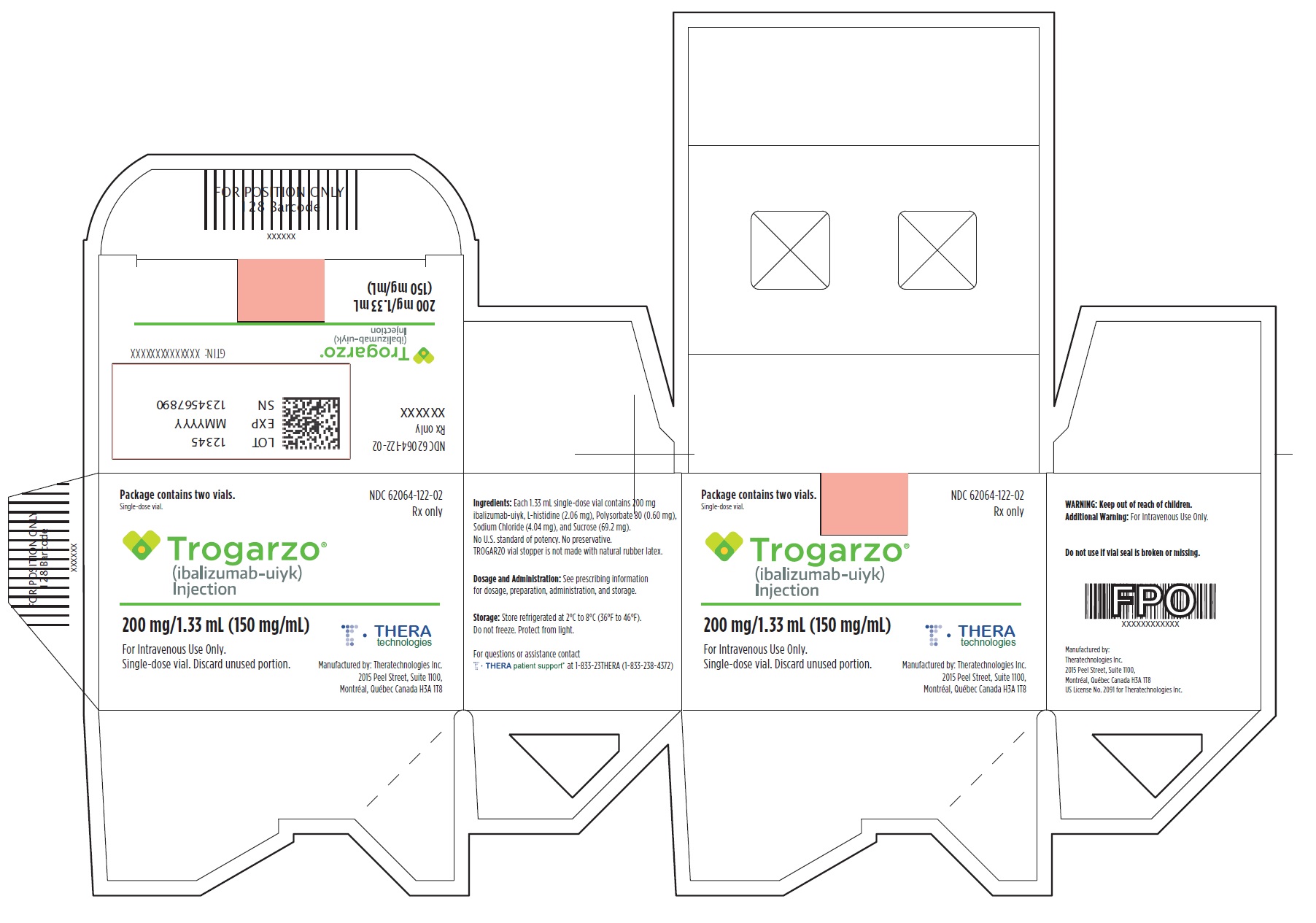
Principal Display Panel - Trogarzo Carton Label Package contains two vials. Single-dose vial. NDC 62064-122-02 Rx only Trogarzo ® (ibalizumab-uiyk) Injection 200 mg/1.33 mL (150 mg/mL) For Intravenous Use Only. Single-dose vial. Discard unused portion. Manufactured by: Theratechnologies Inc. 2015 Peel Street, Suite 1100, Montréal, Québec Canada H3A 1T8 Principal Display Panel - Trogarzo Carton Label
Medicaid utilization & spend
Medicare Part D spend CMS · PART D · 2026 (Q1)
Reported adverse events (FAERS)
Top reported reactions
Age at onset
Reporter sex
Serious outcomes
Where does this data come from?
About this NDC listing & data coverage
What data is (and isn’t) available for this NDC — tap to expand
| NDC identity (package / product / labeler codes) | ✓ Available |
| Labeler | ✓ Available |
| Product & package description | ✓ Available |
| Marketing category & status | ✓ Available |
| Active ingredient / dosage form / route | ✓ Available |
| FDA label (SPL via DailyMed) | ✓ Available |
| Package photos | ✓ Available |
| Inactive ingredients (structured) | ✓ Available |
| NADAC pharmacy acquisition price (CMS) | — Not published for this NDC CMS publishes NADAC only for NDCs reported in its retail-pharmacy survey. |
| Orange Book / therapeutic-equivalence data | ✓ Available |
| HCPCS J-code billing crosswalk | ✓ Available |
| Medicaid utilization (CMS SDUD) | ✓ Available |