
Citalopram 10 mg/5mL Solution — NDC 62135-540-24 (Billing 62135-0540-24)
This is a package of Citalopram 10 mg/5mL Solution from Chartwell RX, LLC, marketed since Jun 2006 and currently FDA-listed. It is the main listing for this product, which comes in 2 package sizes.
NDC database record
One package, one record: these facts belong to NDC 62135-540-24 alone.
- Record
- FDA NDC Directory package listing · Human prescription drug
- Code segments
- 62135 labeler · 540 product · 24 package
- Package marketed since
- Apr 3, 2025
- Sample package
- No — commercial package
- Listing certified through
- Dec 31, 2027
- Barcode (UPC)
- 0362135540470
- FDA record last changed
- Jul 24, 2026
Identity & classification
Regulatory identifiers FDA, NLM and CMS codes for this package
Drug-database identifiers Medi-Span GPI and First Databank GCN / HICL / AHFS classification
- GSN (GCN sequence number): 070991
- GCN: 34671
- GPI-14 (Medi-Span): 58160020102020
- HICL (First Databank): 010321
- AHFS class code: 28:16.04.20
- RxCUI (RxNorm): 309313
Where does this data come from?
- FDA openFDA NDC Directory · synced Oct 8, 2026
- FDA label on DailyMed · label index refreshed Oct 8, 2026
- RxNorm (NLM RxNav) · catalog refreshed Oct 1, 2026
- Medi-Span GPI (licensed)
- First Databank (licensed) · refreshed Oct 8, 2026
RxNorm drug class
This medicine belongs to the Serotonin Reuptake Inhibitor class.
Where does this data come from?
- RxClass (NLM) · catalog refreshed Oct 1, 2026
Clinical
- It treats depression. Newer labels specify major depressive disorder in adults. It's an SSRI, which works on serotonin in the brain.
- Take it by mouth once a day, with or without food. Follow your prescriber's directions and don't change your dose on your own. If you need to stop, your doctor will lower it gradua...
- Sexual side effects such as delayed ejaculation, lower sex drive, erectile problems or delayed orgasm are the most notable. Weakness can also occur. Tell your prescriber if any bot...
- Call right away for suicidal thoughts or unusual mood changes, fainting, dizziness or a pounding heartbeat, unusual bleeding, seizures, confusion, or signs of serotonin syndrome li...
Patient education
Supplement & herbal interactions
Some supplements/herbs that may interact with Citalopram — tap one for details:
Citalopram may be associated with lower levels of 1 nutrient — worth a chat with your pharmacist, not a cause for alarm.
Where does this data come from?
- MedlinePlus (NLM) · refreshed Oct 8, 2026
- FDA label on DailyMed · label index refreshed Oct 8, 2026
Ask a licensed pharmacist directly — free, answered by our team.
Pricing
A drug doesn't have one price. Each row is a different public payment system, and none is what you'd pay at the counter — that depends on your insurance. The ⓘ on each row explains what it measures.
| Price system | Per mL | Per package |
|---|---|---|
| Retail pharmacies payNADAC · weekly | Not in the retail survey — common for institutional, discontinued, or low-volume packs. | |
| Medicaid paysCMS SDUD · 12 mo | No recent Medicaid claims on file for this NDC — rare and low-volume NDCs are suppressed in the public data. | |
| Medicare drug plans payPart D · Q2 2026 | $0.2622 | $52.44 / 200 ml |
Where does this data come from?
- CMS NADAC weekly file
- CMS ASP pricing files · refreshed Sep 20, 2026
- CMS Medicaid State Drug Utilization Data · refreshed Oct 8, 2026
- CMS Part D plan pricing files · refreshed Sep 24, 2026
- VA National Acquisition Center price file
Packaging — all sizes for this product
| Package NDC | Description | Marketing start | Marketing end | Status |
|---|---|---|---|---|
| 62135-0540-47 62135-540-47 | 473 mL in 1 BOTTLE | 2022-10-31 | — | Active |
| 62135-0540-24 You're viewing this Main listing | 2 TRAY in 1 BOX / 10 CUP in 1 TRAY / 10 mL in 1 CUP | 2025-04-03 | — | Active |
Pack size FAQ
What quantity is in this package?
What NDC number is used to bill for this package of Citalopram 10 mg/5mL Solution?
Therapeutic equivalents
| Product | Labeler | Pack | NADAC/unit | TE | Status | Price vs. this |
|---|---|---|---|---|---|---|
| Citalopram 10 mg/5mL 00054-0062-58 | Hikma | 1 bottle | $0.180 | AA | Availability likely | — |
| Citalopram Hydrobromide 10 mg/5mL 31722-0564-24 | Camber | 240 ml | $0.180 | AA | Availability likely | — |
| Citalopram Hydrobromide 10 mg/5mL 17856-0564-01 | ATLANTIC | 72 cups | — | AA | FDA listed | — |
| Citalopram 10 mg/5mLthis 62135-0540-24 | Chartwell | 10 cups | — | AA | FDA listed | — |
| Citalopram Hydrobromide 10 mg/5mL 65862-0074-24 | Aurobindo | 240 ml | — | AA | FDA listed | — |
| Citalopram 10 mg/5mL 68999-0540-24 | Chartwell | 10 cups | — | AA | FDA listed | — |
Where does this data come from?
- FDA openFDA NDC Directory · synced Oct 8, 2026
- FDA Orange Book · refreshed Oct 3, 2026
- CMS NADAC weekly file
Availability & generic status
This product is an FDA-approved generic. Other versions of the same drug are listed under Therapeutic equivalents, least expensive first.
Where does this data come from?
- FDA Orange Book · refreshed Oct 3, 2026
Inactive Ingredients / Excipients
Inactive ingredients, also called excipients, are components of the drug product other than the active ingredient. They may include fillers, dyes, coatings, preservatives, flavors, or other formulation ingredients.
🧪 Avoiding an ingredient? See Citalopram inactive ingredients by manufacturer: every current product's list side by side, so you can ask your pharmacy for the version that does not list it.
💡 Tap an ingredient (hover on desktop) to see what it is and why it’s used.
-
UNII A2I8C7HI9T
Methylparaben is a preservative derived from benzoic acid that prevents growth of bacteria, fungi, and mold in medicines. It extends the product's shelf life and maintains safety during storage.
-
UNII 6DC9Q167V3
Propylene glycol is a clear liquid derived from petroleum or vegetable sources. It acts as a solvent, humectant, and preservative in medicines, helping dissolve active ingredients and maintain product stability.
-
UNII Z8IX2SC1OH
Propylparaben is a chemical preservative used to prevent bacterial and fungal growth in medicines and personal care products. It helps extend shelf life and maintain product safety during storage.
-
UNII 506T60A25R
Sorbitol is a natural sugar alcohol derived from glucose. It serves as a sweetener, humectant, and bulking agent in medications to improve taste and help maintain moisture in the product.
-
UNII 059QF0KO0R
Water is a liquid solvent that dissolves and mixes ingredients together in liquid medicines, syrups, and injections. It helps distribute the active drug evenly throughout the product.
5 inactive ingredients listed in the exact product block matched to this NDC.
Where does this data come from?
ingredient classCode="IACT" elements from the exact product block matched by this NDC. Label-section narrative from DailyMed / the openFDA label index is shown separately when available.- FDA label on DailyMed · label index refreshed Oct 8, 2026
- FDA openFDA NDC Directory · synced Oct 8, 2026
Inactive ingredient FAQ
Are inactive ingredients the same for every manufacturer?
Why might an inactive ingredient be missing?
Can inactive ingredients matter?
Manufacturer & labeler
More NDCs from Chartwell RX, LLC labeler code 62135
- Pantoprazole Sodium 20 mg Tablet, Delayed Release NDC 62135-533-90
- Pantoprazole Sodium 40 mg Tablet, Delayed Release NDC 62135-534-08
- Telmisartan 20 mg Tablet NDC 62135-535-30
- Telmisartan 40 mg Tablet NDC 62135-536-30
- Telmisartan 80 mg Tablet NDC 62135-537-30
- Phenobarbital 16.2 mg Tablet NDC 62135-539-90
- Paroxetine 10 mg Tablet, Film Coated NDC 62135-541-90
- Paroxetine 20 mg Tablet, Film Coated NDC 62135-542-90
- Paroxetine 30 mg Tablet, Film Coated NDC 62135-543-90
- Paroxetine 40 mg Tablet, Film Coated NDC 62135-544-90
- Hydroxyzine Hydrochloride 10 mg Tablet, Film Coated NDC 62135-545-05
- Hydroxyzine Hydrochloride 25 mg Tablet, Film Coated NDC 62135-546-05
Where does this data come from?
- FDA openFDA NDC Directory · synced Oct 8, 2026
- Drugs@FDA
Full prescribing information FDA SPL
🚨 Boxed Warning ▾
WARNING: SUICIDALITY and ANTIDEPRESSANT DRUGS Antidepressants increased the risk compared to placebo of suicidal thinking and behavior (suicidality) in children, adolescents, and young adults in short-term studies of major depressive disorder (MDD) and other psychiatric disorders. Anyone considering the use of citalopram or any other antidepressant in a child, adolescent, or young adult must balance this risk with the clinical need. Short-term studies did not show an increase in the risk of suicidality with antidepressants compared to placebo in adults beyond age 24; there was a reduction in risk with antidepressants compared to placebo in adults aged 65 and older.
Depression and certain other psychiatric disorders are themselves associated with increases in the risk of suicide. Patients of all ages who are started on antidepressant therapy should be monitored appropriately and observed closely for clinical worsening suicidality, or unusual changes in behavior. Families and caregivers should be advised of the need for close observation and communication with the prescriber.
Citalopram is not approved for use in pediatric patients. ( See WARNINGS : Clinical Worsening and Suicide Risk , PRECAUTIONS : Information for Patients , and PRECAUTIONS : Pediatric Use .)
🎯 Indications and Usage ▾
INDICATIONS AND USAGE Citalopram Oral Solution is indicated for the treatment of depression. The efficacy of Citalopram Oral Solution in the treatment of depression was established in 4 to 6 week, controlled trials of outpatients whose diagnosis corresponded most closely to the DSM-III and DSM-III-R category of major depressive disorder ( see CLINICAL PHARMACOLOGY ). A major depressive episode (DSM-IV) implies a prominent and relatively persistent (nearly every day for at least 2 weeks) depressed or dysphoric mood that usually interferes with daily functioning, and includes at least five of the following nine symptoms: depressed mood, loss of interest in usual activities, significant change in weight and/or appetite, insomnia or hypersomnia, psychomotor agitation or retardation, increased fatigue, feelings of guilt or worthlessness, slowed thinking or impaired concentration, a suicide attempt or suicidal ideation.
The antidepressant action of Citalopram Oral Solution in hospitalized depressed patients has not been adequately studied. The efficacy of Citalopram Oral Solution in maintaining an antidepressant response for up to 24 weeks following 6 to 8 weeks of acute treatment was demonstrated in two placebo-controlled trials ( see CLINICAL PHARMACOLOGY ). Nevertheless, the physician who elects to use citalopram oral solution for extended periods should periodically re-evaluate the long-term usefulness of the drug for the individual patient.
⏱️ Dosage and Administration ▾
DOSAGE AND ADMINISTRATION Citalopram Oral Solution should be administered once daily, in the morning or evening, with or without food. Initial Treatment Citalopram Oral Solution should be administered at an initial dose of 20 mg once daily, with an increase to a maximum dose of 40 mg/day at an interval of no less than one week. Doses above 40 mg/day are not recommended due to the risk of QT prolongation.
Additionally, the only study pertinent to dose response for effectiveness did not demonstrate an advantage for the 60 mg/day dose over the 40 mg/day dose. Special Populations 20 mg/day is the maximum recommended dose for patients who are greater than 60 years of age, patients with hepatic impairment, and for CYP2C19 poor metabolizers or those patients taking cimetidine or another CYP2C19 inhibitor ( see WARNINGS ). No dosage adjustment is necessary for patients with mild or moderate renal impairment.
Citalopram Oral Solution should be used with caution in patients with severe renal impairment. Treatment of Pregnant Women During the Third Trimester Neonates exposed to Citalopram Oral Solution and other SSRIs or SNRIs, late in the third trimester, have developed complications requiring prolonged hospitalization, respiratory support, and tube feeding ( see PRECAUTIONS ). When treating pregnant women with Citalopram Oral Solution during the third trimester, the physician should carefully consider the potential risks and benefits of treatment.
Maintenance Treatment It is generally agreed that acute episodes of depression require several months or longer of sustained pharmacologic therapy. Systematic evaluation of Citalopram Oral Solution in two studies has shown that its antidepressant efficacy is maintained for periods of up to 24 weeks following 6 or 8 weeks of initial treatment (32 weeks total). In one study, patients were assigned randomly to placebo or to the same dose of Citalopram Oral Solution (20 to 60 mg/day) during maintenance treatment as they had received during the acute stabilization phase, while in the other study, patients were assigned randomly to continuation of Citalopram Oral Solution 20 or 40 mg/day, or placebo, for maintenance treatment.
In the latter study, the rates of relapse to depression were similar for the two dose groups ( see CLINICAL PHARMACOLOGY ; Clinical Efficacy Trials ). Based on these limited data, it is not known whether the dose of citalopram needed to maintain euthymia is identical to the dose needed to induce remission. If adverse reactions are bothersome, a decrease in dose to 20 mg/day can be considered.
Discontinuation of Treatment with Citalopram Oral Solution Symptoms associated with discontinuation of Citalopram Oral Solution and other SSRIs and SNRIs have been reported ( see PRECAUTIONS ). Patients should be monitored for these symptoms when discontinuing treatment. A gradual reduction in the dose rather than abrupt cessation is recommended whenever possible.
If intolerable symptoms occur following a decrease in the dose or upon discontinuation of treatment, then resuming the previously prescribed dose may be considered. Subsequently, the physician may continue decreasing the dose but at a more gradual rate. Switching Patients To or From a Monoamine Oxidase Inhibitor (MAOI) Intended to Treat Psychiatric Disorders At least 14 days should elapse between discontinuation of an MAOI intended to treat psychiatric disorders and initiation of therapy with Citalopram Oral Solution.
Conversely, at least 14 days should be allowed after stopping Citalopram Oral Solution before starting an MAOI intended to treat psychiatric disorders ( see CONTRAINDICATIONS ). Use of Citalopram Oral Solution with Other MAOIs, Such as Linezolid or Methylene Blue Do not start Citalopram Oral Solution in a patient who is being treated with linezolid or intravenous methylene blue because there is an increased risk of serotonin syndrome. In a patient who requires more urgent treatment of a psychiatric condition, othe… [Excerpted — this section continues on DailyMed.]
⛔ Contraindications ▾
CONTRAINDICATIONS The use of MAOIs intended to treat psychiatric disorders with citalopram or within 14 days of stopping treatment with citalopram is contraindicated because of an increased risk of serotonin syndrome. The use of citalopram within 14 days of stopping an MAOI intended to treat psychiatric disorders is also contraindicated ( see WARNINGS and DOSAGE AND ADMINISTRATION ). Starting citalopram in a patient who is being treated with MAOIs such as linezolid or intravenous methylene blue is also contraindicated because of an increased risk of serotonin syndrome ( see WARNINGS and DOSAGE AND ADMINISTRATION ).
Concomitant use in patients taking pimozide is contraindicated ( see PRECAUTIONS ). Citalopram Oral Solution is contraindicated in patients with a hypersensitivity to citalopram or any of the inactive ingredients in Citalopram Oral Solution.
⚠️ Warnings ▾
WARNINGS WARNINGS-Clinical Worsening and Suicide Risk Clinical Worsening and Suicide Risk Patients with major depressive disorder (MDD), both adult and pediatric, may experience worsening of their depression and/or the emergence of suicidal ideation and behavior (suicidality) or unusual changes in behavior, whether or not they are taking antidepressant medications, and this risk may persist until significant remission occurs. Suicide is a known risk of depression and certain other psychiatric disorders, and these disorders themselves are the strongest predictors of suicide.
There has been a long-standing concern, however, that antidepressants may have a role in inducing worsening of depression and the emergence of suicidality in certain patients during the early phases of treatment. Pooled analyses of short-term placebo-controlled trials of antidepressant drugs (SSRIs and others) showed that these drugs increase the risk of suicidal thinking and behavior (suicidality) in children, adolescents, and young adults (ages 18 to 24) with major depressive disorder (MDD) and other psychiatric disorders.
Short-term studies did not show an increase in the risk of suicidality with antidepressants compared to placebo in adults beyond age 24; there was a reduction with antidepressants compared to placebo in adults aged 65 and older. The pooled analyses of placebo-controlled trials in children and adolescents with MDD, obsessive compulsive disorder (OCD), or other psychiatric disorders included a total of 24 short-term trials of 9 antidepressant drugs in over 4,400 patients. The pooled analyses of placebo-controlled trials in adults with MDD or other psychiatric disorders included a total of 295 short-term trials (median duration of 2 months) of 11 antidepressant drugs in over 77,000 patients.
There was considerable variation in risk of suicidality among drugs, but a tendency toward an increase in the younger patients for almost all drugs studied. There were differences in absolute risk of suicidality across the different indications, with the highest incidence in MDD. The risk differences (drug vs. placebo), however, were relatively stable within age strata and across indications.
These risk difference (drug-placebo difference in the number of cases of suicidality per 1,000 patients treated) are provided in TABLE 1. TABLE 1 Age Range Drug-Placebo Difference in Number of Cases of Suicidality per 1,000 Patients Treated Increases Compared to Placebo <18 14 additional cases 18 to 24 5 additional cases Decreases Compared to Placebo 25 to 64 1 fewer case ≥65 6 fewer cases No suicides occurred in any of the pediatric trials. There were suicides in the adult trials, but the number was not sufficient to reach any conclusion about drug effect on suicide.
It is unknown whether the suicidality risk extends to longer-term use, i.e., beyond several months. However, there is substantial evidence from placebo-controlled maintenance trials in adults with depression that the use of antidepressants can delay the recurrence of depression. All patients being treated with antidepressants for any indication should be monitored appropriately and observed closely for clinical worsening, suicidality, and unusual changes in behavior, especially during the initial few months of a course of drug therapy, or at times of dose changes, either increases or decreases.
The following symptoms, anxiety, agitation, panic attacks, insomnia, irritability, hostility, aggressiveness, impulsivity, akathisia (psychomotor restlessness), hypomania, and mania, have been reported in adult and pediatric patients being treated with antidepressants for major depressive disorder as well as for other indications, both psychiatric and nonpsychiatric. Although a causal link between the emergence of such symptoms and either the worsening of depression and/or the emergence of suicidal impulses has not been established, there is concern that such symptoms may represent precursors to emerging suici… [Excerpted — this section continues on DailyMed.]
🤒 Adverse Reactions ▾
ADVERSE REACTIONS The premarketing development program for citalopram included citalopram exposures in patients and/or normal subjects from 3 different groups of studies: 429 normal subjects in clinical pharmacology/pharmacokinetic studies; 4,422 exposures from patients in controlled and uncontrolled clinical trials, corresponding to approximately 1,370 patient-exposure years. There were, in addition, over 19,000 exposures from mostly open-label, European postmarketing studies. The conditions and duration of treatment with citalopram varied greatly and included (in overlapping categories) open-label and double-blind studies, inpatient and outpatient studies, fixed-dose and dose-titration studies, and short-term and long-term exposure.
Adverse reactions were assessed by collecting adverse events, results of physical examinations, vital signs, weights, laboratory analyses, ECGs, and results of ophthalmologic examinations. Adverse events during exposure were obtained primarily by general inquiry and recorded by clinical investigators using terminology of their own choosing. Consequently, it is not possible to provide a meaningful estimate of the proportion of individuals experiencing adverse events without first grouping similar types of events into a smaller number of standardized event categories.
In the tables and tabulations that follow, standard World Health Organization (WHO) terminology has been used to classify reported adverse events. The stated frequencies of adverse events represent the proportion of individuals who experienced, at least once, a treatment-emergent adverse event of the type listed. An event was considered treatment-emergent if it occurred for the first time or worsened while receiving therapy following baseline evaluation.
Adverse Findings Observed in Short-Term, Placebo-Controlled Trials Adverse Events Associated with Discontinuation of Treatment Among 1,063 depressed patients who received citalopram at doses ranging from 10 to 80 mg/day in placebo-controlled trials of up to 6 weeks in duration, 16% discontinued treatment due to an adverse event, as compared to 8% of 446 patients receiving placebo. The adverse events associated with discontinuation and considered drug-related (i.e., associated with discontinuation in at least 1% of citalopram-treated patients at a rate at least twice that of placebo) are shown in TABLE 2.
It should be noted that one patient can report more than one reason for discontinuation and be counted more than once in this table. TABLE 2: Adverse Events Associated with Discontinuation of Treatment in Short-Term, Placebo-Controlled, Depression Trials Percentage of Patients Discontinuing Due to Adverse Event Body System/Adverse Event Citalopram (N=1,063) Placebo (N=446) General Asthenia 1% <1% Gastrointestinal Disorders Nausea 4% 0% Dry Mouth 1% <1% Vomiting 1% 0% Central and Peripheral Nervous System Disorders Dizziness 2% <1% Psychiatric Disorders Insomnia 3% 1% Somnolence 2% 1% Agitation 1% <1% Adverse Events Occurring at an Incidence of 2% or More Among Citalopram-Treated Patients TABLE 3 enumerates the incidence, rounded to the nearest percent, of treatment-emergent adverse events that occurred among 1,063 depressed patients who received citalopram at doses ranging from 10 to 80 mg/day in placebo-controlled trials of up to 6 weeks in duration.
Events included are those occurring in 2% or more of patients treated with citalopram and for which the incidence in patients treated with citalopram was greater than the incidence in placebo-treated patients. The prescriber should be aware that these figures cannot be used to predict the incidence of adverse events in the course of usual medical practice where patient characteristics and other factors differ from those which prevailed in the clinical trials. Similarly, the cited frequencies cannot be compared with figures obtained from other clinical investigations involving different treatments, uses, and investigators.
The cited figur… [Excerpted — this section continues on DailyMed.]
🔄 Drug Interactions ▾
Drug Interactions Serotonergic Drugs Based on the mechanism of action of SNRIs and SSRIs, including citalopram hydrobromide, and the potential for serotonin syndrome, caution is advised when citalopram is co-administered with other drugs that may affect the serotonergic neurotransmitter systems, such as triptans, lithium, opioids, amphetamines, or St. John’s Wort ( see WARNINGS ; Serotonin Syndrome ). Triptans There have been rare postmarketing reports of serotonin syndrome with use of an SSRI and a triptan.
If concomitant treatment of citalopram with a triptan is clinically warranted, careful observation of the patient is advised, particularly during treatment initiation and dose increases ( see WARNINGS ; Serotonin Syndrome ). CNS Drugs Given the primary CNS effects of citalopram, caution should be used when it is taken in combination with other centrally acting drugs. Alcohol Although citalopram did not potentiate the cognitive and motor effects of alcohol in a clinical trial, as with other psychotropic medications, the use of alcohol by depressed patients taking citalopram is not recommended.
Monoamine Oxidase Inhibitors (MAOIs) See CONTRAINDICATIONS and WARNINGS and DOSAGE AND ADMINISTRATION . Drugs That Interfere with Hemostasis (NSAIDs, Aspirin, Warfarin, etc.) Serotonin release by platelets plays an important role in hemostasis. Epidemiological studies of the case-control and cohort design that have demonstrated an association between use of psychotropic drugs that interfere with serotonin reuptake and the occurrence of upper gastrointestinal bleeding have also shown that concurrent use of an NSAID or aspirin may potentiate the risk of bleeding.
Altered anticoagulant effects, including increased bleeding, have been reported when SSRIs and SNRIs are co-administered with warfarin. Patients receiving warfarin therapy should be carefully monitored when citalopram is initiated or discontinued. Cimetidine In subjects who had received 21 days of 40 mg/day citalopram, combined administration of 400 mg/day cimetidine for 8 days resulted in an increase in citalopram AUC and C max of 43% and 39%, respectively.
Citalopram 20 mg/day is the maximum recommended dose for patients taking concomitant cimetidine because of the risk of QT prolongation ( see WARNINGS and DOSAGE AND ADMINISTRATION ). Digoxin In subjects who had received 21 days of 40 mg/day citalopram, combined administration of citalopram and digoxin (single dose of 1 mg) did not significantly affect the pharmacokinetics of either citalopram or digoxin. Lithium Co-administration of citalopram (40 mg/day for 10 days) and lithium (30 mmol/day for 5 days) had no significant effect on the pharmacokinetics of citalopram or lithium.
Nevertheless, plasma lithium levels should be monitored with appropriate adjustment to the lithium dose in accordance with standard clinical practice. Because lithium may enhance the serotonergic effects of citalopram, caution should be exercised when citalopram and lithium are co-administered. Pimozide In a controlled study, a single dose of pimozide 2 mg co-administered with citalopram 40 mg given once daily for 11 days was associated with a mean increase in QTc values of approximately 10 msec compared to pimozide given alone.
Citalopram did not alter the mean AUC or C max of pimozide. The mechanism of this pharmacodynamic interaction is not known. Theophylline Combined administration of citalopram (40 mg/day for 21 days) and the CYP1A2 substrate theophylline (single dose of 300 mg) did not affect the pharmacokinetics of theophylline.
The effect of theophylline on the pharmacokinetics of citalopram was not evaluated. Sumatriptan There have been rare postmarketing reports describing patients with weakness, hyperreflexia, and incoordination following the use of a SSRI and sumatriptan. If concomitant treatment with sumatriptan and a SSRI (e.g., fluoxetine, fluvoxamine, paroxetine, sertraline, citalopram) is clinically warranted, appropriate observatio… [Excerpted — this section continues on DailyMed.]
🆘 Overdosage ▾
OVERDOSAGE Human Experience In clinical trials of citalopram, there were reports of citalopram overdose, including overdoses of up to 2,000 mg, with no associated fatalities. During the postmarketing evaluation of citalopram, citalopram overdoses, including overdoses of up to 6,000 mg, have been reported. As with other SSRI's, a fatal outcome in a patient who has taken an overdose of citalopram has been rarely reported.
Symptoms most often accompanying citalopram overdose, alone or in combination with other drugs and/or alcohol, included dizziness, sweating, nausea, vomiting, tremor, somnolence, and sinus tachycardia. In more rare cases, observed symptoms included amnesia, confusion, coma, convulsions, hyperventilation, cyanosis, rhabdomyolysis, and ECG changes (including QTc prolongation, nodal rhythm, ventricular arrhythmia, and very rare cases of torsade de pointes ). Acute renal failure has been very rarely reported accompanying overdose.
Management of Overdose Establish and maintain an airway to ensure adequate ventilation and oxygenation. Gastric evacuation by lavage and use of activated charcoal should be considered. Careful observation and cardiac and vital sign monitoring are recommended, along with general symptomatic and supportive care.
Due to the large volume of distribution of citalopram, forced diuresis, dialysis, hemoperfusion, and exchange transfusion are unlikely to be of benefit. There are no specific antidotes for citalopram. In managing overdosage, consider the possibility of multiple-drug involvement.
The physician should consider contacting a poison control center for additional information on the treatment of any overdose.
🧬 Clinical Pharmacology ▾
CLINICAL PHARMACOLOGY Pharmacodynamics The mechanism of action of citalopram as an antidepressant is presumed to be linked to potentiation of serotonergic activity in the central nervous system (CNS) resulting from its inhibition of CNS neuronal reuptake of serotonin (5-HT). In vitro and in vivo studies in animals suggest that citalopram is a highly selective serotonin reuptake inhibitor (SSRI) with minimal effects on norepinephrine (NE) and dopamine (DA) neuronal reuptake. Tolerance to the inhibition of 5-HT uptake is not induced by long-term (14-day) treatment of rats with citalopram.
Citalopram is a racemic mixture (50/50), and the inhibition of 5-HT reuptake by citalopram is primarily due to the (S)-enantiomer. Citalopram has no or very low affinity for 5-HT 1A , 5-HT 2A , dopamine D 1 and D 2 , α 1 -, α 2 -, and β-adrenergic, histamine H 1 , gamma aminobutyric acid (GABA), muscarinic cholinergic, and benzodiazepine receptors. Antagonism of muscarinic, histaminergic, and adrenergic receptors has been hypothesized to be associated with various anticholinergic, sedative, and cardiovascular effects of other psychotropic drugs.
Pharmacokinetics The single- and multiple-dose pharmacokinetics of citalopram are linear and dose-proportional in a dose range of 10 to 60 mg/day. Biotransformation of citalopram is mainly hepatic, with a mean terminal half-life of about 35 hours. With once daily dosing, steady state plasma concentrations are achieved within approximately one week.
At steady state, the extent of accumulation of citalopram in plasma, based on the half-life, is expected to be 2.5 times the plasma concentrations observed after a single dose. The tablet and oral solution dosage forms of citalopram are bioequivalent. Absorption and Distribution Following a single 40 mg oral dose of citalopram, peak blood levels occur at about 4 hours.
The absolute bioavailability of citalopram was about 80% relative to an intravenous dose, and absorption is not affected by food. The volume of distribution of citalopram is about 12 L/kg and the binding of citalopram (CT), demethylcitalopram (DCT) and didemethylcitalopram (DDCT) to human plasma proteins is about 80%. Metabolism and Elimination Following intravenous administrations of citalopram, the fraction of drug recovered in the urine as citalopram and DCT was about 10% and 5%, respectively.
The systemic clearance of citalopram was 330 mL/min, with approximately 20% of that due to renal clearance. Citalopram is metabolized to demethylcitalopram (DCT), didemethylcitalopram (DDCT), citalopram-N-oxide, and a deaminated propionic acid derivative. In humans, unchanged citalopram is the predominant compound in plasma.
At steady state, the concentrations of citalopram's metabolites, DCT and DDCT, in plasma are approximately one-half and one-tenth, respectively, that of the parent drug. In vitro studies show that citalopram is at least 8 times more potent than its metabolites in the inhibition of serotonin reuptake, suggesting that the metabolites evaluated do not likely contribute significantly to the antidepressant actions of citalopram. In vitro studies using human liver microsomes indicated that CYP3A4 and CYP2C19 are the primary isozymes involved in the N-demethylation of citalopram.
Population Subgroups Age : Citalopram pharmacokinetics in subjects ≥ 60 years of age were compared to younger subjects in two normal volunteer studies. In a single-dose study, citalopram AUC and half-life were increased in the subjects ≥ 60 years old by 30% and 50%, respectively, whereas in a multiple-dose study they were increased by 23% and 30%, respectively. 20 mg/day is the maximum recommended dose for patients who are greater than 60 years of age ( see WARNINGS and DOSAGE AND ADMINISTRATION ), due to the risk of QT prolongation.
Gender : In three pharmacokinetic studies (total N=32), citalopram AUC in women was one and a half to two times that in men. This difference was not observed in five other pharmacoki… [Excerpted — this section continues on DailyMed.]
📦 How Supplied / Storage and Handling ▾
HOW SUPPLIED Citalopram Oral Solution, USP 10 mg/5 mL, clear, colorless, peppermint flavored solution - (473 mL (16 fl oz)) NDC 62135-540-47 10 mL Unit-Dose Cup NDC 62135-540-10 20 Unit-Dose Cups of 10 mL each NDC 62135-540-24 Storage Store at 20° to 25°C (68° to 77°F); excursions permitted to 15° to 30°C (59° to 86°F). [see USP Controlled Room Temperature]
📋 Description ▾
DESCRIPTION Citalopram Oral Solution, USP is an orally administered selective serotonin reuptake inhibitor (SSRI) with a chemical structure unrelated to that of other SSRIs or of tricyclic, tetracyclic, or other available antidepressant agents. Citalopram Hydrobromide, USP is a racemic bicyclic phthalane derivative designated (±)-1-(3-dimethylaminopropyl)-1-(4-fluorophenyl)-1,3-dihydroisobenzofuran-5-carbonitrile, hydrobromide with the following structural formula: The molecular formula is C 20 H 22 BrFN 2 O and its molecular weight is 405.35.
Citalopram hydrobromide occurs as a fine, white to off-white powder. Citalopram hydrobromide is sparingly soluble in water and soluble in ethanol. Citalopram hydrobromide is available as a clear, colorless, peppermint flavored oral solution.
Citalopram Oral Solution, USP contains Citalopram hydrobromide equivalent to 2 mg/mL citalopram base. It also contains the following inactive ingredients: sorbitol, purified water, propylene glycol, methylparaben, peppermint flavor, and propylparaben. image description
💬 Medication Guide ▾
Medication Guide Citalopram (sye tal’ oh pram) Oral Solution, USP Rx Only Read the Medication Guide that comes with Citalopram Oral Solution before you start taking it and each time you get a refill. There may be new information. This Medication Guide does not take the place of talking to your healthcare provider about your medical condition or treatment.
Talk with your healthcare provider if there is something you do not understand or want to learn more about. What is the most important information I should know about Citalopram Oral Solution? Citalopram Oral Solution and other antidepressant medicines may cause serious side effects, including: 1.
Suicidal thoughts or actions: Citalopram Oral Solution and other antidepressant medicines may increase suicidal thoughts or actions in some children, teenagers, or young adults within the first few months of treatment or when the dose is changed. Depression or other serious mental illnesses are the most important causes of suicidal thoughts or actions. Watch for these changes and call your healthcare provider right away if you notice: New or sudden changes in mood, behavior, actions, thoughts, or feelings, especially if severe.
Pay particular attention to such changes when Citalopram Oral Solution is started or when the dose is changed. Keep all follow-up visits with your healthcare provider and call between visits if you are worried about symptoms. Call your healthcare provider right away if you have any of the following symptoms, or call 911 if an emergency, especially if they are new, worse, or worry you: attempts to commit suicide acting on dangerous impulses acting aggressive or violent thoughts about suicide or dying new or worse depression new or worse anxiety or panic attacks feeling agitated, restless, angry or irritable trouble sleeping an increase in activity or talking more than what is normal for you other unusual changes in behavior or mood Call your healthcare provider right away if you have any of the following symptoms, or call 911 if an emergency.
Citalopram Oral Solution may be associated with these serious side effects. 2. Changes in the electrical activity of your heart (QT prolongation and Torsade de Pointes ).
This condition can be life threatening. The symptoms may include: chest pain fast or slow heartbeat shortness of breath dizziness or fainting 3. Serotonin Syndrome.
This condition can be life-threatening and may include: agitation, hallucinations, coma or other changes in mental status coordination problems or muscle twitching (overactive reflexes) racing heartbeat, high or low blood pressure sweating or fever nausea, vomiting, or diarrhea muscle rigidity 4. Severe allergic reactions: trouble breathing swelling of the face, tongue, eyes or mouth rash, itchy welts (hives) or blisters, alone or with fever or joint pain 5. Abnormal Bleeding: Citalopram Oral Solution and other antidepressant medicines may increase your risk of bleeding or bruising, especially if you take the blood thinner warfarin (Coumadin ® , Jantoven ® ), a non-steroidal anti-inflammatory drug (NSAIDs, like ibuprofen or naproxen), or aspirin.
6. Seizures or convulsions. 7.
Manic episodes: greatly increased energy severe trouble sleeping racing thoughts reckless behavior unusually grand ideas excessive happiness or irritability talking more or faster than usual 8. Changes in appetite or weight. Children and adolescents should have height and weight monitored during treatment.
9. Low salt (sodium) levels in the blood. Elderly people may be at greater risk for this.
Symptoms may include: headache weakness or feeling unsteady confusion, problems concentrating or thinking or memory problems 10. Visual problems. eye pain changes in vision swelling or redness in or around the eye Only some people are at risk for these problems. You may want to undergo an eye examination to see if you are at risk and receive preventative treatment if you are.
11. Sexual problems (dysfunction). Taking serotonin an… [Excerpted — this section continues on DailyMed.]
⚠️ Precautions ▾
PRECAUTIONS General Discontinuation of Treatment with Citalopram During marketing of citalopram and other SSRIs and SNRIs (serotonin and norepinephrine reuptake inhibitors), there have been spontaneous reports of adverse events occurring upon discontinuation of these drugs, particularly when abrupt, including the following: dysphoric mood, irritability, agitation, dizziness, sensory disturbances (e.g., paresthesias such as electric shock sensations), anxiety, confusion, headache, lethargy, emotional lability, insomnia, and hypomania.
While these events are generally self-limiting, there have been reports of serious discontinuation symptoms. Patients should be monitored for these symptoms when discontinuing treatment with citalopram. A gradual reduction in the dose rather than abrupt cessation is recommended whenever possible.
If intolerable symptoms occur following a decrease in the dose or upon discontinuation of treatment, then resuming the previously prescribed dose may be considered. Subsequently, the physician may continue decreasing the dose but at a more gradual rate ( see DOSAGE AND ADMINISTRATION ). Abnormal Bleeding SSRIs and SNRIs, including citalopram, may increase the risk of bleeding events.
Concomitant use of aspirin, nonsteroidal anti-inflammatory drugs, warfarin, and other anticoagulants may add to the risk. Case reports and epidemiological studies (case-control and cohort design) have demonstrated an association between use of drugs that interfere with serotonin reuptake and the occurrence of gastrointestinal bleeding. Based on data from the published observational studies, exposure to SSRIs, particularly in the month before delivery, has been associated with a less than 2-fold increase in the risk of postpartum hemorrhage ( see PRECAUTIONS: Pregnancy ).Bleeding events related to SSRIs and SNRIs use have ranged from ecchymoses, hematomas, epistaxis, and petechiae to life-threatening hemorrhages.
Patients should be cautioned about the increased risk of bleeding associated with the concomitant use of citalopram with NSAIDs, aspirin, or other drugs that affect coagulation. Hyponatremia Hyponatremia may occur as a result of treatment with SSRIs and SNRIs, including citalopram. In many cases, this hyponatremia appears to be the result of the syndrome of inappropriate antidiuretic hormone secretion (SIADH) and was reversible when citalopram was discontinued.
Cases with serum sodium lower than 110 mmol/L have been reported. Elderly patients may be at greater risk of developing hyponatremia with SSRIs and SNRIs. Also, patients taking diuretics or who are otherwise volume depleted may be at greater risk ( see Geriatric Use ).
Discontinuation of citalopram should be considered in patients with symptomatic hyponatremia and appropriate medical intervention should be instituted. Signs and symptoms of hyponatremia include headache, difficulty concentrating, memory impairment, confusion, weakness, and unsteadiness, which may lead to falls. Signs and symptoms associated with more severe and/or acute cases have included hallucination, syncope, seizure, coma, respiratory arrest, and death.
Activation of Mania/Hypomania In placebo-controlled trials of citalopram, some of which included patients with bipolar disorder, activation of mania/hypomania was reported in 0.2% of 1,063 patients treated with citalopram and in none of the 446 patients treated with placebo. Activation of mania/hypomania has also been reported in a small proportion of patients with major affective disorders treated with other marketed antidepressants. As with all antidepressants, citalopram should be used cautiously in patients with a history of mania.
Seizures Although anticonvulsant effects of citalopram have been observed in animal studies, citalopram has not been systematically evaluated in patients with a seizure disorder. These patients were excluded from clinical studies during the product's premarketing testing. In clinical trials of citalopram, seiz… [Excerpted — this section continues on DailyMed.]
🔒 Drug Abuse and Dependence ▾
DRUG ABUSE AND DEPENDENCE Controlled Substance Class Citalopram is not a controlled substance. Physical and Psychological Dependence Animal studies suggest that the abuse liability of citalopram is low. Citalopram has not been systematically studied in humans for its potential for abuse, tolerance, or physical dependence.
The premarketing clinical experience with citalopram did not reveal any drug-seeking behavior. However, these observations were not systematic and it is not possible to predict, on the basis of this limited experience, the extent to which a CNS-active drug will be misused, diverted, and/or abused once marketed. Consequently, physicians should carefully evaluate citalopram patients for history of drug abuse and follow such patients closely, observing them for signs of misuse or abuse (e.g., development of tolerance, incrementations of dose, drug-seeking behavior).
📄 Package Label / Principal Display Panel ▾
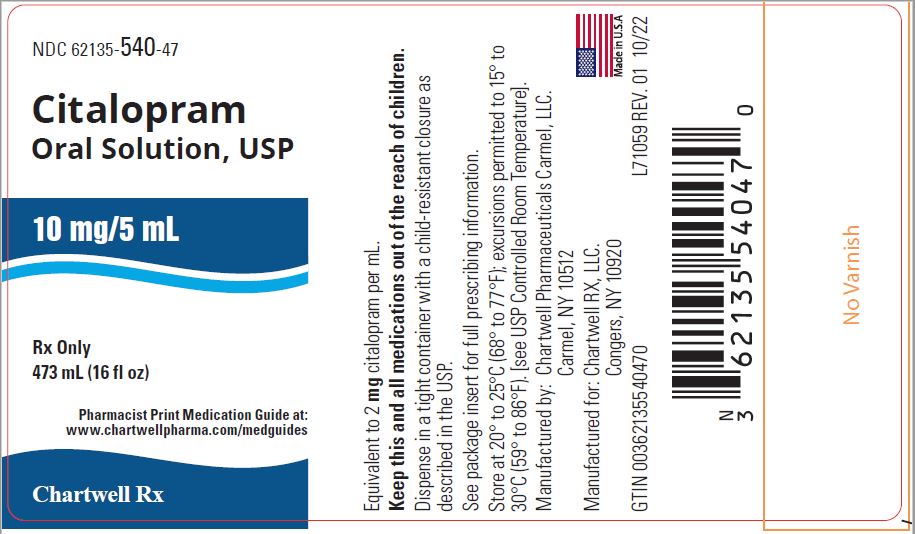
PACKAGE LABEL-PRINCIPAL DISPLAY PANEL Citalopram Oral Solution, USP 10 mg/5 mL - NDC 62135-540-47 - 473 mL Bottle Label Citalopram Oral Solution, USP 20 mg/10 mL - NDC 62135-540-10 - 10 mL Unit-Dose Cup Label image description image description
About this NDC listing & data coverage
What data is (and isn’t) available for this NDC — tap to expand
| NDC identity (package / product / labeler codes) | ✓ Available |
| Labeler | ✓ Available |
| Product & package description | ✓ Available |
| Marketing category & status | ✓ Available |
| Active ingredient / dosage form / route | ✓ Available |
| FDA label (SPL via DailyMed) | ✓ Available |
| Package photos | ✓ Available |
| Inactive ingredients (structured) | ✓ Available |
| NADAC pharmacy acquisition price (CMS) | — Not published for this NDC CMS publishes NADAC only for NDCs reported in its retail-pharmacy survey. |
| Orange Book / therapeutic-equivalence data | ✓ Available |
| HCPCS J-code billing crosswalk | — Not published for this NDC Most self-administered / retail products have no J-code — that is normal. |
| Medicaid utilization (CMS SDUD) | — Not published for this NDC CMS reports utilization only for NDCs with Medicaid claims above its privacy threshold. |