
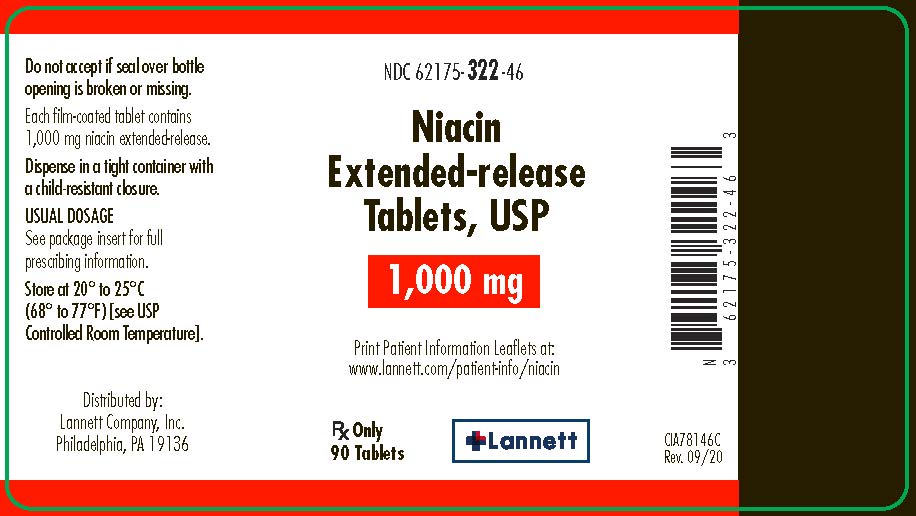
Niacin 1000 mg Tablet, Extended Release, 90-count — NDC 62175-322-46 (Billing 62175-0322-46)
This is a package of 90 tablets of Niacin 1000 mg Tablet, Extended Release from Lannett Company, Inc., marketed since Feb 2017 and currently FDA-listed; retail pharmacies pay about $0.3263 per tablet (NADAC). It is the main listing for this product, which comes in 2 package sizes.
NDC database record
One package, one record: these facts belong to NDC 62175-322-46 alone.
- Record
- FDA NDC Directory package listing · Human prescription drug
- Code segments
- 62175 labeler · 322 product · 46 package
- Package marketed since
- Feb 16, 2017
- Sample package
- No — commercial package
- Listing certified through
- Dec 31, 2026
- Billing quantity
- 90 EA per package
- Barcode (UPC)
- 0362175320469
- FDA record last changed
- Jul 24, 2026
Other active recalls for Niacin (different manufacturers) — 2 · tap to view
Identity & classification
Regulatory identifiers FDA, NLM and CMS codes for this package
Drug-database identifiers Medi-Span GPI and First Databank GCN / HICL / AHFS classification
- GSN (GCN sequence number): 033366
- GCN: 42333
- GPI-14 (Medi-Span): 39450050000470
- HICL (First Databank): 001064
- AHFS class code: 24:06.92.00
- RxCUI (RxNorm): 1098134
Where does this data come from?
- FDA openFDA NDC Directory · synced Oct 1, 2026
- FDA label on DailyMed · label index refreshed Oct 6, 2026
- RxNorm (NLM RxNav) · catalog refreshed Oct 1, 2026
- Medi-Span GPI (licensed)
- First Databank (licensed) · refreshed Oct 1, 2026
RxNorm drug class
This medicine belongs to the Nicotinic Acid class.
Where does this data come from?
- RxClass (NLM) · catalog refreshed Oct 1, 2026
Clinical
Niacin is used with diet changes (restriction of cholesterol and fat intake) to reduce the amount of cholesterol (a fat-like substance) and other fatty substances in your blood and to increase the amount of high density lipoprotein (HDL; ''good cholesterol''). Niacin can be used in a number of situations including the following: alone or in combination with other medications, such as HMG-CoA inhibitors (statins) or bile acid-binding resins; to decrease the risk of another heart attack in patients with high cholesterol who have had a heart attack; to prevent worsening of atherosclerosis (b...
Read the full MedlinePlus article ↗- You're right that niacin is a B vitamin, but at prescription doses it works as a medicine to improve your blood fat levels. It can lower LDL (bad cholesterol) and triglycerides, an...
- Why did my doctor prescribe niacin — isn't that just a vitamin?
- That warmth, redness, and tingling — especially on your face and neck — is the most common side effect of niacin and is called flushing. It can feel alarming the first few times, b...
- What's that hot, red, flushing feeling — is something wrong?
Patient education
Supplement & herbal interactions
Some supplements/herbs that may interact with Niacin (prescription drug) — tap one for details:
Niacin (prescription drug) may be associated with lower levels of 1 nutrient — worth a chat with your pharmacist, not a cause for alarm.
Where does this data come from?
- MedlinePlus (NLM) · refreshed Oct 1, 2026
- FDA label on DailyMed · label index refreshed Oct 6, 2026
Ask a licensed pharmacist directly — free, answered by our team.
Pricing
A drug doesn't have one price. Each row is a different public payment system, and none is what you'd pay at the counter — that depends on your insurance. The ⓘ on each row explains what it measures.
| Price system | Per ea | Per package |
|---|---|---|
| Retail pharmacies payNADAC · weekly | $0.326 | $29.37 / 90 tablets |
| Medicaid paysCMS SDUD · 12 mo | No recent Medicaid claims on file for this NDC — rare and low-volume NDCs are suppressed in the public data. | |
| Medicare drug plans payPart D · Q2 2026 | $0.3550 | $31.95 / 90 tablets |
Where does this data come from?
- CMS NADAC weekly file · file of Sep 30, 2026
- CMS ASP pricing files · refreshed Sep 20, 2026
- CMS Medicaid State Drug Utilization Data · refreshed Oct 6, 2026
- CMS Part D plan pricing files · refreshed Sep 24, 2026
- VA National Acquisition Center price file
Packaging — all sizes for this product
| Package NDC | Description | Per unit | Per pack | Marketing start | Marketing end | Status |
|---|---|---|---|---|---|---|
| 62175-0322-43 62175-322-43 | 1000 TABLET, EXTENDED RELEASE in 1 BOTTLE | — | — | 2017-02-16 | — | Active |
| 62175-0322-46 You're viewing this Main listing | 90 TABLET, EXTENDED RELEASE in 1 BOTTLE | $0.3263 / ea | $29.36 | 2017-02-16 | — | Active |
You're viewing the smallest of 2 pack sizes for this product.
Pack size FAQ
What quantity is in this package?
How does this package differ from NDC 62175-0322-43?
What NDC number is used to bill for this package of Niacin 1000 mg Tablet, Extended Release?
Prices are the latest CMS NADAC pharmacy acquisition cost per NDC; per-pack figures are per-unit × pack quantity, shown only when the pack is denominated in the same measure NADAC prices.
Therapeutic equivalents
| Product | Labeler | Pack | NADAC/unit | TE | Status | Price vs. this |
|---|---|---|---|---|---|---|
| Niacin 1000 mg 33342-0189-10 | Macleods | 90 tablets | $0.326 | AB | Availability likely | — |
| Niacin 1000 mg 62135-0498-90 | Chartwell | 90 tablets | $0.326 | AB | Availability likely | — |
| Niacin 1000 mgthis 62175-0322-46 | Lannett | 90 tablets | $0.326 | AB | Availability likely | — |
| Niacin 1000 mg 47335-0613-08 | Sun | 100 tablets | — | AB | FDA listed | — |
| Niacin 1000 mg 51407-0268-90 | Golden | 90 tablets | — | AB | FDA listed | — |
| Niacin 1000 mg 59651-0020-05 | Aurobindo | 500 tablets | — | AB | FDA listed | — |
| Niacin 1000 mg 65162-0323-03 | Amneal | 30 tablets | — | AB | FDA listed | — |
| Niacin 1000 mg 70752-0296-09 | QUAGEN | 90 tablets | — | AB | FDA listed | — |
Where does this data come from?
- FDA openFDA NDC Directory · synced Oct 1, 2026
- FDA Orange Book · refreshed Oct 3, 2026
- CMS NADAC weekly file · file of Sep 30, 2026
Availability & generic status
This product is an FDA-approved generic. Other versions of the same drug are listed under Therapeutic equivalents, least expensive first.
Where does this data come from?
- FDA Orange Book · refreshed Oct 3, 2026
What it looks like
Where does this data come from?
- FDA label on DailyMed · label index refreshed Oct 6, 2026
Inactive Ingredients / Excipients
Inactive ingredients, also called excipients, are components of the drug product other than the active ingredient. They may include fillers, dyes, coatings, preservatives, flavors, or other formulation ingredients.
🧪 Avoiding an ingredient? See Niacin inactive ingredients by manufacturer: every current product's list side by side, so you can ask your pharmacy for the version that does not list it.
💡 Tap an ingredient (hover on desktop) to see what it is and why it’s used.
-
UNII 1K09F3G675
Ferric oxide red is an inorganic iron compound used as a colorant in medicines. It gives tablets, capsules, or other dosage forms a red or reddish tint for identification and appearance.
-
UNII EX438O2MRT
Ferric oxide yellow is a naturally occurring iron compound used as a colorant in medications. It gives tablets, capsules, and other forms a yellow or golden hue for identification and appearance.
-
UNII 66O7AQV0RT
Hydroxypropyl cellulose is a plant-derived thickener and binder made from cellulose. In medicines, it helps hold tablet ingredients together, thickens liquids, and can form a coating on pills or capsules.
-
UNII 1DI56QDM62
A natural fatty substance from soybeans that helps mix oil and water-based ingredients together. It acts as an emulsifier and lubricant in medicines to improve texture and help the product break down properly in your body.
-
UNII U076Q6Q621
Polyethylene glycol 1000 is a synthetic compound made from ethylene oxide. It serves as a solvent, lubricant, and humectant in medicines, helping dissolve active ingredients and improve how the product flows and feels.
-
UNII 532B59J990
Polyvinyl alcohol is a synthetic polymer made from plant-derived materials. It's used as a binder to hold ingredients together, a film-former in coatings, and a thickener in liquid formulations.
-
UNII ETJ7Z6XBU4
Silicon dioxide is a naturally occurring mineral used as a glidant and anti-caking agent. It helps powder ingredients flow smoothly and prevents clumping during manufacturing and storage.
-
UNII 7CV7WJK4UI
Sodium stearyl fumarate is a synthetic compound made from stearyl alcohol and fumaric acid. It acts as a lubricant and glidant in tablets and capsules, helping ingredients flow smoothly during manufacturing and preventing sticking.
-
UNII 7SEV7J4R1U
A powder made from a naturally occurring mineral. In medicines, talc works as a glidant and anti-caking agent, helping tablets and capsules flow smoothly during manufacturing and preventing clumping.
-
UNII 15FIX9V2JP
Titanium dioxide is a bright white mineral powder commonly used as a colorant and opacifying agent. It makes pills and tablets white or lighter in color and helps make coatings non-transparent.
10 inactive ingredients listed in the exact product block matched to this NDC.
Where does this data come from?
ingredient classCode="IACT" elements from the exact product block matched by this NDC. Label-section narrative from DailyMed / the openFDA label index is shown separately when available.- FDA label on DailyMed · label index refreshed Oct 6, 2026
- FDA openFDA NDC Directory · synced Oct 1, 2026
Inactive ingredient FAQ
Are inactive ingredients the same for every manufacturer?
Why might an inactive ingredient be missing?
Can inactive ingredients matter?
Manufacturer & labeler
More NDCs from Lannett Company, Inc. labeler code 62175
- Rabeprazole Sodium 20 mg Tablet, Delayed Release NDC 62175-302-32
- Methylphenidate Hydrochloride 18 mg Tablet, Extended Release NDC 62175-310-37
- Methylphenidate Hydrochloride 27 mg Tablet, Extended Release NDC 62175-311-37
- Methylphenidate Hydrochloride 36 mg Tablet, Extended Release NDC 62175-312-37
- Methylphenidate Hydrochloride 54 mg Tablet, Extended Release NDC 62175-313-37
- Niacin 500 mg Tablet, Extended Release NDC 62175-320-43
- Buprenorphine and Naloxone 2 mg; .5 mg Tablet NDC 62175-452-32
- Buprenorphine and Naloxone 8 mg; 2 mg Tablet NDC 62175-458-32
- Paroxetine Hydrochloride 12.5 mg Tablet, Film Coated, Extended Release NDC 62175-470-32
- Paroxetine Hydrochloride 25 mg Tablet, Film Coated, Extended Release NDC 62175-471-32
- Paroxetine Hydrochloride 37.5 mg Tablet, Film Coated, Extended Release NDC 62175-472-32
- Pantoprazole Sodium 40 mg Tablet, Delayed Release NDC 62175-617-43
Where does this data come from?
- FDA openFDA NDC Directory · synced Oct 1, 2026
- Drugs@FDA
Full prescribing information FDA SPL
🎯 Indications and Usage ▾
1 INDICATIONS AND USAGE Therapy with lipid-altering agents should be only one component of multiple risk factor intervention in individuals at significantly increased risk for atherosclerotic vascular disease due to hyperlipidemia. Niacin therapy is indicated as an adjunct to diet when the response to a diet restricted in saturated fat and cholesterol and other nonpharmacologic measures alone has been inadequate. 1.
Niacin extended-release tablets are indicated to reduce elevated TC, LDL-C, Apo B and TG levels, and to increase HDL-C in patients with primary hyperlipidemia and mixed dyslipidemia. 2. In patients with a history of myocardial infarction and hyperlipidemia, niacin is indicated to reduce the risk of recurrent nonfatal myocardial infarction.
3. In patients with a history of coronary artery disease (CAD) and hyperlipidemia, niacin, in combination with a bile acid binding resin, is indicated to slow progression or promote regression of atherosclerotic disease. 4.
Niacin extended-release tablets in combination with a bile acid binding resin is indicated to reduce elevated TC and LDL-C levels in adult patients with primary hyperlipidemia. 5. Niacin is also indicated as adjunctive therapy for treatment of adult patients with severe hypertriglyceridemia who present a risk of pancreatitis and who do not respond adequately to a determined dietary effort to control them.
Limitations of Use Addition of niacin extended-release tablets did not reduce cardiovascular morbidity or mortality among patients treated with simvastatin in a large, randomized controlled trial (AIM-HIGH) [see Warnings and Precautions ( 5.1 )] . Niacin extended-release tablets contain extended-release niacin (nicotinic acid), and are indicated: To reduce elevated TC, LDL-C, Apo B and TG, and to increase HDL-C in patients with primary hyperlipidemia and mixed dyslipidemia. ( 1 ) To reduce the risk of recurrent nonfatal myocardial infarction in patients with a history of myocardial infarction and hyperlipidemia.
( 1 ) In combination with a bile acid binding resin: Slows progression or promotes regression of atherosclerotic disease in patients with a history of coronary artery disease (CAD) and hyperlipidemia. ( 1 ) As an adjunct to diet to reduce elevated TC and LDL-C in adult patients with primary hyperlipidemia. ( 1 ) To reduce TG in adult patients with severe hypertriglyceridemia.
( 1 ) Limitations of use: Addition of niacin extended-release tablets did not reduce cardiovascular morbidity or mortality among patients treated with simvastatin in a large, randomized controlled trial. ( 5.1 )
⏱️ Dosage and Administration ▾
2 DOSAGE AND ADMINISTRATION Niacin extended-release tablets should be taken at bedtime with a low-fat snack. ( 2.1 ) Dose range: 500 mg to 2000 mg once daily. ( 2.1 ) Therapy with niacin extended-release tablets must be initiated at 500 mg at bedtime in order to reduce the incidence and severity of side effects which may occur during early therapy and should not be increased by more than 500 mg in any 4-week period.
( 2.1 ) Maintenance dose: 1000 to 2000 mg once daily. ( 2.2 ) Doses greater than 2000 mg daily are not recommended. ( 2.2 )
2.1Initial Dosing Niacin Extended-release Tablets, USP should be taken at bedtime, after a low-fat snack, and doses should be individualized according to patient response. Therapy with niacin extended-release tablets must be initiated at 500 mg at bedtime in order to reduce the incidence and severity of side effects which may occur during early therapy. The recommended dose escalation is shown in Table 1 below.
Table 1. Recommended Dosing Week(s) Daily Dose Niacin Extended-release Tablets Dosage INITIAL TITRATION SCHEDULE 1 to 4 500 mg 1 niacin extended-release tablet 500 mg at bedtime 5 to 8 1000 mg 1 niacin extended-release tablet 1000 mg or 2 niacin extended-release tablets 500 mg at bedtime * 1500 mg 3 niacin extended-release tablets 500 mg at bedtime * 2000 mg 2 niacin extended-release tablets 1000 mg or 4 niacin extended-release tablets 500 mg at bedtime * After Week 8, titrate to patient response and tolerance. If response to 1000 mg daily is inadequate, increase dose to 1500 mg daily; may subsequently increase dose to 2000 mg daily.
Daily dose should not be increased more than 500 mg in a 4-week period and doses above 2000 mg daily are not recommended. Women may respond at lower doses than men.
2.2Maintenance Dose The daily dosage of niacin extended-release tablets should not be increased by more than 500 mg in any 4-week period. The recommended maintenance dose is 1000 mg (two 500 mg tablets or one 1000 mg tablet) to 2000 mg (two 1000 mg tablets or four 500 mg tablets) once daily at bedtime. Doses greater than 2000 mg daily are not recommended.
Women may respond at lower niacin extended-release tablets doses than men [see Clinical Studies ( 14.2 )] . Single-dose bioavailability studies have demonstrated that two of the 500 mg and one of the 1000 mg tablet strengths are interchangeable but three of the 500 mg and two of the 750 mg tablet strengths are not interchangeable. Flushing of the skin [see Adverse Reactions ( 6.1 )] may be reduced in frequency or severity by pretreatment with aspirin (up to the recommended dose of 325 mg taken 30 minutes prior to niacin extended-release tablets dose).
Tolerance to this flushing develops rapidly over the course of several weeks. Flushing, pruritus, and gastrointestinal distress are also greatly reduced by slowly increasing the dose of niacin and avoiding administration on an empty stomach. Concomitant alcoholic, hot drinks or spicy foods may increase the side effects of flushing and pruritus and should be avoided around the time of niacin extended-release tablets ingestion.
Equivalent doses of niacin extended-release tablets should not be substituted for sustained-release (modified-release, timed-release) niacin preparations or immediate-release (crystalline) niacin [see Warnings and Precautions ( 5 )] . Patients previously receiving other niacin products should be started with the recommended niacin extended-release tablets titration schedule (see Table 1 ), and the dose should subsequently be individualized based on patient response. If niacin extended-release tablets therapy is discontinued for an extended period, reinstitution of therapy should include a titration phase (see Table 1 ).
Niacin extended-release tablets should be taken whole and should not be broken, crushed or chewed before swallowing.
2.3Dosage in Patients with Renal or Hepatic Impairment Use of niacin extended-release tablets in patients with renal or hepatic impairment h… [Excerpted — this section continues on DailyMed.]
💊 Dosage Forms and Strengths ▾
3 DOSAGE FORMS AND STRENGTHS • 500 mg unscored, red, round, film-coated, convex tablet debossed with “KU” on one side, “320” on the other side. • 1000 mg unscored, red, oval, film-coated, convex tablet debossed with “KU” on one side, “322” on the other side. Unscored film-coated tablets for oral administration: 500 and 1000 mg niacin extended-release. ( 3 )
⛔ Contraindications ▾
4 CONTRAINDICATIONS Niacin extended-release tablets are contraindicated in the following conditions: • Active liver disease or unexplained persistent elevations in hepatic transaminases [see Warnings and Precautions ( 5.3 )] • Patients with active peptic ulcer disease • Patients with arterial bleeding • Hypersensitivity to niacin or any component of this medication [see Adverse Reactions ( 6.1 )] Active liver disease, which may include unexplained persistent elevations in hepatic transaminase levels. ( 4 , 5.3 ) Active peptic ulcer disease.
( 4 ) Arterial bleeding. ( 4 ) Known hypersensitivity to product components. ( 4 , 6.1 )
⚠️ Warnings and Cautions ▾
5 WARNINGS AND PRECAUTIONS Niacin extended-release tablets preparations should not be substituted for equivalent doses of immediate-release (crystalline) niacin. For patients switching from immediate-release niacin to niacin extended-release tablets, therapy with niacin extended-release tablets should be initiated with low doses (i.e., 500 mg at bedtime) and the niacin extended-release tablets dose should then be titrated to the desired therapeutic response [see Dosage and Administration ( 2.1 )] . Caution should also be used when niacin extended-release tablets are used in patients with unstable angina or in the acute phase of an MI, particularly when such patients are also receiving vasoactive drugs such as nitrates, calcium channel blockers, or adrenergic blocking agents.
Niacin is rapidly metabolized by the liver, and excreted through the kidneys. Niacin extended-release tablets are contraindicated in patients with significant or unexplained hepatic impairment [see Contraindications ( 4 ) and Warnings and Precautions ( 5.3 )] and should be used with caution in patients with renal impairment. Patients with a past history of jaundice, hepatobiliary disease, or peptic ulcer should be observed closely during niacin extended-release tablets therapy.
Severe hepatic toxicity has occurred in patients substituting sustained-release niacin for immediate-release niacin at equivalent doses. ( 5.3 ) Myopathy has been reported in patients taking niacin extended-release tablets. The risk for myopathy and rhabdomyolysis are increased among elderly patients; patients with diabetes, renal failure, or uncontrolled hypothyroidism; and patients being treated with a statin.
( 5.2 ) Liver enzyme abnormalities and monitoring: Persistent elevations in hepatic transaminase can occur. Monitor liver enzymes before and during treatment. ( 5.3 ) Use with caution in patients with unstable angina or in the acute phase of an MI.
( 5 ) Niacin extended-release tablets can increase serum glucose levels. Glucose levels should be closely monitored in diabetic or potentially diabetic patients particularly during the first few months of use or dose adjustment. ( 5.4 )
5.1Mortality and Coronary Heart Disease Morbidity Niacin extended-release tablets have not been shown to reduce cardiovascular morbidity or mortality among patients already treated with a statin. The Atherothrombosis Intervention in Metabolic Syndrome with Low HDL/High Triglycerides: Impact on Global Health Outcomes (AIM-HIGH) trial was a randomized placebo-controlled trial of 3414 patients with stable, previously diagnosed cardiovascular disease. Mean baseline lipid levels were LDL-C 74 mg/dL, HDL-C 35 mg/dL, non-HDL-C 111 mg/dL and median triglyceride level of 163-177 mg/dL.
Ninety-four percent of patients were on background statin therapy prior to entering the trial. All participants received simvastatin, 40 to 80 mg per day, plus ezetimibe 10 mg per day if needed, to maintain an LDL-C level of 40-80 mg/dL, and were randomized to receive niacin extended-release tablets 1500-2000 mg/day (n=1718) or matching placebo (IR Niacin, 100-150 mg, n=1696). On-treatment lipid changes at two years for LDL-C were -12.0% for the simvastatin plus niacin extended-release tablets group and -5.5% for the simvastatin plus placebo group.
HDL-C increased by 25.0% to 42 mg/dL in the simvastatin plus niacin extended-release tablets group and by 9.8% to 38 mg/dL in the simvastatin plus placebo group (P<0.001). Triglyceride levels decreased by 28.6% in the simvastatin plus niacin extended-release tablets group and by 8.1% in the simvastatin plus placebo group. The primary outcome was an ITT composite of the first study occurrence of coronary heart disease death, nonfatal myocardial infarction, ischemic stroke, hospitalization for acute coronary syndrome or symptom-driven coronary or cerebral revascularization procedures.
The trial was stopped after a mean follow-up period of 3 years owing to a lack of efficacy. The pri… [Excerpted — this section continues on DailyMed.]
🤒 Adverse Reactions ▾
6 ADVERSE REACTIONS The following adverse reactions are discussed in greater detail in other sections of the labeling: • Mortality and Coronary Heart Disease Morbidity [see Warnings and Precautions ( 5.1 ) ] • Skeletal Muscle (rhabdomyolysis) [see Warnings and Precautions ( 5.2 ) ] • Liver Dysfunction [see Warnings and Precautions ( 5.3 ) ] • Laboratory Abnormalities [see Warnings and Precautions ( 5.4 )] Most common adverse reactions (incidence >5% and greater than placebo) are flushing, diarrhea, nausea, vomiting, increased cough, and pruritus.
( 6.1 ) Flushing of the skin may be reduced in frequency or severity by pretreatment with aspirin (up to the recommended dose of 325 mg taken 30 minutes prior to niacin extended-release tablets dose). ( 2.2 ) To report SUSPECTED ADVERSE REACTIONS, contact Lannett Company, Inc. at 1-844-834-0530 or FDA at 1-800-FDA-1088 or www.fda.gov/medwatch.
6.1Clinical Studies Experience Because clinical studies are conducted under widely varying conditions, adverse reaction rates observed in the clinical studies of a drug cannot be directly compared to rates in the clinical studies of another drug and may not reflect the rates observed in practice. In the placebo-controlled clinical trials database of 402 patients (age range 21-75 years, 33% women, 89% Caucasians, 7% Blacks, 3% Hispanics, 1% Asians) with a median treatment duration of 16 weeks, 16% of patients on niacin extended-release tablets and 4% of patients on placebo discontinued due to adverse reactions.
The most common adverse reactions in the group of patients treated with niacin extended-release tablets that led to treatment discontinuation and occurred at a rate greater than placebo were flushing (6% vs. 0%), rash (2% vs. 0%), diarrhea (2% vs.
0%), nausea (1% vs. 0%), and vomiting (1% vs. 0%).
The most commonly reported adverse reactions (incidence >5% and greater than placebo) in the niacin extended-release tablets controlled clinical trial database of 402 patients were flushing, diarrhea, nausea, vomiting, increased cough and pruritus. In the placebo-controlled clinical trials, flushing episodes (i.e., warmth, redness, itching and/or tingling) were the most common treatment-emergent adverse reactions (reported by as many as 88% of patients) for niacin extended-release tablets. Spontaneous reports suggest that flushing may also be accompanied by symptoms of dizziness, tachycardia, palpitations, shortness of breath, sweating, burning sensation/skin burning sensation, chills, and/or edema, which in rare cases may lead to syncope.
In pivotal studies, 6% (14/245) of niacin extended-release tablets patients discontinued due to flushing. In comparisons of immediate-release (IR) niacin and niacin extended-release tablets, although the proportion of patients who flushed was similar, fewer flushing episodes were reported by patients who received niacin extended-release tablets. Following 4 weeks of maintenance therapy at daily doses of 1500 mg, the incidence of flushing over the 4-week period averaged 8.6 events per patient for IR niacin versus 1.9 following niacin extended-release tablets.
Other adverse reactions occurring in ≥5% of patients treated with niacin extended-release tablets and at an incidence greater than placebo are shown in Table 2 below. Table 2. Treatment-Emergent Adverse Reactions by Dose Level in ≥ 5% of Patients and at an Incidence Greater than Placebo; Regardless of Causality Assessment in Placebo-Controlled Clinical Trials Placebo-Controlled Studies Niacin Extended-release Tablets Treatment @ Recommended Daily Maintenance Doses † Placebo (n=157) % 500 mg ‡ (n=87) % 1000 mg (n=110) % 1500 mg (n=136) % 2000 mg (n=95) % Gastrointestinal Disorders Diarrhea 13 7 10 10 14 Nausea 7 5 6 4 11 Vomiting 4 0 2 4 9 Respiratory Cough, Increased 6 3 2 < 2 8 Skin and Subcutaneous Tissue Disorders Pruritus 2 8 0 3 0 Rash 0 5 5 5 0 Vascular Disorders Flushing & 19 68 69 63 55 Note: Percentages are calculated from the total number of pati… [Excerpted — this section continues on DailyMed.]
🔄 Drug Interactions ▾
7 DRUG INTERACTIONS Statins: Caution should be used when prescribing niacin with statins as these agents can increase risk of myopathy/rhabdomyolysis. ( 5.2 , 7.1 ) Bile Acid Sequestrants: Bile acid sequestrants have a high niacin-binding capacity and should be taken at least 4 to 6 hours before niacin extended-release tablets administration. ( 7.2 )
7.1Statins Caution should be used when prescribing niacin (≥1 gm/day) with statins as these drugs can increase risk of myopathy/rhabdomyolysis [see Warnings and Precautions ( 5 ) and Clinical Pharmacology ( 12.3 )] .
7.2Bile Acid Sequestrants An in vitro study results suggest that the bile acid-binding resins have high niacin binding capacity. Therefore, 4 to 6 hours, or as great an interval as possible, should elapse between the ingestion of bile acid-binding resins and the administration of niacin extended-release tablets [see Clinical Pharmacology ( 12.3 )] .
7.3Aspirin Concomitant aspirin may decrease the metabolic clearance of nicotinic acid. The clinical relevance of this finding is unclear.
7.4Antihypertensive Therapy Niacin may potentiate the effects of ganglionic blocking agents and vasoactive drugs resulting in postural hypotension.
7.5Other Vitamins or other nutritional supplements containing large doses of niacin or related compounds such as nicotinamide may potentiate the adverse effects of niacin extended-release tablets.
7.6Laboratory Test Interactions Niacin may produce false elevations in some fluorometric determinations of plasma or urinary catecholamines. Niacin may also give false-positive reactions with cupric sulfate solution (Benedict’s reagent) in urine glucose tests.
👥 Use in Specific Populations ▾
8 USE IN SPECIFIC POPULATIONS Pregnancy: Discontinue in patients with hyperlipidemia; assess individual risks and benefits in patients with hypertriglyceridemia. ( 8.1 ) Lactation: Advise patients not to breastfeed during treatment. ( 8.2 ) Renal impairment: Niacin extended-release tablets should be used with caution in patients with renal impairment.
( 5 , 8.6 ) Hepatic impairment: Niacin extended-release tablets are contraindicated in active liver disease or significant or unexplained hepatic dysfunction or unexplained elevations of serum transaminases. ( 4 , 5 , 5.3 , 8.7 )
8.1Pregnancy Risk Summary Discontinue niacin extended-release tablets when pregnancy is recognized in patients receiving the drug for the treatment of hyperlipidemia. Assess the individual risks and benefits of continuing niacin extended-release tablets during pregnancy in patients receiving the drug for the treatment of hypertriglyceridemia. Advise patients to inform their healthcare provider of a known or suspected pregnancy.
The potential for embryofetal toxicity with the doses of niacin in niacin extended-release tablets is unknown. The available data on niacin extended-release tablets use in pregnant women are insufficient to evaluate for a drug-associated risk of major birth defects, miscarriage, or adverse maternal or fetal outcomes. Animal reproduction studies have not been conducted with niacin or with niacin extended-release tablets.
Treatment of hypercholesterolemia is not generally necessary during pregnancy. Atherosclerosis is a chronic process and the discontinuation of lipid-lowering drugs during pregnancy should have little impact on the outcome of long-term therapy of primary hypercholesterolemia for most patients. The estimated background risk of major birth defects and miscarriage for the indicated population is unknown.
In the U.S. general population, the estimated background risk of major birth defects and miscarriage in clinically recognized pregnancies is 2-4% and 15-20%, respectively.
8.2Lactation Risk Summary Niacin is present in human milk and the amount of niacin increases with maternal supplementation. There is no information on the effects of the doses of niacin in niacin extended-release tablets on the breastfed infant or the effects on milk production. Because of the potential for serious adverse reactions in breastfeeding infants, including hepatotoxicity, advise patients not to breastfeed during treatment with niacin extended-release tablets.
8.4Pediatric Use Safety and effectiveness of niacin therapy in pediatric patients (≤16 years) have not been established.
8.5Geriatric Use Of 979 patients in clinical studies of niacin extended-release tablets, 21% of the patients were age 65 and over. No overall differences in safety and effectiveness were observed between these patients and younger patients, and other reported clinical experience has not identified differences in responses between the elderly and younger patients, but greater sensitivity of some older individuals cannot be ruled out.
8.6Renal Impairment No studies have been performed in this population. Niacin extended-release tablets should be used with caution in patients with renal impairment [see Warnings and Precautions ( 5 )] .
8.7Hepatic Impairment No studies have been performed in this population. Niacin extended-release tablets should be used with caution in patients with a past history of liver disease and/or who consume substantial quantities of alcohol. Active liver disease, unexplained transaminase elevations and significant or unexplained hepatic dysfunction are contraindications to the use of niacin extended-release tablets [see Contraindications ( 4 ) and Warnings and Precautions ( 5.3 )] .
8.8Gender Data from the clinical trials suggest that women have a greater hypolipidemic response than men at equivalent doses of niacin extended-release tablets.
🤰 Pregnancy ▾
8.1Pregnancy Risk Summary Discontinue niacin extended-release tablets when pregnancy is recognized in patients receiving the drug for the treatment of hyperlipidemia. Assess the individual risks and benefits of continuing niacin extended-release tablets during pregnancy in patients receiving the drug for the treatment of hypertriglyceridemia. Advise patients to inform their healthcare provider of a known or suspected pregnancy.
The potential for embryofetal toxicity with the doses of niacin in niacin extended-release tablets is unknown. The available data on niacin extended-release tablets use in pregnant women are insufficient to evaluate for a drug-associated risk of major birth defects, miscarriage, or adverse maternal or fetal outcomes. Animal reproduction studies have not been conducted with niacin or with niacin extended-release tablets.
Treatment of hypercholesterolemia is not generally necessary during pregnancy. Atherosclerosis is a chronic process and the discontinuation of lipid-lowering drugs during pregnancy should have little impact on the outcome of long-term therapy of primary hypercholesterolemia for most patients. The estimated background risk of major birth defects and miscarriage for the indicated population is unknown.
In the U.S. general population, the estimated background risk of major birth defects and miscarriage in clinically recognized pregnancies is 2-4% and 15-20%, respectively.
🧒 Pediatric Use ▾
8.4Pediatric Use Safety and effectiveness of niacin therapy in pediatric patients (≤16 years) have not been established.
🧓 Geriatric Use ▾
8.5Geriatric Use Of 979 patients in clinical studies of niacin extended-release tablets, 21% of the patients were age 65 and over. No overall differences in safety and effectiveness were observed between these patients and younger patients, and other reported clinical experience has not identified differences in responses between the elderly and younger patients, but greater sensitivity of some older individuals cannot be ruled out.
🆘 Overdosage ▾
10 OVERDOSAGE Supportive measures should be undertaken in the event of an overdose.
🧬 Clinical Pharmacology ▾
12 CLINICAL PHARMACOLOGY
12.1Mechanism of Action The mechanism by which niacin alters lipid profiles has not been well defined. It may involve several actions including partial inhibition of release of free fatty acids from adipose tissue, and increased lipoprotein lipase activity, which may increase the rate of chylomicron triglyceride removal from plasma. Niacin decreases the rate of hepatic synthesis of VLDL and LDL, and does not appear to affect fecal excretion of fats, sterols, or bile acids.
12.3Pharmacokinetics Absorption Due to extensive and saturable first-pass metabolism, niacin concentrations in the general circulation are dose dependent and highly variable. Time to reach the maximum niacin plasma concentrations was about 5 hours following niacin extended-release tablets. To reduce the risk of gastrointestinal (GI) upset, administration of niacin extended-release tablets with a low-fat meal or snack is recommended.
Single-dose bioavailability studies have demonstrated that the 500 mg and 1000 mg tablet strengths are dosage form equivalent but the 500 mg and 750 mg tablet strengths are not dosage form equivalent. Metabolism The pharmacokinetic profile of niacin is complicated due to extensive first-pass metabolism that is dose-rate specific and, at the doses used to treat dyslipidemia, saturable. In humans, one pathway is through a simple conjugation step with glycine to form nicotinuric acid (NUA).
NUA is then excreted in the urine, although there may be a small amount of reversible metabolism back to niacin. The other pathway results in the formation of nicotinamide adenine dinucleotide (NAD). It is unclear whether nicotinamide is formed as a precursor to, or following the synthesis of, NAD.
Nicotinamide is further metabolized to at least N-methylnicotinamide (MNA) and nicotinamide-N-oxide (NNO). MNA is further metabolized to two other compounds, N-methyl-2-pyridone-5-carboxamide (2PY) and N-methyl-4-pyridone-5-carboxamide (4PY). The formation of 2PY appears to predominate over 4PY in humans.
At the doses used to treat hyperlipidemia, these metabolic pathways are saturable, which explains the nonlinear relationship between niacin dose and plasma concentrations following multiple-dose niacin extended-release tablets administration. Nicotinamide does not have hypolipidemic activity; the activity of the other metabolites is unknown. Elimination Following single and multiple doses, approximately 60 to 76% of the niacin dose administered as niacin extended-release tablets was recovered in urine as niacin and metabolites; up to 12% was recovered as unchanged niacin after multiple dosing.
The ratio of metabolites recovered in the urine was dependent on the dose administered. Pediatric Use No pharmacokinetic studies have been performed in this population (≤16 years) [see Use in Specific Populations ( 8.4 )] . Geriatric Use No pharmacokinetic studies have been performed in this population (>65 years) [see Use in Specific Populations ( 8.5 )] .
Renal Impairment No pharmacokinetic studies have been performed in this population. Niacin extended-release tablets should be used with caution in patients with renal disease [see Warnings and Precautions ( 5 )] . Hepatic Impairment No pharmacokinetic studies have been performed in this population.
Active liver disease, unexplained transaminase elevations and significant or unexplained hepatic dysfunction are contraindications to the use of niacin extended-release tablets [see Contraindications ( 4 ) and Warnings and Precautions ( 5.3 ) ] . Gender Steady-state plasma concentrations of niacin and metabolites after administration of niacin extended-release tablets are generally higher in women than in men, with the magnitude of the difference varying with dose and metabolite. This gender differences observed in plasma levels of niacin and its metabolites may be due to gender-specific differences in metabolic rate or volume of distribution.
Recovery of niacin and metabolites in urine,… [Excerpted — this section continues on DailyMed.]
🧬 Mechanism of Action ▾
12.1Mechanism of Action The mechanism by which niacin alters lipid profiles has not been well defined. It may involve several actions including partial inhibition of release of free fatty acids from adipose tissue, and increased lipoprotein lipase activity, which may increase the rate of chylomicron triglyceride removal from plasma. Niacin decreases the rate of hepatic synthesis of VLDL and LDL, and does not appear to affect fecal excretion of fats, sterols, or bile acids.
📦 How Supplied / Storage and Handling ▾
16 HOW SUPPLIED/STORAGE AND HANDLING Niacin Extended-release Tablets, USP, 500 mg, are unscored, red, round, film-coated, convex tablets debossed with “KU” on one side, “320” on the other side. They are supplied as follows: Bottles of 90 NDC 62175-320-46 Bottles of 1000 NDC 62175-320-43 Niacin Extended-release Tablets, USP, 1000 mg, are unscored, red, oval, film-coated convex tablets debossed with “KU” on one side, “322” on the other side. They are supplied as follows: Bottles of 90 NDC 62175-322-46 Bottles of 1000 NDC 62175-322-43 Storage: Store at 20° to 25°C (68° to 77°F) [see USP Controlled Room Temperature].
📋 Description ▾
11 DESCRIPTION Niacin Extended-release Tablets, USP (niacin tablet, film-coated extended-release), contain niacin, which at therapeutic doses is an antihyperlipidemic agent. Niacin (nicotinic acid, or 3-pyridinecarboxylic acid) is a white, crystalline powder, very soluble in water, with the following structural formula: Niacin extended-release tablets are unscored, red, film-coated tablets for oral administration and are available in two tablet strengths containing 500 and 1000 mg niacin. Niacin extended-release tablets also contain the inactive ingredients black iron oxide, colloidal silicon dioxide, hydroxypropyl cellulose, lecithin, polyethylene glycol, polyvinyl alcohol, red iron oxide, sodium stearyl fumarate, talc, titanium dioxide, and yellow iron oxide.
USP Dissolution Test 5. Structure Formula
💬 Information for Patients ▾
17 PATIENT COUNSELING INFORMATION
17.1Patient Counseling Patients should be advised to adhere to their National Cholesterol Education Program (NCEP) recommended diet, a regular exercise program, and periodic testing of a fasting lipid panel. Patients should be advised to inform other healthcare professionals prescribing a new medication that they are taking niacin extended-release tablets. The patient should be informed of the following: Dosing Time Niacin extended-release tablets should be taken at bedtime, after a low-fat snack.
Administration on an empty stomach is not recommended. Tablet Integrity Niacin extended-release tablets should not be broken, crushed or chewed, but should be swallowed whole. Dosing Interruption If dosing is interrupted for any length of time, their physician should be contacted prior to restarting therapy; re-titration is recommended.
Muscle Pain Notify their physician of any unexplained muscle pain, tenderness, or weakness promptly. They should discuss all medication, both prescription and over the counter, with their physician. Flushing Flushing (warmth, redness, itching and/or tingling of the skin) is a common side effect of niacin therapy that may subside after several weeks of consistent niacin extended-release tablets use.
Flushing may vary in severity and is more likely to occur with initiation of therapy, or during dose increases. By dosing at bedtime, flushing will most likely occur during sleep. However, if awakened by flushing at night, the patient should get up slowly, especially if feeling dizzy, feeling faint, or taking blood pressure medications.
Advise patients of the symptoms of flushing and how they differ from the symptoms of a myocardial infarction. Use of Aspirin Medication Taking aspirin (up to the recommended dose of 325 mg) approximately 30 minutes before dosing can minimize flushing. Diet Avoid ingestion of alcohol, hot beverages and spicy foods around the time of taking niacin extended-release tablets to minimize flushing.
Supplements Notify their physician if they are taking vitamins or other nutritional supplements containing niacin or nicotinamide. Dizziness Notify their physician if symptoms of dizziness occur. Diabetics If diabetic, to notify their physician of changes in blood glucose.
Pregnancy Advise patients to inform their healthcare provider of a known or suspected pregnancy to discuss if niacin extended-release tablets should be discontinued [see Use in Specific Populations ( 8.1 )] . Lactation Advise patients not to breastfeed during treatment with niacin extended-release tablets. Distributed by: Lannett Company, Inc.
Philadelphia, PA 19136 Dispense with Patient Information Leaflets available at: www.lannett.com/patient-info/niacin CIA78142F Rev. 01/2025
🧬 Pharmacokinetics ▾
12.3Pharmacokinetics Absorption Due to extensive and saturable first-pass metabolism, niacin concentrations in the general circulation are dose dependent and highly variable. Time to reach the maximum niacin plasma concentrations was about 5 hours following niacin extended-release tablets. To reduce the risk of gastrointestinal (GI) upset, administration of niacin extended-release tablets with a low-fat meal or snack is recommended.
Single-dose bioavailability studies have demonstrated that the 500 mg and 1000 mg tablet strengths are dosage form equivalent but the 500 mg and 750 mg tablet strengths are not dosage form equivalent. Metabolism The pharmacokinetic profile of niacin is complicated due to extensive first-pass metabolism that is dose-rate specific and, at the doses used to treat dyslipidemia, saturable. In humans, one pathway is through a simple conjugation step with glycine to form nicotinuric acid (NUA).
NUA is then excreted in the urine, although there may be a small amount of reversible metabolism back to niacin. The other pathway results in the formation of nicotinamide adenine dinucleotide (NAD). It is unclear whether nicotinamide is formed as a precursor to, or following the synthesis of, NAD.
Nicotinamide is further metabolized to at least N-methylnicotinamide (MNA) and nicotinamide-N-oxide (NNO). MNA is further metabolized to two other compounds, N-methyl-2-pyridone-5-carboxamide (2PY) and N-methyl-4-pyridone-5-carboxamide (4PY). The formation of 2PY appears to predominate over 4PY in humans.
At the doses used to treat hyperlipidemia, these metabolic pathways are saturable, which explains the nonlinear relationship between niacin dose and plasma concentrations following multiple-dose niacin extended-release tablets administration. Nicotinamide does not have hypolipidemic activity; the activity of the other metabolites is unknown. Elimination Following single and multiple doses, approximately 60 to 76% of the niacin dose administered as niacin extended-release tablets was recovered in urine as niacin and metabolites; up to 12% was recovered as unchanged niacin after multiple dosing.
The ratio of metabolites recovered in the urine was dependent on the dose administered. Pediatric Use No pharmacokinetic studies have been performed in this population (≤16 years) [see Use in Specific Populations ( 8.4 )] . Geriatric Use No pharmacokinetic studies have been performed in this population (>65 years) [see Use in Specific Populations ( 8.5 )] .
Renal Impairment No pharmacokinetic studies have been performed in this population. Niacin extended-release tablets should be used with caution in patients with renal disease [see Warnings and Precautions ( 5 )] . Hepatic Impairment No pharmacokinetic studies have been performed in this population.
Active liver disease, unexplained transaminase elevations and significant or unexplained hepatic dysfunction are contraindications to the use of niacin extended-release tablets [see Contraindications ( 4 ) and Warnings and Precautions ( 5.3 ) ] . Gender Steady-state plasma concentrations of niacin and metabolites after administration of niacin extended-release tablets are generally higher in women than in men, with the magnitude of the difference varying with dose and metabolite. This gender differences observed in plasma levels of niacin and its metabolites may be due to gender-specific differences in metabolic rate or volume of distribution.
Recovery of niacin and metabolites in urine, however, is generally similar for men and women, indicating that absorption is similar for both genders [see Gender ( 8.8 )] . Drug interactions Fluvastatin Niacin did not affect fluvastatin pharmacokinetics [see Drug Interactions ( 7.1 )] . Lovastatin When niacin extended-release tablets 2000 mg and lovastatin 40 mg were co-administered, niacin extended-release tablets increased lovastatin C max and AUC by 2% and 14%, respectively, and decreased lovastatin acid C max and AUC by 22% and 2%, respecti… [Excerpted — this section continues on DailyMed.]
🔬 Clinical Studies ▾
14 CLINICAL STUDIES
14.1Niacin Clinical Studies Niacin’s ability to reduce mortality and the risk of definite, nonfatal myocardial infarction (MI) has been assessed in long-term studies. The Coronary Drug Project, completed in 1975, was designed to assess the safety and efficacy of niacin and other lipid-altering drugs in men 30 to 64 years old with a history of MI. Over an observation period of 5 years, niacin treatment was associated with a statistically significant reduction in nonfatal, recurrent MI.
The incidence of definite, nonfatal MI was 8.9% for the 1119 patients randomized to nicotinic acid versus 12.2% for the 2789 patients who received placebo ( p <0.004). Total mortality was similar in the two groups at 5 years (24.4% with nicotinic acid versus 25.4% with placebo; p =N.S.). At the time of a 15-year follow-up, there were 11% (69) fewer deaths in the niacin group compared to the placebo cohort (52.0% versus 58.2%; p =0.0004).
However, mortality at 15 years was not an original endpoint of the Coronary Drug Project. In addition, patients had not received niacin for approximately 9 years, and confounding variables such as concomitant medication use and medical or surgical treatments were not controlled. The Cholesterol-Lowering Atherosclerosis Study (CLAS) was a randomized, placebo-controlled, angiographic trial testing combined colestipol and niacin therapy in 162 non-smoking males with previous coronary bypass surgery.
The primary, per-subject cardiac endpoint was global coronary artery change score. After 2 years, 61% of patients in the placebo cohort showed disease progression by global change score (n=82), compared with only 38.8% of drug-treated subjects (n=80), when both native arteries and grafts were considered ( p <0.005); disease regression also occurred more frequently in the drug-treated group (16.2% versus 2.4%; p =0.002). In a follow-up to this trial in a subgroup of 103 patients treated for 4 years, again, significantly fewer patients in the drug-treated group demonstrated progression than in the placebo cohort (48% versus 85%, respectively; p <0.0001).
The Familial Atherosclerosis Treatment Study (FATS) in 146 men ages 62 and younger with Apo B levels ≥125 mg/dL, established coronary artery disease, and family histories of vascular disease, assessed change in severity of disease in the proximal coronary arteries by quantitative arteriography. Patients were given dietary counseling and randomized to treatment with either conventional therapy with double placebo (or placebo plus colestipol if the LDL-C was elevated); lovastatin plus colestipol; or niacin plus colestipol.
In the conventional therapy group, 46% of patients had disease progression (and no regression) in at least one of nine proximal coronary segments; regression was the only change in 11%. In contrast, progression (as the only change) was seen in only 25% in the niacin plus colestipol group, while regression was observed in 39%. Though not an original endpoint of the trial, clinical events (death, MI, or revascularization for worsening angina) occurred in 10 of 52 patients who received conventional therapy, compared with 2 of 48 who received niacin plus colestipol.
14.2Niacin Extended-release Tablets Clinical Studies Placebo-Controlled Clinical Studies in Patients with Primary Hyperlipidemia and Mixed Dyslipidemia: In two randomized, double-blind, parallel, multi-center, placebo-controlled trials, niacin extended-release tablets dosed at 1000, 1500 or 2000 mg daily at bedtime with a low-fat snack for 16 weeks (including 4 weeks of dose escalation) favorably altered lipid profiles compared to placebo ( Table 3 ). Women appeared to have a greater response than men at each niacin extended-release tablets dose level (see Gender Effect , below).
Table 3. Lipid Response to Niacin Extended-release Tablets Therapy Mean Percent Change from Baseline to Week 16 * Treatment n TC LDL-C HDL-C TG Apo B Niacin extended-release tablets 1000 mg at bedtime… [Excerpted — this section continues on DailyMed.]
🧪 Nonclinical Toxicology ▾
13 NONCLINICAL TOXICOLOGY
13.1Carcinogenesis and Mutagenesis and Impairment of Fertility Niacin administered to mice for a lifetime as a 1% solution in drinking water was not carcinogenic. The mice in this study received approximately 6 to 8 times a human dose of 3000 mg/day as determined on a mg/m 2 basis. Niacin was negative for mutagenicity in the Ames test.
No studies on impairment of fertility have been performed. No studies have been conducted with niacin extended-release tablets regarding carcinogenesis, mutagenesis, or impairment of fertility.
📄 Carcinogenesis, Mutagenesis, Impairment of Fertility ▾
13.1Carcinogenesis and Mutagenesis and Impairment of Fertility Niacin administered to mice for a lifetime as a 1% solution in drinking water was not carcinogenic. The mice in this study received approximately 6 to 8 times a human dose of 3000 mg/day as determined on a mg/m 2 basis. Niacin was negative for mutagenicity in the Ames test.
No studies on impairment of fertility have been performed. No studies have been conducted with niacin extended-release tablets regarding carcinogenesis, mutagenesis, or impairment of fertility.
📄 Patient Package Insert ▾
Dispense with Patient Information Leaflets available at: www.lannett.com/patient-info/niacin PATIENT INFORMATION Niacin (nye’ a sin) Extended-release Tablets, USP for oral use Read this information carefully before you start taking niacin extended-release tablets and each time you get a refill. There may be new information. This information does not take the place of talking with your doctor about your medical condition or your treatment.
What are niacin extended-release tablets? Niacin extended-release tablets are a prescription medicine used with diet and exercise to increase the good cholesterol (HDL) and lower the bad cholesterol (LDL) and fats (triglycerides) in your blood. Niacin extended-release tablets are also used to lower the risk of heart attack in people who have had a heart attack and have high cholesterol.
In people with coronary artery disease and high cholesterol, niacin extended-release tablets, when used with a bile acid-binding resin (another cholesterol medicine) can slow down or lessen the build-up of plaque (fatty deposits) in your arteries. In people with heart problems and well-controlled cholesterol, taking niacin extended-release tablets with another cholesterol-lowering medicine (simvastatin) does not reduce heart attacks or strokes more than taking simvastatin alone. It is not known if niacin extended-release tablets are safe and effective in children 16 years of age and under.
Who should not take niacin extended-release tablets? Do not take niacin extended-release tablets if you have: liver problems. a stomach ulcer. bleeding problems. an allergy to niacin or any of the ingredients in niacin extended-release tablets. See the end of this Patient Information leaflet for a complete list of ingredients in niacin extended-release tablets.
What should I tell my doctor before taking niacin extended-release tablets? Before you take niacin extended-release tablets, tell your doctor about all your medical problems including, if you: have diabetes. Tell your doctor if your blood sugar levels change after you take niacin extended-release tablets. have gout. have kidney problems. are pregnant or plan to become pregnant.
It is not known if niacin extended-release tablets will harm your unborn baby. Talk to your doctor if you are pregnant or plan to become pregnant while taking niacin extended-release tablets. are breastfeeding or plan to breastfeed. Niacin extended-release tablets can pass into your breast milk.
You and your doctor should decide if you will take niacin extended-release tablets or breastfeed. You should not do both. Talk to your doctor about the best way to feed your baby if you take niacin extended-release tablets.
Tell your doctor about all the medicines you take, including prescription and over-the-counter medicines, vitamins, herbal supplements or other nutritional supplements containing niacin or nicotinamide. Niacin extended-release tablets and other medicines may affect each other causing side effects. Niacin extended-release tablets may affect the way other medicines work, and other medicines may affect how niacin extended-release tablets works.
Especially tell your doctor if you take: other medicines to lower cholesterol or triglycerides aspirin blood pressure medicines blood thinner medicines large amounts of alcohol Know the medicines you take. Keep a list of them to show your doctor and pharmacist when you get a new medicine. How should I take niacin extended-release tablets?
Take niacin extended-release tablets exactly as your doctor tells you to take it. Take niacin extended-release tablets whole. Do not break, crush or chew niacin extended-release tablets before swallowing.
Take niacin extended-release tablets 1 time a day at bedtime after a low-fat snack. Niacin extended-release tablets should not be taken on an empty stomach. All forms of niacin are not the same as niacin extended-release tablets.
Do not switch between forms of niacin without first talking to your doctor as seve… [Excerpted — this section continues on DailyMed.]
📄 Package Label / Principal Display Panel ▾
500 mg Bottle Label PRINCIPAL DISPLAY PANEL - 500 mg Tablet Bottle Label NDC 62175- 320 -46 Niacin Extended-release Tablets, USP 500 mg Print Patient Informations at: www.lannett.com/patient-info/niacin Rx Only 90 Tablets 500 mg
1000 mg Bottle Label PRINCIPAL DISPLAY PANEL - 1,000 mg Tablet Bottle Label NDC 62175- 322 -46 Niacin Extended-release Tablets, USP 1,000 mg Print Patient Informations at: www.lannett.com/patient-info/niacin Rx Only 90 Tablets 1000 mg 90 count