
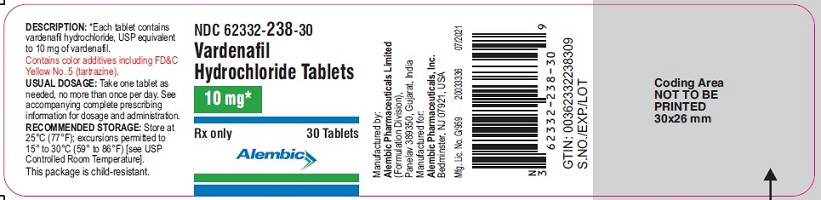
Vardenafil Hydrochloride 10 mg Tablet, Film Coated, 30-count — NDC 62332-238-30 (Billing 62332-0238-30)
This is a package of 30 tablets of Vardenafil Hydrochloride 10 mg Tablet, Film Coated from Alembic Pharmaceuticals Inc., marketed since Aug 2020 and currently FDA-listed; retail pharmacies pay about $2.87 per tablet (NADAC). It is the main listing for this product, which comes in 2 package sizes.
Identity & classification
Regulatory identifiers FDA, NLM and CMS codes for this package
Drug-database identifiers Medi-Span GPI and First Databank GCN / HICL / AHFS classification
- GSN (GCN sequence number): 051883
- GCN: 19327
- GPI-14 (Medi-Span): 40304090100330
- HICL (First Databank): 025035
- AHFS class code: 24:08.12.00
- RxCUI (RxNorm): 349478
Where does this data come from?
- FDA openFDA NDC Directory · synced Oct 1, 2026
- FDA label on DailyMed · label index refreshed Oct 1, 2026
- RxNorm (NLM RxNav) · catalog refreshed Oct 1, 2026
- Medi-Span GPI (licensed)
- First Databank (licensed) · refreshed Oct 1, 2026
RxNorm drug class
This medicine belongs to the Phosphodiesterase 5 Inhibitor class.
Where does this data come from?
- RxClass (NLM) · catalog refreshed Oct 1, 2026
Clinical
Vardenafil is used to treat erectile dysfunction (impotence; inability to get or keep an erection) in men. Vardenafil is in a class of medications called phosphodiesterase (PDE) inhibitors. It works by increasing blood flow to the penis during sexual stimulation. This increased blood flow can cause an erection. Vardenafil does not cure erectile dysfunction or increase sexual desire. Vardenafil does not prevent pregnancy or the spread of sexually transmitted diseases such as human immunodeficiency virus (HIV).
Read the full MedlinePlus article ↗- Generally, you should take vardenafil about 60 minutes before sexual activity — that's when it tends to work best. For the standard tablet, food doesn't really matter; you can take...
- How long before sex should I take vardenafil, and does it matter if I eat first?
- This is really important to go over with your doctor. If you take any nitrate medications — like nitroglycerin for chest pain — you absolutely cannot take vardenafil. The combinati...
- Can I take vardenafil with my other heart or blood pressure medications?
Patient education
Supplement & herbal interactions
Where does this data come from?
- MedlinePlus (NLM) · refreshed Oct 1, 2026
- FDA label on DailyMed · label index refreshed Oct 1, 2026
Ask a licensed pharmacist directly — free, answered by our team.
Pricing
A drug doesn't have one price. Each row is a different public payment system, and none is what you'd pay at the counter — that depends on your insurance. The ⓘ on each row explains what it measures.
| Price system | Per ea | Per package |
|---|---|---|
| Retail pharmacies payNADAC · weekly | $2.867 | $86.00 / 30 tablets |
| Medicaid paysCMS SDUD · 12 mo | No recent Medicaid claims on file for this NDC — rare and low-volume NDCs are suppressed in the public data. | |
| Medicare drug plans payPart D · quarterly | No Part D plan price is available for this NDC in our data. | |
Where does this data come from?
- CMS NADAC weekly file · file of Sep 30, 2026
- CMS ASP pricing files · refreshed Sep 20, 2026
- CMS Medicaid State Drug Utilization Data · refreshed Oct 3, 2026
- CMS Part D plan pricing files · refreshed Sep 24, 2026
- VA National Acquisition Center price file
Packaging — all sizes for this product
| Package NDC | Description | Per unit | Per pack | Marketing start | Marketing end | Status |
|---|---|---|---|---|---|---|
| 62332-0238-30 You're viewing this Main listing | 30 TABLET, FILM COATED in 1 BOTTLE | $2.87 / ea | $86.00 | 2020-08-05 | — | Active |
| 62332-0238-31 62332-238-31 | 100 TABLET, FILM COATED in 1 BOTTLE | — | — | 2020-08-05 | — | Active |
You're viewing the smallest of 2 pack sizes for this product.
Pack size FAQ
What quantity is in this package?
How does this package differ from NDC 62332-0238-31?
What NDC number is used to bill for this package of Vardenafil Hydrochloride 10 mg Tablet, Film Coated?
Prices are the latest CMS NADAC pharmacy acquisition cost per NDC; per-pack figures are per-unit × pack quantity, shown only when the pack is denominated in the same measure NADAC prices.
Therapeutic equivalents
| Product | Labeler | Pack | NADAC/unit | TE | Status | Price vs. this |
|---|---|---|---|---|---|---|
| Vardenafil Hydrochloride 10 mg 00093-7654-56 | Teva | 30 tablets | $2.867 | AB | Availability likely | — |
| Vardenafil Hydrochloride 10 mg 00527-2802-32 | Lannett | 30 tablets | $2.867 | AB | Availability likely | — |
| Vardenafil Hydrochloride 10 mg 33342-0153-07 | Macleods | 30 tablets | $2.867 | AB | Availability likely | — |
| Vardenafil Hydrochloride 10 mgthis 62332-0238-30 | Alembic | 30 tablets | $2.867 | AB | Availability likely | — |
| Vardenafil Hydrochloride 10 mg 42291-0847-30 | AvKARE | 30 tablets | — | AB | FDA listed | — |
| Vardenafil Hydrochloride 10 mg 46708-0238-30 | Alembic | 30 tablets | — | AB | FDA listed | — |
| Vardenafil 10 mg 70710-1070-01 | Zydus | 100 tablets | — | AB | FDA listed | — |
| Vardenafil 10 mg 70771-1049-01 | Zydus | 100 tablets | — | AB | FDA listed | — |
| Vardenafil Hydrochloride 10 mg 71335-9696-01 | Bryant | 30 tablets | — | AB | FDA listed | — |
| Vardenafil Hydrochloride 10 mg 72162-2235-03 | Bryant | 30 tablets | — | AB | FDA listed | — |
Where does this data come from?
- FDA openFDA NDC Directory · synced Oct 1, 2026
- FDA Orange Book · refreshed Sep 3, 2026
- CMS NADAC weekly file · file of Sep 30, 2026
Availability & generic status
This product is an FDA-approved generic. Other versions of the same drug are listed under Therapeutic equivalents, least expensive first.
Where does this data come from?
- FDA Orange Book · refreshed Sep 3, 2026
What it looks like
Where does this data come from?
- FDA label on DailyMed · label index refreshed Oct 1, 2026
Inactive Ingredients / Excipients
Inactive ingredients, also called excipients, are components of the drug product other than the active ingredient. They may include fillers, dyes, coatings, preservatives, flavors, or other formulation ingredients.
Where does this data come from?
IACT rows and label-wide narrative are kept separate; availability and product-level specificity depend on the submitted label.- FDA label on DailyMed · label index refreshed Oct 1, 2026
- FDA openFDA NDC Directory · synced Oct 1, 2026
Inactive ingredient FAQ
Are inactive ingredients the same for every manufacturer?
Why might an inactive ingredient be missing?
Can inactive ingredients matter?
Manufacturer & labeler
Where does this data come from?
- FDA openFDA NDC Directory · synced Oct 1, 2026
- Drugs@FDA
Full prescribing information FDA SPL
🎯 Indications and Usage ▾
1 INDICATIONS AND USAGE Vardenafil hydrochloride tablets are indicated for the treatment of erectile dysfunction. • Vardenafil hydrochloride is a phosphodiesterase 5 (PDE5) inhibitor indicated for the treatment of erectile dysfunction. (1)
⏱️ Dosage and Administration ▾
2 DOSAGE AND ADMINISTRATION • Vardenafil hydrochloride tablets are taken as needed: For most patients, the starting dose is 10 mg, up to once daily. Increase to 20 mg or decrease to 5 mg based on efficacy/ tolerability. (2.1) • A starting dose of 5 mg vardenafil hydrochloride tablet should be considered in patients 65 years of age.
(2.3) • Vardenafil hydrochloride tablets are taken orally, approximately 60 minutes before sexual activity. (2.1) • The maximum recommended dosing frequency is one tablet per day. (2.1) • Vardenafil hydrochloride tablets may be taken with or without food.
(2.2) • If taking strong or moderate inhibitors of CYP3A4, the dose of vardenafil hydrochloride tablets should be adjusted as follows (2.4, 5.2, 7.2): o Ritonavir: No more than 2.5 mg in a 72-hour period o Cobicistat: No more than 2.5 mg in a 72-hour period o Indinavir, saquinavir, atazanavir, ketoconazole 400 mg daily, itraconazole 400 mg daily, clarithromycin: No more than 2.5 mg in a 24-hour period o Ketoconazole 200 mg daily, itraconazole 200 mg daily, erythromycin: No more than 5 mg in a 24-hour period. • In patients on stable alpha-blocker therapy the recommended starting dose of vardenafil hydrochloride tablet is 5 mg (2.4, 5.6) • The recommended starting dose of vardenafil hydrochloride tablet is 5 mg in patients with moderate hepatic impairment (Child-Pugh B).
The maximum dose in patients with moderate hepatic impairment should not exceed 10 mg. (2.3, 8.6)
2.1General Dose Information For most patients, the recommended starting dose of vardenafil hydrochloride tablet is 10 mg, taken orally, as needed, approximately 60 minutes before sexual activity. The dose may be increased to a maximum recommended dose of 20 mg or decreased to 5 mg based on efficacy and side effects. The maximum recommended dosing frequency is once per day. Sexual stimulation is required for a response to treatment.
2.2Use with Food Vardenafil hydrochloride tablets can be taken with or without food.
2.3Use in Specific Populations Geriatrics: A starting dose of 5 mg vardenafil hydrochloride tablets should be considered in patients ≥65 years of age [see Use in Specific Populations (8.5)]. Hepatic Impairment: For patients with moderate hepatic impairment (Child-Pugh B), a starting dose of 5 mg vardenafil hydrochloride tablet is recommended. The maximum dose in patients with moderate hepatic impairment should not exceed 10 mg.
Do not use vardenafil hydrochloride tablets in patients with severe hepatic impairment (Child-Pugh C) [see Warnings and Precautions (5.8), Use in Specific Populations (8.6) and Clinical Pharmacology (12.3)] . Renal Impairment: Do not use vardenafil hydrochloride tablets in patients on renal dialysis [see Warnings and Precautions (5.9), Use in Specific Populations (8.7) and Clinical Pharmacology (12.3)].
2.4Concomitant Medications Nitrates: Concomitant use with nitrates and nitric oxide donors in any form is contraindicated [see Contraindications (4.1)] . Guanylate Cyclase (GC) Stimulators, such as riociguat : Concomitant use is contraindicated [see Contraindications (4.2)]. CYP3A4 Inhibitors: The dosage of vardenafil hydrochloride tablets may require adjustment in patients receiving strong CYP3A4 inhibitors such as ketoconazole, itraconazole, ritonavir, indinavir, saquinavir, atazanavir, cobicistat, and clarithromycin as well as in other patients receiving moderate CYP3A4 inhibitors such as erythromycin [see Drug Interactions (7.2)].
If taking strong or moderate inhibitors of CYP3A4, the dose of vardenafil hydrochloride tablets should be adjusted as follows: • Ritonavir: No more than 2.5 mg in a 72-hour period • Indinavir, saquinavir, atazanavir, ketoconazole 400 mg daily, itraconazole 400 mg daily, clarithromycin: No more than 2.5 mg in a 24-hour period • Ketoconazole 200 mg daily, itraconazole 200 mg daily, erythromycin: No more than 5 mg in a 24-hour period. • Cobicistat: No more than 2.5 mg in a 72 hour period. Alpha-Blockers: In those patients… [Excerpted — this section continues on DailyMed.]
💊 Dosage Forms and Strengths ▾
3 DOSAGE FORMS AND STRENGTHS Vardenafil hydrochloride tablets 2.5 mg are light orange to orange, film-coated round tablets debossed with “L” on one side and “04” on other side. Vardenafil hydrochloride tablets 5 mg are light orange to orange, film-coated round tablets debossed with “L” on one side and “05” on other side. Vardenafil hydrochloride tablets 10 mg are light orange to orange, film-coated round tablets debossed with ‘480’ on one side and plain on the other side.
Vardenafil hydrochloride tablets 20 mg are light orange to orange, film-coated round tablets debossed with ‘481’ on one side and plain on the other side. • Vardenafil hydrochloride tablets 2.5 mg, 5 mg, 10 mg, 20 mg (3)
⛔ Contraindications ▾
4 CONTRAINDICATIONS • Administration with nitrates and nitric oxide donors (2.4, 4.1) • Administration with guanylate cyclase (GC) stimulators, such as riociguat (2.4, 4.2)
4.1Nitrates Administration of vardenafil hydrochloride tablets with nitrates (either regularly and/or intermittently) and nitric oxide donors is contraindicated [see Clinical Pharmacology (12.2)] . Consistent with the effects of PDE5 inhibition on the nitric oxide/cyclic guanosine monophosphate pathway, PDE5 inhibitors, including vardenafil hydrochloride tablets, may potentiate the hypotensive effects of nitrates. A suitable time interval following dosing of vardenafil hydrochloride tablets for the safe administration of nitrates or nitric oxide donors has not been determined.
4.2Guanylate Cyclase (GC) Stimulators Do not use vardenafil hydrochloride tablets in patients who are using a GC stimulator, such as riociguat. PDE5 inhibitors, including vardenafil hydrochloride tablets may potentiate the hypotensive effects of GC stimulators.
⚠️ Warnings and Cautions ▾
5 WARNINGS AND PRECAUTIONS The evaluation of erectile dysfunction should include a medical assessment, a determination of potential underlying causes and the identification of appropriate treatment. Before prescribing vardenafil hydrochloride, it is important to note the following: Cardiovascular Effects: Patients should not use vardenafil hydrochloride if sex is inadvisable due to cardiovascular status. (5.1) Risk of Priapism: In the event that an erection lasts more than 4 hours, the patient should seek immediate medical assistance.
(5.3) Effects on the Eye: Patients should stop use of vardenafil hydrochloride, and seek medical attention in the event of sudden loss of vision in one or both eyes, which could be a sign of nonarteritic anterior ischemic optic neuropathy (NAION). Vardenafil hydrochloride should be used with caution, and only when the anticipated benefits outweigh the risks, in patients with a history of NAION. Patients with a “crowded” optic disc may also be at an increased risk of NAION.
(5.4, 6.2) Sudden Hearing Loss: Patients should stop vardenafil hydrochloride and seek medical attention in the event of sudden decrease or loss in hearing. (5.5, 6.2) Alpha-Blockers: Caution is advised when PDE5 inhibitors are co-administered with alpha-blockers. In some patients, concomitant use of these two drug classes can lower blood pressure significantly leading to symptomatic hypotension (for example, fainting).
(2.4, 5.6) QT Prolongation: Patients with congenital QT syndrome or taking class IA or III antiarrhythmics should avoid using vardenafil hydrochloride. (5.7, 12.2)
5.1Cardiovascular Effects General Physicians should consider the cardiovascular status of their patients, since there is a degree of cardiac risk associated with sexual activity. Therefore, treatment for erectile dysfunction, including vardenafil hydrochloride, should not be used in men for whom sexual activity is not recommended because of their underlying cardiovascular status. There are no controlled clinical data on the safety or efficacy of vardenafil in the following patients; and therefore its use is not recommended until further information is available: unstable angina; hypotension (resting systolic blood pressure of <90 mmHg); uncontrolled hypertension (>170/110 mmHg); recent history of stroke, life-threatening arrhythmia, or myocardial infarction (within the last 6 months); severe cardiac failure.
Left Ventricular Outflow Obstruction Patients with left ventricular outflow obstruction, (for example, aortic stenosis and idiopathic hypertrophic subaortic stenosis) can be sensitive to the action of vasodilators including PDE5 inhibitors. Blood Pressure Effects Vardenafil hydrochloride has systemic vasodilatory properties that resulted in transient decreases in supine blood pressure in healthy volunteers (mean maximum decrease of 7 mmHg systolic and 8 mmHg diastolic) [see Clinical Pharmacology (12.2)] . While this normally would be expected to be of little consequence in most patients, prior to prescribing vardenafil hydrochloride, physicians should carefully consider whether their patients with underlying cardiovascular disease could be affected adversely by such vasodilatory effects.
5.2Potential for Drug Interactions with Strong or Moderate CYP3A4 Inhibitors Concomitant administration with strong CYP3A4 inhibitors (such as ritonavir, indinavir, cobicistat, ketoconazole) or moderate CYP3A4 inhibitors (such as erythromycin) increases plasma concentrations of vardenafil. Dosage adjustment is necessary when vardenafil hydrochloride is administered with certain CYP3A4 inhibitors [see Dosage and Administration (2.4), and Drug Interactions (7.2)]. Long-term safety information is not available on the concomitant administration of vardenafil with HIV protease inhibitors.
5.3Risk of Priapism There have been rare reports of prolonged erections greater than 4 hours and priapism (painful erections greater than 6 hours in duration) for this class of com… [Excerpted — this section continues on DailyMed.]
🤒 Adverse Reactions ▾
6 ADVERSE REACTIONS The following serious adverse reactions with the use of vardenafil hydrochloride are discussed elsewhere in the labeling: · Cardiovascular Effects [see Contraindications (4.1) and Warnings and Precautions (5.1)] · Priapism [see Warnings and Precautions (5.3)] · Effects on Eye [see Warnings and Precautions (5.4)] · Sudden Hearing Loss [see Warnings and Precautions (5.5)] · QT Prolongation [see Warnings and Precautions (5.7)] Most common adverse reactions reported (≥2% of patients) are headache, flushing, nasal congestion, dyspepsia, sinusitis, flu syndrome, dizziness, increased creatine kinase, nausea, back pain.
(6.1) To report SUSPECTED ADVERSE REACTIONS, contact Alembic Pharmaceuticals Limited at 1-866-210-9797 or FDA at 1-800-FDA-1088 or www.fda.gov/medwatch
6.1Clinical Studies Experience Because clinical trials are conducted under widely varying conditions, adverse reaction rates observed in the clinical trials of a drug cannot be directly compared to rates in the clinical trials of another drug and may not reflect the rates observed in practice. Vardenafil hydrochloride was administered to over 4430 men (mean age 56, range 18 to 89 years; 81% White, 6% Black, 2% Asian, 2% Hispanic and 9% Other) during controlled and uncontrolled clinical trials worldwide. Over 2200 patients were treated for 6 months or longer and 880 patients were treated for at least 1 year.
In placebo-controlled clinical trials, the discontinuation rate due to adverse events was 3.4% for vardenafil hydrochloride compared to 1.1% for placebo. When vardenafil hydrochloride was taken as recommended in placebo-controlled clinical trials, the following adverse reactions were reported (see Table 1). Table 1: Adverse Reactions Reported By ≥2% of Patients Treated with Vardenafil Hydrochloride and More Frequent on Drug than Placebo in Fixed and Flexible a Dose Randomized, Controlled Trials of 5 mg, 10 mg, or 20 mg Vardenafil Adverse Reaction Percentage of Patients Reporting Reactions Placebo Vardenafil Hydrochloride N = 1199 N = 2203 Headache 4% 15% Flushing 1% 11% Rhinitis 3% 9% Dyspepsia 1% 4% Accidental Injury b 2% 3% Sinusitis 1% 3% Flu Syndrome 2% 3% Dizziness 1% 2% Increased Creatine Kinase 1% 2% Nausea 1% 2% a) Flexible dose studies started all patients at vardenafil hydrochloride 10 mg and allowed decrease in dose to 5 mg or increase in dose to 20 mg based on side effects and efficacy. b) All the events listed in the above table were deemed to be adverse drug reactions with the exception of accidental injury.
Back pain was reported in 2% of patients treated with vardenafil hydrochloride and 1.7% of patients on placebo. Placebo-controlled trials suggested a dose effect in the incidence of some adverse reactions (headache, flushing, dyspepsia, nausea, and rhinitis) over the 5 mg, 10 mg, and 20 mg doses of vardenafil hydrochloride. All Vardenafil Studies: Vardenafil hydrochloride film-coated tablets and vardenafil orally disintegrating tablets have been administered to over 17,000 men (mean age 54.5, range 18 to 89 years; 70% White, 5% Black, 13% Asian, 4% Hispanic and 8% Other) during controlled and uncontrolled clinical trials worldwide.
The number of patients treated for 6 months or longer was 3357, and 1350 patients were treated for at least 1 year. In the placebo-controlled clinical trials for vardenafil hydrochloride film-coated tablets and vardenafil orally disintegrating tablets, the discontinuation rate due to adverse events was 1.9% for vardenafil compared to 0.8% for placebo. The following section identifies additional, less frequent adverse reactions (<2%) reported during the clinical development of vardenafil hydrochloride film-coated tablets and vardenafil orally disintegrating tablets.
Excluded from this list are those adverse reactions that are infrequent and minor, those events that may be commonly observed in the absence of drug therapy, and those events that are not reasonably associated with the drug: Body as a whole… [Excerpted — this section continues on DailyMed.]
🔄 Drug Interactions ▾
7 DRUG INTERACTIONS • Vardenafil hydrochloride can potentiate the hypotensive effects of nitrates, alpha- blockers, and antihypertensives. (7.1)
7.1Potential for Pharmacodynamic Interactions with Vardenafil Hydrochloride Nitrates: Concomitant use of vardenafil hydrochloride and nitrates and nitric oxide donors is contraindicated. The blood pressure lowering effects of sublingual nitrates (0.4 mg) taken 1 and 4 hours after vardenafil and increases in heart rate when taken at 1, 4 and 8 hours after vardenafil were potentiated by a 20 mg dose of vardenafil hydrochloride in healthy middle-aged subjects. These effects were not observed when vardenafil hydrochloride 20 mg was taken 24 hours before the nitroglycerin (NTG).
Potentiation of the hypotensive effects of nitrates for patients with ischemic heart disease has not been evaluated, and concomitant use of vardenafil hydrochloride and nitrates is contraindicated [see Contraindications (4.1) and Clinical Pharmacology (12.2)] . Alpha-Blockers: Caution is advised when PDE5 inhibitors are co-administered with alpha-blockers. PDE5 inhibitors, including vardenafil hydrochloride and alpha-adrenergic blocking agents are both vasodilators with blood-pressure-lowering effects.
When vasodilators are used in combination, an additive effect on blood pressure may be anticipated. Clinical pharmacology studies have been conducted with co-administration of vardenafil with alfuzosin, terazosin or tamsulosin [see Dosage and Administration (2.4), Warnings and Precautions (5.6), and Clinical Pharmacology (12.2)]. Antihypertensives: Vardenafil hydrochloride may add to the blood pressure lowering effects of antihypertensive agents.
In a clinical pharmacology study of patients with erectile dysfunction, single doses of vardenafil 20 mg caused a mean maximum decrease in supine blood pressure of 7 mmHg systolic and 8 mmHg diastolic (compared to placebo), accompanied by a mean maximum increase of heart rate of 4 beats per minute. The maximum decrease in blood pressure occurred between 1 and 4 hours after dosing. Following multiple dosing for 31 days, similar blood pressure responses were observed on Day 31 as on Day 1.
Alcohol: Vardenafil hydrochloride (20 mg) did not potentiate the hypotensive effects of alcohol during the 4-hour observation period in healthy volunteers when administered with alcohol (0.5 g/kg body weight, approximately 40 mL of absolute alcohol in a 70 kg person). Alcohol and vardenafil plasma levels were not altered when dosed simultaneously.
7.2Effect of Other Drugs on Vardenafil In vitro studies Studies in human liver microsomes showed that vardenafil is metabolized primarily by cytochrome P450 (CYP) isoforms 3A4/5, and to a lesser degree by CYP2C9. Therefore, inhibitors of these enzymes are expected to reduce vardenafil clearance [see Dosage and Administration (2.4) and Warnings and Precautions (5.2)]. In vivo studies Strong CYP3A4 inhibitors Ketoconazole (200 mg once daily) produced a 10-fold increase in vardenafil AUC and a 4-fold increase in maximum concentration (C max ) when co-administered with vardenafil hydrochloride (5 mg) in healthy volunteers.
A 5-mg vardenafil hydrochloride dose should not be exceeded in a 24-hour period when used in combination with 200 mg once daily ketoconazole. Since higher doses of ketoconazole (400 mg daily) may result in higher increases in Cmax and AUC, a single 2.5 mg dose of vardenafil hydrochloride should not be exceeded in a 24-hour period when used in combination with ketoconazole 400 mg daily [see Dosage and Administration (2.4) and Warnings and Precautions (5)]. Indinavir (800 mg t.i.d.) co-administered with vardenafil hydrochloride 10 mg resulted in a 16-fold increase in vardenafil AUC, a 7-fold increase in vardenafil C max and a 2-fold increase in vardenafil half-life.
It is recommended not to exceed a single 2.5 mg vardenafil hydrochloride dose in a 24-hour period when used in combination with indinavir [see Dosage and Administration (… [Excerpted — this section continues on DailyMed.]
👥 Use in Specific Populations ▾
8 USE IN SPECIFIC POPULATIONS • Vardenafil hydrochloride is not indicated for use in pediatric patients. (8.4) • Do not use vardenafil hydrochloride in patients with severe hepatic impairment (Child- Pugh C). (8.6) • Do not use vardenafil hydrochloride in patients on renal dialysis. (8.7)
8.1Pregnancy Risk Summary Vardenafil hydrochloride is not indicated for use in females. There are no data with the use of vardenafil hydrochloride in pregnant women to inform any drug-associated risks. In animal reproduction studies conducted in pregnant rats and rabbits, no adverse developmental outcomes were observed with oral administration of vardenafil during organogenesis at exposures for unbound vardenafil and its major metabolite at approximately 100 and 29 times, respectively, the maximum recommended human dose (MRHD) of 20 mg based on AUC (see Data) .
Data Animal Data No evidence of specific potential for teratogenicity, embryotoxicity or fetotoxicity was observed in rats and rabbits that received vardenafil at up to 18 mg/kg/day during organogenesis. This dose is approximately 100 fold (rat) and 29 fold (rabbit) greater than the AUC values for unbound vardenafil and its major metabolite in humans given the maximum recommended human dose MRHD of 20 mg. In the rat pre-and postnatal development study, the NOAEL (no observed adverse effect level) for maternal toxicity was 8 mg/kg/day.
Retarded physical development of pups in the absence of maternal effects was observed following maternal exposure to 1 and 8 mg/kg possibly due to vasodilatation and/or secretion of the drug into milk. The number of living pups born to rats exposed pre- and postnatally was reduced at 60 mg/kg/day. Based on the results of the pre- and postnatal study, the developmental NOAEL is less than 1 mg/kg/day.
Based on plasma exposures in the rat developmental toxicity study, 1 mg/kg/day in the pregnant rat is estimated to produce total AUC values for unbound vardenafil and its major metabolite comparable to the human AUC at the MRHD of 20 mg.
8.2Lactation Risk Summary Vardenafil hydrochloride is not indicated for use in females. There is no information on the presence of vardenafil and its major metabolite in human milk, the effects on the breastfed infant, or the effects on milk production. Vardenafil is present in rat milk of lactating rats (see Data) .
Data Vardenafil was secreted into the milk of lactating rats at concentrations approximately 10-fold greater than found in the plasma. Following a single oral dose of 3 mg/kg, 3.3% of the administered dose was excreted into the milk within 24 hours.
8.4Pediatric Use Vardenafil hydrochloride is not indicated for use in pediatric patients. Safety and efficacy have not been established in this population.
8.5Geriatric Use Elderly males 65 years of age and older have higher vardenafil plasma concentrations than younger males (18 to 45 years), mean Cmax and AUC were 34% and 52% higher, respectively. Phase 3 clinical trials included more than 834 elderly patients, and no differences in safety or effectiveness of vardenafil hydrochloride 5, 10, or 20 mg were noted when these elderly patients were compared to younger patients. However, due to increased vardenafil concentrations in the elderly, a starting dose of 5 mg vardenafil hydrochloride should be considered in patients ≥65 years of age [see Clinical Pharmacology (12.3)].
8.6Hepatic Impairment Dosage adjustment is necessary in patients with moderate hepatic impairment. Do not use vardenafil hydrochloride in patients with severe hepatic impairment (Child-Pugh C). Vardenafil has not been evaluated in this patient population.
A starting dose of 5 mg is recommended in patients with moderate hepatic impairment (Child-Pugh B) and the maximum dose should not exceed 10 mg. In volunteers with moderate hepatic impairment, the C max and AUC following a 10 mg vardenafil dose were increased by 130% and 160%, respectively, compared to healthy control subjects [see Warnings and… [Excerpted — this section continues on DailyMed.]
🤰 Pregnancy ▾
8.1Pregnancy Risk Summary Vardenafil hydrochloride is not indicated for use in females. There are no data with the use of vardenafil hydrochloride in pregnant women to inform any drug-associated risks. In animal reproduction studies conducted in pregnant rats and rabbits, no adverse developmental outcomes were observed with oral administration of vardenafil during organogenesis at exposures for unbound vardenafil and its major metabolite at approximately 100 and 29 times, respectively, the maximum recommended human dose (MRHD) of 20 mg based on AUC (see Data) .
Data Animal Data No evidence of specific potential for teratogenicity, embryotoxicity or fetotoxicity was observed in rats and rabbits that received vardenafil at up to 18 mg/kg/day during organogenesis. This dose is approximately 100 fold (rat) and 29 fold (rabbit) greater than the AUC values for unbound vardenafil and its major metabolite in humans given the maximum recommended human dose MRHD of 20 mg. In the rat pre-and postnatal development study, the NOAEL (no observed adverse effect level) for maternal toxicity was 8 mg/kg/day.
Retarded physical development of pups in the absence of maternal effects was observed following maternal exposure to 1 and 8 mg/kg possibly due to vasodilatation and/or secretion of the drug into milk. The number of living pups born to rats exposed pre- and postnatally was reduced at 60 mg/kg/day. Based on the results of the pre- and postnatal study, the developmental NOAEL is less than 1 mg/kg/day.
Based on plasma exposures in the rat developmental toxicity study, 1 mg/kg/day in the pregnant rat is estimated to produce total AUC values for unbound vardenafil and its major metabolite comparable to the human AUC at the MRHD of 20 mg.
🧒 Pediatric Use ▾
8.4Pediatric Use Vardenafil hydrochloride is not indicated for use in pediatric patients. Safety and efficacy have not been established in this population.
🧓 Geriatric Use ▾
8.5Geriatric Use Elderly males 65 years of age and older have higher vardenafil plasma concentrations than younger males (18 to 45 years), mean Cmax and AUC were 34% and 52% higher, respectively. Phase 3 clinical trials included more than 834 elderly patients, and no differences in safety or effectiveness of vardenafil hydrochloride 5, 10, or 20 mg were noted when these elderly patients were compared to younger patients. However, due to increased vardenafil concentrations in the elderly, a starting dose of 5 mg vardenafil hydrochloride should be considered in patients ≥65 years of age [see Clinical Pharmacology (12.3)].
🆘 Overdosage ▾
10 OVERDOSAGE The maximum dose of vardenafil hydrochloride for which human data are available is a single 120 mg dose administered to healthy male volunteers. The majority of these subjects experienced reversible back pain/myalgia and/or “abnormal vision.” Single doses up to 80 mg vardenafil and multiple doses up to 40 mg vardenafil administered once daily over 4 weeks were tolerated without producing serious adverse side effects. When 40 mg of vardenafil was administered twice daily, cases of severe back pain were observed.
No muscle or neurological toxicity was identified. In cases of overdose, standard supportive measures should be taken as required. Renal dialysis is not expected to accelerate clearance as vardenafil is highly bound to plasma proteins and not significantly eliminated in the urine.
🧬 Clinical Pharmacology ▾
12 CLINICAL PHARMACOLOGY
12.1Mechanism of Action Penile erection is a hemodynamic process initiated by the relaxation of smooth muscle in the corpus cavernosum and its associated arterioles. During sexual stimulation, nitric oxide is released from nerve endings and endothelial cells in the corpus cavernosum. Nitric oxide activates the enzyme guanylate cyclase resulting in increased synthesis of cyclic guanosine monophosphate (cGMP) in the smooth muscle cells of the corpus cavernosum.
The cGMP in turn triggers smooth muscle relaxation, allowing increased blood flow into the penis, resulting in erection. The tissue concentration of cGMP is regulated by both the rates of synthesis and degradation via phosphodiesterases (PDEs). The most abundant PDE in the human corpus cavernosum is the cGMP-specific phosphodiesterase type 5 (PDE5); therefore, the inhibition of PDE5 enhances erectile function by increasing the amount of cGMP.
Because sexual stimulation is required to initiate the local release of nitric oxide, the inhibition of PDE5 has no effect in the absence of sexual stimulation. In vitro studies have shown that vardenafil is a selective inhibitor of PDE5. The inhibitory effect of vardenafil is more selective on PDE5 than for other known phosphodiesterases (>15-fold relative to PDE6, >130-fold relative to PDE1, >300-fold relative to PDE11, and >1,000-fold relative to PDE2, 3, 4, 7, 8, 9, and 10).
12.2Pharmacodynamics Effects on Blood Pressure In a clinical pharmacology study of patients with erectile dysfunction, single doses of vardenafil 20 mg caused a mean maximum decrease in supine blood pressure of 7 mmHg systolic and 8 mmHg diastolic (compared to placebo), accompanied by a mean maximum increase of heart rate of 4 beats per minute. The maximum decrease in blood pressure occurred between 1 and 4 hours after dosing. Following multiple dosing for 31 days, similar blood pressure responses were observed on Day 31 as on Day 1.
Vardenafil may add to the blood pressure lowering effects of antihypertensive agents [see Drug Interactions (7)] . Effects on Blood Pressure and Heart Rate when Vardenafil Hydrochloride is Combined with Nitrates A study was conducted in which the blood pressure and heart rate response to 0.4 mg nitroglycerin (NTG) sublingually was evaluated in 18 healthy subjects following pretreatment with vardenafil hydrochloride 20 mg at various times before NTG administration. Vardenafil hydrochloride 20 mg caused an additional time-related reduction in blood pressure and increase in heart rate in association with NTG administration.
The blood pressure effects were observed when vardenafil hydrochloride 20 mg was dosed 1 or 4 hours before NTG and the heart rate effects were observed when 20 mg was dosed 1, 4, or 8 hours before NTG. Additional blood pressure and heart rate changes were not detected when vardenafil hydrochloride 20 mg was dosed 24 hours before NTG. (See Figure 1.) Figure 1: Placebo-subtracted point estimates (with 90% CI) of mean maximal blood pressure and heart rate effects of pre-dosing with vardenafil 20 mg at 24, 8, 4, and 1 hour before 0.4 mg NTG sublingually Because the disease state of patients requiring nitrate therapy is anticipated to increase the likelihood of hypotension, the use of vardenafil by patients on nitrate therapy or on nitric oxide donors is contraindicated [see Contraindications (4.1)] .
Blood Pressure Effects in Patients on Stable Alpha-Blocker Treatment Three clinical pharmacology studies were conducted in patients with benign prostatic hyperplasia (BPH) on stable-dose alpha-blocker treatment, consisting of alfuzosin, tamsulosin or terazosin. Study 1: This study was designed to evaluate the effect of 5 mg vardenafil compared to placebo when administered to BPH patients on chronic alpha-blocker therapy in two separate cohorts: tamsulosin 0.4 mg daily (cohort 1, n=21) and terazosin 5 or 10 mg daily (cohort 2, n=21).
The design was a randomized, double blind, cross-over study wi… [Excerpted — this section continues on DailyMed.]
🧬 Mechanism of Action ▾
12.1Mechanism of Action Penile erection is a hemodynamic process initiated by the relaxation of smooth muscle in the corpus cavernosum and its associated arterioles. During sexual stimulation, nitric oxide is released from nerve endings and endothelial cells in the corpus cavernosum. Nitric oxide activates the enzyme guanylate cyclase resulting in increased synthesis of cyclic guanosine monophosphate (cGMP) in the smooth muscle cells of the corpus cavernosum.
The cGMP in turn triggers smooth muscle relaxation, allowing increased blood flow into the penis, resulting in erection. The tissue concentration of cGMP is regulated by both the rates of synthesis and degradation via phosphodiesterases (PDEs). The most abundant PDE in the human corpus cavernosum is the cGMP-specific phosphodiesterase type 5 (PDE5); therefore, the inhibition of PDE5 enhances erectile function by increasing the amount of cGMP.
Because sexual stimulation is required to initiate the local release of nitric oxide, the inhibition of PDE5 has no effect in the absence of sexual stimulation. In vitro studies have shown that vardenafil is a selective inhibitor of PDE5. The inhibitory effect of vardenafil is more selective on PDE5 than for other known phosphodiesterases (>15-fold relative to PDE6, >130-fold relative to PDE1, >300-fold relative to PDE11, and >1,000-fold relative to PDE2, 3, 4, 7, 8, 9, and 10).
📦 How Supplied / Storage and Handling ▾
16 HOW SUPPLIED/STORAGE AND HANDLING Vardenafil hydrochloride tablets 2.5 mg are light orange to orange, film-coated round tablets debossed with “L” on one side and “04” on other side. NDC 62332-236-30 with child resistant closure, bottle of 30 tablets NDC 62332-236-31 with child resistant closure, bottle of 100 tablets Vardenafil hydrochloride tablets 5 mg are light orange to orange, film-coated round tablets debossed with “L” on one side and “05” on other side. NDC 62332-237-30 with child resistant closure, bottle of 30 tablets NDC 62332-237-31 with child resistant closure, bottle of 100 tablets Vardenafil hydrochloride tablets 10 mg are light orange to orange, film-coated round tablets debossed with ‘480’ on one side and plain on the other side.
NDC 62332-238-30 with child resistant closure, bottle of 30 tablets NDC 62332-238-31 with child resistant closure, bottle of 100 tablets Vardenafil hydrochloride tablets 20 mg are light orange to orange, film-coated round tablets debossed with ‘481’ on one side and plain on the other side. NDC 62332-239-30 with child resistant closure, bottle of 30 tablets NDC 62332-239-31 with child resistant closure, bottle of 100 tablets Store at 25°C (77°F); excursions permitted between 15° to 30°C (59° to 86°F) [see USP Controlled Room Temperature].
📋 Description ▾
11 DESCRIPTION Vardenafil hydrochloride tablets are administered orally for the treatment of erectile dysfunction. This monohydrochloride salt of vardenafil is a selective inhibitor of cyclic guanosine monophosphate (cGMP)-specific phosphodiesterase type 5 (PDE5). Vardenafil hydrochloride is designated chemically as piperazine, 1-[[3-(1,4-dihydro-5-methyl-4-oxo-7-propylimidazo[5,1- f ][1,2,4]triazin-2-yl)-4-ethoxyphenyl]sulfonyl]-4-ethyl-, monohydrochloride and has the following structural formula: Vardenafil hydrochloride is a white or slightly brown or yellow powder with a molecular weight of 579.11.
It is slightly soluble in water, freely soluble in anhydrous ethanol. Practically insoluble in heptane. Vardenafil hydrochloride is available as film-coated tablets for oral administration, containing 2.5 mg, 5 mg, 10 mg and 20 mg of vardenafil.
The inactive ingredients are microcrystalline cellulose, hydroxypropyl cellulose, crospovidone, talc, colloidal silicon dioxide and magnesium stearate. The colorants include hypromellose, titanium dioxide, polyethylene glycol 6000, iron oxide yellow, iron oxide red, FD&C Yellow No. 5 Tartrazine Aluminum Lake and FD&C Yellow No.
6 Sunset Yellow FCF Aluminum Lake. Structure
💬 Information for Patients ▾
17 PATIENT COUNSELING INFORMATION “See FDA-approved patient labeling (Patient Information)” Nitrates Inform patients that vardenafil hydrochloride tablets are contraindicated with regular and/or intermittent use of organic nitrates. Patients should be counseled that concomitant use of vardenafil hydrochloride tablets with nitrates could cause blood pressure to suddenly drop to an unsafe level, resulting in dizziness, syncope, or even heart attack or stroke. Guanylate Cyclase (GC) Stimulators Inform patients that vardenafil hydrochloride tablets are contraindicated in patients who use guanylate cyclase stimulators, such as riociguat.
Cardiovascular Discuss with patients the potential cardiac risk of sexual activity for patients with preexisting cardiovascular risk factors. Concomitant Use with Drugs which Lower Blood Pressure Inform patients that in some patient's concomitant use of PDE5 inhibitors, including vardenafil hydrochloride tablets, with alpha-blockers can lower blood pressure significantly leading to symptomatic hypotension (for example, fainting). Patients prescribed vardenafil hydrochloride tablets who are taking alpha-blockers should be started on the lowest recommended starting dose of vardenafil hydrochloride tablets [see Dosage and Administration (2.4) and Drug Interactions (7)].
Patients should be advised of the possible occurrence of symptoms related to postural hypotension and appropriate countermeasures. Patients should be advised to contact the prescribing physician if other anti-hypertensive drugs or new medications that may interact with vardenafil hydrochloride tablets are prescribed by another healthcare provider. Recommended Administration Discuss with patients the appropriate use of vardenafil hydrochloride tablets and its anticipated benefits.
It should be explained that sexual stimulation is required for an erection to occur after taking vardenafil hydrochloride tablets. Vardenafil hydrochloride tablets should be taken approximately 60 minutes before sexual activity. Patients should be counseled regarding the dosing of vardenafil hydrochloride tablets especially regarding the maximum daily dose.
Patients should be advised to contact their healthcare provider for dose modification if they are not satisfied with the quality of their sexual performance with vardenafil hydrochloride tablets or in the case of an unwanted effect. Priapism Inform patients that there have been rare reports of prolonged erections greater than 4 hours and priapism (painful erections greater than 6 hours in duration) for vardenafil hydrochloride tablets and this class of compounds. In the event that an erection persists longer than 4 hours, the patient should seek immediate medical assistance.
If priapism is not treated immediately, penile tissue damage and permanent loss of potency may result. Drug Interactions Advise patients to contact the prescribing physician if new medications that may interact with vardenafil hydrochloride tablets are prescribed by another healthcare provider. Sudden Loss of Vision Inform patients to stop use of all PDE5 inhibitors, including vardenafil hydrochloride tablets, and seek medical attention in the event of sudden loss of vision in one or both eyes.
Such an event may be a sign of non-arteritic anterior ischemic optic neuropathy (NAION), a cause of decreased vision, including permanent loss of vision, that has been reported rarely post-marketing in temporal association with the use of all PDE5 inhibitors. Physicians should also discuss with patients the increased risk of NAION in individuals who have already experienced NAION in one eye. Physicians should also discuss with patients the increased risk of NAION among the general population in patients with a “crowded” optic disc, although evidence is insufficient to support screening of prospective users of PDE5 inhibitor, including vardenafil hydrochloride tablets, for this uncommon condition [see Warnings and Precautions (5.4) and Adverse Rea… [Excerpted — this section continues on DailyMed.]
🧬 Pharmacokinetics ▾
12.3Pharmacokinetics The pharmacokinetics of vardenafil are approximately dose proportional over the recommended dose range. Absorption Mean vardenafil plasma concentrations measured after the administration of a single oral dose of 20 mg to healthy male volunteers are depicted in Figure 8. Figure 8: Plasma Vardenafil Concentration (Mean ± SD) Curve for a Single 20 mg Vardenafil Hydrochloride Dose Vardenafil is rapidly absorbed with absolute bioavailability of approximately 15%.
Maximum observed plasma concentrations after a single 20 mg dose in healthy volunteers are usually reached between 30 minutes and 2 hours (median 60 minutes) after oral dosing in the fasted state. Two food-effect studies were conducted which showed that high-fat meals caused a reduction in C max by 18% to 50%. Distribution The mean steady-state volume of distribution (Vss) for vardenafil is 208 L, indicating extensive tissue distribution.
Vardenafil and its major circulating metabolite, M1, are highly bound to plasma proteins (about 95% for parent drug and M1). This protein binding is reversible and independent of total drug concentrations. Following a single oral dose of 20 mg vardenafil in healthy volunteers, a mean of 0.00018% of the administered dose was obtained in semen 1.5 hours after dosing.
Metabolism Vardenafil is metabolized predominantly by the hepatic enzyme CYP3A4, with contribution from the CYP3A5 and CYP2C isoforms. The major circulating metabolite, M1, results from desethylation at the piperazine moiety of vardenafil. M1 is subject to further metabolism.
The plasma concentration of M1 is approximately 26% that of the parent compound. This metabolite shows a phosphodiesterase selectivity profile similar to that of vardenafil and an in vitro inhibitory potency for PDE5 28% of that of vardenafil. Therefore, M1 accounts for approximately 7% of total pharmacologic activity.
Excretion The total body clearance of vardenafil is 56 L/h, and the terminal half-life of vardenafil and its primary metabolite (M1) is approximately 4 to 5 hours. After oral administration, vardenafil is excreted as metabolites predominantly in the feces (approximately 91 to 95% of administered oral dose) and to a lesser extent in the urine (approximately 2 to 6% of administered oral dose). Pharmacokinetics in Specific Populations Pediatrics Vardenafil hydrochloride is not indicated for use in pediatric patients.
Vardenafil trials were not conducted in the pediatric population. Geriatric In a healthy volunteer study of elderly males (≥65 years) and younger males (18 to 45 years), mean C max and AUC were 34% and 52% higher, respectively, in the elderly males [see Use in Specific Populations (8.5)]. Hepatic Impairment In volunteers with mild hepatic impairment (Child-Pugh A), the C max and AUC following a 10 mg vardenafil dose were increased by 22% and 17%, respectively, compared to healthy control subjects.
In volunteers with moderate hepatic impairment (Child-Pugh B), the C max and AUC following a 10 mg vardenafil dose were increased by 130% and 160%, respectively, compared to healthy control subjects. Vardenafil has not been evaluated in patients with severe (Child-Pugh C) hepatic impairment [see Dosage and Administration (2.3), Warnings and Precautions (5.8), and Use in Specific Populations (8.6)]. Renal Impairment In male volunteers with CL cr = 50 to 80 mL/min, the pharmacokinetics of vardenafil were similar to those observed in a control group with CL cr >80 mL/min.
In male volunteers with CL cr = 30 to 50 mL/min or CLcr<30 mL/min renal impairment groups, the AUC of vardenafil was 20 to 30% higher compared to that observed in a control group with CL cr >80 mL/min). Vardenafil pharmacokinetics have not been evaluated in patients requiring renal dialysis [see Dosage and Administration (2.3), Warnings and Precautions (5.9), and Use in Specific Populations (8.7)]. Figure 8
🧬 Pharmacodynamics ▾
12.2Pharmacodynamics Effects on Blood Pressure In a clinical pharmacology study of patients with erectile dysfunction, single doses of vardenafil 20 mg caused a mean maximum decrease in supine blood pressure of 7 mmHg systolic and 8 mmHg diastolic (compared to placebo), accompanied by a mean maximum increase of heart rate of 4 beats per minute. The maximum decrease in blood pressure occurred between 1 and 4 hours after dosing. Following multiple dosing for 31 days, similar blood pressure responses were observed on Day 31 as on Day 1.
Vardenafil may add to the blood pressure lowering effects of antihypertensive agents [see Drug Interactions (7)] . Effects on Blood Pressure and Heart Rate when Vardenafil Hydrochloride is Combined with Nitrates A study was conducted in which the blood pressure and heart rate response to 0.4 mg nitroglycerin (NTG) sublingually was evaluated in 18 healthy subjects following pretreatment with vardenafil hydrochloride 20 mg at various times before NTG administration. Vardenafil hydrochloride 20 mg caused an additional time-related reduction in blood pressure and increase in heart rate in association with NTG administration.
The blood pressure effects were observed when vardenafil hydrochloride 20 mg was dosed 1 or 4 hours before NTG and the heart rate effects were observed when 20 mg was dosed 1, 4, or 8 hours before NTG. Additional blood pressure and heart rate changes were not detected when vardenafil hydrochloride 20 mg was dosed 24 hours before NTG. (See Figure 1.) Figure 1: Placebo-subtracted point estimates (with 90% CI) of mean maximal blood pressure and heart rate effects of pre-dosing with vardenafil 20 mg at 24, 8, 4, and 1 hour before 0.4 mg NTG sublingually Because the disease state of patients requiring nitrate therapy is anticipated to increase the likelihood of hypotension, the use of vardenafil by patients on nitrate therapy or on nitric oxide donors is contraindicated [see Contraindications (4.1)] .
Blood Pressure Effects in Patients on Stable Alpha-Blocker Treatment Three clinical pharmacology studies were conducted in patients with benign prostatic hyperplasia (BPH) on stable-dose alpha-blocker treatment, consisting of alfuzosin, tamsulosin or terazosin. Study 1: This study was designed to evaluate the effect of 5 mg vardenafil compared to placebo when administered to BPH patients on chronic alpha-blocker therapy in two separate cohorts: tamsulosin 0.4 mg daily (cohort 1, n=21) and terazosin 5 or 10 mg daily (cohort 2, n=21).
The design was a randomized, double blind, cross-over study with four treatments: vardenafil 5 mg or placebo administered simultaneously with the alpha-blocker and vardenafil 5 mg or placebo administered 6 hours after the alpha-blocker. Blood pressure and pulse were evaluated over the 6-hour interval after vardenafil dosing. For blood pressure (BP) results see Table 2 .
One patient after simultaneous treatment with 5 mg vardenafil and 10 mg terazosin exhibited symptomatic hypotension with standing blood pressure of 80/60 mmHg occurring one hour after administration and subsequent mild dizziness and moderate lightheadedness lasting for 6 hours. For vardenafil and placebo, five and two patients, respectively, experienced a decrease in standing systolic blood pressure (SBP) of >30 mmHg following simultaneous administration of terazosin. Hypotension was not observed when vardenafil 5 mg and terazosin were administered 6 hours apart.
Following simultaneous administration of vardenafil 5 mg and tamsulosin, two patients had a standing SBP of <85 mmHg. A decrease in standing SBP of >30 mmHg was observed in two patients on tamsulosin receiving simultaneous vardenafil and in one patient receiving simultaneous placebo treatment. When tamsulosin and vardenafil 5 mg were separated by 6 hours, two patients had a standing SBP <85 mmHg and one patient had a decrease in SBP of >30 mmHg.
There were no severe adverse events related to hypotension reported during the study. Ther… [Excerpted — this section continues on DailyMed.]
🔬 Clinical Studies ▾
14 CLINICAL STUDIES Vardenafil hydrochloride was evaluated in four major double-blind, randomized, placebo-controlled, fixed-dose, parallel design, multicenter trials in 2431 men aged 20 to 83 (mean age 57 years; 78% White, 7% Black, 2% Asian, 3% Hispanic and 10% Other/Unknown). The doses of vardenafil hydrochloride in these studies were 5 mg, 10 mg, and 20 mg. Two of these trials were conducted in the general erectile dysfunction (ED) population and two in special ED populations (one in patients with diabetes mellitus and one in post-prostatectomy patients).
Vardenafil hydrochloride was dosed without regard to meals on an as needed basis in men with ED, many of whom had multiple other medical conditions. The primary endpoints were assessed at 3 months. Primary efficacy assessment in all four major trials was by means of the Erectile Function (EF) Domain score of the validated International Index of Erectile Function (IIEF) Questionnaire and two questions from the Sexual Encounter Profile (SEP) dealing with the ability to achieve vaginal penetration (SEP2), and the ability to maintain an erection long enough for successful intercourse (SEP3).
In all four fixed-dose efficacy trials, vardenafil hydrochloride showed clinically meaningful and statistically significant improvement in the EF Domain, SEP2, and SEP3 scores compared to placebo. The mean baseline EF Domain score in these trials was 11.8 (scores range from 0 to 30 where lower scores represent more severe disease). Vardenafil hydrochloride (5 mg, 10 mg, and 20 mg) was effective in all age categories (<45, 45 to <65, and ≥65 years) and was also effective regardless of race (White, Black, Other).
14.1Trials in a General Erectile Dysfunction Population In the major North American fixed-dose trial, 762 patients (mean age 57, range 20 to 83 years; 79% White, 13% Black, 4% Hispanic, 2% Asian and 2% Other) were evaluated. The mean baseline EF Domain scores were 13, 13, 13, 14 for the vardenafil hydrochloride 5 mg, 10 mg, 20 mg and placebo groups, respectively. There was significant improvement (p<0.0001) at 3 months with vardenafil hydrochloride (EF Domain scores of 18, 21, 21, for the 5 mg, 10 mg, and 20 mg dose groups, respectively) compared to the placebo group (EF Domain score of 15).
The European trial (total N=803) confirmed these results. The improvement in mean score was maintained at all doses at 6 months in the North American trial. In the North American trial, vardenafil hydrochloride significantly improved the rates of achieving an erection sufficient for penetration (SEP2) at doses of 5 mg, 10 mg, and 20 mg compared to placebo (65%, 75%, and 80%, respectively, compared to a 52% response in the placebo group at 3 months; p <0.0001).
The European trial confirmed these results. Vardenafil hydrochloride demonstrated a clinically meaningful and statistically significant increase in the overall per-patient rate of maintenance of erection to successful intercourse (SEP3) (51% on 5 mg, 64% on 10 mg, and 65% on 20 mg, respectively, compared to 32% on placebo; p <0.0001) at 3 months in the North American trial. The European trial showed comparable efficacy.
This improvement in mean score was maintained at all doses at 6 months in the North American trial.
14.2Trial in Patients with ED and Diabetes Mellitus Vardenafil hydrochloride demonstrated clinically meaningful and statistically significant improvement in erectile function in a prospective, fixed-dose (10 and 20 mg vardenafil hydrochloride), double-blind, placebo-controlled trial of patients with diabetes mellitus (n=439; mean age 57 years, range 33 to 81; 80% White, 9% Black, 8% Hispanic, and 3% Other). Significant improvements in the EF Domain were shown in this study (EF Domain scores of 17 on 10 mg vardenafil hydrochloride and 19 on 20 mg vardenafil hydrochloride compared to 13 on placebo; p <0.0001).
Vardenafil hydrochloride significantly improved the overall per-patient rate of achieving an erection sufficient for… [Excerpted — this section continues on DailyMed.]
🧪 Nonclinical Toxicology ▾
13 NONCLINICAL TOXICOLOGY
13.1Carcinogenesis, Mutagenesis, Impairment of Fertility Carcinogenesis Vardenafil was not carcinogenic in rats and mice when administered daily for 24 months. In these studies systemic drug exposures (AUCs) for unbound (free) vardenafil and its major metabolite were approximately 400- and 170-fold for male and female rats, respectively, and 21- and 37-fold for male and female mice, respectively, the exposures observed in human males given the Maximum Recommended Human Dose (MRHD) of 20 mg. Mutagenesis Vardenafil was not mutagenic as assessed in either the in vitro bacterial Ames assay or the forward mutation assay in Chinese hamster V 79 cells.
Vardenafil was not clastogenic as assessed in either the in vitro chromosomal aberration test or the in vivo mouse micronucleus test. Impairment of Fertility Vardenafil did not impair fertility in male and female rats administered doses up to 100 mg/kg/day for 28 days prior to mating in male, and for 14 days prior to mating and through day 7 of gestation in females. In a corresponding 1-month rat toxicity study, this dose produced an AUC value for unbound vardenafil 200 fold greater than AUC in humans at the MRHD of 20 mg.
📄 Carcinogenesis, Mutagenesis, Impairment of Fertility ▾
13.1Carcinogenesis, Mutagenesis, Impairment of Fertility Carcinogenesis Vardenafil was not carcinogenic in rats and mice when administered daily for 24 months. In these studies systemic drug exposures (AUCs) for unbound (free) vardenafil and its major metabolite were approximately 400- and 170-fold for male and female rats, respectively, and 21- and 37-fold for male and female mice, respectively, the exposures observed in human males given the Maximum Recommended Human Dose (MRHD) of 20 mg. Mutagenesis Vardenafil was not mutagenic as assessed in either the in vitro bacterial Ames assay or the forward mutation assay in Chinese hamster V 79 cells.
Vardenafil was not clastogenic as assessed in either the in vitro chromosomal aberration test or the in vivo mouse micronucleus test. Impairment of Fertility Vardenafil did not impair fertility in male and female rats administered doses up to 100 mg/kg/day for 28 days prior to mating in male, and for 14 days prior to mating and through day 7 of gestation in females. In a corresponding 1-month rat toxicity study, this dose produced an AUC value for unbound vardenafil 200 fold greater than AUC in humans at the MRHD of 20 mg.
📄 Patient Package Insert ▾
Vardenafil Hydrochloride (var-DEN-a-fil HYE-droe-KLOR-ide) Tablets Read the Patient Information about vardenafil hydrochloride tablets before you start taking it and again each time you get a refill. There may be new information. You may also find it helpful to share this information with your partner.
This leaflet does not take the place of talking with your doctor. You and your doctor should talk about vardenafil hydrochloride tablets when you start taking it and at regular checkups. If you do not understand the information, or have questions, talk with your doctor or pharmacist.
WHAT IMPORTANT INFORMATION SHOULD YOU KNOW ABOUT VARDENAFIL HYDROCHLORIDE TABLETS? Vardenafil hydrochloride tablets can cause your blood pressure to drop suddenly to an unsafe level if it is taken with certain other medicines. With a sudden drop in blood pressure, you could get dizzy, faint, or have a heart attack or stroke.
Do not take vardenafil hydrochloride tablets if you: · Take any medicines called “nitrates” (often used to control chest pain, also known as angina). · Use recreational drugs called “poppers” like amyl nitrate and butyl nitrate. · Take riociguat (Adempas ® ), a guanulate cyclase stimulator, a medicine that treats pulmonary arterial hypertension and chronic-thromboembolic pulmonary hypertension. (See “Who Should Not Take Vardenafil Hydrochloride Tablets?”) Tell all your healthcare providers that you take vardenafil hydrochloride tablets.
If you need emergency medical care for a heart problem, it will be important for your healthcare provider to know when you last took vardenafil hydrochloride tablets. WHAT IS VARDENAFIL HYDROCHLORIDE TABLET? Vardenafil hydrochloride tablet is a prescription medicine taken by mouth for the treatment of erectile dysfunction (ED) in men.
ED is a condition where the penis does not harden and expand when a man is sexually excited, or when he cannot keep an erection. A man who has trouble getting or keeping an erection should see his doctor for help if the condition bothers him. Vardenafil hydrochloride tablets may help a man with ED get and keep an erection when he is sexually excited.
Vardenafil hydrochloride tablets do not: · Cure ED · Increase a man’s sexual desire · Protect a man or his partner from sexually transmitted diseases, including HIV. Speak to your doctor about ways to guard against sexually transmitted diseases. · Serve as a male form of birth control. Vardenafil hydrochloride tablet is only for men with ED.
Vardenafil hydrochloride tablet is not for women or children. Vardenafil hydrochloride tablets must be used only under a doctor’s care. HOW DOES VARDENAFIL HYDROCHLORIDE TABLET WORK?
When a man is sexually stimulated, his body’s normal physical response is to increase blood flow to his penis. This results in an erection. Vardenafil hydrochloride tablets help increase blood flow to the penis and may help men with ED get and keep an erection satisfactory for sexual activity.
Once a man has completed sexual activity, blood flow to his penis decreases, and his erection goes away. WHO CAN TAKE VARDENAFIL HYDROCHLORIDE TABLETS? Talk to your doctor to decide if vardenafil hydrochloride tablet is right for you.
Vardenafil hydrochloride tablet has been shown to be effective in men over the age of 18 years who have erectile dysfunction, including men with diabetes or who have undergone prostatectomy. WHO SHOULD NOT TAKE VARDENAFIL HYDROCHLORIDE TABLETS? Do not take vardenafil hydrochloride tablets if you: · Take any medicines called “nitrates” (See “ What important information should you know about vardenafil hydrochloride tablets? ”).
Nitrates are commonly used to treat angina. Angina is a symptom of heart disease and can cause pain in your chest, jaw, or down your arm. Medicines called nitrates include nitroglycerin that is found in tablets, sprays, ointments, pastes, or patches.
Nitrates can also be found in other medicines such as isosorbide dinitrate or isosorbide mononitrate. Some recre… [Excerpted — this section continues on DailyMed.]
📄 Recent Major Changes ▾
Dosage and Administration (2.4) 3/2023
📄 Package Label / Principal Display Panel ▾
PACKAGE LABEL.PRINCIPAL DISPLAY PANEL- 2.5 mg NDC 62332-236-30 Vardenafil Hydrochloride Tablets 2.5 mg* Rx only 30 Tablets Alembic 30tablets
PACKAGE LABEL.PRINCIPAL DISPLAY PANEL- 5 mg NDC 62332-237-30 Vardenafil Hydrochloride Tablets 5 mg* Rx only 30 Tablets Alembic 30tablets
PACKAGE LABEL.PRINCIPAL DISPLAY PANEL 10 mg NDC 62332-238-30 Vardenafil Hydrochloride Tablets 10 mg* Rx only 30 Tablets Alembic 30 tablets
PACKAGE LABEL.PRINCIPAL DISPLAY PANEL- 20 mg NDC 62332-239-30 Vardenafil Hydrochloride Tablets 20 mg* Rx only 30 Tablets Alembic 30tablets