
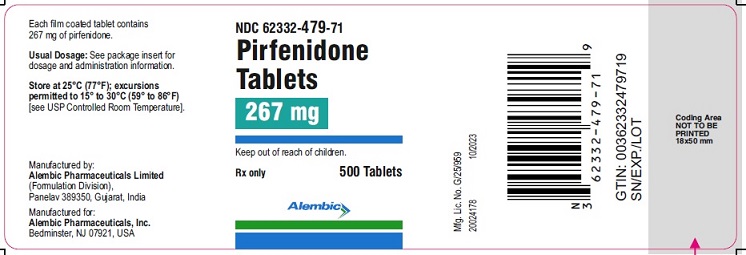
Pirfenidone 267 mg Tablet, Coated, 500-count — NDC 62332-479-71 (Billing 62332-0479-71)
This is a package of 500 tablets of Pirfenidone 267 mg Tablet, Coated from Alembic Pharmaceuticals Inc., marketed since Jun 2022 and currently FDA-listed.
NDC database record
One package, one record: these facts belong to NDC 62332-479-71 alone.
- Record
- FDA NDC Directory package listing · Human prescription drug
- Code segments
- 62332 labeler · 479 product · 71 package
- Package marketed since
- Jun 10, 2022
- Sample package
- No — commercial package
- Listing certified through
- Dec 31, 2026
- Barcode (UPC)
- 0362332479719
- FDA record last changed
- Jul 24, 2026
Identity & classification
Regulatory identifiers FDA, NLM and CMS codes for this package
Drug-database identifiers Medi-Span GPI and First Databank GCN / HICL / AHFS classification
- GSN (GCN sequence number): 077032
- GCN: 42903
- GPI-14 (Medi-Span): 45550060000325
- HICL (First Databank): 040237
- AHFS class code: 48:02.00.00
- RxCUI (RxNorm): 1868014
Where does this data come from?
- FDA openFDA NDC Directory · synced Oct 1, 2026
- FDA label on DailyMed · label index refreshed Oct 5, 2026
- RxNorm (NLM RxNav) · catalog refreshed Oct 1, 2026
- Medi-Span GPI (licensed)
- First Databank (licensed) · refreshed Oct 1, 2026
RxNorm drug class
This medicine belongs to the Pyridone class.
Where does this data come from?
- RxClass (NLM) · catalog refreshed Oct 1, 2026
Clinical
- It treats idiopathic pulmonary fibrosis, or IPF, a lung disease where scarring builds up for no known reason. Esbriet and generic pirfenidone capsules and tablets are all labeled f...
- Take it by mouth three times a day with food, at about the same times each day. You’ll start low and build up over about 14 days. If you miss a dose, don’t double up, and never tak...
- Nausea, rash, stomach pain, diarrhea, tiredness and decreased appetite are common. Stomach effects are usually worst in the first few months and often ease. Tell us if they get bot...
- Yes. Pirfenidone can make your skin sensitive to sunlight. Avoid sun and sunlamps, wear sunscreen and cover up daily. Let your doctor know if you develop a rash.
Patient education
Supplement & herbal interactions
Some supplements/herbs that may interact with Pirfenidone — tap one for details:
Where does this data come from?
- MedlinePlus (NLM) · refreshed Oct 1, 2026
- FDA label on DailyMed · label index refreshed Oct 5, 2026
Ask a licensed pharmacist directly — free, answered by our team.
Pricing
A drug doesn't have one price. Each row is a different public payment system, and none is what you'd pay at the counter — that depends on your insurance. The ⓘ on each row explains what it measures.
| Price system | Per each | Per package |
|---|---|---|
| Retail pharmacies payNADAC · weekly | Not in the retail survey — common for institutional, discontinued, or low-volume packs. | |
| Medicaid paysCMS SDUD · 12 mo | No recent Medicaid claims on file for this NDC — rare and low-volume NDCs are suppressed in the public data. | |
| Medicare drug plans payPart D · Q2 2026 | $24.12 | $12,060.00 / 500 tablets |
Where does this data come from?
- CMS NADAC weekly file
- CMS ASP pricing files · refreshed Sep 20, 2026
- CMS Medicaid State Drug Utilization Data · refreshed Oct 5, 2026
- CMS Part D plan pricing files · refreshed Sep 24, 2026
- VA National Acquisition Center price file
Packaging — all sizes for this product
| Package NDC | Description | Per unit | Per pack | Marketing start | Marketing end | Status |
|---|---|---|---|---|---|---|
| 62332-0479-64 62332-479-64 Main listing | 3 BOTTLE in 1 CARTON / 90 TABLET, COATED in 1 BOTTLE | $0.6855 / ea | $185.08 | 2022-06-10 | — | Active |
| 62332-0479-71 You're viewing this | 500 TABLET, COATED in 1 BOTTLE | — | — | 2022-06-10 | — | Active |
| 62332-0479-27 62332-479-27 | 270 TABLET, COATED in 1 BOTTLE | — | — | 2022-11-22 | — | Active |
Pack size FAQ
What quantity is in this package?
How does this package differ from NDC 62332-0479-27?
What NDC number is used to bill for this package of Pirfenidone 267 mg Tablet, Coated?
Prices are the latest CMS NADAC pharmacy acquisition cost per NDC; per-pack figures are per-unit × pack quantity, shown only when the pack is denominated in the same measure NADAC prices.
Therapeutic equivalents
| Product | Labeler | Pack | NADAC/unit | TE | Status | Price vs. this |
|---|---|---|---|---|---|---|
| Pirfenidone 267 mg 00480-3610-87 | Teva | 270 tablets | $0.685 | AB | Availability likely | — |
| Pirfenidone 267 mg 00781-8085-32 | Sandoz | 270 tablets | $0.685 | AB | Availability likely | — |
| Pirfenidone 267 mg 00904-7397-53 | MAJOR | 90 tablets | $0.685 | AB | Availability likely | — |
| Pirfenidone 267 mg 31722-0872-27 | Camber | 90 tablets | $0.685 | AB | Availability likely | — |
| Pirfenidone 267 mg 42385-0924-99 | Laurus | 90 tablets | $0.685 | AB | Availability likely | — |
| Pirfenidone 267 mg 59651-0238-27 | Aurobindo | 270 tablets | $0.685 | AB | Availability likely | — |
| Pirfenidone 267 mg 60219-1640-08 | Amneal | 90 tablets | $0.685 | AB | Availability likely | — |
| Pirfenidone 267 mg 60505-4681-07 | Apotex | 270 tablets | $0.685 | AB | Availability likely | — |
| Pirfenidone 267 mg 72205-0181-26 | Novadoz | 90 tablets | $0.685 | AB | Availability likely | — |
| Pirfenidone 267 mg 72603-0258-03 | Northstar | 90 tablets | $0.685 | AB | Availability likely | — |
| Pirfenidone 267 mg 76282-0717-27 | EXELAN | 270 tablets | $0.685 | AB | Availability likely | — |
| Pirfenidone 267 mg 16729-0467-85 | Accord | 90 tablets | — | AB | FDA listed | — |
| Pirfenidone 267 mg 42291-0491-27 | AvKARE | 90 tablets | — | AB | FDA listed | — |
| Pirfenidone 267 mg 42571-0335-90 | Micro | 90 tablets | — | AB | FDA listed | — |
| Pirfenidone 267 mg 46708-0479-27 | Alembic | 270 tablets | — | AB | FDA listed | — |
| Pirfenidone 267 mg 50228-0442-10 | ScieGen | 1000 tablets | — | AB | FDA listed | — |
| Esbriet 267 mg 50242-0122-06 | Genentech, | 270 tablets | — | AB | FDA listed | — |
| Pirfenidone 267 mg 51407-0913-27 | Golden | 270 tablets | — | AB | FDA listed | — |
| Pirfenidone 267 mgthis 62332-0479-71 | Alembic | 500 tablets | — | AB | FDA listed | — |
| Pirfenidone 267 mg 69097-0987-05 | Cipla | 90 tablets | — | AB | FDA listed | — |
| Pirfenidone 267 mg 69238-1640-08 | Amneal | 90 tablets | — | AB | FDA listed | — |
| Pirfenidone 267 mg 70954-0869-10 | ANI | 90 tablets | — | AB | FDA listed | — |
| Pirfenidone 267 mg 71335-2944-01 | Bryant | 90 tablets | — | AB | FDA listed | — |
| Pirfenidone 267 mg 72162-2465-02 | Bryant | 90 tablets | — | AB | FDA listed | — |
| Esbriet 267 mg 83107-0028-27 | Legacy | 270 tablets | — | AB | FDA listed | — |
Where does this data come from?
- FDA openFDA NDC Directory · synced Oct 1, 2026
- FDA Orange Book · refreshed Oct 3, 2026
- CMS NADAC weekly file
Availability & generic status
This product is an FDA-approved generic. Other versions of the same drug are listed under Therapeutic equivalents, least expensive first.
Where does this data come from?
- FDA Orange Book · refreshed Oct 3, 2026
What it looks like
Where does this data come from?
- FDA label on DailyMed · label index refreshed Oct 5, 2026
Inactive Ingredients / Excipients
Inactive ingredients, also called excipients, are components of the drug product other than the active ingredient. They may include fillers, dyes, coatings, preservatives, flavors, or other formulation ingredients.
🧪 Avoiding an ingredient? See Pirfenidone inactive ingredients by manufacturer: every current product's list side by side, so you can ask your pharmacy for the version that does not list it.
💡 Tap an ingredient (hover on desktop) to see what it is and why it’s used.
-
UNII M28OL1HH48
Croscarmellose sodium is a plant-based substance derived from cellulose. It acts as a disintegrant, helping tablets and capsules break down quickly in the digestive system so the medicine can be absorbed.
-
UNII EX438O2MRT
Ferric oxide yellow is a naturally occurring iron compound used as a colorant in medications. It gives tablets, capsules, and other forms a yellow or golden hue for identification and appearance.
-
UNII 70097M6I30
Magnesium stearate is a salt made from magnesium and stearic acid, a fatty substance. It's used in tablets and capsules as a lubricant and glidant to help ingredients flow smoothly during manufacturing and prevent sticking.
-
UNII OP1R32D61U
Microcrystalline cellulose is a purified form of cellulose, a natural fiber from plant sources. It acts as a binder and filler in tablets and capsules, helping hold ingredients together and give the medicine its shape and size.
-
UNII G2M7P15E5P
Polyethylene glycol 3350 is a synthetic polymer used as a solvent, humectant, and thickening agent in medicines. It helps dissolve other ingredients, retain moisture in the product, and achieve the desired consistency.
-
UNII 532B59J990
Polyvinyl alcohol is a synthetic polymer made from plant-derived materials. It's used as a binder to hold ingredients together, a film-former in coatings, and a thickener in liquid formulations.
-
UNII U725QWY32X
Povidone K30 is a synthetic polymer made from petroleum. It acts as a binder to hold tablet ingredients together and as a disintegrant to help the tablet break apart in the stomach so the medicine can be absorbed.
-
UNII ETJ7Z6XBU4
Silicon dioxide is a naturally occurring mineral used as a glidant and anti-caking agent. It helps powder ingredients flow smoothly and prevents clumping during manufacturing and storage.
-
UNII 7SEV7J4R1U
A powder made from a naturally occurring mineral. In medicines, talc works as a glidant and anti-caking agent, helping tablets and capsules flow smoothly during manufacturing and preventing clumping.
-
UNII 15FIX9V2JP
Titanium dioxide is a bright white mineral powder commonly used as a colorant and opacifying agent. It makes pills and tablets white or lighter in color and helps make coatings non-transparent.
10 inactive ingredients listed in the exact product block matched to this NDC.
Where does this data come from?
ingredient classCode="IACT" elements from the exact product block matched by this NDC. Label-section narrative from DailyMed / the openFDA label index is shown separately when available.- FDA label on DailyMed · label index refreshed Oct 5, 2026
- FDA openFDA NDC Directory · synced Oct 1, 2026
Inactive ingredient FAQ
Are inactive ingredients the same for every manufacturer?
Why might an inactive ingredient be missing?
Can inactive ingredients matter?
Manufacturer & labeler
More NDCs from Alembic Pharmaceuticals Inc. labeler code 62332
- CLOBETASOL PROPIONATE .05 g/mL Spray NDC 62332-425-12
- Zolmitriptan 2.5 mg Tablet, Film Coated NDC 62332-462-06
- Zolmitriptan 5 mg Tablet, Film Coated NDC 62332-463-03
- Clobetasol Propionate .5 mg/g Ointment NDC 62332-465-15
- Tavaborole 43.5 mg/mL Solution NDC 62332-467-04
- Entacapone 200 mg Tablet, Film Coated NDC 62332-478-31
- Pirfenidone 801 mg Tablet, Coated NDC 62332-480-71
- Doxycycline Hyclate 75 mg Tablet, Delayed Release NDC 62332-481-31
- Doxycycline Hyclate 100 mg Tablet, Delayed Release NDC 62332-482-31
- Doxycycline Hyclate 150 mg Tablet, Delayed Release NDC 62332-483-30
- Doxycycline Hyclate 200 mg Tablet, Delayed Release NDC 62332-484-30
- Desonide .5 mg/g Ointment NDC 62332-485-15
Where does this data come from?
- FDA openFDA NDC Directory · synced Oct 1, 2026
- Drugs@FDA
Full prescribing information FDA SPL
🎯 Indications and Usage ▾
1 INDICATIONS AND USAGE Pirfenidone tablets are indicated for the treatment of idiopathic pulmonary fibrosis (IPF). Pirfenidone is a pyridone indicated for the treatment of idiopathic pulmonary fibrosis (IPF). (1)
⏱️ Dosage and Administration ▾
2 DOSAGE AND ADMINISTRATION • Take with food. • Recommended dosage: 801 mg three times daily (2403 mg/day). (2) • Upon initiation of treatment, titrate to the full dosage of 2403 mg/day over a 14-day period as follows: Treatment days Dosage Days 1 through 7 267 mg three times daily (801 mg/day) Days 8 through 14 534 mg three times daily (1602 mg/day) Days 15 onward 801 mg three times daily (2403 mg/day) • Consider temporary dosage reduction, treatment interruption, or discontinuation for management of adverse reactions.
(2.3, 5.1, 5.2, 5.3, 5.4) • Prior to treatment, conduct liver function tests. (2.1)
2.1Testing Prior to Pirfenidone Tablets Administration Conduct liver function tests prior to initiating treatment with pirfenidone tablets [see Warnings and Precautions (5.1)].
2.2Recommended Dosage The recommended daily maintenance dosage of pirfenidone tablet is 801 mg three times daily for a total of 2403 mg/day. Doses should be taken with food at the same time each day. Upon initiation of treatment, titrate to the full dosage of 2403 mg/day over a 14-day period as follows: Table 1.
Dosage Titration for Pirfenidone Tablets in Patients with IPF Treatment days Dosage Days 1 through 7 267 mg three times daily (801 mg/day) Days 8 through 14 534 mg three times daily (1602 mg/day) Days 15 onward 801 mg three times daily (2403 mg/day) Dosages above 2403 mg/day are not recommended for any patient. Patients should not take 2 doses at the same time to make up for a missed dose. Patients should not take more than 3 doses per day.
2.3Dosage Modifications due to Adverse Reactions Patients who miss 14 or more days of pirfenidone tablets should re-initiate treatment by undergoing the initial 2-week titration regimen up to the full maintenance dosage [see Dosage and Administration (2.2)]. For treatment interruption of less than 14 days, the dosage prior to the interruption can be resumed. If patients experience significant adverse reactions (i.e., gastrointestinal, photosensitivity reaction or rash, severe cutaneous adverse reactions (SCAR)), consider temporary dosage reductions or interruptions of pirfenidone tablets to allow for resolution of symptoms.
If a SCAR is confirmed, permanently discontinue pirfenidone tablets [see Warnings and Precautions (5.1, 5.2, 5.3, 5.4)]. Dosage Modification due to Elevated Liver Enzymes Dosage modifications or interruptions may also be necessary when liver enzyme and bilirubin elevations are exhibited. For liver enzyme elevations, modify the dosage as follows: If a patient exhibits >3 but ≤5 × the upper limit of normal (ULN) ALT and/or AST without symptoms or hyperbilirubinemia after starting pirfenidone tablets therapy: Discontinue confounding medications, exclude other causes, and monitor the patient closely.
Repeat liver chemistry tests as clinically indicated. The full daily dosage may be maintained, if clinically appropriate, or reduced or interrupted (e.g., until liver chemistry tests are within normal limits) with subsequent re-titration to the full dosage as tolerated. If a patient exhibits >3 but ≤5 × ULN ALT and/or AST accompanied by symptoms or hyperbilirubinemia: Permanently discontinue pirfenidone tablets.
Do not rechallenge patient with pirfenidone tablets. If a patient exhibits >5 × ULN ALT and/or AST: Permanently discontinue pirfenidone tablets. Do not rechallenge patient with pirfenidone tablets.
2.4Dosage Modifications due to Drug Interactions Strong CYP1A2 Inhibitors (e.g., fluvoxamine, enoxacin) Reduce pirfenidone tablets to 267 mg three times a day (801 mg/day). Moderate CYP1A2 Inhibitors (e.g., ciprofloxacin) With use of ciprofloxacin at a dosage of 750 mg twice daily, reduce pirfenidone tablets to 534 mg three times a day (1602 mg/day).
💊 Dosage Forms and Strengths ▾
3 DOSAGE FORMS AND STRENGTHS Pirfenidone tablets are available as: 267 mg, yellow, oval, biconvex, film coated tablet, debossed with “L” on one side and “749” on other side. 801 mg, brown, oval, biconvex, film coated tablet, debossed with “L” on one side and “750” on other side. • Tablets: 267 mg, 801 mg (3)
⛔ Contraindications ▾
4 CONTRAINDICATIONS None. None
⚠️ Warnings and Cautions ▾
5 WARNINGS AND PRECAUTIONS • Elevated liver enzymes and drug-induced liver injury: ALT, AST, and bilirubin elevations have occurred with pirfenidone including cases of drug-induced liver injury. In the postmarketing setting, non-serious and serious cases of drug-induced liver injury, including severe liver injury with fatal outcomes, have been reported. Monitor ALT, AST, and bilirubin before and during treatment.
Temporary dosage reductions or discontinuations may be required. (2.1, 5.1) • Photosensitivity and rash: Photosensitivity and rash have been noted with pirfenidone. Avoid exposure to sunlight and sunlamps.
Wear sunscreen and protective clothing daily. Temporary dosage reductions or discontinuations may be required. (5.2) • Severe Cutaneous Adverse Reactions (SCAR): Stevens-Johnson syndrome (SJS), toxic epidermal necrolysis (TEN), and drug reactions with eosinophilia and systemic symptoms (DRESS) have been reported in association with the use of pirfenidone in the postmarketing setting.
Interrupt pirfenidone in case of signs or symptoms of SCAR. Permanently discontinue pirfenidone if a SCAR is confirmed. (5.3) • Gastrointestinal disorders: Nausea, vomiting, diarrhea, dyspepsia, gastro-esophageal reflux disease, and abdominal pain have occurred with pirfenidone.
Temporary dosage reductions or discontinuations may be required. (5.4)
5.1Elevated Liver Enzymes and Drug-Induced Liver Injury Cases of drug-induced liver injury (DILI) have been observed with pirfenidone. In the postmarketing period, non-serious and serious cases of DILI, including severe liver injury with fatal outcome, have been reported. Patients treated with pirfenidone 2403 mg/day in three Phase 3 trials had a higher incidence of elevations in ALT or AST ≥3x ULN than placebo patients (3.7% vs 0.8%, respectively).
Elevations ≥10xULN in ALT or AST occurred in 0.3% of patients in the pirfenidone 2403 mg/day group and in 0.2% of patients in the placebo group. Increases in ALT and AST ≥3x ULN were reversible with dose modification or treatment discontinuation. Conduct liver function tests (ALT, AST, and bilirubin) prior to the initiation of therapy with pirfenidone, monthly for the first 6 months, every 3 months thereafter, and as clinically indicated.
Measure liver function tests promptly in patients who report symptoms that may indicate liver injury, including fatigue, anorexia, right upper abdominal discomfort, dark urine, or jaundice. Dosage modification or interruption may be necessary for liver enzyme elevations [see Dosage and Administration (2.1, 2.3)].
5.2Photosensitivity Reaction or Rash Patients treated with pirfenidone 2403 mg/day in the three Phase 3 studies had a higher incidence of photosensitivity reactions (9%) compared with patients treated with placebo (1%). The majority of the photosensitivity reactions occurred during the initial 6 months. Instruct patients to avoid or minimize exposure to sunlight (including sunlamps), to use a sunblock (SPF 50 or higher), and to wear clothing that protects against sun exposure.
Additionally, instruct patients to avoid concomitant medications known to cause photosensitivity. Dosage reduction or discontinuation may be necessary in some cases of photosensitivity reaction or rash [see Dosage and Administration (2.3)] .
5.3Severe Cutaneous Adverse Reactions Severe cutaneous adverse reactions (SCAR), including Stevens-Johnson syndrome (SJS), toxic epidermal necrolysis (TEN), and drug reaction with eosinophilia and systemic symptoms (DRESS), have been reported in association with the use of pirfenidone in the postmarketing setting. If signs or symptoms of SCAR occur, interrupt pirfenidone treatment until the etiology of the reaction has been determined. Consultation with a dermatologist is recommended.
If a SCAR is confirmed, permanently discontinue pirfenidone.
5.4Gastrointestinal Disorders In the clinical studies, gastrointestinal events of nausea, diarrhea, dyspepsia, vomiting, gastro-esophageal reflux di… [Excerpted — this section continues on DailyMed.]
🤒 Adverse Reactions ▾
6 ADVERSE REACTIONS The following adverse reactions are discussed in greater detail in other sections of the labeling: • Liver Enzyme Elevations and Drug-Induced Liver Injury [see Warnings and Precautions (5.1)] • Photosensitivity Reaction or Rash [see Warnings and Precautions (5.2)] • Severe Cutaneous Adverse Reactions [see Warnings and Precautions (5.3)] • Gastrointestinal Disorders [see Warnings and Precautions (5.4)] The most common adverse reactions (≥10%) are nausea, rash, abdominal pain, upper respiratory tract infection, diarrhea, fatigue, headache, decreased appetite, dyspepsia, dizziness, vomiting, gastro-esophageal reflux disease, sinusitis, insomnia, weight decreased, and arthralgia.
(6.1) To report SUSPECTED ADVERSE REACTIONS, contact Alembic Pharmaceuticals Limited at 1-866-210-9797 or FDA at 1-800-FDA-1088 or www.fda.gov/medwatch .
6.1Clinical Trials Experience Because clinical trials are conducted under widely varying conditions, adverse reaction rates observed in the clinical trials of a drug cannot be directly compared to rates in the clinical trials of another drug and may not reflect the rates observed in practice. The safety of pirfenidone has been evaluated in more than 1400 subjects with over 170 subjects exposed to pirfenidone for more than 5 years in clinical trials. Pirfenidone was studied in 3 randomized, double-blind, placebo-controlled trials (Studies 1, 2, and 3) in which a total of 623 patients received 2403 mg/day of pirfenidone and 624 patients received placebo.
Subjects ages ranged from 40 to 80 years (mean age of 67 years). Most patients were male (74%) and Caucasian (95%). The mean duration of exposure to pirfenidone was 62 weeks (range: 2 to 118 weeks) in these 3 trials.
At the recommended dosage of 2403 mg/day, 14.6% of patients on pirfenidone compared to 9.6% on placebo permanently discontinued treatment because of an adverse event. The most common (>1%) adverse reactions leading to discontinuation were rash and nausea. The most common (>3%) adverse reactions leading to dosage reduction or interruption were rash, nausea, diarrhea, and photosensitivity reaction.
The most common adverse reactions with an incidence of ≥10% and more frequent in the pirfenidone than placebo treatment group are listed in Table 2. Table 2. Adverse Reactions Occurring in ≥10% of Pirfenidone-Treated Patients and More Commonly Than Placebo in Studies 1, 2, and 3 Adverse Reaction % of Patients (0 to 118 Weeks) Pirfenidone 2403 mg/day (N = 623) Placebo (N = 624) Nausea 36% 16% Rash 30% 10% Abdominal Pain 1 24% 15% Upper Respiratory Tract Infection 27% 25% Diarrhea 26% 20% Fatigue 26% 19% Headache 22% 19% Decreased Appetite 21% 8% Dyspepsia 19% 7% Dizziness 18% 11% Vomiting 13% 6% Gastro-esophageal Reflux Disease 11% 7% Sinusitis 11% 10% Insomnia 10% 7% Weight Decreased 10% 5% Arthralgia 10% 7% 1 Includes abdominal pain, upper abdominal pain, abdominal distension, and stomach discomfort.
Adverse reactions occurring in ≥5 to <10% of pirfenidone-treated patients and more commonly than placebo are photosensitivity reaction (9% vs. 1%), pruritus (8% vs. 5%), asthenia (6% vs.
4%), dysgeusia (6% vs. 2%), and non-cardiac chest pain (5% vs. 4%).
6.2Postmarketing Experience In addition to adverse reactions identified from clinical trials the following adverse reactions have been identified during post-approval use of pirfenidone. Because these reactions are reported voluntarily from a population of uncertain size, it is not always possible to reliably estimate their frequency. Blood and Lymphatic System Disorders: Agranulocytosis Hepatobiliary Disorders: Drug-induced liver injury Immune System Disorders: Angioedema Skin and Subcutaneous Tissue Disorders: Severe Cutaneous Adverse Reactions (SCAR)
🔄 Drug Interactions ▾
7 DRUG INTERACTIONS Moderate (e.g., ciprofloxacin) and strong inhibitors of CYP1A2 (e.g., fluvoxamine) increase systemic exposure of pirfenidone and may alter the adverse reaction profile of pirfenidone. Discontinue fluvoxamine prior to administration of pirfenidone or reduce to 267 mg three times a day. Consider dosage reduction with use of ciprofloxacin. (7.1)
7.1CYP1A2 Inhibitors Pirfenidone is metabolized primarily (70 to 80%) via CYP1A2 with minor contributions from other CYP isoenzymes including CYP2C9, 2C19, 2D6 and 2E1. Strong CYP1A2 Inhibitors The concomitant administration of pirfenidone and fluvoxamine or other strong CYP1A2 inhibitors (e.g., enoxacin) is not recommended because it significantly increases exposure to pirfenidone [see Clinical Pharmacology (12.3)]. Use of fluvoxamine or other strong CYP1A2 inhibitors should be discontinued prior to administration of pirfenidone and avoided during pirfenidone treatment.
In the event that fluvoxamine or other strong CYP1A2 inhibitors are the only drug of choice, dosage reductions are recommended. Monitor for adverse reactions and consider discontinuation of pirfenidone as needed [ see Dosage and Administration (2.4)] . Moderate CYP1A2 Inhibitors Concomitant administration of pirfenidone and ciprofloxacin (a moderate inhibitor of CYP1A2) moderately increases exposure to pirfenidone [see Clinical Pharmacology (12.3)] .
If ciprofloxacin at the dosage of 750 mg twice daily cannot be avoided, dosage reductions are recommended [see Dosage and Administration (2.4)]. Monitor patients closely when ciprofloxacin is used at a dosage of 250 mg or 500 mg once daily. Concomitant CYP1A2 and other CYP Inhibitors Agents or combinations of agents that are moderate or strong inhibitors of both CYP1A2 and one or more other CYP isoenzymes involved in the metabolism of pirfenidone (i.e., CYP2C9, 2C19, 2D6, and 2E1) should be discontinued prior to and avoided during pirfenidone treatment.
7.2CYP1A2 Inducers The concomitant use of pirfenidone and a CYP1A2 inducer may decrease the exposure of pirfenidone and this may lead to loss of efficacy. Therefore, discontinue use of strong CYP1A2 inducers prior to pirfenidone treatment and avoid the concomitant use of pirfenidone and a strong CYP1A2 inducer [see Clinical Pharmacology (12.3)] .
👥 Use in Specific Populations ▾
8 USE IN SPECIFIC POPULATIONS • Hepatic Impairment: Monitor for adverse reactions and consider dosage modification or discontinuation of pirfenidone as needed. Pirfenidone is not recommended for use in patients with severe hepatic impairment. (8.6, 12.3) • Renal Impairment: Monitor for adverse reactions and consider dosage modification or discontinuation of pirfenidone as needed.
Pirfenidone is not recommended for use in patients with end stage renal disease on dialysis. (8.7, 12.3) • Smokers: Decreased exposure has been noted in smokers which may alter the efficacy profile of pirfenidone. (8.8)
8.1Pregnancy Risk Summary The data with pirfenidone use in pregnant women are insufficient to inform on drug associated risks for major birth defects and miscarriage. In animal reproduction studies, pirfenidone was not teratogenic in rats and rabbits at oral doses up to 3 and 2 times, respectively, the maximum recommended daily dose (MRDD) in adults [see Data] . In the U.S. general population, the estimated background risk of major birth defects and miscarriage in clinically recognized pregnancies is 2 to 4% and 15 to 20%, respectively.
Data Animal Data Animal reproductive studies were conducted in rats and rabbits. In a combined fertility and embryofetal development study, female rats received pirfenidone at oral doses of 0, 50, 150, 450, and 1000 mg/kg/day from 2 weeks prior to mating, during the mating phase, and throughout the periods of early embryonic development from gestation days (GD) 0 to 5 and organogenesis from GD 6 to 17. In an embryofetal development study, pregnant rabbits received pirfenidone at oral doses of 0, 30, 100, and 300 mg/kg/day throughout the period of organogenesis from GD 6 to 18.
In these studies, pirfenidone at doses up to 3 and 2 times, respectively, the maximum recommended daily dose (MRDD) in adults (on mg/m 2 basis at maternal oral doses up to 1000 mg/kg/day in rats and 300 mg/kg/day in rabbits, respectively) revealed no evidence of impaired fertility or harm to the fetus due to pirfenidone. In the presence of maternal toxicity, acyclic/irregular cycles (e.g., prolonged estrous cycle) were seen in rats at doses approximately equal to and higher than the MRDD in adults (on a mg/m 2 basis at maternal doses of 450 mg/kg/day and higher).
In a pre- and post-natal development study, female rats received pirfenidone at oral doses of 0, 100, 300, and 1000 mg/kg/day from GD 7 to lactation day 20. Prolongation of the gestation period, decreased numbers of live newborn, and reduced pup viability and body weights were seen in rats at an oral dosage approximately 3 times the MRDD in adults (on a mg/m 2 basis at a maternal oral dose of 1000 mg/kg/day).
8.2Lactation Risk Summary No information is available on the presence of pirfenidone in human milk, the effects of the drug on the breastfed infant, or the effects of the drug on milk production. The lack of clinical data during lactation precludes clear determination of the risk of pirfenidone to an infant during lactation; therefore, the developmental and health benefits of breastfeeding should be considered along with the mother’s clinical need for pirfenidone and the potential adverse effects on the breastfed child from pirfenidone or from the underlying maternal condition.
Data Animal Data: A study with radio-labeled pirfenidone in rats has shown that pirfenidone or its metabolites are excreted in milk. There are no data on the presence of pirfenidone or its metabolites in human milk, the effects of pirfenidone on the breastfed child, or its effects on milk production.
8.4Pediatric Use Safety and effectiveness of pirfenidone in pediatric patients have not been established.
8.5Geriatric Use Of the total number of subjects in the clinical studies receiving pirfenidone, 714 (67%) were 65 years old and over, while 231 (22%) were 75 years old and over. No overall differences in safety or effectiveness were observed between older and younger patients. No dosage ad… [Excerpted — this section continues on DailyMed.]
🤰 Pregnancy ▾
8.1Pregnancy Risk Summary The data with pirfenidone use in pregnant women are insufficient to inform on drug associated risks for major birth defects and miscarriage. In animal reproduction studies, pirfenidone was not teratogenic in rats and rabbits at oral doses up to 3 and 2 times, respectively, the maximum recommended daily dose (MRDD) in adults [see Data] . In the U.S. general population, the estimated background risk of major birth defects and miscarriage in clinically recognized pregnancies is 2 to 4% and 15 to 20%, respectively.
Data Animal Data Animal reproductive studies were conducted in rats and rabbits. In a combined fertility and embryofetal development study, female rats received pirfenidone at oral doses of 0, 50, 150, 450, and 1000 mg/kg/day from 2 weeks prior to mating, during the mating phase, and throughout the periods of early embryonic development from gestation days (GD) 0 to 5 and organogenesis from GD 6 to 17. In an embryofetal development study, pregnant rabbits received pirfenidone at oral doses of 0, 30, 100, and 300 mg/kg/day throughout the period of organogenesis from GD 6 to 18.
In these studies, pirfenidone at doses up to 3 and 2 times, respectively, the maximum recommended daily dose (MRDD) in adults (on mg/m 2 basis at maternal oral doses up to 1000 mg/kg/day in rats and 300 mg/kg/day in rabbits, respectively) revealed no evidence of impaired fertility or harm to the fetus due to pirfenidone. In the presence of maternal toxicity, acyclic/irregular cycles (e.g., prolonged estrous cycle) were seen in rats at doses approximately equal to and higher than the MRDD in adults (on a mg/m 2 basis at maternal doses of 450 mg/kg/day and higher).
In a pre- and post-natal development study, female rats received pirfenidone at oral doses of 0, 100, 300, and 1000 mg/kg/day from GD 7 to lactation day 20. Prolongation of the gestation period, decreased numbers of live newborn, and reduced pup viability and body weights were seen in rats at an oral dosage approximately 3 times the MRDD in adults (on a mg/m 2 basis at a maternal oral dose of 1000 mg/kg/day).
🧒 Pediatric Use ▾
8.4Pediatric Use Safety and effectiveness of pirfenidone in pediatric patients have not been established.
🧓 Geriatric Use ▾
8.5Geriatric Use Of the total number of subjects in the clinical studies receiving pirfenidone, 714 (67%) were 65 years old and over, while 231 (22%) were 75 years old and over. No overall differences in safety or effectiveness were observed between older and younger patients. No dosage adjustment is required based upon age.
🆘 Overdosage ▾
10 OVERDOSAGE There is limited clinical experience with overdosage. Multiple dosages of pirfenidone up to a maximum tolerated dose of 4005 mg per day were administered as five 267 mg capsules three times daily to healthy adult volunteers over a 12-day dose escalation. In the event of a suspected overdosage, appropriate supportive medical care should be provided, including monitoring of vital signs and observation of the clinical status of the patient.
🧬 Clinical Pharmacology ▾
12 CLINICAL PHARMACOLOGY
12.1Mechanism of Action The mechanism of action of pirfenidone in the treatment of IPF has not been established.
12.2Pharmacodynamics Cardiac Electrophysiology: The effect of pirfenidone on QT interval was evaluated in a randomized, placebo, and positive controlled parallel study in 160 healthy adult volunteers. Volunteers received pirfenidone 2403 mg/day (recommended dose) and 4005 mg/day (1.6 times recommended dose) or placebo for 10 days or a single dose of 400 mg moxifloxacin (active control). Relative to placebo, the maximum mean change from baseline in study-specific QT interval was 3.2 milliseconds (ms) and 2.2 ms for pirfenidone 2403 mg/day and 4005 mg/day, respectively.
No volunteer had a QTc interval greater than 480 ms or change from baseline greater than 60 ms. Although there was no evidence that pirfenidone prolonged the QTc interval in this study, a definitive conclusion may not be drawn as the positive control (moxifloxacin) did not perform as expected in this study, and pirfenidone at 4005 mg/day (1.7 times the maximum recommended dose) did not cover the maximum pirfenidone exposure increase with co-administration of fluvoxamine, a strong CYP1A2 inhibitor.
12.3Pharmacokinetics Absorption: After single oral-dose administration of 801 mg pirfenidone (three 267 mg capsules), the maximum observed plasma concentration (C max ) was achieved between 30 minutes and 4 hours (median time of 0.5 hours). Food decreased the rate and extent of absorption. Median T max increased from 0.5 hours to 3 hours with food.
Maximum plasma concentrations (C max ) and AUC 0-inf decreased by approximately 49% and 16% with food, respectively. Bioequivalence was demonstrated in the fasted state when comparing the 801 mg tablet to three 267 mg capsules. The effect of food on pirfenidone exposure was consistent between the tablet and capsule formulations.
A reduced incidence of adverse reactions was observed in the fed group when compared to the fasted group. In controlled studies with IPF patients, pirfenidone was taken with food [see Dosage and Administration (2) and Clinical Studies (14)]. The absolute bioavailability of pirfenidone has not been determined in humans.
Distribution: Pirfenidone binds to human plasma proteins, primarily to serum albumin, in a concentration-independent manner over the range of concentrations observed in clinical trials. The overall mean binding was 58% at concentrations observed in clinical studies (1 to 10 μg/mL). Mean apparent oral volume of distribution is approximately 59 to 71 liters.
Metabolism: In vitro profiling studies in hepatocytes and liver microsomes have shown that pirfenidone is primarily metabolized in the liver by CYP1A2 and multiple other CYPs (CYP2C9, 2C19, 2D6, and 2E1). Oral administration of pirfenidone results in the formation of four metabolites. In humans, only pirfenidone and 5-carboxy-pirfenidone are present in plasma in significant quantities.
The mean metabolite-to-parent ratio ranged from approximately 0.6 to 0.7. No formal radiolabeled studies have assessed the metabolism of pirfenidone in humans. In vitro data suggests that metabolites are not expected to be pharmacologically active at observed metabolite concentrations.
Elimination: The mean terminal half-life is approximately 3 hours in healthy subjects. Pirfenidone is excreted predominantly as metabolite 5-carboxy-pirfenidone, mainly in the urine (approximately 80% of the dose). The majority of pirfenidone was excreted as the 5-carboxy metabolite (approximately 99.6% of that recovered).
Specific Populations: Hepatic Impairment The pharmacokinetics of pirfenidone and the 5-carboxy-pirfenidone metabolite were studied in 12 subjects with moderate hepatic impairment (Child Pugh Class B) and in 12 subjects with normal hepatic function. Results showed that the mean exposure, AUC 0-inf and C max of pirfenidone increased approximately 1.6- and approximately 1.4-fold in subjects with moderate hepatic impai… [Excerpted — this section continues on DailyMed.]
🧬 Mechanism of Action ▾
12.1Mechanism of Action The mechanism of action of pirfenidone in the treatment of IPF has not been established.
📦 How Supplied / Storage and Handling ▾
16 HOW SUPPLIED/STORAGE AND HANDLING Pirfenidone tablets are available in 267 mg and 801 mg strengths and are supplied in bottles as follows: 267 mg tablets: Yellow, oval, biconvex, film coated tablet, debossed with “L” on one side and “749” on other side. NDC 62332-479-64 Carton containing 3 bottles, each containing ninety 267 mg tablets (270 tablets total) NDC 62332-479-27 Bottle containing two hundred and seventy 267 mg tablets NDC 62332-479-71 Bottle containing five hundred 267 mg tablets 801 mg tablets: Brown, oval, biconvex, film coated tablet, debossed with “L” on one side and “750” on other side.
NDC 62332-480-90 Bottle containing ninety 801 mg tablets NDC 62332-480-71 Bottle containing five hundred 801 mg tablets Store at 25°C (77°F); excursions permitted to 15° to 30°C (59° to 86°F) [see USP Controlled Room Temperature]. Keep the bottle tightly closed. Do not use if the seal over the bottle opening is broken or missing.
Safely throw away any pirfenidone tablets that are out of date or no longer needed.
📋 Description ▾
11 DESCRIPTION Pirfenidone belongs to the chemical class of pyridone. Pirfenidone tablets are available as film-coated tablets containing 267 mg (yellow) and 801 mg (brown) pirfenidone. Pirfenidone has a molecular formula of C 12 H 11 NO and a molecular weight of 185.22.
Pirfenidone has the following structural formula, which has been referred to as 5-methyl-1-phenyl-2-1(H)-pyridone or 5-methyl-1-phenyl-2-(1H)-pyridone. Pirfenidone is a white or pale yellow crystalline, non-hygroscopic powder. It is sparingly soluble in water, freely soluble in ethanol (96 percent), slightly soluble in heptane.
The melting point is approximately 109°C. Pirfenidone tablets contain pirfenidone and the following inactive ingredients: microcrystalline cellulose, povidone,croscarmellose sodium,colloidal silicon dioxide, and magnesium stearate. In addition, the film coating contains the following inactive ingredients: polyvinyl alcohol, titanium dioxide, polyethylene glycol, talc, iron oxide yellow ( 267 mg ) and ferrosoferric oxide ( 801 mg ), iron oxide red ( 801 mg ). pirfenidone
💬 Information for Patients ▾
17 PATIENT COUNSELING INFORMATION Advise the patient to read the FDA-approved patient labeling (Patient Information). Liver Enzyme Elevations Advise patients that they may be required to undergo liver function testing periodically. Instruct patients to immediately report any symptoms of a liver problem (e.g., skin or the white of eyes turn yellow, urine turns dark or brown [tea colored], pain on the right side of stomach, bleed or bruise more easily than normal, lethargy) [see Warnings and Precautions (5.1)] .
Photosensitivity Reaction or Rash Advise patients to avoid or minimize exposure to sunlight (including sunlamps) during use of pirfenidone because of concern for photosensitivity reactions or rash. Instruct patients to use a sunblock and to wear clothing that protects against sun exposure. Instruct patients to report symptoms of photosensitivity reaction or rash to their physician.
Temporary dosage reductions or discontinuations may be required [see Warnings and Precautions (5.2)] . Severe Cutaneous Adverse Reactions Advise patients about signs and symptoms of severe cutaneous adverse reactions (SCAR). Advise patients to contact their healthcare provider immediately if they experience signs and symptoms of SCAR [see Warnings and Precautions (5.3)].
Gastrointestinal Events Instruct patients to report symptoms of persistent gastrointestinal effects including nausea, diarrhea, dyspepsia, vomiting, gastro-esophageal reflux disease, and abdominal pain. Temporary dosage reductions or discontinuations may be required [see Warnings and Precautions (5.4)]. Smokers Encourage patients to stop smoking prior to treatment with pirfenidone and to avoid smoking when using pirfenidone [see Clinical Pharmacology (12.3)] .
Take with Food Instruct patients to take pirfenidone with food to help decrease nausea and dizziness. Manufactured by: Alembic Pharmaceuticals Limited (Formulation Division), Panelav 389350, Gujarat, India Manufactured for: Alembic Pharmaceuticals, Inc. Bedminster, NJ 07921, USA Revised: 03/2023
🧬 Pharmacokinetics ▾
12.3Pharmacokinetics Absorption: After single oral-dose administration of 801 mg pirfenidone (three 267 mg capsules), the maximum observed plasma concentration (C max ) was achieved between 30 minutes and 4 hours (median time of 0.5 hours). Food decreased the rate and extent of absorption. Median T max increased from 0.5 hours to 3 hours with food.
Maximum plasma concentrations (C max ) and AUC 0-inf decreased by approximately 49% and 16% with food, respectively. Bioequivalence was demonstrated in the fasted state when comparing the 801 mg tablet to three 267 mg capsules. The effect of food on pirfenidone exposure was consistent between the tablet and capsule formulations.
A reduced incidence of adverse reactions was observed in the fed group when compared to the fasted group. In controlled studies with IPF patients, pirfenidone was taken with food [see Dosage and Administration (2) and Clinical Studies (14)]. The absolute bioavailability of pirfenidone has not been determined in humans.
Distribution: Pirfenidone binds to human plasma proteins, primarily to serum albumin, in a concentration-independent manner over the range of concentrations observed in clinical trials. The overall mean binding was 58% at concentrations observed in clinical studies (1 to 10 μg/mL). Mean apparent oral volume of distribution is approximately 59 to 71 liters.
Metabolism: In vitro profiling studies in hepatocytes and liver microsomes have shown that pirfenidone is primarily metabolized in the liver by CYP1A2 and multiple other CYPs (CYP2C9, 2C19, 2D6, and 2E1). Oral administration of pirfenidone results in the formation of four metabolites. In humans, only pirfenidone and 5-carboxy-pirfenidone are present in plasma in significant quantities.
The mean metabolite-to-parent ratio ranged from approximately 0.6 to 0.7. No formal radiolabeled studies have assessed the metabolism of pirfenidone in humans. In vitro data suggests that metabolites are not expected to be pharmacologically active at observed metabolite concentrations.
Elimination: The mean terminal half-life is approximately 3 hours in healthy subjects. Pirfenidone is excreted predominantly as metabolite 5-carboxy-pirfenidone, mainly in the urine (approximately 80% of the dose). The majority of pirfenidone was excreted as the 5-carboxy metabolite (approximately 99.6% of that recovered).
Specific Populations: Hepatic Impairment The pharmacokinetics of pirfenidone and the 5-carboxy-pirfenidone metabolite were studied in 12 subjects with moderate hepatic impairment (Child Pugh Class B) and in 12 subjects with normal hepatic function. Results showed that the mean exposure, AUC 0-inf and C max of pirfenidone increased approximately 1.6- and approximately 1.4-fold in subjects with moderate hepatic impairment, respectively. The exposure of 5-carboxy-pirfenidone did not change significantly in subjects with moderate hepatic impairment.
Renal Impairment The pharmacokinetics of pirfenidone and the 5-carboxy-pirfenidone metabolite were studied in 18 subjects with mild (CL cr 50 to 80 mL/min), moderate (CL cr 30 to 50 mL/min), and severe (CL cr less than 30 mL/min) renal impairment (n=6/group) and in 6 subjects with normal CL cr (greater than or equal to 80 mL/min) renal function. Results showed that systemic exposure (AUC 0-inf ) to pirfenidone increased approximately 1.4, 1.5, and 1.2-fold in subjects with mild, moderate and severe renal impairment, respectively.
The corresponding AUC 0-inf of 5-carboxy-pirfenidone increased 1.7, 3.4, and 5.6-fold, although the change in the patients with mild renal impairment was not statistically significant. The renal clearance of 5-carboxy-pirfenidone decreased significantly in patients with moderate to severe renal impairment. The pharmacokinetics and safety of pirfenidone has not been studied in subjects with end-stage renal disease requiring dialysis.
Geriatric Results of population pharmacokinetic analysis suggest that no dosage adjustment is needed in geriatr… [Excerpted — this section continues on DailyMed.]
🧬 Pharmacodynamics ▾
12.2Pharmacodynamics Cardiac Electrophysiology: The effect of pirfenidone on QT interval was evaluated in a randomized, placebo, and positive controlled parallel study in 160 healthy adult volunteers. Volunteers received pirfenidone 2403 mg/day (recommended dose) and 4005 mg/day (1.6 times recommended dose) or placebo for 10 days or a single dose of 400 mg moxifloxacin (active control). Relative to placebo, the maximum mean change from baseline in study-specific QT interval was 3.2 milliseconds (ms) and 2.2 ms for pirfenidone 2403 mg/day and 4005 mg/day, respectively.
No volunteer had a QTc interval greater than 480 ms or change from baseline greater than 60 ms. Although there was no evidence that pirfenidone prolonged the QTc interval in this study, a definitive conclusion may not be drawn as the positive control (moxifloxacin) did not perform as expected in this study, and pirfenidone at 4005 mg/day (1.7 times the maximum recommended dose) did not cover the maximum pirfenidone exposure increase with co-administration of fluvoxamine, a strong CYP1A2 inhibitor.
🔬 Clinical Studies ▾
14 CLINICAL STUDIES The efficacy of pirfenidone was evaluated in patients with IPF in three phase 3, randomized, double-blind, placebo-controlled, multicenter trials (Studies 1, 2, and 3). Study 1 was a 52-week trial comparing pirfenidone 2403 mg/day (n=278) versus placebo (n=277) in patients with IPF. Study 2 and Study 3 were nearly identical to each other in design, with few exceptions, including an intermediate dose treatment arm in Study 2.
Study 2 compared treatment with either prfenidone 2403 mg/day (n=174) or pirfenidone 1197 mg/day (n=87) to placebo (n=174), while Study 3 compared pirfenidone 2403 mg/day (n=171) to placebo (n=173). Study drug was administered three times daily with food for a minimum of 72 weeks. Patients continued on treatment until the last patient completed 72 weeks of treatment, which included observations to approximately 120 weeks of study treatment.
The primary endpoint was the change in percent predicted forced vital capacity (%FVC) from baseline to study end, measured at 52 weeks in Study 1, and at 72 weeks in Studies 2 and 3. Studies 1, 2 and 3 enrolled adult patients who had a clinical and radiographic diagnosis of IPF (with or without accompanying surgical lung biopsy), without evidence or suspicion of an alternative diagnosis for interstitial lung disease. Eligible patients were to have %FVC greater than or equal to 50% at baseline and a percent predicted diffusing capacity of the lungs for carbon monoxide (%DLCO) greater than or equal to 30% (Study 1) or 35% (Studies 2 and 3) at baseline.
In all three trials, over 80% of patients completed study treatment. A total of 1247 patients with IPF were randomized to receive pirfenidone 2403 mg/day (n=623) or placebo (n=624) in these three trials. Baseline characteristics were generally balanced across treatment groups.
The study population ranged from 40 to 80 years of age (mean age 67 years). Most patients were male (74%), white (95%), and current or former smokers (65%). Approximately 93% of patients met criteria for definite IPF on high resolution computed tomography (HRCT).
Baseline mean %FVC and %DLCO were 72% and 46%, respectively. Approximately 15% subjects discontinued from each treatment group. Change from Baseline in Percent Predicted Forced Vital Capacity In Study 1, the primary efficacy analysis for the change in %FVC from baseline to Week 52 demonstrated a statistically significant treatment effect of pirfenidone 2403 mg/day (n=278) compared with placebo (n=277) using a rank ANCOVA with the lowest rank imputation for missing data due to death.
In Study 2, there was a statistically significant difference at Week 72 for the change in %FVC from baseline. In Study 3, there was no statistically significant difference at Week 72 for the change in %FVC from baseline. Figure 1 presents the cumulative distribution for all cut-offs for the change from baseline in % FVC at Week 52 for Study 1.
For all categorical declines in lung function, the proportion of patients declining was lower on pirfenidone than on placebo. Study 2 showed similar results. Figure 1.
Cumulative Distribution of Patients by Change in Percent Predicted FVC from Baseline to Week 52 (Study 1). The Dashed Lines Indicate ≥10% Decline or ≥0% Decline. Mean Change from Baseline in FVC (mL) In Study 1, a reduction in the mean decline in FVC (in mL) was observed in patients receiving pirfenidone 2403 mg/day (-235 mL) compared to placebo (-428 mL) (mean treatment difference 193 mL) at Week 52 (see Figure 2).
In Study 2, a reduction in the decline in FVC volume was also observed in patients receiving pirfenidone 2403 mg/day compared with placebo (mean treatment difference 157 mL) at Week 72. There was no statistically significant difference in decline in FVC volume seen in Study 3. Figure 2.
Mean Change from Baseline in Forced Vital Capacity (Study 1) Survival Survival was evaluated for pirfenidone compared to placebo in Studies 1, 2, and 3 as an exploratory analysis to support the p… [Excerpted — this section continues on DailyMed.]
🧪 Nonclinical Toxicology ▾
13 NONCLINICAL TOXICOLOGY
13.1Carcinogenesis, Mutagenesis, Impairment of Fertility Carcinogenesis Long-term studies were conducted in mice and rats with admixture of pirfenidone to the diet to evaluate its carcinogenic potential. In a 24-month carcinogenicity study in B6C3F1 mice, pirfenidone caused statistically significant dose-related increases of the combination of hepatocellular adenoma and carcinoma and hepatoblastoma in male mice at doses of 800 mg/kg and above (AUC exposure approximately 0.4 times adult exposure at the MRDD). There were statistically significant dose-related increases of the combination of hepatocellular adenoma and carcinoma in female mice at doses of 2000 mg/kg and above (AUC exposure approximately 0.7 times adult exposure at the MRDD).
In a 24-month carcinogenicity study in Fischer rats, pirfenidone caused statistically significant dose-related increases of the combination of hepatocellular adenoma and carcinoma in male rats at doses of 750 mg/kg and above (AUC exposure approximately 1.9 times adult exposure at the MRDD). There were statistically significant increases of the combination of hepatocellular adenoma and carcinoma and the combination of uterine adenocarcinoma and adenoma at a dose of 1500 mg/kg/day (AUC exposure approximately 3 times adult exposure at the MRDD).
The relevance of these tumor findings in rodents to humans is unknown. Mutagenesis Pirfenidone was not mutagenic or clastogenic in the following tests: mutagenicity tests in bacteria, a chromosomal aberration test in Chinese hamster lung cells, and a micronucleus test in mice. Impairment of Fertility Pirfenidone had no effects on fertility and reproductive performance in rats at dosages up to 1000 mg/kg/day (approximately 3 times the MRDD in adults on a mg/m 2 basis).
📄 Carcinogenesis, Mutagenesis, Impairment of Fertility ▾
13.1Carcinogenesis, Mutagenesis, Impairment of Fertility Carcinogenesis Long-term studies were conducted in mice and rats with admixture of pirfenidone to the diet to evaluate its carcinogenic potential. In a 24-month carcinogenicity study in B6C3F1 mice, pirfenidone caused statistically significant dose-related increases of the combination of hepatocellular adenoma and carcinoma and hepatoblastoma in male mice at doses of 800 mg/kg and above (AUC exposure approximately 0.4 times adult exposure at the MRDD). There were statistically significant dose-related increases of the combination of hepatocellular adenoma and carcinoma in female mice at doses of 2000 mg/kg and above (AUC exposure approximately 0.7 times adult exposure at the MRDD).
In a 24-month carcinogenicity study in Fischer rats, pirfenidone caused statistically significant dose-related increases of the combination of hepatocellular adenoma and carcinoma in male rats at doses of 750 mg/kg and above (AUC exposure approximately 1.9 times adult exposure at the MRDD). There were statistically significant increases of the combination of hepatocellular adenoma and carcinoma and the combination of uterine adenocarcinoma and adenoma at a dose of 1500 mg/kg/day (AUC exposure approximately 3 times adult exposure at the MRDD).
The relevance of these tumor findings in rodents to humans is unknown. Mutagenesis Pirfenidone was not mutagenic or clastogenic in the following tests: mutagenicity tests in bacteria, a chromosomal aberration test in Chinese hamster lung cells, and a micronucleus test in mice. Impairment of Fertility Pirfenidone had no effects on fertility and reproductive performance in rats at dosages up to 1000 mg/kg/day (approximately 3 times the MRDD in adults on a mg/m 2 basis).
📄 Patient Package Insert ▾
Patient Information Patient Information Pirfenidone (pir FEN i done) Tablets What is pirfenidone tablet? • Pirfenidone tablet is a prescription medicine used to treat people with a lung disease called idiopathic pulmonary fibrosis (IPF). • It is not known if pirfenidone tablet is safe and effective in children. Before you take pirfenidone tablets, tell your doctor about all of your medical conditions, including if you: • have liver problems • have kidney problems • are a smoker • are pregnant or plan to become pregnant.
It is not known if pirfenidone tablets will harm your unborn baby. • are breastfeeding or plan to breastfeed. It is not known if pirfenidone passes into your breast milk. You and your doctor should decide if you will take pirfenidone tablets.
Tell your doctor about all the medicines you take, including prescription and over-the-counter medicines, vitamins, and herbal supplements. How should I take pirfenidone tablets? • Take pirfenidone tablets exactly as your doctor tells you to take it. • Your doctor may change your dose of pirfenidone tablets as needed. • Take pirfenidone tablets with food at the same time each day. This may help to decrease your nausea and dizziness. • Pirfenidone tablets 267 mg is supplied as a yellow tablet.
If you have been prescribed pirfenidone tablets 267 mg, take it as follows: o Take 1 pirfenidone 267 mg tablet 3 times each day for days 1 through 7. o Take 2 pirfenidone 267 mg tablet 3 times each day for days 8 through 14. o Take 3 pirfenidone 267 mg tablet 3 times each day on day 15 and each day after. • If you have been prescribed the brown 801 mg Pirfenidone tablets, take it as follows: o Take 1 brown 801 mg pirfenidone tablet 3 times each day. • If you miss 14 days or more of pirfenidone tablets call your doctor right away for further instructions about how to take your medicine. • Do not take 2 doses at the same time to make up for your missed dose. • Do not take more than 3 doses each day. • If you take too much pirfenidone tablets, call your doctor or go to the nearest hospital emergency room right away. • Your doctor should do certain blood tests before you start taking pirfenidone tablets.
What should I avoid while taking pirfenidone tablets? • Avoid sunlight. Pirfenidone tablets can make your skin sensitive to the sun and the light from sunlamps and tanning beds. You could get a severe sunburn.
Use sunscreen (SPF 50) and wear a hat and clothes that cover your skin if you have to be in sunlight. Talk to your doctor if you get sunburn or a rash. • Avoid taking pirfenidone tablets with other medicines that can make your skin sensitive to the sun, the light from sunlamps and tanning beds. • Avoid smoking. Smoking may affect how well pirfenidone tablets works.
What are the possible side effects of pirfenidone tablets? Pirfenidone tablets may cause serious side effects, including: • liver problems. Call your doctor right away if you have unexplained symptoms such as yellowing of your skin or the white part of your eyes (jaundice), dark or brown (tea colored) urine, pain on the upper right side of your stomach area (abdomen), bleeding or bruising more easily than normal, feeling tired.
Your doctor will do blood tests to check how your liver is working during your treatment with pirfenidone tablets. • sensitivity to sunlight (photosensitivity) and rash. See “What should I avoid while taking pirfenidone tablets?” • severe skin reactions. Call your doctor right away if you have a severe skin reaction such as skin blisters, rash, sores in the mouth, hives or any other severe skin symptoms.
Your doctor may stop your treatment with pirfenidone tablets. • stomach problems . Pirfenidone tablets may cause stomach problems such as nausea, vomiting, diarrhea, indigestion, heartburn, and stomach pain. Tell your doctor right away if your stomach problems get worse or do not go away.
Your doctor may need to change your dose of pirfenidone tablets. The most common side effects of pirfenidone ta… [Excerpted — this section continues on DailyMed.]
📄 Recent Major Changes ▾
Dosage and Administration (2.3) 02/2023 Warnings and Precautions (5.3) 02/2023
📄 Package Label / Principal Display Panel ▾
PACKAGE LABEL.PRINCIPAL DISPLAY PANEL 267 mg NDC 62332-479-71 Pirfenidone Tablets 267 mg Keep out of reach of children. Rx only 500 Tablets Alembic 500 tablets
PACKAGE LABEL.PRINCIPAL DISPLAY PANEL 801 mg NDC 62332-480-71 Pirfenidone Tablets 801 mg Keep out of reach of children. Rx only 500 Tablets Alembic 500 tablets
Medicare Part D spend CMS · PART D · 2026 (Q1)
About this NDC listing & data coverage
What data is (and isn’t) available for this NDC — tap to expand
| NDC identity (package / product / labeler codes) | ✓ Available |
| Labeler | ✓ Available |
| Product & package description | ✓ Available |
| Marketing category & status | ✓ Available |
| Active ingredient / dosage form / route | ✓ Available |
| FDA label (SPL via DailyMed) | ✓ Available |
| Package photos | ✓ Available |
| Inactive ingredients (structured) | ✓ Available |
| NADAC pharmacy acquisition price (CMS) | — Not published for this NDC CMS publishes NADAC only for NDCs reported in its retail-pharmacy survey. |
| Orange Book / therapeutic-equivalence data | ✓ Available |
| HCPCS J-code billing crosswalk | — Not published for this NDC Most self-administered / retail products have no J-code — that is normal. |
| Medicaid utilization (CMS SDUD) | — Not published for this NDC CMS reports utilization only for NDCs with Medicaid claims above its privacy threshold. |