
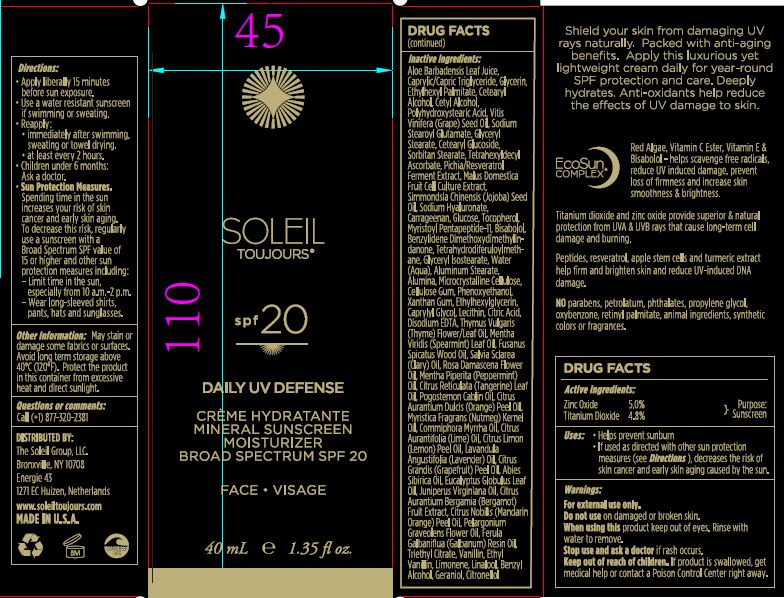
Mineral Sunscreen Moisturizer Broad Spectrum SPF 20 Zinc Oxide and Titanium Dioxide 50 mg/mL; 48 mg/mL Cream
🆔 Identity & classification
Where does this data come from?
🏭 Manufacturer & labeler
Where does this data come from?
🩺 Clinical
This is a topical cream sunscreen moisturizer marketed as an over-the-counter monograph product. It contains two mineral UV filters, zinc oxide and titanium dioxide, which are typically used to reflect and scatter ultraviolet light from the sun. Products containing these ingredients are commonly used to help protect skin from sun exposure and are labeled with a broad spectrum SPF 20 rating. The cream base is designed to moisturize while providing sun protection.
Patient education
Supplement & herbal interactions
Where does this data come from?
Ask a licensed pharmacist directly — free, answered by our team.
🧪 Inactive Ingredients / Excipients
Inactive ingredients, also called excipients, are components of the drug product other than the active ingredient. They may include fillers, dyes, coatings, preservatives, flavors, or other formulation ingredients.
💡 Tap an ingredient (hover on desktop) to see what it is and why it’s used.
-
UNII 36HQN158VC
Alpha-bisabolol is a naturally derived oily liquid from plant sources. It works as a fragrance, flavor, and skin-conditioning agent in topical medicines and cosmetic products.
-
UNII XRY0V4VZKZ
A natural oil extracted from Siberian fir tree needles. It's used as a fragrance and flavoring agent in medicines to improve taste and aroma.
-
UNII V5VD430YW9
A plant-derived substance from the aloe vera leaf. Used in medicines as a natural flavor, skin-soothing agent in topical products, and sometimes as a mild laxative ingredient in oral formulations.
-
UNII LMI26O6933
Alumina is a white powder form of aluminum oxide. It's used as a filler to add bulk to tablets and capsules, and sometimes as a thickening or anti-caking agent in powdered formulations.
-
UNII U6XF9NP8HM
Aluminum stearate is a salt made from aluminum and stearic acid, a fatty substance. It works as a lubricant and glidant to help powder flow smoothly during manufacturing and tablet production.
-
UNII LKG8494WBH
Benzyl alcohol is a clear liquid used as a preservative and solvent in medicines. It helps prevent bacterial and fungal growth and dissolves other ingredients to create uniform liquid formulations.
-
UNII 75HIF3C97L
A synthetic organic compound used as a colorant and light-stabilizing agent in medications. It helps protect the drug formulation from fading or degrading when exposed to light.
-
UNII 39W1PKE3JI
Bergamot oil is a citrus extract from bergamot orange peel. It's used as a flavoring and fragrance agent to improve taste and aroma in medicines.
-
UNII 00YIU5438U
Caprylyl glycol is a clear liquid derived from coconut oil. In medicines, it acts as a humectant to retain moisture, a preservative booster to prevent microbial growth, and a solvent to help dissolve or mix other ingredients.
-
UNII K679OBS311
Carboxymethylcellulose sodium is a plant-derived thickening agent made from cellulose. In medicines, it acts as a binder to hold ingredients together, a disintegrant to help the tablet break apart, or a thickener in liquids.
-
UNII 5C69YCD2YJ
Carrageenan is a natural thickener and stabilizer extracted from red seaweed. It's used in medicines to create gel-like textures, improve consistency, and help keep ingredients from separating during storage.
-
UNII 09FUA47KNA
Cetearyl glucoside is a plant-derived surfactant made from vegetable oils and glucose. It helps oils and water mix together in creams and lotions, and can also soften and smooth the skin feel of the product.
-
UNII 2DMT128M1S
A waxy solid derived from plant or animal sources. It acts as an emulsifier to blend oil and water components, and also thickens the medicine to give it the right texture and consistency.
-
UNII 936JST6JCN
Cetyl alcohol is a waxy, fatty substance derived from plant or animal sources. It acts as an emulsifier and thickener in medicines, helping blend oil and water components and giving products a smooth, creamy texture.
-
UNII 2968PHW8QP
A weak organic acid derived from citrus fruits or made through fermentation. It works as a buffer to control pH, a preservative to extend shelf life, and a flavoring agent in medications.
-
UNII 9X45FJL446
A fragrance compound derived from natural sources, used to provide pleasant smell and taste to medicines. It helps mask unpleasant flavors and improves the overall palatability of the product.
-
UNII 1515UE78IH
A natural oil extracted from mandarin orange leaves, used as a fragrance and flavoring agent in medicines to improve taste and aroma.
-
UNII IY9XDZ35W2
Dextrose is a simple sugar derived from corn or other sources. It serves as a filler and sweetener in medicines to add bulk, improve taste, and help stabilize the medication's form.
-
UNII 7FLD91C86K
Edetate disodium is a chemical compound that binds and removes certain metal ions. In medicines, it acts as a preservative and stabilizer by preventing metals like calcium from interfering with the product's shelf life and consistency.
-
UNII YC9ST449YJ
Ethyl vanillin is a synthetic vanilla flavoring compound. It's added to medicines to mask bitter or unpleasant tastes, making them easier to take.
-
UNII 2865993309
Ethylhexyl palmitate is an oily chemical made from palm oil and alcohol. It acts as an emollient and skin-conditioning agent in topical medicines, helping the product spread smoothly and keeping skin soft.
-
UNII 147D247K3P
Ethylhexylglycerin is a synthetic preservative used to prevent bacteria and mold from growing in medicines and personal care products. It helps keep the product safe and stable throughout its shelf life.
-
UNII S546YLW6E6
Eucalyptus globulus leaf is a plant-derived ingredient that may serve as a flavoring agent or aromatic component in medications. It is commonly used to add taste or scent to oral formulations.
-
UNII 211UF7M8N1
A natural essential oil extracted from galbanum plant resin, used as a fragrance and flavoring ingredient to mask unpleasant tastes or odors in medicines.
-
UNII L837108USY
Geraniol is a natural fragrant compound found in plants like roses and lemons. It's used in medicines as a flavoring agent and to improve the taste or aroma of the product.
-
UNII PDC6A3C0OX
Glycerin is a clear, thick liquid derived from plant oils or fats. It acts as a humectant to retain moisture, a sweetener, and a solvent in medications.
-
UNII HYE7O27HAO
Glyceryl isostearate is a fatty substance derived from vegetable oils or animal fats. In medicines, it acts as an emulsifier to blend water and oil components together, and helps form a smooth texture in creams, ointments, and other topical products.
-
UNII FCZ5MH785I
A waxy substance made from glycerin and stearic acid. It works as an emulsifier to help mix oil and water ingredients together, and as a thickener to give the medicine its proper texture and consistency.
-
UNII 3582N05Q44
Grapefruit peel is a plant-derived material from citrus fruit used as a flavoring and coloring agent in medicines. It adds taste and natural color to make the medication more appealing.
-
UNII YSE9PPT4TH
Hyaluronate sodium is a natural carbohydrate that holds moisture. It's used in medicines as a lubricant, thickener, and moisture-retaining agent to improve texture and delivery of the active ingredient.
-
UNII PAD4FN7P2G
A fragrant essential oil from juniper wood, used primarily as a flavoring agent and fragrance component to mask tastes and add aroma to medicines.
-
UNII ZBP1YXW0H8
A fragrant oil extracted from lavender plants, used as a flavoring and scent agent in medicines to improve taste and aroma.
-
UNII 1DI56QDM62
A natural fatty substance from soybeans that helps mix oil and water-based ingredients together. It acts as an emulsifier and lubricant in medicines to improve texture and help the product break down properly in your body.
-
UNII I9GRO824LL
Lemon oil is a natural fragrant extract from lemon peel. It's used in medicines as a flavoring agent to mask unpleasant tastes and improve how the medicine tastes to patients.
-
UNII UZH29XGA8G
Lime oil is a natural fragrant liquid extracted from lime fruit peel. It's used in medicines as a flavoring agent to mask bitter or unpleasant tastes, making the medicine more pleasant to take.
-
UNII 278IM94GXB
A compound derived from limonene, a natural oil found in citrus fruits. It may be used as a solvent or penetration enhancer to help deliver active ingredients through the skin or improve product stability.
-
UNII F4VNO44C09
Linalool is a natural fragrant compound found in flowers and plants. It's added to medicines as a flavor and scent agent to improve taste and aroma.
-
UNII EF626V855K
A plant extract from domestic apple flowers used as a natural flavoring agent and fragrance component in medicines. It adds taste and aroma to the product to improve palatability.
-
UNII NJO720F72R
Mandarin oil is a natural essential oil extracted from mandarin orange peel. It's used as a flavor and aroma agent to make medicines taste and smell more pleasant.
-
UNII C9H2L21V7U
A fat derived from coconut or palm oil containing shorter fatty acid chains. It serves as a solvent and carrier to help dissolve or suspend active ingredients, improving absorption and stability in liquid formulations.
-
UNII OP1R32D61U
Microcrystalline cellulose is a purified form of cellulose, a natural fiber from plant sources. It acts as a binder and filler in tablets and capsules, helping hold ingredients together and give the medicine its shape and size.
-
UNII H74221J5J4
Myrrh oil is a fragrant resin extracted from myrrh tree bark. It is used in medicines as a flavoring agent and to add aroma or taste to the product.
-
UNII Z1CLM48948
Nutmeg oil is a natural aromatic extract from nutmeg seeds. It's used in medicines as a flavoring agent to improve taste and sometimes as a fragrance to mask bitter or unpleasant odors.
-
UNII TI9T76XD44
A natural flavoring derived from orange fruit peel. It adds orange taste and aroma to the medicine, making it more pleasant to take, while also providing natural color.
-
UNII F3IN55X5PO
A plant-derived essential oil from patchouli leaves. It serves as a fragrance and flavoring agent to improve the taste and smell of the medicine.
-
UNII AV092KU4JH
A natural oil extracted from peppermint plants. It's used as a flavoring agent to mask bitter tastes and add a refreshing mint flavor to medicines, making them easier to take.
-
UNII HIE492ZZ3T
Phenoxyethanol is a synthetic preservative and antimicrobial agent used to prevent bacterial and fungal growth in medicines and cosmetic products, extending shelf life and maintaining product safety.
-
UNII YXH47AOU0F
A synthetic fatty acid used as a thickener and stabilizer in medicines. It helps create the right texture and prevents separation of ingredients in liquid or semi-solid formulations.
-
UNII 18920M3T13
Rosa damascena flower oil is a fragrant plant oil extracted from damask rose petals. It's used in medicines as a flavoring and aromatic agent to improve taste and scent.
-
UNII H9LVS6REV4
A natural essential oil derived from Australian sandalwood, used as a fragrance and flavoring agent to make the medicine more pleasant-tasting or better-smelling.
-
UNII D24K2Q1F6H
A plant oil extracted from jojoba seeds. It acts as an emollient and conditioning agent in topical formulations, helping soften skin and improve product texture and spreadability.
-
UNII 65A9F4P024
A synthetic compound derived from the amino acid glutamate and stearic acid. It acts as an emulsifier and surfactant to help mix oil and water-based ingredients, keeping the medicine uniform throughout.
-
UNII NVZ4I0H58X
A waxy substance made from sorbitol and stearic acid. It acts as an emulsifier and stabilizer, helping keep oil and water mixed together and preventing separation in the medicine.
-
UNII C3M81465G5
Spearmint oil is a natural flavoring extract from spearmint plants. It's added to medicines to improve taste and mask bitter flavors, making medications easier to take.
-
UNII 9LBV3F07AZ
A synthetic, oil-soluble form of vitamin C used as an antioxidant to prevent degradation of the medicine and maintain its stability during storage.
-
UNII 00U0645U03
A yellow pigment derived from turmeric root. It acts as a colorant to give the medicine its distinctive appearance and help with product identification.
-
UNII GRX3499643
A plant extract from common thyme used as a natural flavoring agent and preservative in medicines. It adds taste and helps prevent spoilage of the product.
-
UNII R0ZB2556P8
Tocopherol is a form of vitamin E derived from plant oils. It acts as an antioxidant in medicines to prevent oils and fats from breaking down and spoiling during storage.
-
UNII 8Z96QXD6UM
Triethyl citrate is a clear liquid derived from citric acid. It acts as a plasticizer and solvent in tablet coatings and film formulations, helping the coating remain flexible and adhere properly to the medicine.
-
UNII CHI530446X
Vanillin is a natural or synthetic aromatic compound that gives vanilla flavor. It's used in medicines as a flavoring agent to mask bitter tastes and improve how the medicine tastes.
-
UNII C34U15ICXA
A plant extract from grape seeds that acts as an antioxidant and preservative in medications. It helps protect the active ingredients from degrading and extends the product's shelf life.
-
UNII 059QF0KO0R
Water is a liquid solvent that dissolves and mixes ingredients together in liquid medicines, syrups, and injections. It helps distribute the active drug evenly throughout the product.
-
UNII TTV12P4NEE
Xanthan gum is a thickening and stabilizing ingredient made from fermented corn or other sugars. It's added to medicines to improve texture, prevent separation of liquids and solids, and help the product stay consistent.
63 inactive ingredients listed in the exact product block matched to this NDC.
Label-section wording can be broader than the structured product block and may mention additional formulation ingredients.
Where does this data come from?
ingredient classCode="IACT" elements from the exact product block matched by this NDC. Label-section narrative from DailyMed / the openFDA label index is shown separately when available.Inactive ingredient FAQ
Are inactive ingredients the same for every manufacturer?
Why might an inactive ingredient be missing?
Can inactive ingredients matter?
💲 Pricing
A drug doesn't have one price. Each row is a different public payment system, and none is what you'd pay at the counter — that depends on your insurance. The ⓘ on each row explains what it measures.
| Price system | Per g | Per package |
|---|---|---|
| Retail pharmacies payNADAC · weekly | Not in the retail survey — common for institutional, discontinued, or low-volume packs. | |
| Medicaid paysCMS SDUD · 12 mo | No recent Medicaid claims on file for this NDC — rare and low-volume NDCs are suppressed in the public data. | |
| Medicare drug plans payPart D · quarterly | No Part D plan price is available for this NDC in our data. | |
Where does this data come from?
🔁 Therapeutic equivalents
| Product | Labeler | Pack | NADAC/unit | TE | Status | Price vs. this |
|---|---|---|---|---|---|---|
| Mineral Sunscreen Moisturizer Broad Spectrum SPF 20 50 mg/mL; 48 mg/mLthis 62742-4153-02 | Allure | 1 bottle | — | — | FDA listed | — |
Where does this data come from?
⏳ Availability & generic status
We did not find an FDA-approved generic match for this exact strength, form and route.
Where does this data come from?
📦 Packaging — all sizes for this product
| Package NDC | Description | Marketing start | Status |
|---|---|---|---|
| 62742-4153-02 You're viewing this | 1 BOTTLE in 1 CARTON (62742-4153-2) / 40 mL in 1 BOTTLE (62742-4153-1) | 2017-12-12 | Active |
🧭 About this NDC listing & data coverage
What data is (and isn’t) available for this NDC — tap to expand
| NDC identity (package / product / labeler codes) | ✓ Available |
| Labeler | ✓ Available |
| Product & package description | ✓ Available |
| Marketing category & status | ✓ Available |
| Active ingredient / dosage form / route | ✓ Available |
| FDA label (SPL via DailyMed) | ✓ Available |
| Package photos | ✓ Available |
| Inactive ingredients (structured) | ✓ Available |
| NADAC pharmacy acquisition price (CMS) | — Not published for this NDC CMS publishes NADAC only for NDCs reported in its retail-pharmacy survey. |
| Orange Book / therapeutic-equivalence data | — Not published for this NDC Applies only to products approved under an NDA/ANDA; many listings are out of scope. |
| HCPCS J-code billing crosswalk | — Not published for this NDC Most self-administered / retail products have no J-code — that is normal. |
| Medicaid utilization (CMS SDUD) | — Not published for this NDC CMS reports utilization only for NDCs with Medicaid claims above its privacy threshold. |
Questions about this listing
Is this NDC FDA-approved?
Why is there no price listed?
Is the NDC printed on the package the same as the 11-digit billing NDC?
What do the three segments of this NDC mean?
Is this package still being marketed?
Who lists this product with the FDA?
Do I need a prescription for this product?
Where does this data come from?
📄 FDA label — Drug Facts FDA SPL
🎯 Indications and Usage ▾
Helps prevent sunburn if used as directed with other sun protection measures, decreases the risk of skin cancer and early skin aging caused by the sun.
⏱️ Dosage and Administration ▾
apply liberally 15 minutes before sun exposure. use a water resistant sunscreen if swimming or sweating. reapply: immidiately aftr swimming, sweating or towel drying. at least every 2 hours. children under 6months: ask doctor Sun protection measures: Spending time in the sun increases your risk of skin cancer and early skin aging. To decrease the risk, regularly use a sunscreen with a Broad Spectrum SPF value of 15 or higher and other sun protector measures including: limit time in the sun, especially from 10:00 am to 2:00 pm. wear long sleaved shirts, pants, hats and sun glasses.
⚠️ Warnings ▾
For external use only.
🧪 Active Ingredient ▾
Titanium Dioxide - 4.80% Zinc Oxide - 5.00%
🧪 Inactive Ingredients ▾
Aloe Barbadensis Leaf Juice, Caprylic/Capric Triglyceride, Ethylhexyl Palmitate, Glycerin, Cetearyl Alcohol, Cetyl Alcohol, Polyhydroxysteari Acid, Vitis Vinifera (Grape) Seed Oil, Sodium Stearoyl Glutamate, Glyceryl Stearate, Cetearyl Glucoside, Sorbitan Stearate, Tetrahexyldecyl Ascorbate, Pichia/Resveratrol Ferment Extract, Malus Domestica Fruit Cell Culture Extract, Simmondsia Chinesis (Jojoba) Seed Oil, Sodium Hyaluronate, Carrageenan, Glucose, Tocopherol, Myristoyl Pentapeptide-11, Bisabolol, Benzylidene Dimethoxydimethylindanone, Tetrahydrodiferuloylmethane, Glyceryl Isostearate, Water (Aqua), Aluminum Stearate, Alumina, Microcrystalline Cellulose, Cellulose Gum, Phenoxyethanol, Xanthan Gum, Ethylhexylglycerin, Caprylyl Glycol, Lecithin, Citric Acid, Disodium EDTA, Thymus Vulgaris (Thyme) Flower/Leaf Oil, Mentha Viridis (Spearmint) Leaf Oil, Fusanus Spicatus Wood Oil, Salvia Sclarea (Clary) Oil, Rosa Damascena Flower Oil, Mentha Piperita (Peppermint) Oil, Citrus Reticulata (Tangerine) Leaf Oil, Pogostemon Cablin Oil, Citrus Aurantium Dulcis (Orange) Peel Oil, Myristica Fragrans (Nutmeg) Kernel Oil, Commiphora Myrrha Oil, Citrus Aurantifolia (Lime) Oil, Citrus Limon (Lemon) Peel Oil, Lavandula Angustifolia (Lavender) Oil, Citrus Grandis (Grapefruit) Peel Oil, Abies Sibirica Oil, Eucalyptus Globulus Leaf Oil, Juniperus Virginiana Oil, Citrus Aurantium Bergamia (Bergamot) Fruit Extract, Citrus Nobilis (Mandarin Orange) Peel Oil, Pelargonium Graveolens Flower Oil, Ferula Galbaniflua (Galbanum) Resin Oil, Triethyl Citrate, Vanillin, Ethyl Vanillin, Limonene, Linalool, Benzyl Alcohol, Feraniol, Citronellol.