
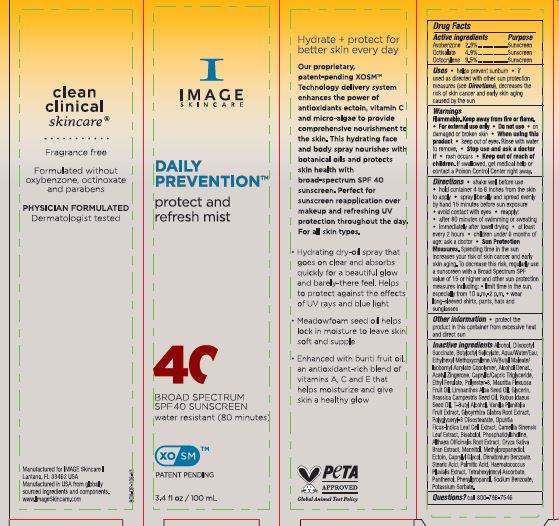
Daily Prevention Protect and Refresh Mist SPF 40 Avobenzone, Octisalate and Octocrylene 9.5 g/100g; 2.9 g/100g; 4.9 g/100g Spray
🆔 Identity & classification
Where does this data come from?
🏭 Manufacturer & labeler
Where does this data come from?
🩺 Clinical
This is a topical sunscreen spray marketed as an over-the-counter monograph product. It contains three UV-filtering ingredients (avobenzone, octisalate, and octocrylene) that are typically used together in sunscreens to help protect skin from ultraviolet radiation. The spray form allows for easy application to the face and body. This product is intended for daily sun protection and is labeled with an SPF 40 rating.
Patient education
Supplement & herbal interactions
Where does this data come from?
Ask a licensed pharmacist directly — free, answered by our team.
🧪 Inactive Ingredients / Excipients
Inactive ingredients, also called excipients, are components of the drug product other than the active ingredient. They may include fillers, dyes, coatings, preservatives, flavors, or other formulation ingredients.
💡 Tap an ingredient (hover on desktop) to see what it is and why it’s used.
-
UNII V9D92S9YE5
A compound derived from ginger that acts as a flavoring agent and antioxidant in medications. It helps preserve the medicine's stability and adds a subtle spicy taste to improve palatability.
-
UNII 3K9958V90M
A liquid solvent derived from fermentation or chemical synthesis. In medicines, alcohol dissolves active ingredients, helps preserve the product, and improves how the body absorbs certain drugs.
-
UNII TRW2FUF47H
A plant-derived powder from marshmallow root used as a binder and thickener in medicines. It helps hold ingredients together and can soothe irritated surfaces in throat lozenges and syrups.
-
UNII 728X944L6M
A plant oil extracted from turnip seeds, used as a lubricant and processing aid to help the tablet or capsule slide smoothly during manufacturing and prevent sticking.
-
UNII 2EH13UN8D3
A synthetic compound used as a solvent and penetration enhancer in topical formulations. It helps dissolve active ingredients and allows them to penetrate the skin more effectively.
-
UNII 00YIU5438U
Caprylyl glycol is a clear liquid derived from coconut oil. In medicines, it acts as a humectant to retain moisture, a preservative booster to prevent microbial growth, and a solvent to help dissolve or mix other ingredients.
-
UNII 4YK5Z54AT2
Denatonium benzoate is a bitter-tasting chemical compound added to medicines to discourage accidental ingestion, especially by children. It serves as a bittering agent with no therapeutic effect on the body.
-
UNII 4X371TMK9K
Dibutyl maleate is a synthetic chemical compound used as a plasticizer and solvent in pharmaceutical formulations. It helps soften and improve the flexibility of coatings and film-forming ingredients in medicines.
-
UNII 1241X4J800
Diisobutyl succinate is a chemical compound used as a plasticizer and solvent in medicine coatings. It helps make pill coatings flexible and improves how the coating dissolves to release the drug at the right place in your body.
-
UNII 7GXZ3858RY
Ectoine is a naturally derived protective compound used in pharmaceuticals as a stabilizer and humectant. It helps preserve the integrity of active ingredients and maintain moisture in formulations.
-
UNII 5B8915UELW
A plant-derived compound used as an antioxidant in medicines. It helps prevent spoilage and degradation of active ingredients during storage by protecting them from oxidative damage.
-
UNII S3KFG6Q5X8
An organic chemical compound used as a UV filter in topical formulations. It helps protect the medicine or product from degradation caused by sunlight exposure during storage and use.
-
UNII PDC6A3C0OX
Glycerin is a clear, thick liquid derived from plant oils or fats. It acts as a humectant to retain moisture, a sweetener, and a solvent in medications.
-
UNII 2788Z9758H
A plant extract from licorice root used as a sweetener, flavoring agent, and natural emulsifier in medicines. It helps improve taste and may aid in keeping ingredients evenly mixed throughout the product.
-
UNII W2ZU1RY8B0
A plant extract from green tea leaves. It's used as an antioxidant ingredient to help preserve the medicine and maintain its stability during storage.
-
UNII 31T0FF0472
A red microalgae used as a natural colorant and source of astaxanthin pigment in medications and supplements. It adds color to tablets and capsules.
-
UNII IX0PRH184P
A synthetic compound made from borneol and acrylic acid, used as a film-forming agent and binder in pharmaceutical coatings and adhesive formulations to help create protective layers on tablets or control drug release.
-
UNII 24WE03BX2T
Levomenol is a naturally derived alcohol compound used as a skin-conditioning and anti-inflammatory agent in topical formulations. It helps soothe and protect the skin while improving product texture and absorption.
-
UNII 3OWL53L36A
A natural sugar alcohol derived from seaweed or synthesized in the lab. It's used as a filler to add bulk, a sweetener in sugar-free formulas, and a disintegrant to help tablets break apart in the stomach.
-
UNII 48H19MS04L
A natural oil derived from the fruit of the Mauritia flexuosa palm tree. It serves as an emollient and skin-conditioning agent in topical formulations, helping soften and smooth the product's texture.
-
UNII 412ZHA4T4Y
A plant-derived oil extracted from meadowfoam seeds. It acts as an emollient and skin-conditioning agent, helping soften and smooth the product texture while improving how it spreads on skin.
-
UNII C9H2L21V7U
A fat derived from coconut or palm oil containing shorter fatty acid chains. It serves as a solvent and carrier to help dissolve or suspend active ingredients, improving absorption and stability in liquid formulations.
-
UNII N8F53B3R4R
A synthetic humectant and solvent derived from propane. It draws and holds moisture in the formulation, helping keep the medicine stable and improving texture or flow in liquid and semi-solid products.
-
UNII 5VM709H93V
A natural extract from the prickly pear cactus plant. It's used in formulations as a thickener and binder to help hold ingredients together and give the medicine its intended texture or consistency.
-
UNII 2V16EO95H1
Palmitic acid is a saturated fatty acid derived from plant and animal sources. It serves as an emulsifier and lubricant in medicines, helping ingredients mix smoothly and preventing sticking during manufacturing.
-
UNII WV9CM0O67Z
Panthenol is a humectant and skin-conditioning agent derived from pantothenic acid. It's added to medicines to help retain moisture and soothe skin irritation.
-
UNII 0F897O3O4M
A naturally occurring alcohol derived from plants or synthesized chemically. It functions as a preservative and flavoring agent in medicines, helping prevent microbial growth and add pleasant taste to oral products.
-
UNII 9EI49ZU76O
A protein found in cell membranes that helps transport fats and other substances across cellular barriers. In medicines, it may be used in delivery systems designed to help active ingredients reach target areas more effectively.
-
UNII T9296U138P
A synthetic polymer derived from polyester chemistry, modified with a cyanodiphenylpropenoyl cap. It serves as a film-former and binder in pharmaceutical formulations, helping create protective coatings on tablets or improving product consistency.
-
UNII 46P231IQV8
A synthetic emulsifier derived from glycerin and fatty acids. It helps blend oil and water-based ingredients together in cosmetic and pharmaceutical formulations to create stable, uniform products.
-
UNII 1VPU26JZZ4
Potassium sorbate is a salt derived from sorbic acid, a naturally occurring preservative. It prevents growth of mold, yeast, and some bacteria, extending the medicine's shelf life.
-
UNII R60QEP13IC
Rice bran is a natural powder made from the outer layer of rice grains. It's used in medicines as a filler and flow agent to add bulk and help the product mix and flow smoothly during manufacturing.
-
UNII M3CL7US2ZG
A natural plant extract from red raspberry seeds. It's used as an antioxidant and flavoring agent to help preserve the medicine and improve its taste.
-
UNII OJ245FE5EU
Sodium benzoate is a salt derived from benzoic acid, a preservative. It's added to medicines to prevent growth of bacteria, fungi, and other microorganisms that could spoil the product.
-
UNII 4ELV7Z65AP
Stearic acid is a fatty acid derived from plant or animal sources. It acts as a binder and lubricant in tablets and capsules, helping them hold together and flow smoothly during manufacturing.
-
UNII MD83SFE959
A volatile organic liquid used as a solvent and preservative in medications. It helps dissolve active ingredients and other components, and can improve product stability and shelf life.
-
UNII 9LBV3F07AZ
A synthetic, oil-soluble form of vitamin C used as an antioxidant to prevent degradation of the medicine and maintain its stability during storage.
-
UNII Q74T35078H
Vanilla is a flavoring ingredient extracted from vanilla orchid beans. It's added to medicines to improve taste and make them more pleasant to take, especially for children or patients who need liquid formulations.
-
UNII 059QF0KO0R
Water is a liquid solvent that dissolves and mixes ingredients together in liquid medicines, syrups, and injections. It helps distribute the active drug evenly throughout the product.
39 inactive ingredients listed in the exact product block matched to this NDC.
Label-section wording can be broader than the structured product block and may mention additional formulation ingredients.
Where does this data come from?
ingredient classCode="IACT" elements from the exact product block matched by this NDC. Label-section narrative from DailyMed / the openFDA label index is shown separately when available.Inactive ingredient FAQ
Are inactive ingredients the same for every manufacturer?
Why might an inactive ingredient be missing?
Can inactive ingredients matter?
💲 Pricing
A drug doesn't have one price. Each row is a different public payment system, and none is what you'd pay at the counter — that depends on your insurance. The ⓘ on each row explains what it measures.
| Price system | Per mL | Per package |
|---|---|---|
| Retail pharmacies payNADAC · weekly | Not in the retail survey — common for institutional, discontinued, or low-volume packs. | |
| Medicaid paysCMS SDUD · 12 mo | No recent Medicaid claims on file for this NDC — rare and low-volume NDCs are suppressed in the public data. | |
| Medicare drug plans payPart D · quarterly | No Part D plan price is available for this NDC in our data. | |
Where does this data come from?
🔁 Therapeutic equivalents
| Product | Labeler | Pack | NADAC/unit | TE | Status | Price vs. this |
|---|---|---|---|---|---|---|
| Daily Prevention Protect and Refresh Mist SPF 40 9.5 g/100g; 2.9 g/100g; 4.9 g/100gthis 62742-4257-02 | Allure | 1 bottle | — | — | FDA listed | — |
Where does this data come from?
⏳ Availability & generic status
We did not find an FDA-approved generic match for this exact strength, form and route.
Where does this data come from?
🔬 Reported adverse events (FAERS)
Top reported reactions
Reporter sex
Where does this data come from?
📦 Packaging — all sizes for this product
| Package NDC | Description | Marketing start | Status |
|---|---|---|---|
| 62742-4257-02 You're viewing this | 1 BOTTLE, SPRAY in 1 CARTON (62742-4257-2) / 100 g in 1 BOTTLE, SPRAY (62742-4257-1) | 2024-03-21 | Active |
🧭 About this NDC listing & data coverage
What data is (and isn’t) available for this NDC — tap to expand
| NDC identity (package / product / labeler codes) | ✓ Available |
| Labeler | ✓ Available |
| Product & package description | ✓ Available |
| Marketing category & status | ✓ Available |
| Active ingredient / dosage form / route | ✓ Available |
| FDA label (SPL via DailyMed) | ✓ Available |
| Package photos | ✓ Available |
| Inactive ingredients (structured) | ✓ Available |
| NADAC pharmacy acquisition price (CMS) | — Not published for this NDC CMS publishes NADAC only for NDCs reported in its retail-pharmacy survey. |
| Orange Book / therapeutic-equivalence data | — Not published for this NDC Applies only to products approved under an NDA/ANDA; many listings are out of scope. |
| HCPCS J-code billing crosswalk | — Not published for this NDC Most self-administered / retail products have no J-code — that is normal. |
| Medicaid utilization (CMS SDUD) | — Not published for this NDC CMS reports utilization only for NDCs with Medicaid claims above its privacy threshold. |
Questions about this listing
Is this NDC FDA-approved?
Why is there no price listed?
Is the NDC printed on the package the same as the 11-digit billing NDC?
What do the three segments of this NDC mean?
Is this package still being marketed?
Who lists this product with the FDA?
Do I need a prescription for this product?
Where does this data come from?
📄 FDA label — Drug Facts FDA SPL
🎯 Indications and Usage ▾
Uses • helps prevent sunburn • if used as directed with other sun protection measures (see Directions), decreases the risk of skin cancer and early skin aging caused by the sun.
⏱️ Dosage and Administration ▾
Directions • shake well before use • hold container 4 to 6 inches from the skin to apply • spray liberally and spread evenly by hand 15 minutes before sun exposure • avoid contact with eyes • reapply: • after 80 minutes of swimming or sweating • immediately after towel drying • at least every 2 hours • children under 6 months of age: ask a doctor • Sun Protection Measures. Spending time in the sun increases your risk of skin cancer and early skin aging. To decrease this risk, regularly use a sunscreen with a Broad Spectrum SPF value of 15 or higher and other sun protection measures including: • limit time in the sun, especially from 10 a.m.-2 p.m. • wear long-sleeved shirts, pants, hats and sunglasses
⚠️ Warnings ▾
Warnings: Flammable. Keep away from fire or flame. • For external use only
🧪 Active Ingredient ▾
Active ingredients Avobenzone 2.9% Octisalate 4.9% Octocrylene 9.5%
🧪 Inactive Ingredients ▾
Inactive ingredients: Alcohol, Diisooctyl Succinate, Butyloctyl Salicylate, Aqua/water/Eau, Ethylhexyl Methoxycrylene, VA/Butyl Maleate/ Isobornyl Acrylate Copolymer, Alcohol Denat., Acetyl Zingerone, Caprylie/Capric Triglyceride, Ethyl Ferulate, Polyester-8, Mauritia Flexuosa Fruit Oil, Limnanthes Alba Seed Oil, Glycerin, Brassica Campestris Seed Oil, Rubus Idaeus Seed Oil, T-Butyl Alcohol, Vanilla Planifolia Fruit Extract, Glycyrrhiza Glabra Root Extract, Polyglyceryl-3 Diisostearate, Opuntia Ficus-Indica Leaf Cell Extract, Camellia Sinensis Leaf Extract, Bisabolol, Phosphatidylcholine, Althaea Officinalis Root Extract, Oryza Sativa Bran Extract, Mannitol, Methylpropanediol, Ectoin, Caprylyl Glycol, Denatonium Benzoate, Stearic Acid, Palmitic Acid, Haematococcus Pluvialis Extract, Tetrahexyldecyl Ascorbate, Panthenol, Phenylpropanol, Sodium Benzoate, Potassium Sorbate.
🎯 Purpose ▾
Purpose: Sunscreen