
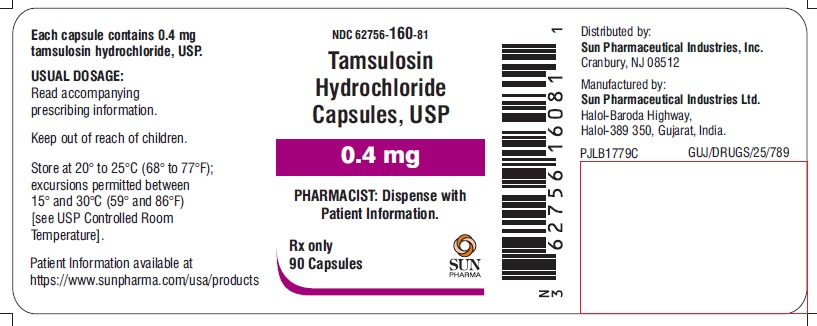
Tamsulosin Hydrochloride .4 mg Capsule, 500-count — NDC 62756-160-13 (Billing 62756-0160-13)
This is a package of 500 capsules of Tamsulosin Hydrochloride .4 mg Capsule from Sun Pharmaceutical Industries, Inc., marketed since Jul 2010 and currently FDA-listed; retail pharmacies pay about $0.0522 per capsule (NADAC). It is the main listing for this product, which comes in 6 package sizes.
NDC database record
One package, one record: these facts belong to NDC 62756-160-13 alone.
- Record
- FDA NDC Directory package listing · Human prescription drug
- Code segments
- 62756 labeler · 160 product · 13 package
- Package marketed since
- Jul 15, 2010
- Sample package
- No — commercial package
- Listing certified through
- Dec 31, 2026
- Billing quantity
- 500 EA per package
- Barcode (UPC)
- 0362756160811
- Medicaid fills, this package
- 1,958 prescriptions in the last four reported quarters
- FDA record last changed
- Jul 24, 2026
Identity & classification
Regulatory identifiers FDA, NLM and CMS codes for this package
Drug-database identifiers Medi-Span GPI and First Databank GCN / HICL / AHFS classification
- GSN (GCN sequence number): 027546
- GCN: 48191
- GPI-14 (Medi-Span): 56852070100110
- HICL (First Databank): 013864
- AHFS class code: 12:16.04.12
- RxCUI (RxNorm): 863669
Where does this data come from?
- FDA openFDA NDC Directory · synced Oct 1, 2026
- FDA label on DailyMed · label index refreshed Oct 5, 2026
- RxNorm (NLM RxNav) · catalog refreshed Oct 1, 2026
- Medi-Span GPI (licensed)
- First Databank (licensed) · refreshed Oct 1, 2026
RxNorm drug class
This medicine belongs to the alpha-Adrenergic Blocker class.
Where does this data come from?
- RxClass (NLM) · catalog refreshed Oct 1, 2026
Clinical
- Tamsulosin is designed to ease the urinary symptoms caused by an enlarged prostate — things like a weak stream, straining to start, or feeling like you haven't fully emptied your b...
- What exactly is tamsulosin supposed to do for me?
- Take it once a day, about 30 minutes after the same meal each day — for example, every morning after breakfast. Consistency matters here. Swallow the capsule whole; don't crush, ch...
- It can, yes — this is one of the more common side effects, and it's worth knowing about upfront. Some men notice reduced ejaculation volume or what's called retrograde ejaculation,...
Patient education
Supplement & herbal interactions
Where does this data come from?
- MedlinePlus (NLM) · refreshed Oct 1, 2026
- FDA label on DailyMed · label index refreshed Oct 5, 2026
Ask a licensed pharmacist directly — free, answered by our team.
Pricing
A drug doesn't have one price. Each row is a different public payment system, and none is what you'd pay at the counter — that depends on your insurance. The ⓘ on each row explains what it measures.
| Price system | Per ea | Per package |
|---|---|---|
| Retail pharmacies payNADAC · weekly | $0.052 | $26.10 / 500 capsules |
| Medicaid paysCMS SDUD · 12 mo | $0.2189 | $109.45 / 500 capsules |
| Medicare drug plans payPart D · Q2 2026 | $0.1304 | $65.20 / 500 capsules |
Where does this data come from?
- CMS NADAC weekly file · file of Feb 18, 2026
- CMS ASP pricing files · refreshed Sep 20, 2026
- CMS Medicaid State Drug Utilization Data · through Q1 2026
- CMS Part D plan pricing files · refreshed Sep 24, 2026
- VA National Acquisition Center price file
Packaging — all sizes for this product
| Package NDC | Description | Per unit | Per pack | Marketing start | Marketing end | Status |
|---|---|---|---|---|---|---|
| 62756-0160-08 62756-160-08 | 100 CAPSULE in 1 BOTTLE | — | — | 2010-07-15 | — | Active |
| 62756-0160-13 You're viewing this Main listing | 500 CAPSULE in 1 BOTTLE | $0.0522 / ea | $26.08 | 2010-07-15 | — | Active |
| 62756-0160-18 62756-160-18 | 1000 CAPSULE in 1 BOTTLE | — | — | 2010-07-15 | — | Active |
| 62756-0160-81 62756-160-81 | 90 CAPSULE in 1 BOTTLE | $0.0522 / ea | $4.69 | 2010-07-15 | — | Active |
| 62756-0160-83 62756-160-83 | 30 CAPSULE in 1 BOTTLE | — | — | 2010-07-15 | — | Active |
| 62756-0160-88 62756-160-88 | 100 CAPSULE in 1 BOTTLE | $0.0522 / ea | $5.22 | 2010-07-15 | — | Active |
This pack has the lowest per-ea cost of the 3 priced pack sizes ($0.0522 NADAC).
In Medicaid, this is the most-dispensed pack of this product — about 80% of fills over the last four reported quarters. See all packs ↓
Pack size FAQ
What quantity is in this package?
How does this package differ from NDC 62756-0160-83?
What NDC number is used to bill for this package of Tamsulosin Hydrochloride .4 mg Capsule?
Prices are the latest CMS NADAC pharmacy acquisition cost per NDC; per-pack figures are per-unit × pack quantity, shown only when the pack is denominated in the same measure NADAC prices.
Therapeutic equivalents
| Product | Labeler | Pack | NADAC/unit | TE | Status | Price vs. this |
|---|---|---|---|---|---|---|
| Tamsulosin Hydrochloride .4 mg 00904-7383-61 | Major | 100 capsules | $0.050 | AB | Availability likely | save 4% |
| Tamsulosin Hydrochloride .4 mg 50268-0740-15 | AvPAK | 50 capsules | $0.050 | AB | Availability likely | save 4% |
| Tamsulosin Hydrochloride .4 mg 57237-0014-01 | Rising | 100 capsules | $0.050 | AB | Availability likely | save 4% |
| Tamsulosin Hydrochloride .4 mg 62135-0775-30 | Chartwell | 30 capsules | $0.050 | AB | Availability likely | save 4% |
| Tamsulosin Hydrochloride .4 mg 65862-0598-01 | Aurobindo | 100 capsules | $0.050 | — | Availability likely | save 4% |
| Tamsulosin Hydrochloride .4 mg 67877-0450-01 | Ascend | 100 capsules | $0.050 | AB | Availability likely | save 4% |
| Tamsulosin Hydrochloride .4 mg 68084-0299-01 | American | 100 capsules | $0.050 | AB | Availability likely | save 4% |
| Tamsulosin Hydrochloride .4 mg 68382-0132-01 | Zydus | 100 capsules | $0.050 | AB | Availability likely | save 4% |
| Tamsulosin Hydrochloride .4 mg 72603-0115-01 | NorthStar | 100 capsules | $0.050 | AB | Availability likely | save 4% |
| Tamsulosin hydrochloride .4 mg 76282-0744-05 | EXELAN | 500 capsules | $0.050 | AB | Availability likely | save 4% |
| Tamsulosin Hydrochloride .4 mg 82009-0025-10 | Quallent | 1000 capsules | $0.050 | AB | Availability likely | save 4% |
| Tamsulosin Hydrochloride .4 mgthis 62756-0160-13 | Sun | 500 capsules | $0.052 | — | FDA listed | — |
| tamsulosin hydrochloride .4 mg 00781-2076-01 | Sandoz | 100 capsules | $0.054 | — | FDA listed | +3% |
| Tamsulosin Hydrochloride .4 mg 00115-8211-01 | Amneal | 100 capsules | — | AB | FDA listed | — |
| Tamsulosin Hydrochloride .4 mg 00615-8055-05 | NCS | 15 capsules | — | AB | FDA listed | — |
| Tamsulosin Hydrochloride .4 mg 33342-0159-07 | Macleods | 30 capsules | — | AB | FDA listed | — |
| Tamsulosin Hydrochloride .4 mg 42291-0989-10 | AvKARE | 1000 capsules | — | AB | FDA listed | — |
| Tamsulosin Hydrochloride .4 mg 43063-0725-30 | PD-Rx | 30 capsules | — | AB | FDA listed | — |
| Tamsulosin Hydrochloride .4 mg 43063-0947-30 | PD-Rx | 30 capsules | — | AB | FDA listed | — |
| Tamsulosin Hydrochloride .4 mg 50090-1846-00 | A-S | 30 capsules | — | AB | FDA listed | — |
| Tamsulosin Hydrochloride .4 mg 50090-3646-00 | A-S | 30 capsules | — | AB | FDA listed | — |
| Tamsulosin Hydrochloride .4 mg 50090-4906-00 | A-S | 90 capsules | — | AB | FDA listed | — |
| Tamsulosin Hydrochloride .4 mg 50090-5553-00 | A-S | 90 capsules | — | AB | FDA listed | — |
| Tamsulosin Hydrochloride .4 mg 50090-6699-00 | A-S | 30 capsules | — | AB | FDA listed | — |
| Tamsulosin Hydrochloride .4 mg 50090-6700-00 | A-S | 90 capsules | — | AB | FDA listed | — |
| Tamsulosin Hydrochloride .4 mg 51407-0879-90 | Golden | 90 capsules | — | AB | FDA listed | — |
| Tamsulosin Hydrochloride .4 mg 51655-0832-52 | Northwind | 30 capsules | — | AB | FDA listed | — |
| Tamsulosin Hydrochloride .4 mg 55154-2142-00 | Cardinal | 10 capsules | — | AB | FDA listed | — |
| Tamsulosin Hydrochloride .4 mg 55154-2636-00 | Cardinal | 10 capsules | — | AB | FDA listed | — |
| Tamsulosin Hydrochloride .4 mg 60760-0598-90 | St. | 90 capsules | — | AB | FDA listed | — |
| Tamsulosin Hydrochloride .4 mg 61919-0703-90 | DIRECT | 5904900000 capsules | — | AB | FDA listed | — |
| Tamsulosin Hydrochloride .4 mg 63187-0358-07 | Proficient | 7 capsules | — | AB | FDA listed | — |
| Tamsulosin Hydrochloride .4 mg 63187-0371-07 | Proficient | 7 capsules | — | AB | FDA listed | — |
| Tamsulosin Hydrochloride .4 mg 63187-0469-30 | Proficient | 30 capsules | — | — | FDA listed | — |
| Tamsulosin Hydrochloride .4 mg 63629-4346-01 | Bryant | 30 capsules | — | AB | FDA listed | — |
| Tamsulosin hydrochloride .4 mg 63672-0021-09 | Synthon | 20000 capsules | — | AB | FDA listed | — |
| Tamsulosin Hydrochloride .4 mg 65841-0695-01 | Zydus | 100 capsules | — | AB | FDA listed | — |
| Tamsulosin Hydrochloride .4 mg 67046-1015-03 | Coupler | 30 capsules | — | AB | FDA listed | — |
| Tamsulosin Hydrochloride .4 mg 67296-2220-01 | Redpharm | 7 capsules | — | AB | FDA listed | — |
| Tamsulosin Hydrochloride .4 mg 68071-1840-01 | NuCare | 100 capsules | — | AB | FDA listed | — |
| Tamsulosin Hydrochloride .4 mg 68071-2561-01 | NuCare | 10 capsules | — | AB | FDA listed | — |
| Tamsulosin Hydrochloride .4 mg 68071-4443-01 | NuCare | 10 capsules | — | AB | FDA listed | — |
| Tamsulosin Hydrochloride .4 mg 68071-4872-09 | NuCare | 90 capsules | — | AB | FDA listed | — |
| Tamsulosin Hydrochloride .4 mg 68071-5118-01 | NuCare | 100 capsules | — | AB | FDA listed | — |
| Tamsulosin Hydrochloride .4 mg 68788-7050-01 | Preferred | 100 capsules | — | AB | FDA listed | — |
| Tamsulosin Hydrochloride .4 mg 70518-0179-00 | REMEDYREPACK | 30 capsules | — | AB | Discontinued | — |
| Tamsulosin Hydrochloride .4 mg 70518-2052-00 | REMEDYREPACK | 90 capsules | — | AB | FDA listed | — |
| Tamsulosin Hydrochloride .4 mg 71205-0217-07 | Proficient | 7 capsules | — | AB | FDA listed | — |
| Tamsulosin Hydrochloride .4 mg 71205-0688-07 | Proficient | 7 capsules | — | AB | FDA listed | — |
| Tamsulosin Hydrochloride .4 mg 71335-0398-01 | Bryant | 30 capsules | — | AB | FDA listed | — |
| Tamsulosin Hydrochloride .4 mg 71335-1538-01 | Bryant | 30 capsules | — | AB | FDA listed | — |
| Tamsulosin Hydrochloride .4 mg 71335-1784-01 | Bryant | 30 capsules | — | AB | FDA listed | — |
| Tamsulosin Hydrochloride .4 mg 71610-0724-30 | Aphena | 30 capsules | — | AB | FDA listed | — |
| Tamsulosin Hydrochloride .4 mg 71610-0738-30 | Aphena | 30 capsules | — | AB | FDA listed | — |
| Tamsulosin Hydrochloride .4 mg 71610-0835-30 | Aphena | 30 capsules | — | AB | FDA listed | — |
| Tamsulosin hydrochloride .4 mg 71610-0910-30 | Aphena | 30 capsules | — | AB | FDA listed | — |
| Tamsulosin Hydrochloride .4 mg 72162-2217-05 | Bryant | 500 capsules | — | AB | FDA listed | — |
| Tamsulosin Hydrochloride .4 mg 72162-2502-00 | Bryant | 1000 capsules | — | AB | FDA listed | — |
| Tamsulosin Hydrochloride .4 mg 72162-2509-01 | Bryant | 100 capsules | — | AB | FDA listed | — |
| Tamsulosin Hydrochloride .4 mg 72865-0282-01 | XLCare | 100 capsules | — | AB | FDA listed | — |
| tamsulosin hydrochloride .4 mg 72865-0350-05 | XLCare | 500 capsules | — | AB | FDA listed | — |
| Tamsulosin Hydrochloride .4 mg 68788-4145-01 | Preferred | 100 capsules | — | AB | FDA listed | — |
Where does this data come from?
- FDA openFDA NDC Directory · synced Oct 1, 2026
- FDA Orange Book · refreshed Oct 3, 2026
- CMS NADAC weekly file · file of Feb 18, 2026
Availability & generic status
This product is an FDA-approved generic. Other versions of the same drug are listed under Therapeutic equivalents, least expensive first.
Where does this data come from?
- FDA Orange Book · refreshed Oct 3, 2026
What it looks like
Where does this data come from?
- FDA label on DailyMed · label index refreshed Oct 5, 2026
Inactive Ingredients / Excipients
Inactive ingredients, also called excipients, are components of the drug product other than the active ingredient. They may include fillers, dyes, coatings, preservatives, flavors, or other formulation ingredients.
🧪 Avoiding an ingredient? See Tamsulosin inactive ingredients by manufacturer: every current product's list side by side, so you can ask your pharmacy for the version that does not list it.
💡 Tap an ingredient (hover on desktop) to see what it is and why it’s used.
-
UNII OP1R32D61U
Microcrystalline cellulose is a purified form of cellulose, a natural fiber from plant sources. It acts as a binder and filler in tablets and capsules, helping hold ingredients together and give the medicine its shape and size.
-
UNII L06K8R7DQK
A synthetic blue dye approved by the FDA for use in medications and foods. It serves as a colorant to make pills and liquids visually distinct and easier to identify.
-
UNII 1K09F3G675
Ferric oxide red is an inorganic iron compound used as a colorant in medicines. It gives tablets, capsules, or other dosage forms a red or reddish tint for identification and appearance.
-
UNII EX438O2MRT
Ferric oxide yellow is a naturally occurring iron compound used as a colorant in medications. It gives tablets, capsules, and other forms a yellow or golden hue for identification and appearance.
-
UNII 2G86QN327L
Gelatin is a protein derived from animal collagen, commonly used in medicines as a gelling agent and capsule material. It helps create soft or hard capsule shells that hold and release medication, and can also thicken liquid formulations.
-
UNII 24P2YXD2PW
A cellulose derivative used as a film-coating agent and binder in tablets and capsules. It helps protect the medicine from moisture, controls how quickly the drug dissolves, and holds ingredients together.
-
UNII NX76LV5T8J
A synthetic plastic polymer made from methacrylic acid and ethyl acrylate. It's used as a coating or binder to control how and where the medicine dissolves in your digestive system.
-
UNII 368GB5141J
A detergent and foaming agent derived from coconut or palm oil. In medications, it helps break down and mix oil and water-based ingredients, aids in tablet disintegration, and improves how the drug dissolves and spreads in the mouth or digestive system.
-
UNII 7SEV7J4R1U
A powder made from a naturally occurring mineral. In medicines, talc works as a glidant and anti-caking agent, helping tablets and capsules flow smoothly during manufacturing and preventing clumping.
-
UNII 15FIX9V2JP
Titanium dioxide is a bright white mineral powder commonly used as a colorant and opacifying agent. It makes pills and tablets white or lighter in color and helps make coatings non-transparent.
-
UNII 8Z96QXD6UM
Triethyl citrate is a clear liquid derived from citric acid. It acts as a plasticizer and solvent in tablet coatings and film formulations, helping the coating remain flexible and adhere properly to the medicine.
11 inactive ingredients listed in the exact product block matched to this NDC.
Where does this data come from?
ingredient classCode="IACT" elements from the exact product block matched by this NDC. Label-section narrative from DailyMed / the openFDA label index is shown separately when available.- FDA label on DailyMed · label index refreshed Oct 5, 2026
- FDA openFDA NDC Directory · synced Oct 1, 2026
Inactive ingredient FAQ
Are inactive ingredients the same for every manufacturer?
Why might an inactive ingredient be missing?
Can inactive ingredients matter?
Manufacturer & labeler
More NDCs from Sun Pharmaceutical Industries, Inc. labeler code 62756
- Rivastigmine Tartrate 6 mg Capsule NDC 62756-148-13
- Risperidone 25 kg/25kg Powder NDC 62756-149-11
- Azacitidine 25 kg/25kg Powder NDC 62756-151-11
- Clomipramine Hydrochloride 25 kg/25kg Powder NDC 62756-153-11
- Linaclotide 25 kg/25kg Powder NDC 62756-154-11
- Empagliflozin 25 kg/25kg Powder NDC 62756-159-11
- Cinacalcet Hydrochloride 1 kg/kg Powder NDC 62756-170-14
- Dapagliflozin 25 kg/25kg Powder NDC 62756-171-11
- Dimethyl Fumarate 25 kg/25kg Powder NDC 62756-178-11
- Dofetilide 25 kg/25kg Powder NDC 62756-179-11
- Oxcarbazepine 150 mg Tablet, Film Coated NDC 62756-183-08
- Oxcarbazepine 300 mg Tablet, Film Coated NDC 62756-184-08
Where does this data come from?
- FDA openFDA NDC Directory · synced Oct 1, 2026
- Drugs@FDA
Full prescribing information FDA SPL
🎯 Indications and Usage ▾
1 INDICATIONS AND USAGE Tamsulosin hydrochloride capsules, USP are indicated for the treatment of the signs and symptoms of benign prostatic hyperplasia (BPH) [ see Clinical Studies ( 14 ) ]. Tamsulosin hydrochloride capsules are not indicated for the treatment of hypertension. Tamsulosin hydrochloride is an alpha 1 adrenoceptor antagonist indicated for treatment of the signs and symptoms of benign prostatic hyperplasia ( 1 ) Tamsulosin hydrochloride capsules are not indicated for the treatment of hypertension ( 1 )
⏱️ Dosage and Administration ▾
2 DOSAGE AND ADMINISTRATION Tamsulosin hydrochloride capsules 0.4 mg once daily is recommended as the dose for the treatment of the signs and symptoms of BPH. It should be administered approximately one-half hour following the same meal each day. Tamsulosin hydrochloride capsules should not be crushed, chewed or opened.
For those patients who fail to respond to the 0.4 mg dose after 2 to 4 weeks of dosing, the dose of tamsulosin hydrochloride capsules can be increased to 0.8 mg once daily. Tamsulosin hydrochloride capsules 0.4 mg should not be used in combination with strong inhibitors of CYP3A4 (e.g., ketoconazole) [ see Warnings and Precautions ( 5.2 ) ]. If tamsulosin hydrochloride capsules administration is discontinued or interrupted for several days at either the 0.4 mg or 0.8 mg dose, therapy should be started again with the 0.4 mg once-daily dose.
0.4mg once daily taken approximately one-half hour following the same meal each day. Tamsulosin hydrochloride capsules should not be crushed, chewed or opened. ( 2 ) Can be increased to 0.8 mg once daily for patients who fail to respond to the 0.4 mg dose after 2 to 4 weeks of dosing ( 2 ) If discontinued or interrupted for several days, therapy should start again with the 0.4 mg once-daily dose ( 2 )
💊 Dosage Forms and Strengths ▾
3 DOSAGE FORMS AND STRENGTHS Capsule: 0.4 mg, olive green and light yellow hard gelatin, imprinted with “160” in black ink on cap and body. Capsules: 0.4 mg ( 3 )
⛔ Contraindications ▾
4 CONTRAINDICATIONS Tamsulosin hydrochloride capsules are contraindicated in patients known to be hypersensitive to tamsulosin hydrochloride or any component of tamsulosin hydrochloride capsules. Reactions have included skin rash, urticaria, pruritus, angioedema, and respiratory symptoms [ see Adverse Reactions ( 6.2 ) ] . Contraindicated in patients known to be hypersensitive to tamsulosin hydrochloride or any component of tamsulosin hydrochloride capsules ( 4 , 6.2 )
⚠️ Warnings and Cautions ▾
5 WARNINGS AND PRECAUTIONS Advise patients about the possibility of symptoms related to postural hypotension and to avoid situations where injury could result should syncope occur ( 5.1 ) Should not be used in combination with strong inhibitors of CYP3A4. Use with caution in combination with moderate inhibitors of CYP3A4, with strong or moderate inhibitors of CYP2D6, in patients known to be CYP2D6 poor metabolizers, or in combination with other cytochrome P450 inhibitors. ( 5.2 , 7.1 , 12.3 ) Should not be used in combination with other alpha adrenergic blocking agents ( 5.2 , 7.2 , 12.3 ) Exercise caution with concomitant administration of warfarin ( 5.2 , 7.4 , 12.3 ) Advise patients about the possibility and seriousness of priapism ( 5.3 ) Intraoperative Floppy Iris Syndrome has been observed during cataract and glaucoma surgery in some patients.
Advise patients considering cataract or glaucoma surgery to tell their ophthalmologist that they have taken tamsulosin hydrochloridecapsules. ( 5.5 ) Advise patients to be screened for the presence of prostate cancer prior to treatment and at regular intervals afterwards ( 5.4 )
5.1Orthostasis The signs and symptoms of orthostasis (postural hypotension, dizziness, and vertigo) were detected more frequently in tamsulosin hydrochloridecapsule-treated patients than in placebo recipients. As with other alpha adrenergic blocking agents there is a potential risk of syncope [ see Adverse Reactions ( 6.1 ) ]. Patients beginning treatment with tamsulosin hydrochloridecapsules should be cautioned to avoid situations in which injury could result should syncope occur .
5.2Drug Interactions Tamsulosin is extensively metabolized, mainly by CYP3A4 and CYP2D6. Tamsulosin hydrochloride capsules 0.4 mg should not be used in combination with strong inhibitors of CYP3A4 (e.g., ketoconazole) [ see Drug Interactions ( 7.1 ) and Clinical Pharmacology ( 12.3 ) ]. Tamsulosin hydrochloride capsules should be used with caution in combination with moderate inhibitors of CYP3A4 (e.g., erythromycin), in combination with strong (e.g., paroxetine) or moderate (e.g., terbinafine) inhibitors of CYP2D6, in patients known to be CYP2D6 poor metabolizers particularly at a dose higher than 0.4 mg (e.g., 0.8 mg) [ see Drug Interactions ( 7.1 ) and Clinical Pharmacology ( 12.3 ) ].
Tamsulosin hydrochloride capsules should be used with caution in combination with cimetidine, particularly at a dose higher than 0.4 mg (e.g., 0.8 mg) [ see Drug Interactions ( 7.1 ) and Clinical Pharmacology ( 12.3 ) ]. Tamsulosin hydrochloride capsules should not be used in combination with other alpha adrenergic blocking agents [ see Drug Interactions ( 7.2 ) and Clinical Pharmacology ( 12.3 ) ]. Caution is advised when alpha adrenergic blocking agents including tamsulosin hydrochloride are coadministered with PDE5 inhibitors.
Alpha-adrenergic blockers and PDE5 inhibitors are both vasodilators that can lower blood pressure. Concomitant use of these two drug classes can potentially cause symptomatic hypotension [ see Drug Interactions ( 7.3 ) and Clinical Pharmacology ( 12.3 ) ]. Caution should be exercised with concomitant administration of warfarin and tamsulosin hydrochloride capsules [ see Drug Interactions ( 7.4 ) and Clinical Pharmacology ( 12.3 ) ] .
5.3Priapism Rarely (probably less than 1 in 50,000 patients), tamsulosin, like other alpha 1 antagonists, has been associated with priapism (persistent painful penile erection unrelated to sexual activity). Because this condition can lead to permanent impotence if not properly treated, patients must be advised about the seriousness of the condition.
5.4Screening for Prostate Cancer Prostate cancer and BPH frequently coexist; therefore, patients should be screened for the presence of prostate cancer prior to treatment with tamsulosin hydrochloride capsules and at regular intervals afterwards.
5.5Intraoperative Floppy Iris Syndrome Intraoperative Floppy Iris Syndrome (IFIS) has been obs… [Excerpted — this section continues on DailyMed.]
🤒 Adverse Reactions ▾
6 ADVERSE REACTIONS The most common adverse events (≥2% of patients and at a higher incidence than placebo) with the 0.4 mg dose or 0.8 mg dose were headache, dizziness, rhinitis, infection, abnormal ejaculation, asthenia, back pain, diarrhea, pharyngitis, chest pain, cough increased, somnolence, nausea, sinusitis, insomnia, libido decreased, tooth disorder, and blurred vision ( 6.1 ) To report SUSPECTED ADVERSE REACTIONS, contact Sun Pharmaceutical Industries, Inc. at 1-800-818-4555, or FDA at 1-800-FDA-1088 or www.fda.gov/medwatch .
6.1Clinical Trials Experience Because clinical studies are conducted under widely varying conditions, adverse reactions rates observed in the clinical studies of a drug cannot be directly compared to rates in the clinical studies of another drug and may not reflect the rates observed in practice. The incidence of treatment-emergent adverse events has been ascertained from six short-term U.S. and European placebo-controlled clinical trials in which daily doses of 0.1 to 0.8 mg tamsulosin hydrochloride capsules were used.
These studies evaluated safety in 1783 patients treated with tamsulosin hydrochloride capsules and 798 patients administered placebo. Table 1 summarizes the treatment-emergent adverse events that occurred in ≥2% of patients receiving either tamsulosin hydrochloride capsules 0.4 mg or 0.8 mg and at an incidence numerically higher than that in the placebo group during two 13-week U.S. trials (US92-03A and US93-01) conducted in 1487 men. Table 1 Treatment-Emergent A treatment-emergent adverse event was defined as any event satisfying one of the following criteria:•The adverse event occurred for the first time after initial dosing with double-blind study medication.•The adverse event was present prior to or at the time of initial dosing with double-blind study medication and subsequently increased in severity during double-blind treatment; or•The adverse event was present prior to or at the time of initial dosing with double-blind study medication, disappeared completely, and then reappeared during double-blind treatment.
Adverse Events Occurring in ≥2% of Tamsulosin Hydrochloride Capsules or Placebo Patients in Two U.S. Short-Term Placebo-Controlled Clinical Studies BODY SYSTEM/ADVERSE EVENT TAMSULOSIN HYDROCHLORIDE CAPSULES GROUPS PLACEBO n=493 0.4 mg n=502 0.8 mg n=492 BODY AS WHOLE Headache 97 (19.3%) 104 (21.1%) 99 (20.1%) Infection Coding preferred terms also include cold, common cold, head cold, flu, and flu-like symptoms. 45 (9%) 53 (10.8%) 37 (7.5%) Asthenia 39 (7.8%) 42 (8.5%) 27 (5.5%) Back pain 35 (7%) 41 (8.3%) 27 (5.5%) Chest pain 20 (4%) 20 (4.1%) 18 (3.7%) NERVOUS SYSTEM Dizziness 75 (14.9%) 84 (17.1%) 50 (10.1%) Somnolence 15 (3%) 21 (4.3%) 8 (1.6%) Insomnia 12 (2.4%) 7 (1.4%) 3 (0.6%) Libido decreased 5 (1%) 10 (2%) 6 (1.2%) RESPIRATORY SYSTEM Rhinitis Coding preferred terms also include nasal congestion, stuffy nose, runny nose, sinus congestion, and hay fever.
66 (13.1%) 88 (17.9%) 41 (8.3%) Pharyngitis 29 (5.8%) 25 (5.1%) 23 (4.7%) Cough increased 17 (3.4%) 22 (4.5%) 12 (2.4%) Sinusitis 11 (2.2%) 18 (3.7%) 8 (1.6%) DIGESTIVE SYSTEM Diarrhea 31 (6.2%) 21 (4.3%) 22 (4.5%) Nausea 13 (2.6%) 19 (3.9%) 16 (3.2%) Tooth disorder 6 (1.2%) 10 (2%) 7 (1.4%) UROGENITAL SYSTEM Abnormal ejaculation 42 (8.4%) 89 (18.1%) 1 (0.2%) SPECIAL SENSES Blurred vision 1 (0.2%) 10 (2%) 2 (0.4%) Signs and Symptoms of Orthostasis In the two U.S. studies, symptomatic postural hypotension was reported by 0.2% of patients (1 of 502) in the 0.4 mg group, 0.4% of patients (2 of 492) in the 0.8 mg group, and by no patients in the placebo group.
Syncope was reported by 0.2% of patients (1 of 502) in the 0.4 mg group, 0.4% of patients (2 of 492) in the 0.8 mg group, and 0.6% of patients (3 of 493) in the placebo group. Dizziness was reported by 15% of patients (75 of 502) in the 0.4 mg group, 17% of patients (84 of 492) in the 0.8 mg group, and 10% of patients (50 of 493) in the placebo group. Vert… [Excerpted — this section continues on DailyMed.]
🔄 Drug Interactions ▾
7 DRUG INTERACTIONS Tamsulosin hydrochloride capsules 0.4 mg should not be used with strong inhibitors of CYP3A4 (e.g., ketoconazole). Tamsulosin hydrochloride capsules should be used with caution in combination with moderate inhibitors of CYP3A4 (e.g., erythromycin), in combination with strong (e.g., paroxetine) or moderate (e.g., terbinafine) inhibitors of CYP2D6, or in patients known to be CYP2D6 poor metabolizers, particularly at a dose higher than 0.4 mg (e.g., 0.8 mg). ( 5.2 , 7.1 , 12.3 ) Concomitant use of PDE5 inhibitors with tamsulosin can potentially cause symptomatic hypotension ( 5.2 , 7.3 , 12.3 )
7.1Cytochrome P450 Inhibition Strong and Moderate Inhibitors of CYP3A4 or CYP2D6 Tamsulosin is extensively metabolized, mainly by CYP3A4 and CYP2D6. Concomitant treatment with ketoconazole (a strong inhibitor of CYP3A4) resulted in an increase in the C max and AUC of tamsulosin by a factor of 2.2 and 2.8, respectively [ see Warnings and Precautions ( 5.2 ) and Clinical Pharmacology ( 12.3 ) ]. The effects of concomitant administration of a moderate CYP3A4 inhibitor (e.g., erythromycin) on the pharmacokinetics of tamsulosin hydrochloride have not been evaluated [ see Warnings and Precautions ( 5.2 ) and Clinical Pharmacology ( 12.3 ) ].
Concomitant treatment with paroxetine (a strong inhibitor of CYP2D6) resulted in an increase in the C max and AUC of tamsulosin by a factor of 1.3 and 1.6, respectively [ see Warnings and Precautions ( 5.2 ) and Clinical Pharmacology ( 12.3 ) ]. A similar increase in exposure is expected in CYP2D6 poor metabolizers (PM) as compared to extensive metabolizers (EM). Since CYP2D6 PMs cannot be readily identified and the potential for significant increase in tamsulosin exposure exists when tamsulosin hydrochloride 0.4 mg is coadministered with strong CYP3A4 inhibitors in CYP2D6 PMs, tamsulosin hydrochloride 0.4 mg capsules should not be used in combination with strong inhibitors of CYP3A4 (e.g., ketoconazole) [ see Warnings and Precautions ( 5.2 ) and Clinical Pharmacology ( 12.3 ) ].
The effects of concomitant administration of a moderate CYP2D6 inhibitor (e.g., terbinafine) on the pharmacokinetics of tamsulosin hydrochloride have not been evaluated [ see Warnings and Precautions ( 5.2 ) and Clinical Pharmacology ( 12.3 ) ]. The effects of coadministration of both a CYP3A4 and a CYP2D6 inhibitor with tamsulosin hydrochloride capsules have not been evaluated. However, there is a potential for significant increase in tamsulosin exposure when tamsulosin hydrochloride 0.4 mg is coadministered with a combination of both CYP3A4 and CYP2D6 inhibitors [ see Warnings and Precautions ( 5.2 ) and Clinical Pharmacology ( 12.3 ) ].
Cimetidine Treatment with cimetidine resulted in a significant decrease (26%) in the clearance of tamsulosin hydrochloride, which resulted in a moderate increase in tamsulosin hydrochloride AUC (44%) [ see Warnings and Precautions ( 5.2 ) and Clinical Pharmacology ( 12.3 ) ].
7.2Other Alpha Adrenergic Blocking Agents The pharmacokinetic and pharmacodynamic interactions between tamsulosin hydrochloride capsules and other alpha adrenergic blocking agents have not been determined; however, interactions between tamsulosin hydrochloride capsules and other alpha adrenergic blocking agents may be expected [ see Warnings and Precautions ( 5.2 ) and Clinical Pharmacology ( 12.3 ) ].
7.3PDE5 Inhibitors Caution is advised when alpha adrenergic blocking agents including tamsulosin hydrochloride are coadministered with PDE5 inhibitors. Alpha-adrenergic blockers and PDE5 inhibitors are both vasodilators that can lower blood pressure. Concomitant use of these two drug classes can potentially cause symptomatic hypotension [ see Warnings and Precautions ( 5.2 ) and Clinical Pharmacology ( 12.3 ) ].
7.4Warfarin A definitive drug-drug interaction study between tamsulosin hydrochloride and warfarin was not conducted. Results from limited in vitro and in vivo studies are inconclusive. Caution s… [Excerpted — this section continues on DailyMed.]
👥 Use in Specific Populations ▾
8 USE IN SPECIFIC POPULATIONS Pediatric Use: Not indicated for use in pediatric populations ( 8.4 , 12.3 ) Geriatric Use: No overall differences in efficacy or safety vs younger patients, but greater sensitivity of some older adults cannot be ruled out ( 8.5 , 12.3 ) Renal Impairment: Has not been studied in patients with end-stage renal disease ( 8.6 , 12.3 ) Hepatic Impairment: Has not been studied in patients with severe hepatic impairment ( 8.7 , 12.3 )
8.1Pregnancy Risk Summary Tamsulosin hydrochloride capsule is not indicated for use in women. There are no adequate data on the developmental risk associated with the use of tamsulosin hydrochloride capsules in pregnant women. No adverse developmental effects were observed in animal studies in which tamsulosin hydrochloride was administered to rats or rabbits during the period of organogenesis (GD 7 to 17 in the rat and GD 6 to 18 in the rabbit) [ see Data ] .
In the U.S. general population, the estimated background risk of major birth defects and of miscarriage in clinically recognized pregnancies is 2-4% and 15-20%, respectively. Data Administration of tamsulosin hydrochloride to pregnant female rats during the period of organogenesis at dose levels up to approximately 50 times the human therapeutic AUC exposure (300 mg/kg/day) revealed no evidence of harm to the fetus. Administration of tamsulosin hydrochloride to pregnant rabbits during the period of organogenesis at dose levels up to 50 mg/kg/day produced no evidence of fetal harm.
8.2Lactation Tamsulosin hydrochloride capsule is not indicated for use in women. There are no data on the presence of tamsulosin hydrochloride in human milk, the effects of tamsulosin hydrochloride on the breastfed infant, or the effects of tamsulosin hydrochloride on milk production. Tamsulosin hydrochloride is present in the milk of lactating rats [ see Data ] .
Data Oral administration of radiolabeled tamsulosin hydrochloride to rats demonstrated that tamsulosin hydrochloride and/or its metabolites are excreted into the milk of rats.
8.3Females and Males of Reproductive Potential Infertility Males Abnormal ejaculation including ejaculation failure, ejaculation disorder, retrograde ejaculation, and ejaculation decrease has been associated with tamsulosin hydrochloride capsule [ see Clinical Trials Experience (6.1) ] . Studies in rats revealed significantly reduced fertility in males considered to be due to impairment of ejaculation, which was reversible [ see Nonclinical Toxicology (13.1) ] . Females Tamsulosin hydrochloride capsule is not indicated for use in women.
Female fertility in rats was significantly reduced, considered to be due to impairment of fertilization [ see Nonclinical Toxicology (13.1) ] .
8.4Pediatric Use Tamsulosin hydrochloride capsules are not indicated for use in pediatric populations. Efficacy and positive benefit/risk of tamsulosin hydrochloride was not demonstrated in two studies conducted in patients 2 years to 16 years of age with elevated detrusor leak point pressure (>40 cm H 2 O) associated with known neurological disorder (e.g., spina bifida). Patients in both studies were treated on a weight-based mg/kg schema (0.025 mg, 0.05 mg, 0.1 mg, 0.2 mg, or 0.4 mg tamsulosin hydrochloride) for the reduction in detrusor leak point pressure below 40 cm H 2 O.
In a randomized, double-blind, placebo-controlled, 14-week, pharmacokinetic, safety and efficacy study in 161 patients, no statistically significant difference in the proportion of responders was observed between groups receiving tamsulosin hydrochloride and placebo. In an open-label, 12-month safety study, 87 patients were treated with tamsulosin hydrochloride. The most frequently reported adverse events (≥5%) from the pooled data of both studies were urinary tract infection, vomiting, pyrexia, headache, nasopharyngitis, cough, pharyngitis, influenza, diarrhea, abdominal pain, and constipation.
8.5Geriatric Use Of the total number of subjects (1783) in cli… [Excerpted — this section continues on DailyMed.]
🤰 Pregnancy ▾
8.1Pregnancy Risk Summary Tamsulosin hydrochloride capsule is not indicated for use in women. There are no adequate data on the developmental risk associated with the use of tamsulosin hydrochloride capsules in pregnant women. No adverse developmental effects were observed in animal studies in which tamsulosin hydrochloride was administered to rats or rabbits during the period of organogenesis (GD 7 to 17 in the rat and GD 6 to 18 in the rabbit) [ see Data ] .
In the U.S. general population, the estimated background risk of major birth defects and of miscarriage in clinically recognized pregnancies is 2-4% and 15-20%, respectively. Data Administration of tamsulosin hydrochloride to pregnant female rats during the period of organogenesis at dose levels up to approximately 50 times the human therapeutic AUC exposure (300 mg/kg/day) revealed no evidence of harm to the fetus. Administration of tamsulosin hydrochloride to pregnant rabbits during the period of organogenesis at dose levels up to 50 mg/kg/day produced no evidence of fetal harm.
🧒 Pediatric Use ▾
8.4Pediatric Use Tamsulosin hydrochloride capsules are not indicated for use in pediatric populations. Efficacy and positive benefit/risk of tamsulosin hydrochloride was not demonstrated in two studies conducted in patients 2 years to 16 years of age with elevated detrusor leak point pressure (>40 cm H 2 O) associated with known neurological disorder (e.g., spina bifida). Patients in both studies were treated on a weight-based mg/kg schema (0.025 mg, 0.05 mg, 0.1 mg, 0.2 mg, or 0.4 mg tamsulosin hydrochloride) for the reduction in detrusor leak point pressure below 40 cm H 2 O.
In a randomized, double-blind, placebo-controlled, 14-week, pharmacokinetic, safety and efficacy study in 161 patients, no statistically significant difference in the proportion of responders was observed between groups receiving tamsulosin hydrochloride and placebo. In an open-label, 12-month safety study, 87 patients were treated with tamsulosin hydrochloride. The most frequently reported adverse events (≥5%) from the pooled data of both studies were urinary tract infection, vomiting, pyrexia, headache, nasopharyngitis, cough, pharyngitis, influenza, diarrhea, abdominal pain, and constipation.
🧓 Geriatric Use ▾
8.5Geriatric Use Of the total number of subjects (1783) in clinical studies of tamsulosin, 36% were 65 years of age and over. No overall differences in safety or effectiveness were observed between these subjects and younger subjects, and the other reported clinical experience has not identified differences in responses between the elderly and younger patients, but greater sensitivity of some older individuals cannot be ruled out [ see Clinical Pharmacology ( 12.3 ) ].
🆘 Overdosage ▾
10 OVERDOSAGE Should overdosage of tamsulosin hydrochloride capsules lead to hypotension [ see Warnings and Precautions ( 5.1 ) and Adverse Reactions ( 6.1 ) ] , support of the cardiovascular system is of first importance. Restoration of blood pressure and normalization of heart rate may be accomplished by keeping the patient in the supine position. If this measure is inadequate, then administration of intravenous fluids should be considered.
If necessary, vasopressors should then be used and renal function should be monitored and supported as needed. Laboratory data indicate that tamsulosin hydrochloride is 94% to 99% protein bound; therefore, dialysis is unlikely to be of benefit.
🧬 Clinical Pharmacology ▾
12 CLINICAL PHARMACOLOGY
12.1Mechanism of Action The symptoms associated with benign prostatic hyperplasia (BPH) are related to bladder outlet obstruction, which is comprised of two underlying components: static and dynamic. The static component is related to an increase in prostate size caused, in part, by a proliferation of smooth muscle cells in the prostatic stroma. However, the severity of BPH symptoms and the degree of urethral obstruction do not correlate well with the size of the prostate.
The dynamic component is a function of an increase in smooth muscle tone in the prostate and bladder neck leading to constriction of the bladder outlet. Smooth muscle tone is mediated by the sympathetic nervous stimulation of alpha 1 adrenoceptors, which are abundant in the prostate, prostatic capsule, prostatic urethra, and bladder neck. Blockade of these adrenoceptors can cause smooth muscles in the bladder neck and prostate to relax, resulting in an improvement in urine flow rate and a reduction in symptoms of BPH.
Tamsulosin, an alpha 1 adrenoceptor blocking agent, exhibits selectivity for alpha 1 receptors in the human prostate. At least three discrete alpha 1 adrenoceptor subtypes have been identified: alpha 1A , alpha 1B , and alpha 1D ; their distribution differs between human organs and tissue. Approximately 70% of the alpha 1 receptors in the human prostate are of the alpha 1A subtype.
Tamsulosin hydrochloride capsules are not intended for use as an antihypertensive drug.
12.2Pharmacodynamics Urologic pharmacodynamic effects have been evaluated in neurologically impaired pediatric patients and in adults with BPH [ see Use in Specific Populations ( 8.4 ) and Clinical Studies ( 14 ) ].
12.3Pharmacokinetics The pharmacokinetics of tamsulosin hydrochloride have been evaluated in adult healthy volunteers and patients with BPH after single and/or multiple administration with doses ranging from 0.1 mg to 1 mg. Absorption Absorption of tamsulosin hydrochloride from tamsulosin hydrochloride capsules 0.4 mg is essentially complete (>90%) following oral administration under fasting conditions. Tamsulosin hydrochloride exhibits linear kinetics following single and multiple dosing, with achievement of steady-state concentrations by the fifth day of once-a-day dosing.
Effect of Food The time to maximum concentration (T max ) is reached by 4 to 5 hours under fasting conditions and by 6 to 7 hours when tamsulosin hydrochloride capsules are administered with food. Taking tamsulosin hydrochloride capsules under fasted conditions results in a 30% increase in bioavailability (AUC) and 40% to 70% increase in peak concentrations (C max ) compared to fed conditions (Figure 1). Figure 1 Mean Plasma Tamsulosin Hydrochloride Concentrations Following Single-Dose Administration of Tamsulosin Hydrochloride Capsules 0.4 mg Under Fasted and Fed Conditions (n=8) The effects of food on the pharmacokinetics of tamsulosin hydrochloride are consistent regardless of whether a tamsulosin hydrochloride capsule is taken with a light breakfast or a high-fat breakfast (Table 2).
Table 2 Mean (± S.D.) Pharmacokinetic Parameters Following Tamsulosin Hydrochloride Capsules 0.4 mg Once Daily or 0.8 mg Once Daily with a Light Breakfast, High-Fat Breakfast or Fasted Pharmacokinetic Parameter 0.4 mg QD to healthy volunteers; n=23 (age range 18 to 32 years) 0.8 mg QD to healthy volunteers; n=22 (age range 55 to 75 years) Light Breakfast Fasted Light Breakfast High-Fat Breakfast Fasted C min (ng/mL) 4 ± 2.6 3.8 ± 2.5 12.3 ± 6.7 13.5 ± 7.6 13.3 ±
13.3C max (ng/mL) 10.1 ± 4.8 17.1 ± 17.1 29.8 ± 10.3 29.1 ± 11 41.6 ±
15.6C max /C min Ratio 3.1 ± 1 5.3 ± 2.2 2.7 ± 0.7 2.5 ± 0.8 3.6 ±
1.1T max (hours) 6 4 7 6.6 5 T 1/2 (hours) - - - - 14.9 ±
3.9AUC t (ng•hr/mL) 151 ± 81.5 199 ± 94.1 440 ± 195 449 ± 217 557 ± 257 C min = observed minimum concentration C max = observed maximum tamsulosin hydrochloride plasma concentration T max = median time-to-maximum concentration T 1/2 =… [Excerpted — this section continues on DailyMed.]
🧬 Mechanism of Action ▾
12.1Mechanism of Action The symptoms associated with benign prostatic hyperplasia (BPH) are related to bladder outlet obstruction, which is comprised of two underlying components: static and dynamic. The static component is related to an increase in prostate size caused, in part, by a proliferation of smooth muscle cells in the prostatic stroma. However, the severity of BPH symptoms and the degree of urethral obstruction do not correlate well with the size of the prostate.
The dynamic component is a function of an increase in smooth muscle tone in the prostate and bladder neck leading to constriction of the bladder outlet. Smooth muscle tone is mediated by the sympathetic nervous stimulation of alpha 1 adrenoceptors, which are abundant in the prostate, prostatic capsule, prostatic urethra, and bladder neck. Blockade of these adrenoceptors can cause smooth muscles in the bladder neck and prostate to relax, resulting in an improvement in urine flow rate and a reduction in symptoms of BPH.
Tamsulosin, an alpha 1 adrenoceptor blocking agent, exhibits selectivity for alpha 1 receptors in the human prostate. At least three discrete alpha 1 adrenoceptor subtypes have been identified: alpha 1A , alpha 1B , and alpha 1D ; their distribution differs between human organs and tissue. Approximately 70% of the alpha 1 receptors in the human prostate are of the alpha 1A subtype.
Tamsulosin hydrochloride capsules are not intended for use as an antihypertensive drug.
📦 How Supplied / Storage and Handling ▾
16 HOW SUPPLIED/STORAGE AND HANDLING Tamsulosin hydrochloride capsules USP, 0.4 mg are supplied in high density polyethylene bottles as follows: Hard gelatin capsules, size ‘2’ Olive Green colored cap and Light Yellow colored body with “160” imprinted in black ink on cap and body, containing white to off white pellets. Bottles of 30’s with Child Resistant Cap……………NDC 62756-160-83 Bottles of 90’s with Child Resistant Cap……………NDC 62756-160-81 Bottles of 100’s with Child Resistant Cap…………..NDC 62756-160-88 Bottles of 100’s with Non Child Resistant Cap……..NDC 62756-160-08 Bottles of 500’s with Non Child Resistant Cap……..NDC 62756-160-13 Bottles of 1000’s with Non Child Resistant Cap…....NDC 62756-160-18 Store at 20° to 25°C (68° to 77°F); excursions permitted between 15° and 30°C (59° and 86°F) [see USP Controlled Room Temperature].
Keep tamsulosin hydrochloride capsules and all medicines out of reach of children.
📋 Description ▾
11 DESCRIPTION Tamsulosin hydrochloride is an antagonist of alpha 1A adrenoceptors in the prostate. Tamsulosin hydrochloride is (-)-( R )-5-[2-[[2-( o -Ethoxyphenoxy) ethyl]amino]propyl]-2-methoxybenzenesulfonamide, monohydrochloride. Tamsulosin hydrochloride is a white or almost white crystalline powder that melts with decomposition at approximately 230°C.
It is slightly soluble in water, freely soluble in formic acid, slightly soluble in anhydrous ethanol, sparingly soluble in methanol, slightly soluble in glacial acetic acid, and practically insoluble in ether. The molecular formula of tamsulosin hydrochloride is C 20 H 28 N 2 O 5 S • HCl. The molecular weight of tamsulosin hydrochloride is 444.98.
Its structural formula is: Each tamsulosin hydrochloride capsule USP for oral administration contains tamsulosin hydrochloride USP 0.4 mg, and the following inactive ingredients: microcrystalline cellulose, methacrylic acid copolymer dispersion, hypromellose acetate succinate, triethyl citrate, talc, and sodium lauryl sulfate. The capsule shell contains gelatin, sodium lauryl sulfate, FD&C blue No. 2, ferric oxide red, ferric oxide yellow, and titanium dioxide.
Imprinting black ink contains shellac, dehydrated alcohol, butyl alcohol, propylene glycol, strong ammonia solution, black iron oxide, and potassium hydroxide. It meets USP Dissolution Test 9. chemical-structure
💬 Information for Patients ▾
17 PATIENT COUNSELING INFORMATION Advise the patient to read the FDA-approved patient labeling (Patient Information). Hypotension Advise the patient about the possible occurrence of symptoms related to postural hypotension, such as dizziness, when taking tamsulosin hydrochloride capsules, and they should be cautioned about driving, operating machinery, or performing hazardous tasks [ see Warnings and Precautions ( 5.1 ) ]. Drug Interactions Advise the patient that tamsulosin hydrochloride capsules should not be used in combination with strong inhibitors of CYP3A4 [ see Warnings and Precautions ( 5.2 ) and Drug Interactions ( 7.1 ) ].
Priapism Advise the patient about the possibility of priapism as a result of treatment with tamsulosin hydrochloride capsules and other similar medications. Patients should be informed that this reaction is extremely rare, but if not brought to immediate medical attention, can lead to permanent erectile dysfunction (impotence) [ see Warnings and Precautions ( 5.3 ) ]. Screening for Prostate Cancer Prostate cancer and BPH frequently coexist; therefore, screen patients for the presence of prostate cancer prior to treatment with tamsulosin hydrochloride capsules and at regular intervals afterwards [ see Warnings and Precautions ( 5.4 ) ].
Intraoperative Floppy Iris Syndrome Advise the patient when considering cataract or glaucoma surgery to tell their ophthalmologist that they have taken tamsulosin hydrochloride capsules [ see Warnings and Precautions ( 5.5 ) ]. Administration Advise the patient that tamsulosin hydrochloride capsules should not be crushed, chewed or opened [ see Dosage and Administration ( 2 ) ]. FDA-approved Patient Labeling Patient labeling provided as a separate leaflet is reprinted at the end of this prescribing information.
🧬 Pharmacokinetics ▾
12.3Pharmacokinetics The pharmacokinetics of tamsulosin hydrochloride have been evaluated in adult healthy volunteers and patients with BPH after single and/or multiple administration with doses ranging from 0.1 mg to 1 mg. Absorption Absorption of tamsulosin hydrochloride from tamsulosin hydrochloride capsules 0.4 mg is essentially complete (>90%) following oral administration under fasting conditions. Tamsulosin hydrochloride exhibits linear kinetics following single and multiple dosing, with achievement of steady-state concentrations by the fifth day of once-a-day dosing.
Effect of Food The time to maximum concentration (T max ) is reached by 4 to 5 hours under fasting conditions and by 6 to 7 hours when tamsulosin hydrochloride capsules are administered with food. Taking tamsulosin hydrochloride capsules under fasted conditions results in a 30% increase in bioavailability (AUC) and 40% to 70% increase in peak concentrations (C max ) compared to fed conditions (Figure 1). Figure 1 Mean Plasma Tamsulosin Hydrochloride Concentrations Following Single-Dose Administration of Tamsulosin Hydrochloride Capsules 0.4 mg Under Fasted and Fed Conditions (n=8) The effects of food on the pharmacokinetics of tamsulosin hydrochloride are consistent regardless of whether a tamsulosin hydrochloride capsule is taken with a light breakfast or a high-fat breakfast (Table 2).
Table 2 Mean (± S.D.) Pharmacokinetic Parameters Following Tamsulosin Hydrochloride Capsules 0.4 mg Once Daily or 0.8 mg Once Daily with a Light Breakfast, High-Fat Breakfast or Fasted Pharmacokinetic Parameter 0.4 mg QD to healthy volunteers; n=23 (age range 18 to 32 years) 0.8 mg QD to healthy volunteers; n=22 (age range 55 to 75 years) Light Breakfast Fasted Light Breakfast High-Fat Breakfast Fasted C min (ng/mL) 4 ± 2.6 3.8 ± 2.5 12.3 ± 6.7 13.5 ± 7.6 13.3 ±
13.3C max (ng/mL) 10.1 ± 4.8 17.1 ± 17.1 29.8 ± 10.3 29.1 ± 11 41.6 ±
15.6C max /C min Ratio 3.1 ± 1 5.3 ± 2.2 2.7 ± 0.7 2.5 ± 0.8 3.6 ±
1.1T max (hours) 6 4 7 6.6 5 T 1/2 (hours) - - - - 14.9 ±
3.9AUC t (ng•hr/mL) 151 ± 81.5 199 ± 94.1 440 ± 195 449 ± 217 557 ± 257 C min = observed minimum concentration C max = observed maximum tamsulosin hydrochloride plasma concentration T max = median time-to-maximum concentration T 1/2 = observed half-life AUC t = area under the tamsulosin hydrochloride plasma time curve over the dosing interval Distribution The mean steady-state apparent volume of distribution of tamsulosin hydrochloride after intravenous administration to 10 healthy male adults was 16 L, which is suggestive of distribution into extracellular fluids in the body.
Tamsulosin hydrochloride is extensively bound to human plasma proteins (94% to 99%), primarily alpha 1 acid glycoprotein (AAG), with linear binding over a wide concentration range (20 to 600 ng/mL). The results of two-way in vitro studies indicate that the binding of tamsulosin hydrochloride to human plasma proteins is not affected by amitriptyline, diclofenac, glyburide, simvastatin plus simvastatin-hydroxy acid metabolite, warfarin, diazepam, propranolol, trichlormethiazide, or chlormadinone. Likewise, tamsulosin hydrochloride had no effect on the extent of binding of these drugs.
Metabolism There is no enantiomeric bioconversion from tamsulosin hydrochloride [R(-) isomer] to the S(+) isomer in humans. Tamsulosin hydrochloride is extensively metabolized by cytochrome P450 enzymes in the liver and less than 10% of the dose is excreted in urine unchanged. However, the pharmacokinetic profile of the metabolites in humans has not been established.
Tamsulosin is extensively metabolized, mainly by CYP3A4 and CYP2D6 as well as via some minor participation of other CYP isoenzymes. Inhibition of hepatic drug-metabolizing enzymes may lead to increased exposure to tamsulosin [ see Warnings and Precautions ( 5.2 ) and Drug Interactions ( 7.1 ) ]. The metabolites of tamsulosin hydrochloride undergo extensive conjugation to glucuronide or sulfate prior to r… [Excerpted — this section continues on DailyMed.]
🧬 Pharmacodynamics ▾
12.2Pharmacodynamics Urologic pharmacodynamic effects have been evaluated in neurologically impaired pediatric patients and in adults with BPH [ see Use in Specific Populations ( 8.4 ) and Clinical Studies ( 14 ) ].
🔬 Clinical Studies ▾
14 CLINICAL STUDIES Four placebo-controlled clinical studies and one active-controlled clinical study enrolled a total of 2296 patients (1003 received tamsulosin hydrochloride capsules 0.4 mg once daily, 491 received tamsulosin hydrochloride capsules 0.8 mg once daily, and 802 were control patients) in the U.S. and Europe. In the two U.S. placebo-controlled, double-blind, 13-week, multicenter studies [Study 1 (US92-03A) and Study 2 (US93-01)], 1486 men with the signs and symptoms of BPH were enrolled. In both studies, patients were randomized to either placebo, tamsulosin hydrochloride capsules 0.4 mg once daily, or tamsulosin hydrochloride capsules 0.8 mg once daily.
Patients in tamsulosin hydrochloride capsules 0.8 mg once-daily treatment groups received a dose of 0.4 mg once daily for one week before increasing to the 0.8 mg once-daily dose. The primary efficacy assessments included: 1) total American Urological Association (AUA) Symptom Score questionnaire, which evaluated irritative (frequency, urgency, and nocturia), and obstructive (hesitancy, incomplete emptying, intermittency, and weak stream) symptoms, where a decrease in score is consistent with improvement in symptoms; and 2) peak urine flow rate, where an increased peak urine flow rate value over baseline is consistent with decreased urinary obstruction.
Mean changes from baseline to Week 13 in total AUA Symptom Score were significantly greater for groups treated with tamsulosin hydrochloride capsules 0.4 mg and 0.8 mg once daily compared to placebo in both U.S. studies (Table 3, Figures 2A and 2B). The changes from baseline to Week 13 in peak urine flow rate were also significantly greater for the tamsulosin hydrochloride capsules 0.4 mg and 0.8 mg once-daily groups compared to placebo in Study 1, and for the tamsulosin hydrochloride capsules 0.8 mg once-daily group in Study 2 (Table 3, Figures 3A and 3B).
Overall there were no significant differences in improvement observed in total AUA Symptom Scores or peak urine flow rates between the 0.4 mg and the 0.8 mg dose groups with the exception that the 0.8 mg dose in Study 1 had a significantly greater improvement in total AUA Symptom Score compared to the 0.4 mg dose. Table 3 Mean (±S.D.) Changes from Baseline to Week 13 in Total AUA Symptom Score** and Peak Urine Flow Rate (mL/sec) Total AUA Symptom Score Peak Urine Flow Rate Mean Baseline Value Mean Change Mean Baseline Value Mean Change * Statistically significant difference from placebo (p-value ≤0.05; Bonferroni-Holm multiple test procedure). ** Total AUA Symptom Scores ranged from 0 to 35. † Peak urine flow rate measured 4 to 8 hours post dose at Week 13. ‡ Peak urine flow rate measured 24 to 27 hours post dose at Week 13.
Week 13: For patients not completing the 13-week study, the last observation was carried forward. Study 1 † Tamsulosin hydrochloride capsules 0.8 mg once daily 19.9 ± 4.9 n=247 -9.6* ± 6.7 n=237 9.57 ± 2.51 n=247 1.78* ± 3.35 n=247 Tamsulosin hydrochloride capsules 0.4 mg once daily 19.8 ± 5 n=254 -8.3* ± 6.5 n=246 9.46 ± 2.49 n=254 1.75* ± 3.57 n=254 Placebo 19.6 ± 4.9 n=254 -5.5 ± 6.6 n=246 9.75 ± 2.54 n=254 0.52 ± 3.39 n=253 Study 2 ‡ Tamsulosin hydrochloride capsules 0.8 mg once daily 18.2 ± 5.6 n=244 -5.8* ± 6.4 n=238 9.96 ± 3.16 n=244 1.79* ± 3.36 n=237 Tamsulosin hydrochloride capsules 0.4 mg once daily 17.9 ± 5.8 n=248 -5.1* ± 6.4 n=244 9.94 ± 3.14 n=248 1.52 ± 3.64 n=244 Placebo 19.2 ± 6 n=239 -3.6 ± 5.7 n=235 9.95 ± 3.12 n=239 0.93 ± 3.28 n=235 Mean total AUA Symptom Scores for both tamsulosin hydrochloride capsules 0.4 mg and 0.8 mg once-daily groups showed a rapid decrease starting at 1 week after dosing and remained decreased through 13 weeks in both studies (Figures 2A and 2B).
In Study 1, 400 patients (53% of the originally randomized group) elected to continue in their originally assigned treatment groups in a double-blind, placebo-controlled, 40-week extension trial (138 patients on 0.4 mg, 135 patients on 0.8 mg, and 127 p… [Excerpted — this section continues on DailyMed.]
🧪 Nonclinical Toxicology ▾
13 NONCLINICAL TOXICOLOGY
13.1Carcinogenesis, Mutagenesis, Impairment of Fertility Rats administered doses up to 43 mg/kg/day in males and 52 mg/kg/day in females had no increases in tumor incidence, with the exception of a modest increase in the frequency of mammary gland fibroadenomas in female rats receiving doses ≥5.4 mg/kg (P<0.015). The highest doses of tamsulosin hydrochloride evaluated in the rat carcinogenicity study produced systemic exposures (AUC) in rats 3 times the exposures in men receiving the maximum therapeutic dose of 0.8 mg/day.
Mice were administered doses up to 127 mg/kg/day in males and 158 mg/kg/day in females. There were no significant tumor findings in male mice. Female mice treated for 2 years with the two highest doses of 45 and 158 mg/kg/day had statistically significant increases in the incidence of mammary gland fibroadenomas (P<0.0001) and adenocarcinomas (P<0.0075).
The highest dose levels of tamsulosin hydrochloride evaluated in the mice carcinogenicity study produced systemic exposures (AUC) in mice 8 times the exposures in men receiving the maximum therapeutic dose of 0.8 mg/day. The increased incidences of mammary gland neoplasms in female rats and mice were considered secondary to tamsulosin hydrochloride-induced hyperprolactinemia. It is not known if tamsulosin hydrochloride capsules elevate prolactin in humans.
The relevance for human risk of the findings of prolactin-mediated endocrine tumors in rodents is not known. Tamsulosin hydrochloride produced no evidence of mutagenic potential in vitro in the Ames reverse mutation test, mouse lymphoma thymidine kinase assay, unscheduled DNA repair synthesis assay, and chromosomal aberration assays in Chinese hamster ovary cells or human lymphocytes. There were no mutagenic effects in the in vivo sister chromatid exchange and mouse micronucleus assay.
Studies in rats revealed significantly reduced fertility in males dosed with single or multiple daily doses of 300 mg/kg/day of tamsulosin hydrochloride (AUC exposure in rats about 50 times the human exposure with the maximum therapeutic dose). The mechanism of decreased fertility in male rats is considered to be an effect of the compound on the vaginal plug formation possibly due to changes of semen content or impairment of ejaculation. The effects on fertility were reversible, showing improvement by 3 days after a single dose and 4 weeks after multiple dosing.
Effects on fertility in males were completely reversed within nine weeks of discontinuation of multiple dosing. Multiple doses of 10 and 100 mg/kg/day tamsulosin hydrochloride (1/5 and 16 times the anticipated human AUC exposure) did not significantly alter fertility in male rats. Effects of tamsulosin hydrochloride on sperm counts or sperm function have not been evaluated.
Studies in female rats revealed significant reductions in fertility after single or multiple dosing with 300 mg/kg/day of the R-isomer or racemic mixture of tamsulosin hydrochloride, respectively. In female rats, the reductions in fertility after single doses were considered to be associated with impairments in fertilization. Multiple dosing with 10 or 100 mg/kg/day of the racemic mixture did not significantly alter fertility in female rats.
📄 Carcinogenesis, Mutagenesis, Impairment of Fertility ▾
13.1Carcinogenesis, Mutagenesis, Impairment of Fertility Rats administered doses up to 43 mg/kg/day in males and 52 mg/kg/day in females had no increases in tumor incidence, with the exception of a modest increase in the frequency of mammary gland fibroadenomas in female rats receiving doses ≥5.4 mg/kg (P<0.015). The highest doses of tamsulosin hydrochloride evaluated in the rat carcinogenicity study produced systemic exposures (AUC) in rats 3 times the exposures in men receiving the maximum therapeutic dose of 0.8 mg/day.
Mice were administered doses up to 127 mg/kg/day in males and 158 mg/kg/day in females. There were no significant tumor findings in male mice. Female mice treated for 2 years with the two highest doses of 45 and 158 mg/kg/day had statistically significant increases in the incidence of mammary gland fibroadenomas (P<0.0001) and adenocarcinomas (P<0.0075).
The highest dose levels of tamsulosin hydrochloride evaluated in the mice carcinogenicity study produced systemic exposures (AUC) in mice 8 times the exposures in men receiving the maximum therapeutic dose of 0.8 mg/day. The increased incidences of mammary gland neoplasms in female rats and mice were considered secondary to tamsulosin hydrochloride-induced hyperprolactinemia. It is not known if tamsulosin hydrochloride capsules elevate prolactin in humans.
The relevance for human risk of the findings of prolactin-mediated endocrine tumors in rodents is not known. Tamsulosin hydrochloride produced no evidence of mutagenic potential in vitro in the Ames reverse mutation test, mouse lymphoma thymidine kinase assay, unscheduled DNA repair synthesis assay, and chromosomal aberration assays in Chinese hamster ovary cells or human lymphocytes. There were no mutagenic effects in the in vivo sister chromatid exchange and mouse micronucleus assay.
Studies in rats revealed significantly reduced fertility in males dosed with single or multiple daily doses of 300 mg/kg/day of tamsulosin hydrochloride (AUC exposure in rats about 50 times the human exposure with the maximum therapeutic dose). The mechanism of decreased fertility in male rats is considered to be an effect of the compound on the vaginal plug formation possibly due to changes of semen content or impairment of ejaculation. The effects on fertility were reversible, showing improvement by 3 days after a single dose and 4 weeks after multiple dosing.
Effects on fertility in males were completely reversed within nine weeks of discontinuation of multiple dosing. Multiple doses of 10 and 100 mg/kg/day tamsulosin hydrochloride (1/5 and 16 times the anticipated human AUC exposure) did not significantly alter fertility in male rats. Effects of tamsulosin hydrochloride on sperm counts or sperm function have not been evaluated.
Studies in female rats revealed significant reductions in fertility after single or multiple dosing with 300 mg/kg/day of the R-isomer or racemic mixture of tamsulosin hydrochloride, respectively. In female rats, the reductions in fertility after single doses were considered to be associated with impairments in fertilization. Multiple dosing with 10 or 100 mg/kg/day of the racemic mixture did not significantly alter fertility in female rats.
📄 Package Label / Principal Display Panel ▾
PRINCIPAL DISPLAY PANEL-Label NDC 62756-160-81 Tamsulosin Hydrochloride Capsules, USP 0.4 mg PHARMACIST: Dispense with Patient Information. Rx only 90 Capsules SUN PHARMA tamsulosin-label