
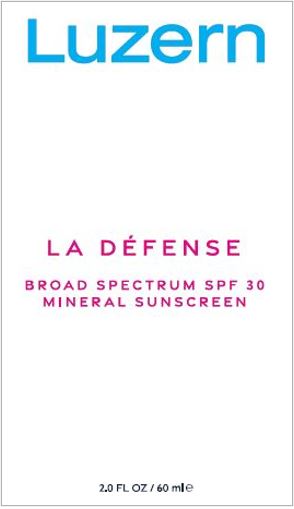
La Defense Broad Spectrum SPF 30 Mineral Sunscreen Zinc Oxide, Titanium Dioxide 15 g/100mL; 3.57 g/100mL Lotion, 3 mL
🆔 Identity & classification
Where does this data come from?
🏭 Manufacturer & labeler
Where does this data come from?
🩺 Clinical
La Defense Broad Spectrum SPF 30 Mineral Sunscreen is a lotion applied to the skin to help protect against sun exposure. It contains two mineral active ingredients, titanium dioxide and zinc oxide, which function as physical UV filters. These ingredients work by sitting on top of the skin and reflecting ultraviolet rays away from the surface. This is an over-the-counter sunscreen product marketed under FDA's established rules for sunscreen ingredients.
Patient education
Supplement & herbal interactions
Where does this data come from?
Ask a licensed pharmacist directly — free, answered by our team.
🧪 Inactive Ingredients / Excipients
Inactive ingredients, also called excipients, are components of the drug product other than the active ingredient. They may include fillers, dyes, coatings, preservatives, flavors, or other formulation ingredients.
💡 Tap an ingredient (hover on desktop) to see what it is and why it’s used.
-
UNII 9E8X80D2L0
A synthetic form of vitamin E used as an antioxidant and preservative in medications. It helps prevent the active ingredients from degrading when exposed to oxygen or light.
-
UNII 4V59G5UW9X
Argan oil is a plant-derived oil from argan tree kernels. It's used in medicines as an emollient and skin-conditioning agent to help soften and moisturize the product's texture.
-
UNII 94ZLA3W45F
Arginine is an amino acid used in medicines as a buffer and pH adjuster. It helps maintain the proper acidity level and stability of liquid formulations.
-
UNII X380815D32
A plant extract from butterfly bush leaves used as a natural colorant and flavoring agent in medicines. It may also help preserve the product or provide antioxidant properties in the formulation.
-
UNII K67N5Z1RUA
A plant-derived surfactant made from natural sugars and fatty alcohols. It helps dissolve and mix ingredients evenly throughout the medicine, acting as an emulsifier and solubilizer in liquid formulations.
-
UNII B1K89384RJ
A mixture of fatty alcohols derived from natural oils or fats, typically containing 14 to 22 carbon atoms. Used as an emollient, thickener, and emulsifier to improve texture and help blend oil and water components in formulations.
-
UNII UPY805K99W
A synthetic compound derived from caprylic acid that works as a preservative and antimicrobial agent to help prevent bacterial and fungal growth in the medicine.
-
UNII 0A5MM307FC
A synthetic polymer that absorbs water and forms a thick, gel-like substance. In medicines, it works as a thickener and stabilizer to improve texture and help ingredients stay mixed together in creams, gels, and lotions.
-
UNII 936JST6JCN
Cetyl alcohol is a waxy, fatty substance derived from plant or animal sources. It acts as an emulsifier and thickener in medicines, helping blend oil and water components and giving products a smooth, creamy texture.
-
UNII UE856F2T78
A gelling agent derived from red seaweed. It thickens liquid medicines and helps create a smooth texture, often used in syrups and suspensions to improve how the medicine coats the mouth and throat.
-
UNII 2968PHW8QP
A weak organic acid derived from citrus fruits or made through fermentation. It works as a buffer to control pH, a preservative to extend shelf life, and a flavoring agent in medications.
-
UNII ANA2NCS6V1
A natural oil derived from macadamia nuts, used as an emollient and conditioning agent. It helps soften the product's texture and improve how it spreads or absorbs on skin or mucous membranes.
-
UNII I6KB4GE3K4
A synthetic oil derived from petrochemicals, used as an emollient and solvent in topical formulations. It helps dissolve active ingredients and improve the texture and spreadability of creams, lotions, and ointments.
-
UNII 147D247K3P
Ethylhexylglycerin is a synthetic preservative used to prevent bacteria and mold from growing in medicines and personal care products. It helps keep the product safe and stable throughout its shelf life.
-
UNII C5529G5JPQ
Ginger is a plant-derived ingredient used as a flavoring agent to add taste and aroma to medicines. It may also provide mild soothing properties to support product palatability.
-
UNII PDC6A3C0OX
Glycerin is a clear, thick liquid derived from plant oils or fats. It acts as a humectant to retain moisture, a sweetener, and a solvent in medications.
-
UNII B68LJT9544
A fatty acid derivative used as a preservative and antimicrobial agent in topical medicines. It helps prevent bacterial and fungal growth to maintain product stability and safety.
-
UNII HYE7O27HAO
Glyceryl isostearate is a fatty substance derived from vegetable oils or animal fats. In medicines, it acts as an emulsifier to blend water and oil components together, and helps form a smooth texture in creams, ointments, and other topical products.
-
UNII TM2TZD4G4A
A plant-derived oily substance used as an emulsifier and solubilizer in medicines. It helps blend water and oil-based ingredients together and improves how the body absorbs certain active drugs.
-
UNII 2788Z9758H
A plant extract from licorice root used as a sweetener, flavoring agent, and natural emulsifier in medicines. It helps improve taste and may aid in keeping ingredients evenly mixed throughout the product.
-
UNII W2ZU1RY8B0
A plant extract from green tea leaves. It's used as an antioxidant ingredient to help preserve the medicine and maintain its stability during storage.
-
UNII 151Z7P1317
Hexyldecanol is a waxy alcohol derived from natural oils. It acts as an emollient and viscosity agent in topical formulations, helping create smooth texture and improve product spreadability on skin.
-
UNII YSE9PPT4TH
Hyaluronate sodium is a natural carbohydrate that holds moisture. It's used in medicines as a lubricant, thickener, and moisture-retaining agent to improve texture and delivery of the active ingredient.
-
UNII 9EHU0R7ER1
Isostearyl palmitate is a synthetic fatty acid ester used as an emollient and lubricant. It helps soften the product texture and allows ingredients to blend smoothly in topical formulations.
-
UNII QQC1AK06RK
A botanical extract from alpine edelweiss flowers used as a natural fragrance, flavor component, or skin-conditioning agent in topical or oral formulations. It may also serve antioxidant or soothing purposes in finished products.
-
UNII 24WE03BX2T
Levomenol is a naturally derived alcohol compound used as a skin-conditioning and anti-inflammatory agent in topical formulations. It helps soothe and protect the skin while improving product texture and absorption.
-
UNII RYX5QG61EI
Levulinic acid is an organic compound derived from cellulose that acts as a buffer and pH regulator in medications. It helps maintain stable acidity levels in the formulation.
-
UNII C9H2L21V7U
A fat derived from coconut or palm oil containing shorter fatty acid chains. It serves as a solvent and carrier to help dissolve or suspend active ingredients, improving absorption and stability in liquid formulations.
-
UNII N8F53B3R4R
A synthetic humectant and solvent derived from propane. It draws and holds moisture in the formulation, helping keep the medicine stable and improving texture or flow in liquid and semi-solid products.
-
UNII X8725R883T
A synthetic oily liquid derived from branched carboxylic acids, used as an emollient and skin-conditioning agent in topical formulations. It helps soften and smooth the product's texture while improving how it spreads on skin.
-
UNII WV9CM0O67Z
Panthenol is a humectant and skin-conditioning agent derived from pantothenic acid. It's added to medicines to help retain moisture and soothe skin irritation.
-
UNII 8KQ7I65XZE
A waxy compound derived from stearic acid, used as a thickener and emulsifier to help blend oil and water-based ingredients. It improves the texture and stability of the medicine formulation.
-
UNII 5965N8W85T
Propanediol is a clear liquid organic compound derived from vegetable sources or synthesized chemically. It acts as a humectant to retain moisture, a solvent to dissolve active ingredients, and a preservative booster in liquid medications and supplements.
-
UNII 836SJG51DR
Sodium ascorbyl phosphate is a derivative of vitamin C that acts as an antioxidant and preservative in medications. It helps protect the drug's active ingredients from degradation caused by air and light exposure.
-
UNII VK44E1MQU8
Sodium levulinate is a salt derived from levulinic acid, a naturally occurring organic compound. It functions as a humectant and preservative in medicines, helping retain moisture and prevent microbial growth.
-
UNII 469OTG57A2
Sodium pyrrolidone carboxylate is a synthetic polymer derived from pyrrolidone chemistry. It functions as a solubilizer and binder in medications, helping dissolve poorly water-soluble drugs and hold tablet ingredients together.
-
UNII V56DFE46J5
Steareth-2 is a synthetic emulsifier made from stearic acid and ethylene oxide. It helps mix oil and water-based ingredients together in the formulation and may improve how the medicine spreads or dissolves.
-
UNII 53J3F32P58
A synthetic detergent derived from stearic acid, a fatty substance. It helps dissolve or distribute oil-based ingredients evenly throughout the medicine, acting as an emulsifier and solubilizer in tablets and capsules.
-
UNII 3W1JG795YI
Sunflower oil is a natural vegetable oil derived from sunflower seeds. It serves as a solvent, lubricant, and carrier in medicines, helping dissolve active ingredients and improve how the medication flows and absorbs in the body.
-
UNII CW657OBU4N
A plant extract from thyme used as a flavoring agent and preservative in medicines. It adds taste and aroma while helping protect the product from spoilage.
-
UNII R0ZB2556P8
Tocopherol is a form of vitamin E derived from plant oils. It acts as an antioxidant in medicines to prevent oils and fats from breaking down and spoiling during storage.
-
UNII O03S90U1F2
A synthetic compound combining vitamin E with polyethylene glycol and succinic acid. It acts as a solubilizer and antioxidant in medicines, helping dissolve poorly water-soluble drugs and prevent degradation of active ingredients.
-
UNII 059QF0KO0R
Water is a liquid solvent that dissolves and mixes ingredients together in liquid medicines, syrups, and injections. It helps distribute the active drug evenly throughout the product.
43 inactive ingredients listed in the exact product block matched to this NDC.
Label-section wording can be broader than the structured product block and may mention additional formulation ingredients.
Where does this data come from?
ingredient classCode="IACT" elements from the exact product block matched by this NDC. Label-section narrative from DailyMed / the openFDA label index is shown separately when available.Inactive ingredient FAQ
Are inactive ingredients the same for every manufacturer?
Why might an inactive ingredient be missing?
Can inactive ingredients matter?
💲 Pricing
A drug doesn't have one price. Each row is a different public payment system, and none is what you'd pay at the counter — that depends on your insurance. The ⓘ on each row explains what it measures.
| Price system | Per g | Per package |
|---|---|---|
| Retail pharmacies payNADAC · weekly | Not in the retail survey — common for institutional, discontinued, or low-volume packs. | |
| Medicaid paysCMS SDUD · 12 mo | No recent Medicaid claims on file for this NDC — rare and low-volume NDCs are suppressed in the public data. | |
| Medicare drug plans payPart D · quarterly | No Part D plan price is available for this NDC in our data. | |
Where does this data come from?
🔁 Therapeutic equivalents
| Product | Labeler | Pack | NADAC/unit | TE | Status | Price vs. this |
|---|---|---|---|---|---|---|
| La Defense Broad Spectrum SPF 30 Mineral Sunscreen 15 g/100mL; 3.57 g/100mLthis 63127-0101-02 | Luzern | 3 ml | — | — | FDA listed | — |
Where does this data come from?
⏳ Availability & generic status
We did not find an FDA-approved generic match for this exact strength, form and route.
Where does this data come from?
🔬 Reported adverse events (FAERS)
Top reported reactions
Reporter sex
Where does this data come from?
📦 Packaging — all sizes for this product
| Package NDC | Description | Marketing start | Status |
|---|---|---|---|
| 63127-0101-01 | 1 TUBE in 1 CARTON (63127-101-01) / 60 mL in 1 TUBE | 2021-05-10 | Active |
| 63127-0101-02 You're viewing this | 3 mL in 1 TUBE (63127-101-02) | 2021-05-10 | Active |
| 63127-0101-03 | 240 mL in 1 BOTTLE (63127-101-03) | 2021-05-10 | Active |
Pack size FAQ
What quantity is in NDC 63127-0101-02?
What is the difference between NDC 63127-0101-02 and NDC 63127-0101-03?
What NDC number is used to bill for this package of La Defense Broad Spectrum SPF 30 Mineral Sunscreen Zinc Oxide, Titanium Dioxide 15 g/100mL; 3.57 g/100mL Lotion?
🧭 About this NDC listing & data coverage
What data is (and isn’t) available for this NDC — tap to expand
| NDC identity (package / product / labeler codes) | ✓ Available |
| Labeler | ✓ Available |
| Product & package description | ✓ Available |
| Marketing category & status | ✓ Available |
| Active ingredient / dosage form / route | ✓ Available |
| FDA label (SPL via DailyMed) | ✓ Available |
| Package photos | ✓ Available |
| Inactive ingredients (structured) | ✓ Available |
| NADAC pharmacy acquisition price (CMS) | — Not published for this NDC CMS publishes NADAC only for NDCs reported in its retail-pharmacy survey. |
| Orange Book / therapeutic-equivalence data | — Not published for this NDC Applies only to products approved under an NDA/ANDA; many listings are out of scope. |
| HCPCS J-code billing crosswalk | — Not published for this NDC Most self-administered / retail products have no J-code — that is normal. |
| Medicaid utilization (CMS SDUD) | — Not published for this NDC CMS reports utilization only for NDCs with Medicaid claims above its privacy threshold. |
Questions about this listing
Is this NDC FDA-approved?
Why is there no price listed?
Is the NDC printed on the package the same as the 11-digit billing NDC?
What do the three segments of this NDC mean?
Is this package still being marketed?
Does this product come in other package sizes?
Who lists this product with the FDA?
Do I need a prescription for this product?
Where does this data come from?
📄 FDA label — Drug Facts FDA SPL
🎯 Indications and Usage ▾
Uses: Helps prevent sunburn
⏱️ Dosage and Administration ▾
Directions Apply liberally/generously (and evenly) 15 minutes before sun exposure; Reapply at least every 2 hours or after swimming, towel drying, perspiring heavily and washing; and for use on children less than 6 months of age, consult a health care practitioner. Sun Protection Measures: Spending time in the sun increases your risk of skin cancer and early skin aging. To decrease this risk, regularly use a sunscreen with a Broad Spectrum SPF value of 15 or higher and other measures including: Limit time in the sun, especially from 10am – 2pm.
Wear Long-sleeved shirts, pants, hats and sunglasses. Reapply after 40 minutes of swimming or sweating. Reapply immediately after towel drying.
⚠️ Warnings ▾
Warnings: For external use only Avoid contact with eyes. If contact occurs, rinse thoroughly with water. Do not use on damaged or broken skin. Discontinue use if skin irritation develops or increases. If irritation persists, consult a health care practitioner. If swallowed, get medical help or contact a Poison Control Center right away. Keep out of reach of children. Consult a health care practitioner prior to use on children less than six months of age.
🧪 Active Ingredient ▾
Active Ingredients: Zinc Oxide (CI 77947) 15% Titanium Dioxide 3.57%
🧪 Inactive Ingredients ▾
Inactive Ingredients: ARGANIA SPINOSA (ARGAN) KERNEL OIL, BISABOLOL, BUDDLEJA DAVIDII LEAF EXTRACT, C1220 ALKYL GLUCOSIDE, C1422 ALCOHOLS, CAMELLIA SINENSIS (GREEN TEA) LEAF EXTRACT, CAPRYLHYDROXAMIC ACID, CAPRYLIC/CAPRIC TRIGLYCERIDE, CARBOMER, CETYL ALCOHOL, CHONDRUS CRISPUS EXTRACT, CITRIC ACID, ETHYL MACADAMIATE, ETHYLHEXYL ISONONANOATE, ETHYLHEXYLGLYCERIN, FRAGRANCE (PARFUM), GLYCERIN, GLYCERYL CAPRYLATE , GLYCERYL ISOSTEARATE, GLYCERYL UNDECYLENATE, GLYCYRRHIZA GLABRA (LICORICE) ROOT EXTRACT, HELIANTHUS ANNUUS (SUNFLOWER) SEED OIL, HEXYLDECANOL, ISOSTEARYL PALMITATE, JOJOBA ESTERS, L-ARGININE, LEONTOPODIUM ALPINUM (EDELWEISS) FLOWER/LEAF EXTRACT, LEVULINIC ACID, METHYLPROPANEDIOL, OCTYLDODECYL NEOPENTANOATE, PANTHENOL, POLYHYDROXYSTEARIC ACID, PROPANEDIOL, SODIUM ASCORBYL PHOSPHATE, SODIUM HYALURONATE, SODIUM LEVULINATE, SODIUM PCA, STEARETH-2, STEARETH-21, TETRASODIUM GLUTAMATE DIACETATE, THYMUS VULGARIS (THYME) FLOWER/LEAF EXTRACT, TOCOPHEROL, TOCOPHERSOLAN, TOCOPHERYL ACETATE, WATER (AQUA), ZINGIBER OFFICINALE (GINGER) ROOT EXTRACT.
🎯 Purpose ▾
Purpose Sunscreen