
Oxycodone and Acetaminophen 10 mg; 325 mg Tablet, 90-count — NDC 63187-721-90 (Billing 63187-0721-90)
This is a package of 90 tablets of Oxycodone and Acetaminophen 10 mg; 325 mg Tablet from Proficient Rx LP, marketed since Nov 2007 and currently FDA-listed.
NDC database record
One package, one record: these facts belong to NDC 63187-721-90 alone.
- Record
- FDA NDC Directory package listing · Human prescription drug
- Code segments
- 63187 labeler · 721 product · 90 package
- Package marketed since
- May 30, 2017
- Sample package
- No — commercial package
- Listing certified through
- Dec 31, 2026
- Billing quantity
- 90 EA per package
- Barcode (UPC-A, from the NDC)
- 3 6318772190 9
- FDA record last changed
- Aug 27, 2026
Identity & classification
Regulatory identifiers FDA, NLM and CMS codes for this package
Drug-database identifiers Medi-Span GPI and First Databank GCN / HICL / AHFS classification
- GSN (GCN sequence number): 048977
- GCN: 14966
- GPI-14 (Medi-Span): 65990002200335
- HICL (First Databank): 001741
- AHFS class code: 28:08.08.00
- RxCUI (RxNorm): 1049214
Where does this data come from?
- FDA openFDA NDC Directory · synced Oct 1, 2026
- FDA label on DailyMed · label index refreshed Oct 5, 2026
- RxNorm (NLM RxNav) · catalog refreshed Oct 1, 2026
- Medi-Span GPI (licensed)
- First Databank (licensed) · refreshed Oct 1, 2026
RxNorm drug class
This medicine belongs to the Anilides class.
Where does this data come from?
- RxClass (NLM) · catalog refreshed Oct 1, 2026
Clinical
Acetaminophen is used to relieve mild to moderate pain and to reduce fever. Acetaminophen is in a class of medications called analgesics (pain relievers) and antipyretics (fever reducers). It works by changing the way the body senses pain and by cooling the body.
Read the full MedlinePlus article ↗Patient education
Supplement & herbal interactions
Where does this data come from?
- MedlinePlus (NLM) · refreshed Oct 1, 2026
- FDA label on DailyMed · label index refreshed Oct 5, 2026
Ask a licensed pharmacist directly — free, answered by our team.
Pricing
A drug doesn't have one price. Each row is a different public payment system, and none is what you'd pay at the counter — that depends on your insurance. The ⓘ on each row explains what it measures.
| Price system | Per each | Per package |
|---|---|---|
| Retail pharmacies payNADAC · weekly | Not in the retail survey — common for institutional, discontinued, or low-volume packs. | |
| Medicaid paysCMS SDUD · 12 mo | No recent Medicaid claims on file for this NDC — rare and low-volume NDCs are suppressed in the public data. | |
| Medicare drug plans payPart D · Q2 2026 | $0.2090 | $18.81 / 90 tablets |
Where does this data come from?
- CMS NADAC weekly file
- CMS ASP pricing files · refreshed Sep 20, 2026
- CMS Medicaid State Drug Utilization Data · refreshed Oct 5, 2026
- CMS Part D plan pricing files · refreshed Sep 24, 2026
- VA National Acquisition Center price file
Packaging — all sizes for this product
| Package NDC | Description | Marketing start | Marketing end | Status |
|---|---|---|---|---|
| 63187-0721-15 63187-721-15 Main listing | 15 TABLET in 1 BOTTLE | 2016-06-01 | — | Active |
| 63187-0721-20 63187-721-20 | 20 TABLET in 1 BOTTLE | 2016-06-01 | — | Active |
| 63187-0721-30 63187-721-30 | 30 TABLET in 1 BOTTLE | 2016-06-01 | — | Active |
| 63187-0721-60 63187-721-60 | 60 TABLET in 1 BOTTLE | 2016-06-01 | — | Active |
| 63187-0721-90 You're viewing this | 90 TABLET in 1 BOTTLE | 2017-05-30 | — | Active |
You're viewing the largest of 5 pack sizes for this product.
Pack size FAQ
What quantity is in this package?
How does this package differ from NDC 63187-0721-15?
What NDC number is used to bill for this package of Oxycodone and Acetaminophen 10 mg; 325 mg Tablet?
Therapeutic equivalents
| Product | Labeler | Pack | NADAC/unit | TE | Status | Price vs. this |
|---|---|---|---|---|---|---|
| Oxycodone and Acetaminophen 10 mg/1; 325 mg 42806-0116-01 | Epic | 100 tablets | $0.199 | AA | FDA listed | — |
| Oxycodone and Acetaminophen 10 mg/1; 325 mg 43386-0493-01 | Lupin | 100 tablets | $0.201 | AA | FDA listed | — |
| Oxycodone And Acetaminophen 10 mg/1; 325 mg 00406-0523-01 | SpecGx | 100 tablets | $0.231 | AA | Availability likely | — |
| Oxycodone And Acetaminophen 10 mg/1; 325 mg 00904-7095-61 | Major | 100 tablets | $0.231 | AA | Availability likely | — |
| Oxycodone and Acetaminophen 10 mg/1; 325 mg 10702-0187-01 | KVK-Tech, | 100 tablets | $0.231 | AA | Availability likely | — |
| Oxycodone and Acetaminophen 10 mg/1; 325 mg 13107-0046-01 | Aurolife | 100 tablets | $0.231 | AA | Availability likely | — |
| Oxycodone and Acetaminophen 10 mg/1; 325 mg 31722-0194-01 | Camber | 100 tablets | $0.231 | AA | Availability likely | — |
| Oxycodone And Acetaminophen 10 mg/1; 325 mg 31722-0951-01 | Camber | 100 tablets | $0.231 | AA | Availability likely | — |
| Oxycodone and Acetaminophen 10 mg/1; 325 mg 42858-0104-01 | Rhodes | 100 tablets | $0.231 | AA | Availability likely | — |
| Oxycodone and Acetaminophen 10 mg/1; 325 mg 47781-0230-01 | Alvogen, | 100 tablets | $0.231 | AA | Availability likely | — |
| Oxycodone and Acetaminophen 325 mg/1; 10 mg 50268-0646-15 | AvPAK | 50 tablets | $0.231 | AA | Availability likely | — |
| Oxycodone and Acetaminophen 10 mg/1; 325 mg 53746-0204-01 | Amneal | 100 tablets | $0.231 | AA | Availability likely | — |
| Endocet 10 mg/1; 325 mg 60951-0712-70 | Par | 100 tablets | $0.231 | AA | Availability likely | — |
| Oxycodone Hydrochloride and Acetaminophen 10 mg/1; 325 mg 64850-0623-01 | Elite | 100 tablets | $0.231 | AA | Availability likely | — |
| Oxycodone and Acetaminophen 10 mg/1; 325 mg 68084-0710-01 | American | 100 tablets | $0.231 | AA | Availability likely | — |
| Oxycodone and Acetaminophen 10 mg/1; 325 mg 70010-0670-01 | Granules | 100 tablets | $0.231 | AA | Availability likely | — |
| Oxycodone And Acetaminophen 10 mg/1; 325 mg 71930-0047-12 | Eywa | 100 tablets | $0.231 | AA | Availability likely | — |
| Percocet 10 mg/1; 325 mg 63481-0629-70 | SpecGx | 100 tablets | $41.395 | AA | Availability likely | — |
| Oxycodone and Acetaminophen 10 mg/1; 325 mg 60760-0899-30 | St. | 30 tablets | — | AA | FDA listed | — |
| Oxycodone Hydrochloride and Acetaminophen 10 mg/1; 325 mg 60760-0965-60 | St. | 60 tablets | — | AA | FDA listed | — |
| Oxycodone And Acetaminophen 10 mg/1; 325 mg 61919-0871-30 | Direct_Rx | 30 tablets | — | AA | Discontinued | — |
| Oxycodone and Acetaminophen 10 mg/1; 325 mg 63187-0363-12 | Proficient | 12 tablets | — | AA | FDA listed | — |
| Oxycodone and Acetaminophen 10 mg/1; 325 mgthis 63187-0721-90 | Proficient | 90 tablets | — | AA | FDA listed | — |
| Oxycodone and Acetaminophen 10 mg/1; 325 mg 63187-0823-15 | Proficient | 15 tablets | — | AA | FDA listed | — |
| Endocet 325 mg/1; 10 mg 63629-2187-01 | Bryant | 100 tablets | — | AA | Discontinued | — |
| Oxycodone And Acetaminophen 10 mg/1; 325 mg 63629-8834-01 | Bryant | 30 tablets | — | AA | FDA listed | — |
| Oxycodone and Acetaminophen 10 mg/1; 325 mg 63629-8876-01 | Bryant | 100 tablets | — | AA | FDA listed | — |
| Oxycodone and Acetaminophen 10 mg/1; 325 mg 63629-9501-01 | Bryant | 500 tablets | — | AA | FDA listed | — |
| Oxycodone and Acetaminophen 10 mg/1; 325 mg 71205-0347-12 | Proficient | 12 tablets | — | AA | FDA listed | — |
| Oxycodone and Acetaminophen 10 mg/1; 325 mg 71205-0486-30 | Proficient | 30 tablets | — | AA | FDA listed | — |
| Oxycodone and Acetaminophen 10 mg/1; 325 mg 71335-0146-00 | Bryant | 112 tablets | — | AA | FDA listed | — |
| Oxycodone and Acetaminophen 10 mg/1; 325 mg 71335-1036-01 | Bryant | 30 tablets | — | AA | FDA listed | — |
| Oxycodone and Acetaminophen 10 mg/1; 325 mg 71335-1420-01 | Bryant | 30 tablets | — | AA | FDA listed | — |
| Oxycodone And Acetaminophen 10 mg/1; 325 mg 71335-2049-01 | Bryant | 30 tablets | — | AA | FDA listed | — |
| Oxycodone And Acetaminophen 10 mg/1; 325 mg 71335-2106-01 | Bryant | 30 tablets | — | AA | FDA listed | — |
| Endocet 10 mg/1; 325 mg 71335-2182-01 | Bryant | 30 tablets | — | AA | FDA listed | — |
| Oxycodone and Acetaminophen 10 mg/1; 325 mg 72162-1339-03 | Bryant | 30 tablets | — | AA | FDA listed | — |
| Endocet 10 mg/1; 325 mg 72162-1728-01 | Bryant | 100 tablets | — | AA | FDA listed | — |
| Oxycodone And Acetaminophen 10 mg/1; 325 mg 72189-0255-30 | DIRECT | 30 tablets | — | AA | FDA listed | — |
| Percocet 325 mg/1; 10 mg 72189-0397-30 | Direct_Rx | 30 tablets | — | AA | FDA listed | — |
| Oxycodone And Acetaminophen 10 mg/1; 325 mg 72865-0116-01 | XLCare | 100 tablets | — | AA | FDA listed | — |
| Oxycodone and Acetaminophen 10 mg/1; 325 mg 76420-0209-01 | Asclemed | 100 tablets | — | AA | FDA listed | — |
| Oxycodone And Acetaminophen 10 mg/1; 325 mg 76420-0323-01 | Asclemed | 100 tablets | — | AA | FDA listed | — |
| Oxycodone And Acetaminophen 10 mg/1; 325 mg 87063-0034-01 | Asclemed | 100 tablets | — | AA | FDA listed | — |
Where does this data come from?
- FDA openFDA NDC Directory · synced Oct 1, 2026
- FDA Orange Book · refreshed Oct 3, 2026
- CMS NADAC weekly file
Availability & generic status
This product is an FDA-approved generic. Other versions of the same drug are listed under Therapeutic equivalents, least expensive first.
Where does this data come from?
- FDA Orange Book · refreshed Oct 3, 2026
What it looks like
Where does this data come from?
- FDA label on DailyMed · label index refreshed Oct 5, 2026
Inactive Ingredients / Excipients
Inactive ingredients, also called excipients, are components of the drug product other than the active ingredient. They may include fillers, dyes, coatings, preservatives, flavors, or other formulation ingredients.
💡 Tap an ingredient (hover on desktop) to see what it is and why it’s used.
-
UNII 68401960MK
Crospovidone is a synthetic polymer made from polyvinylpyrrolidone. It acts as a disintegrant, helping tablets break apart quickly in the stomach so the medicine dissolves and absorbs into the body.
-
UNII 70097M6I30
Magnesium stearate is a salt made from magnesium and stearic acid, a fatty substance. It's used in tablets and capsules as a lubricant and glidant to help ingredients flow smoothly during manufacturing and prevent sticking.
-
UNII OP1R32D61U
Microcrystalline cellulose is a purified form of cellulose, a natural fiber from plant sources. It acts as a binder and filler in tablets and capsules, helping hold ingredients together and give the medicine its shape and size.
-
UNII FZ989GH94E
Povidone is a synthetic polymer made from a plastic-like material. It acts as a binder to hold tablet ingredients together and as a disintegrant to help the tablet break apart in your stomach so the medicine can be absorbed.
-
UNII ETJ7Z6XBU4
Silicon dioxide is a naturally occurring mineral used as a glidant and anti-caking agent. It helps powder ingredients flow smoothly and prevents clumping during manufacturing and storage.
-
UNII O8232NY3SJ
A plant-based carbohydrate derived from corn kernels. It acts as a filler to add bulk, a binder to hold ingredients together, and a disintegrant to help the tablet break apart in your stomach for absorption.
-
UNII 4ELV7Z65AP
Stearic acid is a fatty acid derived from plant or animal sources. It acts as a binder and lubricant in tablets and capsules, helping them hold together and flow smoothly during manufacturing.
7 inactive ingredients listed in the exact product block matched to this NDC.
Where does this data come from?
ingredient classCode="IACT" elements from the exact product block matched by this NDC. Label-section narrative from DailyMed / the openFDA label index is shown separately when available.- FDA label on DailyMed · label index refreshed Oct 5, 2026
- FDA openFDA NDC Directory · synced Oct 1, 2026
Inactive ingredient FAQ
Are inactive ingredients the same for every manufacturer?
Why might an inactive ingredient be missing?
Can inactive ingredients matter?
Manufacturer & labeler
More NDCs from Proficient Rx LP labeler code 63187
- Bupropion Hydrochloride 150 mg Tablet, Film Coated, Extended Release NDC 63187-713-30
- Diclofenac Sodium 50 mg Tablet, Delayed Release NDC 63187-714-15
- Nortriptyline Hydrochloride 10 mg Capsule NDC 63187-715-30
- aspirin 81 mg Tablet, Chewable NDC 63187-717-36
- Oxycodone and Acetaminophen 5 mg; 325 mg Tablet NDC 63187-719-12
- Duloxetine Delayed-Release Duloxetine Hydrochloride 20 mg Capsule, Delayed Release Pellets NDC 63187-720-30
- Famotidine 20 mg Tablet NDC 63187-723-00
- Bupropion Hydrochloride SR 150 mg Tablet, Film Coated, Extended Release NDC 63187-726-30
- Losartan Potassium and Hydrochlorothiazide 100 mg; 12.5 mg Tablet, Film Coated NDC 63187-727-30
- Amoxicillin 875 mg Tablet, Film Coated NDC 63187-729-14
- Hydroxyzine hydrochloride 25 mg Tablet NDC 63187-733-16
- Ofloxacin 3 mg/mL Solution NDC 63187-734-05
Where does this data come from?
- FDA openFDA NDC Directory · synced Oct 1, 2026
- Drugs@FDA
Full prescribing information FDA SPL
🎯 Indications and Usage ▾
INDICATIONS AND USAGE Oxycodone and Acetaminophen Tablets, USP are indicated for the relief of moderate to moderately severe pain.
⏱️ Dosage and Administration ▾
DOSAGE AND ADMINISTRATION Dosage should be adjusted according to the severity of the pain and the response of the patient. It may occasionally be necessary to exceed the usual dosage recommended below in cases of more severe pain or in those patients who have become tolerant to the analgesic effect of opioids. If pain is constant, the opioid analgesic should be given at regular intervals on an around-the-clock schedule.
Oxycodone and acetaminophen tablets are given orally. The usual adult dosage is one tablet every 6 hours as needed for pain. The total daily dose of acetaminophen should not exceed 4 grams.
Strength Maximal Daily Dose Oxycodone and Acetaminophen Tablets 10 mg / 325 mg 6 Tablets Cessation of Therapy In patients treated with oxycodone and acetaminophen tablets for more than a few weeks who no longer require therapy, doses should be tapered gradually to prevent signs and symptoms of withdrawal in the physically dependent patient.
⛔ Contraindications ▾
CONTRAINDICATIONS Oxycodone and acetaminophen tablets should not be administered to patients with known hypersensitivity to oxycodone, acetaminophen, or any other component of this product. Oxycodone is contraindicated in any situation where opioids are contraindicated including patients with significant respiratory depression (in unmonitored settings or the absence of resuscitative equipment) and patients with acute or severe bronchial asthma or hypercarbia. Oxycodone is contraindicated in the setting of suspected or known paralytic ileus.
⚠️ Warnings ▾
WARNINGS Hepatotoxicity Acetaminophen has been associated with cases of acute liver failure, at times resulting in liver transplant and death. Most of the cases of liver injury are associated with the use of acetaminophen at doses that exceed 4000 milligrams per day, and often involve more than one acetaminophen-containing product. The excessive intake of acetaminophen may be intentional to cause self-harm or unintentional as patients attempt to obtain more pain relief or unknowingly take other acetaminophen-containing products.
The risk of acute liver failure is higher in individuals with underlying liver disease and in individuals who ingest alcohol while taking acetaminophen. Instruct patients to look for acetaminophen or APAP on package labels and not to use more than one product that contains acetaminophen. Instruct patients to seek medical attention immediately upon ingestion of more than 4000 milligrams of acetaminophen per day, even if they feel well.
Serious skin reactions Rarely, acetaminophen may cause serious skin reactions such as acute generalized exanthematous pustulosis (AGEP), Stevens-Johnson Syndrome (SJS), and toxic epidermal necrolysis (TEN), which can be fatal. Patients should be informed about the signs of serious skin reactions, and use of the drug should be discontinued at the first appearance of skin rash or any other sign of hypersensitivity. Hypersensitivity/ anaphylaxis There have been post-marketing reports of hypersensitivity and anaphylaxis associated with use of acetaminophen.
Clinical signs include swelling of the face, mouth, and throat, respiratory distress, urticaria, rash, pruritis, and vomiting. There were infrequent reports of life-threatening anaphylaxis requiring emergency medical attention. Instruct patients to discontinue Oxycodone and Acetaminophen Tablets, USP immediately and seek medical care if they experience these symptoms.
Do not prescribe Oxycodone and Acetaminophen Tablets, USP for patients with acetaminophen allergy. Misuse, Abuse and Diversion of Opioids Oxycodone is an opioid agonist of the morphine-type. Such drugs are sought by drug abusers and people with addiction disorders and are subject to criminal diversion.
Oxycodone can be abused in a manner similar to other opioid agonists, legal or illicit. This should be considered when prescribing or dispensing oxycodone and acetaminophen tablets in situations where the physician or pharmacist is concerned about an increased risk of misuse, abuse, or diversion. Concerns about misuse, addiction, and diversion should not prevent the proper management of pain.
Healthcare professionals should contact their State Professional Licensing Board or State Controlled Substances Authority for information on how to prevent and detect abuse or diversion of this product. Administration of oxycodone and acetaminophen tablets should be closely monitored for the following potentially serious adverse reactions and complications: Respiratory Depression Respiratory depression is a hazard with the use of oxycodone, one of the active ingredients in oxycodone and acetaminophen tablets, as with all opioid agonists.
Elderly and debilitated patients are at particular risk for respiratory depression as are non-tolerant patients given large initial doses of oxycodone or when oxycodone is given in conjunction with other agents that depress respiration. Oxycodone should be used with extreme caution in patients with acute asthma, chronic obstructive pulmonary disorder (COPD), cor pulmonale, or pre-existing respiratory impairment. In such patients, even usual therapeutic doses of oxycodone may decrease respiratory drive to the point of apnea.
In these patients alternative non-opioid analgesics should be considered, and opioids should be employed only under careful medical supervision at the lowest effective dose. In case of respiratory depression, a reversal agent such as naloxone hydrochloride may be utilized (see OVERDOSAGE ). Head Injury and Increased Int… [Excerpted — this section continues on DailyMed.]
🤒 Adverse Reactions ▾
ADVERSE REACTIONS Serious adverse reactions that may be associated with oxycodone and acetaminophen tablet use include respiratory depression, apnea, respiratory arrest, circulatory depression, hypotension, and shock (see OVERDOSAGE ). The most frequently observed non-serious adverse reactions include lightheadedness, dizziness, drowsiness or sedation, nausea, and vomiting. These effects seem to be more prominent in ambulatory than in nonambulatory patients, and some of these adverse reactions may be alleviated if the patient lies down.
Other adverse reactions include euphoria, dysphoria, constipation, and pruritus. Hypersensitivity reactions may include: Skin eruptions, urticarial, erythematous skin reactions. Hematologic reactions may include: Thrombocytopenia, neutropenia, pancytopenia, hemolytic anemia.
Rare cases of agranulocytosis has likewise been associated with acetaminophen use. In high doses, the most serious adverse effect is a dose-dependent, potentially fatal hepatic necrosis. Renal tubular necrosis and hypoglycemic coma also may occur.
Other adverse reactions obtained from postmarketing experiences with oxycodone and acetaminophen tablets are listed by organ system and in decreasing order of severity and/or frequency as follows: Body as a Whole: Anaphylactoid reaction, allergic reaction, malaise, asthenia, fatigue, chest pain, fever, hypothermia, thirst, headache, increased sweating, accidental overdose, non-accidental overdose Cardiovascular: Hypotension, hypertension, tachycardia, orthostatic hypotension, bradycardia, palpitations, dysrhythmias Central and Peripheral Nervous System: Stupor, tremor, paraesthesia, hypoaesthesia, lethargy, seizures, anxiety, mental impairment, agitation, cerebral edema, confusion, dizziness Fluid and Electrolyte: Dehydration, hyperkalemia, metabolic acidosis, respiratory alkalosis Gastrointestinal: Dyspepsia, taste disturbances, abdominal pain, abdominal distention, sweating increased, diarrhea, dry mouth, flatulence, gastro-intestinal disorder, nausea, vomiting, pancreatitis, intestinal obstruction, ileus Hepatic: Transient elevations of hepatic enzymes, increase in bilirubin, hepatitis, hepatic failure, jaundice, hepatotoxicity, hepatic disorder Hearing and Vestibular: Hearing loss, tinnitus Hematologic: Thrombocytopenia Hypersensitivity: Acute anaphylaxis, angioedema, asthma, bronchospasm, laryngeal edema, urticaria, anaphylactoid reaction Metabolic and Nutritional: Hypoglycemia, hyperglycemia, acidosis, alkalosis Musculoskeletal: Myalgia, rhabdomyolysis Ocular: Miosis, visual disturbances, red eye Psychiatric: Drug dependence, drug abuse, insomnia, confusion, anxiety, agitation, depressed level of consciousness, nervousness, hallucination, somnolence, depression, suicide Respiratory System: Bronchospasm, dyspnea, hyperpnea, pulmonary edema, tachypnea, aspiration, hypoventilation, laryngeal edema Skin and Appendages: Erythema, urticaria, rash, flushing Urogenital: Interstitial nephritis, papillary necrosis, proteinuria, renal insufficiency and failure, urinary retention
🆘 Overdosage ▾
OVERDOSAGE Following an acute overdosage, toxicity may result from the oxycodone or the acetaminophen. Signs and Symptoms Toxicity from oxycodone poisoning includes the opioid triad of: pinpoint pupils, depression of respiration, and loss of consciousness. Serious overdose with oxycodone is characterized by respiratory depression (a decrease in respiratory rate and/or tidal volume, Cheyne-Stokes respiration, cyanosis), extreme somnolence progressing to stupor or coma, skeletal muscle flaccidity, cold and clammy skin, and sometimes bradycardia and hypotension.
In severe overdosage, apnea, circulatory collapse, cardiac arrest and death may occur. In acetaminophen overdosage: dose-dependent, potentially fatal hepatic necrosis is the most serious adverse effect. Renal tubular necrosis, hypoglycemic coma and coagulation defects may also occur.
Early symptoms following a potentially hepatotoxic overdose may include: nausea, vomiting, diaphoresis and general malaise. Clinical and laboratory evidence of hepatic toxicity may not be apparent until 48 to 72 hours post-ingestion. Treatment A single or multiple drug overdose with oxycodone and acetaminophen is a potentially lethal polydrug overdose, and consultation with a regional poison control center is recommended.
Immediate treatment includes support of cardiorespiratory function and measures to reduce drug absorption. Oxygen, intravenous fluids, vasopressors, and other supportive measures should be employed as indicated. Assisted or controlled ventilation should also be considered.
Oxycodone Primary attention should be given to the reestablishment of adequate respiratory exchange through provision of a patent airway and the institution of assisted or controlled ventilation. The narcotic antagonist naloxone hydrochloride is a specific antidote against respiratory depression which may result from overdosage or unusual sensitivity to narcotics, including oxycodone. Since the duration of action of oxycodone may exceed that of the antagonist, the patient should be kept under continued surveillance and repeated doses of the antagonist should be administered as needed to maintain adequate respiration.
A narcotic antagonist should not be administered in the absence of clinically significant respiratory or cardiovascular depression. Acetaminophen Gastric decontamination with activated charcoal should be administered just prior to N-acetylcysteine (NAC) to decrease systemic absorption if acetaminophen ingestion is known or suspected to have occurred within a few hours of presentation. Serum acetaminophen levels should be obtained immediately if the patient presents 4 hours or more after ingestion to assess potential risk of hepatotoxicity; acetaminophen levels drawn less than 4 hours post-ingestion may be misleading.
To obtain the best possible outcome, NAC should be administered as soon as possible where impending or evolving liver injury is suspected. Intravenous NAC may be administered when circumstances preclude oral administration. Vigorous supportive therapy is required in severe intoxication.
Procedures to limit the continuing absorption of the drug must be readily performed since the hepatic injury is dose dependent and occurs early in the course of intoxication.
🧬 Clinical Pharmacology ▾
CLINICAL PHARMACOLOGY Central Nervous System Oxycodone is a semisynthetic pure opioid agonist whose principal therapeutic action is analgesia. Other pharmacological effects of oxycodone include anxiolysis, euphoria and feelings of relaxation. These effects are mediated by receptors (notably μ and k) in the central nervous system for endogenous opioid-like compounds such as endorphins and enkephalins.
Oxycodone produces respiratory depression through direct activity at respiratory centers in the brain stem and depresses the cough reflex by direct effect on the center of the medulla. Acetaminophen is a non-opiate, non-salicylate analgesic and antipyretic. The site and mechanism for the analgesic effect of acetaminophen has not been determined.
The antipyretic effect of acetaminophen is accomplished through the inhibition of endogenous pyrogen action on the hypothalamic heat-regulating centers. Gastrointestinal Tract and Other Smooth Muscle Oxycodone reduces motility by increasing smooth muscle tone in the stomach and duodenum. In the small intestine, digestion of food is delayed by decreases in propulsive contractions.
Other opioid effects include contraction of biliary tract smooth muscle, spasm of the Sphincter of Oddi, increased ureteral and bladder sphincter tone, and a reduction in uterine tone. Cardiovascular System Oxycodone may produce a release of histamine and may be associated with orthostatic hypotension, and other symptoms, such as pruritus, flushing, red eyes, and sweating. Pharmacokinetics Absorption and Distribution The mean absolute oral bioavailability of oxycodone in cancer patients was reported to be about 87%.
Oxycodone has been shown to be 45% bound to human plasma proteins in vitro . The volume of distribution after intravenous administration is 211.9 ±186.6 L. Absorption of acetaminophen is rapid and almost complete from the GI tract after oral administration.
With overdosage, absorption is complete in 4 hours. Acetaminophen is relatively uniformly distributed throughout most body fluids. Binding of the drug to plasma proteins is variable; only 20% to 50% may be bound at the concentrations encountered during acute intoxication.
Metabolism and Elimination A high portion of oxycodone is N-dealkylated to noroxycodone during first-pass metabolism. Oxymorphone, is formed by the O-demethylation of oxycodone. The metabolism of oxycodone to oxymorphone is catalyzed by CYP2D6.
Free and conjugated noroxycodone, free and conjugated oxycodone, and oxymorphone are excreted in human urine following a single oral dose of oxycodone. Approximately 8% to 14% of the dose is excreted as free oxycodone over 24 hours after administration. Following a single, oral dose of oxycodone, the mean ± SD elimination half-life is 3.51 ± 1.43 hours.
Acetaminophen is metabolized in the liver via cytochrome P450 microsomal enzyme. About 80-85% of the acetaminophen in the body is conjugated principally with glucuronic acid and to a lesser extent with sulfuric acid and cysteine. After hepatic conjugation, 90 to 100% of the drug is recovered in the urine with in the first day.
About 4% of acetaminophen is metabolized via cytochrome P450 oxidase to a toxic metabolite which is further detoxified by conjugation with glutathione, present in a fixed amount. It is believed that the toxic metabolite NAPQI (N acetyl-p-benzoquinoneimine, N-acetylimidoquinone) is responsible for liver necrosis. High doses of acetaminophen may deplete the glutathione stores so that inactivation of the toxic metabolite is decreased.
At high doses, the capacity of metabolic pathways for conjugation with glucuronic acid and sulfuric acid may be exceeded, resulting in increased metabolism of acetaminophen by alternate pathways.
📦 How Supplied / Storage and Handling ▾
HOW SUPPLIED Oxycodone and Acetaminophen Tablets USP, 10 mg / 325 mg are supplied as white to off-white, capsule-shaped, biconvex tablets, debossed “IP204” on obverse and plain on reverse. They are available as follows: Bottles of 15: NDC 63187-721-15 Bottles of 20: NDC 63187-721-20 Bottles of 30: NDC 63187-721-30 Bottles of 60: NDC 63187-721-60 Bottles of 90: NDC 63187-721-90 Store at 20° to 25°C (68° to 77°F) [See USP Controlled Room Temperature]. Dispense in a tight, light-resistant container as defined in the USP, with a child-resistant closure.
DEA Order Form Required
📋 Description ▾
DESCRIPTION Each tablet for oral administration contains: Oxycodone Hydrochloride, USP……………. 10 mg* Acetaminophen, USP………………………325 mg *10 mg oxycodone HCl is equivalent to 8.9637 mg of oxycodone. Oxycodone and Acetaminophen Tablets, USP also contain the following inactive ingredients: colloidal silicon dioxide, crospovidone, magnesium stearate, microcrystalline cellulose, povidone, pregelatinized starch and stearic acid.
Oxycodone, 14-hydroxydihydrocodeinone, is a semisynthetic opioid analgesic which occurs as a white, odorless, crystalline powder having a saline, bitter taste. The molecular formula for oxycodone hydrochloride is C 18 H 21 NO 4 •HCl and the molecular weight 351.82. It is derived from the opium alkaloid thebaine, and may be represented by the following structural formula: Acetaminophen, 4’-hydroxyacetanilide, is a non-opiate, non-salicylate analgesic and antipyretic which occurs as a white, odorless, crystalline powder, possessing a slightly bitter taste.
The molecular formula for acetaminophen is C 8 H 9 NO 2 and the molecular weight is 151.16. It may be represented by the following structural formula: bf726d0f-figure-01 bf726d0f-figure-02
⚠️ Precautions ▾
PRECAUTIONS General Opioid analgesics should be used with caution when combined with CNS depressant drugs, and should be reserved for cases where the benefits of opioid analgesia outweigh the known risks of respiratory depression, altered mental state, and postural hypotension. Acute Abdominal Conditions The administration of oxycodone and acetaminophen tablets or other opioids may obscure the diagnosis or clinical course in patients with acute abdominal conditions. Oxycodone and acetaminophen tablets should be given with caution to patients with CNS depression, elderly or debilitated patients, patients with severe impairment of hepatic, pulmonary, or renal function, hypothyroidism, Addison’s disease, prostatic hypertrophy, urethral stricture, acute alcoholism, delirium tremens, kyphoscoliosis with respiratory depression, myxedema, and toxic psychosis.
Oxycodone and acetaminophen tablets may obscure the diagnosis or clinical course in patients with acute abdominal conditions. Oxycodone may aggravate convulsions in patients with convulsive disorders, and all opioids may induce or aggravate seizures in some clinical settings. Following administration of oxycodone and acetaminophen tablets, anaphylactic reactions have been reported in patients with a known hypersensitivity to codeine, a compound with a structure similar to morphine and oxycodone.
The frequency of this possible cross-sensitivity is unknown. Interactions with Other CNS Depressants Patients receiving other opioid analgesics, general anesthetics, phenothiazines, other tranquilizers, centrally-acting anti-emetics, sedative-hypnotics or other CNS depressants (including alcohol) concomitantly with oxycodone and acetaminophen tablets may exhibit an additive CNS depression. When such combined therapy is contemplated, the dose of one or both agents should be reduced.
Interactions with Mixed Agonist/Antagonist Opioid Analgesics Agonist/antagonist analgesics (i.e., pentazocine, nalbuphine, and butorphanol) should be administered with caution to a patient who has received or is receiving a course of therapy with a pure opioid agonist analgesic such as oxycodone. In this situation, mixed agonist/antagonist analgesics may reduce the analgesic effect of oxycodone and/or may precipitate withdrawal symptoms in these patients. Ambulatory Surgery and Postoperative Use Oxycodone and other morphine-like opioids have been shown to decrease bowel motility.
Ileus is a common postoperative complication, especially after intra-abdominal surgery with use of opioid analgesia. Caution should be taken to monitor for decreased bowel motility in postoperative patients receiving opioids. Standard supportive therapy should be implemented.
Use in Pancreatic/Biliary Tract Disease Oxycodone may cause spasm of the Sphincter of Oddi and should be used with caution in patients with biliary tract disease, including acute pancreatitis. Opioids like oxycodone may cause increases in the serum amylase level. Tolerance and Physical Dependence Tolerance is the need for increasing doses of opioids to maintain a defined effect such as analgesia (in the absence of disease progression or other external factors).
Physical dependence is manifested by withdrawal symptoms after abrupt discontinuation of a drug or upon administration of an antagonist. Physical dependence and tolerance are not unusual during chronic opioid therapy. The opioid abstinence or withdrawal syndrome is characterized by some or all of the following: restlessness, lacrimation, rhinorrhea, yawning, perspiration, chills, myalgia, and mydriasis.
Other symptoms also may develop, including: irritability, anxiety, backache, joint pain, weakness, abdominal cramps, insomnia, nausea, anorexia, vomiting, diarrhea, or increased blood pressure, respiratory rate, or heart rate. In general, opioids should not be abruptly discontinued (see DOSAGE AND ADMINISTRATION: Cessation of Therapy ). Information for Patients/Caregivers The following information should be… [Excerpted — this section continues on DailyMed.]
🔒 Drug Abuse and Dependence ▾
DRUG ABUSE AND DEPENDENCE Oxycodone and acetaminophen tablets are a Schedule II controlled substance. Oxycodone is a mu-agonist opioid with an abuse liability similar to morphine. Oxycodone, like morphine and other opioids used in analgesia, can be abused and is subject to criminal diversion.
Drug addiction is defined as an abnormal, compulsive use, use for non-medical purposes of a substance despite physical, psychological, occupational or interpersonal difficulties resulting from such use, and continued use despite harm or risk of harm. Drug addiction is a treatable disease, utilizing a multi-disciplinary approach, but relapse is common. Opioid addiction is relatively rare in patients with chronic pain but may be more common in individuals who have a past history of alcohol or substance abuse or dependence.
Pseudoaddiction refers to pain relief seeking behavior of patients whose pain is poorly managed. It is considered an iatrogenic effect of ineffective pain management. The health care provider must assess continuously the psychological and clinical condition of a pain patient in order to distinguish addiction from pseudoaddiction and thus, be able to treat the pain adequately.
Physical dependence on a prescribed medication does not signify addiction. Physical dependence involves the occurrence of a withdrawal syndrome when there is sudden reduction or cessation in drug use or if an opiate antagonist is administered. Physical dependence can be detected after a few days of opioid therapy.
However, clinically significant physical dependence is only seen after several weeks of relatively high dosage therapy. In this case, abrupt discontinuation of the opioid may result in a withdrawal syndrome. If the discontinuation of opioids is therapeutically indicated, gradual tapering of the drug over a 2-week period will prevent withdrawal symptoms.
The severity of the withdrawal syndrome depends primarily on the daily dosage of the opioid, the duration of therapy and medical status of the individual. The withdrawal syndrome of oxycodone is similar to that of morphine. This syndrome is characterized by yawning, anxiety, increased heart rate and blood pressure, restlessness, nervousness, muscle aches, tremor, irritability, chills alternating with hot flashes, salivation, anorexia, severe sneezing, lacrimation, rhinorrhea, dilated pupils, diaphoresis, piloerection, nausea, vomiting, abdominal cramps, diarrhea and insomnia, and pronounced weakness and depression. “Drug-seeking” behavior is very common in addicts and drug abusers.
Drug-seeking tactics include emergency calls or visits near the end of office hours, refusal to undergo appropriate examination, testing or referral, repeated “loss” of prescriptions, tampering with prescriptions and reluctance to provide prior medical records or contact information for other treating physician(s). “Doctor Shopping” to obtain additional prescriptions is common among drug abusers and people suffering from untreated infection. Abuse and addiction are separate and distinct from physical dependence and tolerance.
Physicians should be aware that addiction may not be accompanied by concurrent tolerance and symptoms of physical dependence in all addicts. In addition, abuse of opioids can occur in the absence of true addiction and is characterized by misuse for non-medical purposes, often in combination with other psychoactive substances. Oxycodone, like other opioids, has been diverted for non-medical use.
Careful record-keeping of prescribing information, including quantity, frequency, and renewal requests is strongly advised. Proper assessment of the patient, proper prescribing practices, periodic re-evaluation of therapy, and proper dispensing and storage are appropriate measures that help to limit abuse of opioid drugs. Like other opioid medications, oxycodone and acetaminophen tablets are subject to the Federal Controlled Substances Act.
After chronic use, oxycodone and acetaminophen tablets should… [Excerpted — this section continues on DailyMed.]
📄 Package Label / Principal Display Panel ▾
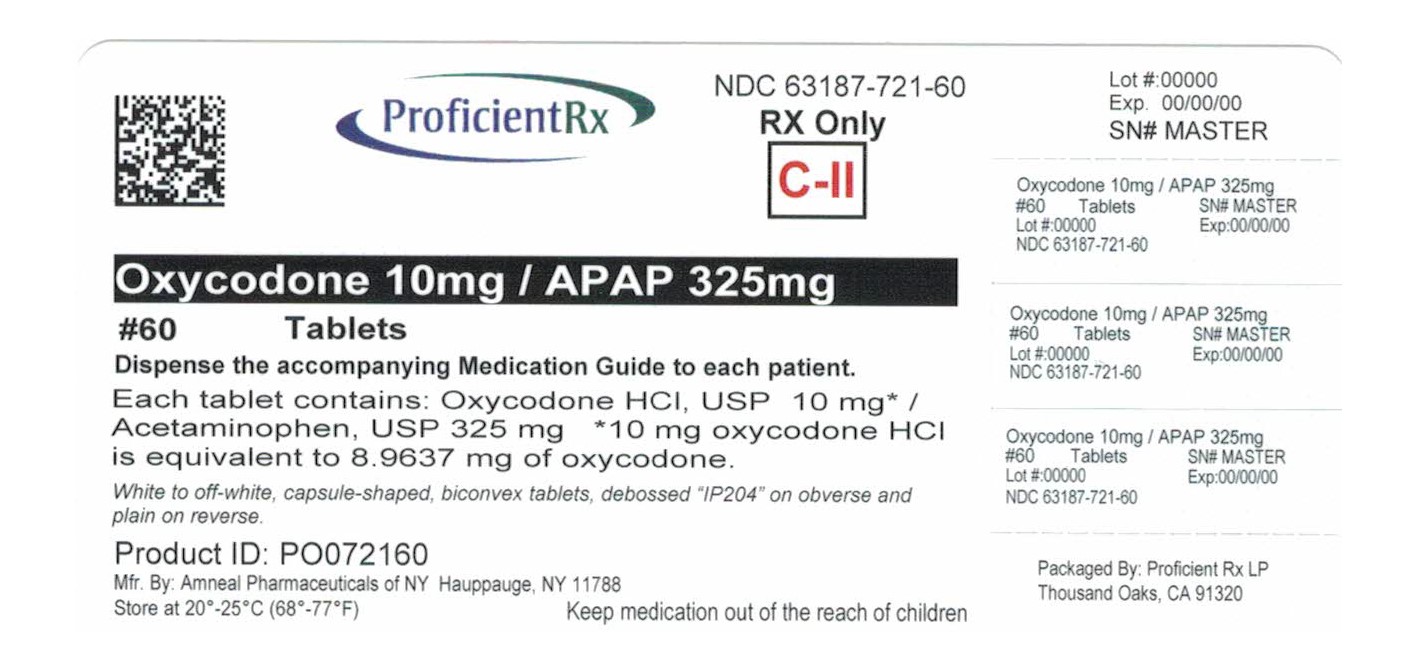
PACKAGE LABEL.PRINCIPAL DISPLAY PANEL Label 60 Ct. 63187-721-60
About this NDC listing & data coverage
What data is (and isn’t) available for this NDC — tap to expand
| NDC identity (package / product / labeler codes) | ✓ Available |
| Labeler | ✓ Available |
| Product & package description | ✓ Available |
| Marketing category & status | ✓ Available |
| Active ingredient / dosage form / route | ✓ Available |
| FDA label (SPL via DailyMed) | ✓ Available |
| Package photos | ✓ Available |
| Inactive ingredients (structured) | ✓ Available |
| NADAC pharmacy acquisition price (CMS) | — Not published for this NDC CMS publishes NADAC only for NDCs reported in its retail-pharmacy survey. |
| Orange Book / therapeutic-equivalence data | ✓ Available |
| HCPCS J-code billing crosswalk | — Not published for this NDC Most self-administered / retail products have no J-code — that is normal. |
| Medicaid utilization (CMS SDUD) | — Not published for this NDC CMS reports utilization only for NDCs with Medicaid claims above its privacy threshold. |