
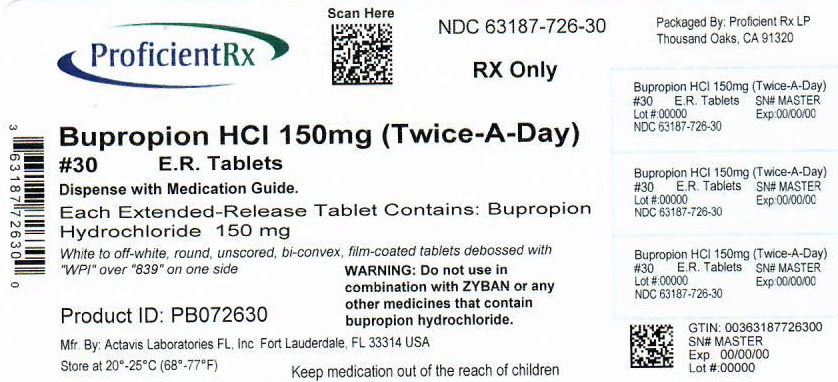
Bupropion Hydrochloride SR 150 mg Tablet, Film Coated, Extended Release, 60-count — NDC 63187-726-60 (Billing 63187-0726-60)
This is a package of 60 tablets of Bupropion Hydrochloride SR 150 mg Tablet, Film Coated, Extended Release from Proficient Rx LP, marketed since Jul 2009 and currently FDA-listed.
Other active recalls for Bupropion Hydrochloride (different manufacturers) — 3 · tap to view
Identity & classification
Regulatory identifiers FDA, NLM and CMS codes for this package
Drug-database identifiers Medi-Span GPI and First Databank GCN / HICL / AHFS classification
- GSN (GCN sequence number): 046238
- GCN: 16386
- GPI-14 (Medi-Span): 58300040107430
- HICL (First Databank): 001653
- AHFS class code: 28:16.04.92
- RxCUI (RxNorm): 993518
Where does this data come from?
- FDA openFDA NDC Directory · synced Oct 1, 2026
- FDA label on DailyMed · label index refreshed Oct 1, 2026
- RxNorm (NLM RxNav) · catalog refreshed Oct 1, 2026
- Medi-Span GPI (licensed)
- First Databank (licensed) · refreshed Oct 1, 2026
RxNorm drug class
This medicine belongs to the Aminoketone class.
Where does this data come from?
- RxClass (NLM) · catalog refreshed Oct 1, 2026
Clinical
Bupropion is used to treat depression. and seasonal affective disorder (SAD; episodes of depression that occur at the same time each year [usually in the fall and winter but rarely may occur in the spring or summer months]). Bupropion is also used to help people stop smoking. Bupropion is in a class of medications called antidepressants. It works by increasing certain types of activity in the brain.
Read the full MedlinePlus article ↗- Bupropion treats major depressive disorder. Some extended-release products, like Aplenzin and bupropion XL, can also prevent seasonal affective disorder, the depression that return...
- Take it by mouth exactly as prescribed. XL tablets are taken once in the morning, with or without food, and must be swallowed whole. Your doctor will usually raise the dose gradual...
- The most common ones are dry mouth, nausea, trouble sleeping, dizziness, headache, anxiety and tremor. Call your doctor right away if you have a seizure, new suicidal thoughts, sev...
- It's best to limit or avoid alcohol. Rare neuropsychiatric events and lower alcohol tolerance have been reported. Never suddenly stop heavy drinking while on bupropion without talk...
Patient education
Supplement & herbal interactions
Bupropion may be associated with lower levels of 1 nutrient — worth a chat with your pharmacist, not a cause for alarm.
Where does this data come from?
- MedlinePlus (NLM) · refreshed Oct 1, 2026
- FDA label on DailyMed · label index refreshed Oct 1, 2026
Ask a licensed pharmacist directly — free, answered by our team.
Pricing
A drug doesn't have one price. Each row is a different public payment system, and none is what you'd pay at the counter — that depends on your insurance. The ⓘ on each row explains what it measures.
| Price system | Per each | Per package |
|---|---|---|
| Retail pharmacies payNADAC · weekly | Not in the retail survey — common for institutional, discontinued, or low-volume packs. | |
| Medicaid paysCMS SDUD · 12 mo | No recent Medicaid claims on file for this NDC — rare and low-volume NDCs are suppressed in the public data. | |
| Medicare drug plans payPart D · Q2 2026 | $0.1526 | $9.16 / 60 tablets |
Where does this data come from?
- CMS NADAC weekly file
- CMS ASP pricing files · refreshed Sep 20, 2026
- CMS Medicaid State Drug Utilization Data · refreshed Oct 3, 2026
- CMS Part D plan pricing files · refreshed Sep 24, 2026
- VA National Acquisition Center price file
Packaging — all sizes for this product
| Package NDC | Description | Marketing start | Marketing end | Status |
|---|---|---|---|---|
| 63187-0726-30 63187-726-30 Main listing | 30 TABLET, FILM COATED, EXTENDED RELEASE in 1 BOTTLE, PLASTIC | 2016-07-01 | — | Active |
| 63187-0726-60 You're viewing this | 60 TABLET, FILM COATED, EXTENDED RELEASE in 1 BOTTLE, PLASTIC | 2016-07-01 | — | Active |
| 63187-0726-90 63187-726-90 | 90 TABLET, FILM COATED, EXTENDED RELEASE in 1 BOTTLE, PLASTIC | 2016-07-01 | — | Active |
You're viewing one of 3 pack sizes for this product.
Pack size FAQ
What quantity is in this package?
How does this package differ from NDC 63187-0726-30?
What NDC number is used to bill for this package of Bupropion Hydrochloride SR 150 mg Tablet, Film Coated, Extended Release?
Therapeutic equivalents
| Product | Labeler | Pack | NADAC/unit | TE | Status | Price vs. this |
|---|---|---|---|---|---|---|
| Bupropion Hydrochloride 150 mg 68001-0519-03 | BluePoint | 500 tablets | $0.077 | AB3 | Availability likely | — |
| Bupropion Hydrochloride (XL) 150 mg 24979-0101-02 | Upsher-Smith | 500 tablets | $0.078 | — | Discontinued | — |
| Bupropion Hydrochloride 150 mg 69097-0071-12 | Cipla | 500 tablets | $0.078 | AB3 | Availability likely | — |
| Bupropion Hydrochloride XL 150 mg 00591-3331-05 | Actavis | 500 tablets | $0.078 | AB3 | Availability likely | — |
| Bupropion hydrochloride 150 mg 70010-0784-03 | Granules | 30 tablets | $0.078 | AB3 | Availability likely | — |
| Bupropion Hydrochloride XL 150 mg 00904-7505-04 | Major | 1 tablet | $0.078 | AB3 | Availability likely | — |
| bupropion hydrochloride 150 mg 16571-0862-03 | Rising | 30 tablets | $0.078 | AB3 | Availability likely | — |
| Bupropion Hydrochloride XL 150 mg 69367-0288-05 | Westminster | 500 tablets | $0.078 | AB3 | Discontinued | — |
| Bupropion Hydrochloride 150 mg 31722-0487-05 | Camber | 500 tablets | $0.078 | AB3 | Availability likely | — |
| Bupropion Hydrochloride XL 150 mg 42806-0414-05 | Epic | 500 tablets | $0.078 | AB3 | Availability likely | — |
| Bupropion Hydrochloride 150 mg 50268-0133-13 | AvPAK | 1 tablet | $0.078 | AB3 | Availability likely | — |
| Bupropion Hydrochloride (XL) 150 mg 50228-0144-05 | ScieGen | 500 tablets | $0.078 | AB3 | Availability likely | — |
| Bupropion Hydrochloride XL 150 mg 68180-0319-02 | Lupin | 500 tablets | $0.078 | AB3 | Availability likely | — |
| Bupropion Hydrochloride 150 mg 60687-0782-01 | American | 1 tablet | $0.078 | AB3 | Availability likely | — |
| Bupropion Hydrochloride XL 150 mg 82009-0051-05 | Quallent | 500 tablets | $0.078 | AB3 | Availability likely | — |
| Bupropion Hydrochloride (XL) 150 mg 83301-0024-01 | Mullan | 30 tablets | $0.078 | AB3 | Availability likely | — |
| Bupropion Hydrochloride 150 mg 16729-0443-10 | Accord | 30 tablets | $0.078 | AB3 | Availability likely | — |
| Bupropion hydrochloride 150 mg 63304-0723-05 | Sun | 500 tablets | $0.079 | — | Discontinued | — |
| Bupropion Hydrochloride XL 150 mg 42806-0348-05 | Epic | 500 tablets | $0.079 | AB3 | Availability likely | — |
| Bupropion Hydrochloride XL 150 mg 70436-0010-02 | Slate | 500 tablets | $0.079 | AB3 | Availability likely | — |
| Bupropion Hydrochloride SR 150 mg 00591-3541-05 | Actavis | 500 tablets | $0.080 | AB1 | Availability likely | — |
| bupropion hydrochloride SR 150 mg 00904-7465-61 | Major | 1 tablet | $0.080 | AB1 | Availability likely | — |
| Bupropion hydrochloride 150 mg 31722-0067-01 | Camber | 100 tablets | $0.080 | AB1 | Availability likely | — |
| Bupropion Hydrochloride SR 150 mg 42806-0425-01 | Epic | 100 tablets | $0.080 | AB1 | Availability likely | — |
| Bupropion Hydrochloride SR 150 mg 43598-0752-01 | Dr. | 100 tablets | $0.080 | AB1 | Availability likely | — |
| Bupropion Hydrochloride SR 150 mg 50228-0175-01 | ScieGen | 100 tablets | $0.080 | AB1 | Availability likely | — |
| Bupropion Hydrochloride 150 mg 59651-0847-01 | Aurobindo | 100 tablets | $0.080 | AB1 | Availability likely | — |
| BuPROPion Hydrochloride 150 mg 68084-0708-25 | American | 1 tablet | $0.080 | AB1 | Availability likely | — |
| Bupropion Hydrochloride 150 mg 42806-0415-01 | Epic | 100 tablets | $0.082 | AB1 | Availability likely | — |
| Bupropion Hydrochloride SR 150 mg 70436-0059-01 | Slate | 100 tablets | $0.084 | AB1 | FDA listed | — |
| Bupropion Hydrochloride (XL) 150 mg 43598-0655-05 | Dr | 500 tablets | $0.108 | AB3 | FDA listed | — |
| Bupropion Hydrochloride (XL) 150 mg 69097-0875-02 | CIPLA | 30 tablets | $0.119 | — | FDA listed | — |
| Bupropion hydrochloride (XL) 150 mg 00527-2415-32 | Lannett | 30 tablets | $0.119 | AB3 | FDA listed | — |
| Bupropion Hydrochloride SR 150 mg 00591-3543-60 | Actavis | 60 tablets | $0.252 | AB2 | Availability likely | — |
| Bupropion Hydrochloride SR 150 mg 42806-0413-60 | Epic | 60 tablets | $0.252 | AB2 | Availability likely | — |
| Wellbutrin Sr 150 mg 00173-0135-55 | GlaxoSmithKline | 60 tablets | $7.516 | AB1 | Availability likely | — |
| Bupropion hydrochloride 150 mg 00615-8602-39 | NCS | 30 tablets | — | AB1 | FDA listed | — |
| Bupropion Hydrochloride Sr 150 mg 43063-0744-30 | PD-Rx | 30 tablets | — | — | FDA listed | — |
| Bupropion Hydrochloride SR 150 mg 43063-0913-30 | PD-Rx | 30 tablets | — | AB1 | FDA listed | — |
| bupropion hydrochloride SR 150 mg 43547-0289-06 | Solco | 60 tablets | — | AB1 | FDA listed | — |
| Bupropion Hydrochloride SR 150 mg 43598-0537-01 | Dr. | 100 tablets | — | AB1 | FDA listed | — |
| Bupropion hydrochloride 150 mg 47335-0737-08 | Sun | 100 tablets | — | — | FDA listed | — |
| Bupropion Hydrochloride 150 mg 50090-6353-00 | A-S | 60 tablets | — | AB1 | FDA listed | — |
| Bupropion Hydrochloride SR 150 mg 50090-6871-00 | A-S | 60 tablets | — | AB1 | FDA listed | — |
| Bupropion Hydrochloride SR 150 mg 50090-6872-00 | A-S | 90 tablets | — | AB1 | FDA listed | — |
| Bupropion hydrochloride 150 mg 50090-7422-00 | A-S | 60 tablets | — | AB1 | FDA listed | — |
| Bupropion hydrochloride 150 mg 50090-7423-00 | A-S | 90 tablets | — | AB1 | FDA listed | — |
| Bupropion Hydrochloride SR 150 mg 51655-0115-25 | Northwind | 60 tablets | — | AB1 | FDA listed | — |
| bupropion 150 mg 51655-0357-26 | Northwind | 90 tablets | — | AB1 | FDA listed | — |
| bupropion hydrochloride SR 150 mg 55154-0183-00 | Cardinal | 1 tablet | — | AB1 | FDA listed | — |
| Bupropion hydrochloride 150 mg 63187-0052-30 | Proficient | 30 tablets | — | — | FDA listed | — |
| Bupropion Hydrochloride SR 150 mgthis 63187-0726-60 | Proficient | 60 tablets | — | AB1 | FDA listed | — |
| Bupropion Hydrochloride SR 150 mg 63629-8473-01 | Bryant | 500 tablets | — | AB1 | FDA listed | — |
| Bupropion Hydrochloride SR 150 mg 68071-2890-03 | NuCare | 30 tablets | — | AB1 | FDA listed | — |
| Bupropion Hydrochloride SR 150 mg 68788-7807-01 | Preferred | 100 tablets | — | AB1 | FDA listed | — |
| Bupropion hydrochloride 150 mg 68788-8769-01 | Preferred | 100 tablets | — | AB1 | FDA listed | — |
| Bupropion Hydrochloride (Sr) 150 mg 69097-0878-02 | Cipla | 30 tablets | — | — | FDA listed | — |
| Bupropion Hydrochloride 150 mg 70010-0126-03 | Granules | 30 tablets | — | AB1 | FDA listed | — |
| Bupropion Hydrochloride SR 150 mg 70518-4056-01 | REMEDYREPACK | 30 tablets | — | AB1 | FDA listed | — |
| Bupropion hydrochloride 150 mg 70518-4081-01 | REMEDYREPACK | 30 tablets | — | AB1 | FDA listed | — |
| Bupropion Hydrochloride SR 150 mg 71205-0550-30 | Proficient | 30 tablets | — | AB1 | FDA listed | — |
| bupropion 150 mg 71205-0565-30 | Proficient | 30 tablets | — | AB1 | FDA listed | — |
| Bupropion Hydrochloride SR 150 mg 71335-0135-01 | Bryant | 60 tablets | — | AB1 | FDA listed | — |
| Bupropion Hydrochloride SR 150 mg 71335-1702-01 | Bryant | 60 tablets | — | AB1 | FDA listed | — |
| Bupropion Hydrochloride SR 150 mg 71335-1837-01 | Bryant | 60 tablets | — | AB1 | FDA listed | — |
| Bupropion hydrochloride 150 mg 71335-2457-01 | Bryant | 60 tablets | — | AB1 | FDA listed | — |
| Bupropion Hydrochloride SR 150 mg 71610-0576-30 | Aphena | 30 tablets | — | AB1 | FDA listed | — |
| Bupropion Hydrochloride SR 150 mg 71610-0990-30 | Aphena | 30 tablets | — | AB1 | FDA listed | — |
| Bupropion Hydrochloride SR 150 mg 72162-1529-05 | Bryant | 500 tablets | — | AB1 | FDA listed | — |
| Bupropion Hydrochloride Sr 150 mg 72189-0349-30 | DirectRx | 30 tablets | — | AB1 | FDA listed | — |
| Bupropion Hydrochloride SR 150 mg 77771-0175-05 | Radha | 500 tablets | — | AB1 | FDA listed | — |
| Bupropion Hydrochloride SR 150 mg 82868-0019-60 | Northwind | 60 tablets | — | AB1 | FDA listed | — |
| Bupropion Hydrochloride 150 mg 47335-0954-13 | Sun | 500 tablets | — | — | FDA listed | — |
| Bupropion Hydrochloride (SR) 150 mg 50228-0338-11 | ScieGen | 1000 tablets | — | AB2 | FDA listed | — |
| Bupropion Hydrochloride 150 mg 63187-0713-30 | Proficient | 30 tablets | — | — | FDA listed | — |
| Bupropion Hydrochloride XL 150 mg 71205-0291-30 | Proficient | 30 tablets | — | AB3 | FDA listed | — |
| Bupropion Hydrochloride XL 150 mg 71205-0394-30 | Proficient | 30 tablets | — | AB3 | FDA listed | — |
| Bupropion Hydrochloride 150 mg 71205-0504-30 | Proficient | 30 tablets | — | AB3 | FDA listed | — |
| Bupropion Hydrochloride (XL) 150 mg 71205-0967-30 | Proficient | 30 tablets | — | — | FDA listed | — |
| Bupropion Hydrochloride SR 150 mg 50090-1150-00 | A-S | 60 tablets | — | AB2 | FDA listed | — |
| Bupropion Hydrochloride XL 150 mg 50090-4049-00 | A-S | 90 tablets | — | AB3 | FDA listed | — |
| Bupropion Hydrochloride XL 150 mg 63187-0766-30 | Proficient | 30 tablets | — | AB3 | FDA listed | — |
| Bupropion Hydrochloride (XL) 150 mg 76282-0480-05 | Exelan | 500 tablets | — | — | FDA listed | — |
| Bupropion hydrochloride 150 mg 80425-0300-01 | Advanced | 30 tablets | — | AB3 | FDA listed | — |
| Bupropion Hydrochloride XL 150 mg 82804-0080-30 | Proficient | 30 tablets | — | AB3 | FDA listed | — |
| Bupropion Hydrochloride (XL) 150 mg 82868-0097-96 | Northwind | 180 tablets | — | AB3 | FDA listed | — |
| Wellbutrin Xl 150 mg 00187-0730-07 | Bausch | 7 tablets | — | AB3 | FDA listed | — |
| Bupropion Hydrochloride 150 mg 50090-5163-00 | A-S | 90 tablets | — | AB3 | FDA listed | — |
| Bupropion Hydrochloride (XL) 150 mg 50090-7110-00 | A-S | 90 tablets | — | — | FDA listed | — |
| Bupropion Hydrochloride XL 150 mg 68071-3594-03 | NuCare | 30 tablets | — | AB3 | FDA listed | — |
| bupropion hydrochloride 150 mg 70518-4674-00 | REMEDYREPACK | 30 tablets | — | AB3 | FDA listed | — |
| Bupropion Hydrochloride XL 150 mg 71335-2378-01 | Bryant | 30 tablets | — | AB3 | FDA listed | — |
| Bupropion Hydrochloride (Sr) 150 mg 43598-0863-10 | Dr. | 1000 tablets | — | AB2 | FDA listed | — |
| Bupropion Hydrochloride 150 mg 50090-4747-00 | A-S | 90 tablets | — | AB3 | FDA listed | — |
| Bupropion Hydrochloride XL 150 mg 50090-7113-00 | A-S | 90 tablets | — | AB3 | Discontinued | — |
| Bupropion Hydrochloride 150 mg 50090-7712-00 | A-S | 90 tablets | — | AB3 | FDA listed | — |
| Bupropion Hydrochloride (XL) 150 mg 63629-8474-01 | Bryant | 30 tablets | — | AB3 | FDA listed | — |
| Bupropion hydrochloride 150 mg 70518-4189-00 | REMEDYREPACK | 30 tablets | — | AB3 | FDA listed | — |
| Bupropion Hydrochloride (XL) 150 mg 72789-0120-90 | PD-Rx | 90 tablets | — | — | Discontinued | — |
| Bupropion Hydrochloride 150 mg 72789-0301-90 | PD-Rx | 90 tablets | — | AB3 | FDA listed | — |
| Bupropion Hydrochloride (XL) 150 mg 77771-0144-05 | RADHA | 500 tablets | — | AB3 | FDA listed | — |
| Bupropion Hydrochloride (XL) 150 mg 83008-0082-30 | Quality | 30 tablets | — | AB3 | FDA listed | — |
| Bupropion hydrochloride 150 mg 68788-4010-01 | Preferred | 100 tablets | — | AB3 | FDA listed | — |
| Bupropion Hydrochloride 150 mg 68788-7786-01 | Preferred | 100 tablets | — | AB3 | FDA listed | — |
| Bupropion Hydrochloride (XL) 150 mg 70518-3963-00 | REMEDYREPACK | 30 tablets | — | AB3 | Discontinued | — |
| Bupropion Hydrochloride 150 mg 71335-1044-01 | Bryant | 30 tablets | — | AB3 | FDA listed | — |
| Bupropion Hydrochloride XL 150 mg 76420-0923-01 | Asclemed | 100 tablets | — | AB3 | FDA listed | — |
| Bupropion Hydrochloride (Sr) 150 mg 50090-5101-00 | A-S | 60 tablets | — | AB2 | FDA listed | — |
| Bupropion Hydrochloride (XL) 150 mg 50090-7109-00 | A-S | 90 tablets | — | — | FDA listed | — |
| Bupropion Hydrochloride 150 mg 50090-7711-00 | A-S | 90 tablets | — | AB3 | FDA listed | — |
| Bupropion Hydrochloride (XL) 150 mg 68071-3927-03 | NuCare | 30 tablets | — | AB3 | FDA listed | — |
| Bupropion Hydrochloride XL 150 mg 68071-3932-03 | NuCare | 30 tablets | — | AB3 | FDA listed | — |
| Bupropion Hydrochloride 150 mg 70518-2458-00 | REMEDYREPACK | 90 tablets | — | AB3 | FDA listed | — |
| buPropion Hydrochloride XL 150 mg 72516-0035-03 | Oryza | 30 tablets | — | AB3 | FDA listed | — |
| Bupropion Hydrochloride 150 mg 80425-0461-01 | Advanced | 30 tablets | — | AB3 | FDA listed | — |
| Bupropion Hydrochloride XL 150 mg 72789-0377-90 | PD-Rx | 90 tablets | — | AB3 | FDA listed | — |
| Bupropion Hydrochloride 150 mg 00615-8504-05 | NCS | 15 tablets | — | AB3 | FDA listed | — |
| Bupropion Hydrochloride 150 mg 00115-6811-02 | Amneal | 500 tablets | — | — | FDA listed | — |
| Bupropion Hydrochloride XL 150 mg 51655-0098-26 | Northwind | 90 tablets | — | AB3 | FDA listed | — |
| Bupropion Hydrochloride XL 150 mg 67046-0699-03 | Coupler | 30 tablets | — | AB3 | FDA listed | — |
| Bupropion Hydrochloride 150 mg 72189-0134-30 | DIRECT | 30 tablets | — | AB3 | FDA listed | — |
| Bupropion hydrochloride 150 mg 71335-2469-01 | Bryant | 30 tablets | — | AB3 | FDA listed | — |
| Bupropion Hydrochloride 150 mg 50090-6789-00 | A-S | 90 tablets | — | AB3 | FDA listed | — |
| Bupropion hydrochloride (XL) 150 mg 69680-0157-30 | Vitruvias | 30 tablets | — | AB3 | FDA listed | — |
| Bupropion Hydrochloride 150 mg 70518-2022-02 | REMEDYREPACK | 90 tablets | — | AB3 | FDA listed | — |
| Bupropion Hydrochloride SR 150 mg 50090-7322-00 | A-S | 60 tablets | — | AB2 | Discontinued | — |
| Bupropion Hydrochloride (XL) 150 mg 72162-1526-05 | Bryant | 500 tablets | — | AB3 | FDA listed | — |
| Bupropion hydrochloride 150 mg 82804-0296-90 | Proficient | 90 tablets | — | AB3 | FDA listed | — |
| Bupropion Hydrochloride XL 150 mg 50090-7112-00 | A-S | 90 tablets | — | AB3 | Discontinued | — |
| Bupropion Hydrochloride 150 mg 68071-3559-09 | NuCare | 90 tablets | — | AB3 | FDA listed | — |
| Bupropion hydrochloride 150 mg 67046-1273-03 | Coupler | 30 tablets | — | AB1 | FDA listed | — |
| bupropion hydrochloride 150 mg 71335-3153-01 | Bryant | 30 tablets | — | AB3 | FDA listed | — |
| Bupropion Hydrochloride 150 mg 59651-0511-05 | Aurobindo | 500 tablets | — | AB3 | FDA listed | — |
| Bupropion Hydrochloride (SR) 150 mg 33342-0527-10 | Macleods | 90 tablets | — | AB1 | FDA listed | — |
Where does this data come from?
- FDA openFDA NDC Directory · synced Oct 1, 2026
- FDA Orange Book · refreshed Sep 3, 2026
- CMS NADAC weekly file
Availability & generic status
This product is an FDA-approved generic. Other versions of the same drug are listed under Therapeutic equivalents, least expensive first.
Where does this data come from?
- FDA Orange Book · refreshed Sep 3, 2026
What it looks like
Where does this data come from?
- FDA label on DailyMed · label index refreshed Oct 1, 2026
Inactive Ingredients / Excipients
Inactive ingredients, also called excipients, are components of the drug product other than the active ingredient. They may include fillers, dyes, coatings, preservatives, flavors, or other formulation ingredients.
💡 Tap an ingredient (hover on desktop) to see what it is and why it’s used.
-
UNII QTT17582CB
A strong acid used to adjust and maintain the proper pH level in liquid medicines, ensuring stability and preventing breakdown of active ingredients.
-
UNII RFW2ET671P
Hydroxypropyl cellulose is a plant-derived thickening agent made from cellulose. It acts as a binder to hold tablet ingredients together and as a film-former to coat tablets or control how fast the medicine releases.
-
UNII EWQ57Q8I5X
Lactose monohydrate is a natural sugar derived from milk. It serves as a filler and binder in tablets and capsules, helping create the proper size, texture, and consistency of the medicine.
-
UNII 70097M6I30
Magnesium stearate is a salt made from magnesium and stearic acid, a fatty substance. It's used in tablets and capsules as a lubricant and glidant to help ingredients flow smoothly during manufacturing and prevent sticking.
-
UNII OP1R32D61U
Microcrystalline cellulose is a purified form of cellulose, a natural fiber from plant sources. It acts as a binder and filler in tablets and capsules, helping hold ingredients together and give the medicine its shape and size.
-
UNII 3WJQ0SDW1A
Polyethylene glycol is a synthetic liquid or solid polymer used in medicines as a solvent, lubricant, and humectant. It helps dissolve active ingredients, reduces friction during manufacturing, and retains moisture in the final product.
-
UNII ETJ7Z6XBU4
Silicon dioxide is a naturally occurring mineral used as a glidant and anti-caking agent. It helps powder ingredients flow smoothly and prevents clumping during manufacturing and storage.
-
UNII 4ELV7Z65AP
Stearic acid is a fatty acid derived from plant or animal sources. It acts as a binder and lubricant in tablets and capsules, helping them hold together and flow smoothly during manufacturing.
-
UNII 15FIX9V2JP
Titanium dioxide is a bright white mineral powder commonly used as a colorant and opacifying agent. It makes pills and tablets white or lighter in color and helps make coatings non-transparent.
9 inactive ingredients listed in the exact product block matched to this NDC.
Where does this data come from?
ingredient classCode="IACT" elements from the exact product block matched by this NDC. Label-section narrative from DailyMed / the openFDA label index is shown separately when available.- FDA label on DailyMed · label index refreshed Oct 1, 2026
- FDA openFDA NDC Directory · synced Oct 1, 2026
Inactive ingredient FAQ
Are inactive ingredients the same for every manufacturer?
Why might an inactive ingredient be missing?
Can inactive ingredients matter?
Manufacturer & labeler
Where does this data come from?
- FDA openFDA NDC Directory · synced Oct 1, 2026
- Drugs@FDA
Full prescribing information FDA SPL
🚨 Boxed Warning ▾
WARNING: SUICIDAL THOUGHTS AND BEHAVIORS; AND NEUROPSYCHIATRIC REACTIONS SUICIDALITY AND ANTIDEPRESSANT DRUGS Antidepressants increased the risk of suicidal thoughts and behavior in children, adolescents, and young adults in short-term trials. These trials did not show an increase in the risk of suicidal thoughts and behavior with antidepressant use in subjects over age 24; there was a reduction in risk with antidepressant use in subjects aged 65 and older [see Warnings and Precautions ( 5.1 )] . In patients of all ages who are started on antidepressant therapy, monitor closely for worsening, and for emergence of suicidal thoughts and behaviors.
Advise families and caregivers of the need for close observation and communication with the prescriber [see Warnings and Precautions ( 5.1 )] . NEUROPSYCHIATRIC REACTIONS IN PATIENTS TAKING BUPROPION FOR SMOKING CESSATION Serious neuropsychiatric reactions have occurred in patients taking bupropion for smoking cessation [see Warnings and Precautions ( 5.2 )]. The majority of these reactions occurred during bupropion treatment, but some occurred in the context of discontinuing treatment.
In many cases, a causal relationship to bupropion treatment is not certain, because depressed mood may be a symptom of nicotine withdrawal. However, some of the cases occurred in patients taking bupropion who continued to smoke. Although bupropion hydrochloride extended-release tablets (SR) are not approved for smoking cessation, observe all patients for neuropsychiatric reactions.
Instruct the patient to contact a healthcare provider if such reactions occur [ see Warnings and Precautions ( 5.2 )] . WARNING: SUICIDAL THOUGHTS AND BEHAVIORS; AND NEUROPSYCHIATRIC REACTIONS See full prescribing information for complete boxed warning. • Increased risk of suicidal thinking and behavior in children, adolescents and young adults taking antidepressants. ( 5.1 ) • Monitor for worsening and emergence of suicidal thoughts and behaviors.
( 5.1 ) • Serious neuropsychiatric events have been reported in patients taking bupropion for smoking cessation. ( 5.2 )
🎯 Indications and Usage ▾
1 INDICATIONS AND USAGE Bupropion hydrochloride extended-release tablets, USP (SR) are indicated for the treatment of major depressive disorder (MDD), as defined by the Diagnostic and Statistical Manual (DSM ) . The efficacy of bupropion in the treatment of a major depressive episode was established in two 4-week controlled inpatient trials and one 6-week controlled outpatient trial of adult subjects with MDD [see Clinical Studies ( 14 )] . The efficacy of bupropion in maintaining an antidepressant response for up to 44 weeks following 8 weeks of acute treatment was demonstrated in a placebo-controlled trial [see Clinical Studies ( 14 )] . • Bupropion hydrochloride extended-release tablets, USP (SR), are an aminoketone antidepressant, indicated for the treatment of major depressive disorder (MDD).
( 1 )
⏱️ Dosage and Administration ▾
2 DOSAGE AND ADMINISTRATION • Starting dose: 150 mg per day ( 2.1 ) • General: Increase dose gradually to reduce seizure risk. ( 2.1 , 5.3 ) • After 3 days, may increase the dose to 300 mg per day, given as 150 mg twice daily at an interval of at least 8 hours. ( 2.1 ) • Usual target dose: 300 mg per day as 150 mg twice daily.
( 2.1 ) • Maximum dose: 400 mg per day, given as 200 mg twice daily, for patients not responding to 300 mg per day. (2.1) • Periodically reassess the dose and need for maintenance treatment. ( 2.1 ) • Moderate to severe hepatic impairment: 100 mg daily or 150 mg every other day.
( 2.2 , 8.7 ) • Mild hepatic impairment: Consider reducing the dose and/or frequency of dosing. ( 2.2 , 8.7 ) • Renal impairment: Consider reducing the dose and/or frequency. ( 2.3 , 8.6 )
2.1General Instructions for Use To minimize the risk of seizure, increase the dose gradually [see Warnings and Precautions ( 5.3 )] . Bupropion hydrochloride extended-release tablets (SR) should be swallowed whole and not crushed, divided, or chewed. Bupropion hydrochloride extended-release tablets (SR) may be taken with or without food.
The usual adult target dose for bupropion hydrochloride extended-release tablets (SR) is 300 mg per day, given as 150 mg twice daily. Initiate dosing with 150 mg per day given as a single daily dose in the morning. After 3 days of dosing, the dose may be increased to the 300-mg-per-day target dose, given as 150 mg twice daily.
There should be an interval of at least 8 hours between successive doses. A maximum of 400 mg per day, given as 200 mg twice daily, may be considered for patients in whom no clinical improvement is noted after several weeks of treatment at 300 mg per day. To avoid high peak concentrations of bupropion and/or its metabolites, do not exceed 200 mg in any single dose.
It is generally agreed that acute episodes of depression require several months or longer of antidepressant drug treatment beyond the response in the acute episode. It is unknown whether the dose of bupropion hydrochloride extended-release tablets (SR) needed for maintenance treatment is identical to the dose that provided an initial response. Periodically reassess the need for maintenance treatment and the appropriate dose for such treatment.
2.2Dose Adjustment in Patients With Hepatic Impairment In patients with moderate to severe hepatic impairment (Child-Pugh score: 7 to 15), the maximum dose of bupropion hydrochloride extended-release tablets (SR) is 100 mg per day or 150 mg every other day. In patients with mild hepatic impairment (Child-Pugh score: 5 to 6), consider reducing the dose and/or frequency of dosing [see Use in Specific Populations ( 8.7 ), Clinical Pharmacology ( 12.3 )].
2.3Dose Adjustment in Patients With Renal Impairment Consider reducing the dose and/or frequency of bupropion hydrochloride extended-release tablets (SR) in patients with renal impairment (Glomerular Filtration Rate less than 90 mL/min) [see Use in Specific Populations ( 8.6 ), Clinical Pharmacology ( 12.3 )] .
2.4Switching a Patient To or From a Monoamine Oxidase Inhibitor (MAOI) Antidepressant At least 14 days should elapse between discontinuation of an MAOI intended to treat depression and initiation of therapy with bupropion hydrochloride extended-release tablets (SR). Conversely, at least 14 days should be allowed after stopping bupropion hydrochloride extended-release tablets (SR) before starting an MAOI antidepressant [see Contraindications ( 4 ), Drug Interactions ( 7.6 )] .
2.5Use of Bupropion Hydrochloride Extended-release Tablets (SR) With Reversible MAOIs Such as Linezolid or Methylene Blue Do not start bupropion hydrochloride extended-release tablets (SR) in a patient who is being treated with a reversible MAOI such as linezolid or intravenous methylene blue. Drug interactions can increase the risk of hypertensive reactions. In a patient who requires more urgent treatment of a psychiatric condition, non-pharmacological inte… [Excerpted — this section continues on DailyMed.]
💊 Dosage Forms and Strengths ▾
3 DOSAGE FORMS AND STRENGTHS • 100 mg – white to off-white, round, film-coated tablets with “WPI" over "858”. • 150 mg – are white to off-white, round, film-coated tablets with “WPI" over " 839”. • 200 mg – white to off-white, round, film-coated tablets with “WPI" over "3385”. • Tablets: 100 mg, 150 mg, 200 mg. ( 3 )
⛔ Contraindications ▾
4 CONTRAINDICATIONS • Bupropion hydrochloride extended-release tablets (SR) are contraindicated in patients with a seizure disorder. • Bupropion hydrochloride extended-release tablets (SR) are contraindicated in patients with a current or prior diagnosis of bulimia or anorexia nervosa as a higher incidence of seizures was observed in such patients treated with the immediate-release formulation of bupropion [see Warnings and Precautions ( 5.3 )]. • Bupropion hydrochloride extended-release tablets (SR) are contraindicated in patients undergoing abrupt discontinuation of alcohol, benzodiazepines, barbiturates, and antiepileptic drugs [see Warnings and Precautions ( 5.3 ), Drug Interactions ( 7.3 )] . • The use of MAOIs (intended to treat psychiatric disorders) concomitantly with bupropion hydrochloride extended-release tablets (SR) or within 14 days of discontinuing treatment with bupropion hydrochloride extended-release tablets (SR) is contraindicated.
There is an increased risk of hypertensive reactions when bupropion hydrochloride extended-release tablets (SR) are used concomitantly with MAOIs. The use of bupropion hydrochloride extended-release tablets (SR) within 14 days of discontinuing treatment with an MAOI is also contraindicated. Starting bupropion hydrochloride extended-release tablets (SR) in a patient treated with reversible MAOIs such as linezolid or intravenous methylene blue is contraindicated [see Dosage and Administration ( 2.4 , 2.5 ), Warnings and Precautions ( 5.4 ), Drug Interactions ( 7.6 )]. • Bupropion hydrochloride extended-release tablets (SR) are contraindicated in patients with known hypersensitivity to bupropion or other ingredients of bupropion hydrochloride extended-release tablets (SR).
Anaphylactoid/anaphylactic reactions and Stevens-Johnson syndrome have been reported [see Warnings and Precautions ( 5.8 )]. • Seizure disorder. ( 4 , 5.3 ) • Current or prior diagnosis of bulimia or anorexia nervosa. ( 4 , 5.3 ) • Abrupt discontinuation of alcohol, benzodiazepines, barbiturates, antiepileptic drugs.
( 4 , 5.3 ) Monoamine Oxidase Inhibitors (MAOIs): Do not use MAOIs intended to treat psychiatric disorders with bupropion hydrochloride extended-release tablets (SR) or within 14 days of stopping treatment with bupropion hydrochloride extended-release tablets (SR). Do not use bupropion hydrochloride extended-release tablets (SR) within 14 days of stopping an MAOI intended to treat psychiatric disorders. In addition, do not start bupropion hydrochloride extended-release tablets (SR) in a patient who is being treated with linezolid or intravenous methylene blue.
( 4 , 7.6 )
⚠️ Warnings and Cautions ▾
5 WARNINGS AND PRECAUTIONS • Seizure risk: The risk is dose-related. Can minimize risk by gradually increasing the dose and limiting daily dose to 400 mg. Discontinue if seizure occurs.
( 4 , 5.3 , 7.3 ) • Hypertension: Bupropion hydrochloride extended-release tablets (SR) can increase blood pressure. Monitor blood pressure before initiating treatment and periodically during treatment. ( 5.4 ) • Activation of mania/hypomania: Screen patients for bipolar disorder and monitor for these symptoms.
( 5.5 ) • Psychosis and other neuropsychiatric reactions: Instruct patients to contact a healthcare professional if such reactions occur. ( 5.6 ) • Angle-closure glaucoma: Angle-closure glaucoma has occurred in patients with untreated anatomically narrow angles treated with antidepressants. ( 5.7 )
5.1Suicidal Thoughts and Behaviors in Children, Adolescents, and Young Adults Patients with MDD, both adult and pediatric, may experience worsening of their depression and/or the emergence of suicidal ideation and behavior (suicidality) or unusual changes in behavior, whether or not they are taking antidepressant medications, and this risk may persist until significant remission occurs. Suicide is a known risk of depression and certain other psychiatric disorders, and these disorders themselves are the strongest predictors of suicide.
There has been a long-standing concern that antidepressants may have a role in inducing worsening of depression and the emergence of suicidality in certain patients during the early phases of treatment. Pooled analyses of short-term placebo-controlled trials of antidepressant drugs (selective serotonin reuptake inhibitors [SSRIs] and others) show that these drugs increase the risk of suicidal thinking and behavior (suicidality) in children, adolescents, and young adults (ages 18 to 24) with MDD and other psychiatric disorders.
Short-term clinical trials did not show an increase in the risk of suicidality with antidepressants compared with placebo in adults beyond age 24; there was a reduction with antidepressants compared with placebo in adults aged 65 and older. The pooled analyses of placebo-controlled trials in children and adolescents with MDD, obsessive compulsive disorder (OCD), or other psychiatric disorders included a total of 24 short‑term trials of 9 antidepressant drugs in over 4,400 subjects. The pooled analyses of placebo‑controlled trials in adults with MDD or other psychiatric disorders included a total of 295 short‑term trials (median duration of 2 months) of 11 antidepressant drugs in over 77,000 subjects.
There was considerable variation in risk of suicidality among drugs, but a tendency toward an increase in the younger subjects for almost all drugs studied. There were differences in absolute risk of suicidality across the different indications, with the highest incidence in MDD. The risk differences (drug vs. placebo), however, were relatively stable within age strata and across indications.
These risk differences (drug-placebo difference in the number of cases of suicidality per 1,000 subjects treated) are provided in Table 1. Table 1. Risk Differences in the Number of Suicidality Cases by Age Group in the Pooled Placebo-Controlled Trials of Antidepressants in Pediatric and Adult Subjects Age Range Drug-Placebo Difference in Number of Cases of Suicidality per 1,000 Subjects Treated Increases Compared With Placebo <18 14 additional cases 18 to 24 5 additional cases Decreases Compared With Placebo 25 to 64 1 fewer case ≥65 6 fewer cases No suicides occurred in any of the pediatric trials.
There were suicides in the adult trials, but the number was not sufficient to reach any conclusion about drug effect on suicide. It is unknown whether the suicidality risk extends to longer-term use, i.e., beyond several months. However, there is substantial evidence from placebo-controlled maintenance trials in adults with depression that the use of antidepressants can delay the recurrence of depression.
All… [Excerpted — this section continues on DailyMed.]
🤒 Adverse Reactions ▾
6 ADVERSE REACTIONS The following adverse reactions are discussed in greater detail in other sections of the labeling: • Suicidal thoughts and behaviors in adolescents and young adults [see Boxed Warning , Warnings and Precautions ( 5.1 )] • Neuropsychiatric symptoms and suicide risk in smoking cessation treatment [see Boxed Warning , Warnings and Precautions ( 5.2 )] • Seizure [see Warnings and Precautions ( 5.3 )] • Hypertension [see Warnings and Precautions ( 5.4 )] • Activation of mania or hypomania [see Warnings and Precautions ( 5.5 )] • Psychosis and other neuropsychiatric reactions [see Warnings and Precautions ( 5.6 )] • Angle-closure glaucoma [see Warnings and Precautions ( 5.7 )] • Hypersensitivity reactions [see Warnings and Precautions ( 5.8 )] Most common adverse reactions (incidence greater than or equal to 5% and greater than or equal to 2% more than placebo rate) are: headache, dry mouth, nausea, insomnia, dizziness, pharyngitis, constipation, agitation, anxiety, abdominal pain, tinnitus, tremor, palpitation, myalgia, sweating, rash, and anorexia.
( 6.1 ) To report SUSPECTED ADVERSE REACTIONS, contact Actavis Laboratories FL, Inc. at 1-800-272-5525 or FDA at 1-800-FDA-1088 or Error! Hyperlink reference not valid..
6.1Clinical Trials Experience Because clinical trials are conducted under widely varying conditions, adverse reaction rates observed in the clinical trials of a drug cannot be directly compared with rates in the clinical trials of another drug and may not reflect the rates observed in clinical practice. Adverse Reactions Leading to Discontinuation of Treatment: In placebo‑controlled clinical trials, 4%, 9%, and 11% of the placebo, 300-mg-per-day, and 400-mg-per-day groups, respectively, discontinued treatment due to adverse reactions.
The specific adverse reactions leading to discontinuation in at least 1% of the 300-mg-per-day or 400-mg-per-day groups and at a rate at least twice the placebo rate are listed in Table 2. Table 2. Treatment Discontinuations Due to Adverse Reactions in Placebo‑Controlled Trials Adverse Reaction Placebo (n = 385) Bupropion Hydrochloride Extended-release Tablets (SR) 300 mg/day (n = 376) Bupropion Hydrochloride Extended-release Tablets (SR) 400 mg/day (n = 114) Rash 0.0% 2.4% 0.9% Nausea 0.3% 0.8% 1.8% Agitation 0.3% 0.3% 1.8% Migraine 0.3% 0.0% 1.8% Commonly Observed Adverse Reactions : Adverse reactions from Table 3 occurring in at least 5% of subjects treated with bupropion hydrochloride extended-release tablets (SR) and at a rate at least twice the placebo rate are listed below for the 300- and 400-mg-per-day dose groups.
Bupropion hydrochloride extended-release tablets (SR) 300 mg per day: Anorexia, dry mouth, rash, sweating, tinnitus, and tremor. Bupropion hydrochloride extended-release tablets (SR) 400 mg per day: Abdominal pain, agitation, anxiety, dizziness, dry mouth, insomnia, myalgia, nausea, palpitation, pharyngitis, sweating, tinnitus, and urinary frequency. Adverse reactions reported in placebo-controlled trials are presented in Table 3.
Reported adverse reactions were classified using a COSTART-based Dictionary. Table 3. Adverse Reactions Reported by at Least 1% of Subjects and at a Greater Frequency Than Placebo in Controlled Clinical Trials Body System/ Adverse Reaction Bupropion Hydrochloride Extended-release Tablets (SR) 300 mg/day (n = 376) Bupropion Hydrochloride Extended-release Tablets (SR) 400 mg/day (n = 114) Placebo (n = 385) Body (General) Headache 26% 25% 23% Infection 8% 9% 6% Abdominal pain 3% 9% 2% Asthenia 2% 4% 2% Chest pain 3% 4% 1% Pain 2% 3% 2% Fever 1% 2% — Cardiovascular Palpitation 2% 6% 2% Flushing 1% 4% — Migraine 1% 4% 1% Hot flashes 1% 3% 1% Digestive Dry mouth 17% 24% 7% Nausea 13% 18% 8% Constipation 10% 5% 7% Diarrhea 5% 7% 6% Anorexia 5% 3% 2% Vomiting 4% 2% 2% Dysphagia 0% 2% 0% Musculoskeletal Myalgia 2% 6% 3% Arthralgia 1% 4% 1% Arthritis 0% 2% 0% Twitch 1% 2% — Nervous system Insomnia 11% 16% 6% Dizziness 7% 11% 5% Agit… [Excerpted — this section continues on DailyMed.]
🔄 Drug Interactions ▾
7 DRUG INTERACTIONS • CYP2B6 inducers: Dose increase may be necessary if coadministered with CYP2B6 inducers (e.g., ritonavir, lopinavir, efavirenz, carbamazepine, phenobarbital, and phenytoin) based on clinical response, but should not exceed the maximum recommended dose. ( 7.1 ) Drugs metabolized by CYP2D6: Bupropion inhibits CYP2D6 and can increase concentrations of: antidepressants (e.g., venlafaxine, nortriptyline, imipramine, desipramine, paroxetine, fluoxetine, sertraline), antipsychotics (e.g., haloperidol, risperidone, thioridazine), beta-blockers (e.g., metoprolol), and Type 1C antiarrhythmics (e.g., propafenone, flecainide).
Consider dose reduction when using with bupropion. ( 7.2 )
7.1Potential for Other Drugs to Affect Bupropion Hydrochloride Extended-release Tablets (SR) Bupropion is primarily metabolized to hydroxybupropion by CYP2B6. Therefore, the potential exists for drug interactions between bupropion hydrochloride extended-release tablets (SR) and drugs that are inhibitors or inducers of CYP2B6. Inhibitors of CYP2B6: Ticlopidine and Clopidogrel: Concomitant treatment with these drugs can increase bupropion exposure but decrease hydroxybupropion exposure.
Based on clinical response, dosage adjustment of bupropion hydrochloride extended-release tablets (SR) may be necessary when coadministered with CYP2B6 inhibitors (e.g., ticlopidine or clopidogrel) [see Clinical Pharmacology ( 12.3 )] . Inducers of CYP2B6: Ritonavir, Lopinavir, and Efavirenz: Concomitant treatment with these drugs can decrease bupropion and hydroxybupropion exposure. Dosage increase of bupropion hydrochloride extended-release tablets (SR) may be necessary when coadministered with ritonavir, lopinavir, or efavirenz [see Clinical Pharmacology ( 12.3 )] but should not exceed the maximum recommended dose.
Carbamazepine, Phenobarbital, Phenytoin: While not systematically studied, these drugs may induce the metabolism of bupropion and may decrease bupropion exposure [see Clinical Pharmacology ( 12.3 )] . If bupropion is used concomitantly with a CYP inducer, it may be necessary to increase the dose of bupropion, but the maximum recommended dose should not be exceeded.
7.2Potential for Bupropion Hydrochloride Extended-release Tablets (SR) to Affect Other Drugs Drugs Metabolized by CYP2D6: Bupropion and its metabolites (erythrohydrobupropion, threohydrobupropion, hydroxybupropion) are CYP2D6 inhibitors. Therefore, coadministration of bupropion hydrochloride extended-release tablets (SR) with drugs that are metabolized by CYP2D6 can increase the exposures of drugs that are substrates of CYP2D6. Such drugs include certain antidepressants (e.g., venlafaxine, nortriptyline, imipramine, desipramine, paroxetine, fluoxetine, and sertraline), antipsychotics (e.g., haloperidol, risperidone, thioridazine), beta-blockers (e.g., metoprolol), and Type 1C antiarrhythmics (e.g., propafenone and flecainide).
When used concomitantly with bupropion hydrochloride extended-release tablets (SR), it may be necessary to decrease the dose of these CYP2D6 substrates, particularly for drugs with a narrow therapeutic index. Drugs that require metabolic activation by CYP2D6 to be effective (e.g., tamoxifen) theoretically could have reduced efficacy when administered concomitantly with inhibitors of CYP2D6 such as bupropion. Patients treated concomitantly with bupropion hydrochloride extended-release tablets (SR) and such drugs may require increased doses of the drug [ see Clinical Pharmacology ( 12.3 )] .
7.3Drugs That Lower Seizure Threshold Use extreme caution when coadministering bupropion hydrochloride extended-release tablets (SR) with other drugs that lower seizure threshold (e.g., other bupropion products, antipsychotics, antidepressants, theophylline, or systemic corticosteroids). Use low initial doses and increase the dose gradually [see Contraindications ( 4 ), Warnings and Precautions ( 5.3 )] .
7.4Dopaminergic Drugs (Levodopa and Amantadine) Bupropion, levodop… [Excerpted — this section continues on DailyMed.]
👥 Use in Specific Populations ▾
8 USE IN SPECIFIC POPULATIONS • Pregnancy: Use only if benefit outweighs potential risk to the fetus. ( 8.1 )
8.1Pregnancy Pregnancy Category C Risk Summary: Data from epidemiological studies of pregnant women exposed to bupropion in the first trimester indicate no increased risk of congenital malformations overall. All pregnancies, regardless of drug exposure, have a background rate of 2% to 4% for major malformations, and 15% to 20% for pregnancy loss. No clear evidence of teratogenic activity was found in reproductive developmental studies conducted in rats and rabbits; however, in rabbits, slightly increased incidences of fetal malformations and skeletal variations were observed at doses approximately equal to the maximum recommended human dose (MRHD) and greater and decreased fetal weights were seen at doses twice the MRHD and greater. bupropion hydrochloride extended-release tablets (SR) should be used during pregnancy only if the potential benefit justifies the potential risk to the fetus.
Clinical Considerations: Consider the risks of untreated depression when discontinuing or changing treatment with antidepressant medications during pregnancy and postpartum. Human Data: Data from the international bupropion Pregnancy Registry (675 first trimester exposures) and a retrospective cohort study using the United Healthcare database (1,213 first trimester exposures) did not show an increased risk for malformations overall. No increased risk for cardiovascular malformations overall has been observed after bupropion exposure during the first trimester.
The prospectively observed rate of cardiovascular malformations in pregnancies with exposure to bupropion in the first trimester from the international Pregnancy Registry was 1.3% (9 cardiovascular malformations/675 first-trimester maternal bupropion exposures), which is similar to the background rate of cardiovascular malformations (approximately 1%). Data from the United Healthcare database and a case-control study (6,853 infants with cardiovascular malformations and 5,763 with non-cardiovascular malformations) from the National Birth Defects Prevention Study (NBDPS) did not show an increased risk for cardiovascular malformations overall after bupropion exposure during the first trimester.
Study findings on bupropion exposure during the first trimester and risk for left ventricular outflow tract obstruction (LVOTO) are inconsistent and do not allow conclusions regarding a possible association. The United Healthcare database lacked sufficient power to evaluate this association; the NBDPS found increased risk for LVOTO (n = 10; adjusted OR = 2.6; 95% CI: 1.2, 5.7), and the Slone Epidemiology case control study did not find increased risk for LVOTO. Study findings on bupropion exposure during the first trimester and risk for ventricular septal defect (VSD) are inconsistent and do not allow conclusions regarding a possible association.
The Slone Epidemiology Study found an increased risk for VSD following first trimester maternal bupropion exposure (n = 17; adjusted OR = 2.5; 95% CI: 1.3, 5.0) but did not find increased risk for any other cardiovascular malformations studied (including LVOTO as above). The NBDPS and United Healthcare database study did not find an association between first trimester maternal bupropion exposure and VSD. For the findings of LVOTO and VSD, the studies were limited by the small number of exposed cases, inconsistent findings among studies, and the potential for chance findings from multiple comparisons in case control studies.
Animal Data: In studies conducted in rats and rabbits, bupropion was administered orally during the period of organogenesis at doses of up to 450 and 150 mg/kg/day, respectively (approximately 11 and 7 times the MRHD, respectively, on a mg/m2 basis). No clear evidence of teratogenic activity was found in either species; however, in rabbits, slightly increased incidences of fetal malformations and skeletal variations were observe… [Excerpted — this section continues on DailyMed.]
🤰 Pregnancy ▾
8.1Pregnancy Pregnancy Category C Risk Summary: Data from epidemiological studies of pregnant women exposed to bupropion in the first trimester indicate no increased risk of congenital malformations overall. All pregnancies, regardless of drug exposure, have a background rate of 2% to 4% for major malformations, and 15% to 20% for pregnancy loss. No clear evidence of teratogenic activity was found in reproductive developmental studies conducted in rats and rabbits; however, in rabbits, slightly increased incidences of fetal malformations and skeletal variations were observed at doses approximately equal to the maximum recommended human dose (MRHD) and greater and decreased fetal weights were seen at doses twice the MRHD and greater. bupropion hydrochloride extended-release tablets (SR) should be used during pregnancy only if the potential benefit justifies the potential risk to the fetus.
Clinical Considerations: Consider the risks of untreated depression when discontinuing or changing treatment with antidepressant medications during pregnancy and postpartum. Human Data: Data from the international bupropion Pregnancy Registry (675 first trimester exposures) and a retrospective cohort study using the United Healthcare database (1,213 first trimester exposures) did not show an increased risk for malformations overall. No increased risk for cardiovascular malformations overall has been observed after bupropion exposure during the first trimester.
The prospectively observed rate of cardiovascular malformations in pregnancies with exposure to bupropion in the first trimester from the international Pregnancy Registry was 1.3% (9 cardiovascular malformations/675 first-trimester maternal bupropion exposures), which is similar to the background rate of cardiovascular malformations (approximately 1%). Data from the United Healthcare database and a case-control study (6,853 infants with cardiovascular malformations and 5,763 with non-cardiovascular malformations) from the National Birth Defects Prevention Study (NBDPS) did not show an increased risk for cardiovascular malformations overall after bupropion exposure during the first trimester.
Study findings on bupropion exposure during the first trimester and risk for left ventricular outflow tract obstruction (LVOTO) are inconsistent and do not allow conclusions regarding a possible association. The United Healthcare database lacked sufficient power to evaluate this association; the NBDPS found increased risk for LVOTO (n = 10; adjusted OR = 2.6; 95% CI: 1.2, 5.7), and the Slone Epidemiology case control study did not find increased risk for LVOTO. Study findings on bupropion exposure during the first trimester and risk for ventricular septal defect (VSD) are inconsistent and do not allow conclusions regarding a possible association.
The Slone Epidemiology Study found an increased risk for VSD following first trimester maternal bupropion exposure (n = 17; adjusted OR = 2.5; 95% CI: 1.3, 5.0) but did not find increased risk for any other cardiovascular malformations studied (including LVOTO as above). The NBDPS and United Healthcare database study did not find an association between first trimester maternal bupropion exposure and VSD. For the findings of LVOTO and VSD, the studies were limited by the small number of exposed cases, inconsistent findings among studies, and the potential for chance findings from multiple comparisons in case control studies.
Animal Data: In studies conducted in rats and rabbits, bupropion was administered orally during the period of organogenesis at doses of up to 450 and 150 mg/kg/day, respectively (approximately 11 and 7 times the MRHD, respectively, on a mg/m2 basis). No clear evidence of teratogenic activity was found in either species; however, in rabbits, slightly increased incidences of fetal malformations and skeletal variations were observed at the lowest dose tested (25 mg/kg/day, approximately equal to the MRHD on a mg/m2 basis) and greater.
Decr… [Excerpted — this section continues on DailyMed.]
🧒 Pediatric Use ▾
8.4Pediatric Use Safety and effectiveness in the pediatric population have not been established [see Boxed Warning , Warnings and Precautions ( 5.1 )] .
🧓 Geriatric Use ▾
8.5Geriatric Use Of the approximately 6,000 subjects who participated in clinical trials with bupropion sustained-release tablets (depression and smoking cessation trials), 275 were aged greater than or equal to 65 years and 47 were aged greater than or equal to 75 years. In addition, several hundred subjects aged greater than or equal to 65 years participated in clinical trials using the immediate-release formulation of bupropion (depression trials). No overall differences in safety or effectiveness were observed between these subjects and younger subjects.
Reported clinical experience has not identified differences in responses between the elderly and younger patients, but greater sensitivity of some older individuals cannot be ruled out. Bupropion is extensively metabolized in the liver to active metabolites, which are further metabolized and excreted by the kidneys. The risk of adverse reactions may be greater in patients with impaired renal function.
Because elderly patients are more likely to have decreased renal function, it may be necessary to consider this factor in dose selection; it may be useful to monitor renal function [see Dosage and Administration ( 2.3 ), Use in Specific Populations ( 8.6 ), Clinical Pharmacology ( 12.3 )].
🆘 Overdosage ▾
10 OVERDOSAGE
10.1Human Overdose Experience Overdoses of up to 30 grams or more of bupropion have been reported. Seizure was reported in approximately one-third of all cases. Other serious reactions reported with overdoses of bupropion alone included hallucinations, loss of consciousness, sinus tachycardia, and ECG changes such as conduction disturbances (including QRS prolongation) or arrhythmias.
Fever, muscle rigidity, rhabdomyolysis, hypotension, stupor, coma, and respiratory failure have been reported mainly when bupropion was part of multiple drug overdoses. Although most patients recovered without sequelae, deaths associated with overdoses of bupropion alone have been reported in patients ingesting large doses of the drug. Multiple uncontrolled seizures, bradycardia, cardiac failure, and cardiac arrest prior to death were reported in these patients.
10.2Overdosage Management Consult a Certified Poison Control Center for up-to-date guidance and advice. Telephone numbers for certified poison control centers are listed in the Physician’s Desk Reference (PDR). Call 1-800-222-1222 or refer to www.poison.org.
There are no known antidotes for bupropion. In case of an overdose, provide supportive care, including close medical supervision and monitoring. Consider the possibility of multiple drug overdose.
Ensure an adequate airway, oxygenation, and ventilation. Monitor cardiac rhythm and vital signs. Induction of emesis is not recommended.
🧬 Clinical Pharmacology ▾
12 CLINICAL PHARMACOLOGY
12.1Mechanism of Action The exact mechanism of the antidepressant action of bupropion is not known, but is presumed to be related to noradrenergic and/or dopaminergic mechanisms. Bupropion is a relatively weak inhibitor of the neuronal reuptake of norepinephrine and dopamine, and does not inhibit the reuptake of serotonin. Bupropion does not inhibit monoamine oxidase.
12.3Pharmacokinetics Bupropion is a racemic mixture. The pharmacological activity and pharmacokinetics of the individual enantiomers have not been studied. The mean elimination half-life (±SD) of bupropion after chronic dosing is 21 (±9) hours, and steady-state plasma concentrations of bupropion are reached within 8 days.
Absorption: The absolute bioavailability of bupropion hydrochloride extended-release tablets (SR) in humans has not been determined because an intravenous formulation for human use is not available. However, it appears likely that only a small proportion of any orally administered dose reaches the systemic circulation intact. In rat and dog studies, the bioavailability of bupropion ranged from 5% to 20%.
In humans, following oral administration of bupropion hydrochloride extended-release tablets (SR), peak plasma concentration (Cmax ) of bupropion is usually achieved within 3 hours. In a trial comparing chronic dosing with bupropion hydrochloride extended-release tablets (SR) 150 mg twice daily to bupropion immediate-release formulation 100 mg 3 times daily, the steady state Cmax for bupropion after bupropion hydrochloride extended-release tablets (SR) administration was approximately 85% of those achieved after bupropion immediate-release formulation administration.
Exposure (AUC) to bupropion was equivalent for both formulations. Bioequivalence was also demonstrated for all three major active metabolites (i.e., hydroxybupropion, threohydrobupropion and erythrohydrobupropion) for both Cmax and AUC. Thus, at steady state, bupropion hydrochloride extended-release tablets (SR) given twice daily, and the immediate-release formulation of bupropion given 3 times daily, are essentially bioequivalent for both bupropion and the 3 quantitatively important metabolites.
Bupropion hydrochloride extended-release tablets (SR) can be taken with or without food. Bupropion Cmax and AUC was increased by 11% to 35% and 16% to 19%, respectively, when bupropion hydrochloride extended-release tablets (SR) was administered with food to healthy volunteers in three trials. The food effect is not considered clinically significant.
Distribution: In vitro tests show that bupropion is 84% bound to human plasma proteins at concentrations up to 200 mcg/mL. The extent of protein binding of the hydroxybupropion metabolite is similar to that for bupropion; whereas, the extent of protein binding of the threohydrobupropion metabolite is about half that seen with bupropion. Metabolism: Bupropion is extensively metabolized in humans.
Three metabolites are active: hydroxybupropion, which is formed via hydroxylation of the tert -butyl group of bupropion, and the amino-alcohol isomers, threohydrobupropion and erythrohydrobupropion, which are formed via reduction of the carbonyl group. In vitro findings suggest that CYP2B6 is the principal isoenzyme involved in the formation of hydroxybupropion, while cytochrome P450 enzymes are not involved in the formation of threohydrobupropion. Oxidation of the bupropion side chain results in the formation of a glycine conjugate of meta-chlorobenzoic acid, which is then excreted as the major urinary metabolite.
The potency and toxicity of the metabolites relative to bupropion have not been fully characterized. However, it has been demonstrated in an antidepressant screening test in mice that hydroxybupropion is one-half as potent as bupropion, while threohydrobupropion and erythrohydrobupropion are 5-fold less potent than bupropion. This may be of clinical importance because the plasma concentrations of the metabolites are… [Excerpted — this section continues on DailyMed.]
🧬 Mechanism of Action ▾
12.1Mechanism of Action The exact mechanism of the antidepressant action of bupropion is not known, but is presumed to be related to noradrenergic and/or dopaminergic mechanisms. Bupropion is a relatively weak inhibitor of the neuronal reuptake of norepinephrine and dopamine, and does not inhibit the reuptake of serotonin. Bupropion does not inhibit monoamine oxidase.
📦 How Supplied / Storage and Handling ▾
16 HOW SUPPLIED/STORAGE AND HANDLING Bupropion hydrochloride extended-release tablets, USP (SR), 150 mg of bupropion hydrochloride, are white to off-white, round, film-coated tablets with " WPI" over " 839" in bottles of 30 tablets (NDC 63187-726-30), 60 tablets (NDC 63187-726-60) and 90 tablets (NDC 63187-726-90). Store at 20° to 25°C (68° to 77°F). [See USP Controlled Room Temperature]. Protect from light and moisture.
📋 Description ▾
11 DESCRIPTION Bupropion hydrochloride extended-release tablets, USP (SR) ,an antidepressant of the aminoketone class, is chemically unrelated to tricyclic, tetracyclic, selective serotonin re-uptake inhibitor, or other known antidepressant agents. Its structure closely resembles that of diethylpropion; it is related to phenylethylamines. It is designated as (±)-1-(3-chlorophenyl)-2-[(1,1‑ dimethylethyl)amino]-1-propanone hydrochloride.
The molecular weight is 276.2. The molecular formula is C13 H18 ClNO•HCl. Bupropion hydrochloride powder is white, crystalline, and highly soluble in water.
It has a bitter taste and produces the sensation of local anesthesia on the oral mucosa. The structural formula is: Bupropion hydrochloride extended-release tablets, USP (SR) are supplied for oral administration as 100 mg, 150 mg, and 200 mg white to off-white, film-coated, extended-release tablets. Each tablet contains the labeled amount of bupropion hydrochloride and the following inactive ingredients: hydroxypropyl cellulose, microcrystalline cellulose, colloidal silicon dioxide, stearic acid, magnesium stearate, and diluted hydrochloric acid.
The film coating contains lactose monohydrate, hydroxypropyl cellulose, titanium dioxide, and polyethylene glycol Chemical Structure
💬 Information for Patients ▾
17 PATIENT COUNSELING INFORMATION Advise the patient to read the FDA-approved patient labeling ( Error! Hyperlink reference not valid. ) . Inform patients, their families, and their caregivers about the benefits and risks associated with treatment with bupropion hydrochloride extended-release tablets (SR) and counsel them in its appropriate use.
A patient Medication Guide about “Antidepressant Medicines, Depression and Other Serious Mental Illnesses, and Suicidal Thoughts or Actions,” “Quitting Smoking, Quit-Smoking Medications, Changes in Thinking and Behavior, Depression, and Suicidal Thoughts or Actions,” and “What Other Important Information Should I Know About Bupropion Hydrochloride Extended-release Tablets (SR)?” is available for bupropion hydrochloride extended-release tablets (SR). Instruct patients, their families, and their caregivers to read the Medication Guide and assist them in understanding its contents.
Patients should be given the opportunity to discuss the contents of the Medication Guide and to obtain answers to any questions they may have. The complete text of the Medication Guide is reprinted at the end of this document. Advise patients regarding the following issues and to alert their prescriber if these occur while taking bupropion hydrochloride extended-release tablets (SR).
Suicidal Thoughts and Behaviors: Instruct patients, their families, and/or their caregivers to be alert to the emergence of anxiety, agitation, panic attacks, insomnia, irritability, hostility, aggressiveness, impulsivity, akathisia (psychomotor restlessness), hypomania, mania, other unusual changes in behavior, worsening of depression, and suicidal ideation, especially early during antidepressant treatment and when the dose is adjusted up or down. Advise families and caregivers of patients to observe for the emergence of such symptoms on a day-to-day basis, since changes may be abrupt.
Such symptoms should be reported to the patient’s prescriber or healthcare professional, especially if they are severe, abrupt in onset, or were not part of the patient’s presenting symptoms. Symptoms such as these may be associated with an increased risk for suicidal thinking and behavior and indicate a need for very close monitoring and possibly changes in the medication. Neuropsychiatric Symptoms and Suicide Risk in Smoking Cessation Treatment: Although bupropion hydrochloride extended-release tablets (SR) are not indicated for smoking cessation treatment, it contains the same active ingredient as ZYBAN which is approved for this use.
Advise patients, families and caregivers that quitting smoking, with or without ZYBAN, may trigger nicotine withdrawal symptoms (e.g., including depression or agitation), or worsen pre-existing psychiatric illness. Some patients have experienced changes in mood (including depression and mania), psychosis, hallucinations, paranoia, delusions, homicidal ideation, aggression, anxiety, and panic, as well as suicidal ideation, suicide attempt, and completed suicide when attempting to quit smoking while taking ZYBAN. If patients develop agitation, hostility, depressed mood, or changes in thinking or behavior that are not typical for them, or if patients develop suicidal ideation or behavior, they should be urged to report these symptoms to their healthcare provider immediately.
Severe Allergic Reactions: Educate patients on the symptoms of hypersensitivity and to discontinue bupropion hydrochloride extended-release tablets (SR) if they have a severe allergic reaction. Seizure: Instruct patients to discontinue and not restart bupropion hydrochloride extended-release tablets (SR) if they experience a seizure while on treatment. Advise patients that the excessive use or abrupt discontinuation of alcohol, benzodiazepines, antiepileptic drugs, or sedatives/hypnotics can increase the risk of seizure.
Advise patients to minimize or avoid use of alcohol. As the dose is increased during initial titration to doses above 150 mg per… [Excerpted — this section continues on DailyMed.]
💬 Medication Guide ▾
MEDICATION GUIDE Bupropion Hydrochloride (byoo-PRO-pee-on HYE-droe-KLOR-ide), USP (SR) Sustained-Release Tablets Read this Medication Guide carefully before you start taking bupropion hydrochloride extended-release tablets (SR) and each time you get a refill. There may be new information. This information does not take the place of talking with your healthcare provider about your medical condition or your treatment.
If you have any questions about bupropion hydrochloride extended-release tablets (SR), ask your healthcare provider or pharmacist. IMPORTANT: Be sure to read the three sections of this Medication Guide. The first section is about the risk of suicidal thoughts and actions with antidepressant medicines; the second section is about the risk of changes in thinking and behavior, depression and suicidal thoughts or actions with medicines used to quit smoking; and the third section is entitled “What Other Important Information Should I Know About Bupropion Hydrochloride Extended-release Tablets (SR)?” Antidepressant Medicines, Depression and Other Serious Mental Illnesses, and Suicidal Thoughts or Actions This section of the Medication Guide is only about the risk of suicidal thoughts and actions with antidepressant medicines.
Talk to your healthcare provider or your family member’s healthcare provider about: • all risks and benefits of treatment with antidepressant medicines • all treatment choices for depression or other serious mental illness What is the most important information I should know about antidepressant medicines, depression and other serious mental illnesses, and suicidal thoughts or actions? 1. Antidepressant medicines may increase suicidal thoughts or actions in some children, teenagers, or young adults within the first few months of treatment.
2. Depression or other serious mental illnesses are the most important causes of suicidal thoughts and actions. Some people may have a particularly high risk of having suicidal thoughts or actions.
These include people who have (or have a family history of) bipolar illness (also called manic- depressive illness) or suicidal thoughts or actions. 3. How can I watch for and try to prevent suicidal thoughts and actions in myself or a family member?
4. Pay close attention to any changes, especially sudden changes, in mood, behaviors, thoughts, or feelings. This is very important when an antidepressant medicine is started or when the dose is changed.
5. Call your healthcare provider right away to report new or sudden changes in mood, behavior, thoughts, or feelings. 6.
Keep all follow-up visits with your healthcare provider as scheduled. Call the healthcare provider between visits as needed, especially if you have concerns about symptoms. Call your healthcare provider right away if you or your family member has any of the following symptoms, especially if they are new, worse, or worry you: • thoughts about suicide or dying • trouble sleeping (insomnia) • attempts to commit suicide • new or worse irritability • new or worse depression • acting aggressive, being angry, or violent • new or worse anxiety • acting on dangerous impulses • feeling very agitated or restless • an extreme increase in activity and talking (mania) • panic attacks • other unusual changes in behavior or mood What else do I need to know about antidepressant medicines? • Never stop an antidepressant medicine without first talking to a healthcare provider.
Stopping an antidepressant medicine suddenly can cause other symptoms. • Antidepressants are medicines used to treat depression and other illnesses. It is important to discuss all the risks of treating depression and also the risks of not treating it. Patients and their families or other caregivers should discuss all treatment choices with the healthcare provider, not just the use of antidepressants. • Antidepressant medicines have other side effects.
Talk to the healthcare provider about the side effects of the medicine prescribed for you or your fam… [Excerpted — this section continues on DailyMed.]
🍼 Nursing Mothers ▾
8.3Nursing Mothers Bupropion and its metabolites are present in human milk. In a lactation study of 10 women, levels of orally dosed bupropion and its active metabolites were measured in expressed milk. The average daily infant exposure (assuming 150 mL/kg daily consumption) to bupropion and its active metabolites was 2% of the maternal weight-adjusted dose.
Exercise caution when bupropion hydrochloride extended-release tablets (SR) are administered to a nursing woman.
🧬 Pharmacokinetics ▾
12.3Pharmacokinetics Bupropion is a racemic mixture. The pharmacological activity and pharmacokinetics of the individual enantiomers have not been studied. The mean elimination half-life (±SD) of bupropion after chronic dosing is 21 (±9) hours, and steady-state plasma concentrations of bupropion are reached within 8 days.
Absorption: The absolute bioavailability of bupropion hydrochloride extended-release tablets (SR) in humans has not been determined because an intravenous formulation for human use is not available. However, it appears likely that only a small proportion of any orally administered dose reaches the systemic circulation intact. In rat and dog studies, the bioavailability of bupropion ranged from 5% to 20%.
In humans, following oral administration of bupropion hydrochloride extended-release tablets (SR), peak plasma concentration (Cmax ) of bupropion is usually achieved within 3 hours. In a trial comparing chronic dosing with bupropion hydrochloride extended-release tablets (SR) 150 mg twice daily to bupropion immediate-release formulation 100 mg 3 times daily, the steady state Cmax for bupropion after bupropion hydrochloride extended-release tablets (SR) administration was approximately 85% of those achieved after bupropion immediate-release formulation administration.
Exposure (AUC) to bupropion was equivalent for both formulations. Bioequivalence was also demonstrated for all three major active metabolites (i.e., hydroxybupropion, threohydrobupropion and erythrohydrobupropion) for both Cmax and AUC. Thus, at steady state, bupropion hydrochloride extended-release tablets (SR) given twice daily, and the immediate-release formulation of bupropion given 3 times daily, are essentially bioequivalent for both bupropion and the 3 quantitatively important metabolites.
Bupropion hydrochloride extended-release tablets (SR) can be taken with or without food. Bupropion Cmax and AUC was increased by 11% to 35% and 16% to 19%, respectively, when bupropion hydrochloride extended-release tablets (SR) was administered with food to healthy volunteers in three trials. The food effect is not considered clinically significant.
Distribution: In vitro tests show that bupropion is 84% bound to human plasma proteins at concentrations up to 200 mcg/mL. The extent of protein binding of the hydroxybupropion metabolite is similar to that for bupropion; whereas, the extent of protein binding of the threohydrobupropion metabolite is about half that seen with bupropion. Metabolism: Bupropion is extensively metabolized in humans.
Three metabolites are active: hydroxybupropion, which is formed via hydroxylation of the tert -butyl group of bupropion, and the amino-alcohol isomers, threohydrobupropion and erythrohydrobupropion, which are formed via reduction of the carbonyl group. In vitro findings suggest that CYP2B6 is the principal isoenzyme involved in the formation of hydroxybupropion, while cytochrome P450 enzymes are not involved in the formation of threohydrobupropion. Oxidation of the bupropion side chain results in the formation of a glycine conjugate of meta-chlorobenzoic acid, which is then excreted as the major urinary metabolite.
The potency and toxicity of the metabolites relative to bupropion have not been fully characterized. However, it has been demonstrated in an antidepressant screening test in mice that hydroxybupropion is one-half as potent as bupropion, while threohydrobupropion and erythrohydrobupropion are 5-fold less potent than bupropion. This may be of clinical importance because the plasma concentrations of the metabolites are as high as or higher than those of bupropion.
Following a single dose administration of bupropion hydrochloride extended-release tablets (SR) in humans, Cmax of hydroxybupropion occurs approximately 6 hours post-dose and is approximately 10 times the peak level of the parent drug at steady state. The elimination half-life of hydroxybupropion is approximately 20 (±5) hours and its AUC at steady… [Excerpted — this section continues on DailyMed.]
🔬 Clinical Studies ▾
14 CLINICAL STUDIES The efficacy of the immediate‑release formulation of bupropion in the treatment of major depressive disorder was established in two 4‑week, placebo‑controlled trials in adult inpatients with MDD (Trials 1 and 2 in Table 6) and in one 6‑week, placebo‑controlled trial in adult outpatients with MDD (Trial 3 in Table 6). In the first trial, the dose range of bupropion was 300 mg to 600 mg per day administered in divided doses; 78% of subjects were treated with doses of 300 mg to 450 mg per day. This trial demonstrated the effectiveness of the immediate‑release formulation of bupropion by the Hamilton Depression Rating Scale (HDRS) total score, the HDRS depressed mood item (item 1), and the Clinical Global Impressions severity score (CGI-S).
The second trial included 2 doses of the immediate‑release formulation of bupropion (300 and 450 mg per day) and placebo. This trial demonstrated the effectiveness of the immediate‑release formulation of bupropion, but only at the 450‑mg-per-day dose. The efficacy results were significant for the HDRS total score and the CGI-S score, but not for HDRS item 1.
In the third trial, outpatients were treated with 300 mg per day of the immediate‑release formulation of bupropion. This trial demonstrated the efficacy of the immediate‑release formulation of bupropion as measured by the HDRS total score, the HDRS item 1, the Montgomery‑Asberg Depression Rating Scale (MADRS), the CGI-S score, and the CGI-Improvement Scale (CGI-I) score. Table 6.
Efficacy of Immediate-Release Bupropion for the Treatment of Major Depressive Disorder Trial Number Treatment Group Primary Efficacy Measure: HDRS Mean Baseline Score (SD) LS Mean Score at Endpoint Visit (SE) Placebo-subtracted Difference a (95% CI) Trial 1 Immediate-Release Bupropion 300-600 mg/day b (n = 48) 28.5 (5.1) 14.9 (1.3) -4.7 (-8.8, -0.6) Placebo (n = 27) 29.3 (7.0) 19.6 (1.6) -- Mean Baseline Score (SD) LS Mean Change from Baseline (SE) Placebo-subtracted Difference a (95% CI) Trial 2 Immediate-Release Bupropion 300 mg/day (n = 36) 32.4 (5.9) -15.5 (1.7) -4.1 Immediate-Release Bupropion 450 mg/day b (n = 34) 34.8 (4.6) -17.4 (1.7) -5.9 (-10.5, -1.4) Placebo (n = 39) 32.9 (5.4) -11.5 (1.6) -- Trial 3 Immediate-Release Bupropion 300 mg/dayb (n = 110) 26.5 (4.3) -12.0 (NA) -3.9 (-5.7, -1.0) Placebo (n = 106) 27.0 (3.5) -8.7 (NA) -- n: sample size; SD: standard deviation; SE: standard error; LS Mean: least-squares mean; CI: unadjusted confidence interval included for doses that were demonstrated to be effective; NA: not available. a Difference (drug minus placebo) in least-squares estimates with respect to the primary efficacy parameter.
For Trial 1, it refers to the mean score at the endpoint visit; for Trials 2 and 3, it refers to the mean change from baseline to the endpoint visit. b Doses that are demonstrated to be statistically significantly superior to placebo. Although there are not as yet independent trials demonstrating the antidepressant effectiveness of the sustained‑release formulation of bupropion, trials have demonstrated the bioequivalence of the immediate‑release and sustained‑release forms of bupropion under steady‑state conditions, i.e., bupropion sustained‑release 150 mg twice daily was shown to be bioequivalent to 100 mg 3 times daily of the immediate‑release formulation of bupropion, with regard to both rate and extent of absorption, for parent drug and metabolites.
In a longer-term trial, outpatients meeting DSM-IV criteria for major depressive disorder, recurrent type, who had responded during an 8-week open trial on bupropion hydrochloride extended-release tablets (SR) (150 mg twice daily) were randomized to continuation of their same dose of bupropion hydrochloride extended-release tablets (SR) or placebo for up to 44 weeks of observation for relapse. Response during the open phase was defined as CGI Improvement score of 1 (very much improved) or 2 (much improved) for each of the final 3 weeks.
Relapse during th… [Excerpted — this section continues on DailyMed.]
🔒 Drug Abuse and Dependence ▾
9 DRUG ABUSE AND DEPENDENCE
9.1Controlled Substance Bupropion is not a controlled substance.
9.2Abuse Humans: Controlled clinical trials conducted in normal volunteers, in subjects with a history of multiple drug abuse, and in depressed subjects showed some increase in motor activity and agitation/excitement, often typical of central stimulant activity. In a population of individuals experienced with drugs of abuse, a single dose of 400 mg of bupropion produced mild amphetamine‑like activity as compared with placebo on the Morphine‑Benzedrine Subscale of the Addiction Research Center Inventories (ARCI) and a score greater than placebo but less than 15 mg of the Schedule II stimulant dextroamphetamine on the Liking Scale of the ARCI.
These scales measure general feelings of euphoria and drug liking which are often associated with abuse potential. Findings in clinical trials, however, are not known to reliably predict the abuse potential of drugs. Nonetheless, evidence from single‑dose trials does suggest that the recommended daily dosage of bupropion when administered orally in divided doses is not likely to be significantly reinforcing to amphetamine or CNS stimulant abusers.
However, higher doses (that could not be tested because of the risk of seizure) might be modestly attractive to those who abuse CNS stimulant drugs. Bupropion hydrochloride extended-release tablets (SR) are intended for oral use only. The inhalation of crushed tablets or injection of dissolved bupropion has been reported.
Seizures and/or cases of death have been reported when bupropion has been administered intranasally or by parenteral injection. Animals: Studies in rodents and primates demonstrated that bupropion exhibits some pharmacologic actions common to psychostimulants. In rodents, it has been shown to increase locomotor activity, elicit a mild stereotyped behavior response, and increase rates of responding in several schedule‑controlled behavior paradigms.
In primate models assessing the positive reinforcing effects of psychoactive drugs, bupropion was self-administered intravenously. In rats, bupropion produced amphetamine-like and cocaine-like discriminative stimulus effects in drug discrimination paradigms used to characterize the subjective effects of psychoactive drugs.
🔒 Controlled Substance ▾
9.1Controlled Substance Bupropion is not a controlled substance.
🧪 Nonclinical Toxicology ▾
13 NONCLINICAL TOXICOLOGY
13.1Carcinogenesis, Mutagenesis, Impairment of Fertility Lifetime carcinogenicity studies were performed in rats and mice at bupropion doses up to 300 and 150 mg/kg/day, respectively. These doses are approximately 7 and 2 times the MRHD, respectively, on a mg/m 2 basis. In the rat study there was an increase in nodular proliferative lesions of the liver at doses of 100 to 300 mg/kg/day (approximately 2 to 7 times the MRHD on a mg/m 2 basis); lower doses were not tested.
The question of whether or not such lesions may be precursors of neoplasms of the liver is currently unresolved. Similar liver lesions were not seen in the mouse study, and no increase in malignant tumors of the liver and other organs was seen in either study. Bupropion produced a positive response (2 to 3 times control mutation rate) in 2 of 5 strains in the Ames bacterial mutagenicity assay.
Bupropion produced an increase in chromosomal aberrations in 1 of 3 in vivo rat bone marrow cytogenetic studies. A fertility study in rats at doses up to 300 mg/kg/day revealed no evidence of impaired fertility.
📄 Carcinogenesis, Mutagenesis, Impairment of Fertility ▾
13.1Carcinogenesis, Mutagenesis, Impairment of Fertility Lifetime carcinogenicity studies were performed in rats and mice at bupropion doses up to 300 and 150 mg/kg/day, respectively. These doses are approximately 7 and 2 times the MRHD, respectively, on a mg/m 2 basis. In the rat study there was an increase in nodular proliferative lesions of the liver at doses of 100 to 300 mg/kg/day (approximately 2 to 7 times the MRHD on a mg/m 2 basis); lower doses were not tested.
The question of whether or not such lesions may be precursors of neoplasms of the liver is currently unresolved. Similar liver lesions were not seen in the mouse study, and no increase in malignant tumors of the liver and other organs was seen in either study. Bupropion produced a positive response (2 to 3 times control mutation rate) in 2 of 5 strains in the Ames bacterial mutagenicity assay.
Bupropion produced an increase in chromosomal aberrations in 1 of 3 in vivo rat bone marrow cytogenetic studies. A fertility study in rats at doses up to 300 mg/kg/day revealed no evidence of impaired fertility.
📄 Recent Major Changes ▾
RECENT MAJOR CHANGES Warnings and Precautions, Angle-Closure Glaucoma ( 5.7 ) 08/2014
📄 Package Label / Principal Display Panel ▾
PRINCIPAL DISPLAY PANEL NDC 63187-726-30 Twice-A-Day (After Initial Titration) BuPROPion HCl Extended-release Tablets, USP (SR) 150 mg* 63187-726-30
About this NDC listing & data coverage
What data is (and isn’t) available for this NDC — tap to expand
| NDC identity (package / product / labeler codes) | ✓ Available |
| Labeler | ✓ Available |
| Product & package description | ✓ Available |
| Marketing category & status | ✓ Available |
| Active ingredient / dosage form / route | ✓ Available |
| FDA label (SPL via DailyMed) | ✓ Available |
| Package photos | ✓ Available |
| Inactive ingredients (structured) | ✓ Available |
| NADAC pharmacy acquisition price (CMS) | — Not published for this NDC CMS publishes NADAC only for NDCs reported in its retail-pharmacy survey. |
| Orange Book / therapeutic-equivalence data | ✓ Available |
| HCPCS J-code billing crosswalk | — Not published for this NDC Most self-administered / retail products have no J-code — that is normal. |
| Medicaid utilization (CMS SDUD) | — Not published for this NDC CMS reports utilization only for NDCs with Medicaid claims above its privacy threshold. |