
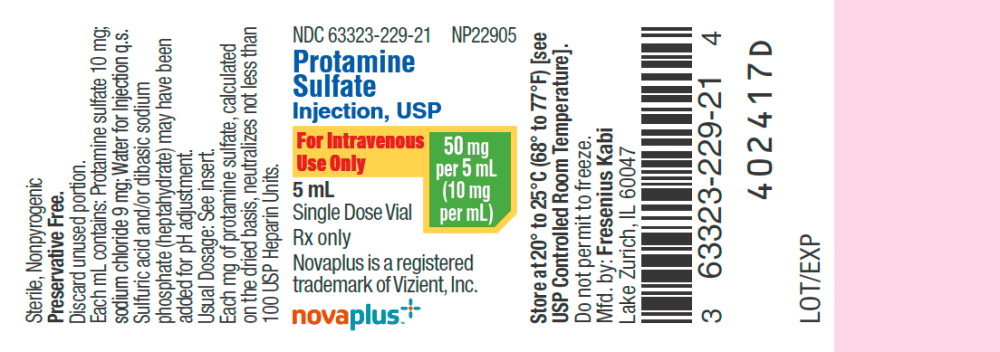
Protamine Sulfate 10 mg/mL Injection, Solution
🆔 Identity & classification
Where does this data come from?
🏭 Manufacturer & labeler
Where does this data come from?
🩺 Clinical
Patient education
Supplement & herbal interactions
Where does this data come from?
Ask a licensed pharmacist directly — free, answered by our team.
🧪 Inactive Ingredients / Excipients
Inactive ingredients, also called excipients, are components of the drug product other than the active ingredient. They may include fillers, dyes, coatings, preservatives, flavors, or other formulation ingredients.
Where does this data come from?
IACT rows and label-wide narrative are kept separate; availability and product-level specificity depend on the submitted label.Inactive ingredient FAQ
Are inactive ingredients the same for every manufacturer?
Why might an inactive ingredient be missing?
Can inactive ingredients matter?
💲 Pricing
A drug doesn't have one price. Each row is a different public payment system, and none is what you'd pay at the counter — that depends on your insurance. The ⓘ on each row explains what it measures.
| Price system | Per mL | Per package |
|---|---|---|
| Retail pharmacies payNADAC · weekly | Not in the retail survey — common for institutional, discontinued, or low-volume packs. | |
| Medicaid paysCMS SDUD · 12 mo | No recent Medicaid claims on file for this NDC — rare and low-volume NDCs are suppressed in the public data. | |
| Medicare drug plans payPart D · quarterly | No Part D plan price is available for this NDC in our data. | |
Where does this data come from?
🔁 Therapeutic equivalents
| Product | Labeler | Pack | NADAC/unit | TE | Status | Price vs. this |
|---|---|---|---|---|---|---|
| Protamine Sulfate 10 mg/mLthis 63323-0229-26 | Fresenius | 10 vials | — | — | Discontinued | — |
| Protamine Sulfate 10 mg/mL 65219-0646-05 | Fresenius | 25 vials | — | — | FDA listed | — |
| Protamine Sulfate 10 mg/mL 51662-1414-01 | HF | 5 ml | — | — | FDA listed | — |
Where does this data come from?
⏳ Availability & generic status
This product is an FDA-approved generic. Other versions of the same drug are listed under Therapeutic equivalents, least expensive first.
Where does this data come from?
💊 Medicaid utilization by pack size
📦 Packaging — all sizes for this product
| Package NDC | Description | Marketing start | Status |
|---|---|---|---|
| 63323-0229-15 | 25 VIAL, SINGLE-DOSE in 1 TRAY (63323-229-15) / 5 mL in 1 VIAL, SINGLE-DOSE (63323-229-21) | 2000-10-18 | Active |
| 63323-0229-26 You're viewing this | 10 VIAL, SINGLE-DOSE in 1 TRAY (63323-229-26) / 25 mL in 1 VIAL, SINGLE-DOSE | 2000-10-18 | Discontinued by firm |
| 63323-0229-35 | 1 VIAL, SINGLE-DOSE in 1 BOX (63323-229-35) / 25 mL in 1 VIAL, SINGLE-DOSE | 2000-10-18 | Active |
| 63323-0229-94 | 25 VIAL, SINGLE-DOSE in 1 TRAY (63323-229-94) / 5 mL in 1 VIAL, SINGLE-DOSE (63323-229-41) | 2000-10-18 | Active |
| 63323-0229-95 | 1 VIAL, SINGLE-DOSE in 1 BOX (63323-229-95) / 25 mL in 1 VIAL, SINGLE-DOSE | 2000-10-18 | Active |
| 63323-0229-05 | 25 VIAL, SINGLE-DOSE in 1 TRAY (63323-229-05) / 5 mL in 1 VIAL, SINGLE-DOSE (63323-229-01) | 2000-10-18 | Active |
| 63323-0229-25 | 10 VIAL, SINGLE-DOSE in 1 TRAY (63323-229-25) / 25 mL in 1 VIAL, SINGLE-DOSE | 2000-10-18 | Active |
| 63323-0229-30 | 1 VIAL, SINGLE-DOSE in 1 BOX (63323-229-30) / 25 mL in 1 VIAL, SINGLE-DOSE | 2000-10-18 | Active |
This pack shows little to no recent Medicaid volume — a different pack size carries most fills. See all packs ↓
Pack size FAQ
What quantity is in NDC 63323-0229-26?
What NDC number is used to bill for this package of Protamine Sulfate 10 mg/mL Injection, Solution?
🧭 About this NDC listing & data coverage
What data is (and isn’t) available for this NDC — tap to expand
| NDC identity (package / product / labeler codes) | ✓ Available |
| Labeler | ✓ Available |
| Product & package description | ✓ Available |
| Marketing category & status | ✓ Available |
| Active ingredient / dosage form / route | ✓ Available |
| FDA label (SPL via DailyMed) | ✓ Available |
| Package photos | ✓ Available |
| Inactive ingredients (structured) | — Not published for this NDC The labeler did not submit a structured excipient list, or no SPL is available. |
| NADAC pharmacy acquisition price (CMS) | — Not published for this NDC CMS publishes NADAC only for NDCs reported in its retail-pharmacy survey. |
| Orange Book / therapeutic-equivalence data | — Not published for this NDC Applies only to products approved under an NDA/ANDA; many listings are out of scope. |
| HCPCS J-code billing crosswalk | — Not published for this NDC Most self-administered / retail products have no J-code — that is normal. |
| Medicaid utilization (CMS SDUD) | — Not published for this NDC CMS reports utilization only for NDCs with Medicaid claims above its privacy threshold. |
Questions about this listing
Why is there no price listed?
What does the discontinued status mean for this NDC?
Is the NDC printed on the package the same as the 11-digit billing NDC?
What do the three segments of this NDC mean?
Does this product come in other package sizes?
Who lists this product with the FDA?
Do I need a prescription for this product?
Where does this data come from?
📄 Full prescribing information FDA SPL
🚨 Boxed Warning ▾
WARNING Protamine sulfate can cause severe hypotension, cardiovascular collapse, noncardiogenic pulmonary edema, catastrophic pulmonary vasoconstriction, and pulmonary hypertension. Risk factors include high dose or overdose, rapid administration (see WARNINGS and DOSAGE AND ADMINISTRATION ), repeated doses, previous administration of protamine, and current or previous use of protamine-containing drugs (NPH insulin, protamine zinc insulin, and certain beta-blockers). Allergy to fish, previous vasectomy, and severe left ventricular dysfunction and abnormal preoperative pulmonary hemodynamics also may be risk factors.
In patients with any of these risk factors, the risk to benefit of administration of protamine sulfate should be carefully considered. Vasopressors and resuscitation equipment should be immediately available in case of a severe reaction to protamine. Protamine sulfate should not be given when bleeding occurs without prior heparin use.
🎯 Indications and Usage ▾
INDICATIONS AND USAGE: Protamine Sulfate Injection, USP is indicated in the treatment of heparin overdosage.
⏱️ Dosage and Administration ▾
DOSAGE AND ADMINISTRATION: Each mg of protamine sulfate, calculated on the dried basis, neutralizes not less than 100 USP Heparin Units. Protamine sulfate injection should be given by very slow intravenous injection over a 10-minute period in doses not to exceed 50 mg (see WARNINGS ). Protamine sulfate is intended for injection without further dilution; however, if further dilution is desired, D5-W or normal saline may be used.
Diluted solutions should not be stored since they contain no preservative. Protamine sulfate should not be mixed with other drugs without knowledge of their compatibility, because protamine sulfate has been shown to be incompatible with certain antibiotics, including several of the cephalosporins and penicillins. Because heparin disappears rapidly from the circulation, the dose of protamine sulfate required also decreases rapidly with the time elapsed following intravenous injection of heparin.
For example, if the protamine sulfate is administered 30 minutes after the heparin, one-half the usual dose may be sufficient. The dosage of protamine sulfate should be guided by blood coagulation studies (see WARNINGS ). Parenteral drug products should be visually inspected for particulate matter and discoloration prior to administration, whenever solution and container permit.
⛔ Contraindications ▾
CONTRAINDICATIONS: Protamine sulfate is contraindicated in patients who have shown previous intolerance to the drug.
⚠️ Warnings ▾
WARNINGS: Hyperheparinemia or bleeding has been reported in experimental animals and in some patients 30 minutes to 18 hours after cardiac surgery (under cardiopulmonary bypass) in spite of complete neutralization of heparin by adequate doses of protamine sulfate at the end of the operation. It is important to keep the patient under close observation after cardiac surgery. Additional doses of protamine sulfate should be administered if indicated by coagulation studies, such as the heparin titration test with protamine and the determination of plasma thrombin time.
Too-rapid administration of protamine sulfate can cause severe hypotensive and anaphylactoid reactions (see DOSAGE AND ADMINISTRATION and WARNINGS ). Facilities to treat shock should be available.
🤒 Adverse Reactions ▾
ADVERSE REACTIONS: To report SUSPECTED ADVERSE REACTIONS, contact Fresenius Kabi USA, LLC at 1-800-551-7176 or FDA at 1-800-FDA-1088 or www.fda.gov/medwatch. The intravenous administration of protamine sulfate may cause a sudden fall in blood pressure and bradycardia. Other reactions include transitory flushing and feeling of warmth, dyspnea, nausea, vomiting and lassitude.
Back pain has been reported in conscious patients undergoing such procedures as cardiac catheterization. Severe adverse reactions have been reported including: (1) Anaphylaxis that resulted in severe respiratory distress, circulation collapse and capillary leak (see PRECAUTIONS ). Fatal anaphylaxis has been reported in one patient with no prior history of allergies; (2) Anaphylactoid reactions with circulatory collapse, capillary leak, and noncardiogenic pulmonary edema; acute pulmonary hypertension.
Complement activation by the heparin-protamine complexes, release of lysosomal enzymes from neutrophils, and prostaglandin and thomboxane generation have been associated with the development of anaphylactoid reactions. Severe and potentially irreversible circulatory collapse associated with myocardial failure and reduced cardiac output can also occur. The mechanism(s) of this reaction and the role played by concurrent factors are unclear.
High-protein, noncardiogenic pulmonary edema associated with the use of protamine has been reported in patients on cardiopulmonary bypass who are undergoing cardiovascular surgery. The etiologic role of protamine in the pathogenesis of this condition is uncertain, and multiple factors have been present in most cases. The condition has been reported in association with administration of certain blood products, other drugs, cardiopulmonary bypass alone, and other etiologic factors.
It is difficult to treat, and it can be life-threatening. Because fatal anaphylactic and anaphylactoid reactions have been reported after the administration of protamine sulfate, the drug should be given only when resuscitation techniques and treatment of anaphylactic and anaphylactoid shock are readily available.
🆘 Overdosage ▾
OVERDOSAGE: Signs and Symptoms Overdose of protamine sulfate may cause bleeding. Protamine has a weak anticoagulant effect due to an interaction with platelets and with many proteins including fibrinogen. This effect should be distinguished from the rebound anticoagulation that may occur 30 minutes to 18 hours following the reversal of heparin with protamine.
Rapid administration of protamine is more likely to result in bradycardia, dyspnea, a sensation of warmth, flushing, and severe hypotension. Hypertension has also occurred. The median lethal dose of protamine sulfate is 50 mg/kg in mice.
Serum concentrations of protamine sulfate are not clinically useful. Information is not available on the amount of drug in a single dose that is associated with overdosage or is likely to be life-threatening. Treatment To obtain up-to-date information about the treatment of overdose, a good resource is your certified Regional Poison Control Center.
Telephone numbers of certified poison control centers are listed in the Physicians' Desk Reference (PDR) . In managing overdosage, consider the possibility of multiple drug overdoses, interaction among drugs and unusual drug kinetics in your patient. Replace blood loss with blood transfusions or fresh frozen plasma.
If the patient is hypotensive, consider fluids, epinephrine, dobutamine or dopamine.
Signs and Symptoms Overdose of protamine sulfate may cause bleeding. Protamine has a weak anticoagulant effect due to an interaction with platelets and with many proteins including fibrinogen. This effect should be distinguished from the rebound anticoagulation that may occur 30 minutes to 18 hours following the reversal of heparin with protamine.
Rapid administration of protamine is more likely to result in bradycardia, dyspnea, a sensation of warmth, flushing, and severe hypotension. Hypertension has also occurred. The median lethal dose of protamine sulfate is 50 mg/kg in mice.
Serum concentrations of protamine sulfate are not clinically useful. Information is not available on the amount of drug in a single dose that is associated with overdosage or is likely to be life-threatening.
Treatment To obtain up-to-date information about the treatment of overdose, a good resource is your certified Regional Poison Control Center. Telephone numbers of certified poison control centers are listed in the Physicians' Desk Reference (PDR) . In managing overdosage, consider the possibility of multiple drug overdoses, interaction among drugs and unusual drug kinetics in your patient.
Replace blood loss with blood transfusions or fresh frozen plasma. If the patient is hypotensive, consider fluids, epinephrine, dobutamine or dopamine.
🧬 Clinical Pharmacology ▾
CLINICAL PHARMACOLOGY: When administered alone, protamine has an anticoagulant effect. However, when it is given in the presence of heparin (which is strongly acidic), a stable salt is formed and the anticoagulant activity of both drugs is lost. Protamine sulfate has a rapid onset of action.
Neutralization of heparin occurs within five minutes after intravenous administration of an appropriate dose of protamine sulfate. Although the metabolic fate of the heparin-protamine complex has not been elucidated, it has been postulated that protamine sulfate in the heparin-protamine complex may be partially metabolized or may be attacked by fibrinolysin, thus freeing heparin.
📦 How Supplied / Storage and Handling ▾
HOW SUPPLIED: Product Code Unit of Sale Strength Each NP22905 NDC 63323-229-15 Unit of 25 50 mg per 5 mL (10 mg per mL) NDC 63323-229-21 5 mL Single Dose Flip-top Vial NP22930 NDC 63323-229-35 Individually Packaged 250 mg per 25 mL (10 mg per mL) NDC 63323-229-35 25 mL Single Dose Flip-top Vial Store at 20° to 25°C (68° to 77°F) [see USP Controlled Room Temperature]. Do not permit to freeze. CAUTION: The total dose of protamine sulfate contained in product No.
NP22930 (250 mg in 25 mL) is 5 times greater than in product No. NP22905 (50 mg in 5 mL). The large size 25 mL Vial is designed for antiheparin treatment only when large doses of heparin have been given during surgery and are to be neutralized by large doses of protamine sulfate after surgical procedures.
Novaplus is a registered trademark of Vizient, Inc.
📋 Description ▾
DESCRIPTION: Protamines are simple proteins of low molecular weight that are rich in arginine and strongly basic. They occur in the sperm of salmon and certain other species of fish. Protamine sulfate occurs as fine white or off-white amorphous or crystalline powder.
It is sparingly soluble in water. The pH is between 6.0 and 7.0. The cationic hydrogenated protamine at a pH of 6.8 to 7.1 reacts with anionic heparin at a pH of 5.0 to 7.5 to form an inactive complex.
Protamine Sulfate Injection, USP is a sterile, isotonic solution of protamine sulfate. It acts as a heparin antagonist. It is also a weak anticoagulant.
Each mL contains: Protamine sulfate 10 mg; sodium chloride 9 mg; Water for Injection q.s. Sulfuric acid and/or dibasic sodium phosphate (heptahydrate) may have been added for pH adjustment. The preparation is preservative free.
Protamine sulfate is administered intravenously.