
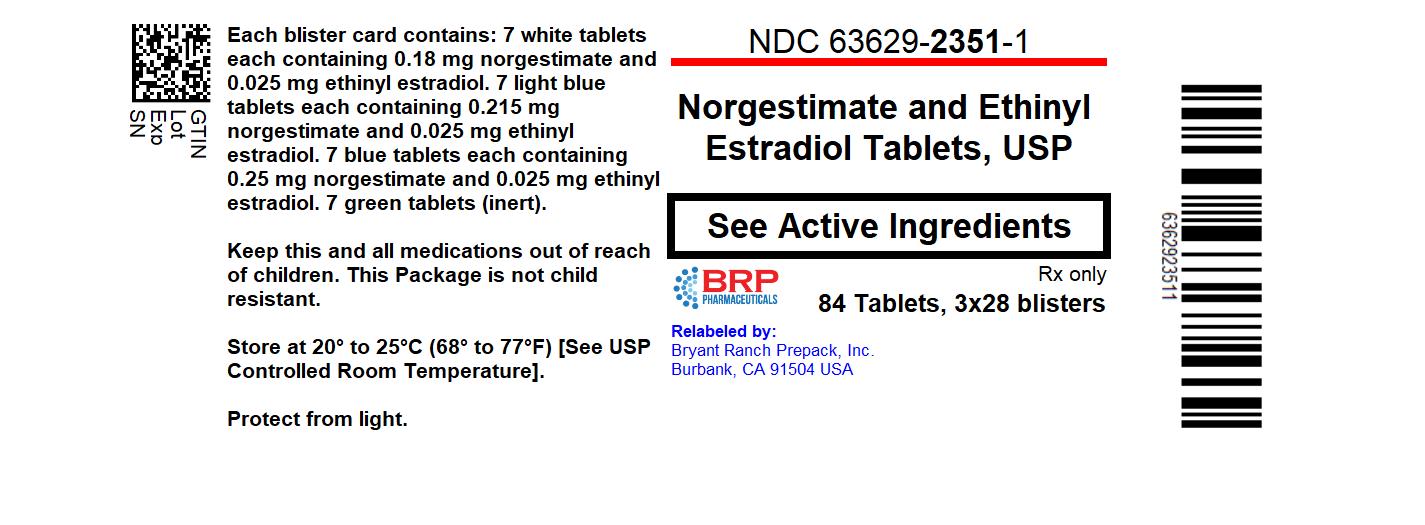
Tri-Lo- Estarylla norgestimate and ethinyl estradiol Kit — NDC 63629-2351-1 (Billing 63629-2351-01)
This is a package of Tri-Lo- Estarylla norgestimate and ethinyl estradiol Kit from Bryant Ranch Prepack, marketed since Jan 2018 and currently FDA-listed. It is this product's only package size.
NDC database record
One package, one record: these facts belong to NDC 63629-2351-1 alone.
- Record
- FDA NDC Directory package listing · Human prescription drug
- Code segments
- 63629 labeler · 2351 product · 1 package
- Package marketed since
- Feb 10, 2023
- Sample package
- No — commercial package
- Listing certified through
- Dec 31, 2026
- Barcode (UPC-A, from the NDC)
- 3 6362923511 7
- FDA record last changed
- Jul 24, 2026
Other active recalls for Norgestimate And Ethinyl Estradiol (different manufacturers) — 1 · tap to view
Identity & classification
Regulatory identifiers FDA, NLM and CMS codes for this package
Drug-database identifiers Medi-Span GPI and First Databank GCN / HICL / AHFS classification
- GSN (GCN sequence number): 050831
- GCN: 18126
- GPI-14 (Medi-Span): 25992002300310
- HICL (First Databank): 004845
- AHFS class code: 68:12.00.00
- RxCUI (RxNorm): 578732
Where does this data come from?
- FDA openFDA NDC Directory · synced Oct 8, 2026
- FDA label on DailyMed · label index refreshed Oct 8, 2026
- RxNorm (NLM RxNav) · catalog refreshed Oct 8, 2026
- Medi-Span GPI (licensed)
- First Databank (licensed) · refreshed Oct 8, 2026
RxNorm drug class
This medicine belongs to the Progestin class.
Where does this data come from?
- RxClass (NLM) · catalog refreshed Oct 8, 2026
Clinical
Oral contraceptives (birth-control pills) containing ethinyl estradiol (an estrogen) and norethindrone (a progestin) are used to prevent pregnancy. Estrogen and progestin are two female sex hormones. Combinations of estrogen and progestin work mainly by preventing ovulation (the release of eggs from the ovaries). Oral contraceptives are an effective method of birth control, but they do not prevent the spread of human immunodeficiency virus (HIV, the virus that causes acquired immunodeficiency syndrome [AIDS]) and other sexually transmitted diseases.
Read the full MedlinePlus article ↗Patient education
Supplement & herbal interactions
Where does this data come from?
- MedlinePlus (NLM) · refreshed Oct 8, 2026
- FDA label on DailyMed · label index refreshed Oct 8, 2026
Ask a licensed pharmacist directly — free, answered by our team.
Pricing
A drug doesn't have one price. Each row is a different public payment system, and none is what you'd pay at the counter — that depends on your insurance. The ⓘ on each row explains what it measures.
| Price system | Per each | Per package |
|---|---|---|
| Retail pharmacies payNADAC · weekly | Not in the retail survey — common for institutional, discontinued, or low-volume packs. | |
| Medicaid paysCMS SDUD · 12 mo | No recent Medicaid claims on file for this NDC — rare and low-volume NDCs are suppressed in the public data. | |
| Medicare drug plans payPart D · Q2 2026 | $0.2345 | $0.70 / 3 kit |
Where does this data come from?
- CMS NADAC weekly file
- CMS ASP pricing files · refreshed Sep 20, 2026
- CMS Medicaid State Drug Utilization Data · refreshed Oct 9, 2026
- CMS Part D plan pricing files · refreshed Sep 24, 2026
- VA National Acquisition Center price file
Packaging — all sizes for this product
| Package NDC | Description | Marketing start | Marketing end | Status |
|---|---|---|---|---|
| 63629-2351-01 You're viewing this Main listing | 3 BLISTER PACK in 1 CARTON / 1 KIT in 1 BLISTER PACK | 2021-04-27 | — | Active |
Therapeutic equivalents
| Product | Labeler | Pack | NADAC/unit | TE | Status | Price vs. this |
|---|---|---|---|---|---|---|
| Tri-Lo-Sprintec 00093-2140-62 | Teva | 3 pouches | $0.108 | AB | Availability likely | — |
| Tri-Lo-Mili 65862-0778-28 | Aurobindo | 1 kit | $0.108 | AB | Availability likely | — |
| Tri-VyLibra Lo 50102-0231-13 | Afaxys | 1 kit | $0.108 | AB | Availability likely | — |
| Tri-Lo- Estarylla 70700-0120-85 | Xiromed, | 1 kit | $0.108 | AB | Availability likely | — |
| Tri-Lo-Marzia 68180-0837-73 | Lupin | 3 pouches | $0.108 | AB | Availability likely | — |
| Estarylla 70700-0119-85 | Xiromed, | 1 kit | $0.115 | AB | Availability likely | — |
| Sprintec 00555-9016-58 | Teva | 6 pouches | $0.115 | AB | Availability likely | — |
| VyLibra 50102-0235-11 | Afaxys | 1 kit | $0.115 | AB | Availability likely | — |
| Mono-Linyah 16714-0360-01 | Northstar | 1 packet | $0.115 | AB | Availability likely | — |
| Mili 65862-0776-28 | Aurobindo | 1 kit | $0.115 | AB | Availability likely | — |
| Norgestimate and Ethinyl Estradiol 68462-0309-29 | Glenmark | 1 kit | $0.115 | AB | Availability likely | — |
| Norgestimate and Ethinyl Estradiol 68180-0840-73 | Lupin | 3 pouches | $0.115 | AB | Availability likely | — |
| Tri-Mili 65862-0777-28 | Aurobindo | 1 kit | $0.126 | AB | Availability likely | — |
| Tri-Estarylla 70700-0121-85 | Xiromed, | 1 kit | $0.126 | AB | Availability likely | — |
| Norgestimate and Ethinyl Estradiol 68462-0565-29 | Glenmark | 1 kit | $0.126 | AB | Availability likely | — |
| Tri-Sprintec 00555-9018-58 | Teva | 6 pouches | $0.126 | AB | Availability likely | — |
| Norgestimate and ethinyl estradiol 68180-0838-73 | Lupin | 1 kit | $0.126 | AB | Availability likely | — |
| Tri-VyLibra 50102-0233-11 | Afaxys | 1 kit | $0.126 | AB | Availability likely | — |
| Tri-Linyah 16714-0363-01 | Northstar | 1 packet | $0.126 | AB | Availability likely | — |
| Nymyo 51862-0645-01 | Mayne | 1 packet | $0.135 | AB | FDA listed | — |
| Tri-Nymyo 51862-0646-01 | Mayne | 1 packet | $0.140 | AB | FDA listed | — |
| Tri Femynor 69238-1607-06 | Amneal | 1 kit | $0.140 | — | FDA listed | — |
| Femynor 69238-1551-06 | Amneal | 1 kit | $0.144 | — | FDA listed | — |
| Tri-Sprintec 63187-0458-28 | Proficient | 6 pouches | — | AB | FDA listed | — |
| Tri-Lo-Marzia 63187-0754-28 | Proficient | 1 pouch | — | AB | FDA listed | — |
| Sprintec 63187-0911-28 | Proficient | 1 pouch | — | AB | FDA listed | — |
| Norgestimate and Ethinyl Estradiol 71205-0191-28 | Proficient | 1 kit | — | AB | FDA listed | — |
| Norgestimate and Ethinyl Estradiol 42291-0553-84 | AvKARE | 1 kit | — | AB | FDA listed | — |
| Norgestimate and Ethinyl Estradiol 42291-0565-84 | AvKARE | 1 kit | — | AB | FDA listed | — |
| norgestimate and ethinyl estradiol 42291-0590-84 | AvKARE | 1 kit | — | AB | FDA listed | — |
| Norgestimate and Ethinyl Estradiol 50090-2603-00 | A-S | 1 kit | — | AB | FDA listed | — |
| Tri-Lo-Sprintec 71205-0287-28 | Proficient | 1 pouch | — | AB | FDA listed | — |
| Tri-Lo-Mili 71205-0746-28 | Proficient | 1 kit | — | AB | FDA listed | — |
| Norgestimate and ethinyl estradiol 79929-0008-07 | Naari | 1 kit | — | AB | FDA listed | — |
| Tri-Estarylla 63629-2350-01 | Bryant | 1 kit | — | AB | FDA listed | — |
| Norgestimate and ethinyl estradiol 79929-0009-07 | Naari | 1 kit | — | AB | FDA listed | — |
| Estarylla 82804-0158-28 | Proficient | 1 pouch | — | AB | FDA listed | — |
| Tri-Sprintec 68788-6325-02 | Preferred | 1 pouch | — | AB | FDA listed | — |
| norgestimate and ethinyl estradiol 72789-0435-79 | PD-Rx | 1 pouch | — | AB | FDA listed | — |
| Mono-Linyah 50090-4881-00 | A-S | 1 kit | — | AB | FDA listed | — |
| Norgestimate and Ethinyl Estradiol 72789-0434-79 | PD-Rx | 1 pouch | — | AB | FDA listed | — |
| Tri-Lo-Marzia 50090-2429-00 | A-S | 1 kit | — | AB | FDA listed | — |
| Estarylla 63629-2349-01 | Bryant | 1 kit | — | AB | Discontinued | — |
| Sprintec 68788-7429-02 | Preferred | 1 pouch | — | AB | FDA listed | — |
| Tri-Estarylla 50090-7861-00 | A-S | 1 kit | — | AB | FDA listed | — |
| Norgestimate and Ethinyl Estradiol 50090-2259-00 | A-S | 1 kit | — | AB | FDA listed | — |
| Tri-Lo- Estaryllathis 63629-2351-01 | Bryant | 1 kit | — | AB | FDA listed | — |
| Mono-Linyah 67296-2329-08 | Redpharm | 1 kit | — | AB | FDA listed | — |
Where does this data come from?
- FDA openFDA NDC Directory · synced Oct 8, 2026
- FDA Orange Book · refreshed Oct 3, 2026
- CMS NADAC weekly file
Availability & generic status
This product is an FDA-approved generic. Other versions of the same drug are listed under Therapeutic equivalents, least expensive first.
Where does this data come from?
- FDA Orange Book · refreshed Oct 3, 2026
What it looks like
Where does this data come from?
- FDA label on DailyMed · label index refreshed Oct 8, 2026
Inactive Ingredients / Excipients
Inactive ingredients, also called excipients, are components of the drug product other than the active ingredient. They may include fillers, dyes, coatings, preservatives, flavors, or other formulation ingredients.
Where does this data come from?
IACT rows and label-wide narrative are kept separate; availability and product-level specificity depend on the submitted label.- FDA label on DailyMed · label index refreshed Oct 8, 2026
- FDA openFDA NDC Directory · synced Oct 8, 2026
Inactive ingredient FAQ
Are inactive ingredients the same for every manufacturer?
Why might an inactive ingredient be missing?
Can inactive ingredients matter?
Manufacturer & labeler
More NDCs from Bryant Ranch Prepack labeler code 63629
- JAIMIESS levonorgestrel / ethinyl estradiol and Kit NDC 63629-2345-1
- Midodrine Hydrochloride 10 mg Tablet NDC 63629-2346-1
- Midodrine Hydrochloride 5 mg Tablet NDC 63629-2347-1
- Midodrine Hydrochloride 2.5 mg Tablet NDC 63629-2348-1
- Estarylla Norgestimate and ethinyl estradiol Kit NDC 63629-2349-1
- Tri-Estarylla norgestimate and ethinyl estradiol Kit NDC 63629-2350-1
- Testosterone 20.25 mg/1.25g Gel, Metered NDC 63629-2352-1
- Carbidopa and Levodopa 25 mg; 100 mg Tablet NDC 63629-2356-1
- Carbidopa and Levodopa 25 mg; 100 mg Tablet NDC 63629-2357-1
- Galantamine Hydrobromide 24 mg Capsule, Extended Release NDC 63629-2363-1
- Galantamine Hydrobromide 8 mg Capsule, Extended Release NDC 63629-2364-1
- Galantamine Hydrobromide 16 mg Capsule, Extended Release NDC 63629-2365-1
Where does this data come from?
- FDA openFDA NDC Directory · synced Oct 8, 2026
- Drugs@FDA
Full prescribing information FDA SPL
🚨 Boxed Warning ▾
WARNING: CIGARETTE SMOKING and SERIOUS CARDIOVASCULAR EVENTS Cigarette smoking increases the risk of serious cardiovascular events from combination oral contraceptive (COC) use. This risk increases with age, particularly in women over 35 years of age, and with the number of cigarettes smoked. For this reason, COCs are contraindicated in women who are over 35 years of age and smoke [see CONTRAINDICATIONS (4) ].
WARNING: CIGARETTE SMOKING and SERIOUS CARDIOVASCULAR EVENTS See full prescribing information for complete boxed warning. • Norgestimate and ethinyl estradiol is contraindicated in women over 35 years old who smoke. ( 4 ) • Cigarette smoking increases the risk of serious cardiovascular events from combination oral contraceptives (COC) use. ( 4 )
🎯 Indications and Usage ▾
1 INDICATIONS AND USAGE Tri-Lo-Estarylla (norgestimate and ethinyl estradiol tablets) is an estrogen/progestin COC, indicated for use by women to prevent pregnancy. ( 1.1 )
1.1Oral Contraception Tri-Lo-Estarylla (norgestimate and ethinyl estradiol tablets) are indicated for use by females of reproductive potential to prevent pregnancy [see CLINICAL STUDIES (14) ].
⏱️ Dosage and Administration ▾
2 DOSAGE AND ADMINISTRATION • Take one tablet daily by mouth at the same time every day. ( 2.2 ) • Take tablets in the order directed on the blister pack. ( 2.2 ) • Do not skip or delay tablet intake. ( 2.2 )
2.1How to Start Tri-Lo-Estarylla Tri-Lo-Estarylla is dispensed in a blister pack [see HOW SUPPLIED/STORAGE AND HANDLING (16) ]. Tri-Lo-Estarylla may be started using either a Day 1 start or a Sunday start (see Table 1 ). For the first cycle of a Sunday Start regimen, an additional method of contraception should be used until after the first 7 consecutive days of administration.
2.2How to Take Tri-Lo-Estarylla Table 1: Instructions for Administration of Tri-Lo-Estarylla Starting COCs in women not currently using hormonal contraception (Day 1 Start or Sunday Start) Important: Consider the possibility of ovulation and conception prior to initiation of this product. Tablet Color: • Tri-Lo-Estarylla active tablets are white (Day 1 to Day 7), light blue (Day 8 to Day 14) and blue (Day 15 to Day 21). • Tri-Lo-Estarylla inactive tablets are green (Day 22 to Day 28). Day 1 Start: • Take first active tablet without regard to meals on the first day of menses. • Take subsequent active tablets once daily at the same time each day for a total of 21 days. • Take one green inactive tablet daily for 7 days and at the same time of day that active tablets were taken. • Begin each subsequent pack on the same day of the week as the first cycle pack (i.e., on the day after taking the last inactive tablet) Sunday Start: • Take first active tablet without regard to meals on the first Sunday after the onset of menses.
Due to the potential risk of becoming pregnant, use additional non-hormonal contraception (such as condoms and spermicide) for the first seven days of the patient's first cycle pack of Tri-Lo-Estarylla . • Take subsequent active tablets once daily at the same time each day for a total of 21 days. • Take one green inactive tablet daily for the following 7 days and at the same time of day that active tablets were taken. • Begin each subsequent pack on the same day of the week as the first cycle pack (i.e., on the Sunday after taking the last inactive tablet) and additional non-hormonal contraceptive is not needed.
Switching to Tri-Lo-Estarylla from another oral contraceptive Start on the same day that a new pack of the previous oral contraceptive would have started. Switching from another contraceptive method to Tri-Lo-Estarylla Start Tri-Lo-Estarylla: • Transdermal patch • On the day when next application would have been scheduled • Vaginal ring • On the day when next insertion would have been scheduled • Injection • On the day when next injection would have been scheduled • Intrauterine contraceptive • On the day of removal • If the IUD is not removed on first day of the patient's menstrual cycle, additional non-hormonal contraceptive (such as condoms and spermicide) is needed for the first seven days of the first cycle pack. • Implant • On the day of removal Complete instructions to facilitate patient counseling on proper tablet usage are located in the FDA-Approved Patient Labeling.
Starting Tri-Lo-Estarylla after Abortion or Miscarriage Starting Tri-Lo-Estarylla after Abortion or Miscarriage First Trimester First-trimester • After a first-trimester abortion or miscarriage, Tri-Lo-Estarylla may be started immediately. An additional method of contraception is not needed if Tri-Lo-Estarylla is started immediately. • If Tri-Lo-Estarylla is not started within 5 days after termination of the pregnancy, the patient should use additional non-hormonal contraception (such as condoms and spermicide) for the first seven days of her first cycle pack of Tri-Lo-Estarylla.
Second Trimester Second-trimester • Do not start until 4 weeks after a second-trimester abortion or miscarriage, due to the increased risk of thromboembolic disease. Start Tri-Lo-Estarylla, following the instructions in Table 1 for Day 1 or Sunday start, as desired. If using… [Excerpted — this section continues on DailyMed.]
💊 Dosage Forms and Strengths ▾
3 DOSAGE FORMS AND STRENGTHS Tri-Lo-Estarylla tablets are available in a blister card. Each blister card contains 28 tablets in the following order: • 7 white, round, coated tablets imprinted "SZ" on one side and "T5" on the other side contains 0.18 mg norgestimate and 0.025 mg ethinyl estradiol. • 7 light blue, round, coated tablets imprinted "SZ" on one side and "T6" on the other side contains 0.215 mg norgestimate and 0.025 mg ethinyl estradiol. • 7 blue, round, coated tablets imprinted "SZ" on one side and "T7" on the other side contains 0.25 mg norgestimate and 0.025 mg ethinyl estradiol. • 7 green, round, coated tablets imprinted "SZ" on one side and "J1" on the other side contains inert ingredients.
Tri-Lo-Estarylla consists of 28 round, coated tablets in the following order ( 3 ): • 7 white tablets each containing 0.18 mg norgestimate and 0.025 mg ethinyl estradiol. • 7 light blue tablets each containing 0.215 mg norgestimate and 0.025 mg ethinyl estradiol. • 7 blue tablets each containing 0.25 mg norgestimate and 0.025 mg ethinyl estradiol. • 7 green tablets (inert).
⛔ Contraindications ▾
4 CONTRAINDICATIONS Tri-Lo-Estarylla is contraindicated in females who are known to have or develop the following conditions: • A high risk of arterial or venous thrombotic diseases. Examples include women who are known to: • Smoke, if over age 35 [see BOXED WARNING and WARNINGS AND PRECAUTIONS (5.1) ] • Have deep vein thrombosis or pulmonary embolism, now or in the past [see WARNINGS AND PRECAUTIONS (5.1) ] • Have inherited or acquired hypercoagulopathies [see WARNINGS AND PRECAUTIONS (5.1) ] • Have cerebrovascular disease [see WARNINGS AND PRECAUTIONS (5.1) ] • Have coronary artery disease [see WARNINGS AND PRECAUTIONS (5.1) ] • Have thrombogenic valvular or thrombogenic rhythm diseases of the heart (for example, subacute bacterial endocarditis with valvular disease, or atrial fibrillation) [see WARNINGS AND PRECAUTIONS (5.1) ] • Have uncontrolled hypertension [see WARNINGS AND PRECAUTIONS (5.4) ] • Have diabetes mellitus with vascular disease [see WARNINGS AND PRECAUTIONS (5.6) ] • Have headaches with focal neurological symptoms or migraine headaches with aura [see WARNINGS AND PRECAUTIONS (5.7) ] ▪ Women over age 35 with any migraine headaches [see WARNINGS AND PRECAUTIONS (5.7) ] • Liver tumors, benign or malignant, or liver disease [see WARNINGS AND PRECAUTIONS (5.2) ] • Undiagnosed abnormal uterine bleeding [see WARNINGS AND PRECAUTIONS (5.8) ] • Pregnancy, because there is no reason to use COCs during pregnancy [see WARNINGS AND PRECAUTIONS (5.9) and USE IN SPECIFIC POPULATIONS (8.1) ] • Current diagnosis of, or history of, breast cancer, which may be hormone-sensitive [see WARNINGS AND PRECAUTIONS (5.11) ] • Use of Hepatitis C drug combinations containing ombitasvir/paritaprevir/ritonavir, with or without dasabuvir, due to the potential for ALT elevations [see WARNINGS AND PRECAUTIONS (5.3) ] • A high risk of arterial or venous thrombotic diseases ( 4 ) • Liver tumors or liver disease ( 4 ) • Undiagnosed abnormal uterine bleeding ( 4 ) • Pregnancy ( 4 ) • Current diagnosis of, or history of, breast cancer, which may be hormone-sensitive( 4 ) • Co-administration with Hepatitis C drug combinations containing ombitasvir/paritaprevir/ritonavir, with or without dasabuvir ( 4 )
⚠️ Warnings and Cautions ▾
5 WARNINGS AND PRECAUTIONS • Thromboembolic Disorders and Other Vascular Problems: Stop norgestimate and ethinyl estradiol if a thrombotic event occurs. Stop at least 4 weeks before and through 2 weeks after major surgery. Start no earlier than 4 weeks after delivery, in women who are not breastfeeding.
( 5.1 ) • Liver disease: Discontinue norgestimate and ethinyl estradiol if jaundice occurs. ( 5.2 ) • High blood pressure: If used in women with well-controlled hypertension, monitor blood pressure and stop norgestimate and ethinyl estradiol if blood pressure rises significantly. ( 5.4 ) • Carbohydrate and lipid metabolic effects: Monitor prediabetic and diabetic women taking norgestimate and ethinyl estradiol.
Consider an alternate contraceptive method for women with uncontrolled dyslipidemia. ( 5.6 ) • Headache: Evaluate significant change in headaches and discontinue norgestimate and ethinyl estradiol if indicated. ( 5.7 ) • Bleeding Irregularities and Amenorrhea: Evaluate irregular bleeding or amenorrhea.
( 5.8 )
5.1Thromboembolic Disorders and Other Vascular Problems • Stop norgestimate and ethinyl estradiol if an arterial thrombotic event or venous thrombotic (VTE) event occurs. • Stop norgestimate and ethinyl estradiol if there is unexplained loss of vision, proptosis, diplopia, papilledema, or retinal vascular lesions. Evaluate for retinal vein thrombosis immediately [see ADVERSE REACTIONS (6.2) ]. • If feasible, stop norgestimate and ethinyl estradiol at least 4 weeks before and through 2 weeks after major surgery or other surgeries known to have an elevated risk of VTE as well as during and following prolonged immobilization. • Start norgestimate and ethinyl estradiol no earlier than 4 weeks after delivery, in women who are not breastfeeding.
The risk of postpartum VTE decreases after the third postpartum week, whereas the risk of ovulation increases after the third postpartum week. • The use of COCs increases the risk of VTE. However, pregnancy increases the risk of VTE as much or more than the use of COCs. The risk of VTE in women using COCs is 3 to 9 cases per 10,000 woman-years.
The risk of VTE is highest during the first year of use of COCs and when restarting hormonal contraception after a break of 4 weeks or longer. The risk of thromboembolic disease due to COCs gradually disappears after use is discontinued. • Use of COCs also increases the risk of arterial thromboses such as strokes and myocardial infarctions, especially in women with other risk factors for these events. COCs have been shown to increase both the relative and attributable risks of cerebrovascular events (thrombotic and hemorrhagic strokes).
This risk increases with age, particularly in women over 35 years of age who smoke. • Use COCs with caution in women with cardiovascular disease risk factors.
5.2Liver Disease Impaired Liver Function Impaired Liver Function Do not use norgestimate and ethinyl estradiol in women with liver disease, such as acute viral hepatitis or severe (decompensated) cirrhosis of liver [see CONTRAINDICATIONS (4) ]. Acute or chronic disturbances of liver function may necessitate the discontinuation of COC use until markers of liver function return to normal and COC causation has been excluded. Discontinue norgestimate and ethinyl estradiol if jaundice develops.
Liver Tumors Liver Tumors Norgestimate and ethinyl estradiol is contraindicated in women with benign and malignant liver tumors [see CONTRAINDICATIONS (4) ]. Hepatic adenomas are associated with COC use. An estimate of the attributable risk is 3.3 cases/100,000 COC users.
Rupture of hepatic adenomas may cause death through intra-abdominal hemorrhage. Studies have shown an increased risk of developing hepatocellular carcinoma in long-term (>8 years) COC users. However, the risk of liver cancers in COC users is less than one case per million users.
5.3Risk of Liver Enzyme Elevations with Concomitant Hepatitis C Treatment During clinical trials with the Hepatitis C… [Excerpted — this section continues on DailyMed.]
🤒 Adverse Reactions ▾
6 ADVERSE REACTIONS The following serious adverse reactions with the use of COCs are discussed elsewhere in labeling: • Serious cardiovascular events and stroke [see BOXED WARNING and WARNINGS AND PRECAUTIONS (5.1) ] • Vascular events [see WARNINGS AND PRECAUTIONS (5.1) ] • Liver disease [see WARNINGS AND PRECAUTIONS (5.2) ] Adverse reactions commonly reported by COC users are: • Irregular uterine bleeding • Nausea • Breast tenderness • Headache The most common adverse reactions reported during clinical trials (≥2%) were: headache/migraine, nausea/vomiting, breast issues, abdominal pain, menstrual disorders, mood disorders, acne, vulvovaginal infection, abdominal distension, weight increased, fatigue.
( 6.1 ) To report SUSPECTED ADVERSE REACTIONS, contact Xiromed, LLC. at 1-844-XIROMED (844-947-6633) or FDA at 1-800-FDA-1088 or www.fda.gov/medwatch.
6.1Clinical Trial Experience Because clinical trials are conducted under widely varying conditions, adverse reaction rates observed in the clinical trials of a drug cannot be directly compared to rates in the clinical trials of another drug and may not reflect the rates observed in clinical practice. The safety of norgestimate and ethinyl estradiol was evaluated in 1,723 subjects who participated in a randomized, partially blinded, multicenter, active-controlled clinical trial of norgestimate and ethinyl estradiol for contraception.
This trial examined healthy, nonpregnant, volunteers aged 18 to 45 (nonsmoker if 35 to 45 years of age), who were sexually active with regular coitus. Subjects were followed for up to 13 28-day cycles. Common Adverse Reactions Common Adverse Reactions (≥ 2% of subjects) The most common adverse reactions reported by at least 2% of the 1,723 women using the 28-day regimen were the following in order of decreasing incidence: headache/migraine (30.5%), nausea/vomiting (16.3%); breast issues (including tenderness, pain, enlargement, swelling, discharge, discomfort, cyst, and nipple pain) (10.3%), abdominal pain (9.2%), menstrual disorders (including dysmenorrhea, menstrual discomfort, menstrual disorder) (9.2%), mood disorders (including depression, mood altered, mood swings and depressed mood) (7.6%); acne (5.1%), vulvovaginal infection (3.5%), abdominal distension (2.8%), weight increased (2.4%) , fatigue (2.1%).
Adverse Reactions Leading to Study Discontinuation Adverse Reactions Leading to Study Discontinuation In the clinical trial of norgestimate and ethinyl estradiol 4% of subjects discontinued the trial due to an adverse reaction. The most common adverse reactions leading to discontinuation were headache/migraine (1.2%), nausea/vomiting (0.7%), cervical dysplasia (0.7%), abdominal pain (0.4%), ovarian cyst (0.3%), acne (0.2%), flatulence (0.2%) and depression (0.2%). Serious Adverse Reactions Serious Adverse Reactions Carcinoma of the cervix in situ (1 subject) and cervical dysplasia (1 subject).
6.2Postmarketing Experience Post Marketing Experience Five studies that compared breast cancer risk between ever-users (current or past use) of COCs and never-users of COCs reported no association between ever use of COCs and breast cancer risk, with effect estimates ranging from 0.90 - 1.12 (Figure 2). Three studies compared breast cancer risk between current or recent COC users (<6 months since last use) and never users of COCs (Figure 2). One of these studies reported no association between breast cancer risk and COC use.
The other two studies found an increased relative risk of 1.19 - 1.33 with current or recent use. Both of these studies found an increased risk of breast cancer with current use of longer duration, with relative risks ranging from 1.03 with less than one year of COC use to approximately 1.4 with more than 8-10 years of COC use. Figure 2: Risk of Breast Cancer with Combined Oral Contraceptive Use RR = relative risk; OR = odds ratio; HR = hazard ratio. “ever COC” are females with current or past COC use; “never COC use” are females that… [Excerpted — this section continues on DailyMed.]
🔄 Drug Interactions ▾
7 DRUG INTERACTIONS Consult the labeling of concurrently used drugs to obtain further information about interactions with hormonal contraceptives or the potential for enzyme alterations. No drug-drug interaction studies were conducted with norgestimate and ethinyl estradiol. Drugs or herbal products that induce certain enzymes including CYP3A4, may decrease the effectiveness of COCs or increase breakthrough bleeding.
Counsel patients to use a back-up or alternative method of contraception when enzyme inducers are used with COCs. ( 7.1 )
7.1Effects of Other Drugs on Combined Oral Contraceptives Substances decreasing the plasma concentrations of COCs Substances Decreasing the Plasma Concentrations of COCs Drugs or herbal products that induce certain enzymes, including cytochrome P450 3A4 (CYP3A4), may decrease the plasma concentrations of COCs and potentially diminish the effectiveness of COCs or increase breakthrough bleeding. Some drugs or herbal products that may decrease the effectiveness of COCs include phenytoin, barbiturates, carbamazepine, bosentan, felbamate, griseofulvin, oxcarbazepine, rifampicin, topiramate, rifabutin, rufinamide, aprepitant and products containing St.
John's wort. Interactions between COCs and other drugs may lead to breakthrough bleeding and/or contraceptive failure. Counsel women to use an alternative method of contraception or a back-up method when enzyme inducers are used with COCs, and to continue back-up contraception for 28 days after discontinuing the enzyme inducer to ensure contraceptive reliability.
Colesevelam Colesevelam Colesevelam, a bile acid sequestrant, given together with a COC, has been shown to significantly decrease the AUC of ethinyl estradiol (EE). The drug interaction between the contraceptive and colesevelam was decreased when the two drug products were given 4 hours apart. Substances increasing the plasma concentrations of COCs Substances Increasing the Plasma Concentrations of COCs Co-administration of atorvastatin or rosuvastatin and certain COCs containing EE increase AUC values for EE by approximately 20 to 25%.
Ascorbic acid and acetaminophen may increase plasma EE concentrations, possibly by inhibition of conjugation. CYP3A4 inhibitors such as itraconazole, voriconazole, fluconazole, grapefruit juice, or ketoconazole may increase plasma hormone concentrations. Human Immunodeficiency Virus (HIV) Human Immunodeficiency Virus (HIV)/Hepatitis C Virus (HCV) Protease Inhibitors and Non-nucleoside Reverse Transcriptase Inhibitors Significant changes (increase or decrease) in the plasma concentrations of estrogen and/or progestin have been noted in some cases of co-administration with HIV protease inhibitors (decrease [e.g., nelfinavir, ritonavir, darunavir/ritonavir, (fos)amprenavir/ritonavir, lopinavir/ritonavir, and tipranavir/ritonavir] or increase [e.g., indinavir and atazanavir/ritonavir])/HCV protease inhibitors (decrease [e.g., boceprevir and telaprevir]) or with non-nucleoside reverse transcriptase inhibitors (decrease [e.g., nevirapine] or increase [e.g., etravirine]).
7.2Effects of Combined Oral Contraceptives on Other Drugs • COCs containing EE may inhibit the metabolism of other compounds (e.g., cyclosporine, prednisolone, theophylline, tizanidine, and voriconazole) and increase their plasma concentrations. • COCs have been shown to decrease plasma concentrations of acetaminophen, clofibric acid, morphine, salicylic acid, temazepam and lamotrigine. Significant decrease in plasma concentration of lamotrigine has been shown, likely due to induction of lamotrigine glucuronidation.
This may reduce seizure control; therefore, dosage adjustments of lamotrigine may be necessary. Women on thyroid hormone replacement therapy may need increased doses of thyroid hormone because the serum concentration of thyroid-binding globulin increases with use of COCs.
7.3Interference with Laboratory Tests The use of contraceptive steroids may influence the results of certain labora… [Excerpted — this section continues on DailyMed.]
👥 Use in Specific Populations ▾
8 USE IN SPECIFIC POPULATIONS Nursing mothers: Not recommended; can decrease milk production. ( 8.3 )
8.1Pregnancy There is little or no increased risk of birth defects in women who inadvertently use COCs during early pregnancy. Epidemiologic studies and meta-analyses have not found an increased risk of genital or non-genital birth defects (including cardiac anomalies and limb reduction defects) following exposure to low dose COCs prior to conception or during early pregnancy. Do not administer COCs to induce withdrawal bleeding as a test for pregnancy.
Do not use COCs during pregnancy to treat threatened or habitual abortion.
8.3Nursing Mothers Advise the nursing mother to use other forms of contraception, when possible, until she has weaned her child. COCs can reduce milk production in breastfeeding mothers. This is less likely to occur once breastfeeding is well-established; however, it can occur at any time in some women. Small amounts of oral contraceptive steroids and/or metabolites are present in breast milk.
8.4Pediatric Use Safety and efficacy of norgestimate and ethinyl estradiol have been established in women of reproductive age. Efficacy is expected to be the same for post-pubertal adolescents under the age of 18 and for users 18 years and older. Use of this product before menarche is not indicated.
8.5Geriatric Use Norgestimate and ethinyl estradiol has not been studied in postmenopausal women and is not indicated in this population.
8.6Hepatic Impairment The pharmacokinetics of norgestimate and ethinyl estradiol has not been studied in subjects with hepatic impairment. However, steroid hormones may be poorly metabolized in patients with hepatic impairment. Acute or chronic disturbances of liver function may necessitate the discontinuation of COC use until markers of liver function return to normal and COC causation has been excluded. [See CONTRAINDICATIONS (4) and WARNINGS AND PRECAUTIONS (5.2) . ]
8.7Renal Impairment The pharmacokinetics of norgestimate and ethinyl estradiol has not been studied in women with renal impairment.
🤰 Pregnancy ▾
8.1Pregnancy There is little or no increased risk of birth defects in women who inadvertently use COCs during early pregnancy. Epidemiologic studies and meta-analyses have not found an increased risk of genital or non-genital birth defects (including cardiac anomalies and limb reduction defects) following exposure to low dose COCs prior to conception or during early pregnancy. Do not administer COCs to induce withdrawal bleeding as a test for pregnancy.
Do not use COCs during pregnancy to treat threatened or habitual abortion.
🧒 Pediatric Use ▾
8.4Pediatric Use Safety and efficacy of norgestimate and ethinyl estradiol have been established in women of reproductive age. Efficacy is expected to be the same for post-pubertal adolescents under the age of 18 and for users 18 years and older. Use of this product before menarche is not indicated.
🧓 Geriatric Use ▾
8.5Geriatric Use Norgestimate and ethinyl estradiol has not been studied in postmenopausal women and is not indicated in this population.
🆘 Overdosage ▾
10 OVERDOSAGE There have been no reports of serious ill effects from overdosage of oral contraceptives, including ingestion by children. Overdosage may cause withdrawal bleeding in females and nausea.
🧬 Clinical Pharmacology ▾
12 CLINICAL PHARMACOLOGY
12.1Mechanism of Action COCs lower the risk of becoming pregnant primarily by suppressing ovulation. Other possible mechanisms may include cervical mucus changes that inhibit sperm penetration and endometrial changes that reduce the likelihood of implantation.
12.2Pharmacodynamics No specific pharmacodynamic studies were conducted with norgestimate and ethinyl estradiol.
12.3Pharmacokinetics Absorption Absorption Norgestimate (NGM) and EE are rapidly absorbed following oral administration. NGM is rapidly and completely metabolized by first pass (intestinal and/or hepatic) mechanisms to norelgestromin (NGMN) and norgestrel (NG), which are the major active metabolites of NGM. Mean pharmacokinetic parameters for NGMN, NG and EE during three cycles of administration of norgestimate and ethinyl estradiol are summarized in Table 3.
Peak serum concentrations of NGMN and EE were generally reached by 2 hours after administration of norgestimate and ethinyl estradiol. Accumulation following multiple dosing of the 0.180 mg NGM / 0.025 mg EE dose is approximately 1.5 to 2 fold for NGMN and approximately 1.5 fold for EE compared with single dose administration, in agreement with that predicted based on linear kinetics of NGMN and EE. The pharmacokinetics of NGMN is dose proportional following NGM doses of 0.180 to 0.250 mg.
Steady-state conditions for NGMN following each NGM dose and for EE were achieved during the three cycle study. Non-linear accumulation (4.5–14.5 fold) of NG was observed as a result of high affinity binding to SHBG, which limits its biological activity. Table 3 Summary of NGMN, NG and EE pharmacokinetic parameters.
Table 3: Mean (SD) Pharmacokinetic Parameters of Norgestimate and Ethinyl Estradiol During a Three Cycle Study Analyte 1 Cycle Day C max t max (h) AUC 0–24h t 1/2 (h) NGMN(2, 3, 4) 1 1 0.91 (0.27) 1.8 (1) 5.86 (1.54) NC 3 7 1.42 (0.43) 1.8 (0.7) 11.3 (3.2) NC 14 1.57 (0.39) 1.8 (0.7) 13.9 (3.7) NC 21 1.82 (0.54) 1.5 (0.7) 16.1 (4.8) 28.1 (10.6) NG(2, 3, 4) 1 1 0.32 (0.14) 2 (1.1) 2.44 (2.04) NC 3 7 1.64 (0.89) 1.9 (0.9) 27.9 (18.1) NC 14 2.11 (1.13) 4 (6.3) 40.7 (24.8) NC 21 2.79 (1.42) 1.7 (1.2) 49.9 (27.6) 36.4 (10.2) EE(2, 3, 5) 1 1 55.6 (18.1) 1.7 (0.5) 421 (118) NC 3 7 91.1 (36.7) 1.3 (0.3) 782 (329) NC 14 96.9 (38.5) 1.3 (0.3) 796 (273) NC 21 95.9 (38.9) 1.3 (0.6) 771 (303) 17.7 (4.4) 1 NGMN = Norelgestromin, NG = norgestrel, EE = ethinyl estradiol 2 C max = peak serum concentration, t max = time to reach peak serum concentration, AUC 0–24h = area under serum concentration vs. time curve from 0 to 24 hours, t 1/2 = elimination half-life.
3 units for all analytes; h = hours 4 units for NGMN and NG – C max = ng/mL, AUC 0–24h = h•ng/mL 5 units for EE only – C max = pg/mL, AUC 0–24h = h•pg/mL NC = not calculated Food Effect Food Effect The effect of food on the pharmacokinetics of norgestimate and ethinyl estradiol has not been studied. Distribution Distribution NGMN and NG are highly bound (>97%) to serum proteins. NGMN is bound to albumin and not to SHBG, while NG is bound primarily to SHBG.
EE is extensively bound (>97%) to serum albumin and induces an increase in the serum concentrations of SHBG. Metabolism Metabolism NGM is extensively metabolized by first-pass mechanisms in the gastrointestinal tract and/or liver. NGM's primary active metabolite is NGMN.
Subsequent hepatic metabolism of NGMN occurs and metabolites include NG, which is also active and various hydroxylated and conjugated metabolites. Although NGMN and its metabolites inhibit a variety of P450 enzymes in human liver microsomes, under the recommended dosing regimen, the in vivo concentrations of NGMN and its metabolites, even at the peak serum levels, are relatively low compared to the inhibitory constant (Ki). EE is also metabolized to various hydroxylated products and their glucuronide and sulfate conjugates.
Excretion Excretion Following 3 cycles of administration of norgestimate and ethinyl estradiol, the… [Excerpted — this section continues on DailyMed.]
🧬 Mechanism of Action ▾
12.1Mechanism of Action COCs lower the risk of becoming pregnant primarily by suppressing ovulation. Other possible mechanisms may include cervical mucus changes that inhibit sperm penetration and endometrial changes that reduce the likelihood of implantation.
📦 How Supplied / Storage and Handling ▾
16 HOW SUPPLIED/STORAGE AND HANDLING
16.1How Supplied Norgestimate and Ethinyl Estradiol tablets, USP are available in a blister card: Each blister card (28 tablets) contains in the following order: 7 white, round, coated tablets imprinted "SZ" on one side and "T5" on the other side contains 0.18 mg of the progestational compound, norgestimate, together with 0.025 mg of the estrogenic compound, ethinyl estradiol. 7 light blue, round, coated tablets imprinted "SZ" on one side and "T6" on the other side contains 0.215 mg of the progestational compound, norgestimate, together with 0.025 mg of the estrogenic compound, ethinyl estradiol.
7 blue, round, coated tablets imprinted "SZ" on one side and "T7" on the other side contains 0.25 mg of the progestational compound, norgestimate, together with 0.025 mg of the estrogenic compound, ethinyl estradiol. 7 green, round, coated tablets imprinted "SZ" on one side and "J1" on the other side contains inert ingredients. NDC 63629-2351-1, one box containing 3 individual unit cartons
16.2Storage Conditions Store at 20° to 25°C (68° to 77°F) [see USP Controlled Room Temperature]. Protect from light. Keep out of the reach of children. Repackaged/Relabeled by: Bryant Ranch Prepack, Inc. Burbank, CA 91504
📋 Description ▾
11 DESCRIPTION Tri-Lo-Estarylla (norgestimate and ethinyl estradiol tablets, USP) is a combination oral contraceptive containing the progestational compound norgestimate and the estrogenic compound ethinyl estradiol. Norgestimate is designated as (18,19-Dinor-17-pregn-4-en-20-yn-3-one,17-(acetyloxy)-13-ethyl-, oxime,(17α)-(+)-) and ethinyl estradiol is designated as (19-nor-17α-pregna,1,3,5(10)-trien-20-yne-3,17-diol). • Each active white tablet contains 0.18 mg of norgestimate and 0.025 mg of ethinyl estradiol. Inactive ingredients include crospovidone, lactose anhydrous, magnesium stearate, polyethylene glycol, polyvinyl alcohol, pregelatinised starch, talc, and titanium dioxide. • Each active light blue tablet contains 0.215 mg of norgestimate and 0.025 mg of ethinyl estradiol.
Inactive ingredients include crospovidone, FD&C Blue No.2 indigo carmine aluminum lake, FD&C Blue No.1 brilliant blue aluminum lake, FD&C Yellow No.5 tartrazine aluminum lake, lactose anhydrous, magnesium stearate, polyethylene glycol, polyvinyl alcohol, pregelatinised starch, talc, and titanium dioxide. • Each active blue tablet contains 0.25 mg of norgestimate and 0.025 mg of ethinyl estradiol. Inactive ingredients include crospovidone, FD&C Blue No.2 indigo carmine aluminum lake, FD&C Blue No.1 brilliant blue aluminum lake, FD&C Yellow No.6 sunset yellow fcf aluminum lake, lactose anhydrous, magnesium stearate, polyethylene glycol, polyvinyl alcohol, pregelatinised starch, talc, and titanium dioxide. • Each green placebo tablet contains only inert ingredients, as follows: crospovidone, FD&C Blue No.2 indigo carmine aluminum lake, FD&C Yellow No.5 tartrazine aluminum lake, lactose anhydrous, lecithin (soya), magnesium stearate, polyethylene glycol, polyvinyl alcohol, pregelatinised starch, talc, and titanium dioxide.
💬 Information for Patients ▾
17 PATIENT COUNSELING INFORMATION See FDA-approved patient labeling (Patient Information and Instruction for Use) . Counsel patients about the following information: • Cigarette smoking increases the risk of serious cardiovascular events from COC use, and that women who are over 35 years old and smoke should not use COCs [see Boxed Warning ]. • Increased risk of VTE compared to non-users of COCs is greatest after initially starting a COC or restarting (following a 4-week or greater pill-free interval) the same or a different COC [see WARNINGS AND PRECAUTIONS (5.1) ]. • Tri-Lo-Estarylla does not protect against HIV infection (AIDS) and other sexually transmitted infections. • Tri-Lo-Estarylla is not to be used during pregnancy; if pregnancy occurs during use of Tri-Lo-Estarylla instruct the patient to stop further use [see WARNINGS AND PRECAUTIONS (5.9) ] . • Take one tablet daily by mouth at the same time every day.
Instruct patients what to do in the event tablets are missed [see DOSAGE AND ADMINISTRATION (2.2) ] . • Use a back-up or alternative method of contraception when enzyme inducers are used with Tri-Lo-Estarylla [see DRUG INTERACTIONS (7.1) ]. • COCs may reduce breast milk production, this is less likely to occur if breastfeeding is well established [see USE IN SPECIFIC POPULATIONS (8.3) ]. • Women who start COCs postpartum; and who have not yet had a period, should use an additional method of contraception until they have taken a white tablet for 7 consecutive days [see DOSAGE AND ADMINISTRATION (2.2) ]. • Amenorrhea may occur.
Consider pregnancy in the event of amenorrhea at the time of the first missed period. Rule out pregnancy in the event of amenorrhea in two or more consecutive cycles [see WARNINGS AND PRECAUTIONS (5.8) ]. Tri-Estarylla is a registered trademark of Xiromed Pharma España, S.L.
Manufactured by Laboratorios Leon Farma S.A., Spain for Xiromed LLC. Florham Park, NJ 07932 Product of Spain PI-121-03 Rev. 02/2023
🍼 Nursing Mothers ▾
8.3Nursing Mothers Advise the nursing mother to use other forms of contraception, when possible, until she has weaned her child. COCs can reduce milk production in breastfeeding mothers. This is less likely to occur once breastfeeding is well-established; however, it can occur at any time in some women. Small amounts of oral contraceptive steroids and/or metabolites are present in breast milk.
🧬 Pharmacokinetics ▾
12.3Pharmacokinetics Absorption Absorption Norgestimate (NGM) and EE are rapidly absorbed following oral administration. NGM is rapidly and completely metabolized by first pass (intestinal and/or hepatic) mechanisms to norelgestromin (NGMN) and norgestrel (NG), which are the major active metabolites of NGM. Mean pharmacokinetic parameters for NGMN, NG and EE during three cycles of administration of norgestimate and ethinyl estradiol are summarized in Table 3.
Peak serum concentrations of NGMN and EE were generally reached by 2 hours after administration of norgestimate and ethinyl estradiol. Accumulation following multiple dosing of the 0.180 mg NGM / 0.025 mg EE dose is approximately 1.5 to 2 fold for NGMN and approximately 1.5 fold for EE compared with single dose administration, in agreement with that predicted based on linear kinetics of NGMN and EE. The pharmacokinetics of NGMN is dose proportional following NGM doses of 0.180 to 0.250 mg.
Steady-state conditions for NGMN following each NGM dose and for EE were achieved during the three cycle study. Non-linear accumulation (4.5–14.5 fold) of NG was observed as a result of high affinity binding to SHBG, which limits its biological activity. Table 3 Summary of NGMN, NG and EE pharmacokinetic parameters.
Table 3: Mean (SD) Pharmacokinetic Parameters of Norgestimate and Ethinyl Estradiol During a Three Cycle Study Analyte 1 Cycle Day C max t max (h) AUC 0–24h t 1/2 (h) NGMN(2, 3, 4) 1 1 0.91 (0.27) 1.8 (1) 5.86 (1.54) NC 3 7 1.42 (0.43) 1.8 (0.7) 11.3 (3.2) NC 14 1.57 (0.39) 1.8 (0.7) 13.9 (3.7) NC 21 1.82 (0.54) 1.5 (0.7) 16.1 (4.8) 28.1 (10.6) NG(2, 3, 4) 1 1 0.32 (0.14) 2 (1.1) 2.44 (2.04) NC 3 7 1.64 (0.89) 1.9 (0.9) 27.9 (18.1) NC 14 2.11 (1.13) 4 (6.3) 40.7 (24.8) NC 21 2.79 (1.42) 1.7 (1.2) 49.9 (27.6) 36.4 (10.2) EE(2, 3, 5) 1 1 55.6 (18.1) 1.7 (0.5) 421 (118) NC 3 7 91.1 (36.7) 1.3 (0.3) 782 (329) NC 14 96.9 (38.5) 1.3 (0.3) 796 (273) NC 21 95.9 (38.9) 1.3 (0.6) 771 (303) 17.7 (4.4) 1 NGMN = Norelgestromin, NG = norgestrel, EE = ethinyl estradiol 2 C max = peak serum concentration, t max = time to reach peak serum concentration, AUC 0–24h = area under serum concentration vs. time curve from 0 to 24 hours, t 1/2 = elimination half-life.
3 units for all analytes; h = hours 4 units for NGMN and NG – C max = ng/mL, AUC 0–24h = h•ng/mL 5 units for EE only – C max = pg/mL, AUC 0–24h = h•pg/mL NC = not calculated Food Effect Food Effect The effect of food on the pharmacokinetics of norgestimate and ethinyl estradiol has not been studied. Distribution Distribution NGMN and NG are highly bound (>97%) to serum proteins. NGMN is bound to albumin and not to SHBG, while NG is bound primarily to SHBG.
EE is extensively bound (>97%) to serum albumin and induces an increase in the serum concentrations of SHBG. Metabolism Metabolism NGM is extensively metabolized by first-pass mechanisms in the gastrointestinal tract and/or liver. NGM's primary active metabolite is NGMN.
Subsequent hepatic metabolism of NGMN occurs and metabolites include NG, which is also active and various hydroxylated and conjugated metabolites. Although NGMN and its metabolites inhibit a variety of P450 enzymes in human liver microsomes, under the recommended dosing regimen, the in vivo concentrations of NGMN and its metabolites, even at the peak serum levels, are relatively low compared to the inhibitory constant (Ki). EE is also metabolized to various hydroxylated products and their glucuronide and sulfate conjugates.
Excretion Excretion Following 3 cycles of administration of norgestimate and ethinyl estradiol, the mean (± SD) elimination half-life values, at steady-state, for NGMN, NG and EE were 28.1 (± 10.6) hours, 36.4 (± 10.2) hours and 17.7 (± 4.4) hours, respectively ( Table 2 ). The metabolites of NGMN and EE are eliminated by renal and fecal pathways. Use in Specific Populations Use in Specific Populations Effects of Body Weight, Body Surface Area, and Age Effects of Body Weight, Body Surface Area, a… [Excerpted — this section continues on DailyMed.]
🧬 Pharmacodynamics ▾
12.2Pharmacodynamics No specific pharmacodynamic studies were conducted with norgestimate and ethinyl estradiol.
🔬 Clinical Studies ▾
14 CLINICAL STUDIES In an active controlled clinical trial lasting 12 months, 1,673 women, 18 to 45 years old completed 11,003 cycles of norgestimate and ethinyl estradiol use and a total of 20 pregnancies were reported in norgestimate and ethinyl estradiol users. The racial demographic of those treated with norgestimate and ethinyl estradiol was: Caucasian (86%), African-American (6%), Asian (2%), and Other (6%). There were no exclusions on the basis of weight; the weight range for women treated was 90 to 240 lbs, with a mean weight of about 142 lbs.
The pregnancy rate in women aged 18 to 35 years was approximately 2.6 pregnancies per 100 woman-years of use.
🧪 Nonclinical Toxicology ▾
13 NONCLINICAL TOXICOLOGY
13.1Carcinogenesis, Mutagenesis, Impairment of Fertility [See WARNINGS AND PRECAUTIONS (5.2 , 5.11 ) and USE IN SPECIFIC POPULATIONS (8.1) .]
📄 Carcinogenesis, Mutagenesis, Impairment of Fertility ▾
13.1Carcinogenesis, Mutagenesis, Impairment of Fertility [See WARNINGS AND PRECAUTIONS (5.2 , 5.11 ) and USE IN SPECIFIC POPULATIONS (8.1) .]
📄 Patient Package Insert ▾
Patient Information Tri-Lo-Estarylla ® (norgestimate and ethinyl estradiol tablets, USP) (nor-JES-ti-mate, ETH-i-nil es-tra-DYE-ol) What is the most important information I should know about Tri-Lo-Estarylla? Do not use Tri-Lo-Estarylla if you smoke cigarettes and are over 35 years old. Smoking increases your risk of serious cardiovascular side effects from hormonal birth control pills, including death from heart attack, blood clots or stroke.
This risk increases with age and the number of cigarettes you smoke. What is Tri-Lo-Estarylla? Tri-Lo-Estarylla is a birth control pill (oral contraceptive) used by women to prevent pregnancy.
How does Tri-Lo-Estarylla work for contraception? Your chance of getting pregnant depends on how well you follow the directions for taking your birth control pills. The better you follow the directions, the less chance you have of getting pregnant.
Based on the results from the clinical study, about 3 out of 100 women may get pregnant during the first year they use Tri-Lo-Estarylla . The following chart shows the chance of getting pregnant for women who use different methods of birth control. Each box on the chart contains a list of birth control methods that are similar in effectiveness.
The most effective methods are at the top of the chart. The box on the bottom of the chart shows the chance of getting pregnant for women who do not use birth control and are trying to get pregnant. Who should not take Tri-Lo-Estarylla?
Do not take Tri-Lo-Estarylla if you: • smoke and are over 35 years of age • had blood clots in your arms, legs, lungs, or eyes • had a problem with your blood that makes it clot more than normal • have certain heart valve problems or irregular heart beat that increases your risk of having blood clots • had a stroke • had a heart attack • have high blood pressure that cannot be controlled by medicine • have diabetes with kidney, eye, nerve, or blood vessel damage • have certain kinds of severe migraine headaches with aura, numbness, weakness or changes in vision, or any migraine headaches if you are over 35 years of age • have liver problems, including liver tumors • take any Hepatitis C drug combination containing ombitasvir/paritaprevir/ritonavir, with or without dasabuvir.
This may increase levels of the liver enzyme “alanine aminotransferase” (ALT) in the blood. • have any unexplained vaginal bleeding • are pregnant • had breast cancer or any cancer that is sensitive to female hormones If any of these conditions happen while you are taking Tri-Lo-Estarylla, stop taking Tri-Lo-Estarylla right away and talk to your healthcare provider. Use non-hormonal contraception when you stop taking Tri-Lo-Estarylla. What should I tell my healthcare provider before taking Tri-Lo-Estarylla?
Tell your healthcare provider if you: • are pregnant or think you may be pregnant • are depressed now or have been depressed in the past • had yellowing of your skin or eyes (jaundice) caused by pregnancy (cholestasis of pregnancy) • are breastfeeding or plan to breastfeed. Tri-Lo-Estarylla may decrease the amount of breast milk you make. A small amount of the hormones in Tri-Lo-Estarylla may pass into your breast milk.
Talk to your healthcare provider about the best birth control method for you while breastfeeding. Tell your healthcare provider about all the medicines you take, including prescription and over-the-counter medicines, vitamins and herbal supplements. Tri-Lo-Estarylla may affect the way other medicines work, and other medicines may affect how well Tri-Lo-Estarylla works.
Know the medicines you take. Keep a list of them to show your healthcare provider and pharmacist when you get a new medicine. How should I take Tri-Lo-Estarylla?
Read the Instructions for Use at the end of this Patient Information. What are the possible serious side effects of Tri-Lo-Estarylla? • Like pregnancy, Tri-Lo-Estarylla may cause serious side effects, including blood clots in your lungs, heart attack, or a stroke that… [Excerpted — this section continues on DailyMed.]
📖 Instructions for Use ▾
Instructions For Use Tri-Lo-Estarylla (norgestimate and ethinyl estradiol tablets, USP) (nor-JES-ti-mate, ETH-i-nil es-tra-DYE-ol) Important Information about taking Tri-Lo-Estarylla • Take 1 pill every day at the same time. Take the pills in the order directed on your pill dispenser. • Do not skip your pills, even if you do not have sex often. If you miss pills (including starting the pack late) you could get pregnant.
The more pills you miss, the more likely you are to get pregnant. • If you have trouble remembering to take Tri-Lo-Estarylla, talk to your healthcare provider. When you first start taking Tri-Lo-Estarylla, spotting or light bleeding in between your periods may occur. Contact your healthcare provider if this does not go away after a few months. • You may feel sick to your stomach (nauseous), especially during the first few months of taking Tri-Lo-Estarylla .
If you feel sick to your stomach, do not stop taking the pill. The problem will usually go away. If your nausea does not go away, call your healthcare provider. • Missing pills can also cause spotting or light bleeding, even when you take the missed pills later.
On the days you take 2 pills to make up for missed pills (see What should I do if I miss any Tri-Lo-Estarylla pills? below), you could also feel a little sick to your stomach. • It is not uncommon to miss a period. However, if you miss a period and have not taken Tri-Lo-Estarylla according to directions, or miss 2 periods in a row, or feel like you may be pregnant, call your healthcare provider. If you have a positive pregnancy test, you should stop taking Tri-Lo-Estarylla. • If you have vomiting or diarrhea within 3 to 4 hours of taking your pill, take another pill of the same color from your extra pill dispenser.
If you do not have an extra pill dispenser, take the next pill in your pill dispenser. Continue taking all your remaining pills in order. Start the first pill of your next pill dispenser the day after finishing your current pill dispenser.
This will be 1 day earlier than originally scheduled. Continue on your new schedule. • If you have vomiting or diarrhea for more than 1 day, your birth control pills may not work as well. Use an additional birth control method, like condoms and a spermicide, until you check with your healthcare provider. • Stop taking Tri-Lo-Estarylla at least 4 weeks before you have major surgery and do not restart after the surgery without asking your healthcare provider.
Be sure to use other forms of contraception (like condoms and spermicide) during this time period. Before you start taking Tri-Lo-Estarylla: • Decide what time of day you want to take your pill. It is important to take it at the same time every day and in the order as directed on your pill dispenser. • Have backup contraception (condoms and spermicide) available and if possible, an extra full pack of pills as needed.
When should I start taking Tri-Lo-Estarylla? If you start taking Tri-Lo-Estarylla and you have not used a hormonal birth control method before: • There are 2 ways to start taking your birth control pills. You can either start on a Sunday (Sunday Start) or on the first day (Day 1) of your natural menstrual period (Day 1 Start).
Your healthcare provider should tell you when to start taking your birth control pill. • If you use the Sunday Start, use non-hormonal back-up contraception such as condoms and spermicide for the first 7 days that you take Tri-Lo-Estarylla. You do not need back-up contraception if you use the Day 1 Start. If you start taking Tri-Lo-Estarylla and you are switching from another birth control pill: • Start your new Tri-Lo-Estarylla pack on the same day that you would start the next pack of your previous birth control method. • Do not continue taking the pills from your previous birth control pack.
If you start taking Tri-Lo-Estarylla and previously used a vaginal ring or transdermal patch: • Start using Tri-Lo-Estarylla on the day you would have reapplied the next ring… [Excerpted — this section continues on DailyMed.]
📄 Recent Major Changes ▾
RECENT MAJOR CHANGES Warnings and Precautions ( 5.11 ) 11/2021
📄 Package Label / Principal Display Panel ▾
Norgestimate and Ethinyl Estradiol Tablets, USP 0.18 mg/0.025 mg, 0.215 mg/0.025 mg, and 0.25 mg/0.025 mg Label
Medicare Part D spend CMS · PART D · 2026 (Q1)
About this NDC listing & data coverage
Kit / multi-component package
This NDC identifies a kit — a package containing more than one component. Structured data (pricing, ingredients, equivalents) is often reported per component rather than for the kit NDC itself, which can make this page look thinner than the components' own pages.
What data is (and isn’t) available for this NDC — tap to expand
| NDC identity (package / product / labeler codes) | ✓ Available |
| Labeler | ✓ Available |
| Product & package description | ✓ Available |
| Marketing category & status | ✓ Available |
| Active ingredient / dosage form / route | ✓ Available |
| FDA label (SPL via DailyMed) | ✓ Available |
| Package photos | ✓ Available |
| Inactive ingredients (structured) | — Not published for this NDC The labeler did not submit a structured excipient list, or no SPL is available. |
| NADAC pharmacy acquisition price (CMS) | — Not published for this NDC CMS publishes NADAC only for NDCs reported in its retail-pharmacy survey. |
| Orange Book / therapeutic-equivalence data | ✓ Available |
| HCPCS J-code billing crosswalk | — Not published for this NDC Most self-administered / retail products have no J-code — that is normal. |
| Medicaid utilization (CMS SDUD) | — Not published for this NDC CMS reports utilization only for NDCs with Medicaid claims above its privacy threshold. |