
Acetaminophen and Codeine Phosphate 120 mg/5mL; 12 mg/5mL Solution, 473 mL — NDC 64950-374-16 (Billing 64950-0374-16)
This is a package of 473 mL of Acetaminophen and Codeine Phosphate 120 mg/5mL; 12 mg/5mL Solution from Genus Lifesciences Inc., marketed since Aug 2023 and currently FDA-listed; retail pharmacies pay about $0.4688 per mL (NADAC). It is the main listing for this product, which comes in 2 package sizes.
NDC database record
One package, one record: these facts belong to NDC 64950-374-16 alone.
- Record
- FDA NDC Directory package listing · Human prescription drug
- Code segments
- 64950 labeler · 374 product · 16 package
- Package marketed since
- Aug 10, 2023
- Sample package
- No — commercial package
- Listing certified through
- Dec 31, 2027
- Billing quantity
- 473 mL per package
- Barcode (UPC-A, from the NDC)
- 3 6495037416 2
- Medicaid fills, this package
- 1,915 prescriptions in the last four reported quarters
- FDA record last changed
- Jul 24, 2026
Identity & classification
Regulatory identifiers FDA, NLM and CMS codes for this package
Drug-database identifiers Medi-Span GPI and First Databank GCN / HICL / AHFS classification
- GSN (GCN sequence number): 045155
- GCN: 55402
- GPI-14 (Medi-Span): 65991002052020
- HICL (First Databank): 001717
- AHFS class code: 28:08.08.00
- RxCUI (RxNorm): 993755
Where does this data come from?
- FDA openFDA NDC Directory · synced Oct 8, 2026
- FDA label on DailyMed · label index refreshed Oct 8, 2026
- RxNorm (NLM RxNav) · catalog refreshed Oct 1, 2026
- Medi-Span GPI (licensed)
- First Databank (licensed) · refreshed Oct 8, 2026
RxNorm drug class
This medicine belongs to the Anilides class.
Where does this data come from?
- RxClass (NLM) · catalog refreshed Oct 1, 2026
Clinical
- It treats mild to moderate pain when you need an opioid and other pain relievers have not worked or were not tolerated. It is not meant for long-term use unless your pain stays sev...
- Take it by mouth exactly as prescribed, usually as needed for pain. Your prescriber aims for the lowest dose for the shortest time. If you have the liquid, use an oral syringe or c...
- Drowsiness, dizziness, nausea, vomiting, sweating, and constipation are common. Call for help right away if you have slow or shallow breathing, extreme sleepiness, fainting, or sig...
- No, not without checking with me or your doctor first. Alcohol, benzodiazepines, and other sedating drugs can cause dangerous sleepiness, slowed breathing, coma, and death.
Patient education
Supplement & herbal interactions
Where does this data come from?
- MedlinePlus (NLM) · refreshed Oct 8, 2026
- FDA label on DailyMed · label index refreshed Oct 8, 2026
Ask a licensed pharmacist directly — free, answered by our team.
Pricing
A drug doesn't have one price. Each row is a different public payment system, and none is what you'd pay at the counter — that depends on your insurance. The ⓘ on each row explains what it measures.
| Price system | Per mL | Per package |
|---|---|---|
| Retail pharmacies payNADAC · weekly | $0.469 | $221.74 / 473 ml |
| Medicaid paysCMS SDUD · 12 mo | $0.3398 | $160.73 / 473 ml |
| Medicare drug plans payPart D · Q2 2026 | $0.4519 | $213.75 / 473 ml |
Where does this data come from?
- CMS NADAC weekly file · file of Oct 7, 2026
- CMS ASP pricing files · refreshed Sep 20, 2026
- CMS Medicaid State Drug Utilization Data · through Q1 2026
- CMS Part D plan pricing files · refreshed Sep 24, 2026
- VA National Acquisition Center price file
Packaging — all sizes for this product
| Package NDC | Description | Per unit | Per pack | Marketing start | Marketing end | Status |
|---|---|---|---|---|---|---|
| 64950-0374-04 64950-374-04 | 118 mL in 1 BOTTLE, PLASTIC | — | — | 2023-08-10 | — | Active |
| 64950-0374-16 You're viewing this Main listing | 473 mL in 1 BOTTLE, PLASTIC | $0.4688 / mL | $221.73 | 2023-08-10 | — | Active |
You're viewing the largest of 2 pack sizes for this product.
In Medicaid, this is the most-dispensed pack of this product — about 100% of fills over the last four reported quarters. See all packs ↓
Pack size FAQ
What quantity is in this package?
How does this package differ from NDC 64950-0374-04?
What NDC number is used to bill for this package of Acetaminophen and Codeine Phosphate 120 mg/5mL; 12 mg/5mL Solution?
Prices are the latest CMS NADAC pharmacy acquisition cost per NDC; per-pack figures are per-unit × pack quantity, shown only when the pack is denominated in the same measure NADAC prices.
Therapeutic equivalents
| Product | Labeler | Pack | NADAC/unit | TE | Status | Price vs. this |
|---|---|---|---|---|---|---|
| Acetaminophen and Codeine Phosphate 120 mg/5mL; 12 mg/5mLthis 64950-0374-16 | Genus | 473 ml | $0.469 | — | Availability likely | — |
| Acetaminophen and Codeine Phosphate 120 mg/5mL; 12 mg/5mL 00121-0504-00 | PAI | 10 cups | — | — | FDA listed | — |
| Acetaminophen and Codeine Phosphate 300 mg/12.5mL; 30 mg/12.5mL 00121-1008-00 | PAI | 10 cups | — | — | FDA listed | — |
Where does this data come from?
- FDA openFDA NDC Directory · synced Oct 8, 2026
- FDA Orange Book · refreshed Oct 3, 2026
- CMS NADAC weekly file · file of Oct 7, 2026
Availability & generic status
This product is an FDA-approved generic. Other versions of the same drug are listed under Therapeutic equivalents, least expensive first.
Where does this data come from?
- FDA Orange Book · refreshed Oct 3, 2026
Inactive Ingredients / Excipients
Inactive ingredients, also called excipients, are components of the drug product other than the active ingredient. They may include fillers, dyes, coatings, preservatives, flavors, or other formulation ingredients.
🧪 Avoiding an ingredient? See Acetaminophen and Codeine inactive ingredients by manufacturer: every current product's list side by side, so you can ask your pharmacy for the version that does not list it.
💡 Tap an ingredient (hover on desktop) to see what it is and why it’s used.
-
UNII 3K9958V90M
A liquid solvent derived from fermentation or chemical synthesis. In medicines, alcohol dissolves active ingredients, helps preserve the product, and improves how the body absorbs certain drugs.
-
UNII WZB9127XOA
A synthetic red dye used to color medications and make them easier to identify. It serves as a colorant in tablets, capsules, and liquid formulations.
-
UNII H77VEI93A8
A synthetic yellow dye used to color medications. It helps identify the drug and make it visually distinctive, with no effect on how the medicine works.
-
UNII PDC6A3C0OX
Glycerin is a clear, thick liquid derived from plant oils or fats. It acts as a humectant to retain moisture, a sweetener, and a solvent in medications.
-
UNII 6DC9Q167V3
Propylene glycol is a clear liquid derived from petroleum or vegetable sources. It acts as a solvent, humectant, and preservative in medicines, helping dissolve active ingredients and maintain product stability.
-
UNII SB8ZUX40TY
Saccharin sodium is an artificial sweetener made from saccharin salt. It's added to medicines to improve taste, especially in liquid formulations for children or bitter drugs.
-
UNII C151H8M554
A natural sugar derived from sugar cane or sugar beets. It's used as a sweetener, filler, and binder to improve taste, add bulk, and help hold tablet or capsule ingredients together.
-
UNII 059QF0KO0R
Water is a liquid solvent that dissolves and mixes ingredients together in liquid medicines, syrups, and injections. It helps distribute the active drug evenly throughout the product.
8 inactive ingredients listed in the exact product block matched to this NDC.
Where does this data come from?
ingredient classCode="IACT" elements from the exact product block matched by this NDC. Label-section narrative from DailyMed / the openFDA label index is shown separately when available.- FDA label on DailyMed · label index refreshed Oct 8, 2026
- FDA openFDA NDC Directory · synced Oct 8, 2026
Inactive ingredient FAQ
Are inactive ingredients the same for every manufacturer?
Why might an inactive ingredient be missing?
Can inactive ingredients matter?
Manufacturer & labeler
More NDCs from Genus Lifesciences Inc. labeler code 64950
- Metoclopramide 5 mg/5mL Solution NDC 64950-344-16
- Promethazine Hydrochloride and Phenylephrine 6.25 mg/5mL; 5 mg/5mL Solution NDC 64950-345-16
- Oxycodone Hydrochloride 5 mg/5mL Solution NDC 64950-354-10
- Hydrocodone Bitartrate and Homatropine Methylbromide 5 mg/5mL; 1.5 mg/5mL Solution NDC 64950-371-47
- NYSTATIN 100000 [USP'U]/mL Suspension NDC 64950-372-06
- Hydrocodone Bitartrate and Acetaminophen 7.5 mg/15mL; 325 mg/15mL Solution NDC 64950-373-04
- Silver Nitrate .005 g/mL Solution NDC 64950-378-96
- Ciprofloxacin Otic .5 mg/.25mL Solution/ Drops NDC 64950-381-14
- Dorzolamide Hydrochloride and Timolol Maleate 20 mg/mL; 5 mg/mL Solution NDC 64950-390-60
- Phenazopyridine Hydrochloride 100 mg Tablet NDC 64950-550-01
- Phenazopyridine Hydrochloride 200 mg Tablet NDC 64950-551-01
- Phenobarbital 15 mg Tablet NDC 64950-571-01
Where does this data come from?
- FDA openFDA NDC Directory · synced Oct 8, 2026
- Drugs@FDA
Full prescribing information FDA SPL
🚨 Boxed Warning ▾
WARNING: SERIOUS AND LIFE-THREATENING RISKS FROM USE OF ACETAMINOPHEN AND CODEINE PHOSPHATE ORAL SOLUTION Risk of Accidental Overdose and Death Due to Medication Errors Ensure accuracy when prescribing, dispensing, and administering acetaminophen and codeine phosphate oral solution, 120 mg/12 mg per 5 mL. Dosing errors due to confusion between mg and mL, and other codeine containing oral products of different concentrations can result in accidental overdose and death [see WARNINGS , DOSAGE AND ADMINISTRATION ]. Addiction, Abuse, and Misuse Because the use of acetaminophen and codeine phosphate oral solution exposes patients and other users to the risks of opioid addiction, abuse, and misuse, which can lead to overdose and death, assess each patient's risk prior to prescribing and reassess all patients regularly for the development of these behaviors and conditions [see WARNINGS ].
Life-Threatening Respiratory Depression Serious, life-threatening, or fatal respiratory depression may occur with use of acetaminophen and codeine phosphate oral solution, especially during initiation or following a dosage increase. To reduce the risk of respiratory depression, proper dosing and titration of acetaminophen and codeine phosphate oral solution are essential [see WARNINGS ] . Accidental Ingestion Accidental ingestion of even one dose of acetaminophen and codeine phosphate oral solution, especially by children, can result in a fatal overdose of acetaminophen and codeine [see WARNINGS ].
Risks From Concomitant Use With Benzodiazepines Or Other CNS Depressants Concomitant use of opioids with benzodiazepines or other central nervous system (CNS) depressants, including alcohol, may result in profound sedation, respiratory depression, coma, and death. Reserve concomitant prescribing of acetaminophen and codeine phosphate oral solution and benzodiazepines or other CNS depressants for use in patients for whom alternative treatment options are inadequate [see WARNINGS ; Drug Interactions ]. Neonatal Opioid Withdrawal Syndrome (NOWS) Advise pregnant women using opioids for an extended period of time of the risk of Neonatal Opioid Withdrawal Syndrome, which may be life-threatening if not recognized and treated.
Ensure that management by neonatology experts will be available at delivery [see WARNINGS ]. Opioid Analgesic Risk Evaluation and Mitigation Strategy (REMS) Healthcare providers are strongly encouraged to complete a REMS-compliant education program and to counsel patients and caregivers on serious risks, safe use, and the importance of reading the Medication Guide with each prescription [see WARNINGS ]. Ultra-Rapid Metabolism of Codeine and Other Risk Factors for Life-threatening Respiratory Depression in Children Life-threatening respiratory depression and death have occurred in children who received codeine.
Most of the reported cases occurred following tonsillectomy and/or adenoidectomy, and many of the children had evidence of being an ultra-rapid metabolizer of codeine due to a CYP2D6 polymorphism [see WARNINGS ]. Acetaminophen and codeine phosphate oral solution is contraindicated in children younger than 12 years of age and in children younger than 18 years of age following tonsillectomy and/or adenoidectomy [see CONTRAINDICATIONS ]. Avoid the use of acetaminophen and codeine phosphate oral solution in adolescents 12 to 18 years of age who have other risk factors that may increase their sensitivity to the respiratory depressant effects of codeine.
Interactions with Drugs Affecting Cytochrome P450 Isoenzymes The effects of concomitant use or discontinuation of cytochrome P450 3A4 inducers, 3A4 inhibitors, or 2D6 inhibitors with codeine are complex. Use of cytochrome P450 3A4 inducers, 3A4 inhibitors, or 2D6 inhibitors with acetaminophen and codeine phosphate oral solution requires careful consideration of the effects on the parent drug, codeine, and the active metabolite, morphine [see WARNINGS ; DRUG INTERACTIONS ]. Hepatotoxicity Ace… [Excerpted — this section continues on DailyMed.]
🎯 Indications and Usage ▾
INDICATIONS AND USAGE Acetaminophen and codeine phosphate oral solution is indicated for the management of mild to moderate pain where treatment with an opioid is appropriate and for which alternative treatments are inadequate. Limitations of Use Because of the risks of addiction, abuse, misuse, overdose, and death, which can occur at any dosage or duration and persist over the course of therapy [see WARNINGS ] , reserve opioid analgesics, including acetaminophen and codeine phosphate oral solution, for use in patients for whom alternative treatment options are ineffective, not tolerated, or would be otherwise inadequate to provide sufficient management of pain.
⏱️ Dosage and Administration ▾
DOSAGE AND ADMINISTRATION Important Dosage and Administration Instructions Ensure accuracy when prescribing, dispensing, and administering acetaminophen and codeine phosphate oral solution to avoid dosing errors due to confusion between mg and mL, and with other acetaminophen and codeine phosphate solutions of different concentrations, which could result in accidental overdose and death. Ensure the proper dose is communicated and dispensed. When writing prescriptions, include both the total dose in mg and the total dose in volume.
Instruct patients and caregivers on how to accurately measure and take or administer the correct dose of acetaminophen and codeine phosphate oral solution. Strongly advise patients and caregivers to always use a graduated oral syringe or measuring cup, with metric units of measurements (i.e., mL), to correctly measure the prescribed amount of medication. Inform patients and caregivers that oral dosing devices may be obtained from their pharmacy and to never use household teaspoons or tablespoons to measure acetaminophen and codeine phosphate oral solution.
Acetaminophen and codeine phosphate oral solution should be prescribed only by healthcare professionals who are knowledgeable about the use of opioids and how to mitigate the associated risks. Use the lowest effective dosage for the shortest duration of time consistent with individual patient treatment goals [see WARNINGS ]. Because the risk of overdose increases as opioid doses increase, reserve titration to higher doses of acetaminophen and codeine phosphate oral solution for patients in whom lower doses are insufficiently effective and in whom the expected benefits of using a higher dose opioid clearly outweigh the substantial risks.
Many acute pain conditions (e.g., the pain that occurs with a number of surgical procedures or acute musculoskeletal injuries) require no more than a few days of an opioid analgesic. Clinical guidelines on opioid prescribing for some acute pain conditions are available. There is variability in the opioid analgesic dose and duration needed to adequately manage pain due both to the cause of pain and to individual patient factors.
Initiate the dosing regimen for each patient individually, taking into account the patient's underlying cause and severity of pain, prior analgesic treatment and response, and risk factors for addiction, abuse, and misuse [see WARNINGS ]. Respiratory depression can occur at any time during opioid therapy, especially when initiating and following dosage increases with acetaminophen and codeine phosphate oral solution. Consider this risk when selecting an initial dose and when making dose adjustments [see WARNINGS ].
Patient Access to an Opioid Overdose Reversal Agent for the Emergency Treatment of Opioid Overdose Inform patients and caregivers about opioid overdose reversal agents (e.g., naloxone, nalmefene). Discuss the importance of having access to an opioid overdose reversal agent, especially if the patient has risk factors for overdose (e.g., concomitant use of CNS depressants, a history of opioid use disorder, or prior opioid overdose) or if there are household members (including children) or other close contacts at risk for accidental ingestion or opioid overdose.
The presence of risk factors for overdose should not prevent the management of pain in any patient [see WARNINGS; Addiction, Abuse, and Misuse ; Life-Threatening Respiratory Depression ; Risks from Concomitant Use with Benzodiazepines or Other CNS Depressants ]. Discuss the options for obtaining an opioid overdose reversal agent (e.g., prescription, over-the-counter, or as part of a community-based program). There are important differences among the opioid overdose reversal agents, such as route of administration, product strength, approved patient age range, and pharmacokinetics.
Be familiar with these differences, as outlined in the approved labeling for those products, prior to recommending or prescribing such an agent. Ini… [Excerpted — this section continues on DailyMed.]
⛔ Contraindications ▾
CONTRAINDICATIONS Acetaminophen and codeine phosphate oral solution is contraindicated for: all children younger than 12 years of age [see WARNINGS ]. post-operative management in children younger than 18 years of age following tonsillectomy and/or adenoidectomy [see WARNINGS ]. Acetaminophen and codeine phosphate oral solution is contraindicated in patients with: Significant respiratory depression [ see WARNINGS ]. Acute or severe bronchial asthma in an unmonitored setting or in the absence of resuscitative equipment [see WARNINGS ].
Concurrent use of monoamine oxidase inhibitors (MAOIs) or use of MAOIs within the last 14 days [see WARNINGS ]. Patients with known or suspected gastrointestinal obstruction, including paralytic ileus [see WARNINGS ]. Patients with hypersensitivity to codeine, acetaminophen, or any of the formulation excipients (e.g., anaphylaxis) [see WARNINGS ].
⚠️ Warnings ▾
WARNINGS Risk of Accidental Overdose and Death due to Medication Errors Dosing errors can result in accidental overdose and death. Avoid dosing errors that may result from confusion between mg and mL and confusion with acetaminophen and codeine phosphate solutions of different concentrations, when prescribing, dispensing, and administering acetaminophen and codeine phosphate oral solution. Ensure that the dose is communicated clearly and dispensed accurately.
Instruct patients and caregivers on how to measure and take or administer the correct dose of acetaminophen and codeine phosphate oral solution and to use extreme caution when measuring the dose. Strongly advise patients to obtain and always use a graduated device that can measure and deliver the prescribed dose accurately, and to never use household teaspoons or tablespoons to measure a dose because these are not accurate measuring devices. Addiction, Abuse, and Misuse Acetaminophen and codeine phosphate oral solution contains codeine, a Schedule II controlled substance.
As an opioid, acetaminophen and codeine phosphate oral solution exposes users to the risks of addiction, abuse, and misuse [see DRUG ABUSE AND DEPENDENCE ]. Although the risk of addiction in any individual is unknown, it can occur in patients appropriately prescribed acetaminophen and codeine phosphate oral solution. Addiction can occur at recommended doses and if the drug is misused or abused.
The risk of opioid-related overdose or overdose-related death is increased with higher opioid doses, and this risk persists over the course of therapy. In postmarketing studies, addiction, abuse, misuse, and fatal and non-fatal opioid overdose were observed in patients with long-term opioid use [see ADVERSE REACTIONS ]. Assess each patient's risk for opioid addiction, abuse, or misuse prior to prescribing acetaminophen and codeine phosphate oral solution, and reassess all patients receiving acetaminophen and codeine phosphate oral solution for the development of these behaviors and conditions.
Risks are increased in patients with a personal or family history of substance abuse (including drug or alcohol abuse or addiction) or mental illness (e.g., major depression). The potential for these risks should not, however, prevent the proper management of pain in any given patient. Patients at increased risk may be prescribed opioids such as acetaminophen and codeine phosphate oral solution but use in such patients necessitates intensive counseling about the risks and proper use of acetaminophen and codeine phosphate oral solution along with frequent reevaluation for signs of addiction, abuse, and misuse.
Consider recommending or prescribing an opioid overdose reversal agent [ WARNINGS, DOSAGE AND ADMINISTRATION]. Opioids are sought for nonmedical use and are subject to diversion from legitimate prescribed use. Consider these risks when prescribing or dispensing acetaminophen and codeine phosphate oral solution.
Strategies to reduce these risks include prescribing the drug in the smallest appropriate quantity and advising the patient on careful storage of the drug during the course of treatment and proper disposal of unused drug. Contact local state professional licensing board or state-controlled substances authority for information on how to prevent and detect abuse or diversion of this product. Life-Threatening Respiratory Depression Serious, life-threatening, or fatal respiratory depression has been reported with the use of opioids, even when used as recommended.
Respiratory depression, if not immediately recognized and treated, may lead to respiratory arrest and death. Management of respiratory depression may include close observation, supportive measures, and use of opioid overdose reversal agents, depending on the patient's clinical status [see OVERDOSAGE ]. Carbon dioxide (CO 2 ) retention from opioid-induced respiratory depression can exacerbate the sedating effects of opioids.
While serious, life-threatening, o… [Excerpted — this section continues on DailyMed.]
🤒 Adverse Reactions ▾
ADVERSE REACTIONS The following serious adverse reactions are described, or described in greater detail, in other sections: Addiction, Abuse, and Misuse [see WARNINGS ] Life-Threatening Respiratory Depression [see WARNINGS ] Ultra-Rapid Metabolism of Codeine and Other Risk Factors for Life-Threatening Respiratory Depression in Children [see WARNINGS ] Neonatal Opioid Withdrawal Syndrome [see WARNINGS ] Interactions with CNS Depressants [see WARNINGS ] Severe Hypotension [see WARNINGS ] Gastrointestinal Adverse Reactions [see WARNINGS ] Seizures [see WARNINGS ] Withdrawal [see WARNINGS ] Opioid-Induced Hyperalgesia and Allodynia [see WARNINGS ] The following adverse reactions associated with the use of codeine were identified in postmarketing reports.
Because some of these reactions were reported voluntarily from a population of uncertain size, it is not always possible to reliably estimate their frequency or establish a causal relationship to drug exposure. Serious adverse reactions associated with codeine are respiratory depression and, to a lesser degree, circulatory depression, respiratory arrest, shock, and cardiac arrest. The most frequently observed adverse reactions with codeine administration include drowsiness, lightheadedness, dizziness, sedation, shortness of breath, nausea, vomiting, sweating, and constipation.
Other adverse reactions include allergic reactions, euphoria, dysphoria, abdominal pain, pruritus, rash, thrombocytopenia, and agranulocytosis. Other less frequently observed adverse reactions expected from opioid analgesics, including acetaminophen and codeine phosphate oral solution: Cardiovascular system : faintness, flushing, hypotension, palpitations, syncope Digestive System : abdominal cramps, anorexia, diarrhea, dry mouth, gastrointestinal distress, pancreatitis Nervous system : anxiety, drowsiness, fatigue, headache, insomnia, nervousness, shakiness, somnolence, vertigo, visual disturbances, weakness Skin and Appendages : rash, sweating, urticarial Serotonin syndrome : Cases of serotonin syndrome, a potentially life-threatening condition, have been reported during concomitant use of opioids with serotonergic drugs.
Adrenal insufficiency : Cases of adrenal insufficiency have been reported with opioid use, more often following greater than one month of use. Anaphylaxis : Anaphylaxis has been reported with ingredients contained in acetaminophen and codeine phosphate oral solution. Androgen deficiency : Cases of androgen deficiency have occurred with use of opioids for an extended period of time. [see CLINICAL PHARMACOLOGY ].
Hyperalgesia and Allodynia : Cases of hyperalgesia and allodynia have been reported with opioid therapy of any duration [see WARNINGS ] . Hypoglycemia : Cases of hypoglycemia have been reported in patients taking opioids. Most reports were in patients with at least one predisposing risk factor (e.g., diabetes).
Opioid –induced esophageal dysfunction (OIED): Cases of OIED have been reported in patients taking opioids, and may occur more frequently in patients taking higher doses of opioids, and/or in patients taking opioids longer term [see WARNINGS ]. Adverse Reactions from Observation Studies A prospective, observational cohort study estimated the risks of addiction, abuse, and misuse in patients initiating long-term use of Schedule II opioid analgesics between 2017 and 2021. Study participants included in one or more analyses had been enrolled in selected insurance plans or health systems for at least one year, were free of at least one outcome at baseline, completed a minimum number of follow-up assessments, and either: 1) filled multiple extended-release/long-acting opioid analgesic prescriptions during a 90 day period (n=978); or 2) filled any Schedule II opioid analgesic prescriptions covering at least 70 of 90 days (n=1,244).
Those included also had no dispensing of the qualifying opioids in the previous 6 months. Over 12 months: approximately 1% to 6% of participants across… [Excerpted — this section continues on DailyMed.]
🔄 Drug Interactions ▾
DRUG INTERACTIONS CYP2D6 Inhibitors Codeine is metabolized by CYP2D6 to form morphine. The concomitant use of acetaminophen and codeine phosphate oral solution and CYP2D6 inhibitors (e.g., paroxetine, fluoxetine, bupropion, quinidine) can increase the plasma concentration of codeine, but can decrease the plasma concentration of active metabolite morphine, which could result in reduced analgesic efficacy or symptoms of opioid withdrawal, particularly when an inhibitor is added after a stable dose of acetaminophen and codeine phosphate oral solution is achieved [see CLINICAL PHARMACOLOGY ].
After stopping a CYP2D6 inhibitor, as the effects of the inhibitor decline, the codeine plasma concentration will decrease but the active metabolite morphine plasma concentration will increase, which could increase or prolong adverse reactions and may cause potentially fatal respiratory depression [see CLINICAL PHARMACOLOGY ]. If concomitant use with a CYP2D6 inhibitor is necessary, or if a CYP2D6 inhibitor is discontinued after concomitant use, consider dosage adjustment of acetaminophen and codeine phosphate oral solution and evaluate patients closely at frequent intervals.
If concomitant use with CYP2D6 inhibitors is necessary, assess the patient for reduced efficacy or signs and symptoms of opioid withdrawal and consider increasing the acetaminophen and codeine phosphate oral solution as needed. After stopping use of a CYP2D6 inhibitor, consider reducing the acetaminophen and codeine phosphate oral solution and evaluate the patient at frequent intervals for signs and symptoms of respiratory depression or sedation. CYP3A4 Inhibitors The concomitant use of acetaminophen and codeine phosphate oral solution and CYP3A4 inhibitors, such as macrolide antibiotics (e.g., erythromycin), azole-antifungal agents (e.g. ketoconazole), and protease inhibitors (e.g., ritonavir), may result in an increase in codeine plasma concentrations, with subsequently greater metabolism by cytochrome CYP2D6, resulting in greater morphine levels, which could increase or prolong adverse reactions and may cause potentially fatal respiratory depression, particularly when an inhibitor is added after a stable dose of acetaminophen and codeine phosphate oral solution is achieved [see WARNINGS ].
After stopping a CYP3A4 inhibitor, as the effects of the inhibitor decline, it may result in lower codeine levels, greater norcodeine levels, and less metabolism via CYP2D6 with resultant lower morphine levels [see CLINICAL PHARMACOLOGY ], resulting in decreased opioid efficacy or a withdrawal syndrome in patients who had developed physical dependence to codeine. If concomitant use of CYP3A4 inhibitor is necessary, consider dosage reduction of acetaminophen and codeine phosphate oral solution until stable drug effects are achieved.
Evaluate patients at frequent intervals for respiratory depression and sedation. If a CYP3A4 inhibitor is discontinued, consider increasing the acetaminophen and codeine phosphate oral solution dosage until stable drug effects are achieved. Assess for signs of opioid withdrawal.
CYP3A4 Inducers The concomitant use of acetaminophen and codeine phosphate oral solution and CYP3A4 inducers (e.g., rifampin, carbamazepine, phenytoin) can result in lower codeine levels, greater norcodeine levels, and less metabolism via 2D6 with resultant lower morphine levels [see CLINICAL PHARMACOLOGY ], resulting in decreased efficacy or onset of a withdrawal syndrome in patients who have developed physical dependence [see WARNINGS ]. After stopping a CYP3A4 inducer, as the effects of the inducer decline, codeine plasma concentrations may increase, with subsequently greater metabolism by cytochrome CYP2D6, resulting in greater morphine levels [see CLINICAL PHARMACOLOGY ], which could increase or prolong both the therapeutic effects and adverse reactions, and may cause serious respiratory depression.
If concomitant use of a CYP3A4 inducer is necessary, evaluate the patient for… [Excerpted — this section continues on DailyMed.]
🔄 Drug / Laboratory Test Interactions ▾
Drug/Laboratory Test Interactions Codeine may increase serum amylase levels. Acetaminophen may produce false-positive test results for urinary 5-hydroxyindoleacetic acid.
🤰 Pregnancy ▾
PREGNANCY Teratogenic Effects Codeine A study in rats and rabbits reported no teratogenic effect of codeine administered during the period of organogenesis in doses ranging from 5 to 120 mg/kg. In the rat, doses at the 120 mg/kg level, in the toxic range for the adult animal, were associated with an increase in embryo resorption at the time of implantation. In another study a single 100 mg/kg subcutaneous dose of codeine administered to pregnant mice reportedly resulted in delayed ossification in the offspring.
There are no adequate and well-controlled studies in pregnant women. Acetaminophen and codeine phosphate oral solution should be used during pregnancy only if the potential benefit justifies the potential risk to the fetus. Nonteratogenic Effects Fetal/Neonatal Adverse Reactions Use of opioid for an extended period of time during pregnancy for medical or nonmedical purposes can result in physical dependence in the neonate and neonatal opioid withdrawal syndrome shortly after birth.
Neonatal opioid withdrawal syndrome presents as irritability, hyperactivity and abnormal sleep pattern, high pitched cry, tremor, vomiting, diarrhea and failure to gain weight. The onset, duration, and severity of neonatal opioid withdrawal syndrome vary based on the specific opioid used, duration of use, timing and amount of last maternal use, and rate of elimination of the drug by the newborn. Observe newborns for symptoms of neonatal opioid withdrawal syndrome and manage accordingly [see WARNINGS ].
🧒 Pediatric Use ▾
Pediatric Use The safety and effectiveness of acetaminophen and codeine phosphate oral solution in pediatric patients below the age of 18 have not been established. Life-threatening respiratory depression and death have occurred in children who received codeine [see WARNINGS ]. In most of the reported cases, these events followed tonsillectomy and/or adenoidectomy, and many of the children had evidence of being ultra-rapid metabolizers of codeine (i.e., multiple copies of the gene for cytochrome P450 isoenzyme 2D6 or high morphine concentrations).
Children with sleep apnea may be particularly sensitive to the respiratory depressant effects of codeine. Because of the risk of life-threatening respiratory depression and death: Acetaminophen and codeine phosphate oral solution is contraindicated for all children younger than 12 years of age [see CONTRAINDICATIONS ]. Acetaminophen and codeine phosphate oral solution is contraindicated for post-operative management in pediatric patients younger than 18 years of age following tonsillectomy and/or adenoidectomy [see CONTRAINDICATIONS ].
Avoid the use of acetaminophen and codeine phosphate oral solution in adolescents 12 to 18 years of age who have other risk factors that may increase their sensitivity to the respiratory depressant effects of codeine unless the benefits outweigh the risks. Risk factors include conditions associated with hypoventilation, such as postoperative status, obstructive sleep apnea, obesity, severe pulmonary disease, neuromuscular disease, and concomitant use of other medications that cause respiratory depression [see WARNINGS ].
🧓 Geriatric Use ▾
Geriatric Use Elderly patients (aged 65 years or older) may have increased sensitivity to acetaminophen and codeine phosphate oral solution. In general, use caution when selecting a dosage for an elderly patient, usually starting at the low end of the dosing range, reflecting the greater frequency of decreased hepatic, renal, or cardiac function and of concomitant disease or other drug therapy. Respiratory depression is the chief risk for elderly patients treated with opioids, and has occurred after large initial doses were administered to patients who were not opioid-tolerant or when opioids were co-administered with other agents that depress respiration.
Titrate the dosage of acetaminophen and codeine phosphate oral solution slowly in geriatric patients and frequently reevaluate the patient for signs of central nervous system depression [see WARNINGS ] . These drugs are known to be substantially excreted by the kidney, and the risk of adverse reactions to this drug may be greater in patients with impaired renal function. Because elderly patients are more likely to have decreased renal function, care should be taken in dose selection, and it may be useful to regularly evaluate renal function.
🆘 Overdosage ▾
OVERDOSAGE Following an acute overdosage, toxicity may result from codeine or acetaminophen. Clinical Presentation Codeine Acute overdose with codeine can be manifested by respiratory depression, somnolence progressing to stupor or coma, skeletal muscle flaccidity, cold and clammy skin, constricted pupils, and, in some cases, pulmonary edema, bradycardia, hypotension, hypoglycemia, partial or complete airway obstruction, atypical snoring, and death. Marked mydriasis rather than miosis may be seen with hypoxia in overdose situations [see CLINICAL PHARMACOLOGY ].
Toxic leukoencephalopathy has been reported after opioid overdose and can present hours, days, or weeks after apparent recovery from the initial intoxication. Acetaminophen Dose-dependent, potentially fatal hepatic necrosis is the most serious adverse effect of acetaminophen. Renal tubular necrosis, hypoglycemic coma, and coagulation defects may also occur.
Early symptoms following a potentially hepatotoxic overdose may include; anorexia, nausea, vomiting, diaphoresis, pallor and general malaise. Clinical and laboratory evidence of hepatic toxicity may not be apparent until 48 to 72 hours post-ingestion. Treatment of Overdose Codeine In case of overdose, priorities are the reestablishment of a patent and protected airway and institution of assisted or controlled ventilation, if needed.
Employ other supportive measures (including oxygen and vasopressors) in the management of circulatory shock and pulmonary edema as indicated. Cardiac arrest or serious arrhythmias will require advanced life-support measures. For clinically significant respiratory or circulatory depression secondary to opioid overdose, administer an opioid overdose reversal agent such as naloxone or nalmefene.
Because the duration of opioid reversal is expected to be less than the duration of action of acetaminophen and codeine phosphate oral solution, carefully monitor the patient until spontaneous respiration is reliably reestablished. If the response to an opioid overdose reversal agent is suboptimal or only brief in nature, administer additional reversal agent as directed by the product's prescribing information. In an individual physically dependent on opioids, administration of the recommended dosage of the opioid overdose reversal agent will precipitate an acute withdrawal syndrome.
The severity of the withdrawal symptoms experienced will depend on the degree of physical dependence and the dose of the reversal agent administered. If a decision is made to treat serious respiratory depression in the physically dependent patient, administration of the reversal agent should be begun with care and by titration with smaller than usual doses of the reversal agent. Acetaminophen Gastric decontamination with activated charcoal should be administered just prior to N-acetylcysteine (NAC) to decrease systemic absorption if acetaminophen ingestion is known or suspected to have occurred within a few hours of presentation.
Serum acetaminophen levels should be obtained immediately if the patient presents 4 hours or more after ingestion to assess potential risk of hepatotoxicity; acetaminophen levels drawn less than 4 hours post-ingestion may be misleading. To obtain the best possible outcome, NAC should be administered as soon as possible where impending or evolving liver injury is suspected. Intravenous NAC may be administered when circumstances preclude oral administration.
Vigorous supportive therapy is required in severe intoxication. Procedures to limit the continuing absorption of the drug must be readily performed since the hepatic injury is dose-dependent and occurs early in the course of intoxication.
🧬 Clinical Pharmacology ▾
CLINICAL PHARMACOLOGY Mechanism of Action Codeine is an opioid agonist relatively selective for the mu-opioid receptor, but with a much weaker affinity than morphine. The analgesic properties of codeine have been speculated to come from its conversion to morphine, although the exact mechanism of analgesic action remains unknown. The precise mechanism of the analgesic properties of acetaminophen is not established but is thought to involve central actions.
Pharmacodynamics Effects on the Central Nervous System Codeine produces respiratory depression by direct action on brain stem respiratory centers. The respiratory depression involves a reduction in the responsiveness of the brain stem respiratory centers to both increases in carbon dioxide tension and electrical stimulation. Codeine causes miosis, even in total darkness.
Pinpoint pupils are a sign of opioid overdose but are not pathognomonic (e.g., pontine lesions of hemorrhagic or ischemic origins may produce similar findings). Marked mydriasis rather than miosis may be seen due to hypoxia in overdose situations. Effects on the Gastrointestinal Tract and Other Smooth Muscle Codeine causes a reduction in motility associated with an increase in smooth muscle tone in the antrum of the stomach and duodenum.
Digestion of food in the small intestine is delayed and propulsive contractions are decreased. Propulsive peristaltic waves in the colon are decreased, while tone may be increased to the point of spasm, resulting in constipation. Other opioid-induced effects may include a reduction in biliary and pancreatic secretions, spasm of sphincter of Oddi, transient elevations in serum amylase, and opioid-induced esophageal dysfunction (OIED).
Effects on the Cardiovascular System Codeine produces peripheral vasodilation, which may result in orthostatic hypotension or syncope. Manifestations of histamine release and/or peripheral vasodilation may include pruritus, flushing, red eyes, sweating, and/or orthostatic hypotension. Effects on the Endocrine System Opioids inhibit the secretion of adrenocorticotropic hormone (ACTH), cortisol, and luteinizing hormone (LH) in humans [see ADVERSE REACTIONS ].
They also stimulate prolactin, growth hormone (GH) secretion, and pancreatic secretion of insulin and glucagon. Use of opioids for an extended period of time may influence the hypothalamic-pituitary-gonadal axis, leading to androgen deficiency that may manifest as low libido, impotence, erectile dysfunction, amenorrhea, or infertility. The causal role of opioids in the clinical syndrome of hypogonadism is unknown because the various medical, physical, lifestyle, and psychological stressors that may influence gonadal hormone levels have not been adequately controlled for in studies conducted to date [see ADVERSE REACTIONS ].
Effects on the Immune System Opioids have been shown to have a variety of effects on components of the immune system. The clinical significance of these findings is unknown. Overall, the effects of opioids appear to be modestly immunosuppressive.
Concentration-Efficacy Relationships The minimum effective analgesic concentration will vary widely among patients, especially among patients who have been previously treated with opioid agonists. The minimum effective analgesic concentration of codeine for any individual patient may increase over time due to an increase in pain, the development of a new pain syndrome, and/or the development of analgesic tolerance [see DOSAGE AND ADMINISTRATION ]. Concentration–Adverse Reaction Relationships There is a relationship between increasing codeine plasma concentration and increasing frequency of dose-related opioid adverse reactions such as nausea, vomiting, CNS effects, and respiratory depression.
In opioid-tolerant patients, the situation may be altered by the development of tolerance to opioid-related adverse reactions [see DOSAGE AND ADMINISTRATION ]. Pharmacokinetics The behavior of the individual components is described below. Code… [Excerpted — this section continues on DailyMed.]
🧬 Mechanism of Action ▾
Mechanism of Action Codeine is an opioid agonist relatively selective for the mu-opioid receptor, but with a much weaker affinity than morphine. The analgesic properties of codeine have been speculated to come from its conversion to morphine, although the exact mechanism of analgesic action remains unknown. The precise mechanism of the analgesic properties of acetaminophen is not established but is thought to involve central actions.
📦 How Supplied / Storage and Handling ▾
HOW SUPPLIED Acetaminophen and Codeine Phosphate Oral Solution USP (orange-yellow color, cherry flavor) is supplied in the following oral dosage forms: NDC 64950-374-04: 4 fl oz (118 mL) bottle NDC 64950-374-16: 16 fl oz (473 mL) bottle STORAGE Store at 20° to 25°C (68° to 77°F) [See USP Controlled Room Temperature]. Dispense in a tight, light-resistant container with a child-resistant closure. Store acetaminophen and codeine phosphate oral solution securely and dispose of properly [see PRECAUTIONS/Information for Patients ].
📦 Storage and Handling ▾
STORAGE Store at 20° to 25°C (68° to 77°F) [See USP Controlled Room Temperature]. Dispense in a tight, light-resistant container with a child-resistant closure. Store acetaminophen and codeine phosphate oral solution securely and dispose of properly [see PRECAUTIONS/Information for Patients ].
📋 Description ▾
DESCRIPTION Acetaminophen and Codeine Phosphate Oral Solution is pharmacologically classified as an analgesic. Acetaminophen, 4'-hydroxyacetanilide, a slightly bitter, white, odorless, crystalline powder, is a non-opioid, non-salicylate analgesic and antipyretic. It has the following structural formula: C 8 H 9 NO 2 M.W.
151.16 Codeine phosphate, 7,8-didehydro-4,5α-epoxy-3-methoxy-17-methylmorphinan-6α-ol phosphate (1:1) (salt) hemihydrate, a white crystalline powder, is an opioid agonist. It has the following structural formula: C 18 H 21 NO 3 ∙H 3 PO 4 ∙1/2H 2 O N.W. 406.37 Each Acetaminophen and Codeine Phosphate Oral Solution, USP 120 mg/12 mg per 5 mL, for oral administration, contains: Acetaminophen 120 mg Codeine Phosphate 12 mg Alcohol 7% Chemical Structure Chemical Structure
💬 Information for Patients ▾
Information for Patients/Caregivers Advise the patient to read the FDA-approved patient labeling (Medication Guide). Storage and Disposal Because of the risks associated with accidental ingestion, misuse, and abuse, advise patients to store acetaminophen and codeine phosphate oral solution securely, out of sight and reach of children, and in a location not accessible by others, including visitors to the home. Inform patients that leaving acetaminophen and codeine phosphate oral solution unsecured can pose a deadly risk to others in the home [ see WARNINGS , DRUG ABUSE AND DEPENDENCE ].
Advise patients and caregivers that when medicines are no longer needed, they should be disposed of promptly. Inform patients that medicine take-back options are the preferred way to safely dispose of most types of unneeded medicines. If no take-back programs or DEA-registered collectors are available, instruct patients to dispose of acetaminophen and codeine phosphate oral solution by following these four steps: Mix acetaminophen and codeine phosphate oral solution with an unpalatable substance such as dirt, cat litter, or used coffee grounds; Place the mixture in a container such as a sealed plastic bag; Throw the container in the household trash; Delete all personal information on the prescription label of the empty bottle Inform patients that they can visit www.fda.gov/drugdisposal for additional information on disposal of unused medicines.
Advise the patient to read the FDA-approved patient labeling (Medication Guide). Medication Errors Strongly advise patients and caregivers to always use a graduated oral syringe or measuring cup, with metric units of measurements (i.e., mL), to correctly measure the prescribed amount of medication. Inform patients and caregivers that oral dosing devices may be obtained from their pharmacy and to never use household teaspoons or tablespoons to measure acetaminophen and codeine phosphate oral solution [see WARNINGS ; PRECAUTIONS ].
Instruct patients how to measure and take the correct dose of acetaminophen and codeine phosphate oral solution and ensure that the dose is communicated clearly and dispensed accurately. A household teaspoon is not an adequate measuring device. Given the inexactitude of the household spoon measure and the risk of using a tablespoon instead of a teaspoon, which could lead to overdosage, it is strongly recommended that caregivers obtain and use a calibrated measuring device.
Healthcare providers should recommend a calibrated device that can measure and deliver the prescribed dose accurately, and instruct caregivers to use extreme caution in measuring the dosage and when administering acetaminophen and codeine phosphate oral solution to ensure the dose is measured and administered accurately [see WARNINGS ]. If the prescribed concentration is changed, instruct patients on how to correctly measure the new dose to avoid errors which could result in accidental overdose and death. Addiction, Abuse, and Misuse Inform patients that the use of acetaminophen and codeine phosphate oral solution, even when taken as recommended, can result in addiction, abuse, and misuse, which can lead to overdose and death [see WARNINGS ].
Instruct patients not to share acetaminophen and codeine phosphate oral solution with others and to take steps to protect acetaminophen and codeine phosphate oral solution from theft or misuse. Life-Threatening Respiratory Depression Inform patients of the risk of life-threatening respiratory depression, including information that the risk is greatest when starting acetaminophen and codeine phosphate oral solution or when the dosage is increased, and that it can occur even at recommended dosages. Educate patients and caregivers on how to recognize respiratory depression and emphasize the importance of calling 911 or getting emergency medical help right away in the event of a known or suspected overdose [see WARNINGS, Life Threatening Respiratory Depression ].
Accidental In… [Excerpted — this section continues on DailyMed.]
💬 Medication Guide ▾
Medication Guide Acetaminophen and Codeine Phosphate (a seet' a min' oh fen and koe' deen fos'fate) Oral Solution, CV Acetaminophen and Codeine Phosphate Oral Solution is: A strong prescription pain medicine that contains an opioid (narcotic) that is used to manage mild to moderate pain when other pain treatments such as non-opioid pain medicines do not treat your pain well enough or you cannot tolerate them. An opioid pain medicine that can put you at risk for overdose and death. Even if you take your dose correctly as prescribed you are at risk for opioid addiction, abuse, and misuse that can lead to death.
Important information about Acetaminophen and Codeine Phosphate Oral Solution: Get emergency help or call 911 right away if you take too much acetaminophen and codeine phosphate oral solution (overdose). When you first start taking acetaminophen and codeine phosphate oral solution, when your dose is changed, or if you take too much (overdose), serious or life-threatening breathing problems that can lead to death may occur. Ask your healthcare provider about medicines like naloxone or nalmefene that can be used in an emergency to reverse an opioid overdose.
Taking acetaminophen and codeine phosphate oral solution with other opioid medicines, benzodiazepines, gabapentinoids (gabapentin or pregabalin), alcohol, or other central nervous system depressants (including street drugs) can cause severe drowsiness, decreased awareness, breathing problems, coma, and death. Never give anyone else your acetaminophen and codeine phosphate oral solution. They could die from taking it.
Selling or giving away acetaminophen and codeine phosphate oral solution is against the law. Store acetaminophen and codeine phosphate oral solution securely, out of sight and reach of children, and in a location not accessible by others, including visitors to the home. Important Information Guiding Use in Pediatric Patients: Do not give acetaminophen and codeine phosphate oral solution to a child younger than 12 years of age.
Do not give acetaminophen and codeine phosphate oral solution to a child younger than 18 years of age after surgery to remove the tonsils and/or adenoids. Avoid giving acetaminophen and codeine phosphate oral solution to children between 12 to 18 years of age who have risk factors for breathing problems such as obstructive sleep apnea, obesity, or underlying lung problems. Do not take Acetaminophen and Codeine Phosphate Oral Solution if you have: severe asthma, trouble breathing, or other lung problems. a bowel blockage or have narrowing of the stomach or intestines. previously had an allergic reaction to codeine or acetaminophen .
Before taking Acetaminophen and Codeine Phosphate Oral Solution, tell your healthcare provider if you have a history of: head injury, seizures liver, kidney, thyroid problems problems urinating pancreas or gallbladder problems abuse of street or prescription drugs, alcohol addiction, opioid overdose, or mental health problems. Have been told by your healthcare provider that you are a "rapid metabolizer" of certain medicines. Tell your healthcare provider if you are: noticing your pain getting worse.
If your pain gets worse after you take acetaminophen and codeine phosphate oral solution, do not take more of acetaminophen and codeine phosphate oral solution without first talking to your healthcare provider. Talk to your healthcare provider if the pain that you have increases, if you feel more sensitive to pain, or if you have new pain after taking acetaminophen and codeine phosphate oral solution. pregnant or planning to become pregnant. Use of acetaminophen and codeine phosphate oral solution for an extended period of time during pregnancy can cause withdrawal symptoms in your newborn baby that could be life-threatening if not recognized and treated. breastfeeding.
Not recommended; may harm your baby. living in a household where there are small children or someone who has abused street or prescription drugs… [Excerpted — this section continues on DailyMed.]
⚠️ Precautions ▾
PRECAUTIONS Risks of Driving and Operating Machinery Acetaminophen and codeine phosphate oral solution may impair the mental or physical abilities needed to perform potentially hazardous activities such as driving a car or operating machinery. Warn patients not to drive or operate dangerous machinery unless they are tolerant to the effects of acetaminophen and codeine phosphate oral solution and know how they will react to the medication [see PRECAUTIONS; Information for Patients/Caregivers ]. Information for Patients/Caregivers Advise the patient to read the FDA-approved patient labeling (Medication Guide).
Storage and Disposal Because of the risks associated with accidental ingestion, misuse, and abuse, advise patients to store acetaminophen and codeine phosphate oral solution securely, out of sight and reach of children, and in a location not accessible by others, including visitors to the home. Inform patients that leaving acetaminophen and codeine phosphate oral solution unsecured can pose a deadly risk to others in the home [ see WARNINGS , DRUG ABUSE AND DEPENDENCE ]. Advise patients and caregivers that when medicines are no longer needed, they should be disposed of promptly.
Inform patients that medicine take-back options are the preferred way to safely dispose of most types of unneeded medicines. If no take-back programs or DEA-registered collectors are available, instruct patients to dispose of acetaminophen and codeine phosphate oral solution by following these four steps: Mix acetaminophen and codeine phosphate oral solution with an unpalatable substance such as dirt, cat litter, or used coffee grounds; Place the mixture in a container such as a sealed plastic bag; Throw the container in the household trash; Delete all personal information on the prescription label of the empty bottle Inform patients that they can visit www.fda.gov/drugdisposal for additional information on disposal of unused medicines.
Advise the patient to read the FDA-approved patient labeling (Medication Guide). Medication Errors Strongly advise patients and caregivers to always use a graduated oral syringe or measuring cup, with metric units of measurements (i.e., mL), to correctly measure the prescribed amount of medication. Inform patients and caregivers that oral dosing devices may be obtained from their pharmacy and to never use household teaspoons or tablespoons to measure acetaminophen and codeine phosphate oral solution [see WARNINGS ; PRECAUTIONS ].
Instruct patients how to measure and take the correct dose of acetaminophen and codeine phosphate oral solution and ensure that the dose is communicated clearly and dispensed accurately. A household teaspoon is not an adequate measuring device. Given the inexactitude of the household spoon measure and the risk of using a tablespoon instead of a teaspoon, which could lead to overdosage, it is strongly recommended that caregivers obtain and use a calibrated measuring device.
Healthcare providers should recommend a calibrated device that can measure and deliver the prescribed dose accurately, and instruct caregivers to use extreme caution in measuring the dosage and when administering acetaminophen and codeine phosphate oral solution to ensure the dose is measured and administered accurately [see WARNINGS ]. If the prescribed concentration is changed, instruct patients on how to correctly measure the new dose to avoid errors which could result in accidental overdose and death. Addiction, Abuse, and Misuse Inform patients that the use of acetaminophen and codeine phosphate oral solution, even when taken as recommended, can result in addiction, abuse, and misuse, which can lead to overdose and death [see WARNINGS ].
Instruct patients not to share acetaminophen and codeine phosphate oral solution with others and to take steps to protect acetaminophen and codeine phosphate oral solution from theft or misuse. Life-Threatening Respiratory Depression Inform patients of the risk of life-threatening re… [Excerpted — this section continues on DailyMed.]
🍼 Nursing Mothers ▾
NURSING MOTHERS Codeine and its active metabolite, morphine, are present in human milk. There are published studies and cases that have reported excessive sedation, respiratory depression, and death in infants exposed to codeine via breast milk. Women who are ultra-rapid metabolizers of codeine achieve higher than expected serum levels of morphine, potentially leading to higher levels of morphine in breast milk that can be dangerous in their breastfed infants.
In women with normal codeine metabolism (normal CYP2D6 activity), the amount of codeine secreted into human milk is low and dose-dependent. There is no information on the effects of the codeine on milk production. Because of the potential for serious adverse reactions, including excess sedation, respiratory depression, and death in a breastfed infant, advise patients that breastfeeding is not recommended during treatment with acetaminophen and codeine phosphate oral solution [see WARNINGS ].
Acetaminophen is excreted in breast milk in small amounts, but the significance of its effect on nursing infants is not known. Because of the potential for serious adverse reactions in nursing infants from acetaminophen, a decision should be made whether to discontinue nursing or discontinue the drug, taking into account the importance of the drug to the mother. Clinical Considerations If infants are exposed to acetaminophen and codeine phosphate oral solution through breast milk, they should be monitored for excess sedation and respiratory depression.
Withdrawal symptoms can occur in breastfed infants when maternal administration of an opioid analgesic is stopped, or when breast-feeding is stopped.
🧬 Pharmacokinetics ▾
Pharmacokinetics The behavior of the individual components is described below. Codeine Codeine is rapidly absorbed from the gastrointestinal tract. It is rapidly distributed from the intravascular spaces to the various body tissues, with preferential uptake by parenchymatous organs such as the liver, spleen and kidney.
Codeine crosses the blood-brain barrier, and is found in fetal tissue and breast milk. The plasma concentration does not correlate with brain concentration or relief of pain. Codeine is about 7-25% bound to plasma proteins and does not accumulate in body tissues.
About 70 to 80% of the administered dose of codeine is metabolized by conjugation with glucuronic acid to codeine-6-glucuronide (C6G) and via O-demethylation to morphine (about 5 to 10%) and N-demethylation to norcodeine (about 10%) respectively. UDP-glucuronosyltransferase (UGT) 2B7 and 2B4 are the major enzymes mediating glucurodination of codeine to C6G. Cytochrome P450 2D6 is the major enzyme responsible for conversion of codeine to morphine and P450 3A4 is the major enzyme mediating conversion of codeine to norcodeine.
Morphine and norcodeine are further metabolized by conjugation with glucuronic acid. The glucuronide metabolites of morphine are morphine-3-glucuronide (M3G) and morphine-6-glucuronide (M6G). Morphine and M6G are known to have analgesic activity in humans.
The analgesic activity of C6G in humans is unknown. Norcodeine and M3G are generally not considered to possess analgesic properties. The plasma half-life is about 2.9 hours.
The elimination of codeine is primarily via the kidneys, and about 90% of an oral dose is excreted by the kidneys within 24 hours of dosing. The urinary secretion products consist of free and glucuronide conjugated codeine (about 70%), free and conjugated norcodeine (about 10%), free and conjugated morphine (about 10%), normorphine (4%), and hydrocodone (1%). The remainder of the dose is excreted in the feces.
At therapeutic doses, the analgesic effect reaches a peak within 2 hours and persists between 4 and 6 hours. Acetaminophen Acetaminophen is rapidly absorbed from the gastrointestinal tract and is distributed throughout most body tissues. A small fraction (10-25%) of acetaminophen is bound to plasma proteins.
The plasma half-life is 1.25 to 3 hours, but may be increased by liver damage and following overdosage. Elimination of acetaminophen is principally by liver metabolism and subsequent renal excretion of metabolites. Acetaminophen is primarily metabolized in the liver by first-order kinetics and involves three principal separate pathways: conjugation with glucuronide; conjugation with sulfate; and oxidation via the cytochrome, P450-dependent, mixed-function oxidase enzyme pathway to form a reactive intermediate metabolite, which conjugates with glutathione and is then further metabolized to form cysteine and mercapturic acid conjugates.
The principal cytochrome P450 isoenzyme involved appears to be CYP2E1, with CYP1A2 and CYP3A4 as additional pathways. Approximately 85% of an oral dose appears in the urine within 24 hours of administration, most as the glucuronide conjugate, with small amounts of other conjugates and unchanged drug. See OVERDOSAGE for toxicity information.
🧬 Pharmacodynamics ▾
Pharmacodynamics Effects on the Central Nervous System Codeine produces respiratory depression by direct action on brain stem respiratory centers. The respiratory depression involves a reduction in the responsiveness of the brain stem respiratory centers to both increases in carbon dioxide tension and electrical stimulation. Codeine causes miosis, even in total darkness.
Pinpoint pupils are a sign of opioid overdose but are not pathognomonic (e.g., pontine lesions of hemorrhagic or ischemic origins may produce similar findings). Marked mydriasis rather than miosis may be seen due to hypoxia in overdose situations. Effects on the Gastrointestinal Tract and Other Smooth Muscle Codeine causes a reduction in motility associated with an increase in smooth muscle tone in the antrum of the stomach and duodenum.
Digestion of food in the small intestine is delayed and propulsive contractions are decreased. Propulsive peristaltic waves in the colon are decreased, while tone may be increased to the point of spasm, resulting in constipation. Other opioid-induced effects may include a reduction in biliary and pancreatic secretions, spasm of sphincter of Oddi, transient elevations in serum amylase, and opioid-induced esophageal dysfunction (OIED).
Effects on the Cardiovascular System Codeine produces peripheral vasodilation, which may result in orthostatic hypotension or syncope. Manifestations of histamine release and/or peripheral vasodilation may include pruritus, flushing, red eyes, sweating, and/or orthostatic hypotension. Effects on the Endocrine System Opioids inhibit the secretion of adrenocorticotropic hormone (ACTH), cortisol, and luteinizing hormone (LH) in humans [see ADVERSE REACTIONS ].
They also stimulate prolactin, growth hormone (GH) secretion, and pancreatic secretion of insulin and glucagon. Use of opioids for an extended period of time may influence the hypothalamic-pituitary-gonadal axis, leading to androgen deficiency that may manifest as low libido, impotence, erectile dysfunction, amenorrhea, or infertility. The causal role of opioids in the clinical syndrome of hypogonadism is unknown because the various medical, physical, lifestyle, and psychological stressors that may influence gonadal hormone levels have not been adequately controlled for in studies conducted to date [see ADVERSE REACTIONS ].
Effects on the Immune System Opioids have been shown to have a variety of effects on components of the immune system. The clinical significance of these findings is unknown. Overall, the effects of opioids appear to be modestly immunosuppressive.
Concentration-Efficacy Relationships The minimum effective analgesic concentration will vary widely among patients, especially among patients who have been previously treated with opioid agonists. The minimum effective analgesic concentration of codeine for any individual patient may increase over time due to an increase in pain, the development of a new pain syndrome, and/or the development of analgesic tolerance [see DOSAGE AND ADMINISTRATION ]. Concentration–Adverse Reaction Relationships There is a relationship between increasing codeine plasma concentration and increasing frequency of dose-related opioid adverse reactions such as nausea, vomiting, CNS effects, and respiratory depression.
In opioid-tolerant patients, the situation may be altered by the development of tolerance to opioid-related adverse reactions [see DOSAGE AND ADMINISTRATION ].
🔒 Drug Abuse and Dependence ▾
DRUG ABUSE AND DEPENDENCE Controlled Substance Acetaminophen and codeine phosphate oral solution contains codeine, a Schedule II controlled substance. Abuse Acetaminophen and codeine phosphate oral solution contains codeine, a substance with high potential for misuse and abuse, which can lead to the development of substance use disorder, including addiction [see Warnings ]. Misuse is the intentional use, for therapeutic purposes, of a drug by an individual in a way other than prescribed by a healthcare provider or for whom it was not prescribed.
Abuse is the intentional, non-therapeutic use of a drug, even once, for its desirable psychological or physiological effects. Drug addiction is a cluster of behavioral, cognitive, and physiological phenomena that may include a strong desire to take the drug, difficulties in controlling drug use (e.g., continuing drug use despite harmful consequences, giving a higher priority to drug use than other activities and obligations), and possible tolerance or physical dependence. Misuse and abuse of acetaminophen and codeine phosphate oral solution increases risk of overdose, which may lead to central nervous system and respiratory depression, hypotension, seizures, and death.
The risk is increased with concurrent abuse of acetaminophen and codeine phosphate oral solution with alcohol and other CNS depressants. Abuse of and addiction to opioids in some individuals may not be accompanied by concurrent tolerance and symptoms of physical dependence. In addition, abuse of opioids can occur in the absence of addiction.
All patients treated with opioids require careful and frequent reevaluation for signs of misuse, abuse, and addiction, because use of opioid analgesic products carries the risk of addiction even under appropriate medical use. Patients at high risk of Acetaminophen and codeine phosphate oral solution abuse include those with a history of prolonged use of any opioid, including products containing codeine phosphate, those with a history of drug or alcohol abuse, or those who use Acetaminophen and codeine phosphate oral solution in combination with other abused drugs. "Drug-seeking" behavior is very common in persons with substance use disorders.
Drug-seeking tactics include emergency calls or visits near the end of office hours, refusal to undergo appropriate examination, testing, or referral, repeated "loss" of prescriptions, tampering with prescriptions, and reluctance to provide prior medical records or contact information for other treating healthcare provider(s). "Doctor shopping" (visiting multiple prescribers to obtain additional prescriptions) is common among people who abuse drugs and people with substance use disorder. Preoccupation with achieving adequate pain relief can be appropriate behavior in a patient with inadequate pain control.
Acetaminophen and codeine phosphate oral solution, like other opioids, can be diverted for nonmedical use into illicit channels of distribution. Careful record-keeping of prescribing information, including quantity, frequency, and renewal requests, as required by state and federal law, is strongly advised. Proper assessment of the patient, proper prescribing practices, periodic reevaluation of therapy, and proper dispensing and storage are appropriate measures that help to limit abuse of opioid drugs.
Risks Specific to Abuse of Acetaminophen and Codeine Phosphate Oral Solution Abuse of acetaminophen and codeine phosphate oral solution poses a risk of overdose and death. The risk is increased with concurrent use of acetaminophen and codeine phosphate oral solution with alcohol and/or other CNS depressants. Parenteral drug abuse is commonly associated with transmission of infectious diseases such as hepatitis and HIV.
Dependence Both tolerance and physical dependence can develop during use of opioid therapy. Tolerance is a physiological state characterized by a reduced response to a drug after repeated administration (i.e., a higher dose of a dr… [Excerpted — this section continues on DailyMed.]
🔒 Controlled Substance ▾
Controlled Substance Acetaminophen and codeine phosphate oral solution contains codeine, a Schedule II controlled substance.
📄 Carcinogenesis, Mutagenesis, Impairment of Fertility ▾
Carcinogenesis, Mutagenesis, Impairment of Fertility Carcinogenesis Long-term studies to evaluate the carcinogenic potential of the combination of codeine and acetaminophen have not been conducted. Two-year carcinogenicity studies have been conducted in F344/N rats and B6C3F1 mice. There was no evidence of carcinogenicity in male and female rats, respectively, at dietary doses up to 70 and 80 mg/kg/day of codeine sulfate (approximately 2 times the maximum recommended daily dose of 360 mg/day for adults on a mg/m 2 basis) for two years.
Similarly there was no evidence of carcinogenicity activity in male and female mice at dietary doses up to 400 mg/kg/day of codeine sulfate (approximately 5 times the maximum recommended daily dose of 360 mg/day for adults on a mg/m 2 basis) for two years. Long-term studies in mice and rats have been completed by the National Toxicology Program to evaluate the carcinogenic potential of acetaminophen. In 2-year feeding studies, F344/N rats and B6C3F1 mice were fed a diet containing acetaminophen up to 6000 ppm.
Female rats demonstrated equivocal evidence of carcinogenic activity based on increased incidences of mononuclear cell leukemia at 0.8 times the maximum human daily dose (MHDD) of 4 grams/day, based on a body surface area comparison. In contrast, there was no evidence of carcinogenic activity in male rats that received up to 0.7 times or mice at up to 1.2-1.4 times the MHDD, based on a body surface area comparison. Mutagenesis Codeine sulfate was not mutagenic in the in vitro bacterial reverse mutation assay or clastogenic in the in vitro Chinese hamster ovary cell chromosome aberration assay.
In the published literature, acetaminophen has been reported to be clastogenic when administered at 1500 mg/kg/day to the rat model (3.6-times the MHDD, based on a body surface area comparison). In contrast, no clastogenicity was noted at a dose of 750 mg/kg/day (1.8-times the MHDD, based on a body surface area comparison), suggesting a threshold effect. Impairment of Fertility No nonclinical fertility studies have been conducted with codeine or the combination of codeine and acetaminophen.
In studies conducted by the National Toxicology Program, fertility assessments with acetaminophen have been completed in Swiss CD-1 mice via a continuous breeding study. There were no effects on fertility parameters in mice consuming up to 1.7 times the MHDD of acetaminophen, based on a body surface area comparison. Although there was no effect on sperm motility or sperm density in the epididymis, there was a significant increase in the percentage of abnormal sperm in mice consuming 1.78 times the MHDD (based on a body surface comparison) and there was a reduction in the number of mating pairs producing a fifth litter at this dose, suggesting the potential for cumulative toxicity with chronic administration of acetaminophen near the upper limit of daily dosing.
Published studies in rodents report that oral acetaminophen treatment of male animals at doses that are 1.2 times the MHDD and greater (based on a body surface comparison) result in decreased testicular weights, reduced spermatogenesis, reduced fertility, and reduced implantation sites in females given the same doses. These effects appear to increase with the duration of treatment. The clinical significance of these findings is not known.
Infertility Use of opioids for an extended period of time may cause reduced fertility in females and males of reproductive potential. It is not known whether these effects on fertility are reversible [see ADVERSE REACTIONS ].
📄 Package Label / Principal Display Panel ▾
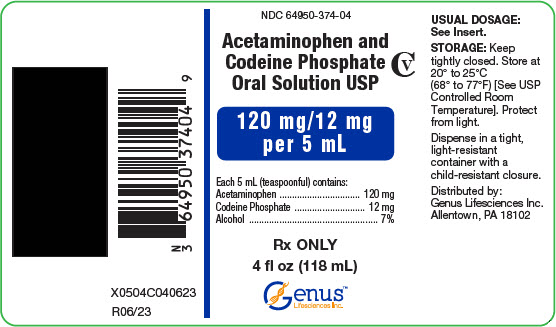
PRINCIPAL DISPLAY PANEL - 118 mL Bottle Label NDC 64950-374-04 Acetaminophen and Codeine Phosphate Oral Solution USP CV 120 mg/12 mg per 5 mL Each 5 mL (teaspoonful) contains: Acetaminophen 120 mg Codeine Phosphate 12 mg Alcohol 7% Rx ONLY 4 fl oz (118 mL) Genus™ Lifesciences Inc. PRINCIPAL DISPLAY PANEL - 118 mL Bottle Label