
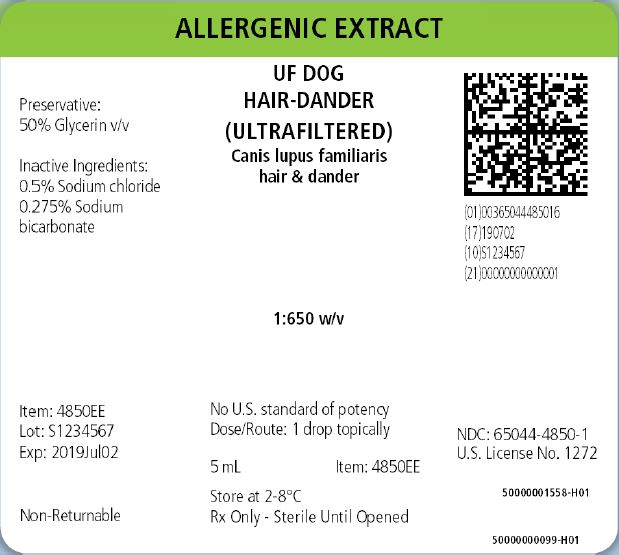
Pollens - Trees, Oak, Red Quercus rubra .05 g/mL Injection, Solution, 5 mL — NDC 65044-2015-1 (Billing 65044-2015-01)
This is a package of 5 mL of Pollens - Trees, Oak, Red Quercus rubra .05 g/mL Injection, Solution from Jubilant HollisterStier LLC, marketed since Apr 1941 and currently FDA-listed. It is this product's only package size.
NDC database record
One package, one record: these facts belong to NDC 65044-2015-1 alone.
- Record
- FDA NDC Directory package listing · Non-standardized allergenic
- Code segments
- 65044 labeler · 2015 product · 1 package
- Package marketed since
- Apr 19, 1941
- Sample package
- No — commercial package
- Listing certified through
- Dec 31, 2027
- Barcode (UPC-A, from the NDC)
- 3 6504420151 7
- FDA record last changed
- Oct 8, 2026
Identity & classification
Regulatory identifiers FDA, NLM and CMS codes for this package
Where does this data come from?
- FDA openFDA NDC Directory · synced Oct 8, 2026
- FDA label on DailyMed · label index refreshed Oct 8, 2026
- RxNorm (NLM RxNav) · catalog refreshed Oct 8, 2026
- Medi-Span GPI (licensed)
- First Databank (licensed) · refreshed Oct 8, 2026
Clinical
Patient education
Supplement & herbal interactions
Where does this data come from?
- MedlinePlus (NLM) · refreshed Oct 8, 2026
- FDA label on DailyMed · label index refreshed Oct 8, 2026
Ask a licensed pharmacist directly — free, answered by our team.
Pricing
A drug doesn't have one price. Each row is a different public payment system, and none is what you'd pay at the counter — that depends on your insurance. The ⓘ on each row explains what it measures.
| Price system | Per mL | Per package |
|---|---|---|
| Retail pharmacies payNADAC · weekly | Not in the retail survey — common for institutional, discontinued, or low-volume packs. | |
| Medicaid paysCMS SDUD · 12 mo | No recent Medicaid claims on file for this NDC — rare and low-volume NDCs are suppressed in the public data. | |
| Medicare drug plans payPart D · quarterly | No Part D plan price is available for this NDC in our data. | |
Where does this data come from?
- CMS NADAC weekly file
- CMS ASP pricing files · refreshed Sep 20, 2026
- CMS Medicaid State Drug Utilization Data · refreshed Oct 9, 2026
- CMS Part D plan pricing files · refreshed Sep 24, 2026
- VA National Acquisition Center price file
Packaging — all sizes for this product
| Package NDC | Description | Marketing start | Marketing end | Status |
|---|---|---|---|---|
| 65044-2015-01 You're viewing this Main listing | 5 mL in 1 VIAL | 1941-04-19 | — | Active |
Therapeutic equivalents
| Product | Labeler | Pack | NADAC/unit | TE | Status | Price vs. this |
|---|---|---|---|---|---|---|
| Pollens - Trees, Oak, Red Quercus rubra .05 g/mLthis 65044-2015-01 | Jubilant | 5 ml | — | — | FDA listed | — |
Where does this data come from?
- FDA openFDA NDC Directory · synced Oct 8, 2026
- FDA Purple Book · refreshed Oct 5, 2026
- CMS NADAC weekly file
Availability & biosimilar status
Biologics have no small-molecule generics; biosimilar competition is tracked in the FDA Purple Book.
Where does this data come from?
- FDA Purple Book · refreshed Oct 5, 2026
Inactive Ingredients / Excipients
Inactive ingredients, also called excipients, are components of the drug product other than the active ingredient. They may include fillers, dyes, coatings, preservatives, flavors, or other formulation ingredients.
💡 Tap an ingredient (hover on desktop) to see what it is and why it’s used.
-
UNII PDC6A3C0OX
Glycerin is a clear, thick liquid derived from plant oils or fats. It acts as a humectant to retain moisture, a sweetener, and a solvent in medications.
-
UNII 8MDF5V39QO
A white powder form of baking soda that acts as a buffer and pH regulator in medicines. It helps maintain the right acid-base balance and may aid tablet disintegration.
-
UNII 451W47IQ8X
Sodium chloride is common table salt. It's used in medicines as a buffer to maintain proper pH, as a filler to add bulk, or to adjust the osmotic balance in liquid formulations.
3 inactive ingredients listed in the exact product block matched to this NDC.
Where does this data come from?
ingredient classCode="IACT" elements from the exact product block matched by this NDC. Label-section narrative from DailyMed / the openFDA label index is shown separately when available.- FDA label on DailyMed · label index refreshed Oct 8, 2026
- FDA openFDA NDC Directory · synced Oct 8, 2026
Inactive ingredient FAQ
Are inactive ingredients the same for every manufacturer?
Why might an inactive ingredient be missing?
Can inactive ingredients matter?
Manufacturer & labeler
More NDCs from Jubilant HollisterStier LLC labeler code 65044
- Pollens - Trees, Mulberry Mix .05 g/mL; .05 g/mL Injection, Solution NDC 65044-1910-1
- Pollens - Trees, Mulberry Mix .1 g/mL; .1 g/mL Injection, Solution NDC 65044-1912-2
- Pollens - Weeds and Garden Plants, Nettle Urtica dioica .05 g/mL Injection, Solution NDC 65044-1945-2
- Pollens - Weeds and Garden Plants, Nettle Urtica dioica .05 g/mL Injection, Solution NDC 65044-1946-1
- Pollens - Weeds and Garden Plants, Nettle Urtica dioica .1 g/mL Injection, Solution NDC 65044-1947-2
- Pollens - Trees, Oak, Red Quercus rubra .05 g/mL Injection, Solution NDC 65044-2014-2
- Pollens - Trees, Palo Verde Cercidium floridum .05 g/mL Injection, Solution NDC 65044-2017-1
- Pollens - Trees, Palo Verde Cercidium floridum .05 g/mL Injection, Solution NDC 65044-2018-2
- Pollens - Trees, Oak Mix .05 g/mL; .05 g/mL; .05 g/mL Injection, Solution NDC 65044-2035-2
- Pollens - Trees, Oak Mix .05 g/mL; .05 g/mL; .05 g/mL Injection, Solution NDC 65044-2036-1
- Pollens - Trees, Oak Mix .1 g/mL; .1 g/mL; .1 g/mL Injection, Solution NDC 65044-2038-2
- Pollens - Trees, Oak Mix 20000 [PNU]/mL; 20000 [PNU]/mL; 20000 [PNU]/mL Injection, Solution NDC 65044-2039-2
Where does this data come from?
- FDA openFDA NDC Directory · synced Oct 8, 2026
- Drugs@FDA
Full FDA label FDA SPL
🚨 Boxed Warning ▾
WARNINGS This product is intended for use only by physicians who are experienced in the use of allergenic extracts, or for use under the guidance of an allergist. Allergenic extracts may potentially elicit a severe life threatening systemic reaction, rarely resulting in death. 7 Therefore, emergency measures and personnel trained in their use must be available immediately in the event of such a reaction.
Patients should be instructed to recognize adverse reaction symptoms and cautioned to contact the physician's office if symptoms occur. Patients on non-selective beta blockers may be more reactive to allergens given for testing or treatment and may be unresponsive to the usual doses of epinephrine used to treat allergic reactions. This product should never be injected intravenously.
Refer also to the WARNINGS , PRECAUTIONS , and ADVERSE REACTIONS Sections for further discussion.
🎯 Indications and Usage ▾
INDICATIONS & USAGE Certain diagnostics carry labeling which states Allergenic Extract for Diagnostic Use Only . Data to support the therapeutic use of products labeled with this statement have not been established. 14 In addition to a carefully taken history, the use of glycerin-containing extracts in scratch, prick or puncture testing is an accepted method in the diagnosis of allergic conditions.
1, 2, 3 Extracts of all allergens do not produce equivalent results in scratch, prick or puncture tests. The intensity of the skin reactions produced will be determined by two factors: the degree of sensitivity of the patient, and the nature of the allergenic extract applied. Scratch, prick or puncture tests are not as sensitive as the intradermal test, but are safer and cause less discomfort.
They may, therefore, be the method of choice when a large number of tests are needed, or when testing the pediatric patient. In some cases, where the relatively insensitive scratch, prick or puncture tests are negative or do not confirm the allergic history, follow-up intradermal tests may be positive. However, ANTIGENS PRODUCING LARGE 3 to 4+ SCRATCH, PRICK OR PUNCTURE TESTS SHOULD NOT BE TESTED INTRADERMALLY.
⏱️ Dosage and Administration ▾
DOSAGE & ADMINISTRATION 1. General Parenteral Drug Products should be inspected visually for particulate matter and discoloration prior to administration, whenever solution and container permit. 2.
Scratch, Prick or Puncture Testing Methods There are two general methods of skin testing. (1) The skin is scarified first, and the extract is then applied. (2) A drop of extract is put onto the skin, and a prick or puncture is made through the drop.
Avoid touching tip of dropper to skin. Either method is satisfactory, but the second requires that the instrument be cleansed between tests or that separate needles be used. The extracts for scratch, prick or puncture testing are supplied in dropper vials and should be kept in a rack or box in rows of 10 vials corresponding to the rows of tests to be applied to the skin.
All skin tests should be validated by appropriate positive control tests (e.g., histamine) and negative control tests (e.g., Glycerin, Albumin Saline with Phenol (0.4%), or Buffered Saline with Phenol). The negative control test should be the same material as is used as a diluting fluid in the tested extracts. Diluting fluid is used in the same way as an active test extract.
Test sites should be examined at 15 and 30 minutes. To prevent excessive absorption, wipe off antigens producing large reactions as soon as the wheal appears. Record the size of the reaction.
Delayed reactions may rarely occur from tests, so it may be helpful to examine the test sites in 24 hours. Use of Scarifiers and Spacing . Make scarifications at least 2.5 cm apart.
Use more space between pollen tests to prevent smearing into adjacent sites. Hold the scarifier between the thumb and index finger, press the sharp edge of the instrument against the skin and twirl instrument rapidly. The scratch should disrupt only the outer layers of epidermis but should not produce immediate oozing of blood.
The amount of pressure needed to produce a satisfactory scratch will vary between patients according to the thickness or fragility of their skin. Experience will indicate the proper amount of pressure to exert in making the scratch. If the scarifier is kept sharp and the scratch made quickly, discomfort to the patient is minimized.
Use of Prick Test Needles . The skin is cleaned and single drops of each extract applied to the properly identified test sites. A small, sterile disposable needle, such as a 1/2-inch 26 gauge needle (with the bevel up), a bifurcated vaccinating needle, or a Prick Lancetter™ is inserted through the drop superficially into the skin, the skin lifted slightly and the needle withdrawn.
No bleeding should be produced. After about 1 minute the extract may be wiped away. 3.
Most Satisfactory Sites for Testing Prior to testing, clean the skin area to be tested with ether or alcohol and allow to dry. Use a sterile instrument for each patient. The back or the volar surface of the arms are the most satisfactory sites for testing.
Skin of the posterior thighs or abdomen may be used if necessary. Avoid very hairy areas where possible, since the reactions will be smaller and more difficult to interpret. The most satisfactory areas of the back are from the posterior axillary fold to 2.5 cm from the spinal column, and from the top of the scapula to the lower rib margins.
The best areas of the arms are the volar surfaces from the axilla to 2.5 or 5 cm above the wrist, skipping the anti-cubital space. 4. Use of Antigen Mixes The use of complicated mixes of unrelated pollens for testing is not recommended since in the case of a positive reaction, it does not indicate which pollen(s) are responsible, and in the case of a negative reaction, it fails to indicate whether the individual pollens at full concentration would give a positive reaction.
5. Reading Skin Test Reactions A positive reaction consists of an urticarial wheal with surrounding erythema (resembling somewhat a mosquito bite reaction) larger than the control site. The smallest reaction consi… [Excerpted — this section continues on DailyMed.]
⛔ Contraindications ▾
CONTRAINDICATIONS There are no known absolute contraindications to allergy skin testing. Patients with cardiovascular diseases or pulmonary diseases such as symptomatic asthma, and/or who are receiving cardiovascular drugs such as beta blockers, may be at higher risk for severe adverse reactions. These patients may also be more refractory to the normal anaphylaxis treatment regimen.
⚠️ Warnings ▾
WARNINGS Excessively large local reactions or systemic reactions are more likely to occur if the patient is skin tested shortly after exposure to large amounts of antigen to which s/he is sensitive. Use caution when skin testing patients during a season when pollen is present. Refer to boxed WARNINGS Section.
🤒 Adverse Reactions ▾
ADVERSE REACTIONS 1. Local Reactions If a severe local reaction occurs during scratch, prick or puncture testing, WIPE OFF test antigen. Large, persistent local reactions or minor exacerbations of the patient's allergic symptoms may be treated by local cold applications and/or the use of oral antihistamines, but they should be considered a warning of possible severe systemic reactions.
2. Systemic Reactions With careful attention to dosage and administration, such reactions occur infrequently, but it must be remembered that allergenic extracts are highly potent in sensitive individuals and OVERDOSE could result in anaphylactic symptoms. Therefore, it is imperative that physicians administering allergenic extracts understand and be prepared for the treatment of severe reactions.
Adverse reaction frequency data for allergenic extract administration for testing and treatment show that risk is low. 7, 8 It cannot be overemphasized that, under certain unpredictable combinations of circumstances, anaphylactic shock is a possibility. Other possible systemic reaction symptoms include fainting, pallor, bradycardia, hypotension, angioedema, cough, wheezing, conjunctivitis, rhinitis and urticaria.
If a systemic or anaphylactic reaction does occur, WIPE OFF test antigen, apply a tourniquet above the site of injection, if tests are performed on the arms, and inject the 1:1,000 epinephrine-hydrochloride intramuscularly or subcutaneously into the opposite arm. Loosen the tourniquet at least every 10 minutes. Do not obstruct arterial blood flow with the tourniquet.
EPINEPHRINE: ADULT DOSAGE: 0.3 to 0.5 mL should be injected. Repeat in 5 to 10 minutes if necessary. PEDIATRIC DOSAGE : The usual initial dose is 0.01 mg (mL) per kg body weight or 0.3 mg (mL) per square meter of body surface area.
Suggested dosage for infants to 2 years of age is 0.05 mL to 0.1 mL; for children 2 to 6 years, 0.15 mL; and children 6 to 12 years, 0.2 mL. Single pediatric doses should not exceed 0.3 mg (mL). Doses may be repeated as frequently as every 20 minutes, depending on the severity of the condition and the response of the patient.
After administration of epinephrine, profound shock or vasomotor collapse should be treated with intravenous fluids, and other appropriate drugs. Oxygen should be given by mask. Intravenous antihistamine, theophylline or corticosteroids may be used if necessary after adequate epinephrine and circulatory support have been given.
Emergency resuscitation measures and personnel trained in their use should be available immediately in the event of a serious systemic or anaphylactic reaction not responsive to the above measures (Ref. J. Allergy Clin.
Immunol. 77 (2): 271-273, 1986). Rarely are all of the above measures necessary; the tourniquet and epinephrine usually produce prompt responses.
However, the physician should be prepared in advance for all contingencies. Promptness in beginning emergency treatment measures is of utmost importance.
🔄 Drug Interactions ▾
3. Drug Interactions Patients on non-selective beta blockers may be more reactive to allergens given for testing or treatment and may be unresponsive to the usual doses of epinephrine used to treat allergic reactions. 6 Certain medications may lessen the skin test wheal and erythema responses elicited by allergens and histamine for varying time periods.
Conventional antihistamines should be discontinued at least 5 days before skin testing. Long acting antihistamines should be discontinued for at least 3 weeks prior to skin testing. 9 Topical steroids should be discontinued at the skin test site for at least 2-3 weeks before skin testing.
9, 10 Tricyclic antidepressants such as Doxepin should be withheld for at least 7 days before skin testing. 11 Topical local anesthetics may suppress the flare responses and should be avoided in skin test sites. 12
🤰 Pregnancy ▾
5. Pregnancy 4,5 Pregnancy Category C . Animal reproduction studies have not been conducted with allergenic extracts. It is also not known whether allergenic extracts can cause fetal harm when administered to a pregnant woman or can affect reproduction capacity. Allergenic extracts should be given to a pregnant woman only if clearly needed.
🧒 Pediatric Use ▾
7. Pediatric Use Wheal sizes in response to allergen skin testing can be smaller in infants than in adults. The skin response to histamine parallels that for allergens; therefore, appropriate positive control skin tests should always be performed. 1
7. Pediatric Use The dose is the same in patients of all age groups. Wheal size in response to allergen skin testing can be smaller in infants than in adults. Appropriate histamine positive control skin tests must be performed. 1
🧓 Geriatric Use ▾
8. Geriatric Use Skin test wheal size decreases with age. The decrease in allergen-induced skin test reaction parallels that to histamine; therefore, appropriate positive skin test controls should always be performed. 1
6. Geriatric Use The dose is the same in patients of all age groups. Because the wheal size in response to allergen skin testing decreases with age, appropriate histamine positive control skin tests must be performed. 1
🆘 Overdosage ▾
OVERDOSAGE See ADVERSE REACTIONS Section.
🧬 Clinical Pharmacology ▾
CLINICAL PHARMACOLOGY Allergenic extracts for scratch, prick or puncture testing, used according to the DOSAGE AND ADMINISTRATION section, produce erythema or erythema and wheal reactions in patients with significant IgE-mediated sensitivity to the relevant allergen. This allergic inflammatory response, although not completely understood, is thought to begin with reaction of antigen with IgE on the surface of basophils or mast cells, which initiates a series of biochemical events resulting in the production of histamine and other mediators.
These, in turn, produce the immediate-type "wheal and flare" skin reaction.
📦 How Supplied / Storage and Handling ▾
HOW SUPPLIED In 5 mL dropper bottles of extract at 1:10 w/v excepting pollens at 1:20, AP™ extracts at 1:50 w/v, except AP™ Dog Hair-Dander at 1:100 w/v, AP™ House Dust at 20,000 PNU/mL, some mixes as Concentrate, and Standardized products at AU/mL (Mite extracts at 30,000 AU/mL) or BAU/mL (Cat Hair and Pelt extracts at 10,000 BAU/mL) value. Strengths are listed on product labels.
📦 Storage and Handling ▾
STORAGE The expiration date of the diagnostic extracts is listed on the container label. The extract should be stored at 2° to 8°C and kept at this temperature range during office use.
📋 Description ▾
DESCRIPTION Sterile extracts for scratch, prick or puncture testing are supplied in dropper vials containing, in addition to the extract allergens and antigens, 50% (v/v) glycerin as preservative, 0.5% sodium chloride and 0.275% sodium bicarbonate. The strength of these extracts may be expressed in terms of Weight to Volume (w/v) Protein Nitrogen Units/mL (PNU/mL) Allergy Units/mL (AU/mL) Bioequivalent Allergy Units/mL (BAU/mL) Concentrate 1. Weight to volume (w/v).
For regular extracts this describes the extraction ratio, i.e., the amount of crude allergen added to the extracting fluid. A 1:10 extract, therefore, indicates that the solution contains the extracted material from one gram of raw material added to each 10 mL of extracting fluid. The amount and composition of extracted materials will vary with the kind of antigen, the extracting fluid, duration of extraction, pH, temperature, and other variables.
AP™ (acetone precipitated) extracts, if present, are prepared by reconstituting dry, allergenically active concentrates produced by precipitation process from extracts of raw materials. For those AP™ extracts labeled on a weight per volume (w/v) basis, the strength designation indicates the dry weight of finished (acetone) precipitate per volume of reconstituting fluid. For example, 1:50 (w/v) means that each gram of dry precipitate obtained from the original extract is reconstituted in 50 mL of solution.
2. Protein Nitrogen Units per mL (PNU/mL). One protein nitrogen unit represents 0.00001 mg phosphotungstic acid-precipitable protein nitrogen dissolved in one mL of antigen extract.
The PNU content of extracts of the same antigen may vary according to the method of measuring the PNU. Thus, the PNU content of extracts from different manufacturers is not comparable unless the PNU method is known to be the same and reproducible from lot to lot. Also, the amount of protein nitrogen extracted from an antigen is influenced by the same variables as the weight to volume extract.
Allergenic materials make up a variable proportion of the total protein of an extract. 3. Allergy Units per mL (AU/mL) .
The potency of extracts labeled in Allergy Units per mL (AU/mL) is determined by in vitro comparison to a reference standard established by the Center for Biologics Evaluation and Research (CBER) of the Food and Drug Administration (FDA). 4. Bioequivalent Allergy Units per mL (BAU/mL).
When originally licensed, the Reference Preparations for standardized extracts were arbitrarily assigned 100,000 Allergy Units (AU)/mL. Subsequently, quantitative skin testing by the ID 50 EAL method 13 was used to determine that some Reference Preparations should be assigned 10,000 AU/mL, and others 100,000 AU/mL. To avoid possible confusion about this change in the method of allergy unit assignment, the nomenclature is being changed for standardized extracts whose allergy units are assigned based on quantitative skin testing, and such products will be labeled in Bioequivalent Allergy Units (BAU)/mL.
References labeled 10,000 BAU/mL can be diluted one to a half million fold, and references labeled 100,000 BAU/mL can be diluted one to 5 million fold and produce a sum of erythema diameter of 50 mm when Intradermal testing highly reactive subjects. 5. Concentrate.
Concentrate label terminology applies to allergenic extract mixtures, where the individual allergens being combined vary in strength or the designation of strength.
💬 Information for Patients ▾
2 Information for Patients Patients should be instructed in the recognition of adverse reactions to diagnostic testing. Patients should be made to understand the importance of a 30 minute observation period, and be warned to return to the office promptly if symptoms occur after leaving.
⚠️ Precautions ▾
PRECAUTIONS 1. General Always have injectable epinephrine and a tourniquet available when tests are being made. (See ADVERSE REACTION section.) Generally 50 to 60 scratch, prick or puncture tests can be applied safely at one sitting.
Patients whose history suggests severe sensitivity should have only 5 to 10 tests applied at a time and these tests applied to the volar surface of one arm. These tests should not all be of the same type of antigen; that is, all grass pollens, all weed pollens, all danders, etc. One or two tests from several classes of antigens should be applied at a time.
As soon as a large wheal begins to develop, wipe the antigen from it with a damp cotton sponge. After 10 minutes wipe off all the antigens with a damp cotton sponge, followed by a dry cotton sponge. Be careful not to wipe antigen from a positive reaction onto an adjacent test site.
2 Information for Patients Patients should be instructed in the recognition of adverse reactions to diagnostic testing. Patients should be made to understand the importance of a 30 minute observation period, and be warned to return to the office promptly if symptoms occur after leaving. 3.
Drug Interactions Patients on non-selective beta blockers may be more reactive to allergens given for testing or treatment and may be unresponsive to the usual doses of epinephrine used to treat allergic reactions. 6 Certain medications may lessen the skin test wheal and erythema responses elicited by allergens and histamine for varying time periods. Conventional antihistamines should be discontinued at least 5 days before skin testing.
Long acting antihistamines should be discontinued for at least 3 weeks prior to skin testing. 9 Topical steroids should be discontinued at the skin test site for at least 2-3 weeks before skin testing. 9, 10 Tricyclic antidepressants such as Doxepin should be withheld for at least 7 days before skin testing.
11 Topical local anesthetics may suppress the flare responses and should be avoided in skin test sites. 12 4. Carcinogenesis, mutagenesis, Impairment of Fertility Long-term studies in animals have not been conducted with allergenic extracts to determine their potential for carcinogenicity, mutagenicity or impairment of fertility.
5. Pregnancy 4,5 Pregnancy Category C . Animal reproduction studies have not been conducted with allergenic extracts.
It is also not known whether allergenic extracts can cause fetal harm when administered to a pregnant woman or can affect reproduction capacity. Allergenic extracts should be given to a pregnant woman only if clearly needed. 6.
Nursing Mothers There are no current studies on secretion of the allergenic extract components in human milk or effect on the nursing infant. Because many drugs are excreted in human milk, caution should be exercised when allergenic extracts are administered to a nursing woman. 7.
Pediatric Use Wheal sizes in response to allergen skin testing can be smaller in infants than in adults. The skin response to histamine parallels that for allergens; therefore, appropriate positive control skin tests should always be performed. 1 8.
Geriatric Use Skin test wheal size decreases with age. The decrease in allergen-induced skin test reaction parallels that to histamine; therefore, appropriate positive skin test controls should always be performed. 1
🍼 Nursing Mothers ▾
6. Nursing Mothers There are no current studies on secretion of the allergenic extract components in human milk or effect on the nursing infant. Because many drugs are excreted in human milk, caution should be exercised when allergenic extracts are administered to a nursing woman.
📄 Carcinogenesis, Mutagenesis, Impairment of Fertility ▾
4. Carcinogenesis, mutagenesis, Impairment of Fertility Long-term studies in animals have not been conducted with allergenic extracts to determine their potential for carcinogenicity, mutagenicity or impairment of fertility.
📚 References ▾
REFERENCES 1. Middleton, Elliott, Jr., C.E. Reed and E.F.
Ellis (Eds.) Allergy Principles and Practice. Fourth Edition, Vol. 1.
C.V. Mosby. 1993.
2. Sheldon, J.M., R.G. Lovell and K.P.
Mathews. A Manual of Clinical Allergy. W.B.
Saunders. 1967. 3.
Tuft, L. and H.L. Mueller. Allergy in Children.
W.B. Saunders. 1970.
4. DuBuske, L.M., C.J. Ling and A.L.
Sheffer. Special problems regarding allergen immunotherapy. Immunol.
Allergy Clin. North Am. (USA).
12(1): 145-175, 1992. 5. Weinstein, A.M., B.D.
Dubin, W.K. Podleski, S.L. Spector and R.S.
Farr. Asthma and pregnancy. JAMA.
124(11): 1161-1165, 1979. 6. Jacobs, Robert L., Geoffrey W.
Rake, Jr., et.al. Potentiated anaphylaxis in patients with drug-induced beta-adrenergic blockade. J.
Allergy Clin. Immunol. 68(2): 125-127.
August 1981. 7. Lockey, Richard F., Linda M.
Benedict, Paul C. Turkeltaub, Samuel C. Bukantz.
Fatalities from immunotherapy (IT) and skin testing (ST). J. Allergy Clin.
Immunol. 79(4): 660-677, 1987. 8.
Turkeltaub, Paul C., MD, and Peter J. Gergen, MD. The risk of adverse reactions from percutaneous prick-puncture allergen skin testing, venipuncture, and body measurements: Data from the second National Health and Nutrition Examination Survey 1976-80 (NHANES II).
J. Allergy Clin. Immunol.
84(6): 886-890, Dec. 1989. 9.
Pipkorn, Ulf. Pharmacological influence of anti-allergic medication on In Vivo allergen testing. Allergy.
43: 81-86, 1988. 10. Andersson, M. and U.
Pipkorn. Inhibition of the dermal immediate allergic reaction through prolonged treatment with topical glucocorticosteroids. J.
Allergy Clin. Immunol. 79 (2): 345-349.
February 1987. 11. Rao, Kamineni S., et al.
Duration of suppressive effect of tricyclic anti-depressants on histamine induced wheal and flare reactions on human skin. J. Allergy Clin.
Immunol. 82: 752-757, November 1988. 12.
Pipkorn, Ulf, and M. Andersson. Topical dermal anesthesia inhibits the flare but not the wheal response to allergen and histamine in the skin prick test.
Clin. Allergy. 17: 307-311, 1987.
13. Turkeltaub, Paul C., Suresh, C. Rastogi, Harold Baer.
Office of Biologics Research and Review skin test method for evaluation of subject sensitivity to standardized allergenic extracts and for assignment of allergy units to reference preparations using the ID 50 EAL method (Intradermal Dilution for 50 mm Sum of Erythema Determines the Allergy Unit). Methods of the Allergenic Products Branch Office of Biologics Research and Review, FDA, Bethesda, MD 20892. Revised May 9, 1986.
14. Food and Drug Administration. Biological products; Allergenic extracts classified in Category IIIB; Final order; Revocation of licenses.
Federal Register. 59(220): 59228ff. November 16, 1994.
About this NDC listing & data coverage
What data is (and isn’t) available for this NDC — tap to expand
| NDC identity (package / product / labeler codes) | ✓ Available |
| Labeler | ✓ Available |
| Product & package description | ✓ Available |
| Marketing category & status | ✓ Available |
| Active ingredient / dosage form / route | ✓ Available |
| FDA label (SPL via DailyMed) | ✓ Available |
| Package photos | ✓ Available |
| Inactive ingredients (structured) | ✓ Available |
| NADAC pharmacy acquisition price (CMS) | — Not published for this NDC CMS publishes NADAC only for NDCs reported in its retail-pharmacy survey. |
| Orange Book / therapeutic-equivalence data | — Not published for this NDC Applies only to products approved under an NDA/ANDA; many listings are out of scope. |
| HCPCS J-code billing crosswalk | — Not published for this NDC Most self-administered / retail products have no J-code — that is normal. |
| Medicaid utilization (CMS SDUD) | — Not published for this NDC CMS reports utilization only for NDCs with Medicaid claims above its privacy threshold. |