
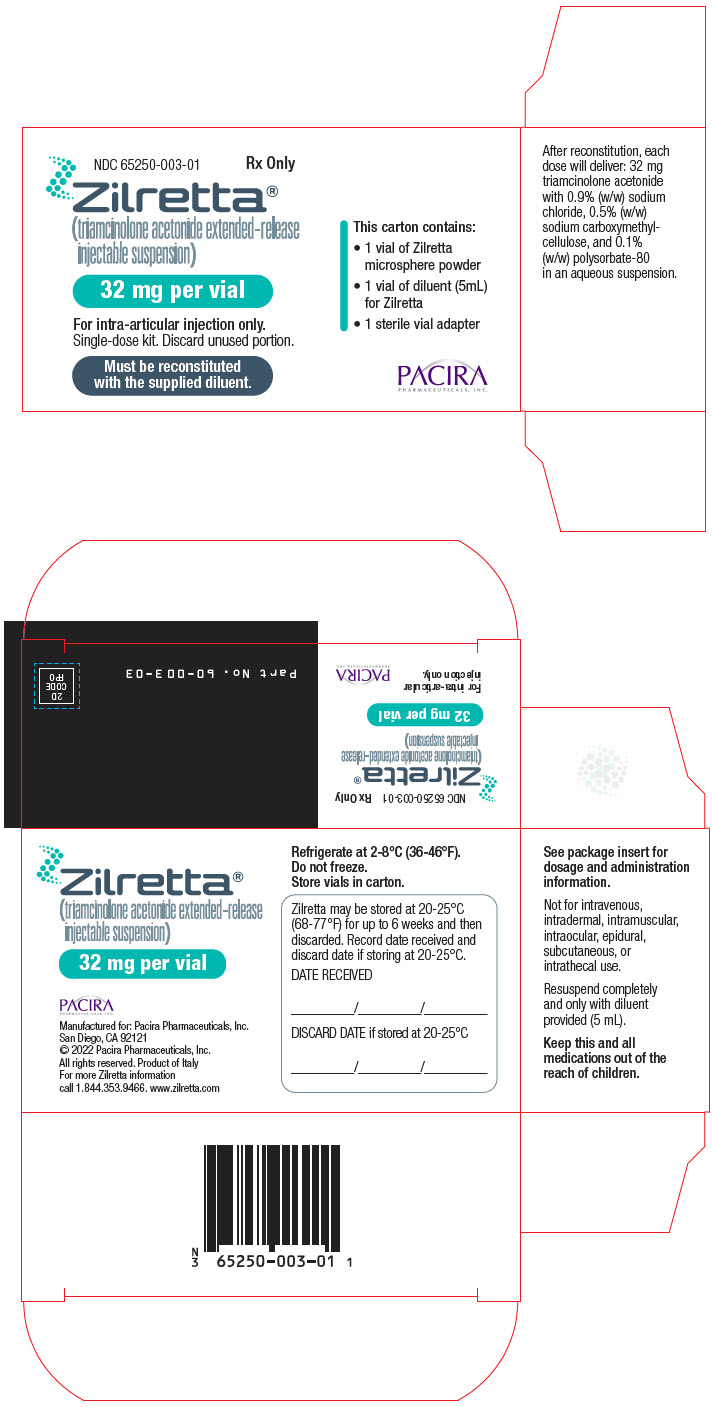
Zilretta triamcinolone acetonide extended-release injectable suspension Kit — NDC 65250-003-01 (Billing 65250-0003-01)
This is a package of Zilretta triamcinolone acetonide extended-release injectable suspension Kit from Pacira Pharmaceuticals, Inc., marketed since Oct 2017 and currently FDA-listed. It is this product's only package size.
NDC database record
One package, one record: these facts belong to NDC 65250-003-01 alone.
- Record
- FDA NDC Directory package listing · Human prescription drug
- Code segments
- 65250 labeler · 003 product · 01 package
- Package marketed since
- Oct 6, 2017
- Sample package
- No — commercial package
- Listing certified through
- Dec 31, 2027
- Barcode (UPC-A, from the NDC)
- 3 6525000301 1
- Medicaid fills, this package
- 6,491 prescriptions in the last four reported quarters
- FDA record last changed
- Jul 24, 2026
Identity & classification
Regulatory identifiers FDA, NLM and CMS codes for this package
Drug-database identifiers Medi-Span GPI and First Databank GCN / HICL / AHFS classification
- GSN (GCN sequence number): 077804
- GCN: 43949
- GPI-14 (Medi-Span): 2210005010G230
- HICL (First Databank): 002891
- AHFS class code: 68:04.00.00
- RxCUI (RxNorm): 1947131
Where does this data come from?
- FDA openFDA NDC Directory · synced Oct 1, 2026
- FDA label on DailyMed · label index refreshed Oct 5, 2026
- RxNorm (NLM RxNav) · catalog refreshed Oct 1, 2026
- Medi-Span GPI (licensed)
- First Databank (licensed) · refreshed Oct 1, 2026
RxNorm drug class
This medicine belongs to the Corticosteroid class.
Where does this data come from?
- RxClass (NLM) · catalog refreshed Oct 1, 2026
Clinical
- It depends on the product. Injections treat severe allergic conditions, joint inflammation, certain skin problems and eye inflammation. Creams and ointments calm itchy, inflamed sk...
- Injections are given by a healthcare professional. Ointment is applied as a thin film to the affected area two to three times daily. Nasal spray bottles need priming before first u...
- Possible effects include injection site pain, joint swelling, headache, muscle spasms, cough, sinusitis and bruising. People with diabetes may see higher blood sugar. Tell your doc...
- Call right away for signs of an allergic reaction, fever or infection, a very painful and swollen joint, vision changes, or mood changes. Also report black stools, severe stomach p...
Patient education
Supplement & herbal interactions
Where does this data come from?
- MedlinePlus (NLM) · refreshed Oct 1, 2026
- FDA label on DailyMed · label index refreshed Oct 5, 2026
Ask a licensed pharmacist directly — free, answered by our team.
Pricing
A drug doesn't have one price. Each row is a different public payment system, and none is what you'd pay at the counter — that depends on your insurance. The ⓘ on each row explains what it measures.
| Price system | Per each | Per package |
|---|---|---|
| Retail pharmacies payNADAC · weekly | Not in the retail survey — common for institutional, discontinued, or low-volume packs. | |
| Medicaid paysCMS SDUD · 12 mo | $471.67 | — |
| Medicare drug plans payPart D · quarterly | No Part D plan price is available for this NDC in our data. | |
| Medicare Part B allowsASP · J3304 | $19.280 / J3304 unit | — |
Where does this data come from?
- CMS NADAC weekly file
- CMS ASP pricing files · refreshed Sep 20, 2026
- CMS Medicaid State Drug Utilization Data · through Q1 2026
- CMS Part D plan pricing files · refreshed Sep 24, 2026
- VA National Acquisition Center price file
Billing & reimbursement
Where does this data come from?
- CMS ASP NDC-HCPCS crosswalk · refreshed Sep 22, 2026
- DMEPDAC NDC-HCPCS crosswalk
- openFDA NSDE billing units · refreshed Sep 7, 2026
Packaging — all sizes for this product
| Package NDC | Description | Marketing start | Marketing end | Status |
|---|---|---|---|---|
| 65250-0003-01 You're viewing this Main listing | 1 KIT in 1 CARTON * 1 INJECTION, POWDER, FOR SUSPENSION, EXTENDED RELEASE in 1 VIAL, SINGLE-DOSE * 1 INJECTION, SOLUTION in 1 VIAL, SINGLE-DOSE | 2017-10-06 | — | Active |
Therapeutic equivalents
| Product | Labeler | Pack | NADAC/unit | TE | Status | Price vs. this |
|---|---|---|---|---|---|---|
| Zilrettathis 65250-0003-01 | Pacira | 1 kit | — | — | FDA listed | — |
Where does this data come from?
- FDA openFDA NDC Directory · synced Oct 1, 2026
- FDA Orange Book · refreshed Oct 3, 2026
- CMS NADAC weekly file
Availability & generic status
We did not find an FDA-approved generic match for this exact strength, form and route. Patent/protection dates below may affect future generic timing.
Why the date isn’t exact: Generic timing can change because patents may be challenged, settled, licensed, added, removed, or worked around with a narrower label — and FDA approval does not always mean a pharmacy can get the generic today.
🛈 What do these terms mean?
- Patent
- Legal protection listed in the Orange Book that may delay generic approval or launch. Issued by the U.S. Patent & Trademark Office.
- Substance patent
- Covers the active drug molecule itself — the hardest to design around. A generic generally can’t launch until it expires.
- Formulation (product) patent
- Covers a specific formulation or dosage form. A generic can sometimes work around it with a different formulation.
- Method-of-use patent
- A patent covering one specific approved use of the drug — not necessarily the whole molecule. A generic can sometimes launch with a “skinny label” that carves out the protected use and keeps the others.
- Skinny label
- A generic label that omits a still-patented use when the FDA allows it — letting a generic reach the market for the unprotected uses.
- Exclusivity
- FDA-granted marketing protection, separate from patents — e.g. 5-yr new chemical entity, 7-yr orphan drug, or a +6-month pediatric extension.
- Paragraph IV
- A generic applicant’s formal challenge to a listed patent. It can potentially lead to earlier generic entry, but often involves litigation or a settlement.
- RLD / RS
- Reference Listed Drug — the brand product the FDA uses as the reference for generic applications. Reference Standard — the product the FDA expects generics to compare against in bioequivalence testing.
- TE / AB rating
- FDA therapeutic-equivalence rating. An AB rating generally means the FDA considers a generic therapeutically equivalent to — and substitutable for — the brand.
- LOE (loss of exclusivity)
- The latest patent or exclusivity currently listed — the loss-of-exclusivity / latest-listed-protection date shown on this page. Paragraph-IV challenges and settlements can move the real date earlier; FDA approval and a manufacturer’s decision to market can move it later.
Built from the FDA Orange Book. The bars above are scaled to each protection’s expiry; the red LOE marker is the last one to lapse.
| Patent | Type | Use code | Expires |
|---|---|---|---|
| US 9555048 ↗ | Method of use | U-2151 | Aug 4, 2031 |
| US 8828440 ↗ | Drug product | — | Aug 4, 2031 |
Is there a generic version of ZILRETTA 32 MG VIAL?
The FDA approved a generic — why can’t I get it at my pharmacy yet?
Why do different websites show different generic release dates?
What does “FDA listed” mean?
What does a patent or protection date mean here?
What does “current Orange Book estimate” mean?
Can a generic come out before the last patent expires?
Can a generic come out after the listed dates?
What is the difference between patents and exclusivity?
Why are there multiple patent dates?
Where does this data come from?
- FDA Orange Book · refreshed Oct 3, 2026
Inactive Ingredients / Excipients
Inactive ingredients, also called excipients, are components of the drug product other than the active ingredient. They may include fillers, dyes, coatings, preservatives, flavors, or other formulation ingredients.
🧪 Avoiding an ingredient? See Triamcinolone inactive ingredients by manufacturer: every current product's list side by side, so you can ask your pharmacy for the version that does not list it.
Where does this data come from?
IACT rows and label-wide narrative are kept separate; availability and product-level specificity depend on the submitted label.- FDA label on DailyMed · label index refreshed Oct 5, 2026
- FDA openFDA NDC Directory · synced Oct 1, 2026
Inactive ingredient FAQ
Are inactive ingredients the same for every manufacturer?
Why might an inactive ingredient be missing?
Can inactive ingredients matter?
Manufacturer & labeler
More NDCs from Pacira Pharmaceuticals, Inc. labeler code 65250
Where does this data come from?
- FDA openFDA NDC Directory · synced Oct 1, 2026
- Drugs@FDA
Full prescribing information FDA SPL
🎯 Indications and Usage ▾
1 INDICATIONS AND USAGE ZILRETTA (triamcinolone acetonide extended-release injectable suspension) is indicated as an intra-articular injection for the management of osteoarthritis pain of the knee. ZILRETTA is an extended-release synthetic corticosteroid indicated as an intra-articular injection for the management of osteoarthritis pain of the knee. ( 1 ) Limitation of Use The efficacy and safety of repeat administration of ZILRETTA have not been demonstrated.
( 2.1 ) Limitation of Use The efficacy and safety of repeat administration of ZILRETTA have not been demonstrated. [see Dosage and Administration (2.1) ] .
⏱️ Dosage and Administration ▾
2 DOSAGE AND ADMINISTRATION 32 mg (5 mL) administered as a single intra-articular injection in the knee. ( 2.1 ) See Instructions for Use (IFU) for instructions on reconstitution of ZILRETTA with the supplied diluent. ( 2.2 ) It is normal for some residue to be left behind on the vial walls after withdrawing the suspension. ( 2.2 ) ZILRETTA is NOT substitutable with other formulations of injectable triamcinolone acetonide. ( 2.3 )
2.1Important Dosage and Administration Information ZILRETTA is administered as a single intra-articular extended-release injection of triamcinolone acetonide, to deliver 32 mg (5 mL). ZILRETTA is for intra-articular use only. Do NOT administer by the following routes: epidural, intrathecal, intravenous, intraocular, intramuscular, intradermal, subcutaneous.
ZILRETTA is not suitable for use in small joints, such as the hand. The efficacy and safety of repeat administration of ZILRETTA have not been demonstrated [see Adverse Reactions (6) and Nonclinical Toxicology (13.2) ] . The efficacy and safety of ZILRETTA for management of osteoarthritis pain of shoulder and hip have not been evaluated.
2.2Preparation and Administration of Intra-Articular Suspension Refer to the Instructions for Use for directions on the preparation and administration of ZILRETTA. ZILRETTA is supplied as a single-dose kit containing a vial of ZILRETTA microsphere powder, a vial of sterile diluent, and a sterile vial adapter. ZILRETTA must be prepared using the diluent supplied in the kit.
Preparation of ZILRETTA requires close attention to the Instructions for Use to ensure successful administration. Use proper aseptic technique throughout the dose preparation and administration procedure. ZILRETTA is a suspension product and it is normal for some residue to be left behind on the vial walls after withdrawing the contents.
Promptly inject ZILRETTA after preparation to avoid settling of the suspension. If needed, the ZILRETTA suspension can be stored in the vial for up to 4 hours at ambient conditions. Gently swirl the vial to resuspend any of the settled microspheres prior to preparing the syringe for injection.
The usual technique for intra-articular injection should be followed. Aspiration of synovial fluid may be performed based on clinical judgment prior to administration of ZILRETTA.
2.3Non-Interchangeability with Other Formulations of Triamcinolone Acetonide for Intra-articular Use ZILRETTA is NOT substitutable with other formulations of injectable triamcinolone acetonide.
💊 Dosage Forms and Strengths ▾
3 DOSAGE FORMS AND STRENGTHS ZILRETTA is an injectable suspension that delivers 32 mg of triamcinolone acetonide. ZILRETTA is supplied as a single-dose kit, containing: One vial of ZILRETTA white to off-white microsphere powder One vial of 5 mL sterile, colorless to pale yellow, clear diluent One sterile vial adapter ZILRETTA is an injectable suspension that delivers 32 mg of triamcinolone acetonide. It is supplied as a single-dose kit containing one vial of ZILRETTA microsphere powder, one vial of 5 mL diluent, and one sterile vial adapter.
( 3 )
⛔ Contraindications ▾
4 CONTRAINDICATIONS ZILRETTA is contraindicated in patients who are hypersensitive to triamcinolone acetonide, corticosteroids or any components of the product [see Warnings and Precautions (5.3) and How Supplied/Storage and Handling (16) ] . Patients with hypersensitivity to triamcinolone acetonide or any component of the product. ( 4 )
⚠️ Warnings and Cautions ▾
5 WARNINGS AND PRECAUTIONS Intra-articular Use Only : Do not administer ZILRETTA by epidural, intrathecal, intravenous, intraocular, intramuscular, intradermal, or subcutaneous routes. ( 5.1 ) Serious Neurologic Adverse Reactions with Epidural and Intrathecal Administration : Serious neurologic events have been reported following epidural or intrathecal corticosteroid administration. Corticosteroids are not approved for this use.
( 5.2 ) Hypersensitivity Reactions : Serious reactions have been reported with triamcinolone acetonide injection. Institute appropriate care upon occurrence of an anaphylactic reaction. ( 5.3 ) Joint Infection and Damage : May cause joint pain accompanied by joint swelling.
If this occurs, conduct appropriate evaluation to exclude septic arthritis and institute appropriate antimicrobial therapy if septic arthritis is confirmed. ( 5.4 )
5.1Warnings and Precautions Specific for ZILRETTA ZILRETTA has not been evaluated and should not be administered by the following routes: Epidural Intrathecal Intravenous Intraocular Intramuscular Intradermal Subcutaneous [see Warnings and Precautions (5.2) ].
5.2Serious Neurologic Adverse Reactions with Epidural and Intrathecal Administration Serious neurologic events, some resulting in death, have been reported with epidural injection of corticosteroids. Specific events reported include, but are not limited to, spinal cord infarction, paraplegia, quadriplegia, cortical blindness, and stroke [see Adverse Reactions (6) ] . These serious neurologic events have been reported with and without use of fluoroscopy.
Reports of serious medical events have been associated with the intrathecal route of corticosteroid administration [see Adverse Reactions (6) ] . The safety and effectiveness of epidural and intrathecal administration of corticosteroids have not been established, and corticosteroids are not approved for this use. In particular, the formulation of ZILRETTA should not be considered safe to use for epidural or intrathecal administration.
5.3Hypersensitivity Reactions Rare instances of anaphylaxis have occurred in patients with hypersensitivity to corticosteroids. Cases of serious anaphylaxis, including death, have been reported in individuals receiving triamcinolone acetonide injection, regardless of the route of administration [see Adverse Reactions (6) ] . Institute appropriate care upon occurrence of an anaphylactic reaction.
5.4Joint Infection and Damage Intra-articular injection of corticosteroid may be complicated by joint infection. A marked increase in pain accompanied by local swelling, further restriction of joint motion, fever, and malaise are suggestive of septic arthritis. If this complication occurs and a diagnosis of septic arthritis is confirmed, institute appropriate antimicrobial therapy [see Adverse Reactions (6) ] .
Avoid injection of a corticosteroid into an infected site. Local injection of a corticosteroid into a previously infected joint is not usually recommended. Examine any joint fluid present to exclude a septic process.
Corticosteroid injection into unstable joints is generally not recommended. Intra-articular injection may result in damage to joint tissues.
5.5Increased Risk of Infections Intra-articularly injected corticosteroids are systemically absorbed. Patients who are on corticosteroids are more susceptible to infections than are healthy individuals. There may be decreased resistance and inability to localize infection when corticosteroids are used.
Infection with any pathogen (viral, bacterial, fungal, protozoan, or helminthic) in any location of the body may be associated with the use of corticosteroids alone or in combination with other immunosuppressive agents. These infections may be mild to severe. With increasing doses of corticosteroids, the rate of occurrence of infectious complications increases.
Corticosteroids may also mask some signs of current infection. Advise patients to inform their health care provider if they… [Excerpted — this section continues on DailyMed.]
🤒 Adverse Reactions ▾
6 ADVERSE REACTIONS The following serious adverse reactions are described elsewhere in the labeling. Serious Neurologic Adverse Reactions with Epidural and Intrathecal Administration [see Warnings and Precautions (5.2) ] Hypersensitivity Reactions [see Warnings and Precautions (5.3) ] Joint Infection and Damage [see Warnings and Precautions (5.4) ] Increased Risk of Infections [see Warnings and Precautions (5.5) ] Alterations in Endocrine Function [see Warnings and Precautions (5.6) ] Cardiovascular Effects [see Warnings and Precautions (5.7) ] Renal Effects [see Warnings and Precautions (5.8) ] Increased Intraocular Pressure [see Warnings and Precautions (5.9) ] Gastrointestinal Perforation [see Warnings and Precautions (5.10) ] Alternations in Bone Density [see Warnings and Precautions (5.11) ] Behavioral and Mood Disturbances [see Warnings and Precautions (5.12) ] Most commonly reported adverse reactions (incidence ≥1%) in clinical studies include sinusitis, cough, and contusions.
( 6 ) To report SUSPECTED ADVERSE REACTIONS, contact Pacira Pharmaceuticals, Inc. at 1-844-353-9466 or FDA at 1-800-FDA-1088 or www.fda.gov/medwatch .
6.1Clinical Trials Because clinical studies are conducted under widely varying conditions, adverse reaction rates observed in the clinical trials of a drug cannot be directly compared to rates in the clinical trials of another drug and may not reflect the rates observed in practice. The data below reflect exposure to a single 32 mg intra-articular injection of ZILRETTA in clinical studies in patients with moderate to severe pain due to osteoarthritis of the knee. Clinical studies included randomized, double-blind, parallel-group, placebo and/or active-controlled, and pharmacokinetic/pharmacodynamic studies with follow-up ranging from 6-24 weeks.
A total of 424 patients received ZILRETTA and 262 received placebo. Treatment emergent adverse reactions reported by greater than or equal to 1% of patients in the ZILRETTA arms are summarized below ( Table 1 and 2 ). Overall, the incidence and nature of adverse reactions was similar to that observed with placebo.
Table 1: Most Commonly Reported Treatment-Emergent Adverse Reactions with ZILRETTA (Incidence ≥1%) in Patients with Osteoarthritis of the Knee Preferred Term (MedDRA) ZILRETTA (N=424) Placebo (N=262) Sinusitis 2% 1% Cough 2% 1% Contusions 2% 1% Table 2: Most Commonly Reported Treatment-Emergent Injected Knee Adverse Reactions with ZILRETTA (Incidence ≥1%) in Patients with Osteoarthritis of the Knee Preferred Term (MedDRA) ZILRETTA (N=424) Placebo (N=262) Joint Swelling 3% 2% Contusions 2% 1% The safety of repeat administration of ZILRETTA was evaluated in a multicenter, open-label, single-arm study in patients with osteoarthritis pain of the knee.
A total of 179 patients received a repeat injection on or after Week 12 (median 16.6 weeks) and were followed for 52 weeks from the initial injection. As assessed by adverse event rates for the periods of baseline to second dose and second dose to the comparable period after the second dose, there were higher rates of reported mild to moderate arthralgia after the second dose (16%) than after the first dose (6%). The data from this study are insufficient to fully characterize the safety of repeat administration of ZILRETTA. [See also Nonclinical Toxicology (13.2) ].
6.2Post-marketing Experience The following adverse reactions, presented alphabetically by body system, have been identified during post-approval use of ZILRETTA. Because these reactions are reported voluntarily from a population of uncertain size, it is not always possible to reliably estimate their frequency or establish a causal relationship to drug exposure. Endocrine : Increased blood glucose (in diabetic patients).
General and administration site conditions : Pain including injection site pain or discomfort and leg pain. Immune system : Hypersensitivity reactions including pruritus, rash, angioedema, and anaphylaxis [see Contraindicatio… [Excerpted — this section continues on DailyMed.]
🔄 Drug Interactions ▾
7 DRUG INTERACTIONS No drug-drug interaction studies have been conducted with ZILRETTA. Table 3 contains drug interactions associated with systemic corticosteroids. Table 3: Drug Interactions Associated with Systemic Corticosteroids Aminoglutethimide Aminoglutethimide may lead to a loss of corticosteroid-induced adrenal suppression.
Amphotericin B injection and potassium-depleting agents When corticosteroids are administered concomitantly with potassium-depleting agents (i.e., amphotericin B, diuretics), observe patients closely for development of hypokalemia. There have been cases reported in which concomitant use of amphotericin B and hydrocortisone was followed by cardiac enlargement and congestive heart failure. Antibiotics Macrolide antibiotics have been reported to cause a significant decrease in corticosteroid clearance.
Anticholinesterases Concomitant use of anticholinesterase agents and corticosteroids may produce severe weakness in patients with myasthenia gravis. If possible, withdraw anticholinesterase agents at least 24 hours before initiating corticosteroid therapy. Anticoagulants, oral Coadministration of corticosteroids and warfarin usually results in inhibition of response to warfarin, although there have been some conflicting reports.
Therefore, monitor coagulation indices frequently to maintain the desired anticoagulant effect. Antidiabetics Because corticosteroids may increase blood glucose concentrations, dosage adjustments of antidiabetic agents may be required. Antitubercular drugs Serum concentrations of isoniazid may be decreased.
CYP 3A4 inducers (e.g., barbiturates, phenytoin, carbamazepine, and rifampin) Drugs which induce hepatic microsomal drug metabolizing enzyme activity may enhance metabolism of corticosteroids and require that the dosage of corticosteroid be increased. CYP 3A4 inhibitors (e.g., ketoconazole) Ketoconazole, a strong CYP3A4 inhibitor, has been reported to decrease the metabolism of certain corticosteroids by up to 60% leading to an increased risk of corticosteroid side effects. Cholestyramine Cholestyramine may increase the clearance of corticosteroids.
Cyclosporine Increased activity of both cyclosporine and corticosteroids may occur when the two are used concurrently. Convulsions have been reported with this concurrent use. Digitalis glycosides Patients on digitalis glycosides may be at increased risk of arrhythmias due to hypokalemia.
Estrogens, including oral contraceptives Estrogens may decrease the hepatic metabolism of certain corticosteroids, thereby increasing their effect. Nonsteroidal anti-inflammatory drugs (NSAIDs) Concomitant use of aspirin (or other nonsteroidal anti-inflammatory drugs) and corticosteroids increases the risk of gastrointestinal side effects. Aspirin should be used cautiously in conjunction with corticosteroids in hypoprothrombinemia.
The clearance of salicylates may be increased with concurrent use of corticosteroids. Skin tests Corticosteroids may suppress reactions to allergy related skin tests. Vaccines Patients on prolonged corticosteroid therapy may exhibit a diminished response to toxoids and live or inactivated vaccines due to inhibition of antibody response.
Corticosteroids may also potentiate the replication of some organisms contained in live attenuated vaccines. If possible, defer routine administration of vaccines or toxoids until corticosteroid therapy is discontinued.
👥 Use in Specific Populations ▾
8 USE IN SPECIFIC POPULATIONS
8.1Pregnancy Risk Summary There are no data regarding the use of ZILRETTA in pregnant women to inform a drug associated risk of adverse developmental outcomes. Published studies on the association between corticosteroids and fetal outcomes have reported inconsistent findings and have important methodological limitations . The majority of published literature with corticosteroid exposure during pregnancy includes the oral, topical and inhaled dosage formulations; therefore, the applicability of these findings to a single intra-articular injection of triamcinolone acetonide is limited.
In animal reproductive studies from the published literature, pregnant mice, rats, rabbits, or primates administered triamcinolone acetonide during the period of organogenesis at doses that produced exposures less than the maximum recommended human dose (MRHD) caused resorptions, decreased fetal body weight, craniofacial and/or other abnormalities such as omphalocele (see Data ) . The estimated background risk of major birth defects and miscarriage for the indicated population is unknown. All pregnancies have a background risk of birth defect, loss, or other adverse outcomes.
In the U.S. general population, the estimated risk of major birth defects and miscarriage in clinically recognized pregnancies is 2% to 4% and 15% to 20%, respectively. Data Animal Data The exposure margins listed below are based on body surface area comparisons (mg/m 2 ) to the highest daily triamcinolone acetonide exposure at the MRHD of 32 mg triamcinolone acetonide via ZILRETTA. Pregnant mice dosed with triamcinolone acetonide via intramuscular or subcutaneous injection at doses equivalent to 0.8 times the MRHD or higher during organogenesis caused cleft palate and a higher rate of resorption.
In pregnant rats dosed with triamcinolone acetonide via intramuscular or subcutaneous injection at doses equivalent to 0.3 times the MRHD or higher during organogenesis caused developmental abnormality (cleft palate, omphalocele, late resorption, and growth retardation) and fetal mortality. No notable maternal toxicity was observed in rodents. Pregnant rabbits dosed with triamcinolone acetonide via intramuscular injection for 4 days during organogenesis at doses equivalent to 0.15 times the MRHD or higher caused resorption and cleft palate.
No notable maternal toxicity was observed. Pregnant primates dosed with triamcinolone acetonide via intramuscular injection for 4 days during organogenesis at doses equivalent to 3 times the MRHD or higher caused severe craniofacial CNS and skeletal/visceral malformation and higher prenatal death. No notable maternal toxicity was observed.
No peri- and post-natal development studies of triamcinolone acetonide in animals have been conducted.
8.2Lactation Risk Summary There are no available data on the presence of triamcinolone acetonide in either human or animal milk, the effects on the breastfed infant, or the effects on milk production. However, corticosteroids have been detected in human milk and may suppress milk production. It is not known whether intra-articular administration of ZILRETTA could result in sufficient systemic absorption to produce detectable quantities in human milk.
The developmental and health benefits of breastfeeding should be considered along with the mother's clinical need for ZILRETTA and any potential adverse effects on the breastfed infant from ZILRETTA or from the underlying maternal condition.
8.3Females and Males of Reproductive Potential Corticosteroids may result in menstrual pattern irregularities such as deviations in timing and duration of menses and an increased or decreased loss of blood.
8.4Pediatric Use The safety and effectiveness of ZILRETTA in pediatric patients have not been established. The adverse effects of corticosteroids in pediatric patients are similar to those in adults. Carefully observe pediatric patients, including weight, height, linear growth, blood pressu… [Excerpted — this section continues on DailyMed.]
🤰 Pregnancy ▾
8.1Pregnancy Risk Summary There are no data regarding the use of ZILRETTA in pregnant women to inform a drug associated risk of adverse developmental outcomes. Published studies on the association between corticosteroids and fetal outcomes have reported inconsistent findings and have important methodological limitations . The majority of published literature with corticosteroid exposure during pregnancy includes the oral, topical and inhaled dosage formulations; therefore, the applicability of these findings to a single intra-articular injection of triamcinolone acetonide is limited.
In animal reproductive studies from the published literature, pregnant mice, rats, rabbits, or primates administered triamcinolone acetonide during the period of organogenesis at doses that produced exposures less than the maximum recommended human dose (MRHD) caused resorptions, decreased fetal body weight, craniofacial and/or other abnormalities such as omphalocele (see Data ) . The estimated background risk of major birth defects and miscarriage for the indicated population is unknown. All pregnancies have a background risk of birth defect, loss, or other adverse outcomes.
In the U.S. general population, the estimated risk of major birth defects and miscarriage in clinically recognized pregnancies is 2% to 4% and 15% to 20%, respectively. Data Animal Data The exposure margins listed below are based on body surface area comparisons (mg/m 2 ) to the highest daily triamcinolone acetonide exposure at the MRHD of 32 mg triamcinolone acetonide via ZILRETTA. Pregnant mice dosed with triamcinolone acetonide via intramuscular or subcutaneous injection at doses equivalent to 0.8 times the MRHD or higher during organogenesis caused cleft palate and a higher rate of resorption.
In pregnant rats dosed with triamcinolone acetonide via intramuscular or subcutaneous injection at doses equivalent to 0.3 times the MRHD or higher during organogenesis caused developmental abnormality (cleft palate, omphalocele, late resorption, and growth retardation) and fetal mortality. No notable maternal toxicity was observed in rodents. Pregnant rabbits dosed with triamcinolone acetonide via intramuscular injection for 4 days during organogenesis at doses equivalent to 0.15 times the MRHD or higher caused resorption and cleft palate.
No notable maternal toxicity was observed. Pregnant primates dosed with triamcinolone acetonide via intramuscular injection for 4 days during organogenesis at doses equivalent to 3 times the MRHD or higher caused severe craniofacial CNS and skeletal/visceral malformation and higher prenatal death. No notable maternal toxicity was observed.
No peri- and post-natal development studies of triamcinolone acetonide in animals have been conducted.
🧒 Pediatric Use ▾
8.4Pediatric Use The safety and effectiveness of ZILRETTA in pediatric patients have not been established. The adverse effects of corticosteroids in pediatric patients are similar to those in adults. Carefully observe pediatric patients, including weight, height, linear growth, blood pressure, intraocular pressure, and clinical evaluation for the presence of infection, psychosocial disturbances, thromboembolism, peptic ulcers, cataracts, and osteoporosis.
Weigh potential growth effects of treatment against clinical benefits obtained and the availability of treatment alternatives.
🧓 Geriatric Use ▾
8.5Geriatric Use Of the total number of patients administered 32 mg ZILRETTA in clinical studies (N=424), 143 patients were 65 years of age or older. No overall differences in safety or effectiveness were observed between elderly and younger subjects, and other reported clinical experience with triamcinolone acetonide has not identified differences in responses between the elderly and younger patients, but greater sensitivity of some older individuals cannot be ruled out.
🧬 Clinical Pharmacology ▾
12 CLINICAL PHARMACOLOGY
12.1Mechanism of Action Triamcinolone acetonide is a corticosteroid with anti-inflammatory and immunomodulating properties. It binds to and activates the glucocorticoid receptor, leading to activation of anti-inflammatory transcription factors such as lipocortins and inhibition of inflammatory transduction pathways by blocking the release of arachidonic acid and preventing the synthesis of prostaglandins and leukotrienes.
12.2Pharmacodynamics Studies indicate that following a single intramuscular dose of 60 to 100 mg of immediate-release triamcinolone acetonide injectable suspension, adrenal suppression occurs within 24 to 48 hours and then gradually returns to normal, usually in 30 to 40 days. To assess potential effects of the systemic levels of triamcinolone acetonide associated with a single intra-articular (IA) administration of ZILRETTA on hypothalamic pituitary adrenal (HPA) axis function, serum and urine cortisol levels were monitored over 6 weeks post injection.
Adrenal suppression with ZILRETTA occurred within 12-24 hours and then gradually returned to normal, within 30-42 days. Corticosteroids may increase blood glucose concentrations. In a study where 18 patients with osteoarthritis knee pain and controlled type 2 diabetes mellitus received a single IA injection of ZILRETTA into the knee, the change from baseline in average blood glucose over the 72 hours after injection as measured by a continuous glucose monitoring device was 8.2 mg/dL (95% confidence interval 0.1, 29.2).
12.3Pharmacokinetics ZILRETTA is an extended-release dosage form consisting of microspheres of poly(lactic-co-glycolic acid) (PLGA) containing triamcinolone acetonide. Plasma pharmacokinetic parameters for triamcinolone acetonide following IA administration of ZILRETTA or 40 mg immediate-release triamcinolone acetonide into the knee are provided in Table 4. Table 4: Summary of Mean (SD) Plasma Pharmacokinetic Parameters for Triamcinolone Acetonide Following IA Administration of ZILRETTA or 40 mg Immediate-Release Triamcinolone Acetonide Triamcinolone Acetonide PK Parameters Median (min, max) values for t max ZILRETTA (N=60) Triamcinolone Acetonide (N=18) C max (pg/mL) 1,143.7 (611.06) 21,062.2 (18,466.79) AUC 0-24 hour (pg∙h/mL) 21,219.2 (11,325.62) 297,545.3 (222,402.77) AUC 0-inf (pg∙h/mL) 842,149.2 (1,062,004.97) 33 patients contributed to the analyses of these parameters 1,567,565.0 (1,246,330.95) 14 patients contributed to the analyses of these parameters t max (h) 7 (1, 1,008) 6 (2, 24) t 1/2 (h) 633.9 (893.0) 146.9 (213.29)
🧬 Mechanism of Action ▾
12.1Mechanism of Action Triamcinolone acetonide is a corticosteroid with anti-inflammatory and immunomodulating properties. It binds to and activates the glucocorticoid receptor, leading to activation of anti-inflammatory transcription factors such as lipocortins and inhibition of inflammatory transduction pathways by blocking the release of arachidonic acid and preventing the synthesis of prostaglandins and leukotrienes.
📦 How Supplied / Storage and Handling ▾
16 HOW SUPPLIED/STORAGE AND HANDLING Description NDC Presentation/How Supplied ZILRETTA NDC 65250-003-01 ZILRETTA (triamcinolone acetonide extended-release injectable suspension) single-dose kit. Kit Contents ZILRETTA microsphere powder NDC 65250-001-01 Single-dose vial to deliver 32 mg of triamcinolone acetonide supplied as a sterile, white to off-white powder in a cerium glass (clear) vial with a rubber stopper and an aluminum seal with a gray plastic cap. Diluent NDC 65250-002-01 5 mL single-dose vial supplied as a sterile, colorless to pale yellow, clear liquid solution of 0.9% w/w sodium chloride (normal saline) containing 0.5% w/w sodium carboxymethylcellulose, and 0.1% w/w polysorbate-80 in a glass vial with a rubber stopper, aluminum seal and white plastic cap.
Sterile vial adapter STORAGE To maintain expiry period, refrigerate the ZILRETTA single-dose kit 2°-8°C (36°-46°F) before use. If refrigeration is unavailable, store the ZILRETTA single-dose kit in the sealed, unopened kit at temperatures not exceeding 25°C (77°F) for up to three weeks and then discard. Do not expose the ZILRETTA single-dose kit to temperatures above 25°C (77°F).
Do not freeze. Store vials in carton.
📦 Storage and Handling ▾
STORAGE To maintain expiry period, refrigerate the ZILRETTA single-dose kit 2°-8°C (36°-46°F) before use. If refrigeration is unavailable, store the ZILRETTA single-dose kit in the sealed, unopened kit at temperatures not exceeding 25°C (77°F) for up to three weeks and then discard. Do not expose the ZILRETTA single-dose kit to temperatures above 25°C (77°F). Do not freeze. Store vials in carton.
📋 Description ▾
11 DESCRIPTION ZILRETTA (triamcinolone acetonide extended-release injectable suspension) is a microsphere formulation of triamcinolone acetonide, a corticosteroid, to be administered by intra-articular injection. ZILRETTA is formulated in 75:25 poly(lactic-co-glycolic acid) (PLGA) microspheres with a nominal drug load of 25% (w/w) and is provided as a sterile white to off-white powder. ZILRETTA is prepared with a supplied diluent containing an isotonic, sterile, aqueous solution of sodium chloride (NaCl; 0.9% w/w), sodium carboxymethylcellulose (CMC; 0.5% w/w), polysorbate-80 (0.1% w/w) and with sodium hydroxide (NaOH) and hydrochloric acid (HCl) as pH adjusters, as required to form a 5 mL sterile suspension intended for intra-articular injection.
Active Ingredient The chemical name for triamcinolone acetonide is 9-fluoro-11β,16α,17,21-tetrahydroxypregna-1,4-diene- 3,20-dione cyclic 16,17-acetal with acetone. Its structural formula is: MW 434.50 with a molecular formula of C 24 H 31 FO 6 Triamcinolone acetonide occurs as a white to almost white, crystalline powder having not more than a slight odor and is practically insoluble in water and very soluble in alcohol. Each vial of ZILRETTA powder contains 40 mg of triamcinolone acetonide in 160 mg of microspheres, resulting in 32 mg of deliverable triamcinolone acetonide when prepared according to the Instructions for Use.
Chemical Structure
💬 Information for Patients ▾
17 PATIENT COUNSELING INFORMATION Increased Risk of Infections Inform patients that they may be more likely to develop infections when taking corticosteroids. Instruct patients to contact their health care provider if they develop fever or other signs or symptoms of infection. Advise patients who have not been vaccinated to avoid exposure to chicken pox or measles.
Instruct patients to contact their health care provider immediately if they are exposed [see Warnings and Precautions (5.5) ] . Risk of Drug Interactions There are a number of medicines that can interact with corticosteroids such as triamcinolone acetonide. Advise patients to alert their health care provider(s) to assess the need to adjust their medication(s) [see Drug Interactions (7) ] .
Risk of Adverse Psychiatric Reactions Inform patients that corticosteroid use may be associated with adverse psychiatric reactions. Advise patients and/or caregivers to immediately report any new or worsening behavioral or mood disturbances to their health care provider [see Warnings and Precautions (5.12) ] .
🧬 Pharmacokinetics ▾
12.3Pharmacokinetics ZILRETTA is an extended-release dosage form consisting of microspheres of poly(lactic-co-glycolic acid) (PLGA) containing triamcinolone acetonide. Plasma pharmacokinetic parameters for triamcinolone acetonide following IA administration of ZILRETTA or 40 mg immediate-release triamcinolone acetonide into the knee are provided in Table 4. Table 4: Summary of Mean (SD) Plasma Pharmacokinetic Parameters for Triamcinolone Acetonide Following IA Administration of ZILRETTA or 40 mg Immediate-Release Triamcinolone Acetonide Triamcinolone Acetonide PK Parameters Median (min, max) values for t max ZILRETTA (N=60) Triamcinolone Acetonide (N=18) C max (pg/mL) 1,143.7 (611.06) 21,062.2 (18,466.79) AUC 0-24 hour (pg∙h/mL) 21,219.2 (11,325.62) 297,545.3 (222,402.77) AUC 0-inf (pg∙h/mL) 842,149.2 (1,062,004.97) 33 patients contributed to the analyses of these parameters 1,567,565.0 (1,246,330.95) 14 patients contributed to the analyses of these parameters t max (h) 7 (1, 1,008) 6 (2, 24) t 1/2 (h) 633.9 (893.0) 146.9 (213.29)
🧬 Pharmacodynamics ▾
12.2Pharmacodynamics Studies indicate that following a single intramuscular dose of 60 to 100 mg of immediate-release triamcinolone acetonide injectable suspension, adrenal suppression occurs within 24 to 48 hours and then gradually returns to normal, usually in 30 to 40 days. To assess potential effects of the systemic levels of triamcinolone acetonide associated with a single intra-articular (IA) administration of ZILRETTA on hypothalamic pituitary adrenal (HPA) axis function, serum and urine cortisol levels were monitored over 6 weeks post injection.
Adrenal suppression with ZILRETTA occurred within 12-24 hours and then gradually returned to normal, within 30-42 days. Corticosteroids may increase blood glucose concentrations. In a study where 18 patients with osteoarthritis knee pain and controlled type 2 diabetes mellitus received a single IA injection of ZILRETTA into the knee, the change from baseline in average blood glucose over the 72 hours after injection as measured by a continuous glucose monitoring device was 8.2 mg/dL (95% confidence interval 0.1, 29.2).
🔬 Clinical Studies ▾
14 CLINICAL STUDIES The efficacy of ZILRETTA was demonstrated in a multi-center, international, randomized, double-blind, parallel-arm, placebo- and active-controlled study in patients with osteoarthritis pain of the knee. A total of 484 patients (ZILRETTA 32 mg, N=161; placebo [saline], N=162; active control [a crystalline suspension, immediate-release formulation of triamcinolone acetonide 40 mg], N=161) were treated and followed for up to 24 weeks. Patients had a mean age of 62 (range 40 to 85 years); baseline demographics and disease characteristics were balanced across treatment arms.
Twenty-five percent (25%) of patients had received at least one prior corticosteroid intra-articular injection more than 3 months prior to treatment. A total of 470 patients (97%) completed follow-up to Week 12, the time point for primary efficacy determination, and 443 (91.5%) completed to Week 24. The primary efficacy endpoint comparing ZILRETTA to placebo was change from baseline at Week 12 in the weekly mean of the Average Daily Pain intensity scores (ADP) as assessed by a 0-10 Numeric Rating Scale (NRS).
ZILRETTA demonstrated a statistically significant reduction in pain intensity at the primary endpoint vs placebo. ZILRETTA also demonstrated a reduction in pain intensity scores each week from Weeks 1 through 12 (Figure 1). Figure 1: Weekly Change from Baseline to Week 12 in Average Daily Pain Figure 1
🧪 Nonclinical Toxicology ▾
13 NONCLINICAL TOXICOLOGY
13.1Carcinogenesis, Mutagenesis, Impairment of Fertility Carcinogenesis Long-term animal studies to evaluate the carcinogenic potential of ZILRETTA have not been conducted. Mutagenesis Adequate mutagenicity studies have not been conducted with ZILRETTA. Impairment of Fertility Studies in animals to evaluate the impairment of fertility of ZILRETTA have not been conducted.
13.2Animal Toxicology and/or Pharmacology Single and repeat administrations (one injection every three months for a total of three injections) of ZILRETTA in non-arthritic knee joints of healthy dogs have been studied at ~1.9 times the maximum recommended human dose (MRHD) of 32 mg (based on estimated drug concentrations within the knee joints). ZILRETTA microspheres were degraded by approximately 4-and 6-months post dosing in single and repeat dose studies, respectively. Single administration resulted in a slightly increased incidence, severity (minimal to slight), and/or duration of microscopic changes (infiltration of macrophages, lymphocytes, plasma cells and fibrosis) and decreased Safranin O staining (decreased proteoglycan content in the cartilage of the knees) compared to administration of an equivalent dose of immediate-release triamcinolone acetonide.
These responses were mostly reversed after 6 to 9 months post injection. Repeat administration resulted in an increase in the incidence, severity (minimal to slight) and duration of microscopic changes (infiltration of macrophages, lymphocytes, plasma cells, neutrophils; fibrosis; neovascularization; granulation tissue; and debris) and decreased Safranin O staining (decreased proteoglycan content in the cartilage of the knees) compared to the equivalent dose of immediate-release triamcinolone acetonide. These local responses were still reversing at 6 months post the last injection.
No effect on the animals according to observations related to gait/walking, pain/discomfort in the injected knee, local swelling, local redness or local tenderness were noted. The clinical relevance of these findings in the arthritic knee is unknown.
📄 Carcinogenesis, Mutagenesis, Impairment of Fertility ▾
13.1Carcinogenesis, Mutagenesis, Impairment of Fertility Carcinogenesis Long-term animal studies to evaluate the carcinogenic potential of ZILRETTA have not been conducted. Mutagenesis Adequate mutagenicity studies have not been conducted with ZILRETTA. Impairment of Fertility Studies in animals to evaluate the impairment of fertility of ZILRETTA have not been conducted.
📖 Instructions for Use ▾
Instructions for Use ZILRETTA ® (triamcinolone acetonide extended-release injectable suspension) For intra-articular injection only Single-dose device Do not reuse. IMPORTANT INFORMATION ZILRETTA must be prepared using only the diluent supplied in the kit. To ensure proper dosing, it is important that you follow the preparation and administration steps outlined in these instructions.
Promptly inject ZILRETTA after preparation to avoid settling of the suspension. ZILRETTA is supplied as a single-dose kit and administered as a suspension containing microspheres. The ZILRETTA powder vial contains an overfill to allow the appropriate dose to be withdrawn.
ZILRETTA is a suspension product and it is normal for some residue to be left behind on the vial walls after withdrawing the contents. Parenteral drug products should be inspected visually for particulate matter and discoloration prior to administration. Use proper aseptic technique throughout the dose preparation and administration procedure.
Inspect all kit components to confirm they have not expired and the seals are intact. For additional information, visit www.zilretta.com or call Pacira Pharmaceuticals, Inc. at 1-844-353-9466. MATERIALS REQUIRED (Fig.
1) Supplied One 32 mg vial of ZILRETTA microsphere powder One 5 mL vial of sterile diluent One sterile vial adapter Not Supplied Three sterile needles, 21-gauge, 1½" length One sterile Luer Lock compatible syringe, 5 mL Sterile alcohol pads Paper towels or pad to cushion vial tapping (not shown in Fig. 1) Medical-grade gloves (not shown in Fig. 1) Figure 1 1.
Vial Preparation Loosen Powder. Place two paper towels or a pad on a properly-cleaned hard surface. Grip the top of the ZILRETTA powder vial and tap firmly and repeatedly on the padded surface.
Tap the vial until excess powder is dislodged from the vial and stopper (Fig. 2). Before continuing, ensure that powder moves freely within the vial.
Figure 2 Inspect ZILRETTA Powder Vial. As shown in Figure 3, the vial on the left, with the X, requires additional tapping because the powder is not properly dislodged. The vial on the right shows the powder properly dislodged and ready for the next step.
Figure 3 Remove Caps. Remove the flip-off caps from the ZILRETTA powder and diluent vials (Fig. 4).
Figure 4 Clean Vials. Clean the ZILRETTA powder and diluent vial tops with an alcohol pad. Use a separate alcohol pad for each vial.
Peel Off Vial Adapter Cover. Peel off the paper cover from the vial adapter package (Fig. 5).
Leave the adapter in the plastic holder. Figure 5 Attach Vial Adapter to ZILRETTA Powder Vial. Grip the plastic holder that contains the vial adapter.
As shown in Figure 6, place the ZILRETTA powder vial on a flat surface. In a vertical orientation, gently push the adapter down onto the ZILRETTA powder vial until the spike on the adapter penetrates the rubber stopper on the ZILRETTA powder vial. The adapter will snap into place.
Figure 6 2. Diluent Preparation Attach Needle. Attach a needle to the syringe and remove the needle guard.
Withdraw Diluent. With a syringe and needle, withdraw 5 mL of diluent. Replace the needle guard.
3. Dose Preparation Remove Holder. Remove the plastic holder from the vial adapter (Fig.
7). Figure 7 Remove Needle. Remove the needle from the syringe containing diluent.
Attach Diluent Syringe. Attach the syringe onto the vial adapter by pushing down and turning clockwise until you feel resistance (Fig. 8).
Figure 8 Transfer Diluent. Slowly and completely push down the syringe plunger to transfer the diluent into the ZILRETTA powder vial (Fig. 9).
Note: Equalize the pressure in the syringe by slowly pulling back the plunger to the 5 mL mark. Ensure that no solution is drawn back into the syringe at this stage. Figure 9 Mix Diluent and Powder (Fig.10).
With the syringe still attached to the ZILRETTA powder vial, hold the syringe and vial at a slight angle. Tap the bottom edge of the vial firmly and repeatedly, in a circular motion, on th… [Excerpted — this section continues on DailyMed.]
📄 Package Label / Principal Display Panel ▾
PRINCIPAL DISPLAY PANEL - Kit Carton NDC 65250-003-01 Rx Only Zilretta ® (triamcinolone acetonide extended-release injectable suspension) 32 mg per vial For intra-articular injection only. Single-dose kit. Discard unused portion.
Must be reconstituted with the supplied diluent. This carton contains: 1 vial of Zilretta microsphere powder 1 vial of diluent (5mL) for Zilretta 1 sterile vial adapter PACIRA PHARMACEUTICALS, INC. Principal Display Panel - Kit Carton
PRINCIPAL DISPLAY PANEL - 32 mg Vial Label NDC 65250-001-01 Rx Only Zilretta ® (triamcinolone acetonide extended-release injectable suspension) 32 mg per vial For intra-articular injection only. Must be reconstituted with the supplied diluent. PACIRA PHARMACEUTICALS, INC. Principal Display Panel - 32 mg Vial Label
PRINCIPAL DISPLAY PANEL - 5 mL Vial Label NDC 65250-002-01 Rx Only DILUENT for use with Zilretta ® 5 mL Sterile single-use vial Do not administer directly. PACIRA PHARMACEUTICALS, INC. Principal Display Panel - 5 mL Vial Label
Medicaid utilization & spend
Medicare Part D spend CMS · PART D · 2026 (Q1)
About this NDC listing & data coverage
Kit / multi-component package
This NDC identifies a kit — a package containing more than one component. Structured data (pricing, ingredients, equivalents) is often reported per component rather than for the kit NDC itself, which can make this page look thinner than the components' own pages.
What data is (and isn’t) available for this NDC — tap to expand
| NDC identity (package / product / labeler codes) | ✓ Available |
| Labeler | ✓ Available |
| Product & package description | ✓ Available |
| Marketing category & status | ✓ Available |
| Active ingredient / dosage form / route | ✓ Available |
| FDA label (SPL via DailyMed) | ✓ Available |
| Package photos | ✓ Available |
| Inactive ingredients (structured) | — Not published for this NDC The labeler did not submit a structured excipient list, or no SPL is available. |
| NADAC pharmacy acquisition price (CMS) | — Not published for this NDC CMS publishes NADAC only for NDCs reported in its retail-pharmacy survey. |
| Orange Book / therapeutic-equivalence data | ✓ Available |
| HCPCS J-code billing crosswalk | ✓ Available |
| Medicaid utilization (CMS SDUD) | ✓ Available |