
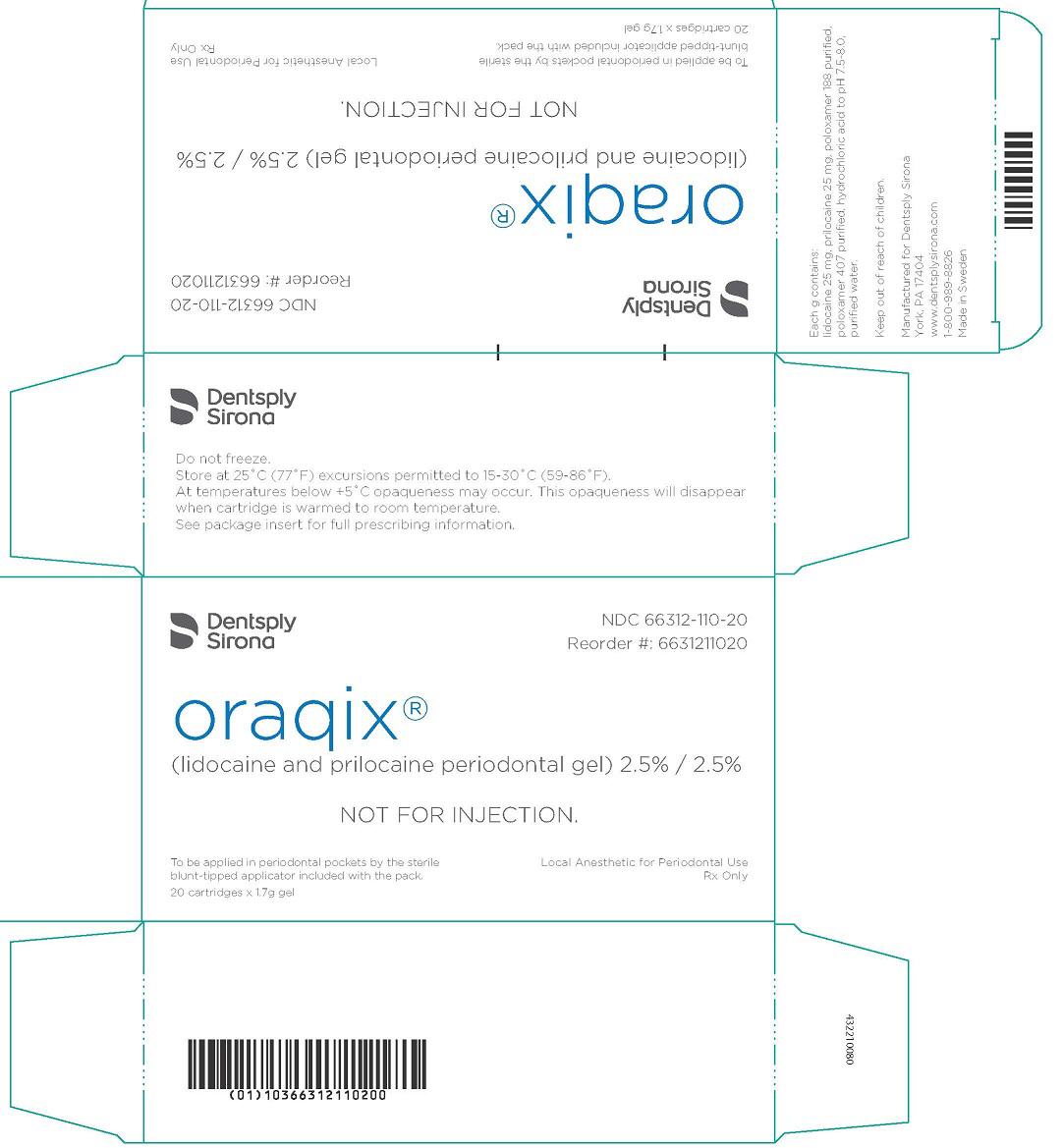
Oraqix lidocaine and prilocaine 25 mg/g; 25 mg/g Gel, 20 applicators
🆔 Identity & classification
Where does this data come from?
🏷️ RxNorm drug class
This medicine belongs to the Antiarrhythmic class.
Where does this data come from?
🏭 Manufacturer & labeler
Where does this data come from?
🩺 Clinical
Lidocaine and prilocaine is used to provide pain relief to an area of skin in adults and children before a procedure or before other medications are given. Lidocaine and prilocaine is in a class of medications called local anesthetics. It works by blocking pain signals to the brain by numbing an area of skin.
Read the full MedlinePlus article ↗Patient education
Supplement & herbal interactions
Where does this data come from?
Ask a licensed pharmacist directly — free, answered by our team.
🧪 Inactive Ingredients / Excipients
Inactive ingredients, also called excipients, are components of the drug product other than the active ingredient. They may include fillers, dyes, coatings, preservatives, flavors, or other formulation ingredients.
💡 Tap an ingredient (hover on desktop) to see what it is and why it’s used.
-
UNII QTT17582CB
A strong acid used to adjust and maintain the proper pH level in liquid medicines, ensuring stability and preventing breakdown of active ingredients.
-
UNII LQA7B6G8JG
A synthetic polymer made by combining water-soluble compounds. It acts as a surfactant and solubilizer to help mix oil and water-based ingredients, improving the medicine's texture and how active ingredients dissolve.
-
UNII TUF2IVW3M2
Poloxamer 407 is a synthetic polymer made from ethylene oxide and propylene oxide. In medicines, it acts as a thickener, emulsifier, and solubilizer to help mix ingredients and create the right texture.
-
UNII 059QF0KO0R
Water is a liquid solvent that dissolves and mixes ingredients together in liquid medicines, syrups, and injections. It helps distribute the active drug evenly throughout the product.
4 inactive ingredients listed in the exact product block matched to this NDC.
Where does this data come from?
ingredient classCode="IACT" elements from the exact product block matched by this NDC. Label-section narrative from DailyMed / the openFDA label index is shown separately when available.Inactive ingredient FAQ
Are inactive ingredients the same for every manufacturer?
Why might an inactive ingredient be missing?
Can inactive ingredients matter?
💲 Pricing
A drug doesn't have one price. Each row is a different public payment system, and none is what you'd pay at the counter — that depends on your insurance. The ⓘ on each row explains what it measures.
| Price system | Per g | Per package |
|---|---|---|
| Retail pharmacies payNADAC · weekly | Not in the retail survey — common for institutional, discontinued, or low-volume packs. | |
| Medicaid paysCMS SDUD · 12 mo | No recent Medicaid claims on file for this NDC — rare and low-volume NDCs are suppressed in the public data. | |
| Medicare drug plans payPart D · quarterly | No Part D plan price is available for this NDC in our data. | |
Where does this data come from?
🔁 Therapeutic equivalents
| Product | Labeler | Pack | NADAC/unit | TE | Status | Price vs. this |
|---|---|---|---|---|---|---|
| Oraqix 25 mg/g; 25 mg/gthis 66312-0110-20 | Dentsply | 20 applicators | — | — | FDA listed | — |
Where does this data come from?
⏳ Availability & generic status
We did not find an FDA-approved generic match for this exact strength, form and route.
Where does this data come from?
📦 Packaging — all sizes for this product
| Package NDC | Description | Marketing start | Status |
|---|---|---|---|
| 66312-0110-20 You're viewing this | 20 APPLICATOR in 1 CARTON (66312-110-20) / 1 CARTRIDGE in 1 APPLICATOR / 1.7 g in 1 CARTRIDGE | 2004-01-05 | Active |
🧭 About this NDC listing & data coverage
What data is (and isn’t) available for this NDC — tap to expand
| NDC identity (package / product / labeler codes) | ✓ Available |
| Labeler | ✓ Available |
| Product & package description | ✓ Available |
| Marketing category & status | ✓ Available |
| Active ingredient / dosage form / route | ✓ Available |
| FDA label (SPL via DailyMed) | ✓ Available |
| Package photos | ✓ Available |
| Inactive ingredients (structured) | ✓ Available |
| NADAC pharmacy acquisition price (CMS) | — Not published for this NDC CMS publishes NADAC only for NDCs reported in its retail-pharmacy survey. |
| Orange Book / therapeutic-equivalence data | — Not published for this NDC Applies only to products approved under an NDA/ANDA; many listings are out of scope. |
| HCPCS J-code billing crosswalk | — Not published for this NDC Most self-administered / retail products have no J-code — that is normal. |
| Medicaid utilization (CMS SDUD) | — Not published for this NDC CMS reports utilization only for NDCs with Medicaid claims above its privacy threshold. |
Questions about this listing
Why is there no price listed?
Is the NDC printed on the package the same as the 11-digit billing NDC?
What do the three segments of this NDC mean?
Is this package still being marketed?
Who lists this product with the FDA?
Do I need a prescription for this product?
Where does this data come from?
📄 Full prescribing information FDA SPL
🎯 Indications and Usage ▾
1 INDICATIONS AND USAGE Oraqix is an amide local anesthetic indicated for adults who require localized anesthesia in periodontal pockets during scaling and/or root planing. Oraqix is an amide local anesthetic indicated for adults who require localized anesthesia in periodontal pockets during scaling and/or root planing. ( 1 )
⏱️ Dosage and Administration ▾
2 DOSAGE AND ADMINISTRATION Use the included blunt-tipped applicator and the dispenser, which is sold separately, to apply gel to gingival margins and periodontal pockets. ( 2 ) May be reapplied as needed up to a maximum of 5 cartridges per treatment session.( 2 )
2.1General Dosing Information DO NOT INJECT [see Warnings and Precautions (5.2) ] Apply Oraqix on the gingival margin around the selected teeth using the blunt-tipped applicator included in the package and the dispenser, which is sold separately. Wait 30 seconds, and then fill the periodontal pockets with Oraqix using the blunt-tipped applicator until the gel becomes visible at the gingival margin. Wait another 30 seconds before starting treatment.
A longer waiting time does not enhance the anesthesia. Anesthetic effect, as assessed by probing of pocket depths, has a duration of approximately 20 minutes (individual overall range 14–31 minutes). If the anesthesia starts to wear off, Oraqix may be re-applied if needed.
Typically, one cartridge (1.7g) or less of Oraqix will be sufficient for one quadrant of the dentition. When administered, Oraqix should be a liquid. If it has formed a gel, it should be placed in a refrigerator (do not freeze) until it becomes a liquid again.
When in the liquid state, the air bubble visible in the cartridge will move if the cartridge is tilted.
2.2Maximum Recommended Dosage The maximum recommended dose of Oraqix at one treatment session is 5 cartridges, i.e., 8.5g gel.
💊 Dosage Forms and Strengths ▾
3 DOSAGE FORMS AND STRENGTHS Periodontal gel containing: lidocaine 25 mg/mL and prilocaine 25 mg/mL. Each cartridge contains 1.7 mL (42.5 mg of lidocaine and 42.5 mg of prilocaine). Periodontal gel containing: lidocaine 25 mg/mL and prilocaine 25 mg/mL. ( 3 )
⛔ Contraindications ▾
4 CONTRAINDICATIONS Oraqix is contraindicated in patients with a known history of hypersensitivity to local anesthetics of the amide type or to any other component of the product. A history of hypersensitivity to local anesthetics of the amide type ( 4 ) A history of hypersensitivity to any component of the product ( 4 )
⚠️ Warnings and Cautions ▾
5 WARNINGS AND PRECAUTIONS Methemoglobinemia: Cases of methemoglobinemia have been reported in association with local anesthetic use. ( 5.1 ) DO NOT INJECT ( 5.2 ) Allergic and anaphylactic reactions can occur ( 5.3 ) Avoid contact with eyes ( 5.4 ) Use with caution in patients with severe hepatic disease ( 5.6 )
5.1Methemoglobinemia Cases of methemoglobinemia have been reported in association with local anesthetic use. Although all patients are at risk for methemoglobinemia, patients with glucose-6-phosphate dehydrogenase deficiency, congenital or idiopathic methemoglobinemia, cardiac or pulmonary compromise, infants under 6 months of age, and concurrent exposure to oxidizing agents or their metabolites are more susceptible to developing clinical manifestations of the condition. If local anesthetics must be used in these patients, close monitoring for symptoms and signs of methemoglobinemia is recommended.
Signs of methemoglobinemia may occur immediately or may be delayed some hours after exposure and are characterized by a cyanotic skin discoloration and/or abnormal coloration of the blood. Methemoglobin levels may continue to rise; therefore, immediate treatment is required to avert more serious central nervous system and cardiovascular adverse effects, including seizures, coma, arrhythmias, and death. Discontinue ORAQIX and any other oxidizing agents.
Depending on the severity of the signs and symptoms, patients may respond to supportive care, i.e., oxygen therapy, hydration. A more severe clinical presentation may require treatment with methylene blue, exchange transfusion, or hyperbaric oxygen.
5.2DO NOT INJECT Oraqix should not be used with standard dental syringes. Only use this product with the Oraqix blunt-tipped applicator and the dispenser which is available from DENTSPLY Pharmaceutical.
5.3Allergic/anaphylactic reactions Allergic and anaphylactic reactions associated with lidocaine or prilocaine in Oraqix can occur. These reactions may be characterized by urticaria, angioedema, bronchospasm, and shock. If these reactions occur they should be managed by conventional means.
5.4Avoid Contact with Eyes Oraqix coming in contact with the eye should be avoided because animal studies have demonstrated severe eye irritation. A loss of protective reflexes may allow corneal irritation and potential abrasion. If eye contact occurs, immediately rinse the eye with water or saline and protect it until normal sensation returns. In addition, the patient should be evaluated by an ophthalmologist, as indicated.
5.5History of Drug Sensitivity Patients allergic to paraminobenzoic acid derivatives (procaine, tetracaine, benzocaine, etc.) have not shown cross sensitivity to lidocaine and/or prilocaine. However, Oraqix should be used with caution in patients with a history of drug sensitivities, especially if the etiologic agent is uncertain.
5.6Severe Hepatic Disease Patients with severe hepatic disease, because of their inability to metabolize local anesthetics normally, are at greater risk of developing toxic plasma concentrations of lidocaine and prilocaine.
🤒 Adverse Reactions ▾
6 ADVERSE REACTIONS Most common adverse reactions (incidence >15%) are application site reactions including pain, soreness, irritation, numbness, ulcerations, vesicles, edema, abscess and/or redness. ( 6.1 ) To report SUSPECTED ADVERSE REACTIONS, contact DENTSPLY Pharmaceutical at 1-800-989- 8826 or FDA at 1-800-FDA-1088 or www.fda.gov/medwatch
6.1Clinical Studies Experience Because clinical trials are conducted under widely varying conditions, adverse reaction rates observed in the clinical trials of a drug can not be directly compared to rates in the clinical trials of another drug and may not reflect the rates observed in practice . Although no major differences in adverse events between Oraqix and placebo-treated subjects were observed, all patients in the placebo-controlled studies received either Oraqix or a placebo gel (consisting of the vehicle in Oraqix without lidocaine or prilocaine).
Therefore, it is not possible to determine if adverse events in each treatment group were attributable to the inactive ingredients comprising the Oraqix or vehicle or if adverse event rates were higher than expected background rates. Therefore, a causal relationship between the reported adverse reactions and Oraqix could neither be established nor ruled out. Following SRP treatment with Oraqix in 391 patients, the most frequent adverse events were local reactions in the oral cavity (see following table ).
These events, which occurred in approximately 15% of patients, included pain, soreness, irritation, numbness, vesicles, ulcerations, edema and/or redness in the treated area. Of the 391 patients treated with Oraqix, five developed ulcerative lesions and two developed vesicles of mild to moderate severity near the site of SRP. In addition, ulcerative lesions in or near the treated area were also reported for three out of 168 patients who received placebo.
Other symptoms reported in more than one patient were headache, taste perversion, nausea, fatigue, flu, respiratory infection, musculoskeletal pain and accident/injury. Table 1. Number (percent) of patients with adverse events occurring in more than one patient in any of the treatment groups.
Each patient is counted only once per adverse event. The occurrence in a single patient is included in this table if the same symptom has been seen in at least one patient in another group. System Organ Class PreferredTerm Oraqix gel in a cross-over study, 170 subjects received either Oraqix or lidocaine injection 2% in each test period (N=391)n (%) Placebo gel (N=168)n (%) Lidocaine injection (N=170)n (%) Muscular-Skeletal System Disorders Myalgia 1(0) 2(1) Arthralgia and/or Arthropathy 1(0) 1(1) Central & Peripheral Nervous System Disorders Headache 8(2) 3(2) 5(3) Dizziness 1(0) 1(1) 1(1) Special Senses Other, Disorders Taste Perversion includes complaints of bad or bitter taste lasting for up to 4 hours after administration of Oraqix 8(2) 1(1) Gastro-Intestinal System Disorders Nausea 3(1) 1(1) Respiratory System Disorders Respiratory Infection 2(1) 1(1) Rhinitis 2(1) Body as a whole-General Disorders Accident and/or Injury 2(1) 2(1) Fatigue 3(1) 2(1) Flu-Like Disorder 2(1) Pain (remote from application site) 1(0) 1(1) 1(1) Application Site Disorders i.e. symptoms in the oral cavity Anesthesia Local 2(1) Application Site Reaction includes pain, soreness, irritation, numbness, ulcerations, vesicles, edema, abscess and/or redness in the treated area 52(13) 20(12)
🔄 Drug Interactions ▾
7 DRUG INTERACTIONS Other local anesthetics or agents structurally related to local anesthetics ( 7.1 ) Drugs That May Cause Methemoglobinemia When Used With ORAQIX ( 7.2 )
7.1Other Local Anesthetics or Agents Structurally Related to Local Anesthetics Oraqix should be used with caution in combination with dental injection anesthesia, other local anesthetics, or agents structurally related to local anesthetics, e.g., Class 1 antiarrhythmics such as tocainide and mexiletine, as the toxic effects of these drugs are likely to be additive and potentially synergistic.
7.2Drugs That May Cause Methemoglobinemia When Used With ORAQIX Patients who are administered local anesthetics are at increased risk of developing methemoglobinemia when concurrently exposed to the following drugs, which could include other local anesthetics: Examples of Drugs Associated with Methemoglobinemia: Class Examples Nitrates/Nitrites nitric oxide, nitroglycerin, nitroprusside, nitrous oxide Local anesthetics articaine, benzocaine, bupivacaine, lidocaine, mepivacaine, prilocaine, procaine, ropivacaine, tetracaine Antineoplastic agents cyclophosphamide, flutamide, hydroxyurea, isofamide, rasburicase Antibiotics dapsone, nitrofurantoin, para-aminosalicylic acid, sufonamides Antimalarials chloroquine, primaquine Anticonvulsants Phenobarbital, phenytoin, sodium valproate Other drugs acetaminophen, metoclopramide, quinine, sulfasalazine
👥 Use in Specific Populations ▾
8 USE IN SPECIFIC POPULATIONS Pregnancy: There have been no adequate and well-controlled studies in pregnant women. Oraqix should be used during pregnancy only if the benefits outweigh the risks. ( 8.1 ) Nursing Mothers: Exercise caution when administering to a nursing woman. ( 8.3 ) Pediatric Use: Safety and effectiveness in pediatric patients have not been established. ( 8.4 )
8.1Pregnancy Pregnancy Category B .Reproduction studies have been performed in rats with lidocaine, prilocaine and a 1:1 (weight:weight) mixture of the two compounds. There was no evidence of harm to the fetus at subcutaneous doses of up to 30 mg/kg lidocaine (estimated exposure was approximately equivalent to the expected lidocaine exposure at the maximum recommended human dose of Oraqix (lidocaine and prilocaine periodontal gel) 2.5% / 2.5% on a mg/m 2 basis). Following intramuscular prilocaine doses of up to 300 mg/kg (estimated exposure was approximately 11 times the expected prilocaine exposure at the maximum recommended human dose of Oraqix gel on a mg/m 2 basis), there was no evidence of impaired fertility or harm to the fetus.
Similarly, subcutaneous administration of a lidocaine and prilocaine mixture of 40 mg/kg of each compound (estimated exposures were approximately 1.5 times the expected lidocaine and prilocaine exposures at the maximum recommended human dose of Oraqix gel on a mg/m 2 basis) produced no teratogenic, embryotoxic, or fetotoxic effects. Reproductive toxicology studies of lidocaine were also conducted in rabbits. There was no evidence of harm to the fetus at a dose of 5 mg/kg, s.c.
(60 mg/m 2 ). Treatment of rabbits with 15 mg/kg (180 mg/m 2 ) produced evidence of maternal toxicity and evidence of delayed fetal development, including a non-significant decrease in fetal weight (7%) and an increase in minor skeletal anomalies (skull and sternebral defects, reduced ossification of the phalanges). The effects of lidocaine and prilocaine on post-natal development was examined in rats treated for 8 months with 10 or 30 mg/kg, s.c. lidocaine or prilocaine (60 mg/m 2 and 180 mg/m 2 on a body surface area basis, respectively up to 1.4-fold the maximum recommended exposure for a single procedure).
This time period encompassed 3 mating periods. There was no evidence of altered post-natal development in any offspring; however, both doses of either drug reduced the average number of pups per litter surviving until weaning of offspring from the first 2 mating periods. In a separate study, the effect of prilocaine on pre- and postnatal development was examined in rats treated with up to 60 mg/kg, s.c.
(up to 2.8 times the maximum recommended human dose of prilocaine in Oraqix gel on a mg/m 2 basis) from Day 6 of gestation to weaning. There was no evidence of altered post-natal development, viability, or reproductive capacity in any offspring. All the above calculations of exposure are assuming 100% bioavailability of lidocaine and prilocaine after Oraqix administration.
There are, however, no adequate and well-controlled studies in pregnant women. Because animal reproduction studies are not always predictive of human response, Oraqix should be used during pregnancy only if the benefits outweigh the risks. Reproduction studies on the Oraqix drug product, including the inactive ingredients, have not been conducted.
8.3Nursing Mothers Lidocaine and, possibly, prilocaine are excreted in breast milk. Caution should be exercised when Oraqix is administered to nursing women.
8.4Pediatric Use Safety and effectiveness in pediatric patients have not been established. Very young children are more susceptible to methemoglobinemia. There have been reports of clinically significant methemoglobinemia in infants and children following excessive applications of lidocaine 2.5% topical cream [See Warnings and Precautions (5.1) ] .
8.5Geriatric Use Of the total number of subjects in clinical studies of Oraqix, 7% were aged 65 and over, while 1% were aged 75…
🤰 Pregnancy ▾
8.1Pregnancy Pregnancy Category B .Reproduction studies have been performed in rats with lidocaine, prilocaine and a 1:1 (weight:weight) mixture of the two compounds. There was no evidence of harm to the fetus at subcutaneous doses of up to 30 mg/kg lidocaine (estimated exposure was approximately equivalent to the expected lidocaine exposure at the maximum recommended human dose of Oraqix (lidocaine and prilocaine periodontal gel) 2.5% / 2.5% on a mg/m 2 basis). Following intramuscular prilocaine doses of up to 300 mg/kg (estimated exposure was approximately 11 times the expected prilocaine exposure at the maximum recommended human dose of Oraqix gel on a mg/m 2 basis), there was no evidence of impaired fertility or harm to the fetus.
Similarly, subcutaneous administration of a lidocaine and prilocaine mixture of 40 mg/kg of each compound (estimated exposures were approximately 1.5 times the expected lidocaine and prilocaine exposures at the maximum recommended human dose of Oraqix gel on a mg/m 2 basis) produced no teratogenic, embryotoxic, or fetotoxic effects. Reproductive toxicology studies of lidocaine were also conducted in rabbits. There was no evidence of harm to the fetus at a dose of 5 mg/kg, s.c.
(60 mg/m 2 ). Treatment of rabbits with 15 mg/kg (180 mg/m 2 ) produced evidence of maternal toxicity and evidence of delayed fetal development, including a non-significant decrease in fetal weight (7%) and an increase in minor skeletal anomalies (skull and sternebral defects, reduced ossification of the phalanges). The effects of lidocaine and prilocaine on post-natal development was examined in rats treated for 8 months with 10 or 30 mg/kg, s.c. lidocaine or prilocaine (60 mg/m 2 and 180 mg/m 2 on a body surface area basis, respectively up to 1.4-fold the maximum recommended exposure for a single procedure).
This time period encompassed 3 mating periods. There was no evidence of altered post-natal development in any offspring; however, both doses of either drug reduced the average number of pups per litter surviving until weaning of offspring from the first 2 mating periods. In a separate study, the effect of prilocaine on pre- and postnatal development was examined in rats treated with up to 60 mg/kg, s.c.
(up to 2.8 times the maximum recommended human dose of prilocaine in Oraqix gel on a mg/m 2 basis) from Day 6 of gestation to weaning. There was no evidence of altered post-natal development, viability, or reproductive capacity in any offspring. All the above calculations of exposure are assuming 100% bioavailability of lidocaine and prilocaine after Oraqix administration.
There are, however, no adequate and well-controlled studies in pregnant women. Because animal reproduction studies are not always predictive of human response, Oraqix should be used during pregnancy only if the benefits outweigh the risks. Reproduction studies on the Oraqix drug product, including the inactive ingredients, have not been conducted.
🧒 Pediatric Use ▾
8.4Pediatric Use Safety and effectiveness in pediatric patients have not been established. Very young children are more susceptible to methemoglobinemia. There have been reports of clinically significant methemoglobinemia in infants and children following excessive applications of lidocaine 2.5% topical cream [See Warnings and Precautions (5.1) ] .
🧓 Geriatric Use ▾
8.5Geriatric Use Of the total number of subjects in clinical studies of Oraqix, 7% were aged 65 and over, while 1% were aged 75 and over. No overall differences in safety or effectiveness were observed between these subjects and younger subjects. Other reported clinical experience has not identified differences in responses between elderly and younger patients, but greater sensitivity of some older individuals cannot be ruled out.
Dose selection for an elderly patient should be cautious, usually starting at the low end of the dosing range, reflecting the greater frequency of decreased hepatic, renal, or cardiac function, and of concomitant disease or other drug therapy.
🆘 Overdosage ▾
10 OVERDOSAGE
10.1Oraqix/Local anesthetic toxicity emergency Oraqix used at the recommended doses is not likely to cause toxic plasma levels of lidocaine or prilocaine. However, if other local anesthetics are administered at the same time, e.g. topically or by injection, the toxic effects are thought to be additive and could result in an overdose with systemic toxic reactions. There is generally an increase in severity of symptoms with increasing plasma concentrations of lidocaine and/or prilocaine.
Systemic CNS toxicity may occur over a range of plasma concentrations of local anesthetics. CNS toxicity may typically be found around 5000 ng/mL of lidocaine; however a small number of patients reportedly may show signs of toxicity at approximately 1000 ng/mL. Pharmacological thresholds for prilocaine are poorly defined.
Central nervous system (CNS) symptoms usually precede cardiovascular manifestations. The plasma level of lidocaine observed after the maximum recommended dose (5 cartridges) of Oraqix in 11 patients exposed over 3 hours ranged from 157 to 552 ng/mL with a mean of 284 ng/mL ± 122 SD. The corresponding figure for prilocaine was 53-181 ng/mL with a mean of 106 ± 45 SD. [See Clinical Pharmacology (12.3) ] .
Systemic adverse effects of lidocaine and/or prilocaine are manifested by central nervous system and/or cardiovascular symptoms. Clinical symptoms of systemic toxicity include CNS excitation and/or depression (light-headedness, hyperacusis, visual disturbances, muscular tremors, and general convulsions). Lidocaine and/or prilocaine may cause decreases in cardiac output, total peripheral resistance and mean arterial pressure.
These changes may be attributable to direct depressant effects of these local anesthetic agents on the cardiovascular system. Cardiovascular manifestations may include hypotension, bradycardia, arrhythmia, and cardiovascular collapse.
10.2Management of Oraqix/Local Anesthetic Emergencies Should severe CNS or cardiovascular symptoms occur, these may be treated symptomatically by, for example, the administration of anticonvulsive drugs, respiratory support and/or cardiovascular resuscitation as necessary.
10.3Methemoglobinemia For detailed information on methemoglobinemia causes, symptoms, and treatment, see Warnings and Precautions (5.1) . For additional information about overdose treatment, call a poison control center (1-800-222-1222).
🧬 Clinical Pharmacology ▾
12 CLINICAL PHARMACOLOGY
12.1Mechanism of Action Lidocaine and prilocaine belong to the amide class of local anesthetics. Both lidocaine and prilocaine block sodium ion channels required for the initiation and conduction of neuronal impulses, resulting in local anesthesia.
12.2Pharmacodynamics After application of Oraqix on the gingival margin and a waiting period of 30 seconds, additional Oraqix is applied directly into periodontal pockets to provide localized anesthesia. The onset of local anesthetic effect after application of Oraqix into the periodontal pocket occurs by 30 seconds and a longer waiting time does not enhance the anesthetic affect. Anesthetic effect, as assessed by probing of pocket depths, lasted for about 20 minutes (individual overall range 14 to 31 minutes).
12.3Pharmacokinetics Absorption: Lidocaine and prilocaine are absorbed from Oraqix via the oral mucous membranes. After a single application of 0.9 to 3.5 g Oraqix, the mean (±SD) lidocaine and prilocaine Cmax values were 182 (±53) and 77 (±27) ng/mL, respectively. After a total of 8 to 8.5 g Oraqix administered as repeated applications over 3 hours, the mean (±SD) lidocaine Cmax was 284 (±122) ng/mL, ranging between 157 and 552 ng/mL.
The mean lidocaine AUC∞ was 84,000 ng/min/mL. The mean (±SD) prilocaine Cmax was 106 (±45) ng/mL, ranging between 53 and 181 ng/mL. The mean prilocaine AUC∞ was 26,000 ng/min/mL.
The increase in Cmax of both lidocaine and prilocaine is proportional (or less than proportional) to the dose after single application of Oraqix. The Cmax after a cumulative dose of 8.5 g Oraqix administered as repeated applications over 3 hours, (i.e. the highest recommended dose, corresponding to 212.5 mg each of lidocaine and prilocaine base), is lower than that extrapolated from the proportional increase in plasma concentrations at lower doses. The median Tmax of lidocaine and prilocaine was 30 minutes, ranging between 20 and 40 min., after the start of a single application of 0.9 to 3.5 g Oraqix, and 200 minutes, ranging between 120 and 200 min., after a cumulative dose of 8.5 g Oraqix administered as repeated applications over 3 hours.
The toxicities of lidocaine and prilocaine are thought to be additive. Systemic CNS toxicity may occur over a range of plasma concentrations of local anesthetics. CNS toxicity may typically be found around 5000 ng/mL of lidocaine, however a small number of patients reportedly may show signs of toxicity at approximately 1000 ng/mL.
Pharmacological thresholds for prilocaine are poorly defined. Distribution: Lidocaine and prilocaine have an intermediate degree of plasma protein binding, mainly to 1-acid glycoprotein, with a protein binding of 70% and 40%, respectively. When administered intravenously, the mean volume of distribution (for 60 kg person) at steady state for lidocaine and prilocaine were 90 L and 156 L, respectively.
Oraqix is not intended for intravenous administration. Both lidocaine and prilocaine cross the placental and blood brain barriers, presumably by passive diffusion. Metabolism: Lidocaine and prilocaine are mainly metabolized in the liver.
Prilocaine and lidocaine are not metabolized by plasma esterases. The main metabolism of lidocaine is through N-dealkylation to monoethylglycinexylidide (MEGX) and glycinexylidide (GX), which is mainly mediated by CYP3A4. These metabolites are hydrolyzed to 2,6-xylidine, which is converted to 4-hydroxy- 2,6-xylidine (mediated by CYP2A6), the major urinary metabolite in man.
After a total of 8 to 8.5g Oraqix administered as repeated applications over 3 hours, the mean (+SD) 2,6-xylidine Cmax was 18 (+8.4) ng/mL ranging between 8 and 32 ng/mL. The mean 2,6-xylidine AUC∞ was 9800 ng/min/mL (±6370), ranging between 3480 to 24,580 ng/min/mL). MEGX has an antiarrhythmic and convulsant activity similar to that of lidocaine and a somewhat longer half-life.
GX has a weak antiarrhythmic effect but lacks convulsant activity and has a half-life of about 10 h.…
🧬 Mechanism of Action ▾
12.1Mechanism of Action Lidocaine and prilocaine belong to the amide class of local anesthetics. Both lidocaine and prilocaine block sodium ion channels required for the initiation and conduction of neuronal impulses, resulting in local anesthesia.
📦 How Supplied / Storage and Handling ▾
16 HOW SUPPLIED/STORAGE AND HANDLING Oraqix (lidocaine and prilocaine periodontal gel), 2.5%/2.5%, is supplied in dental cartridges that provide 1.7g gel. Individually blister-packaged cartridges of Oraqix are distributed in a carton of 20 (NDC 66312-110-20). Each individual blister package also contains a sterile blunt-tipped applicator.
Each blunt-tipped applicator is for single use only. Oraqix is intended for use with the Oraqix Dispenser. Store at 20° to 25°C (68° to 77°F); excursions permitted between 15° to 30°C (59° to 86°F) [see USP Controlled Room Temperature]. [See USP Controlled Room Temperature.] At temperatures below +5°C Oraqix may become opaque.
This opacity will disappear when the cartridge is warmed to room temperature. DO NOT FREEZE. Some components of Oraqix may precipitate if cartridges are frozen.
Cartridges should not be used if they contain a precipitate. Do not use dental cartridge warmers with Oraqix. The heat will cause the product to gel.
See FDA-approved patient labeling (Patient Information)
📦 Storage and Handling ▾
Store at 20° to 25°C (68° to 77°F); excursions permitted between 15° to 30°C (59° to 86°F) [see USP Controlled Room Temperature]. [See USP Controlled Room Temperature.] At temperatures below +5°C Oraqix may become opaque. This opacity will disappear when the cartridge is warmed to room temperature. DO NOT FREEZE.
Some components of Oraqix may precipitate if cartridges are frozen. Cartridges should not be used if they contain a precipitate. Do not use dental cartridge warmers with Oraqix.
The heat will cause the product to gel. See FDA-approved patient labeling (Patient Information)
📋 Description ▾
11 DESCRIPTION Oraqix (lidocaine and prilocaine periodontal gel,) 2.5%/2.5% is a microemulsion in which the oil phase is a eutectic mixture of lidocaine and prilocaine in a ratio of 1:1 by weight. This eutectic mixture has a melting point below room temperature; therefore, both local anesthetics exist as liquid oils rather than as crystals. Oraqix contains poloxamer excipients, which show reversible temperature-dependent gelation.
Together with the lidocaine-prilocaine 1:1 mixture, the poloxamers form a low-viscosity fluid system at room temperature and an elastic gel in the periodontal pocket. Oraqix is administered into periodontal pockets, by means of the supplied special applicator. Gelation occurs at body temperature, followed by release of the local anesthetics, lidocaine and prilocaine.
The Oraqix single-use glass cartridges deliver up to 1.7g (1.7mL) of gel (42.5 mg of lidocaine and 42.5 mg of prilocaine). Prilocaine base and lidocaine base are both relatively hydrophilic amino-amides. The structural formulas are: Lidocaine C 14 H 22 N 2 O M.W.
234.3 Prilocaine C 13 H 20 N 2 O M.W. 220.3 Lidocaine is chemically designated as 2-(diethylamino)-N-(2,6-dimethylphenyl)-acetamide and has an octanol:water partition ratio of 43 at pH 7.4. The pKa of lidocaine is 7.86.
Prilocaine is chemically designated as N-(2-methyl-phenyl)-2 (propylamino)-propanamide and has an octanol:water partition ratio of 25 at pH 7.4. The pKa of prilocaine is 7.89. Each gram of Oraqix contains 25-mg lidocaine base and 25-mg prilocaine base.
The gel also contains thermosetting agents (poloxamer 188 purified, poloxamer 407 purified), hydrochloric acid (pH adjustment), and purified water. The pH of Oraqix is 7.5-8.0. Chemical Structure Chemical Structure
💬 Information for Patients ▾
17 PATIENT COUNSELING INFORMATION Inform patients that use of local anesthetics may cause methemoglobinemia, a serious condition that must be treated promptly. Advise patients or caregivers to seek immediate medical attention if they or someone in their care experience the following signs or symptoms: pale, gray, or blue colored skin (cyanosis); headache; rapid heart rate; shortness of breath; lightheadedness; or fatigue. Patients should be cautioned to avoid injury to the treated area, or exposure to extreme hot or cold temperatures, until complete sensation has returned.