
Aliskiren 300 mg Tablet, Film Coated, 30-count — NDC 66993-142-30 (Billing 66993-0142-30)
This is a package of 30 tablets of Aliskiren 300 mg Tablet, Film Coated from Prasco Laboratories, marketed since Mar 2019 and currently FDA-listed; retail pharmacies pay about $5.86 per tablet (NADAC). It is this product's only package size.
NDC database record
One package, one record: these facts belong to NDC 66993-142-30 alone.
- Record
- FDA NDC Directory package listing · Human prescription drug
- Code segments
- 66993 labeler · 142 product · 30 package
- Package marketed since
- Mar 4, 2019
- Sample package
- No — commercial package
- Listing certified through
- Dec 31, 2026
- Billing quantity
- 30 EA per package
- Barcode (UPC)
- 0366993142302, 0366993141305
- Medicaid fills, this package
- 22 prescriptions in the last four reported quarters
- FDA record last changed
- Jul 24, 2026
Identity & classification
Regulatory identifiers FDA, NLM and CMS codes for this package
Drug-database identifiers Medi-Span GPI and First Databank GCN / HICL / AHFS classification
- GSN (GCN sequence number): 062288
- GCN: 98076
- GPI-14 (Medi-Span): 36170010100340
- HICL (First Databank): 034493
- AHFS class code: 24:32.40.00
- RxCUI (RxNorm): 1011736
Where does this data come from?
- FDA openFDA NDC Directory · synced Oct 8, 2026
- FDA label on DailyMed · label index refreshed Oct 8, 2026
- RxNorm (NLM RxNav) · catalog refreshed Oct 1, 2026
- Medi-Span GPI (licensed)
- First Databank (licensed) · refreshed Oct 8, 2026
RxNorm drug class
This medicine belongs to the Renin Inhibitor class.
Where does this data come from?
- RxClass (NLM) · catalog refreshed Oct 1, 2026
Clinical
- Aliskiren is used to lower high blood pressure — that's its one approved use. By controlling your blood pressure, it helps reduce your risk of serious events like stroke and heart...
- What exactly is aliskiren (Tekturna) used for?
- What matters most is being consistent. Pick a routine — always with a light meal, always without food, whatever works for you — and stick to it every day. The one thing to avoid is...
- Does it matter whether I take it with food or on an empty stomach?
Patient education
Supplement & herbal interactions
Where does this data come from?
- MedlinePlus (NLM) · refreshed Oct 8, 2026
- FDA label on DailyMed · label index refreshed Oct 8, 2026
Ask a licensed pharmacist directly — free, answered by our team.
Pricing
A drug doesn't have one price. Each row is a different public payment system, and none is what you'd pay at the counter — that depends on your insurance. The ⓘ on each row explains what it measures.
| Price system | Per ea | Per package |
|---|---|---|
| Retail pharmacies payNADAC · weekly | $5.858 | $175.75 / 30 tablets |
| Medicaid paysCMS SDUD · 12 mo | $5.46 | $163.77 / 30 tablets |
| Medicare drug plans payPart D · Q2 2026 | $4.44 | $133.07 / 30 tablets |
Where does this data come from?
- CMS NADAC weekly file · file of Oct 7, 2026
- CMS ASP pricing files · refreshed Sep 20, 2026
- CMS Medicaid State Drug Utilization Data · through Q1 2026
- CMS Part D plan pricing files · refreshed Sep 24, 2026
- VA National Acquisition Center price file
Packaging — all sizes for this product
| Package NDC | Description | Marketing start | Marketing end | Status |
|---|---|---|---|---|
| 66993-0142-30 You're viewing this Main listing | 30 TABLET, FILM COATED in 1 BOTTLE | 2019-03-04 | — | Active |
Therapeutic equivalents
| Product | Labeler | Pack | NADAC/unit | TE | Status | Price vs. this |
|---|---|---|---|---|---|---|
| Aliskiren 300 mg 49884-0425-11 | Par | 30 tablets | $5.858 | AB | Availability likely | — |
| Aliskiren 300 mgthis 66993-0142-30 | Prasco | 30 tablets | $5.858 | AB | Availability likely | — |
| Tekturna 300 mg 70839-0300-30 | LXO | 30 tablets | $15.095 | AB | Availability likely | +158% |
Where does this data come from?
- FDA openFDA NDC Directory · synced Oct 8, 2026
- FDA Orange Book · refreshed Oct 3, 2026
- CMS NADAC weekly file · file of Oct 7, 2026
Availability & generic status
The FDA lists approved generic versions of this medicine, but that does not always mean a pharmacy can get one today. Patent rules, launch agreements, supply and pricing can affect when generics actually arrive.
Why the date isn’t exact: Generic timing can change because patents may be challenged, settled, licensed, added, removed, or worked around with a narrower label — and FDA approval does not always mean a pharmacy can get the generic today.
🛈 What do these terms mean?
- Patent
- Legal protection listed in the Orange Book that may delay generic approval or launch. Issued by the U.S. Patent & Trademark Office.
- Substance patent
- Covers the active drug molecule itself — the hardest to design around. A generic generally can’t launch until it expires.
- Formulation (product) patent
- Covers a specific formulation or dosage form. A generic can sometimes work around it with a different formulation.
- Method-of-use patent
- A patent covering one specific approved use of the drug — not necessarily the whole molecule. A generic can sometimes launch with a “skinny label” that carves out the protected use and keeps the others.
- Skinny label
- A generic label that omits a still-patented use when the FDA allows it — letting a generic reach the market for the unprotected uses.
- Exclusivity
- FDA-granted marketing protection, separate from patents — e.g. 5-yr new chemical entity, 7-yr orphan drug, or a +6-month pediatric extension.
- Paragraph IV
- A generic applicant’s formal challenge to a listed patent. It can potentially lead to earlier generic entry, but often involves litigation or a settlement.
- RLD / RS
- Reference Listed Drug — the brand product the FDA uses as the reference for generic applications. Reference Standard — the product the FDA expects generics to compare against in bioequivalence testing.
- TE / AB rating
- FDA therapeutic-equivalence rating. An AB rating generally means the FDA considers a generic therapeutically equivalent to — and substitutable for — the brand.
- LOE (loss of exclusivity)
- The latest patent or exclusivity currently listed — the loss-of-exclusivity / latest-listed-protection date shown on this page. Paragraph-IV challenges and settlements can move the real date earlier; FDA approval and a manufacturer’s decision to market can move it later.
Built from the FDA Orange Book. The bars above are scaled to each protection’s expiry; the red LOE marker is the last one to lapse.
| Patent | Type | Use code | Expires |
|---|---|---|---|
| US 8617595 ↗ | Drug product | — | Feb 19, 2026 |
| US 8617595 ↗ | Drug product | — | Feb 19, 2026 |
| US 8617595*PED ↗ | Drug product | — | Aug 19, 2026 |
| US 8617595*PED ↗ | Drug product | — | Aug 19, 2026 |
Is there a generic version of ALISKIREN 300 MG TABLET?
The FDA approved a generic — why can’t I get it at my pharmacy yet?
Why do different websites show different generic release dates?
What does “FDA listed” mean?
What does a patent or protection date mean here?
What does “current Orange Book estimate” mean?
Can a generic come out before the last patent expires?
Can a generic come out after the listed dates?
What is the difference between patents and exclusivity?
Why are there multiple patent dates?
Where does this data come from?
- FDA Orange Book · refreshed Oct 3, 2026
What it looks like
Where does this data come from?
- FDA label on DailyMed · label index refreshed Oct 8, 2026
Inactive Ingredients / Excipients
Inactive ingredients, also called excipients, are components of the drug product other than the active ingredient. They may include fillers, dyes, coatings, preservatives, flavors, or other formulation ingredients.
🧪 Avoiding an ingredient? See Aliskiren inactive ingredients by manufacturer: every current product's list side by side, so you can ask your pharmacy for the version that does not list it.
💡 Tap an ingredient (hover on desktop) to see what it is and why it’s used.
-
UNII OP1R32D61U
Microcrystalline cellulose is a purified form of cellulose, a natural fiber from plant sources. It acts as a binder and filler in tablets and capsules, helping hold ingredients together and give the medicine its shape and size.
-
UNII 68401960MK
Crospovidone is a synthetic polymer made from polyvinylpyrrolidone. It acts as a disintegrant, helping tablets break apart quickly in the stomach so the medicine dissolves and absorbs into the body.
-
UNII 1K09F3G675
Ferric oxide red is an inorganic iron compound used as a colorant in medicines. It gives tablets, capsules, or other dosage forms a red or reddish tint for identification and appearance.
-
UNII XM0M87F357
A dark iron oxide compound that gives medicines their black or dark color. It's used as a colorant in tablets and capsules to help identify the product and make it visually distinctive.
-
UNII 3NXW29V3WO
Hypromellose is a plant-based thickener made from cellulose. It's used in medicines as a binder to hold ingredients together, a coating for tablets, and a thickener for liquids.
-
UNII 70097M6I30
Magnesium stearate is a salt made from magnesium and stearic acid, a fatty substance. It's used in tablets and capsules as a lubricant and glidant to help ingredients flow smoothly during manufacturing and prevent sticking.
-
UNII 3WJQ0SDW1A
Polyethylene glycol is a synthetic liquid or solid polymer used in medicines as a solvent, lubricant, and humectant. It helps dissolve active ingredients, reduces friction during manufacturing, and retains moisture in the final product.
-
UNII ETJ7Z6XBU4
Silicon dioxide is a naturally occurring mineral used as a glidant and anti-caking agent. It helps powder ingredients flow smoothly and prevents clumping during manufacturing and storage.
-
UNII 7SEV7J4R1U
A powder made from a naturally occurring mineral. In medicines, talc works as a glidant and anti-caking agent, helping tablets and capsules flow smoothly during manufacturing and preventing clumping.
-
UNII 15FIX9V2JP
Titanium dioxide is a bright white mineral powder commonly used as a colorant and opacifying agent. It makes pills and tablets white or lighter in color and helps make coatings non-transparent.
10 inactive ingredients listed in the exact product block matched to this NDC.
Where does this data come from?
ingredient classCode="IACT" elements from the exact product block matched by this NDC. Label-section narrative from DailyMed / the openFDA label index is shown separately when available.- FDA label on DailyMed · label index refreshed Oct 8, 2026
- FDA openFDA NDC Directory · synced Oct 8, 2026
Inactive ingredient FAQ
Are inactive ingredients the same for every manufacturer?
Why might an inactive ingredient be missing?
Can inactive ingredients matter?
Manufacturer & labeler
More NDCs from Prasco Laboratories labeler code 66993
- Levetiracetam 250 mg Tablet, For Suspension NDC 66993-100-06
- Levetiracetam 500 mg Tablet, For Suspension NDC 66993-101-60
- Umeclidinium and Vilanterol Ellipta umeclidinium bromide and vilanterol trifenatate 62.5 ug; 25 ug Powder NDC 66993-134-97
- Fluticasone Furoate and Vilanterol 100 ug; 25 ug Powder NDC 66993-135-97
- Fluticasone Furoate and Vilanterol 200 ug; 25 ug Powder NDC 66993-136-97
- Aliskiren 150 mg Tablet, Film Coated NDC 66993-141-30
- Fluticasone Furoate Ellipta 50 ug Powder NDC 66993-166-97
- Fluticasone Furoate Ellipta 100 ug Powder NDC 66993-167-97
- Fluticasone Furoate Ellipta 200 ug Powder NDC 66993-168-97
- Spironolactone and Hydrochlorothiazide 25 mg; 25 mg Tablet, Film Coated NDC 66993-188-02
- Umeclidinium Ellipta 62.5 ug Aerosol, Powder NDC 66993-189-97
- Tobramycin Inhalation 300 mg/4mL Solution NDC 66993-195-94
Where does this data come from?
- FDA openFDA NDC Directory · synced Oct 8, 2026
- Drugs@FDA
Full prescribing information FDA SPL
🚨 Boxed Warning ▾
WARNING: FETAL TOXICITY When pregnancy is detected, discontinue Aliskiren as soon as possible. ( 5.1 , 8.1 ) Drugs that act directly on the renin-angiotensin system can cause injury and death to the developing fetus. ( 5.1 , 8.1 ) WARNING: FETAL TOXICITY See full prescribing information for complete boxed warning.
When pregnancy is detected, discontinue Aliskiren as soon as possible. ( 5.1 , 8.1 ) Drugs that act directly on the renin-angiotensin system can cause injury and death to the developing fetus. ( 5.1 , 8.1 )
🎯 Indications and Usage ▾
1 INDICATIONS AND USAGE Aliskiren is a renin inhibitor (RI) indicated for the treatment of hypertension in adults and in pediatric patients weighing 50 kg or greater who are at least 6 years of age, to lower blood pressure. Lowering blood pressure reduces the risk of fatal and nonfatal cardiovascular events, primarily strokes and myocardial infarctions. ( 1.1 )
1.1Hypertension Aliskiren is indicated for the treatment of hypertension in adults and in pediatric patients weighing 50 kg or greater who are at least 6 years of age and older to lower blood pressure. Lowering blood pressure reduces the risk of fatal and nonfatal cardiovascular events, primarily strokes and myocardial infarctions. These benefits have been seen in controlled trials of antihypertensive drugs from a wide variety of pharmacologic classes.
There are no controlled trials demonstrating risk reduction with Aliskiren. Control of high blood pressure should be part of comprehensive cardiovascular risk management, including, as appropriate, lipid control, diabetes management, antithrombotic therapy, smoking cessation, exercise, and limited sodium intake. Many patients will require more than 1 drug to achieve blood pressure goals.
For specific advice on goals and management, see published guidelines, such as those of the National High Blood Pressure Education Program’s Joint National Committee on Prevention, Detection, Evaluation, and Treatment of High Blood Pressure (JNC). Numerous antihypertensive drugs, from a variety of pharmacologic classes and with different mechanisms of action, have been shown in randomized controlled trials to reduce cardiovascular morbidity and mortality, and it can be concluded that it is blood pressure reduction, and not some other pharmacologic property of the drugs, that is largely responsible for those benefits.
The largest and most consistent cardiovascular outcome benefit has been a reduction in the risk of stroke, but reductions in myocardial infarction and cardiovascular mortality have also been seen regularly. Elevated systolic or diastolic pressure causes increased cardiovascular risk, and the absolute risk increase per mmHg is greater at higher blood pressures, so that even modest reductions of severe hypertension can provide substantial benefit. Relative risk reduction from blood pressure reduction is similar across populations with varying absolute risk, so the absolute benefit is greater in patients who are at higher risk independent of their hypertension (e.g., patients with diabetes or hyperlipidemia), and such patients would be expected to benefit from more aggressive treatment to a lower blood pressure goal.
Some antihypertensive drugs have smaller blood pressure effects (as monotherapy) in black patients, and many antihypertensive drugs have additional approved indications and effects (e.g., on angina, heart failure, or diabetic kidney disease). These considerations may guide selection of therapy.
⏱️ Dosage and Administration ▾
2 DOSAGE AND ADMINISTRATION Starting dose (adults and pediatric patients): 150 mg once daily with a routine pattern with regard to meals. If blood pressure remains uncontrolled titrate up to 300 mg daily. ( 2.1 ) Majority of effect of given dose attained in 2 weeks ( 2.1 )
2.1Recommended Dosage In adult patients and in pediatric patients weighing 50 kg or greater who are at least 6 years of age, the recommended starting dose of Aliskiren is 150 mg once daily. In patients whose blood pressure is not adequately controlled, the daily dose may be increased to 300 mg once daily. Doses above 300 mg did not give an increased blood pressure response but resulted in an increased rate of diarrhea.
The antihypertensive effect of a given dosage is substantially attained (85% to 90%) by 2 weeks.
2.2Relationship to Meals Patients should establish a routine pattern for taking Aliskiren with regard to meals. High-fat meals decrease absorption substantially [see Clinical Pharmacology ( 12.3 )].
💊 Dosage Forms and Strengths ▾
3 DOSAGE FORMS AND STRENGTHS 150 mg light pink biconvex round tablet, imprinted NVR/IL (Side 1/Side 2). 300 mg light red biconvex ovaloid round tablet, imprinted NVR/IU (Side 1/Side 2). Tablets: 150 mg, 300 mg ( 3 )
⛔ Contraindications ▾
4 CONTRAINDICATIONS Do not use Aliskiren with ARBs or ACEIs in patients with diabetes [see Warnings and Precautions ( 5.2 ) and Clinical Studies ( 14.3 )]. Aliskiren is contraindicated in patients with known hypersensitivity to any of the components [see Warnings and Precautions ( 5.3 )]. Aliskiren is contraindicated in pediatric patients less than 2 years of age because of the risk of high aliskiren exposure identified in juvenile animals due to immaturity of transporters and metabolic enzymes [see Use in Specific Populations ( 8.4 )].
Do not use with angiotensin receptor blockers (ARBs) or angiotensin- converting enzyme inhibitors (ACEIs) in patients with diabetes. ( 4 ) Hypersensitivity to any of the components. ( 4 ) Aliskiren is contraindicated in pediatric patients less than 2 years of age.
( 4 )
⚠️ Warnings and Cautions ▾
5 WARNINGS AND PRECAUTIONS Avoid concomitant use with ARBs or ACEIs particularly in patients with renal impairment [creatinine clearance (CrCl) <60 mL/min]. ( 5.2 , 5.4 ) Anaphylactic Reactions and Head and Neck Angioedema. ( 5.3 ) Hypotension: Correct imbalances in volume and/or salt depleted patients. ( 5.4 ) Impaired Renal Function: Monitor serum creatinine periodically. ( 5.5 ) Hyperkalemia: Monitor potassium levels periodically. ( 5.6 )
5.1Fetal Toxicity Use of drugs that act on the renin-angiotensin system during the second and third trimesters of pregnancy reduces fetal renal function and increases fetal and neonatal morbidity and death. Resulting oligohydramnios can be associated with fetal lung hypoplasia and skeletal deformations. Potential neonatal adverse effects include skull hypoplasia, anuria, hypotension, renal failure, and death.
When pregnancy is detected, discontinue Aliskiren as soon as possible [see Use in Specific Populations ( 8.1 )].
5.2Renal Impairment/Hyperkalemia/Hypotension when Aliskiren is Given in Combination with ARBs or ACEIs Aliskiren is contraindicated in patients with diabetes who are receiving ARBs or ACEIs because of the increased risk of renal impairment, hyperkalemia, and hypotension. In general, avoid combined use of Aliskiren with ACE inhibitors or ARBs, particularly in patients with creatinine clearance (CrCl) less than 60 mL/min [see Contraindications ( 4 ), Drug Interactions ( 7 ) and Clinical Studies ( 14.3 )] .
5.3Anaphylactic Reactions and Head and Neck Angioedema Hypersensitivity reactions such as anaphylactic reactions and angioedema of the face, extremities, lips, tongue, glottis and/or larynx have been reported in patients treated with Aliskiren and has necessitated hospitalization and intubation. This may occur at any time during treatment and has occurred in patients with and without a history of angioedema with ACEIs or angiotensin receptor antagonists. Anaphylactic reactions have been reported from postmarketing experience with unknown frequency.
If angioedema involves the throat, tongue, glottis or larynx, or if the patient has a history of upper respiratory surgery, airway obstruction may occur and be fatal. Patients who experience these effects, even without respiratory distress, require prolonged observation and appropriate monitoring measures since treatment with antihistamines and corticosteroids may not be sufficient to prevent respiratory involvement. Prompt administration of subcutaneous epinephrine solution 1:1000 (0.3 mL to 0.5 mL) and measures to ensure a patent airway may be necessary.
Discontinue Aliskiren immediately in patients who develop anaphylactic reactions or angioedema, and do not readminister [see Dosage and Administration ( 2.1 ) and Contraindications ( 4 )].
5.4Hypotension Symptomatic hypotension may occur after initiation of treatment with Aliskiren in patients with marked volume depletion, patients with salt depletion, or with combined use of Aliskiren and other agents acting on the renin- angiotensin-aldosterone system (RAAS). The volume or salt depletion should be corrected prior to administration of Aliskiren, or the treatment should start under close medical supervision. A transient hypotensive response is not a contraindication to further treatment, which usually can be continued without difficulty once the blood pressure has stabilized.
5.5Impaired Renal Function Monitor renal function periodically in patients treated with Aliskiren. Changes in renal function, including acute renal failure, can be caused by drugs that affect the RAAS. Patients whose renal function may depend in part on the activity of the RAAS (e.g., patients with renal artery stenosis, severe heart failure, post-myocardial infarction or volume depletion) or patients receiving ARB, ACEI or nonsteroidal anti-inflammatory drug (NSAID), including selective Cyclooxygenase- 2 inhibitors (COX-2 inhibitors), therapy may be at particular risk for developing acute renal failu… [Excerpted — this section continues on DailyMed.]
🤒 Adverse Reactions ▾
6 ADVERSE REACTIONS Most common adverse reaction: diarrhea (incidence 2.3%) ( 6.1 ) To report SUSPECTED ADVERSE REACTIONS, contact Noden Pharma USA Inc. at 1-844-800-8007 or FDA at 1-800-FDA-1088 or www.fda.gov/medwatch.
6.1Clinical Trials Experience The following serious adverse reactions are discussed in greater detail in other sections of the label: Fetal Toxicity [see Warnings and Precautions ( 5.1 )] Anaphylactic Reactions and Head and Neck Angioedema [see Warnings and Precautions ( 5.3 )] Hypotension [see Warnings and Precautions ( 5.4 )] Because clinical trials are conducted under widely varying conditions, adverse reaction rates observed in the clinical trials of a drug cannot be directly compared to rates in clinical trials of another drug and may not reflect the rates observed in practice.
Adult Hypertension Data described below reflect the evaluation of the safety of Aliskiren in more than 6,460 patients, including over 1,740 treated for longer than 6 months, and more than 1,250 patients for longer than 1 year. In placebo-controlled clinical trials, discontinuation of therapy due to a clinical adverse event, including uncontrolled hypertension, occurred in 2.2% of patients treated with Aliskiren versus 3.5% of patients given placebo. These data do not include information from the ALTITUDE study which evaluated the use of aliskiren in combination with ARBs or ACEIs [see Contraindications ( 4 ), Warnings and Precautions ( 5.2 ), and Clinical Studies ( 14.3 )].
Angioedema: Two cases of angioedema with respiratory symptoms were reported with Aliskiren use in the clinical studies. Two other cases of periorbital edema without respiratory symptoms were reported as possible angioedema and resulted in discontinuation. The rate of these angioedema cases in the completed studies was 0.06%.
In addition, 26 other cases of edema involving the face, hands, or whole body were reported with Aliskiren use including 4 leading to discontinuation. In the placebo-controlled studies, however, the incidence of edema involving the face, hands, or whole body was 0.4% with Aliskiren compared with 0.5% with placebo. In a long-term active-control study with Aliskiren and hydrochlorothiazide (HCTZ) arms, the incidence of edema involving the face, hand or whole body was 0.4% in both treatment arms [see Warnings and Precautions ( 5.2 )].
Gastrointestinal: Aliskiren produces dose-related gastrointestinal (GI) adverse reactions. Diarrhea was reported by 2.3% of patients at 300 mg, compared to 1.2% in placebo patients. In women and the elderly (age 65 years and older) increases in diarrhea rates were evident starting at a dose of 150 mg daily, with rates for these subgroups at 150 mg comparable to those seen at 300 mg for men or younger patients (all rates about 2.0% to 2.3%).
Other GI symptoms included abdominal pain, dyspepsia, and gastroesophageal reflux, although increased rates for abdominal pain and dyspepsia were distinguished from placebo only at 600 mg daily. Diarrhea and other GI symptoms were typically mild and rarely led to discontinuation. Cough: Aliskiren was associated with a slight increase in cough in the placebo-controlled studies (1.1% for any Aliskiren use versus 0.6% for placebo).
In active-controlled trials with ACE inhibitor (ramipril, lisinopril) arms, the rates of cough for the Aliskiren arms were about one-third to one-half the rates in the ACE inhibitor arms. Seizures: Single episodes of tonic-clonic seizures with loss of consciousness were reported in 2 patients treated with Aliskiren in the clinical trials. One of these patients did have predisposing causes for seizures and had a negative electroencephalogram (EEG) and cerebral imaging following the seizures (for the other patient EEG and imaging results were not reported).
Aliskiren was discontinued and there was no rechallenge. Other adverse effects with increased rates for Aliskiren compared to placebo included rash (1% versus 0.3%), elevated uric acid (0.4% versus 0.… [Excerpted — this section continues on DailyMed.]
🔄 Drug Interactions ▾
7 DRUG INTERACTIONS Cyclosporine: Avoid coadministration of cyclosporine with aliskiren [see Warnings and Precautions ( 5.7 ) and Clinical Pharmacology ( 12.3 )] . Itraconazole: Avoid coadministration of itraconazole with aliskiren [see Warnings and Precautions ( 5.7 ) and Clinical Pharmacology ( 12.3 )]. Nonsteroidal Anti-Inflammatory Drugs (NSAIDs) including selective Cyclooxygenase-2 inhibitors (COX-2 inhibitors): In patients who are elderly, volume-depleted (including those on diuretic therapy), or with compromised renal function, coadministration of NSAIDs, including selective COX-2 inhibitors with agents that affect the RAAS, including aliskiren, may result in deterioration of renal function, including possible acute renal failure.
These effects are usually reversible. Monitor renal function periodically in patients receiving aliskiren and NSAID therapy. The antihypertensive effect of aliskiren may be attenuated by NSAIDs.
Dual Blockade of the Renin-Angiotensin-Aldosterone System (RAAS): The concomitant use of aliskiren with other agents acting on the RAAS such as ACEIs or ARBs is associated with an increased risk of hypotension, hyperkalemia, and changes in renal function (including acute renal failure) compared to monotherapy. Most patients receiving the combination of two drugs that inhibit the renin-angiotensin system do not obtain any additional benefit compared to monotherapy. In general, avoid combined use of aliskiren with ACE inhibitors or ARBs, particularly in patients with CrCl less than 60 mL/min.
Monitor blood pressure, renal function, and electrolytes in patients taking aliskiren and other agents that affect the RAAS [see Warnings and Precautions ( 5.4 , 5.5 , 5.6 )]. The concomitant use of aliskiren with an ARB or an ACEI in diabetic patients is contraindicated [see Contraindications ( 4 )]. Furosemide: Oral coadministration of aliskiren and furosemide reduced exposure to furosemide.
Monitor diuretic effects when furosemide is coadministered with aliskiren. Cyclosporine or Itraconazole: Avoid concomitant use. ( 5.7 , 7 , 12.3 ) Nonsteroidal Anti-Inflammatory Drugs (NSAIDs): Increased risk of renal impairment and loss of antihypertensive effect.
( 7 )
👥 Use in Specific Populations ▾
8 USE IN SPECIFIC POPULATIONS Lactation: Breastfeeding not recommended. ( 8.2 )
8.1Pregnancy Risk Summary Aliskiren can cause fetal harm when administered to a pregnant woman. Use of drugs that act on the renin-angiotensin system during the second and third trimesters of pregnancy reduces fetal renal function and increases fetal and neonatal morbidity and death [see Clinical Considerations ] . Most epidemiologic studies examining fetal abnormalities after exposure to antihypertensive use in the first trimester have not distinguished drugs affecting the renin-angiotensin system from other antihypertensive agents.
When pregnancy is detected, discontinue Aliskiren as soon as possible. The estimated background risk of major birth defects and miscarriage for the indicated population is unknown. All pregnancies have a background risk of birth defect, loss, or other adverse outcomes.
In the U.S. general population, the estimated background risk of major malformations and miscarriage in clinically recognized pregnancies is 2-4%, and 15- 20%, respectively. Clinical Considerations Disease-Associated Maternal and/or Embryo/Fetal Risk Hypertension in pregnancy increases the maternal risk for pre-eclampsia, gestational diabetes, premature delivery, and delivery complications (e.g., need for cesarean section, and post-partum hemorrhage). Hypertension increases the fetal risk for intrauterine growth restriction and intrauterine death.
Pregnant women with hypertension should be carefully monitored and managed accordingly. Fetal/Neonatal Adverse Reactions Use of drugs that act on the renin-angiotensin system in the second and third trimesters of pregnancy can result in the following: reduced fetal renal function leading to anuria and renal failure, oligohydramnios, fetal lung hypoplasia and skeletal deformations, including skull hypoplasia, hypotension, and death. In the unusual case that there is no appropriate alternative to therapy with drugs affecting the renin-angiotensin system for a particular patient, apprise the mother of the potential risk to the fetus.
In patients taking Aliskiren during pregnancy, perform serial ultrasound examinations to assess the intra-amniotic environment. Fetal testing may be appropriate, based on the week of gestation. Patients and physicians should be aware, however, that oligohydramnios may not appear until after the fetus has sustained irreversible injury.
Closely observe infants with histories of in utero exposure to Aliskiren for hypotension, oliguria, and hyperkalemia. If oliguria or hypotension occur in neonates with a history of in utero exposure to aliskiren, support blood pressure and renal perfusion. Exchange transfusions or dialysis may be required as a means of reversing hypotension and substituting for disordered renal function.
Data Animal Data In developmental toxicity studies, pregnant rats and rabbits received oral aliskiren hemifumarate during organogenesis at doses up to 20 and 7 times the maximum recommended human dose (MRHD) based on body surface area (mg/m 2 ), respectively, in rats and rabbits. (Actual animal doses were up to 600 mg/kg/day in rats and up to 100 mg/kg/day in rabbits.) No teratogenicity was observed; however, fetal birth weight was decreased in rabbits at doses 3.2 times the MRHD based on body surface area (mg/m 2 ).
Aliskiren was present in placentas, amniotic fluid and fetuses of pregnant rabbits.
8.2Lactation Risk Summary There is no information regarding the presence of aliskiren in human milk, the effects on the breastfed infant, or the effects on milk production. Because of the potential for serious adverse reactions, including hypotension, hyperkalemia and renal impairment in nursing infants, advise a nursing woman that breastfeeding is not recommended during treatment with Aliskiren.
8.4Pediatric Use Aliskiren is contraindicated in patients less than 2 years of age [see Contraindications ( 4 )]. Aliskiren is indicated for treatment of hypertension in pediatric… [Excerpted — this section continues on DailyMed.]
🤰 Pregnancy ▾
8.1Pregnancy Risk Summary Aliskiren can cause fetal harm when administered to a pregnant woman. Use of drugs that act on the renin-angiotensin system during the second and third trimesters of pregnancy reduces fetal renal function and increases fetal and neonatal morbidity and death [see Clinical Considerations ] . Most epidemiologic studies examining fetal abnormalities after exposure to antihypertensive use in the first trimester have not distinguished drugs affecting the renin-angiotensin system from other antihypertensive agents.
When pregnancy is detected, discontinue Aliskiren as soon as possible. The estimated background risk of major birth defects and miscarriage for the indicated population is unknown. All pregnancies have a background risk of birth defect, loss, or other adverse outcomes.
In the U.S. general population, the estimated background risk of major malformations and miscarriage in clinically recognized pregnancies is 2-4%, and 15- 20%, respectively. Clinical Considerations Disease-Associated Maternal and/or Embryo/Fetal Risk Hypertension in pregnancy increases the maternal risk for pre-eclampsia, gestational diabetes, premature delivery, and delivery complications (e.g., need for cesarean section, and post-partum hemorrhage). Hypertension increases the fetal risk for intrauterine growth restriction and intrauterine death.
Pregnant women with hypertension should be carefully monitored and managed accordingly. Fetal/Neonatal Adverse Reactions Use of drugs that act on the renin-angiotensin system in the second and third trimesters of pregnancy can result in the following: reduced fetal renal function leading to anuria and renal failure, oligohydramnios, fetal lung hypoplasia and skeletal deformations, including skull hypoplasia, hypotension, and death. In the unusual case that there is no appropriate alternative to therapy with drugs affecting the renin-angiotensin system for a particular patient, apprise the mother of the potential risk to the fetus.
In patients taking Aliskiren during pregnancy, perform serial ultrasound examinations to assess the intra-amniotic environment. Fetal testing may be appropriate, based on the week of gestation. Patients and physicians should be aware, however, that oligohydramnios may not appear until after the fetus has sustained irreversible injury.
Closely observe infants with histories of in utero exposure to Aliskiren for hypotension, oliguria, and hyperkalemia. If oliguria or hypotension occur in neonates with a history of in utero exposure to aliskiren, support blood pressure and renal perfusion. Exchange transfusions or dialysis may be required as a means of reversing hypotension and substituting for disordered renal function.
Data Animal Data In developmental toxicity studies, pregnant rats and rabbits received oral aliskiren hemifumarate during organogenesis at doses up to 20 and 7 times the maximum recommended human dose (MRHD) based on body surface area (mg/m 2 ), respectively, in rats and rabbits. (Actual animal doses were up to 600 mg/kg/day in rats and up to 100 mg/kg/day in rabbits.) No teratogenicity was observed; however, fetal birth weight was decreased in rabbits at doses 3.2 times the MRHD based on body surface area (mg/m 2 ).
Aliskiren was present in placentas, amniotic fluid and fetuses of pregnant rabbits.
🧒 Pediatric Use ▾
8.4Pediatric Use Aliskiren is contraindicated in patients less than 2 years of age [see Contraindications ( 4 )]. Aliskiren is indicated for treatment of hypertension in pediatric patients 6 years of age and older weighing 50 kg or more. The safety and effectiveness of aliskiren have been established in pediatric patients 6 years of age and older weighing 20 kg or more, but Aliskiren is not approved in patients 6 years of age and older weighing 20 kg to less than 50 kg because of the lack of an appropriate dosage form.
Use of Aliskiren in pediatric patients 6 years and older is supported by evidence from a pharmacokinetic trial and two randomized, double-blind clinical trials in pediatric patients with hypertension 6 years to 17 years of age weighing 20 kg or more [see Clinical Pharmacology ( 12.3 ), Clinical Studies ( 14.4) ]. The safety and effectiveness of Aliskiren have not been established in pediatric patients younger than 6 years of age and patients less than 20 kg. Avoid use in patients 2 years to less than 6 years and patients weighing less than 20 kg due to the limited information about aliskiren metabolism and exposures in this age group.
No data are available in pediatric patients weighing less than 20 kg or in pediatric patients with a glomerular filtration rate <30 mL/min/1.73 m 2 . Juvenile Animal Toxicity Data Toxicology studies in juvenile animals the approximate human age equivalent of children less than 2 years of age identified 85- to 385-fold increased systemic exposure to aliskiren compared to adult rats. The increased aliskiren exposure in juvenile rats was attributed to immaturity in aliskiren drug transporters and metabolizing enzymes.
Increased aliskiren exposures were associated with premature deaths. Although a definitive pathology-based cause of death could not be ascertained, the premature deaths were attributed to the immaturity in aliskiren metabolism. The nonclinical findings suggest a distinct age-dependent relationship between dose and exposure.
Neonates with a history of in utero exposure to Aliskiren If oliguria or hypotension occurs, direct attention toward support of blood pressure and renal perfusion. Exchange transfusions or dialysis may be required as a means of reversing hypotension and/or substituting for disordered renal function.
🧓 Geriatric Use ▾
8.5Geriatric Use Of the total number of patients receiving aliskiren in clinical studies, 1,275 (19%) were 65 years or older and 231 (3.4%) were 75 years or older. No overall differences in safety or effectiveness were observed between these subjects and younger subjects. Other reported clinical experience has not identified differences in responses between the elderly and younger patients, but greater sensitivity of some older individuals cannot be ruled out.
🆘 Overdosage ▾
10 OVERDOSAGE Limited data are available related to overdosage in humans. The most likely manifestation of overdosage would be hypotension. If symptomatic hypotension occurs, supportive treatment should be initiated. Aliskiren is poorly dialyzed. Therefore, hemodialysis is not adequate to treat aliskiren overexposure [see Clinical Pharmacology ( 12.3 )] .
🧬 Clinical Pharmacology ▾
12 CLINICAL PHARMACOLOGY
12.1Mechanism of Action Renin is secreted by the kidney in response to decreases in blood volume and renal perfusion. Renin cleaves angiotensinogen to form the inactive decapeptide angiotensin I (Ang I). Ang I is converted to the active octapeptide angiotensin II (Ang II) by ACE and non-ACE pathways.
Ang II is a powerful vasoconstrictor and leads to the release of catecholamines from the adrenal medulla and prejunctional nerve endings. It also promotes aldosterone secretion and sodium reabsorption. Together, these effects increase blood pressure.
Ang II also inhibits renin release, thus providing a negative feedback to the system. This cycle, from renin through angiotensin to aldosterone and its associated negative feedback loop, is known as the renin-angiotensin-aldosterone system (RAAS). Aliskiren is a direct renin inhibitor, decreasing plasma renin activity (PRA) and inhibiting the conversion of angiotensinogen to Ang I.
Whether aliskiren affects other RAAS components, e.g., ACE or non-ACE pathways, is not known. All agents that inhibit the RAAS, including renin inhibitors, suppress the negative feedback loop, leading to a compensatory rise in plasma renin concentration. When this rise occurs during treatment with ACEIs and ARBs, the result is increased levels of PRA.
During treatment with aliskiren, however, the effect of increased renin levels is blocked so that PRA, Ang I and Ang II are all reduced, whether aliskiren is used as monotherapy or in combination with other antihypertensive agents.
12.2Pharmacodynamics In placebo-controlled clinical trials, PRA was decreased in a range of 50% to 80%. This reduction in PRA was not dose- related and did not correlate with blood pressure reductions. The clinical implications of the differences in effect on PRA are not known.
12.3Pharmacokinetics Aliskiren is poorly absorbed (bioavailability about 2.5%) with an approximate accumulation half-life of 24 hours. Steady state blood levels are reached in about 7 to 8 days. Absorption and Distribution Following oral administration, peak plasma concentrations of aliskiren are reached within 1 to 3 hours.
When taken with a high-fat meal, mean AUC and C max of aliskiren are decreased by 71% and 85% respectively. In the clinical trials of aliskiren, it was administered without requiring a fixed relation of administration to meals. Metabolism and Elimination About one-fourth of the absorbed dose appears in the urine as parent drug.
How much of the absorbed dose is metabolized is unknown. Based on the in vitro studies, the major enzyme responsible for aliskiren metabolism appears to be CYP3A4. Aliskiren does not inhibit the CYP450 isoenzymes (CYP 1A2, 2C8, 2C9, 2C19, 2D6, 2E1, and 3A) or induce CYP3A4.
Transporters: Pgp (MDR1/Mdr1a/1b) was found to be the major efflux system involved in intestinal absorption and elimination via biliary excretion of aliskiren in preclinical studies. The potential for drug interactions at the Pgp site will likely depend on the degree of inhibition of this transporter. Drug Interactions The effect of coadministered drugs on the pharmacokinetics of aliskiren and vice versa, were studied in several single- and multiple-dose studies.
Pharmacokinetic measures indicating the magnitude of these interactions are presented in Figure 1 (impact of coadministered drugs on aliskiren) and Figure 2 (impact of aliskiren on coadministered drugs). Figure 1: The Impact of Coadministered Drugs on the Pharmacokinetics of Aliskiren *Ketoconazole: A 400 mg once daily dose was not studied, but would be expected to increase aliskiren blood levels further. **Ramipril, valsartan, irbesartan: In general, avoid combined use of aliskiren with ACE inhibitors or ARBs, particularly in patients with CrCl less than 60 mL/min [see Drug Interactions ( 7 )].
Warfarin: There was no clinically significant effect of a single dose of warfarin 25 mg on the pharmacokinetics of aliskiren. Figure 2: The Impact of Aliskiren on the… [Excerpted — this section continues on DailyMed.]
🧬 Mechanism of Action ▾
12.1Mechanism of Action Renin is secreted by the kidney in response to decreases in blood volume and renal perfusion. Renin cleaves angiotensinogen to form the inactive decapeptide angiotensin I (Ang I). Ang I is converted to the active octapeptide angiotensin II (Ang II) by ACE and non-ACE pathways.
Ang II is a powerful vasoconstrictor and leads to the release of catecholamines from the adrenal medulla and prejunctional nerve endings. It also promotes aldosterone secretion and sodium reabsorption. Together, these effects increase blood pressure.
Ang II also inhibits renin release, thus providing a negative feedback to the system. This cycle, from renin through angiotensin to aldosterone and its associated negative feedback loop, is known as the renin-angiotensin-aldosterone system (RAAS). Aliskiren is a direct renin inhibitor, decreasing plasma renin activity (PRA) and inhibiting the conversion of angiotensinogen to Ang I.
Whether aliskiren affects other RAAS components, e.g., ACE or non-ACE pathways, is not known. All agents that inhibit the RAAS, including renin inhibitors, suppress the negative feedback loop, leading to a compensatory rise in plasma renin concentration. When this rise occurs during treatment with ACEIs and ARBs, the result is increased levels of PRA.
During treatment with aliskiren, however, the effect of increased renin levels is blocked so that PRA, Ang I and Ang II are all reduced, whether aliskiren is used as monotherapy or in combination with other antihypertensive agents.
📦 How Supplied / Storage and Handling ▾
16 HOW SUPPLIED/STORAGE AND HANDLING Aliskiren tablets are supplied as a light-pink, biconvex round tablet containing 150 mg of aliskiren, and as a light-red biconvex ovaloid tablet containing 300 mg of aliskiren. Tablets are imprinted with NVR on one side and IL, IU, on the other side of the 150 mg and 300 mg tablets, respectively. All strengths are packaged in bottles as described below in Table 7.
Table 7: Aliskiren Tablets Supply Tablet Color Imprint Imprint NDC 66993-XXX-XX Side 1 Side 2 Bottle of 30 150 mg Light-Pink NVR IL 141-30 300 mg Light-Red NVR IU 142-30 Store at 20°C to 25ºC (68°F to 77ºF); excursions permitted to 15ºC to 30ºC (59 ºF to 86ºF) [See USP Controlled Room Temperature]. Protect from moisture.
📋 Description ▾
11 DESCRIPTION Aliskiren contains aliskiren hemifumarate, adirect renin inhibitor. Aliskiren hemifumarate is chemically described as (2S,4S,5S,7S)-N-(2-carbamoyl-2-methylpropyl)-5-amino-4-hydroxy- 2,7-diisopropyl-8-[4-methoxy-3-(3- methoxypropoxy)phenyl]-octanamide hemifumarate and its structural formula is: Molecular formula: C 30 H 53 N 3 O 6 •
0.5C 4 H 4 O 4 Aliskiren hemifumarate is a white to slightly yellowish crystalline powder with a molecular weight of 609.8 (free base- 551.8). It is soluble in phosphate buffer, n-octanol, and highly soluble in water. Aliskiren is available as film-coated tablets, which contains 165.75 mg or 331.5 mg aliskiren hemifumerate (equivalent to 150 mg or 300 mg aliskiren) and the following excipients: crospovidone; magnesium stearate; microcrystalline cellulose; povidone; silica, colloidal anhydrous; hypromellose; macrogol; talc; iron oxide, black (E 172); iron oxide, red (E 172); titanium dioxide (E 171).
Structural Formula
💬 Information for Patients ▾
17 PATIENT COUNSELING INFORMATION Advise the patient to read the FDA-approved patient labeling ( Patient Information ) and Instructions for Use. Information for Patients Pregnancy : Advise female patients of child-bearing age about the consequences of exposure to Aliskiren during pregnancy. Discuss treatment options with women planning to become pregnant.
Advise patients to report pregnancies to their physicians as soon as possible. Lactation: Advise nursing women that breastfeeding is not recommended during treatment with Aliskiren [see Use in Specific Populations ( 8.2 )]. Anaphylactic Reactions and Angioedema : Advise patients to immediately report any signs or symptoms suggesting a severe allergic reaction (difficulty breathing or swallowing, tightness of the chest, hives, general rash, swelling, itching, dizziness, vomiting, or abdominal pain) or angioedema (swelling of face, extremities, eyes, lips, tongue, difficulty in swallowing or breathing) and to take no more drug until they have consulted with the prescribing physicians.
Angioedema, including laryngeal edema, may occur at any time during treatment with Aliskiren. Symptomatic Hypotension : Advise patients that lightheadedness can occur, especially during the first days of Aliskiren therapy, and that it should be reported to the prescribing physician. Advise patients that if syncope occurs, Aliskiren should be discontinued until the physician has been consulted.
Caution patients that inadequate fluid intake, excessive perspiration, diarrhea, or vomiting can lead to an excessive fall in blood pressure, with the same consequences of lightheadedness and possible syncope. Potassium Supplements : Advise patients receiving Aliskiren not to use potassium supplements or salt substitutes containing potassium without consulting the prescribing physician. Relationship to Meals : Advise patients to establish a routine pattern for taking Aliskiren with regard to meals.
High-fat meals decrease absorption substantially.
🧬 Pharmacokinetics ▾
12.3Pharmacokinetics Aliskiren is poorly absorbed (bioavailability about 2.5%) with an approximate accumulation half-life of 24 hours. Steady state blood levels are reached in about 7 to 8 days. Absorption and Distribution Following oral administration, peak plasma concentrations of aliskiren are reached within 1 to 3 hours.
When taken with a high-fat meal, mean AUC and C max of aliskiren are decreased by 71% and 85% respectively. In the clinical trials of aliskiren, it was administered without requiring a fixed relation of administration to meals. Metabolism and Elimination About one-fourth of the absorbed dose appears in the urine as parent drug.
How much of the absorbed dose is metabolized is unknown. Based on the in vitro studies, the major enzyme responsible for aliskiren metabolism appears to be CYP3A4. Aliskiren does not inhibit the CYP450 isoenzymes (CYP 1A2, 2C8, 2C9, 2C19, 2D6, 2E1, and 3A) or induce CYP3A4.
Transporters: Pgp (MDR1/Mdr1a/1b) was found to be the major efflux system involved in intestinal absorption and elimination via biliary excretion of aliskiren in preclinical studies. The potential for drug interactions at the Pgp site will likely depend on the degree of inhibition of this transporter. Drug Interactions The effect of coadministered drugs on the pharmacokinetics of aliskiren and vice versa, were studied in several single- and multiple-dose studies.
Pharmacokinetic measures indicating the magnitude of these interactions are presented in Figure 1 (impact of coadministered drugs on aliskiren) and Figure 2 (impact of aliskiren on coadministered drugs). Figure 1: The Impact of Coadministered Drugs on the Pharmacokinetics of Aliskiren *Ketoconazole: A 400 mg once daily dose was not studied, but would be expected to increase aliskiren blood levels further. **Ramipril, valsartan, irbesartan: In general, avoid combined use of aliskiren with ACE inhibitors or ARBs, particularly in patients with CrCl less than 60 mL/min [see Drug Interactions ( 7 )].
Warfarin: There was no clinically significant effect of a single dose of warfarin 25 mg on the pharmacokinetics of aliskiren. Figure 2: The Impact of Aliskiren on the Pharmacokinetics of Coadministered Drugs *Furosemide: Patients receiving furosemide could find its effects diminished after starting aliskiren. In patients with heart failure, coadministration of aliskiren (300 mg/day) reduced plasma AUC and C max of oral furosemide (60 mg/day) by 17% and 27%, respectively, and reduced 24-hour urinary furosemide excretion by 29%.
This change in exposure did not result in statistically significant difference in total urine volume and urinary sodium excretion over 24 hours. However, a transient decrease in urinary sodium excretion and urine volume effects up to 12 hours were observed when furosemide was coadministered with aliskiren 300 mg/day. **Ramipril, valsartan: In general, avoid combined use of aliskiren with ACE inhibitors or ARBs, particularly in patients with CrCl less than 60 mL/min [see Drug Interactions ( 7 )]. Figure 1 Figure 2 Specific Populations Renally Impaired Patients: Aliskiren was evaluated in adult patients with varying degrees of renal insufficiency.
The rate and extent of exposure (AUC and C max ) of aliskiren in subjects with renal impairment did not show a consistent correlation with the severity of renal impairment. Adjustment of the starting dose is not required in these patients [see Warnings and Precautions ( 5.2 )] . The pharmacokinetics of aliskiren following administration of a single oral dose of 300 mg was evaluated in adult patients with End Stage Renal Disease (ESRD) undergoing hemodialysis.
When compared to matched healthy subjects, changes in the rate and extent of aliskiren exposure (C max and AUC) in ESRD patients undergoing hemodialysis were not clinically significant. Timing of hemodialysis did not significantly alter the pharmacokinetics of aliskiren in ESRD patients. Therefore, no dose adjustment is warranted in ESRD patie… [Excerpted — this section continues on DailyMed.]
🧬 Pharmacodynamics ▾
12.2Pharmacodynamics In placebo-controlled clinical trials, PRA was decreased in a range of 50% to 80%. This reduction in PRA was not dose- related and did not correlate with blood pressure reductions. The clinical implications of the differences in effect on PRA are not known.
🔬 Clinical Studies ▾
14 CLINICAL STUDIES
14.1Aliskiren Monotherapy The antihypertensive effects of Aliskiren have been demonstrated in 6 randomized, double-blind, placebo-controlled 8- week clinical trials in patients with mild-to-moderate hypertension. The placebo response and placebo-subtracted changes from baseline in seated trough cuff blood pressure are shown in Table 2. Table 2: Reductions in Seated Trough Cuff Blood Pressure (mmHg systolic/diastolic) in the Placebo-Controlled Studies Aliskiren daily dose, mg Study Placebo mean change 75 150 300 600 Placebo- subtracted Placebo-subtracted Placebo-subtracted Placebo- subtracted 1 2.9/3.3 5.7/4 * 5.9/4.5 * 11.2/7.5 * -- 2 5.3/6.3 -- 6.1/2.9 * 10.5/5.4 * 10.4/5.2 * 3 10/8.6 2.2/1.7 2.1/1.7 5.1/3.7 * -- 4 7.5/6.9 1.9/1.8 4.8/2 * 8.3/3.3 * -- 5 3.8/4.9 -- 9.3/5.4 * 10.9/6.2 * 12.1/7.6 * 6 4.6/4.1 -- -- 8.4/4.9 † -- * p value less than 0.05 versus placebo by ANCOVA with Dunnett's procedure for multiple comparisons † p value less than 0.05 versus placebo by ANCOVA for the pairwise comparison.
The studies included approximately 2,730 patients given doses of 75 mg (0.5 times the lowest recommended dosage) to 600 mg (twice the highest recommended dosage) of aliskiren and 1,231 patients given placebo. The recommended dosage of Aliskiren is either 150 or 300 mg once daily [ see Dosage and Administration ( 2.1 ) ]. As shown in Table 1, there is some increase in response with administered dose in all studies, with reasonable effects seen at 150mg to 300mg, and no clear further increases at 600 mg.
A substantial proportion (85% to 90%) of the blood pressure-lowering effect was observed within 2 weeks of treatment. Studies with ambulatory blood pressure monitoring showed reasonable control throughout the interdosing interval; the ratios of mean daytime to mean nighttime ambulatory BP range from 0.6 to 0.9. Patients in the placebo-controlled trials continued open-label aliskiren for up to 1 year.
A persistent blood pressure-lowering effect was demonstrated by a randomized withdrawal study (patients randomized to continue drug or placebo), which showed a statistically significant difference between patients kept on aliskiren and those randomized to placebo. With cessation of treatment, blood pressure gradually returned toward baseline levels over a period of several weeks. Aliskiren lowered blood pressure in all demographic subgroups, although black patients tended to have smaller reduction than Caucasians and Asians, as has been seen with ACEIs and ARBs.
There are no studies of Aliskiren or members of the direct renin inhibitors demonstrating reductions in cardiovascular risk in patients with hypertension.
14.2Aliskiren in Combination with Other Antihypertensives Hydrochlorothiazide (HCTZ) Aliskiren 75, 150, and 300 mg (0.5 times the recommended lowest dosage, the lowest recommended dosage, and the maximum recommended dosage, respectively) and HCTZ 6.25, 12.5, and 25 mg were studied alone and in combination in an 8-week, 2,776-patient, randomized, double-blind, placebo-controlled, parallel-group, 15-arm factorial study. Blood pressure reductions with the combinations were greater than the reductions with the monotherapies as shown in Table 3.
Table 3: Placebo-Subtracted Reductions in Seated Trough Cuff Blood Pressure (mmHg systolic/diastolic) in Combination with Hydrochlorothiazide Hydrochlorothiazide, mg Aliskiren, mg Placebo mean change 0 6.25 12.5 25 Placebo-subtracted Placebo-subtracted Placebo-subtracted Placebo-subtracted 0 7.5/6.9 -- 3.5/2.1 6.4/3.2 6.8/2.4 75 -- 1.9/1.8 6.8/3.8 8.2/4.2 9.8/4.5 150 -- 4.8/2 7.8/3.4 10.1/5 12/5.7 300 -- 8.3/3.3 -- 12.3/7 13.7/7.3 Valsartan Aliskiren 150 mg and 300 mg and valsartan 160 mg and 320 mg were studied alone and in combination in an 8-week, 1,797-patient, randomized, double-blind, placebo-controlled, parallel-group, 4-arm, dose-escalation study.
The dosages of aliskiren and valsartan were started at 150 mg and 160 mg, respectively, and increased at 4 weeks to… [Excerpted — this section continues on DailyMed.]
🧪 Nonclinical Toxicology ▾
13 NONCLINICAL TOXICOLOGY
13.1Carcinogenesis, Mutagenesis, Impairment of Fertility Carcinogenic potential was assessed in a 2-year rat study and a 6-month transgenic (rasH2) mouse study with aliskiren hemifumarate at oral doses of up to 1500 mg aliskiren/kg/day. Although there were no statistically significant increases in tumor incidence associated with exposure to aliskiren, mucosal epithelial hyperplasia (with or without erosion/ulceration) was observed in the lower gastrointestinal tract at doses of greater than or equal to 750 mg/kg/day in both species, with a colonic adenoma identified in 1 rat and a cecal adenocarcinoma identified in another, rare tumors in the strain of rat studied.
On a systemic exposure (AUC 0-24hr ) basis, 1500 mg/kg/day in the rat is about 4 times and in the mouse about 1.5 times the maximum recommended human dose (MRHD) (300 mg aliskiren/day). Mucosal hyperplasia in the cecum or colon of rats was also observed at doses of 250 mg/kg/day (the lowest tested dose) as well as at higher doses in 4- and 13- week studies. Aliskiren hemifumarate was devoid of genotoxic potential in the Ames reverse mutation assay with S. typhimurium and E. coli , the in vitro Chinese hamster ovary cell chromosomal aberration assay, the in vitro Chinese hamster V79 cell gene mutation test and the in vivo mouse bone marrow micronucleus assay.
Fertility of male and female rats was unaffected at doses of up to 250 mg aliskiren/kg/day (8 times the MRHD of 300 mg Aliskiren/60 kg on a mg/m 2 basis.)
13.2Animal Toxicology and/or Pharmacology Reproductive Toxicology Studies : Reproductive toxicity studies of aliskiren hemifumarate did not reveal any evidence of teratogenicity at oral doses up to 600 mg aliskiren/kg/day (20 times the MRHD of 300 mg/day on a mg/m 2 basis) in pregnant rats or up to 100 mg aliskiren/kg/day (7 times the MRHD on a mg/m 2 basis) in pregnant rabbits. Fetal birth weight was adversely affected in rabbits at 50 mg/kg/day (3.2 times the MRHD on a mg/m 2 basis). Aliskiren was present in placenta, amniotic fluid and fetuses of pregnant rabbits.
📄 Carcinogenesis, Mutagenesis, Impairment of Fertility ▾
13.1Carcinogenesis, Mutagenesis, Impairment of Fertility Carcinogenic potential was assessed in a 2-year rat study and a 6-month transgenic (rasH2) mouse study with aliskiren hemifumarate at oral doses of up to 1500 mg aliskiren/kg/day. Although there were no statistically significant increases in tumor incidence associated with exposure to aliskiren, mucosal epithelial hyperplasia (with or without erosion/ulceration) was observed in the lower gastrointestinal tract at doses of greater than or equal to 750 mg/kg/day in both species, with a colonic adenoma identified in 1 rat and a cecal adenocarcinoma identified in another, rare tumors in the strain of rat studied.
On a systemic exposure (AUC 0-24hr ) basis, 1500 mg/kg/day in the rat is about 4 times and in the mouse about 1.5 times the maximum recommended human dose (MRHD) (300 mg aliskiren/day). Mucosal hyperplasia in the cecum or colon of rats was also observed at doses of 250 mg/kg/day (the lowest tested dose) as well as at higher doses in 4- and 13- week studies. Aliskiren hemifumarate was devoid of genotoxic potential in the Ames reverse mutation assay with S. typhimurium and E. coli , the in vitro Chinese hamster ovary cell chromosomal aberration assay, the in vitro Chinese hamster V79 cell gene mutation test and the in vivo mouse bone marrow micronucleus assay.
Fertility of male and female rats was unaffected at doses of up to 250 mg aliskiren/kg/day (8 times the MRHD of 300 mg Aliskiren/60 kg on a mg/m 2 basis.)
📄 Patient Package Insert ▾
PATIENT INFORMATION Aliskiren Tablets What is the most important information I should know about Aliskiren? Aliskiren can cause harm or death to your unborn baby. Talk to your doctor about other ways to lower your blood pressure if you plan to become pregnant.
If you become pregnant during treatment with Aliskiren, stop taking Aliskiren and tell your doctor right away. What is Aliskiren? Aliskiren is a prescription medicine used to treat high blood pressure (hypertension) in adults and children weighing 50 kg or greater who are at least 6 years of age to lower blood pressure.
It is not known if Aliskiren is safe and effective in children under 6 years of age. Do not take Aliskiren if: you have diabetes and are taking a kind of medicine called an angiotensin receptor blocker (ARB) or angiotensin-converting enzyme inhibitor (ACEI). you are allergic to any of the ingredients in Aliskiren. See the end of this leaflet for a complete list of the ingredients in Aliskiren.
Do not give Aliskiren to children less than 2 years of age. Before taking Aliskiren, tell your doctor about all of your medical conditions, including if you: have kidney or heart problems. have diabetes. have ever had an allergic reaction to another blood pressure medicine. are pregnant or plan to become pregnant. See "What is the most important information I should know about Aliskiren?" are breastfeeding or plan to breastfeed.
It is not known if Aliskiren passes into your breast milk. You should not breastfeed during treatment with Aliskiren. Tell your doctor about all the medicines you take, including prescription and over-the-counter medicines, vitamins and herbal supplements.
Especially tell your doctor if you are taking: a kind of medicine to control blood pressure called angiotensin receptor blocker (ARB) or angiotensin-converting enzyme inhibitor (ACEI). water pills (also called "diuretics") cyclosporine (Gengraf ® , Neoral ® , Sandimmune ® ) itraconazole (Onmel ® , Sporanox ® ). potassium-containing medicines, potassium supplements, or salt substitutes containing potassium. nonsteroidal anti-inflammatory drugs (NSAIDs). Ask your doctor if you are not sure if you are taking one of the medicines listed above.
Know the medicines you take. Keep a list of them to show your doctor or pharmacist when you get a new medicine. Your doctor or pharmacist will know what medicines are safe to take together.
How should I take Aliskiren tablets? Take Aliskiren exactly as your doctor tells you to take it. Take Aliskiren 1 time a day, about the same time each day.
Your doctor may change your dose if needed. What are possible side effects of Aliskiren? Aliskiren may cause serious side effects, including: See "What is the most important information I should know about Aliskiren?" Serious allergic reactions that can be life threatening.
Stop taking Aliskiren and get emergency medical help right away and if you get any of these symptoms of a serious reactions during treatment with Aliskiren: trouble breathing or swallowing chest tightness raised bumps (hives) rash swelling of the face, lips, tongue, throat, arms, legs or the whole body itching dizziness vomiting stomach (abdomen) pain Low blood pressure (hypotension). Your blood pressure may get too low if you also take water pills, are on a low-salt diet, sweat more than normal, receive dialysis treatments, have heart problems, or have vomiting or diarrhea.
Lie down if you feel faint or dizzy and call your doctor right away. Kidney problems, including kidney failure. Tell your doctor if you urinate less.
Increased potassium blood levels (hyperkalemia). Your doctor will check your potassium blood level during during treatment with Aliskiren. The most common side effect of Aliskiren is diarrhea.
These are not all of the possible side effects of Aliskiren. Call your doctor for medical advice about side effects. You may report side effects to FDA at 1-800-FDA-1088.
How should I store Aliskiren tablets? Store Aliskiren at room tempe… [Excerpted — this section continues on DailyMed.]
📄 Package Label / Principal Display Panel ▾
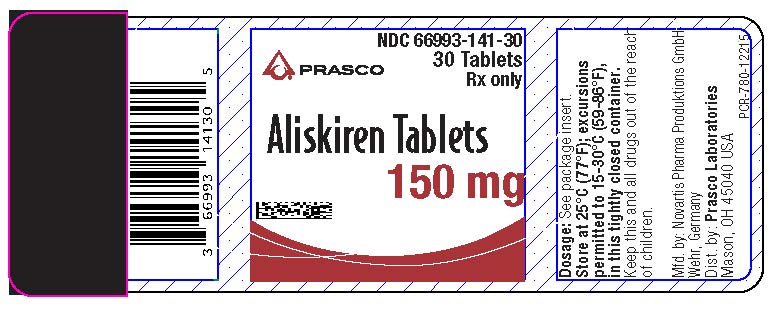
Principal Display Panel - Package Label – 150 mg NDC 66993-141-30 30 Tablets Rx only PRASCO Aliskiren Tablets 150 mg 150
Principal Display Panel - Package Label – 300 mg NDC 66993-142-30 30 Tablets Rx only PRASCO Aliskiren Tablets 300 mg 300