
Plaquenil Hydroxychloroquine Sulfate 200 mg Tablet, 12-count — NDC 67296-1781-1 (Billing 67296-1781-01)
This is a package of 12 tablets of Plaquenil Hydroxychloroquine Sulfate 200 mg Tablet from RedPharm Drug, Inc., no longer marketed, no longer in the FDA NDC Directory. It is this product's only package size.
NDC database record
One package, one record: these facts belong to NDC 67296-1781-1 alone.
- Record
- FDA NDC Directory package listing · Human prescription drug
- Code segments
- 67296 labeler · 1781 product · 1 package
- Barcode (UPC-A, from the NDC)
- 3 6729617811 1
- FDA record last changed
- Jul 16, 2026
Identity & classification
Regulatory identifiers FDA, NLM and CMS codes for this package
Where does this data come from?
- FDA openFDA NDC Directory · synced Oct 1, 2026
- FDA label on DailyMed · label index refreshed Oct 3, 2026
- RxNorm (NLM RxNav) · catalog refreshed Oct 1, 2026
- Medi-Span GPI (licensed)
- First Databank (licensed) · refreshed Oct 1, 2026
Clinical
- Hydroxychloroquine treats and prevents malaria, and treats rheumatoid arthritis, systemic lupus and chronic discoid lupus in adults. Your prescriber chose it for your specific cond...
- Take it by mouth with food or milk, and swallow the tablet without crushing it. For lupus or arthritis it is usually daily. For malaria prevention it is weekly on the same day, sta...
- Stomach upset is the most common, including nausea, vomiting, diarrhea and belly pain. Taking it with food can help. Call us if side effects are severe or don't settle.
- Yes. Hydroxychloroquine can cause permanent retinal damage, especially with higher doses, longer use or kidney problems. A baseline eye exam in the first year is recommended, then...
Patient education
Supplement & herbal interactions
Where does this data come from?
- MedlinePlus (NLM) · refreshed Oct 1, 2026
- FDA label on DailyMed · label index refreshed Oct 3, 2026
Ask a licensed pharmacist directly — free, answered by our team.
Pricing
A drug doesn't have one price. Each row is a different public payment system, and none is what you'd pay at the counter — that depends on your insurance. The ⓘ on each row explains what it measures.
| Price system | Per each | Per package |
|---|---|---|
| Retail pharmacies payNADAC · weekly | Not in the retail survey — common for institutional, discontinued, or low-volume packs. | |
| Medicaid paysCMS SDUD · 12 mo | No recent Medicaid claims on file for this NDC — rare and low-volume NDCs are suppressed in the public data. | |
| Medicare drug plans payPart D · quarterly | No Part D plan price is available for this NDC in our data. | |
Where does this data come from?
- CMS NADAC weekly file
- CMS ASP pricing files · refreshed Sep 20, 2026
- CMS Medicaid State Drug Utilization Data · refreshed Oct 4, 2026
- CMS Part D plan pricing files · refreshed Sep 24, 2026
- VA National Acquisition Center price file
Packaging — all sizes for this product
| Package NDC | Description | Marketing start | Marketing end | Status |
|---|---|---|---|---|
| 67296-1781-01 You're viewing this Main listing | 12 TABLET in 1 BOTTLE | 2020-01-01 | — | Inactivated by FDA |
Therapeutic equivalents
| Product | Labeler | Pack | NADAC/unit | TE | Status | Price vs. this |
|---|---|---|---|---|---|---|
| Plaquenil 200 mgthis 67296-1781-01 | RedPharm | 12 tablets | — | AB | Discontinued | — |
Where does this data come from?
- FDA openFDA NDC Directory · synced Oct 1, 2026
- FDA Orange Book · refreshed Oct 3, 2026
- CMS NADAC weekly file
Availability & generic status
FDA-approved generic versions are listed, and recent pricing/market data suggests they may be available — see Therapeutic equivalents.
Where does this data come from?
- FDA Orange Book · refreshed Oct 3, 2026
What it looks like
Where does this data come from?
- FDA label on DailyMed · label index refreshed Oct 3, 2026
Inactive Ingredients / Excipients
Inactive ingredients, also called excipients, are components of the drug product other than the active ingredient. They may include fillers, dyes, coatings, preservatives, flavors, or other formulation ingredients.
💡 Tap an ingredient (hover on desktop) to see what it is and why it’s used.
-
UNII L11K75P92J
A mineral salt made from calcium and phosphate. It acts as a filler and binder in tablets to add bulk and help hold the medicine together in solid form.
-
UNII R12CBM0EIZ
A natural wax derived from a Brazilian palm tree, used as a coating and polish on tablets and capsules. It creates a smooth, shiny finish that protects the medicine and improves appearance.
-
UNII XM0M87F357
A dark iron oxide compound that gives medicines their black or dark color. It's used as a colorant in tablets and capsules to help identify the product and make it visually distinctive.
-
UNII 0WZ8WG20P6
Hypromellose 2910 is a plant-based cellulose derivative that acts as a thickener, binder, and film-coating agent. It helps control how quickly the medicine dissolves and protects the tablet or capsule from moisture and light.
-
UNII 70097M6I30
Magnesium stearate is a salt made from magnesium and stearic acid, a fatty substance. It's used in tablets and capsules as a lubricant and glidant to help ingredients flow smoothly during manufacturing and prevent sticking.
-
UNII B697894SGQ
Polyethylene glycol 400 is a clear, thick liquid made from petroleum-derived polymers. It acts as a solvent and humectant in medicines, helping dissolve active ingredients and retain moisture in the formulation.
-
UNII 6OZP39ZG8H
Polysorbate 80 is a synthetic emulsifier derived from sorbitol and oleic acid. It helps mix oil and water-based ingredients together in medications and improves how the product disperses in the body.
-
UNII 46N107B71O
Shellac is a natural resin secreted by the lac beetle. It's used as a coating on tablets and capsules to control how quickly the medicine dissolves and to improve appearance and stability.
-
UNII O8232NY3SJ
A plant-based carbohydrate derived from corn kernels. It acts as a filler to add bulk, a binder to hold ingredients together, and a disintegrant to help the tablet break apart in your stomach for absorption.
-
UNII 15FIX9V2JP
Titanium dioxide is a bright white mineral powder commonly used as a colorant and opacifying agent. It makes pills and tablets white or lighter in color and helps make coatings non-transparent.
10 inactive ingredients listed in the exact product block matched to this NDC.
Where does this data come from?
ingredient classCode="IACT" elements from the exact product block matched by this NDC. Label-section narrative from DailyMed / the openFDA label index is shown separately when available.- FDA label on DailyMed · label index refreshed Oct 3, 2026
- FDA openFDA NDC Directory · synced Oct 1, 2026
Inactive ingredient FAQ
Are inactive ingredients the same for every manufacturer?
Why might an inactive ingredient be missing?
Can inactive ingredients matter?
Manufacturer & labeler
More NDCs from RedPharm Drug, Inc. labeler code 67296
- acyclovir 400 mg Tablet NDC 67296-1707-2
- Cefadroxil 500 mg Capsule NDC 67296-1727-1
- Clindamycin Hydrochloride 300 mg Capsule NDC 67296-1749-2
- Benzonatate 200 mg Capsule NDC 67296-1751-3
- Morphine Sulfate 15 mg Tablet NDC 67296-1753-1
- Acetaminophen and Codeine 300 mg; 30 mg Tablet NDC 67296-1772-1
- Pantoprazole Sodium 40 mg Tablet, Delayed Release NDC 67296-1812-3
- Benzonatate 200 mg Capsule NDC 67296-1833-3
- Tramadol Hydrochloride 50 mg Tablet, Coated NDC 67296-1834-1
- Dexamethasone 4 mg Tablet NDC 67296-1837-1
- Ciprofloxacin 500 mg Tablet, Coated NDC 67296-1848-1
- Amlodipine Besylate 5 mg Tablet NDC 67296-1876-8
Where does this data come from?
- FDA openFDA NDC Directory · synced Oct 1, 2026
- Drugs@FDA
Full prescribing information FDA SPL
🎯 Indications and Usage ▾
INDICATIONS AND USAGE Malaria PLAQUENIL is indicated for the treatment of uncomplicated malaria due to P. falciparum, P. malariae, P. ovale, and P. vivax . PLAQUENIL is indicated for the prophylaxis of malaria in geographic areas where chloroquine resistance is not reported. Limitations of Use in Malaria • PLAQUENIL is not recommended for the treatment of complicated malaria. • PLAQUENIL is not effective against chloroquine or hydroxychloroquine-resistant strains of Plasmodium species (see CLINICAL PHARMACOLOGY – Microbiology ).
PLAQUENIL is not recommended for the treatment of malaria acquired in geographic areas where chloroquine resistance occurs or when the Plasmodium species has not been identified. • PLAQUENIL is not recommended for malaria prophylaxis in geographic areas where chloroquine resistance occurs. • PLAQUENIL does not prevent relapses of P. vivax or P. ovale because it is not active against the hypnozoite forms of these parasites. For radical cure of P. vivax and P. ovale infections, concomitant therapy with an 8-aminoquinoline compound is necessary (see CLINICAL PHARMACOLOGY – Microbiology ).
Prior to prescribing PLAQUENIL for the treatment or prophylaxis of malaria, consult the Centers for Disease Control and Prevention (CDC) Malaria website (http://www.cdc.gov/malaria). Lupus Erythematosus PLAQUENIL is indicated for the treatment of chronic discoid lupus erythematosus and systemic lupus erythematosus in adults. Rheumatoid Arthritis PLAQUENIL is indicated for the treatment of acute and chronic rheumatoid arthritis in adults.
⏱️ Dosage and Administration ▾
DOSAGE AND ADMINISTRATION One PLAQUENIL tablet contains 200 mg of hydroxychloroquine sulfate, which is equivalent to 155 mg base. Take PLAQUENIL with a meal or a glass of milk. Malaria Prophylaxis Adults: 400 mg (310 mg base) once weekly on the same day of each week starting 2 weeks prior to exposure, and continued for 4 weeks after leaving the endemic area.
Weight-based dosing in adults and pediatric patients: 6.5 mg/kg (5 mg/kg base), not to exceed 400 mg (310 mg base), once weekly on the same day of the week starting 2 weeks prior to exposure, and continued for 4 weeks after leaving the endemic area. Treatment of Uncomplicated Malaria Adults: 800 mg (620 mg base) followed by 400 mg (310 mg base) at 6 hours, 24 hours and 48 hours after the initial dose (total 2000 mg hydroxychloroquine sulfate or 1550 mg base). Weight based dosage in adults and pediatric patients: 13 mg/kg (10 mg/kg base), not to exceed 800 mg (620 mg base) followed by 6.5 mg/kg (5 mg/kg base), not to exceed 400 mg (310 mg base), at 6 hours, 24 hours and 48 hours after the initial dose.
PLAQUENIL film-coated tablets cannot be divided, therefore they should not be used to treat patients who weigh less than 31 kg. For radical cure of P. vivax and P. malariae infections, concomitant therapy with an 8-aminoquinoline compound is necessary. Lupus Erythematosus The recommended adult dosage is 200 to 400 mg (155 to 310 mg base) daily, administered as a single daily dose or in two divided doses.
Doses above 400 mg a day are not recommended. The incidence of retinopathy has been reported to be higher when this maintenance dose is exceeded. Rheumatoid Arthritis The action of hydroxychloroquine is cumulative and may require weeks to months to achieve the maximum therapeutic effect (see CLINICAL PHARMACOLOGY ).
Initial adult dosage: 400 mg to 600 mg (310 to 465 mg base) daily, administered as a single daily dose or in two divided doses. In a small percentage of patients, side effects may require temporary reduction of the initial dosage. Maintenance adult dosage: When a good response is obtained, the dosage may be reduced by 50 percent and continued at a maintenance level of 200 mg to 400 mg (155 to 310 mg base) daily, administered as a single daily dose or in two divided doses.
Do not exceed 600 mg or 6.5 mg/kg (5 mg/kg base) per day, whichever is lower, as the incidence of retinopathy has been reported to be higher when this maintenance dose is exceeded. Corticosteroids and salicylates may be used in conjunction with PLAQUENIL, and they can generally be decreased gradually in dosage or eliminated after a maintenance dose of PLAQUENIL has been achieved.
⛔ Contraindications ▾
CONTRAINDICATIONS Use of PLAQUENIL is contraindicated in patients with known hypersensitivity to 4-aminoquinoline compounds.
⚠️ Warnings ▾
WARNINGS Resistant strains of malaria: PLAQUENIL is not effective against chloroquine-resistant strains of P. falciparum (see CLINICAL PHARMACOLOGY – Microbiology ). Ocular: Irreversible retinal damage has been observed in some patients who had received hydroxychloroquine sulfate. Significant risk factors for retinal damage include daily doses of hydroxychloroquine sulfate greater than 6.5 mg/kg (5 mg/kg base) of actual body weight, durations of use greater than five years, subnormal glomerular filtration, use of some concomitant drug products such as tamoxifen citrate and concurrent macular disease.
A baseline ocular examination is recommended within the first year of starting PLAQUENIL. The baseline exam should include: best corrected distance visual acuity (BCVA), an automated threshold visual field (VF) of the central 10 degrees (with retesting if an abnormality is noted), and spectral domain ocular coherence tomography (SD-OCT). For individuals with significant risk factors (daily dose of hydroxychloroquine sulfate greater than 5.0 mg/kg base of actual body weight, subnormal glomerular filtration, use of tamoxifen citrate or concurrent macular disease) monitoring should include annual examinations which include BCVA, VF and SD-OCT.
For individuals without significant risk factors, annual exams can usually be deferred until five years of treatment. In individuals of Asian descent, retinal toxicity may first be noticed outside the macula. In patients of Asian descent, it is recommended that visual field testing be performed in the central 24 degrees instead of the central 10 degrees.
It is recommended that hydroxychloroquine be discontinued if ocular toxicity is suspected and the patient should be closely observed given that retinal changes (and visual disturbances) may progress even after cessation of therapy. Cardiac Effects, including Cardiomyopathy and QT prolongation: Postmarketing cases of life-threatening and fatal cardiomyopathy have been reported with use of PLAQUENIL as well as with use of chloroquine. Patients may present with atrioventricular block, pulmonary hypertension, sick sinus syndrome or with cardiac complications.
ECG findings may include atrioventricular, right or left bundle branch block. Signs or symptoms of cardiac compromise have appeared during acute and chronic treatment. Clinical monitoring for signs and symptoms of cardiomyopathy is advised, including use of appropriate diagnostic tools such as ECG to monitor patients for cardiomyopathy during PLAQUENIL therapy.
Chronic toxicity should be considered when conduction disorders (bundle branch block/atrio-ventricular heart block) or biventricular hypertrophy are diagnosed. If cardiotoxicity is suspected, prompt discontinuation of PLAQUENIL may prevent life-threatening complications. PLAQUENIL prolongs the QT interval.
Ventricular arrhythmias and torsades de pointes have been reported in patients taking PLAQUENIL (see OVERDOSAGE ). Therefore, PLAQUENIL should not be administered with other drugs that have the potential to prolong the QT interval (see DRUG INTERACTIONS ). Worsening of psoriasis and porphyria: Use of PLAQUENIL in patients with psoriasis may precipitate a severe attack of psoriasis.
When used in patients with porphyria the condition may be exacerbated. The preparation should not be used in these conditions unless in the judgment of the physician the benefit to the patient outweighs the possible hazard. Proximal Myopathy and Neuropathy: Skeletal muscle myopathy or neuropathy leading to progressive weakness and atrophy of proximal muscle groups, depressed tendon reflexes, and abnormal nerve conduction, have been reported.
Muscle and nerve biopsies have been associated with curvilinear bodies and muscle fiber atrophy with vacuolar changes. Assess muscle strength and deep tendon reflexes periodically in patients on long-term therapy with PLAQUENIL. Neuropsychiatric events, including suicidality: Suicidal behavior has been rarely reported i… [Excerpted — this section continues on DailyMed.]
🤒 Adverse Reactions ▾
ADVERSE REACTIONS The following adverse reactions have been identified during post-approval use of PLAQUENIL or other 4-aminoqunoline compounds. Because these reactions are reported voluntarily from a population of uncertain size, it is not always possible to reliably estimate their frequency or establish a causal relationship to drug exposure. Blood and lymphatic system disorders: Bone marrow failure, anemia, aplastic anemia, agranulocytosis, leukopenia, and thrombocytopenia.
Hemolysis reported in individuals with glucose-6-phosphate dehydrogenase (G-6-PD) deficiency. Cardiac disorders: Cardiomyopathy which may result in cardiac failure and in some cases a fatal outcome (see WARNINGS and OVERDOSAGE ). PLAQUENIL prolongs the QT interval.
Ventricular arrhythmias and torsade de pointes have been reported in patients taking PLAQUENIL (see OVERDOSAGE and DRUG INTERACTIONS ). Ear and labyrinth disorders: Vertigo, tinnitus, nystagmus, nerve deafness, deafness. Eye disorders: Irreversible retinopathy with retinal pigmentation changes (bull’s eye appearance), visual field defects (paracentral scotomas) and visual disturbances (visual acuity), maculopathies (macular degeneration), decreased dark adaptation, color vision abnormalities, corneal changes (edema and opacities) including corneal deposition of drug with or without accompanying symptoms (halo around lights, photophobia, blurred vision).
Gastrointestinal disorders: Nausea, vomiting, diarrhea, and abdominal pain. General disorders and administration site conditions: Fatigue. Hepatobiliary disorders: Liver function tests abnormal, hepatic failure acute.
Immune system disorders: Urticaria, angioedema, bronchospasm Metabolism and nutrition disorders: Decreased appetite, hypoglycemia, porphyria, weight decreased. Musculoskeletal and connective tissue disorders: Sensorimotor disorder, skeletal muscle myopathy or neuromyopathy leading to progressive weakness and atrophy of proximal muscle groups, depression of tendon reflexes and abnormal nerve conduction. Nervous system disorders: Headache, dizziness, seizure, ataxia and extrapyramidal disorders such as dystonia, dyskinesia, and tremor have been reported with this class of drugs.
Psychiatric disorders: Affect/emotional lability, nervousness, irritability, nightmares, psychosis, suicidal behavior. Skin and subcutaneous tissue disorders: Rash, pruritus, pigmentation disorders in skin and mucous membranes, hair color changes, alopecia. Dermatitis bullous eruptions including erythema multiforme, Stevens-Johnson syndrome, and toxic epidermal necrolysis, drug reaction with eosinophilia and systemic symptoms (DRESS syndrome), photosensitivity, dermatitis exfoliative, acute generalized exanthematous pustulosis (AGEP).
AGEP has to be distinguished from psoriasis, although PLAQUENIL may precipitate attacks of psoriasis. It may be associated with pyrexia and hyperleukocytosis. To report SUSPECTED ADVERSE REACTIONS, contact Concordia Pharmaceuticals at 1-877-370-1142 or FDA at 1-800-FDA-1088 or www.fda.gov/medwatch.
🔄 Drug Interactions ▾
Drug Interactions Digoxin : Concomitant PLAQUENIL and digoxin therapy may result in increased serum digoxin levels: serum digoxin levels should be closely monitored in patients receiving combined therapy. Insulin or antidiabetic drugs : As PLAQUENIL may enhance the effects of a hypoglycemic treatment, a decrease in doses of insulin or antidiabetic drugs may be required. Drugs that prolong QT interval and other arrhythmogenic drugs : PLAQUENIL prolongs the QT interval and should not be administered with other drugs that have the potential to induce cardiac arrhythmias.
Also, there may be an increased risk of inducing ventricular arrhythmias if PLAQUENIL is used concomitantly with other arrhythmogenic drugs. Mefloquine and other drugs known to lower the convulsive threshold : PLAQUENIL can lower the convulsive threshold. Co-administration of PLAQUENIL with other antimalarials known to lower the convulsion threshold (e.g., mefloquine) may increase the risk of convulsions.
Antiepileptics : The activity of antiepileptic drugs might be impaired if co-administered with PLAQUENIL. Methotrexate : Combined use of methotrexate with PLAQUENIL has not been studied and may increase the incidence of adverse effects. Cyclosporin : An increased plasma cyclosporin level was reported when cyclosporin and PLAQUENIL were co-administered.
The following interactions have been observed on treatment with the structurally related substance chloroquine phosphate, and therefore cannot be ruled out for hydroxychloroquine. Praziquantel : Chloroquine has been reported to reduce the bioavailability of praziquantel. Antacids and kaolin : Antacids and kaolin can reduce absorption of chloroquine; an interval of at least 4 hours between intake of these agents and chloroquine should be observed.
Cimetidine : Cimetidine can inhibit the metabolism of chloroquine, increasing its plasma level. Concomitant use of cimetidine should be avoided. Ampicillin : In a study of healthy volunteers, chloroquine significantly reduced the bioavailability of ampicillin.
👥 Use in Specific Populations ▾
Pregnancy Teratogenic Effects: Human pregnancies resulting in live births have been reported in the literature and no increase in the rate of birth defects has been demonstrated. Embryonic deaths and malformations of anophthalmia and microphthalmia in the offspring have been reported when pregnant rats received large doses of chloroquine. Nursing Mothers: Caution should be exercised when administering PLAQUENIL to nursing women.
It has been demonstrated that hydroxychloroquine administered to nursing women is excreted in human milk and it is known that infants are extremely sensitive to the toxic effects of 4-aminoquinolines. Pediatric Use: Safety and efficacy have not been established in the chronic use of PLAQUENIL for systemic lupus erythematosus and juvenile idiopathic arthritis in children. Children are especially sensitive to the 4-aminoquinoline compounds.
Most reported fatalities followed the accidental ingestion of chloroquine, sometimes in small doses (0.75 g or 1 g in one 3-year-old child). Patients should be strongly warned to keep these drugs out of the reach of children (see OVERDOSAGE ). Geriatric Use: Clinical studies of PLAQUENIL did not include sufficient numbers of subjects aged 65 and over to determine whether they respond differently from younger subjects.
However, this drug is known to be substantially excreted by the kidney, and the risk of toxic reactions to this drug may be greater in patients with impaired renal function. Because elderly patients are more likely to have decreased renal function, care should be taken in dose selection and it may be useful to monitor renal function.
🤰 Pregnancy ▾
Pregnancy Teratogenic Effects: Human pregnancies resulting in live births have been reported in the literature and no increase in the rate of birth defects has been demonstrated. Embryonic deaths and malformations of anophthalmia and microphthalmia in the offspring have been reported when pregnant rats received large doses of chloroquine.
🧒 Pediatric Use ▾
Pediatric Use: Safety and efficacy have not been established in the chronic use of PLAQUENIL for systemic lupus erythematosus and juvenile idiopathic arthritis in children. Children are especially sensitive to the 4-aminoquinoline compounds. Most reported fatalities followed the accidental ingestion of chloroquine, sometimes in small doses (0.75 g or 1 g in one 3-year-old child).
Patients should be strongly warned to keep these drugs out of the reach of children (see OVERDOSAGE ).
🧓 Geriatric Use ▾
Geriatric Use: Clinical studies of PLAQUENIL did not include sufficient numbers of subjects aged 65 and over to determine whether they respond differently from younger subjects. However, this drug is known to be substantially excreted by the kidney, and the risk of toxic reactions to this drug may be greater in patients with impaired renal function. Because elderly patients are more likely to have decreased renal function, care should be taken in dose selection and it may be useful to monitor renal function.
🆘 Overdosage ▾
OVERDOSAGE The 4-aminoquinoline compounds are very rapidly and completely absorbed after ingestion, and in accidental overdosage, or rarely with lower doses in hypersensitive patients, toxic symptoms may occur within 30 minutes. The symptoms of overdosage may include headache, drowsiness, visual disturbances, cardiovascular collapse, convulsions, hypokalemia, rhythm and conduction disorders including QT prolongation, torsades de pointes, ventricular tachycardia and ventricular fibrillation, followed by sudden potentially fatal respiratory and cardiac arrest.
Treatment is symptomatic and must be prompt. Immediate gastric lavage until the stomach is completely emptied is indicated. After lavage, activated charcoal is introduced by the stomach tube within 30 minutes of ingestion of the drug may inhibit further intestinal absorption.
To be effective, the dose of activated charcoal should be at least five times the estimated dose of hydroxychloroquine ingested. Consideration should be given to administering diazepam parenterally since studies suggest that it may be beneficial in reversing chloroquine and hydroxychloroquine cardiotoxicity. Respiratory support and shock management should be instituted as necessary.
Exchange transfusions are used to reduce the level of 4-aminoquinoline drug in the blood. A patient who survives the acute phase and is asymptomatic should be closely observed for at least six hours. Fluids may be forced and sufficient ammonium chloride (8 g daily in divided doses for adults) may be administered for a few days to acidify the urine.
This will promote urinary excretion in cases of both overdosage and sensitivity. However, caution must be exercised in patients with impaired renal function and/or metabolic acidosis.
🧬 Clinical Pharmacology ▾
CLINICAL PHARMACOLOGY Pharmacokinetics : Following a single 200 mg oral dose of PLAQUENIL to healthy male volunteers, the mean peak blood concentration of hydroxychloroquine was 129.6 ng/mL, reached in 3.26 hours with a half-life of 537 hours (22.4 days). In the same study, the plasma peak concentration was 50.3 ng/mL reached in 3.74 hours with a half-life of 2963 hours (123.5 days). Urine hydroxychloroquine levels were still detectable after 3 months with approximately 10% of the dose excreted was parent drug.
Results following a single dose of a 200 mg tablet versus i.v. infusion (155 mg), demonstrated a half-life of about 40 days and a large volume of distribution. Peak blood concentrations of metabolites were observed at the same time as peak levels of hydroxycholoquine. The mean fraction of the dose absorbed was 0.74.
After administration of single 155 mg and 310 mg intravenous doses, peak blood concentrations ranged from 1161 ng/mL to 2436 ng/mL (mean 1918 ng/mL) following the 155 mg infusion and 6 months following the 3as10 mg infusion. Pharmacokinetic parameters were not significantly different over the therapeutic dose range of 155 mg and 310 mg indicating linear kinetics. Following chronic oral administration of hydroxychloroquine, significant levels of three metabolites, desethylhydroxychloroquine (DHCQ), desethylchloroquine (DCQ), and bidesethylhydroxychloroquine (BDCQ) have been found in plasma and blood, with DHCQ being the major metabolite.
The absorption half-life was approximately 3 to 4 hours and the terminal half-life ranged from 40 to 50 days. The long half-life can be attributed to extensive tissue uptake rather than through decreased excretion. Peak plasma levels of hydroxychloroquine were seen in about 3 to 4 hours.
Renal clearance in rheumatoid arthritis (RA) patients taking PLAQUENIL for at least six months seemed to be similar to that of the single dose studies in volunteers, suggesting that no change occurs with chronic dosing. Range for renal clearance of unchanged drug was approximately 16 to 30% and did not correlate with creatinine clearance; therefore, a dosage adjustment is not required for patients with renal impairment. In RA patients, there was large variability as to the fraction of the dose absorbed (i.e.
30 to 100%), and mean hydroxychloroquine levels were significantly higher in patients with less disease activity. Cellular levels of patients on daily hydroxychloroquine have been shown to be higher in mononuclear cells than polymorphonuclear leucocytes. Microbiology - Malaria Mechanism of action: The precise mechanism by which hydroxychloroquine exhibits activity against Plasmodium is not known.
Hydroxychloroquine, like chloroquine, is a weak base and may exert its effect by concentrating in the acid vesicles of the parasite and by inhibiting polymerization of heme. It can also inhibit certain enzymes by its interaction with DNA. Activity in vitro and in Clinical Infections: Hydroxychloroquine is active against the erythrocytic forms of chloroquine sensitive strains of Plasmodium falciparum, Plasmodium malariae, Plasmodium ovale, and Plasmodium vivax.
Hydroxychloroquine is not active against the gametocytes and exoerythrocytic forms including the hypnozoite stage (P. vivax and P. ovale) of the Plasmodium parasites. Drug Resistance: P. falciparum strains exhibiting reduced susceptibility to chloroquine also show reduced susceptibility to hydroxychloroquine. Resistance of Plasmodium parasites to chloroquine is widespread (see INDICATIONS AND USAGE – Malaria ).
Patients in whom chloroquine or hydroxychloroquine have failed to prevent or cure clinical malaria or parasitemia, or patients who acquired malaria in a geographic area where chloroquine resistance is known to occur should be treated with another form of antimalarial therapy (see INDICATIONS AND USAGE – Malaria and WARNINGS ). Rheumatoid Arthritis and Systemic Lupus Erythematosus Mechanism of action: The mechanisms underlying the ant… [Excerpted — this section continues on DailyMed.]
🧬 Mechanism of Action ▾
Mechanism of action: The precise mechanism by which hydroxychloroquine exhibits activity against Plasmodium is not known. Hydroxychloroquine, like chloroquine, is a weak base and may exert its effect by concentrating in the acid vesicles of the parasite and by inhibiting polymerization of heme. It can also inhibit certain enzymes by its interaction with DNA.
Rheumatoid Arthritis and Systemic Lupus Erythematosus Mechanism of action: The mechanisms underlying the anti-inflammatory and immunomodulatory effects of PLAQUENIL are unknown
📦 How Supplied / Storage and Handling ▾
HOW SUPPLIED PLAQUENIL tablets are white, to off-white, film coated tablets imprinted “PLAQUENIL” on one face in black ink. Each tablet contains 200 mg hydroxychloroquine sulfate (equivalent to 155 mg base). Bottles of 60 tablets with child resistant closure (NDC 59212-562-60).
Bottles of 100 tablets with child resistant closure (NDC 59212-562-10). Do not crush or divide PLAQUENIL film-coated tablets (see DOSAGE AND ADMINISTRATION ). Dispense in a tight, light-resistant container as defined in the USP/NF.
Keep out of the reach of children. Store at room temperature [20° to 25°C (68° to 77°F), allows excursions between 15° and 30°C (59° and 86°F)]. Mfd. for: Concordia Pharmaceuticals Distributed by: Amdipharm Limited 17 Northwood House Dublin 9, Ireland Rev.
09/19 ©2015 All rights reserved.
📋 Description ▾
DESCRIPTION PLAQUENIL ® (hydroxychloroquine sulfate) is a white or practically white, crystalline powder, freely soluble in water; practically insoluble in alcohol, chloroform, and in ether. The chemical name for hydroxychloroquine sulfate is 2-[[4-[(7-Chloro-4-quinolyl)amino]pentyl]ethylamino] ethanol sulfate (1:1). Its structural formula is: The molecular weight of hydroxychloroquine sulfate is 433.95, and molecular formula is C 18 H 26 ClN 3 O.H 2 SO 4 .
PLAQUENIL (hydroxychloroquine sulfate) tablets contain 200 mg hydroxychloroquine sulfate, equivalent to 155 mg base, and are for oral administration. Inactive Ingredients: Dibasic calcium phosphate USP, hypromellose USP, magnesium stearate NF, polyethylene glycol 400 NF, polysorbate 80 NF, corn starch, titanium dioxide USP, carnauba wax NF, shellac NF, black iron oxide NF. chem-formula
💬 Information for Patients ▾
Information for Patients: Patients should be informed of the early signs and symptoms of toxicity such as rash or visual changes. Patients must see their physicians promptly in case of the appearance of these or of any unusual effects. Periodic laboratory tests may be recommended in some patients. Patients should be fully informed of the potential risks of the use of PLAQUENIL, especially in pregnancy and in children.
⚠️ Precautions ▾
PRECAUTIONS General: Use with caution in patients with gastrointestinal, neurological, or blood disorders, and in those with a sensitivity to quinine. Hepatic/Renal Disease: Antimalarial compounds should be used with caution in patients with hepatic disease or alcoholism, or in conjunction with known hepatotoxic drugs. A reduction in dosage may be necessary in patients with hepatic or renal disease, as well as in those taking medicines known to affect these organs.
Hematologic Effects/Laboratory Tests: Antimalarial compounds should be used with caution in patients with hepatic disease or alcoholism or in conjunction with known hepatotoxic drugs. Periodic blood cell counts should be performed if patients are given prolonged therapy. If any severe blood disorder such as aplastic anemia, agranulocytosis, leukopenia, or thrombocytopenia, appears which is not attributable to the disease under treatment, consider discontinuation of PLAQUENIL.
PLAQUENIL should be administered with caution in patients having glucose-6-phosphate dehydrogenase (G-6-PD) deficiency. Dermatologic Effects: Dermatologic reactions to PLAQUENIL may occur and, therefore, proper care should be exercised when it is administered to any patient receiving a drug with a significant tendency to produce dermatitis. Drug Interactions Digoxin : Concomitant PLAQUENIL and digoxin therapy may result in increased serum digoxin levels: serum digoxin levels should be closely monitored in patients receiving combined therapy.
Insulin or antidiabetic drugs : As PLAQUENIL may enhance the effects of a hypoglycemic treatment, a decrease in doses of insulin or antidiabetic drugs may be required. Drugs that prolong QT interval and other arrhythmogenic drugs : PLAQUENIL prolongs the QT interval and should not be administered with other drugs that have the potential to induce cardiac arrhythmias. Also, there may be an increased risk of inducing ventricular arrhythmias if PLAQUENIL is used concomitantly with other arrhythmogenic drugs.
Mefloquine and other drugs known to lower the convulsive threshold : PLAQUENIL can lower the convulsive threshold. Co-administration of PLAQUENIL with other antimalarials known to lower the convulsion threshold (e.g., mefloquine) may increase the risk of convulsions. Antiepileptics : The activity of antiepileptic drugs might be impaired if co-administered with PLAQUENIL.
Methotrexate : Combined use of methotrexate with PLAQUENIL has not been studied and may increase the incidence of adverse effects. Cyclosporin : An increased plasma cyclosporin level was reported when cyclosporin and PLAQUENIL were co-administered. The following interactions have been observed on treatment with the structurally related substance chloroquine phosphate, and therefore cannot be ruled out for hydroxychloroquine.
Praziquantel : Chloroquine has been reported to reduce the bioavailability of praziquantel. Antacids and kaolin : Antacids and kaolin can reduce absorption of chloroquine; an interval of at least 4 hours between intake of these agents and chloroquine should be observed. Cimetidine : Cimetidine can inhibit the metabolism of chloroquine, increasing its plasma level.
Concomitant use of cimetidine should be avoided. Ampicillin : In a study of healthy volunteers, chloroquine significantly reduced the bioavailability of ampicillin. Information for Patients: Patients should be informed of the early signs and symptoms of toxicity such as rash or visual changes.
Patients must see their physicians promptly in case of the appearance of these or of any unusual effects. Periodic laboratory tests may be recommended in some patients. Patients should be fully informed of the potential risks of the use of PLAQUENIL, especially in pregnancy and in children.
Carcinogenesis, mutagenesis, impairment of fertility: Long-term studies in animals have not been conducted to evaluate the carcinogenic potential of PLAQUENIL. The mutagenic potential of hydroxychloroquine was not evaluated. However,… [Excerpted — this section continues on DailyMed.]
🍼 Nursing Mothers ▾
Nursing Mothers: Caution should be exercised when administering PLAQUENIL to nursing women. It has been demonstrated that hydroxychloroquine administered to nursing women is excreted in human milk and it is known that infants are extremely sensitive to the toxic effects of 4-aminoquinolines.
🧬 Pharmacokinetics ▾
Pharmacokinetics : Following a single 200 mg oral dose of PLAQUENIL to healthy male volunteers, the mean peak blood concentration of hydroxychloroquine was 129.6 ng/mL, reached in 3.26 hours with a half-life of 537 hours (22.4 days). In the same study, the plasma peak concentration was 50.3 ng/mL reached in 3.74 hours with a half-life of 2963 hours (123.5 days). Urine hydroxychloroquine levels were still detectable after 3 months with approximately 10% of the dose excreted was parent drug.
Results following a single dose of a 200 mg tablet versus i.v. infusion (155 mg), demonstrated a half-life of about 40 days and a large volume of distribution. Peak blood concentrations of metabolites were observed at the same time as peak levels of hydroxycholoquine. The mean fraction of the dose absorbed was 0.74.
After administration of single 155 mg and 310 mg intravenous doses, peak blood concentrations ranged from 1161 ng/mL to 2436 ng/mL (mean 1918 ng/mL) following the 155 mg infusion and 6 months following the 3as10 mg infusion. Pharmacokinetic parameters were not significantly different over the therapeutic dose range of 155 mg and 310 mg indicating linear kinetics. Following chronic oral administration of hydroxychloroquine, significant levels of three metabolites, desethylhydroxychloroquine (DHCQ), desethylchloroquine (DCQ), and bidesethylhydroxychloroquine (BDCQ) have been found in plasma and blood, with DHCQ being the major metabolite.
The absorption half-life was approximately 3 to 4 hours and the terminal half-life ranged from 40 to 50 days. The long half-life can be attributed to extensive tissue uptake rather than through decreased excretion. Peak plasma levels of hydroxychloroquine were seen in about 3 to 4 hours.
Renal clearance in rheumatoid arthritis (RA) patients taking PLAQUENIL for at least six months seemed to be similar to that of the single dose studies in volunteers, suggesting that no change occurs with chronic dosing. Range for renal clearance of unchanged drug was approximately 16 to 30% and did not correlate with creatinine clearance; therefore, a dosage adjustment is not required for patients with renal impairment. In RA patients, there was large variability as to the fraction of the dose absorbed (i.e.
30 to 100%), and mean hydroxychloroquine levels were significantly higher in patients with less disease activity. Cellular levels of patients on daily hydroxychloroquine have been shown to be higher in mononuclear cells than polymorphonuclear leucocytes.
📄 Carcinogenesis, Mutagenesis, Impairment of Fertility ▾
Carcinogenesis, mutagenesis, impairment of fertility: Long-term studies in animals have not been conducted to evaluate the carcinogenic potential of PLAQUENIL. The mutagenic potential of hydroxychloroquine was not evaluated. However, chloroquine has been shown to be a catalytic inhibitor of DNA repair enzymes (topoisomerase II) and to produce weak genotoxic effects through this mode of action.
📄 Package Label / Principal Display Panel ▾
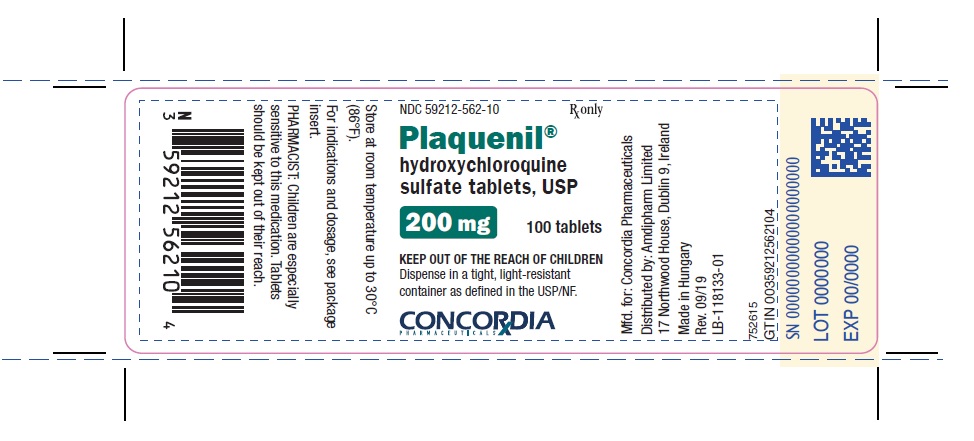
PRINCIPAL DISPLAY PANEL - 100 Tablet Bottle NDC 59212-562-10 Rx only Plaquenil ® hydroxychloroquine sulfate tablets, USP 200 mg 100 tablets KEEP OUT OF THE REACH OF CHILDREN Dispense in a tight, light-resistant container as defined in the USP/NF. Concordia Pharmaceuticals bottle-label-100ct PRINCIPAL DISPLAY PANEL - 60 Tablet Bottle NDC 59212-562-60 Rx only Plaquenil ® hydroxychloroquine sulfate tablets, USP 200 mg 60 tablets KEEP OUT OF THE REACH OF CHILDREN Dispense in a tight, light-resistant container as defined in the USP/NF.
Concordia Pharmaceuticals bottle-label-60ct
PACKAGE LABEL.PRINCIPAL DISPLAY PANEL LABEL
Medicare Part D spend CMS · PART D · 2026 (Q1)
About this NDC listing & data coverage
What data is (and isn’t) available for this NDC — tap to expand
| NDC identity (package / product / labeler codes) | ✓ Available |
| Labeler | ✓ Available |
| Product & package description | ✓ Available |
| Marketing category & status | ✓ Available |
| Active ingredient / dosage form / route | ✓ Available |
| FDA label (SPL via DailyMed) | ✓ Available |
| Package photos | ✓ Available |
| Inactive ingredients (structured) | ✓ Available |
| NADAC pharmacy acquisition price (CMS) | — Not published for this NDC CMS publishes NADAC only for NDCs reported in its retail-pharmacy survey. |
| Orange Book / therapeutic-equivalence data | ✓ Available |
| HCPCS J-code billing crosswalk | — Not published for this NDC Most self-administered / retail products have no J-code — that is normal. |
| Medicaid utilization (CMS SDUD) | — Not published for this NDC CMS reports utilization only for NDCs with Medicaid claims above its privacy threshold. |