
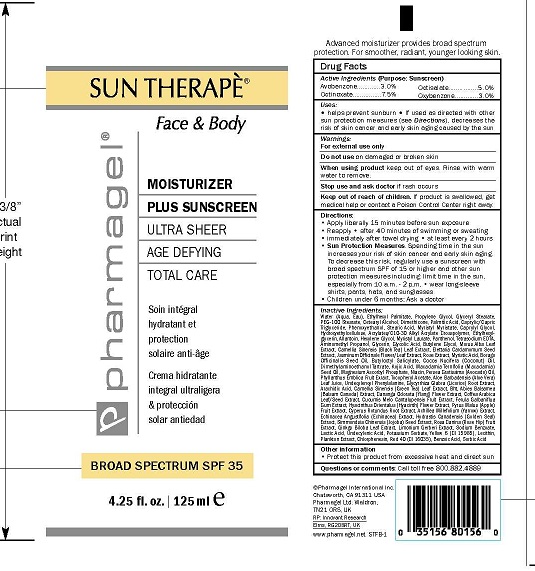
SUN THERAPE FACE AND BODY SPF-35 AVOBENZONE, OCTINOXATE, OCTISALATE, OXYBENZONE 7.5 g/100mL; 5 g/100mL; 3 g/100mL; 3 g/100mL Lotion
🆔 Identity & classification
Where does this data come from?
🏭 Manufacturer & labeler
Where does this data come from?
🩺 Clinical
This is a topical lotion sunscreen product that contains four chemical UV filters: avobenzone, octinoxate, octisalate, and oxybenzone. These ingredients are commonly used together in sunscreen formulations to absorb ultraviolet radiation and help protect skin from sun exposure. The product is marketed as an over-the-counter monograph drug, meaning it is formulated according to FDA's established rules for sunscreen ingredients and concentrations rather than as an individually reviewed application.
Patient education
Supplement & herbal interactions
Where does this data come from?
Ask a licensed pharmacist directly — free, answered by our team.
🧪 Inactive Ingredients / Excipients
Inactive ingredients, also called excipients, are components of the drug product other than the active ingredient. They may include fillers, dyes, coatings, preservatives, flavors, or other formulation ingredients.
💡 Tap an ingredient (hover on desktop) to see what it is and why it’s used.
-
UNII 9E8X80D2L0
A synthetic form of vitamin E used as an antioxidant and preservative in medications. It helps prevent the active ingredients from degrading when exposed to oxygen or light.
-
UNII 2FXJ6SW4PK
A plant extract from yarrow, used in some formulations as a natural flavoring agent or botanical ingredient to add taste or aroma to the medicine.
-
UNII 344S277G0Z
Allantoin is a naturally derived compound that helps soften and soothe skin. In medicines, it works as a skin-conditioning agent and may help support wound healing and reduce irritation in topical formulations.
-
UNII ZY81Z83H0X
Aloe vera leaf is a plant extract derived from the aloe plant. It is used in medicines as a natural moisturizer and skin-soothing agent in topical formulations.
-
UNII LU49E6626Q
A synthetic organic compound used as a pH buffer and neutralizing agent in medicines. It helps maintain the proper acidity level in liquid formulations to improve stability and comfort.
-
UNII B423VGH5S9
A natural fruit ingredient derived from apples, used as a flavoring agent and sweetener to improve taste and palatability of the medicine.
-
UNII 3SW678MX72
A natural flavoring derived from roasted arabica coffee beans. It adds coffee taste and aroma to the medicine, making it more palatable for patients who need to swallow or chew the product.
-
UNII PQB8MJD4RB
Arachidic acid is a waxy fatty acid derived from plant or animal sources. It functions as a binder and lubricant in tablets and capsules, helping ingredients stick together and improving how the medicine flows during manufacturing.
-
UNII 6VNO72PFC1
A natural oil extracted from avocado fruit. It's used in medicines as an emollient and carrier to help dissolve or deliver active ingredients and improve how the product feels on skin or mucous membranes.
-
UNII H1TFV1454Z
Balsam fir leafy twig is a plant extract from the evergreen balsam fir tree. It's used in medicines as a flavoring agent and fragrance to improve taste or smell.
-
UNII 8SKN0B0MIM
Benzoic acid is a naturally occurring organic acid used as a preservative in medicines and foods. It helps prevent bacterial and fungal growth to extend shelf life and maintain product stability.
-
UNII F8XAG1755S
A plant-derived oil from borage seeds, rich in fatty acids. It's used in formulations as an emollient and skin-conditioning agent to help maintain moisture and improve texture.
-
UNII 1P9D0Z171K
BHT is a synthetic antioxidant that prevents fats and oils in medicines from breaking down and becoming rancid. It helps keep the product stable and effective during storage.
-
UNII 3XUS85K0RA
Butylene glycol is a clear liquid derived from petroleum or plants that acts as a humectant, solvent, and preservative booster in medicines. It helps keep formulations stable, dissolve active ingredients, and maintain moisture in topical products.
-
UNII 2EH13UN8D3
A synthetic compound used as a solvent and penetration enhancer in topical formulations. It helps dissolve active ingredients and allows them to penetrate the skin more effectively.
-
UNII 76GTF6Z97M
A natural fragrance extract from the tropical cananga tree flower. Used as a flavoring and scent agent to improve the taste and aroma of medicines.
-
UNII 8QF5D5H6UH
A flavoring agent derived from cantaloupe fruit, used to add taste and aroma to medicines. It helps mask bitter or unpleasant flavors in oral formulations.
-
UNII 00YIU5438U
Caprylyl glycol is a clear liquid derived from coconut oil. In medicines, it acts as a humectant to retain moisture, a preservative booster to prevent microbial growth, and a solvent to help dissolve or mix other ingredients.
-
UNII 59TL3WG5CO
A synthetic polymer made by crosslinking acrylic acid with allyl sucrose. It thickens liquids, forms gels, and helps control how fast the medicine is released in your body.
-
UNII 8BC4CUT4JL
Cardamom is a spice derived from seeds of a tropical plant. It's used in medicines as a flavoring agent to improve taste and as an aromatic to enhance the product's sensory appeal.
-
UNII 2DMT128M1S
A waxy solid derived from plant or animal sources. It acts as an emulsifier to blend oil and water components, and also thickens the medicine to give it the right texture and consistency.
-
UNII I670DAL4SZ
A preservative that fights bacteria and fungi. It keeps medicines and topical products stable and safe from microbial contamination during storage and use.
-
UNII Q9L0O73W7L
Coconut oil is a natural fat extracted from coconut fruit. It's used in medicines as a lubricant, emollient, or carrier to help dissolve or deliver active ingredients smoothly through the formulation.
-
UNII 4B51SRR959
A plant extract from cyperus rotundus (nutgrass) tubers used in traditional medicine formulations. It may function as a natural flavoring agent, preservative, or botanical filler in herbal or botanical drug products.
-
UNII D240J05W14
A compound containing deanol, an organic chemical that acts as a stabilizer and pH buffer in medications. It helps maintain the product's chemical balance and shelf stability.
-
UNII 92RU3N3Y1O
Dimethicone is a silicone-based oil that acts as an anti-foaming agent and lubricant in medicines. It reduces gas bubbles in liquid formulations and helps coat and protect the stomach lining when ingested.
-
UNII VB06AV5US8
Echinacea angustifolia is a plant extract used as a natural flavoring or coloring agent in some medicines. It may also help preserve the product's stability or serve as a filler ingredient.
-
UNII MP1J8420LU
A salt derived from edetic acid that binds to trace metals in medicines. It serves as a chelating agent and preservative to prevent metal-catalyzed breakdown of the drug and extend shelf life.
-
UNII 2865993309
Ethylhexyl palmitate is an oily chemical made from palm oil and alcohol. It acts as an emollient and skin-conditioning agent in topical medicines, helping the product spread smoothly and keeping skin soft.
-
UNII 147D247K3P
Ethylhexylglycerin is a synthetic preservative used to prevent bacteria and mold from growing in medicines and personal care products. It helps keep the product safe and stable throughout its shelf life.
-
UNII WZB9127XOA
A synthetic red dye used to color medications and make them easier to identify. It serves as a colorant in tablets, capsules, and liquid formulations.
-
UNII H77VEI93A8
A synthetic yellow dye used to color medications. It helps identify the drug and make it visually distinctive, with no effect on how the medicine works.
-
UNII C690YC9N2Z
Galbanum is a resin obtained from plant sap, used as a flavoring agent and fragrance component in medicines. It adds taste and aroma to make medications more palatable.
-
UNII 19FUJ2C58T
Ginkgo biloba leaf is a plant extract used as a flavoring or coloring agent in some medicines. It may also serve as a natural ingredient to support the product's formulation.
-
UNII PDC6A3C0OX
Glycerin is a clear, thick liquid derived from plant oils or fats. It acts as a humectant to retain moisture, a sweetener, and a solvent in medications.
-
UNII 230OU9XXE4
A waxy substance made from glycerin and stearic acid that acts as an emulsifier to blend oily and watery ingredients together. It also helps thicken and stabilize the medicine's texture.
-
UNII 0WT12SX38S
Glycolic acid is an alpha-hydroxy acid derived from sugar cane that helps dissolve and remove dead skin cells. In topical medicines, it works as an exfoliant and pH adjuster to improve skin penetration and product effectiveness.
-
UNII 2788Z9758H
A plant extract from licorice root used as a sweetener, flavoring agent, and natural emulsifier in medicines. It helps improve taste and may aid in keeping ingredients evenly mixed throughout the product.
-
UNII ZW3Z11D0JV
A plant extract from goldenseal root, used as a natural colorant and flavoring agent in some medicines. It may also have mild preservative properties in certain formulations.
-
UNII W2ZU1RY8B0
A plant extract from green tea leaves. It's used as an antioxidant ingredient to help preserve the medicine and maintain its stability during storage.
-
UNII KEH0A3F75J
Hexylene glycol is a clear liquid alcohol used as a solvent and preservative in medicines. It helps dissolve other ingredients and keeps the product stable during storage.
-
UNII Y740K1LEA3
A fragrant flowering plant extract used as a flavoring and fragrance agent in medicines. It adds pleasant scent and taste to improve how the product smells and tastes.
-
UNII S38J6RZN16
Hydroxyethyl cellulose is a plant-derived thickening agent made from cellulose. In medicines, it acts as a binder to hold ingredients together, a thickener to adjust product texture, and a film-former to create smooth coatings on tablets.
-
UNII 0Q8K841432
A plant extract from jasmine flowers used as a fragrance and flavoring agent in medicines. It adds pleasant scent and taste to make the medication more appealing to take.
-
UNII 6K23F1TT52
Kojic acid is a naturally derived compound used as a preservative and antioxidant in medicines. It helps prevent spoilage and maintain product stability during storage.
-
UNII 33X04XA5AT
Lactic acid is a naturally occurring organic acid derived from milk or plant sources. It lowers and maintains pH in formulations, helps preserve the product, and can enhance ingredient stability and absorption.
-
UNII 1DI56QDM62
A natural fatty substance from soybeans that helps mix oil and water-based ingredients together. It acts as an emulsifier and lubricant in medicines to improve texture and help the product break down properly in your body.
-
UNII V4O4C05BJ2
A plant extract from limonium gerberi flowers used as a natural colorant or flavoring agent in medicines. It may help provide color, taste, or other sensory properties to the product.
-
UNII 515610SU8C
Macadamia oil is a plant-derived oil extracted from macadamia nuts. In medicines, it serves as an emollient and solvent to help dissolve or suspend active ingredients and improve product texture and absorption.
-
UNII 0R822556M5
A stabilized form of vitamin C derived from ascorbic acid and magnesium. It's used as an antioxidant and preservative to prevent ingredient degradation and extend shelf life in medications and supplements.
-
UNII C9H2L21V7U
A fat derived from coconut or palm oil containing shorter fatty acid chains. It serves as a solvent and carrier to help dissolve or suspend active ingredients, improving absorption and stability in liquid formulations.
-
UNII M8YIA49Q2P
Morus alba leaf is a plant-derived ingredient used in some formulations as a natural filler and potential thickening agent. It may help give the product body and texture.
-
UNII 0I3V7S25AW
Myristic acid is a natural fatty acid commonly derived from palm or coconut oil. In medicines, it acts as a lubricant and binding agent, helping tablets hold together and slide smoothly through manufacturing equipment.
-
UNII 58U0NZN2BT
Myristyl laurate is a waxy ester made from natural fatty acids. It functions as a lubricant and binder in tablets and capsules to improve how they flow during manufacturing and help hold ingredients together.
-
UNII 4042ZC00DY
A waxy ester derived from myristic acid, used as an emollient and lubricant in topical formulations. It helps soften skin contact, reduce friction during application, and improve the texture and spreadability of creams and ointments.
-
UNII 2679MF687A
Niacin is a B vitamin used in medications as a nutritional supplement and pH buffer. It helps stabilize the product and may support formulation integrity during manufacturing and storage.
-
UNII 2V16EO95H1
Palmitic acid is a saturated fatty acid derived from plant and animal sources. It serves as an emulsifier and lubricant in medicines, helping ingredients mix smoothly and preventing sticking during manufacturing.
-
UNII WV9CM0O67Z
Panthenol is a humectant and skin-conditioning agent derived from pantothenic acid. It's added to medicines to help retain moisture and soothe skin irritation.
-
UNII YD01N1999R
A waxy substance made from polyethylene glycol and stearic acid. It helps mix oil and water-based ingredients together and serves as an emulsifier and solubilizer in liquid and semi-solid medicines.
-
UNII HIE492ZZ3T
Phenoxyethanol is a synthetic preservative and antimicrobial agent used to prevent bacterial and fungal growth in medicines and cosmetic products, extending shelf life and maintaining product safety.
-
UNII YLX4CW2576
A plant extract from the Indian gooseberry fruit, used as a natural source of vitamin C and antioxidants. It may function as a preservative or potency booster in formulations.
-
UNII 6J1M3WA0ZK
A red algae-derived mineral rich in calcium carbonate. Used as a filler and buffer to add bulk to the tablet or capsule and help maintain stable pH levels in the formulation.
-
UNII 1VPU26JZZ4
Potassium sorbate is a salt derived from sorbic acid, a naturally occurring preservative. It prevents growth of mold, yeast, and some bacteria, extending the medicine's shelf life.
-
UNII 6DC9Q167V3
Propylene glycol is a clear liquid derived from petroleum or vegetable sources. It acts as a solvent, humectant, and preservative in medicines, helping dissolve active ingredients and maintain product stability.
-
UNII 3TNW8D08V3
Rosa canina fruit, also called rosehip, is a natural plant extract used in medicines as a filler and to add nutritional content. It may also help with texture or act as a mild flavoring agent in the formulation.
-
UNII CS4TE8FF7O
A plant extract from the petals of the centifolia rose. It's used in medicines as a fragrance, flavoring agent, and for its pleasant scent and taste properties.
-
UNII D24K2Q1F6H
A plant oil extracted from jojoba seeds. It acts as an emollient and conditioning agent in topical formulations, helping soften skin and improve product texture and spreadability.
-
UNII OJ245FE5EU
Sodium benzoate is a salt derived from benzoic acid, a preservative. It's added to medicines to prevent growth of bacteria, fungi, and other microorganisms that could spoil the product.
-
UNII X045WJ989B
Sorbic acid is a preservative derived from berries that prevents mold, yeast, and bacterial growth in medicines. It keeps the product stable and safe during storage.
-
UNII 4ELV7Z65AP
Stearic acid is a fatty acid derived from plant or animal sources. It acts as a binder and lubricant in tablets and capsules, helping them hold together and flow smoothly during manufacturing.
-
UNII GH42T47V24
A plant extract from tea leaves that acts as an antioxidant and flavor ingredient. It helps preserve the medicine and improve its taste.
-
UNII K3D86KJ24N
Undecylenic acid is a naturally derived fatty acid used in medicines as a preservative and antimicrobial agent to help prevent spoilage and maintain product stability during storage.
-
UNII 271P08C6OD
A synthetic compound derived from undecylenic acid and the amino acid phenylalanine. It functions as a preservative and antimicrobial agent in topical formulations, helping prevent bacterial and fungal growth.
-
UNII 059QF0KO0R
Water is a liquid solvent that dissolves and mixes ingredients together in liquid medicines, syrups, and injections. It helps distribute the active drug evenly throughout the product.
74 inactive ingredients listed in the exact product block matched to this NDC.
Label-section wording can be broader than the structured product block and may mention additional formulation ingredients.
Where does this data come from?
ingredient classCode="IACT" elements from the exact product block matched by this NDC. Label-section narrative from DailyMed / the openFDA label index is shown separately when available.Inactive ingredient FAQ
Are inactive ingredients the same for every manufacturer?
Why might an inactive ingredient be missing?
Can inactive ingredients matter?
💲 Pricing
A drug doesn't have one price. Each row is a different public payment system, and none is what you'd pay at the counter — that depends on your insurance. The ⓘ on each row explains what it measures.
| Price system | Per g | Per package |
|---|---|---|
| Retail pharmacies payNADAC · weekly | Not in the retail survey — common for institutional, discontinued, or low-volume packs. | |
| Medicaid paysCMS SDUD · 12 mo | No recent Medicaid claims on file for this NDC — rare and low-volume NDCs are suppressed in the public data. | |
| Medicare drug plans payPart D · quarterly | No Part D plan price is available for this NDC in our data. | |
Where does this data come from?
🔁 Therapeutic equivalents
| Product | Labeler | Pack | NADAC/unit | TE | Status | Price vs. this |
|---|---|---|---|---|---|---|
| Sun Therape Face And Body Spf-35 7.5 g/100mL; 5 g/100mL; 3 g/100mL; 3 g/100mLthis 67879-0309-51 | PHARMAGEL | 1 tube | — | — | FDA listed | — |
Where does this data come from?
⏳ Availability & generic status
We did not find an FDA-approved generic match for this exact strength, form and route.
Where does this data come from?
📦 Packaging — all sizes for this product
| Package NDC | Description | Marketing start | Status |
|---|---|---|---|
| 67879-0309-51 You're viewing this | 1 TUBE in 1 BOX (67879-309-51) / 125 mL in 1 TUBE (67879-309-12) | 2016-06-10 | Active |
🧭 About this NDC listing & data coverage
What data is (and isn’t) available for this NDC — tap to expand
| NDC identity (package / product / labeler codes) | ✓ Available |
| Labeler | ✓ Available |
| Product & package description | ✓ Available |
| Marketing category & status | ✓ Available |
| Active ingredient / dosage form / route | ✓ Available |
| FDA label (SPL via DailyMed) | ✓ Available |
| Package photos | ✓ Available |
| Inactive ingredients (structured) | ✓ Available |
| NADAC pharmacy acquisition price (CMS) | — Not published for this NDC CMS publishes NADAC only for NDCs reported in its retail-pharmacy survey. |
| Orange Book / therapeutic-equivalence data | — Not published for this NDC Applies only to products approved under an NDA/ANDA; many listings are out of scope. |
| HCPCS J-code billing crosswalk | — Not published for this NDC Most self-administered / retail products have no J-code — that is normal. |
| Medicaid utilization (CMS SDUD) | — Not published for this NDC CMS reports utilization only for NDCs with Medicaid claims above its privacy threshold. |
Questions about this listing
Is this NDC FDA-approved?
Why is there no price listed?
Is the NDC printed on the package the same as the 11-digit billing NDC?
What do the three segments of this NDC mean?
Is this package still being marketed?
Who lists this product with the FDA?
Do I need a prescription for this product?
Where does this data come from?
📄 FDA label — Drug Facts FDA SPL
🎯 Indications and Usage ▾
USES • Helps prevent sunburn • If used as directed with other sun protection measures (see Directions), decreases the risk of skin cancer and early skin aging caused by the sun
⏱️ Dosage and Administration ▾
Directions For Sunscreen Use: • Apply liberally and evenly 15 minutes before sun exposure • Sun Protection Measures. Spending time in the sun increases your risk of skin cancer and early skin aging. To decrease this risk, regularly use a sunscreen with broad spectrum SPF of 15 or higher and other sun protection measures including: • Limit time in the sun, especially from 10 a.m.- 2 p.m. • Wear long-sleeve shirts, pants, hats, and sunglasses • Reapply at least every 2 hours • Use a water resistant sunscreen if swimming or sweating • Children under 6 months: Ask a doctor
⚠️ Warnings ▾
WARNINGS • For external use only • Do not use on damaged or broken skin • When using this product keep out of eyes. Rinse with warm water to remove • Stop use and ask doctor if rash occurs
🧪 Active Ingredient ▾
ACTIVE INGREDIENTS Avobenzone..........................3.0% Octinoxate............................7.5% Octisalate.............................5.0% Oxybenzone..........................3.0%
🧪 Inactive Ingredients ▾
INACTIVE INGREDIENTS: WATER (AQUA), ETHYLHEXYL PALMITATE, PROPYLENE GLYCOL, GLYCERYL STEARATE, PEG-100 STEARATE, CETEARYL ALCOHOL, DIMETHICONE, PALMITIC ACID, CAPRYLIC/CAPRIC TRIGLYCERIDE, PHENOXYETHANOL, STEARIC ACID, MYRISTYL MYRISTATE, CAPRYLYL GLYCOL, HYDROXYETHYLCELLULOSE, ACRYLATES/C10-30 ALKYL ACRYLATE CROSSPOLYMER, ETHYLHEXYLGLYCERIN, ALLANTOIN, HEXYLENE GLYCOL, MYRISTYL LAURATE, PANTHENOL, TETRASODIUM EDTA, AMINOMETHYL PROPANOL, GLYCERIN, GLYCOLIC ACID, BUTYLENE GLYCOL, MORUS ALBA LEAF EXTRACT, CAMELLIA SINENSIS (BLACK TEA) LEAF EXTRACT, ELETTARIA CARDAMOMUM SEED EXTRACT, JASMINUM OFFICINALE FLOWER/LEAF EXTRACT, ROSE EXTRACT, MYRISTIC ACID, BORAGO OFFICINALIS SEED OIL, BUTYLOCTYL SALICYLATE, COCOS NUCIFERA (COCONUT) OIL, DIMETHYLAMINOETHANOL TARTRATE, KOJIC ACID, MACADAMIA TERNIFOLIA (MACADAMIA) SEED OIL, MAGNESIUM ASCORBYL PHOSPHATE, NIACIN, PERSEA GRATISSIMA (AVOCADO) OIL, PHYLLANTHUS EMBLICA FRUIT EXRACT, TOCOPHERYL ACETATE, ALOE BARBADENSIS (ALOE VERA) LEAF JUICE, UNDECYLENOYL PHENYLALANINE, GLYCYRRHIZA GLABRA (LICORICE) ROOT EXTRACT, ARACHIDIC ACID, CAMELLIA SINENSIS (GREEN TEA) LEAF EXTRACT, BHT, ABIES BALSAMEA (BALSAM CANADA) EXTRACT, CANANGA ODORATA (YLANG) FLOWER EXTRACT, COFFEA ARABICA LEAF/SEED EXTRACT, CUCUMIS MELO CANTALUPENSIS FRUIT EXTRACT, FERULA GALBANIFLUA GUM EXTRACT, HYACINTHUS ORIENTALUS (HYACINTHUS) FLOWER EXTRACT, PYRUS MALUS (APPLE) FRUIT EXTRACT, CYPERUS ROTUNDUS ROOT EXTRACT, ACHILLEA MILLEFOLIUM (YARROW) EXTRACT, ECHINACEA ANGUSTIFOLIA (ECHINACEA) EXTRACT, HYDRASTIS CANADENSIS (GOLDEN SEAL) EXTRACT, SIMMONDSIA CHINENSIS (JOJOBA) SEED EXTRACT, ROSA CANINA (ROSE HIP) FRUIT EXTRACT, GINKGO BILOBA LEAF EXTRACT, LIMONIUM GERBERI EXTRACT, SODIUM BENZOATE, LACTIC ACID, UNDECYLENIC ACID, POTASSIUM SORBATE, YELLOW 6 (CI 15985), LECITHIN, PLANKTON EXTRACT, CHLORPHENESIN, RED 40 (CI 16035), BENZOIC ACID, SORBIC ACID
🎯 Purpose ▾
PURPOSE SUNSCREEN