
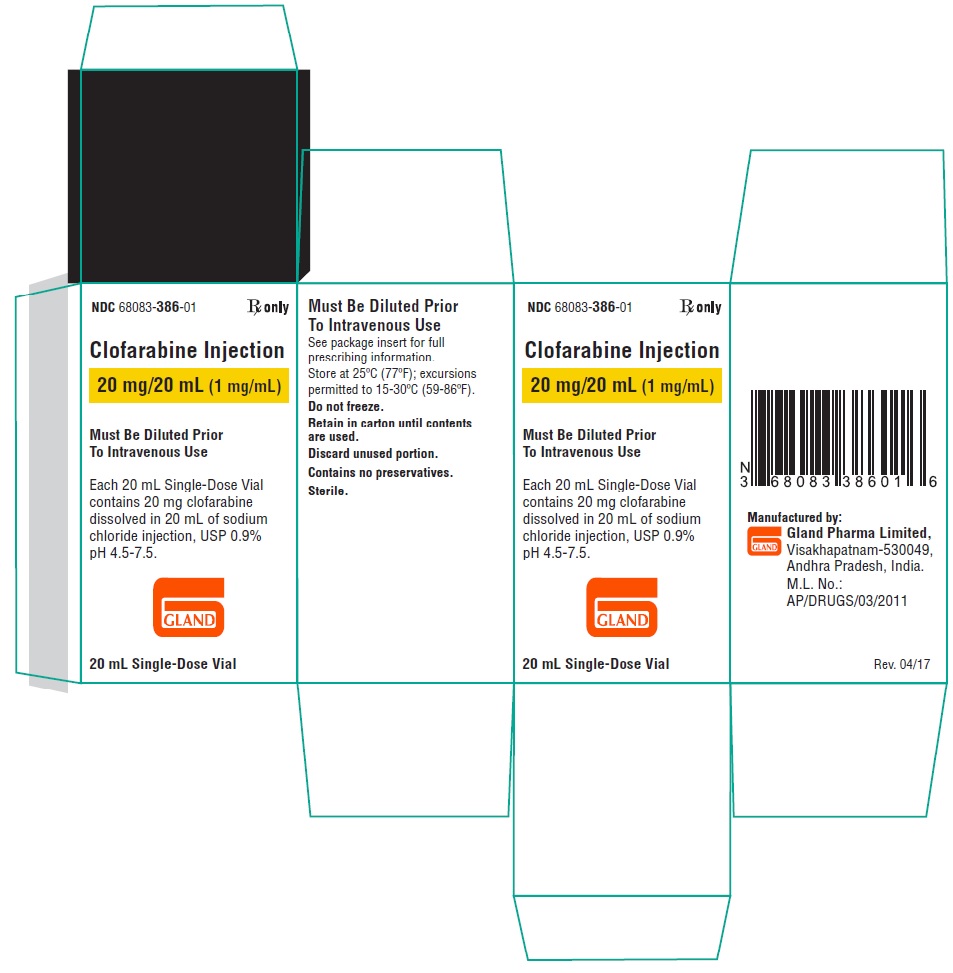
Clofarabine 1 mg/mL Injection — NDC 68083-386-01 (Billing 68083-0386-01)
This is a package of Clofarabine 1 mg/mL Injection from Gland Pharma Limited, marketed since Nov 2018 and currently FDA-listed. It is this product's only package size.
NDC database record
One package, one record: these facts belong to NDC 68083-386-01 alone.
- Record
- FDA NDC Directory package listing · Human prescription drug
- Code segments
- 68083 labeler · 386 product · 01 package
- Package marketed since
- Nov 14, 2018
- Sample package
- No — commercial package
- Listing certified through
- Dec 31, 2026
- Barcode (UPC)
- 0368083386016
- FDA record last changed
- Jul 24, 2026
Identity & classification
Regulatory identifiers FDA, NLM and CMS codes for this package
- RxCUI (RxNorm): 486419
Where does this data come from?
- FDA openFDA NDC Directory · synced Oct 8, 2026
- FDA label on DailyMed · label index refreshed Oct 6, 2026
- RxNorm (NLM RxNav) · catalog refreshed Oct 1, 2026
- Medi-Span GPI (licensed)
- First Databank (licensed) · refreshed Oct 8, 2026
RxNorm drug class
This medicine belongs to the Nucleoside Metabolic Inhibitor class.
Where does this data come from?
- RxClass (NLM) · catalog refreshed Oct 1, 2026
Clinical
Clofarabine is used to treat acute lymphoblastic leukemia (ALL; a type of cancer of the white blood cells) in children and young adults 1 to 21 years old who have already received at least two other treatments. Clofarabine is in a class of medications called purine nucleoside antimetabolites. It works by killing existing cancer cells and limiting the development of new cancer cells.
Read the full MedlinePlus article ↗- Clofarabine Injection is a chemotherapy medicine specifically approved for children and young adults (ages 1 to 21) who have a type of blood cancer called acute lymphoblastic leuke...
- What exactly is clofarabine being used for, and why does my child need it?
- Clofarabine is given at the hospital or infusion center through an IV drip — it goes directly into the vein over about 2 hours, once a day, for 5 days in a row. That 5-day course i...
- How will my child receive this medicine, and how often?
Patient education
Supplement & herbal interactions
Where does this data come from?
- MedlinePlus (NLM) · refreshed Oct 1, 2026
- FDA label on DailyMed · label index refreshed Oct 6, 2026
Ask a licensed pharmacist directly — free, answered by our team.
Pricing
A drug doesn't have one price. Each row is a different public payment system, and none is what you'd pay at the counter — that depends on your insurance. The ⓘ on each row explains what it measures.
| Price system | Per each | Per package |
|---|---|---|
| Retail pharmacies payNADAC · weekly | Not in the retail survey — common for institutional, discontinued, or low-volume packs. | |
| Medicaid paysCMS SDUD · 12 mo | No recent Medicaid claims on file for this NDC — rare and low-volume NDCs are suppressed in the public data. | |
| Medicare drug plans payPart D · quarterly | No Part D plan price is available for this NDC in our data. | |
Where does this data come from?
- CMS NADAC weekly file
- CMS ASP pricing files · refreshed Sep 20, 2026
- CMS Medicaid State Drug Utilization Data · refreshed Oct 8, 2026
- CMS Part D plan pricing files · refreshed Sep 24, 2026
- VA National Acquisition Center price file
Packaging — all sizes for this product
| Package NDC | Description | Marketing start | Marketing end | Status |
|---|---|---|---|---|
| 68083-0386-01 You're viewing this Main listing | 1 VIAL, SINGLE-DOSE in 1 CARTON / 20 mL in 1 VIAL, SINGLE-DOSE | 2018-11-14 | — | Active |
Therapeutic equivalents
| Product | Labeler | Pack | NADAC/unit | TE | Status | Price vs. this |
|---|---|---|---|---|---|---|
| Clofarabine 1 mg/mL 43598-0309-20 | Dr.Reddy's | 1 vial | — | AP | FDA listed | — |
| Clofarabine 1 mg/mL 49315-0003-06 | Zydus | 1 vial | — | — | FDA listed | — |
| Clofarabine 1 mg/mL 55150-0326-01 | Eugia | 1 vial | — | — | FDA listed | — |
| Clofarabine 1 mg/mL 63323-0572-70 | Fresenius | 1 vial | — | — | FDA listed | — |
| Clofarabine 1 mg/mLthis 68083-0386-01 | Gland | 1 vial | — | AP | FDA listed | — |
| Clofarabine 1 mg/mL 70121-1236-01 | Amneal | 1 vial | — | AP | FDA listed | — |
| Clofarabine 1 mg/mL 71288-0128-20 | Meitheal | 1 vial | — | AP | FDA listed | — |
| Clofarabine 1 mg/mL 72266-0108-01 | Fosun | 1 vial | — | AP | FDA listed | — |
| Clofarabine 1 mg/mL 72205-0394-01 | Novadoz | 1 vial | — | AP | FDA listed | — |
Where does this data come from?
- FDA openFDA NDC Directory · synced Oct 8, 2026
- FDA Orange Book · refreshed Oct 3, 2026
- CMS NADAC weekly file
Availability & generic status
This product is an FDA-approved generic. Other versions of the same drug are listed under Therapeutic equivalents, least expensive first.
Where does this data come from?
- FDA Orange Book · refreshed Oct 3, 2026
Inactive Ingredients / Excipients
Inactive ingredients, also called excipients, are components of the drug product other than the active ingredient. They may include fillers, dyes, coatings, preservatives, flavors, or other formulation ingredients.
🧪 Avoiding an ingredient? See Clofarabine Injection inactive ingredients by manufacturer: every current product's list side by side, so you can ask your pharmacy for the version that does not list it.
💡 Tap an ingredient (hover on desktop) to see what it is and why it’s used.
-
9 mg / 1 mL
UNII 451W47IQ8X
Sodium chloride is common table salt. It's used in medicines as a buffer to maintain proper pH, as a filler to add bulk, or to adjust the osmotic balance in liquid formulations.
-
UNII 059QF0KO0R
Water is a liquid solvent that dissolves and mixes ingredients together in liquid medicines, syrups, and injections. It helps distribute the active drug evenly throughout the product.
2 inactive ingredients listed in the exact product block matched to this NDC.
Where does this data come from?
ingredient classCode="IACT" elements from the exact product block matched by this NDC. Label-section narrative from DailyMed / the openFDA label index is shown separately when available.- FDA label on DailyMed · label index refreshed Oct 6, 2026
- FDA openFDA NDC Directory · synced Oct 8, 2026
Inactive ingredient FAQ
Are inactive ingredients the same for every manufacturer?
Why might an inactive ingredient be missing?
Can inactive ingredients matter?
Manufacturer & labeler
More NDCs from Gland Pharma Limited labeler code 68083
- Glycopyrrolate .2 mg/mL Injection NDC 68083-379-10
- Allopurinol 500 mg/25mL Injection, Powder, Lyophilized, For Solution NDC 68083-380-01
- Irinotecan hydrochloide 20 mg/mL Injection NDC 68083-381-01
- Irinotecan hydrochloride 20 mg/mL Injection NDC 68083-382-01
- Neostigmine methylsulfate .5 mg/mL Injection NDC 68083-383-10
- Neostigmine methylsulfate 1 mg/mL Injection NDC 68083-384-10
- Dexrazoxane 250 mg/25mL Injection, Powder, Lyophilized, For Solution NDC 68083-388-01
- Foscarnet Sodium 24 mg/mL Injection, Solution NDC 68083-389-01
- LEVOFLOXACIN 25 mg/mL Injection, Solution NDC 68083-394-01
- LEVOFLOXACIN 25 mg/mL Injection, Solution NDC 68083-395-01
- MAGNESIUM SULFATE 2 g/50mL Injection, Solution NDC 68083-396-01
- MAGNESIUM SULFATE 4 g/100mL Injection, Solution NDC 68083-397-01
Where does this data come from?
- FDA openFDA NDC Directory · synced Oct 8, 2026
- Drugs@FDA
Full prescribing information FDA SPL
🎯 Indications and Usage ▾
1 INDICATIONS AND USAGE Clofarabine Injection is indicated for the treatment of pediatric patients 1 to 21 years old with relapsed or refractory acute lymphoblastic leukemia after at least two prior regimens. Clofarabine Injection is a nucleoside metabolic inhibitor indicated for the treatment of pediatric patients 1 to 21 years old with relapsed or refractory acute lymphoblastic leukemia after at least two prior regimens. ( 1 )
⏱️ Dosage and Administration ▾
2 DOSAGE AND ADMINISTRATION • Administer the recommended pediatric dose of 52 mg/m 2 as an intravenous infusion over 2 hours daily for 5 consecutive days of a 28-day cycle. Repeat cycles every 2 to 6 weeks. ( 2.1 ) • Provide supportive care, such as intravenous infusion fluids, antihyperuricemic treatment, and alkalinization of urine throughout the 5 days of Clofarabine Injection administration to reduce the risk of tumor lysis and other adverse reactions.
( 2.1 ) • Discontinue Clofarabine Injection if hypotension develops during the 5 days of administration. ( 2.1 ) • Reduce the dose in patients with renal impairment. ( 2.2 ) • Use dose modification for toxicity.
( 2.4 )
2.1Recommended Dosage Administer the recommended pediatric dose of 52 mg/m 2 as an intravenous infusion over 2 hours daily for 5 consecutive days. • Repeat treatment cycles following recovery or return to baseline organ function, approximately every 2 to 6 weeks. Base dosage on the patient’s body surface area (BSA), calculated using the actual height and weight before the start of each cycle. To prevent drug incompatibilities, do not administer other medications through the same intravenous line.
Administer subsequent cycles no sooner than 14 days from the starting day of the previous cycle and provided the patient's ANC is ≥0.75 × 10 9 /L. • Provide supportive care, such as intravenous fluids, antihyperuricemic treatment, and alkalinize urine throughout the 5 days of Clofarabine Injection administration to reduce the effects of tumor lysis and other adverse reactions. • Discontinue Clofarabine Injection if hypotension develops during the 5 days of administration. • Monitor renal and hepatic function during the 5 days of Clofarabine Injection administration [see Warnings and Precautions ( 5.7 , 5.8 )] . • Monitor patients taking medications known to affect blood pressure.
Monitor cardiac function during administration of Clofarabine Injection.
2.2Recommended Dosage Reduction for Renal Impairment Reduce the dose by 50% in patients with creatinine clearance (CrCL) between 30 and 60 mL/min. There is insufficient information to make a dosage recommendation in patients with CrCL less than 30 mL/min [see Use in Specific Populations ( 8.6 )].
2.3Potential Concomitant Medications and Medications to Avoid • Consider prophylactic antiemetic medications as Clofarabine Injection is moderately emetogenic. • Consider the use of prophylactic steroids to mitigate Systemic Inflammatory Response Syndrome (SIRS) or capillary leak syndrome (e.g., hypotension, tachycardia, tachypnea, and pulmonary edema). • Minimize exposure to drugs with known renal toxicity during the 5 days of Clofarabine Injection administration since the risk of renal toxicity may be increased. • Avoid concomitant use of medications known to induce hepatic toxicity.
2.4Dose Modifications and Reinitiation of Therapy after Adverse Reactions Hematologic Toxicity • If a patient experiences a Grade 4 neutropenia (ANC <0.5 × 10 9 /L) lasting ≥4 weeks, reduce dose by 25% for the next cycle. Non-hematologic Toxicity • Withhold Clofarabine Injection if a patient develops a clinically significant infection, until the infection is controlled, then restart at the full dose. • Withhold Clofarabine Injection for a Grade 3 non-infectious non-hematologic toxicity (excluding transient elevations in serum transaminases and/or serum bilirubin and/or nausea/vomiting controlled by antiemetic therapy).
Re-institute Clofarabine Injection administration at a 25% dose reduction when resolution or return to baseline. • Discontinue Clofarabine Injection administration for a Grade 4 non-infectious non-hematologic toxicity. • Discontinue Clofarabine Injection administration if a patient shows early signs or symptoms of SIRS or capillary leak syndrome (e.g., hypotension, tachycardia, tachypnea, and pulmonary edema) occur and provide appropriate supportive measures. • Discontinue Clofarabine Injection administration if Grade 3 or high… [Excerpted — this section continues on DailyMed.]
💊 Dosage Forms and Strengths ▾
3 DOSAGE FORMS AND STRENGTHS Injection: 20 mg/20 mL (1 mg/mL) clear solution in single-dose vial Injection: 20 mg/20 mL (1 mg/mL) single-dose vial. ( 3 )
⛔ Contraindications ▾
4 CONTRAINDICATIONS None. None. ( 4 )
⚠️ Warnings and Cautions ▾
5 WARNINGS AND PRECAUTIONS Myelosuppression: May be severe and prolonged. Monitor complete blood counts and platelet counts during Clofarabine Injection therapy. ( 5.1 ) Hemorrhage: Serious and fatal cerebral, gastrointestinal and pulmonary hemorrhage.
Monitor platelets and coagulation parameters and treat accordingly. ( 5.2 ) Infections: Severe and fatal sepsis as a result of bone marrow suppression. Monitor for signs and symptoms of infection; discontinue Clofarabine Injection and treat promptly.
( 5.3 ) Tumor Lysis syndrome: Anticipate, monitor for signs and symptoms and treat promptly. ( 5.4 ) Systemic Inflammatory Response Syndrome (SIRS) or Capillary Leak Syndrome: Monitor for and discontinue Clofarabine Injection immediately if suspected. ( 5.5 ) Venous Occlusive Disease of the Liver: Monitor for and discontinue Clofarabine Injection if suspected.
( 5.6 ) Hepatotoxicity: Severe and fatal hepatotoxicity. Monitor liver function, for signs and symptoms of hepatitis and hepatic failure. Discontinue Clofarabine Injection immediately for Grade 3 or greater liver enzyme and/or bilirubin elevations.
( 5.7 ) Renal Toxicity: Increased creatinine and acute renal failure; monitor renal function and interrupt or discontinue Clofarabine Injection. ( 5.8 ) Enterocolitis: Serious and fatal enterocolitis, occurring more frequently within 30 days of treatment and with combination chemotherapy. Monitor patients for signs and symptoms of enterocolitis and treat promptly.
( 5.9 ) Skin Reactions: Stevens-Johnson syndrome (SJS) and toxic epidermal necrolysis (TEN), including fatal cases. Discontinue for exfoliative or bullous rash, or if SJS or TEN is suspected. ( 5.10 ) Embryo-Fetal Toxicity: Can cause fetal harm.
Advise females of reproductive potential and males with female partners of reproductive potential of the potential risk to a fetus and to use effective contraception. ( 5.11 )
5.1Myelosuppression Clofarabine Injection causes myelosuppression which may be severe and prolonged. Febrile neutropenia occurred in 55% and non-febrile neutropenia in an additional 10% of pediatric patients in clinical trials. At initiation of treatment, most patients in the clinical studies had hematological impairment as a manifestation of leukemia.
Myelosuppression is usually reversible with interruption of Clofarabine Injection treatment and appears to be dose-dependent. Monitor complete blood counts [see Dosage and Administration ( 2.4 )].
5.2Hemorrhage Serious and fatal hemorrhage, including cerebral, gastrointestinal and pulmonary hemorrhage, has occurred. The majority of the cases were associated with thrombocytopenia. Monitor platelets and coagulation parameters and treat accordingly [ see Adverse Reactions ( 6.2 ) ].
5.3Infections Clofarabine Injection increases the risk of infection, including severe and fatal sepsis, and opportunistic infections. At baseline, 48% of the pediatric patients had one or more concurrent infections. A total of 83% of patients experienced at least one infection after Clofarabine Injection treatment, including fungal, viral and bacterial infections.
Monitor patients for signs and symptoms of infection, discontinue Clofarabine Injection, and treat promptly.
5.4Tumor Lysis Syndrome Administration of Clofarabine Injection may result in tumor lysis syndrome associated with the break-down metabolic products from peripheral leukemia cell death. Monitor patients undergoing treatment for signs and symptoms of tumor lysis syndrome and initiate preventive measures including adequate intravenous fluids and measures to control uric acid.
5.5Systemic Inflammatory Response Syndrome (SIRS) and Capillary Leak Syndrome Clofarabine Injection may cause a cytokine release syndrome (e.g., tachypnea, tachycardia, hypotension, pulmonary edema) that may progress to the systemic inflammatory response syndrome (SIRS) with capillary leak syndrome and organ impairment which may be fatal. Monitor patients frequently for these conditions. In cli… [Excerpted — this section continues on DailyMed.]
🤒 Adverse Reactions ▾
6 ADVERSE REACTIONS The following clinically significant adverse reactions are discussed in greater detail in other sections of the label: Myelosuppression [see Warnings and Precautions ( 5.1 )] Hemorrhage [see Warnings and Precautions ( 5.2 )] Serious Infections [see Warnings and Precautions ( 5.3 )] Hyperuricemia (tumor lysis syndrome) [see Warnings and Precautions ( 5.4 )] Systemic Inflammatory Response Syndrome (SIRS) and Capillary Leak Syndrome [see Warnings and Precautions ( 5.5 )] Venous Occlusive Disease of the Liver [see Warnings and Precautions ( 5.6 )] Hepatotoxicity [see Warnings and Precautions ( 5.7 )] Renal Toxicity [see Warnings and Precautions ( 5.8 )] Enterocolitis [see Warnings and Precautions ( 5.9 )] Skin Reactions [see Warnings and Precautions ( 5.10 )] Most common adverse reactions (≥25%): vomiting, nausea, diarrhea, febrile neutropenia, pruritus, headache, bacteremia, pyrexia, rash, tachycardia, abdominal pain, chills, fatigue, anorexia, pain in extremity, hypotension, epistaxis, and petechiae.
( 6 ) To report SUSPECTED ADVERSE REACTIONS, contact Gland Pharma Limited at 864-879-9994 or FDA at 1-800-FDA-1088 or www.fda.gov/medwatch.
6.1Clinical Trials Experience Because clinical trials are conducted under widely varying conditions, adverse reaction rates observed in the clinical trials of a drug cannot be directly compared to rates in the clinical trials of another drug and may not reflect the rates observed in practice. The data described below reflect exposure to Clofarabine Injection in 115 pediatric patients with relapsed or refractory Acute Lymphoblastic Leukemia (ALL) (70 patients) or Acute Myelogenous Leukemia (AML) (45 patients). In total, 115 pediatric patients treated in clinical trials received the recommended dose of Clofarabine Injection 52 mg/m 2 daily x 5.
The median number of cycles was 2. The median cumulative amount of Clofarabine Injection received by pediatric patients during all cycles was 540 mg. Most common adverse reactions (≥25%): vomiting, nausea, diarrhea, febrile neutropenia, pruritus, headache, bacteremia, pyrexia, rash, tachycardia, abdominal pain, chills, fatigue, anorexia, pain in extremity, hypotension, epistaxis, and petechiae.
Table 1 lists adverse reactions by System Organ Class, including severe or life-threatening (NCI CTCAE Grade 3 or Grade 4), reported in ≥5% of the 115 patients in the 52 mg/m 2 /day dose group (pooled analysis of pediatric patients with ALL and AML). More detailed information and follow-up of certain events is given below. Table 1: Most Commonly Reported (≥5% Overall) Adverse Reactions by System Organ Class (N=115 pooled analysis) System Organ Class¹ Adverse Reaction (MedDRA Preferred Term)¹ ALL/AML (All Grades, N=115) Worst Grade (NCI Common Terminology Criteria)¹ 3 4 5 N % N % N % N % Blood and Lymphatic System Disorders Febrile neutropenia 63 55 59 51 3 3 . .
Neutropenia 11 10 3 3 8 7 . . Cardiac Disorders Pericardial effusion 9 8 . . 1 1 . .
Tachycardia 40 35 6 5 . . . . Gastrointestinal Disorders Abdominal pain 40 35 8 7 . . . . Abdominal pain upper 9 8 1 1 . . . .
Diarrhea 64 56 14 12 . . . . Gingival or mouth bleeding 20 17 8 7 1 1 . . Nausea 84 73 16 14 1 1 . .
Oral mucosal petechiae 6 5 4 4 . . . . Proctalgia 9 8 2 2 . . . . Stomatitis 8 7 1 1 . . . .
Vomiting 90 78 9 8 1 1 . . General Disorders and Administration Site Conditions Asthenia 12 10 1 1 1 1 . . Chills 39 34 3 3 . . . .
Fatigue 39 34 3 3 2 2 . . Irritability 11 10 1 1 . . . . Mucosal inflammation 18 16 2 2 . . . .
Edema 14 12 2 2 . . . . Pain 17 15 7 6 1 1 . . Pyrexia 45 39 16 14 . . . .
Hepatobiliary Disorder Jaundice 9 8 2 2 . . . . Infections and Infestations Bacteremia 10 9 10 9 . . . . Candidiasis 8 7 1 1 . . . .
Catheter related infection 14 12 13 11 . . . . Cellulitis 9 8 7 6 . . . . Clostridium colitis 8 7 6 5 . . . .
Herpes simplex 11 10 6 5 . . . . Herpes zoster 8 7 6 5 . . . . Oral candidiasis 13 11 2 2 . . . .
Pneumonia 11 10 6 5 1 1 1 1 Sepsis, including septic sh… [Excerpted — this section continues on DailyMed.]
👥 Use in Specific Populations ▾
8 USE IN SPECIFIC POPULATIONS Lactation: Advise not to breastfeed. ( 8.2 )
8.1Pregnancy Risk Summary In animal reproduction studies, intravenous administration of clofarabine to pregnant rats and rabbits during organogenesis at doses approximately 0.2 to 1-times the maximum recommended human dose of 52 mg/m 2 based on body surface area (BSA) resulted in embryo-fetal mortality, alterations to growth, and structural abnormalities (see Data). Advise pregnant women of the potential risk to a fetus. There are no available data on Clofarabine Injection use in pregnant women to evaluate for a drug-associated risk of major birth defects, miscarriage, or adverse maternal or fetal outcomes.
Clofarabine should be used during pregnancy only if the potential benefits to the mother outweigh the potential risks, including those to the fetus. The estimated background risk of major birth defects and miscarriage for the indicated population is unknown. All pregnancies have a background risk of birth defect, loss, or other adverse outcomes.
In the U.S. general population, the estimated background risk of major birth defects and miscarriage in clinically recognized pregnancies is 2% to 4% and 15% to 20%, respectively. Data Animal data Intravenous administration of clofarabine to pregnant rats during organogenesis (gestation days [GD] 7 to 17) at doses of 1, 3 or 9 mg/kg/day (equivalent to 6, 18, 54 mg/m 2 /day) resulted in maternal toxicities at the 9 mg/kg dose, as indicated by reduced body weights and food consumption. Developmental toxicity (i.e., reduced fetal body weights and increased postimplantation loss) and increased incidences of external, soft tissue, and skeletal malformations and variations (including retarded ossification) were observed at 9 mg/kg/day (54 mg/m 2 ; approximately equivalent to the recommended human dose based on BSA).
Altered ossification patterns (extra metacarpal or metatarsal ossification) were observed in single fetuses at lower doses of clofarabine (1 and 3 mg/kg/day; 0.1- and 0.3-times the recommended human dose based on BSA). When clofarabine was administered intravenously to pregnant rabbits during organogenesis (GD 6 to 18) at doses of 0.1, 0.3, or 1 mg/kg/day (equivalent to 1.2, 3.6, 12 mg/m 2 /day), developmental toxicity (i.e., reduced fetal body weights and increased postimplantation loss) and increased incidences of external, soft tissue, and skeletal malformations and variations (including retarded ossification) were observed at the 1 mg/kg/day dose (12 mg/m 2 ; 0.2-times the recommended human dose based on BSA).
Alterations in ossification patterns (increase in the average numbers of ossified thoracic vertebrae and rib pairs, and reduction in the average number of forepaw metacarpals) and abdominal wall defect were observed at 0.3 mg/kg/day (3.6 mg/m 2 ; 0.1-times the recommended human dose based on BSA).
8.2Lactation Risk Summary There are no data on the presence of clofarabine in human milk, the effects on the breastfed child, or the effects on milk production. Because of the potential for serious adverse reactions in the breastfed child including genotoxicity, advise patients not to breastfeed during treatment with Clofarabine Injection, and for 2 weeks after the last dose.
8.3Females and Males of Reproductive Potential Clofarabine Injection can cause embryo-fetal harm when administered to pregnant women [see Use in Specific Populations ( 8.1 )]. Pregnancy Testing Pregnancy testing is recommended for females of reproductive potential prior to initiating Clofarabine Injection. Contraception Females Advise female patients to use effective contraception during treatment with Clofarabine Injection and for 6 months after the last dose.
Males Based on genotoxicity findings, advise males with female partners of reproductive potential to use effective contraception during treatment with Clofarabine Injection and for 3 months after the last dose [see Nonclinical Toxicology ( 13.1 )] . Infertility Females… [Excerpted — this section continues on DailyMed.]
🤰 Pregnancy ▾
8.1Pregnancy Risk Summary In animal reproduction studies, intravenous administration of clofarabine to pregnant rats and rabbits during organogenesis at doses approximately 0.2 to 1-times the maximum recommended human dose of 52 mg/m 2 based on body surface area (BSA) resulted in embryo-fetal mortality, alterations to growth, and structural abnormalities (see Data). Advise pregnant women of the potential risk to a fetus. There are no available data on Clofarabine Injection use in pregnant women to evaluate for a drug-associated risk of major birth defects, miscarriage, or adverse maternal or fetal outcomes.
Clofarabine should be used during pregnancy only if the potential benefits to the mother outweigh the potential risks, including those to the fetus. The estimated background risk of major birth defects and miscarriage for the indicated population is unknown. All pregnancies have a background risk of birth defect, loss, or other adverse outcomes.
In the U.S. general population, the estimated background risk of major birth defects and miscarriage in clinically recognized pregnancies is 2% to 4% and 15% to 20%, respectively. Data Animal data Intravenous administration of clofarabine to pregnant rats during organogenesis (gestation days [GD] 7 to 17) at doses of 1, 3 or 9 mg/kg/day (equivalent to 6, 18, 54 mg/m 2 /day) resulted in maternal toxicities at the 9 mg/kg dose, as indicated by reduced body weights and food consumption. Developmental toxicity (i.e., reduced fetal body weights and increased postimplantation loss) and increased incidences of external, soft tissue, and skeletal malformations and variations (including retarded ossification) were observed at 9 mg/kg/day (54 mg/m 2 ; approximately equivalent to the recommended human dose based on BSA).
Altered ossification patterns (extra metacarpal or metatarsal ossification) were observed in single fetuses at lower doses of clofarabine (1 and 3 mg/kg/day; 0.1- and 0.3-times the recommended human dose based on BSA). When clofarabine was administered intravenously to pregnant rabbits during organogenesis (GD 6 to 18) at doses of 0.1, 0.3, or 1 mg/kg/day (equivalent to 1.2, 3.6, 12 mg/m 2 /day), developmental toxicity (i.e., reduced fetal body weights and increased postimplantation loss) and increased incidences of external, soft tissue, and skeletal malformations and variations (including retarded ossification) were observed at the 1 mg/kg/day dose (12 mg/m 2 ; 0.2-times the recommended human dose based on BSA).
Alterations in ossification patterns (increase in the average numbers of ossified thoracic vertebrae and rib pairs, and reduction in the average number of forepaw metacarpals) and abdominal wall defect were observed at 0.3 mg/kg/day (3.6 mg/m 2 ; 0.1-times the recommended human dose based on BSA).
🧒 Pediatric Use ▾
8.4Pediatric Use Safety and effectiveness have been established in pediatric patients 1 to 21 years old with relapsed or refractory acute lymphoblastic leukemia.
🧓 Geriatric Use ▾
8.5Geriatric Use Safety and effectiveness of Clofarabine Injection has not been established in geriatric patients aged 65 and older.
🆘 Overdosage ▾
10 OVERDOSAGE There were no known overdoses of Clofarabine Injection. The highest daily dose administered to a human to date (on a mg/m 2 basis) has been 70 mg/m 2 /day x 5 days (2 pediatric ALL patients). The toxicities included in these 2 patients included Grade 4 hyperbilirubinemia, Grade 2 and 3 vomiting, and Grade 3 maculopapular rash.
In a Phase 1 study of adults with refractory and/or relapsed hematologic malignancies, the recommended pediatric dose of 52 mg/m 2 /day was not tolerated.
🧬 Clinical Pharmacology ▾
12 CLINICAL PHARMACOLOGY
12.1Mechanism of Action Clofarabine is sequentially metabolized intracellularly to the 5’-monophosphate metabolite by deoxycytidine kinase and mono- and di-phospho-kinases to the active 5’-triphosphate metabolite. Clofarabine has affinity for the activating phosphorylating enzyme, deoxycytidine kinase, equal to or greater than that of the natural substrate, deoxycytidine. Clofarabine inhibits DNA synthesis by decreasing cellular deoxynucleotide triphosphate pools through an inhibitory action on ribonucleotide reductase, and by terminating DNA chain elongation and inhibiting repair through incorporation into the DNA chain by competitive inhibition of DNA polymerases.
The affinity of clofarabine triphosphate for these enzymes is similar to or greater than that of deoxyadenosine triphosphate. In preclinical models, clofarabine has demonstrated the ability to inhibit DNA repair by incorporation into the DNA chain during the repair process. Clofarabine 5’- triphosphate also disrupts the integrity of mitochondrial membrane, leading to the release of the pro-apoptotic mitochondrial proteins, cytochrome C and apoptosis-inducing factor, leading to programmed cell death.
Clofarabine is cytotoxic to rapidly proliferating and quiescent cancer cell types in vitro .
12.3Pharmacokinetics The population pharmacokinetics of Clofarabine Injection were studied in 40 pediatric patients aged 2 to 19 years (21 males/19 females) with relapsed or refractory acute lymphoblastic leukemia (ALL) or acute myelogenous leukemia (AML). At the given 52 mg/m 2 dose, similar concentrations were obtained over a wide range of body surface areas (BSAs). Clofarabine was 47% bound to plasma proteins, predominantly to albumin.
Based on non-compartmental analysis, systemic clearance and volume of distribution at steady-state were
28.8L/h/m 2 and 172 L/m 2 , respectively. The terminal half-life was 5.2 hours. No apparent difference in pharmacokinetics was observed between patients with ALL and AML or between males and females.
No relationship between clofarabine or clofarabine triphosphate exposure and toxicity or response was found in this population. Based on 24-hour urine collections in the pediatric studies, 49% to 60% of the dose is excreted in the urine unchanged. In vitro studies using isolated human hepatocytes indicate very limited metabolism (0.2%).
The pathways of non-hepatic elimination remain unknown. Clofarabine has not been studied in patients with hepatic impairment. Drug-Drug Interactions In vitro studies suggested that clofarabine undergoes limited metabolism and does not inhibit or induce major CYP enzymes.
CYP inhibitors and inducers are unlikely to affect the metabolism of clofarabine. Clofarabine is unlikely to affect the metabolism of CYP substrates. However, no in vivo drug interaction studies have been conducted.
An in vitro transporter study suggested that clofarabine is a substrate of human transporters OAT1, OAT3, and OCT1. A preclinical study using perfused rat kidney demonstrated that the renal excretion of clofarabine was decreased by cimetidine, an inhibitor of the hOCT2. Although the clinical implications of this finding have not been determined, signs of Clofarabine Injection toxicity should be monitored when administered with other hOAT1, hOAT3, hOCT1 and hOCT2 substrates or inhibitors.
🧬 Mechanism of Action ▾
12.1Mechanism of Action Clofarabine is sequentially metabolized intracellularly to the 5’-monophosphate metabolite by deoxycytidine kinase and mono- and di-phospho-kinases to the active 5’-triphosphate metabolite. Clofarabine has affinity for the activating phosphorylating enzyme, deoxycytidine kinase, equal to or greater than that of the natural substrate, deoxycytidine. Clofarabine inhibits DNA synthesis by decreasing cellular deoxynucleotide triphosphate pools through an inhibitory action on ribonucleotide reductase, and by terminating DNA chain elongation and inhibiting repair through incorporation into the DNA chain by competitive inhibition of DNA polymerases.
The affinity of clofarabine triphosphate for these enzymes is similar to or greater than that of deoxyadenosine triphosphate. In preclinical models, clofarabine has demonstrated the ability to inhibit DNA repair by incorporation into the DNA chain during the repair process. Clofarabine 5’- triphosphate also disrupts the integrity of mitochondrial membrane, leading to the release of the pro-apoptotic mitochondrial proteins, cytochrome C and apoptosis-inducing factor, leading to programmed cell death.
Clofarabine is cytotoxic to rapidly proliferating and quiescent cancer cell types in vitro .
📦 How Supplied / Storage and Handling ▾
16 HOW SUPPLIED/STORAGE AND HANDLING Clofarabine Injection is supplied in single-dose flint vials containing 20 mg of clofarabine in 20 mL of solution. Each box contains one Clofarabine Injection vial (NDC 68083-386-01). The 20 mL flint vials contain 20 mL (20 mg) of solution.
The pH range of the solution is 4.5 to 7.5. The solution is sterile, clear and practically colorless, is preservative-free, and is free from foreign matter. Vials containing undiluted Clofarabine Injection should be stored at 25°C (77°F); excursions permitted to 15°C to 30°C (59°F to 86°F).
Do not freeze. Retain in carton until contents are used. Clofarabine Injection is a hazardous drug.
Follow applicable special handling and disposal procedures. 1
📋 Description ▾
11 DESCRIPTION Clofarabine Injection contains clofarabine, a purine nucleoside metabolic inhibitor. The chemical name of clofarabine is 2-chloro-9-(2-deoxy-2-fluoro-β-D-arabinofuranosyl)-9H-purin6-amine. Its molecular formula is C 10 H 11 ClFN 5 O 3 with a molecular weight of 303.68 Daltons.
The molecular structure of clofarabine is: Clofarabine Injection (1 mg/mL) is supplied in a 20 mL, single-dose vial. The 20 mL vial contains 20 mg clofarabine formulated in 20 mL unbuffered normal saline (comprised of Water for Injection, USP, and Sodium Chloride, USP). The pH range of the solution is 4.5 to 7.5.
The solution is sterile, clear and practically colorless, and is preservative-free. clofarabine-spl-structure
💬 Information for Patients ▾
17 PATIENT COUNSELING INFORMATION Hematologic Toxicity Advise patients to return for regular blood counts and to report any symptoms associated with hematologic toxicity (such as weakness, fatigue, pallor, shortness of breath, easy bruising, petechiae, purpura, fever) to their physician [see Warnings and Precautions ( 5.1 )]. Infection Advise patients of the signs or symptoms of infection (e.g., fever) and report to the physician immediately if any occur [see Warnings and Precautions ( 5.3 )]. Hepatic and Renal Toxicity Advise patients to avoid medications including over the counter and herbal medications, which may be hepatotoxic or nephrotoxic, during the 5 days of Clofarabine Injection administration.
Also, advise patients of the possibility of developing liver function abnormalities and to immediately report signs or symptoms of jaundice. Advise patients of the signs or symptoms of renal failure/acute renal failure [see Warnings and Precautions ( 5.7 , 5.8 )]. Systemic Inflammatory Response Syndrome (SIRS)/Capillary Leak Syndrome Advise patients of the signs or symptoms of SIRS, such as fever, tachycardia, tachypnea, dyspnea and symptoms suggestive of hypotension [see Warnings and Precautions ( 5.5 )].
Pregnancy Advise pregnant women and females of reproductive potential of the potential risk to a fetus. Advise females to inform their healthcare provider of a known or suspected pregnancy [see Warnings and Precautions ( 5.11 ), Use in Specific Populations ( 8.3 )] . Advise female patients of reproductive potential to use effective contraception during treatment with Clofarabine Injection and for 6 months after the last dose [see Use in Specific Populations ( 8.3 )] .
Advise males with female partners of reproductive potential to use effective contraception during treatment with Clofarabine Injection and for 3 months after the last dose [see Use in Specific Populations ( 8.3 ), Nonclinical Toxicology ( 13.1 )]. Lactation Advise females not to breastfeed during treatment with Clofarabine Injection and for 2 weeks after the last dose [see Use in Specific Populations ( 8.2 )]. Gastrointestinal Disorders Advise patients that they may experience nausea, vomiting, and/or diarrhea with Clofarabine Injection.
If these symptoms are significant, they should seek medical attention [see Warnings and Precautions ( 5.9 )]. Rash Advise patients that they may experience skin rash with Clofarabine Injection. If this symptom is significant, they should seek medical attention.
Manufactured by: Gland Pharma Limited Visakhapatnam-530049, Andhra Pradesh, India Revised: November 2022
🧬 Pharmacokinetics ▾
12.3Pharmacokinetics The population pharmacokinetics of Clofarabine Injection were studied in 40 pediatric patients aged 2 to 19 years (21 males/19 females) with relapsed or refractory acute lymphoblastic leukemia (ALL) or acute myelogenous leukemia (AML). At the given 52 mg/m 2 dose, similar concentrations were obtained over a wide range of body surface areas (BSAs). Clofarabine was 47% bound to plasma proteins, predominantly to albumin.
Based on non-compartmental analysis, systemic clearance and volume of distribution at steady-state were
28.8L/h/m 2 and 172 L/m 2 , respectively. The terminal half-life was 5.2 hours. No apparent difference in pharmacokinetics was observed between patients with ALL and AML or between males and females.
No relationship between clofarabine or clofarabine triphosphate exposure and toxicity or response was found in this population. Based on 24-hour urine collections in the pediatric studies, 49% to 60% of the dose is excreted in the urine unchanged. In vitro studies using isolated human hepatocytes indicate very limited metabolism (0.2%).
The pathways of non-hepatic elimination remain unknown. Clofarabine has not been studied in patients with hepatic impairment. Drug-Drug Interactions In vitro studies suggested that clofarabine undergoes limited metabolism and does not inhibit or induce major CYP enzymes.
CYP inhibitors and inducers are unlikely to affect the metabolism of clofarabine. Clofarabine is unlikely to affect the metabolism of CYP substrates. However, no in vivo drug interaction studies have been conducted.
An in vitro transporter study suggested that clofarabine is a substrate of human transporters OAT1, OAT3, and OCT1. A preclinical study using perfused rat kidney demonstrated that the renal excretion of clofarabine was decreased by cimetidine, an inhibitor of the hOCT2. Although the clinical implications of this finding have not been determined, signs of Clofarabine Injection toxicity should be monitored when administered with other hOAT1, hOAT3, hOCT1 and hOCT2 substrates or inhibitors.
🔬 Clinical Studies ▾
6.1Clinical Trials Experience Because clinical trials are conducted under widely varying conditions, adverse reaction rates observed in the clinical trials of a drug cannot be directly compared to rates in the clinical trials of another drug and may not reflect the rates observed in practice. The data described below reflect exposure to Clofarabine Injection in 115 pediatric patients with relapsed or refractory Acute Lymphoblastic Leukemia (ALL) (70 patients) or Acute Myelogenous Leukemia (AML) (45 patients). In total, 115 pediatric patients treated in clinical trials received the recommended dose of Clofarabine Injection 52 mg/m 2 daily x 5.
The median number of cycles was 2. The median cumulative amount of Clofarabine Injection received by pediatric patients during all cycles was 540 mg. Most common adverse reactions (≥25%): vomiting, nausea, diarrhea, febrile neutropenia, pruritus, headache, bacteremia, pyrexia, rash, tachycardia, abdominal pain, chills, fatigue, anorexia, pain in extremity, hypotension, epistaxis, and petechiae.
Table 1 lists adverse reactions by System Organ Class, including severe or life-threatening (NCI CTCAE Grade 3 or Grade 4), reported in ≥5% of the 115 patients in the 52 mg/m 2 /day dose group (pooled analysis of pediatric patients with ALL and AML). More detailed information and follow-up of certain events is given below. Table 1: Most Commonly Reported (≥5% Overall) Adverse Reactions by System Organ Class (N=115 pooled analysis) System Organ Class¹ Adverse Reaction (MedDRA Preferred Term)¹ ALL/AML (All Grades, N=115) Worst Grade (NCI Common Terminology Criteria)¹ 3 4 5 N % N % N % N % Blood and Lymphatic System Disorders Febrile neutropenia 63 55 59 51 3 3 . .
Neutropenia 11 10 3 3 8 7 . . Cardiac Disorders Pericardial effusion 9 8 . . 1 1 . .
Tachycardia 40 35 6 5 . . . . Gastrointestinal Disorders Abdominal pain 40 35 8 7 . . . . Abdominal pain upper 9 8 1 1 . . . .
Diarrhea 64 56 14 12 . . . . Gingival or mouth bleeding 20 17 8 7 1 1 . . Nausea 84 73 16 14 1 1 . .
Oral mucosal petechiae 6 5 4 4 . . . . Proctalgia 9 8 2 2 . . . . Stomatitis 8 7 1 1 . . . .
Vomiting 90 78 9 8 1 1 . . General Disorders and Administration Site Conditions Asthenia 12 10 1 1 1 1 . . Chills 39 34 3 3 . . . .
Fatigue 39 34 3 3 2 2 . . Irritability 11 10 1 1 . . . . Mucosal inflammation 18 16 2 2 . . . .
Edema 14 12 2 2 . . . . Pain 17 15 7 6 1 1 . . Pyrexia 45 39 16 14 . . . .
Hepatobiliary Disorder Jaundice 9 8 2 2 . . . . Infections and Infestations Bacteremia 10 9 10 9 . . . . Candidiasis 8 7 1 1 . . . .
Catheter related infection 14 12 13 11 . . . . Cellulitis 9 8 7 6 . . . . Clostridium colitis 8 7 6 5 . . . .
Herpes simplex 11 10 6 5 . . . . Herpes zoster 8 7 6 5 . . . . Oral candidiasis 13 11 2 2 . . . .
Pneumonia 11 10 6 5 1 1 1 1 Sepsis, including septic shock 19 17 6 5 4 4 9 8 Staphylococcal bacteremia 7 6 5 4 1 1 . . Staphylococcal sepsis 6 5 5 4 1 1 . . Upper respiratory tract infection 6 5 1 1 . . . .
Metabolism and Nutrition Disorders Anorexia 34 30 6 5 8 7 . . Musculoskeletal and Connective Tissue Disorders Arthralgia 10 9 3 3 . . . . Back pain 12 10 3 3 . . . .
Bone pain 11 10 3 3 . . . . Myalgia 16 14 . . . . . . Pain in extremity 34 30 6 5 . . . .
Neoplasms Benign, Malignant and Unspecified (incl. cysts and polyps) Tumor lysis syndrome 7 6 7 6 . . . . Nervous System Disorders Headache 49 43 6 5 . . . . Lethargy 12 10 1 1 . . . .
Somnolence 11 10 1 1 . . . . Psychiatric Disorders Agitation 6 5 1 1 . . . . Anxiety 24 21 2 2 . . . .
Renal and Urinary Disorders Hematuria 15 13 2 2 . . . . Respiratory, Thoracic and Mediastinal Disorders Dyspnea 15 13 6 5 2 2 . . Epistaxis 31 27 15 13 . . . .
Pleural effusion 14 12 4 4 2 2 . . Respiratory distress 12 10 5 4 4 4 1 1 Tachypnea 10 9 4 4 1 1 . . Skin and Subcutaneous Tissue Disorders Erythema 13 11 . . . . . .
Palmar-plantar erythrodysesthesia syndrome 18 16 8 7 . . . . Petechiae 30 26 7 6 . . . . Pruritus 49 43 1 1 . . . .
Rash 44 38 8 7 . . . . Rash pruriti… [Excerpted — this section continues on DailyMed.]
🧪 Nonclinical Toxicology ▾
13 NONCLINICAL TOXICOLOGY
13.1Carcinogenesis, Mutagenesis, Impairment of Fertility Clofarabine has not been tested for carcinogenic potential. Clofarabine was clastogenic in the in vitro mammalian cell chromosome aberration assay (CHO cells) and in the in vivo rat micronucleus assay. Clofarabine was not mutagenic in the bacterial mutation assay (Ames test).
Studies in mice, rats, and dogs have demonstrated dose-related adverse effects on male reproductive organs. Seminiferous tubule and testicular degeneration and atrophy were reported in male mice receiving intraperitoneal doses of 3 mg/kg/day (approximately 0.2-times the recommended human dose based on body surface area [BSA]). Rats receiving 25 mg/kg/day (approximately 3-times the recommended human dose based on BSA) in a 6-month intravenous study had testicular findings of bilateral degeneration of the seminiferous epithelium with retained spermatids and atrophy of interstitial cells.
In a 6-month intravenous dog study, cell degeneration of the epididymis and degeneration of the seminiferous epithelium in the testes were observed at 0.375 mg/kg/day (approximately 0.1-times the recommended human dose on a BSA basis). Ovarian atrophy or degeneration and uterine mucosal apoptosis were observed in female mice at 75 mg/kg/day (approximately 4-times the recommended human dose on a mg/m 2 basis), the only dose administered to female mice.
📄 Carcinogenesis, Mutagenesis, Impairment of Fertility ▾
13.1Carcinogenesis, Mutagenesis, Impairment of Fertility Clofarabine has not been tested for carcinogenic potential. Clofarabine was clastogenic in the in vitro mammalian cell chromosome aberration assay (CHO cells) and in the in vivo rat micronucleus assay. Clofarabine was not mutagenic in the bacterial mutation assay (Ames test).
Studies in mice, rats, and dogs have demonstrated dose-related adverse effects on male reproductive organs. Seminiferous tubule and testicular degeneration and atrophy were reported in male mice receiving intraperitoneal doses of 3 mg/kg/day (approximately 0.2-times the recommended human dose based on body surface area [BSA]). Rats receiving 25 mg/kg/day (approximately 3-times the recommended human dose based on BSA) in a 6-month intravenous study had testicular findings of bilateral degeneration of the seminiferous epithelium with retained spermatids and atrophy of interstitial cells.
In a 6-month intravenous dog study, cell degeneration of the epididymis and degeneration of the seminiferous epithelium in the testes were observed at 0.375 mg/kg/day (approximately 0.1-times the recommended human dose on a BSA basis). Ovarian atrophy or degeneration and uterine mucosal apoptosis were observed in female mice at 75 mg/kg/day (approximately 4-times the recommended human dose on a mg/m 2 basis), the only dose administered to female mice.
📚 References ▾
15 REFERENCES 1. OSHA Hazardous Drugs. OSHA. http://www.osha.gov/SLTC/hazardousdrugs/index.html.
📄 Recent Major Changes ▾
Indications and Usage ( 1 ) 7/2022
📄 Package Label / Principal Display Panel ▾
PACKAGE LABEL.PRINCIPAL DISPLAY PANEL NDC 68083- 386 -01 Clofarabine Injection 20 mg/ 20 mL (1 mg/mL) 20 mL Single – Dose Vial Rx Only clofarabine-spl-carton-label
About this NDC listing & data coverage
What data is (and isn’t) available for this NDC — tap to expand
| NDC identity (package / product / labeler codes) | ✓ Available |
| Labeler | ✓ Available |
| Product & package description | ✓ Available |
| Marketing category & status | ✓ Available |
| Active ingredient / dosage form / route | ✓ Available |
| FDA label (SPL via DailyMed) | ✓ Available |
| Package photos | ✓ Available |
| Inactive ingredients (structured) | ✓ Available |
| NADAC pharmacy acquisition price (CMS) | — Not published for this NDC CMS publishes NADAC only for NDCs reported in its retail-pharmacy survey. |
| Orange Book / therapeutic-equivalence data | ✓ Available |
| HCPCS J-code billing crosswalk | — Not published for this NDC Most self-administered / retail products have no J-code — that is normal. |
| Medicaid utilization (CMS SDUD) | — Not published for this NDC CMS reports utilization only for NDCs with Medicaid claims above its privacy threshold. |