
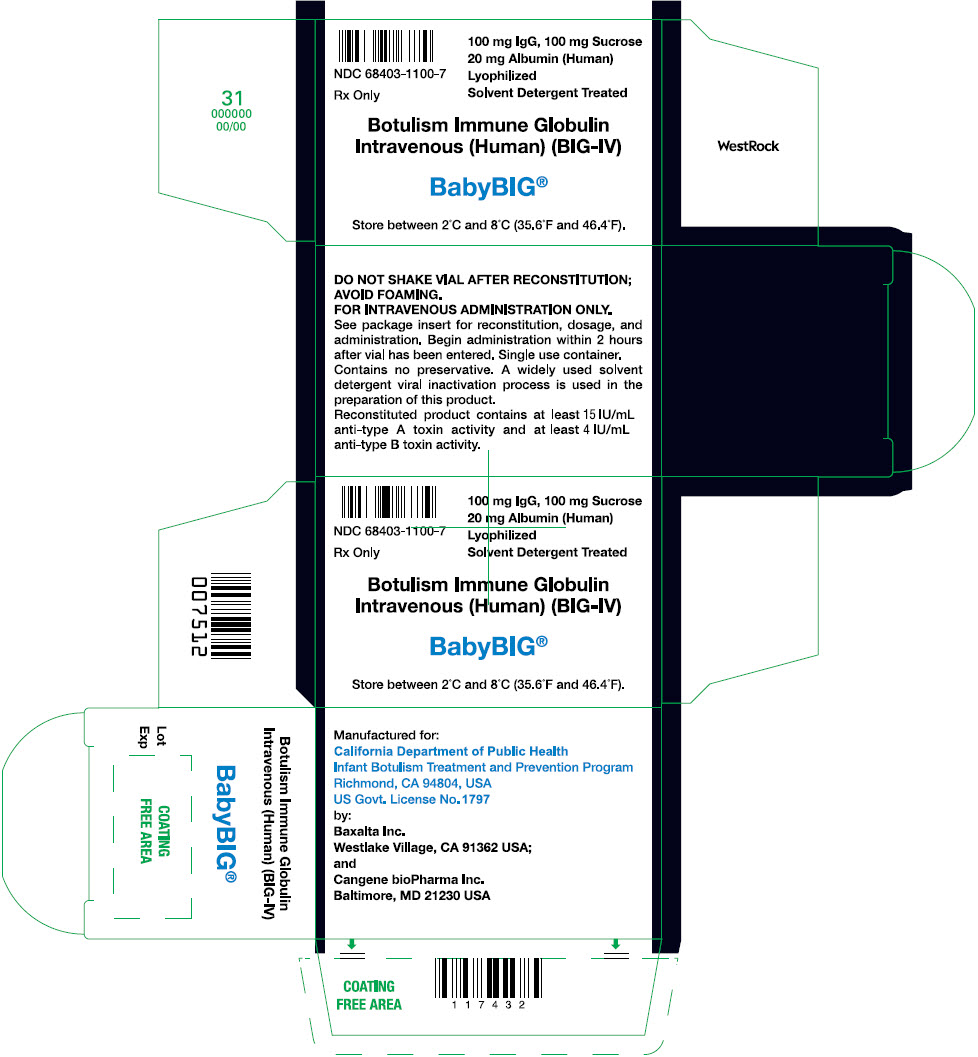
BabyBIG human botulinum neurotoxin a/b immune globulin 50 mg/mL Injection, Powder, Lyophilized, For Solution
🆔 Identity & classification
Where does this data come from?
🏷️ RxNorm drug class
This medicine belongs to the Human Immunoglobulin G class.
Where does this data come from?
🏭 Manufacturer & labeler
Where does this data come from?
🩺 Clinical
Patient education
Supplement & herbal interactions
Where does this data come from?
Ask a licensed pharmacist directly — free, answered by our team.
🧪 Inactive Ingredients / Excipients
Inactive ingredients, also called excipients, are components of the drug product other than the active ingredient. They may include fillers, dyes, coatings, preservatives, flavors, or other formulation ingredients.
💡 Tap an ingredient (hover on desktop) to see what it is and why it’s used.
-
10 mg / 1 mL
UNII ZIF514RVZR
A protein derived from human blood plasma. In medicines, it acts as a stabilizer and binder, helping maintain drug potency and form, and may improve how the medication disperses or dissolves in the body.
-
UNII KH7I04HPUU
A salt compound made from sodium and phosphoric acid, used as a buffer to help maintain a stable pH level in the medicine, and sometimes as a binder or filler in tablets and capsules.
-
50 mg / 1 mL
UNII C151H8M554
A natural sugar derived from sugar cane or sugar beets. It's used as a sweetener, filler, and binder to improve taste, add bulk, and help hold tablet or capsule ingredients together.
3 inactive ingredients listed in the exact product block matched to this NDC.
Where does this data come from?
ingredient classCode="IACT" elements from the exact product block matched by this NDC. Label-section narrative from DailyMed / the openFDA label index is shown separately when available.Inactive ingredient FAQ
Are inactive ingredients the same for every manufacturer?
Why might an inactive ingredient be missing?
Can inactive ingredients matter?
💲 Pricing
A drug doesn't have one price. Each row is a different public payment system, and none is what you'd pay at the counter — that depends on your insurance. The ⓘ on each row explains what it measures.
| Price system | Per mL | Per package |
|---|---|---|
| Retail pharmacies payNADAC · weekly | Not in the retail survey — common for institutional, discontinued, or low-volume packs. | |
| Medicaid paysCMS SDUD · 12 mo | No recent Medicaid claims on file for this NDC — rare and low-volume NDCs are suppressed in the public data. | |
| Medicare drug plans payPart D · quarterly | No Part D plan price is available for this NDC in our data. | |
Where does this data come from?
🔁 Therapeutic equivalents
| Product | Labeler | Pack | NADAC/unit | TE | Status | Price vs. this |
|---|---|---|---|---|---|---|
| BabyBIG 50 mg/mLthis 68403-1100-07 | CALIFORNIA | 1 vial | — | — | FDA listed | — |
Where does this data come from?
⏳ Availability & biosimilar status
Biologics have no small-molecule generics; biosimilar competition is tracked in the FDA Purple Book.
Where does this data come from?
📦 Packaging — all sizes for this product
| Package NDC | Description | Marketing start | Status |
|---|---|---|---|
| 68403-1100-07 You're viewing this | 1 VIAL, SINGLE-USE in 1 CARTON (68403-1100-7) / 2 mL in 1 VIAL, SINGLE-USE (68403-1100-6) | 2003-10-23 | Active |
🧭 About this NDC listing & data coverage
What data is (and isn’t) available for this NDC — tap to expand
| NDC identity (package / product / labeler codes) | ✓ Available |
| Labeler | ✓ Available |
| Product & package description | ✓ Available |
| Marketing category & status | ✓ Available |
| Active ingredient / dosage form / route | ✓ Available |
| FDA label (SPL via DailyMed) | ✓ Available |
| Package photos | ✓ Available |
| Inactive ingredients (structured) | ✓ Available |
| NADAC pharmacy acquisition price (CMS) | — Not published for this NDC CMS publishes NADAC only for NDCs reported in its retail-pharmacy survey. |
| Orange Book / therapeutic-equivalence data | — Not published for this NDC Applies only to products approved under an NDA/ANDA; many listings are out of scope. |
| HCPCS J-code billing crosswalk | — Not published for this NDC Most self-administered / retail products have no J-code — that is normal. |
| Medicaid utilization (CMS SDUD) | — Not published for this NDC CMS reports utilization only for NDCs with Medicaid claims above its privacy threshold. |
Questions about this listing
Why is there no price listed?
Is the NDC printed on the package the same as the 11-digit billing NDC?
What do the three segments of this NDC mean?
Is this package still being marketed?
Who lists this product with the FDA?
Do I need a prescription for this product?
Where does this data come from?
📄 Full prescribing information FDA SPL
🎯 Indications and Usage ▾
1 INDICATIONS AND USAGE BabyBIG ® , Botulism Immune Globulin Intravenous (Human), is indicated for the treatment of infant botulism caused by toxin type A or B in patients below one year of age. BabyBIG is an immune globulin intravenous (human) indicated for: Treatment of infant botulism caused by toxin types A or B in patients below one year of age ( 1 ).
⏱️ Dosage and Administration ▾
2 DOSAGE AND ADMINISTRATION For Intravenous Use Only Intravenous use only ( 2 ) Recommended dose is 1.0 mL/kg (50 mg/kg) given as a single intravenous infusion ( 2 ). Reconstitute in 2 mL Sterile Water for Injection USP and initiate infusion within 2 hours of reconstitution ( 2.1 ). Administer BabyBIG through a separate intravenous line ( 2.3 ).
Begin infusion slowly (0.5 mL/kg/h); if no untoward reaction in 15 minutes, increase rate to 1.0 mL/kg/h ( 2.2 , 2.3 ). DO NOT EXCEED THE RECOMMENDED DOSE, CONCENTRATION, AND RATE OF INFUSION ( 2.3 ).
2.1Preparation for Administration BabyBIG does not contain a preservative. After reconstitution of the lyophilized product, the vial should be entered only once for the purpose of administration, and the infusion should begin within 2 hours of reconstitution. Remove the tab portion of the vial cap and clean the rubber stopper with 70% alcohol or equivalent.
Reconstitute the lyophilized powder with 2 mL of Sterile Water for Injection USP, to obtain a 50 mg/mL BabyBIG solution. A double-ended transfer needle or large syringe is suitable for adding the water for reconstitution. When using a double-ended transfer needle, insert one end first into the vial of water.
The lyophilized powder is supplied in an evacuated vial; therefore, the water should transfer by suction (the jet of water should be aimed to the side of the vial). After the water is transferred into the evacuated vial, the residual vacuum should be released to hasten the dissolution. Rotate the container gently to wet all the powder.
An approximately 30-minute interval should be allowed for dissolving the powder. DO NOT SHAKE THE VIAL, AS THIS WILL CAUSE FOAMING. Inspect BabyBIG visually for particulate matter and discoloration prior to administration.
Infuse the solution only if it is colorless, free of particulate matter, and not turbid [ see WARNINGS AND PRECAUTIONS (5) ]. To prevent the transmission of hepatitis viruses or other infectious agents from one person to another, use sterile disposable syringes and needles. Never reuse syringes and needles.
2.2Treatment of Infant Botulism Caused by Toxin Type A or B The recommended total dosage of BabyBIG is 1.0 mL/kg (50 mg/kg), given as a single intravenous infusion as soon as the clinical diagnosis of infant botulism is made. BabyBIG should be used with caution in patients with pre-existing renal insufficiency and in patients judged to be at increased risk of developing renal insufficiency (including, but not limited to, those with diabetes mellitus, volume depletion, paraproteinemia, sepsis, or who are receiving known nephrotoxic drugs) [ see WARNINGS AND PRECAUTIONS (5.1) ].
2.3Administration Do not pre-dilute BabyBIG before infusion. Begin infusion within 2 hours after reconstitution is complete and conclude within 4 hours of reconstitution, unless infusion is temporarily interrupted for adverse reaction. Monitor vital signs continuously during infusion.
Administer BabyBIG intravenously using low volume tubing and a constant infusion pump ( i.e. , an IVAC pump or equivalent) through a separate intravenous line. If a separate line is not possible, it may be "piggybacked" into a pre-existing line if that line contains either Sodium Chloride Injection USP, or one of the following dextrose solutions (with or without NaCl added): 2.5% dextrose in water, 5% dextrose in water, 10% dextrose in water, or 20% dextrose in water. If a pre-existing line must be used, do not dilute BabyBIG more than 1:2 with any of the above-named solutions.
Admixtures of BabyBIG with any other solutions have not been evaluated. Use an in-line or syringe-tip sterile, disposable filter (18 μm) for the administration of BabyBIG. In the absence of prospective data allowing identification of the maximum safe dose, concentration, and rate of infusion in these patients, DO NOT EXCEED THE RECOMMENDED DOSE, CONCENTRATION, AND RATE OF INFUSION.
Begin infusion slowly. Administer BabyBIG intravenously at 0.5 mL pe…
💊 Dosage Forms and Strengths ▾
3 DOSAGE FORMS AND STRENGTHS 100 mg ± 20 mg lyophilized immunoglobulin per single-dose vial Single-use vial of 100 mg ± 20 mg lyophilized immunoglobulin ( 3 ) Reconstitution as directed results in a BabyBIG solution concentration of 50 mg/mL ( 2.1 )
⛔ Contraindications ▾
4 CONTRAINDICATIONS As with other immunoglobulin preparations, BabyBIG should not be used in individuals with a prior history of severe reaction to other human immunoglobulin preparations. [1-4] Individuals with selective immunoglobulin A deficiency have the potential for developing antibodies to immunoglobulin A and could have anaphylactic reactions to the subsequent administration of blood products that contain immunoglobulin A. Prior history of severe reaction to other human immunoglobulin preparations ( 4 ) Selective immunoglobulin A deficiency with anti-IgA antibodies ( 4 )
⚠️ Warnings and Cautions ▾
5 WARNINGS AND PRECAUTIONS Only administer BabyBIGas an intravenous infusion, since other routes of administration have not been evaluated. Do not use BabyBIG if the reconstituted solution is turbid [ see DOSAGE AND ADMINISTRATION (2.1) ]. Assess renal function prior to and following administration ( 5.1 , 5.2 ).
Anaphylaxis and hypersensitivity reactions may occur ( 5.4 ). This risk should be considered when an IgA-deficient patient is to receive subsequent administration of blood products containing IgA after previous treatment with BabyBIG ( 4 ). Hyperproteinemia, increased serum viscosity and hyponatremia may occur in patients receiving immune globulin intravenous (human) (IGIV) therapy ( 5.6 ).
Thrombotic events have occurred in patients receiving IGIV products. Monitor patients with known risk factors for thrombotic events; consider baseline assessment of blood viscosity for those at risk of hyperviscosity ( 5.7 ). Hemolytic anemia can develop subsequent to IGIV therapy due to enhanced RBC sequestration ( 5.8 ).
IGIV recipients should be monitored for pulmonary adverse reactions, such as Transfusion-Related Acute Lung Injury (TRALI) ( 5.9 ). Aseptic meningitis syndrome (AMS) has been reported with other IGIV treatment, especially with high doses or rapid infusion ( 5.5 ). The product is made from human plasma and may contain infectious agents, e.g. viruses and, theoretically, the Creutzfeldt-Jakob disease agent ( 5.3 ).
5.1Patient Monitoring for Administration Patients should be well hydrated prior to the initiation of the BabyBIG infusion. Assess renal function, including the measurement of blood urea nitrogen (BUN) or serum creatinine prior to the initial infusion of BabyBIG [ see DOSAGE AND ADMINISTRATION (2) ]. Periodic monitoring of renal function tests and urine output is particularly important in patients judged to have a potential risk for developing acute renal failure. [1-6] Increases in serum creatinine and BUN have been observed as soon as one to two days following treatment with other IGIV products.
During administration, monitor the patient's vital signs continuously and observe the patient carefully for any associated symptoms. DO NOT EXCEED THE RECOMMENDED INFUSION RATE of 1 mL/kg/hour (50 mg/kg/h), and follow the infusion schedule closely [ see DOSAGE AND ADMINISTRATION (2.3) ]. If a patient develops an infusion reaction, slow the rate of infusion immediately or temporarily interrupt the infusion.
5.2Renal Adverse Reactions Other IGIV products have been reported to be associated with renal dysfunction, acute renal failure, osmotic nephrosis, and death. [5, 6] While these reports of renal dysfunction and acute renal failure have been associated with the use of many licensed IGIV products, those that contained sucrose as a stabilizer and were administered at daily doses of 400 mg/kg or greater have accounted for a disproportionate share of the total number. [5, 7] BabyBIG contains sucrose as a stabilizer. Patients predisposed to acute renal failure include those patients with any degree of pre-existing renal insufficiency, diabetes mellitus, volume depletion, sepsis, paraproteinemia, or who are receiving known nephrotoxic drugs.
Especially in such patients, BabyBIG should be administered at the minimum concentration available and at the minimum rate of infusion practicable. [1-4]
5.3Transmission of Blood-Borne Infectious Agents BabyBIG is made from human plasma and, like other plasma products, carries the possibility for transmission of blood-borne viral agents and, theoretically, the Creutzfeldt-Jakob disease agent. The risk of transmission of recognized blood-borne viruses has been reduced by screening plasma donors for prior exposure to certain viruses, for the presence of certain viral infections, and by the viral inactivation and/or removal properties of the precipitation procedures used for the purification of BabyBIG [see DESCRIPTION (11) ].
Despite these measures, some as yet unrecognized blood-…
🤒 Adverse Reactions ▾
6 ADVERSE REACTIONS Serious adverse reactions were not observed in clinical trials using BabyBIG. The most common adverse reaction observed with BabyBIG treatment during clinical trials (>5%) was skin rash. Other reactions such as chills, muscle cramps, back pain, fever, nausea, vomiting, and wheezing were the most frequent adverse reactions observed during the clinical trials of similarly-prepared human IGIV products. [15] The incidence of these reactions was less than 5% of all infusions in BabyBIG clinical trials, and these reactions were most often related to infusion rates. [7] The most common adverse reaction occurring in at least 5% of the patients treated with BabyBIG in a controlled clinical study was mild and transient erythematous rash of the face or trunk ( 6.1 ).
To report SUSPECTED ADVERSE REACTIONS, contact the California Department of Public Health at 1-510-231-7600 and http://www.infantbotulism.org/ or FDA at 1-800-FDA-1088 or www.fda.gov/medwatch .
6.1Clinical Trials Experience Because clinical trials are conducted under widely varying conditions, adverse reaction rates observed in the clinical trials of a drug cannot be directly compared to rates in the clinical trials of another drug and may not reflect the rates observed in clinical practice. Two clinical studies of BabyBIG were performed: (1) an adequate and well-controlled study to evaluate safety and efficacy of BabyBIG, which used BabyBIG Lot 1, and (2) an open label study to collect additional safety data and confirm efficacy, which used BabyBIG Lot 2 [ see CLINICAL STUDIES (14) ]. [16, 17] Different methodologies were used to collect adverse events in the controlled study and open label study.
Minor clinical events that were not recorded as adverse events in the controlled study were recorded as adverse events in the open label study. The only adverse event considered possibly related to BabyBIG administration was a mild, transient erythematous rash of the face or trunk. The following table summarizes the occurrence of rash by day of study relative to day of treatment for the randomized, controlled clinical trial (RCT) and for the open label study (OLS).
Day of Study Relative to Treatment RCT OLS Placebo Both Gammagard 5% and Gammagard S/D 5% were used as placebo in this study. (N=64) BabyBIG (N=65) BabyBIG (N=293) n (%) Day -5 0 (0) 1 (2) 6 (2) Day -4 2 (3) 1 (2) 5 (2) Day -3 3 (5) 4 (6) 6 (2) Day -2 5 (8) 2 (3) 22 (8) Day -1 4 (6) 11 (17) 28 (10) Day 0 Day 0 is the day of treatment. Before In reference to treatment.
5 (8) 9 (14) 32 (11) During & After 2 (3) 9 (14) 39 (13) Day +1 2 (3) 1 (2) 18 (6) Day +2 1 (2) 2 (3) 13 (4) Day +3 3 (5) 0 (0) 7 (2) Day +4 1 (2) 2 (3) 11 (4) Day +5 2 (3) 0 (0) 5 (2) In the controlled study, when only treatment emergent events are considered, 14% of the BabyBIG-treated patients experienced erythematous rash during or after study infusion. Eight percent of placebo-treated patients also experienced erythematous rash in this study. A similar rash is known to occur both in infant botulism patients who have not received any IGIV products [18] and in patients treated with other IGIVs, [2, 3] making it difficult to ascertain the causality of the rash.
In the controlled study only, the following adverse events occurred in at least 5% of the patients receiving BabyBIG or placebo: Adverse Event BabyBIG N=65 Placebo Both Gammagard 5% and Gammagard S/D 5% were used as placebo in this study. N=64 n (%) N (%) of Patients with any AE 20 (31) 29 (45) Rash erythematous 9 (14) 5 (8) Otitis media 7 (11) 5 (8) Pneumonia 7 (11) 9 (14) Anemia 3 (5) 9 (14) Hyponatremia 3 (5) 9 (14) Hypertension 1 (2) 3 (5) Respiratory arrest 1 (2) 6 (9) Urinary tract infection 1 (2) 8 (13) Convulsions 0 3 (5) In the open label study only, the following adverse events occurred in at least 5% of the patients: Adverse Event BabyBIG N=293 N (%) Patients with Any AE 285 (97) Blood pressure increased 221 (75) Dysphagia 190 (65) Irritability 121 (41) Atelectasis…
🔄 Drug Interactions ▾
7 DRUG INTERACTIONS Admixtures of BabyBIG with other drugs have not been evaluated. It is recommended that BabyBIG be administered separately from other drugs or medications that the patient may be receiving [ see DOSAGE AND ADMINISTRATION (2) ]. Antibodies present in immune globulin preparations may interfere with the immune response to live virus vaccines such as polio, measles, mumps, and rubella; therefore, vaccination with live virus vaccines such as MMR (measles, mumps, and rubella), MMRV (measles, mumps, rubella, and varicella), and monovalent varicella vaccines should be deferred until six months after administration of BabyBIG.
This interval may be shortened if exposure to measles is likely. If such vaccinations were given shortly before or after BabyBIG administration, revaccination may be necessary. [21] The passive transfer of antibodies may interfere with the response to live viral vaccines ( 7 ).
👥 Use in Specific Populations ▾
8 USE IN SPECIFIC POPULATIONS For use only in patients below one year of age ( 8.4 ) Renal impairment: Administer at minimum concentration and rate of infusion ( 2.3 )
8.4Pediatric Use BabyBIG has been studied for safety and efficacy only in patients below one year of age [ see ADVERSE REACTIONS (6) and CLINICAL STUDIES (14) ]. It has not been tested in other populations.
🧒 Pediatric Use ▾
8.4Pediatric Use BabyBIG has been studied for safety and efficacy only in patients below one year of age [ see ADVERSE REACTIONS (6) and CLINICAL STUDIES (14) ]. It has not been tested in other populations.
🆘 Overdosage ▾
10 OVERDOSAGE Although limited data are available, clinical experience with other immunoglobulin preparations suggests that the major manifestations would be those related to volume overload. [1]
🧬 Clinical Pharmacology ▾
12 CLINICAL PHARMACOLOGY BabyBIG contains IgG antibodies from the immunized donors who contributed to the plasma pool from which the product was derived. The titer of antibodies in the reconstituted product against type A botulinum toxin is at least 15 IU/mL and against type B toxin is at least
4.0IU/mL. For toxin types A and B, by definition, 1 IU of botulinum antitoxin neutralizes 10,000 intraperitoneal mouse LD 50 of botulinum toxin. The titers of antibody against botulinum neurotoxins C, D, and E have not been determined.
In the case of infants who may be exposed to botulinum neurotoxin type A or B, this product is expected to provide the relevant antibodies at levels sufficient to neutralize the expected levels of circulating neurotoxin. [16, 28]
12.1Mechanism of Action BabyBIG contains antibodies specific for botulinum neurotoxin types A and B that bind to and neutralize circulating toxin types A and B in the patient.
12.2Pharmacodynamics Formal studies on pharmacodynamics have not been conducted with BabyBIG.
12.3Pharmacokinetics Traditional pharmacokinetic studies of BabyBIG have not been performed. However, the following table summarizes the mean serum titer of the anti-A component of BabyBIG following administration. Time BabyBIG Lot 1 Anti-A Titer (mean ± S.D.) BabyBIG Lot 2 Anti-A Titer (mean ± S.D.) mIU/mL NOTE: 1 IU of anti-type A or anti-type B antibody neutralizes, by definition, 10 4 mouse LD 50 of botulinum toxin.
Day 1 Not done 537.1 ± 213.4 Week 2 106.7 ± 44.6 192.2 ±
71.2Week 4 90.0 ± 39.2 155.5 ±
56.7Week 8 54.9 ± 22.8 96.0 ±
33.2Week 12 26.0 ± 20.5 61.4 ±
32.3Week 16 15.6 ± 10.4 33.0 ±
22.3Week 20 7.6 ± 6.6 19.3 ±
14.1The half-life of injected BabyBIG has been shown to be approximately 28 days in infants, [16] which is in agreement with existing data for other immunoglobulin preparations. [2, 16]
🧬 Mechanism of Action ▾
12.1Mechanism of Action BabyBIG contains antibodies specific for botulinum neurotoxin types A and B that bind to and neutralize circulating toxin types A and B in the patient.
📦 How Supplied / Storage and Handling ▾
16 HOW SUPPLIED/STORAGE AND HANDLING NDC 68403-1100-6, 100 mg ± 20 mg lyophilized immunoglobulin single-dose vial individually packaged in a carton. Store the vial containing the lyophilized product between 2° and 8°C (35.6° to 46.4°F). Do not store BabyBIG in the reconstituted state. Use reconstituted BabyBIG within 2 hours. Do not use beyond expiration date, and dispose unused product in accordance with local requirements.
📦 Storage and Handling ▾
NDC 68403-1100-6, 100 mg ± 20 mg lyophilized immunoglobulin single-dose vial individually packaged in a carton. Store the vial containing the lyophilized product between 2° and 8°C (35.6° to 46.4°F). Do not store BabyBIG in the reconstituted state. Use reconstituted BabyBIG within 2 hours. Do not use beyond expiration date, and dispose unused product in accordance with local requirements.
📋 Description ▾
11 DESCRIPTION BabyBIG, Botulism Immune Globulin Intravenous (Human) (BIG-IV), is a solvent-detergent-treated, sterile, lyophilized powder of immunoglobulin G (IgG), stabilized with 5% sucrose and 1% albumin (human). It contains no preservative. The purified immunoglobulin is derived from pooled adult plasma from persons who were immunized with recombinant botulinum vaccine for serotypes A and B (rBV A/B) and selected for their high titers of neutralizing antibody against botulinum neurotoxins type A and B.
All donors were tested and their sera found to be negative for antibodies against the human immunodeficiency virus and the hepatitis B and hepatitis C viruses. The pooled plasma was fractionated by cold ethanol precipitation of the proteins according to the Cohn/Oncley method, modified to yield a product suitable for intravenous administration. [22, 23] Several steps in the manufacturing process have been validated for their ability to inactivate or remove viruses that may not have been detected in the Source Plasma. [1, 24-27] These include Cohn/Oncley fractionation (Fraction I through Supernatant III Filtrate); nanofiltration through one 75-nm and two 35-nm filters; and solvent/detergent viral inactivation.
These viral reduction steps have been validated in a series of in vitro experiments for their capacity to inactivate and/or remove Human Immunodeficiency Virus type 1 (HIV-1) and the following model viruses: bovine viral diarrhea virus (BVDV) as a model for hepatitis C virus; mouse encephalomyelitis virus (MEMV) as a model for hepatitis A virus; and pseudorabies virus (PRV), feline calicivirus (FCV), and Sindbis virus to cover a wide range of physicochemical properties in the model viruses studied. Total mean log 10 reductions range from 4.63 to greater than 16 log 10 as shown in the following table.
Process Step Mean Reduction Factor (log 10 ) Enveloped Viruses (size in nm) Non-Enveloped Viruses (size in nm) Sindbis (60-70) HIV-1 (80-100) PRV (120-200) BVDV (40-60) MEMV (22-30) FCV (35-39) Cohn/Oncley fractionation 6.6 > 9.44 > 10.37 6.25
4.06 Not done Nanofiltration ≥
6.84 Not done Not done ≥
5.4 Not done ≥
6.92Solvent/detergent treatment Not done > 4.51 > 5.53 > 4.85
0.57Included hydrophobic chromatography after solvent/detergent treatment. Not done Cumulative Reduction Factor (log 10 ) ≥ 13.44 > 13.95 > 15.9 ≥ 16.5 4.63 ≥
6.92Additional testing performed with bovine parvovirus (as a model for parvovirus B19) showed a mean cumulative reduction factor of greater than 7.34 log 10 for Cohn/Oncley fractionation and solvent/detergent treatment followed by hydrophobic chromatography. A mean cumulative reduction factor of 2.55 log 10 was observed for removal of porcine parvovirus by nanofiltration. When reconstituted with Sterile Water for Injection USP, each cubic centimeter (milliliter) contains approximately 50 ± 10 mg immunoglobulin, primarily IgG, and trace amounts of IgA and IgM; 50 mg sucrose; 10 mg albumin (human); and approximately 20 × 10 -3 mEq sodium.
The reconstituted solution should appear colorless and translucent [ see DOSAGE AND ADMINISTRATION (2.1) , WARNINGS AND PRECAUTIONS (5) ].
💬 Information for Patients ▾
17 PATIENT COUNSELING INFORMATION Discuss the risks and benefits of BabyBIG use with the patient's legal guardians, including the possibility of adverse reactions, e.g., hypersensitivity reactions such as anaphylaxis, as well as aseptic meningitis, TRALI, hemolysis, renal failure, and thrombosis [ see WARNINGS AND PRECAUTIONS (5) ] . Inform patient's legal guardians that BabyBIG is made from human plasma and may contain infectious agents that can cause disease. While the risk of transmitting an infection has been reduced by screening plasma donors for prior exposure, testing donated plasma, and inactivating or removing certain viruses during manufacturing, the patient's guardian should report any symptoms that concern them [see WARNINGS AND PRECAUTIONS (5.3) ] .
Inform patient's legal guardians that BabyBIG may interfere with immune response to live viral vaccines (e.g., MMR) and instruct them to notify the healthcare provider of this potential interaction when the patient is to receive vaccinations [ see DRUG INTERACTIONS (7) ] .