
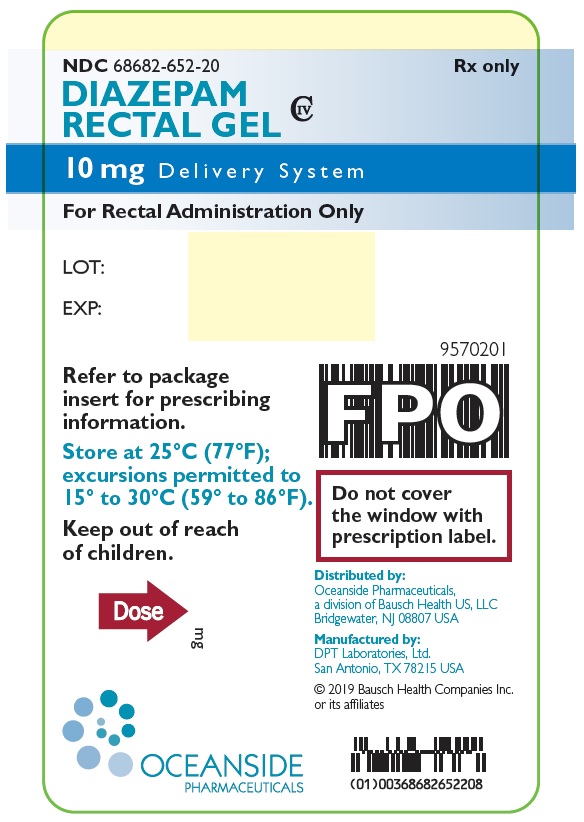
Diazepam 10 mg/2mL Gel
🆔 Identity & classification
Where does this data come from?
🏷️ RxNorm drug class
This medicine belongs to the Benzodiazepine class.
Where does this data come from?
🏭 Manufacturer & labeler
Where does this data come from?
🩺 Clinical
- No — this medication is specifically for seizure clusters, which are episodes of repeated seizures that are different from your family member's (or your own) usual seizure pattern....
- When exactly should I give the diazepam rectal gel — as soon as any seizure starts?
- Yes, the prescriber may authorize a second dose, but there are rules: it can only be given 4 to 12 hours after the first dose, and only if your prescriber has said to do so in your...
- Can I give a second dose if the seizures don't stop after the first?
Patient education
Supplement & herbal interactions
Some supplements/herbs that may interact with Diazepam — tap one for details:
Diazepam may be associated with lower levels of 1 nutrient — worth a chat with your pharmacist, not a cause for alarm.
Where does this data come from?
Ask a licensed pharmacist directly — free, answered by our team.
🧪 Inactive Ingredients / Excipients
Inactive ingredients, also called excipients, are components of the drug product other than the active ingredient. They may include fillers, dyes, coatings, preservatives, flavors, or other formulation ingredients.
💡 Tap an ingredient (hover on desktop) to see what it is and why it’s used.
-
UNII 3K9958V90M
A liquid solvent derived from fermentation or chemical synthesis. In medicines, alcohol dissolves active ingredients, helps preserve the product, and improves how the body absorbs certain drugs.
-
UNII 8SKN0B0MIM
Benzoic acid is a naturally occurring organic acid used as a preservative in medicines and foods. It helps prevent bacterial and fungal growth to extend shelf life and maintain product stability.
-
UNII LKG8494WBH
Benzyl alcohol is a clear liquid used as a preservative and solvent in medicines. It helps prevent bacterial and fungal growth and dissolves other ingredients to create uniform liquid formulations.
-
UNII 3NXW29V3WO
Hypromellose is a plant-based thickener made from cellulose. It's used in medicines as a binder to hold ingredients together, a coating for tablets, and a thickener for liquids.
-
UNII 6DC9Q167V3
Propylene glycol is a clear liquid derived from petroleum or vegetable sources. It acts as a solvent, humectant, and preservative in medicines, helping dissolve active ingredients and maintain product stability.
-
UNII OJ245FE5EU
Sodium benzoate is a salt derived from benzoic acid, a preservative. It's added to medicines to prevent growth of bacteria, fungi, and other microorganisms that could spoil the product.
-
UNII 059QF0KO0R
Water is a liquid solvent that dissolves and mixes ingredients together in liquid medicines, syrups, and injections. It helps distribute the active drug evenly throughout the product.
7 inactive ingredients listed in the exact product block matched to this NDC.
Where does this data come from?
ingredient classCode="IACT" elements from the exact product block matched by this NDC. Label-section narrative from DailyMed / the openFDA label index is shown separately when available.Inactive ingredient FAQ
Are inactive ingredients the same for every manufacturer?
Why might an inactive ingredient be missing?
Can inactive ingredients matter?
💲 Pricing
A drug doesn't have one price. Each row is a different public payment system, and none is what you'd pay at the counter — that depends on your insurance. The ⓘ on each row explains what it measures.
| Price system | Per ea | Per package |
|---|---|---|
| Retail pharmacies payNADAC · weekly | $270.447 | $540.89 / 2 syringes |
| Medicaid paysCMS SDUD · 12 mo | $238.76 | $477.52 / 2 syringes |
| Medicare drug plans payPart D · Q2 2026 | $214.83 | $429.66 / 2 syringes |
Where does this data come from?
🔁 Therapeutic equivalents
| Product | Labeler | Pack | NADAC/unit | TE | Status | Price vs. this |
|---|---|---|---|---|---|---|
| Diazepam 10 mg/2g 43386-0280-02 | Lupin | 2 syringes | $208.118 | AB | Availability likely | save 23% |
| Diazepam 10 mg/2mL 70710-2079-02 | Zydus | 2 syringes | $208.118 | AB | Availability likely | save 23% |
| Diazepam 10 mg/2mLthis 68682-0652-20 | Oceanside | 2 syringes | $270.447 | AB | FDA listed | — |
| Diazepam 10 mg/2mL 68475-0803-02 | Navinta | 2 syringes | — | AB | FDA listed | — |
Where does this data come from?
⏳ Availability & generic status
FDA-approved generic versions are listed, and recent pricing/market data suggests they may be available — see Therapeutic equivalents.
Where does this data come from?
🗺️ Medicaid utilization & spend
📊 Medicare Part D spend CMS · PART D · 2026 (Q1)
🔬 Reported adverse events (FAERS)
Top reported reactions
Age at onset
Reporter sex
Serious outcomes
Where does this data come from?
📦 Packaging — all sizes for this product
| Package NDC | Description | Marketing start | Status |
|---|---|---|---|
| 68682-0652-20 You're viewing this | 2 SYRINGE, PLASTIC in 1 PACKAGE (68682-652-20) / 2 mL in 1 SYRINGE, PLASTIC | 1997-07-29 | Active |
📄 Full prescribing information FDA SPL
🚨 Boxed Warning ▾
WARNING: RISKS FROM CONCOMITANT USE WITH OPIOIDS; ABUSE, MISUSE, AND ADDICTION; and DEPENDENCE AND WITHDRAWAL REACTIONS Concomitant use of benzodiazepines and opioids may result in profound sedation, respiratory depression, coma, and death. Reserve concomitant prescribing of these drugs for patients for whom alternative treatment options are inadequate. Limit dosages and durations to the minimum required.
Follow patients for signs and symptoms of respiratory depression and sedation (see WARNINGS and PRECAUTIONS ). The use of benzodiazepines, including diazepam rectal gel, exposes users to risks of abuse, misuse, and addiction, which can lead to overdose or death. Abuse and misuse of benzodiazepines commonly involve concomitant use of other medications, alcohol, and/or illicit substances, which is associated with an increased frequency of serious adverse outcomes.
Before prescribing diazepam rectal gel and throughout treatment, assess each patient’s risk for abuse, misuse, and addiction (see WARNINGS ). The continued use of benzodiazepines may lead to clinically significant physical dependence. The risks of dependence and withdrawal increase with longer treatment duration and higher daily dose.
Although diazepam rectal gel is indicated only for intermittent use (see INDICATIONS AND USAGE and DOSAGE AND ADMINISTRATION ), if used more frequently than recommended, abrupt discontinuation or rapid dosage reduction of diazepam rectal gel may precipitate acute withdrawal reactions, which can be life-threatening. For patients using diazepam rectal gel more frequently than recommended, to reduce the risk of withdrawal reactions, use a gradual taper to discontinue diazepam rectal gel (see WARNINGS ).
🎯 Indications and Usage ▾
INDICATIONS AND USAGE Diazepam rectal gel is intended for the acute treatment of intermittent, stereotypic episodes of frequent seizure activity (i.e., seizure clusters, acute repetitive seizures) that are distinct from a patient’s usual seizure pattern in patients with epilepsy 2 years of age and older.
⏱️ Dosage and Administration ▾
DOSAGE AND ADMINISTRATION (see also Patient/Caregiver Package Insert) This section is intended primarily for the prescriber; however, the prescriber should also be aware of the dosing information and directions for use provided in the patient package insert. A decision to prescribe diazepam rectal gel involves more than the diagnosis and the selection of the correct dose for the patient. First, the prescriber must be convinced from historical reports and/or personal observations that the patient exhibits the characteristic identifiable seizure cluster that can be distinguished from the patient’s usual seizure activity by the caregiver who will be responsible for administering diazepam rectal gel.
Second, because diazepam rectal gel is only intended for adjunctive use, the prescriber must ensure that the patient is receiving an optimal regimen of standard anti-epileptic drug treatment and is, nevertheless, continuing to experience these characteristic episodes. Third, because a non-health professional will be obliged to identify episodes suitable for treatment, make the decision to administer treatment upon that identification, administer the drug, monitor the patient, and assess the adequacy of the response to treatment, a major component of the prescribing process involves the necessary instruction of this individual.
Fourth, the prescriber and caregiver must have a common understanding of what is and is not an episode of seizures that is appropriate for treatment, the timing of administration in relation to the onset of the episode, the mechanics of administering the drug, how and what to observe following administration, and what would constitute an outcome requiring immediate and direct medical attention. Calculating Prescribed Dose The diazepam rectal gel dose should be individualized for maximum beneficial effect. The recommended dose of diazepam rectal gel is 0.2-0.5 mg/kg depending on age.
See the dosing table for specific recommendations. Age (years) Recommended Dose 2 through 5 0.5 mg/kg 6 through 11 0.3 mg/kg 12 and older 0.2 mg/kg Because diazepam rectal gel is provided as unit doses of 2.5, 5, 7.5, 10, 12.5, 15, 17.5, and 20 mg, the prescribed dose is obtained by rounding upward to the next available dose. The following table provides acceptable weight ranges for each dose and age category, such that patients will receive between 90% and 180% of the calculated recommended dose.
The safety of this strategy has been established in clinical trials. 2 - 5 Years 6 - 11 Years 12+ Years 0.5 mg/kg 0.3 mg/kg 0.2 mg/kg Weight Dose Weight Dose Weight Dose (kg) (mg) (kg) (mg) (kg) (mg) 6 to 10 5 10 to 16 5 14 to 25 5 11 to 15 7.5 17 to 25 7.5 26 to 37 7.5 16 to 20 10 26 to 33 10 38 to 50 10 21 to 25 12.5 34 to 41 12.5 51 to 62 12.5 26 to 30 15 42 to 50 15 63 to 75 15 31 to 35 17.5 51 to 58 17.5 76 to 87 17.5 36 to 44 20 59 to 74 20 88 to 111 20 The rectal delivery system includes a plastic applicator with a flexible, molded tip available in two lengths.
The diazepam rectal gel rectal delivery system 10 mg syringe is available with a 4.4 cm tip and the diazepam rectal gel rectal delivery system 20 mg syringe is available with a 6.0 cm tip. Diazepam rectal gel 2.5 mg is also available with a 4.4 cm tip. In elderly and debilitated patients, it is recommended that the dosage be adjusted downward to reduce the likelihood of ataxia or oversedation.
The prescribed dose of diazepam rectal gel should be adjusted by the physician periodically to reflect changes in the patient’s age or weight. The diazepam rectal gel 2.5 mg dose may also be used as a partial replacement dose for patients who may expel a portion of the first dose. Additional Dose The prescriber may wish to prescribe a second dose of diazepam rectal gel.
A second dose, when required, may be given 4-12 hours after the first dose. Treatment Frequency It is recommended that diazepam rectal gel be used to treat no more than five episodes per month and no more than one episode…
⛔ Contraindications ▾
CONTRAINDICATIONS Diazepam rectal gel is contraindicated in patients with a known hypersensitivity to diazepam. Diazepam rectal gel may be used in patients with open angle glaucoma who are receiving appropriate therapy but is contraindicated in acute narrow angle glaucoma.
⚠️ Warnings ▾
WARNINGS General Diazepam rectal gel should only be administered by caregivers who in the opinion of the prescribing physician 1) are able to distinguish the distinct cluster of seizures (and/or the events presumed to herald their onset) from the patient’s ordinary seizure activity, 2) have been instructed and judged to be competent to administer the treatment rectally, 3) understand explicitly which seizure manifestations may or may not be treated with diazepam rectal gel, and 4) are able to monitor the clinical response and recognize when that response is such that immediate professional medical evaluation is required.
Risks from Concomitant Use with Opioids Concomitant use of benzodiazepines, including diazepam rectal gel and diazepam rectal gel rectal delivery system, and opioids may result in profound sedation, respiratory depression, coma, and death. Because of these risks, reserve concomitant prescribing of benzodiazepines and opioids for patients for whom alternative treatment options are inadequate. Observational studies have demonstrated that concomitant use of opioid analgesics and benzodiazepines increases the risk of drug-related mortality compared to use of opioids alone.
If a decision is made to prescribe diazepam rectal gel or diazepam rectal gel rectal delivery system concomitantly with opioids, prescribe the lowest effective dosages and minimum durations of concomitant use, and follow patients closely for signs and symptoms of respiratory depression and sedation. Advise both patients and caregivers about the risks of respiratory depression and sedation when diazepam rectal gel or diazepam rectal gel rectal delivery system is used with opioids (see PRECAUTIONS ). Abuse, Misuse, and Addiction The use of benzodiazepines, including diazepam rectal gel, exposes users to the risks of abuse, misuse, and addiction, which can lead to overdose or death.
Abuse and misuse of benzodiazepines often (but not always) involve the use of doses greater than the maximum recommended dosage and commonly involve concomitant use of other medications, alcohol, and/or illicit substances, which is associated with an increased frequency of serious adverse outcomes, including respiratory depression, overdose, or death (see DRUG ABUSE AND DEPENDENCE: Abuse ). Before prescribing diazepam rectal gel and throughout treatment, assess each patient’s risk for abuse, misuse, and addiction. Use of diazepam rectal gel, particularly in patients at elevated risk, necessitates counseling about the risks and proper use of diazepam rectal gel along with monitoring for signs and symptoms of abuse, misuse, and addiction.
Do not exceed the recommended dosing frequency; avoid or minimize concomitant use of CNS depressants and other substances associated with abuse, misuse, and addiction (e.g., opioid analgesics, stimulants); and advise patients on the proper disposal of unused drug. If a substance use disorder is suspected, evaluate the patient and institute (or refer them for) early treatment, as appropriate. Dependence and Withdrawal Reactions After Use of Diazepam Rectal Gel More Frequently Than Recommended For patients using diazepam rectal gel more frequently than recommended, to reduce the risk of withdrawal reactions, use a gradual taper to discontinue diazepam rectal gel (a patient-specific plan should be used to taper the dose).
Patients at an increased risk of withdrawal adverse reactions after benzodiazepine discontinuation or rapid dosage reduction include those who take higher dosages, and those who have had longer durations of use. Acute Withdrawal Reactions The continued use of benzodiazepines may lead to clinically significant physical dependence. Although diazepam rectal gel is indicated only for intermittent use (see INDICATIONS AND USAGE and DOSAGE AND ADMINISTRATION ), if used more frequently than recommended, abrupt discontinuation or rapid dosage reduction of diazepam rectal gel, or administration of flumazenil (a benzodiazepine antag…
🤒 Adverse Reactions ▾
ADVERSE REACTIONS Diazepam rectal gel adverse event data were collected from double-blind, placebo-controlled studies and open-label studies. The majority of adverse events were mild to moderate in severity and transient in nature. Two patients who received diazepam rectal gel died seven to 15 weeks following treatment; neither of these deaths was deemed related to diazepam rectal gel.
The most frequent adverse event reported to be related to diazepam rectal gel in the two double-blind, placebo-controlled studies was somnolence (23%). Less frequent adverse events were dizziness, headache, pain, abdominal pain, nervousness, vasodilatation, diarrhea, ataxia, euphoria, incoordination, asthma, rhinitis, and rash, which occurred in approximately 2-5% of patients. Approximately 1.4% of the 573 patients who received diazepam rectal gel in clinical trials of epilepsy discontinued treatment because of an adverse event.
The adverse event most frequently associated with discontinuation (occurring in three patients) was somnolence. Other adverse events most commonly associated with discontinuation and occurring in two patients were hypoventilation and rash. Adverse events occurring in one patient were asthenia, hyperkinesia, incoordination, vasodilatation and urticaria.
These events were judged to be related to diazepam rectal gel. In the two domestic double-blind, placebo-controlled, parallel-group studies, the proportion of patients who discontinued treatment because of adverse events was 2% for the group treated with diazepam rectal gel, versus 2% for the placebo group. In the diazepam rectal gel group, the adverse events considered the primary reason for discontinuation were different in the two patients who discontinued treatment; one discontinued due to rash and one discontinued due to lethargy.
The primary reason for discontinuation in the patients treated with placebo was lack of effect. Adverse Event Incidence in Controlled Clinical Trials Table 1 lists treatment-emergent signs and symptoms that occurred in > 1% of patients enrolled in parallel-group, placebo-controlled trials and were numerically more common in the diazepam rectal gel group. Adverse events were usually mild or moderate in intensity.
The prescriber should be aware that these figures, obtained when diazepam rectal gel was added to concurrent antiepileptic drug therapy, cannot be used to predict the frequency of adverse events in the course of usual medical practice when patient characteristics and other factors may differ from those prevailing during clinical studies. Similarly, the cited frequencies cannot be directly compared with figures obtained from other clinical investigations involving different treatments, uses, or investigators. An inspection of these frequencies, however, does provide the prescribing physician with one basis to estimate the relative contribution of drug and non-drug factors to the adverse event incidences in the population studied.
Table 1: Treatment-Emergent Signs and Symptoms That Occurred in > 1% Of Patients Enrolled in Parallel-Group, Placebo-Controlled Trials and Were Numerically More Common in the Diazepam Rectal Gel Group Diazepam Rectal Gel Placebo Body System COSTART Term N = 101 % N = 104 % Body As A Whole Headache 5% 4% Cardiovascular Vasodilatation 2% 0% Digestive Diarrhea 4% <1% Nervous Ataxia 3% <1% Dizziness 3% 2% Euphoria 3% 0% Incoordination 3% 0% Somnolence 23% 8% Respiratory Asthma 2% 0% Skin and Appendages Rash 3% 0% Other events reported by 1% or more of patients treated in controlled trials but equally or more frequent in the placebo group than in the diazepam rectal gel group were abdominal pain, pain, nervousness, and rhinitis.
Other events reported by fewer than 1% of patients were infection, anorexia, vomiting, anemia, lymphadenopathy, grand mal convulsion, hyperkinesia, cough increased, pruritus, sweating, mydriasis, and urinary tract infection. The pattern of adverse events was similar for different age, race…
🤰 Pregnancy ▾
Pregnancy Advise pregnant females that use of diazepam rectal gel late in pregnancy can result in sedation (respiratory depression, lethargy, hypotonia) and/or withdrawal symptoms (hyperreflexia, irritability, restlessness, tremors, inconsolable crying, and feeding difficulties) in newborns (see WARNINGS: Neonatal Sedation and Withdrawal Syndrome and PRECAUTIONS: Pregnancy ). Instruct patients to inform their healthcare provider if they are pregnant. Encourage patients to enroll in the North American Antiepileptic Drug (NAAED) Pregnancy Registry if they become pregnant while taking diazepam rectal gel.
The registry is collecting information about the safety of antiepileptic drugs during pregnancy (see PRECAUTIONS: Pregnancy ). Lactation Counsel patients that diazepam, the active ingredient in diazepam rectal gel, is present in breast milk. Instruct patients to inform their healthcare provider if they are breastfeeding or plan to breastfeed.
Instruct breastfeeding patients who take diazepam rectal gel to monitor their infants for excessive sedation, poor feeding and poor weight gain, and to seek medical attention if they notice these signs (see PRECAUTIONS: Nursing Mothers ). Concomitant Medication Although diazepam rectal gel is indicated for use solely on an intermittent basis, the potential for a synergistic CNS-depressant effect when used simultaneously with alcohol or other CNS-depressants must be considered by the prescribing physician, and appropriate recommendations made to the patient and/or caregiver.
Drug Interactions There have been no clinical studies or reports in literature to evaluate the interaction of rectally administered diazepam with other drugs. As with all drugs, the potential for interaction by a variety of mechanisms is a possibility. Effect of Concomitant Use of Benzodiazepines and Opioids : The concomitant use of benzodiazepines and opioids increases the risk of respiratory depression because of actions at different receptor sites in the CNS that control respiration.
Benzodiazepines interact at GABA A sites, and opioids interact primarily at mu receptors. When benzodiazepines and opioids are combined, the potential for benzodiazepines to significantly worsen opioid-related respiratory depression exists. Limit dosage and duration of concomitant use of benzodiazepines and opioids, and follow patients closely for respiratory depression and sedation.
Other Psychotropic Agents or Other CNS Depressants: If diazepam rectal gel is to be combined with other psychotropic agents or other CNS depressants, careful consideration should be given to the pharmacology of the agents to be employed particularly with known compounds which may potentiate the action of diazepam, such as phenothiazines, narcotics, barbiturates, MAO inhibitors and other antidepressants. Cimetidine: The clearance of diazepam and certain other benzodiazepines can be delayed in association with cimetidine administration.
The clinical significance of this is unclear. Valproate : Valproate may potentiate the CNS-depressant effects of diazepam. Effect of Other Drugs on Diazepam Metabolism : In vitro studies using human liver preparations suggest that CYP2C19 and CYP3A4 are the principal isozymes involved in the initial oxidative metabolism of diazepam.
Therefore, potential interactions may occur when diazepam is given concurrently with agents that affect CYP2C19 and CYP3A4 activity. Potential inhibitors of CYP2C19 (e.g., cimetidine, quinidine, and tranylcypromine) and CYP3A4 (e.g., ketoconazole, troleandomycin, and clotrimazole) could decrease the rate of diazepam elimination, while inducers of CYP2C19 (e.g., rifampin) and CYP3A4 (e.g., carbamazepine, phenytoin, dexamethasone, and phenobarbital) could increase the rate of elimination of diazepam. Effect of Diazepam on the Metabolism of Other Drugs : There are no reports as to which isozymes could be inhibited or induced by diazepam.
But, based on the fact that diazepam is a substrate for CYP2C19 an…
🆘 Overdosage ▾
OVERDOSAGE Overdosage of benzodiazepines is characterized by central nervous system depression ranging from drowsiness to coma. In mild to moderate cases, symptoms can include drowsiness, confusion, dysarthria, lethargy, hypnotic state, diminished reflexes, ataxia, and hypotonia. Rarely, paradoxical or disinhibitory reactions (including agitation, irritability, impulsivity, violent behavior, confusion, restlessness, excitement, and talkativeness) may occur.
In severe overdosage cases, patients may develop respiratory depression and coma. Overdosage of benzodiazepines in combination with other CNS depressants (including alcohol and opioids) may be fatal (see WARNINGS: Abuse, Misuse, and Addiction ). Markedly abnormal (lowered or elevated) blood pressure, heart rate, or respiratory rate raise the concern that additional drugs and/or alcohol are involved in the overdosage.
In managing benzodiazepine overdosage, employ general supportive measures, including intravenous fluids and airway maintenance. Flumazenil, a specific benzodiazepine receptor antagonist indicated for the complete or partial reversal of the sedative effects of benzodiazepines in the management of benzodiazepine overdosage, can lead to withdrawal and adverse reactions, including seizures, particularly in the context of mixed overdosage with drugs that increase seizure risk (e.g., tricyclic and tetracyclic antidepressants) and in patients with long-term benzodiazepine use and physical dependency.
The risk of withdrawal seizures with flumazenil use may be increased in patients with epilepsy. Flumazenil is contraindicated in patients who have received a benzodiazepine for control of a potentially life-threatening condition (e.g., status epilepticus). If the decision is made to use flumazenil, it should be used as an adjunct to, not as a substitute for, supportive management of benzodiazepine overdosage.
See the flumazenil injection Prescribing Information. Consider contacting the Poison Help line (1-800-221-2222) or a medical toxicologist for additional overdosage management recommendations.
🧬 Clinical Pharmacology ▾
CLINICAL PHARMACOLOGY Mechanism of Action Although the precise mechanism by which diazepam exerts its antiseizure effects is unknown, animal and in vitro studies suggest that diazepam acts to suppress seizures through an interaction with γ-aminobutyric acid (GABA) receptors of the A-type (GABA A ). GABA, the major inhibitory neurotransmitter in the central nervous system (CNS), acts at this receptor to open the membrane channel allowing chloride ions to flow into neurons. Entry of chloride ions causes an inhibitory potential that reduces the ability of neurons to depolarize to the threshold potential necessary to produce action potentials.
Excessive depolarization of neurons is implicated in the generation and spread of seizures. It is believed that diazepam enhances the actions of GABA by causing GABA to bind more tightly to the GABA A receptor. Pharmacokinetics Pharmacokinetic information of diazepam following rectal administration was obtained from studies conducted in healthy adult subjects.
No pharmacokinetic studies were conducted in pediatric patients. Therefore, information from the literature is used to define pharmacokinetic labeling in the pediatric population. Diazepam rectal gel is well absorbed following rectal administration, reaching peak plasma concentrations in 1.5 hours.
The absolute bioavailability of diazepam rectal gel relative to Valium injectable is 90%. The volume of distribution of diazepam rectal gel is calculated to be approximately 1 L/kg. The mean elimination half-life of diazepam and desmethyldiazepam following administration of a 15 mg dose of diazepam rectal gel was found to be about 46 hours (CV=43%) and 71 hours (CV=37%), respectively.
Both diazepam and its major active metabolite desmethyldiazepam bind extensively to plasma proteins (95-98%). FIGURE 1: Plasma Concentrations of Diazepam and Desmethyldiazepam Following Diazepam Rectal Gel or IV Diazepam figure1 Metabolism and Elimination: It has been reported in the literature that diazepam is extensively metabolized to one major active metabolite (desmethyldiazepam) and two minor active metabolites, 3-hydroxydiazepam (temazepam) and 3-hydroxy-N-diazepam (oxazepam) in plasma. At therapeutic doses, desmethyldiazepam is found in plasma at concentrations equivalent to those of diazepam while oxazepam and temazepam are not usually detectable.
The metabolism of diazepam is primarily hepatic and involves demethylation (involving primarily CYP2C19 and CYP3A4) and 3-hydroxylation (involving primarily CYP3A4), followed by glucuronidation. The marked inter-individual variability in the clearance of diazepam reported in the literature is probably attributable to variability of CYP2C19 (which is known to exhibit genetic polymorphism; about 3-5% of Caucasians have little or no activity and are “poor metabolizers”) and CYP3A4. No inhibition was demonstrated in the presence of inhibitors selective for CYP2A6, CYP2C9, CYP2D6, CYP2E1, or CYP1A2, indicating that these enzymes are not significantly involved in metabolism of diazepam.
Special Populations Hepatic Impairment: No pharmacokinetic studies were conducted with diazepam rectal gel in hepatically impaired subjects. Literature review indicates that following administration of 0.1 to 0.15 mg/kg of diazepam intravenously, the half-life of diazepam was prolonged by two to five-fold in subjects with alcoholic cirrhosis (n=24) compared to age-matched control subjects (n=37) with a corresponding decrease in clearance by half: however, the exact degree of hepatic impairment in these subjects was not characterized in this literature (see PRECAUTIONS ).
Renal Impairment: The pharmacokinetics of diazepam have not been studied in renally impaired subjects (see PRECAUTIONS ). Pediatrics: No pharmacokinetic studies were conducted with diazepam rectal gel in the pediatric population. However, literature review indicates that following IV administration (0.33 mg/kg), diazepam has a longer half-life in neonates (birth up…
📦 How Supplied / Storage and Handling ▾
HOW SUPPLIED Diazepam rectal gel rectal delivery system is a non-sterile, prefilled, unit dose, rectal delivery system. The rectal delivery system includes a plastic applicator with a flexible, molded tip available in two lengths, designated for convenience as 10 mg Delivery System and 20 mg Delivery System. The available doses from 20 mg delivery system are 12.5 mg, 15 mg, 17.5 mg and 20 mg.
The available doses from 10 mg delivery system are 5 mg, 7.5 mg and 10 mg. The diazepam rectal gel delivery system is available in the following three presentations: Diazepam Rectal Gel Rectal Tip Size NDC 2.5 mg Twin Pack 4.4 cm 68682-650-20 Diazepam Rectal Gel Rectal Delivery System Rectal Tip Size NDC 10 mg Delivery 4.4 cm 68682-652-20 System Twin Pack 20 mg Delivery 6.0 cm 68682-655-20 System Twin Pack Each Twin Pack contains two diazepam rectal gel delivery systems, two packets of lubricating jelly, and administration and disposal Instructions available on the bottom of the package.
Diazepam rectal gel rectal delivery system is also packed with Instructions for Caregivers upon receipt from pharmacy. Store at 25°C (77°F); excursions permitted to 15°C to 30°C (59°F to 86°F) [see USP Controlled Room Temperature]. Diazepam Rectal Gel Rectal Delivery System INSTRUCTIONS FOR CAREGIVERS UPON RECEIPT FROM PHARMACY Remove the syringe from the case.
Confirm the dose prescribed by your doctor is visible and if known, is correct. FOR EACH SYRINGE: Confirm that the prescribed dose is visible in the dose display window. Confirm that the green “READY” band is visible.
Return the syringe to the case. SEE PHARMACIST IF YOU HAVE ANY QUESTIONS ABOUT THESE INSTRUCTIONS. The Instructions are also available on the bottom of each drug product package.
CAUTION: Federal law prohibits the transfer of this drug to any person other than the patient for whom it was prescribed. Distributed by: Oceanside Pharmaceuticals, a division of Bausch Health US, LLC Bridgewater, NJ 08807 USA Manufactured by: DPT Laboratories, Ltd. San Antonio, TX 78215 USA © 2023 Bausch Health Companies Inc. or its affiliates 9570805 Rev.
07/2023
📋 Description ▾
DESCRIPTION Diazepam rectal gel rectal delivery system is a non-sterile diazepam gel provided in a prefilled, unit-dose, rectal delivery system. Diazepam rectal gel contains 5 mg/mL diazepam, benzoic acid, benzyl alcohol (1.5%), ethyl alcohol (10%), hydroxypropyl methylcellulose, propylene glycol, purified water, and sodium benzoate. Diazepam rectal gel is clear to slightly yellow and has a pH between 6.5-7.5.
Diazepam, the active ingredient of diazepam rectal gel, is a benzodiazepine anticonvulsant with the chemical name 7-chloro-1,3-dihydro-1-methyl-5-phenyl-2 H -1,4-benzodiazepin-2-one. The structural formula is as follows: chemstructure