
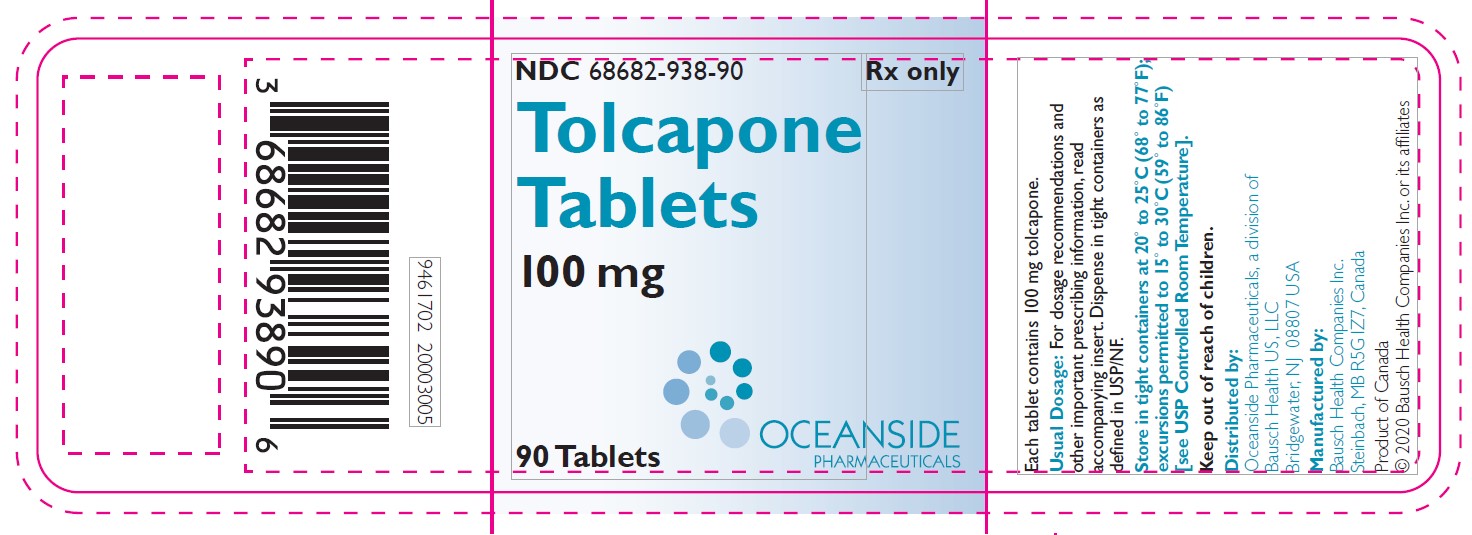
Tolcapone 100 mg Tablet, Film Coated, 90-count — NDC 68682-938-90 (Billing 68682-0938-90)
This is a package of 90 tablets of Tolcapone 100 mg Tablet, Film Coated from Oceanside Pharmaceuticals, marketed since Jul 2004 and currently FDA-listed. It is this product's only package size.
NDC database record
One package, one record: these facts belong to NDC 68682-938-90 alone.
- Record
- FDA NDC Directory package listing · Human prescription drug
- Code segments
- 68682 labeler · 938 product · 90 package
- Package marketed since
- Jul 27, 2004
- Sample package
- No — commercial package
- Listing certified through
- Dec 31, 2026
- Billing quantity
- 90 EA per package
- Barcode (UPC)
- 0368682938906
- FDA record last changed
- Jul 24, 2026
Identity & classification
Regulatory identifiers FDA, NLM and CMS codes for this package
Drug-database identifiers Medi-Span GPI and First Databank GCN / HICL / AHFS classification
- GSN (GCN sequence number): 035580
- GCN: 55311
- GPI-14 (Medi-Span): 73152070000320
- HICL (First Databank): 016245
- AHFS class code: 28:36.12.00
- RxCUI (RxNorm): 200220
Where does this data come from?
- FDA openFDA NDC Directory · synced Oct 8, 2026
- FDA label on DailyMed · label index refreshed Oct 6, 2026
- RxNorm (NLM RxNav) · catalog refreshed Oct 1, 2026
- Medi-Span GPI (licensed)
- First Databank (licensed) · refreshed Oct 8, 2026
RxNorm drug class
This medicine belongs to the Catechol-O-Methyltransferase Inhibitor class.
Where does this data come from?
- RxClass (NLM) · catalog refreshed Oct 1, 2026
Clinical
Tolcapone is used in combination with levodopa and carbidopa to treat the signs and symptoms of Parkinson's disease. This medication is sometimes prescribed for other uses; ask your doctor or pharmacist for more information.
Read the full MedlinePlus article ↗- It is an add-on for people with Parkinson's disease who take levodopa/carbidopa. It helps with symptom fluctuations, and is usually used when other add-on medicines have not worked...
- Take it by mouth three times a day. Take the first dose with your first levodopa/carbidopa dose, and the others about 6 and 12 hours later. Food is fine. Follow your prescriber and...
- Tolcapone can rarely cause serious liver injury. Blood tests check your liver, usually before starting and every 2 to 4 weeks during the first 6 months. Also report symptoms like y...
- Common ones include nausea, diarrhea, extra involuntary movements, loss of appetite, sleep changes, and vivid dreams. Your urine may look darker or orange. Tell your doctor if diar...
Patient education
Supplement & herbal interactions
Some supplements/herbs that may interact with Tolcapone — tap one for details:
Where does this data come from?
- MedlinePlus (NLM) · refreshed Oct 1, 2026
- FDA label on DailyMed · label index refreshed Oct 6, 2026
Ask a licensed pharmacist directly — free, answered by our team.
Pricing
A drug doesn't have one price. Each row is a different public payment system, and none is what you'd pay at the counter — that depends on your insurance. The ⓘ on each row explains what it measures.
| Price system | Per each | Per package |
|---|---|---|
| Retail pharmacies payNADAC · weekly | Not in the retail survey — common for institutional, discontinued, or low-volume packs. | |
| Medicaid paysCMS SDUD · 12 mo | No recent Medicaid claims on file for this NDC — rare and low-volume NDCs are suppressed in the public data. | |
| Medicare drug plans payPart D · Q2 2026 | $35.24 | $3,171.65 / 90 tablets |
Where does this data come from?
- CMS NADAC weekly file
- CMS ASP pricing files · refreshed Sep 20, 2026
- CMS Medicaid State Drug Utilization Data · refreshed Oct 8, 2026
- CMS Part D plan pricing files · refreshed Sep 24, 2026
- VA National Acquisition Center price file
Packaging — all sizes for this product
| Package NDC | Description | Marketing start | Marketing end | Status |
|---|---|---|---|---|
| 68682-0938-90 You're viewing this Main listing | 90 TABLET, FILM COATED in 1 BOTTLE | 2004-07-27 | — | Active |
Therapeutic equivalents
| Product | Labeler | Pack | NADAC/unit | TE | Status | Price vs. this |
|---|---|---|---|---|---|---|
| Tasmar 100 mg 00187-0938-01 | Bausch | 90 tablets | — | — | FDA listed | — |
| Tolcapone 100 mg 50742-0193-90 | Ingenus | 90 tablets | — | — | FDA listed | — |
| Tolcapone 100 mgthis 68682-0938-90 | Oceanside | 90 tablets | — | — | FDA listed | — |
Where does this data come from?
- FDA openFDA NDC Directory · synced Oct 8, 2026
- FDA Orange Book · refreshed Oct 3, 2026
- CMS NADAC weekly file
Availability & generic status
The FDA lists approved generic versions of this medicine, but that does not always mean a pharmacy can get one today. Patent rules, launch agreements, supply and pricing can affect when generics actually arrive.
Where does this data come from?
- FDA Orange Book · refreshed Oct 3, 2026
What it looks like
Where does this data come from?
- FDA label on DailyMed · label index refreshed Oct 6, 2026
Inactive Ingredients / Excipients
Inactive ingredients, also called excipients, are components of the drug product other than the active ingredient. They may include fillers, dyes, coatings, preservatives, flavors, or other formulation ingredients.
🧪 Avoiding an ingredient? See Tolcapone inactive ingredients by manufacturer: every current product's list side by side, so you can ask your pharmacy for the version that does not list it.
💡 Tap an ingredient (hover on desktop) to see what it is and why it’s used.
-
UNII L11K75P92J
A mineral salt made from calcium and phosphate. It acts as a filler and binder in tablets to add bulk and help hold the medicine together in solid form.
-
UNII 7Z8S9VYZ4B
Ethylcellulose is a plant-derived thickener and film-former made by chemically modifying cellulose. It's used as a binder to hold tablet ingredients together, a coating to control how quickly medicine is released, or a thickener in liquid formulations.
-
UNII 1K09F3G675
Ferric oxide red is an inorganic iron compound used as a colorant in medicines. It gives tablets, capsules, or other dosage forms a red or reddish tint for identification and appearance.
-
UNII EX438O2MRT
Ferric oxide yellow is a naturally occurring iron compound used as a colorant in medications. It gives tablets, capsules, and other forms a yellow or golden hue for identification and appearance.
-
UNII 3NXW29V3WO
Hypromellose is a plant-based thickener made from cellulose. It's used in medicines as a binder to hold ingredients together, a coating for tablets, and a thickener for liquids.
-
UNII EWQ57Q8I5X
Lactose monohydrate is a natural sugar derived from milk. It serves as a filler and binder in tablets and capsules, helping create the proper size, texture, and consistency of the medicine.
-
UNII 70097M6I30
Magnesium stearate is a salt made from magnesium and stearic acid, a fatty substance. It's used in tablets and capsules as a lubricant and glidant to help ingredients flow smoothly during manufacturing and prevent sticking.
-
UNII OP1R32D61U
Microcrystalline cellulose is a purified form of cellulose, a natural fiber from plant sources. It acts as a binder and filler in tablets and capsules, helping hold ingredients together and give the medicine its shape and size.
-
UNII FZ989GH94E
Povidone is a synthetic polymer made from a plastic-like material. It acts as a binder to hold tablet ingredients together and as a disintegrant to help the tablet break apart in your stomach so the medicine can be absorbed.
-
UNII 368GB5141J
A detergent and foaming agent derived from coconut or palm oil. In medications, it helps break down and mix oil and water-based ingredients, aids in tablet disintegration, and improves how the drug dissolves and spreads in the mouth or digestive system.
-
UNII 5856J3G2A2
A starch-based powder made from potatoes and processed with sodium. It acts as a disintegrant, helping the tablet or capsule break apart quickly in the stomach so the medicine can be absorbed.
-
UNII 7SEV7J4R1U
A powder made from a naturally occurring mineral. In medicines, talc works as a glidant and anti-caking agent, helping tablets and capsules flow smoothly during manufacturing and preventing clumping.
-
UNII 15FIX9V2JP
Titanium dioxide is a bright white mineral powder commonly used as a colorant and opacifying agent. It makes pills and tablets white or lighter in color and helps make coatings non-transparent.
-
UNII XHX3C3X673
Triacetin is a clear, oily liquid made from glycerin and acetic acid. It works as a plasticizer and solvent in medicines, helping soften coatings and improve how liquids mix together in formulations.
-
UNII 059QF0KO0R
Water is a liquid solvent that dissolves and mixes ingredients together in liquid medicines, syrups, and injections. It helps distribute the active drug evenly throughout the product.
15 inactive ingredients listed in the exact product block matched to this NDC.
Where does this data come from?
ingredient classCode="IACT" elements from the exact product block matched by this NDC. Label-section narrative from DailyMed / the openFDA label index is shown separately when available.- FDA label on DailyMed · label index refreshed Oct 6, 2026
- FDA openFDA NDC Directory · synced Oct 8, 2026
Inactive ingredient FAQ
Are inactive ingredients the same for every manufacturer?
Why might an inactive ingredient be missing?
Can inactive ingredients matter?
Manufacturer & labeler
More NDCs from Oceanside Pharmaceuticals labeler code 68682
- Enalapril Maleate 20 mg Tablet NDC 68682-713-01
- Tretinoin .05 g/100g Gel NDC 68682-800-45
- Luliconazole 10 mg/g Cream NDC 68682-850-60
- Erythromycin and Benzoyl Peroxide Kit NDC 68682-900-23
- Erythromycin and Benzoyl Peroxide Kit NDC 68682-901-46
- Tetracaine Hydrochloride 5 mg/mL Solution/ Drops NDC 68682-920-05
- Omeprazole and Sodium Bicarbonate 20 mg; 1680 mg Powder, For Suspension NDC 68682-990-30
- Diltiazem Hydrochloride 120 mg Capsule, Extended Release NDC 68682-993-98
- Diltiazem Hydrochloride 180 mg Capsule, Extended Release NDC 68682-994-98
- Diltiazem Hydrochloride 240 mg Capsule, Extended Release NDC 68682-997-98
- Diltiazem Hydrochloride 300 mg Capsule, Extended Release NDC 68682-998-98
Where does this data come from?
- FDA openFDA NDC Directory · synced Oct 8, 2026
- Drugs@FDA
Full prescribing information FDA SPL
🚨 Boxed Warning ▾
WARNING Because of the risk of potentially fatal, acute fulminant liver failure, Tolcapone tablets should ordinarily be used in patients with Parkinson's disease on l-dopa/carbidopa who are experiencing symptom fluctuations and are not responding satisfactorily to or are not appropriate candidates for other adjunctive therapies (see INDICATIONS and DOSAGE AND ADMINISTRATION sections). Because of the risk of liver injury and because Tolcapone tablets, when it is effective, provides an observable symptomatic benefit, the patient who fails to show substantial clinical benefit within 3 weeks of initiation of treatment, should be withdrawn from Tolcapone tablets.
Tolcapone tablets therapy should not be initiated if the patient exhibits clinical evidence of liver disease or two SGPT/ALT or SGOT/AST values greater than the upper limit of normal. Patients with severe dyskinesia or dystonia should be treated with caution (see PRECAUTIONS: Rhabdomyolysis ).
PATIENTS WHO DEVELOP EVIDENCE OF HEPATOCELLULAR INJURY WHILE ON TOLCAPONE TABLETS AND ARE WITHDRAWN FROM THE DRUG FOR ANY REASON MAY BE AT INCREASED RISK FOR LIVER INJURY IF TOLCAPONE TABLETS IS REINTRODUCED. ACCORDINGLY, SUCH PATIENTS SHOULD NOT ORDINARILY BE CONSIDERED FOR RETREATMENT. Cases of severe hepatocellular injury, including fulminant liver failure resulting in death, have been reported in postmarketing use.
As of May 2005, three cases of fatal fulminant hepatic failure have been reported from more than 40,000 patient years of worldwide use. This incidence may be 10- to 100-fold higher than the background incidence in the general population. Underreporting of cases may lead to significant underestimation of the increased risk associated with the use of Tolcapone tablets.
All three cases were reported within the first six months of initiation of treatment with Tolcapone tablets. Analysis of the laboratory monitoring data in over 3,400 Tolcapone tablets-treated patients participating in clinical trials indicated that increases in SGPT/ALT or SGOT/AST, when present, generally occurred within the first 6 months of treatment with Tolcapone tablets. A prescriber who elects to use Tolcapone tablets in face of the increased risk of liver injury is strongly advised to monitor patients for evidence of emergent liver injury.
Patients should be advised of the need for self-monitoring for both the classical signs of liver disease (e.g., clay colored stools, jaundice) and the nonspecific ones (e.g., fatigue, loss of appetite, lethargy). Although a program of periodic laboratory monitoring for evidence of hepatocellular injury is recommended, it is not clear that periodic monitoring of liver enzymes will prevent the occurrence of fulminant liver failure. However, it is generally believed that early detection of drug-induced hepatic injury along with immediate withdrawal of the suspect drug enhances the likelihood for recovery.
Accordingly, the following liver monitoring program is recommended. Before starting treatment with Tolcapone tablets, the physician should conduct appropriate tests to exclude the presence of liver disease. In patients determined to be appropriate candidates for treatment with Tolcapone tablets, serum glutamic-pyruvic transaminase (SGPT/ALT) and serum glutamic-oxaloacetic transaminase (SGOT/AST) levels should be determined at baseline and periodically (i.e., every 2 to 4 weeks) for the first 6 months of therapy.
After the first six months, periodic monitoring is recommended at intervals deemed clinically relevant. Although more frequent monitoring increases the chances of early detection, the precise schedule for monitoring is a matter of clinical judgment. If the dose is increased to 200 mg tid (see DOSAGE AND ADMINISTRATION section), liver enzyme monitoring should take place before increasing the dose and then be conducted every 2 to 4 weeks for the following 6 months of therapy.
After six months, periodic monitoring is recommended at intervals deemed clinically… [Excerpted — this section continues on DailyMed.]
🎯 Indications and Usage ▾
INDICATIONS: Tolcapone tablets is indicated as an adjunct to levodopa and carbidopa for the treatment of the signs and symptoms of idiopathic Parkinson's disease. Because of the risk of potentially fatal, acute fulminant liver failure, Tolcapone tablets should ordinarily be used in patients with Parkinson's disease on l-dopa/carbidopa who are experiencing symptom fluctuations and are not responding satisfactorily to or are not appropriate candidates for other adjunctive therapies. Because of the risk of liver injury and because Tolcapone tablets, when it is effective, provides an observable symptomatic benefit, the patient who fails to show substantial clinical benefit within 3 weeks of initiation of treatment, should be withdrawn from Tolcapone tablets.
The effectiveness of Tolcapone tablets was demonstrated in randomized controlled trials in patients receiving concomitant levodopa therapy with carbidopa or another aromatic amino acid decarboxylase inhibitor who experienced end of dose wearing-off phenomena as well as in patients who did not experience such phenomena (see CLINICAL PHARMACOLOGY: Clinical Studies ).
⏱️ Dosage and Administration ▾
DOSAGE AND ADMINISTRATION: Because of the risk of potentially fatal, acute fulminant liver failure, Tolcapone tablets should ordinarily be used in patients with Parkinson's disease on l-dopa/carbidopa who are experiencing symptom fluctuations and are not responding satisfactorily to or are not appropriate candidates for other adjunctive therapies (see INDICATIONS and DOSAGE AND ADMINISTRATION sections). BECAUSE OF THE RISK OF LIVER INJURY AND BECAUSE TOLCAPONE TABLETS WHEN IT IS EFFECTIVE PROVIDES AN OBSERVABLE SYMPTOMATIC BENEFIT, THE PATIENT WHO FAILS TO SHOW SUBSTANTIAL CLINICAL BENEFIT WITHIN 3 WEEKS OF INITIATION OF TREATMENT, SHOULD BE WITHDRAWN FROM TOLCAPONE TABLETS.
Tolcapone tablets therapy should not be initiated if the patient exhibits clinical evidence of liver disease or two SGPT/ALT or SGOT/AST values greater than the upper limit of normal. Patients with severe dyskinesia or dystonia should be treated with caution (see PRECAUTIONS: Rhabdomyolysis ). Patients who develop evidence of hepatocellular injury while on Tolcapone tablets and are withdrawn from the drug for any reason may be at increased risk for liver injury if Tolcapone tablets is reintroduced.
These patients should not ordinarily be considered for retreatment with Tolcapone tablets. Only prescribe Tolcapone tablets for patients taking concomitant carbidopa levodopa therapy. The initial dose of Tolcapone tablets is always 100 mg three times per day.
The recommended daily dose of Tolcapone tablets is also 100 mg tid. In clinical trials, elevations in ALT occurred more frequently at the dose of 200 mg tid. While it is unknown whether the risk of acute fulminant liver failure is increased at the 200-mg dose, it would be prudent to use 200 mg only if the anticipated incremental clinical benefit is justified (see BOXED WARNING , WARNINGS , and PRECAUTIONS: Laboratory Tests ).
If a patient fails to show the expected incremental benefit on the 200-mg dose after a total of 3 weeks of treatment (regardless of dose), Tolcapone tablets should be discontinued. In clinical trials, the first dose of the day of Tolcapone tablets was always taken together with the first dose of the day of levodopa/carbidopa, and the subsequent doses of Tolcapone tablets were given approximately 6 and 12 hours later. In clinical trials, the majority of patients required a decrease in their daily levodopa dose if their daily dose of levodopa was >600 mg or if patients had moderate or severe dyskinesias before beginning treatment.
To optimize an individual patient's response, reductions in daily levodopa dose may be necessary. In clinical trials, the average reduction in daily levodopa dose was about 30% in those patients requiring a levodopa dose reduction. (Greater than 70% of patients with levodopa doses above 600 mg daily required such a reduction.) Tolcapone tablets can be combined with both the immediate and sustained release formulations of levodopa/carbidopa.
Tolcapone tablets may be taken with or without food (see CLINICAL PHARMACOLOGY ). Patients With Impaired Hepatic Function: Tolcapone tablets therapy should not be initiated in any patient with liver disease or two SGPT/ALT or SGOT/AST values greater than the upper limit of normal. (see BOXED WARNING , WARNINGS , and CLINICAL PHARMACOLOGY ).
Patients With Impaired Renal Function: No dose adjustment of Tolcapone tablets is recommended for patients with mild to moderate renal impairment. However, patients with severe renal impairment should be treated with caution. The safety of tolcapone has not been examined in subjects who had creatinine clearance less than 25 mL/min (see CLINICAL PHARMACOLOGY ).
Withdrawing Patients From Tolcapone Tablets: As with any dopaminergic drug, withdrawal or abrupt reduction in the Tolcapone tablets dose may lead to emergence of signs and symptoms of Parkinson's disease or Hyperpyrexia and Confusion, a syndrome complex resembling the neuroleptic malignant syndrome (see PRECAUTIONS: Events Reported… [Excerpted — this section continues on DailyMed.]
⛔ Contraindications ▾
CONTRAINDICATIONS: Tolcapone tablets are contraindicated in patients with liver disease, in patients who were withdrawn from Tolcapone tablets because of evidence of Tolcapone tablets-induced hepatocellular injury or who have demonstrated hypersensitivity to the drug or its ingredients. Tolcapone tablets is also contraindicated in patients with a history of nontraumatic rhabdomyolysis or hyperpyrexia and confusion possibly related to medication (see PRECAUTIONS: Events Reported With Dopaminergic Therapy ).
⚠️ Warnings ▾
WARNINGS: (see BOXED WARNING ) Because of the risk of potentially fatal, acute fulminant liver failure, Tolcapone tablets should ordinarily be used in patients with Parkinson's disease on l-dopa/carbidopa who are experiencing symptom fluctuations and are not responding satisfactorily to or are not appropriate candidates for other adjunctive therapies (see INDICATIONS and DOSAGE AND ADMINISTRATION sections). Because of the risk of liver injury and because Tolcapone tablets, when it is effective, provides an observable symptomatic benefit, the patient who fails to show substantial clinical benefit within 3 weeks of initiation of treatment, should be withdrawn from Tolcapone tablets.
Tolcapone tablets therapy should not be initiated if the patient exhibits clinical evidence of liver disease or two SGPT/ALT or SGOT/AST values greater than the upper limit of normal. Patients with severe dyskinesia or dystonia should be treated with caution (see PRECAUTIONS: Rhabdomyolysis ). Patients who develop evidence of hepatocellular injury while on Tolcapone tablets and are withdrawn from the drug for any reason may be at increased risk for liver injury if Tolcapone tablets is reintroduced.
Accordingly, such patients should not ordinarily be considered for retreatment. In controlled Phase 3 trials, increases to more than 3 times the upper limit of normal in ALT or AST occurred in approximately 1% of patients at 100 mg tid and 3% of patients at 200 mg tid. Females were more likely than males to have an increase in liver enzymes (approximately 5% vs 2%).
Approximately one third of patients with elevated enzymes had diarrhea. Increases to more than 8 times the upper limit of normal in liver enzymes occurred in 0.3% at 100 mg tid and 0.7% at 200 mg tid. Elevated enzymes led to discontinuation in 0.3% and 1.7% of patients treated with 100 mg tid and 200 mg tid, respectively.
Elevations usually occurred within 6 weeks to 6 months of starting treatment. In about half the cases with elevated liver enzymes, enzyme levels returned to baseline values within 1 to 3 months while patients continued Tolcapone tablets treatment. When treatment was discontinued, enzymes generally declined within 2 to 3 weeks but in some cases took as long as 1 to 2 months to return to normal.
Monoamine oxidase (MAO) and COMT are the two major enzyme systems involved in the metabolism of catecholamines. It is theoretically possible, therefore, that the combination of Tolcapone tablets and a non-selective MAO inhibitor (e.g., phenelzine and tranylcypromine) would result in inhibition of the majority of the pathways responsible for normal catecholamine metabolism. For this reason, patients should ordinarily not be treated concomitantly with Tolcapone tablets and a non-selective MAO inhibitor.
Tolcapone can be taken concomitantly with a selective MAO-B inhibitor (e.g., selegiline). Falling Asleep During Activities of Daily Living and Somnolence Tolcapone increases plasma levels of levodopa in patients taking concomitant carbidopa levodopa products (see DOSAGE AND ADMINISTRATION ). Patients taking carbidopa levodopa products alone or with other dopaminergic medications have reported suddenly falling asleep without prior warning of sleepiness while engaged in activities of daily living (includes the operation of motor vehicles).
Some of these episodes resulted in automobile accidents. Although many of these patients reported somnolence while on Tolcapone tablets, some did perceive that they had no warning signs, such as excessive drowsiness, and believed that they were alert immediately prior to the event. Some patients reported these events one year after the initiation of treatment.
The risk for somnolence was increased with Tolcapone tablets treatment (Tolcapone tablets 100 mg-18%, 200 mg-14%, vs placebo-13%) compared to placebo treatment. In clinical trials, discontinuation due to somnolence occurred in 1% of patients treated with 200 mg Tolcapone tablets and 0% of patients tre… [Excerpted — this section continues on DailyMed.]
🤒 Adverse Reactions ▾
ADVERSE REACTIONS: Cases of severe hepatocellular injury, including fulminant liver failure resulting in death, have been reported in postmarketing use. As of May 2005, three cases of fatal fulminant hepatic failure have been reported from more than 40,000 patient years of worldwide use. This incidence may be 10- to 100-fold higher than the background incidence in the general population.
All three cases were reported within the first six months of initiation of treatment with Tolcapone tablets. Analysis of the laboratory monitoring data in over 3,400 Tolcapone tablets-treated patients participating in clinical trials indicated that increases in SGPT/ALT or SGOT/AST, when present, generally occurred within the first 6 months of treatment with Tolcapone tablets. The imprecision of the estimated increase is due to uncertainties about the base rate and the actual number of cases occurring in association with Tolcapone tablets.
The incidence of idiopathic potentially fatal fulminant hepatic failure (i.e., not due to viral hepatitis or alcohol) is low. One estimate, based upon transplant registry data, is approximately 3/1,000,000 patients per year in the United States. Whether this estimate is an appropriate basis for estimating the increased risk of liver failure among Tolcapone tablets users is uncertain.
Tolcapone tablets users, for example, differ in age and general health status from candidates for liver transplantation. Similarly, underreporting of cases may lead to significant underestimation of the increased risk associated with the use of Tolcapone tablets. During the premarketing development of tolcapone, two distinct patient populations were studied, patients with end-of-dose wearing-off phenomena and patients with stable responses to levodopa therapy.
All patients received concomitant treatment with levodopa preparations, however, and were similar in other clinical aspects. Adverse reactions are shown for these two populations combined. The most commonly observed adverse reactions in the double-blind, placebo-controlled trials (N=892), with a difference in incidence (Tolcapone tablets minus Placebo) of at least 5% or greater in the 100 mg or 200 mg Tolcapone tablets-treated groups compared to placebo, were dyskinesia, nausea, diarrhea, anorexia, sleep disorder, vomiting, urine discoloration, somnolence, hallucination, dystonia, and sweating.
Approximately 16% of the 592 patients who participated in the double-blind, placebo-controlled trials discontinued treatment due to adverse reactions compared to 10% of the 298 patients who received placebo. Diarrhea was by far the most frequent cause of discontinuation (approximately 6% in tolcapone patients vs. 1% on placebo).
Adverse Reaction Incidence in Controlled Clinical Studies: Table 4 lists treatment emergent adverse reactions that occurred in at least 1% of patients treated with tolcapone participating in the double-blind, placebo-controlled studies and were numerically more common in at least one of the tolcapone groups. In these studies, either tolcapone or placebo was added to levodopa/carbidopa (or benserazide). The prescriber should be aware that these figures cannot be used to predict the incidence of adverse reactions in the course of usual medical practice where patient characteristics and other factors differ from those that prevailed in the clinical studies.
Similarly, the cited frequencies cannot be compared with figures obtained from other clinical investigations involving different treatments, uses, and investigators. However, the cited figures do provide the prescriber with some basis for estimating the relative contribution of drug and nondrug factors to the adverse reactions incidence rate in the population studied. Table 4.
Summary of Patients With Adverse Reactions After Start of Trial Drug Administration (At Least 1% in Tolcapone Tablets Group and at Least One Tolcapone Tablets Dose Group Greater Than Placebo) Placebo Tolcapone tid 100 mg 200 mg N = 298… [Excerpted — this section continues on DailyMed.]
🔄 Drug Interactions ▾
Drug Interactions: See PRECAUTIONS: Drug Interactions .
Drug Interactions: Protein Binding: Although tolcapone is highly protein bound, in vitro studies have shown that tolcapone at a concentration of 50 mcg/mL did not displace other highly protein-bound drugs from their binding sites at therapeutic concentrations. The experiments included warfarin (0.5 to 7.2 mcg/mL), phenytoin (4.0 to 38.7 mcg/mL), tolbutamide (24.5 to 96.1 mcg/mL) and digitoxin (9.0 to 27.0 mcg/mL). Drugs Metabolized by Catechol-O-Methyltransferase (COMT): Tolcapone may influence the pharmacokinetics of drugs metabolized by COMT.
However, no effects were seen on the pharmacokinetics of the COMT substrate carbidopa. The effect of tolcapone on the pharmacokinetics of other drugs of this class such as α-methyldopa, dobutamine, apomorphine, and isoproterenol has not been evaluated. A dose reduction of such compounds should be considered when they are co-administered with tolcapone.
Effect of Tolcapone on the Metabolism of Other Drugs: In vitro experiments have been performed to assess the potential of tolcapone to interact with isoenzymes of cytochrome P450 (CYP). No relevant interactions with substrates for CYP 2A6 (warfarin), CYP 1A2 (caffeine), CYP 3A4 (midazolam, terfenadine, cyclosporine), CYP 2C19 (S-mephenytoin) and CYP 2D6 (desipramine) were observed in vitro. The absence of an interaction with desipramine, a drug metabolized by cytochrome P450 2D6, was also confirmed in an in vivo study where tolcapone did not change the pharmacokinetics of desipramine.
Due to its affinity to cytochrome P450 2C9 in vitro, tolcapone may interfere with drugs, whose clearance is dependent on this metabolic pathway, such as tolbutamide and warfarin. However, in an in vivo interaction study, tolcapone did not change the pharmacokinetics of tolbutamide. Therefore, clinically relevant interactions involving cytochrome P450 2C9 appear unlikely.
Similarly, tolcapone did not affect the pharmacokinetics of desipramine, a drug metabolized by cytochrome P450 2D6, indicating that interactions with drugs metabolized by that enzyme are unlikely. Since clinical information is limited regarding the combination of warfarin and tolcapone, coagulation parameters should be monitored when these two drugs are co-administered. Drugs That Increase Catecholamines: Tolcapone did not influence the effect of ephedrine, an indirect sympathomimetic, on hemodynamic parameters or plasma catecholamine levels, either at rest or during exercise.
Since tolcapone did not alter the tolerability of ephedrine, these drugs can be co-administered. When Tolcapone tablets was given together with levodopa/carbidopa and desipramine, there was no significant change in blood pressure, pulse rate and plasma concentrations of desipramine. Overall, the frequency of adverse events increased slightly.
These adverse events were predictable based on the known adverse reactions to each of the three drugs individually. Therefore, caution should be exercised when desipramine is administered to Parkinson's disease patients being treated with Tolcapone tablets and levodopa/carbidopa. In clinical trials, patients receiving Tolcapone tablets/levodopa preparations reported a similar adverse event profile independent of whether or not they were also concomitantly administered selegiline (a selective MAO-B inhibitor).
🤰 Pregnancy ▾
Pregnancy: Tolcapone, when administered alone during organogenesis, was not teratogenic at doses of up to 300 mg/kg/day in rats or up to 400 mg/kg/day in rabbits (5.7 times and 15 times the recommended daily clinical dose of 600 mg, on a mg/m 2 basis, respectively). In rabbits, however, an increased rate of abortion occurred at a dose of 100 mg/kg/day (3.7 times the daily clinical dose on a mg/m 2 basis) or greater. Evidence of maternal toxicity (decreased weight gain, death) was observed at 300 mg/kg in rats and 400 mg/kg in rabbits.
When tolcapone was administered to female rats during the last part of gestation and throughout lactation, decreased litter size and impaired growth and learning performance in female pups were observed at a dose of 250/150 mg/kg/day (dose reduced from 250 to 150 mg/kg/day during late gestation due to high rate of maternal mortality; equivalent to 4.8/2.9 times the clinical dose on a mg/m 2 basis). Tolcapone is always given concomitantly with levodopa/carbidopa, which is known to cause visceral and skeletal malformations in rabbits.
The combination of tolcapone (100 mg/kg/day) with levodopa/carbidopa (80/20 mg/kg/day) produced an increased incidence of fetal malformations (primarily external and skeletal digit defects) compared to levodopa/carbidopa alone when pregnant rabbits were treated throughout organogenesis. Plasma exposures to tolcapone (based on AUC) were 0.5 times the expected human exposure, and plasma exposures to levodopa were 6 times higher than those in humans under therapeutic conditions. In a combination embryo-fetal development study in rats, fetal body weights were reduced by the combination of tolcapone (10, 30 and 50 mg/kg/day) and levodopa/carbidopa (120/30 mg/kg/day) and by levodopa/carbidopa alone.
Tolcapone exposures were 0.5 times expected human exposure or greater: levodopa exposures were 21 times the expected human exposure or greater. The high dose of 50 mg/kg/day of tolcapone given alone was not associated with reduced fetal body weight (plasma exposures of 1.4 times the expected human exposure). There is no experience from clinical studies regarding the use of Tolcapone tablets in pregnant women.
Therefore, Tolcapone tablets should be used during pregnancy only if the potential benefit justifies the potential risk to the fetus. Nursing Women: In animal studies, tolcapone was excreted into maternal rat milk. It is not known whether tolcapone is excreted in human milk.
Because many drugs are excreted in human milk, caution should be exercised when tolcapone is administered to a nursing woman. Pediatric Use: There is no identified potential use of tolcapone in pediatric patients. Geriatric Use: Parkinson’s disease is primarily an affliction of the elderly.
Consequently, the mean age of patients in tolcapone clinical trials was 60 to 65 years. To investigate safety as it relates to advancing age, three subgroups were identified: less than 65 years, 65 to 75 years, and greater than 75 years. There were generally no consistent age-related trends in safety parameters.
However, patients greater than 75 years of age may be more likely to develop hallucinations than patients less than 75 years of age, while patients over 75 may be less likely to develop dystonia (see PRECAUTIONS: Hallucinations/Psychotic-Like Behavior ). In tolcapone clinical trials, measures of therapeutic efficacy (effects on “Off” time, levodopa dose, and effects on Activities of Daily Living) were not affected by age (see CLINICAL PHARMACOLOGY: Clinical Studies ). Tolcapone pharmacokinetics have not been found to be affected by age (see CLINICAL PHARMACOLOGY: Special Populations ).
🧒 Pediatric Use ▾
Pediatric Use: There is no identified potential use of tolcapone in pediatric patients.
🧓 Geriatric Use ▾
Geriatric Use: Parkinson’s disease is primarily an affliction of the elderly. Consequently, the mean age of patients in tolcapone clinical trials was 60 to 65 years. To investigate safety as it relates to advancing age, three subgroups were identified: less than 65 years, 65 to 75 years, and greater than 75 years.
There were generally no consistent age-related trends in safety parameters. However, patients greater than 75 years of age may be more likely to develop hallucinations than patients less than 75 years of age, while patients over 75 may be less likely to develop dystonia (see PRECAUTIONS: Hallucinations/Psychotic-Like Behavior ). In tolcapone clinical trials, measures of therapeutic efficacy (effects on “Off” time, levodopa dose, and effects on Activities of Daily Living) were not affected by age (see CLINICAL PHARMACOLOGY: Clinical Studies ).
Tolcapone pharmacokinetics have not been found to be affected by age (see CLINICAL PHARMACOLOGY: Special Populations ).
🆘 Overdosage ▾
OVERDOSAGE: The highest dose of tolcapone administered to humans was 800 mg tid, with and without levodopa/carbidopa co-administration. This was in a 1-week study in elderly, healthy volunteers. The peak plasma concentrations of tolcapone at this dose were on average 30 mcg/mL (compared to 3 mcg/mL and 6 mcg/mL with 100 mg and 200 mg tolcapone, respectively).
Nausea, vomiting and dizziness were observed, particularly in combination with levodopa/carbidopa. The threshold for the lethal plasma concentration for tolcapone based on animal data is >100 mcg/mL. Respiratory difficulties were observed in rats at high oral (gavage) and intravenous doses and in dogs with rapidly injected intravenous doses.
Management of Overdose: Hospitalization is advised. General supportive care is indicated. Based on the physicochemical properties of the compound, hemodialysis is unlikely to be of benefit.
🧬 Clinical Pharmacology ▾
CLINICAL PHARMACOLOGY: Mechanism of Action: Tolcapone is a selective and reversible inhibitor of catechol- O -methyltransferase (COMT). In mammals, COMT is distributed throughout various organs. The highest activities are in the liver and kidney.
COMT also occurs in the heart, lung, smooth and skeletal muscles, intestinal tract, reproductive organs, various glands, adipose tissue, skin, blood cells and neuronal tissues, especially in glial cells. COMT catalyzes the transfer of the methyl group of S-adenosyl-L-methionine to the phenolic group of substrates that contain a catechol structure. Physiological substrates of COMT include dopa, catecholamines (dopamine, norepinephrine, epinephrine) and their hydroxylated metabolites.
The function of COMT is the elimination of biologically active catechols and some other hydroxylated metabolites. In the presence of a decarboxylase inhibitor, COMT becomes the major metabolizing enzyme for levodopa catalyzing the metabolism to 3-methoxy-4-hydroxy-L-phenylalanine (3-OMD) in the brain and periphery. The precise mechanism of action of tolcapone is unknown, but it is believed to be related to its ability to inhibit COMT and alter the plasma pharmacokinetics of levodopa.
When tolcapone is given in conjunction with levodopa and an aromatic amino acid decarboxylase inhibitor, such as carbidopa, plasma levels of levodopa are more sustained than after administration of levodopa and an aromatic amino acid decarboxylase inhibitor alone. It is believed that these sustained plasma levels of levodopa result in more constant dopaminergic stimulation in the brain, leading to greater effects on the signs and symptoms of Parkinson's disease in patients as well as increased levodopa adverse effects, sometimes requiring a decrease in the dose of levodopa.
Tolcapone enters the CNS to a minimal extent, but has been shown to inhibit central COMT activity in animals. Pharmacodynamics: COMT Activity in Erythrocytes: Studies in healthy volunteers have shown that tolcapone reversibly inhibits human erythrocyte catechol-O-methyltransferase (COMT) activity after oral administration. The inhibition is closely related to plasma tolcapone concentrations.
With a 200-mg single dose of tolcapone, maximum inhibition of erythrocyte COMT activity is on average greater than 80%. During multiple dosing with tolcapone (200 mg tid), erythrocyte COMT inhibition at trough tolcapone blood concentrations is 30% to 45%. Effect on the Pharmacokinetics of Levodopa and its Metabolites: When tolcapone is administered together with levodopa/carbidopa, it increases the relative bioavailability (AUC) of levodopa by approximately twofold.
This is due to a decrease in levodopa clearance resulting in a prolongation of the terminal elimination half-life of levodopa (from approximately 2 hours to 3.5 hours). In general, the average peak levodopa plasma concentration (C max ) and the time of its occurrence (T max ) are unaffected. The onset of effect occurs after the first administration and is maintained during long-term treatment.
Studies in healthy volunteers and Parkinson's disease patients have confirmed that the maximal effect occurs with 100 mg to 200 mg tolcapone. Plasma levels of 3-OMD are markedly and dose-dependently decreased by tolcapone when given with levodopa/carbidopa. Population pharmacokinetic analyses in patients with Parkinson's disease have shown the same effects of tolcapone on levodopa plasma concentrations that occur in healthy volunteers.
Pharmacokinetics of Tolcapone: Tolcapone pharmacokinetics are linear over the dose range of 50 mg to 400 mg, independent of levodopa/carbidopa co-administration. The elimination half-life of tolcapone is 2 to 3 hours and there is no significant accumulation. With tid dosing of 100 mg or 200 mg, C max is approximately 3 mcg/mL and 6 mcg/mL, respectively.
Absorption: Tolcapone is rapidly absorbed, with a T max of approximately 2 hours. The absolute bioavailability following oral administra… [Excerpted — this section continues on DailyMed.]
🧬 Mechanism of Action ▾
Mechanism of Action: Tolcapone is a selective and reversible inhibitor of catechol- O -methyltransferase (COMT). In mammals, COMT is distributed throughout various organs. The highest activities are in the liver and kidney.
COMT also occurs in the heart, lung, smooth and skeletal muscles, intestinal tract, reproductive organs, various glands, adipose tissue, skin, blood cells and neuronal tissues, especially in glial cells. COMT catalyzes the transfer of the methyl group of S-adenosyl-L-methionine to the phenolic group of substrates that contain a catechol structure. Physiological substrates of COMT include dopa, catecholamines (dopamine, norepinephrine, epinephrine) and their hydroxylated metabolites.
The function of COMT is the elimination of biologically active catechols and some other hydroxylated metabolites. In the presence of a decarboxylase inhibitor, COMT becomes the major metabolizing enzyme for levodopa catalyzing the metabolism to 3-methoxy-4-hydroxy-L-phenylalanine (3-OMD) in the brain and periphery. The precise mechanism of action of tolcapone is unknown, but it is believed to be related to its ability to inhibit COMT and alter the plasma pharmacokinetics of levodopa.
When tolcapone is given in conjunction with levodopa and an aromatic amino acid decarboxylase inhibitor, such as carbidopa, plasma levels of levodopa are more sustained than after administration of levodopa and an aromatic amino acid decarboxylase inhibitor alone. It is believed that these sustained plasma levels of levodopa result in more constant dopaminergic stimulation in the brain, leading to greater effects on the signs and symptoms of Parkinson's disease in patients as well as increased levodopa adverse effects, sometimes requiring a decrease in the dose of levodopa.
Tolcapone enters the CNS to a minimal extent, but has been shown to inhibit central COMT activity in animals.
📦 How Supplied / Storage and Handling ▾
HOW SUPPLIED: Tolcapone tablets are supplied as film-coated tablets containing 100 mg tolcapone. The 100 mg beige to yellowish beige tablet is hexagonal and biconvex. Debossed on one side of the 100 mg tablet is TASMAR and the tablet strength (100), on the other side is a V.
Tolcapone tablets 100 mg: bottles of 90 (NDC 68682-938-90). Storage: Store in tight containers at 20° to 25°C (68° to 77°F); excursions permitted to 15° to 30°C (59° to 86°F) [see USP Controlled Room Temperature]. Distributed by: Oceanside Pharmaceuticals, a division of Bausch Health US, LLC Bridgewater, NJ 08807 USA Manufactured by: Bausch Health Companies Inc.
Steinbach, MB R5G 1Z7, Canada TASMAR is a trademark of Bausch Health Companies Inc. or its affiliates. © 2020 Bausch Health Companies Inc. or its affiliates
📦 Storage and Handling ▾
Storage: Store in tight containers at 20° to 25°C (68° to 77°F); excursions permitted to 15° to 30°C (59° to 86°F) [see USP Controlled Room Temperature]. Distributed by: Oceanside Pharmaceuticals, a division of Bausch Health US, LLC Bridgewater, NJ 08807 USA Manufactured by: Bausch Health Companies Inc. Steinbach, MB R5G 1Z7, Canada TASMAR is a trademark of Bausch Health Companies Inc. or its affiliates. © 2020 Bausch Health Companies Inc. or its affiliates
📋 Description ▾
DESCRIPTION: Tolcapone tablets is available as tablets containing 100 mg tolcapone. Tolcapone, an inhibitor of catechol-O-methyltransferase (COMT), is used in the treatment of Parkinson's disease as an adjunct to levodopa/carbidopa therapy. It is a yellow, odorless, non-hygroscopic, crystalline compound with a relative molecular mass of 273.25.
The chemical name of tolcapone is 3,4-dihydroxy-4'-methyl-5-nitrobenzophenone. Its empirical formula is C 14 H 11 NO 5 and its structural formula is: Inactive ingredients: Core: microcrystalline cellulose, lactose monohydrate, anhydrous dibasic calcium phosphate, sodium starch glycolate, povidone, talc, magnesium stearate, and purified water. Film Coating: hypromellose, titanium dioxide, talc, ethylcellulose, triacetin, sodium lauryl sulfate, yellow iron oxide, red iron oxide, and purified water. structure.jpg
💬 Information for Patients ▾
Information for Patients: Patients should be instructed to take Tolcapone tablets only as prescribed. Tolcapone tablets should not be used by patients until there has been a complete discussion of the risks and the patient has provided written acknowledgement that the risks have been explained (see PATIENT ACKNOWLEDGEMENT OF RISKS section). Inform patients about clinical signs and symptoms that suggest the onset of hepatic injury (persistent nausea, fatigue, lethargy, anorexia, jaundice, dark urine, pruritus, and right upper quadrant tenderness) (see WARNINGS ).
If symptoms of hepatic failure occur, patients should be advised to contact their physician immediately. Inform patients of the need to have regular blood tests to monitor liver enzymes. Advise patients that sleepiness or drowsiness may occur and that they should not drive a car or operate other complex machinery until they have gained sufficient experience on Tolcapone tablets to gauge whether or not it adversely affects their mental and/or motor performance.
Advise patients to exercise caution while driving, operating machines, or working at heights during treatment with Tolcapone tablets. Because of the possible additive sedative effects, caution should also be used when patients are taking other CNS depressants in combination with Tolcapone tablets. Inform patients that nausea may occur, especially at the initiation of treatment with Tolcapone tablets.
Inform patients that hallucinations and other psychotic-like behavior may occur. Advise patients about the possibility of developing or worsening of existing dyskinesia and/or dystonia after starting Tolcapone tablets. Advise patients that they may develop postural (orthostatic) hypotension with or without symptoms such as dizziness, nausea, syncope, and sometimes sweating.
Advise patients to rise slowly, especially after long periods of sitting or lying down. Hypotension may be more likely when patients first start treatment with Tolcapone tablets. Instruct patients and caregivers to report intense urges to gamble, increased sexual urges, increase in spending money, binge eating, and other intense urges as well as the inability to control these urges to the prescriber while taking Tolcapone tablets.
Although Tolcapone tablets has not been shown to be teratogenic in animals, it is always given in conjunction with levodopa/carbidopa, which is known to cause visceral and skeletal malformations in the rabbit. Accordingly, patients should be advised to notify their physicians if they become pregnant or intend to become pregnant during therapy (see PRECAUTIONS: Pregnancy ). Tolcapone is excreted into maternal milk in rats.
Because of the possibility that tolcapone may be excreted into human milk, advise patients to notify their physicians if they intend to breastfeed or are breastfeeding an infant.
⚠️ Precautions ▾
PRECAUTIONS: Hypotension/Syncope: Dopaminergic therapy in Parkinson's disease patients has been associated with orthostatic hypotension. Tolcapone enhances levodopa bioavailability and, therefore, may increase the occurrence of orthostatic hypotension. In Tolcapone tablets clinical trials, orthostatic hypotension was documented at least once in 8%, 14% and 13% of the patients treated with placebo, 100 mg and 200 mg Tolcapone tablets tid, respectively.
A total of 2%, 5% and 4% of the patients treated with placebo, 100 mg and 200 mg Tolcapone tablets tid, respectively, reported orthostatic symptoms at some time during their treatment and also had at least one episode of orthostatic hypotension documented (however, the episode of orthostatic symptoms itself was invariably not accompanied by vital sign measurements). Patients with orthostasis at baseline were more likely than patients without symptoms to have orthostatic hypotension during the study, irrespective of treatment group.
In addition, the effect was greater in tolcapone-treated patients than in placebo-treated patients. Baseline treatment with dopamine agonists or selegiline did not appear to increase the likelihood of experiencing orthostatic hypotension when treated with Tolcapone tablets. Approximately 0.7% of the patients treated with Tolcapone tablets (5% of patients who were documented to have had at least one episode of orthostatic hypotension) eventually withdrew from treatment due to adverse events presumably related to hypotension.
In controlled Phase 3 trials, approximately 5%, 4% and 3% of tolcapone 200 mg tid, 100 mg tid and placebo patients, respectively, reported at least one episode of syncope. Reports of syncope were generally more frequent in patients in all three treatment groups who had an episode of documented hypotension (although the episodes of syncope, obtained by history, were themselves not documented with vital sign measurement) compared to patients who did not have any episodes of documented hypotension. Diarrhea: In clinical trials, diarrhea developed in approximately 8%, 16% and 18% of patients treated with placebo, 100 mg and 200 mg Tolcapone tablets tid, respectively.
While diarrhea was generally regarded as mild to moderate in severity, approximately 3% to 4% of patients on tolcapone had diarrhea which was regarded as severe. Diarrhea was the adverse event which most commonly led to discontinuation, with approximately 1%, 5% and 6% of patients treated with placebo, 100 mg and 200 mg Tolcapone tablets tid, respectively, withdrawing from the trials prematurely. Discontinuing Tolcapone tablets for diarrhea was related to the severity of the symptom.
Diarrhea resulted in withdrawal in approximately 8%, 40% and 70% of patients with mild, moderate and severe diarrhea, respectively. Although diarrhea generally resolved after discontinuation of Tolcapone tablets, it led to hospitalization in 0.3%, 0.7% and 1.7% of patients in the placebo, 100 mg and 200 mg Tolcapone tablets tid groups. Typically, diarrhea presents 6 to 12 weeks after tolcapone is started, but it may appear as early as 2 weeks and as late as many months after the initiation of treatment.
Clinical trial data suggested that diarrhea associated with tolcapone use may sometimes be associated with anorexia (decreased appetite). No consistent description of tolcapone-induced diarrhea has been derived from clinical trial data, and the mechanism of action is currently unknown. It is recommended that all cases of persistent diarrhea should be followed up with an appropriate work-up (including occult blood samples).
Hallucinations/Psychotic-Like Behavior: In clinical trials, hallucinations developed in approximately 5% of patients treated with placebo, compared to 8% and 10% of patients treated with 100 mg or 200 mg three times per day, respectively. Hallucinations led to drug discontinuation and premature withdrawal from clinical trials in 0.3% of patients treated with placebo, compared… [Excerpted — this section continues on DailyMed.]
🍼 Nursing Mothers ▾
Nursing Women: In animal studies, tolcapone was excreted into maternal rat milk. It is not known whether tolcapone is excreted in human milk. Because many drugs are excreted in human milk, caution should be exercised when tolcapone is administered to a nursing woman.
🧬 Pharmacokinetics ▾
Effect on the Pharmacokinetics of Levodopa and its Metabolites: When tolcapone is administered together with levodopa/carbidopa, it increases the relative bioavailability (AUC) of levodopa by approximately twofold. This is due to a decrease in levodopa clearance resulting in a prolongation of the terminal elimination half-life of levodopa (from approximately 2 hours to 3.5 hours). In general, the average peak levodopa plasma concentration (C max ) and the time of its occurrence (T max ) are unaffected.
The onset of effect occurs after the first administration and is maintained during long-term treatment. Studies in healthy volunteers and Parkinson's disease patients have confirmed that the maximal effect occurs with 100 mg to 200 mg tolcapone. Plasma levels of 3-OMD are markedly and dose-dependently decreased by tolcapone when given with levodopa/carbidopa.
Population pharmacokinetic analyses in patients with Parkinson's disease have shown the same effects of tolcapone on levodopa plasma concentrations that occur in healthy volunteers.
Pharmacokinetics of Tolcapone: Tolcapone pharmacokinetics are linear over the dose range of 50 mg to 400 mg, independent of levodopa/carbidopa co-administration. The elimination half-life of tolcapone is 2 to 3 hours and there is no significant accumulation. With tid dosing of 100 mg or 200 mg, C max is approximately 3 mcg/mL and 6 mcg/mL, respectively.
Absorption: Tolcapone is rapidly absorbed, with a T max of approximately 2 hours. The absolute bioavailability following oral administration is about 65%. Food given within 1 hour before and 2 hours after dosing of tolcapone decreases the relative bioavailability by 10% to 20% (see DOSAGE AND ADMINISTRATION ).
Distribution: The steady-state volume of distribution of tolcapone is small (9 L). Tolcapone does not distribute widely into tissues due to its high plasma protein binding. The plasma protein binding of tolcapone is >99.9% over the concentration range of 0.32 to 210 mcg/mL.
In vitro experiments have shown that tolcapone binds mainly to serum albumin. Metabolism and Elimination: Tolcapone is almost completely metabolized prior to excretion, with only a very small amount (0.5% of dose) found unchanged in urine. The main metabolic pathway of tolcapone is glucuronidation; the glucuronide conjugate is inactive.
In addition, the compound is methylated by COMT to 3- O -methyl-tolcapone. Tolcapone is metabolized to a primary alcohol (hydroxylation of the methyl group), which is subsequently oxidized to the carboxylic acid. In vitro experiments suggest that the oxidation may be catalyzed by cytochrome P450 3A4 and P450 2A6.
The reduction to an amine and subsequent N -acetylation occur to a minor extent. After oral administration of a 14 C-labeled dose of tolcapone, 60% of labeled material is excreted in urine and 40% in feces. Tolcapone is a low-extraction-ratio drug (extraction ratio = 0.15) with a moderate systemic clearance of about 7 L/h.
🧬 Pharmacodynamics ▾
Pharmacodynamics: COMT Activity in Erythrocytes: Studies in healthy volunteers have shown that tolcapone reversibly inhibits human erythrocyte catechol-O-methyltransferase (COMT) activity after oral administration. The inhibition is closely related to plasma tolcapone concentrations. With a 200-mg single dose of tolcapone, maximum inhibition of erythrocyte COMT activity is on average greater than 80%.
During multiple dosing with tolcapone (200 mg tid), erythrocyte COMT inhibition at trough tolcapone blood concentrations is 30% to 45%.
🔬 Clinical Studies ▾
Clinical Studies: The effectiveness of Tolcapone tablets as an adjunct to levodopa in the treatment of Parkinson's disease was established in three multicenter randomized controlled trials of 13 to 26 weeks' duration, supported by four 6-week trials whose results were consistent with those of the longer trials. In two of the longer trials, tolcapone was evaluated in patients whose Parkinson's disease was characterized by deterioration in their response to levodopa at the end of a dosing interval (so-called fluctuating patients with wearing-off phenomena).
In the remaining trial, tolcapone was evaluated in patients whose response to levodopa was relatively stable (so-called non-fluctuators). Fluctuating Patients: In two 3-month trials, patients with documented episodes of wearing-off phenomena, despite optimum levodopa therapy, were randomized to receive placebo, tolcapone 100 mg tid or 200 mg tid. The formal double-blind portion of the trial was 3 months long, and the primary outcome was a comparison between treatments in the change from baseline in the amount of time spent "On" (a period of relatively good functioning) and "Off" (a period of relatively poor functioning).
Patients recorded periodically, throughout the duration of the trial, the time spent in each of these states. In addition to the primary outcome, patients were also assessed using sub-parts of the Unified Parkinson's Disease Rating Scale (UPDRS), a frequently used multi-item rating scale intended to evaluate mentation (Part I), activities of daily living (Part II), motor function (Part III), complications of therapy (Part IV), and disease staging (Parts V and VI); an Investigator's Global Assessment of Change (IGA), a subjective scale designed to assess global functioning in 5 areas of Parkinson's disease; the Sickness Impact Profile (SIP), a multi-item scale in 12 domains designed to assess the patient's functioning in multiple areas; and the change in daily levodopa/carbidopa dose.
In one of the studies, 202 patients were randomized in 11 centers in the United States and Canada. In this trial, all patients were receiving concomitant levodopa and carbidopa. In the second trial, 177 patients were randomized in 24 centers in Europe.
In this trial, all patients were receiving concomitant levodopa and benserazide. The following tables display the results of these 2 trials: Table 1. U.S./Canadian Fluctuator Study Primary Measure Baseline (hrs) Change from Baseline at Month 3 (hrs) p-value Compared to placebo.
Nominal p values are not adjusted for multiple comparisons. Hours of Wake Time "Off" Hours “Off” or “On” are based on the percent of waking day “Off” or “On”, assuming a 16-hour waking day. Placebo 6.2 -1.2 — 100 mg tid 6.4 -2.0 0.169 200 mg tid 5.9 -3.0 <0.001 Hours of Wake Time "On" Placebo 8.7 1.4 — 100 mg tid 8.1 2.0 0.267 200 mg tid 9.1 2.9 0.008 Secondary Measures Baseline Change from Baseline at Month 3 p-value Levodopa Total Daily Dose (mg) Placebo 948 16 — 100 mg tid 788 -166 <0.001 200 mg tid 865 -207 <0.001 Global (overall) % Improved Placebo — 42 — 100 mg tid — 71 <0.001 200 mg tid — 91 <0.001 UPDRS Motor Placebo 19.5 -0.4 — 100 mg tid 17.6 -1.9 0.217 200 mg tid 20.6 -2.0 0.210 UPDRS ADL Placebo 7.5 -0.3 — 100 mg tid 7.7 -0.8 0.487 200 mg tid 8.3 0.2 0.412 SIP (total) Placebo 14.7 -2.2 — 100 mg tid 14.9 -0.4 0.210 200 mg tid 17.6 -0.3 0.216 Table 2.
European Fluctuator Study Primary Measure Baseline (hrs) Change from Baseline at Month 3 (hrs) p-value Compared to placebo. Nominal p values are not adjusted for multiple comparisons. Hours of Wake Time "Off" Hours “Off” or “On” are based on the percent of waking day “Off” or “On”, assuming a 16-hour waking day.
Placebo 6.1 -0.7 — 100 mg tid 6.5 -2.0 0.008 200 mg tid 6.0 -1.6 0.081 Hours of Wake Time "On" Placebo 8.5 -0.1 — 100 mg tid 8.1 1.7 0.003 200 mg tid 8.4 1.7 0.003 Secondary Measures Baseline Change from Baseline at Month 3 p-value Levodopa Total Daily Dose (mg) Placebo 660 -29 — 100 mg tid 66… [Excerpted — this section continues on DailyMed.]
🔒 Drug Abuse and Dependence ▾
DRUG ABUSE AND DEPENDENCE: Tolcapone is not a controlled substance. Studies conducted in rats and monkeys did not reveal any potential for physical or psychological dependence. Although clinical trials have not revealed any evidence of the potential for abuse, tolerance or physical dependence, systematic studies in humans designed to evaluate these effects have not been performed.
📄 Carcinogenesis, Mutagenesis, Impairment of Fertility ▾
Carcinogenesis, Mutagenesis and Impairment of Fertility: Carcinogenesis: Carcinogenicity studies in which tolcapone was administered in the diet were conducted in mice and rats. Mice were treated for 80 (female) or 95 (male) weeks with doses of 100, 300 and 800 mg/kg/day, equivalent to 0.8, 1.6 and 4 times human exposure (AUC = 80 mcg∙hr/mL) at the recommended daily clinical dose of 600 mg. Rats were treated for 104 weeks with doses of 50, 250 and 450 mg/kg/day.
Tolcapone exposures were 1, 6.3 and 13 times the human exposure in male rats and 1.7, 11.8 and 26.4 times the human exposure in female rats. There was an increased incidence of uterine adenocarcinomas in female rats at exposure equivalent to 26.4 times the human exposure. There was evidence of renal tubular injury and renal tubular tumor formation in rats.
A low incidence of renal tubular cell adenomas occurred in middle- and high-dose female rats; tubular cell carcinomas occurred in middle- and high-dose male and high-dose female rats, with a statistically significant increase in high-dose males. Exposures were equivalent to 6.3 (males) or 11.8 (females) times the human exposure or greater; no renal tumors were observed at exposures of 1 (males) or 1.7 (females) times the human exposure. Minimal-to-marked damage to the renal tubules, consisting of proximal tubule cell degeneration, single cell necrosis, hyperplasia and karyocytomegaly, occurred at the doses associated with renal tumors.
Renal tubule damage, characterized by proximal tubule cell degeneration and the presence of atypical nuclei, as well as one adenocarcinoma in a high-dose male, were observed in a 1-year study in rats receiving doses of tolcapone of 150 and 450 mg/kg/day. These histopathological changes suggest the possibility that renal tumor formation might be secondary to chronic cell damage and sustained repair, but this relationship has not been established, and the relevance of these findings to humans is not known. There was no evidence of carcinogenic effects in the long-term mouse study.
The carcinogenic potential of tolcapone in combination with levodopa/carbidopa has not been examined. Mutagenesis: Tolcapone was clastogenic in the in vitro mouse lymphoma/thymidine kinase assay in the presence of metabolic activation. Tolcapone was not mutagenic in the Ames test, the in vitro V79/HPRT gene mutation assay, or the unscheduled DNA synthesis assay.
It was not clastogenic in an in vitro chromosomal aberration assay in cultured human lymphocytes, or in an in vivo micronucleus assay in mice. Impairment of Fertility: Tolcapone did not affect fertility and general reproductive performance in rats at doses up to 300 mg/kg/day (5.7 times the human dose on a mg/m 2 basis).
📄 Package Label / Principal Display Panel ▾
PRINCIPAL DISPLAY PANEL - 100 mg Tablet Bottle Label NDC 68682-938-90 Rx only Tolcapone Tablets 100 mg 90 Tablets OCEANSIDE PHARMACEUTICALS label
Medicare Part D spend CMS · PART D · 2026 (Q1)
About this NDC listing & data coverage
What data is (and isn’t) available for this NDC — tap to expand
| NDC identity (package / product / labeler codes) | ✓ Available |
| Labeler | ✓ Available |
| Product & package description | ✓ Available |
| Marketing category & status | ✓ Available |
| Active ingredient / dosage form / route | ✓ Available |
| FDA label (SPL via DailyMed) | ✓ Available |
| Package photos | ✓ Available |
| Inactive ingredients (structured) | ✓ Available |
| NADAC pharmacy acquisition price (CMS) | — Not published for this NDC CMS publishes NADAC only for NDCs reported in its retail-pharmacy survey. |
| Orange Book / therapeutic-equivalence data | — Not published for this NDC Applies only to products approved under an NDA/ANDA; many listings are out of scope. |
| HCPCS J-code billing crosswalk | — Not published for this NDC Most self-administered / retail products have no J-code — that is normal. |
| Medicaid utilization (CMS SDUD) | — Not published for this NDC CMS reports utilization only for NDCs with Medicaid claims above its privacy threshold. |