
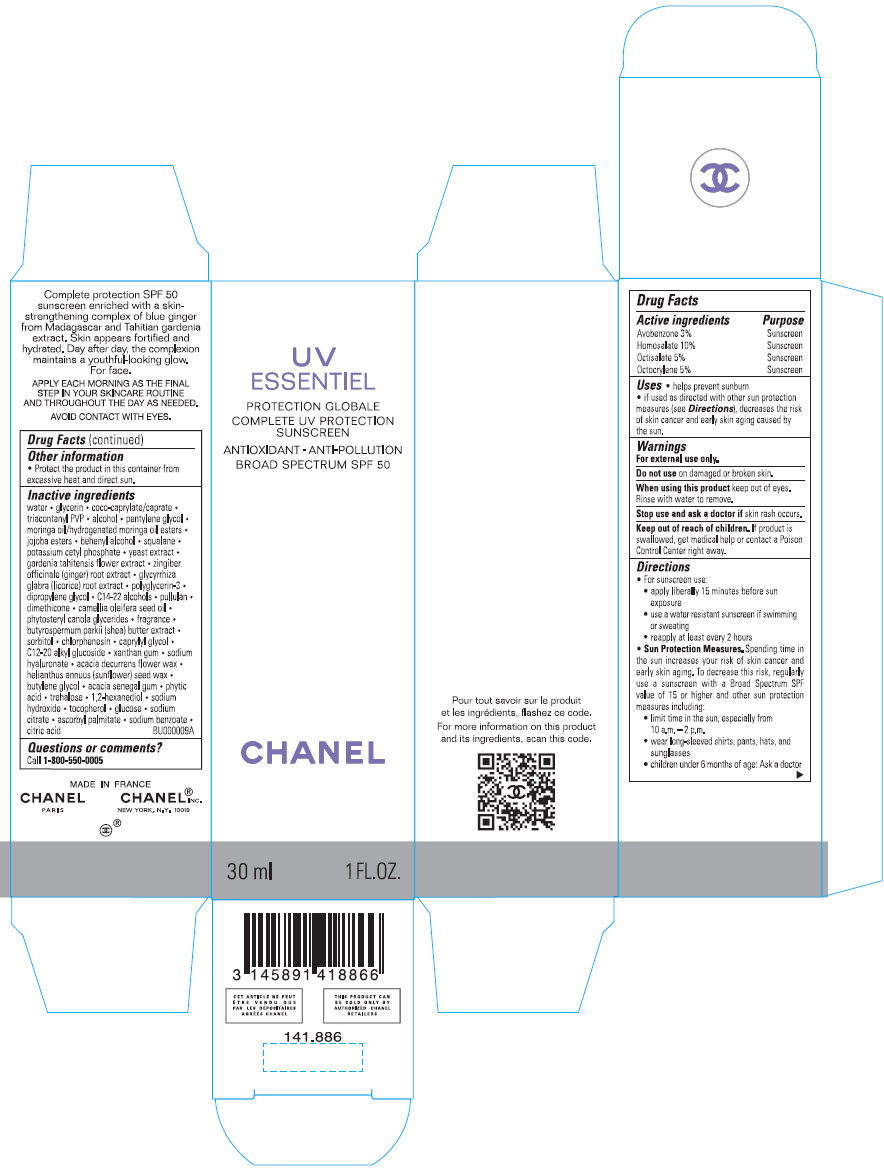
UV ESSENTIEL COMPLETE UV PROTECTION SUNSCREEN ANTIOXIDANT ANTI-POLLUTION BROAD SPECTRUM SPF 50 AVOBENZONE, HOMOSALATE, OCTISALATE, and OCTOCRYLENE 30 mg/mL; 100 mg/mL; 50 mg/mL; 50 mg/mL Emulsion
🆔 Identity & classification
Where does this data come from?
🏭 Manufacturer & labeler
Where does this data come from?
🩺 Clinical
This is a topical sunscreen emulsion sold as an over-the-counter product under FDA monograph rules. It contains four active ingredients (avobenzone, homosalate, octisalate, and octocrylene) that are ultraviolet light filters, each designed to absorb or reflect different wavelengths of UV radiation. These ingredients are typically combined in broad-spectrum sunscreen formulas to help protect skin from both UVA and UVB exposure. The product is intended for application to skin as a protective lotion.
Patient education
Supplement & herbal interactions
Where does this data come from?
Ask a licensed pharmacist directly — free, answered by our team.
🧪 Inactive Ingredients / Excipients
Inactive ingredients, also called excipients, are components of the drug product other than the active ingredient. They may include fillers, dyes, coatings, preservatives, flavors, or other formulation ingredients.
💡 Tap an ingredient (hover on desktop) to see what it is and why it’s used.
-
UNII TR046Y3K1G
A liquid alcohol derived from petroleum or plant sources. It acts as a solvent and humectant in medicines, helping dissolve active ingredients and retain moisture in the formulation.
-
UNII 5C5403N26O
Acacia is a natural gum derived from acacia tree sap. It serves as a binder, thickener, and emulsifier to help hold ingredients together, improve texture, and stabilize the medicine.
-
UNII AU6XZE9IY9
A natural wax derived from acacia decurrens flowers. It functions as a coating agent, lubricant, and polish to give tablets and capsules a smooth, protective finish and improve handling during manufacturing.
-
UNII 3K9958V90M
A liquid solvent derived from fermentation or chemical synthesis. In medicines, alcohol dissolves active ingredients, helps preserve the product, and improves how the body absorbs certain drugs.
-
UNII XF417D3PSL
Anhydrous citric acid is a sour, crystalline powder derived from citric acid with water removed. In medicines, it acts as a buffer to control pH, adds tartness to improve taste, and helps tablets disintegrate.
-
UNII 5SL0G7R0OK
A simple sugar made from corn or other plants, used in medicines as a filler and sweetener. It helps create the right texture and taste in tablets, powders, and liquid formulations.
-
UNII QN83US2B0N
Ascorbyl palmitate is a fat-soluble form of vitamin C used as an antioxidant in medicines. It prevents oils and fats in the product from breaking down and becoming less stable over time.
-
UNII 3XUS85K0RA
Butylene glycol is a clear liquid derived from petroleum or plants that acts as a humectant, solvent, and preservative booster in medicines. It helps keep formulations stable, dissolve active ingredients, and maintain moisture in topical products.
-
UNII K67N5Z1RUA
A plant-derived surfactant made from natural sugars and fatty alcohols. It helps dissolve and mix ingredients evenly throughout the medicine, acting as an emulsifier and solubilizer in liquid formulations.
-
UNII B1K89384RJ
A mixture of fatty alcohols derived from natural oils or fats, typically containing 14 to 22 carbon atoms. Used as an emollient, thickener, and emulsifier to improve texture and help blend oil and water components in formulations.
-
UNII T1PE06G0VE
Camellia oil is a plant-based oil extracted from camellia seeds. It's used in medicines as an emollient and lubricant to improve texture and help ingredients blend smoothly together.
-
UNII 00YIU5438U
Caprylyl glycol is a clear liquid derived from coconut oil. In medicines, it acts as a humectant to retain moisture, a preservative booster to prevent microbial growth, and a solvent to help dissolve or mix other ingredients.
-
UNII I670DAL4SZ
A preservative that fights bacteria and fungi. It keeps medicines and topical products stable and safe from microbial contamination during storage and use.
-
UNII 8D9H4QU99H
A synthetic fatty acid ester derived from coconut oil, used as an emulsifier and solubilizer to help mix oil and water-based ingredients and improve how the body absorbs certain drugs.
-
UNII 92RU3N3Y1O
Dimethicone is a silicone-based oil that acts as an anti-foaming agent and lubricant in medicines. It reduces gas bubbles in liquid formulations and helps coat and protect the stomach lining when ingested.
-
UNII E107L85C40
Dipropylene glycol is a clear liquid made from propylene glycol. It acts as a solvent and humectant in medicines, helping dissolve active ingredients and retain moisture in the formulation.
-
UNII 9G1OE216XY
Docosanol is a waxy, fatty alcohol derived from plant sources. It acts as an emollient and thickener in topical medicines, helping to soften the skin and improve product texture and stability.
-
UNII 7IGF0S7R8I
Phytic acid is a naturally occurring compound found in plants that acts as a chelating agent and preservative in medicines. It helps stabilize formulations and prevent oxidation of active ingredients.
-
UNII T0OCU8201Y
A natural plant extract from gardenia flowers used as a colorant and flavoring agent in medicines. It provides yellow to orange coloring and subtle floral notes to improve the appearance and taste of the product.
-
UNII C5529G5JPQ
Ginger is a plant-derived ingredient used as a flavoring agent to add taste and aroma to medicines. It may also provide mild soothing properties to support product palatability.
-
UNII PDC6A3C0OX
Glycerin is a clear, thick liquid derived from plant oils or fats. It acts as a humectant to retain moisture, a sweetener, and a solvent in medications.
-
UNII 2788Z9758H
A plant extract from licorice root used as a sweetener, flavoring agent, and natural emulsifier in medicines. It helps improve taste and may aid in keeping ingredients evenly mixed throughout the product.
-
UNII 42DG15CHXV
A natural plant wax derived from sunflower seeds. It serves as a lubricant and glidant to help powders flow smoothly during manufacturing and tablet formation.
-
UNII YSE9PPT4TH
Hyaluronate sodium is a natural carbohydrate that holds moisture. It's used in medicines as a lubricant, thickener, and moisture-retaining agent to improve texture and delivery of the active ingredient.
-
UNII 7F0EV20QYL
Jojoba oil is a liquid wax extracted from jojoba plant seeds. In medications, it serves as an emollient and carrier oil that helps soften skin, improve texture, and distribute active ingredients evenly in topical formulations.
-
UNII 50C1307PZG
Pentylene glycol is a humectant and preservative helper derived from petroleum or plant sources. It draws moisture into the product and helps prevent bacterial growth, keeping medicines stable during storage.
-
UNII 4A0NCJ6RD6
Polyglycerin-3 is a synthetic ingredient made by linking multiple glycerin molecules together. It acts as an emulsifier and humectant, helping oils and water mix smoothly and keeping the product from drying out.
-
UNII 03KCY6P7UT
A waxy compound derived from cetyl alcohol and phosphoric acid. It acts as an emulsifier to help blend oil and water ingredients, and as a thickener to give the medicine its proper texture and consistency.
-
UNII 8ZQ0AYU1TT
Pullulan is a natural polysaccharide, a type of carbohydrate made from yeast. It acts as a binder and film-former to hold tablet ingredients together and create protective coatings on capsules.
-
UNII K49155WL9Y
Shea butter is a fat extracted from shea tree nuts. It's used in medicines as an emollient and lubricant to soften the product, improve texture, and help ingredients blend smoothly together.
-
UNII OJ245FE5EU
Sodium benzoate is a salt derived from benzoic acid, a preservative. It's added to medicines to prevent growth of bacteria, fungi, and other microorganisms that could spoil the product.
-
UNII 1Q73Q2JULR
Sodium citrate is a salt derived from citric acid. It works as a buffer to maintain the medicine's pH level and may also help improve taste or act as a preservative in the formulation.
-
UNII 55X04QC32I
A strong alkaline chemical used to adjust and maintain the pH balance of liquid medicines. It helps keep the medicine stable and ensures it stays effective during storage.
-
UNII 506T60A25R
Sorbitol is a natural sugar alcohol derived from glucose. It serves as a sweetener, humectant, and bulking agent in medications to improve taste and help maintain moisture in the product.
-
UNII GW89575KF9
Squalane is a lightweight oil derived from plant sources or synthesized. It acts as an emollient and lubricant in formulations, helping ingredients blend smoothly and improving product texture and spreadability.
-
UNII R0ZB2556P8
Tocopherol is a form of vitamin E derived from plant oils. It acts as an antioxidant in medicines to prevent oils and fats from breaking down and spoiling during storage.
-
UNII B8WCK70T7I
Trehalose is a natural sugar made from two glucose molecules linked together. It's used in medicines as a filler to add bulk, a sweetener for taste, and a stabilizer to help keep active ingredients effective during storage.
-
UNII N0SS3Q238D
A synthetic polymer made by combining povidone with long-chain fatty compounds. It acts as a binder and film-former to help hold tablet ingredients together and create smooth coatings on medicine surfaces.
-
UNII 059QF0KO0R
Water is a liquid solvent that dissolves and mixes ingredients together in liquid medicines, syrups, and injections. It helps distribute the active drug evenly throughout the product.
-
UNII TTV12P4NEE
Xanthan gum is a thickening and stabilizing ingredient made from fermented corn or other sugars. It's added to medicines to improve texture, prevent separation of liquids and solids, and help the product stay consistent.
-
UNII 3NY3SM6B8U
A microorganism used as a natural source of B vitamins and proteins. In medications, yeast serves as a nutrient supplement and may help with tablet binding or act as a filler to give the product proper form and stability.
41 inactive ingredients listed in the exact product block matched to this NDC.
Label-section wording can be broader than the structured product block and may mention additional formulation ingredients.
Where does this data come from?
ingredient classCode="IACT" elements from the exact product block matched by this NDC. Label-section narrative from DailyMed / the openFDA label index is shown separately when available.Inactive ingredient FAQ
Are inactive ingredients the same for every manufacturer?
Why might an inactive ingredient be missing?
Can inactive ingredients matter?
💲 Pricing
A drug doesn't have one price. Each row is a different public payment system, and none is what you'd pay at the counter — that depends on your insurance. The ⓘ on each row explains what it measures.
| Price system | Per mL | Per package |
|---|---|---|
| Retail pharmacies payNADAC · weekly | Not in the retail survey — common for institutional, discontinued, or low-volume packs. | |
| Medicaid paysCMS SDUD · 12 mo | No recent Medicaid claims on file for this NDC — rare and low-volume NDCs are suppressed in the public data. | |
| Medicare drug plans payPart D · quarterly | No Part D plan price is available for this NDC in our data. | |
Where does this data come from?
🔁 Therapeutic equivalents
| Product | Labeler | Pack | NADAC/unit | TE | Status | Price vs. this |
|---|---|---|---|---|---|---|
| Uv Essentiel Complete Uv Protection Sunscreen Antioxidant Anti-Pollution Broad Spectrum Spf 50 30 mg/mL; 100 mg/mL; 50 mg/mL; 50 mg/mLthis 68745-2157-01 | CHANEL | 1 bottle | — | — | FDA listed | — |
Where does this data come from?
⏳ Availability & generic status
We did not find an FDA-approved generic match for this exact strength, form and route.
Where does this data come from?
🔬 Reported adverse events (FAERS)
Top reported reactions
Age at onset
Reporter sex
Serious outcomes
Where does this data come from?
📦 Packaging — all sizes for this product
| Package NDC | Description | Marketing start | Status |
|---|---|---|---|
| 68745-2157-01 You're viewing this | 1 BOTTLE in 1 CARTON (68745-2157-1) / 30 mL in 1 BOTTLE | 2023-05-01 | Active |
🧭 About this NDC listing & data coverage
What data is (and isn’t) available for this NDC — tap to expand
| NDC identity (package / product / labeler codes) | ✓ Available |
| Labeler | ✓ Available |
| Product & package description | ✓ Available |
| Marketing category & status | ✓ Available |
| Active ingredient / dosage form / route | ✓ Available |
| FDA label (SPL via DailyMed) | ✓ Available |
| Package photos | ✓ Available |
| Inactive ingredients (structured) | ✓ Available |
| NADAC pharmacy acquisition price (CMS) | — Not published for this NDC CMS publishes NADAC only for NDCs reported in its retail-pharmacy survey. |
| Orange Book / therapeutic-equivalence data | — Not published for this NDC Applies only to products approved under an NDA/ANDA; many listings are out of scope. |
| HCPCS J-code billing crosswalk | — Not published for this NDC Most self-administered / retail products have no J-code — that is normal. |
| Medicaid utilization (CMS SDUD) | — Not published for this NDC CMS reports utilization only for NDCs with Medicaid claims above its privacy threshold. |
Questions about this listing
Is this NDC FDA-approved?
Why is there no price listed?
Is the NDC printed on the package the same as the 11-digit billing NDC?
What do the three segments of this NDC mean?
Is this package still being marketed?
Who lists this product with the FDA?
Do I need a prescription for this product?
Where does this data come from?
📄 FDA label — Drug Facts FDA SPL
🎯 Indications and Usage ▾
Uses helps prevent sunburn if used as directed with other sun protection measures (see Directions ), decreases the risk of skin cancer and early skin aging caused by the sun.
⏱️ Dosage and Administration ▾
Directions For sunscreen use: apply liberally 15 minutes before sun exposure use a water resistant sunscreen if swimming or sweating reapply at least every 2 hours Sun Protection Measures. Spending time in the sun increases your risk of skin cancer and early skin aging. To decrease this risk, regularly use a sunscreen with a Broad Spectrum SPF value of 15 or higher and other sun protection measures including: limit time in the sun, especially from 10 a.m. – 2 p.m. wear long-sleeved shirts, pants, hats, and sunglasses Children under 6 months of age: Ask a doctor
⚠️ Warnings ▾
Warnings For external use only. Do not use on damaged or broken skin. When using this product keep out of eyes. Rinse with water to remove. Stop use and ask a doctor if skin rash occurs. Keep out of reach of children . If swallowed, get medical help or contact a Poison Control Center right away.
📦 Storage and Handling ▾
Other information Protect the product in this container from excessive heat and direct sun.
🧪 Active Ingredient ▾
Active ingredients Purpose Avobenzone 3% Sunscreen Homosalate 10% Sunscreen Octisalate 5% Sunscreen Octocrylene 5% Sunscreen
🧪 Inactive Ingredients ▾
Inactive ingredients water • glycerin • coco-caprylate/caprate caprylyl • triacontanyl PVP • alcohol • pentylene glycol • moringa oil/hydrogenated moringa oil esters • jojoba esters • behenyl alcohol • squalane • potassium cetyl phosphate • yeast extract • gardenia tahitensis flower extract • zingiber officinale (ginger) root extract • glycyrrhiza glabra (licorice) root extract • polyglycerin-3 • dipropylene glycol • C14-22 alcohols • pullulan • dimethicone • camellia oleifera seed oil • phytosteryl canola glycerides • fragrance • butyrospermum parkii (shea) butter extract • sorbitol • chlorphenesin • caprylyl glycol • C12-20 alkyl glucoside • xanthan gum • sodium hyaluronate • acacia decurrens flower wax • helianthus annuus (sunflower) seed wax • butylene glycol • acacia senegal gum • phytic acid • trehalose • 1,2-hexanediol • sodium hydroxide • tocopherol • glucose • sodium citrate • ascorbyl palmitate • sodium benzoate • citric acid BU000009A
🎯 Purpose ▾
Active ingredients Purpose Avobenzone 3% Sunscreen Homosalate 10% Sunscreen Octisalate 5% Sunscreen Octocrylene 5% Sunscreen