
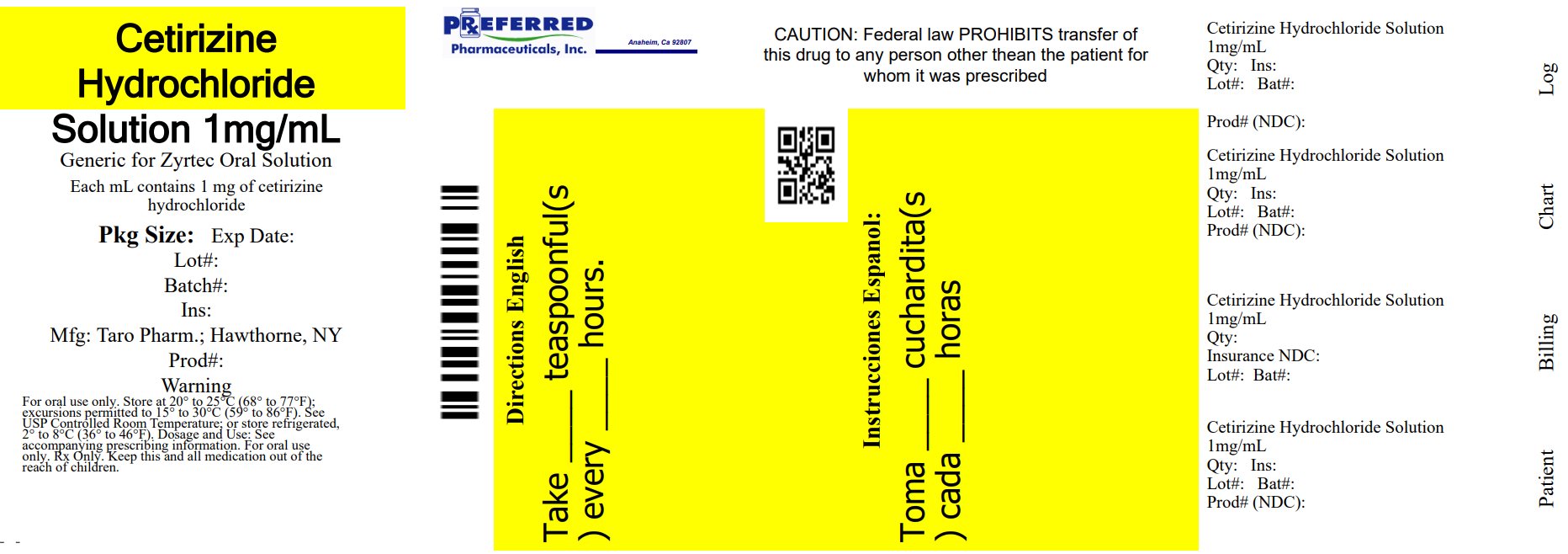
Cetirizine Hydrochloride 1 mg/mL Solution — NDC 68788-8282-1 (Billing 68788-8282-01) · Product 68788-8282
NDC 68788-8282-1 (billing 68788-8282-01) is a package of Cetirizine Hydrochloride 1 mg/mL Solution from Preferred Pharmaceuticals Inc., marketed since Oct 2023 and currently FDA-listed. It is the main listing for product NDC 68788-8282, its only package size.
Other active recalls for Cetirizine Hydrochloride (different manufacturers) — 3 · tap to view
Identity & classification
Regulatory identifiers FDA, NLM and CMS codes for this package
- RxCUI (RxNorm): 1014673
- 11-digit billing NDC: 68788828201
Where does this data come from?
- FDA openFDA NDC Directory · synced Oct 1, 2026
- FDA label on DailyMed · label index refreshed Oct 1, 2026
- RxNorm (NLM RxNav) · catalog refreshed Sep 24, 2026
- Medi-Span GPI (licensed)
- First Databank (licensed) · refreshed Oct 1, 2026
RxNorm drug class
This medicine belongs to the Histamine-1 Receptor Antagonist class.
Where does this data come from?
- RxClass (NLM) · catalog refreshed Sep 24, 2026
Clinical
Cetirizine is used to treat allergy symptoms: sneezing runny nose itching of the nose or throat red, itchy, or watery eyes Cetirizine is also used to treat urticaria (hives; itchy raised red bumps on skin). Cetirizine is in a class of medications called antihistamines. It works by blocking the action of histamine, a substance in the body that causes allergic symptoms. Cetirizine is also available in combination with pseudoephedrine. This monograph only includes information about the use of cetirizine alone. If you are taking the cetirizine and pseudoephedrine combination product, read th...
Read the full MedlinePlus article ↗- It relieves allergy symptoms. Over-the-counter versions ease runny nose, sneezing, itchy, watery eyes and an itchy nose or throat from hay fever. Specific products treat hives, yea...
- It can. Drowsiness was reported, and it was more common at higher doses in children. Be careful driving or using machinery until you know how it affects you, and avoid alcohol.
- The oral solution can be taken with or without food. Food slightly delays how fast it works but does not change how much your body absorbs.
- Check with me first if you take sedatives or tranquilizers, since they can add to drowsiness. The label found no significant interactions with azithromycin, pseudoephedrine, ketoco...
Patient education
Supplement & herbal interactions
Some supplements/herbs that may interact with Cetirizine Hydrochloride — tap one for details:
Where does this data come from?
- MedlinePlus (NLM) · refreshed Oct 1, 2026
- FDA label on DailyMed · label index refreshed Oct 1, 2026
Ask a licensed pharmacist directly — free, answered by our team.
Pricing
A drug doesn't have one price. Each row is a different public payment system, and none is what you'd pay at the counter — that depends on your insurance. The ⓘ on each row explains what it measures.
| Price system | Per mL | Per package |
|---|---|---|
| Retail pharmacies payNADAC · weekly | Not in the retail survey — common for institutional, discontinued, or low-volume packs. | |
| Medicaid paysCMS SDUD · 12 mo | No recent Medicaid claims on file for this NDC — rare and low-volume NDCs are suppressed in the public data. | |
| Medicare drug plans payPart D · Q2 2026 | $0.0685 | $8.22 / 120 ml |
Where does this data come from?
- CMS NADAC weekly file
- CMS ASP pricing files · refreshed Sep 20, 2026
- CMS Medicaid State Drug Utilization Data · refreshed Oct 1, 2026
- CMS Part D plan pricing files · refreshed Sep 24, 2026
- VA National Acquisition Center price file
Packaging — all sizes for this product
| Package NDC | Description | Marketing start | Marketing end | Status |
|---|---|---|---|---|
| 68788-8282-01 68788-8282-1 You're viewing this Main listing | 1 BOTTLE in 1 CARTON (68788-8282-1) / 120 mL in 1 BOTTLE | 2023-10-25 | — | Active |
Therapeutic equivalents
| Product | Labeler | Pack | NADAC/unit | TE | Status | Price vs. this |
|---|---|---|---|---|---|---|
| Cetirizine Hydrochloride 1 mg/mL 00121-0874-04 | PAI | 120 ml | $0.022 | AA | Availability likely | — |
| Cetirizine Hydrochloride 1 mg/mL 16571-0134-12 | Rising | 120 ml | $0.022 | AA | Availability likely | — |
| Cetirizine Hydrochloride 1 mg/mL 45802-0626-26 | Padagis | 1 bottle | $0.022 | AA | Availability likely | — |
| Cetirizine Hydrochloride 1 mg/mL 51672-4070-08 | Sun | 1 bottle | $0.022 | AA | Availability likely | — |
| Cetirizine Hydrochloride Oral Solution 5 mg/5mL 62135-0057-41 | Chartwell | 120 ml | $0.022 | AA | Availability likely | — |
| Cetirizine Hydrochloride 1 mg/mL 69452-0426-55 | Bionpharma | 120 ml | $0.022 | AA | Availability likely | — |
| Cetirizine hydrochloride 1 mg/mL 72888-0480-01 | Advagen | 120 ml | $0.022 | AA | Availability likely | — |
| Cetirizine Hydrochloride Oral Solution 1 mg/mL 83745-0185-04 | APOZEAL | 120 ml | $0.022 | AA | Availability likely | — |
| Good Neighbor Pharmacy Childrens All Day Allergy 5 mg/5mL 46122-0203-26 | Amerisource | 1 bottle | $0.035 | — | Availability likely | — |
| Cetirizine Hydrochloride 1 mg/mL 57237-0357-12 | Rising | 120 ml | $0.035 | — | Availability likely | — |
| Cetirizine Hydrochloride 1 mg/mL 57237-0358-12 | Rising | 120 ml | $0.035 | — | Availability likely | — |
| foster and thrive childrens allergy relief 5 mg/5mL 70677-1042-01 | Strategic | 1 bottle | $0.035 | — | Availability likely | — |
| Cetirizine Hydrochloride 1 mg/mL 70677-1236-01 | STRATEGIC | 1 bottle | $0.035 | — | Availability likely | — |
| Childrens Allergy Relief 1 mg/mL 70677-0149-01 | Strategic | 1 bottle | $0.037 | — | FDA listed | — |
| Good Sense Childrens All Day Allergy 5 mg/5mL 00113-0189-26 | L. | 1 bottle | $0.038 | — | Availability likely | — |
| Good Sense Childrens All Day Allergy 5 mg/5mL 00113-0503-26 | L. | 1 bottle | $0.038 | — | Availability likely | — |
| childrens cetirizine hydrochloride 5 mg/5mL 00904-6765-20 | Major | 1 bottle | $0.038 | — | Availability likely | — |
| cetirizine hydrochloride 5 mg/5mL 45802-0974-26 | Padagis | 1 bottle | $0.038 | — | Availability likely | — |
| All Day Allergy 5 mg/5mL 46122-0101-26 | Amerisource | 1 bottle | $0.038 | — | Availability likely | — |
| Childrens Allergy Relief 1 mg/mL 69230-0316-11 | Camber | 1 bottle | $0.038 | — | Availability likely | — |
| Leader Childrens All Day Allergy 5 mg/5mL 70000-0214-01 | Cardinal | 1 bottle | $0.038 | — | Availability likely | — |
| Leader Childrens all day allergy 5 mg/5mL 70000-0215-01 | Cardinal | 1 bottle | $0.038 | — | Availability likely | — |
| Cetirizine Hydrochloride 1 mg/mL 70752-0104-06 | QUAGEN | 1 bottle | $0.038 | — | Availability likely | — |
| Cetrizine Hydrochloride 1 mg/mL 83745-0188-04 | APOZEAL | 1 bottle | $0.038 | — | Availability likely | — |
| Dye Free Childrens Cetirizine Hydrocholride 5 mg/5mL 68094-0004-62 | Precision | 10 cups | $0.447 | — | Availability likely | — |
| Wal-Zyr All Day Allergy 5 mg/5mL 00363-2106-01 | WALGREEN | 1 bottle | — | — | FDA listed | — |
| childrens allergy relief 5 mg/5mL 00363-3311-26 | Walgreen | 1 bottle | — | — | FDA listed | — |
| childrens allergy relief 5 mg/5mL 00363-3393-26 | Walgreen | 1 bottle | — | — | FDA listed | — |
| childrens allergy relief 5 mg/5mL 11822-0475-00 | Rite | 1 bottle | — | — | FDA listed | — |
| childrens allergy relief 5 mg/5mL 11822-1189-00 | Rite | 1 bottle | — | — | FDA listed | — |
| Rite Aid childrens allergy relief 1 mg/mL 11822-2106-08 | Rite | 1 bottle | — | — | FDA listed | — |
| childrens cetirizine hydrochloride 5 mg/5mL 17856-6765-01 | ATLANTIC | 72 cups | — | — | FDA listed | — |
| Signature Care Childrens Allergy Relief 5 mg/5mL 21130-0189-34 | Safeway | 1 bottle | — | — | Discontinued | — |
| childrens allergy relief 5 mg/5mL 21130-0465-34 | Safeway | 1 bottle | — | — | FDA listed | — |
| Signature Care Childrens Allergy Relief 5 mg/5mL 21130-0475-26 | Safeway | 1 bottle | — | — | Discontinued | — |
| childrens allergy relief 5 mg/5mL 21130-0653-26 | Safeway | 1 bottle | — | — | FDA listed | — |
| Cetirizine hydrochloride 5 mg/5mL 23155-0929-51 | Heritage | 120 ml | — | AA | FDA listed | — |
| childrens all day allergy 5 mg/5mL 30142-0189-26 | Kroger | 1 bottle | — | — | FDA listed | — |
| Childrens All Day Allergy 5 mg/5mL 30142-0475-26 | Kroger | 1 bottle | — | — | FDA listed | — |
| childrens dye free allergy relief 5 mg/5mL 30142-0643-26 | Kroger | 1 bottle | — | — | FDA listed | — |
| childrens dye free allergy relief 5 mg/5mL 30142-0689-26 | Kroger | 1 bottle | — | — | FDA listed | — |
| Topcare Childrens All Day Allergy 5 mg/5mL 36800-0189-26 | Topco | 1 bottle | — | — | FDA listed | — |
| TopCare Childrens All Day Allergy 5 mg/5mL 36800-0475-00 | Topco | 1 bottle | — | — | FDA listed | — |
| HEB Allergy Relief 5 mg/5mL 37808-0102-08 | H | 1 bottle | — | — | FDA listed | — |
| Allergy Relief 1 mg/mL 37808-0106-08 | H | 1 bottle | — | — | FDA listed | — |
| childrens allergy relief 5 mg/5mL 37808-0671-26 | H | 1 bottle | — | — | Discontinued | — |
| Equaline childrens all day allergy 5 mg/5mL 41163-0475-26 | United | 1 bottle | — | — | FDA listed | — |
| Childrens 24 Hour Allergy 5 mg/5mL 41250-0189-26 | Meijer | 1 bottle | — | — | FDA listed | — |
| Childrens 24 Hour Allergy 5 mg/5mL 41250-0475-26 | Meijer | 1 bottle | — | — | FDA listed | — |
| careone childrens allergy relief 5 mg/5mL 41520-0301-26 | American | 1 bottle | — | — | FDA listed | — |
| careone childrens allergy relief 5 mg/5mL 41520-0902-26 | American | 1 bottle | — | — | FDA listed | — |
| Childrens All Day Allergy 5 mg/5mL 42507-0203-26 | HyVee | 1 bottle | — | — | FDA listed | — |
| childrens all day allergy 5 mg/5mL 42507-0475-26 | HyVee | 1 bottle | — | — | FDA listed | — |
| Childrens Allergy Relief 5 mg/5mL 49035-0106-08 | Wal-Mart | 1 bottle | — | — | FDA listed | — |
| Equate Childrens Allergy Relief 5 mg/5mL 49035-0276-01 | Wal-Mart | 1 bottle | — | — | FDA listed | — |
| Childrens Cetirizine Hydrochloride Sugar Free Grape 1 mg/mL 50090-1103-00 | A-S | 1 bottle | — | — | FDA listed | — |
| Childrens Allergy Relief 1 mg/mL 50090-4741-00 | A-S | 1 bottle | — | — | FDA listed | — |
| Cetirizine Hydrochloride 1 mg/mL 50090-5220-00 | A-S | 1 bottle | — | AA | FDA listed | — |
| Good Sense Childrens All Day Allergy 5 mg/5mL 50090-7068-00 | A-S | 1 bottle | — | — | FDA listed | — |
| Zyrtec Hives 1 mg/mL 50580-0128-04 | Kenvue | 1 bottle | — | — | FDA listed | — |
| Childrens Zyrtec Allergy 5 mg/5mL 50580-0721-05 | Kenvue | 1 bottle | — | — | FDA listed | — |
| Childrens Zyrtec 5 mg/5mL 50580-0730-01 | Kenvue | 1 bottle | — | — | FDA listed | — |
| Childrens Cetirizine Hydrochloride Sugar Free Grape 1 mg/mL 51672-2102-01 | Sun | 1 bottle | — | — | FDA listed | — |
| Cetirizine Hydrochloride 1 mg/mL 51672-2106-01 | Sun | 1 bottle | — | — | FDA listed | — |
| Childrens Cetirizine Hydrochloride 1 mg/mL 51672-2147-01 | Sun | 1 bottle | — | — | FDA listed | — |
| Childrens Allergy Relief 1 mg/mL 55315-0354-31 | Fred's, | 1 bottle | — | — | FDA listed | — |
| DG Health Childrens All Day Allergy 5 mg/5mL 55910-0714-26 | Dolgencorp, | 1 bottle | — | — | FDA listed | — |
| childrens allergy 5 mg/5mL 56062-0102-08 | Publix | 1 bottle | — | — | FDA listed | — |
| Childrens Allergy 1 mg/mL 56062-0106-08 | Publix | 1 bottle | — | — | FDA listed | — |
| Childrens Cetirizine Hydrochloride Allergy 1 mg/mL 58602-0028-20 | Aurohealth | 1 bottle | — | — | FDA listed | — |
| Childrens Cetirizine Hydrochloride Hives Relief 1 mg/mL 58602-0030-20 | Aurohealth | 1 bottle | — | — | FDA listed | — |
| Childrens Cetirizine Hydrochloride Hives Relief 1 mg/mL 58602-0036-15 | Aurohealth | 1 bottle | — | — | FDA listed | — |
| Childrens Allergy Relief 1 mg/mL 58602-0422-12 | Aurohealth | 1 bottle | — | — | FDA listed | — |
| Childrens Allergy Relief 5 mg/5mL 59779-0509-26 | CVS | 1 bottle | — | — | FDA listed | — |
| allergy relief childrens 5 mg/5mL 59779-0837-26 | CVS | 1 bottle | — | — | FDA listed | — |
| Allergy Relief Childrens 5 mg/5mL 59779-0884-26 | CVS | 1 bottle | — | — | Discontinued | — |
| Cetirizine Hydrochloride 1 mg/mL 61037-0479-02 | BAJAJ | 120 ml | — | AA | FDA listed | — |
| Cetirizine Hydrochloride 1 mg/mL 61037-0480-22 | BAJAJ | 120 ml | — | — | FDA listed | — |
| Childrens Allergy Relief 1 mg/mL 63868-0865-04 | C.D.M.A., | 1 bottle | — | — | FDA listed | — |
| Kirkland Signature Childrens Aller Tec 5 mg/5mL 63981-0475-43 | Costco | 2 bottles | — | — | FDA listed | — |
| Welby Childrens Allergy Relief 5 mg/5mL 64024-0475-26 | Aldi | 1 bottle | — | — | FDA listed | — |
| Cetirizine Hydrochloride 5 mg/5mL 65162-0003-86 | Amneal | 1 bottle | — | — | FDA listed | — |
| Cetirizine Hydrochloride 5 mg/5mL 65162-0005-86 | Amneal | 1 bottle | — | — | FDA listed | — |
| Cetirizine Hydrochloride 5 mg/5mL 65162-0684-86 | Amneal | 118 ml | — | AA | FDA listed | — |
| Childrens Cetirizine Hydrochloride 5 mg/5mL 68016-0023-43 | Chain | 1 bottle | — | — | FDA listed | — |
| Childrens Cetirzine 5 mg/5mL 68016-0106-08 | Pharmacy | 1 bottle | — | — | FDA listed | — |
| Premier Value Childrens Cetirizine 5 mg/5mL 68016-0165-00 | Pharmacy | 1 bottle | — | — | FDA listed | — |
| SIMPLY RIGHT childrens cetirizine 5 mg/5mL 68196-0102-01 | Sam's | 2 bottles | — | — | Discontinued | — |
| Members Mark Childrens Cetirizine 5 mg/5mL 68196-0475-43 | Sam's | 2 bottles | — | — | FDA listed | — |
| Good Sense Childrens All Day Allergy 5 mg/5mL 68788-4093-01 | Preferred | 1 bottle | — | — | FDA listed | — |
| childrens cetirizine hydrochloride 5 mg/5mL 68788-8188-01 | Preferred | 1 bottle | — | — | FDA listed | — |
| Cetirizine Hydrochloride 1 mg/mLthis 68788-8282-01 | Preferred | 1 bottle | — | AA | FDA listed | — |
| Cetirizine Hydrochloride 1 mg/mL 68788-8523-01 | Preferred | 1 bottle | — | AA | FDA listed | — |
| Good Sense Childrens All Day Allergy 5 mg/5mL 68788-8803-01 | Preferred | 1 bottle | — | — | FDA listed | — |
| Cetirizine Hydrochloride Oral Solution 1 mg/mL 68788-8890-01 | Preferred | 120 ml | — | AA | FDA listed | — |
| Cetirizine Hydrochloride 1 mg/mL 69206-0990-01 | Aventura | 120 ml | — | AA | FDA listed | — |
| Cetirizine Hydrochloride 1 mg/mL 70752-0103-06 | QUAGEN | 1 bottle | — | — | FDA listed | — |
| Cetirizine Hydrochloride 1 mg/mL 71205-0435-04 | Proficient | 1 bottle | — | AA | FDA listed | — |
| Childrens Cetirizine Hydrochloride Sugar Free Grape 1 mg/mL 71205-0705-72 | Proficient | 1 bottle | — | — | FDA listed | — |
| childrens cetirizine hydrochloride 5 mg/5mL 71205-0722-04 | Proficient | 1 bottle | — | — | FDA listed | — |
| Cetirizine Hydrochloride 1 mg/mL 72162-2073-02 | Bryant | 1 bottle | — | — | FDA listed | — |
| cetirizine hydrochloride 5 mg/5mL 72162-2339-02 | Bryant | 1 bottle | — | — | FDA listed | — |
| Basic Care Childrens All Day Allergy 5 mg/5mL 72288-0330-34 | Amazon.com | 1 bottle | — | — | FDA listed | — |
| basic care childrens all day allergy 5 mg/5mL 72288-0475-34 | Amazon.com | 1 bottle | — | — | FDA listed | — |
| up and up childrens allergy 5 mg/5mL 82442-0475-26 | Target | 1 bottle | — | — | FDA listed | — |
| up and up childrens allergy 5 mg/5mL 82442-0617-26 | Target | 1 bottle | — | — | FDA listed | — |
| Childrens Cetirizine Hydrochloride Sugar Free Grape 1 mg/mL 83939-0009-01 | VERITYRX, | 5 ml | — | — | FDA listed | — |
Where does this data come from?
- FDA openFDA NDC Directory · synced Oct 1, 2026
- FDA Orange Book · refreshed Sep 3, 2026
- CMS NADAC weekly file
Availability & generic status
This product is an FDA-approved generic. Other versions of the same drug are listed under Therapeutic equivalents, least expensive first.
Where does this data come from?
- FDA Orange Book · refreshed Sep 3, 2026
Inactive Ingredients / Excipients
Inactive ingredients, also called excipients, are components of the drug product other than the active ingredient. They may include fillers, dyes, coatings, preservatives, flavors, or other formulation ingredients.
Where does this data come from?
IACT rows and label-wide narrative are kept separate; availability and product-level specificity depend on the submitted label.- FDA label on DailyMed · label index refreshed Oct 1, 2026
- FDA openFDA NDC Directory · synced Oct 1, 2026
Inactive ingredient FAQ
Are inactive ingredients the same for every manufacturer?
Why might an inactive ingredient be missing?
Can inactive ingredients matter?
Manufacturer & labeler
Where does this data come from?
- FDA openFDA NDC Directory · synced Oct 1, 2026
- Drugs@FDA
Full prescribing information FDA SPL
🎯 Indications and Usage ▾
INDICATIONS AND USAGE Perennial Allergic Rhinitis Cetirizine hydrochloride is indicated for the relief of symptoms associated with perennial allergic rhinitis due to allergens such as dust mites, animal dander and molds in children 6 to 23 months of age. Symptoms treated effectively include sneezing, rhinorrhea, postnasal discharge, nasal pruritus, ocular pruritus, and tearing. Chronic Urticaria Cetirizine hydrochloride is indicated for the treatment of the uncomplicated skin manifestations of chronic idiopathic urticaria in children 6 months to 5 years of age.
It significantly reduces the occurrence, severity, and duration of hives and significantly reduces pruritus.
⏱️ Dosage and Administration ▾
DOSAGE AND ADMINISTRATION Cetirizine hydrochloride oral solution USP, 1 mg/mL can be taken without regard to food consumption. Children 2 to 5 Years for Chronic Urticaria The recommended initial dose of cetirizine hydrochloride oral solution in children aged 2 to 5 years is 2.5 mg (½ teaspoonful) oral solution once daily. The dosage in this age group can be increased to a maximum dose of 5 mg per day given as 1 teaspoonful oral solution once a day, or one ½ teaspoonful oral solution given every 12 hours.
Children 6 months to <2 years for Perennial Allergic Rhinitis and Chronic Uriticaria The recommended dose of cetirizine hydrochloride oral solution in children 6 months to 23 months of age is 2.5 mg (½ teaspoonful) once daily. The dose in children 12 to 23 months of age can be increased to a maximum dose of 5 mg per day, given as ½ teaspoonful (2.5 mg) every 12 hours.
⛔ Contraindications ▾
CONTRAINDICATIONS Cetirizine hydrochloride is contraindicated in those patients with a known hypersensitivity to it or any of its ingredients or hydroxyzine.
🤒 Adverse Reactions ▾
ADVERSE REACTIONS Pediatric studies were also conducted with cetirizine hydrochloride. More than 1300 pediatric patients aged 6 to 11 years with more than 900 treated with cetirizine hydrochloride at doses of 1.25 to 10 mg per day were included in controlled and uncontrolled clinical trials conducted in the United States. The duration of treatment ranged from 2 to 12 weeks.
Placebo-controlled trials up to 4 weeks duration included 168 pediatric patients aged 2 to 5 years who received cetirizine, the majority of whom received single daily doses of 5 mg. A placebo-controlled trial 18 months in duration included 399 patients aged 12 to 24 months treated with cetirizine (0.25 mg/kg bid), and another placebo-controlled trial of 7 days duration included 42 patients aged 6 to 11 months who were treated with cetirizine (0.25 mg/kg bid). The majority of adverse reactions reported in pediatric patients aged 2 to 11 years with cetirizine hydrochloride were mild or moderate.
In placebo-controlled trials, the incidence of discontinuations due to adverse reactions in pediatric patients receiving up to 10 mg of cetirizine hydrochloride was uncommon (0.4% on cetirizine hydrochloride vs. 1% on placebo). Table 1 lists adverse experiences which were reported for cetirizine hydrochloride 5 and 10 mg in pediatric patients aged 6 to 11 years in placebo-controlled clinical trials in the United States and were more common with cetirizine hydrochloride than placebo.
Of these, abdominal pain was considered treatment-related and somnolence appeared to be dose-related, 1.3% in placebo, 1.9% at 5 mg and 4.2% at 10 mg. The adverse experiences reported in pediatric patients aged 2 to 5 years in placebo-controlled trials were qualitatively similar in nature and generally similar in frequency to those reported in trials with children aged 6 to 11 years. In the placebo-controlled trials of pediatric patients 6 to 24 months of age, the incidences of adverse experiences, were similar in the cetirizine and placebo treatment groups in each study.
Somnolence occurred with essentially the same frequency in patients who received cetirizine and patients who received placebo. In a study of 1 week duration in children 6 to 11 months of age, patients who received cetirizine exhibited greater irritability/fussiness than patients on placebo. In a study of 18 months duration in patients 12 months and older, insomnia occurred more frequently in patients who received cetirizine compared to patients who received placebo (9% v.
5.3%). In those patients who received 5 mg or more per day of cetirizine as compared to patients who received placebo, fatigue (3.6% v. 1.3%) and malaise (3.6% v.
1.8%) occurred more frequently. Table 1. Adverse Experiences Reported in Pediatric Patients Aged 6 to 11 Years in Placebo-Controlled United States Cetirizine Hydrochloride Trials (5 or 10 mg Dose) Which Occurred at a Frequency of ≥ 2% in Either the 5-mg or the 10-mg Cetirizine Hydrochloride Group, and More Frequently Than in the Placebo Group Cetirizine hydrochloride Adverse Experiences Placebo (N=309) 5 mg (N=161) 10 mg (N=215) Headache 12.3% 11% 14% Pharyngitis 2.9% 6.2% 2.8% Abdominal pain 1.9% 4.4% 5.6% Coughing 3.9% 4.4% 2.8% Somnolence 1.3% 1.9% 4.2% Diarrhea 1.3% 3.1% 1.9% Epistaxis 2.9% 3.7% 1.9% Bronchospasm 1.9% 3.1% 1.9% Nausea 1.9% 1.9% 2.8% Vomiting 1% 2.5% 2.3% The following events were observed infrequently (less than 2%), in either 3982 adults and children 12 years and older or in 659 pediatric patients aged 6 to 11 years who received cetirizine hydrochloride in U.S. trials, including an open adult study of six months duration.
A causal relationship of these infrequent events with cetirizine hydrochloride administration has not been established. Autonomic Nervous System: anorexia, flushing, increased salivation, urinary retention. Cardiovascular: cardiac failure, hypertension, palpitation, tachycardia.
Central and Peripheral Nervous Systems: abnormal coordination, ataxia, confus… [Excerpted — this section continues on DailyMed.]
🔄 Drug Interactions ▾
Drug-Drug Interactions No clinically significant drug interactions have been found with theophylline at a low dose, azithromycin, pseudoephedrine, ketoconazole, or erythromycin. There was a small decrease in the clearance of cetirizine caused by a 400-mg dose of theophylline; it is possible that larger theophylline doses could have a greater effect.
🧒 Pediatric Use ▾
Pediatric Use The safety of cetirizine hydrochloride has been demonstrated in pediatric patients aged 6 months to 5 years. The safety of cetirizine has been demonstrated in 168 patients aged 2 to 5 years in placebo controlled trials of up to 4 weeks duration. On a mg/kg basis, most of the 168 patients received between 0.2 and 0.4 mg/kg of cetirizine hydrochloride.
The safety of cetirizine in 399 patients aged 12 to 24 months has been demonstrated in a placebo-controlled 18-month trial, in which the average dose was 0.25 mg/kg bid, corresponding to a range of 4 to 11 mg/day. The safety of cetirizine hydrochloride oral solution has been demonstrated in 42 patients aged 6 to 11 months in a placebo-controlled 7-day trial. The prescribed dose was 0.25 mg/kg bid, which corresponded to a mean of 4.5 mg/day, with a range of 3.4 to 6.2 mg/day.
The effectiveness of cetirizine hydrochloride for the treatment of allergic rhinitis and chronic idiopathic urticaria in pediatric patients aged 6 months to 5 years is based on an extrapolation of the demonstrated efficacy of cetirizine hydrochloride in adults with these conditions and the likelihood that the disease course, pathophysiology and the drug's effect are substantially similar between these two populations. Efficacy is extrapolated down to 6 months of age for perennial allergic rhinitis because this disease is thought to occur down to these ages in children.
The recommended doses for the pediatric population are based on cross-study comparisons of the pharmacokinetics and pharmacodynamics of cetirizine in adult and pediatric subjects and on the safety profile of cetirizine in both adult and pediatric patients at doses equal to or higher than the recommended doses. The cetirizine AUC and C max in pediatric subjects aged 6 to 23 months who received a mean of 2.3 mg in a single dose and in subjects aged 2 to 5 years who received a single dose of 5 mg of cetirizine oral solution, was estimated to be intermediate between that observed in adults who received a single dose of 10 mg of cetirizine tablets and those who received a single dose of 20 mg of cetirizine tablets.
The safety and effectiveness of cetirizine in pediatric patients under the age of 6 months have not been established.
🆘 Overdosage ▾
OVERDOSAGE Overdosage has been reported with cetirizine hydrochloride. In one adult patient who took 150 mg of cetirizine hydrochloride, the patient was somnolent but did not display any other clinical signs or abnormal blood chemistry or hematology results. In an 18 month old pediatric patient who took an overdose of cetirizine hydrochloride (approximately 180 mg), restlessness and irritability were observed initially; this was followed by drowsiness.
Should overdose occur, treatment should be symptomatic or supportive, taking into account any concomitantly ingested medications. There is no known specific antidote to cetirizine hydrochloride. Cetirizine hydrochloride is not effectively removed by dialysis, and dialysis will be ineffective unless a dialyzable agent has been concomitantly ingested.
The acute minimal lethal oral doses were 237 mg/kg in mice (approximately 95 times the maximum recommended daily oral dose in adults on a mg/m 2 basis, or approximately 40 times the maximum recommended daily oral dose in infants on a mg/m 2 basis) and 562 mg/kg in rats (approximately 460 times the maximum recommended daily oral dose in adults on a mg/m 2 basis, or approximately 190 times the maximum recommended daily oral dose in infants on a mg/m 2 basis). In rodents, the target of acute toxicity was the central nervous system, and the target of multiple-dose toxicity was the liver.
🧬 Clinical Pharmacology ▾
CLINICAL PHARMACOLOGY Mechanism of Actions Cetirizine, a human metabolite of hydroxyzine, is an antihistamine; its principal effects are mediated via selective inhibition of peripheral H 1 receptors. The antihistaminic activity of cetirizine has been clearly documented in a variety of animal and human models. In vivo and ex vivo animal models have shown negligible anticholinergic and antiserotonergic activity.
In clinical studies, however, dry mouth was more common with cetirizine than with placebo. In vitro receptor binding studies have shown no measurable affinity for other than H 1 receptors. Autoradiographic studies with radiolabeled cetirizine in the rat have shown negligible penetration into the brain.
Ex vivo experiments in the mouse have shown that systemically administered cetirizine does not significantly occupy cerebral H 1 receptors. Pharmacokinetics Absorption Cetirizine was rapidly absorbed with a time to maximum concentration (T max ) of approximately 1 hour following oral administration of tablets or oral solution in adults. Comparable bioavailability was found between the tablet and oral solution dosage forms.
When healthy volunteers were administered multiple doses of cetirizine (10 mg tablets once daily for 10 days), a mean peak plasma concentration (C max ) of 311 ng/mL was observed. No accumulation was observed. Cetirizine pharmacokinetics were linear for oral doses ranging from 5 to 60 mg.
Food had no effect on the extent of cetirizine exposure (AUC) but T max was delayed by 1.7 hours and C max was decreased by 23% in the presence of food. Distribution The mean plasma protein binding of cetirizine is 93%, independent of concentration in the range of 25 to 1000 ng/mL, which includes the therapeutic plasma levels observed. Metabolism A mass balance study in 6 healthy male volunteers indicated that 70% of the administered radioactivity was recovered in the urine and 10% in the feces.
Approximately 50% of the radioactivity was identified in the urine as unchanged drug. Most of the rapid increase in peak plasma radioactivity was associated with parent drug, suggesting a low degree of first-pass metabolism. Cetirizine is metabolized to a limited extent by oxidative O-dealkylation to a metabolite with negligible antihistaminic activity.
The enzyme or enzymes responsible for this metabolism have not been identified. Elimination The mean elimination half-life in 146 healthy volunteers across multiple pharmacokinetic studies was 8.3 hours and the apparent total body clearance for cetirizine was approximately 53 mL/min. Interaction Studies Pharmacokinetic interaction studies with cetirizine in adults were conducted with pseudoephedrine, antipyrine, ketoconazole, erythromycin and azithromycin.
No interactions were observed. In a multiple dose study of theophylline (400 mg once daily for 3 days) and cetirizine (20 mg once daily for 3 days), a 16% decrease in the clearance of cetirizine was observed. The disposition of theophylline was not altered by concomitant cetirizine administration.
Special Populations Pediatric Patients In pediatric patients aged 2 to 5 years who received 5 mg of cetirizine, the mean C max was 660 ng/mL. Based on cross-study comparisons, the weight normalized apparent total body clearance was 81 to 111% greater and the elimination half-life was 33 to 41% shorter in this pediatric population than in adults. In pediatric patients aged 6 to 23 months who received a single dose of 0.25 mg/kg cetirizine oral solution (mean dose 2.3 mg), the mean C max was 390 ng/mL.
Based on cross-study comparisons, the weight-normalized, apparent total body clearance was 304% greater and the elimination half-life was 63% shorter in this pediatric population compared to adults. The average AUC( 0-t ) in children 6 months to <2 years of age receiving the maximum dose of cetirizine solution (2.5 mg twice a day) is expected to be two-fold higher than that observed in adults receiving a dose of 10 mg cetirizine tablets o… [Excerpted — this section continues on DailyMed.]
🧬 Mechanism of Action ▾
Mechanism of Actions Cetirizine, a human metabolite of hydroxyzine, is an antihistamine; its principal effects are mediated via selective inhibition of peripheral H 1 receptors. The antihistaminic activity of cetirizine has been clearly documented in a variety of animal and human models. In vivo and ex vivo animal models have shown negligible anticholinergic and antiserotonergic activity.
In clinical studies, however, dry mouth was more common with cetirizine than with placebo. In vitro receptor binding studies have shown no measurable affinity for other than H 1 receptors. Autoradiographic studies with radiolabeled cetirizine in the rat have shown negligible penetration into the brain.
Ex vivo experiments in the mouse have shown that systemically administered cetirizine does not significantly occupy cerebral H 1 receptors.
📦 How Supplied / Storage and Handling ▾
HOW SUPPLIED Cetirizine hydrochloride oral solution USP, 5 mg/5 mL (1 mg/mL) is colorless to slightly yellow with a banana-grape flavor. Each teaspoonful (5 mL) contains 5 mg cetirizine hydrochloride. Cetirizine hydrochloride oral solution is supplied as follows: 120 mL plastic bottles NDC 68788-8282-1 STORAGE Store at 20° to 25°C (68° to 77°F) excursions permitted to 15° to 30°C (59° to 86°F) [see USP Controlled Room Temperature]; or Store refrigerated, 2° to 8°C (36° to 46°F).
📦 Storage and Handling ▾
STORAGE Store at 20° to 25°C (68° to 77°F) excursions permitted to 15° to 30°C (59° to 86°F) [see USP Controlled Room Temperature]; or Store refrigerated, 2° to 8°C (36° to 46°F).
📋 Description ▾
DESCRIPTION Cetirizine hydrochloride is an orally active and selective H 1 -receptor antagonist. The chemical name is (±) - [2- [4- [ (4-chlorophenyl) phenylmethyl]-1-piperazinyl] ethoxy]acetic acid, dihydrochloride. Cetirizine hydrochloride is a racemic compound with an empirical formula of C 21 H 25 ClN 2 O 3 ∙2HCl.
The molecular weight is 461.82 and the chemical structure is shown below: Cetirizine hydrochloride is a white, crystalline powder and is water soluble. Cetirizine hydrochloride oral solution is a colorless to slightly yellow oral solution containing cetirizine hydrochloride at a concentration of 1 mg/mL (5 mg/5 mL) for oral administration. The pH is between 4 and 5.
The inactive ingredients of the oral solution are: artificial grape flavor, glacial acetic acid, glycerin, methylparaben, natural and artificial banana flavor, propylene glycol, propylparaben, purified water, sodium acetate (anhydrous), sucrose. Chemical Structure
⚠️ Precautions ▾
PRECAUTIONS Activities Requiring Mental Alertness In clinical trials, the occurrence of somnolence has been reported in some patients taking cetirizine hydrochloride; due caution should therefore be exercised when driving a car or operating potentially dangerous machinery. Concurrent use of cetirizine hydrochloride with alcohol or other CNS depressants should be avoided because additional reductions in alertness and additional impairment of CNS performance may occur. Drug-Drug Interactions No clinically significant drug interactions have been found with theophylline at a low dose, azithromycin, pseudoephedrine, ketoconazole, or erythromycin.
There was a small decrease in the clearance of cetirizine caused by a 400-mg dose of theophylline; it is possible that larger theophylline doses could have a greater effect. Carcinogenesis, Mutagenesis and Impairment of Fertility In a 2-year carcinogenicity study in rats, cetirizine was not carcinogenic at dietary doses up to 20 mg/kg (approximately 15 times the maximum recommended daily oral dose in adults on a mg/m 2 basis, or approximately 7 times the maximum recommended daily oral dose in infants on a mg/m 2 basis).
In a 2-year carcinogenicity study in mice, cetirizine caused an increased incidence of benign liver tumors in males at a dietary dose of 16 mg/kg (approximately 6 times the maximum recommended daily oral dose in adults on a mg/m 2 basis, or approximately 3 times the maximum recommended daily oral dose in infants on a mg/m 2 basis). No increase in the incidence of liver tumors was observed in mice at a dietary dose of 4 mg/kg (approximately 2 times the maximum recommended daily oral dose in adults on a mg/m 2 basis, or approximately equivalent to the maximum recommended daily oral dose in infants on a mg/m 2 basis).
The clinical significance of these findings during long-term use of cetirizine hydrochloride is not known. Cetirizine was not mutagenic in the Ames test, and not clastogenic in the human lymphocyte assay, the mouse lymphoma assay, and in vivo micronucleus test in rats. In a fertility and general reproductive performance study in mice, cetirizine did not impair fertility at an oral dose of 64 mg/kg (approximately 25 times the maximum recommended daily oral dose in adults on a mg/m 2 basis).
Pediatric Use The safety of cetirizine hydrochloride has been demonstrated in pediatric patients aged 6 months to 5 years. The safety of cetirizine has been demonstrated in 168 patients aged 2 to 5 years in placebo controlled trials of up to 4 weeks duration. On a mg/kg basis, most of the 168 patients received between 0.2 and 0.4 mg/kg of cetirizine hydrochloride.
The safety of cetirizine in 399 patients aged 12 to 24 months has been demonstrated in a placebo-controlled 18-month trial, in which the average dose was 0.25 mg/kg bid, corresponding to a range of 4 to 11 mg/day. The safety of cetirizine hydrochloride oral solution has been demonstrated in 42 patients aged 6 to 11 months in a placebo-controlled 7-day trial. The prescribed dose was 0.25 mg/kg bid, which corresponded to a mean of 4.5 mg/day, with a range of 3.4 to 6.2 mg/day.
The effectiveness of cetirizine hydrochloride for the treatment of allergic rhinitis and chronic idiopathic urticaria in pediatric patients aged 6 months to 5 years is based on an extrapolation of the demonstrated efficacy of cetirizine hydrochloride in adults with these conditions and the likelihood that the disease course, pathophysiology and the drug's effect are substantially similar between these two populations. Efficacy is extrapolated down to 6 months of age for perennial allergic rhinitis because this disease is thought to occur down to these ages in children.
The recommended doses for the pediatric population are based on cross-study comparisons of the pharmacokinetics and pharmacodynamics of cetirizine in adult and pediatric subjects and on the safety profile of cetirizine in both adult and pediatric patients at doses equal to or higher… [Excerpted — this section continues on DailyMed.]
🧬 Pharmacokinetics ▾
Pharmacokinetics Absorption Cetirizine was rapidly absorbed with a time to maximum concentration (T max ) of approximately 1 hour following oral administration of tablets or oral solution in adults. Comparable bioavailability was found between the tablet and oral solution dosage forms. When healthy volunteers were administered multiple doses of cetirizine (10 mg tablets once daily for 10 days), a mean peak plasma concentration (C max ) of 311 ng/mL was observed.
No accumulation was observed. Cetirizine pharmacokinetics were linear for oral doses ranging from 5 to 60 mg. Food had no effect on the extent of cetirizine exposure (AUC) but T max was delayed by 1.7 hours and C max was decreased by 23% in the presence of food.
Distribution The mean plasma protein binding of cetirizine is 93%, independent of concentration in the range of 25 to 1000 ng/mL, which includes the therapeutic plasma levels observed. Metabolism A mass balance study in 6 healthy male volunteers indicated that 70% of the administered radioactivity was recovered in the urine and 10% in the feces. Approximately 50% of the radioactivity was identified in the urine as unchanged drug.
Most of the rapid increase in peak plasma radioactivity was associated with parent drug, suggesting a low degree of first-pass metabolism. Cetirizine is metabolized to a limited extent by oxidative O-dealkylation to a metabolite with negligible antihistaminic activity. The enzyme or enzymes responsible for this metabolism have not been identified.
Elimination The mean elimination half-life in 146 healthy volunteers across multiple pharmacokinetic studies was 8.3 hours and the apparent total body clearance for cetirizine was approximately 53 mL/min. Interaction Studies Pharmacokinetic interaction studies with cetirizine in adults were conducted with pseudoephedrine, antipyrine, ketoconazole, erythromycin and azithromycin. No interactions were observed.
In a multiple dose study of theophylline (400 mg once daily for 3 days) and cetirizine (20 mg once daily for 3 days), a 16% decrease in the clearance of cetirizine was observed. The disposition of theophylline was not altered by concomitant cetirizine administration. Special Populations Pediatric Patients In pediatric patients aged 2 to 5 years who received 5 mg of cetirizine, the mean C max was 660 ng/mL.
Based on cross-study comparisons, the weight normalized apparent total body clearance was 81 to 111% greater and the elimination half-life was 33 to 41% shorter in this pediatric population than in adults. In pediatric patients aged 6 to 23 months who received a single dose of 0.25 mg/kg cetirizine oral solution (mean dose 2.3 mg), the mean C max was 390 ng/mL. Based on cross-study comparisons, the weight-normalized, apparent total body clearance was 304% greater and the elimination half-life was 63% shorter in this pediatric population compared to adults.
The average AUC( 0-t ) in children 6 months to <2 years of age receiving the maximum dose of cetirizine solution (2.5 mg twice a day) is expected to be two-fold higher than that observed in adults receiving a dose of 10 mg cetirizine tablets once a day. Effect of Gender The effect of gender on cetirizine pharmacokinetics has not been adequately studied. Effect of Race No race-related differences in the kinetics of cetirizine have been observed.
🧬 Pharmacodynamics ▾
Pharmacodynamics Cetirizine hydrochloride at doses of 5 and 10 mg strongly inhibited the wheal and flare caused by intradermal injection of histamine in 19 pediatric volunteers (aged 5 to 12 years) and the activity persisted for at least 24 hours. In a 35-day study in children aged 5 to 12, no tolerance to the antihistaminic (suppression of wheal and flare response) effects of cetirizine hydrochloride was found. In 10 infants 7 to 25 months of age who received 4 to 9 days of cetirizine in an oral solution (0.25 mg/kg bid), there was a 90% inhibition of histamine-induced (10 mg/mL) cutaneous wheal and 87% inhibition of the flare 12 hours after administration of the last dose.
The clinical relevance of this suppression of histamine-induced wheal and flare response on skin testing is unknown. The effects of intradermal injection of various other mediators or histamine releasers were also inhibited by cetirizine, as was response to a cold challenge in patients with cold-induced urticaria. In mildly asthmatic subjects, cetirizine hydrochloride at 5 to 20 mg blocked bronchoconstriction due to nebulized histamine, with virtually total blockade after a 20-mg dose.
In studies conducted for up to 12 hours following cutaneous antigen challenge, the late phase recruitment of eosinophils, neutrophils and basophils, components of the allergic inflammatory response, was inhibited by cetirizine hydrochloride at a dose of 20 mg. In four clinical studies in healthy adult males, no clinically significant mean increases in QTc were observed in cetirizine hydrochloride treated subjects. In the first study, a placebo-controlled crossover trial, cetirizine hydrochloride was given at doses up to 60 mg per day, 6 times the maximum clinical dose, for 1 week, and no significant mean QTc prolongation occurred.
In the second study, a crossover trial, cetirizine hydrochloride 20 mg and erythromycin (500 mg every 8 hours) were given alone and in combination. There was no significant effect on QTc with the combination or with cetirizine hydrochloride alone. In the third trial, also a crossover study, cetirizine hydrochloride 20 mg and ketoconazole (400 mg per day) were given alone and in combination.
Cetirizine hydrochloride caused a mean increase in QTc of 9.1 msec from baseline after 10 days of therapy. Ketoconazole also increased QTc by 8.3 msec. The combination caused an increase of 17.4 msec, equal to the sum of the individual effects.
Thus, there was no significant drug interaction on QTc with the combination of cetirizine hydrochloride and ketoconazole. In the fourth study, a placebo-controlled parallel trial, cetirizine hydrochloride 20 mg was given alone or in combination with azithromycin (500 mg as a single dose on the first day followed by 250 mg once daily). There was no significant increase in QTc with cetirizine hydrochloride 20 mg alone or in combination with azithromycin.
In a four-week clinical trial in pediatric patients aged 6 to 11 years, results of randomly obtained ECG measurements before treatment and after 2 weeks of treatment showed that cetirizine hydrochloride 5 or 10 mg did not increase QTc versus placebo. In a one week clinical trial (N=86) of cetirizine hydrochloride oral solution (0.25 mg/kg bid) compared with placebo in pediatric patients 6 to 11 months of age, ECG measurements taken within 3 hours of the last dose did not show any ECG abnormalities or increases in QTc interval in either group compared to baseline assessments.
Data from other studies where cetirizine hydrochloride was administered to patients 6 to 23 months of age were consistent with the findings in this study. The effects of cetirizine hydrochloride on the QTc interval at doses higher than 10 mg have not been studied in children less than 12 years of age. In a six-week, placebo-controlled study of 186 patients (aged 12 to 64 years) with allergic rhinitis and mild to moderate asthma, cetirizine hydrochloride 10 mg once daily improved rhinitis symptoms and di… [Excerpted — this section continues on DailyMed.]
🔒 Drug Abuse and Dependence ▾
DRUG ABUSE AND DEPENDENCE There is no information to indicate that abuse or dependency occurs with cetirizine hydrochloride.
📄 Carcinogenesis, Mutagenesis, Impairment of Fertility ▾
Carcinogenesis, Mutagenesis and Impairment of Fertility In a 2-year carcinogenicity study in rats, cetirizine was not carcinogenic at dietary doses up to 20 mg/kg (approximately 15 times the maximum recommended daily oral dose in adults on a mg/m 2 basis, or approximately 7 times the maximum recommended daily oral dose in infants on a mg/m 2 basis). In a 2-year carcinogenicity study in mice, cetirizine caused an increased incidence of benign liver tumors in males at a dietary dose of 16 mg/kg (approximately 6 times the maximum recommended daily oral dose in adults on a mg/m 2 basis, or approximately 3 times the maximum recommended daily oral dose in infants on a mg/m 2 basis).
No increase in the incidence of liver tumors was observed in mice at a dietary dose of 4 mg/kg (approximately 2 times the maximum recommended daily oral dose in adults on a mg/m 2 basis, or approximately equivalent to the maximum recommended daily oral dose in infants on a mg/m 2 basis). The clinical significance of these findings during long-term use of cetirizine hydrochloride is not known. Cetirizine was not mutagenic in the Ames test, and not clastogenic in the human lymphocyte assay, the mouse lymphoma assay, and in vivo micronucleus test in rats.
In a fertility and general reproductive performance study in mice, cetirizine did not impair fertility at an oral dose of 64 mg/kg (approximately 25 times the maximum recommended daily oral dose in adults on a mg/m 2 basis).
📄 Package Label / Principal Display Panel ▾
PRINCIPAL DISPLAY PANEL - 120 mL Bottle Carton NDC 68788-8282-1 120 mL Cetirizine Hydrochloride Oral Solution USP, 1 mg/mL* FOR ORAL USE ONLY Rx only TARO Relabeled By: Preferred Pharmaceuticals Inc. Cetirizine Hydrochloride Solution 1mg per mL
About this NDC listing & data coverage
What data is (and isn’t) available for this NDC — tap to expand
| NDC identity (package / product / labeler codes) | ✓ Available |
| Labeler | ✓ Available |
| Product & package description | ✓ Available |
| Marketing category & status | ✓ Available |
| Active ingredient / dosage form / route | ✓ Available |
| FDA label (SPL via DailyMed) | ✓ Available |
| Package photos | ✓ Available |
| Inactive ingredients (structured) | — Not published for this NDC The labeler did not submit a structured excipient list, or no SPL is available. |
| NADAC pharmacy acquisition price (CMS) | — Not published for this NDC CMS publishes NADAC only for NDCs reported in its retail-pharmacy survey. |
| Orange Book / therapeutic-equivalence data | ✓ Available |
| HCPCS J-code billing crosswalk | — Not published for this NDC Most self-administered / retail products have no J-code — that is normal. |
| Medicaid utilization (CMS SDUD) | — Not published for this NDC CMS reports utilization only for NDCs with Medicaid claims above its privacy threshold. |