
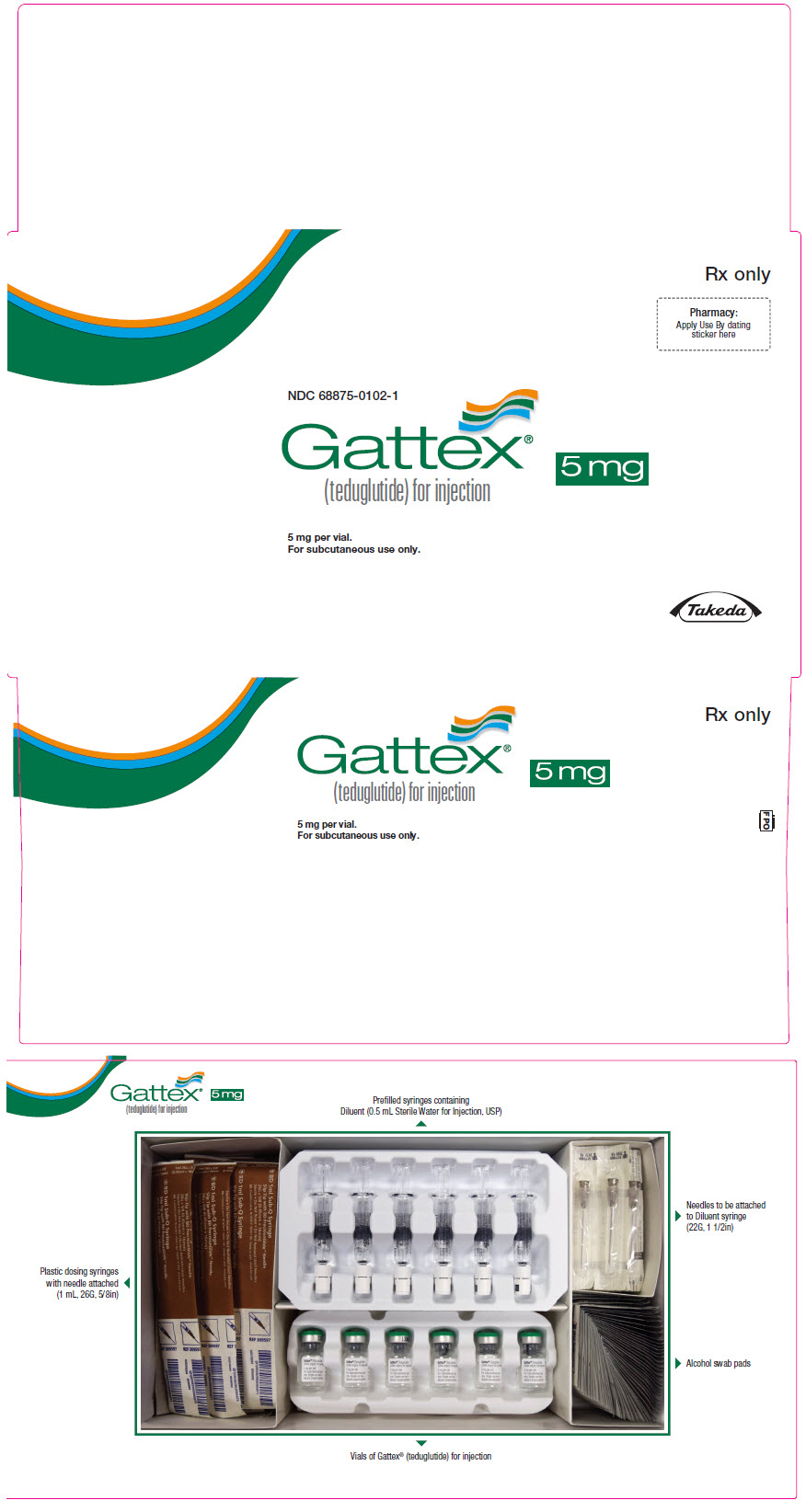
Gattex teduglutide Kit
🆔 Identity & classification
Where does this data come from?
🏷️ RxNorm drug class
This medicine belongs to the GLP-2 Analog class.
Where does this data come from?
🏭 Manufacturer & labeler
Where does this data come from?
🩺 Clinical
Teduglutide injection is used to treat short bowel syndrome in people who need additional nutrition or fluids from intravenous (IV) therapy. Teduglutide injection is in a class of medications called glucagon-like peptide-2 (GLP-2) analogs. It works by improving the absorption of fluids and nutrients in the intestines.
Read the full MedlinePlus article ↗- Gattex won't cure Short Bowel Syndrome, but it can make a real difference in how well your intestine works. It acts like a natural gut hormone called GLP-2, encouraging the intesti...
- What exactly does Gattex do, and will it cure my Short Bowel Syndrome?
- You'll mix the powder with the sterile water provided, gently roll the vial — don't shake it — wait a couple of minutes, and then draw up the dose and inject it just under the skin...
- How do I give myself this injection, and does it hurt?
Patient education
Supplement & herbal interactions
Some supplements/herbs that may interact with Teduglutide Recombinant — tap one for details:
Where does this data come from?
Ask a licensed pharmacist directly — free, answered by our team.
🧪 Inactive Ingredients / Excipients
Inactive ingredients, also called excipients, are components of the drug product other than the active ingredient. They may include fillers, dyes, coatings, preservatives, flavors, or other formulation ingredients.
Where does this data come from?
IACT rows and label-wide narrative are kept separate; availability and product-level specificity depend on the submitted label.Inactive ingredient FAQ
Are inactive ingredients the same for every manufacturer?
Why might an inactive ingredient be missing?
Can inactive ingredients matter?
💲 Pricing
A drug doesn't have one price. Each row is a different public payment system, and none is what you'd pay at the counter — that depends on your insurance. The ⓘ on each row explains what it measures.
| Price system | Per each | Per package |
|---|---|---|
| Retail pharmacies payNADAC · weekly | Not in the retail survey — common for institutional, discontinued, or low-volume packs. | |
| Medicaid paysCMS SDUD · 12 mo | $1,535.01 | — |
| Medicare drug plans payPart D · Q2 2026 | $48,148.59 | — |
Where does this data come from?
🔁 Therapeutic equivalents
| Product | Labeler | Pack | NADAC/unit | TE | Status | Price vs. this |
|---|---|---|---|---|---|---|
| Gattex 5 mg/.5mL 68875-0101-02 | Takeda | 30 vials | — | — | FDA listed | — |
| Gattexthis 68875-0102-01 | Takeda | 1 kit | — | — | FDA listed | — |
| Gattex 68875-0103-01 | Takeda | 1 kit | — | — | FDA listed | — |
Where does this data come from?
⏳ Availability & generic status
We did not find an FDA-approved generic match for this exact strength, form and route. Patent/protection dates below may affect future generic timing.
Why the date isn’t exact: Generic timing can change because patents may be challenged, settled, licensed, added, removed, or worked around with a narrower label — and FDA approval does not always mean a pharmacy can get the generic today.
🛈 What do these terms mean?
- Patent
- Legal protection listed in the Orange Book that may delay generic approval or launch. Issued by the U.S. Patent & Trademark Office.
- Substance patent
- Covers the active drug molecule itself — the hardest to design around. A generic generally can’t launch until it expires.
- Formulation (product) patent
- Covers a specific formulation or dosage form. A generic can sometimes work around it with a different formulation.
- Method-of-use patent
- A patent covering one specific approved use of the drug — not necessarily the whole molecule. A generic can sometimes launch with a “skinny label” that carves out the protected use and keeps the others.
- Skinny label
- A generic label that omits a still-patented use when the FDA allows it — letting a generic reach the market for the unprotected uses.
- Exclusivity
- FDA-granted marketing protection, separate from patents — e.g. 5-yr new chemical entity, 7-yr orphan drug, or a +6-month pediatric extension.
- Paragraph IV
- A generic applicant’s formal challenge to a listed patent. It can potentially lead to earlier generic entry, but often involves litigation or a settlement.
- RLD / RS
- Reference Listed Drug — the brand product the FDA uses as the reference for generic applications. Reference Standard — the product the FDA expects generics to compare against in bioequivalence testing.
- TE / AB rating
- FDA therapeutic-equivalence rating. An AB rating generally means the FDA considers a generic therapeutically equivalent to — and substitutable for — the brand.
- LOE (loss of exclusivity)
- The latest patent or exclusivity currently listed — the loss-of-exclusivity / latest-listed-protection date shown on this page. Paragraph-IV challenges and settlements can move the real date earlier; FDA approval and a manufacturer’s decision to market can move it later.
Built from the FDA Orange Book. The bars above are scaled to each protection’s expiry; the red LOE marker is the last one to lapse.
| Patent | Type | Use code | Expires |
|---|---|---|---|
| US 9060992 ↗ delist req. | Method of use | U-1320 | Nov 1, 2025 |
| US 7847061 ↗ delist req. | Method of use | U-1320 | Nov 1, 2025 |
| US 7847061*PED ↗ | Drug product | — | May 1, 2026 |
| US 9060992*PED ↗ | Drug product | — | May 1, 2026 |
| Code | What it grants | Expires |
|---|---|---|
| ODE-240 | Orphan Drug Exclusivity (7-year) | May 16, 2026 |
Is there a generic version of GATTEX 5 MG 30-VIAL KIT?
The FDA approved a generic — why can’t I get it at my pharmacy yet?
Why do different websites show different generic release dates?
What does “FDA listed” mean?
What does a patent or protection date mean here?
What does “current Orange Book estimate” mean?
Can a generic come out before the last patent expires?
Can a generic come out after the listed dates?
What is the difference between patents and exclusivity?
Why are there multiple patent dates?
Where does this data come from?
🗺️ Medicaid utilization & spend
📊 Medicare Part D spend CMS · PART D · 2026 (Q1)
🔬 Reported adverse events (FAERS)
Top reported reactions
Age at onset
Reporter sex
Serious outcomes
Where does this data come from?
📦 Packaging — all sizes for this product
| Package NDC | Description | Marketing start | Status |
|---|---|---|---|
| 68875-0102-01 You're viewing this | 1 KIT in 1 CARTON (68875-0102-1) * .5 mL in 1 SYRINGE, PLASTIC * .7 mL in 1 PACKET * .5 mL in 1 VIAL (68875-0101-1) | 2012-12-21 | Active |
🧭 About this NDC listing & data coverage
Kit / multi-component package
This NDC identifies a kit — a package containing more than one component. Structured data (pricing, ingredients, equivalents) is often reported per component rather than for the kit NDC itself, which can make this page look thinner than the components' own pages.
What data is (and isn’t) available for this NDC — tap to expand
| NDC identity (package / product / labeler codes) | ✓ Available |
| Labeler | ✓ Available |
| Product & package description | ✓ Available |
| Marketing category & status | ✓ Available |
| Active ingredient / dosage form / route | ✓ Available |
| FDA label (SPL via DailyMed) | ✓ Available |
| Package photos | ✓ Available |
| Inactive ingredients (structured) | — Not published for this NDC The labeler did not submit a structured excipient list, or no SPL is available. |
| NADAC pharmacy acquisition price (CMS) | — Not published for this NDC CMS publishes NADAC only for NDCs reported in its retail-pharmacy survey. |
| Orange Book / therapeutic-equivalence data | ✓ Available |
| HCPCS J-code billing crosswalk | — Not published for this NDC Most self-administered / retail products have no J-code — that is normal. |
| Medicaid utilization (CMS SDUD) | ✓ Available |
Questions about this listing
Why is there no price listed?
Is the NDC printed on the package the same as the 11-digit billing NDC?
What do the three segments of this NDC mean?
Is this package still being marketed?
Who lists this product with the FDA?
Do I need a prescription for this product?
Where does this data come from?
📄 Full prescribing information FDA SPL
🎯 Indications and Usage ▾
1 INDICATIONS AND USAGE GATTEX ® is indicated for the treatment of adults and pediatric patients 1 year of age and older with Short Bowel Syndrome (SBS) who are dependent on parenteral support . GATTEX ® is a glucagon-like peptide-2 (GLP-2) analog indicated for the treatment of adults and pediatric patients 1 year of age and older with Short Bowel Syndrome (SBS) who are dependent on parenteral support. ( 1 )
⏱️ Dosage and Administration ▾
2 DOSAGE AND ADMINISTRATION Important Administration Information GATTEX is for adult self-administration or caregiver administration. Self-administration in pediatric patients has not been tested. Use of the GATTEX 5 mg kit is not recommended in pediatric patients weighing less than 10 kg.
( 2.1 ) Evaluation Testing within 6 Months Prior to Starting GATTEX Adult Patients : Perform a colonoscopy and upper GI endoscopy with removal of polyps. ( 2.1 , 5.1 ) Pediatric Patients : Perform fecal occult blood testing. If new or unexplained blood in the stool, perform colonoscopy/sigmoidoscopy and upper GI endoscopy.
( 2.1 , 5.1 ) Adult and Pediatric Patients : Obtain baseline laboratory assessments (bilirubin, alkaline phosphatase, lipase and amylase). ( 2.1 , 5.3 ) Dosage and Administration For subcutaneous use only. ( 2.2 ) The recommended dosage of GATTEX for both adults and pediatric patients is 0.05 mg/kg once daily by subcutaneous injection.
( 2.2 ) Alternate sites between 1 of the 4 quadrants of the abdomen, or into alternating thighs or alternating arms. ( 2.2 ) Dosage Adjustment for Renal Impairment For adult and pediatric patients with moderate and severe renal impairment and end-stage renal disease (estimated glomerular filtration rate less than 60 mL/min/1.73 m 2 ) the recommended dosage is 0.025 mg/kg once daily. ( 2.3 ) Discontinuation When treatment is discontinued, monitor for fluid and electrolyte imbalances.
( 2.5 , 5.4 ) Preparation See full prescribing information for instructions on reconstitution. ( 2.6 )
2.1Important Administration Information GATTEX is for adult self-administration or caregiver administration. Self-administration in pediatric patients has not been tested. Use of the GATTEX 5 mg kit is not recommended in pediatric patients weighing less than 10 kg.
Evaluation and testing prior to starting treatment with GATTEX: Within 6 months prior to treatment: Adult patients Perform a colonoscopy and an upper gastrointestinal (GI) endoscopy with removal of polyps [see Warnings and Precautions ( 5.1 )] . Obtain baseline laboratory assessments (bilirubin, alkaline phosphatase, lipase and amylase) [see Warnings and Precautions ( 5.3 )] . Pediatric patients Perform fecal occult blood testing; if there is new or unexplained blood in the stool, perform colonoscopy/sigmoidoscopy and an upper GI endoscopy [see Warnings and Precautions ( 5.1 )] .
Obtain baseline laboratory assessments (bilirubin, alkaline phosphatase, lipase and amylase) [see Warnings and Precautions ( 5.3 )] .
2.2Recommended Dosage and Administration for Adults and Pediatric Patients 1 Year of Age and Older GATTEX is for subcutaneous injection only. Not for intravenous or intramuscular administration. The recommended dosage of GATTEX is 0.05 mg/kg once daily administered by subcutaneous injection.
If a dose is missed, that dose should be taken as soon as possible on that day. Do not take 2 doses on the same day. Alternation of sites for subcutaneous injection is recommended, and can include the thighs, upper arms, and the abdomen.
2.3Dosage Adjustment for Renal Impairment The recommended dosage in adult and pediatric patients with moderate and severe renal impairment and end-stage renal disease (estimated glomerular filtration rate (eGFR) less than 60 mL/min/1.73 m 2 ) is 0.025 mg/kg once daily [see Use in Specific Populations ( 8.6 )] .
2.4Monitoring to Assess Safety Colonoscopy and Upper GI Endoscopy in Adults A follow-up colonoscopy and upper GI endoscopy (or alternate imaging) is recommended at the end of 1 year of GATTEX. If no polyp is found, subsequent colonoscopies and upper GI endoscopies (or alternate imaging) should be done no less frequently than every 5 years. If a polyp is found, adherence to current polyp follow-up guidelines is recommended [see Warnings and Precautions ( 5.1 )] .
Colonoscopy and Upper GI Endoscopy in Pediatric Patients Perform subsequent fecal occult blood testing annually in pediatric patients while they are rece…
💊 Dosage Forms and Strengths ▾
3 DOSAGE FORMS AND STRENGTHS For Injection: 5 mg teduglutide as a white lyophilized powder for reconstitution in a single-dose vial supplied with 0.5 mL Sterile Water for Injection in a single-dose prefilled syringe. For injection: 5 mg teduglutide in a single-dose vial supplied with 0.5 mL Sterile Water for Injection in a single-dose prefilled syringe. ( 3 )
⛔ Contraindications ▾
4 CONTRAINDICATIONS None. None. ( 4 )
⚠️ Warnings and Cautions ▾
5 WARNINGS AND PRECAUTIONS Acceleration of Neoplastic Growth : In case of intestinal malignancy, discontinue GATTEX. The decision to continue GATTEX in patients with non-gastrointestinal malignancy should be made based on benefit risk considerations. ( 5.1 ) In adult patients, colonoscopy and upper GI endoscopy (or alternate imaging) is recommended after 1 year of treatment.
Perform subsequent colonoscopies and upper GI endoscopes (or alternate imaging) no less frequently than every 5 years. ( 5.1 ) In pediatric patients, perform fecal occult blood testing annually. Colonoscopy/sigmoidoscopy is recommended after 1 year of treatment and every 5 years thereafter on treatment.
Consider upper GI endoscopy (or alternate imaging) during treatment with GATTEX. ( 5.1 ) Intestinal Obstruction : In patients who develop intestinal or stomal obstruction, temporarily discontinue GATTEX pending further clinical evaluation and management. ( 5.2 ) Biliary and Pancreatic Disease : Obtain bilirubin, alkaline phosphatase, lipase, amylase every 6 months.
If clinically meaningful changes are seen, further evaluation is recommended including imaging, and reassess continued GATTEX treatment. ( 5.3 ) Fluid Overload, Including Congestive Heart Failure : If fluid overload occurs, adjust parenteral support, and reassess continued GATTEX treatment. ( 5.4 ) Potential for Increased Absorption of Oral Medications : Monitor patients on concomitant oral medications (e.g., benzodiazepines) for adverse reactions related to the concomitant drug; dosage reduction of the other drug may be required.
( 5.5 , 7.1 )
5.1Acceleration of Neoplastic Growth Based on the pharmacologic activity and tumor findings in the rat and mouse carcinogenicity studies, GATTEX has the potential to cause hyperplastic changes including neoplasia [see Clinical Pharmacology ( 12.1 ), Nonclinical Toxicology ( 13.1 )] . In patients at increased risk for malignancy, the clinical decision to use GATTEX should be considered only if the benefits outweigh the risks. In patients who develop active gastrointestinal malignancy (GI tract, hepatobiliary, pancreatic) while on GATTEX, discontinue GATTEX treatment.
In patients who develop active non-gastrointestinal malignancy while on GATTEX, the clinical decision to continue GATTEX should be made based on benefit-risk considerations. Gastrointestinal Polyps Intestinal polyps were identified during the clinical studies. Postmarketing cases of colorectal, gastric, and small intestinal (duodenum, ileum, and jejunum) polyps have been reported postmarketing [see Adverse Reactions ( 6.1 , 6.2 )] .
Adult Patients Within 6 months prior to starting treatment with GATTEX, perform colonoscopy and upper GI endoscopy with removal of polyps. A follow-up colonoscopy and upper GI endoscopy (or alternate imaging) is recommended at the end of 1 year of GATTEX. Perform subsequent colonoscopies and upper GI endoscopies (or alternate imaging) every 5 years or more often as needed.
If a polyp is found, adherence to current polyp follow-up guidelines is recommended. If gastrointestinal cancer is diagnosed, discontinue GATTEX therapy. Pediatric Patients Within 6 months prior to starting treatment with GATTEX, perform fecal occult blood testing; if there is new or unexplained blood in the stool, perform colonoscopy/sigmoidoscopy and an upper GI endoscopy.
Perform subsequent fecal occult blood testing annually in pediatric patients while they are receiving GATTEX. If there is new or unexplained blood in the stool, perform colonoscopy/sigmoidoscopy and an upper GI endoscopy. Colonoscopy/sigmoidoscopy is recommended for all pediatric patients after 1 year of treatment and every 5 years thereafter while on continuous treatment with GATTEX [see Dosage and Administration ( 2.1 )] .
Consider upper GI endoscopy (or alternate other imaging) during treatment with GATTEX. If gastrointestinal cancer is diagnosed, discontinue GATTEX therapy.
5.2 Intestinal Obstruction Intestinal obstructio…
🤒 Adverse Reactions ▾
6 ADVERSE REACTIONS The following serious adverse reactions are described elsewhere in the labeling: Acceleration of Neoplastic Growth [see Warnings and Precautions ( 5.1 )] Intestinal Obstruction [see Warnings and Precautions ( 5.2 )] Biliary and Pancreatic Disease [see Warnings and Precautions ( 5.3 )] Fluid Imbalance and Fluid Overload [see Warnings and Precautions ( 5.4 )] Most common adverse reactions (≥10%) are: abdominal pain, nausea, upper respiratory tract infection, abdominal distension, injection site reaction, vomiting, fluid overload, and hypersensitivity.
( 6.1 ) To report SUSPECTED ADVERSE REACTIONS, contact Takeda Pharmaceuticals U.S.A., Inc. at 1-877-TAKEDA-7 (1-877-825-3327) or FDA at 1-800-FDA-1088 or www.fda.gov/medwatch.
6.1Clinical Trials Experience Adults Because clinical trials are conducted under widely varying conditions, the adverse reaction rates observed cannot be directly compared to rates in other clinical trials and may not reflect the rates observed in clinical practice. The rates of adverse reactions in 136 adult patients with SBS participating in two randomized, placebo-controlled, 24-week, double-blind clinical studies (Study 1 and Study 3) are summarized in Table 1 . Only those reactions with a rate of at least 5% in the GATTEX group, and greater than placebo group, are summarized in Table 1 .
Table 1: Common Adverse Reactions Reported at a rate of at least 5% in the GATTEX group, and greater than the placebo group. in Adult Patients with SBS in Placebo-Controlled Studies: Studies 1 and 3 Adverse Reaction Placebo (N=59) (%) GATTEX 0.05 mg/kg Once Daily (N=77) (%) Abdominal pain Includes: Abdominal pain, upper abdominal pain, lower abdominal pain 22 30 Nausea 20 23 Upper respiratory tract infection Includes: Upper respiratory tract infection, nasopharyngitis, pharyngitis, sinusitis, laryngitis, rhinitis, viral upper respiratory tract infection 12 21 Abdominal distension 2 20 Injection site reaction Includes: Injection site hematoma, injection site erythema, injection site pain, injection site swelling, injection site hemorrhage, injection site discoloration, injection site reaction, injection site rash 12 13 Vomiting 10 12 Fluid Overload Includes: Fluid overload, peripheral edema, edema, generalized edema, fluid retention and jugular vein distension 7 12 Hypersensitivity Includes: Erythema, rash, dermatitis allergic, pruritus, rash macular, drug eruption, eyelid edema, flushing 7 10 Flatulence 7 9 Decreased appetite 3 7 Influenza Includes: Influenza, influenza-like illness 2 7 Skin hemorrhage Includes: Hematoma, abdominal wall hematoma, post procedural hematoma, umbilical hematoma, blood blister 2 5 Cough 0 5 Sleep disturbances Includes: Insomnia (3 patients) and hypersomnia (1 patient) 0 5 Adverse Reactions in the Subset of Patients with a Stoma Among the 53 patients with a stoma in the placebo-controlled studies (Study 1 and Study 3), the percentage of patients with gastrointestinal stoma complication was 42% (13/31) for patients receiving GATTEX 0.05 mg/kg/day and 14% (3/22) for patients receiving placebo.
Pediatric Patients 1 Year to Less Than 17 Years of Age In two clinical studies of 24-week and 12-week duration, 41 pediatric patients aged 1 year to less than 17 years were treated with GATTEX 0.05 mg/kg/day [see Use in Specific Populations ( 8.4 ), Clinical Studies ( 14.2 )] . Overall, the safety profile of GATTEX was similar to that in adults. In the long-term extension studies with mean exposure of 41 weeks, no new safety signals were identified.
Less Common Adverse Reactions Adverse Reactions of Special Interest Malignancy Three patients were diagnosed with malignancy in the SBS clinical studies in adults, all of whom were male and had received GATTEX 0.05 mg/kg/day in Study 2. One patient had a history of abdominal radiation for Hodgkin's disease two decades prior to receiving GATTEX and prior liver lesion on CT scan, and was diagnosed with metastatic adenocarcinoma of unconfirmed…
🔄 Drug Interactions ▾
7 DRUG INTERACTIONS
7.1Potential for Increased Absorption of Oral Medications Based upon the pharmacodynamic effect of GATTEX, there is a potential for increased absorption of concomitant oral medications. Altered mental status has been observed in patients taking GATTEX and benzodiazepines in the adult clinical studies [see Warnings and Precautions ( 5.5 )] . Monitor patients on concomitant oral drugs requiring titration or with a narrow therapeutic index for adverse reactions related to the concomitant drug while on GATTEX.
The concomitant drug may require a reduction in dosage.
👥 Use in Specific Populations ▾
8 USE IN SPECIFIC POPULATIONS Lactation : Breastfeeding not recommended. ( 8.2 )
8.1Pregnancy Risk Summary Available data from case reports with GATTEX use in pregnant women have not identified a drug-associated risk of major birth defects, miscarriage, or adverse maternal or fetal outcomes. Pregnant women with short bowel syndrome are at risk for malnutrition, which is associated with adverse maternal and fetal outcomes (see Clinical Considerations ) . In animal reproduction studies, no effects on embryo-fetal development were observed with the subcutaneous administration of teduglutide to pregnant rats and rabbits during organogenesis at exposures up to 686 and 657 times, respectively, the clinical exposure at the recommended human dose (based on AUC) ( see Data ).
The estimated background risk of major birth defects and miscarriage for the indicated population is unknown. All pregnancies have a background risk of birth defect, loss, or other adverse outcomes. In the U.S. general population, the estimated background risk of major birth defects and miscarriage in clinically recognized pregnancies is 2 to 4% and 15 to 20%, respectively.
Clinical Considerations Disease-associated maternal and/or embryo/fetal risk Pregnant women with short bowel syndrome are at risk for malnutrition. Severe malnutrition in pregnant women is associated with preterm delivery, low birth weight, intrauterine growth restriction, congenital malformations and perinatal mortality. Data Animal Data Reproduction studies have been performed in pregnant rats at subcutaneous doses of teduglutide up to 25 mg/kg twice daily (50 mg/kg/day) (about 686 times the clinical exposure (AUC) at the recommended daily human dose of 0.05 mg/kg) and in pregnant rabbits at subcutaneous doses up to 25 mg/kg twice daily (50 mg/kg/day) (about 657 times the clinical exposure (AUC) at the recommended daily human dose of 0.05 mg/kg) during the period of organogenesis.
These studies did not reveal any evidence of impaired fertility or harm to the fetus due to teduglutide. In a pre- and postnatal development study in rats (gestation day 7 to lactation day 20), teduglutide did not show any significant adverse effects on pre- and postnatal development at doses up to 25 mg/kg twice daily (50 mg/kg/day) (about 343 times the clinical exposure (AUC) at the recommended daily human dose of 0.05 mg/kg).
8.2Lactation Risk Summary There is no information regarding the presence of GATTEX in human milk, the effects of GATTEX on the breastfed infant, or the effects of GATTEX on milk production. Teduglutide is present in the milk of lactating rats ( see Data ). Systemic exposure of teduglutide to a breastfed infant is expected to be low.
However, because of the potential for serious adverse reactions in a breastfed infant, including tumorigenicity [see Nonclinical Toxicology ( 13.1 )] , advise patients that breastfeeding is not recommended during treatment with GATTEX. Data In a milk excretion study in the rat, a single subcutaneous dose of 25 mg/kg of teduglutide (81 times the recommended daily human dose of 0.05 mg/kg based on body surface area) was administered to lactating female rats at Day 12 postpartum. The maximum concentration of teduglutide in the milk corresponded to 0.9% and 2.9% of the plasma concentration at 1.5 and 4 hours after dosing, respectively.
8.4Pediatric Use The safety and effectiveness in pediatric patients less than 1 year of age have not been established. The safety and effectiveness of GATTEX have been established in pediatric patients 1 year to less than 17 years of age who are dependent on parenteral support for the treatment of SBS. Use of GATTEX in this population is supported by evidence from adequate and well-controlled studies in adults, with additional efficacy, safety, pharmacokinetic and pharmacodynamic data in pediatric patients 1 year to less than 17 years of age [see Dosage and Administration ( 2 ), Adverse Reactions ( 6.1 ), Clinical Pharmacology ( 12.…
🤰 Pregnancy ▾
8.1Pregnancy Risk Summary Available data from case reports with GATTEX use in pregnant women have not identified a drug-associated risk of major birth defects, miscarriage, or adverse maternal or fetal outcomes. Pregnant women with short bowel syndrome are at risk for malnutrition, which is associated with adverse maternal and fetal outcomes (see Clinical Considerations ) . In animal reproduction studies, no effects on embryo-fetal development were observed with the subcutaneous administration of teduglutide to pregnant rats and rabbits during organogenesis at exposures up to 686 and 657 times, respectively, the clinical exposure at the recommended human dose (based on AUC) ( see Data ).
The estimated background risk of major birth defects and miscarriage for the indicated population is unknown. All pregnancies have a background risk of birth defect, loss, or other adverse outcomes. In the U.S. general population, the estimated background risk of major birth defects and miscarriage in clinically recognized pregnancies is 2 to 4% and 15 to 20%, respectively.
Clinical Considerations Disease-associated maternal and/or embryo/fetal risk Pregnant women with short bowel syndrome are at risk for malnutrition. Severe malnutrition in pregnant women is associated with preterm delivery, low birth weight, intrauterine growth restriction, congenital malformations and perinatal mortality. Data Animal Data Reproduction studies have been performed in pregnant rats at subcutaneous doses of teduglutide up to 25 mg/kg twice daily (50 mg/kg/day) (about 686 times the clinical exposure (AUC) at the recommended daily human dose of 0.05 mg/kg) and in pregnant rabbits at subcutaneous doses up to 25 mg/kg twice daily (50 mg/kg/day) (about 657 times the clinical exposure (AUC) at the recommended daily human dose of 0.05 mg/kg) during the period of organogenesis.
These studies did not reveal any evidence of impaired fertility or harm to the fetus due to teduglutide. In a pre- and postnatal development study in rats (gestation day 7 to lactation day 20), teduglutide did not show any significant adverse effects on pre- and postnatal development at doses up to 25 mg/kg twice daily (50 mg/kg/day) (about 343 times the clinical exposure (AUC) at the recommended daily human dose of 0.05 mg/kg).
🧒 Pediatric Use ▾
8.4Pediatric Use The safety and effectiveness in pediatric patients less than 1 year of age have not been established. The safety and effectiveness of GATTEX have been established in pediatric patients 1 year to less than 17 years of age who are dependent on parenteral support for the treatment of SBS. Use of GATTEX in this population is supported by evidence from adequate and well-controlled studies in adults, with additional efficacy, safety, pharmacokinetic and pharmacodynamic data in pediatric patients 1 year to less than 17 years of age [see Dosage and Administration ( 2 ), Adverse Reactions ( 6.1 ), Clinical Pharmacology ( 12.3 ), Clinical Studies ( 14.2 )] .
These data were derived from two studies of 24-week (Study 5) and 12-week (NCT01952080) duration in which 41 pediatric patients were treated with GATTEX in the following groups: 1 infant (1 year to less than 2 years), 37 children (2 years to less than 12 years) and 3 adolescents (12 years to less than 17 years). In these 2 studies and the corresponding extension studies (Study 6 and NCT02949362), 29 pediatric patients were administered GATTEX prospectively for up to 94 weeks [see Clinical Studies ( 14.2 )] . Adverse reactions in pediatric patients were similar to those seen in adults [see Adverse Reactions ( 6.1 )] .
Juvenile Animal Toxicity Data In a juvenile toxicity study, teduglutide was administered to juvenile minipigs at subcutaneous doses of 0.5, 2.5 and 12.5 mg/kg twice daily (1, 5, and 25 mg/kg/day) from post-natal day 7 and continuing for 90 days). Exposures (AUC) at these doses were at least 12-, 25-, and 170-fold the pediatric clinical exposure for ages 1 year to 11 years at 0.05 mg/kg, respectively, and 10-, 21-, and 141-fold the pediatric clinical exposure for ages 12 years to 17 years at 0.05 mg/kg, respectively.
In juvenile minipigs, subcutaneous teduglutide caused intestinotrophic effects, gall bladder mucosal hyperplasia, bile duct mucosal hyperplasia, and injection site reactions, similar to those observed in adult animals.
🧓 Geriatric Use ▾
8.5Geriatric Use Of the 134 patients with SBS that were treated with GATTEX at the recommended dosage of 0.05 mg/kg/day in the clinical studies, 19 patients were 65 years or older while 5 patients were 75 years of age or older. No overall differences in safety or efficacy were observed between these patients and younger patients, and other reported clinical experience has not identified differences in responses between the elderly and younger patients, but greater sensitivity of some older individuals cannot be ruled out [see Clinical Pharmacology ( 12.3 )] .
🆘 Overdosage ▾
10 OVERDOSAGE The maximum dose of GATTEX studied during clinical development was 80 mg/day for 8 days. No unexpected systemic adverse reactions were seen. In the event of overdose, the patient should be carefully monitored by the medical professional.
🧬 Clinical Pharmacology ▾
12 CLINICAL PHARMACOLOGY
12.1Mechanism of Action Teduglutide is an analog of naturally occurring human glucagon-like peptide-2 (GLP-2), a peptide secreted by L-cells of the distal intestine. GLP-2 is known to increase intestinal and portal blood flow and inhibit gastric acid secretion. Teduglutide binds to the glucagon-like peptide-2 receptors located in intestinal subpopulations of enteroendocrine cells, subepithelial myofibroblasts and enteric neurons of the submucosal and myenteric plexus.
Activation of these receptors results in the local release of multiple mediators including insulin-like growth factor (IGF)-1, nitric oxide and keratinocyte growth factor (KGF).
12.2Pharmacodynamics Intestinal Fluid Absorption The ability of GATTEX to improve intestinal absorption was studied in 17 adult subjects with Short Bowel Syndrome (N=2-3 per dose group) using daily doses of 0.03, 0.1, 0.15 mg/kg (doses ranging from 0.6 to 3 times the recommended dose) in a 21-day, open-label, multicenter, dose-ranging study. All subcutaneous (abdomen) doses studied, except 0.03 mg/kg once daily, resulted in enhanced gastrointestinal fluid (wet weight) absorption of approximately 750 to 1000 mL/day, and increased villus height and crypt depth of the intestinal mucosa.
Cardiac Electrophysiology At a dose 5 times the recommended dose, GATTEX did not prolong the QT interval to any clinically relevant extent.
12.3Pharmacokinetics Absorption In healthy subjects, GATTEX administered subcutaneously had an absolute bioavailability of 88% and reached maximum plasma teduglutide concentrations at 3 to 5 hours after administration. Following a 0.05 mg/kg subcutaneous dose in SBS subjects, the median peak teduglutide concentration (C max ) was 36 ng/mL and the median area under the curve at steady state (AUC tau ) was 0.15 µg∙hr/mL. No accumulation of teduglutide was observed following repeated subcutaneous administrations.
The C max and AUC of teduglutide was dose proportional over the dose range of 0.05 to 0.4 mg/kg (up to 8 times the recommended dose of GATTEX). Distribution In healthy subjects, teduglutide has a volume of distribution (103 mL/kg) similar to blood volume. Elimination Metabolism The metabolic pathway of teduglutide was not investigated in humans.
However, teduglutide is expected to be degraded into small peptides and amino acids via catabolic pathways, similar to the catabolism of endogenous GLP-2. Excretion In healthy subjects, teduglutide plasma clearance was approximately 123 mL/hr/kg which is similar to the GFR suggesting that teduglutide is primarily cleared by the kidney. Teduglutide has a mean terminal half-life (t 1/2 ) of approximately 2 hours in healthy subjects and 1.3 hours in SBS subjects.
Use in Specific Populations Geriatric Patients No differences were observed between healthy subjects younger than 65 years and those older than 65 years. Experience in subjects 75 years and above is limited. Pediatric Patients Following subcutaneous administration, similar steady state C max of teduglutide across age groups was demonstrated by population pharmacokinetics modeling (see Table 2 ).
However, lower AUC was seen in pediatric patients 1 to 17 years of age as compared with adults and increases with increasing age. Table 2: Teduglutide Pharmacokinetic Parameters Following Subcutaneous Dosing of GATTEX 0.05 mg/kg by Age Groups Age Parameters (Mean ± SD) C max, ss (ng/mL) AUC ss (ng∙h/mL) CL/F (L/h) t 1/2 (h) 12 to 17 years (n=3) 29.7 ± 8.4 154 ± 17.6 13.0 ± 2.3 1.0 ± 0.01 1 to 11 years (n=37) 33.5 ± 11.5 128 ± 56.7 7.45 ± 2.1 0.7 ±
0.2Male and Female Patients No clinically relevant gender differences were observed. Patients with Renal Impairment In adult subjects with moderate to severe renal impairment or end stage renal disease (ESRD) (creatinine clearance <60 mL/min), the C max and AUC 0-inf of teduglutide increased with the degree of renal impairment following a single subcutaneous dose of 10 mg GATTEX. Teduglutide exposure incre…
🧬 Mechanism of Action ▾
12.1Mechanism of Action Teduglutide is an analog of naturally occurring human glucagon-like peptide-2 (GLP-2), a peptide secreted by L-cells of the distal intestine. GLP-2 is known to increase intestinal and portal blood flow and inhibit gastric acid secretion. Teduglutide binds to the glucagon-like peptide-2 receptors located in intestinal subpopulations of enteroendocrine cells, subepithelial myofibroblasts and enteric neurons of the submucosal and myenteric plexus.
Activation of these receptors results in the local release of multiple mediators including insulin-like growth factor (IGF)-1, nitric oxide and keratinocyte growth factor (KGF).
📦 How Supplied / Storage and Handling ▾
16 HOW SUPPLIED/STORAGE AND HANDLING GATTEX (teduglutide) for injection is supplied as 5 mg of teduglutide as a white, lyophilized powder for reconstitution in a sterile, single-dose glass vial with 0.5 mL Sterile Water for Injection in a single-dose prefilled syringe. The product to be dispensed is either a one-vial kit or a 30-vial kit. One-vial kits are pre-assembled and ready to be used: GATTEX 5 mg One-vial Kit (NDC 68875-0103-1): One single-dose vial of 5 mg teduglutide (NDC 68875-0101-1) One disposable prefilled syringe containing 0.5 mL Sterile Water for Injection USP for reconstitution, with a separate needle (23G × 1½ in) to attach to the syringe One sterile disposable 1 mL syringe with needle (27G × 1/2 in) for dosing Four alcohol swabs Storage and Handling of One-Vial Kit Prior to Dispensing: Store GATTEX 5 mg Strength one-vial kits refrigerated at 2°C to 8°C (36°F to 46°F).
Do not freeze. Do not use beyond the expiration date on the label. After Dispensing by the Pharmacist: Store GATTEX 5 mg Strength one-vial kits at room temperature up to 25°C (77°F).
Do not freeze. Dispense with a 90-day "use by" dating. GATTEX is also supplied in 30-vial cartons to be assembled by the dispensing pharmacist into a 30-vial kit by transferring the trays containing 30 vials from a Carton of Drug Vials into a Carton of Ancillary Supplies : GATTEX 5 mg Carton of Drug Vials (NDC 68875-0101-2): Thirty single-dose vials of GATTEX 5 mg (NDC 68875-0101-1) Carton of Ancillary Supplies : Thirty disposable prefilled syringes containing diluent (0.5 mL Sterile Water for Injection USP) for reconstitution Thirty separate needles (23G × 1½ in) to attach to the syringes for reconstitution Thirty sterile disposable 1 mL syringes with needle (27G × 1/2 in) Sixty alcohol swabs The final assembled 30-Vial Kit should contain the items: GATTEX 5 mg Strength 30-Vial Kit (NDC 68875-0102-1): Thirty single-dose vials of 5 mg teduglutide (NDC 68875-0101-1) Thirty disposable prefilled syringes containing 0.5 mL Sterile Water for Injection USP for reconstitution, with 30 separate needles (23G × 1½ in) to attach to the syringes Thirty sterile disposable 1 mL syringes with needle (27G × 1/2 in) for dosing Sixty alcohol swabs Storage and Handling of 30-Vial Cartons and 30-Vial Kits Prior to Dispensing: Store GATTEX 5 mg vials refrigerated at 2°C to 8°C (36°F to 46°F).
Do not freeze. Do not use beyond the expiration date on the label. Store the Carton of Ancillary Supplies at room temperature up to 25°C (77°F).
After Dispensing by the Pharmacist: Store GATTEX 5 mg Strength 30-vial kits at room temperature up to 25°C (77°F). Do not freeze. Dispense with a 90-day "use by" dating.
📦 Storage and Handling ▾
Storage and Handling of One-Vial Kit Prior to Dispensing: Store GATTEX 5 mg Strength one-vial kits refrigerated at 2°C to 8°C (36°F to 46°F). Do not freeze. Do not use beyond the expiration date on the label.
After Dispensing by the Pharmacist: Store GATTEX 5 mg Strength one-vial kits at room temperature up to 25°C (77°F). Do not freeze. Dispense with a 90-day "use by" dating.
GATTEX is also supplied in 30-vial cartons to be assembled by the dispensing pharmacist into a 30-vial kit by transferring the trays containing 30 vials from a Carton of Drug Vials into a Carton of Ancillary Supplies : GATTEX 5 mg Carton of Drug Vials (NDC 68875-0101-2): Thirty single-dose vials of GATTEX 5 mg (NDC 68875-0101-1) Carton of Ancillary Supplies : Thirty disposable prefilled syringes containing diluent (0.5 mL Sterile Water for Injection USP) for reconstitution Thirty separate needles (23G × 1½ in) to attach to the syringes for reconstitution Thirty sterile disposable 1 mL syringes with needle (27G × 1/2 in) Sixty alcohol swabs The final assembled 30-Vial Kit should contain the items: GATTEX 5 mg Strength 30-Vial Kit (NDC 68875-0102-1): Thirty single-dose vials of 5 mg teduglutide (NDC 68875-0101-1) Thirty disposable prefilled syringes containing 0.5 mL Sterile Water for Injection USP for reconstitution, with 30 separate needles (23G × 1½ in) to attach to the syringes Thirty sterile disposable 1 mL syringes with needle (27G × 1/2 in) for dosing Sixty alcohol swabs
Storage and Handling of 30-Vial Cartons and 30-Vial Kits Prior to Dispensing: Store GATTEX 5 mg vials refrigerated at 2°C to 8°C (36°F to 46°F). Do not freeze. Do not use beyond the expiration date on the label. Store the Carton of Ancillary Supplies at room temperature up to 25°C (77°F). After Dispensing by the Pharmacist: Store GATTEX 5 mg Strength 30-vial kits at room temperature up to 25°C (77°F). Do not freeze. Dispense with a 90-day "use by" dating.
📋 Description ▾
11 DESCRIPTION The active ingredient in GATTEX (teduglutide) for injection is teduglutide, which is a 33 amino acid glucagon-like peptide-2 (GLP-2) analog manufactured using a strain of Escherichia coli modified by recombinant DNA technology. The chemical composition of teduglutide is L-histidyl-L-glycyl-L-aspartyl-L-glycyl-L-seryl-L-phenylalanyl-L-seryl-L-aspartyl-L-glutamyl-L-methionyl-L-asparaginyl-L-threonyl-L-isoleucyl-L-leucyl-L-aspartyl-L-asparaginyl-L-leucyl-L-alanyl-L-alanyl-L-arginyl-L-aspartyl-L-phenylalanyl-L-isoleucyl-L-asparaginyl-L-tryptophanyl-L-leucyl-L-isoleucyl-L-glutaminyl-L-threonyl-L-lysyl-L-isoleucyl-L-threonyl-L-aspartic acid.
The structural formula is: Figure 1: Structural formula of teduglutide Teduglutide has a molecular weight of 3752 Daltons. Teduglutide drug substance is a clear, colorless to light-straw–colored liquid. Each single-dose vial of GATTEX contains 5 mg of teduglutide as a white lyophilized powder for reconstitution and administration by subcutaneous injection.
In addition to the active pharmaceutical ingredient (teduglutide), each vial of GATTEX contains 3.434 mg dibasic sodium phosphate heptahydrate, 3.88 mg L-histidine, 15 mg mannitol, and 0.644 mg monobasic sodium phosphate monohydrate as excipients. No preservatives are present. At the time of administration, the lyophilized powder is reconstituted with 0.5 mL of Sterile Water for Injection, which is provided in a single-dose prefilled syringe.
A 10 mg/mL sterile solution is obtained after reconstitution. Up to 0.38 mL of the reconstituted solution which contains 3.8 mg of teduglutide can be withdrawn for subcutaneous injection upon reconstitution. Chemical Structure
💬 Information for Patients ▾
17 PATIENT COUNSELING INFORMATION Advise the patient to read the FDA-approved patient labeling (Medication Guide and Instructions for Use). Acceleration of Neoplastic Growth Advise adult patients and their caregivers that the patient will need to undergo clinical examinations, repeated colonoscopies and upper GI endoscopies (or alternate imaging) before and during treatment with GATTEX to monitor for the development of polyps and/or neoplasia of the GI tract. Advise pediatric patients and their caregivers that the patient will need to undergo clinical examinations, fecal occult blood testing before and during treatment and colonoscopies after 1 year of treatment, every 5 years thereafter while on continuous treatment with GATTEX or if they have new or unexplained gastrointestinal bleeding.
Advise pediatric patients and their caregivers that an upper GI endoscopy will be performed if there is any new or unexplained blood in the stool [see Warnings and Precautions ( 5.1 )] . Intestinal Obstruction Advise patients and their caregivers to immediately contact their healthcare provider if they experience any symptoms suggestive of intestinal or stomal obstruction [see Warnings and Precautions ( 5.2 )] . Biliary and Pancreatic Disease Advise patients and their caregivers that laboratory assessments will be done periodically while on GATTEX to monitor for the onset or worsening of gallbladder, biliary and pancreatic disease, and to report immediately to their healthcare provider if they develop symptoms suggestive of cholecystitis, cholangitis, cholelithiasis or pancreatic disease [see Warnings and Precautions ( 5.3 )] .
Fluid Overload Advise patients and their caregivers to immediately contact their healthcare provider if they develop fluid overload or symptoms of congestive heart failure while on GATTEX [see Warnings and Precautions ( 5.4 )] . Fluid Imbalance Advise patients and their caregivers of the risk of fluid and electrolyte imbalance with discontinuation of GATTEX, and to contact their healthcare provider if they develop symptoms suggestive of electrolyte imbalances [see Warnings and Precautions ( 5.4 )] . Increased Absorption of Concomitant Oral Medication Instruct patients and their caregivers to report to their healthcare provider any concomitant oral medications that they are taking in order to assess any potential for increased absorption during GATTEX treatment of those oral medications requiring titration or with a narrow therapeutic index [see Warnings and Precautions ( 5.5 )] .
Lactation Advise women that breastfeeding is not recommended during treatment with GATTEX [see Use in Specific Populations ( 8.2 )] .
💬 Medication Guide ▾
This Medication Guide has been approved by the U.S. Food and Drug Administration Revised: 09/2025 MEDICATION GUIDE GATTEX ® (Ga'-tex) (teduglutide) for injection, for subcutaneous use Read this Medication Guide carefully before you start taking GATTEX and each time you get a refill. There may be new information.
This information does not take the place of talking with your healthcare provider about your medical condition or your treatment. What is the most important information I should know about GATTEX? GATTEX may cause serious side effects, including: Making abnormal cells grow faster.
GATTEX can make abnormal cells that are already in your body grow faster. There is an increased risk that abnormal cells could become cancer. If you get cancer of the bowel (intestines), liver, gallbladder, or pancreas while using GATTEX, your healthcare provider should stop GATTEX.
If you get other types of cancers, you and your healthcare provider should discuss the risks and benefits of using GATTEX. Polyps in the intestines. Polyps are growths on the inside of the intestines.
Before you start using GATTEX, your healthcare provider will: For Adult Patients Have your colon and upper intestines checked for polyps within 6 months before starting GATTEX. Have any polyps removed. For Pediatric Patients Check for blood in the stool within 6 months before starting GATTEX.
If there is blood found in the stool, have your colon and upper intestines checked for polyps. Have any polyps removed. To keep using GATTEX, your healthcare provider should: For Adult Patients Have your colon and upper intestines checked for new polyps at the end of 1 year of using GATTEX.
If no polyp is found, your healthcare provider should check you for polyps as needed and at least every 5 years. Have any new polyps removed. For Pediatric Patients Check for blood in the stool every year while using GATTEX.
If there is blood found in the stool, have your colon and upper intestines checked for polyps. Have your colon checked for new polyps at the end of 1 year of using GATTEX. If no polyp is found, your healthcare provider should check you for polyps as needed and at least every 5 years.
Have any new polyps removed. If cancer is found in a polyp, your healthcare provider should stop GATTEX. Blockage of the bowel (intestines).
A bowel blockage keeps food, fluids, and gas from moving through the bowels in the normal way. Tell your healthcare provider right away if you have any of these symptoms of a bowel or stomal blockage: trouble having a bowel movement or passing gas stomach area (abdomen) pain or swelling nausea vomiting swelling and blockage of your stoma opening, if you have a stoma If a blockage is found, your healthcare provider may temporarily stop GATTEX. Swelling (inflammation) or blockage of your gallbladder or pancreas.
Your healthcare provider will do tests to check your gallbladder and pancreas within 6 months before starting GATTEX and at least every 6 months while you are using GATTEX. Tell your healthcare provider right away if you get: stomach area (abdomen) pain and tenderness chills fever a change in your stools nausea vomiting dark urine yellowing of your skin or the whites of eyes These are not all the side effects of GATTEX. For more information, see " What are the possible side effects of GATTEX? " What is GATTEX?
GATTEX is a prescription medicine used in adults and children 1 year of age and older with Short Bowel Syndrome (SBS) who need additional nutrition or fluids from intravenous (IV) feeding (parenteral support). It is not known if GATTEX is safe and effective in children under 1 year of age. What should I tell my healthcare provider before using GATTEX?
Before using GATTEX, tell your healthcare provider about all your medical conditions, including if you or your child: have cancer or a history of cancer. have or had polyps anywhere in your bowel (intestines) or rectum. have heart problems. have high blood pressure. have problems with your gallb…