
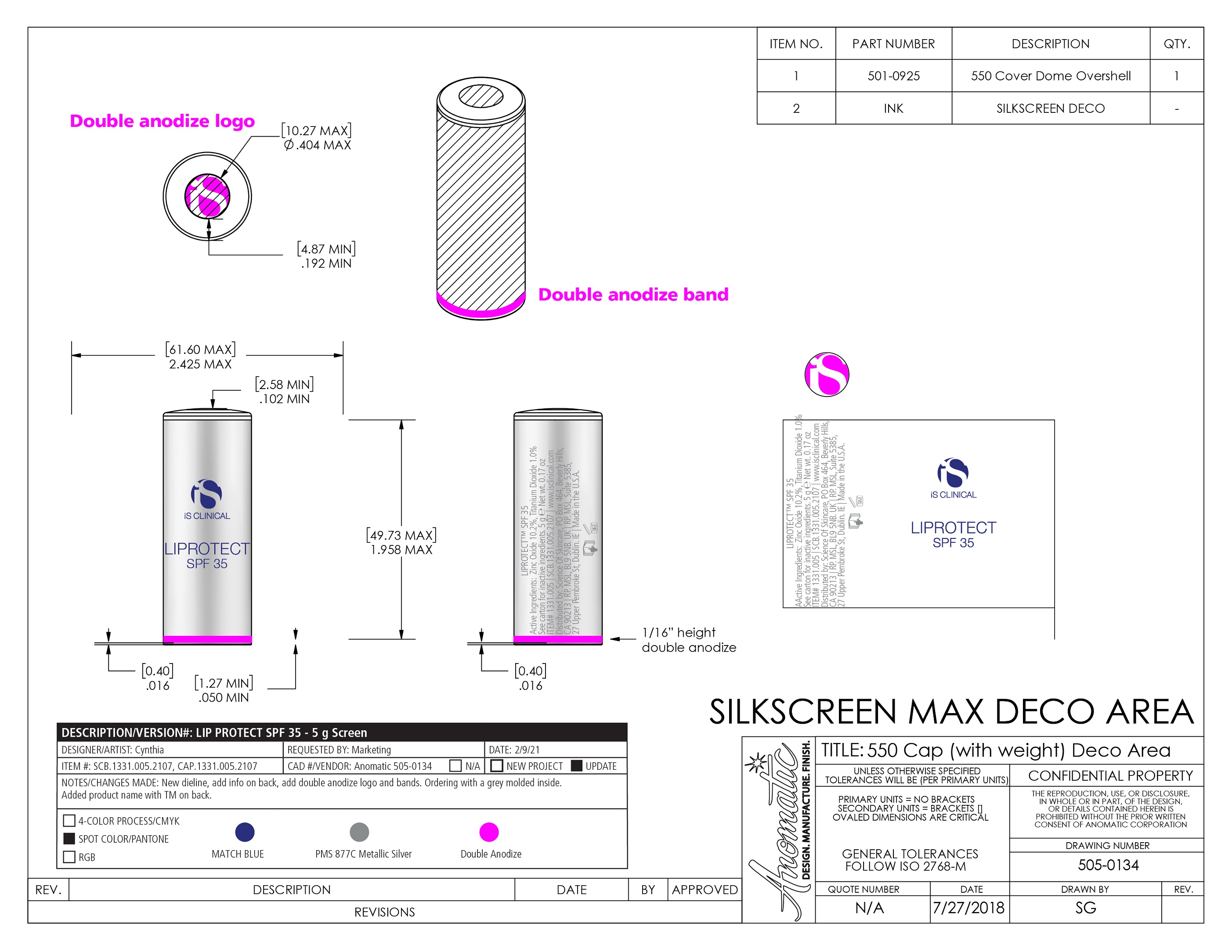
LiProtect SPF 35 Zinc Oxide, Titanium Dioxide 10.2 g/100g; 1 g/100g Stick — NDC 69219-112-11 (Billing 69219-0112-11)
This is a package of LiProtect SPF 35 Zinc Oxide, Titanium Dioxide 10.2 g/100g; 1 g/100g Stick from Science of Skincare, marketed since Dec 2023 and currently FDA-listed.
Identity & classification
Regulatory identifiers FDA, NLM and CMS codes for this package
Where does this data come from?
- FDA openFDA NDC Directory · synced Oct 1, 2026
- FDA label on DailyMed · label index refreshed Oct 1, 2026
- RxNorm (NLM RxNav) · catalog refreshed Oct 1, 2026
- Medi-Span GPI (licensed)
- First Databank (licensed) · refreshed Oct 1, 2026
Clinical
LiProtect SPF 35 is a topical sunscreen stick containing titanium dioxide and zinc oxide as active ingredients. Both minerals function as broad-spectrum ultraviolet (UV) filters, commonly used to help protect skin from sun damage when applied to exposed areas. This product is an over-the-counter monograph drug, meaning it is marketed under FDA's established safety and effectiveness rules for sunscreen products rather than as an individually reviewed application. The stick form allows for convenient application to the face and other sun-exposed areas.
Patient education
Supplement & herbal interactions
Where does this data come from?
- MedlinePlus (NLM) · refreshed Oct 1, 2026
- FDA label on DailyMed · label index refreshed Oct 1, 2026
Ask a licensed pharmacist directly — free, answered by our team.
Pricing
A drug doesn't have one price. Each row is a different public payment system, and none is what you'd pay at the counter — that depends on your insurance. The ⓘ on each row explains what it measures.
| Price system | Per each | Per package |
|---|---|---|
| Retail pharmacies payNADAC · weekly | Not in the retail survey — common for institutional, discontinued, or low-volume packs. | |
| Medicaid paysCMS SDUD · 12 mo | No recent Medicaid claims on file for this NDC — rare and low-volume NDCs are suppressed in the public data. | |
| Medicare drug plans payPart D · quarterly | No Part D plan price is available for this NDC in our data. | |
Where does this data come from?
- CMS NADAC weekly file
- CMS ASP pricing files · refreshed Sep 20, 2026
- CMS Medicaid State Drug Utilization Data · refreshed Oct 3, 2026
- CMS Part D plan pricing files · refreshed Sep 24, 2026
- VA National Acquisition Center price file
Packaging — all sizes for this product
| Package NDC | Description | Marketing start | Marketing end | Status |
|---|---|---|---|---|
| 69219-0112-01 69219-112-01 Main listing | 5 g in 1 BOTTLE, PLASTIC | 2023-12-31 | — | Active |
| 69219-0112-11 You're viewing this | 1 BOTTLE, PLASTIC in 1 BOX / 5 g in 1 BOTTLE, PLASTIC | 2023-12-31 | — | Active |
Pack size FAQ
What quantity is in this package?
What NDC number is used to bill for this package of LiProtect SPF 35 Zinc Oxide, Titanium Dioxide 10.2 g/100g; 1 g/100g Stick?
Therapeutic equivalents
| Product | Labeler | Pack | NADAC/unit | TE | Status | Price vs. this |
|---|---|---|---|---|---|---|
| LiProtect SPF 35 10.2 g/100g; 1 g/100gthis 69219-0112-11 | Science | 1 bottle | — | — | FDA listed | — |
Where does this data come from?
- FDA openFDA NDC Directory · synced Oct 1, 2026
- FDA Orange Book · refreshed Sep 3, 2026
- CMS NADAC weekly file
Availability & generic status
We did not find an FDA-approved generic match for this exact strength, form and route.
Where does this data come from?
- FDA Orange Book · refreshed Sep 3, 2026
Inactive Ingredients / Excipients
Inactive ingredients, also called excipients, are components of the drug product other than the active ingredient. They may include fillers, dyes, coatings, preservatives, flavors, or other formulation ingredients.
💡 Tap an ingredient (hover on desktop) to see what it is and why it’s used.
-
UNII A9EJ3J61HQ
A synthetic liquid derived from benzoic acid and long-chain alcohols. It functions as a solvent and penetration enhancer in topical formulations, helping active ingredients dissolve and absorb into the skin.
-
UNII LMI26O6933
Alumina is a white powder form of aluminum oxide. It's used as a filler to add bulk to tablets and capsules, and sometimes as a thickening or anti-caking agent in powdered formulations.
-
UNII U6XF9NP8HM
Aluminum stearate is a salt made from aluminum and stearic acid, a fatty substance. It works as a lubricant and glidant to help powder flow smoothly during manufacturing and tablet production.
-
UNII WL0328HX19
A natural plant-based wax derived from candelilla shrub leaves. It acts as a coating agent, hardener, and texture modifier to control how quickly the medicine releases and to improve the tablet or capsule's appearance and stability.
-
UNII Q1LS2UJO3A
Ceresin is a purified mineral wax derived from ozocerite. It functions as a binding agent, thickener, and coating material in medicines to help hold ingredients together and provide texture or protective coating.
-
UNII BUC5I9595W
A natural flavoring derived from cherry fruit that gives the medicine its cherry taste. It helps mask bitter drug flavors and makes the medication more pleasant to take.
-
UNII Q9L0O73W7L
Coconut oil is a natural fat extracted from coconut fruit. It's used in medicines as a lubricant, emollient, or carrier to help dissolve or deliver active ingredients smoothly through the formulation.
-
UNII 8470G57WFM
Corn oil is a vegetable oil extracted from corn kernels. It's used in medicines as a solvent to dissolve active ingredients and help the body absorb them, and sometimes as a lubricant in capsules.
-
UNII E6AHA53N1H
A synthetic amino acid derivative used as a skin-conditioning agent and emollient in topical formulations. It helps soften and smooth the product's texture while improving how it spreads on skin.
-
UNII XQQ9MKE2BJ
Eicosyl povidone is a synthetic polymer derived from povidone with added long-chain fatty components. It functions as a solubilizer and absorption enhancer to help the medicine dissolve better and be absorbed more effectively by the body.
-
UNII 2865993309
Ethylhexyl palmitate is an oily chemical made from palm oil and alcohol. It acts as an emollient and skin-conditioning agent in topical medicines, helping the product spread smoothly and keeping skin soft.
-
UNII BQY1UBX046
A plant extract from European elderberry fruit used as a flavoring agent and color source in medicines. It adds taste and natural purple coloring to tablets and liquids.
-
UNII X33R8U0062
Isostearic acid is a fatty acid derived from vegetable oils. It acts as an emulsifier and lubricant in medicines, helping blend ingredients together and reducing friction during tablet or capsule manufacturing.
-
UNII 724GKU717M
Jojoba oil is a natural liquid wax extracted from jojoba plant seeds. It's used in medicines as an emollient and lubricant to soften and smooth the product, and sometimes as a carrier or penetration enhancer.
-
UNII 9KJL21T0QJ
Linoleic acid is an omega-6 fatty acid derived from plant oils. It serves as an emulsifier and skin conditioning agent in topical formulations, helping ingredients mix smoothly and improving product texture.
-
UNII C9H2L21V7U
A fat derived from coconut or palm oil containing shorter fatty acid chains. It serves as a solvent and carrier to help dissolve or suspend active ingredients, improving absorption and stability in liquid formulations.
-
UNII 71M78END5S
A natural fat derived from fish or algae sources. It's included as a nutritional ingredient and helps distribute other components evenly throughout the medicine.
-
UNII RV743D216M
A synthetic peptide derived from fatty acids and amino acids. It functions as a skin-conditioning agent and emollient in topical formulations, helping soften and smooth the product texture while supporting skin hydration.
-
UNII YXH47AOU0F
A synthetic fatty acid used as a thickener and stabilizer in medicines. It helps create the right texture and prevents separation of ingredients in liquid or semi-solid formulations.
-
UNII B3FUD0528F
Rebaudioside A is a naturally derived sweetener extracted from stevia leaves. It sweetens the medicine without adding calories and helps mask bitter tastes to improve how the medication goes down.
-
UNII 01S2G2C1E4
Sorbitan isostearate is an emulsifier derived from sorbitol and isostearic acid. It helps mix oil and water-based ingredients together and keeps them blended throughout the medicine's shelf life.
-
UNII PL360EPO9J
Soy sterol is a plant-derived fat extracted from soybeans. It's used as an emulsifier and stabilizer to help keep oil and water mixed together and maintain the medicine's texture and consistency.
-
UNII 241ATL177A
Soybean oil is a natural plant oil derived from soybean seeds. It's used in medicines as a solvent and carrier to help dissolve or suspend active ingredients and improve how the body absorbs them.
-
UNII R0ZB2556P8
Tocopherol is a form of vitamin E derived from plant oils. It acts as an antioxidant in medicines to prevent oils and fats from breaking down and spoiling during storage.
-
UNII 8OC9U7TQZ0
Tribehenin is a waxy, plant-derived substance that acts as a lubricant and glidant in tablets and capsules. It helps the medicine flow smoothly during manufacturing and prevents sticking during production and packaging.
25 inactive ingredients listed in the exact product block matched to this NDC.
Label-section wording can be broader than the structured product block and may mention additional formulation ingredients.
Where does this data come from?
ingredient classCode="IACT" elements from the exact product block matched by this NDC. Label-section narrative from DailyMed / the openFDA label index is shown separately when available.- FDA label on DailyMed · label index refreshed Oct 1, 2026
- FDA openFDA NDC Directory · synced Oct 1, 2026
Inactive ingredient FAQ
Are inactive ingredients the same for every manufacturer?
Why might an inactive ingredient be missing?
Can inactive ingredients matter?
Manufacturer & labeler
Where does this data come from?
- FDA openFDA NDC Directory · synced Oct 1, 2026
- Drugs@FDA
FDA label — Drug Facts FDA SPL
🎯 Indications and Usage ▾
Helps prevent sunburn If used as directed with other sun protection measures (see Directions), decreases the risk of skin cancer and early skin aging caused by the sun.
⏱️ Dosage and Administration ▾
Apply liberally 15 minutes before sun exposure Use a water resistance sunscreen if swimming or sweating. Reapply at least every 2 hours Sun Protection Measures. Spending time in the sun increases your risk of skin cancer and early skin aging.
To decrease this risk, regularly use a sunscreen with a board spectrum SPF of 15 or higher and other sun protection measures including: limit time in sun, especially from 10am to 2pm. wear long-sleeve shirts, pants, hats, and sunglasses. Children under the age of 6 months. Ask a doctor.
⚠️ Warnings ▾
For external use only.
🧪 Active Ingredient ▾
Zinc Oxide 10.2% Titanium Dioxide 1.0% label
🧪 Inactive Ingredients ▾
Vegetable Oil, Cocos Nucifera (Coconut) Oil, Euphorbia Cerifera (Candelilla) Wax, Flavor(Aroma), C12-15 Alkyl Benzoate, Ozokerite, Hydrogenated Vegetable Oil, Sambucus Nigra Fruit Extract, Tocopherol, VP/Eicosene Copolymer, Caprylic/Capric Triglyceride, Dipalmitoyl Hydroxyproline, Simmondsia Chinensis (Jojoba) Seed Oil, Glycine Soja (Soybean) Oil, Polyhydroxystearic Acid, Ethylhexyl Palmitate, Rebaudioside A, Aluminum Stearate, Tribehenin, Palmitoyl Tripeptide-1, Linoleic Acid, Isostearic Acid, Glycine Soja (Soybean) Sterols, Phospholipids, Sorbitan Isostearate, Alumina.
🎯 Purpose ▾
Sunscreen box
📄 Do Not Use ▾
Do not use on damaged or broken skin Label
📄 When Using This Product ▾
When using this product keep out of eyes. Rinse with water to remove.
📄 Stop Use and Ask a Doctor If ▾
Stop use and ask a doctor if rash occurs.
📄 Keep Out of Reach of Children ▾
Keep out of reach of children. If product is swallowed, get medical help or contact a Poison Control Center right away.
📄 Other Information ▾
Protect this product from excessive heat and direct sun. Store at 20-25C (68 - 77F)
📄 Questions or Comments ▾
Call Customer Care at (888) 804 - 4447
📄 Package Label / Principal Display Panel ▾
69219-109 bottle
Reported adverse events (FAERS)
Top reported reactions
Reporter sex
Where does this data come from?
About this NDC listing & data coverage
What data is (and isn’t) available for this NDC — tap to expand
| NDC identity (package / product / labeler codes) | ✓ Available |
| Labeler | ✓ Available |
| Product & package description | ✓ Available |
| Marketing category & status | ✓ Available |
| Active ingredient / dosage form / route | ✓ Available |
| FDA label (SPL via DailyMed) | ✓ Available |
| Package photos | ✓ Available |
| Inactive ingredients (structured) | ✓ Available |
| NADAC pharmacy acquisition price (CMS) | — Not published for this NDC CMS publishes NADAC only for NDCs reported in its retail-pharmacy survey. |
| Orange Book / therapeutic-equivalence data | — Not published for this NDC Applies only to products approved under an NDA/ANDA; many listings are out of scope. |
| HCPCS J-code billing crosswalk | — Not published for this NDC Most self-administered / retail products have no J-code — that is normal. |
| Medicaid utilization (CMS SDUD) | — Not published for this NDC CMS reports utilization only for NDCs with Medicaid claims above its privacy threshold. |