
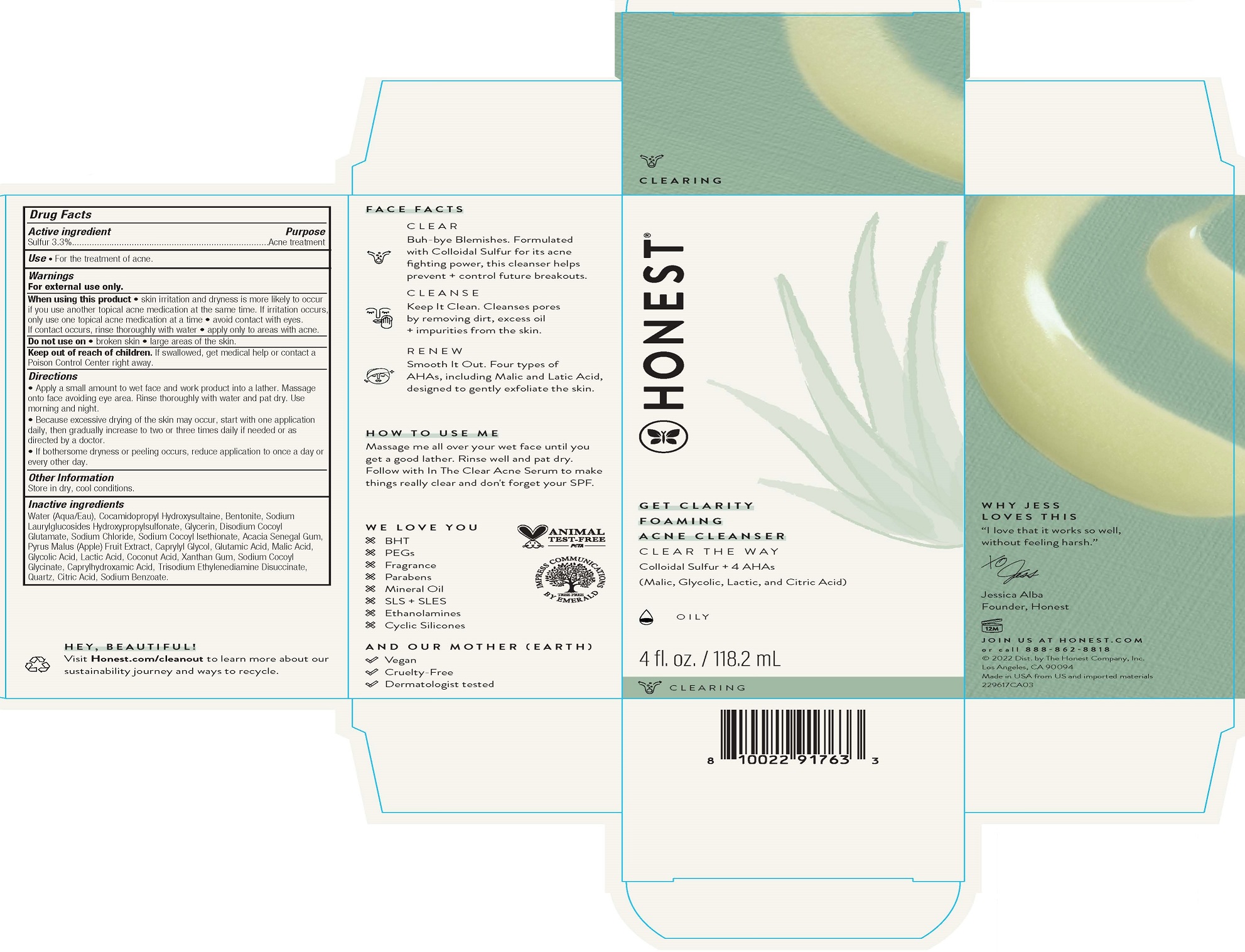
Get Clarity Foaming Acne Cleanser Sulfur 3.3 g/100mL Cream, 1 tube — NDC 69366-413-30 (Billing 69366-0413-30)
This is a package of 1 tube of Get Clarity Foaming Acne Cleanser Sulfur 3.3 g/100mL Cream from The Honest Company, Inc, marketed since May 2022 and currently FDA-listed. It is this product's only package size.
NDC database record
One package, one record: these facts belong to NDC 69366-413-30 alone.
- Record
- FDA NDC Directory package listing · Human OTC drug
- Code segments
- 69366 labeler · 413 product · 30 package
- Package marketed since
- May 1, 2022
- Sample package
- No — commercial package
- Listing certified through
- Dec 31, 2026
- Barcode (UPC)
- 0810022917633
- FDA record last changed
- Jul 24, 2026
Identity & classification
Regulatory identifiers FDA, NLM and CMS codes for this package
- RxCUI (RxNorm): 2599924
Where does this data come from?
- FDA openFDA NDC Directory · synced Oct 8, 2026
- FDA label on DailyMed · label index refreshed Oct 8, 2026
- RxNorm (NLM RxNav) · catalog refreshed Oct 8, 2026
- Medi-Span GPI (licensed)
- First Databank (licensed) · refreshed Oct 8, 2026
RxNorm drug class
This medicine belongs to the Preparations containing sulfur class.
Where does this data come from?
- RxClass (NLM) · catalog refreshed Oct 8, 2026
Clinical
Get Clarity Foaming Acne Cleanser is a topical cream containing sulfur, marketed as an over-the-counter monograph drug. Sulfur is commonly included in acne and skin-care products and is typically used to help cleanse affected skin areas. This product is applied directly to the skin as a cleanser rather than left on as a treatment.
Patient education
Supplement & herbal interactions
Where does this data come from?
- MedlinePlus (NLM) · refreshed Oct 8, 2026
- FDA label on DailyMed · label index refreshed Oct 8, 2026
Ask a licensed pharmacist directly — free, answered by our team.
Pricing
A drug doesn't have one price. Each row is a different public payment system, and none is what you'd pay at the counter — that depends on your insurance. The ⓘ on each row explains what it measures.
| Price system | Per g | Per package |
|---|---|---|
| Retail pharmacies payNADAC · weekly | Not in the retail survey — common for institutional, discontinued, or low-volume packs. | |
| Medicaid paysCMS SDUD · 12 mo | No recent Medicaid claims on file for this NDC — rare and low-volume NDCs are suppressed in the public data. | |
| Medicare drug plans payPart D · quarterly | No Part D plan price is available for this NDC in our data. | |
Where does this data come from?
- CMS NADAC weekly file
- CMS ASP pricing files · refreshed Sep 20, 2026
- CMS Medicaid State Drug Utilization Data · refreshed Oct 9, 2026
- CMS Part D plan pricing files · refreshed Sep 24, 2026
- VA National Acquisition Center price file
Packaging — all sizes for this product
| Package NDC | Description | Marketing start | Marketing end | Status |
|---|---|---|---|---|
| 69366-0413-30 You're viewing this Main listing | 1 TUBE in 1 CARTON / 118.2 mL in 1 TUBE | 2022-05-01 | — | Active |
Therapeutic equivalents
| Product | Labeler | Pack | NADAC/unit | TE | Status | Price vs. this |
|---|---|---|---|---|---|---|
| Get Clarity Foaming Acne Cleanser 3.3 g/100mLthis 69366-0413-30 | The | 1 tube | — | — | FDA listed | — |
Where does this data come from?
- FDA openFDA NDC Directory · synced Oct 8, 2026
- FDA Orange Book · refreshed Oct 3, 2026
- CMS NADAC weekly file
Availability & generic status
We did not find an FDA-approved generic match for this exact strength, form and route.
Where does this data come from?
- FDA Orange Book · refreshed Oct 3, 2026
Inactive Ingredients / Excipients
Inactive ingredients, also called excipients, are components of the drug product other than the active ingredient. They may include fillers, dyes, coatings, preservatives, flavors, or other formulation ingredients.
💡 Tap an ingredient (hover on desktop) to see what it is and why it’s used.
-
UNII 5C5403N26O
Acacia is a natural gum derived from acacia tree sap. It serves as a binder, thickener, and emulsifier to help hold ingredients together, improve texture, and stabilize the medicine.
-
UNII XF417D3PSL
Anhydrous citric acid is a sour, crystalline powder derived from citric acid with water removed. In medicines, it acts as a buffer to control pH, adds tartness to improve taste, and helps tablets disintegrate.
-
UNII B423VGH5S9
A natural fruit ingredient derived from apples, used as a flavoring agent and sweetener to improve taste and palatability of the medicine.
-
UNII A3N5ZCN45C
Bentonite is a naturally occurring clay mineral used in medicines as a binder and absorbent. It helps hold tablet ingredients together and can absorb moisture or unwanted substances in the formulation.
-
UNII UPY805K99W
A synthetic compound derived from caprylic acid that works as a preservative and antimicrobial agent to help prevent bacterial and fungal growth in the medicine.
-
UNII 00YIU5438U
Caprylyl glycol is a clear liquid derived from coconut oil. In medicines, it acts as a humectant to retain moisture, a preservative booster to prevent microbial growth, and a solvent to help dissolve or mix other ingredients.
-
UNII 62V75NI93W
A surfactant derived from coconut oil that helps cleanse and remove oils from skin or hair. In medicines and personal care products, it acts as a cleanser and foaming agent.
-
UNII 40U37V505D
A fatty acid derived from coconut oil. It acts as an emulsifier to help mix water and oil-based ingredients, and may also serve as a surfactant or lubricant in tablet and capsule formulations.
-
UNII MBK0CP8F5A
Disodium cocoyl glutamate is a mild cleanser derived from coconut oil and amino acids. It acts as a surfactant and emulsifier in medicines, helping to mix oil and water-based ingredients together and improve how the product spreads or absorbs.
-
UNII 3KX376GY7L
Glutamic acid is an amino acid used in pharmaceuticals as a buffer and pH regulator. It helps maintain the medicine's chemical stability and proper acidity level.
-
UNII PDC6A3C0OX
Glycerin is a clear, thick liquid derived from plant oils or fats. It acts as a humectant to retain moisture, a sweetener, and a solvent in medications.
-
UNII 0WT12SX38S
Glycolic acid is an alpha-hydroxy acid derived from sugar cane that helps dissolve and remove dead skin cells. In topical medicines, it works as an exfoliant and pH adjuster to improve skin penetration and product effectiveness.
-
UNII 33X04XA5AT
Lactic acid is a naturally occurring organic acid derived from milk or plant sources. It lowers and maintains pH in formulations, helps preserve the product, and can enhance ingredient stability and absorption.
-
UNII J3TZF807X5
A weak organic acid derived from fruits and vegetables. Used as a buffer to adjust pH, a flavor enhancer for tartness, and a preservative to extend shelf life in tablets, capsules, and liquid medications.
-
UNII ETJ7Z6XBU4
Silicon dioxide is a naturally occurring mineral used as a glidant and anti-caking agent. It helps powder ingredients flow smoothly and prevents clumping during manufacturing and storage.
-
UNII OJ245FE5EU
Sodium benzoate is a salt derived from benzoic acid, a preservative. It's added to medicines to prevent growth of bacteria, fungi, and other microorganisms that could spoil the product.
-
UNII 451W47IQ8X
Sodium chloride is common table salt. It's used in medicines as a buffer to maintain proper pH, as a filler to add bulk, or to adjust the osmotic balance in liquid formulations.
-
UNII XLU9KH03XM
A mild, plant-derived cleansing agent made from coconut oil and the amino acid glycine. It acts as a surfactant and emulsifier to help blend oil and water-based ingredients and improve texture in topical products.
-
UNII 518XTE8493
A gentle cleanser derived from coconut oil, sodium cocoyl isethionate serves as a surfactant and foaming agent in topical products. It helps the medicine spread evenly on skin and creates lather.
-
UNII Z6GFR7R72Y
A plant-derived cleaning agent used as a surfactant and emulsifier. It helps mix water and oil-based ingredients together and improves how the medicine spreads or is absorbed.
-
UNII YA22H34H9Q
A chelating agent derived from sodium and organic compounds. It binds to metal ions in the formulation to improve stability and prevent unwanted chemical reactions that could degrade the medicine.
-
UNII 059QF0KO0R
Water is a liquid solvent that dissolves and mixes ingredients together in liquid medicines, syrups, and injections. It helps distribute the active drug evenly throughout the product.
-
UNII TTV12P4NEE
Xanthan gum is a thickening and stabilizing ingredient made from fermented corn or other sugars. It's added to medicines to improve texture, prevent separation of liquids and solids, and help the product stay consistent.
23 inactive ingredients listed in the exact product block matched to this NDC.
Label-section wording can be broader than the structured product block and may mention additional formulation ingredients.
Where does this data come from?
ingredient classCode="IACT" elements from the exact product block matched by this NDC. Label-section narrative from DailyMed / the openFDA label index is shown separately when available.- FDA label on DailyMed · label index refreshed Oct 8, 2026
- FDA openFDA NDC Directory · synced Oct 8, 2026
Inactive ingredient FAQ
Are inactive ingredients the same for every manufacturer?
Why might an inactive ingredient be missing?
Can inactive ingredients matter?
Manufacturer & labeler
More NDCs from The Honest Company, Inc labeler code 69366
- Hand Sanitizer Graepfruit Grove 62% Ethyl Alcohol 62 mL/100mL Spray NDC 69366-312-04
- Sanitizing Wipes Fragrance Free Alcohol 65 mL/100mL Cloth NDC 69366-316-24
- Sanitizing wipes with aloe Grapefruit Grove ALCOHOL 65 mL/100mL Cloth NDC 69366-317-24
- Sanitizing Wipes Lavender Alcohol 65 mL/100mL Cloth NDC 69366-319-24
- Sanitizing Wipes Grapefruit Alcohol 65 mL/100mL Cloth NDC 69366-320-24
- Spot Stopper Acne Spot Treatment Salicylic Acid 2 g/100mL Gel NDC 69366-412-32
- In the Clear Acne Serum Salicylic Acid .5 g/100mL Liquid NDC 69366-414-31
- Honest Eczema Balm Colloidal Oatmeal 1 g/100g Ointment NDC 69366-503-20
- Honest Eczema Cream Colloidal Oatmeal 1 g/100g Cream NDC 69366-504-19
- Calm and Heal Melting Balm Allantoin .5 g/100g Cream NDC 69366-505-23
- Everyday Diaper Rash Cream Zinc Oxide 14 g/100g Cream NDC 69366-507-17
- Healing Head to Toe Allantoin .5 g/100g Ointment NDC 69366-508-29
Where does this data come from?
- FDA openFDA NDC Directory · synced Oct 8, 2026
- Drugs@FDA
FDA label — Drug Facts FDA SPL
🎯 Indications and Usage ▾
Use • For the treatment of acne.
⏱️ Dosage and Administration ▾
Directions • Apply a small amount to wet face and work product into a lather. Massage onto face avoiding eye area. Rinse thoroughly with water and pat dry. Use morning and night. • Because excessive drying of the skin may occur, start with one application daily, then gradually increase to two or three times daily if needed or as directed by a doctor. • If bothersome dryness or peeling occurs, reduce application to once a day or every other day.
⚠️ Warnings ▾
Warnings For external use only. When using this product • skin irritation and dryness is more likely to occur if you use another topical acne medication at the same time. If irritation occurs, only use one topical acne medication at a time • avoid contact with eyes.
If contact occurs, rinse thoroughly with water • apply only to areas with acne. Do not use on • broken skin • large areas of the skin Keep out of reach of children . If swallowed, get medical help or contact a Poison Control Center right away.
🧪 Active Ingredient ▾
Active ingredient Sulfur 3.3%
🧪 Inactive Ingredients ▾
Inactive ingredients Water (Aqua/Eau), Cocamidopropyl Hydroxysultaine, Bentonite, Sodium Laurylglucosides Hydroxypropylsulfonate, Glycerin, Disodium Cocoyl Glutamate, Sodium Chloride, Sodium Cocoyl Isethionate, Acacia Senegal Gum, Pyrus Malus (Apple) Fruit Extract, Caprylyl Glycol, Glutamic Acid, Malic Acid, Glycolic Acid, Lactic Acid, Coconut Acid, Xanthan Gum, Sodium Cocoyl Glycinate, Caprylhydroxamic Acid, Trisodium Ethylenediamine Disuccinate, Quartz, Citric Acid, Sodium Benzoate.
🎯 Purpose ▾
Purpose Acne treatment
📄 Do Not Use ▾
Do not use on • broken skin • large areas of the skin
📄 When Using This Product ▾
When using this product • skin irritation and dryness is more likely to occur if you use another topical acne medication at the same time. If irritation occurs, only use one topical acne medication at a time • avoid contact with eyes. If contact occurs, rinse thoroughly with water • apply only to areas with acne.
📄 Keep Out of Reach of Children ▾
Keep out of reach of children . If swallowed, get medical help or contact a Poison Control Center right away.
📄 Package Label / Principal Display Panel ▾
HONEST ® GET CLARITY FOAMING ACNE CLEANSER CLEAR THE WAY Colloidal Sulfer + 4 AHAs (Malic, Glycolic, Lactic and Citric Acid) OILY 4 fl. oz. / 118.2 mL 888-862-8818 ©2022 Dist. by The Honest Company, Inc. Los Angeles, CA 90094 Made in USA from US and imported materials label
Reported adverse events (FAERS)
Top reported reactions
Age at onset
Reporter sex
Serious outcomes
Where does this data come from?
About this NDC listing & data coverage
What data is (and isn’t) available for this NDC — tap to expand
| NDC identity (package / product / labeler codes) | ✓ Available |
| Labeler | ✓ Available |
| Product & package description | ✓ Available |
| Marketing category & status | ✓ Available |
| Active ingredient / dosage form / route | ✓ Available |
| FDA label (SPL via DailyMed) | ✓ Available |
| Package photos | ✓ Available |
| Inactive ingredients (structured) | ✓ Available |
| NADAC pharmacy acquisition price (CMS) | — Not published for this NDC CMS publishes NADAC only for NDCs reported in its retail-pharmacy survey. |
| Orange Book / therapeutic-equivalence data | — Not published for this NDC Applies only to products approved under an NDA/ANDA; many listings are out of scope. |
| HCPCS J-code billing crosswalk | — Not published for this NDC Most self-administered / retail products have no J-code — that is normal. |
| Medicaid utilization (CMS SDUD) | — Not published for this NDC CMS reports utilization only for NDCs with Medicaid claims above its privacy threshold. |