
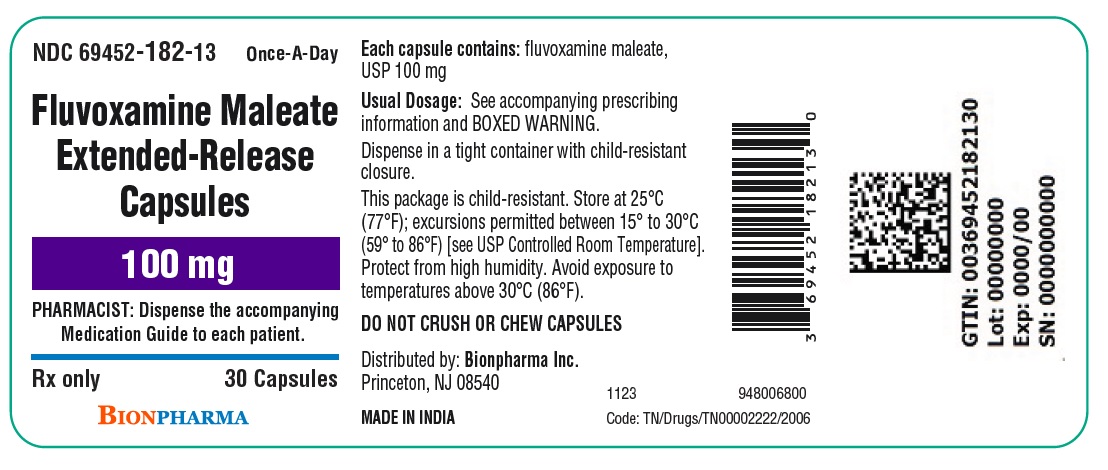
Fluvoxamine Maleate 100 mg Capsule, Extended Release, 30-count — NDC 69452-182-13 (Billing 69452-0182-13)
This is a package of 30 capsules of Fluvoxamine Maleate 100 mg Capsule, Extended Release from Bionpharma Inc., marketed since Dec 2020 and currently FDA-listed; retail pharmacies pay about $4.08 per capsule (NADAC). It is the main listing for this product, which comes in 2 package sizes.
NDC database record
One package, one record: these facts belong to NDC 69452-182-13 alone.
- Record
- FDA NDC Directory package listing · Human prescription drug
- Code segments
- 69452 labeler · 182 product · 13 package
- Package marketed since
- Dec 1, 2020
- Sample package
- No — commercial package
- Listing certified through
- Dec 31, 2026
- Billing quantity
- 30 EA per package
- Barcode (UPC)
- 0369452182130
- Medicaid fills, this package
- 2,855 prescriptions in the last four reported quarters
- FDA record last changed
- Jul 24, 2026
Identity & classification
Regulatory identifiers FDA, NLM and CMS codes for this package
Drug-database identifiers Medi-Span GPI and First Databank GCN / HICL / AHFS classification
- GSN (GCN sequence number): 063767
- GCN: 99481
- GPI-14 (Medi-Span): 58160045107020
- HICL (First Databank): 006338
- AHFS class code: 28:16.04.20
- RxCUI (RxNorm): 903873
Where does this data come from?
- FDA openFDA NDC Directory · synced Oct 1, 2026
- FDA label on DailyMed · label index refreshed Oct 5, 2026
- RxNorm (NLM RxNav) · catalog refreshed Oct 1, 2026
- Medi-Span GPI (licensed)
- First Databank (licensed) · refreshed Oct 1, 2026
RxNorm drug class
This medicine belongs to the Serotonin Reuptake Inhibitor class.
Where does this data come from?
- RxClass (NLM) · catalog refreshed Oct 1, 2026
Clinical
Fluvoxamine is used to treat obsessive-compulsive disorder (bothersome thoughts that won't go away and the need to perform certain actions over and over) and social anxiety disorder (extreme fear of interacting with others or performing in front of others that interferes with normal life). Fluvoxamine is in a class of medications called selective serotonin reuptake inhibitors (SSRIs). It works by increasing the amount of serotonin, a natural substance in the brain that helps maintain mental balance.
Read the full MedlinePlus article ↗- It treats obsessive compulsive disorder (OCD), which involves unwanted repeated thoughts and repeated behaviors. Tablets are used in adults and in children ages 8 to 17. Extended-r...
- It's taken by mouth, usually starting at bedtime, with your prescriber raising the dose gradually. Don't crush or chew the extended-release capsules. Follow your label closely.
- Common ones are nausea, diarrhea, sleepiness, weakness, sweating, tremor, appetite loss and sexual side effects. Call your prescriber if you notice worsening mood, suicidal thought...
- Please don't stop suddenly. Stopping abruptly can cause withdrawal-type symptoms, so your prescriber will lower the dose gradually.
Patient education
Supplement & herbal interactions
Fluvoxamine may be associated with lower levels of 1 nutrient — worth a chat with your pharmacist, not a cause for alarm.
Where does this data come from?
- MedlinePlus (NLM) · refreshed Oct 1, 2026
- FDA label on DailyMed · label index refreshed Oct 5, 2026
Ask a licensed pharmacist directly — free, answered by our team.
Pricing
A drug doesn't have one price. Each row is a different public payment system, and none is what you'd pay at the counter — that depends on your insurance. The ⓘ on each row explains what it measures.
| Price system | Per ea | Per package |
|---|---|---|
| Retail pharmacies payNADAC · weekly | $4.078 | $122.33 / 30 capsules |
| Medicaid paysCMS SDUD · 12 mo | $5.11 | $153.37 / 30 capsules |
| Medicare drug plans payPart D · Q2 2026 | $6.45 | $193.36 / 30 capsules |
Where does this data come from?
- CMS NADAC weekly file · file of Sep 30, 2026
- CMS ASP pricing files · refreshed Sep 20, 2026
- CMS Medicaid State Drug Utilization Data · through Q4 2025
- CMS Part D plan pricing files · refreshed Sep 24, 2026
- VA National Acquisition Center price file
Packaging — all sizes for this product
| Package NDC | Description | Per unit | Per pack | Marketing start | Marketing end | Status |
|---|---|---|---|---|---|---|
| 69452-0182-13 You're viewing this Main listing | 30 CAPSULE, EXTENDED RELEASE in 1 BOTTLE | $4.08 / ea | $122.33 | 2020-12-01 | — | Active |
| 69452-0182-32 69452-182-32 | 1000 CAPSULE, EXTENDED RELEASE in 1 BOTTLE | — | — | 2020-12-01 | — | Active |
You're viewing the smallest of 2 pack sizes for this product.
In Medicaid, this is the most-dispensed pack of this product — about 100% of fills over the last four reported quarters. See all packs ↓
Pack size FAQ
What quantity is in this package?
How does this package differ from NDC 69452-0182-32?
What NDC number is used to bill for this package of Fluvoxamine Maleate 100 mg Capsule, Extended Release?
Prices are the latest CMS NADAC pharmacy acquisition cost per NDC; per-pack figures are per-unit × pack quantity, shown only when the pack is denominated in the same measure NADAC prices.
Therapeutic equivalents
| Product | Labeler | Pack | NADAC/unit | TE | Status | Price vs. this |
|---|---|---|---|---|---|---|
| Fluvoxamine Maleate 100 mg 00228-2848-03 | Actavis | 30 capsules | $4.078 | AB | Availability likely | — |
| Fluvoxamine Maleate 100 mg 27241-0274-30 | Ajanta | 30 capsules | $4.078 | AB | Availability likely | — |
| Fluvoxamine Maleate 100 mgthis 69452-0182-13 | Bionpharma | 30 capsules | $4.078 | AB | Availability likely | — |
| Fluvoxamine Maleate 100 mg 10370-0175-10 | Par | 1000 capsules | — | AB | Discontinued | — |
| Fluvoxamine Maleate 100 mg 31722-0064-01 | Camber | 100 capsules | — | AB | FDA listed | — |
| Fluvoxamine Maleate 100 mg 73190-0066-30 | AvKARE | 30 capsules | — | AB | FDA listed | — |
| Fluvoxamine Maleate 100 mg 00832-6025-30 | Upsher-Smith | 30 capsules | — | AB | FDA listed | — |
Where does this data come from?
- FDA openFDA NDC Directory · synced Oct 1, 2026
- FDA Orange Book · refreshed Oct 3, 2026
- CMS NADAC weekly file · file of Sep 30, 2026
Availability & generic status
This product is an FDA-approved generic. Other versions of the same drug are listed under Therapeutic equivalents, least expensive first.
Where does this data come from?
- FDA Orange Book · refreshed Oct 3, 2026
What it looks like
Where does this data come from?
- FDA label on DailyMed · label index refreshed Oct 5, 2026
Inactive Ingredients / Excipients
Inactive ingredients, also called excipients, are components of the drug product other than the active ingredient. They may include fillers, dyes, coatings, preservatives, flavors, or other formulation ingredients.
🧪 Avoiding an ingredient? See Fluvoxamine inactive ingredients by manufacturer: every current product's list side by side, so you can ask your pharmacy for the version that does not list it.
💡 Tap an ingredient (hover on desktop) to see what it is and why it’s used.
-
UNII 767IP0Y5NH
A synthetic red colorant used to give medicines their color. It helps patients identify their medication and makes the product visually appealing.
-
UNII H3UP11403C
Ethylcellulose is a plant-derived polymer that thickens and forms protective coatings on tablets and capsules. It slows medicine release into the body and protects the contents from moisture and air.
-
UNII H3R47K3TBD
FD&C Blue No. 1 is a synthetic blue dye approved for use in foods and medicines. It serves as a colorant to give the medication its distinctive appearance and help with product identification.
-
UNII XM0M87F357
A dark iron oxide compound that gives medicines their black or dark color. It's used as a colorant in tablets and capsules to help identify the product and make it visually distinctive.
-
UNII 2G86QN327L
Gelatin is a protein derived from animal collagen, commonly used in medicines as a gelling agent and capsule material. It helps create soft or hard capsule shells that hold and release medication, and can also thicken liquid formulations.
-
UNII 9XZ8H6N6OH
A plant-based cellulose derivative used as a binder to hold tablet ingredients together, a thickener in liquids, and a coating agent to control how fast the medicine dissolves.
-
UNII R75537T0T4
Hypromellose 2910 is a plant-derived thickening agent made from cellulose. It serves as a binder that holds tablet ingredients together, a film-coating for pills, and a viscosity controller in liquids.
-
UNII WZH3C48M4T
Potassium hydroxide is a strong alkaline chemical used in medicines to adjust and maintain the pH level of liquid formulations, helping keep the product stable and the active ingredients effective.
-
UNII U725QWY32X
Povidone K30 is a synthetic polymer made from petroleum. It acts as a binder to hold tablet ingredients together and as a disintegrant to help the tablet break apart in the stomach so the medicine can be absorbed.
-
UNII 6DC9Q167V3
Propylene glycol is a clear liquid derived from petroleum or vegetable sources. It acts as a solvent, humectant, and preservative in medicines, helping dissolve active ingredients and maintain product stability.
-
UNII 46N107B71O
Shellac is a natural resin secreted by the lac beetle. It's used as a coating on tablets and capsules to control how quickly the medicine dissolves and to improve appearance and stability.
-
UNII 15FIX9V2JP
Titanium dioxide is a bright white mineral powder commonly used as a colorant and opacifying agent. It makes pills and tablets white or lighter in color and helps make coatings non-transparent.
-
UNII 8Z96QXD6UM
Triethyl citrate is a clear liquid derived from citric acid. It acts as a plasticizer and solvent in tablet coatings and film formulations, helping the coating remain flexible and adhere properly to the medicine.
13 inactive ingredients listed in the exact product block matched to this NDC.
Where does this data come from?
ingredient classCode="IACT" elements from the exact product block matched by this NDC. Label-section narrative from DailyMed / the openFDA label index is shown separately when available.- FDA label on DailyMed · label index refreshed Oct 5, 2026
- FDA openFDA NDC Directory · synced Oct 1, 2026
Inactive ingredient FAQ
Are inactive ingredients the same for every manufacturer?
Why might an inactive ingredient be missing?
Can inactive ingredients matter?
Manufacturer & labeler
More NDCs from Bionpharma Inc. labeler code 69452
- Azithromycin 250 mg Tablet, Film Coated NDC 69452-171-04
- Azithromycin 500 mg Tablet, Film Coated NDC 69452-172-13
- Azithromycin 600 mg Tablet, Film Coated NDC 69452-173-13
- Omega-3-Acid Ethyl Ester omega-3-acid ethyl esters 900 mg Capsule, Liquid Filled NDC 69452-175-17
- anti-diarrheal Loperamide Hydrochloride 2 mg Capsule, Liquid Filled NDC 69452-176-12
- Naproxen Sodium 220 mg Capsule, Liquid Filled NDC 69452-179-22
- Fluvoxamine Maleate 150 mg Capsule, Extended Release NDC 69452-183-13
- ivabradine 5 mg Tablet, Film Coated NDC 69452-190-17
- ivabradine 7.5 mg Tablet, Film Coated NDC 69452-191-17
- Ibuprofen, Diphenhydramine HCl 200 mg; 25 mg Capsule, Liquid Filled NDC 69452-205-04
- Doxylamine succinate and Pyridoxine hydrochloride 10 mg; 10 mg Tablet, Delayed Release NDC 69452-206-20
- Calcitriol .25 ug Capsule, Liquid Filled NDC 69452-207-13
Where does this data come from?
- FDA openFDA NDC Directory · synced Oct 1, 2026
- Drugs@FDA
Full prescribing information FDA SPL
🚨 Boxed Warning ▾
Suicidality and Antidepressant Drugs Antidepressants increased the risk compared to placebo of suicidal thinking and behavior (suicidality) in children, adolescents, and young adults in short-term studies of major depressive disorder (MDD) and other psychiatric disorders. Anyone considering the use of fluvoxamine maleate extended-release capsules or any other antidepressant in a child, adolescent, or young adult must balance this risk with the clinical need. Short-term studies did not show an increase in the risk of suicidality with antidepressants compared to placebo in adults beyond age 24; there was a reduction in risk with antidepressants compared to placebo in adults aged 65 and older.
Depression and certain other psychiatric disorders are themselves associated with increases in the risk of suicide. Patients of all ages who are started on antidepressant therapy should be monitored appropriately and observed closely for clinical worsening, suicidality, or unusual changes in behavior. Families and caregivers should be advised of the need for close observation and communication with the prescriber [ see Warnings and Precautions-Clinical Worsening and Suicide Risk ( 5.1 ) and Use in Specific Populations-Pediatric Use ( 8.4 )] .
WARNING: SUICIDALITY and ANTIDEPRESSANTS See full prescribing information for complete boxed warning. Increased risk of suicidal thinking and behavior in children, adolescents, and young adults taking antidepressants for major depressive disorder and other psychiatric disorders ( 5.1 ) .
🎯 Indications and Usage ▾
1 INDICATIONS AND USAGE Fluvoxamine maleate extended-release capsules are selective serotonin reuptake inhibitor (SSRI) indicated for the treatment of obsessive compulsive disorder (OCD) ( 1 ). Efficacy was demonstrated in: One 12-week study with fluvoxamine maleate extended-release capsules in adults ( 14.1 ) . Two 10-week studies with immediate-release (IR) fluvoxamine tablets in adults and one 10-week study with IR fluvoxamine tablets in children and adolescents ( 14.1 , 14.3 ) .
One maintenance study with IR fluvoxamine tablets ( 14.2 ) .
1.1Obsessive Compulsive Disorder Fluvoxamine maleate extended-release capsules are indicated for the treatment of obsessive compulsive disorder (OCD), as defined in the DSM-IV. Obsessive compulsive disorder is characterized by recurrent and persistent ideas, thoughts, impulses, or images (obsessions) that are ego-dystonic and/or repetitive, purposeful, and intentional behaviors (compulsions) that are recognized by the person as excessive or unreasonable. The obsessions or compulsions cause marked distress, are time-consuming, or significantly interfere with social or occupational functioning.
The efficacy of fluvoxamine maleate extended-release capsules was demonstrated in one 12-week trial in adults with fluvoxamine maleate extended-release capsules as well as in two 10-week trials in adults and in one 10-week trial in children and adolescents (ages 8 to 17 years) with immediate-release fluvoxamine tablets in outpatients with the diagnosis of OCD as defined in DSM-IV or DSM-III-R [see Clinical Studies ( 14.1 , 14.3 )] . The efficacy of fluvoxamine for long-term use was established in one maintenance study in adults with immediate-release fluvoxamine tablets [see Clinical Studies ( 14.
2 )] . The health care provider who elects to prescribe fluvoxamine maleate extended-release capsules for extended periods should periodically re-evaluate the long-term usefulness of the drug for the individual patient [see Dosage and Administration ( 2.4 ) ] .
⏱️ Dosage and Administration ▾
2 DOSAGE AND ADMINISTRATION Adults: Recommended starting dose is 100 mg at bedtime, with weekly increases of 50 mg as tolerated to maximum effect, not to exceed 300 mg/day ( 2.1 ) . Pediatric patients naïve to fluvoxamine maleate: The lowest available dose of fluvoxamine maleate extended-release capsules may not be appropriate ( 2.2 ) . Hepatically impaired: Decreased clearance may require modified dose and titration ( 2.3 ) .
Extended treatment: Adjust dose to maintain lowest effective dose; reassess patients periodically ( 2.4 ) . Discontinuation: Gradual dose reduction is recommended ( 2.7 , 5.10 ) .
2.1OCD (Obsessive Compulsive Disorder) The recommended starting dose is 100 mg at bedtime, with weekly increases of 50 mg as tolerated to maximum therapeutic benefit, not to exceed 300 mg per day. Capsules should not be crushed or chewed.
2.2Pediatric Patients Naïve to Fluvoxamine Maleate Physicians should consider that the lowest available dose of fluvoxamine maleate extended-release capsules may not be appropriate for pediatric patients naïve to fluvoxamine maleate.
2.3Dosage for Elderly or Hepatically Impaired Patients Elderly patients and those with hepatic impairment have been observed to have a decreased clearance of fluvoxamine maleate. Consequently, it may be appropriate to titrate slowly following the initial dose of 100 mg in these patient groups.
2.4Maintenance/Continuation of Extended Treatment Although the efficacy of fluvoxamine maleate extended-release capsules beyond 12 weeks of dosing has not been documented in controlled trials, OCD is a chronic condition, and it is reasonable to consider continuation for a responding patient. The benefit of maintaining patients with OCD on immediate-release fluvoxamine maleate tablets after achieving a response for an average duration of about 4 weeks in a 10-week single-blind phase during which patients were titrated to effect was demonstrated in a controlled trial [ see Clinical Studies( 14.2 )] .
Dosage adjustments should be made to maintain the patient on the lowest effective dosage, and patients should be periodically reassessed to determine the need for continued treatment.
2.5Switching a Patient to or from a Monoamine Oxidase Inhibitor (MAOI) Intended to Treat Psychiatric Disorders At least 14 days should elapse between discontinuation of an MAOI intended to treat psychiatric disorders and initiation of therapy with fluvoxamine maleate extended-release capsules. Conversely, at least 14 days should be allowed after stopping fluvoxamine maleate extended-release capsules before starting an MAOI intended to treat psychiatric disorders [see Contraindications ( 4.1 )] .
2.6Use of Fluvoxamine Maleate Extended-Release Capsules with Other MAOIs such as Linezolid or Methylene Blue Do not start fluvoxamine maleate extended-release capsules in a patient who is being treated with linezolid or intravenous methylene blue because there is an increased risk of serotonin syndrome. In a patient who requires more urgent treatment of a psychiatric condition, other interventions, including hospitalization, should be considered [see Contraindications ( 4.1 )] . In some cases, a patient already receiving fluvoxamine maleate extended-release capsules therapy may require urgent treatment with linezolid or intravenous methylene blue.
If acceptable alternatives to linezolid or intravenous methylene blue treatment are not available and the potential benefits of linezolid or intravenous methylene blue treatment are judged to outweigh the risks of serotonin syndrome in a particular patient, fluvoxamine maleate extended-release capsules should be stopped promptly, and linezolid or intravenous methylene blue can be administered. The patient should be monitored for symptoms of serotonin syndrome for two weeks or until 24 hours after the last dose of linezolid or intravenous methylene blue, whichever comes first.
Therapy with fluvoxamine maleate extended-release capsules may be resumed 24 hours af… [Excerpted — this section continues on DailyMed.]
💊 Dosage Forms and Strengths ▾
3 DOSAGE FORMS AND STRENGTHS Fluvoxamine maleate extended-release capsules are available as: 100 mg extended-release capsules: white to off-white spherical pellets filled in size “2” hard gelatin capsule with purple opaque cap imprinted with “FL” in black ink and white opaque body imprinted with “100” in black ink. 150 mg extended-release capsules: white to off-white spherical pellets filled in size “1” hard gelatin capsule with purple opaque cap imprinted with “FL” in black ink and white opaque body imprinted with “150” in black ink.
100 mg and 150 mg Extended-Release Capsules ( 3 )
⛔ Contraindications ▾
4 CONTRAINDICATIONS Co-administration of thioridazine, tizanidine, pimozide, alosetron, or ramelteon with fluvoxamine maleate extended-release capsules is contraindicated [see Warnings and Precautions ( 5.4 to 5.8 )] . Co-administration of thioridazine, tizanidine, pimozide, alosetron, or ramelteon ( 4 ) . Serotonin Syndrome and MAOIs: Do not use MAOIs intended to treat psychiatric disorders with fluvoxamine maleate extended-release capsules or within 14 days of stopping treatment with fluvoxamine maleate extended-release capsules.
Do not use fluvoxamine maleate extended-release capsules within 14 days of stopping an MAOI intended to treat psychiatric disorders. In addition, do not start fluvoxamine maleate extended-release capsules in a patient who is being treated with linezolid or intravenous methylene blue ( 4.1 ) .
4.1Monoamine Oxidase Inhibitors (MAOIs) The use of MAOIs intended to treat psychiatric disorders with fluvoxamine maleate extended‑release capsules or within 14 days of stopping treatment with fluvoxamine maleate extended-release capsules is contraindicated because of an increased risk of serotonin syndrome. The use of fluvoxamine maleate extended-release capsules within 14 days of stopping an MAOI intended to treat psychiatric disorders is also contraindicated [ see Dosage and Administration ( 2.5 ) and Warnings and Precautions ( 5.2 )] .
Starting fluvoxamine maleate extended-release capsules in a patient who is being treated with MAOIs such as linezolid or intravenous methylene blue is also contraindicated because of an increased risk of serotonin syndrome [ see Dosage and Administration ( 2.6 ) and Warnings and Precautions ( 5.2 )] .
⚠️ Warnings and Cautions ▾
5 WARNINGS AND PRECAUTIONS Clinical Worsening/Suicide Risk: Monitor for clinical worsening of suicidal thoughts/behaviors especially during the initial months of therapy and at times of dose changes ( 5.1 ) . Bipolar Disorder: Screen for bipolar disorder ( 5.1 ) . Serotonin Syndrome: Serotonin syndrome has been reported with SSRIs and SNRIs, including fluvoxamine maleate extended-release capsules, both when taken alone, but especially when co-administered with other serotonergic agents.
If such symptoms occur, discontinue fluvoxamine maleate extended-release capsules and serotonergic agents and initiate supportive treatment. If concomitant use of fluvoxamine maleate extended-release capsules with other serotonergic drugs is clinically warranted, patients should be made aware of a potential increased risk for serotonin syndrome, particularly during treatment initiation and dose increases ( 5.2 ) . Angle Closure Glaucoma: Angle closure glaucoma has occurred in patients with untreated anatomically narrow angles treated with antidepressants ( 5.3 ).
Other Potentially Important Drug Interactions: Benzodiazepines: Use with caution. Co-administration with diazepam is generally not advisable ( 5.9 ) . Clozapine: Clozapine levels may be increased and produce orthostatic hypotension or seizures ( 5.9 ) .
Methadone: Co-administration may produce opioid intoxication. Discontinuation of fluvoxamine may produce opioid withdrawal ( 5.9 ) . Mexiletine: Monitor serum mexiletine levels ( 5.9 ) .
Theophylline: Clearance decreased; reduce theophylline dose by one-third ( 5.9 ) . Warfarin: Plasma concentrations increased and prothrombin times prolonged; monitor prothrombin time and adjust warfarin dose accordingly ( 5.9 ) . Discontinuation: Symptoms associated with discontinuation have been reported ( 5.10 ) .
In the absence of an emergency, abrupt discontinuation not recommended ( 2.7 , 5.2 ) . Abnormal Bleeding: May increase bleeding risk, especially when used with NSAIDs, aspirin, warfarin, or other drugs that affect coagulation ( 5.11 ) . Activation of Mania/Hypomania has occurred ( 5.12 ) .
Seizures: Avoid administering fluvoxamine in patients with unstable epilepsy; monitor patients with controlled epilepsy; discontinue treatment if seizures occur or frequency increases ( 5.13 ) . Hyponatremia: May occur with SSRIs and SNRIs, including fluvoxamine maleate extended-release capsules. The elderly may be at increased risk.
Consider discontinuing in patients with symptomatic hyponatremia ( 5.14 ) . Concomitant Illness: Use caution in patients with diseases or conditions that affect hemodynamic responses or metabolism. Patients with impaired liver function may require a lower starting dose and slower titration ( 5.15 ) .
Sexual Dysfunction: Fluvoxamine maleate extended-release capsules may cause symptoms of sexual dysfunction ( 5.17 ).
5.1Clinical Worsening and Suicide Risk Patients with major depressive disorder (MDD), both adult and pediatric, may experience worsening of their depression and/or the emergence of suicidal ideation and behavior (suicidality) or unusual changes in behavior, whether or not they are taking antidepressant medications, and this risk may persist until significant remission occurs. Suicide is a known risk of depression and certain other psychiatric disorders, and these disorders themselves are the strongest predictors of suicide.
There has been a long-standing concern, however, that antidepressants may have a role in inducing worsening of depression and the emergence of suicidality in certain patients during the early phases of treatment. The pooled analyses of short-term placebo-controlled trials of antidepressant drugs (SSRIs and others) showed that these drugs increase the risk of suicidal thinking and behavior (suicidality) in children, adolescents, and young adults (ages 18 to 24) with major depressive disorder (MDD) and other psychiatric disorders.
Short-term studies did not show an increase in the risk of suicidal… [Excerpted — this section continues on DailyMed.]
🤒 Adverse Reactions ▾
6 ADVERSE REACTIONS Because clinical trials are conducted under widely varying conditions, adverse reaction rates observed in the clinical trials of a drug cannot be directly compared to rates in the clinical trials of another drug and may not reflect the rates observed in clinical practice. Most common reactions in controlled trials with OCD patients and patients from another studied population (incidence ≥ 5% and at least twice that for placebo) were abnormal ejaculation, anorexia, anorgasmia, asthenia, diarrhea, nausea, somnolence, sweating and tremor ( 6.2 ) .
The following additional reactions occurred: anxiety, decreased libido, myalgia, pharyngitis, and vomiting in the OCD population; and dyspepsia, dizziness, insomnia, and yawning in another studied population. To report SUSPECTED ADVERSE REACTIONS, contact Bionpharma Inc., at 1-888-235-BION or 1-888-235-2466 or FDA at 1-800-FDA-1088 or www.fda.gov/medwatch .
6.1Clinical Trial Data Sources Fluvoxamine maleate extended-release capsules were studied in one 12-week controlled trial in patients with OCD (N = 124; mean exposure 66.6 days) and in two 12-week controlled trials for another condition (N = 279; mean exposure 59.2 days). Patients in these trials were initiated on 100 mg/day and were titrated in 50 mg increments over the first 6 weeks to within a range of 100 mg to 300 mg/day. The reactions listed in Table 2 show reactions from the two populations separately.
Table 3 shows reactions from the three controlled studies combined.
6.2Adverse Reactions Observed in Controlled Trials Adverse Reactions Associated with Discontinuation of Treatment: Of the 124 patients with OCD and 279 patients in other studies treated with fluvoxamine maleate extended-release capsules in controlled clinical trials, 19% and 26% discontinued treatment due to an adverse reaction. The most common reactions (≥ 1%) associated with discontinuation and considered to be drug related (i.e., those reactions associated with dropout at a rate at least twice that of placebo) were anorexia (including, but not limited to, loss of appetite and decreased appetite) ( 1%), anxiety (3%), asthenia (3%), diarrhea (2%), dizziness (4%), headache (2%), insomnia (5%), nausea (7%), nervousness (1%), somnolence (5%), and thinking abnormal (1%).
Commonly Observed Adverse Reactions: Fluvoxamine maleate extended-release capsules have been studied in one controlled trial in patients with OCD (N = 124) and two controlled trials for another condition (N = 279). In general, adverse reaction rates were similar in the two data sets as well as in a study of pediatric patients with OCD treated with immediate-release fluvoxamine maleate tablets. The most commonly observed treatment-emergent adverse reactions associated with the use of fluvoxamine maleate extended-release capsules and likely to be drug-related (incidence of 5% or greater and at least twice that for placebo) and derived from Table 2 were: abnormal ejaculation, anorexia, anorgasmia, asthenia, diarrhea, nausea, somnolence, sweating, and tremor .
In the one controlled trial in patients with OCD, the following additional reactions occurred at an incidence of 5% or greater and at least twice that for placebo: anxiety, decreased libido, myalgia, pharyngitis, and vomiting . The following additional reactions occurred in another studied population: dyspepsia, dizziness, insomnia, and yawning . In a study evaluating immediate-release fluvoxamine maleate tablets in pediatric patients with OCD, the following additional reactions were identified using the above rule: agitation, depression, dysmenorrhea, flatulence, hyperkinesia, and rash .
Adverse Reactions Occurring at an Incidence of ≥ 2%: Table 2 enumerates adverse reactions that occurred in adults at a frequency of 2% or more, and were more frequent than in the placebo group, among patients treated with fluvoxamine maleate extended-release capsules in two short-term, placebo-controlled trials (12 weeks) in another populat… [Excerpted — this section continues on DailyMed.]
🔄 Drug Interactions ▾
7 DRUG INTERACTIONS Drug Interactions (not described in Contraindications or Warnings and Precautions) include the following: Drugs Inhibiting or Metabolized by Cytochrome P450: Fluvoxamine inhibits several cytochrome P450 isoenzymes (CYP1A2, CYP2C9, CYP3A4, and CYP2C19) ( 7.1 ) . Carbamazepine: Elevated carbamazepine levels and symptoms of toxicity with co-administration ( 7.2 ) . Sumatriptan: Rare postmarketing reports of weakness, hyperreflexia, and incoordination following use of an SSRI and sumatriptan.
Monitor appropriately if concomitant treatment is clinically warranted ( 7.2 ) . Tacrine: Co-administration increased tacrine C max and AUC five- and eight-fold and caused nausea, vomiting, sweating, and diarrhea ( 7.2 ) . Tricyclic Antidepressants (TCAs): Co-administration significantly increased plasma TCA levels.
Use caution; monitor plasma TCA levels; reduce TCA dose if indicated ( 7.2 ) . Tryptophan: Severe vomiting with co-administration ( 7.2 ) . Diltiazem: Bradycardia with co-administration ( 7.3 ) .
Propranolol or Metoprolol: Reduce dose if co-administered with fluvoxamine and titrate more cautiously ( 7.3 ) .
7.1Potential Interactions with Drugs that Inhibit or are Metabolized by Cytochrome P450 Isoenzymes Multiple hepatic cytochrome P450 isoenzymes are involved in the oxidative biotransformation of a large number of structurally different drugs and endogenous compounds. The available knowledge concerning the relationship of fluvoxamine and the cytochrome P450 isoenzyme system has been obtained mostly from pharmacokinetic interaction studies conducted in healthy volunteers, but some preliminary in vitro data are also available.
Based on a finding of substantial interactions of fluvoxamine with certain of these drugs [ see later parts of this section and also Warnings and Precautions ( 5) for details ] and limited in vitro data for CYP3A4, it appears that fluvoxamine inhibits several cytochrome P450 isoenzymes that are known to be involved in the metabolism of other drugs such as: CYP1A2 (e.g., warfarin, theophylline, propranolol, tizanidine), CYP2C9 (e.g., warfarin), CYP3A4 (e.g., alprazolam), and CYP2C19 (e.g., omeprazole). In vitro data suggest that fluvoxamine is a relatively weak inhibitor of CYP2D6.
Approximately 7% of the normal population has a genetic code that leads to reduced levels of activity of CYP2D6 enzyme. Such individuals have been referred to as “poor metabolizers” (PM) of drugs such as debrisoquin, dextromethorphan, and tricyclic antidepressants. While none of the drugs studied for drug interactions significantly affected the pharmacokinetics of fluvoxamine, an in vivo study of fluvoxamine single-dose pharmacokinetics in 13 PM subjects demonstrated altered pharmacokinetic properties compared to 16 “extensive metabolizers” (EM): mean C max , AUC, and half-life were increased by 52%, 200%, and 62%, respectively, in the PM compared to the EM group.
This suggests that fluvoxamine is metabolized, at least in part, by CYP2D6. Caution is indicated in patients known to have reduced levels of cytochrome P450 2D6 activity and those receiving concomitant drugs known to inhibit this cytochrome P450 isoenzyme (e.g., quinidine). The metabolism of fluvoxamine has not been fully characterized and the effects of potent cytochrome P450 isoenzyme inhibition, such as the ketoconazole inhibition of CYP3A4, on fluvoxamine metabolism have not been studied.
A clinically significant fluvoxamine interaction is possible with drugs having a narrow therapeutic ratio such as pimozide, warfarin, theophylline, certain benzodiazepines, omeprazole, and phenytoin. If fluvoxamine maleate extended-release capsules are to be administered together with a drug that is eliminated via oxidative metabolism and has a narrow therapeutic window, plasma levels and/or pharmacodynamic effects of the latter drug should be monitored closely, at least until steady-state conditions are reached [see Contraindications ( 4) and Warnings and Precaut… [Excerpted — this section continues on DailyMed.]
👥 Use in Specific Populations ▾
8 USE IN SPECIFIC POPULATIONS Specific populations not discussed in Dosage and Administration or Warnings and Precautions include: Pregnancy: Consider both potential risks and benefits when treating a pregnant woman. Infants exposed to SSRIs in pregnancy have developed various complications and may be at risk for persistent pulmonary hypertension of the newborn (PPHN) ( 2.7 , 8.1 ) . Nursing mothers: Fluvoxamine is secreted in human breast milk ( 8.3 ) .
Geriatric: Use of a lower starting dose may be warranted. Titrate slowly during initiation of therapy ( 2.3 , 8.5) . Smokers: Smokers had a 25% increase in fluvoxamine metabolism ( 7.4 ) .
8.1Pregnancy Teratogenic Effects – Pregnancy Category C: When pregnant rats were given daily doses of fluvoxamine (60, 120, or 240 mg/kg) orally throughout the period of organogenesis, developmental toxicity in the form of increased embryofetal death and increased incidences of fetal eye abnormalities (folded retinas) was observed at doses of 120 mg/kg or greater. Decreased fetal body weight was seen at the high dose. The no effect dose for developmental toxicity in this study was 60 mg/kg (approximately 2 times the maximum recommended human dose [MRHD] on a mg/m 2 basis).
In a study in which pregnant rabbits were administered doses of up to 40 mg/kg (approximately 2 times the MRHD on a mg/m 2 basis) orally during organogenesis, no adverse effects on embryofetal development were observed. In other reproduction studies in which female rats were dosed orally during pregnancy and lactation (5, 20, 80, or 160 mg/kg), increased pup mortality at birth was seen at doses of 80 mg/kg or greater and decreases in pup body weight and survival were observed at all doses (low effect dose approximately 0.1 times the MRHD on a mg/m 2 basis).
Nonteratogenic Effects: Based on data from published observational studies, exposure to SSRIs, particularly in the month before delivery, has been associated with a less than 2-fold increase in the risk of postpartum hemorrhage [see Warnings and Precautions ( 5.11 ) and Clinical Considerations] . Neonates exposed to fluvoxamine maleate tablets and other SSRIs or serotonin and norepinephrine reuptake inhibitors (SNRIs) late in the third trimester have developed complications requiring prolonged hospitalization, respiratory support, and tube feeding.
Such complications can arise immediately upon delivery. Reported clinical findings have included respiratory distress, cyanosis, apnea, seizures, temperature instability, feeding difficulty, vomiting, hypoglycemia, hypotonia, hypertonia, hyperreflexia, tremor, jitteriness, irritability and constant crying. These features are consistent with either a direct toxic effect of SSRIs or SNRIs or, possibly, a drug discontinuation syndrome.
It should be noted that, in some cases, the clinical picture is consistent with serotonin syndrome [ see Warnings and Precautions -Serotonin Syndrome ( 5.2) ] . Infants exposed to SSRIs in pregnancy may have an increased risk for persistent pulmonary hypertension of the newborn (PPHN). PPHN occurs in 1 to 2 per 1,000 live births in the general population and is associated with substantial neonatal morbidity and mortality.
Several recent epidemiologic studies suggest a positive statistical association between SSRI use (fluvoxamine maleate immediate-release tablets and fluvoxamine maleate extended-release capsules are SSRIs) in pregnancy and PPHN. Other studies do not show a significant statistical association. Physicians should also note the results of a prospective longitudinal study of 201 pregnant women with a history of major depression, who were either on antidepressants or had received antidepressants less than 12 weeks prior to their last menstrual period, and were in remission.
Women who discontinued antidepressant medication during pregnancy showed a significant increase in relapse of their major depression compared to those women who remained on antidepressant medication throughout pregn… [Excerpted — this section continues on DailyMed.]
🆘 Overdosage ▾
10 OVERDOSAGE
10.1Human Experience Exposure to immediate-release fluvoxamine maleate tablets includes over 45,000 patients treated in clinical trials and an estimated exposure of 50,000,000 patients treated during worldwide marketing experience (end of 2005). Of the 539 cases of deliberate or accidental overdose involving fluvoxamine reported from this population, there were 55 deaths. Of these, 9 were in patients thought to be taking immediate-release fluvoxamine tablets alone and the remaining 46 were in patients taking fluvoxamine along with other drugs.
Among non-fatal overdose cases, 404 patients recovered completely. Five patients experienced adverse sequelae of overdosage, to include persistent mydriasis, unsteady gait, hypoxic encephalopathy, kidney complications (from trauma associated with overdose), bowel infarction requiring a hemicolectomy, and vegetative state. In 13 patients, the outcome was provided as abating at the time of reporting.
In the remaining 62 patients, the outcome was unknown. The largest known ingestion of fluvoxamine immediate‑release tablets involved 12,000 mg (equivalent to 2 to 3 months’ dosage). The patient fully recovered.
However, ingestions as low as 1,400 mg have been associated with lethal outcome, indicating considerable prognostic variability. In the controlled clinical trials with 403 patients treated with fluvoxamine maleate extended‑release capsules, there was one nonfatal intentional overdose. Commonly (≥ 5%) observed adverse reactions associated with fluvoxamine maleate overdose include gastrointestinal complaints (nausea, vomiting, and diarrhea), coma, hypokalemia, hypotension, respiratory difficulties, somnolence, and tachycardia.
Other notable signs and symptoms seen with immediate-release fluvoxamine maleate overdose (single or multiple drugs) include bradycardia, ECG abnormalities (such as heart arrest, QT interval prolongation, first degree atrioventricular block, bundle branch block, and junctional rhythm), convulsions, dizziness, liver function disturbances, tremor, and increased reflexes.
10.2Management of Overdosage Treatment should consist of those general measures employed in the management of overdosage with any antidepressant. Ensure an adequate airway, oxygenation, and ventilation. Monitor cardiac rhythm and vital signs.
General supportive and symptomatic measures are also recommended. Induction of emesis is not recommended. Gastric lavage with a large-bore orogastric tube with appropriate airway protection, if needed, may be indicated if performed soon after ingestion, or in symptomatic patients.
Activated charcoal should be administered. Due to the large volume of distribution of this drug, forced diuresis, dialysis, hemoperfusion, and exchange transfusion are unlikely to be of benefit. No specific antidotes for fluvoxamine are known.
A specific caution involves patients taking, or recently having taken, fluvoxamine maleate who might ingest excessive quantities of a tricyclic antidepressant. In such a case, accumulation of the parent tricyclic and/or an active metabolite may increase the possibility of clinically significant sequelae and extend the time needed for close medical observation [ see Drug Interactions ( 7.2) . In managing overdosage, consider the possibility of multiple drug involvement.
The health care provider should consider contacting a poison control center for additional information on the treatment of any overdose. Telephone numbers for certified poison control centers are listed in the Physicians’ Desk Reference (PDR).
🧬 Clinical Pharmacology ▾
12 CLINICAL PHARMACOLOGY
12.1Mechanism of Action The mechanism of action of fluvoxamine maleate in obsessive compulsive disorder is presumed to be linked to its specific serotonin reuptake inhibition in brain neurons. Fluvoxamine has been shown to be a potent inhibitor of the serotonin reuptake transporter in preclinical studies, both in vitro and in vivo .
12.2Pharmacodynamics In in vitro studies, fluvoxamine maleate had no significant affinity for histaminergic, alpha or beta adrenergic, muscarinic, or dopaminergic receptors. Antagonism of some of these receptors is thought to be associated with various sedative, cardiovascular, anticholinergic, and extrapyramidal effects of some psychotropic drugs.
12.3Pharmacokinetics Bioavailability: A single-dose crossover study in 28 healthy subjects was conducted to compare the pharmacokinetics of fluvoxamine after administration of fluvoxamine maleate extended-release capsules and immediate-release fluvoxamine maleate tablets. In the single-dose crossover study, mean C max was 38% lower and relative bioavailability was 84% for fluvoxamine maleate extended-release capsules versus immediate-release fluvoxamine maleate tablets. In a multiple-dose proportionality study, fluvoxamine maleate extended-release capsules were administered over a dose range of 100 mg/day to 300 mg/day to 20 healthy volunteers.
Steady-state plasma concentrations were achieved within a week of dosing. Mean maximum plasma concentrations were 47 ng/mL, 161 ng/mL, and 319 ng/mL, respectively, at the 100 mg, 200 mg, and 300 mg administered dose levels. Fluvoxamine exhibited non-linear pharmacokinetics producing disproportionately higher concentrations over the dose range.
The AUC and C max values increased 5.7-fold following the 3-fold increase in dose from 100 mg to 300 mg. Food caused the mean AUC and C max of fluvoxamine to increase only slightly; therefore, administration of fluvoxamine maleate extended-release capsules with food does not significantly affect the absorption of fluvoxamine. Distribution/Protein Binding: The mean apparent volume of distribution for fluvoxamine is approximately 25 L/kg, suggesting extensive tissue distribution.
Approximately 80% of fluvoxamine is bound to plasma protein, mostly albumin, over a concentration range of 20 to 2,000 ng/mL. Metabolism: Fluvoxamine maleate is extensively metabolized by the liver; the main metabolic routes are oxidative demethylation and deamination. Nine metabolites were identified following a 5 mg radiolabelled dose of fluvoxamine maleate, constituting approximately 85% of the urinary excretion products of fluvoxamine.
The main human metabolite was fluvoxamine acid which, together with its N-acetylated analog, accounted for about 60% of the urinary excretion products. A third metabolite, fluvoxethanol, formed by oxidative deamination, accounted for about 10%. Fluvoxamine acid and fluvoxethanol were tested in an in vitro assay of serotonin and norepinephrine reuptake inhibition in rats; they were inactive except for a weak effect of the former metabolite on inhibition of serotonin uptake (1 to 2 orders of magnitude less potent than the parent compound).
Approximately 2% of fluvoxamine was excreted in urine unchanged [ see Drug Interactions ( 7) ] . Elimination: Following a 14 C-labelled oral dose of fluvoxamine maleate (5 mg), an average of 94% of drug-related products was recovered in the urine within 71 hours. After administration of a 100 mg, single oral dose of fluvoxamine maleate extended-release capsules, the mean plasma half-life of fluvoxamine in healthy male and female volunteers was 16.3 hours.
Gender: In a study with 15 male and 13 female healthy volunteers who were administered fluvoxamine maleate extended-release capsules 100 mg, AUC and C max of fluvoxamine were increased by approximately 60% in females compared to males. There were no differences in the elimination half-life between males and females. Elderly Subjects: In a study using imm… [Excerpted — this section continues on DailyMed.]
📦 How Supplied / Storage and Handling ▾
16 HOW SUPPLIED/STORAGE AND HANDLING
16.1How Supplied Fluvoxamine maleate extended-release capsules are available in the following strengths, colors, imprints, and presentations: 100 mg Extended-Release Capsules: Available in a size “2” hard gelatin capsule with purple opaque cap imprinted with “FL” in black ink and white opaque body imprinted with “100” in black ink, filled with white to off-white spherical pellets. Bottles of 30 with child-resistant closure………NDC 69452-182-13 Bottles of 1000…………………………………NDC 69452-182-32 150 mg Extended-Release Capsules: Available in a size “1” hard gelatin capsule with purple opaque cap imprinted with “FL” in black ink and white opaque body imprinted with “150” in black ink, filled with white to off-white spherical pellets.
Bottles of 30 with child-resistant closure ………NDC 69452-183-13 Bottles of 1000………………………………… NDC 69452-183-32
16.2Storage Keep out of reach of children. Fluvoxamine maleate extended-release capsules should be stored at 25°C (77°F); excursions permitted to 15° to 30°C (59° to 86°F) [see USP Controlled Room Temperature]. Protect from high humidity. Avoid exposure to temperatures above 30°C (86°F). Dispense in tight containers.
📦 Storage and Handling ▾
16.2Storage Keep out of reach of children. Fluvoxamine maleate extended-release capsules should be stored at 25°C (77°F); excursions permitted to 15° to 30°C (59° to 86°F) [see USP Controlled Room Temperature]. Protect from high humidity. Avoid exposure to temperatures above 30°C (86°F). Dispense in tight containers.
📋 Description ▾
11 DESCRIPTION Fluvoxamine maleate extended-release capsules for oral administration contain fluvoxamine maleate, USP, a selective serotonin (5-HT) reuptake inhibitor (SSRI) belonging to the chemical series, the 2-aminoethyl oxime ethers of aralkylketones. Fluvoxamine maleate, USP is chemically designated as 5-methoxy-4'-(trifluoromethyl) valerophenone-(E)-O-(2-aminoethyl)oxime maleate (1:1) and has the molecular formula C 15 H 21 O 2 N 2 F 3 •C 4 H 4 O 4 . Its molecular weight is 434.4.
The structural formula is: Fluvoxamine maleate, USP is a white to off-white crystalline powder that is sparingly soluble in water, freely soluble in ethanol (96%) and chloroform, and practically insoluble in diethyl ether. Fluvoxamine maleate extended-release capsules are available in 100 mg and 150 mg strengths for oral administration. In addition to the active ingredient, fluvoxamine maleate, USP each capsule contains the following inactive ingredients: D&C Red 28, ethylcellulose, FD&C Blue 1, gelatin, hydroxypropyl cellulose, hypromellose, povidone, sugar spheres, triethyl citrate, and titanium dioxide.
The capsules are printed with edible ink containing black iron oxide, potassium hydroxide, propylene glycol and shellac. Structural Formula
💬 Information for Patients ▾
17 PATIENT COUNSELING INFORMATION Advise the patient to read the FDA-approved patient labeling ( Medication Guide ). Prescribers or other health professionals should inform patients, their families, and their caregivers about the benefits and risks associated with treatment with fluvoxamine maleate extended-release capsules and should counsel them in the appropriate use. A patient Medication Guide discussing antidepressant medicines, depression and other serious mental illnesses, and suicidal thoughts or actions and other important information about fluvoxamine maleate extended-release capsules is available for fluvoxamine maleate extended-release capsules.
The prescriber or health professional should instruct patients, their families, and their caregivers to read both sections of the Medication Guide and should assist them in understanding its contents. Patients should be given the opportunity to discuss the contents of the Medication Guide and to obtain answers to any questions they may have. The complete text of the Medication Guide is reprinted at the end of this document.
Patients should be advised of the following issues and asked to alert their prescriber if these occur while taking fluvoxamine maleate extended-release capsules.
17.1Clinical Worsening and Suicide Risk Patients, their families, and their caregivers should be encouraged to be alert to the emergence of anxiety, agitation, panic attacks, insomnia, irritability, hostility, aggressiveness, impulsivity, akathisia (psychomotor restlessness), hypomania, mania, other unusual changes in behavior, worsening of depression, and suicidal ideation, especially early during antidepressant treatment and when the dose is adjusted up or down. Families and caregivers of patients should be advised to look for the emergence of such symptoms on a day-to-day basis, since changes may be abrupt.
Such symptoms should be reported to the patient’s prescriber or health professional, especially if they are severe, abrupt in onset, or were not part of the patient’s presenting symptoms. Symptoms such as these may be associated with an increased risk for suicidal thinking and behavior and indicate the need for very close monitoring and possibly changes in the medication [ see Boxed Warnin g and Warnings and Precautions ( 5.1 )] .
17.2Serotonin Syndrome Patients should be cautioned about the risk of serotonin syndrome particularly with the concomitant use of fluvoxamine with other serotonergic agents (including triptans, tricyclic antidepressants, opioids, lithium, tryptophan, buspirone, amphetamines, and St. John’s Wort) [ see Warnings and Precautions ( 5.2 ) ].
17.3Contraindicated Medications Patients should be advised that the following medications should not be used while taking fluvoxamine maleate extended-release capsules: Monoamine oxidase inhibitors (MAOIs): See Contraindications ( 4.1 ) and Warnings and Precautions ( 5.2 ) . Thioridazine: See Contraindications ( 4 ) and Warnings and Precautions ( 5.4 ) . Tizanidine: See Contraindications ( 4 ) and Warnings and Precautions ( 5.5 ) .
Pimozide: See Contraindications ( 4 ) and Warnings and Precautions ( 5.6 ) . Alosetron: See Contraindications ( 4 ) and Warnings and Precautions ( 5.7 ) . Ramelteon: See Contraindications ( 4 ) and Warnings and Precautions ( 5.8 ) .
In addition, MAOIs should not be taken within 14 days (2 weeks) after stopping fluvoxamine maleate extended-release capsules, and fluvoxamine maleate extended-release capsules should not be taken within two weeks after stopping treatment with an MAOI [ see Contraindications ( 4.1) and Warnings and Precautions ( 5.2)] .
17.4Other Potentially Hazardous Drug Interactions Patients should be advised that the use of fluvoxamine maleate extended-release capsules with any of the following medications may produce clinically significant adverse reactions. Patients should inform their physician if they are taking any of these medications before starting treatment with fluvoxamine m… [Excerpted — this section continues on DailyMed.]
💬 Medication Guide ▾
MEDICATION GUIDE Fluvoxamine Maleate (floo vox' a meen mal' ee ate) Extended-Release Capsules Read the Medication Guide that comes with fluvoxamine maleate extended-release capsules before you start taking it and each time you get a refill. There may be new information. This Medication Guide does not take the place of talking to your healthcare provider about your medical condition or treatment.
Talk to your healthcare provider if there is something you do not understand or want to learn more about. What is the most important information I should know about fluvoxamine maleate extended-release capsules? Fluvoxamine maleate extended-release capsules are the same kind of medicine as those used to treat depression.
These medicines may cause serious side effects, including: 1. Suicidal thoughts or actions: Fluvoxamine maleate extended-release capsules and other antidepressant medicines may increase suicidal thoughts or actions in some children, teenagers, or young adults within the first few months of treatment or when the dose is changed. Depression or other serious mental illnesses are the most important causes of suicidal thoughts or actions.
Watch for these changes and call your healthcare provider right away if you notice: New or sudden changes in mood, behavior, actions, thoughts, or feelings, especially if severe. Pay particular attention to such changes when fluvoxamine maleate extended-release capsules are started or when the dose is changed. Keep all follow-up visits with your healthcare provider and call between visits if you are worried about symptoms.
Call your healthcare provider right away if you have any of the following symptoms, or call 911 in an emergency, especially if they are new, worse, or worry you: attempts to commit suicide acting on dangerous impulses acting aggressive or violent thoughts about suicide or dying new or worse depression new or worse anxiety or panic attacks feeling agitated, restless, angry or irritable trouble sleeping an increase in activity or talking more than what is normal for you other unusual changes in behavior or mood Call your healthcare provider right away if you have any of the following symptoms, or call 911 in an emergency.
Fluvoxamine maleate extended-release capsules may be associated with these serious side effects: 2. Serotonin Syndrome. This condition can be life-threatening and may include: agitation, hallucinations, coma or other changes in mental status coordination problems or muscle twitching (overactive reflexes) racing heartbeat, high or low blood pressure sweating or fever nausea, vomiting, or diarrhea muscle rigidity 3 .
Visual Problems eye pain changes in vision swelling or redness in or around the eye Only some people are at risk for these problems. You may want to undergo an eye examination to see if you are at risk and receive preventative treatment if you are. 4.
Severe allergic reactions: trouble breathing swelling of the face, tongue, eyes, or mouth rash, itchy welts (hives) or blisters, alone or with fever or joint pain 5. Abnormal bleeding: Fluvoxamine maleate extended-release capsules and other antidepressant medicines may increase your risk of bleeding or bruising, especially if you take the blood thinner warfarin (Coumadin ® , Jantoven ® ), a non-steroidal anti-inflammatory drug (NSAIDs, like ibuprofen or naproxen), or aspirin. 6.
Seizures or convulsions 7. Manic episodes: greatly increased energy severe trouble sleeping racing thoughts reckless behavior unusually grand ideas excessive happiness or irritability talking more or faster than usual 8. Changes in appetite or weight.
Children and adolescents should have height and weight monitored during treatment. 9. Low salt (sodium) levels in the blood.
Elderly people may be at greater risk for this. Symptoms may include: headache weakness or feeling unsteady confusion, problems concentrating or thinking, or memory problems 10. Sexual problems (dysfunction).
Taking selective serotonin reuptake inhibito… [Excerpted — this section continues on DailyMed.]
🔬 Clinical Studies ▾
14 CLINICAL STUDIES
14.1Obsessive Compulsive Disorder (OCD) The effectiveness of fluvoxamine maleate extended-release capsules for the treatment of OCD was demonstrated in a 12-week, multi-center, placebo-controlled study of adult outpatients. Patients in this trial were titrated in 50 mg increments over the first six weeks of the study on the basis of response and tolerance from a dose of 100 mg/day to a fluvoxamine maleate dose within a range of 100 mg to 300 mg once-a-day. Patients in this study had moderate to severe OCD (DSM-IV), with mean baseline ratings on the Yale-Brown Obsessive Compulsive Scale (Y-BOCS), total scores of 26.6 and 26.3 for fluvoxamine and placebo-treatment groups, respectively.
Patients receiving fluvoxamine maleate extended-release capsules demonstrated statistically significant improvement over placebo patients at the primary endpoint (Week 12) compared to baseline on the Y-BOCS. The mean daily dose of fluvoxamine maleate extended-release capsules administered to patients was 261 mg at end of study. Exploratory analyses for age and gender effects on outcomes did not show any significant differential responsiveness on the basis of age or sex.
The effectiveness of immediate-release fluvoxamine maleate tablets for the treatment of OCD was demonstrated in two 10-week multi-center, parallel group studies of adult outpatients. Patients in these trials were titrated to a total daily fluvoxamine maleate dose of 150 mg/day over the first two weeks of the trial, after which the dose was adjusted within a range of 100 to 300 mg/day (given in two doses per day), on the basis of response and tolerance. Patients in these studies had moderate to severe OCD (DSM-III-R), with mean baseline ratings on the Yale-Brown Obsessive Compulsive Scale (Y-BOCS) total score of 23.
14.2Adult OCD Maintenance Study with Immediate-Release Fluvoxamine Maleate Tablets In a maintenance trial of adult outpatients with OCD, 114 patients meeting DSM-IV criteria for OCD and with a Yale-Brown Obsessive Compulsive Scale (Y-BOCS) score ≥ 18 were titrated to an effective dose of immediate-release fluvoxamine maleate tablets 100 to 300 mg/day as part of an initial 10-week single-blind treatment phase. Treatment response during this single-blind phase was defined as Y-BOCS scores at least 30% lower than baseline at the end of weeks 8 and 10.
Of the patients who responded, their average duration of response was 4 weeks. Patients who responded during this initial phase were randomized either to continuation of immediate-release fluvoxamine maleate tablets (N = 56) or to placebo (N = 58) in a double-blind phase for observation of relapse. Relapse during the double-blind phase was defined as an increase in the Y-BOCS score of at least 30% over the baseline for that phase or patient refusal to continue treatment due to a substantial increase in OCD symptoms.
In the double-blind phase, patients receiving continued immediate-release fluvoxamine maleate tablets treatment experienced, on average, a significantly lower relapse rate than those receiving placebo. An examination of population subgroups from this trial did not reveal any clear evidence of a differential maintenance effect on the basis of age or gender.
14.3Pediatric OCD Study Fluvoxamine maleate extended-release capsules have not been evaluated in pediatric patients. However, the effectiveness of immediate-release fluvoxamine maleate tablets for the treatment of OCD was demonstrated in a 10-week multi-center, parallel group study in a pediatric outpatient population (children and adolescents, ages 8 to 17 years). Patients in this study were titrated to a total daily fluvoxamine dose of approximately 100 mg/day over the first two weeks of the trial, following which the dose was adjusted within a range of 50 to 200 mg/day (given in two doses per day) on the basis of response and tolerance.
All patients had moderate-to-severe OCD (DSM-III-R) with mean baseline ratings on the Children’s Yale-… [Excerpted — this section continues on DailyMed.]
🔒 Drug Abuse and Dependence ▾
9 DRUG ABUSE AND DEPENDENCE
9.1Controlled Substance Class Fluvoxamine maleate extended-release capsules are not a controlled substance.
9.2Physical and Psychological Dependence The potential for abuse, tolerance, and physical dependence with immediate-release fluvoxamine maleate has been studied in a non-human primate model. No evidence of dependency phenomena was found. The discontinuation effects of fluvoxamine maleate extended-release capsules were not systematically evaluated in controlled clinical trials.
Fluvoxamine maleate extended-release capsules were not systematically studied in clinical trials for potential for abuse, but there was no indication of drug-seeking behavior in clinical trials. It should be noted, however, that patients at risk for drug dependency were systematically excluded from investigational studies of immediate-release fluvoxamine maleate. Generally, it is not possible to predict on the basis of preclinical or premarketing clinical experience the extent to which a CNS active drug will be misused, diverted, and/or abused once marketed.
Consequently, health care providers should carefully evaluate patients for a history of drug abuse and follow such patients closely, observing them for signs of fluvoxamine maleate extended-release capsules misuse or abuse (i.e., development of tolerance, incrementation of dose, drug-seeking behavior).
🧪 Nonclinical Toxicology ▾
13 NONCLINICAL TOXICOLOGY
13.1Carcinogenesis, Mutagenesis, Impairment of Fertility Carcinogenesis: There was no evidence of carcinogenicity in rats treated orally with fluvoxamine maleate for 30 months or hamsters treated orally with fluvoxamine maleate for 20 months (females) or 26 months (males). The daily doses in the high-dose groups in these studies were increased over the course of the study from a minimum of 160 mg/kg to a maximum of 240 mg/kg in rats, and from a minimum of 135 mg/kg to a maximum of 240 mg/kg in hamsters. The maximum dose of 240 mg/kg is approximately 6 times the maximum recommended human dose (MRHD) on a mg/m 2 basis.
Mutagenesis: No evidence of genotoxic potential was observed in a mouse micronucleus test, an in vitro chromosome aberration test, or the Ames microbial mutagen test with or without metabolic activation. Impairment of Fertility: In a study in which male and female rats were administered fluvoxamine (60, 120, or 240 mg/kg) orally prior to and during mating and gestation, fertility was impaired at doses of 120 mg/kg or greater, as evidenced by increased latency to mating, decreased sperm count, decreased epididymal weight, and decreased pregnancy rate.
In addition, the numbers of implantations and embryos were decreased at the highest dose. The no effect dose for fertility impairment was 60 mg/kg (approximately 2 times the MRHD on a mg/m 2 basis).
📄 Recent Major Changes ▾
RECENT MAJOR CHANGES Warnings and Precautions ( 5.2 ) 06/2023 Warnings and Precautions ( 5.11 ) 06/2023
📄 Package Label / Principal Display Panel ▾
PRINCIPAL DISPLAY PANEL Package Label – 100 mg Capsules NDC 69452-182-13 Fluvoxamine Maleate Extended-Release Capsules 100 mg PHARMACIST: Dispense the accompanying Medication Guide to each patient. Rx only 30 Capsules BIONPHARMA 100 mg Capsules
PRINCIPAL DISPLAY PANEL Package Label – 150 mg Capsules NDC 69452-183-13 Fluvoxamine Maleate Extended-Release Capsules 150 mg PHARMACIST: Dispense the accompanying Medication Guide to each patient. Rx only 30 Capsules BIONPHARMA 150 mg Capsules