
Indocyanine Green Kit — NDC 70100-424-02 (Billing 70100-0424-02)
This is a package of Indocyanine Green Kit from Renew Pharmaceuticals Limited, marketed since Jan 2008 and currently FDA-listed. It is this product's only package size.
NDC database record
One package, one record: these facts belong to NDC 70100-424-02 alone.
- Record
- FDA NDC Directory package listing · Human prescription drug
- Code segments
- 70100 labeler · 424 product · 02 package
- Package marketed since
- Jan 1, 2008
- Sample package
- No — commercial package
- Listing certified through
- Dec 31, 2026
- Barcode (UPC-A, from the NDC)
- 3 7010042402 1
- FDA record last changed
- Jul 24, 2026
Identity & classification
Regulatory identifiers FDA, NLM and CMS codes for this package
Drug-database identifiers Medi-Span GPI and First Databank GCN / HICL / AHFS classification
- GSN (GCN sequence number): 003110
- GCN: 09871
- GPI-14 (Medi-Span): 94200055002115
- HICL (First Databank): 001380
- AHFS class code: 36:18.00.00
Where does this data come from?
- FDA openFDA NDC Directory · synced Oct 1, 2026
- FDA label on DailyMed · label index refreshed Oct 6, 2026
- RxNorm (NLM RxNav) · catalog refreshed Oct 1, 2026
- Medi-Span GPI (licensed)
- First Databank (licensed) · refreshed Oct 1, 2026
Clinical
Patient education
Supplement & herbal interactions
Where does this data come from?
- MedlinePlus (NLM) · refreshed Oct 1, 2026
- FDA label on DailyMed · label index refreshed Oct 6, 2026
Ask a licensed pharmacist directly — free, answered by our team.
Pricing
A drug doesn't have one price. Each row is a different public payment system, and none is what you'd pay at the counter — that depends on your insurance. The ⓘ on each row explains what it measures.
| Price system | Per each | Per package |
|---|---|---|
| Retail pharmacies payNADAC · weekly | Not in the retail survey — common for institutional, discontinued, or low-volume packs. | |
| Medicaid paysCMS SDUD · 12 mo | No recent Medicaid claims on file for this NDC — rare and low-volume NDCs are suppressed in the public data. | |
| Medicare drug plans payPart D · quarterly | No Part D plan price is available for this NDC in our data. | |
Where does this data come from?
- CMS NADAC weekly file
- CMS ASP pricing files · refreshed Sep 20, 2026
- CMS Medicaid State Drug Utilization Data · refreshed Oct 6, 2026
- CMS Part D plan pricing files · refreshed Sep 24, 2026
- VA National Acquisition Center price file
Packaging — all sizes for this product
| Package NDC | Description | Marketing start | Marketing end | Status |
|---|---|---|---|---|
| 70100-0424-02 You're viewing this Main listing | 6 PACKAGE in 1 CARTON / 1 KIT in 1 PACKAGE * 1 INJECTION, POWDER, LYOPHILIZED, FOR SOLUTION in 1 VIAL * 10 mL in 1 VIAL, PLASTIC | 2008-01-01 | — | Active |
Therapeutic equivalents
| Product | Labeler | Pack | NADAC/unit | TE | Status | Price vs. this |
|---|---|---|---|---|---|---|
| Indocyanine Green 73624-0424-02 | Olympus | 1 kit | — | AP | FDA listed | — |
| Indocyanine Greenthis 70100-0424-02 | Renew | 1 kit | — | AP | FDA listed | — |
| Indocyanine Green and Water 68225-0069-02 | Patheon | 1 kit | — | — | FDA listed | — |
Where does this data come from?
- FDA openFDA NDC Directory · synced Oct 1, 2026
- FDA Orange Book · refreshed Oct 3, 2026
- CMS NADAC weekly file
Availability & generic status
This product is an FDA-approved generic. Other versions of the same drug are listed under Therapeutic equivalents, least expensive first.
Where does this data come from?
- FDA Orange Book · refreshed Oct 3, 2026
Inactive Ingredients / Excipients
Inactive ingredients, also called excipients, are components of the drug product other than the active ingredient. They may include fillers, dyes, coatings, preservatives, flavors, or other formulation ingredients.
Where does this data come from?
IACT rows and label-wide narrative are kept separate; availability and product-level specificity depend on the submitted label.- FDA label on DailyMed · label index refreshed Oct 6, 2026
- FDA openFDA NDC Directory · synced Oct 1, 2026
Inactive ingredient FAQ
Are inactive ingredients the same for every manufacturer?
Why might an inactive ingredient be missing?
Can inactive ingredients matter?
Manufacturer & labeler
More NDCs from Renew Pharmaceuticals Limited labeler code 70100
Where does this data come from?
- FDA openFDA NDC Directory · synced Oct 1, 2026
- Drugs@FDA
Full prescribing information FDA SPL
🎯 Indications and Usage ▾
1 INDICATIONS AND USAGE Indocyanine Green for injection is indicated: Indocyanine Green for injection is an optical imaging agent indicated for: • Fluorescence imaging of vessels (micro- and macro-vasculature), blood flow and tissue perfusion before, during and after vascular, gastrointestinal, organ transplant, plastic, micro- and reconstructive surgeries, including general minimally invasive surgical procedures, in adults and pediatric patients aged 1 month and older ( 1.1 ) • Fluorescence imaging of extrahepatic biliary ducts in adults and pediatric patients aged 12 years and older ( 1.2 ) • Fluorescence imaging of lymph nodes and lymphatic vessels during lymphatic mapping in adults with cervical and uterine cancer ( 1.3 ) • Ophthalmic angiography in adults and pediatric patients ( 1.4 )
1.1Visualization of Vessels, Blood Flow and Tissue Perfusion Indocyanine Green is indicated for fluorescence imaging of vessels (micro- and macro- vasculature), blood flow and tissue perfusion before, during and after vascular, gastrointestinal, organ transplant, plastic, micro- and reconstructive surgeries, including general minimally invasive surgical procedures in adults and pediatric patients aged 1 month and older.
1.2Visualization of Extrahepatic Biliary Ducts Indocyanine Green is indicated for fluorescence imaging of extrahepatic biliary ducts in adults and pediatric patients aged 12 years and older .
1.3Lymphatic Mapping of Cervical and Uterine Cancer Indocyanine Green is indicated for fluorescence imaging of lymph nodes and delineation of lymphatic vessels during lymphatic mapping in adults with cervical and uterine cancer for which this procedure is a component of intraoperative management.
1.4Ophthalmic Angiography Indocyanine Green is indicated for use in ophthalmic angiography in adults and pediatric patients.
⏱️ Dosage and Administration ▾
2 DOSAGE AND ADMINISTRATION • Visualization of vessels, blood flow and tissue perfusion (2.5 mg/mL solution) o 1.25 mg to 5 mg by intravenous injection is recommended for a surgical procedure in adults and pediatric patients aged 1 month and older. o 3.75 mg to 10 mg by intravenous injection is recommended for visualization of perfusion in extremities through the skin for plastic, micro- and reconstructive surgeries in adults. o Additional doses may be administered. Do not exceed a total dose of 2 mg/kg. ( 2.1 ) • Visualization of extrahepatic biliary ducts in adults and pediatric patients aged 12 years and older (2.5 mg/mL solution) o 2.5 mg by intravenous injection at least 45 minutes prior to surgery. o Additional doses may be administered.
Do not exceed a total dose of 2 mg/kg. ( 2.2 ) • Lymphatic mapping of cervical and uterine cancer in adults (1.25 mg/mL solution) o 5 mg interstitially as four 1 mL injections. o See Full Prescribing Information for injection techniques. ( 2.3 ) • Ophthalmic Angiography o Doses up to 40 mg in 2 ml of Sterile Water for Injection by intravenous injection.
( 2.4 ) • See Full Prescribing Information for reconstitution instructions. ( 2.5 ).
2.1Indicator-Dilution Studies Dosing Adults: The recommended dose of Indocyanine Green for a single image sequence for visualization of vessels, blood flow and tissue perfusion in adults is 1.25 mg to 5 mg administered intravenously as 0.5 mL to 2 mL of a 2.5 mg/mL solution. For visualization of perfusion in extremities through the skin in adults, the recommended dose is 3.75 mg to 10 mg administered intravenously as 1.5 mL to 4 mL of a 2.5 mg/mL solution. Immediately flush with a 10 mL bolus of 0.9% Sodium Chloride Injection.
Pediatric patients aged 1 month and older: The recommended dose of Indocyanine Green for a single image sequence for visualization of vessels, blood flow and tissue perfusion in pediatric patients aged 1 month and older is 1.25 mg to 5 mg administered intravenously as 0.5 mL to 2 mL of a 2.5 mg/mL solution. Lower doses may be administered in younger patients and in those with lower body weight. Adjust the amount and type of flush to avoid volume and/or sodium overload.
In both adults and pediatric patients aged 1 month and older, additional doses may be administered to obtain imaging sequences during the procedure. Do not exceed the maximum total dose of 2 mg/kg. Administration Prior to the imaging procedure, draw up the desired dose of Indocyanine Green solution into appropriate syringes and prepare a 10 mL syringe of 0.9% Sodium Chloride Injection.
Administer via a central or peripheral venous line using a three-way stopcock attached to an injection port on the infusion line. Inject the prepared Indocyanine Green into the line as a tight bolus. Immediately switch the access on the stopcock and inject the prepared flush.
Imaging Instructions Indocyanine Green may be used with an FDA-authorized imaging device that is intended to be used with indocyanine green for fluorescence imaging of vessels, blood flow and tissue perfusion. A fluorescence response should be visible in blood vessels within 5 seconds to 15 seconds after injection.
2.2Recommended Dose, Administration and Imaging for Visualization of Extrahepatic Biliary Ducts Dosing and Administration The recommended dose of Indocyanine Green for visualization of extrahepatic biliary ducts in adults and pediatric patients aged 12 years and older is 2.5 mg administered intravenously as 1 mL of a 2.5 mg/mL solution at least 45 minutes prior to surgery. Additional doses may be administered to obtain imaging sequences during the procedure. Do not exceed a total dose of 2 mg/kg.
Imaging Instructions Indocyanine Green may be used with an FDA-authorized imaging device that is intended to be used with indocyanine green for fluorescence imaging of extrahepatic biliary ducts. Fluorescence is visible in the biliary tree within 45 minutes after injection.
2.3Recommended Dose, Administration… [Excerpted — this section continues on DailyMed.]
💊 Dosage Forms and Strengths ▾
3 DOSAGE FORMS AND STRENGTHS For injection: 25 mg of indocyanine green as a sterile, lyophilized, green powder for reconstitution provided in a 25 mL single-patient-use vial. For injection: 25 mg of indocyanine green as a lyophilized, green powder for reconstitution in a single-patient-use vial ( 3 )
⛔ Contraindications ▾
4 CONTRAINDICATIONS Indocyanine Green is contraindicated in patients with a history of hypersensitivity to indocyanine green. Reactions have included anaphylaxis [see Warnings and Precautions ( 5.1 )] . Hypersensitivity to indocyanine green ( 4 )
⚠️ Warnings and Cautions ▾
5 WARNINGS AND PRECAUTIONS Hypersensitivity reactions: Hypersensitivity reactions including anaphylaxis and urticaria have occurred. Always have cardiopulmonary resuscitation personnel and equipment readily available and monitor patients. ( 5.1 )
5.1Hypersensitivity Reactions Hypersensitivity reactions including anaphylaxis, urticaria and deaths due to anaphylaxis have been reported following intravenous administration of Indocyanine Green [see Adverse Reactions ( 6 )]. Indocyanine Green is contraindicated in patients with a history of hypersensitivity to indocyanine green [see Contraindications ( 4 )] . Always have cardiopulmonary resuscitation personnel and equipment readily available and monitor all patients for hypersensitivity reactions.
5.2Interference with Thyroid Radioactive Iodine Uptake Studies Because Indocyanine Green contains sodium iodide, the iodine-binding capacity of thyroid tissue may be reduced for at least one week following administration [see Drug Interactions ( 7 )].
🤒 Adverse Reactions ▾
6 ADVERSE REACTIONS The following clinically significant adverse reactions are described elsewhere in the labeling: • Hypersensitivity Reactions [see Warnings and Precautions ( 5.1 )] . The following adverse reactions have been identified during post-approval use of Indocyanine Green. Because these reactions are reported voluntarily from a population of uncertain size, it is not always possible to reliably estimate their frequency or establish a causal relationship to drug exposure.
Immune System Disorders : Anaphylaxis, urticaria The most common adverse reactions reported are anaphylaxis and urticaria. ( 6 ) To report SUSPECTED ADVERSE REACTIONS, contact Diagnostic Green LLC at 1-844-424-3784 or FDA at 1-800-FDA-1088 or www.fda.gov/medwatch.
🔄 Drug Interactions ▾
7 DRUG INTERACTIONS Interference with Thyroid Radioactive Iodine Uptake Studies Because Indocyanine Green contains sodium iodide, the iodine-binding capacity of thyroid tissue may be reduced for at least one week following administration. Do not perform radioactive iodine uptake studies for at least one week following administration of Indocyanine Green. Interference with Thyroid Radioactive Iodine Uptake Studies: Do not perform radioactive iodine uptake studies for at least one week following the use of Indocyanine Green.
( 7 )
👥 Use in Specific Populations ▾
8 USE IN SPECIFIC POPULATIONS
8.1Pregnancy Risk Summary There are no adequate and well-controlled studies of Indocyanine Green in pregnant women. Available data from a very small number of scientific literature studies with indocyanine green use in pregnant women over several decades have not reported any drug associated risks for major birth defects, miscarriage, or adverse maternal or fetal outcomes. Data from one small study in which indocyanine green was administered intravenously to pregnant women during labor suggest there is no placental transfer of the drug.
Animal reproduction studies have not been conducted with indocyanine green. All pregnancies have a background risk of birth defects, loss, or other adverse outcomes. In the U.S. general population, the estimated background risk of major birth defects and miscarriage in clinically recognized pregnancies is 2 to 4% and 15 to 20%, respectively.
8.2Lactation Risk Summary Seventeen cases of indocyanine green use in lactating women have been reported in the scientific literature with no adverse events observed in the breastfed infant. However, there are no data on the presence of indocyanine green in human milk or the effects on milk production. Therefore, the developmental and health benefits of breastfeeding should be considered along with the mother's clinical need for Indocyanine Green and any potential adverse effects on the breastfed infant from Indocyanine Green or from the underlying maternal condition.
8.4Pediatric Use Use of Indocyanine Green for visualization of vessels, blood flow and tissue perfusion has been established in pediatric patients aged 1 month and older. Pediatric use is supported by published data in 49 pediatric patients who received indocyanine green for assessment of blood flow and tissue perfusion in cardiovascular, vascular, and plastic, micro- and reconstructive surgical procedures, and by clinical trials in adults . No overall differences in safety or effectiveness have been observed between pediatric patients and adults.
The dose range was similar to the effective dose range in adults [see Dosage and Administration ( 2.1 )]. The use of Indocyanine Green for visualization of vessels, blood flow and tissue perfusion has not been established in pediatric patients aged less than 1 month. Use of Indocyanine Green for visualization of extrahepatic biliary ducts has been established in pediatric patients aged 12 years and older.
Pediatric use is supported by clinical trials in adults in addition to clinical use in pediatric patients. No overall differences in safety or effectiveness have been observed between pediatric patients and adults. The dose range was similar to the effective dose range in adults [see Dosage and Administration ( 2.2 )] .
The use of Indocyanine Green for visualization of extrahepatic biliary ducts has not been established in pediatric patients aged less than 12 years. Use of Indocyanine Green for visualization of lymph nodes and lymphatic vessels during lymphatic mapping for cervical and uterine cancer have not been established in pediatric patients. Use of Indocyanine Green for ophthalmic angiography has been established in pediatric patients.
Pediatric use is supported by evidence from the published literature.
8.5Geriatric Use Of the total number of patients in clinical studies of indocyanine green for visualization of vessels, blood flow and tissue perfusion, 7% were 65 and over, while 1% were 75 and over. Of the total number of patients in clinical studies of indocyanine green for visualization of lymph nodes and lymphatic vessels during lymphatic mapping of cervical and uterine cancer, 9% were 65 and over, while 2% were 75 and over. Clinical studies of indocyanine green for visualization of extrahepatic biliary ducts did not include sufficient numbers of patients aged 65 and over to determine whether they respond differently from younger patients.
No overall differences in safety or effectiveness were observed b… [Excerpted — this section continues on DailyMed.]
🤰 Pregnancy ▾
8.1Pregnancy Risk Summary There are no adequate and well-controlled studies of Indocyanine Green in pregnant women. Available data from a very small number of scientific literature studies with indocyanine green use in pregnant women over several decades have not reported any drug associated risks for major birth defects, miscarriage, or adverse maternal or fetal outcomes. Data from one small study in which indocyanine green was administered intravenously to pregnant women during labor suggest there is no placental transfer of the drug.
Animal reproduction studies have not been conducted with indocyanine green. All pregnancies have a background risk of birth defects, loss, or other adverse outcomes. In the U.S. general population, the estimated background risk of major birth defects and miscarriage in clinically recognized pregnancies is 2 to 4% and 15 to 20%, respectively.
🧒 Pediatric Use ▾
8.4Pediatric Use Use of Indocyanine Green for visualization of vessels, blood flow and tissue perfusion has been established in pediatric patients aged 1 month and older. Pediatric use is supported by published data in 49 pediatric patients who received indocyanine green for assessment of blood flow and tissue perfusion in cardiovascular, vascular, and plastic, micro- and reconstructive surgical procedures, and by clinical trials in adults . No overall differences in safety or effectiveness have been observed between pediatric patients and adults.
The dose range was similar to the effective dose range in adults [see Dosage and Administration ( 2.1 )]. The use of Indocyanine Green for visualization of vessels, blood flow and tissue perfusion has not been established in pediatric patients aged less than 1 month. Use of Indocyanine Green for visualization of extrahepatic biliary ducts has been established in pediatric patients aged 12 years and older.
Pediatric use is supported by clinical trials in adults in addition to clinical use in pediatric patients. No overall differences in safety or effectiveness have been observed between pediatric patients and adults. The dose range was similar to the effective dose range in adults [see Dosage and Administration ( 2.2 )] .
The use of Indocyanine Green for visualization of extrahepatic biliary ducts has not been established in pediatric patients aged less than 12 years. Use of Indocyanine Green for visualization of lymph nodes and lymphatic vessels during lymphatic mapping for cervical and uterine cancer have not been established in pediatric patients. Use of Indocyanine Green for ophthalmic angiography has been established in pediatric patients.
Pediatric use is supported by evidence from the published literature.
🧓 Geriatric Use ▾
8.5Geriatric Use Of the total number of patients in clinical studies of indocyanine green for visualization of vessels, blood flow and tissue perfusion, 7% were 65 and over, while 1% were 75 and over. Of the total number of patients in clinical studies of indocyanine green for visualization of lymph nodes and lymphatic vessels during lymphatic mapping of cervical and uterine cancer, 9% were 65 and over, while 2% were 75 and over. Clinical studies of indocyanine green for visualization of extrahepatic biliary ducts did not include sufficient numbers of patients aged 65 and over to determine whether they respond differently from younger patients.
No overall differences in safety or effectiveness were observed between these patients and younger patients, and other reported clinical experience has not identified differences in responses between elderly and younger patients. In general, dose selection for an elderly patient should be cautious, usually starting at the low end of the dosing range, reflecting the greater frequency of decreased hepatic, renal or cardiac function, and of concomitant disease or other drug therapy.
🧬 Clinical Pharmacology ▾
12 CLINICAL PHARMACOLOGY
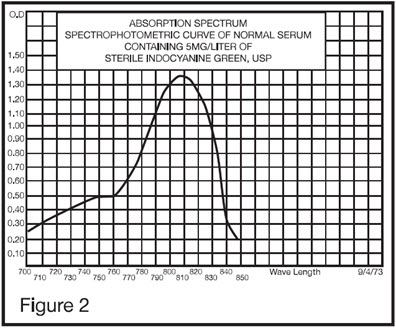
12.1Mechanism of Action When bound to proteins in plasma or in lymph fluid, indocyanine green absorbs light in the near-infrared region with peak absorption at 805 nm and emits fluorescence (light) at a slightly longer wavelength, with peak emission at 830 nm. Fluorescence imaging devices provide external energy as near infrared light for indocyanine green to absorb, resulting in excitation of the indocyanine green, and the emitted light (fluorescence) is transferred from the field of view to an image on a monitor.
These optical properties of indocyanine green are utilized in fluorescence imaging of the micro- and macro-vasculature, blood flow and tissue perfusion, the extrahepatic biliary ducts, and for lymphatic mapping of lymph nodes and lymphatic vessels.
12.2Pharmacodynamics There are no pharmacodynamic data.
12.3Pharmacokinetics Distribution Following intravenous injection, indocyanine green binds to plasma proteins (98%) and is largely confined to the intravascular compartment. Indocyanine green undergoes no significant extrahepatic or enterohepatic circulation; simultaneous arterial and venous blood estimations have shown negligible renal, peripheral, lung or cerebro-spinal uptake of the dye. After biliary obstruction, the dye appears in the hepatic lymph, independently of the bile, suggesting that the biliary mucosa is sufficiently intact to prevent diffusion of the dye, though allowing diffusion of bilirubin.
Following interstitial injection, indocyanine green binds to proteins in lymph fluid and the interstitial space, is taken up by the lymphatic vessels, and drains to the lymph nodes. Since excessive dye extravasation does not take place in the highly fenestrated choroidal vasculature, Indocyanine Green is useful in both absorption and fluorescence infrared angiography of the choroidal vasculature when using appropriate filters and film in a fundus camera. Elimination Indocyanine green is taken up from the plasma almost exclusively by the hepatic parenchymal cells and is secreted entirely into the bile.
🧬 Mechanism of Action ▾
12.1Mechanism of Action When bound to proteins in plasma or in lymph fluid, indocyanine green absorbs light in the near-infrared region with peak absorption at 805 nm and emits fluorescence (light) at a slightly longer wavelength, with peak emission at 830 nm. Fluorescence imaging devices provide external energy as near infrared light for indocyanine green to absorb, resulting in excitation of the indocyanine green, and the emitted light (fluorescence) is transferred from the field of view to an image on a monitor.
These optical properties of indocyanine green are utilized in fluorescence imaging of the micro- and macro-vasculature, blood flow and tissue perfusion, the extrahepatic biliary ducts, and for lymphatic mapping of lymph nodes and lymphatic vessels.
📦 How Supplied / Storage and Handling ▾
16 HOW SUPPLIED/STORAGE AND HANDLING How Supplied Indocyanine Green for injection is supplied as a kit (NDC 70100-424-02) containing the following: • Six 25 mL single-patient-use vials of Indocyanine Green (25 mg each) as a sterile, lyophilized green powder for reconstitution NDC 70100-424-01 • Six single-dose vials of Sterile Water for Injection (10 mL each) NDC 63323-185-10 or NDC 0409-4887-17 or NDC 0641-6147-01. Storage and Handling Store at 20°C to 25°C (68°F to 77°F).
📋 Description ▾
11 DESCRIPTION Indocyanine Green for injection is an optical imaging agent for intravenous or interstitial use. Each vial contains 25 mg of indocyanine green with not more than 5% sodium iodide as a sterile, lyophilized, green powder. Indocyanine Green has a pH of 5.5-7.5 when reconstituted with Sterile Water for Injection, USP.
The chemical name for Indocyanine Green is 1 H Benz[e]indolium, 2-[7-[1,3-dihydro-1,1-dimethyl-3-(4- sulfobutyl)-2 H -benz[e]indol-2-ylidene]-1,3,5-heptatrienyl]-1,1-dimethyl-3-(4-sulfobutyl)-, hydroxide, inner salt, sodium salt. Molecular Formula: C43H47N2NaO6S2; Molecular Mass: 774.96 g/mol, with the following structural formula: Indocyanine green has a peak spectral absorption at 805 nm in blood. Structural Formula
💬 Information for Patients ▾
17 PATIENT COUNSELING INFORMATION Hypersensitivity Reactions Advise patients to seek medical attention for reactions following injection of Indocyanine Green such as difficulty breathing, swollen tongue or throat, skin reactions including hives, itching and flushed or pale skin, low blood pressure, a weak and rapid pulse and other symptoms or signs of an anaphylactic reaction [see Warnings and Precautions ( 5.1 )] .
🧬 Pharmacokinetics ▾
12.3Pharmacokinetics Distribution Following intravenous injection, indocyanine green binds to plasma proteins (98%) and is largely confined to the intravascular compartment. Indocyanine green undergoes no significant extrahepatic or enterohepatic circulation; simultaneous arterial and venous blood estimations have shown negligible renal, peripheral, lung or cerebro-spinal uptake of the dye. After biliary obstruction, the dye appears in the hepatic lymph, independently of the bile, suggesting that the biliary mucosa is sufficiently intact to prevent diffusion of the dye, though allowing diffusion of bilirubin.
Following interstitial injection, indocyanine green binds to proteins in lymph fluid and the interstitial space, is taken up by the lymphatic vessels, and drains to the lymph nodes. Since excessive dye extravasation does not take place in the highly fenestrated choroidal vasculature, Indocyanine Green is useful in both absorption and fluorescence infrared angiography of the choroidal vasculature when using appropriate filters and film in a fundus camera. Elimination Indocyanine green is taken up from the plasma almost exclusively by the hepatic parenchymal cells and is secreted entirely into the bile.
🧬 Pharmacodynamics ▾
12.2Pharmacodynamics There are no pharmacodynamic data.
🔬 Clinical Studies ▾
14 CLINICAL STUDIES
14.1Lymphatic Mapping of Cervical and Uterine Cancer The effectiveness of Indocyanine Green for fluorescence imaging of lymph nodes and delineation of lymphatic vessels during lymphatic mapping in adults with cervical and uterine cancer has been established based on a study of another formulation of indocyanine green for injection. Below is a description of the FILM Study (NCT 02209532). The study was a randomized, prospective, multi-center, open-label study in patients with early stage uterine or cervical cancer and no known regional nodal or metastatic disease by standard clinical evaluation.
Indocyanine green and a blue dye comparator were injected into the cervix of patients at the beginning of the operative procedure. A total of 176 patients were randomized to receive either indocyanine green followed by blue dye or blue dye followed by indocyanine green. A total of four 1 mL injections of a 1.25 mg/ml solution of indocyanine green for a total dose of 5 mg were administered interstitially into the cervix at the 3 o'clock and 9 o'clock positions with a superficial (1 mm to 3 mm) and a deep (1 cm to 3 cm) injection at each position.
Lymphatic mapping was performed intraoperatively using a fluorescence imaging device and standard light, followed by excision of tissues identified by indocyanine green, blue dye, or the surgeon's visual and palpation examination. The resected tissues were evaluated by histopathology to confirm presence of lymph nodes. The efficacy of indocyanine green in the detection of lymphatic vessels and lymph nodes during lymphatic mapping procedures was determined by the number of histology-confirmed lymph nodes detected by indocyanine green and/or the blue dye comparator.
The mean age of the 176 patients was 63 years (range: 31 to 88 years); distribution by race and ethnicity was 79% White, 4% Black or African American, 3% Asian, 13% Hispanic/Latino and 1% other. Table 1 shows the distribution of resected, confirmed lymph nodes detected by indocyanine green or blue dye in the modified intent-to-treat population (mlTT). Among the confirmed lymph nodes identified, 93% were identified using indocyanine green, and 43% were identified using blue dye, a difference of 50% [95% confidence interval 39% to 60%].
Table 1: Distribution of Resected, Confirmed Lymph Nodes Detected by Indocyanine Green or Blue Dye (BD) Analysis Population Nodes (n) All Lymph Nodes Detected with Indocyanine Green All Lymph Nodes Detected with BD Lymph Nodes Detected with Indocyanine Green Only Lymph Nodes Detected with BD Only Lymph Nodes Detected with Neither mlTT 513 (476/513) (220/513) (262/513) (6/513) (31/513) 93% 43% 51% 1% 6% Table 2 shows the number of patients with at least one resected, confirmed lymph node and the number of patients with at least one bilateral lymph node pair detected by indocyanine green or blue dye.
With indocyanine green, approximately 97% of patients had at least one resected, confirmed lymph node detected and 73% had at least one bilateral lymph node pair detected, compared with 68% and 28%, respectively, with blue dye (p-values for each analysis <0.0001). Table 2: Distribution of Patients with at Least One Confirmed Unilateral Lymph Node/ Bilateral Pair Detected by Indocyanine Green or Blue Dye (BD) *: patients with at least one resected confirmed lymph node detected unilaterally **: patients with at least one resected confirmed lymph node detected bilaterally Analysis Population Patients (n) Patients with All Lymph Nodes Detected with Indocyanine Green Patients with All Lymph Nodes Detected with BD Patients with Lymph Nodes Detected with Indocyanine Green only Patients with Lymph Nodes Detected with BD only Patients with Lymph Nodes Detected with Neither mlTT Unilateral* 172 (167/172) 97% (118/172) 68% (51/172) 30% (2/172) 1% (3/172) 3% mlTT Bilateral** (126/172) 73% (49/172) 28% (79/172) 46% (2/172) 1% (44/172) 26%
🧪 Nonclinical Toxicology ▾
13 NONCLINICAL TOXICOLOGY
13.1Carcinogenesis, Mutagenesis, Impairment of Fertility No studies have been performed to evaluate the potential for carcinogenicity, mutagenicity, or impairment of fertility by indocyanine green.
📄 Carcinogenesis, Mutagenesis, Impairment of Fertility ▾
13.1Carcinogenesis, Mutagenesis, Impairment of Fertility No studies have been performed to evaluate the potential for carcinogenicity, mutagenicity, or impairment of fertility by indocyanine green.
📄 Recent Major Changes ▾
Indications and Usage, For determining Cardiac Output, Hepatic Function, and Liver Blood Flow (1.1) Removed 12/2024 Indications and Usage ( 1.1 , 1.2 , 1.3 ) 12/2024 Dosage and Administration, Indicator-Dilution Studies and Hepatic Function Studies (2.1, 2.2) Removed 12/2024 Dosage and Administration ( 2.1 , 2.2 , 2.3 , 2.5 ) 12/2024
📄 Package Label / Principal Display Panel ▾
PRINCIPAL DISPLAY PANEL - Vial Vial Label NDC 70100-424-01 Rx only Sterile Indocyanine Green for Injection, USP 25 mg/Vial Single-Patient-Use For Intravenous or Interstitial Use After reconstitution, use within 6 hours. Distributed by: Diagnostic Green LLC 50428 01/2025 Lot No. Exp.: Principal Display Panel - Vial
PRINCIPAL DISPLAY PANEL - STERILE WATER VIAL Sterile Water Label 10 mL Single-dose Sterile Water for Injection, USP FOR DRUG DILUENT USE Rx only NDC 0409-4887-17 Contains no antimicrobial or other added substance. Sterile, nonpyrogenic. Do not give intravenously unless rendered nearly isotonic. Hospira, Inc. RL-4428 Lake Forest, IL 60045 USA Principal Display Panel - Sterile Water Label
PRINCIPAL DISPLAY PANEL - Carton Carton Label NDC 70100-424-02 Rx Only - Sterile Indocyanine Green for Injection, USP 25 mg/Vial Single-Patient-Use For Intravenous or Interstitial Use Distributed by: Diagnostic Green LLC Back Panel NDC 70100-424-02 Rx Only - Sterile Recommended Dosage and Reconstitution Instructions: See Prescribing Information Use within 6 hours after reconstitution. STORAGE: Store at 20° to 25° C (68° to 77°F) KIT CONTAINS: • Six vials of Indocyanine Green (25 mg each) • Six Sterile Water for Injection (10 mL each) Indocyanine Green for Injection, USP 25 mg/Vial Single-Patient-Use For Intravenous or Interstitial Use Left Panel Indocyanine Green for Injection, USP Distributed by: Diagnostic Green LLC Farmington Hills MI 48331 USA Manufactured by: Patheon Italia S.p.A.
20052 Monza (Milano) ITALY or Lyocontract GmbH 38871 Ilsenburg GERMANY Sterile Water Manufactured by: Hospira, Inc. Rocky Mount, NC 27804 or Fresenius Kabi USA, LLC Grand Island, NY 14072 or Hikma Pharmaceuticals Berkeley Heights, NJ 07922 01/2025 Principal Display Panel - Carton
About this NDC listing & data coverage
Kit / multi-component package
This NDC identifies a kit — a package containing more than one component. Structured data (pricing, ingredients, equivalents) is often reported per component rather than for the kit NDC itself, which can make this page look thinner than the components' own pages.
What data is (and isn’t) available for this NDC — tap to expand
| NDC identity (package / product / labeler codes) | ✓ Available |
| Labeler | ✓ Available |
| Product & package description | ✓ Available |
| Marketing category & status | ✓ Available |
| Active ingredient / dosage form / route | ✓ Available |
| FDA label (SPL via DailyMed) | ✓ Available |
| Package photos | ✓ Available |
| Inactive ingredients (structured) | — Not published for this NDC The labeler did not submit a structured excipient list, or no SPL is available. |
| NADAC pharmacy acquisition price (CMS) | — Not published for this NDC CMS publishes NADAC only for NDCs reported in its retail-pharmacy survey. |
| Orange Book / therapeutic-equivalence data | ✓ Available |
| HCPCS J-code billing crosswalk | — Not published for this NDC Most self-administered / retail products have no J-code — that is normal. |
| Medicaid utilization (CMS SDUD) | — Not published for this NDC CMS reports utilization only for NDCs with Medicaid claims above its privacy threshold. |