
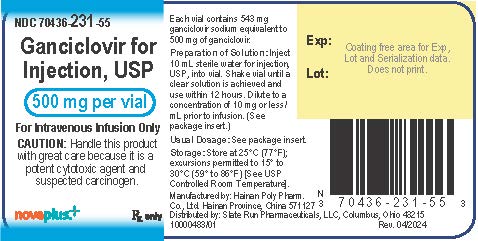
ganciclovir sodium 500 mg/10mL Injection, Powder, Lyophilized, For Solution — NDC 70436-231-55 (Billing 70436-0231-55)
This is a package of ganciclovir sodium 500 mg/10mL Injection, Powder, Lyophilized, For Solution from Slate Run Pharmaceuticals, LLC, marketed since Jan 2019 and currently FDA-listed. It is this product's only package size.
NDC database record
One package, one record: these facts belong to NDC 70436-231-55 alone.
- Record
- FDA NDC Directory package listing · Human prescription drug
- Code segments
- 70436 labeler · 231 product · 55 package
- Package marketed since
- Sep 1, 2024
- Sample package
- No — commercial package
- Listing certified through
- Dec 31, 2026
- Barcode (UPC-A, from the NDC)
- 3 7043623155 3
- FDA record last changed
- Jul 24, 2026
Identity & classification
Regulatory identifiers FDA, NLM and CMS codes for this package
Drug-database identifiers Medi-Span GPI and First Databank GCN / HICL / AHFS classification
- GSN (GCN sequence number): 011753
- GCN: 44620
- GPI-14 (Medi-Span): 12200030102110
- HICL (First Databank): 004558
- AHFS class code: 08:18.32.00
- RxCUI (RxNorm): 310442
Where does this data come from?
- FDA openFDA NDC Directory · synced Oct 1, 2026
- FDA label on DailyMed · label index refreshed Oct 6, 2026
- RxNorm (NLM RxNav) · catalog refreshed Oct 1, 2026
- Medi-Span GPI (licensed)
- First Databank (licensed) · refreshed Oct 1, 2026
RxNorm drug class
This medicine belongs to the Cytomegalovirus Nucleoside Analog DNA Polymerase Inhibitor class.
Where does this data come from?
- RxClass (NLM) · catalog refreshed Oct 1, 2026
Clinical
Ganciclovir injection is used to treat cytomegalovirus (CMV) retinitis (eye infection that can cause blindness) in certain people whose immune system is not working normally. It is also used to prevent CMV disease in certain transplant recipients. Ganciclovir injection is in a class of medications called antivirals. It works by stopping the spread of CMV in the body.
Read the full MedlinePlus article ↗- Ganciclovir is an antiviral that stops certain viruses from copying themselves. The injection form is used mainly to treat or prevent CMV (cytomegalovirus) infections — a serious v...
- Why has my doctor prescribed ganciclovir — what exactly does it do?
- The most important ones to watch for with the injection form are signs of low blood counts — things like unusual bruising, bleeding gums, persistent fever, or feeling unusually wea...
- What side effects should I actually watch out for?
Patient education
Supplement & herbal interactions
Where does this data come from?
- MedlinePlus (NLM) · refreshed Oct 1, 2026
- FDA label on DailyMed · label index refreshed Oct 6, 2026
Ask a licensed pharmacist directly — free, answered by our team.
Pricing
A drug doesn't have one price. Each row is a different public payment system, and none is what you'd pay at the counter — that depends on your insurance. The ⓘ on each row explains what it measures.
| Price system | Per mL | Per package |
|---|---|---|
| Retail pharmacies payNADAC · weekly | Not in the retail survey — common for institutional, discontinued, or low-volume packs. | |
| Medicaid paysCMS SDUD · 12 mo | No recent Medicaid claims on file for this NDC — rare and low-volume NDCs are suppressed in the public data. | |
| Medicare drug plans payPart D · quarterly | No Part D plan price is available for this NDC in our data. | |
| Medicare Part B allowsASP · J1570 | $31.464 / J1570 unit | — |
Where does this data come from?
- CMS NADAC weekly file
- CMS ASP pricing files · refreshed Sep 20, 2026
- CMS Medicaid State Drug Utilization Data · refreshed Oct 6, 2026
- CMS Part D plan pricing files · refreshed Sep 24, 2026
- VA National Acquisition Center price file
Billing & reimbursement
Where does this data come from?
- CMS ASP NDC-HCPCS crosswalk · refreshed Sep 22, 2026
- DMEPDAC NDC-HCPCS crosswalk
- openFDA NSDE billing units · refreshed Sep 7, 2026
Packaging — all sizes for this product
| Package NDC | Description | Marketing start | Marketing end | Status |
|---|---|---|---|---|
| 70436-0231-55 You're viewing this Main listing | 25 VIAL in 1 CARTON / 10 mL in 1 VIAL | 2024-09-01 | — | Active |
Therapeutic equivalents
| Product | Labeler | Pack | NADAC/unit | TE | Status | Price vs. this |
|---|---|---|---|---|---|---|
| Ganciclovir 50 mg/mL 00143-9299-10 | Hikma | 10 vials | — | AP | FDA listed | — |
| Ganciclovir 500 mg/10mL 42023-0173-25 | Par | 25 vials | — | AP | FDA listed | — |
| Ganciclovir 500 mg/10mL 63323-0315-94 | Fresenius | 25 vials | — | AP | FDA listed | — |
| ganciclovir 500 mg/10mL 70436-0089-55 | Slate | 25 vials | — | AP | FDA listed | — |
| ganciclovir sodium 500 mg/10mLthis 70436-0231-55 | Slate | 25 vials | — | AP | FDA listed | — |
| Ganciclovir 500 mg/10mL 51817-0171-01 | Pharmascience | 25 vials | — | AP | FDA listed | — |
Where does this data come from?
- FDA openFDA NDC Directory · synced Oct 1, 2026
- FDA Orange Book · refreshed Oct 3, 2026
- CMS NADAC weekly file
Availability & generic status
This product is an FDA-approved generic. Other versions of the same drug are listed under Therapeutic equivalents, least expensive first.
Where does this data come from?
- FDA Orange Book · refreshed Oct 3, 2026
Inactive Ingredients / Excipients
Inactive ingredients, also called excipients, are components of the drug product other than the active ingredient. They may include fillers, dyes, coatings, preservatives, flavors, or other formulation ingredients.
🧪 Avoiding an ingredient? See Ganciclovir inactive ingredients by manufacturer: every current product's list side by side, so you can ask your pharmacy for the version that does not list it.
Where does this data come from?
IACT rows and label-wide narrative are kept separate; availability and product-level specificity depend on the submitted label.- FDA label on DailyMed · label index refreshed Oct 6, 2026
- FDA openFDA NDC Directory · synced Oct 1, 2026
Inactive ingredient FAQ
Are inactive ingredients the same for every manufacturer?
Why might an inactive ingredient be missing?
Can inactive ingredients matter?
Manufacturer & labeler
More NDCs from Slate Run Pharmaceuticals, LLC labeler code 70436
- azithromycin dihydrate 200 mg/5mL Powder, For Suspension NDC 70436-221-34
- azithromycin dihydrate 200 mg/5mL Powder, For Suspension NDC 70436-222-36
- oseltamivir phosphate 75 mg Capsule NDC 70436-225-47
- Fluconazole 40 mg/mL Powder, For Suspension NDC 70436-227-48
- azithromycin dihydrate 200 mg/5mL Powder, For Suspension NDC 70436-228-49
- voriconazole 40 mg/mL Powder, For Suspension NDC 70436-230-39
- Amiodarone Hydrochloride 50 mg/mL Injection, Solution NDC 70436-232-50
Where does this data come from?
- FDA openFDA NDC Directory · synced Oct 1, 2026
- Drugs@FDA
Full prescribing information FDA SPL
🚨 Boxed Warning ▾
WARNING: HEMATOLOGIC TOXICITY, IMPAIRMENT OF FERTILITY, FETAL TOXICITY, MUTAGENESIS AND CARCINOGENESIS Hematologic Toxicity: Granulocytopenia, anemia, thrombocytopenia, and pancytopenia have been reported in patients treated with ganciclovir [see Warnings and Precautions (5.1) ] . Impairment of Fertility: Based on animal data and limited human data, Ganciclovir for Injection, USP may cause temporary or permanent inhibition of spermatogenesis in males and suppression of fertility in females [see Warnings and Precautions (5.3) ] .
Fetal Toxicity: Based on animal data, Ganciclovir for Injection, USP has the potential to cause birth defects in humans [see Warnings and Precautions (5.4) ] . Mutagenesis and Carcinogenesis: Based on animal data, Ganciclovir for Injection, USP has the potential to cause cancers in humans [see Warnings and Precautions (5.5) ] . WARNING: HEMATOLOGIC TOXICITY, IMPAIRMENT OF FERTILITY, FETAL TOXICITY, MUTAGENESIS AND CARCINOGENESIS See full prescribing information for complete boxed warning.
Hematologic Toxicity: Granulocytopenia, anemia, thrombocytopenia, and pancytopenia have been reported in patients treated with ganciclovir ( 5.1 ). Impairment of Fertility: Based on animal data and limited human data, Ganciclovir for Injection, USP may cause temporary or permanent inhibition of spermatogenesis in males and suppression of fertility in females ( 5.3 ). Fetal Toxicity: Based on animal data, Ganciclovir for Injection, USP has the potential to cause birth defects in humans ( 5.4 ).
Mutagenesis and Carcinogenesis: Based on animal data, Ganciclovir for Injection, USP has the potential to cause cancer in humans ( 5.5 ).
🎯 Indications and Usage ▾
1 INDICATIONS AND USAGE Ganciclovir for Injection, USP is a deoxynucleoside analogue cytomegalovirus (CMV) DNA polymerase inhibitor indicated for the: Treatment of CMV retinitis in immunocompromised adult patients, including patients with acquired immunodeficiency syndrome (AIDS). ( 1.1 ) Prevention of CMV disease in adult transplant recipients at risk for CMV disease. ( 1.2 )
1.1Treatment of CMV Retinitis Ganciclovir for Injection, USP is indicated for the treatment of cytomegalovirus (CMV) retinitis in immunocompromised adult patients, including patients with acquired immunodeficiency syndrome (AIDS) [see Clinical Studies (14.1) ].
1.2Prevention of CMV Disease in Transplant Recipients Ganciclovir for Injection, USP is indicated for the prevention of CMV disease in adult transplant recipients at risk for CMV disease [see Clinical Studies (14.2) ].
⏱️ Dosage and Administration ▾
2 DOSAGE AND ADMINISTRATION Ganciclovir for Injection, USP is administered only intravenously. ( 2.1 ) Dosage in Adult Patients with Normal Renal Function Treatment of CMV retinitis (2.3) Induction: 5 mg/kg (given intravenously at a constant rate over 1 hour) every 12 hours for 14 to 21 days. Maintenance: 5 mg/kg (given intravenously at a constant rate over 1 hour) once daily for 7 days per week, or 6 mg/kg once daily for 5 days per week.
Prevention of CMV disease in transplant recipients (2.4) Induction: 5 mg/kg (given intravenously at a constant rate over 1 hour) every 12 hours for 7 to 14 days. Maintenance: 5 mg/kg (given intravenously at a constant rate over 1 hour) once daily for 7 days per week, or 6 mg/kg once daily for 5 days per week until 100 to 120 days post-transplantation. Adults with renal impairment: Adjust dosage based on creatinine clearance.
( 2.5 )
2.1Important Dosing and Administration Information To avoid phlebitis/pain at the infusion site, ganciclovir for injection must only be administered by intravenous infusion over 1 hour, preferably via plastic cannula, into a vein with adequate blood flow to permit rapid dilution and distribution. Do not administer ganciclovir for injection by rapid or bolus intravenous injection which may increase toxicity as a result of excessive plasma levels. The recommended dosage and infusion rate for ganciclovir for injection should not be exceeded.
Do not administer the reconstituted ganciclovir for injection solution intramuscularly or subcutaneously because it may result in severe tissue irritation due to high pH [see Description 11 ]. Administration of ganciclovir for injection should be accompanied by adequate hydration. Parenteral drug products should be inspected visually for particulate matter and discoloration prior to administration, whenever solution and container permit.
2.2Testing Before and During Treatment Females of reproductive potential should undergo pregnancy testing before initiation of treatment with ganciclovir for injection [see Warnings and Precautions (5.4) , Use in Specific Populations (8.1 , 8.3) ]. Complete blood counts with differential and platelet counts should be performed frequently, especially in patients in whom ganciclovir or other nucleoside analogues have previously resulted in cytopenias, or in whom absolute neutrophil counts are less than 1000 cells/μL at the beginning of treatment [see Warnings and Precautions (5.1) ].
All patients should be monitored for renal function before and during treatment with ganciclovir for injection and dose should be adjusted as needed [see Dosage and Administration (2.5) , Warnings and Precautions (5.2) ]. Patients with CMV retinitis should have frequent ophthalmological examinations during treatment with ganciclovir for injection to monitor disease status and for other retinal abnormalities [see Adverse Reactions (6.1) ].
2.3Recommended Dosage for Treatment of CMV Retinitis in Adult Patients with Normal Renal Function Induction Dosage The recommended initial dosage of ganciclovir for injection for patients with normal renal function is 5 mg/kg (given intravenously at a constant rate over 1 hour) every 12 hours for 14 to 21 days. Maintenance Dosage Following induction treatment, the recommended maintenance dosage of ganciclovir for injection is 5 mg/kg (given intravenously at a constant rate over 1 hour) once daily for 7 days per week, or 6 mg/kg once daily for 5 days per week.
2.4Recommended Dosage for Prevention of CMV Disease in Adult Transplant Recipients with Normal Renal Function Induction Dosage The recommended initial dosage of ganciclovir for injection for patients with normal renal function is 5 mg/kg (given intravenously at a constant rate over 1 hour) every 12 hours for 7 to 14 days. Maintenance Dosage Following induction, the recommended maintenance dosage of ganciclovir for injection is 5 mg/kg (given intravenously at a constant rate over 1 hour) once daily for 7 days per week, or 6 mg… [Excerpted — this section continues on DailyMed.]
💊 Dosage Forms and Strengths ▾
3 DOSAGE FORMS AND STRENGTHS For injection: Single-dose vial containing 500 mg of ganciclovir as a sterile lyophilized white to off-white powder for reconstitution with 10 mL of preservative-free sterile water for injection, USP for intravenous use. The concentration of ganciclovir in the reconstituted solution is 50 mg/mL [see Dosage and Administration (2.6) ]. For injection: 500 mg of ganciclovir as lyophilized powder in a single-dose vial for reconstitution.
( 3 )
⛔ Contraindications ▾
4 CONTRAINDICATIONS Ganciclovir for Injection, USP is contraindicated in patients who have experienced a clinically significant hypersensitivity reaction (e.g., anaphylaxis) to ganciclovir, valganciclovir or any component of the formulation. Hypersensitivity to ganciclovir or valganciclovir. ( 4 )
⚠️ Warnings and Cautions ▾
5 WARNINGS AND PRECAUTIONS Renal Impairment: Increased serum creatinine levels have been observed with the use of ganciclovir, particularly in elderly patients and transplant recipients receiving concomitant nephrotoxic drugs. Monitor renal function during therapy with ganciclovir for injection, particularly in elderly patients and in patients taking other nephrotoxic drugs, and reduce dosage in patients with renal impairment. ( 5.2 )
5.1Hematologic Toxicity Granulocytopenia (neutropenia), anemia, thrombocytopenia and pancytopenia, have been observed in patients treated with ganciclovir. The frequency and severity of these events vary widely in different patient populations [see Adverse Reactions (6.1) ]. Ganciclovir for injection is not recommended if the absolute neutrophil count is less than 500 cells/μL, hemoglobin is less than 8 g/dL, or the platelet count is less than 25,000 cells/μL.
Ganciclovir for injection should also be used with caution in patients with pre-existing cytopenias and in patients receiving myelosuppressive drugs or irradiation. Granulocytopenia (neutropenia) usually occurs during the first or second week of treatment but may occur at any time during treatment. Cell counts usually begin to recover within 3 to 7 days after discontinuing drug.
Colony-stimulating factors have been shown to increase neutrophil and white blood cell counts in patients receiving ganciclovir solution for treatment of CMV retinitis. Due to the frequency of neutropenia, anemia and thrombocytopenia in patients receiving ganciclovir for injection [see Adverse Reactions (6.1) ], complete blood counts with differential and platelet counts should be performed frequently in all patients, especially in patients with renal impairment and in patients in whom ganciclovir or other nucleoside analogues have previously resulted in leukopenia, or in whom neutrophil counts are less than 1000 cells/µL at the beginning of treatment [see Dosage and Administration (2.2) ].
5.2Renal Impairment Ganciclovir for injection should be used with caution in patients with impaired renal function because the half-life and plasma/serum concentrations of ganciclovir will be increased due to reduced renal clearance. If renal function is impaired, dosage adjustments are recommended [see Dosage and Administration (2.5) , Use in Specific Populations (8.5) ]. Increased serum creatinine levels have been reported in elderly patients and in transplant recipients receiving concomitant nephrotoxic medications (i.e., cyclosporine and amphotericin B).
Monitoring renal function during therapy with ganciclovir for injection is essential, especially for elderly patients and those patients receiving concomitant agents that may cause nephrotoxicity [see Dosage and Administration (2.5) , Drug Interactions (7) , Use in Specific Populations (8.5) ].
5.3Impairment of Fertility Based on animal data and limited human data, ganciclovir for injection at the recommended human dose (RHD) may cause temporary or permanent inhibition of spermatogenesis in males, and may cause suppression of fertility in females. Advise patients that fertility may be impaired with the use of ganciclovir for injection [see Use in Specific Population (8.1 , 8.3 ), Nonclinical Toxicology (13.1) ].
5.4Fetal Toxicity Ganciclovir for injection may cause fetal toxicity when administered to pregnant women based on findings in animal studies. Systemic exposure of ganciclovir in animals at approximately 2 times the RHD caused fetal growth retardation, embryolethality, teratogenicity, and/or maternal toxicity. Teratogenic changes in animals included cleft palate, anophthalmia/microphthalmia, aplastic organs (kidney and pancreas), hydrocephaly and brachygnathia.
Women of childbearing potential should be advised to use effective contraception during treatment and for at least 30 days following treatment with ganciclovir for injection. Similarly, men should be advised to practice barrier contraception during and for a… [Excerpted — this section continues on DailyMed.]
🤒 Adverse Reactions ▾
6 ADVERSE REACTIONS The following serious adverse reactions are discussed in greater detail in other sections of the labeling: Hematologic Toxicity [see Warnings and Precautions (5.1) ] Renal Impairment [see Warnings and Precautions (5.2) ] Impairment of Fertility [see Warnings and Precautions (5.3) ] Fetal Toxicity [see Warnings and Precautions (5.4) ] Mutagenesis and Carcinogenesis [see Warnings and Precautions (5.5) ] Most common adverse reactions and laboratory abnormalities reported in at least 20% of patients were: pyrexia, diarrhea, leukopenia, nausea, anemia, asthenia, headache, cough, decreased appetite, dyspnea, abdominal pain, sepsis, hyperhidrosis, and blood creatinine increased.
( 6.1 ) To report SUSPECTED ADVERSE REACTIONS, contact Slate Run Pharmaceuticals, LLC at 1-888-341-9214 or FDA at 1-800-FDA-1088 or www.fda.gov/medwatch.
6.1Clinical Trial Experience in Adult Patients Because clinical trials are conducted under widely varying conditions, adverse reaction rates observed in the clinical trials of a drug cannot be directly compared to rates in the clinical trials of another drug and may not reflect the rates observed in practice. The most common adverse reactions and laboratory abnormalities reported in at least 20% of patients were pyrexia, diarrhea, leukopenia, nausea, anemia, asthenia, headache, cough, decreased appetite, dyspnea, abdominal pain, sepsis, hyperhidrosis, and blood creatinine increased.
Selected adverse reactions that occurred during clinical trials of ganciclovir are summarized below, according to the participating study patient population. Adverse Reactions in Patients with CMV Retinitis Three controlled, randomized, phase 3 trials comparing intravenous ganciclovir and ganciclovir capsules for maintenance treatment of CMV retinitis have been completed. During these trials, intravenous ganciclovir or ganciclovir capsules were prematurely discontinued in 9% of subjects because of adverse reactions.
Selected adverse reactions and laboratory abnormalities reported during the conduct of these controlled trials are summarized in Table 2 and Table 3 , respectively [see Clinical Studies (14.1) ]. Table 2. Pooled Selected Adverse Reactions Reported in ≥5% of Subjects Comparing Intravenous Ganciclovir to Ganciclovir Capsules for Maintenance Treatment of CMV Retinitis Maintenance Treatment Studies Adverse Reaction Intravenous Ganciclovir (n=179) Ganciclovir Capsules (n=326) Pyrexia 48% 38% Diarrhea 44% 41% Leukopenia 41% 29% Anemia 25% 19% Total Catheter Events: 22% 6% Catheter Infection 9% 4% Catheter Sepsis 8% 1% Other Catheter Related Events 5% 1% Sepsis 15% 4% Decreased Appetite 14% 15% Vomiting 13% 13% Infection 13% 9% Hyperhidrosis 12% 11% Chills 10% 7% Neuropathy Peripheral 9% 8% Thrombocytopenia 6% 6% Pruritus 5% 6% Retinal Detachment Retinal detachment has been observed in subjects with CMV retinitis both before and after initiation of therapy with ganciclovir.
Its relationship to therapy with ganciclovir is unknown. Retinal detachment occurred in 11% of patients treated with intravenous ganciclovir and in 8% of patients treated with ganciclovir capsules. Table 3.
Selected Laboratory Abnormalities in Trials for Treatment of CMV Retinitis CMV Retinitis Treatment Pooled data from Treatment Studies ICM 1653, ICM 1774, and AVI 034 Laboratory Abnormalities Intravenous Ganciclovir Mean time on therapy = 103 days, including allowed re-introduction treatment periods 5 mg/kg/day (N=175) % Ganciclovir Capsules Mean time on therapy = 91 days, including allowed re-introduction treatment periods 3000 mg/day (N=320) % Neutropenia with Absolute Neutrophil Count (ANC) per μL: <500 25% 18% 500-<749 14% 17% 750-<1000 26% 19% Anemia with Hemoglobin g/dL: <6.5 g/dL 5% 2% 6.5-8.0 16% 10% 8.0-<9.5 26% 25% Serum Creatinine mg/mL: ≥2.5 2% 1% ≥1.5-<2.5 14% 12% Adverse Reactions in Transplant Recipients There have been three controlled clinical trials of intravenous ganciclovir for the prevention of CMV disease in tr… [Excerpted — this section continues on DailyMed.]
🔄 Drug Interactions ▾
7 DRUG INTERACTIONS Drug-drug interaction studies were conducted in patients with normal renal function. Patients with impaired renal function may have increased concentrations of ganciclovir and the coadministered drug following concomitant administration of ganciclovir for injection and drugs excreted by the same pathway as ganciclovir. Therefore, these patients should be closely monitored for toxicity of ganciclovir and the coadministered drug.
Established and other potentially significant drug interactions conducted with ganciclovir are listed in Table 6 [see Clinical Pharmacology (12.3) ]. Table 6. Established and Other Potentially Significant Drug Interactions with Ganciclovir Name of the Concomitant Drug Change in the Concentration of Ganciclovir or Concomitant Drug Clinical Comment Imipenem-cilastatin Unknown Coadministration with imipenem-cilastatin is not recommended because generalized seizures have been reported in patients who received ganciclovir and imipenem-cilastatin.
Cyclosporine or amphotericin B Unknown Monitor renal function when ganciclovir for injection is coadministered with cyclosporine or amphotericin B because of potential increase in serum creatinine [see Warnings and Precautions (5.2) ]. Mycophenolate mofetil (MMF) ↔Ganciclovir (in patients with normal renal function) ↔MMF (in patients with normal renal function) Based on increased risk, patients should be monitored for hematological and renal toxicity. Other drugs associated with myelosuppresion or nephrotoxicity (e.g., dapsone, doxorubicin, flucytosine, hydroxyurea, pentamidine, tacrolimus, trimethoprim/sulfamethoxazole, vinblastine, vincristine and zidovudine) Unknown Because of potential for higher toxicity, coadministration with ganciclovir for injection should be considered only if the potential benefits are judged to outweigh the risks.
Didanosine ↔ Ganciclovir ↑ Didanosine Patients should be closely monitored for didanosine toxicity (e.g., pancreatitis). Probenecid ↑ Ganciclovir Ganciclovir for injection dose may need to be reduced. Monitor for evidence of ganciclovir toxicity.
Imipenem-cilastatin: Seizures were reported in patients receiving ganciclovir and imipenem-cilastatin. Concomitant use is not recommended unless the potential benefits outweigh the risks. ( 7 ) Cyclosporine or amphotericin B: When coadministered with ganciclovir, the risk of nephrotoxicity may be increased.
Monitor renal function. ( 5.2 , 7 ) Mycophenolate mofetil (MMF): When coadministered with ganciclovir, the risk of hematological and renal toxicity may be increased. Monitor for ganciclovir and MMF toxicity.
( 7 ) Other drugs associated with myelosuppression or nephrotoxicity: Due to potential for increased toxicity, such drugs should be considered for concomitant use with ganciclovir only if the potential benefits are judged to outweigh the risks. ( 7 ) Didanosine: Ganciclovir coadministered with didanosine may increase didanosine levels. Monitor for didanosine toxicity (e.g., pancreatitis).
( 7 ) Probenecid: May increase ganciclovir levels. Monitor for evidence of ganciclovir toxicity.
👥 Use in Specific Populations ▾
8 USE IN SPECIFIC POPULATIONS Lactation: Breastfeeding is not recommended with use of Ganciclovir for Injection, USP. ( 8.2 )
8.1Pregnancy Risk Summary In animal studies, ganciclovir caused maternal and fetal toxicity and embryo-fetal mortality in pregnant mice and rabbits as well as teratogenicity in rabbits at exposures two times the exposure at the recommended human dose (RHD) [see Data ]. Although placental transfer of ganciclovir has been shown to occur based on ex vivo experiments with human placenta and in at least one case report in a pregnant woman, no adequate human data are available to establish whether ganciclovir for injection poses a risk to pregnancy outcomes.
The background risk of major birth defects and miscarriage for the indicated populations is unknown. In the U.S. general population, the estimated background risk of major birth defects and miscarriage in the clinically recognized pregnancies is 2 to 4% and 15 to 20%, respectively. Clinical Considerations Disease-Associated Maternal and/or Embryo-Fetal Risk Most maternal CMV infections are asymptomatic or they may be associated with a self-limited mononucleosis-like syndrome.
However, in immunocompromised patients (i.e., transplant patients or patients with AIDS), CMV infections may be symptomatic and may result in significant maternal morbidity and mortality. The transmission of CMV to the fetus is a result of maternal viremia and transplacental infection. Perinatal infection can also occur from exposure of the neonate to CMV shedding in the genital tract.
Approximately 10% of children with congenital CMV infection are symptomatic at birth. Mortality in symptomatic infants is about 10% and approximately 50 to 90% of symptomatic surviving newborns experience significant morbidity, including mental retardation, sensorineural hearing loss, microcephaly, seizures, and other medical problems. The risk of congenital CMV infection resulting from primary maternal CMV infection may be higher and of greater severity than that resulting from maternal reactivation of CMV infection.
Data Animal Data Daily intravenous doses of ganciclovir were administered to pregnant mice (108 mg/kg/day) and rabbits (60 mg/kg/day), and also to female mice (90 mg/kg) prior to mating, during gestation, and during lactation. Fetal resorptions were present in at least 85% of rabbits and mice. Additional effects observed in rabbits included fetal growth retardation, embryolethality, teratogenicity, and/or maternal toxicity.
Teratogenic changes included cleft palate, anophthalmia/microphthalmia, aplastic organs (kidney and pancreas), hydrocephaly, and brachygnathia. In pre/postnatal development studies in mice, there were maternal/fetal toxicity and embryolethality which included fetal effects of hypoplasia of the testes and seminal vesicles in the male offspring, as well as pathologic changes in the nonglandular region of the stomach. The systemic exposure (AUC) of ganciclovir during these studies was approximately 2 times (pregnant mice and rabbits) and 1.7 times (pre/postnatal mice) the exposure in humans at the RHD [see Nonclinical Toxicology (13.1) ].
8.2Lactation Risk Summary No data are available regarding the presence of ganciclovir in human milk, the effects on the breastfed infant, or the effects on milk production. When ganciclovir was administered to lactating rats, ganciclovir was present in milk [see Data]. Advise nursing mothers that breastfeeding is not recommended during treatment with ganciclovir for injection because of the potential for serious adverse reactions in nursing infants [see Warnings and Precautions (5.1, 5.3, 5.4, 5.5) , Nonclinical Toxicology (13.1) ].
Furthermore, the Centers for Disease Control and Prevention recommends that HIV-infected mothers not breastfeed their infants to avoid potential postnatal transmission of HIV. Data Animal Data Ganciclovir administered intravenously (at 0.13 mg/h) to lactating rats (on lactation day 15) resulted in passive t… [Excerpted — this section continues on DailyMed.]
🤰 Pregnancy ▾
8.1Pregnancy Risk Summary In animal studies, ganciclovir caused maternal and fetal toxicity and embryo-fetal mortality in pregnant mice and rabbits as well as teratogenicity in rabbits at exposures two times the exposure at the recommended human dose (RHD) [see Data ]. Although placental transfer of ganciclovir has been shown to occur based on ex vivo experiments with human placenta and in at least one case report in a pregnant woman, no adequate human data are available to establish whether ganciclovir for injection poses a risk to pregnancy outcomes.
The background risk of major birth defects and miscarriage for the indicated populations is unknown. In the U.S. general population, the estimated background risk of major birth defects and miscarriage in the clinically recognized pregnancies is 2 to 4% and 15 to 20%, respectively. Clinical Considerations Disease-Associated Maternal and/or Embryo-Fetal Risk Most maternal CMV infections are asymptomatic or they may be associated with a self-limited mononucleosis-like syndrome.
However, in immunocompromised patients (i.e., transplant patients or patients with AIDS), CMV infections may be symptomatic and may result in significant maternal morbidity and mortality. The transmission of CMV to the fetus is a result of maternal viremia and transplacental infection. Perinatal infection can also occur from exposure of the neonate to CMV shedding in the genital tract.
Approximately 10% of children with congenital CMV infection are symptomatic at birth. Mortality in symptomatic infants is about 10% and approximately 50 to 90% of symptomatic surviving newborns experience significant morbidity, including mental retardation, sensorineural hearing loss, microcephaly, seizures, and other medical problems. The risk of congenital CMV infection resulting from primary maternal CMV infection may be higher and of greater severity than that resulting from maternal reactivation of CMV infection.
Data Animal Data Daily intravenous doses of ganciclovir were administered to pregnant mice (108 mg/kg/day) and rabbits (60 mg/kg/day), and also to female mice (90 mg/kg) prior to mating, during gestation, and during lactation. Fetal resorptions were present in at least 85% of rabbits and mice. Additional effects observed in rabbits included fetal growth retardation, embryolethality, teratogenicity, and/or maternal toxicity.
Teratogenic changes included cleft palate, anophthalmia/microphthalmia, aplastic organs (kidney and pancreas), hydrocephaly, and brachygnathia. In pre/postnatal development studies in mice, there were maternal/fetal toxicity and embryolethality which included fetal effects of hypoplasia of the testes and seminal vesicles in the male offspring, as well as pathologic changes in the nonglandular region of the stomach. The systemic exposure (AUC) of ganciclovir during these studies was approximately 2 times (pregnant mice and rabbits) and 1.7 times (pre/postnatal mice) the exposure in humans at the RHD [see Nonclinical Toxicology (13.1) ].
🧒 Pediatric Use ▾
8.4Pediatric Use Safety and effectiveness of ganciclovir for injection have not been established in pediatric patients. A total of 120 pediatric patients with serious CMV infections participated in clinical trials. Granulocytopenia and thrombocytopenia were the most common adverse reactions.
The pharmacokinetic characteristics of ganciclovir after administration of ganciclovir for injection were studied in 27 neonates (aged 2 to 49 days) and 10 pediatric patients, aged 9 months to 12 years. In neonates, the pharmacokinetic parameters after ganciclovir intravenous doses of 4 mg/kg (n=14) and 6 mg/kg (n=13) were C max 5.5 ± 1.6 and 7.0 ± 1.6 mcg/mL, systemic clearance 3.14 ± 1.75 and 3.56 ± 1.27 mL/min/kg, and t 1/2 of 2.4 hours (harmonic mean) for both doses, respectively. In pediatric patients 9 months to 12 years of age, the pharmacokinetic characteristics of ganciclovir were the same after single and multiple (every 12 hours) intravenous doses (5 mg/kg).
The steady-state volume of distribution was 0.64 ±
0.22L/kg, C max was 7.9 ± 3.9 mcg/mL, systemic clearance was 4.7 ± 2.2 mL/min/kg, and t 1/2 was 2.4 ± 0.7 hours. Although the pharmacokinetics of intravenous ganciclovir in pediatric patients were similar to those observed in adults, the safety and efficacy of ganciclovir at these exposures in pediatric patients have not been established.
🧓 Geriatric Use ▾
8.5Geriatric Use Clinical studies of ganciclovir did not include sufficient numbers of subjects aged 65 and over to determine whether they respond differently from younger subjects. In general, dose selection for an elderly patient should be cautious, reflecting the greater frequency of decreased hepatic, renal, or cardiac function, and of concomitant disease or other drug therapy. Ganciclovir is known to be substantially excreted by the kidney, and the risk of toxic reactions to this drug may be greater in patients with impaired renal function.
Because renal clearance decreases with age, ganciclovir should be administered to elderly patients with special consideration of their renal status. Renal function should be monitored and dosage adjustments should be made accordingly [see Dosage and Administration (2.5) , Warnings and Precautions (5.2) , Use in Specific Populations (8.6)].
🆘 Overdosage ▾
10 OVERDOSAGE Reports of adverse reactions after overdoses with ganciclovir for injection, some with fatal outcomes, have been received from clinical trials and during post-marketing experience. One or more of the following adverse reactions has been reported with overdoses: Hematological toxicity: myelosuppression including pancytopenia, leukopenia, neutropenia, granulocytopenia, thrombocytopenia, bone marrow failure Hepatotoxicity: hepatitis, liver function disorder Renal toxicity: worsening of hematuria in a patient with pre-existing renal impairment, acute kidney injury, elevated creatinine Gastrointestinal toxicity: abdominal pain, diarrhea, vomiting Neurotoxicity: seizure Since ganciclovir is dialyzable, dialysis may be useful in reducing serum concentrations in patients who have received an overdose of ganciclovir [see Clinical Pharmacology (12.3) ].
Adequate hydration should be maintained. The use of hematopoietic growth factors should be considered in patients with cytopenias [see Warnings and Precautions (5.1) ].
🧬 Clinical Pharmacology ▾
12 CLINICAL PHARMACOLOGY
12.1Mechanism of Action Ganciclovir is an antiviral drug with activity against CMV [see Microbiology (12.4) ].
12.3Pharmacokinetics Absorption At the end of a 1-hour intravenous infusion of 5 mg/kg ganciclovir, total AUC ranged between 22.1 ± 3.2 (n=16) and 26.8 ± 6.1 mcg∙hr/mL (n=16) and C max ranged between 8.27 ± 1.02 (n=16) and 9.0 ± 1.4 mcg/mL (n=16). Distribution The steady-state volume of distribution of ganciclovir after intravenous administration was 0.74 ±
0.15L/kg (n=98). Ganciclovir diffuses across the placenta. Cerebrospinal fluid concentrations obtained 0.25 to 5.67 hours post-dose in 3 patients who received 2.5 mg/kg ganciclovir intravenously every 8 hours or every 12 hours ranged from 0.31 to 0.68 mcg/mL, representing 24% to 70% of the respective plasma concentrations.
Binding to plasma proteins was 1% to 2% over ganciclovir concentrations of 0.5 and 51 mcg/mL. Elimination When administered intravenously, ganciclovir exhibits linear pharmacokinetics over the range of 1.6 to 5.0 mg/kg. Renal excretion of unchanged drug by glomerular filtration and active tubular secretion is the major route of elimination of ganciclovir.
In patients with normal renal function, 91.3 ± 5.0% (n=4) of intravenously administered ganciclovir was recovered unmetabolized in the urine. Systemic clearance of intravenously administered ganciclovir was 3.52 ± 0.80 mL/min/kg (n=98) while renal clearance was 3.20 ± 0.80 mL/min/kg (n=47), accounting for 91 ± 11% of the systemic clearance (n=47). Half-life was 3.5 ± 0.9 hours (n=98) following intravenous administration Special Populations Pharmacokinetics in Patients with Renal Impairment The pharmacokinetics following intravenous administration of ganciclovir solution were evaluated in 10 immunocompromised patients with renal impairment who received doses ranging from 1.25 to 5.0 mg/kg.
Decreased renal function results in decreased clearance of ganciclovir ( Table 7 ). Table 7. Ganciclovir Pharmacokinetics in Patients with Renal Impairment Estimated Creatinine Clearance (mL/min) n Dose Clearance (mL/min) Mean ± SD Half-life (hours) Mean ± SD 50-79 4 3.2-5 mg/kg 128 ± 63 4.6 ± 1.4 25-49 3 3-5 mg/kg 57 ± 8 4.4 ± 0.4 <25 3 1.25-5 mg/kg 30 ± 13 10.7 ±
5.7Plasma concentrations of ganciclovir are reduced by about 50% during a 4 hour hemodialysis session. Pharmacokinetics in Geriatric Patients The pharmacokinetic profiles of ganciclovir in patients 65 years of age and older have not been established. As ganciclovir is mainly renally excreted and since renal clearance decreases with age, a decrease in ganciclovir total body clearance and a prolongation of ganciclovir half-life can be anticipated in patients 65 years of age and older [see Dosage and Administration (2.5) , Use in Specific Populations (8.5) ].
Drug Interaction Studies Tables 8 and 9 provide a listing of established drug interaction studies with ganciclovir. Table 8 provides the effects of coadministered drug on ganciclovir plasma pharmacokinetic parameters, whereas Table 9 provides the effects of ganciclovir on plasma pharmacokinetic parameters of coadministered drug. Table 8.
Results of Drug Interaction Studies with Ganciclovir: Effects of Coadministered Drug on Ganciclovir Pharmacokinetic Parameters Coadministered Drug Ganciclovir Dosage N Ganciclovir Pharmacokinetic (PK) Parameter Mycophenolate mofetil (MMF) 1.5 g single dose 5 mg/kg IV single dose 12 No effect on ganciclovir PK parameters observed (patients with normal renal function) Trimethoprim 200 mg once daily 1000 mg orally every 8 hours 12 No effect on ganciclovir PK parameters observed Didanosine 200 mg every 12 hours simultaneously administered with ganciclovir 5 mg/kg IV twice daily 11 No effect on ganciclovir PK parameters observed 5 mg/kg IV once daily Probenecid 500 mg every 6 hours 1000 mg orally every 8 hours 10 AUC ↑53 ± 91% (range: -14% to 299%) Ganciclovir renal clearance ↓22 ± 20% (range: -54% to -4%) Table 9.
Results of Drug Interactio… [Excerpted — this section continues on DailyMed.]
🧬 Mechanism of Action ▾
12.1Mechanism of Action Ganciclovir is an antiviral drug with activity against CMV [see Microbiology (12.4) ].
📦 How Supplied / Storage and Handling ▾
16 HOW SUPPLIED/STORAGE AND HANDLING How Supplied Ganciclovir for Injection, USP is supplied in 10 mL sterile single-dose vials, each containing 543 mg ganciclovir sodium equivalent to 500 mg of ganciclovir as a white to off-white powder. The concentration of ganciclovir in the reconstituted solution is 50 mg/mL. Because ganciclovir shares some of the properties of antitumor agents (i.e., carcinogenicity and mutagenicity), consideration should be given to handling and disposal according to guidelines issued for antineoplastic drugs.
Ganciclovir for Injection, USP is supplied in cartons of 25 vials (NDC 70436-231-55). Storage Store at 25°C (77°F); excursions permitted to 15° to 30°C (59° to 86°F) [See USP Controlled Room Temperature]. Store reconstituted solution in the vial at 25°C (77°F) for no longer than 12 hours.
Do not refrigerate or freeze. Discard any unused portion of the reconstituted solution. Store diluted infusion solution under refrigeration at 2° to 8°C (36° to 46°F) for no longer than 24 hours.
Do not freeze.
📋 Description ▾
11 DESCRIPTION Ganciclovir for injection contains ganciclovir, in the form of the sodium salt for intravenous injection. Ganciclovir is a synthetic guanine derivative active against cytomegalovirus (CMV). Chemically, ganciclovir is 9-[[2-hydroxy-1-(hydroxymethyl)-ethoxy]methyl]guanine and ganciclovir sodium is 9-[[2-hydroxy-1-(hydroxymethyl)-ethoxy]methyl]guanine, monosodium salt.
The chemical structures of ganciclovir sodium and ganciclovir are: Ganciclovir is a white to off-white crystalline powder. Ganciclovir is a polar hydrophilic compound with a solubility of 2.6 mg/mL in water at 25°C and an n-octanol/water partition coefficient of 0.022. The pK a s for ganciclovir are 2.2 and 9.4.
Ganciclovir for injection (ganciclovir), formulated as monosodium salt, using sodium hydroxide as a salt forming agent, is a sterile white to off-white lyophilized powder. The lyophilized powder has an aqueous solubility of greater than 50 mg/mL at 25°C. At physiological pH, ganciclovir sodium exists as the un-ionized form with a solubility of approximately 6 mg/mL at 37°C.
Each vial contains 543 mg ganciclovir sodium equivalent to 500 mg ganciclovir. Inactive ingredients may include hydrochloric acid (QS) and sodium hydroxide (QS) added to adjust the pH. All doses in this package insert are specified in terms of ganciclovir T:\SPL Documents\Ganciclovir Injection-spl\Chemical Structures.jpg
💬 Information for Patients ▾
17 PATIENT COUNSELING INFORMATION Hematologic Toxicity Inform patients that ganciclovir may cause hematologic toxicity including granulocytopenia (neutropenia), anemia, and thrombocytopenia. Inform patients that their blood counts and platelet counts should be closely monitored while on treatment [see Warnings and Precautions (5.1) ]. Impairment of Renal Function Inform patients that ganciclovir has been associated with decreased renal function and that serum creatinine or creatinine clearance should be monitored while on treatment to allow for dosage adjustment in patients with renal impairment [see Warnings and Precautions (5.2) ].
Impairment of Fertility Inform patients that ganciclovir may cause temporary or permanent infertility in humans [see Warnings and Precautions (5.3) , Use in Specific Populations (8.3) ]. Pregnancy and Contraception Advise female patients to use effective contraception during and for at least 30 days following treatment with ganciclovir for injection. Similarly, advise men to practice barrier contraception during and for at least 90 days following treatment with ganciclovir for injection [see Warnings and Precautions (5.4) , Use in Specific Populations (8.1, 8.3) ].
Carcinogenicity Inform patients that ganciclovir should be considered a potential carcinogen [see Warnings and Precautions (5.5 )]. Drug Interactions Inform patients that ganciclovir for injection may interact with other drugs. Advise patients to report to their healthcare provider the use of any other medication [see Drug Interactions (7) ].
Impairment of Cognitive Ability Based on the adverse reaction profile, ganciclovir may affect cognitive abilities, including the ability to drive and operate machinery, as seizures, dizziness, and/or confusion have been reported with the use of ganciclovir [see Adverse Reactions (6.1) ]. Opthalmological Examination in Patients with CMV Retinitis Inform patients that ganciclovir is not a cure for CMV retinitis, and they may continue to experience progression of retinitis during or following treatment. Advise patients to have frequent ophthalmological follow-up examinations while being treated with ganciclovir for injection.
Some patients may require more frequent ophthalmological follow-up [see Dosage and Administration (2.2) , Adverse Reactions (6.1) ]. Lactation Advise nursing mothers not to breastfeed if they are receiving ganciclovir for injection because of the potential for serious adverse events in nursing infants and because HIV can be passed to the baby in breast milk [see Use in Specific Populations (8.2) ]. Rx only Manufactured by: Hainan Poly Pharm Co., Ltd., Guilinyang Economic Development Zone, Haikou, Hainan, China 571127 Distributed by: Slate Run Pharmaceuticals, LLC, Columbus, Ohio 43215 10000485/01 Revised: 05/2024 novaplus logo
🧬 Pharmacokinetics ▾
12.3Pharmacokinetics Absorption At the end of a 1-hour intravenous infusion of 5 mg/kg ganciclovir, total AUC ranged between 22.1 ± 3.2 (n=16) and 26.8 ± 6.1 mcg∙hr/mL (n=16) and C max ranged between 8.27 ± 1.02 (n=16) and 9.0 ± 1.4 mcg/mL (n=16). Distribution The steady-state volume of distribution of ganciclovir after intravenous administration was 0.74 ±
0.15L/kg (n=98). Ganciclovir diffuses across the placenta. Cerebrospinal fluid concentrations obtained 0.25 to 5.67 hours post-dose in 3 patients who received 2.5 mg/kg ganciclovir intravenously every 8 hours or every 12 hours ranged from 0.31 to 0.68 mcg/mL, representing 24% to 70% of the respective plasma concentrations.
Binding to plasma proteins was 1% to 2% over ganciclovir concentrations of 0.5 and 51 mcg/mL. Elimination When administered intravenously, ganciclovir exhibits linear pharmacokinetics over the range of 1.6 to 5.0 mg/kg. Renal excretion of unchanged drug by glomerular filtration and active tubular secretion is the major route of elimination of ganciclovir.
In patients with normal renal function, 91.3 ± 5.0% (n=4) of intravenously administered ganciclovir was recovered unmetabolized in the urine. Systemic clearance of intravenously administered ganciclovir was 3.52 ± 0.80 mL/min/kg (n=98) while renal clearance was 3.20 ± 0.80 mL/min/kg (n=47), accounting for 91 ± 11% of the systemic clearance (n=47). Half-life was 3.5 ± 0.9 hours (n=98) following intravenous administration Special Populations Pharmacokinetics in Patients with Renal Impairment The pharmacokinetics following intravenous administration of ganciclovir solution were evaluated in 10 immunocompromised patients with renal impairment who received doses ranging from 1.25 to 5.0 mg/kg.
Decreased renal function results in decreased clearance of ganciclovir ( Table 7 ). Table 7. Ganciclovir Pharmacokinetics in Patients with Renal Impairment Estimated Creatinine Clearance (mL/min) n Dose Clearance (mL/min) Mean ± SD Half-life (hours) Mean ± SD 50-79 4 3.2-5 mg/kg 128 ± 63 4.6 ± 1.4 25-49 3 3-5 mg/kg 57 ± 8 4.4 ± 0.4 <25 3 1.25-5 mg/kg 30 ± 13 10.7 ±
5.7Plasma concentrations of ganciclovir are reduced by about 50% during a 4 hour hemodialysis session. Pharmacokinetics in Geriatric Patients The pharmacokinetic profiles of ganciclovir in patients 65 years of age and older have not been established. As ganciclovir is mainly renally excreted and since renal clearance decreases with age, a decrease in ganciclovir total body clearance and a prolongation of ganciclovir half-life can be anticipated in patients 65 years of age and older [see Dosage and Administration (2.5) , Use in Specific Populations (8.5) ].
Drug Interaction Studies Tables 8 and 9 provide a listing of established drug interaction studies with ganciclovir. Table 8 provides the effects of coadministered drug on ganciclovir plasma pharmacokinetic parameters, whereas Table 9 provides the effects of ganciclovir on plasma pharmacokinetic parameters of coadministered drug. Table 8.
Results of Drug Interaction Studies with Ganciclovir: Effects of Coadministered Drug on Ganciclovir Pharmacokinetic Parameters Coadministered Drug Ganciclovir Dosage N Ganciclovir Pharmacokinetic (PK) Parameter Mycophenolate mofetil (MMF) 1.5 g single dose 5 mg/kg IV single dose 12 No effect on ganciclovir PK parameters observed (patients with normal renal function) Trimethoprim 200 mg once daily 1000 mg orally every 8 hours 12 No effect on ganciclovir PK parameters observed Didanosine 200 mg every 12 hours simultaneously administered with ganciclovir 5 mg/kg IV twice daily 11 No effect on ganciclovir PK parameters observed 5 mg/kg IV once daily Probenecid 500 mg every 6 hours 1000 mg orally every 8 hours 10 AUC ↑53 ± 91% (range: -14% to 299%) Ganciclovir renal clearance ↓22 ± 20% (range: -54% to -4%) Table 9.
Results of Drug Interaction Studies with Ganciclovir: Effects of Ganciclovir on Pharmacokinetic Parameters of Coadministered Drug Coadministered Drug Ganciclovir D… [Excerpted — this section continues on DailyMed.]
🔬 Clinical Studies ▾
14 CLINICAL STUDIES
14.1Treatment of CMV Retinitis In a retrospective, non-randomized, single-center analysis of 41 patients with AIDS and CMV retinitis diagnosed by ophthalmologic examination between August 1983 and April 1988, treatment with intravenous ganciclovir resulted in a delay in mean (median) time to first retinitis progression compared to untreated controls [105 (71) days from diagnosis vs. 35 (29) days from diagnosis]. Patients in this series received induction treatment of intravenous ganciclovir 5 mg/kg twice daily for 14 to 21 days followed by maintenance treatment with either 5 mg/kg once daily, 7 days per week or 6 mg/kg once daily, 5 days per week.
In a controlled, randomized study conducted between February 1989 and December 1990, immediate treatment with intravenous ganciclovir was compared to delayed treatment in 42 patients with AIDS and peripheral CMV retinitis; 35 of 42 patients (13 in the immediate-treatment group and 22 in the delayed-treatment group) were included in the analysis of time to retinitis progression. Based on masked assessment of fundus photographs, the mean [95% CI] and median [95% CI] times to progression of retinitis were 66 days [39, 94] and 50 days [40, 84], respectively, in the immediate-treatment group compared to 19 days [11, 27] and 13.5 days [8, 18], respectively, in the delayed-treatment group.
Data from trials ICM 1653, ICM 1774, and AVI 034, which were performed comparing intravenous ganciclovir to oral ganciclovir for treatment of CMV retinitis in patients with AIDS, are shown in Table 12 , and Figures 1 , 2 , and 3 , and are discussed below. Table 12. Population Characteristics in Studies ICM 1653, ICM 1774, and AVI 034 Demographics ICM 1653 (n=121) ICM 1774 (n=225) AVI 034 (n=159) Median age (years) Range 38 37 39 24-62 22-56 23-62 Sex Males 116 (96%) 222 (99%) 148 (93%) Females 5 (4%) 3 (1%) 10 (6%) Ethnicity Asian 3 (3%) 5 (2%) 7 (4%) Black 11 (9%) 9 (4%) 3 (2%) Caucasian 98 (81%) 186 (83%) 140 (88%) Other 9 (7%) 25 (11%) 8 (5%) Median CD 4 Count Range 9.5 0-141 7.0 0-80 10.0 0-320 Mean (SD) Observation Time (days) 107.9 (43.0) 97.6 (42.5) 80.9 (47.0) Trial ICM 1653 In this randomized, open-label, parallel group trial, conducted between March 1991 and November 1992, patients with AIDS and newly diagnosed CMV retinitis received a 3-week induction course of intravenous ganciclovir solution, 5 mg/kg twice daily for 14 days followed by 5 mg/kg once daily for 1 additional week.
Following the 21-day intravenous induction course, patients with stable CMV retinitis were randomized to receive 20 weeks of maintenance treatment with either intravenous ganciclovir solution, 5 mg/kg once daily, or ganciclovir capsules, 500 mg 6 times daily (3000 mg/day). The study showed that the mean [95% CI] and median [95% CI] times to progression of CMV retinitis, as assessed by masked reading of fundus photographs, were 57 days [44, 70] and 29 days [28, 43], respectively, for patients on oral therapy compared to 62 days [50, 73] and 49 days [29, 61], respectively, for patients on intravenous therapy.
The difference [95% CI] in the mean time to progression between the oral and intravenous therapies (oral - IV) was -5 days [-22, 12]. See Figure 1 for comparison of the proportion of patients remaining free of progression over time. Trial ICM 1774 In this three-arm, randomized, open-label, parallel group trial, conducted between June 1991 and August 1993, patients with AIDS and stable CMV retinitis following from 4 weeks to 4 months of treatment with intravenous ganciclovir solution were randomized to receive maintenance treatment with intravenous ganciclovir solution, 5 mg/kg once daily, ganciclovir capsules, 500 mg 6 times daily, or ganciclovir capsules, 1000 mg three times daily for 20 weeks.
The study showed that the mean [95% CI] and median [95% CI] times to progression of CMV retinitis, as assessed by masked reading of fundus photographs, were 54 days [48, 60] and 42 days [31, 54], respecti… [Excerpted — this section continues on DailyMed.]
🧪 Nonclinical Toxicology ▾
13 NONCLINICAL TOXICOLOGY
13.1Carcinogenesis, Mutagenesis, Impairment of Fertility Carcinogenesis, Mutagenesis Ganciclovir was carcinogenic in mice at the same mean drug exposure in humans as at the RHD (5 mg/kg). At the dose of 1000 mg/kg/day (1.4 times the exposure at the RHD), there was a significant increase in the incidence of tumors of the preputial gland in males, forestomach (nonglandular mucosa) in males and females, and reproductive tissues (ovaries, uterus, mammary gland, clitoral gland and vagina) and liver in females. At the dose of 20 mg/kg/day (0.1 times the exposure at the RHD), a slightly increased incidence of tumors was noted in the preputial and harderian glands in males, forestomach in males and females, and liver in females.
No carcinogenic effect was observed in mice administered ganciclovir at 1 mg/kg/day (exposure estimated as 0.01 times the RHD). Except for histiocytic sarcoma of the liver, ganciclovir-induced tumors were generally of epithelial or vascular origin. Although the preputial and clitoral glands, forestomach and harderian glands of mice do not have human counterparts, ganciclovir should be considered a potential carcinogen in humans.
Ganciclovir increased mutations in mouse lymphoma cells and DNA damage in human lymphocytes in vitro at concentrations between 50 to 500 and 250 to 2000 µg/mL, respectively. In the mouse micronucleus assay, ganciclovir was clastogenic at doses of 150 and 500 mg/kg (2.8 to 10 times the exposure at the RHD) but not at doses of 50 mg/kg (exposure approximately comparable to the RHD). Ganciclovir was not mutagenic in the Ames Salmonella assay at concentrations of 500 to 5000 µg/mL.
Impairment of Fertility Ganciclovir caused decreased mating behavior, decreased fertility, and an increased incidence of embryolethality in female mice following doses of 90 mg/kg/day (exposures approximately 1.7 times the RHD). Ganciclovir caused decreased fertility in male mice and hypospermatogenesis in mice and dogs following daily oral or intravenous administration of doses ranging from 0.2 to 10 mg/kg. Systemic drug exposure (AUC) at the lowest dose showing toxicity in each species ranged from 0.03 to 0.1 times the exposure at the RHD.
📄 Carcinogenesis, Mutagenesis, Impairment of Fertility ▾
13.1Carcinogenesis, Mutagenesis, Impairment of Fertility Carcinogenesis, Mutagenesis Ganciclovir was carcinogenic in mice at the same mean drug exposure in humans as at the RHD (5 mg/kg). At the dose of 1000 mg/kg/day (1.4 times the exposure at the RHD), there was a significant increase in the incidence of tumors of the preputial gland in males, forestomach (nonglandular mucosa) in males and females, and reproductive tissues (ovaries, uterus, mammary gland, clitoral gland and vagina) and liver in females. At the dose of 20 mg/kg/day (0.1 times the exposure at the RHD), a slightly increased incidence of tumors was noted in the preputial and harderian glands in males, forestomach in males and females, and liver in females.
No carcinogenic effect was observed in mice administered ganciclovir at 1 mg/kg/day (exposure estimated as 0.01 times the RHD). Except for histiocytic sarcoma of the liver, ganciclovir-induced tumors were generally of epithelial or vascular origin. Although the preputial and clitoral glands, forestomach and harderian glands of mice do not have human counterparts, ganciclovir should be considered a potential carcinogen in humans.
Ganciclovir increased mutations in mouse lymphoma cells and DNA damage in human lymphocytes in vitro at concentrations between 50 to 500 and 250 to 2000 µg/mL, respectively. In the mouse micronucleus assay, ganciclovir was clastogenic at doses of 150 and 500 mg/kg (2.8 to 10 times the exposure at the RHD) but not at doses of 50 mg/kg (exposure approximately comparable to the RHD). Ganciclovir was not mutagenic in the Ames Salmonella assay at concentrations of 500 to 5000 µg/mL.
Impairment of Fertility Ganciclovir caused decreased mating behavior, decreased fertility, and an increased incidence of embryolethality in female mice following doses of 90 mg/kg/day (exposures approximately 1.7 times the RHD). Ganciclovir caused decreased fertility in male mice and hypospermatogenesis in mice and dogs following daily oral or intravenous administration of doses ranging from 0.2 to 10 mg/kg. Systemic drug exposure (AUC) at the lowest dose showing toxicity in each species ranged from 0.03 to 0.1 times the exposure at the RHD.
📚 References ▾
15 REFERENCES 1. “OSHA Hazardous Drugs.” OSHA. http://www.osha.gov/SLTC/hazardousdrugs/index.html.
📄 Package Label / Principal Display Panel ▾
PACKAGE/LABEL PRINCIPAL DISPLAY PANEL NDC 70436-231-55 Ganciclovir for Injection, USP, 500 mg per vial 70436-231-55
Medicare Part D spend CMS · PART D · 2026 (Q1)
Reported adverse events (FAERS)
Top reported reactions
Age at onset
Reporter sex
Serious outcomes
Where does this data come from?
About this NDC listing & data coverage
What data is (and isn’t) available for this NDC — tap to expand
| NDC identity (package / product / labeler codes) | ✓ Available |
| Labeler | ✓ Available |
| Product & package description | ✓ Available |
| Marketing category & status | ✓ Available |
| Active ingredient / dosage form / route | ✓ Available |
| FDA label (SPL via DailyMed) | ✓ Available |
| Package photos | ✓ Available |
| Inactive ingredients (structured) | — Not published for this NDC The labeler did not submit a structured excipient list, or no SPL is available. |
| NADAC pharmacy acquisition price (CMS) | — Not published for this NDC CMS publishes NADAC only for NDCs reported in its retail-pharmacy survey. |
| Orange Book / therapeutic-equivalence data | ✓ Available |
| HCPCS J-code billing crosswalk | ✓ Available |
| Medicaid utilization (CMS SDUD) | — Not published for this NDC CMS reports utilization only for NDCs with Medicaid claims above its privacy threshold. |