
Doxepin Hydrochloride 25 mg Capsule, 30-count — NDC 70518-4238-0 (Billing 70518-4238-00)
This is a package of 30 capsules of Doxepin Hydrochloride 25 mg Capsule from REMEDYREPACK INC., marketed since Dec 2024 and currently FDA-listed. It is this product's only package size.
NDC database record
One package, one record: these facts belong to NDC 70518-4238-0 alone.
- Record
- FDA NDC Directory package listing · Human prescription drug
- Code segments
- 70518 labeler · 4238 product · 0 package
- Package marketed since
- Dec 13, 2024
- Sample package
- No — commercial package
- Listing certified through
- Dec 31, 2027
- Barcode (UPC-A, from the NDC)
- 3 7051842380 7
- FDA record last changed
- Sep 17, 2026
Other active recalls for Doxepin Hydrochloride (different manufacturers) — 1 · tap to view
Identity & classification
Regulatory identifiers FDA, NLM and CMS codes for this package
- RxCUI (RxNorm): 1000070
Where does this data come from?
- FDA openFDA NDC Directory · synced Oct 8, 2026
- FDA label on DailyMed · label index refreshed Oct 6, 2026
- RxNorm (NLM RxNav) · catalog refreshed Oct 1, 2026
- Medi-Span GPI (licensed)
- First Databank (licensed) · refreshed Oct 8, 2026
RxNorm drug class
This medicine belongs to the Tricyclic Antidepressant class.
Where does this data come from?
- RxClass (NLM) · catalog refreshed Oct 1, 2026
Clinical
Doxepin is used to treat depression and anxiety. Doxepin is in a class of medications called tricyclic antidepressants. It works by increasing the amounts of certain natural substances in the brain that are needed for mental balance. Doxepin is also available as a tablet to treat insomnia. This monograph only gives information about doxepin for depression or anxiety. If you are using this medication for insomnia, read the monograph entitled doxepin (insomnia).
Read the full MedlinePlus article ↗- It depends on the product. Capsules treat depression and anxiety, the oral solution treats major depressive disorder in adults, tablets such as Silenor treat trouble staying asleep...
- Take it within 30 minutes of bedtime. Do not take it within 3 hours of a meal. A meal can slow absorption and may cause more next-day effects.
- Sleepiness is the most common, along with nausea, cold-like symptoms and dizziness. Dry mouth, blurred vision and constipation can also happen. Call me or your doctor if anything b...
- Avoid it. Doxepin can make alcohol’s sedating effects stronger. Also avoid driving until you know how it affects you.
Patient education
Supplement & herbal interactions
Doxepin may be associated with lower levels of 1 nutrient — worth a chat with your pharmacist, not a cause for alarm.
Where does this data come from?
- MedlinePlus (NLM) · refreshed Oct 1, 2026
- FDA label on DailyMed · label index refreshed Oct 6, 2026
Ask a licensed pharmacist directly — free, answered by our team.
Pricing
A drug doesn't have one price. Each row is a different public payment system, and none is what you'd pay at the counter — that depends on your insurance. The ⓘ on each row explains what it measures.
| Price system | Per each | Per package |
|---|---|---|
| Retail pharmacies payNADAC · weekly | Not in the retail survey — common for institutional, discontinued, or low-volume packs. | |
| Medicaid paysCMS SDUD · 12 mo | No recent Medicaid claims on file for this NDC — rare and low-volume NDCs are suppressed in the public data. | |
| Medicare drug plans payPart D · Q2 2026 | $0.4302 | $12.91 / 30 capsules |
Where does this data come from?
- CMS NADAC weekly file
- CMS ASP pricing files · refreshed Sep 20, 2026
- CMS Medicaid State Drug Utilization Data · refreshed Oct 8, 2026
- CMS Part D plan pricing files · refreshed Sep 24, 2026
- VA National Acquisition Center price file
Packaging — all sizes for this product
| Package NDC | Description | Marketing start | Marketing end | Status |
|---|---|---|---|---|
| 70518-4238-00 You're viewing this Main listing | 30 CAPSULE in 1 BLISTER PACK | 2024-12-13 | — | Active |
Therapeutic equivalents
| Product | Labeler | Pack | NADAC/unit | TE | Status | Price vs. this |
|---|---|---|---|---|---|---|
| Doxepin Hydrochloride 25 mg 42806-0530-01 | Epic | 100 capsules | $0.137 | AB | Availability likely | — |
| Doxepin Hydrochloride 25 mg 71921-0163-01 | Florida | 100 capsules | $0.137 | AB | Availability likely | — |
| Doxepin Hydrochloride 25 mg 00378-3125-01 | Mylan | 100 capsules | $0.142 | AB | Availability likely | — |
| Doxepin Hydrochloride 25 mg 00904-7053-61 | Major | 100 capsules | $0.142 | AB | Availability likely | — |
| Doxepin Hydrochloride 25 mg 23155-0795-01 | Heritage | 100 capsules | $0.142 | AB | Availability likely | — |
| Doxepin Hydrochloride 25 mg 24658-0794-01 | PURACAP | 100 capsules | $0.142 | AB | Availability likely | — |
| Doxepin hydrochloride 25 mg 27241-0168-01 | Ajanta | 100 capsules | $0.142 | AB | Availability likely | — |
| Doxepin Hydrochloride 25 mg 51079-0437-20 | Mylan | 100 capsules | $0.142 | AB | Availability likely | — |
| Doxepin Hydrochloride 25 mg 59651-0174-01 | Aurobindo | 100 capsules | $0.142 | AB | Availability likely | — |
| Doxepin Hydrochloride 25 mg 62135-0561-90 | Chartwell | 90 capsules | $0.142 | AB | Availability likely | — |
| Doxepin Hydrochloride 25 mg 62332-0638-31 | Alembic | 100 capsules | $0.142 | AB | Availability likely | — |
| Doxepin hydrochloride 25 mg 64980-0595-01 | Rising | 100 capsules | $0.142 | AB | Availability likely | — |
| Doxepin Hydrochloride 25 mg 70756-0425-11 | Lifestar | 100 capsules | $0.142 | AB | Availability likely | — |
| Doxepin Hydrochloride 25 mg 72205-0089-91 | Novadoz | 100 capsules | $0.142 | AB | Availability likely | — |
| Doxepin Hydrochloride 25 mg 72603-0391-01 | NorthStar | 100 capsules | $0.142 | AB | Availability likely | — |
| Doxepin Hydrochloride 25 mg 69315-0159-01 | Leading | 100 capsules | $0.198 | AB | FDA listed | — |
| Doxepin Hydrochloride 25 mg 69238-1170-01 | Amneal | 1000 capsules | $0.258 | AB | FDA listed | — |
| Doxepin Hydrochloride 25 mg 10267-5060-04 | Contract | 1000 capsules | — | AB | FDA listed | — |
| Doxepin Hydrochloride 25 mg 42571-0421-01 | Micro | 100 capsules | — | — | Discontinued | — |
| Doxepin Hydrochloride 25 mg 43353-0331-09 | Aphena | 9000 capsules | — | AB | FDA listed | — |
| Doxepin Hydrochloride 25 mg 46708-0638-31 | Alembic | 100 capsules | — | AB | FDA listed | — |
| Doxepin Hydrochloride 25 mg 48433-0036-20 | Safecor | 100 capsules | — | AB | FDA listed | — |
| Doxepin Hydrochloride 25 mg 55289-0370-30 | PD-Rx | 30 capsules | — | AB | FDA listed | — |
| Doxepin Hydrochloride 25 mg 55801-0528-01 | Appco | 100 capsules | — | AB | FDA listed | — |
| Doxepin Hydrochloride 25 mg 63629-5033-01 | Bryant | 30 capsules | — | AB | FDA listed | — |
| Doxepin hydrochloride 25 mg 67046-0393-03 | Coupler | 30 capsules | — | AB | FDA listed | — |
| Doxepin Hydrochloride 25 mgthis 70518-4238-00 | REMEDYREPACK | 30 capsules | — | AB | FDA listed | — |
| Doxepin Hydrochloride 25 mg 71205-0610-30 | Proficient | 30 capsules | — | AB | FDA listed | — |
| Doxepin Hydrochloride 25 mg 71335-1941-01 | Bryant | 30 capsules | — | AB | FDA listed | — |
| Doxepin hydrochloride 25 mg 71335-2188-01 | Bryant | 30 capsules | — | AB | FDA listed | — |
| Doxepin Hydrochloride 25 mg 71335-2418-01 | Bryant | 30 capsules | — | AB | FDA listed | — |
| Doxepin Hydrochloride 25 mg 71335-2557-01 | Bryant | 30 capsules | — | AB | FDA listed | — |
| Doxepin Hydrochloride 25 mg 71335-2817-01 | Bryant | 30 capsules | — | AB | FDA listed | — |
| Doxepin Hydrochloride 25 mg 72162-2227-01 | Bryant | 100 capsules | — | AB | FDA listed | — |
| Doxepin Hydrochloride 25 mg 72189-0161-30 | direct | 30 capsules | — | — | FDA listed | — |
| Doxepin HCL 25 mg 72189-0533-30 | Direct_Rx | 30 capsules | — | AB | FDA listed | — |
| Doxepin Hydrochloride 25 mg 72789-0334-01 | PD-Rx | 100 capsules | — | AB | FDA listed | — |
| Doxepin Hydrochloride 25 mg 72789-0542-30 | PD-Rx | 30 capsules | — | AB | FDA listed | — |
| Doxepin Hydrochloride 25 mg 80425-0316-01 | Advanced | 30 capsules | — | — | FDA listed | — |
| Doxepin Hydrochloride 25 mg 80425-0411-01 | Advanced | 30 capsules | — | AB | FDA listed | — |
| Doxepin Hydrochloride 25 mg 81469-0416-01 | First | 100 capsules | — | AB | FDA listed | — |
| Doxepin hydrochloride 25 mg 82804-0011-30 | Proficient | 30 capsules | — | AB | FDA listed | — |
| Doxepin Hydrochloride 25 mg 83209-0638-30 | Boswell | 30 capsules | — | AB | FDA listed | — |
Where does this data come from?
- FDA openFDA NDC Directory · synced Oct 8, 2026
- FDA Orange Book · refreshed Oct 3, 2026
- CMS NADAC weekly file
Availability & generic status
This product is an FDA-approved generic. Other versions of the same drug are listed under Therapeutic equivalents, least expensive first.
Where does this data come from?
- FDA Orange Book · refreshed Oct 3, 2026
What it looks like
Where does this data come from?
- FDA label on DailyMed · label index refreshed Oct 6, 2026
Inactive Ingredients / Excipients
Inactive ingredients, also called excipients, are components of the drug product other than the active ingredient. They may include fillers, dyes, coatings, preservatives, flavors, or other formulation ingredients.
🧪 Avoiding an ingredient? See Doxepin inactive ingredients by manufacturer: every current product's list side by side, so you can ask your pharmacy for the version that does not list it.
💡 Tap an ingredient (hover on desktop) to see what it is and why it’s used.
-
UNII 35SW5USQ3G
A synthetic yellow dye used to color medicines. It helps make tablets, capsules, and liquids visually distinct so patients can easily identify their medication.
-
UNII H77VEI93A8
A synthetic yellow dye used to color medications. It helps identify the drug and make it visually distinctive, with no effect on how the medicine works.
-
UNII XM0M87F357
A dark iron oxide compound that gives medicines their black or dark color. It's used as a colorant in tablets and capsules to help identify the product and make it visually distinctive.
-
UNII 2G86QN327L
Gelatin is a protein derived from animal collagen, commonly used in medicines as a gelling agent and capsule material. It helps create soft or hard capsule shells that hold and release medication, and can also thicken liquid formulations.
-
UNII 70097M6I30
Magnesium stearate is a salt made from magnesium and stearic acid, a fatty substance. It's used in tablets and capsules as a lubricant and glidant to help ingredients flow smoothly during manufacturing and prevent sticking.
-
UNII OP1R32D61U
Microcrystalline cellulose is a purified form of cellulose, a natural fiber from plant sources. It acts as a binder and filler in tablets and capsules, helping hold ingredients together and give the medicine its shape and size.
-
UNII WZH3C48M4T
Potassium hydroxide is a strong alkaline chemical used in medicines to adjust and maintain the pH level of liquid formulations, helping keep the product stable and the active ingredients effective.
-
UNII 6DC9Q167V3
Propylene glycol is a clear liquid derived from petroleum or vegetable sources. It acts as a solvent, humectant, and preservative in medicines, helping dissolve active ingredients and maintain product stability.
-
UNII 46N107B71O
Shellac is a natural resin secreted by the lac beetle. It's used as a coating on tablets and capsules to control how quickly the medicine dissolves and to improve appearance and stability.
-
UNII 368GB5141J
A detergent and foaming agent derived from coconut or palm oil. In medications, it helps break down and mix oil and water-based ingredients, aids in tablet disintegration, and improves how the drug dissolves and spreads in the mouth or digestive system.
-
UNII O8232NY3SJ
A plant-based carbohydrate derived from corn kernels. It acts as a filler to add bulk, a binder to hold ingredients together, and a disintegrant to help the tablet break apart in your stomach for absorption.
-
UNII 15FIX9V2JP
Titanium dioxide is a bright white mineral powder commonly used as a colorant and opacifying agent. It makes pills and tablets white or lighter in color and helps make coatings non-transparent.
12 inactive ingredients listed in the exact product block matched to this NDC.
Where does this data come from?
ingredient classCode="IACT" elements from the exact product block matched by this NDC. Label-section narrative from DailyMed / the openFDA label index is shown separately when available.- FDA label on DailyMed · label index refreshed Oct 6, 2026
- FDA openFDA NDC Directory · synced Oct 8, 2026
Inactive ingredient FAQ
Are inactive ingredients the same for every manufacturer?
Why might an inactive ingredient be missing?
Can inactive ingredients matter?
Manufacturer & labeler
More NDCs from REMEDYREPACK INC. labeler code 70518
- Nitroglycerin 5 mg/mL Injection, Solution NDC 70518-4232-0
- Oxytocin 10 [USP'U]/mL Injection, Solution NDC 70518-4233-0
- Amitriptyline Hydrochloride 10 mg Tablet, Coated NDC 70518-4234-0
- Baclofen 20 mg Tablet NDC 70518-4235-0
- Ketoconazole 20 mg/g Cream NDC 70518-4236-0
- Ketorolac Tromethamine 15 mg/mL Injection, Solution NDC 70518-4237-0
- escitalopram 20 mg Tablet, Film Coated NDC 70518-4239-0
- Haloperidol Decanoate 100 mg/mL Injection NDC 70518-4240-0
- Lurasidone hydrochloride 20 mg Tablet, Film Coated NDC 70518-4241-0
- Fluconazole 100 mg Tablet NDC 70518-4242-0
- Prednisone 20 mg Tablet NDC 70518-4243-0
- Nitrofurantoin 100 mg Capsule NDC 70518-4244-0
Where does this data come from?
- FDA openFDA NDC Directory · synced Oct 8, 2026
- Drugs@FDA
Full prescribing information FDA SPL
🚨 Boxed Warning ▾
WARNING: SUICIDAL THOUGHTS AND BEHAVIORS Antidepressants increase the risk of suicidal thoughts and behavior in pediatric and young adult patients in short-term studies. Closely monitor all antidepressant-treated patients for clinical worsening and emergence of suicidal thoughts and behaviors [ see Warnings and Precautions (5.1) ] . Doxepin Hydrochloride is not approved for use in pediatric patients [see Use in Specific Populations (8.4) ].
WARNING: SUICIDAL THOUGHTS AND BEHAVIORS See full prescribing information for complete boxed warning. • Increased risk of suicidal thoughts and behaviors in pediatric and young adults taking antidepressants. Closely monitor all antidepressant-treated patients for clinical worsening and emergence of suicidal thoughts and behaviors (5.1) • Doxepin Hydrochloride capsules is not approved for use in pediatric patients (8.4)
🎯 Indications and Usage ▾
1 INDICATIONS AND USAGE Doxepin Hydrochloride capsules are indicated for the treatment of major depressive disorder (MDD) in adults. Doxepin Hydrochloride capsules are a tricyclic antidepressant (TCA) indicated for the treatment of major depressive disorder (MDD) in adults ( 1 ).
⏱️ Dosage and Administration ▾
2 DOSAGE AND ADMINISTRATION • Prior to initiating treatment with doxepin hydrochloride capsules, screen patients for a personal or family history of bipolar disorder, mania, or hypomania. ( 2.1 ) • Recommended starting oral dosage is 25 mg three times daily or 75 mg once daily. ( 2.2 ) • Recommended target total dosage range is between 75 mg/day and 150 mg/day (may be given once daily or in divided doses).
( 2.2 ) • Maximum recommended dosage is 100 mg three times daily. ( 2.2 ) • Wait at least 14 days after discontinuation of a monoamine oxidase inhibitor (MAOI) before initiating therapy with doxepin hydrochloride capsules. ( 2.3 ) • See the Full Prescribing Information for dosage modifications intended to reduce the risk of anticholinergic effects, for strong CYP2D6 inhibitors, and in known CYP2D6 and CYP2C19 poor metabolizers.
( 2.4 , 2.5 , 2.6 ). • When discontinuing doxepin hydrochloride capsules, gradually reduce the dosage until discontinued. ( 2.7 )
2.1Screen for Bipolar Disorder Prior to Starting doxepin hydrochloride capsules Prior to initiating treatment with doxepin hydrochloride capsules, screen patients for a personal or family history of bipolar disorder, mania, or hypomania [see Warnings and Precautions ( 5.5) ].
2.2Recommended Dosage The recommended starting oral dosage for doxepin hydrochloride capsules are 25 mg three times daily or 75 mg once daily. The recommended target total oral dosage range for doxepin hydrochloride capsules are between 75 mg/day and 150 mg/day (may be given once daily or in divided doses). The maximum recommended oral dosage for doxepin hydrochloride capsules are 100 mg three times daily.
2.3Switching Patients to or from a Monoamine Oxidase Inhibitor Wait at least 14 days after discontinuation of a monoamine oxidase inhibitor (MAOI) before initiating therapy with doxepin hydrochloride capsules [see Contraindications (4 ), Warnings and Precautions ( 5.2) , and Drug Interactions (7) ]. Wait at least 14 days after discontinuation of doxepin hydrochloride capsules before initiating therapy with an MAOI [see Contraindications ( 4.4) , Warnings and Precautions ( 5.2 ), and Drug Interactions (7) ].
2.4Dosage Modifications Intended to Reduce the Risk of Anticholinergic Effects Ifanticholinergic effects (e.g., dry mouth, blurred vision, constipation) develop, reduce the doxepin hydrochloride capsules dosage [see Adverse Reactions ( 6.1 )].
2.5Dosage Modifications for Strong CYP2D6 Inhibitors Reducethedoxepin hydrochloride capsules dosage based on doxepin plasma concentrations when used concomitantly with strong CYP2D6 inhibitors [see Drug Interactions (7) ].
2.6Dosage Modifications in Known CYP2D6 and CYP2C19 Poor Metabolizers Reducethedoxepin hydrochloride capsules dosage based on doxepin plasma concentrations in patients who are known CYP2D6 and CYP2C19 poor metabolizers [see Use in Specific Populations ( 8.7 )].
2.7Discontinuation of Doxepin Hydrochloride Capsules Treatment When discontinuingdoxepinhydrochloride capsules, gradually reduce the dosage until discontinued [see Adverse Reactions (6) ].
💊 Dosage Forms and Strengths ▾
3 DOSAGE FORMS AND STRENGTHS • 25 mg, yellow opaque cap, white opaque body, imprinted in black with 25 mg and MD 13 • Capsules: 25 mg ( 3 )
⛔ Contraindications ▾
4 CONTRAINDICATIONS Doxepin Hydrochloride is contraindicated in patients: • With hypersensitivity to doxepin (hypersensitivity reactions have included tongue edema and urticaria). The possibility of cross sensitivity with other dibenzoxepines should be kept in mind. • With glaucoma [see Warnings and Precautions (5.3) ]. • With current or past urinary retention [see Adverse Reactions (6.1) ]. • Taking MAOIs, or within 14 days of stopping MAOIs (including the MAOIs linezolid or intravenous methylene blue) because of an increased risk of serotonin syndrome [see Warnings and Precautions (5.2) and Drug Interactions (7) ]. • Hypersensitivity to doxepin ( 4 ) • Glaucoma ( 4 ) • Current or past urinary retention ( 4 ) • Taking MAOIs, or within 14 days of stopping MAOIs ( 4 )
⚠️ Warnings and Cautions ▾
5 WARNINGS AND PRECAUTIONS • Suicidal Thoughts and Behaviors : Monitor for clinical worsening and suicide thoughts and behaviors. Consider changing the therapeutic regimen, including possibly discontinuing doxepin hydrochloride, in patients who are experiencing emergent suicidal thoughts or behaviors. ( 5.1 ) • Serotonin Syndrome : Risk increases with concomitant use of other serotonergic drugs.
Monitor all patients taking doxepin hydrochloride for the emergence of serotonin syndrome. Discontinue doxepin hydrochloride and any concomitant serotonergic agents immediately and initiate supportive treatment if serotonin syndrome occurs. ( 5.2 , 7 ) • Angle-Closure Glaucoma : Avoid use of doxepin hydrochloride in patients with untreated anatomically narrow angles.
( 5.3 ) • Sedation and Driving Risks : Because doxepin hydrochloride can cause sedation, warn patients against driving a car or operating dangerous machinery while taking doxepin hydrochloride. ( 5.4 ) • Activation of Mania or Hypomania : Prior to initiating antidepressant therapy, screen for bipolar disorder. doxepin hydrochloride is not approved for use in treating bipolar depression. ( 5.5 )
5.1Suicidal Thoughts and Behaviors in Adolescents and Young Adults In pooled analyses of placebo-controlled trials of antidepressant drugs including tricyclic antidepressants and other antidepressant classes that included approximately 77,000 adult patients and 4,500 pediatric patients (Doxepin Hydrochloride is not approved for use in pediatric patients), the incidence of suicidal thoughts and behaviors in antidepressant-treated patients age 24 years and younger was greater than in placebo-treated patients. There was considerable variation in risk of suicidal thoughts and behaviors among drugs, but there was an increased risk identified in young patients for most drugs studied.
The drug-placebo differences in the number of cases of suicidal thoughts and behaviors per 1,000 patients treated are provided in Table 1. Table 1: Risk Differences of the Number of Patients of Suicidal Thoughts and Behaviors in the Pooled Placebo-Controlled Trials of Antidepressants in Pediatric and Adult Patients Age Range Drug-Placebo Difference in Number of Patients of Suicidal Thoughts or Behaviors per 1,000 Patients Treated Increases Compared to Placebo < 18 years old 14 additional patients 18 to 24 years old 5 additional patients Decreases Compared to Placebo 25 to 64 years old 1 fewer patient ≥ 65 years old 6 fewer patients It is unknown whether the risk of suicidal thoughts and behaviors in pediatric and young adults extends to longer-term use, i.e., beyond four months.
However, there is substantial evidence from placebo-controlled maintenance trials in adults with MDD that antidepressants delay the recurrence of depression. Monitor all doxepin hydrochloride-treated patients for clinical worsening and emergence of suicidal thoughts and behaviors, especially during the initial few months of doxepin hydrochloride therapy, and at times of dosage changes. Counsel family members or caregivers of patients to monitor for changes in behavior and to alert the health care provider.
Consider changing the therapeutic regimen, including possibly discontinuing doxepin hydrochloride, in patients who are experiencing emergent suicidal thoughts or behaviors.
5.2Serotonin Syndrome Tricyclic antidepressants, including doxepin hydrochloride,can precipitate serotonin syndrome, a potentially life-threatening condition. This risk is increased with concomitant use of other serotonergic drugs (e.g., other tricyclic antidepressants, SSRIs, serotonin norepinephrine reuptake inhibitors, triptans, tetracyclic antidepressants, opioids), lithium, tryptophan, buspirone, and St. John’s Wort) and with drugs that impair metabolism of serotonin (e.g., MAOIs intended to treat psychiatric disorders and others, such as linezolid or intravenous methylene blue) [see Drug Interactions (7)] .
Serotonin syndrome symptoms may include mental s… [Excerpted — this section continues on DailyMed.]
🤒 Adverse Reactions ▾
6 ADVERSE REACTIONS The following clinically significant adverse reactions are described elsewhere in the labeling: • Suicidal Thoughts and Behaviors in Adolescents and Young Adults [see Warnings and Precautions ( 5.1 )] • Serotonin Syndrome [see Warnings and Precautions (5.2) ] • Angle-Closure Glaucoma [see Warnings and Precautions (5.3) ] • Sedation and Driving Risks [see Warnings and Precautions (5.4) ] • Activation of Mania or Hypomania [see Warnings and Precautions (5.5) ] • Risk of Seizures [see Warnings and Precautions (5.6) ] • Psychosis [see Warnings and Precautions ( 5.7 )] Most common adverse reactions (incidence ≥ 5%) are somnolence, dry mouth, dizziness, constipation and fatigue.
( 6.1 ). To report SUSPECTED ADVERSE REACTIONS, contact Novadoz Pharmaceuticals LLC at 1-855-668-2369 or FDA at1-800-FDA-1088 or www.fda.gov/medwatch.
6.1Clinical Trials Experience Because clinical trials are conducted under widely varying conditions, adverse reaction rates observed in the clinical trials of a drug cannot be directly compared to rates in the clinical trials of another drug and may not reflect the rates observed in practice. Adverse reactions (≥ 2% of doxepin hydrochloride-treated patients) in 1,635 doxepin hydrochloride-treated patients with MDD in clinical trials included somnolence (17%), dry mouth (15%), dizziness (6%), constipation (5%), fatigue (5%), blurred vision (3%), tachycardia (3%), hypotension (3%), insomnia (2%), tremor (2%), nausea (2%), hyperhidrosis (2%), and increased weight (2%).
Other Adverse Reactions Observed in Clinical Trials Other adverse reactions that occurred at an incidence of < 2% in patients treated with doxepin hydrochloride in clinical trials were: • Ear and Labyrinth Disorders: Tinnitus. • Gastrointestinal Disorders : Diarrhea, dyspepsia, vomiting. • General Disorders and Administration Site Conditions: Asthenia, edema, chills. • Metabolism and Nutrition Disorders : Decreased appetite. • Nervous System Disorders : Ataxia, paresthesia, headache, extrapyramidal disorder. • Psychiatric Disorders : Agitation, confusional state, libido decreased. • Pulmonary Disorders: Asthma exacerbation. • Renal and Urinary Disorders : Urinary retention. • Reproductive System and Breast Disorders: Breast enlargement. • Skin & Subcutaneous Tissue Disorders: Rash, pruritus. • Vascular Disorders : Flushing.
6.2Postmarketing Experience The following adverse reactions have been identified during post-approval use of doxepin hydrochloride. Because these reactions are reported voluntarily from a population of uncertain size, it is not always possible to reliably estimate their frequency or establish a causal relationship to drug exposure. • Blood and Lymphatic System Disorders: Agranulocytosis, leukopenia, thrombocytopenia, eosinophilia, purpura. • Cardiac Disorders: Conduction disorder, arrhythmia. • Endocrine Disorders: Inappropriate antidiuretic hormone secretion. • Eye Disorders: Angle-closure glaucoma, mydriasis. • Gastrointestinal Disorders: Aphthous stomatitis, abdominal pain upper. • General Disorders and Administration Site Conditions: Facial edema, hyperpyrexia. • Hepatobiliary Disorders: Jaundice. • Investigations: Blood glucose increased. • Nervous System Disorders: Hypoesthesia, dysgeusia, convulsion, tardive dyskinesia, serotonin syndrome. • Psychiatric Disorders: Hallucination, disorientation. • Reproductive System and Breast Disorders: Testicular swelling, gynecomastia, galactorrhea. • Skin and Subcutaneous Tissue Disorders: Photosensitivity reaction, tongue edema, alopecia, urticaria. • Vascular Disorders: Hypertension.
Withdrawal syndrome occurred after stopping doxepin hydrochloride [ see Drug Abuse and Dependence (9.3) ]. The following adverse reaction has been reported with use with other tricyclic antidepressants: decreased blood glucose.
🔄 Drug Interactions ▾
7 DRUG INTERACTIONS Table 2 describe the clinically significant drug interactions of doxepin hydrochloride with other drugs or classes. Table 2: Clinically Significant Drug Interactions with doxepin hydrochloride Monoamine Oxidase Inhibitors Prevention or Management Doxepin Hydrochloride is contraindicated in patients taking monoamine oxidase inhibitors (MAOIs), including MAOIs such as linezolid or intravenous methylene blue. The use of doxepin hydrochloride within14 days of discontinuation of an MAOI or the use of MAOI within 14 days of discontinuation of doxepin hydrochloride is contraindicated.
Starting doxepin hydrochloride in a patient who is being treated with an MAOI is contraindicated . Clinical Effect(s) Concomitant use of doxepin hydrochloride and MAOIs increases the risk of serotonin syndrome [Warnings and Precautions (5.2) ] . Other Serotonergic Drugs (Besides MAOIs) Prevention or Management Monitor patients for signs and symptoms of serotonin syndrome, particularly during treatment initiation and dosage increases.
If serotonin syndrome occurs, consider discontinuation of doxepin hydrochloride and/or concomitant serotonergic drugs [see Warnings and Precautions (5.2) ]. Mechanism and Clinical Effect(s) Concomitant use of doxepin hydrochloride with other serotonergic drugs increases the risk of serotonin syndrome [see Warnings and Precautions (5.2) ]. Strong CYP2D6 Inhibitors Prevention or Management Monitor doxepin plasma concentrations and reduce the doxepin hydrochloride dosage or the strong CYP2D6 inhibitor as appropriate [see Dosage and Administration (2.5) ].
Mechanism and Clinical Effect(s) Concomitant use of doxepin hydrochloride with strong CYP2D6 inhibitors may increase the exposures of doxepin [see Clinical Pharmacology ( 12.3) ] which may increase the risk of doxepin hydrochloride related adverse reactions [see Warnings and Precautions (5) and Adverse Reactions (6)]. Examples Seewww.fda.gov/CYPandTransporterInteractingDrugs for examples of strong CYP2D6 Inhibitors. Carbamazepine Prevention or Management Monitor doxepin plasma concentrations and consider increasing the doxepin hydrochloride dosage in patients taking carbamazepine.
Mechanism and Clinical Effect(s) Concomitant use of carbamazepine with doxepin hydrochloride decreases the exposure of doxepin [see Clinical Pharmacology (12.3) ] which could lead to reduced treatment effect. Cimetidine Prevention or Management Monitor doxepin plasma concentrations and consider reducing the doxepin hydrochloride dosage in patients taking cimetidine. Mechanism and Clinical Effect(s) Concomitant use of doxepin hydrochloride with cimetidine may increase the exposures of doxepin [see Clinical Pharmacology (12.3) ] which may increase the risk of doxepin hydrochloride-related anticholinergic effects (e.g., dry mouth, blurred vision, constipation) [see Adverse Reactions (6.1) ].
Alcohol Prevention or Management Avoid concomitant use with alcohol. Mechanism and Clinical Effect(s) Doxepin Hydrochloride may potentiate the sedative effects of alcohol [see Warnings and Precautions (5.4) ] . CNS Depressants Prevention or Management Dosage reduction of doxepin hydrochloride and/or the CNS depressant may be needed based on clinical response and tolerability.
Mechanism and Clinical Effect(s) When concomitantly administered with doxepin hydrochloride, the sedative effects of CNS depressant may be potentiated [see Warnings and Precautions (5.4) ] . Tolazamide Prevention or Management Monitor glucose levels and reduce the doxepin hydrochloride dosage as appropriate. Clinical Effect(s) Doxepin Hydrochloride may cause severe hypoglycemia when concomitantly used with tolazamide. • Serotonergic Drugs : Monitor patients for signs and symptoms of serotonin syndrome, particularly during treatment initiation and dosage increases.
If serotonin syndrome occurs, consider discontinuation of doxepin hydrochloride and/or concomitant serotonergic drugs. ( 5.2 , 7 ) • Strong CYP2D6 Inhibitors: Con… [Excerpted — this section continues on DailyMed.]
👥 Use in Specific Populations ▾
8 USE IN SPECIFIC POPULATIONS • Pregnancy : Neonates exposed to TCAs, including doxepin hydrochloride, late in the third trimester have developed poor adaptation (respiratory distress, temperature instability, feeding difficulty, hypotonia, irritability). Monitor neonates who were exposed to doxepin hydrochloride in the third trimester of pregnancy for poor neonatal adaptation syndrome. ( 8.1 ) • Lactation : Breastfeeding not recommended.
( 8.2 ) • Geriatric Use : May cause confusion and over sedation. ( 8.5 ) • CYP2C19 and CYP2D6 Poor Metabolizers : Increased risk of doxepin hydrochloride -associated adverse reactions. ( 8.7 )
8.1Pregnancy Pregnancy Exposure Registry There is a pregnancy exposure registry that monitors pregnancy outcomes in women exposed to antidepressants, including doxepin hydrochloride, during pregnancy. Health care providers are encouraged to advise patients to register by calling the National Pregnancy Registry for Antidepressants 1-866-961-2388 or visiting online at https://womensmentalhealth.org/clinical-and-researchprograms/pregnancyregistry/antidepressants. Risk Summary Available data from published epidemiological studies and postmarketing reports have not established an increased risk for major birth defects or miscarriage with doxepin hydrochloride use (see Data) .
There are risks (see Clinical Considerations): • To the mother associated with untreated depression in pregnancy. • Poor neonate adaptation from exposure to tricyclic antidepressants (TCAs), including doxepin hydrochloride, during the third trimester of pregnancy. Animal reproduction toxicity of doxepin has not been fully characterized. The background risk of major birth defects and miscarriage for the indicated population is unknown.
All pregnancies have a background risk of major birth defect, loss, or other adverse outcomes. In the U.S. general population, the estimated background risk of major birth defects and miscarriage in clinically recognized pregnancies is 2 to 4% and 15 to 20%, respectively. Clinical Considerations Disease-associated Maternal and/or Embryofetal Risk Women who discontinue antidepressants during pregnancy are more likely to experience a relapse of MDD than women who continue antidepressants.
This finding is from a prospective longitudinal study of 201 pregnant women with a history of MDD who were euthymic and taking antidepressants at the beginning of pregnancy. Consider the risk of untreated MDD when considering discontinuation of doxepin hydrochloride drugs during pregnancy and the postpartum period. Fetal/Neonatal Adverse Reactions Neonates previously exposed to TCAs, including doxepin hydrochloride, late in the third trimester during pregnancy have developed complications requiring prolonged hospitalization, respiratory support, and tube feeding.
Such complications can arise immediately upon delivery. Reported clinical findings have included respiratory distress, cyanosis, apnea, seizures, temperature instability, feeding difficulty, vomiting, hypoglycemia, hypotonia, hypertonia, hyperreflexia, tremor, jitteriness, irritability, and constant crying. These findings are consistent with either direct toxic effects of TCAs or possibly a drug discontinuation syndrome.
Monitor neonates who were exposed to doxepin hydrochloride in the third trimester of pregnancy for poor neonatal adaptation syndrome. Data Human Data: Published epidemiological studies of pregnant women exposed to TCAs, including doxepin hydrochloride, have not established an association with major birth defects, miscarriage, or adverse maternal outcomes. Methodological limitations of these observational studies include small sample size and lack of adequate controls.
8.2Lactation Risk Summary Data from published literature report the presence of doxepin and nordoxepin in human milk. There are reports of excessive sedation, respiratory depression, poor suckling and swallowing and hypotonia in breastfed infants exposed to doxepin at doses used to… [Excerpted — this section continues on DailyMed.]
🤰 Pregnancy ▾
8.1Pregnancy Pregnancy Exposure Registry There is a pregnancy exposure registry that monitors pregnancy outcomes in women exposed to antidepressants, including doxepin hydrochloride, during pregnancy. Health care providers are encouraged to advise patients to register by calling the National Pregnancy Registry for Antidepressants 1-866-961-2388 or visiting online at https://womensmentalhealth.org/clinical-and-researchprograms/pregnancyregistry/antidepressants. Risk Summary Available data from published epidemiological studies and postmarketing reports have not established an increased risk for major birth defects or miscarriage with doxepin hydrochloride use (see Data) .
There are risks (see Clinical Considerations): • To the mother associated with untreated depression in pregnancy. • Poor neonate adaptation from exposure to tricyclic antidepressants (TCAs), including doxepin hydrochloride, during the third trimester of pregnancy. Animal reproduction toxicity of doxepin has not been fully characterized. The background risk of major birth defects and miscarriage for the indicated population is unknown.
All pregnancies have a background risk of major birth defect, loss, or other adverse outcomes. In the U.S. general population, the estimated background risk of major birth defects and miscarriage in clinically recognized pregnancies is 2 to 4% and 15 to 20%, respectively. Clinical Considerations Disease-associated Maternal and/or Embryofetal Risk Women who discontinue antidepressants during pregnancy are more likely to experience a relapse of MDD than women who continue antidepressants.
This finding is from a prospective longitudinal study of 201 pregnant women with a history of MDD who were euthymic and taking antidepressants at the beginning of pregnancy. Consider the risk of untreated MDD when considering discontinuation of doxepin hydrochloride drugs during pregnancy and the postpartum period. Fetal/Neonatal Adverse Reactions Neonates previously exposed to TCAs, including doxepin hydrochloride, late in the third trimester during pregnancy have developed complications requiring prolonged hospitalization, respiratory support, and tube feeding.
Such complications can arise immediately upon delivery. Reported clinical findings have included respiratory distress, cyanosis, apnea, seizures, temperature instability, feeding difficulty, vomiting, hypoglycemia, hypotonia, hypertonia, hyperreflexia, tremor, jitteriness, irritability, and constant crying. These findings are consistent with either direct toxic effects of TCAs or possibly a drug discontinuation syndrome.
Monitor neonates who were exposed to doxepin hydrochloride in the third trimester of pregnancy for poor neonatal adaptation syndrome. Data Human Data: Published epidemiological studies of pregnant women exposed to TCAs, including doxepin hydrochloride, have not established an association with major birth defects, miscarriage, or adverse maternal outcomes. Methodological limitations of these observational studies include small sample size and lack of adequate controls.
🧒 Pediatric Use ▾
8.5Geriatric Use Clinical studies of doxepin hydrochloride did not include sufficient numbers of patients 65 years of age and older to determine whether they respond differently from younger adult patients. Sedating drugs, including doxepin hydrochloride, may cause confusion and oversedation in geriatric patients. The recommended starting doxepin hydrochloride dosage in geriatric patients is generally lower than those of younger adult patients.
🧓 Geriatric Use ▾
8.6Hepatic Impairment The effect of hepatic impairment (HI) on the pharmacokinetics of doxepin has not been studied. Doxepin is primarily metabolized in the liver. doxepin hydrochloride-treated patients with HI may have a greater systemic doxepin exposure than those with normal liver function. Consider obtaining doxepin concentrations in patients with HI and modifying the dosage as appropriate.
🆘 Overdosage ▾
10 OVERDOSAGE Signs, Symptoms, and Complications of doxepin hydrochloride Overdose Serious manifestations of tricyclic antidepressant (TCA) overdose include cardiac dysrhythmias, severe hypotension, convulsions, and CNS depression, including coma. Deaths may occur from overdosage with TCAs, including doxepin hydrochloride. Changes in the electrocardiogram, particularly in QRS axis or width, are clinically significant indicators of TCA toxicity.
A maximal limb-lead QRS duration of ≥ 0.1 seconds may be the best indication of the TCA overdose severity. Signs and symptoms of TCA toxicity develop rapidly after TCA overdose. Other signs of TCA overdose may include confusion, disturbed concentration, transient visual hallucinations, dilated pupils, agitation, hyperactive reflexes, stupor, drowsiness, muscle rigidity, vomiting, hypothermia, or hyperpyrexia.
There are reports of patients succumbing to fatal dysrhythmia late after TCA overdose. Management of Overdose The following are recommendations for the management of a doxepin hydrochloride overdose. Contact the Poison Help line (1-800-222-1222) or a medical toxicologist for additional overdose management recommendations.
With a doxepin hydrochloride overdose, obtain an ECG and immediately initiate cardiac monitoring in the hospital. A minimum of six hours of observation with cardiac monitoring and observation for signs of CNS depression, respiratory depression, hypotension, cardiac dysrhythmias, conduction blocks, and seizures is recommended. If signs of toxicity occur during this period, extended monitoring is recommended.
Monitoring of plasma doxepin levels should not guide doxepin hydrochloride overdose management. Cardiovascular Toxicity Management: Intravenous sodium bicarbonate should be administered to maintain the serum pH in the range of 7.45 to 7.55. If the pH response is inadequate to intravenous sodium bicarbonate therapy, hyperventilation may also be used.
With concomitant use of hyperventilation and sodium bicarbonate therapy frequently monitor pH and pCO2. A pH > 7.6 or a pCO2 < 20 mm Hg is undesirable. Dysrhythmias unresponsive to intravenous sodium bicarbonate therapy/hyperventilation may respond to lidocaine therapy.
Type 1A and 1C antiarrhythmics are generally contraindicated (e.g., quinidine, disopyramide, and procainamide) in the setting of TCA overdose. Hemodialysis, peritoneal dialysis, exchange transfusions, and forced diuresis generally have been reported as ineffective in TCA overdose due to high tissue and protein binding of doxepin. CNS Toxicity Management: In patients with TCA overdose who have CNS depression, early intubation is recommended because of the potential for abrupt deterioration.
Seizures should be controlled with benzodiazepines, or if these are ineffective, other anticonvulsants (e.g., phenobarbital, propofol). Avoid use of physostigmine to treat TCA overdose.
🧬 Clinical Pharmacology ▾
12 CLINICAL PHARMACOLOGY
12.1Mechanism of Action The mechanism of action of the doxepin hydrochloride in the treatment of MDD in adult patients is not well understood.
12.2Pharmacodynamics The exposure-response relationship and time course of pharmacodynamic response for the safety and effectiveness of doxepin have not been fully characterized.
12.3Pharmacokinetics Absorption In healthy volunteers, a single oral doxepin hydrochloride dose of 75 mg resulted in peak plasma doxepin concentrations that ranged from 8.8 ng/mL to 45.8 ng/mL (mean 26.1 ng/mL). Peak levels were reached between 2 and 4 hours (mean 2.9 hours) after doxepin hydrochloride administration. Peak levels for the primary active metabolite N-desmethyldoxepin (nordoxepin) ranged from 4.8 ng/mL to 14.5 ng/mL (mean 9.7 ng/mL) and were achieved between 2 and 10 hours after doxepin hydrochloride administration.
Distribution The mean apparent volume of distribution for doxepin was approximately 20 L/kg. The protein binding for doxepin was approximately 76%. Elimination In healthy volunteers, the plasma elimination half-life of doxepin ranged from 8 to 24 hours (mean 17 hours).
The half-life of nordoxepin ranged from 33 to 80 hours (mean 51 hours). The mean plasma clearance for doxepin was approximately
0.84L/hour/kg. Metabolism After oral doxepin hydrochloride administration, approximately 55% to 87% of doxepin undergoes first-pass metabolism in the liver, forming the primary active metabolite nordoxepin. Metabolic pathways of doxepin include demethylation, N-oxidation, hydroxylation and glucuronide formation.
Excretion Doxepin is excreted primarily in the urine, mainly as its metabolites, either free or in conjugate form. Specific Populations Patients with Hepatic Impairment: Specific clinical studies have not been performed to evaluate the pharmacokinetics of doxepin in patients with hepatic impairment. Patients with hepatic impairment may have a greater systemic doxepin exposure than those with normal liver function [see Use in Specific Populations (8.6) ].
Patients with Renal Impairment: The extent of renal excretion of doxepin is unknown. Specific clinical studies have not been performed to evaluate the pharmacokinetics of doxepin in patients with renal impairment compared to those with normal renal function. Drug Interaction Studies Carbamazepine: After concomitant use of doxepin hydrochloride and carbamazepine, the combined exposure of doxepin and nordoxepin (12 hours after the last dose) was decreased by 55% compared to that after the use of doxepin hydrochloride alone [ see Drug Interactions (7) ] .
Strong CYP2D6 Inhibitors: CYP2D6 contributes to the metabolism of doxepin and concomitant use of doxepin hydrochloride with strong CYP2D6 inhibitors may increase doxepin exposure [see Drug Interactions (7)] . Cimetidine : Cimetidine is a non-specific inhibitor of CYP1A2, 2C19, 2D6, and 3A4. When cimetidine 300 mg twice daily was administered concomitantly with a single 6 mg dose of another oral doxepin product, there was approximately a 2-fold increase in doxepin Cmax and AUC compared to doxepin without cimetidine [ see Drug Interactions (7) ].
CYP2D6 Substrates : Concomitant use of doxepin hydrochloride and other CYP2D6 substrates may have impact on the plasma doxepin concentrations. The clinical significance of this possible impact is unknown.
🧬 Mechanism of Action ▾
12.1Mechanism of Action The mechanism of action of the doxepin hydrochloride in the treatment of MDD in adult patients is not well understood.
📦 How Supplied / Storage and Handling ▾
16 HOW SUPPLIED/STORAGE AND HANDLING Doxepin Hydrochloride Capsules, USP are available containing doxepin hydrochloride capsules, USP equivalent to 25 mg of doxepin. The 25 mg capsule is a white opaque body imprinted with "25 mg" in black ink and yellow opaque cap imprinted with "MD13" in black ink filled with white to off white powder. They are available as follows: NDC: 70518-4238-00 PACKAGING: 30 in 1 BLISTER PACK Store at 20º to 25ºC (68º to 77ºF); excursions permitted to 15° to 30°C (59° to 86°F) [See USP Controlled Room Temperature].
Protect from light. Dispense in a tight, light-resistant container as defined in the USP using a child-resistant closure. Repackaged and Distributed By: Remedy Repack, Inc.
625 Kolter Dr. Suite #4 Indiana, PA 1-724-465-8762
📋 Description ▾
11 DESCRIPTION Doxepin hydrochloride capsules is one of a class of psychotherapeutic agents known as dibenzoxepin tricyclic compounds. The molecular formula of the compound is C19H21NO • HCl having a molecular weight of 315.84. It is a white or almost white, crystalline powder freely soluble in water, in ethanol and in dichloromethane.
Soluble in chloroform and in methanol. It may be represented by the following structural formula: Chemically, doxepin hydrochloride capsules is a dibenzoxepin derivative and is the first of a family of tricyclic psychotherapeutic agents. Specifically, it is an isomeric mixture of 1-Propanamine, 3-dibenz[b,e]oxepin-11 (6H)ylidene-N,N-dimethyl-,hydrochloride.
Each 10 mg, 25 mg, 50 mg, 75 mg and 100 mg doxepin hydrochloride capsules, USP for oral administration contains doxepin hydrochloride capsules, USP equivalent to 10 mg, 25 mg, 50 mg, 75 mg and 100 mg of doxepin, respectively and the following inactive ingredients: magnesium stearate, microcrystalline cellulose, pregelatinized starch and sodium lauryl sulfate. The empty gelatin capsule shells contain D&C Yellow No. 10, gelatin, sodium lauryl sulfate and titanium dioxide.
In addition, the 10 mg, 25 mg and 50 mg empty gelatin capsule shells contain FD&C Yellow No. 6 and the 75 mg and 100 mg empty gelatin capsule shells contain FD&C Green No. 3.
The imprinting ink contains black iron oxide, propylene glycol, potassium hydroxide and shellac. FDA approved dissolution method differs from the USP dissolution method. doxe-caps-structure
💬 Information for Patients ▾
17 PATIENT COUNSELING INFORMATION Advise patients to read FDA-approved patient labeling (Medication Guide). Suicidal Thoughts and Behaviors Advise patients and caregivers to look for the emergence of suicidal thoughts and behaviors, especially early during doxepin hydrochloride treatment and when the dosage is increased or decreased, and instruct them to report suicidal thinking and behavior to their health care provider [see Warnings and Precautions (5.1) ]. Serotonin Syndrome Caution patients about the risk of serotonin syndrome particularly with the concomitant use of doxepin hydrochloride and other serotonergic drugs (e.g., other TCAs, SSRIs, SNRIs, triptans, opioids), lithium, tryptophan, buspirone, and St.
John’s Wort and with drugs that impair metabolism of serotonin (in particular, MAOIs, both those intended to treat psychiatric disorders and also others, such as linezolid) [see Warnings and Precautions (5.2) , Drug Interactions (7)] . Instruct patients to contact their health care provider or report to the emergency room if they experience signs or symptoms of serotonin syndrome. Angle-Closure Glaucoma Advise patients that taking doxepin hydrochloride can cause pupillary dilation, which in susceptible individuals, can trigger angle closure glaucoma.
Patients may wish to be examined to determine whether they are susceptible to angle closure, and have a prophylactic procedure (e.g., iridectomy), if they are susceptible [see Warnings and Precautions (5.3) ]. Effects on Driving and Operating Heavy Machinery Inform patients that doxepin hydrochloride can cause sedation and caution them against driving a car or operating dangerous machinery while taking doxepin hydrochloride [see Warnings and Precautions (5.4) ]. Activation of Mania or Hypomania Advise patients to observe for signs of mania/hypomania activation and instruct them to report such symptoms to the healthcare provider.
Drug Interactions Inform patients that the use of doxepin hydrochloride and certain other drugs increases the risk of doxepin hydrochloride-associated adverse reactions or alternatively lower doxepin hydrochloride effectiveness. Instruct patients to inform their healthcare provider about all the drugs that they are taking before taking doxepin hydrochloride. Alcohol Use Advise patients to avoid the use of alcohol while taking doxepin hydrochloride [see Drug Interactions (7.5) ].
Pregnancy Advise patients that there is a pregnancy exposure registry that monitors pregnancy outcomes in women exposed to doxepin hydrochloride during pregnancy. Advise women to notify their healthcare provider if they become pregnant or intend to become pregnant during doxepin hydrochloride treatment. Advise pregnant women that doxepin hydrochloride use late in pregnancy may increase the risk for neonatal complications requiring prolonged hospitalization, respiratory support, or tube feeding [see Use in Specific Populations (8.1) ].
Lactation Advise patients that breastfeeding is not recommended during doxepin hydrochloride treatment [see Use in Specific Populations (8.2) ]. Repackaged By / Distributed By: RemedyRepack Inc. 625 Kolter Drive, Indiana, PA 15701 (724) 465-8762
🍼 Nursing Mothers ▾
8.4Pediatric Use The safety and effectiveness of doxepin hydrochloride in pediatric patients have not been established. Antidepressants increase the risk of suicidal thoughts and behaviors in pediatric patients [see Warnings and Precautions (5.1) ].
🧬 Pharmacokinetics ▾
12.3Pharmacokinetics Absorption In healthy volunteers, a single oral doxepin hydrochloride dose of 75 mg resulted in peak plasma doxepin concentrations that ranged from 8.8 ng/mL to 45.8 ng/mL (mean 26.1 ng/mL). Peak levels were reached between 2 and 4 hours (mean 2.9 hours) after doxepin hydrochloride administration. Peak levels for the primary active metabolite N-desmethyldoxepin (nordoxepin) ranged from 4.8 ng/mL to 14.5 ng/mL (mean 9.7 ng/mL) and were achieved between 2 and 10 hours after doxepin hydrochloride administration.
Distribution The mean apparent volume of distribution for doxepin was approximately 20 L/kg. The protein binding for doxepin was approximately 76%. Elimination In healthy volunteers, the plasma elimination half-life of doxepin ranged from 8 to 24 hours (mean 17 hours).
The half-life of nordoxepin ranged from 33 to 80 hours (mean 51 hours). The mean plasma clearance for doxepin was approximately
0.84L/hour/kg. Metabolism After oral doxepin hydrochloride administration, approximately 55% to 87% of doxepin undergoes first-pass metabolism in the liver, forming the primary active metabolite nordoxepin. Metabolic pathways of doxepin include demethylation, N-oxidation, hydroxylation and glucuronide formation.
Excretion Doxepin is excreted primarily in the urine, mainly as its metabolites, either free or in conjugate form. Specific Populations Patients with Hepatic Impairment: Specific clinical studies have not been performed to evaluate the pharmacokinetics of doxepin in patients with hepatic impairment. Patients with hepatic impairment may have a greater systemic doxepin exposure than those with normal liver function [see Use in Specific Populations (8.6) ].
Patients with Renal Impairment: The extent of renal excretion of doxepin is unknown. Specific clinical studies have not been performed to evaluate the pharmacokinetics of doxepin in patients with renal impairment compared to those with normal renal function. Drug Interaction Studies Carbamazepine: After concomitant use of doxepin hydrochloride and carbamazepine, the combined exposure of doxepin and nordoxepin (12 hours after the last dose) was decreased by 55% compared to that after the use of doxepin hydrochloride alone [ see Drug Interactions (7) ] .
Strong CYP2D6 Inhibitors: CYP2D6 contributes to the metabolism of doxepin and concomitant use of doxepin hydrochloride with strong CYP2D6 inhibitors may increase doxepin exposure [see Drug Interactions (7)] . Cimetidine : Cimetidine is a non-specific inhibitor of CYP1A2, 2C19, 2D6, and 3A4. When cimetidine 300 mg twice daily was administered concomitantly with a single 6 mg dose of another oral doxepin product, there was approximately a 2-fold increase in doxepin Cmax and AUC compared to doxepin without cimetidine [ see Drug Interactions (7) ].
CYP2D6 Substrates : Concomitant use of doxepin hydrochloride and other CYP2D6 substrates may have impact on the plasma doxepin concentrations. The clinical significance of this possible impact is unknown.
🧬 Pharmacodynamics ▾
12.2Pharmacodynamics The exposure-response relationship and time course of pharmacodynamic response for the safety and effectiveness of doxepin have not been fully characterized.
🔒 Drug Abuse and Dependence ▾
9 DRUG ABUSE AND DEPENDENCE
9.1Controlled Substance Doxepin Hydrochloride contains doxepin, which is not a controlled substance.
9.2Abuse Doxepin Hydrochloride is not associated with abuse.
9.3Dependence Physical dependence is a state that develops as a result of physiological adaptation in response to repeated drug use, manifested by withdrawal signs and symptoms after abrupt discontinuation or a significant dose reduction of a drug. Abrupt cessation of doxepin hydrochloride after prolonged administration can result in withdrawal symptoms, which is indicative of physical dependence.
🔒 Controlled Substance ▾
9.1Controlled Substance Doxepin Hydrochloride contains doxepin, which is not a controlled substance.
🧪 Nonclinical Toxicology ▾
13 NONCLINICAL TOXICOLOGY
13.1Carcinogenesis, Mutagenesis, Impairment of Fertility Carcinogenesis The carcinogenic potential of doxepin in animals has not been fully characterized. Mutagenesis The mutagenetic potential of doxepin in animals has not been fully characterized. Impairment of Fertility Doxepin had no effect on female fertility in rats at oral doses up to 25 mg/kg/day (1.6x the human dose of 150 mg/day on a mg/m2 basis for a 60 kg human).
Insemination and conception were reduced in untreated female rats mated with male rats administered doxepin at 25 mg/kg/day for a period of ≥ 7 months.
📄 Carcinogenesis, Mutagenesis, Impairment of Fertility ▾
13.1Carcinogenesis, Mutagenesis, Impairment of Fertility Carcinogenesis The carcinogenic potential of doxepin in animals has not been fully characterized. Mutagenesis The mutagenetic potential of doxepin in animals has not been fully characterized. Impairment of Fertility Doxepin had no effect on female fertility in rats at oral doses up to 25 mg/kg/day (1.6x the human dose of 150 mg/day on a mg/m2 basis for a 60 kg human).
Insemination and conception were reduced in untreated female rats mated with male rats administered doxepin at 25 mg/kg/day for a period of ≥ 7 months.
📄 Recent Major Changes ▾
Dosage and Administration ( 2.4 , 2.5 , 2.6 , 2.7 , 2.8) 7/2025 Warnings and Precautions ( 5.2 , 5.5 ) 7/2025
📄 Package Label / Principal Display Panel ▾
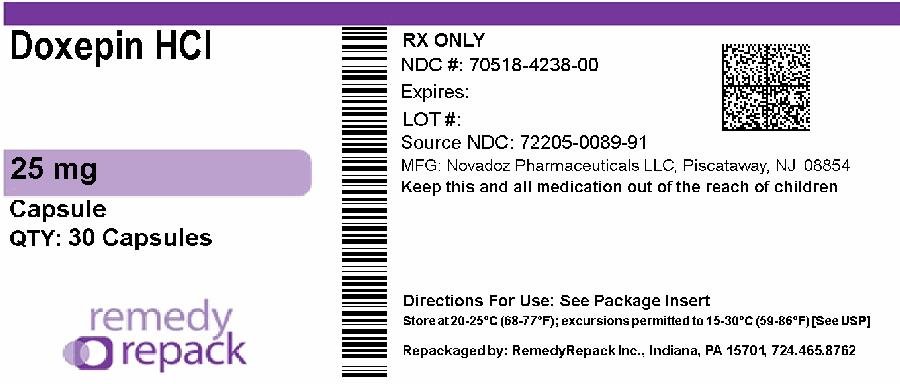
DRUG: Doxepin Hydrochloride GENERIC: Doxepin Hydrochloride DOSAGE: CAPSULE ADMINSTRATION: ORAL NDC: 70518-4238-0 COLOR: yellow SHAPE: CAPSULE SCORE: No score SIZE: 16 mm IMPRINT: 25mg;MD13 PACKAGING: 30 in 1 BLISTER PACK ACTIVE INGREDIENT(S): Doxepin Hydrochloride 25mg in 1 INACTIVE INGREDIENT(S): MICROCRYSTALLINE CELLULOSE STARCH, CORN SODIUM LAURYL SULFATE MAGNESIUM STEARATE SHELLAC FD&C YELLOW NO. 6 D&C YELLOW NO. 10 PROPYLENE GLYCOL TITANIUM DIOXIDE POTASSIUM HYDROXIDE FERROSOFERRIC OXIDE GELATIN, UNSPECIFIED Remedy_Label
About this NDC listing & data coverage
What data is (and isn’t) available for this NDC — tap to expand
| NDC identity (package / product / labeler codes) | ✓ Available |
| Labeler | ✓ Available |
| Product & package description | ✓ Available |
| Marketing category & status | ✓ Available |
| Active ingredient / dosage form / route | ✓ Available |
| FDA label (SPL via DailyMed) | ✓ Available |
| Package photos | ✓ Available |
| Inactive ingredients (structured) | ✓ Available |
| NADAC pharmacy acquisition price (CMS) | — Not published for this NDC CMS publishes NADAC only for NDCs reported in its retail-pharmacy survey. |
| Orange Book / therapeutic-equivalence data | ✓ Available |
| HCPCS J-code billing crosswalk | — Not published for this NDC Most self-administered / retail products have no J-code — that is normal. |
| Medicaid utilization (CMS SDUD) | — Not published for this NDC CMS reports utilization only for NDCs with Medicaid claims above its privacy threshold. |