
AMELUZ aminolevulinic acid hydrochloride 100 mg/g Gel — NDC 70621-101-30 (Billing 70621-0101-30)
This is a package of AMELUZ aminolevulinic acid hydrochloride 100 mg/g Gel from Biofrontera Inc., marketed since Aug 2016 and currently FDA-listed.
NDC database record
One package, one record: these facts belong to NDC 70621-101-30 alone.
- Record
- FDA NDC Directory package listing · Human prescription drug
- Code segments
- 70621 labeler · 101 product · 30 package
- Package marketed since
- Jun 1, 2017
- Sample package
- Yes — professional sample, not for sale
- Listing certified through
- Dec 31, 2027
- Barcode (UPC-A, from the NDC)
- 3 7062110130 2
- FDA record last changed
- Oct 8, 2026
Identity & classification
Regulatory identifiers FDA, NLM and CMS codes for this package
Drug-database identifiers Medi-Span GPI and First Databank GCN / HICL / AHFS classification
- GSN (GCN sequence number): 072080
- GCN: 36177
- HICL (First Databank): 021920
- AHFS class code: 84:18.00.00
Where does this data come from?
- FDA openFDA NDC Directory · synced Oct 8, 2026
- FDA label on DailyMed · label index refreshed Oct 8, 2026
- RxNorm (NLM RxNav) · catalog refreshed Oct 8, 2026
- Medi-Span GPI (licensed)
- First Databank (licensed) · refreshed Oct 8, 2026
Clinical
- It treats actinic keratoses, which are rough, scaly, sun-damaged spots on the face and scalp. Ameluz gel is used together with a red light lamp in a treatment called photodynamic t...
- No. Ameluz is applied only by a health care provider, along with skin preparation and the lamp treatment. You will have the gel on for 3 hours under a light-blocking dressing befor...
- Most people get redness, burning or pain, irritation, swelling, itching, peeling or scabbing in the treated area. These usually last a few days but can last 1 to 2 weeks or longer....
- Yes. Avoid sunlight, tanning beds and sun lamps on the treated skin for about 48 hours. Your skin is extra sensitive to light during this time.
Patient education
Supplement & herbal interactions
Some supplements/herbs that may interact with Aminolevulinic Acid Hydrochloride — tap one for details:
Where does this data come from?
- MedlinePlus (NLM) · refreshed Oct 8, 2026
- FDA label on DailyMed · label index refreshed Oct 8, 2026
Ask a licensed pharmacist directly — free, answered by our team.
Pricing
A drug doesn't have one price. Each row is a different public payment system, and none is what you'd pay at the counter — that depends on your insurance. The ⓘ on each row explains what it measures.
| Price system | Per g | Per package |
|---|---|---|
| Retail pharmacies payNADAC · weekly | Not in the retail survey — common for institutional, discontinued, or low-volume packs. | |
| Medicaid paysCMS SDUD · 12 mo | No recent Medicaid claims on file for this NDC — rare and low-volume NDCs are suppressed in the public data. | |
| Medicare drug plans payPart D · quarterly | No Part D plan price is available for this NDC in our data. | |
Where does this data come from?
- CMS NADAC weekly file
- CMS ASP pricing files · refreshed Sep 20, 2026
- CMS Medicaid State Drug Utilization Data · refreshed Oct 9, 2026
- CMS Part D plan pricing files · refreshed Sep 24, 2026
- VA National Acquisition Center price file
Packaging — all sizes for this product
| Package NDC | Description | Marketing start | Marketing end | Status |
|---|---|---|---|---|
| 70621-0101-10 70621-101-10 | 1 TUBE in 1 PACKAGE / 2 g in 1 TUBE | 2017-06-01 | — | Active |
| 70621-0101-20 70621-101-20 Main listing | 10 TUBE in 1 PACKAGE / 2 g in 1 TUBE | 2021-05-10 | — | Active |
| 70621-0101-30 You're viewing this | 1 TUBE in 1 PACKAGE / 2 g in 1 TUBE Sample | 2017-06-01 | — | Active |
This pack shows little to no recent Medicaid volume — a different pack size carries most fills. See all packs ↓
Pack size FAQ
What quantity is in this package?
What NDC number is used to bill for this package of AMELUZ aminolevulinic acid hydrochloride 100 mg/g Gel?
Therapeutic equivalents
| Product | Labeler | Pack | NADAC/unit | TE | Status | Price vs. this |
|---|---|---|---|---|---|---|
| Ameluz 100 mg/gthis 70621-0101-30 | Biofrontera | 1 tube | — | — | FDA listed | — |
Where does this data come from?
- FDA openFDA NDC Directory · synced Oct 8, 2026
- FDA Orange Book · refreshed Oct 3, 2026
- CMS NADAC weekly file
Availability & generic status
We did not find an FDA-approved generic match for this exact strength, form and route. Patent/protection dates below may affect future generic timing.
Why the date isn’t exact: Generic timing can change because patents may be challenged, settled, licensed, added, removed, or worked around with a narrower label — and FDA approval does not always mean a pharmacy can get the generic today.
🛈 What do these terms mean?
- Patent
- Legal protection listed in the Orange Book that may delay generic approval or launch. Issued by the U.S. Patent & Trademark Office.
- Substance patent
- Covers the active drug molecule itself — the hardest to design around. A generic generally can’t launch until it expires.
- Formulation (product) patent
- Covers a specific formulation or dosage form. A generic can sometimes work around it with a different formulation.
- Method-of-use patent
- A patent covering one specific approved use of the drug — not necessarily the whole molecule. A generic can sometimes launch with a “skinny label” that carves out the protected use and keeps the others.
- Skinny label
- A generic label that omits a still-patented use when the FDA allows it — letting a generic reach the market for the unprotected uses.
- Exclusivity
- FDA-granted marketing protection, separate from patents — e.g. 5-yr new chemical entity, 7-yr orphan drug, or a +6-month pediatric extension.
- Paragraph IV
- A generic applicant’s formal challenge to a listed patent. It can potentially lead to earlier generic entry, but often involves litigation or a settlement.
- RLD / RS
- Reference Listed Drug — the brand product the FDA uses as the reference for generic applications. Reference Standard — the product the FDA expects generics to compare against in bioequivalence testing.
- TE / AB rating
- FDA therapeutic-equivalence rating. An AB rating generally means the FDA considers a generic therapeutically equivalent to — and substitutable for — the brand.
- LOE (loss of exclusivity)
- The latest patent or exclusivity currently listed — the loss-of-exclusivity / latest-listed-protection date shown on this page. Paragraph-IV challenges and settlements can move the real date earlier; FDA approval and a manufacturer’s decision to market can move it later.
Built from the FDA Orange Book. The bars above are scaled to each protection’s expiry; the red LOE marker is the last one to lapse.
| Patent | Type | Use code | Expires |
|---|---|---|---|
| US 11235169 ↗ | Method of use | U-3303 | Oct 15, 2040 |
| US 11540981 ↗ | Drug product | — | Feb 7, 2028 |
| US 12280146 ↗ | Drug product | — | Dec 8, 2043 |
| Code | What it grants | Expires |
|---|---|---|
| D-194 | Other change requiring clinical data (3-year) | Oct 4, 2027 |
Is there a generic version of AMELUZ 10% GEL?
The FDA approved a generic — why can’t I get it at my pharmacy yet?
Why do different websites show different generic release dates?
What does “FDA listed” mean?
What does a patent or protection date mean here?
What does “current Orange Book estimate” mean?
Can a generic come out before the last patent expires?
Can a generic come out after the listed dates?
What is the difference between patents and exclusivity?
Why are there multiple patent dates?
Where does this data come from?
- FDA Orange Book · refreshed Oct 3, 2026
Inactive Ingredients / Excipients
Inactive ingredients, also called excipients, are components of the drug product other than the active ingredient. They may include fillers, dyes, coatings, preservatives, flavors, or other formulation ingredients.
🧪 Avoiding an ingredient? See Aminolevulinic Acid Topical inactive ingredients by manufacturer: every current product's list side by side, so you can ask your pharmacy for the version that does not list it.
💡 Tap an ingredient (hover on desktop) to see what it is and why it’s used.
-
UNII ND2M416302
Isopropyl alcohol is a clear liquid solvent derived from petroleum. In medicines, it dissolves active ingredients and other components, helps the product flow smoothly, and aids in sterilization during manufacturing.
-
UNII 1DI56QDM62
A natural fatty substance from soybeans that helps mix oil and water-based ingredients together. It acts as an emulsifier and lubricant in medicines to improve texture and help the product break down properly in your body.
-
UNII C9H2L21V7U
A fat derived from coconut or palm oil containing shorter fatty acid chains. It serves as a solvent and carrier to help dissolve or suspend active ingredients, improving absorption and stability in liquid formulations.
-
UNII 6OZP39ZG8H
Polysorbate 80 is a synthetic emulsifier derived from sorbitol and oleic acid. It helps mix oil and water-based ingredients together in medications and improves how the product disperses in the body.
-
UNII OJ245FE5EU
Sodium benzoate is a salt derived from benzoic acid, a preservative. It's added to medicines to prevent growth of bacteria, fungi, and other microorganisms that could spoil the product.
-
UNII 94255I6E2T
Sodium phosphate dibasic dihydrate is a salt that helps control the acidity level of a medicine. It acts as a buffer and pH regulator to keep the medication stable and effective.
-
UNII 5QWK665956
A salt derived from phosphoric acid and sodium, used primarily as a buffer to control the acidity or pH of a medication, helping keep it stable during storage and use.
-
UNII 059QF0KO0R
Water is a liquid solvent that dissolves and mixes ingredients together in liquid medicines, syrups, and injections. It helps distribute the active drug evenly throughout the product.
-
UNII TTV12P4NEE
Xanthan gum is a thickening and stabilizing ingredient made from fermented corn or other sugars. It's added to medicines to improve texture, prevent separation of liquids and solids, and help the product stay consistent.
9 inactive ingredients listed in the exact product block matched to this NDC.
Where does this data come from?
ingredient classCode="IACT" elements from the exact product block matched by this NDC. Label-section narrative from DailyMed / the openFDA label index is shown separately when available.- FDA label on DailyMed · label index refreshed Oct 8, 2026
- FDA openFDA NDC Directory · synced Oct 8, 2026
Inactive ingredient FAQ
Are inactive ingredients the same for every manufacturer?
Why might an inactive ingredient be missing?
Can inactive ingredients matter?
Manufacturer & labeler
Where does this data come from?
- FDA openFDA NDC Directory · synced Oct 8, 2026
- Drugs@FDA
Full prescribing information FDA SPL
🎯 Indications and Usage ▾
1. INDICATIONS AND USAGE AMELUZ, in combination with photodynamic therapy (PDT) using BF-RhodoLED ® or RhodoLED ® XL lamp, a narrowband, red light illumination source, is indicated for lesion-directed and field-directed treatment of actinic keratoses (AKs) of mild-to-moderate severity on the face and scalp. AMELUZ, a porphyrin precursor, in combination with photodynamic therapy using BF-RhodoLED or RhodoLED XL lamp, is indicated for the lesion-directed and field-directed treatment of actinic keratoses (AK) of mild-to-moderate severity on the face and scalp ( 1 ).
⏱️ Dosage and Administration ▾
2. DOSAGE AND ADMINISTRATION Administer AMELUZ only by a health care provider ( 2.1 ). AMELUZ is for topical use only ( 2.1 ).
Use AMELUZ in combination with red light photodynamic therapy (PDT). See BF-RhodoLED or RhodoLED XL user manual for detailed lamp safety and operating instructions ( 2.1 ). Photodynamic therapy with AMELUZ involves preparation of lesions, application of the product, occlusion and illumination with BF-RhodoLED or RhodoLED XL lamp ( 2.3 ).
Apply an approximately 1 mm thick layer of AMELUZ to skin lesion(s). Cover individual lesions or the entire AK-field with AMELUZ. Include approximately 5 mm of the surrounding skin.
Do not exceed an application area of 60 cm 2 . Do not use more than 6 grams of AMELUZ (3 tubes) at one time ( 2.2 ). Retreat lesions that have not completely resolved 3 months after the initial treatment ( 2.2 ).
2.1Important Administration Information AMELUZ, in conjunction with lesion preparation, is only to be administered by a health care provider. AMELUZ is for topical use only. Not for ophthalmic, oral, or intravaginal use.
Treat single lesions or an entire field affected by multiple lesions with AMELUZ, in combination with red light photodynamic therapy (PDT). PDT requires administration of both AMELUZ and BF-RhodoLED or RhodoLED XL light. Refer to BF-RhodoLED or RhodoLED XL user manual for detailed lamp safety and operating instructions.
Adhere to all safety instructions for both patient and medical personnel while conducting the PDT.
2.2Recommended Dosage Apply an approximately 1-mm thick layer of AMELUZ to skin lesion(s). Cover individual lesions or the entire AK-field with AMELUZ. Include approximately 5 mm of the surrounding skin. Do not exceed an application area of 60 cm 2 . Do not use more than 6 grams of AMELUZ (3 tubes) at one time. Retreat lesions that have not completely resolved after 3 months after the initial treatment.
2.3Administration Instructions PDT is a multi-stage process: Step 1. Preparation of Lesions Before applying AMELUZ, carefully wipe all lesions with an ethanol or isopropanol-soaked cotton pad to ensure degreasing of the skin. Figure 1A: Degreasing the skin Thereafter, remove any scaling and crusts and gently roughen all lesion surfaces, taking care to avoid bleeding.
Figure 1B: Removal of scales and crusts Step 2. Application of AMELUZ Apply AMELUZ using glove protected fingertips or a spatula. Use sufficient amount of gel to cover individual lesions or the entire field: Lesion-directed treatment: Apply gel approximately 1 mm thick to one or more individual AK lesions and include approximately 5 mm of the surrounding healthy skin.
Field-directed treatment: Apply gel approximately 1 mm thick to the treatment field. Apply gel to the lesions and the skin in-between the lesions. Additionally, cover approximately 5 mm of the surrounding healthy area.
Do not exceed an application area of 60 cm 2 and do not use more than 6 grams of AMELUZ (3 tubes) at one time. The gel can be applied to healthy skin around the lesions. Avoid application near mucous membranes such as the eyes, nostrils, mouth, and ears (keep a distance of 1 cm from these areas).
In case of accidental contact with mucous membranes, thoroughly rinse with water [ see Warnings and Precautions (5.7) ]. Allow the gel to dry for approximately 10 minutes before applying occlusive dressing. Figure 2: Drug application Step 3.
Occlusion for 3 Hours Cover the area where the gel has been applied with a light-blocking, occlusive dressing. Following 3 hours of occlusion, remove the dressing and wipe off any remaining gel. Figure 3: Occlusion Step 4.
Illumination with Red Light For patient and medical personnel, wear suitable protective eyewear during illumination. Avoid staring directly into the light source [ see Warnings and Precautions (5.3) ]. Illuminate the treatment area with the BF-RhodoLED or RhodoLED XL lamp immediately after removing occlusion and any remaining gel.
BF-RhodoLED and RhodoLED XL la… [Excerpted — this section continues on DailyMed.]
💊 Dosage Forms and Strengths ▾
3. DOSAGE FORMS AND STRENGTHS Topical gel: 10% aminolevulinic acid hydrochloride as a white-to-yellowish gel in 2-gram tubes. Gel: 10% ( 3 ).
⛔ Contraindications ▾
4. CONTRAINDICATIONS AMELUZ is contraindicated in patients with: Known hypersensitivity to porphyrins. Known hypersensitivity to any of the components of AMELUZ, which includes soybean phosphatidylcholine [see Warnings and Precautions (5.1) ] .
Porphyria. AMELUZ use may cause uncontrolled phototoxic effects [see Warnings and Precautions (5.5) ] . Photodermatoses.
PDT may worsen the phototoxic or photoallergic reactions [see Warnings and Precautions (5.5) ] . Known hypersensitivity to porphyrins ( 4 ). Known hypersensitivity to any component of AMELUZ, which includes soybean phosphatidylcholine ( 4 ).
Porphyria ( 4 ). Photodermatoses ( 4 ).
⚠️ Warnings and Cautions ▾
5. WARNINGS AND PRECAUTIONS Hypersensitivity: Hypersensitivity reactions have been reported with the use of AMELUZ prior to photodynamic therapy (PDT). If allergic reaction occurs, wash off AMELUZ and institute appropriate therapy ( 5.1 ).
Transient Amnestic Episodes: Transient amnestic episodes have been reported with use of AMELUZ in combination with PDT. Advise patients to contact their healthcare provider if amnesia or confusion occurs after treatment ( 5.2 ). Risk of BF-RhodoLED or RhodoLED XL Lamp Induced Eye Injury: Patients and healthcare providers must wear protective eyewear before operating BF-RhodoLED or RhodoLED XL lamp ( 5.3 ).
Ophthalmic Adverse Reactions: Avoid direct contact of AMELUZ with the eyes ( 5.4 ). Increased Photosensitivity: Protect treated lesions from sunlight exposure for 48 hours post treatment ( 5.5 ). Risk of Bleeding in Patients with Coagulation Disorders: Take special care to avoid bleeding during lesion preparation in patients with inherited or acquired coagulation disorders ( 5.6 ).
Mucous Membrane Irritation: Avoid direct contact of AMELUZ with the mucous membranes ( 5.7 ).
5.1Hypersensitivity Several cases of hypersensitivity were reported during postmarketing use of AMELUZ prior to PDT illumination [ see Adverse Reactions (6.2) ]. If allergic reactions occur, clean the area of skin where the product was applied and institute appropriate therapy. Inform patients and their caregivers that AMELUZ may cause hypersensitivity, potentially including severe courses (anaphylaxis).
5.2Transient Amnestic Episodes Transient amnestic episodes have been reported during postmarketing use of AMELUZ in combination with photodynamic therapy. Inform patients and their caregivers that AMELUZ in combination with photodynamic therapy may cause transient amnestic episodes. Advise them to contact the healthcare provider if the patient develops amnesia after treatment.
5.3Risk of BF-RhodoLED or RhodoLED XL Lamp Induced Eye Injury BF-RhodoLED or RhodoLED XL lamp may cause eye irritation, glare, or injury. Before operating the lamp, personnel must refer to the user manual for specific warnings, cautions, and instructions. Eye exposure to the BF-RhodoLED or RhodoLED XL light must be prevented.
Protective eye equipment must be used by patient, healthcare providers and any person present during the illumination period. Avoid staring directly into the light source.
5.4Ophthalmic Adverse Reactions Eyelid edema and dry eyes have occurred after PDT with AMELUZ. PDT with AMELUZ can cause ophthalmic adverse reactions. Avoid direct contact of AMELUZ with the eyes. Rinse eyes with water in case of accidental contact.
5.5Increased Photosensitivity AMELUZ increases photosensitivity. Avoid sunlight, prolonged or intense light (e.g., tanning beds, sun lamps) on lesions and surrounding skin treated with AMELUZ for approximately 48 hours following treatment, whether exposed to illumination or not. Concomitant use of AMELUZ with other known photosensitizing agents may increase the risk of phototoxic reaction to PDT [see Drug Interactions (7) ] .
5.6Risk of Bleeding in Patients with Coagulation Disorders AMELUZ has not been tested on patients with inherited or acquired coagulation disorders. Take special care to avoid bleeding during lesion preparation in such patients [ see Dosage and Administration (2.3) ] . Any bleeding must be stopped before application of the gel.
5.7Risk of Mucous Membrane Irritation AMELUZ can cause mucous membrane irritation. AMELUZ is intended for topical use only. Avoid direct contact of AMELUZ to the mucous membranes. Rinse with water in case of accidental contact.
🤒 Adverse Reactions ▾
6. ADVERSE REACTIONS The following adverse reactions are discussed in greater detail in other sections of the labeling: Hypersensitivity [ see Warnings and Precautions (5.1) ]. Transient Amnestic Episodes [ see Warnings and Precautions (5.2) ] .
Risk of BF-RhodoLED or RhodoLED XL Lamp Induced Eye Injury [see Warnings and Precautions (5.3) ] . Ophthalmic Adverse Reactions [see Warnings and Precautions (5.4) ]. Increased Photosensitivity [see Warnings and Precautions (5.5) ] .
Most common adverse reactions (≥10%) were application site erythema, pain/burning, irritation, edema, pruritus, exfoliation, scab, induration, and vesicles ( 6.1 ). To report SUSPECTED ADVERSE REACTIONS, contact Biofrontera Inc. at 1-844-829-7434 or FDA at 1-800-332-1088 or www.fda.gov/medwatch .
6.1Clinical Trial Experience Because clinical trials are conducted under widely varying conditions, adverse reaction rates observed in the clinical trials of a drug cannot be directly compared to rates in the clinical trials of another drug and may not reflect the rates observed in practice. The clinical program for AMELUZ included three double-blind and placebo-controlled phase 3 trials (Trials 1, 2, and 3), enrolling a total of 299 subjects that were treated with narrow band light. Trial subjects were adults greater than or equal to 49 years of age, and the majority had Fitzpatrick skin type I, II, or III.
No subjects had Fitzpatrick skin type V or VI. Approximately 86% of subjects were male, and all subjects were White. For all three phase 3 trials, the enrolled subjects had mild to moderate AKs (Olsen grade 1 and 2) with 4 to 8 lesions on the face and scalp.
Overall, 212 AMELUZ-treated subjects (n=32, n=55, and n=125) and 87 subjects receiving placebo (n=16, n=32, n=39) were illuminated with BF-RhodoLED or similar narrow spectrum lamps. For these trials, the maximal dose was one tube of AMELUZ (2 g) and the size of the application area was up to 20 cm 2 . Local skin reactions at the application site were observed in about 99.5% of subjects treated with AMELUZ and narrow spectrum lamps.
The most frequent adverse reactions during and after PDT were application site erythema, pain, burning, irritation, edema, pruritus, exfoliation, scab, induration, and vesicles. Most adverse reactions occurred during illumination or shortly afterwards, were generally of mild or moderate intensity, and lasted for 1 to 4 days in most cases; in some cases, however, they persisted for 1 to 2 weeks or even longer. Severe pain/burning occurred in up to 30% of subjects.
In one case, the adverse reactions required interruption or discontinuation of the illumination. Table 1 presents the incidence of common (≥1%, <10%) and very common (≥10%) adverse reactions at the application site in randomized, multicenter trials which evaluated a maximal dose of one tube of AMELUZ (2 g) and an application area up to 20 cm 2 . Table 1: Incidence of Adverse Reactions Occurring at ≥1% of the AMELUZ Group and More Frequently than the Vehicle Group in Actinic Keratosis Trials 1, 2, and 3 at the Application Site Adverse reaction Vehicle n=87 AMELUZ n=212 Adverse reactions at the application site Erythema Pain/Burning Irritation Edema Pruritus Exfoliation Scab Induration Vesicles Paresthesia Hyperalgesia Reaction Discomfort Erosion Discharge Bleeding Pustules 34 (39%) 26 (30%) 17 (20%) 3 (3%) 14 (16%) 4 (5%) 2 (2%) 0 (0%) 1 (1%) 2 (2%) 0 (0%) 2 (2%) 0 (0%) 0 (0%) 0 (0%) 0 (0%) 0 (0%) 195 (92%) 195 (92%) 153 (72%) 75 (35%) 72 (34%) 41 (19%) 41 (19%) 26 (12%) 25 (12%) 18 (9%) 13 (6%) 8 (4%) 7 (3%) 6 (3%) 4 (2%) 3 (1%) 3 (1%) Common (≥1%, <10%) adverse reactions not at the application site for AMELUZ maximal dose of one tube (2 g) and application area up to 20 cm 2 were headache, skin exfoliation, chills and eyelid edema.
Less common (≥0.1%, <1%) adverse reactions at the application site for AMELUZ maximal dose of one tube (2 g) and application area up to 20 cm 2 were hemorrhage and swelling. The adverse re… [Excerpted — this section continues on DailyMed.]
🔄 Drug Interactions ▾
7. DRUG INTERACTIONS There have been no formal studies of the interaction of AMELUZ with other drugs. It is possible that concomitant use of other known photosensitizing agents such as St.
John’s wort, griseofulvin, thiazide diuretics, sulfonylureas, phenothiazines, sulphonamides, quinolones and tetracyclines may enhance the phototoxic reaction to PDT [see Warnings and Precautions (5.3) ] . Concomitant use of the following medications may enhance the phototoxic reaction to photodynamic therapy: St. John’s wort, griseofulvin, thiazide diuretics, sulfonylureas, phenothiazines, sulphonamides, quinolones, and tetracyclines ( 7 ).
👥 Use in Specific Populations ▾
8. USE IN SPECIFIC POPULATIONS
8.1Pregnancy Risk Summary There are no available data on AMELUZ use in pregnant women to inform a drug associated risk. Animal reproduction studies were not conducted with aminolevulinic acid. Systemic absorption of aminolevulinic acid in humans is negligible following topical administration of AMELUZ under maximal clinical use conditions [see Clinical Pharmacology (12.3) ] .
It is not expected that maternal use of AMELUZ will result in fetal exposure to the drug. The background risk of major birth defects and miscarriage for the indicated population are unknown. In the U.S. general population, the estimated background risk of major birth defects and miscarriage in clinically recognized pregnancies is 2% to 4% and 15% to 20%, respectively.
8.2Lactation Risk Summary No data are available regarding the presence of aminolevulinic acid in human milk, the effects of aminolevulinic acid on the breastfed infant or on milk production. However, breastfeeding is not expected to result in exposure of the child to the drug due to the negligible systemic absorption of aminolevulinic acid in humans following topical administration of AMELUZ under maximal clinical use conditions [see Clinical Pharmacology (12.3) ] . The developmental and health benefits of breastfeeding should be considered along with the mother’s clinical need for AMELUZ and any potential adverse effects on the breastfeeding child from AMELUZ or from the underlying maternal condition.
8.4Pediatric Use Safety and effectiveness in pediatric patients below the age of 18 have not been established. AK is not a condition generally seen in the pediatric population.
8.5Geriatric Use Of the 384 subjects exposed to AMELUZ in randomized, multicenter clinical trials, 83% (318/384) of the subjects were 65 years old and over. No overall differences in safety or effectiveness were observed between these subjects and younger subjects, but greater sensitivity of some older individuals cannot be ruled out.
🤰 Pregnancy ▾
8.1Pregnancy Risk Summary There are no available data on AMELUZ use in pregnant women to inform a drug associated risk. Animal reproduction studies were not conducted with aminolevulinic acid. Systemic absorption of aminolevulinic acid in humans is negligible following topical administration of AMELUZ under maximal clinical use conditions [see Clinical Pharmacology (12.3) ] .
It is not expected that maternal use of AMELUZ will result in fetal exposure to the drug. The background risk of major birth defects and miscarriage for the indicated population are unknown. In the U.S. general population, the estimated background risk of major birth defects and miscarriage in clinically recognized pregnancies is 2% to 4% and 15% to 20%, respectively.
🧒 Pediatric Use ▾
8.4Pediatric Use Safety and effectiveness in pediatric patients below the age of 18 have not been established. AK is not a condition generally seen in the pediatric population.
🧓 Geriatric Use ▾
8.5Geriatric Use Of the 384 subjects exposed to AMELUZ in randomized, multicenter clinical trials, 83% (318/384) of the subjects were 65 years old and over. No overall differences in safety or effectiveness were observed between these subjects and younger subjects, but greater sensitivity of some older individuals cannot be ruled out.
🧬 Clinical Pharmacology ▾
12. CLINICAL PHARMACOLOGY
12.1Mechanism of Action Photoactivation following topical application of AMELUZ occurs when aminolevulinic acid (prodrug) is metabolized to protoporphyrin IX (PpIX), a photoactive compound which accumulates in the skin. When exposed to red light of a suitable wavelength and energy, PpIX is activated resulting in an excited state of porphyrin molecules. In the presence of oxygen, reactive oxygen species are formed which causes damage to cellular components, and eventually destroys the cells.
AMELUZ photodynamic therapy of AK lesions utilizes photoactivation of topically applied AMELUZ resulting from BF-RhodoLED or RhodoLED XL illumination, which provides a red light of narrow spectrum and a light dose of approximately 37 J/cm 2 .
12.2Pharmacodynamics The pharmacodynamics of AMELUZ in the treatment of actinic keratosis are unknown.
12.3Pharmacokinetics Aminolevulinic acid acts as a prodrug to the photoactive metabolite protoporphyrin IX (PpIX). Pharmacokinetics (PK) of aminolevulinic acid and PpIX were evaluated in two trials: In the first trial, a single dose of one entire tube of AMELUZ (2 grams) was applied under occlusion for 3 hours followed by PDT to a total area of 20 cm 2 in 12 adult subjects with mild to moderate AK with at least 10 AK lesions on the face or forehead. The mean ± SD baseline plasma aminolevulinic acid concentration was 20.16 ± 16.53 ng/mL.
In most subjects, an up to 2.5-fold increase of aminolevulinic acid plasma concentrations was observed during the first 3 hours after AMELUZ application. The mean ± SD area under the concentration time curve (AUC 0-t ) and maximum concentration (C max ) for baseline corrected aminolevulinic acid (n=12) were 142.83 ± 75.50 ng·h/mL and 27.19 ± 20.02 ng/mL, respectively. The median T max (time at which C max occurred) was 3 hours.
The mean ± SD baseline plasma PpIX concentration was 3.27 ± 2.40 ng/mL (n=12). The majority (about 55%) of the PpIX concentrations were below the limit of quantification (LOQ = 1 ng/mL) and baseline corrected values were negative in all subjects except for one. The baseline corrected AUC 0-t and C max in the single subject was 0.07 ng·h/mL and 0.29 ng/mL, respectively.
In the second trial, a single dose of three entire tubes of AMELUZ (6 grams) was applied under occlusion for 3 hours followed by PDT to a total area of 60 cm 2 in 16 adult subjects with mild to severe AK with at least 12 AK lesions on the face and scalp. The mean ± SD baseline plasma aminolevulinic acid concentration was 13.53 ± 1.58 ng/mL. In most subjects, an up to 2.5-fold increase of aminolevulinic acid plasma concentrations was observed during the first 3 hours after AMELUZ application.
The mean ± SD area under the concentration time curve (AUC 0-t ) and maximum concentration (C max ) for baseline corrected aminolevulinic acid (n=16) were 134.24 ± 87.97 ng·h/mL and 33.85 ± 21.85 ng/mL, respectively. The median T max (time at which C max occurred) was 3 hours. The mean ± SD baseline plasma PpIX concentration was 1.93 ± 0.42 ng/mL (n=15).
The mean ± SD baseline corrected C max of PpIX was 0.67 ± 0.78 ng/mL (n=13) with a median T max of 4 hours. The baseline corrected PpIX concentrations in 14 of 15 subjects were < 1 ng/mL.
🧬 Mechanism of Action ▾
12.1Mechanism of Action Photoactivation following topical application of AMELUZ occurs when aminolevulinic acid (prodrug) is metabolized to protoporphyrin IX (PpIX), a photoactive compound which accumulates in the skin. When exposed to red light of a suitable wavelength and energy, PpIX is activated resulting in an excited state of porphyrin molecules. In the presence of oxygen, reactive oxygen species are formed which causes damage to cellular components, and eventually destroys the cells.
AMELUZ photodynamic therapy of AK lesions utilizes photoactivation of topically applied AMELUZ resulting from BF-RhodoLED or RhodoLED XL illumination, which provides a red light of narrow spectrum and a light dose of approximately 37 J/cm 2 .
📦 How Supplied / Storage and Handling ▾
16. HOW SUPPLIED/STORAGE AND HANDLING AMELUZ (aminolevulinic acid hydrochloride) topical gel, 10% is a white-to-yellowish gel. The drug product is supplied in an aluminum tube with a white, high density polyethylene (HDPE) screw cap.
Each tube contains 2 g of gel. NDC 70621-101-01 2 g tube NDC 70621-101-10 Cardbox containing one 2 g tube NDC 70621-101-20 Cardbox containing ten 2 g tubes Store AMELUZ in a refrigerator, 2°C – 8°C (36°F – 46°F). Excursions permitted to 15°C – 30°C (59°F – 86°F).
After opening, AMELUZ can be stored for up to 12 weeks in a refrigerator at 2°C – 8°C (36°F – 46°F) if the tube is tightly closed.
📋 Description ▾
11. DESCRIPTION AMELUZ (aminolevulinic acid hydrochloride) topical gel, 10% is a non-sterile white-to-yellowish gel. The gel formulation contains a nanoemulsion.
Aminolevulinic acid, a porphyrin precursor, is a white to off-white crystalline solid. It is readily soluble in water, methanol, and dimethylformamide. Its chemical name is 5-amino-4-oxo-pentanoic acid hydrochloride, molecular weight is 167.59 and molecular formula is C 5 H 9 NO 3 ·HCl.
The structural formula of aminolevulinic acid hydrochloride is represented below: Each gram of AMELUZ contains 100 mg of aminolevulinic acid hydrochloride (equivalent to 78 mg aminolevulinic acid) as the active ingredient and the following inactive ingredients: xanthan gum, soybean phosphatidylcholine, polysorbate 80, medium-chain triglycerides, isopropyl alcohol, dibasic sodium phosphate, monobasic sodium phosphate, sodium benzoate and purified water. ALA.HCl - Structural Formula
💬 Information for Patients ▾
17. PATIENT COUNSELING INFORMATION Inform patients of the following: Hypersensitivity Hypersensitivity has been reported with use of AMELUZ. Inform patients and their caregivers that AMELUZ may cause hypersensitivity potentially including severe courses (anaphylaxis) [see Warnings and Precautions (5.1) ] .
Transient amnestic episodes Transient amnestic episodes have been reported with use of AMELUZ in combination with photodynamic therapy. Advise patients and their families or caregivers to contact their healthcare provider if memory impairment, confusion, or disorientation is observed [see Warnings and Precautions (5.2) ] . Photosensitivity Advise patients that for approximately 48 hours following treatment to avoid exposure to sunlight, and prolonged or intense light on the treated lesion sites and surrounding skin.
Advise patients to avoid certain medications that may enhance the phototoxic reaction to PDT [see Warnings and Precautions (5.5) and Drug Interactions (7) ]. Common adverse reactions Inform patients that treatment with AMELUZ in combination with PDT may result in adverse reactions which include local skin reactions at the application site such as erythema, pain/burning, irritation, edema, pruritus, exfoliation, induration, scab, and vesicles [ see Clinical Trial Experience (6.1) ].
🧬 Pharmacokinetics ▾
12.3Pharmacokinetics Aminolevulinic acid acts as a prodrug to the photoactive metabolite protoporphyrin IX (PpIX). Pharmacokinetics (PK) of aminolevulinic acid and PpIX were evaluated in two trials: In the first trial, a single dose of one entire tube of AMELUZ (2 grams) was applied under occlusion for 3 hours followed by PDT to a total area of 20 cm 2 in 12 adult subjects with mild to moderate AK with at least 10 AK lesions on the face or forehead. The mean ± SD baseline plasma aminolevulinic acid concentration was 20.16 ± 16.53 ng/mL.
In most subjects, an up to 2.5-fold increase of aminolevulinic acid plasma concentrations was observed during the first 3 hours after AMELUZ application. The mean ± SD area under the concentration time curve (AUC 0-t ) and maximum concentration (C max ) for baseline corrected aminolevulinic acid (n=12) were 142.83 ± 75.50 ng·h/mL and 27.19 ± 20.02 ng/mL, respectively. The median T max (time at which C max occurred) was 3 hours.
The mean ± SD baseline plasma PpIX concentration was 3.27 ± 2.40 ng/mL (n=12). The majority (about 55%) of the PpIX concentrations were below the limit of quantification (LOQ = 1 ng/mL) and baseline corrected values were negative in all subjects except for one. The baseline corrected AUC 0-t and C max in the single subject was 0.07 ng·h/mL and 0.29 ng/mL, respectively.
In the second trial, a single dose of three entire tubes of AMELUZ (6 grams) was applied under occlusion for 3 hours followed by PDT to a total area of 60 cm 2 in 16 adult subjects with mild to severe AK with at least 12 AK lesions on the face and scalp. The mean ± SD baseline plasma aminolevulinic acid concentration was 13.53 ± 1.58 ng/mL. In most subjects, an up to 2.5-fold increase of aminolevulinic acid plasma concentrations was observed during the first 3 hours after AMELUZ application.
The mean ± SD area under the concentration time curve (AUC 0-t ) and maximum concentration (C max ) for baseline corrected aminolevulinic acid (n=16) were 134.24 ± 87.97 ng·h/mL and 33.85 ± 21.85 ng/mL, respectively. The median T max (time at which C max occurred) was 3 hours. The mean ± SD baseline plasma PpIX concentration was 1.93 ± 0.42 ng/mL (n=15).
The mean ± SD baseline corrected C max of PpIX was 0.67 ± 0.78 ng/mL (n=13) with a median T max of 4 hours. The baseline corrected PpIX concentrations in 14 of 15 subjects were < 1 ng/mL.
🧬 Pharmacodynamics ▾
12.2Pharmacodynamics The pharmacodynamics of AMELUZ in the treatment of actinic keratosis are unknown.
🔬 Clinical Studies ▾
14. CLINICAL STUDIES The efficacy and safety of AMELUZ in combination with PDT using a narrow spectrum (red light lamp) source were evaluated in three randomized, multicenter trials (Trials 1, 2, and 3). Trials 2 and 3 were vehicle-controlled and double-blind.
Trial 1 was double-blind with respect to vehicle and observer-blind regarding the active comparator arm. All clinical trials included a follow-up assessment after 6 and 12 months. In these trials, 212 subjects with 4 to 8 mild to moderate AK lesions on the face/forehead and/or bald scalp were treated with up to one tube (2 grams) of AMELUZ on an application area up to 20 cm² and a narrow band spectrum lamp.
Subjects ranged from 49 to 87 years of age (mean 71 years), and 92% had Fitzpatrick skin type I, II, or III. No subjects had Fitzpatrick skin type V or VI. Approximately 86% of subjects were male, and all subjects were White.
All sessions were comprised of lesion preparation to roughen the surface and remove crusts, application of AMELUZ with occlusion for 3 hours, and removal of the residual gel. Subsequently, the entire treatment area was illuminated with a narrow spectrum red light source, a lamp of either 630 nm or 633 nm and a light dose of approximately 37 J/cm 2 . In Trial 3, illumination was performed with BF-RhodoLED, a red light source with a narrow spectrum around 635 nm and a light dose of approximately 37 J/cm 2 .
In all trials, the lesions that were not completely cleared 12 weeks after the initial treatment were treated a second time with an identical regimen. In the trials, 42% (88/212) of subjects needed a second treatment. The primary endpoint for all trials was complete clearance 12 weeks after the last PDT.
The results of Trials 1, 2 and 3 are presented in Table 2. Table 2: Complete Clearance 12 Weeks After the Last Narrow Spectrum PDT in Subjects with Actinic Keratoses in Trials 1, 2 and 3 AMELUZ Vehicle Trial 1 106/125 (85%) 5/39 (13%) Trial 2 27/32 (84%) 2/16 (13%) Trial 3 50/55 (91%) 7/32 (22%) Subjects who achieved complete clearance at 12 weeks after the last PDT entered a 12-month follow-up period. In the three trials, subjects who received AMELUZ with the narrowband PDT and achieved complete clearance 12 weeks after the last PDT had recurrence rates of 14%, 11%, and 25%, respectively (at 6 months) and 40%, 22%, and 37%, respectively (at 12 months).
Recurrence was defined as the percentage of subjects with at least one recurrent lesion during the 6-month or 12-month follow-up period in subjects with completely cleared lesions 12 weeks after the last PDT.
🧪 Nonclinical Toxicology ▾
13. NONCLINICAL TOXICOLOGY
13.1Carcinogenesis, Mutagenesis, Impairment of Fertility Long-term studies to evaluate the carcinogenic potential of AMELUZ or aminolevulinic acid have not been performed. Aminolevulinic acid revealed no evidence of mutagenic or clastogenic potential based on the results of three in vitro genotoxicity tests (Ames assay, HPRT test in V79 cells, and Human lymphocyte chromosomal aberration assay) and one in vivo genotoxicity test (mouse micronucleus assay). These genotoxicity studies were conducted without exposure to light.
There is a literature report that indicates that aminolevulinic acid may cause genotoxic effects in the presence and in the absence of activating light. These genotoxic effects are likely caused by the formation of reactive oxygen species. Animal fertility studies have not been conducted with aminolevulinic acid because of the negligible systemic absorption of aminolevulinic acid in humans following topical administration of AMELUZ under maximal clinical use conditions.
📄 Carcinogenesis, Mutagenesis, Impairment of Fertility ▾
13.1Carcinogenesis, Mutagenesis, Impairment of Fertility Long-term studies to evaluate the carcinogenic potential of AMELUZ or aminolevulinic acid have not been performed. Aminolevulinic acid revealed no evidence of mutagenic or clastogenic potential based on the results of three in vitro genotoxicity tests (Ames assay, HPRT test in V79 cells, and Human lymphocyte chromosomal aberration assay) and one in vivo genotoxicity test (mouse micronucleus assay). These genotoxicity studies were conducted without exposure to light.
There is a literature report that indicates that aminolevulinic acid may cause genotoxic effects in the presence and in the absence of activating light. These genotoxic effects are likely caused by the formation of reactive oxygen species. Animal fertility studies have not been conducted with aminolevulinic acid because of the negligible systemic absorption of aminolevulinic acid in humans following topical administration of AMELUZ under maximal clinical use conditions.
📖 Instructions for Use ▾
INSTRUCTION FOR USE User Manual Manufacturer: Biofrontera Discovery GmbH Distributor: Biofrontera Inc. Foreword Thank you for choosing the BF-RhodoLED ® LED lamp for your photodynamic therapy. BF-RhodoLED ® has been developed in accordance with applicable technical standards to provide high energy efficiency as well as constant light emission at the desired wavelength.
Your lamp must be installed and maintained by a qualified Biofrontera technician and used only in accordance with the instructions in this manual. You may request the latest printed version covering this model from Biofrontera at any time. Our drug Ameluz ® and medical device BF-RhodoLED ® have been approved in combination for photodynamic therapy; the only approved use of our lamp is in combination with Ameluz ® gel.
This user manual provides important BF-RhodoLED ® product details, cautions and warnings, and operating instructions. For Ameluz ® , please use its US prescribing information. The Ameluz ® prescribing information includes information on how to use the gel along with contraindications, warnings and precautions and dosage and administration.
The product labels/ markings shown in this manual are examples. They may differ slightly from those on the lamp. This manual is valid for BF-RhodoLED ® lamps manufactured by Biofrontera Pharma GmbH or Biofrontera Discovery GmbH.
Thorough reading and use of both this user manual and the Ameluz ® USPI is required prior to treatment. Our combination Ameluz ® /BF-RhodoLED ® for photodynamic therapy is only to be used by physicians or healthcare professionals. For further questions about Ameluz ® , BF-RhodoLED ® or the combination therapy please contact your sales representative or Biofrontera ( [email protected] ).
See contact information below or visit us at http://www.biofrontera.us.com/ Sales representative: Name: Tel.: E-mail: Biofrontera Inc . 660 Main Street 1 st Floor Woburn, MA 01801 USA Phone: (844) 426-3589 Warranty and Disclaimers Please see the terms and conditions of your contract for this information. Manufacturer Biofrontera Discovery GmbH, Hemmelrather Weg 201, 51377 Leverkusen, Germany "AMELUZ, RHODOLED and BF-RhodoLED are registered trademarks of Biofrontera Inc. ©2026 Biofrontera Inc.
All rights reserved.” 1 Intended Use BF-RhodoLED ® is a red light emitting LED lamp which is used exclusively in combination with Ameluz ® gel for lesion-directed and field-directed treatment of actinic keratoses (AKs) of mild-to-moderate severity on the face and scalp. 2 BF-RhodoLED ® - General Description BF-RhodoLED ® is comprised of three main components, the lamp head, the easily adjustable scissor arm, and the mobile frame with castors for smooth transport. In addition, the lamp has a convenient touchscreen monitor, storage shelf, aids for positioning the lamp head and a variable speed patient fan that can be regulated throughout the treatment.
3 Warnings and Precautions The BF-RhodoLED ® has been developed for use in photodynamic therapy in combination with Ameluz® gel (excitation wavelength approx. 635 nm). Any other use or combination of use is prohibited.
During PDT side-effects such as application site erythema, pain, irritation, edema, pruritus, exfoliation, scab, induration and vesicles may occur. For further information please see Ameluz ® USPI chapter 6. The user manual must be read carefully prior to using the BF-RhodoLED ® .
The BF-RhodoLED ® may only be used by healthcare professionals who have received adequate training in its use. To avoid eye irritation, glare, or injury, protective eye equipment must be used by patient, healthcare providers and any person present during the illumination period. Neither the BF-RhodoLED ® nor the power supply unit should be exposed to excessive mechanical stress or serviced by unauthorized personnel.
Assembly and servicing may only be carried out by Biofrontera qualified professionals. Risk of trapping fingers! The mobility of the adjustable scissor arm may… [Excerpted — this section continues on DailyMed.]
📄 Recent Major Changes ▾
Dosage and Administration (2.2, 2.3) 10/2024
📄 Package Label / Principal Display Panel ▾
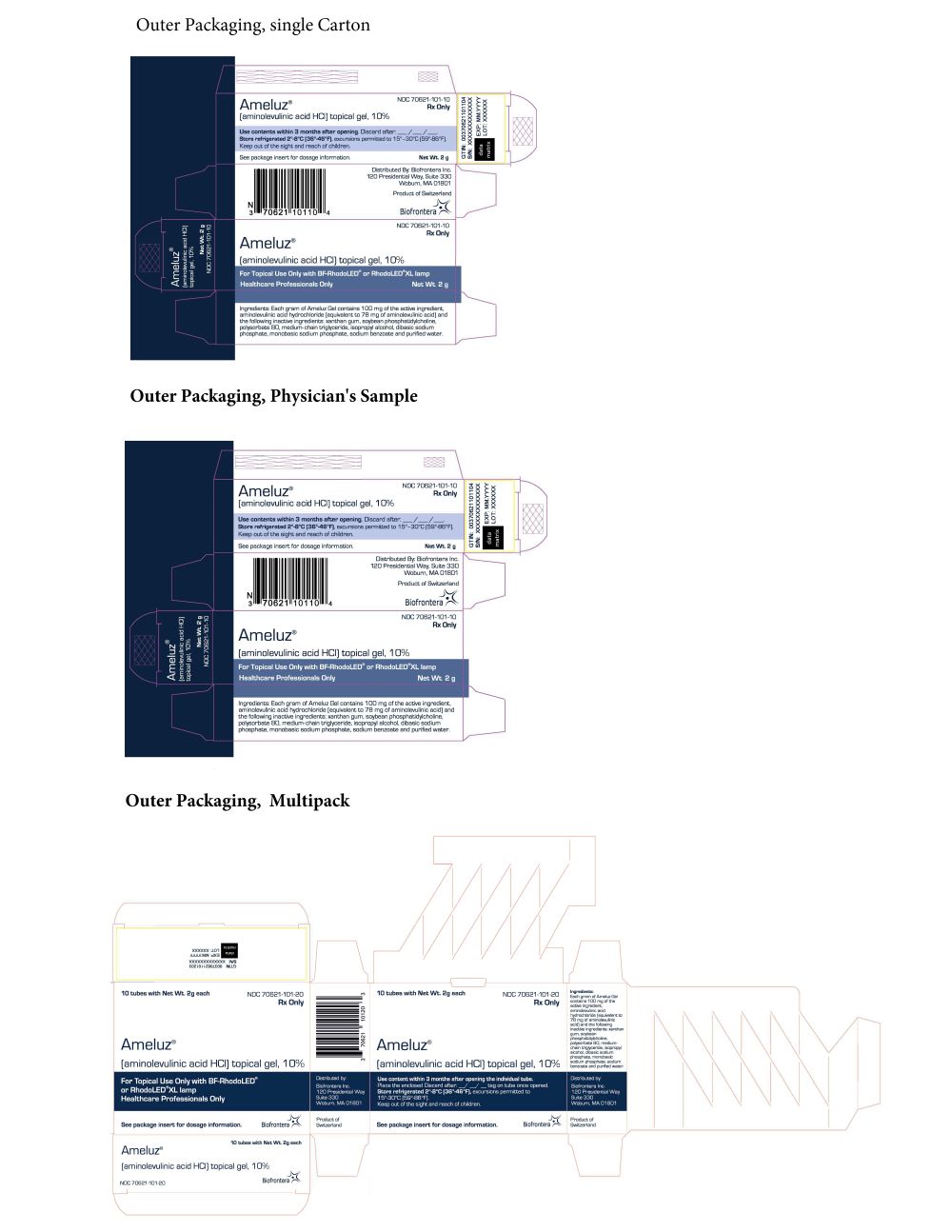
PRINCIPAL DISPLAY PANEL – OUTER PACKAGING Outer Packaging, single Carton NDC 70621-101-10 Ameluz ® Rx Only (aminolevulinic acid HCl) topical gel, 10% Use contents within 3 months after opening. Discard after: __/ __/ __. Store refrigerated 2°-8°C (36°-46°F), excursions permitted to 15°-30°C (59°-86°F).
Keep out of the sight and reach of children. See package insert for dosage information. Net Wt.
2 g Distributed By: Biofrontera Inc. 660 Main Street, 1st Floor Woburn, MA 01801 Product of Switzerland For Topical Use Only with BF-RhodoLED ® or RhodoLED ® XL lamp Healthcare Professionals Only Ingredients: Each gram of Ameluz Gel contains 100 mg of the active ingredient, aminolevulinic acid hydrochloride (equivalent to 78 mg of aminolevulinic acid) and the following inactive ingredients: xanthan gum, soybean phosphatidylcholine, polysorbate 80, medium-chain triglyceride, isopropyl alcohol, dibasic sodium phosphate, monobasic sodium phosphate, sodium benzoate and purified water Outer Packaging, Physician's Sample NDC 70621-101-30 Ameluz ® Rx Only Physician's Sample Not for sale (aminolevulinic acid HCl) topical gel, 10% Use contents within 3 months after opening.
Discard after: __/ __/ __. Store refrigerated 2°-8°C (36°-46°F), excursions permitted to 15°-30°C (59°-86°F). Keep out of the sight and reach of children.
See package insert for dosage information. Net Wt. 2 g Distributed By: Biofrontera Inc.
660 Main Street, 1st Floor Woburn, MA 01801 Product of Switzerland For Topical Use Only with BF-RhodoLED ® lamp or RhodoLED ® XL lamp Healthcare Professionals Only Ingredients: Each gram of Ameluz Gel contains 100 mg of the active ingredient, aminolevulinic acid hydrochloride (equivalent to 78 mg of aminolevulinic acid) and the following inactive ingredients: xanthan gum, soybean phosphatidylcholine, polysorbate 80, medium-chain triglyceride, isopropyl alcohol, dibasic sodium phosphate, monobasic sodium phosphate, sodium benzoate and purified water Outer Packaging, Multipack 10 tubes with Net Wt.
2g each NDC 70621-101-20 Ameluz ® Rx Only (aminolevulinic acid HCl) topical gel, 10% For Topical Use Only with BF-RhodoLED ® lamp or RhodoLED ® XL lamp Healthcare Professionals Only See package insert for dosage information. Distributed By: Biofrontera Inc. 660 Main Street, 1st Floor Woburn, MA 01801 Product of Switzerland 10 tubes with Net Wt.
2g each NDC 70621-101-20 Ameluz ® Rx Only (aminolevulinic acid HCl) topical gel, 10% Use contents within 3 months after opening the individual tube. Place the enclosed Discard after: __/ __/ __.tag on tube once opened. Store refrigerated 2°-8°C (36°-46°F), excursions permitted to 15°-30°C (59°-86°F).
Keep out of the sight and reach of children. See package insert for dosage information. Ingredients: Each gram of Ameluz Gel contains 100 mg of the active ingredient, aminolevulinic acid hydrochloride (equivalent to 78 mg of aminolevulinic acid) and the following inactive ingredients: xanthan gum, soybean phosphatidylcholine, polysorbate 80, medium-chain triglyceride, isopropyl alcohol, dibasic sodium phosphate, monobasic sodium phosphate, sodium benzoate and purified water Distributed By: Biofrontera Inc.
660 Main Street, 1st Floor Woburn, MA 01801 Product of Switzerland figure6
Medicaid utilization by pack size
Reported adverse events (FAERS)
Top reported reactions
Age at onset
Reporter sex
Serious outcomes
Where does this data come from?
About this NDC listing & data coverage
What data is (and isn’t) available for this NDC — tap to expand
| NDC identity (package / product / labeler codes) | ✓ Available |
| Labeler | ✓ Available |
| Product & package description | ✓ Available |
| Marketing category & status | ✓ Available |
| Active ingredient / dosage form / route | ✓ Available |
| FDA label (SPL via DailyMed) | ✓ Available |
| Package photos | ✓ Available |
| Inactive ingredients (structured) | ✓ Available |
| NADAC pharmacy acquisition price (CMS) | — Not published for this NDC CMS publishes NADAC only for NDCs reported in its retail-pharmacy survey. |
| Orange Book / therapeutic-equivalence data | ✓ Available |
| HCPCS J-code billing crosswalk | — Not published for this NDC Most self-administered / retail products have no J-code — that is normal. |
| Medicaid utilization (CMS SDUD) | — Not published for this NDC CMS reports utilization only for NDCs with Medicaid claims above its privacy threshold. |