
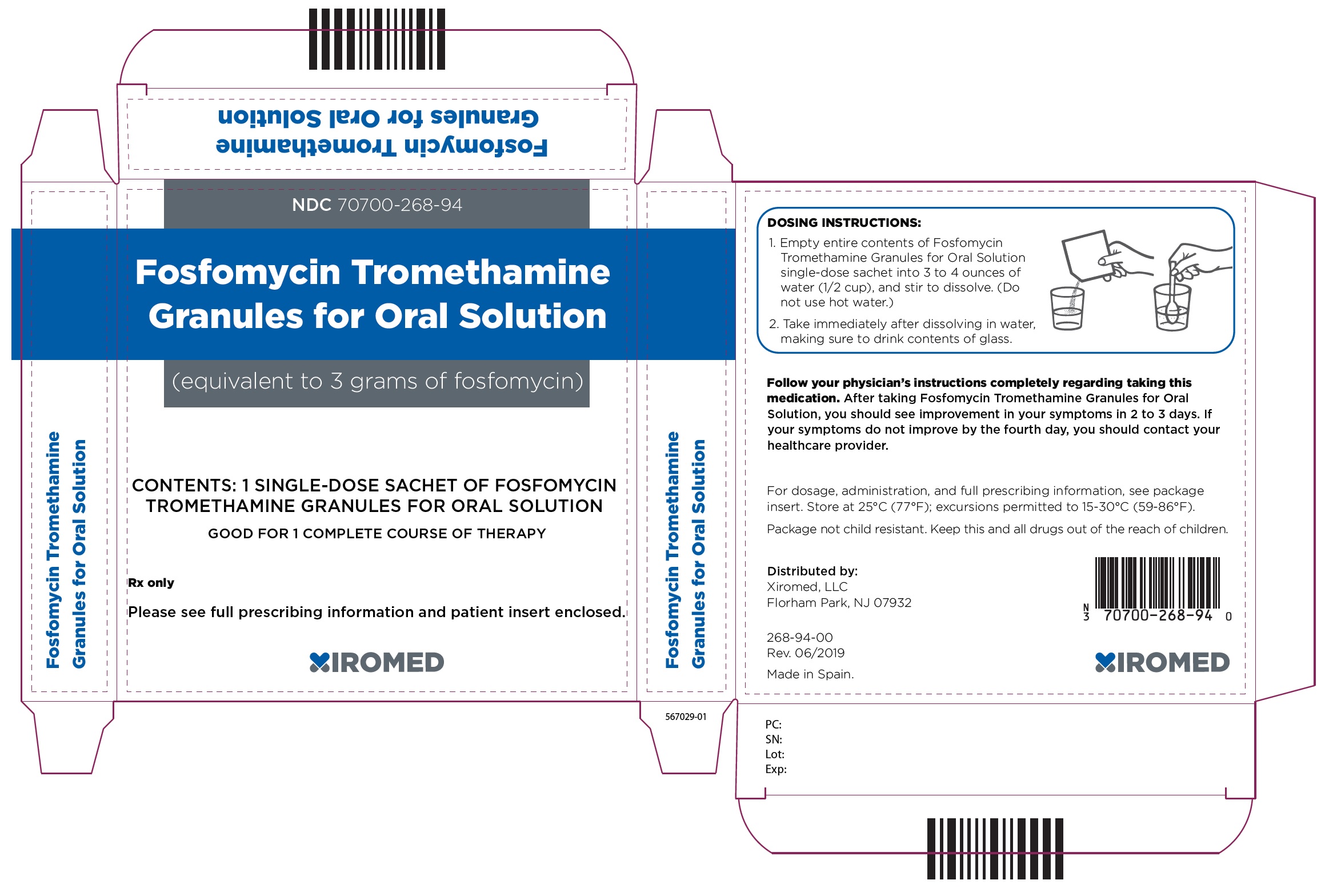
FOSFOMYCIN TROMETHAMINE Granules for Oral Solution 3 g Powder, 1 powder — NDC 70700-268-99 (Billing 70700-0268-99)
This is a package of 1 powder of FOSFOMYCIN TROMETHAMINE Granules for Oral Solution 3 g Powder from XIROMED LLC, marketed since Oct 2020 and currently FDA-listed; retail pharmacies pay about $26.22 per powder (NADAC).
NDC database record
One package, one record: these facts belong to NDC 70700-268-99 alone.
- Record
- FDA NDC Directory package listing · Human prescription drug
- Code segments
- 70700 labeler · 268 product · 99 package
- Package marketed since
- Oct 6, 2020
- Sample package
- No — commercial package
- Listing certified through
- Dec 31, 2026
- Billing quantity
- 1 EA per package
- Barcode (UPC)
- 0370700268940
- Medicaid fills, this package
- 35 prescriptions in the last four reported quarters
- FDA record last changed
- Jul 24, 2026
Identity & classification
Regulatory identifiers FDA, NLM and CMS codes for this package
Drug-database identifiers Medi-Span GPI and First Databank GCN / HICL / AHFS classification
- GSN (GCN sequence number): 021871
- GCN: 55389
- GPI-14 (Medi-Span): 16800015203020
- HICL (First Databank): 009005
- AHFS class code: 08:36.00.00
- RxCUI (RxNorm): 808917
Where does this data come from?
- FDA openFDA NDC Directory · synced Oct 8, 2026
- FDA label on DailyMed · label index refreshed Oct 8, 2026
- RxNorm (NLM RxNav) · catalog refreshed Oct 1, 2026
- Medi-Span GPI (licensed)
- First Databank (licensed) · refreshed Oct 8, 2026
RxNorm drug class
This medicine belongs to the Other antibacterials class.
Where does this data come from?
- RxClass (NLM) · catalog refreshed Oct 1, 2026
Clinical
What are antibiotics? Antibiotics are medicines that fight bacterial infections in people and animals. They work by killing the bacteria or by making it hard for the bacteria to grow and multiply. Antibiotics can be taken in different ways: Orally (by mouth). This could be pills, capsules, or liquids. Topically. This might be a cream, spray, or ointment that you put on your skin. It could also be eye ointment, eye drops, or ear drops. Through an injection or intravenously (IV). This is usually for more serious infections. What do antibiotics treat? Antibiotics only treat certain bacterial i...
Read the full MedlinePlus article ↗- It treats urinary tract infections. The oral version is for uncomplicated bladder infections in women. The IV version, Contepo, is for adults with complicated urinary tract infecti...
- Pour the whole sachet into about half a cup of cool water, stir and drink it right away. Never take the granules dry or mix them with hot water. You can take it with or without foo...
- Nausea, vomiting, diarrhea and headache are the common ones. With IV Contepo, blood tests can also show changes in electrolytes, liver enzymes and white blood cells, so your team w...
- Call for a rash, hives, swelling or trouble breathing, or for severe or lasting diarrhea, which can appear even weeks later. Also call if your symptoms do not clear up or return af...
Patient education
Supplement & herbal interactions
Where does this data come from?
- MedlinePlus (NLM) · refreshed Oct 8, 2026
- FDA label on DailyMed · label index refreshed Oct 8, 2026
Ask a licensed pharmacist directly — free, answered by our team.
Pricing
A drug doesn't have one price. Each row is a different public payment system, and none is what you'd pay at the counter — that depends on your insurance. The ⓘ on each row explains what it measures.
| Price system | Per ea | Per package |
|---|---|---|
| Retail pharmacies payNADAC · weekly | $26.220 | $26.22 / 1 powder |
| Medicaid paysCMS SDUD · 12 mo | $41.25 | $41.25 / 1 powder |
| Medicare drug plans payPart D · Q2 2026 | $53.76 | $53.76 / 1 powder |
Where does this data come from?
- CMS NADAC weekly file · file of Oct 7, 2026
- CMS ASP pricing files · refreshed Sep 20, 2026
- CMS Medicaid State Drug Utilization Data · through Q1 2026
- CMS Part D plan pricing files · refreshed Sep 24, 2026
- VA National Acquisition Center price file
Packaging — all sizes for this product
| Package NDC | Description | Per unit | Per pack | Marketing start | Marketing end | Status |
|---|---|---|---|---|---|---|
| 70700-0268-94 70700-268-94 Main listing | 1 DOSE PACK in 1 CARTON / 1 POWDER in 1 DOSE PACK | $26.22 / ea | $26.22 | 2020-10-06 | — | Active |
| 70700-0268-99 You're viewing this | 1 POWDER in 1 PACKET | $26.22 / ea | $26.22 | 2020-10-06 | — | Active |
This pack effectively ties for the lowest per-ea cost of the 2 priced pack sizes ($26.22 NADAC).
Pack size FAQ
What quantity is in this package?
How does this package differ from NDC 70700-0268-94?
What NDC number is used to bill for this package of FOSFOMYCIN TROMETHAMINE Granules for Oral Solution 3 g Powder?
Prices are the latest CMS NADAC pharmacy acquisition cost per NDC; per-pack figures are per-unit × pack quantity, shown only when the pack is denominated in the same measure NADAC prices.
Therapeutic equivalents
| Product | Labeler | Pack | NADAC/unit | TE | Status | Price vs. this |
|---|---|---|---|---|---|---|
| Fosfomycin tromethamine 3 g 59651-0651-03 | Aurobindo | 1 granule | $26.220 | AA | Availability likely | — |
| Fosfomycin Tromethamine 3 g 60219-3955-01 | Amneal | 1 granule | $26.220 | AA | Availability likely | — |
| Fosfomycin Tromethamine 3 g 67877-0749-57 | Ascend | 1 granule | $26.220 | AA | Availability likely | — |
| Fosfomycin Tromethamine 3 g 68094-0064-20 | Precision | 1 granule | $26.220 | AA | Availability likely | — |
| Fosfomycin Tromethamine 3 g 69097-0579-67 | Cipla | 1 granule | $26.220 | AA | Availability likely | — |
| Fosfomycin Tromethamine 3 gthis 70700-0268-99 | XIROMED | 1 powder | $26.220 | AA | Availability likely | — |
| Fosfomycin Tromethamine 3 g 81033-0024-11 | Kesin | 1 granule | $26.220 | AA | Availability likely | — |
| Fosfomycin Tromethamine 3 g 50090-5826-00 | A-S | 1 dose | — | AA | FDA listed | — |
| Fosfomycin Tromethamine 3 g 50090-6130-00 | A-S | 1 granule | — | AA | FDA listed | — |
| Fosfomycin Tromethamine 3 g 73289-0067-01 | Aucta | 1 granule | — | AA | FDA listed | — |
Where does this data come from?
- FDA openFDA NDC Directory · synced Oct 8, 2026
- FDA Orange Book · refreshed Oct 3, 2026
- CMS NADAC weekly file · file of Oct 7, 2026
Availability & generic status
This product is an FDA-approved generic. Other versions of the same drug are listed under Therapeutic equivalents, least expensive first.
Where does this data come from?
- FDA Orange Book · refreshed Oct 3, 2026
Inactive Ingredients / Excipients
Inactive ingredients, also called excipients, are components of the drug product other than the active ingredient. They may include fillers, dyes, coatings, preservatives, flavors, or other formulation ingredients.
🧪 Avoiding an ingredient? See Fosfomycin inactive ingredients by manufacturer: every current product's list side by side, so you can ask your pharmacy for the version that does not list it.
💡 Tap an ingredient (hover on desktop) to see what it is and why it’s used.
-
UNII 5EVU04N5QU
A natural or synthetic colorant that gives the medicine an orange hue. It helps identify the medication and may improve appearance.
-
UNII FST467XS7D
Saccharin is an artificial sweetener derived from benzoic sulfinilanide. It's added to medicines to improve taste and make them easier to take, especially in liquid or chewable formulations.
-
UNII C151H8M554
A natural sugar derived from sugar cane or sugar beets. It's used as a sweetener, filler, and binder to improve taste, add bulk, and help hold tablet or capsule ingredients together.
-
UNII KH3E3096OO
A natural flavoring derived from tangerine fruit. It adds taste and aroma to make medicines more pleasant to take, especially in chewable tablets or liquids.
4 inactive ingredients listed in the exact product block matched to this NDC.
Where does this data come from?
ingredient classCode="IACT" elements from the exact product block matched by this NDC. Label-section narrative from DailyMed / the openFDA label index is shown separately when available.- FDA label on DailyMed · label index refreshed Oct 8, 2026
- FDA openFDA NDC Directory · synced Oct 8, 2026
Inactive ingredient FAQ
Are inactive ingredients the same for every manufacturer?
Why might an inactive ingredient be missing?
Can inactive ingredients matter?
Manufacturer & labeler
More NDCs from XIROMED LLC labeler code 70700
- LOJAIMIESS Levonorgestrel and Ethinyl Estradiol and Ethinyl Estradiol tablets Kit NDC 70700-207-93
- INTROVALE Levonorgestrel and Ethinyl Estradiol tablets Kit NDC 70700-208-88
- Ephedrine Sulfate 50 mg/mL Injection NDC 70700-249-23
- Lansoprazole 15 mg Capsule, Delayed Release NDC 70700-262-30
- Lansoprazole 30 mg Capsule, Delayed Release NDC 70700-263-05
- GLYCOPYRROLATE 1ML .2 mg/mL Injection NDC 70700-264-22
- Deferasirox 90 mg Tablet NDC 70700-269-30
- Deferasirox 180 mg Tablet NDC 70700-270-30
- Deferasirox 360 mg Tablet NDC 70700-271-30
- Ramelteon 8 mg Tablet, Film Coated NDC 70700-272-05
- Estradiol valerate 10 mg/mL Injection NDC 70700-273-22
- Estradiol valerate 20 mg/mL Injection NDC 70700-274-22
Where does this data come from?
- FDA openFDA NDC Directory · synced Oct 8, 2026
- Drugs@FDA
Full prescribing information FDA SPL
🎯 Indications and Usage ▾
INDICATIONS AND USAGE Fosfomycin Tromethamine is indicated only for the treatment of uncomplicated urinary tract infections (acute cystitis) in women due to susceptible strains of Escherichia coli and Enterococcus faecalis . Fosfomycin Tromethamine is not indicated for the treatment of pyelonephritis or perinephric abscess. If persistence or reappearance of bacteriuria occurs after treatment with Fosfomycin Tromethamine, other therapeutic agents should be selected.
(See PRECAUTIONS and CLINICAL STUDIES sections.)
⏱️ Dosage and Administration ▾
DOSAGE AND ADMINISTRATION The recommended dosage for women 18 years of age and older for uncomplicated urinary tract infection (acute cystitis) is one sachet of Fosfomycin Tromethamine. Fosfomycin Tromethamine may be taken with or without food. Fosfomycin Tromethamine should not be taken in its dry form. Always mix Fosfomycin Tromethamine with water before ingesting. (See PREPARATION section.)
⛔ Contraindications ▾
CONTRAINDICATIONS Fosfomycin Tromethamine is contraindicated in patients with known hypersensitivity to the drug.
⚠️ Warnings ▾
WARNINGS Clostridium difficile associated diarrhea (CDAD) has been reported with use of nearly all antibacterial agents, including Fosfomycin Tromethamine, and may range in severity from mild diarrhea to fatal colitis. Treatment with antibacterial agents alters the normal flora of the colon leading to overgrowth of C. difficile . C. difficile produces toxins A and B which contribute to the development of CDAD.
Hypertoxin producing strains of C. difficile cause increased morbidity and mortality, as these infections can be refractory to antimicrobial therapy and may require colectomy. CDAD must be considered in all patients who present with diarrhea following antibiotic use. Careful medical history is necessary since CDAD has been reported to occur over two months after the administration of antibacterial agents.
If CDAD is suspected or confirmed, ongoing antibiotic use not directed against C. difficile may need to be discontinued. Appropriate fluid and electrolyte management, protein supplementation, antibiotic treatment of C. difficile , and surgical evaluation should be instituted as clinically indicated.
🤒 Adverse Reactions ▾
ADVERSE REACTIONS Clinical Trials: In clinical studies, drug related adverse events which were reported in greater than 1% of the fosfomycin-treated study population are listed below: Drug-Related Adverse Events (%) in Fosfomycin and Comparator Populations Adverse Events Fosfomycin N=1233 Nitrofurantoin N=374 Trimethoprim/ sulfamethoxazole N=428 Ciprofoxacin N=455 Diarrhea 9.0 6.4 2.3
3.1Vaginitis 5.5 5.3 4.7
6.3Nausea 4.1 7.2 8.6
3.4Headache 3.9 5.9 5.4
3.4Dizziness 1.3 1.9 2.3
2.2Asthenia 1.1 0.3 0.5
0.0Dyspepsia 1.1 2.1 0.7
1.1In clinical trials, the most frequently reported adverse events occurring in > 1% of the study population regardless of drug relationship were: diarrhea 10.4%, headache 10.3%, vaginitis 7.6%, nausea 5.2%, rhinitis 4.5%, back pain 3.0%, dysmenorrheal 2.6%, pharyngitis 2.5%, dizziness 2.3%, abdominal pain 2.2%, pain 2.2%, dyspepsia 1.8%, asthenia 1.7%, and rash 1.4%. The following adverse events occurred in clinical trials at a rate of less than 1%, regardless of drug relationship: abnormal stools, anorexia, constipation, dry mouth, dysuria, ear disorder, fever, flatulence, flu syndrome, hematuria, infection, insomnia, lymphadenopathy, menstrual disorder, migraine, myalgia, nervousness, paresthesia, pruritus, SGPT increased, skin disorder, somnolence, and vomiting.
One patient developed unilateral optic neuritis, an event considered possibly related to Fosfomycin Tromethamine therapy. Post-marketing Experience: Serious adverse events from the marketing experience with Fosfomycin Tromethamine outside of the United States have been rarely reported and include: angioedema, aplastic anemia, asthma (exacerbation), cholestatic jaundice, hepatic necrosis, and toxic megacolon. Although causality has not been established, during post marketing surveillance, the following events have occurred in patients prescribed Fosfomycin Tromethamine: anaphylaxis and hearing loss.
Laboratory Changes: Significant laboratory changes reported in U.S. clinical trials of Fosfomycin Tromethamine without regard to drug relationship include: increased eosinophil count, increased or decreased WBC count, increased bilirubin, increased SGPT, increased SGOT, increased alkaline phosphatase, decreased hematocrit, decreased hemoglobin, increased and decreased platelet count. The changes were generally transient and were not clinically significant.
🔄 Drug Interactions ▾
Drug Interactions Metoclopramide: When coadministered with Fosfomycin Tromethamine, metoclopramide, a drug which increases gastrointestinal motility, lowers the serum concentration and urinary excretion of fosfomycin. Other drugs that increase gastrointestinal motility may produce similar effects. Cimetidine: Cimetidine does not affect the pharmacokinetics of fosfomycin when coadministered with Fosfomycin Tromethamine.
🤰 Pregnancy ▾
Pregnancy: Teratogenic Effects When administered intramuscularly as the sodium salt at a dose of 1 gram to pregnant women, fosfomycin crosses the placental barrier. Fosfomycin Tromethamine crosses the placental barrier of rats; it does not produce teratogenic effects in pregnant rats at dosages as high as 1000 mg/kg/day (approximately 9 and 1.4 times the human dose based on body weight and mg/m 2 , respectively). When administered to pregnant female rabbits at dosages as high as 1000 mg/kg/day (approximately 9 and 2.7 times the human dose based on body weight and mg/m 2 , respectively), fetotoxicities were observed.
However, these toxicities were seen at maternally toxic doses and were considered to be due to the sensitivity of the rabbit to changes in the intestinal microflora resulting from the antibiotic administration. There are, however, no adequate and well-controlled studies in pregnant women. Because animal reproduction studies are not always predictive of human response, this drug should be used during pregnancy only if clearly needed.
🧒 Pediatric Use ▾
Pediatric Use Safety and effectiveness in children age 12 years and under have not been established in adequate and well-controlled studies.
🧓 Geriatric Use ▾
Geriatric Use Clinical studies of Fosfomycin Tromethamine did not include sufficient numbers of subjects aged 65 and over to determine whether they respond differently from younger subjects. Other reported clinical experience has not identified differences in responses between the elderly and younger patients. In general, dose selection for an elderly patient should be cautious, usually starting at the low end of the dosing range, reflecting the greater frequency of decreased hepatic, renal, or cardiac function, and of concomitant disease or other drug therapy.
🆘 Overdosage ▾
OVERDOSAGE In acute toxicology studies, oral administration of high doses of Fosfomycin Tromethamine up to 5 g/kg were well-tolerated in mice and rats, produced transient and minor incidences of watery stools in rabbits, and produced diarrhea with anorexia in dogs occurring 2-3 days after single dose administration. These doses represent 50-125 times the human therapeutic dose. The following events have been observed in patients who have taken Fosfomycin Tromethamine in overdose: vestibular loss, impaired hearing, metallic taste, and general decline in taste perception.
In the event of overdosage, treatment should be symptomatic and supportive.
🧬 Clinical Pharmacology ▾
CLINICAL PHARMACOLOGY Absorption: Fosfomycin tromethamine is rapidly absorbed following oral administration and converted to the free acid, fosfomycin. Absolute oral bioavailability under fasting conditions is 37%. After a single 3-gram dose of Fosfomycin Tromethamine, the mean (± 1 SD) maximum serum concentration (C max ) achieved was 26.1 (± 9.1) mcg/mL within 2 hours.
The oral bioavailability of fosfomycin is reduced to 30% under fed conditions. Following a single 3-gram oral dose of Fosfomycin Tromethamine with a high-fat meal, the mean C max achieved was 17.6 (± 4.4) mcg/mL within 4 hours. Cimetidine does not affect the pharmacokinetics of fosfomycin when coadministered with Fosfomycin Tromethamine.
Metoclopramide lowers the serum concentrations and urinary excretion of fosfomycin when coadministered with Fosfomycin Tromethamine. (See PRECAUTIONS, Drug Interactions .) Distribution: The mean apparent steady-state volume of distribution (V ss ) is 136.1 (±44.1) L following oral administration of Fosfomycin Tromethamine. Fosfomycin is not bound to plasma proteins.
Fosfomycin is distributed to the kidneys, bladder wall, prostate, and seminal vesicles. Following a 50 mg/kg dose of fosfomycin to patients undergoing urological surgery for bladder carcinoma, the mean concentration of fosfomycin in the bladder, taken at a distance from the neoplastic site, was 18.0 mcg per gram of tissue at 3 hours after dosing. Fosfomycin has been shown to cross the placental barrier in animals and man.
Excretion: Fosfomycin is excreted unchanged in both urine and feces. Following oral administration of Fosfomycin Tromethamine, the mean total body clearance (CL TB ) and mean renal clearance (CL R ) of fosfomycin were 16.9 (± 3.5) L/hr and 6.3 (± 1.7) L/hr, respectively. Approximately 38% of a 3-gram dose of Fosfomycin Tromethamine is recovered from urine, and 18% is recovered from feces.
Following intravenous administration, the mean CL TB and mean CL R of fosfomycin were 6.1 (±1.0) L/hr and 5.5 (± 1.2) L/hr, respectively. A mean urine fosfomycin concentration of 706 (± 466) mcg/mL was attained within 2-4 hours after a single oral 3-gm dose of Fosfomycin Tromethamine under fasting conditions. The mean urinary concentration of fosfomycin was 10 mcg/mL in samples collected 72-84 hours following a single oral dose of Fosfomycin Tromethamine.
Following a 3-gram dose of Fosfomycin Tromethamine administered with a high fat meal, a mean urine fosfomycin concentration of 537 (± 252) mcg/mL was attained within 6-8 hours. Although the rate of urinary excretion of fosfomycin was reduced under fed conditions, the cumulative amount of fosfomycin excreted in the urine was the same, 1118 (± 201) mg (fed) vs. 1140 mg (± 238) (fasting).
Further, urinary concentrations equal to or greater than 100 mcg/mL were maintained for the same duration, 26 hours, indicating that Fosfomycin Tromethamine can be taken without regard to food. Following oral administration of Fosfomycin Tromethamine, the mean half-life for elimination (t 1/2 ) is 5.7 (± 2.8) hours. Special Populations: Geriatric: Based on limited data regarding 24-hour urinary drug concentrations, no differences in urinary excretion of fosfomycin have been observed in elderly subjects.
No dosage adjustment is necessary in the elderly. Gender: There are no gender differences in the pharmacokinetics of fosfomycin. Renal Insufficiency: In 5 anuric patients undergoing hemodialysis, the t 1/2 of fosfomycin during hemodialysis was 40 hours.
In patients with varying degrees of renal impairment (creatinine clearances varying from 54 mL/min to 7 mL/min), the t 1/2 of fosfomycin increased from 11 hours to 50 hours. The percent of fosfomycin recovered in urine decreased from 32% to 11% indicating that renal impairment significantly decreases the excretion of fosfomycin. Microbiology Fosfomycin (the active component of fosfomycin tromethamine) has in vitro activity against a broad range of gram-positive and gram-negative aer… [Excerpted — this section continues on DailyMed.]
📦 How Supplied / Storage and Handling ▾
HOW SUPPLIED Fosfomycin Tromethamine Granules for Oral Solution is available as a single-dose sachet containing the equivalent of 3 grams of fosfomycin. NDC Single-dose sachet 70700-268-99 One unit carton 70700-268-94 Store at 25°C (77°F); excursions permitted to 15-30°C (59-86°F). Keep this and all drugs out of the reach of children.
📋 Description ▾
DESCRIPTION Fosfomycin Tromethamine Granules for Oral Solution contains fosfomycin tromethamine, a synthetic, broad spectrum, bactericidal antibiotic for oral administration. It is available as a single-dose sachet which contains white granules consisting of 5.631 grams of fosfomycin tromethamine (equivalent to 3 grams of fosfomycin), and the following inactive ingredients: mandarin flavor, orange flavor, saccharin, and sucrose.The contents of the sachet must be dissolved in water. Fosfomycin tromethamine, a phosphonic acid derivative, is available as (1R,2S)-(1,2-epoxypropyl)phosphonic acid, compound with 2-amino-2-(hydroxymethyl)-1,3-propanediol (1:1).
It is a white granular compound with a molecular weight of 259.2. Its empirical formula is C 3 H 7 O 4 P.C 4 H 11 NO 3 , and its chemical structure is as follows: The chemical structure for Fosfomycin Tromethamine Granules for Oral Solution contains fosfomycin tromethamine, a synthetic, broad spectrum, bactericidal antibiotic for oral administration. It is available as a single-dose sachet which contains white granules consisting of 5.631 grams of fosfomycin tromethamine (equivalent to 3 grams of fosfomycin), and the following inactive ingredients: mandarin flavor, orange flavor, saccharin, and sucrose.
The contents of the sachet must be dissolved in water. Fosfomycin tromethamine, a phosphonic acid derivative, is available as (1R,2S)-(1,2-epoxypropyl)phosphonic acid, compound with 2-amino-2-(hydroxymethyl)-1,3-propanediol (1:1). It is a white granular compound with a molecular weight of 259.2.
💬 Information for Patients ▾
Information for Patients Patients should be informed: That Fosfomycin Tromethamine can be taken with or without food. That their symptoms should improve in two to three days after taking Fosfomycin Tromethamine; if not improved, the patient should contact her health care provider. Diarrhea is a common problem caused by antibiotics which usually ends when the antibiotic is discontinued.
Sometimes after starting treatment with antibiotics, patients can develop watery and bloody stools (with or without stomach cramps and fever) even as late as two or more months after having taken the last dose of the antibiotic. If this occurs, patients should contact their physician as soon as possible.
⚠️ Precautions ▾
PRECAUTIONS General Do not use more than one single dose of Fosfomycin Tromethamine to treat a single episode of acute cystitis. Repeated daily doses of Fosfomycin Tromethamine did not improve the clinical success or microbiological eradication rates compared to single dose therapy, but did increase the incidence of adverse events. Urine specimens for culture and susceptibility testing should be obtained before and after completion of therapy.
Information for Patients Patients should be informed: That Fosfomycin Tromethamine can be taken with or without food. That their symptoms should improve in two to three days after taking Fosfomycin Tromethamine; if not improved, the patient should contact her health care provider. Diarrhea is a common problem caused by antibiotics which usually ends when the antibiotic is discontinued.
Sometimes after starting treatment with antibiotics, patients can develop watery and bloody stools (with or without stomach cramps and fever) even as late as two or more months after having taken the last dose of the antibiotic. If this occurs, patients should contact their physician as soon as possible. Drug Interactions Metoclopramide: When coadministered with Fosfomycin Tromethamine, metoclopramide, a drug which increases gastrointestinal motility, lowers the serum concentration and urinary excretion of fosfomycin.
Other drugs that increase gastrointestinal motility may produce similar effects. Cimetidine: Cimetidine does not affect the pharmacokinetics of fosfomycin when coadministered with Fosfomycin Tromethamine. Carcinogenesis, Mutagenesis, Impairment of Fertility Long term carcinogenicity studies in rodents have not been conducted because Fosfomycin Tromethamine is intended for single dose treatment in humans.
Fosfomycin Tromethamine was not mutagenic or genotoxic in the in vitro Ames’ bacterial reversion test, in cultured human lymphocytes, in Chinese hamster V79 cells, and the in vivo mouse micronucleus assay. Fosfomycin Tromethamine did not affect fertility or reproductive performance in male and female rats. Pregnancy: Teratogenic Effects When administered intramuscularly as the sodium salt at a dose of 1 gram to pregnant women, fosfomycin crosses the placental barrier.
Fosfomycin Tromethamine crosses the placental barrier of rats; it does not produce teratogenic effects in pregnant rats at dosages as high as 1000 mg/kg/day (approximately 9 and 1.4 times the human dose based on body weight and mg/m 2 , respectively). When administered to pregnant female rabbits at dosages as high as 1000 mg/kg/day (approximately 9 and 2.7 times the human dose based on body weight and mg/m 2 , respectively), fetotoxicities were observed. However, these toxicities were seen at maternally toxic doses and were considered to be due to the sensitivity of the rabbit to changes in the intestinal microflora resulting from the antibiotic administration.
There are, however, no adequate and well-controlled studies in pregnant women. Because animal reproduction studies are not always predictive of human response, this drug should be used during pregnancy only if clearly needed. Nursing Mothers It is not known whether fosfomycin tromethamine is excreted in human milk.
Because many drugs are excreted in human milk and because of the potential for serious adverse reactions in nursing infants from Fosfomycin Tromethamine, a decision should be made whether to discontinue nursing or to not administer the drug, taking into account the importance of the drug to the mother. Pediatric Use Safety and effectiveness in children age 12 years and under have not been established in adequate and well-controlled studies. Geriatric Use Clinical studies of Fosfomycin Tromethamine did not include sufficient numbers of subjects aged 65 and over to determine whether they respond differently from younger subjects.
Other reported clinical experience has not identified differences in responses between the elderly and younger patients. In general, do… [Excerpted — this section continues on DailyMed.]
🍼 Nursing Mothers ▾
Nursing Mothers It is not known whether fosfomycin tromethamine is excreted in human milk. Because many drugs are excreted in human milk and because of the potential for serious adverse reactions in nursing infants from Fosfomycin Tromethamine, a decision should be made whether to discontinue nursing or to not administer the drug, taking into account the importance of the drug to the mother.
🔬 Clinical Studies ▾
Clinical Trials: In clinical studies, drug related adverse events which were reported in greater than 1% of the fosfomycin-treated study population are listed below: Drug-Related Adverse Events (%) in Fosfomycin and Comparator Populations Adverse Events Fosfomycin N=1233 Nitrofurantoin N=374 Trimethoprim/ sulfamethoxazole N=428 Ciprofoxacin N=455 Diarrhea 9.0 6.4 2.3
3.1Vaginitis 5.5 5.3 4.7
6.3Nausea 4.1 7.2 8.6
3.4Headache 3.9 5.9 5.4
3.4Dizziness 1.3 1.9 2.3
2.2Asthenia 1.1 0.3 0.5
0.0Dyspepsia 1.1 2.1 0.7
1.1In clinical trials, the most frequently reported adverse events occurring in > 1% of the study population regardless of drug relationship were: diarrhea 10.4%, headache 10.3%, vaginitis 7.6%, nausea 5.2%, rhinitis 4.5%, back pain 3.0%, dysmenorrheal 2.6%, pharyngitis 2.5%, dizziness 2.3%, abdominal pain 2.2%, pain 2.2%, dyspepsia 1.8%, asthenia 1.7%, and rash 1.4%. The following adverse events occurred in clinical trials at a rate of less than 1%, regardless of drug relationship: abnormal stools, anorexia, constipation, dry mouth, dysuria, ear disorder, fever, flatulence, flu syndrome, hematuria, infection, insomnia, lymphadenopathy, menstrual disorder, migraine, myalgia, nervousness, paresthesia, pruritus, SGPT increased, skin disorder, somnolence, and vomiting.
One patient developed unilateral optic neuritis, an event considered possibly related to Fosfomycin Tromethamine therapy.
CLINICAL STUDIES In controlled, double-blind studies of acute cystitis performed in the United States, a single-dose of Fosfomycin Tromethamine was compared to three other oral antibiotics (See table below). The study population consisted of patients with symptoms and signs of acute cystitis of less than 4 days duration, no manifestations of upper tract infection (e.g., flank pain, chills, fever), no history of recurrent urinary tract infections (20% of patients in the clinical studies had a prior episode of acute cystitis within the preceding year), no known structural abnormalities, no clinical or laboratory evidence of hepatic dysfunction, and no known or suspected CNS disorders, such as epilepsy, or other factors which would predispose to seizures.
In these studies, the following clinical success (resolution of symptoms) and microbiologic eradication rates were obtained. Treatment Arm Treatment Duration (days) Microbiologic Eradication Rate Clinical Success Rate Outcome (based on difference in microbiologic eradication rates 5-11 days post therapy) 5-11 days post therapy Study day 12-21 Fosfomycin 1 630/771 (82%) 591/771 (77%) 542/771 (70%) Ciprofloxacin 7 219/222 (98%) 219/222 (98%) 213/222 (96%) Fosfomycin inferior to ciprofloxacin Trimethoprim/ sulfamethoxazole 10 194/197 (98%) 194/197 (98%) 186/197 (94%) Fosfomycin inferior to trimethoprim/ sulfamethoxazole Nitrofurantoin 7 180/238 (76%) 180/238 (76%) 183/238 (77%) Fosfomycin equivalent to nitrofurantoin Pathogen Fosfomycin 3 gram single dose Ciprofloxacin 250 mg bid x 7 days Trimethoprim/ sulfamethoxazole 1 6 0 mg/800 mg bid x 10 days Nitrofurantoin 100 mg bid x 7 days E. coli 509/644 (79%) 184/187 (98%) 171/174 (98%) 146/187 (78%) E. faecalis 10/10 (100%) 0/0 4/4 (100%) 1/2 (50%)
📄 Carcinogenesis, Mutagenesis, Impairment of Fertility ▾
Carcinogenesis, Mutagenesis, Impairment of Fertility Long term carcinogenicity studies in rodents have not been conducted because Fosfomycin Tromethamine is intended for single dose treatment in humans. Fosfomycin Tromethamine was not mutagenic or genotoxic in the in vitro Ames’ bacterial reversion test, in cultured human lymphocytes, in Chinese hamster V79 cells, and the in vivo mouse micronucleus assay. Fosfomycin Tromethamine did not affect fertility or reproductive performance in male and female rats.
📄 Package Label / Principal Display Panel ▾
PRINCIPAL DISPLAY PANEL NDC 70700-268-94 Fosfomycin Tromethamine Granules for Oral Solution (equivalent to 3 grams of fosfomycin)