
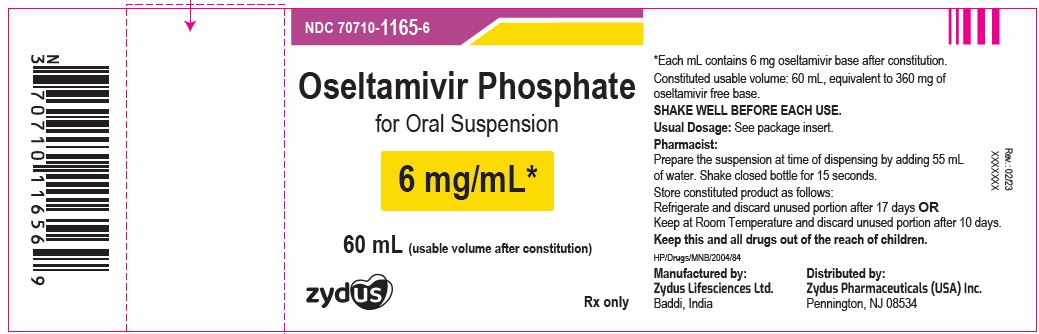
OSELTAMIVIR PHOSPHATE 6 mg/mL For Suspension — NDC 70710-1165-6 (Billing 70710-1165-06)
This is a package of OSELTAMIVIR PHOSPHATE 6 mg/mL For Suspension from Zydus Pharmaceuticals USA Inc., marketed since Sep 2017 and currently FDA-listed; retail pharmacies pay about $0.1496 per mL (NADAC). It is this product's only package size.
NDC database record
One package, one record: these facts belong to NDC 70710-1165-6 alone.
- Record
- FDA NDC Directory package listing · Human prescription drug
- Code segments
- 70710 labeler · 1165 product · 6 package
- Package marketed since
- Sep 14, 2017
- Sample package
- No — commercial package
- Listing certified through
- Dec 31, 2026
- Barcode (UPC)
- 0370710116569
- Medicaid fills, this package
- 96,139 prescriptions in the last four reported quarters
- FDA record last changed
- Jul 24, 2026
Identity & classification
Regulatory identifiers FDA, NLM and CMS codes for this package
Drug-database identifiers Medi-Span GPI and First Databank GCN / HICL / AHFS classification
- GSN (GCN sequence number): 067561
- GCN: 29729
- GPI-14 (Medi-Span): 12504060201910
- HICL (First Databank): 020607
- AHFS class code: 08:18.28.00
- RxCUI (RxNorm): 1115698
Where does this data come from?
- FDA openFDA NDC Directory · synced Oct 8, 2026
- FDA label on DailyMed · label index refreshed Oct 8, 2026
- RxNorm (NLM RxNav) · catalog refreshed Oct 8, 2026
- Medi-Span GPI (licensed)
- First Databank (licensed) · refreshed Oct 8, 2026
RxNorm drug class
This medicine belongs to the Neuraminidase Inhibitor class.
Where does this data come from?
- RxClass (NLM) · catalog refreshed Oct 8, 2026
Clinical
- It treats influenza A and B when started within 48 hours of the first symptoms. It can also help prevent flu if you have been exposed. It does not replace the yearly flu vaccine.
- You take it by mouth, as a capsule or liquid. Treatment is usually twice a day for 5 days, and prevention is usually once a day. Food doesn't change how much is absorbed, but follo...
- Nausea, vomiting and headache are the most common. They are usually mild and often pass in a day or two. If you get a rash, swelling, trouble breathing, or confusion or odd behavio...
- The flu shot is fine at any time. Avoid the nasal spray vaccine within 2 weeks before or 48 hours after oseltamivir, unless your doctor says otherwise, since it may not work as wel...
Patient education
Supplement & herbal interactions
Some supplements/herbs that may interact with Oseltamivir Phosphate — tap one for details:
Where does this data come from?
- MedlinePlus (NLM) · refreshed Oct 8, 2026
- FDA label on DailyMed · label index refreshed Oct 8, 2026
Ask a licensed pharmacist directly — free, answered by our team.
Pricing
A drug doesn't have one price. Each row is a different public payment system, and none is what you'd pay at the counter — that depends on your insurance. The ⓘ on each row explains what it measures.
| Price system | Per mL | Per package |
|---|---|---|
| Retail pharmacies payNADAC · weekly | $0.150 | $8.98 / 60 ml |
| Medicaid paysCMS SDUD · 12 mo | $0.2510 | $15.06 / 60 ml |
| Medicare drug plans payPart D · Q2 2026 | $0.2986 | $17.92 / 60 ml |
Where does this data come from?
- CMS NADAC weekly file · file of Oct 7, 2026
- CMS ASP pricing files · refreshed Sep 20, 2026
- CMS Medicaid State Drug Utilization Data · through Q1 2026
- CMS Part D plan pricing files · refreshed Sep 24, 2026
- VA National Acquisition Center price file
Packaging — all sizes for this product
| Package NDC | Description | Marketing start | Marketing end | Status |
|---|---|---|---|---|
| 70710-1165-06 You're viewing this Main listing | 1 BOTTLE in 1 CARTON / 60 mL in 1 BOTTLE | 2017-09-14 | — | Active |
Therapeutic equivalents
| Product | Labeler | Pack | NADAC/unit | TE | Status | Price vs. this |
|---|---|---|---|---|---|---|
| Oseltamivir Phosphate 6 mg/mL 00093-8180-64 | Teva | 1 bottle | $0.150 | AB | Availability likely | — |
| Oseltamivir Phosphate 6 mg/mL 00527-5137-62 | Lannett | 1 bottle | $0.150 | AB | Availability likely | — |
| Oseltamivir phosphate 6 mg/mL 27241-0139-09 | Ajanta | 1 pouch | $0.150 | AB | Availability likely | — |
| Oseltamivir Phosphate for Oral Suspension 6 mg/mL 47781-0384-26 | Alvogen | 1 bottle | $0.150 | AB | Availability likely | — |
| Oseltamivir Phosphate 6 mg/mL 59651-0597-60 | Aurobindo | 1 bottle | $0.150 | AB | Availability likely | — |
| Oseltamivir Phosphate 6 mg/mL 68180-0678-01 | Lupin | 1 bottle | $0.150 | AB | Availability likely | — |
| Oseltamivir Phosphate 6 mg/mL 69238-1273-06 | Amneal | 1 bottle | $0.150 | — | Availability likely | — |
| Oseltamivir Phosphate 6 mg/mLthis 70710-1165-06 | Zydus | 1 bottle | $0.150 | AB | Availability likely | — |
| oseltamivir phosphate 6 mg/mL 72205-0060-78 | Novadoz | 1 bottle | $0.150 | AB | Availability likely | — |
| Oseltamivir Phosphate for Oral Suspension 6 mg/mL 72516-0029-01 | Oryza | 1 bottle | $0.150 | AB | Availability likely | — |
| Oseltamivir Phosphate 6 mg/mL 76282-0739-52 | Exelan | 1 bottle | $0.150 | AB | Availability likely | — |
| Oseltamivir Phosphate 6 mg/mL 69097-0904-43 | Cipla | 1 bottle | $0.152 | AB | FDA listed | +1% |
| Oseltamivir Phosphate 6 mg/mL 64380-0879-75 | Strides | 1 bottle | $0.158 | AB | Availability likely | +5% |
| Tamiflu 6 mg/mL 00004-0822-05 | Genentech, | 1 bottle | $2.433 | AB | Availability likely | +1526% |
| Oseltamivir phosphate 6 mg/mL 31722-0108-60 | Camber | 360 ml | — | AB | FDA listed | — |
| Oseltamivir Phosphate 6 mg/mL 42291-0567-60 | AvKARE | 1 bottle | — | — | FDA listed | — |
| Oseltamivir Phosphate for Oral Suspension 6 mg/mL 42806-0363-13 | EPIC | 1 bottle | — | AB | FDA listed | — |
| Oseltamivir Phosphate 6 mg/mL 50090-4188-00 | A-S | 1 bottle | — | AB | FDA listed | — |
| Oseltamivir Phosphate 6 mg/mL 50090-4613-00 | A-S | 1 bottle | — | AB | FDA listed | — |
| Oseltamivir Phosphate 6 mg/mL 50090-7346-00 | A-S | 1 bottle | — | AB | FDA listed | — |
| Oseltamivir Phosphate for Oral Suspension 6 mg/mL 68071-3724-06 | NuCare | 1 bottle | — | AB | FDA listed | — |
| Oseltamivir phosphate 6 mg/mL 68071-3960-06 | NuCare | 1 pouch | — | AB | FDA listed | — |
| Oseltamivir Phosphate 6 mg/mL 68788-7600-06 | Preferred | 1 bottle | — | AB | FDA listed | — |
| Oseltamivir phosphate 6 mg/mL 68788-8123-06 | Preferred | 1 pouch | — | AB | FDA listed | — |
| Oseltamivir Phosphate 6 mg/mL 69315-0174-60 | Leading | 60 ml | — | — | FDA listed | — |
| Oseltamivir Phosphate 6 mg/mL 70771-1598-06 | Zydus | 60 ml | — | AB | FDA listed | — |
| Oseltamivir Phosphate 6 mg/mL 71205-0489-60 | Proficient | 1 bottle | — | AB | FDA listed | — |
| Oseltamivir Phosphate 6 mg/mL 72303-0851-01 | HEC | 1 bottle | — | AB | FDA listed | — |
| Oseltamivir Phosphate 6 mg/mL 76420-0924-60 | Asclemed | 1 bottle | — | AB | FDA listed | — |
| Oseltamivir Phosphate 6 mg/mL 62332-0769-60 | Alembic | 1 bottle | — | AB | FDA listed | — |
| Oseltamivir Phosphate 6 mg/mL 46708-0769-60 | Alembic | 1 bottle | — | AB | FDA listed | — |
Where does this data come from?
- FDA openFDA NDC Directory · synced Oct 8, 2026
- FDA Orange Book · refreshed Oct 3, 2026
- CMS NADAC weekly file · file of Oct 7, 2026
Availability & generic status
This product is an FDA-approved generic. Other versions of the same drug are listed under Therapeutic equivalents, least expensive first.
Where does this data come from?
- FDA Orange Book · refreshed Oct 3, 2026
Inactive Ingredients / Excipients
Inactive ingredients, also called excipients, are components of the drug product other than the active ingredient. They may include fillers, dyes, coatings, preservatives, flavors, or other formulation ingredients.
🧪 Avoiding an ingredient? See Oseltamivir inactive ingredients by manufacturer: every current product's list side by side, so you can ask your pharmacy for the version that does not list it.
💡 Tap an ingredient (hover on desktop) to see what it is and why it’s used.
-
UNII 68538UP9SE
Monosodium citrate is a salt derived from citric acid. It's used in medicines as a buffer to control acidity and help stabilize the product's pH level.
-
UNII SB8ZUX40TY
Saccharin sodium is an artificial sweetener made from saccharin salt. It's added to medicines to improve taste, especially in liquid formulations for children or bitter drugs.
-
UNII OJ245FE5EU
Sodium benzoate is a salt derived from benzoic acid, a preservative. It's added to medicines to prevent growth of bacteria, fungi, and other microorganisms that could spoil the product.
-
UNII 506T60A25R
Sorbitol is a natural sugar alcohol derived from glucose. It serves as a sweetener, humectant, and bulking agent in medications to improve taste and help maintain moisture in the product.
-
UNII 15FIX9V2JP
Titanium dioxide is a bright white mineral powder commonly used as a colorant and opacifying agent. It makes pills and tablets white or lighter in color and helps make coatings non-transparent.
-
UNII 059QF0KO0R
Water is a liquid solvent that dissolves and mixes ingredients together in liquid medicines, syrups, and injections. It helps distribute the active drug evenly throughout the product.
-
UNII TTV12P4NEE
Xanthan gum is a thickening and stabilizing ingredient made from fermented corn or other sugars. It's added to medicines to improve texture, prevent separation of liquids and solids, and help the product stay consistent.
7 inactive ingredients listed in the exact product block matched to this NDC.
Where does this data come from?
ingredient classCode="IACT" elements from the exact product block matched by this NDC. Label-section narrative from DailyMed / the openFDA label index is shown separately when available.- FDA label on DailyMed · label index refreshed Oct 8, 2026
- FDA openFDA NDC Directory · synced Oct 8, 2026
Inactive ingredient FAQ
Are inactive ingredients the same for every manufacturer?
Why might an inactive ingredient be missing?
Can inactive ingredients matter?
Manufacturer & labeler
More NDCs from Zydus Pharmaceuticals USA Inc. labeler code 70710
- leflunomide 10 mg Tablet, Film Coated NDC 70710-1157-1
- leflunomide 20 mg Tablet, Film Coated NDC 70710-1158-1
- Mirabegron 25 mg Tablet, Extended Release NDC 70710-1159-1
- Mirabegron 50 mg Tablet, Extended Release NDC 70710-1160-1
- Meclizine Hydrochloride 12.5 mg Tablet NDC 70710-1161-0
- Meclizine Hydrochloride 25 mg Tablet NDC 70710-1162-0
- Macitentan 10 mg Tablet, Film Coated NDC 70710-1166-3
- Atenolol and Chlorthalidone 50 mg; 25 mg Tablet NDC 70710-1167-1
- Atenolol and Chlorthalidone 100 mg; 25 mg Tablet NDC 70710-1168-1
- Ambrisentan 5 mg Tablet, Film Coated NDC 70710-1179-1
- Ambrisentan 10 mg Tablet, Film Coated NDC 70710-1180-1
- norelgestromin and ethinyl estradiol 150 ug/mg; 35 ug/mg Patch NDC 70710-1190-3
Where does this data come from?
- FDA openFDA NDC Directory · synced Oct 8, 2026
- Drugs@FDA
Full prescribing information FDA SPL
🎯 Indications and Usage ▾
1 INDICATIONS AND USAGE Oseltamivir Phosphate is an influenza neuraminidase inhibitor (NAI) indicated for: Treatment of acute, uncomplicated influenza A and B in patients 2 weeks of age and older who have been symptomatic for no more than 48 hours. ( 1.1 ) Prophylaxis of influenza A and B in patients 1 year and older. ( 1.2 ) Limitations of Use : Not a substitute for annual influenza vaccination.
( 1.3 ) Consider available information on influenza drug susceptibility patterns and treatment effects when deciding whether to use. ( 1.3 ) Not recommended for patients with end-stage renal disease not undergoing dialysis. ( 1.3 )
1.1Treatment of Influenza Oseltamivir Phosphate for Oral Suspension is indicated for the treatment of acute, uncomplicated illness due to influenza A and B infection in patients 2 weeks of age and older who have been symptomatic for no more than 48 hours.
1.2Prophylaxis of Influenza Oseltamivir Phosphate for Oral Suspension is indicated for the prophylaxis of influenza A and B in patients 1 year and older.
1.3Limitations of Use Oseltamivir Phosphate for Oral Suspension is not a substitute for early influenza vaccination on an annual basis as recommended by the Centers for Disease Control and Prevention Advisory Committee on Immunization Practices. Influenza viruses change over time. Emergence of resistance substitutions could decrease drug effectiveness.
Other factors (for example, changes in viral virulence) might also diminish clinical benefit of antiviral drugs. Prescribers should consider available information on influenza drug susceptibility patterns and treatment effects when deciding whether to use Oseltamivir Phosphate for Oral Suspension [see Microbiology (12.4) ] . Oseltamivir Phosphate for Oral Suspension is not recommended for patients with end-stage renal disease not undergoing dialysis [see Dosage and Administration (2.4) and Use in Specific Populations (8.6) ].
⏱️ Dosage and Administration ▾
2 DOSAGE AND ADMINISTRATION Treatment of influenza Adults and adolescents (13 years and older): 75 mg twice daily for 5 days ( 2.2 ) Pediatric patients 1 to 12 years of age: Based on weight twice daily for 5 days ( 2.2 ) Pediatric patients 2 weeks to less than 1 year of age: 3mg/kg twice daily for 5 days ( 2.2 ) Renally impaired adult patients (creatinine clearance >30-60 mL/min): Reduce to 30 mg twice daily for 5 days ( 2.4 ) Renally impaired adult patients (creatinine clearance >10-30 mL/min): Reduce to 30 mg once daily for 5 days ( 2.4 ) ESRD patients on hemodialysis: Reduce to 30 mg immediately and then 30 mg after every hemodialysis cycle.
Treatment duration not to exceed 5 days ( 2.4 ) ESRD patients on CAPD: Reduce to a single 30 mg dose immediately ( 2.4 ) Prophylaxis of influenza ( 2.3 ) Adults and adolescents (13 years and older): 75 mg once daily for at least 10 days ( 2.3 ) Community outbreak: 75 mg once daily for up to 6 weeks ( 2.3 ) Pediatric patients 1 to 12 years of age: Based on weight once daily for 10 days ( 2.3 ) Community outbreak: Based on weight once daily for up to 6 weeks ( 2.3 ) Renally impaired adult patients (creatinine clearance >30-60 mL/min): Reduce to 30 mg once daily ( 2.4 ) Renally impaired adult patients (creatinine clearance >10-30 mL/min): Reduce to 30 mg once every other day ( 2.4 ) ESRD patients on hemodialysis: Reduce to 30 mg immediately and then 30 mg after alternate hemodialysis cycles for the recommended duration of prophylaxis ( 2.4 ) ESRD patients on CAPD: Reduce to 30 mg immediately and then 30 mg once weekly for the recommended duration of prophylaxis ( 2.4 )
2.1Dosage and Administration Overview Administer oseltamivir phosphate for oral suspension for the treatment of influenza in patients 2 weeks of age or older [see Dosage and Administration (2.2)] or for prophylaxis of influenza in patients 1 year and older [see Dosage and Administration (2.3) ] using: Oseltamivir phosphate for oral suspension (supplied as a powder). This is the preferred formulation (6 mg per mL) for patients who cannot swallow capsules. Prior to use, the supplied oseltamivir phosphate for oral suspension must be constituted with water by the pharmacist to produce the oral suspension [see Dosage and Administration (2.5) ].
The oral suspension may be taken with or without food; however, tolerability may be enhanced if oseltamivir phosphate for oral suspension is taken with food. Adjust the oseltamivir phosphate for oral suspension dosage in patients with moderate or severe renal impairment [see Dosage and Administration (2.4) ]. For patients who cannot swallow capsules, oseltamivir phosphate for oral suspension is the preferred formulation.
2.2Recommended Dosage for Treatment of Influenza Initiate treatment with oseltamivir phosphate for oral suspension within 48 hours of influenza symptom onset. Adults and Adolescents (13 years of age and older) The recommended oral dosage of oseltamivir phosphate for oral suspension for treatment of influenza in adults and adolescents 13 years and older is 75 mg twice daily (12.5 mL of oral suspension twice daily) for 5 days. Pediatric Patients (2 weeks of age through 12 years of age) Table 1 displays the recommended dosage of oseltamivir phosphate for oral suspension for treatment of influenza in pediatric patients 2 weeks of age through 12 years of age and provides information about prescribing the formulation for oral suspension.
2.3Recommended Dosage for Prophylaxis of Influenza Initiate post-exposure prophylaxis with oseltamivir phosphate for oral suspension within 48 hours following close contact with an infected individual. Initiate seasonal prophylaxis with oseltamivir phosphate for oral suspension during a community outbreak. Adults and Adolescents (13 years of age and older) The recommended dosage of oseltamivir phosphate for oral suspension for prophylaxis of influenza in adults and adolescents 13 years and older is 75 mg orally once daily (12.5 mL of oral sus… [Excerpted — this section continues on DailyMed.]
💊 Dosage Forms and Strengths ▾
3 DOSAGE FORMS AND STRENGTHS Oseltamivir Phosphate for Oral Suspension: 6 mg per mL (final concentration when constituted) White to light yellow powder blend for constitution For oral suspension: 360 mg oseltamivir base supplied as powder (constituted to a final concentration of 6 mg/mL) ( 3 )
⛔ Contraindications ▾
4 CONTRAINDICATIONS Oseltamivir phosphate for oral suspension is contraindicated in patients with known serious hypersensitivity to oseltamivir or any component of the product. Severe allergic reactions have included anaphylaxis and serious skin reactions including toxic epidermal necrolysis, Stevens-Johnson Syndrome, and erythema multiforme [see Warnings and Precautions (5.1) ] . Patients with known serious hypersensitivity to oseltamivir or any of the components of oseltamivir phosphate for oral suspension ( 4 )
⚠️ Warnings and Cautions ▾
5 WARNINGS AND PRECAUTIONS Serious skin/hypersensitivity reactions such as Stevens-Johnson Syndrome, toxic epidermal necrolysis and erythema multiforme: Discontinue oseltamivir phosphate for oral suspension and initiate appropriate treatment if allergic-like reactions occur or are suspected. ( 5.1 ) Neuropsychiatric events: Patients with influenza, including those receiving oseltamivir phosphate for oral suspension, particularly pediatric patients, may be at an increased risk of confusion or abnormal behavior early in their illness.
Monitor for signs of abnormal behavior. ( 5.2 )
5.1Serious Skin/Hypersensitivity Reactions Cases of anaphylaxis and serious skin reactions including toxic epidermal necrolysis, Stevens-Johnson Syndrome, and erythema multiforme have been reported in postmarketing experience with oseltamivir phosphate. Stop oseltamivir phosphate for oral suspension and institute appropriate treatment if an allergic-like reaction occurs or is suspected. The use of oseltamivir phosphate for oral suspension is contraindicated in patients with known serious hypersensitivity to oseltamivir phosphate [see Contraindications (4) and Adverse Reactions (6.2) ].
5.2Neuropsychiatric Events There have been postmarketing reports of delirium and abnormal behavior leading to injury, and in some cases resulting in fatal outcomes, in patients with influenza who were receiving oseltamivir phosphate [see Adverse Reactions (6.2) ] . Because these events were reported voluntarily during clinical practice, estimates of frequency cannot be made but they appear to be uncommon based on oseltamivir phosphate usage data. These events were reported primarily among pediatric patients and often had an abrupt onset and rapid resolution.
The contribution of oseltamivir phosphate to these events has not been established. Influenza can be associated with a variety of neurologic and behavioral symptoms that can include events such as hallucinations, delirium, and abnormal behavior in some cases resulting in fatal outcomes. These events may occur in the setting of encephalitis or encephalopathy but can occur without obvious severe disease.
Closely monitor oseltamivir phosphate treated-patients with influenza for signs of abnormal behavior. If neuropsychiatric symptoms occur, evaluate the risks and benefits of continuing oseltamivir phosphate for oral suspension for each patient.
5.3Risk of Bacterial Infections There is no evidence for efficacy of oseltamivir phosphate for oral suspension in any illness caused by pathogens other than influenza viruses. Serious bacterial infections may begin with influenza-like symptoms or may coexist with or occur as complications during the course of influenza. Oseltamivir phosphate for oral suspension has not been shown to prevent such complications.
Prescribers should be alert to the potential for secondary bacterial infections and treat them as appropriate.
5.4Fructose Intolerance in Patients with Hereditary Fructose Intolerance Fructose can be harmful to patients with hereditary fructose intolerance. One dose of 75 mg oseltamivir phosphate for oral suspension delivers 2 grams of sorbitol. This is above the daily maximum limit of sorbitol for patients with hereditary fructose intolerance, and may cause dyspepsia and diarrhea.
🤒 Adverse Reactions ▾
6 ADVERSE REACTIONS The following serious adverse reactions are discussed below and elsewhere in the labeling: Serious skin and hypersensitivity reactions [see Warnings and Precautions (5.1) ] Neuropsychiatric events [see Warnings and Precautions (5.2) ] Most common adverse reactions (>1% and more common than with placebo): Treatment studies – Nausea, vomiting, headache. ( 6.1 ) Prophylaxis studies – Nausea, vomiting, headache, pain. ( 6.1 ) To report SUSPECTED ADVERSE REACTIONS, contact Zydus Pharmaceuticals (USA) Inc. at 1-877-993-8779 or FDA at 1-800-FDA-1088 or www.fda.gov/medwatch
6.1Clinical Trials Experience Because clinical trials are conducted under widely varying conditions, adverse reaction rates observed in the clinical trials of a drug cannot be directly compared to rates in the clinical trials of another drug and may not reflect the rates observed in practice. Adverse Reactions from Treatment and Prophylaxis Trials in Adult and Adolescent Subjects (13 years of age and older) The overall safety profile of oseltamivir phosphate is based on data from 2,646 adult and adolescent subjects that received the recommended dosage of 75 mg orally twice daily for 5 days for treatment of influenza and 1,943 adult and adolescent subjects that received the recommended dosage of 75 mg orally once daily for up to 6 weeks for prophylaxis of influenza in clinical trials.
The most common adverse reactions in the pooled treatment and pooled prophylaxis trials in adults and adolescents are displayed in Table 5. The majority of these adverse reactions were reported on a single occasion, occurred on either the first or second treatment day and resolved spontaneously within 1-2 days. This summary includes otherwise healthy adults/adolescents and subjects "at risk" (subjects at higher risk of developing complications associated with influenza, e.g., elderly patients and patients with chronic cardiac or respiratory disease).
In general, the safety profile in the subjects "at risk" was qualitatively similar to that in otherwise healthy adults/adolscents. Table 5 Adverse Reactions Occurring in ≥1% of Adults and Adolescents (13 years of age and older) in Treatment and Prophylaxis Trials Adverse reactions that occurred in ≥1% of oseltamivir phosphate-treated adults and adolescents and ≥1% greater in oseltamivir phosphate-treated subjects compared to placebo-treated subjects in either the treatment or prophylaxis trials. System Organ Class Treatment Trials Prophylaxis Trials Adverse Reaction Oseltamivir Phosphate 75 mg twice daily (n = 2646) Placebo (n = 1977) Oseltamivir Phosphate 75 mg once daily (n = 1943) Placebo (n = 1586) Gastrointestinal Disorders Nausea 10% 6% 8% 4% Vomiting 8% 3% 2% 1% Nervous System Disorders Headache 2% 1% 17% 16% General Disorders Pain <1% <1% 4% 3% Adverse Reactions from Treatment and Prophylaxis Trials in Pediatric Subjects (1 year to 12 years of age) A total of 1,481 pediatric subjects (including otherwise healthy pediatric subjects aged 1 year to 12 years and asthmatic pediatric subjects aged 6 to 12 years) participated in clinical trials of oseltamivir phosphate given for the treatment of influenza.
A total of 859 pediatric subjects received treatment with oseltamivir phosphate for oral suspension either at a 2 mg per kg twice daily for 5 days or weight-band dosing. Vomiting was the only adverse reaction reported at a frequency of ≥1% in subjects receiving oseltamivir phosphate (16%) compared to placebo (8%). Amongst the 148 pediatric subjects aged 1 year to 12 years who received oseltamivir phosphate at doses of 30 to 60 mg once daily for 10 days in a post-exposure prophylaxis study in household contacts (n = 99), and in a separate 6-week seasonal influenza prophylaxis safety study (n = 49), vomiting was the most frequent adverse reaction (8% on oseltamivir phosphate versus 2% in the no prophylaxis group).
Adverse Reactions from Treatment Trials in Pediatric Subjects (2 weeks to less than 1 year of age) Assess… [Excerpted — this section continues on DailyMed.]
🔄 Drug Interactions ▾
7 DRUG INTERACTIONS Live attenuated influenza vaccine (LAIV), intranasal: Avoid administration of LAIV within 2 weeks before or 48 hours after oseltamivir phosphate for oral suspension use, unless medically indicated ( 7 ).
7.1Influenza Vaccines Live Attenuated Influenza Vaccine The concurrent use of oseltamivir phosphate with live attenuated influenza vaccine (LAIV) intranasal has not been evaluated. However, because of the potential for oseltamivir phosphate to inhibit replication of live vaccine virus and possible reduce the efficacy of LAIV, avoid administration of LAIV within 2 weeks before or 48 hours after oseltamivir phosphate for oral suspension administration, unless medically indicated. Inactivated Influenza Vaccine Inactivated influenza vaccine can be administered at any time relative to use of oseltamivir phosphate.
7.2Drugs Without Clinically Significant Drug Interaction with Oseltamivir Phosphate for Oral Suspension No dose adjustments are needed for either oseltamivir or the concomitant drug when coadministering oseltamivir with amoxicillin, acetaminophen, aspirin, cimetidine, antacids (magnesium and aluminum hydroxides and calcium carbonates), rimantadine, amantadine, or warfarin [see Clinical Pharmacology (12.3) ].
👥 Use in Specific Populations ▾
8 USE IN SPECIFIC POPULATIONS
8.1Pregnancy Risk Summary There are no adequate and well-controlled studies with oseltamivir phosphate for oral suspension in pregnant women to inform a drug-associated risk of adverse development outcomes. Available published epidemiological data suggest that oseltamivir phosphate for oral suspension, taken in any trimester, is not associated with an increased risk of birth defects. However, these studies individually are limited by small sample sizes, use of different comparison groups, and some lacked information on dose, which preclude a definitive assessment of the risk [see Data and Clinical Pharmacology (12.3) ] .
In animal reproduction studies with oseltamivir, no adverse developmental effects were observed at clinically relevant exposures (see Data ) . The background risk of major birth defects and miscarriage for the indicated populations is unknown. All pregnancies have a background risk of birth defect, loss, or other adverse outcomes.
In the U.S. general population, the estimated background risk of major birth defects and miscarriage is 2% to 4% and 15% to 20% respectively. Clinical Considerations Disease Associated Maternal and/or Embryo/Fetal Risk Pregnant women are at higher risk of severe complications from influenza, which may lead to adverse pregnancy and/or fetal outcomes including maternal death, still births, birth defects, preterm delivery, low birth weight and small for gestational age. Data Human Data Published prospective and retrospective observational studies of more than 5,000 women exposed to oseltamivir phosphate during pregnancy including more than 1,000 women exposed in the first trimester suggest that the observed rate of congenital malformations was not increased above the rate in the general comparison population, regardless of when therapy was administered during the gestational period.
However, individually, none of these studies had adequate sample sizes and some lacked information on dose which preclude a definitive assessment of the risk. Animal Data Oseltamivir was administered orally during organogenesis to pregnant rats (at 50, 250, or 1500 mg/kg/day on gestation days 6 to 17) and rabbits (at 50, 150, or 500 mg/kg/day on gestation days 6 to 18). In rats, embryo‐fetal effects consisting of an increased incidence of minor skeletal malformations were observed at a maternally toxic dose (1500 mg/kg/day), resulting in systemic drug exposures (based on AUC for oseltamivir carboxylate) 190 times human exposures at the maximum recommended human dose (MRHD) of oseltamivir phosphate (75 mg twice a day).
In the rabbit study,Embryo‐fetal effects consisting of an increased incidence of minor skeletal abnormalities and variants were observed at maternally toxic doses (≥150 mg/kg/day) resulting in systemic exposures (based on AUC for oseltamivir carboxylate) ≥8 times human exposures at the MRHD of oseltamivir phosphate. In prenatal and postnatal development studies in rats, oseltamivir was administered orally (at 50, 250, 500, or 1500 mg/kg/day) from organogenesis through late gestation, delivery, and lactation (gestation day 6 to postpartum/lactation day 20).
Prolonged parturition duration and reduced offspring viability were observed at a maternally toxic dose (1500 mg/kg/day). No adverse maternal or offspring effects were observed at doses ≤500 mg/kg/day, resulting in systemic drug exposures (based on AUC for oseltamivir carboxylate) 44 times human exposures at the MRHD of oseltamivir phosphate.
8.2Lactation Risk Summary Based on limited published data, oseltamivir and oseltamivir carboxylate have been shown to be present in human milk at low levels considered unlikely to lead to toxicity in the breastfed infant. Postmarketing experience has not reported any information to suggest serious adverse effects of oseltamivir exposure via breast milk in infants. It is not known if oseltamivir affects human milk production.
The developmental and health benefits of breastf… [Excerpted — this section continues on DailyMed.]
🤰 Pregnancy ▾
8.1Pregnancy Risk Summary There are no adequate and well-controlled studies with oseltamivir phosphate for oral suspension in pregnant women to inform a drug-associated risk of adverse development outcomes. Available published epidemiological data suggest that oseltamivir phosphate for oral suspension, taken in any trimester, is not associated with an increased risk of birth defects. However, these studies individually are limited by small sample sizes, use of different comparison groups, and some lacked information on dose, which preclude a definitive assessment of the risk [see Data and Clinical Pharmacology (12.3) ] .
In animal reproduction studies with oseltamivir, no adverse developmental effects were observed at clinically relevant exposures (see Data ) . The background risk of major birth defects and miscarriage for the indicated populations is unknown. All pregnancies have a background risk of birth defect, loss, or other adverse outcomes.
In the U.S. general population, the estimated background risk of major birth defects and miscarriage is 2% to 4% and 15% to 20% respectively. Clinical Considerations Disease Associated Maternal and/or Embryo/Fetal Risk Pregnant women are at higher risk of severe complications from influenza, which may lead to adverse pregnancy and/or fetal outcomes including maternal death, still births, birth defects, preterm delivery, low birth weight and small for gestational age. Data Human Data Published prospective and retrospective observational studies of more than 5,000 women exposed to oseltamivir phosphate during pregnancy including more than 1,000 women exposed in the first trimester suggest that the observed rate of congenital malformations was not increased above the rate in the general comparison population, regardless of when therapy was administered during the gestational period.
However, individually, none of these studies had adequate sample sizes and some lacked information on dose which preclude a definitive assessment of the risk. Animal Data Oseltamivir was administered orally during organogenesis to pregnant rats (at 50, 250, or 1500 mg/kg/day on gestation days 6 to 17) and rabbits (at 50, 150, or 500 mg/kg/day on gestation days 6 to 18). In rats, embryo‐fetal effects consisting of an increased incidence of minor skeletal malformations were observed at a maternally toxic dose (1500 mg/kg/day), resulting in systemic drug exposures (based on AUC for oseltamivir carboxylate) 190 times human exposures at the maximum recommended human dose (MRHD) of oseltamivir phosphate (75 mg twice a day).
In the rabbit study,Embryo‐fetal effects consisting of an increased incidence of minor skeletal abnormalities and variants were observed at maternally toxic doses (≥150 mg/kg/day) resulting in systemic exposures (based on AUC for oseltamivir carboxylate) ≥8 times human exposures at the MRHD of oseltamivir phosphate. In prenatal and postnatal development studies in rats, oseltamivir was administered orally (at 50, 250, 500, or 1500 mg/kg/day) from organogenesis through late gestation, delivery, and lactation (gestation day 6 to postpartum/lactation day 20).
Prolonged parturition duration and reduced offspring viability were observed at a maternally toxic dose (1500 mg/kg/day). No adverse maternal or offspring effects were observed at doses ≤500 mg/kg/day, resulting in systemic drug exposures (based on AUC for oseltamivir carboxylate) 44 times human exposures at the MRHD of oseltamivir phosphate.
🧒 Pediatric Use ▾
8.4Pediatric Use Treatment of Influenza The safety and efficacy of oseltamivir phosphate for the treatment of influenza in pediatric patients 2 weeks old to 17 years of age has been established [see Dosage and Administration (2.2) , Clinical Pharmacology (12.3) , and Clinical Studies (14.1) ] and is based on: 13 to 17 years of age: Safety and efficacy in adolescent patients 13 to 17 years of age was supported by adequate and well-controlled trials in adults and adolescents and younger pediatric patients and safety data in adolescents treated with oseltamivir phosphate in a study of treatment and prophylaxis.
1 year to 12 years of age: Safety and efficacy in pediatric patients 1 year to 12 years of age was supported by results of one double-blind, placebo-controlled trial in 452 pediatric patients with influenza in whom oseltamivir phosphate 2 mg per kg twice daily or placebo was administered within 48 hours of symptom onset [see Clinical Studies (14.1) ]. Additional safety information was provided in a double-blind, placebo-controlled trial in pediatric patients 6 to 12 years of age with known asthma. Efficacy could not be established in pediatric patients with asthma.
2 weeks to less than 1 year of age: Safety and efficacy in pediatric patients 2 weeks to less than 1 year of age is supported by adequate and well-controlled trials in adults and older pediatric patients and two open-label trials of oseltamivir phosphate (2 to 3.5 mg per kg twice daily for 5 days) in 136 pediatric subjects 2 weeks to less than 1 year of age. In these two trials, the oseltamivir plasma concentrations in these subjects were similar to or higher than the oseltamivir plasma concentrations observed in older pediatric subjects and adults [see Clinical Pharmacology (12.3) and Clinical Studies (14.1) ].
The safety and efficacy of oseltamivir phosphate for treatment of influenza in pediatric patients less than 2 weeks of age have not been established. Prophylaxis of Influenza The safety and efficacy of oseltamivir phosphate for prophylaxis of influenza in pediatric patients 1 year to 17 years old has been established [see Dosage and Administration (2.3) , Clinical Pharmacology (12.3) , and Clinical Studies (14.2) ] and is based on: 13 to 17 years of age: Prophylaxis in adolescent patients 13 to 17 years of age is supported by one randomized, placebo-controlled post-exposure household prophylaxis trial of oseltamivir phosphate 75 mg taken orally once saily for 7 days in household contacts including 207 adolescents [see Clinical Studies (14.2) ].
1 year to 12 years of age: Oseltamivir phosphate for prophylaxis in pediatric patients 1 year to 12 years of age is supported by one randomized, open-label, post-exposure household prophylaxis trial including pediatric subjects 1 year to 12 years of age who received 3 0to 60 mg of oseltamivir phosphate for oral suspension (supplied as powder) taken orally once daily for 10 days [see Clinical Studies (14.2) ]. Additional safety information was provided in a 6-week seasonal prophylaxis (community outbreak) safety study in 49 patients 1 year to 12 years of age.
The safety and efficacy of oseltamivir phosphate for prophylaxis of influenza have not been established for pediatric patients less than 1 year of age.
🧓 Geriatric Use ▾
8.5Geriatric Use Treatment of Influenza Of the 4,765 adults in clinical trials of oseltamivir phosphate for the treatment of influenza, 948 (20%) were 65 years and older, while 329 (7%) were 75 years and older. In three double-blind, placebo-controlled trials in the treatment of influenza in patients at least 65 years old, that enrolled 741 subjects (374 received placebo and 362 received oseltamivir phosphate), no overall differences in safety or effectiveness were observed between these subjects and younger subjects, and other reported clinical experience has not identified differences in responses between the elderly and younger subjects [see Clinical Studies (14.1) ].
Prophylaxis of Influenza Of the 4,603 adults in clinical trials of oseltamivir phosphate for the prophylaxis of influenza, 1,046 (23%) were 65 years and older, while 719 (16%) were 75 years and older. In a randomized, placebo-controlled trial in elderly residents of nursing homes who took oseltamivir phosphate for up to 42 days for the prophylaxis of influenza (oseltamivir phosphate n=276, placebo n=272), no overall differences in safety or effectiveness were observed between these subjects and younger subjects, and other reported clinical experience has not identified differences in responses between the elderly and younger subjects [see Clinical Studies (14.2) ].
🆘 Overdosage ▾
10 OVERDOSAGE Reports of overdoses with oseltamivir phosphate have been received from clinical trials and during postmarketing experience. In the majority of cases reporting overdose, no adverse reactions were reported. Adverse reaction reported following overdose were similar in nature to those observed with therapeutic doses of oseltamivir phosphate [see Adverse Reactions (6) ] .
🧬 Clinical Pharmacology ▾
12 CLINICAL PHARMACOLOGY
12.1Mechanism of Action Oseltamivir is an antiviral drug with activity against influenza virus [see Microbiology (12.4) ].
12.3Pharmacokinetics Absorption and Bioavailability Oseltamivir is absorbed from the gastrointestinal tract after oral administration of oseltamivir phosphate and is extensively converted predominantly by hepatic esterases to oseltamivir carboxylate. At least 75% of an oral dose reaches the systemic circulation as oseltamivir carboxylate and less than 5% of the oral dose reaches the systemic circulation as oseltamivir (see Table 6). Table 6 Mean (% CV) Pharmacokinetic Parameters of Oseltamivir and Oseltamivir Carboxylate Following Multiple Dosing of 75 mg Capsules Twice Daily (n=20) Parameter Oseltamivir Oseltamivir Carboxylate Cmax (ng/mL) 65 (26) 348 (18) AUC0-12h (ng·h/mL) 112 (25) 2719 (20) Plasma concentrations of oseltamivir carboxylate are proportional to doses up to 500 mg given twice daily (about 6.7 times the maximum recommended oseltamivir phosphate dosage [see Dosage and Administration (2)].
Coadministration with food had no significant effect on the peak plasma concentration (551 ng/mL under fasted conditions and 441 ng/mL under fed conditions) and the area under the plasma concentration time curve (6218 ng·h/mL under fasted conditions and 6069 ng·h/mL under fed conditions) of oseltamivir carboxylate. Distribution The volume of distribution (V ss ) of oseltamivir carboxylate, following intravenous administration in 24 subjects (oseltamivir phosphate is not available as an IV formulation), ranged between 23 and 26 liters.
The binding of oseltamivir carboxylate to human plasma protein is low (3%). The binding of oseltamivir to human plasma protein is 42%, which is insufficient to cause significant displacement-based drug interactions. Elimination Absorbed oseltamivir is primarily (>90%) eliminated by conversion to the active metabolite, oseltamivir carboxylate.
Plasma concentrations of oseltamivir declined with a half-life of 1 to 3 hours in most subjects after oral administration. Oseltamivir carboxylate is not further metabolized and is eliminated unchanged in urine. Plasma concentrations of oseltamivir carboxylate declined with a half-life of 6 to 10 hours in most subjects after oral administration.
Metabolism Oseltamivir is extensively converted to the active metabolite, oseltamivir carboxylate, by esterases located predominantly in the liver. Oseltamivir Carboxylate is not further metabolized. Neither oseltamivir nor oseltamivir carboxylate is a substrate for, or inhibitor of, cytochrome P450 isoforms.
Excretion Oseltamivir carboxylate is eliminated entirely (>99%) by renal excretion. Renal clearance (18.8 L/h) exceeds glomerular filtration rate (7.5 L/h), indicating that tubular secretion (via organic anion transporter) occurs in addition to glomerular filtration. Less than 20% of an oral radiolabeled dose is eliminated in feces.
Specific Populations Renal Impairment Administration of 100 mg of oseltamivir phosphate twice daily (about 1.3 times the maximum recommended dosage) for 5 days to subjects with various degrees of renal impairment showed that exposure to oseltamivir carboxylate is inversely proportional to declining renal function. Population-derived pharmacokinetic parameters were determined for patients with varying degrees of renal function including ESRD patients on hemodialysis. Median simulated exposures of oseltamivir carboxylate for recommended treatment and prophylaxis regimens are provided in Table 7.
The pharmacokinetics of oseltamivir have not been studied in ESRD patients not undergoing dialysis [see Indications and Usage (1.3) , and Use in Specific Populations (8.6) ]. Table 7 Simulated Median Treatment Exposure Metrics of Oseltamivir Carboxylate in Patients with Normal Renal Function, with Renal Impairment and ESRD Patients on Hemodialysis Renal Function/ Impairment Normal Creatinine Clearance 90-140 mL/min (n=57) Mild Creatinine Clearance… [Excerpted — this section continues on DailyMed.]
🧬 Mechanism of Action ▾
12.1Mechanism of Action Oseltamivir is an antiviral drug with activity against influenza virus [see Microbiology (12.4) ].
📦 How Supplied / Storage and Handling ▾
16 HOW SUPPLIED/STORAGE AND HANDLING Oseltamivir Phosphate for Oral Suspension (Supplied as Powder) Supplied as a white to light yellow powder blend in a glass bottle with a child-resistant closure. After constitution, the powder blend produces a white to light yellow tutti-frutti-flavored oral suspension. After constitution with 55 mL of water, each bottle delivers a usable volume of 60 mL of oral suspension equivalent to 360 mg oseltamivir base (6 mg/mL) [see Dosage and Administration (2.5) ] .
(NDC 70710-1165-6). Storage Store dry powder at 25°C (77°F); excursions permitted to 15°C to 30°C (59°F to 86°F) [See USP Controlled Room Temperature]. Store constituted oral suspension under refrigeration for up to 17 days at 2°C to 8°C (36°F to 46°F).
Do not freeze. Alternatively, store constituted suspension for up to 10 days at 25°C (77°F); excursions permitted to 15°C to 30°C (59°F to 86°F) [See USP Controlled Room Temperature].
📋 Description ▾
11 DESCRIPTION Oseltamivir Phosphate for Oral Suspension, an influenza neuraminidase inhibitor (NAI), is available as a powder for oral suspension, which when constituted with water as directed contains 6 mg per mL oseltamivir base. In addition to the active ingredient, the powder for oral suspension contains sorbitol, titanium dioxide, xanthan gum, sodium benzoate, monosodium citrate, tutti-frutti flavoring, and saccharin sodium. Oseltamivir phosphate is a white crystalline solid with the chemical name (3R,4R,5S)-4-acetylamino-5- amino-3(1-ethylpropoxy)-1-cyclohexene-1-carboxylic acid, ethyl ester, phosphate (1:1).
The chemical formula is C 16 H 28 N 2 O 4 (free base). The molecular weight is 312.4 for oseltamivir free base and 410.4 for oseltamivir phosphate salt. The structural formula is as follows: Structure
💬 Information for Patients ▾
17 PATIENT COUNSELING INFORMATION Advise the patient to read the FDA-approved patient labeling (Patient Information and Instructions for Use). Serious Skin/Hypersensitivity Reactions Advise patients and/or caregivers of the risk of severe allergic reactions (including anaphylaxis) or serious skin reactions. Instruct patients and/or caregiver to stop oseltamivir phosphate for oral suspension and see immediate medical attention if an allergic-like reaction occurs or is suspected [see Warnings and Precautions (5.1) ].
Neuropsychiatric Events Advise patients and/or caregivers of the risk of neuropsychiatric events in oseltamivir phosphate-treated patients with influenza and instruct patients to contact their physician if they experience signs of abnormal behavior while receiving oseltamivir phosphate for oral suspension [see Warnings and Precautions (5.2) ]. Important Dosing Information Instruct patients to begin treatment with oseltamivir phosphate for oral suspension as soon as possible from the first appearance of flu symptoms, within 48 hours of onset of symptoms.
Similarly, instruct patients to start taking oseltamivir phosphate fOR oral suspension for prevention as soon as possible after exposure [see Dosage and Administration (2) ]. Instruct patients to take any missed doses as soon as they remember, except if it is near the next scheduled dose (within 2 hours), and then continue to take oseltamivir phosphate for oral suspension at the usual times. Influenza Vaccines Instruct patients that oseltamivir phosphate for oral suspension is not a substitute for receiving an annual flu vaccination.
Patients should continue receiving an annual flu vaccination according to guidelines on immunization practices. Because of the potential for oseltamivir phosphate to inhibit replication of live attenuated influenza vaccine (LAIV) and possibly reduce efficacy of LAIV, avoid administration of LAIV within 2 weeks or 48 hours after oseltamivir phosphate administration, unless medically necessary [see Drug Interactions (7.1) ]. Fructose Intolerance Inform patients with hereditary fructose intolerance that one dose of 75 mg oseltamivir phosphate for oral suspension (supplied as powder) delivers 2 grams of sorbitol.
Inform patients with hereditary fructose intolerance that this is above the daily maximum limit of sorbitol and may cause dyspepsia and diarrhea [see Warnings and Precautions (5.4) ]. Oseltamivir Phosphate for Oral Suspension Manufactured by: Zydus Lifesciences Ltd. Baddi, India.
Distributed by: Zydus Pharmaceuticals USA Inc. Pennington, NJ 08534 Rev. 02/2023 PATIENT INFORMATION Oseltamivir phosphate (oh'' sel tam' i vir fos' fate) for oral suspension What is Oseltamivir Phosphate for Oral Suspension?
Oseltamivir phosphate for oral suspension is a prescription medicine used to: treat the flu (influenza) in people 2 weeks of age and older who have had flu symptoms for no more than two days. prevent the flu in people who are 1 year of age and older. It is not known if oseltamivir phosphate for oral suspension is: effective in people who start treatment after 2 days of developing flu symptoms. effective for the treatment of the flu in people with long-time (chronic) heart problems or breathing problems. effective for the treatment or prevention of flu in people who have weakened immune systems (immunocompromised). safe and effective for the treatment of the flu in children less than 2 weeks of age. safe and effective in the prevention of the flu in children less than 1 year of age.
Oseltamivir phosphate for oral suspension does not treat or prevent illness that is caused by infections other than the influenza virus. Oseltamivir phosphate for oral suspension does not prevent bacterial infections that may happen with the flu. Oseltamivir phosphate for oral suspension is not recommended for people with end-stage renal disease (ESRD) who are not receiving dialysis.
Oseltamivir phosphate for oral suspension does not take the place of receiv… [Excerpted — this section continues on DailyMed.]
🍼 Nursing Mothers ▾
8.2Lactation Risk Summary Based on limited published data, oseltamivir and oseltamivir carboxylate have been shown to be present in human milk at low levels considered unlikely to lead to toxicity in the breastfed infant. Postmarketing experience has not reported any information to suggest serious adverse effects of oseltamivir exposure via breast milk in infants. It is not known if oseltamivir affects human milk production.
The developmental and health benefits of breastfeeding should be considered along with the mother's clinical need for oseltamivir phosphate and any potential adverse effects on the breastfed child from the drug or from the underlying maternal condition.
🧬 Pharmacokinetics ▾
12.3Pharmacokinetics Absorption and Bioavailability Oseltamivir is absorbed from the gastrointestinal tract after oral administration of oseltamivir phosphate and is extensively converted predominantly by hepatic esterases to oseltamivir carboxylate. At least 75% of an oral dose reaches the systemic circulation as oseltamivir carboxylate and less than 5% of the oral dose reaches the systemic circulation as oseltamivir (see Table 6). Table 6 Mean (% CV) Pharmacokinetic Parameters of Oseltamivir and Oseltamivir Carboxylate Following Multiple Dosing of 75 mg Capsules Twice Daily (n=20) Parameter Oseltamivir Oseltamivir Carboxylate Cmax (ng/mL) 65 (26) 348 (18) AUC0-12h (ng·h/mL) 112 (25) 2719 (20) Plasma concentrations of oseltamivir carboxylate are proportional to doses up to 500 mg given twice daily (about 6.7 times the maximum recommended oseltamivir phosphate dosage [see Dosage and Administration (2)].
Coadministration with food had no significant effect on the peak plasma concentration (551 ng/mL under fasted conditions and 441 ng/mL under fed conditions) and the area under the plasma concentration time curve (6218 ng·h/mL under fasted conditions and 6069 ng·h/mL under fed conditions) of oseltamivir carboxylate. Distribution The volume of distribution (V ss ) of oseltamivir carboxylate, following intravenous administration in 24 subjects (oseltamivir phosphate is not available as an IV formulation), ranged between 23 and 26 liters.
The binding of oseltamivir carboxylate to human plasma protein is low (3%). The binding of oseltamivir to human plasma protein is 42%, which is insufficient to cause significant displacement-based drug interactions. Elimination Absorbed oseltamivir is primarily (>90%) eliminated by conversion to the active metabolite, oseltamivir carboxylate.
Plasma concentrations of oseltamivir declined with a half-life of 1 to 3 hours in most subjects after oral administration. Oseltamivir carboxylate is not further metabolized and is eliminated unchanged in urine. Plasma concentrations of oseltamivir carboxylate declined with a half-life of 6 to 10 hours in most subjects after oral administration.
Metabolism Oseltamivir is extensively converted to the active metabolite, oseltamivir carboxylate, by esterases located predominantly in the liver. Oseltamivir Carboxylate is not further metabolized. Neither oseltamivir nor oseltamivir carboxylate is a substrate for, or inhibitor of, cytochrome P450 isoforms.
Excretion Oseltamivir carboxylate is eliminated entirely (>99%) by renal excretion. Renal clearance (18.8 L/h) exceeds glomerular filtration rate (7.5 L/h), indicating that tubular secretion (via organic anion transporter) occurs in addition to glomerular filtration. Less than 20% of an oral radiolabeled dose is eliminated in feces.
Specific Populations Renal Impairment Administration of 100 mg of oseltamivir phosphate twice daily (about 1.3 times the maximum recommended dosage) for 5 days to subjects with various degrees of renal impairment showed that exposure to oseltamivir carboxylate is inversely proportional to declining renal function. Population-derived pharmacokinetic parameters were determined for patients with varying degrees of renal function including ESRD patients on hemodialysis. Median simulated exposures of oseltamivir carboxylate for recommended treatment and prophylaxis regimens are provided in Table 7.
The pharmacokinetics of oseltamivir have not been studied in ESRD patients not undergoing dialysis [see Indications and Usage (1.3) , and Use in Specific Populations (8.6) ]. Table 7 Simulated Median Treatment Exposure Metrics of Oseltamivir Carboxylate in Patients with Normal Renal Function, with Renal Impairment and ESRD Patients on Hemodialysis Renal Function/ Impairment Normal Creatinine Clearance 90-140 mL/min (n=57) Mild Creatinine Clearance 60-90 mL/min (n=45) Moderate Creatinine Clearance 30-60 mL/min (n=13) Severe Creatinine Clearance 10-30 mL/min (n=11) ESRD Creatinine Clearance <10 m… [Excerpted — this section continues on DailyMed.]
🔬 Clinical Studies ▾
14 CLINICAL STUDIES
14.1Treatment of Influenza Adults Two randomized, placebo-controlled, double-blind clinical trials of oseltamivir phosphate were conducted in adults between 18 and 65 years old, one in the U.S. and one outside the U.S., for the treatment of acute uncomplicated influenza. Eligible subjects had fever of at least 100°F, accompanied by at least one respiratory symptom (cough, nasal symptoms, or sore throat) and at least one systemic symptom (myalgia, chills/sweats, malaise, fatigue, or headache), and influenza virus was known to be circulating in the community.
Subjects were randomized to receive oral oseltamivir phosphate or placebo for 5 days. All enrolled subjects were allowed to take fever-reducing medications. Of 1,355 subjects enrolled in these two trials, 849 (63%) subjects were influenza-infected (median age 34 years; 52% male; 90% Caucasian; 31% smokers).
Of the 849 influenza-infected subjects, 95% were infected with influenza A, 3% with influenza B, and 2% with influenza of unknown type. Study medication was started within 40 hours of onset of symptoms and administered twice daily for 5 days. Subjects were required to self-assess the influenza-associated symptoms (nasal congestion, sore throat, cough, aches, fatigue, headaches, and chills/sweats) twice daily as "none, "mild," "moderate," or "severe".
Time to improvement was calculated from the time of treatment initiation to the time when all symptoms were assessed as "none" or "mild". In both trials, there was a 1.3-day reduction in the median time to improvement in influenza-infected subjects who received oseltamivir phosphate 75 mg twice a day for 5 days compared to subjects who received placebo. Subgroup analyses by gender showed no differences in the treatment effect of oseltamivir phosphate in men and women.
In the treatment of influenza, no increased efficacy was demonstrated in subjects who received higher doses of oseltamivir phosphate. Adolescents and Adults with Chronic Cardiac or Respiratory Disease A double-blind, placebo-controlled, multicenter trial was unable to demonstrate efficacy of oseltamivir phosphate (75 mg twice daily for 5 days) in the treatment of influenza in adult and adolescent subjects (13 years or older) with chronic cardiac (excluding chronic idiopathic hypertension) or respiratory diseases, as measured by time to alleviation of all symptoms.
However, in patients treated with oseltamivir phosphate there was a more rapid cessation of febrile illness. No difference in the incidence of influenza complications was observed between the treatment and placebo groups in this population. Geriatric Subjects Three double-blind placebo-controlled treatment trials were conducted in subjects who were at least 65 years of age in three consecutive seasons.
The enrollment criteria were similar to that of adult trials with the exception of fever being defined as higher than 97.5°F. Of 741 subjects enrolled, 476 (65%) subjects were influenza-infected; of these, 95% were infected with influenza type A and 5% with influenza type B. In the pooled analysis, there was a 1-day reduction in the median time to improvement in influenza-infected subjects who received oseltamivir phosphate 75 mg twice daily for 5 days compared to those who received placebo (p=NS) [see Use in Specific Populations (8.5) ].
Some seasonal variability was noted in the clinical efficacy outcomes. Pediatric Subjects (1 year to 12 years of age) One double-blind placebo-controlled treatment trial was conducted in pediatric subjects aged 1 year to 12 years (median age 5 years) who had fever (at least 100°F) plus one respiratory symptom (cough or corzya) when influenza virus was known to be circulating in the community. Of 698 subjects enrolled in this trial, 452 (65%) were influenza-infected subjects, 67% were infected with influenza A and 33% with influenza B.
Efficacy in this trial was determined by the time to alleviation or resolution of influenza signs and symptoms, mea… [Excerpted — this section continues on DailyMed.]
🧪 Nonclinical Toxicology ▾
13 NONCLINICAL TOXICOLOGY
13.1Carcinogenesis, Mutagenesis, Impairment of Fertility In 2-year carcinogenicity studies in mice and rats given daily oral doses of the prodrug oseltamivir phosphate up to 400 mg/kg and 500 mg/kg, respectively, the prodrug and the active form oseltamivir carboxylate induced no statistically significant increases in tumors over controls. The mean maximum daily exposures to the prodrug in mice and rats were approximately 130- and 320-fold, respectively, greater than those in humans at the recommended clinical dose based on AUC comparisons.
The respective safety margins of the exposures to the active oseltamivir carboxylate were 15- and 50-fold. Oseltamivir was found to be non-mutagenic in the Ames test and the human lymphocyte chromosome assay with and without enzymatic activation and negative in the mouse micronucleus test. It was found to be positive in a Syrian Hamster Embryo (SHE) cell transformation test.
Oseltamivir carboxylate was non-mutagenic in the Ames test and the L5178Y mouse lymphoma assay with and without enzymatic activation and negative in the SHE cell transformation test. In a fertility and early embryonic development study in rats, doses of oseltamivir at 50, 250, and 1500 mg/kg/day were administered to females for 2 weeks before mating, during mating and until day 6 of pregnancy. Males were dosed for 4 weeks before mating, during mating, and for 2 weeks after mating.
There were no effects on fertility, mating performance or early embryonic development at any dose level. The highest dose in this study was approximately 115 times the human systemic exposure (AUC 0-24h ) of oseltamivir carboxylate that occurs after administration of the maximum recommended human dose.
📄 Recent Major Changes ▾
RECENT MAJOR CHANGES
📄 Package Label / Principal Display Panel ▾
PACKAGE LABEL.PRINCIPAL DISPLAY PANEL NDC 70710-1165-6 Oseltamivir Phosphate for Oral Suspension 6 mg/mL * 60 mL (usable volume after constitution) Zydus Pharmaceuticals Rx Only Carton