
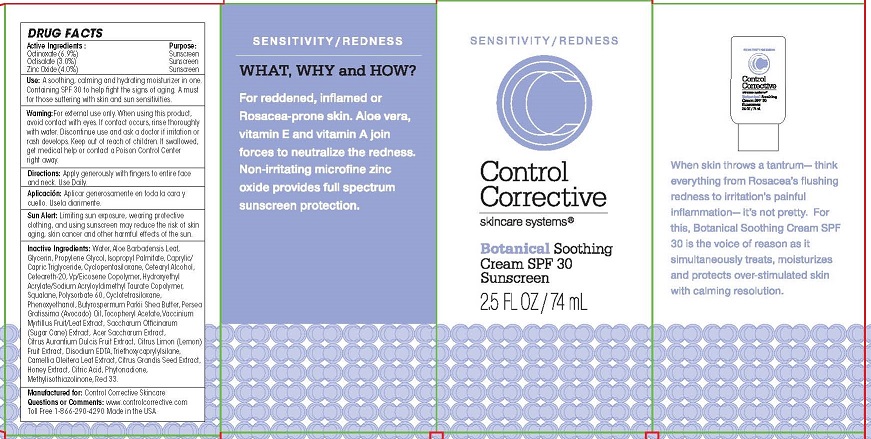
BOTANICAL SOOTHING SPF-30 OCTINOXATE, OCTISALATE, ZINC OXIDE 6.9 g/100mL; 3 g/100mL; 4 g/100mL Cream
🆔 Identity & classification
Where does this data come from?
🏭 Manufacturer & labeler
Where does this data come from?
🩺 Clinical
This is a topical cream sunscreen marketed as an over-the-counter monograph product. It contains three active ingredients that function as ultraviolet (UV) filters: octinoxate and octisalate, which are organic UV absorbers, and zinc oxide, a mineral UV reflectant. Together, these ingredients are typically used to help protect skin from sunburn and UV radiation exposure when applied to exposed skin. The product is formulated with botanical ingredients and labeled for SPF 30 protection.
Patient education
Supplement & herbal interactions
Where does this data come from?
Ask a licensed pharmacist directly — free, answered by our team.
🧪 Inactive Ingredients / Excipients
Inactive ingredients, also called excipients, are components of the drug product other than the active ingredient. They may include fillers, dyes, coatings, preservatives, flavors, or other formulation ingredients.
💡 Tap an ingredient (hover on desktop) to see what it is and why it’s used.
-
UNII 9E8X80D2L0
A synthetic form of vitamin E used as an antioxidant and preservative in medications. It helps prevent the active ingredients from degrading when exposed to oxygen or light.
-
UNII KEG5092LU9
A natural sweetener derived from maple tree sap that has been evaporated and concentrated. It's used in medicines to improve taste and make formulations more palatable.
-
UNII ZY81Z83H0X
Aloe vera leaf is a plant extract derived from the aloe plant. It is used in medicines as a natural moisturizer and skin-soothing agent in topical formulations.
-
UNII XF417D3PSL
Anhydrous citric acid is a sour, crystalline powder derived from citric acid with water removed. In medicines, it acts as a buffer to control pH, adds tartness to improve taste, and helps tablets disintegrate.
-
UNII 6VNO72PFC1
A natural oil extracted from avocado fruit. It's used in medicines as an emollient and carrier to help dissolve or deliver active ingredients and improve how the product feels on skin or mucous membranes.
-
UNII 5077EL0C60
A plant extract from camellia leaves used in formulations as an antioxidant and skin-conditioning agent. It helps protect the product and its active ingredients from degradation.
-
UNII 2DMT128M1S
A waxy solid derived from plant or animal sources. It acts as an emulsifier to blend oil and water components, and also thickens the medicine to give it the right texture and consistency.
-
UNII DQD16J2B5O
A natural extract from bitter orange fruit used as a flavoring agent and fragrance component. It adds citrus taste and aroma to medicines, making them more palatable for patients.
-
UNII EEI224A33Y
A natural extract from whole lemon fruit. Used as a flavoring agent and preservative to enhance taste and help keep the medicine fresh during storage.
-
UNII 083X55C543
A natural extract from pomelo seeds that acts as a binder and helps hold tablet ingredients together. It may also provide antioxidant properties to help preserve the medicine's stability.
-
UNII CZ227117JE
A silicone-based compound made of linked silicon and oxygen atoms arranged in a ring structure. It acts as a solvent, carrier, or conditioning agent to help distribute active ingredients evenly and improve product texture and spreadability.
-
UNII 0THT5PCI0R
A silicone-based liquid that helps distribute active ingredients evenly throughout topical products. It acts as a solvent and emollient, allowing medicines to spread smoothly on skin while improving texture and absorption.
-
UNII 9DBA0SBB0L
A synthetic red dye derived from coal tar used as a colorant in medicines and cosmetics. It gives tablets, capsules, and liquids their red or pink appearance for identification and visual appeal.
-
UNII 7FLD91C86K
Edetate disodium is a chemical compound that binds and removes certain metal ions. In medicines, it acts as a preservative and stabilizer by preventing metals like calcium from interfering with the product's shelf life and consistency.
-
UNII PDC6A3C0OX
Glycerin is a clear, thick liquid derived from plant oils or fats. It acts as a humectant to retain moisture, a sweetener, and a solvent in medications.
-
UNII Y9H1V576FH
Honey is a natural sweetener made by bees from flower nectar. In medicines, it adds sweetness to improve taste and may help soothe throat irritation in lozenges or syrups.
-
UNII 86FQE96TZ4
A synthetic polymer, this ingredient acts as a thickener and suspending agent in liquid formulations. It helps maintain uniform consistency and keeps particles evenly distributed throughout the medicine.
-
UNII 8CRQ2TH63M
Isopropyl palmitate is an oily liquid derived from palm oil. It acts as an emollient and lubricant in medicines, helping soften the skin or improve how the product spreads and flows.
-
UNII C9H2L21V7U
A fat derived from coconut or palm oil containing shorter fatty acid chains. It serves as a solvent and carrier to help dissolve or suspend active ingredients, improving absorption and stability in liquid formulations.
-
UNII 229D0E1QFA
Methylisothiazolinone is a synthetic chemical preservative that prevents bacterial and fungal growth in liquid medicines and topical products. It helps keep the medication safe and extends shelf life during storage.
-
UNII HIE492ZZ3T
Phenoxyethanol is a synthetic preservative and antimicrobial agent used to prevent bacterial and fungal growth in medicines and cosmetic products, extending shelf life and maintaining product safety.
-
UNII A034SE7857
Phytonadione is a form of vitamin K, a naturally occurring compound. It's used in medicines as an active pharmaceutical ingredient to support blood clotting, though it may also serve as a colorant or stabilizer in some formulations.
-
UNII YRC528SWUY
A waxy emulsifier made from plant-derived fatty alcohols. It helps blend oil and water-based ingredients together and improves how the medicine spreads and absorbs.
-
UNII CAL22UVI4M
A synthetic emulsifier derived from sorbitol and fatty acids. It helps mix oil and water-based ingredients together and improves the texture and stability of the medicine.
-
UNII 6DC9Q167V3
Propylene glycol is a clear liquid derived from petroleum or vegetable sources. It acts as a solvent, humectant, and preservative in medicines, helping dissolve active ingredients and maintain product stability.
-
UNII K49155WL9Y
Shea butter is a fat extracted from shea tree nuts. It's used in medicines as an emollient and lubricant to soften the product, improve texture, and help ingredients blend smoothly together.
-
UNII GW89575KF9
Squalane is a lightweight oil derived from plant sources or synthesized. It acts as an emollient and lubricant in formulations, helping ingredients blend smoothly and improving product texture and spreadability.
-
UNII LDC331P08E
A silicone-based compound that acts as a glidant and flow agent in solid medications. It reduces friction between powder particles, helping the medicine flow smoothly during manufacturing and tablet compression.
-
UNII EE76EZ4QNZ
A plant extract from bilberry fruit used as a natural colorant and flavoring agent in medicines. It provides blue to purple color and contributes subtle fruit taste to tablets, capsules, or liquids.
-
UNII 035MV9S1C3
A plastic-like polymer made from two chemical compounds joined together. It acts as a binder and film-former in tablets and capsules, helping hold ingredients together and create a protective coating on the medicine's surface.
-
UNII 059QF0KO0R
Water is a liquid solvent that dissolves and mixes ingredients together in liquid medicines, syrups, and injections. It helps distribute the active drug evenly throughout the product.
31 inactive ingredients listed in the exact product block matched to this NDC.
Label-section wording can be broader than the structured product block and may mention additional formulation ingredients.
Where does this data come from?
ingredient classCode="IACT" elements from the exact product block matched by this NDC. Label-section narrative from DailyMed / the openFDA label index is shown separately when available.Inactive ingredient FAQ
Are inactive ingredients the same for every manufacturer?
Why might an inactive ingredient be missing?
Can inactive ingredients matter?
💲 Pricing
A drug doesn't have one price. Each row is a different public payment system, and none is what you'd pay at the counter — that depends on your insurance. The ⓘ on each row explains what it measures.
| Price system | Per g | Per package |
|---|---|---|
| Retail pharmacies payNADAC · weekly | Not in the retail survey — common for institutional, discontinued, or low-volume packs. | |
| Medicaid paysCMS SDUD · 12 mo | No recent Medicaid claims on file for this NDC — rare and low-volume NDCs are suppressed in the public data. | |
| Medicare drug plans payPart D · quarterly | No Part D plan price is available for this NDC in our data. | |
Where does this data come from?
🔁 Therapeutic equivalents
| Product | Labeler | Pack | NADAC/unit | TE | Status | Price vs. this |
|---|---|---|---|---|---|---|
| Control Corrective Sunscreen Spf-30 6.9 g/100mL; 3 g/100mL; 4 g/100mL 70764-0204-52 | CONTROL | 1 bottle | — | — | FDA listed | — |
| Control Corrective Intensive Skin Brightening Spf-30 Sunscreen 6.9 g/100mL; 3 g/100mL; 4 g/100mL 70764-0205-52 | CONTROL | 1 tube | — | — | FDA listed | — |
| Aroma Matte Day Sunscreen Spf-30 6.9 g/100mL; 3 g/100mL; 4 g/100mL 70764-0208-52 | CONTROL | 1 bottle | — | — | FDA listed | — |
| Botanical Soothing Spf-30 6.9 g/100mL; 3 g/100mL; 4 g/100mLthis 70764-0201-52 | CONTROL | 1 bottle | — | — | FDA listed | — |
Where does this data come from?
⏳ Availability & generic status
We did not find an FDA-approved generic match for this exact strength, form and route.
Where does this data come from?
📦 Packaging — all sizes for this product
| Package NDC | Description | Marketing start | Status |
|---|---|---|---|
| 70764-0201-52 You're viewing this | 1 BOTTLE in 1 BOX (70764-201-52) / 74 mL in 1 BOTTLE (70764-201-22) | 2016-06-08 | Active |
🧭 About this NDC listing & data coverage
What data is (and isn’t) available for this NDC — tap to expand
| NDC identity (package / product / labeler codes) | ✓ Available |
| Labeler | ✓ Available |
| Product & package description | ✓ Available |
| Marketing category & status | ✓ Available |
| Active ingredient / dosage form / route | ✓ Available |
| FDA label (SPL via DailyMed) | ✓ Available |
| Package photos | ✓ Available |
| Inactive ingredients (structured) | ✓ Available |
| NADAC pharmacy acquisition price (CMS) | — Not published for this NDC CMS publishes NADAC only for NDCs reported in its retail-pharmacy survey. |
| Orange Book / therapeutic-equivalence data | — Not published for this NDC Applies only to products approved under an NDA/ANDA; many listings are out of scope. |
| HCPCS J-code billing crosswalk | — Not published for this NDC Most self-administered / retail products have no J-code — that is normal. |
| Medicaid utilization (CMS SDUD) | — Not published for this NDC CMS reports utilization only for NDCs with Medicaid claims above its privacy threshold. |
Questions about this listing
Is this NDC FDA-approved?
Why is there no price listed?
Is the NDC printed on the package the same as the 11-digit billing NDC?
What do the three segments of this NDC mean?
Is this package still being marketed?
Who lists this product with the FDA?
Do I need a prescription for this product?
Where does this data come from?
📄 FDA label — Drug Facts FDA SPL
🎯 Indications and Usage ▾
USE A SOOTHING, CALMING AND HYDRATING MOISTURIZER IN ONE. ALSO HELPS TO REDUCE THE APPEARANCE OF SKIN FLUSHING, REDNESS AND VASCULAR STIMULATION. CONTAINING SPF 30 TO FIGHT THE SIGNES OF AGING. A MUST FOR THOSE SUFFERING WITH SKIN AND SUN SENSITIVITIES.
⏱️ Dosage and Administration ▾
DIRECTIONS APPLY GENEROUSLY WITH FINGERS TO ENTIRE FACE AND NECK. USE DAILY.
⚠️ Warnings ▾
WARNING FOR EXTERNAL USE ONLY. WHEN USING THIS PRODUCT, AVOID CONTACT WITH EYES. IF CONTACT OCCURS, RINSE THOROUGHLY WITH WATER. DISCONTINUE USE AND ASK A DOCTOR IF IRRITATION OR RASH DEVELOPS.
🧪 Active Ingredient ▾
ACTIVE INGREDIENTS OCTINOXATE (6.9%) OCTISALATE (3.0%) ZINC OXIDE (4.0%)
🧪 Inactive Ingredients ▾
INACTIVE INGREDIENTS WATER, ALOE BARBADENSIS LEAF, GLYCERIN, PROPYLENE GLYCOL, ISOPROPYL PALMITATE, CAPRYLIC/CAPRIC TRIGLYCERIDES, CYCLOPENTASILOXANE, CETEARYL ALCOHOL, CETEARETH-20, VP/EICOSENE COPOLYMER, SQUALANE, POLYSORBATE 60, CYCLOTETRASILOXANE, PHENOXYETHANOL, BUTYROSPERMUM PARKII BUTTER, PERSEA GRATISSIMA (AVOCADO) OIL, TOCOPHERYL ACETATE, VACCINIUM MYRTILLUS FRUIT/LEAF EXTRACT, SACCHARUM OFFICINARIUM (SUGAR CANE) EXTRACT, ACER SACCHARUM EXTRACT, CITRUS AURANTIUM DULCIS FRUIT EXTRACT, CITRUS LIMON (LEMON) FRUIT EXTRACT, CITRUS GRANDIS SEED EXTRACT, HONEY EXTRACT, CITRIC ACID, PHYTONADIONE, METHYLISOTHIAZOLINONE, RED 33.
🎯 Purpose ▾
PURPOSE SUNSCREEN