
Memantine hydrochloride 14 mg Capsule, Extended Release, 90-count — NDC 70771-1322-9 (Billing 70771-1322-09)
This is a package of 90 capsules of Memantine hydrochloride 14 mg Capsule, Extended Release from Zydus Lifesciences Limited, marketed since Apr 2018 and currently FDA-listed.
NDC database record
One package, one record: these facts belong to NDC 70771-1322-9 alone.
- Record
- FDA NDC Directory package listing · Human prescription drug
- Code segments
- 70771 labeler · 1322 product · 9 package
- Package marketed since
- Apr 8, 2018
- Sample package
- No — commercial package
- Listing certified through
- Dec 31, 2026
- Barcode (UPC-A, from the NDC)
- 3 7077113229 4
- FDA record last changed
- Jul 24, 2026
Other active recalls for Memantine Hydrochloride (different manufacturers) — 1 · tap to view
Identity & classification
Regulatory identifiers FDA, NLM and CMS codes for this package
- RxCUI (RxNorm): 996594
Where does this data come from?
- FDA openFDA NDC Directory · synced Oct 1, 2026
- FDA label on DailyMed · label index refreshed Oct 6, 2026
- RxNorm (NLM RxNav) · catalog refreshed Oct 1, 2026
- Medi-Span GPI (licensed)
- First Databank (licensed) · refreshed Oct 1, 2026
RxNorm drug class
This medicine belongs to the N-methyl-D-aspartate Receptor Antagonist class.
Where does this data come from?
- RxClass (NLM) · catalog refreshed Oct 1, 2026
Clinical
- Memantine treats moderate to severe dementia of the Alzheimer’s type. It helps manage symptoms, but it has not been shown to prevent or slow the underlying nerve damage.
- Take it by mouth as your prescriber directs. The dose usually starts low and goes up over several weeks. Tablets and oral solution can be taken with or without food. If you miss a...
- The most common are dizziness, headache, confusion and constipation. Tell your doctor if they bother you or don’t settle. Seek help quickly for a seizure, a severe skin reaction, u...
- Many people take it with donepezil, which showed no interaction in studies. Be careful with amantadine, ketamine and dextromethorphan, and with sodium bicarbonate or carbonic anhyd...
Patient education
Supplement & herbal interactions
Some supplements/herbs that may interact with Memantine Hydrochloride — tap one for details:
Where does this data come from?
- MedlinePlus (NLM) · refreshed Oct 1, 2026
- FDA label on DailyMed · label index refreshed Oct 6, 2026
Ask a licensed pharmacist directly — free, answered by our team.
Pricing
A drug doesn't have one price. Each row is a different public payment system, and none is what you'd pay at the counter — that depends on your insurance. The ⓘ on each row explains what it measures.
| Price system | Per each | Per package |
|---|---|---|
| Retail pharmacies payNADAC · weekly | Not in the retail survey — common for institutional, discontinued, or low-volume packs. | |
| Medicaid paysCMS SDUD · 12 mo | No recent Medicaid claims on file for this NDC — rare and low-volume NDCs are suppressed in the public data. | |
| Medicare drug plans payPart D · Q2 2026 | $1.09 | $98.33 / 90 capsules |
Where does this data come from?
- CMS NADAC weekly file
- CMS ASP pricing files · refreshed Sep 20, 2026
- CMS Medicaid State Drug Utilization Data · refreshed Oct 6, 2026
- CMS Part D plan pricing files · refreshed Sep 24, 2026
- VA National Acquisition Center price file
Packaging — all sizes for this product
| Package NDC | Description | Marketing start | Marketing end | Status |
|---|---|---|---|---|
| 70771-1322-03 70771-1322-3 Main listing | 30 CAPSULE, EXTENDED RELEASE in 1 BOTTLE | 2018-04-08 | — | Active |
| 70771-1322-04 70771-1322-4 | 10 BLISTER PACK in 1 CARTON / 10 CAPSULE, EXTENDED RELEASE in 1 BLISTER PACK | 2018-04-08 | — | Active |
| 70771-1322-09 You're viewing this | 90 CAPSULE, EXTENDED RELEASE in 1 BOTTLE | 2018-04-08 | — | Active |
Pack size FAQ
What quantity is in this package?
How does this package differ from NDC 70771-1322-03?
What NDC number is used to bill for this package of Memantine hydrochloride 14 mg Capsule, Extended Release?
Therapeutic equivalents
| Product | Labeler | Pack | NADAC/unit | TE | Status | Price vs. this |
|---|---|---|---|---|---|---|
| Memantine Hydrochloride 14 mg 16571-0853-03 | Rising | 30 capsules | $0.345 | AB | Availability likely | — |
| Memantine Hydrochloride 14 mg 59651-0405-30 | Aurobindo | 30 capsules | $0.345 | AB | Availability likely | — |
| Memantine Hydrochloride 14 mg 65162-0783-03 | Amneal | 30 capsules | $0.345 | AB | Availability likely | — |
| Memantine hydrochloride 14 mg 68382-0547-06 | Zydus | 30 capsules | $0.345 | AB | Availability likely | — |
| Memantine Hydrochloride 14 mg 69680-0162-30 | Vitruvias | 30 capsules | $0.345 | AB | Availability likely | — |
| Memantine Hydrochloride 14 mg 70436-0055-04 | Slate | 30 capsules | $0.345 | AB | Availability likely | — |
| Memantine hydrochloride 14 mg 33342-0220-07 | Macleods | 30 capsules | — | AB | FDA listed | — |
| memantine hydrochloride 14 mg 68180-0247-02 | Lupin | 500 capsules | — | AB | FDA listed | — |
| Memantine hydrochloride 14 mgthis 70771-1322-09 | Zydus | 90 capsules | — | AB | FDA listed | — |
Where does this data come from?
- FDA openFDA NDC Directory · synced Oct 1, 2026
- FDA Orange Book · refreshed Oct 3, 2026
- CMS NADAC weekly file
Availability & generic status
This product is an FDA-approved generic. Other versions of the same drug are listed under Therapeutic equivalents, least expensive first.
Where does this data come from?
- FDA Orange Book · refreshed Oct 3, 2026
What it looks like
Where does this data come from?
- FDA label on DailyMed · label index refreshed Oct 6, 2026
Inactive Ingredients / Excipients
Inactive ingredients, also called excipients, are components of the drug product other than the active ingredient. They may include fillers, dyes, coatings, preservatives, flavors, or other formulation ingredients.
🧪 Avoiding an ingredient? See Memantine inactive ingredients by manufacturer: every current product's list side by side, so you can ask your pharmacy for the version that does not list it.
💡 Tap an ingredient (hover on desktop) to see what it is and why it’s used.
-
UNII 3K9958V90M
A liquid solvent derived from fermentation or chemical synthesis. In medicines, alcohol dissolves active ingredients, helps preserve the product, and improves how the body absorbs certain drugs.
-
UNII 5138Q19F1X
Ammonia is a colorless gas made from nitrogen and hydrogen. It's used in medicines as a pH buffer to maintain the correct acidity level and help keep the product stable.
-
UNII 8PJ61P6TS3
Butyl alcohol is a clear liquid organic solvent derived from petroleum or natural sources. In medicines, it helps dissolve active ingredients and serves as a solvent in liquid formulations and some topical products.
-
UNII H3UP11403C
Ethylcellulose is a plant-derived polymer that thickens and forms protective coatings on tablets and capsules. It slows medicine release into the body and protects the contents from moisture and air.
-
UNII H3R47K3TBD
FD&C Blue No. 1 is a synthetic blue dye approved for use in foods and medicines. It serves as a colorant to give the medication its distinctive appearance and help with product identification.
-
UNII PN2ZH5LOQY
A synthetic red dye approved by the FDA for use in foods, medicines, and cosmetics. It serves as a colorant to make tablets, capsules, and liquids visually distinctive for product identification.
-
UNII H77VEI93A8
A synthetic yellow dye used to color medications. It helps identify the drug and make it visually distinctive, with no effect on how the medicine works.
-
UNII EX438O2MRT
Ferric oxide yellow is a naturally occurring iron compound used as a colorant in medications. It gives tablets, capsules, and other forms a yellow or golden hue for identification and appearance.
-
UNII XM0M87F357
A dark iron oxide compound that gives medicines their black or dark color. It's used as a colorant in tablets and capsules to help identify the product and make it visually distinctive.
-
UNII 2G86QN327L
Gelatin is a protein derived from animal collagen, commonly used in medicines as a gelling agent and capsule material. It helps create soft or hard capsule shells that hold and release medication, and can also thicken liquid formulations.
-
UNII 3NXW29V3WO
Hypromellose is a plant-based thickener made from cellulose. It's used in medicines as a binder to hold ingredients together, a coating for tablets, and a thickener for liquids.
-
UNII ND2M416302
Isopropyl alcohol is a clear liquid solvent derived from petroleum. In medicines, it dissolves active ingredients and other components, helps the product flow smoothly, and aids in sterilization during manufacturing.
-
UNII WZH3C48M4T
Potassium hydroxide is a strong alkaline chemical used in medicines to adjust and maintain the pH level of liquid formulations, helping keep the product stable and the active ingredients effective.
-
UNII 6DC9Q167V3
Propylene glycol is a clear liquid derived from petroleum or vegetable sources. It acts as a solvent, humectant, and preservative in medicines, helping dissolve active ingredients and maintain product stability.
-
UNII 46N107B71O
Shellac is a natural resin secreted by the lac beetle. It's used as a coating on tablets and capsules to control how quickly the medicine dissolves and to improve appearance and stability.
-
UNII 368GB5141J
A detergent and foaming agent derived from coconut or palm oil. In medications, it helps break down and mix oil and water-based ingredients, aids in tablet disintegration, and improves how the drug dissolves and spreads in the mouth or digestive system.
-
UNII C151H8M554
A natural sugar derived from sugar cane or sugar beets. It's used as a sweetener, filler, and binder to improve taste, add bulk, and help hold tablet or capsule ingredients together.
-
UNII 7SEV7J4R1U
A powder made from a naturally occurring mineral. In medicines, talc works as a glidant and anti-caking agent, helping tablets and capsules flow smoothly during manufacturing and preventing clumping.
-
UNII 15FIX9V2JP
Titanium dioxide is a bright white mineral powder commonly used as a colorant and opacifying agent. It makes pills and tablets white or lighter in color and helps make coatings non-transparent.
-
UNII 8Z96QXD6UM
Triethyl citrate is a clear liquid derived from citric acid. It acts as a plasticizer and solvent in tablet coatings and film formulations, helping the coating remain flexible and adhere properly to the medicine.
-
UNII 059QF0KO0R
Water is a liquid solvent that dissolves and mixes ingredients together in liquid medicines, syrups, and injections. It helps distribute the active drug evenly throughout the product.
21 inactive ingredients listed in the exact product block matched to this NDC.
Where does this data come from?
ingredient classCode="IACT" elements from the exact product block matched by this NDC. Label-section narrative from DailyMed / the openFDA label index is shown separately when available.- FDA label on DailyMed · label index refreshed Oct 6, 2026
- FDA openFDA NDC Directory · synced Oct 1, 2026
Inactive ingredient FAQ
Are inactive ingredients the same for every manufacturer?
Why might an inactive ingredient be missing?
Can inactive ingredients matter?
Manufacturer & labeler
More NDCs from Zydus Lifesciences Limited labeler code 70771
- Clobetasol Propionate .5 mg/g Ointment NDC 70771-1209-1
- Topiramate 25 mg Capsule, Extended Release NDC 70771-1315-1
- Topiramate 50 mg Capsule, Extended Release NDC 70771-1316-1
- Topiramate 100 mg Capsule, Extended Release NDC 70771-1317-1
- Phytonadione 5 mg Tablet NDC 70771-1318-1
- Memantine hydrochloride 7 mg Capsule, Extended Release NDC 70771-1321-3
- Memantine hydrochloride 21 mg Capsule, Extended Release NDC 70771-1323-3
- Memantine hydrochloride 28 mg Capsule, Extended Release NDC 70771-1324-3
- candesartan cilexetil and hydrochlorothiazide 16 mg; 12.5 mg Tablet NDC 70771-1325-0
- candesartan cilexetil and hydrochlorothiazide 32 mg; 12.5 mg Tablet NDC 70771-1326-0
- candesartan cilexetil and hydrochlorothiazide 32 mg; 25 mg Tablet NDC 70771-1327-0
- tizanidine 2 mg Tablet NDC 70771-1335-0
Where does this data come from?
- FDA openFDA NDC Directory · synced Oct 1, 2026
- Drugs@FDA
Full prescribing information FDA SPL
📄 Package Label / Principal Display Panel ▾
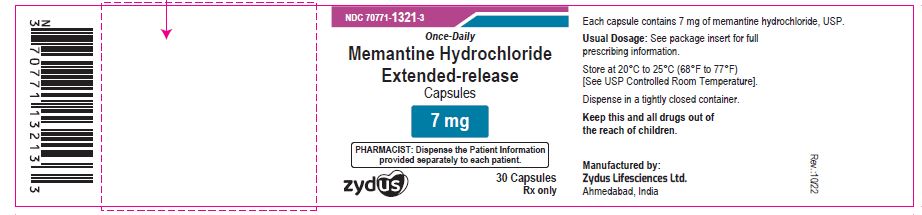
PACKAGE LABEL.PRINCIPAL DISPLAY PANEL Memantine Hydrochloride Extended-release Capsules, 7 mg NDC 70771-1321-3 30 Counts Memantine Hydrochloride Extended-release Capsules, 14 mg 70771-1322-3 30 Counts Memantine Hydrochloride Extended-release Capsules, 21 mg NDC 70771-1323-3 30 Counts Memantine Hydrochloride Extended-release Capsules, 28 mg NDC 70771-1324-3 30 Counts Memantine Hydrochloride Extended-Release Capsules, 7 mg Memantine Hydrochloride Extended-Release Capsules, 14 mg Memantine Hydrochloride Extended-release Capsules, 21 mg Memantine Hydrochloride Extended-release Capsules, 28 mg
About this NDC listing & data coverage
What data is (and isn’t) available for this NDC — tap to expand
| NDC identity (package / product / labeler codes) | ✓ Available |
| Labeler | ✓ Available |
| Product & package description | ✓ Available |
| Marketing category & status | ✓ Available |
| Active ingredient / dosage form / route | ✓ Available |
| FDA label (SPL via DailyMed) | ✓ Available |
| Package photos | ✓ Available |
| Inactive ingredients (structured) | ✓ Available |
| NADAC pharmacy acquisition price (CMS) | — Not published for this NDC CMS publishes NADAC only for NDCs reported in its retail-pharmacy survey. |
| Orange Book / therapeutic-equivalence data | ✓ Available |
| HCPCS J-code billing crosswalk | — Not published for this NDC Most self-administered / retail products have no J-code — that is normal. |
| Medicaid utilization (CMS SDUD) | — Not published for this NDC CMS reports utilization only for NDCs with Medicaid claims above its privacy threshold. |