
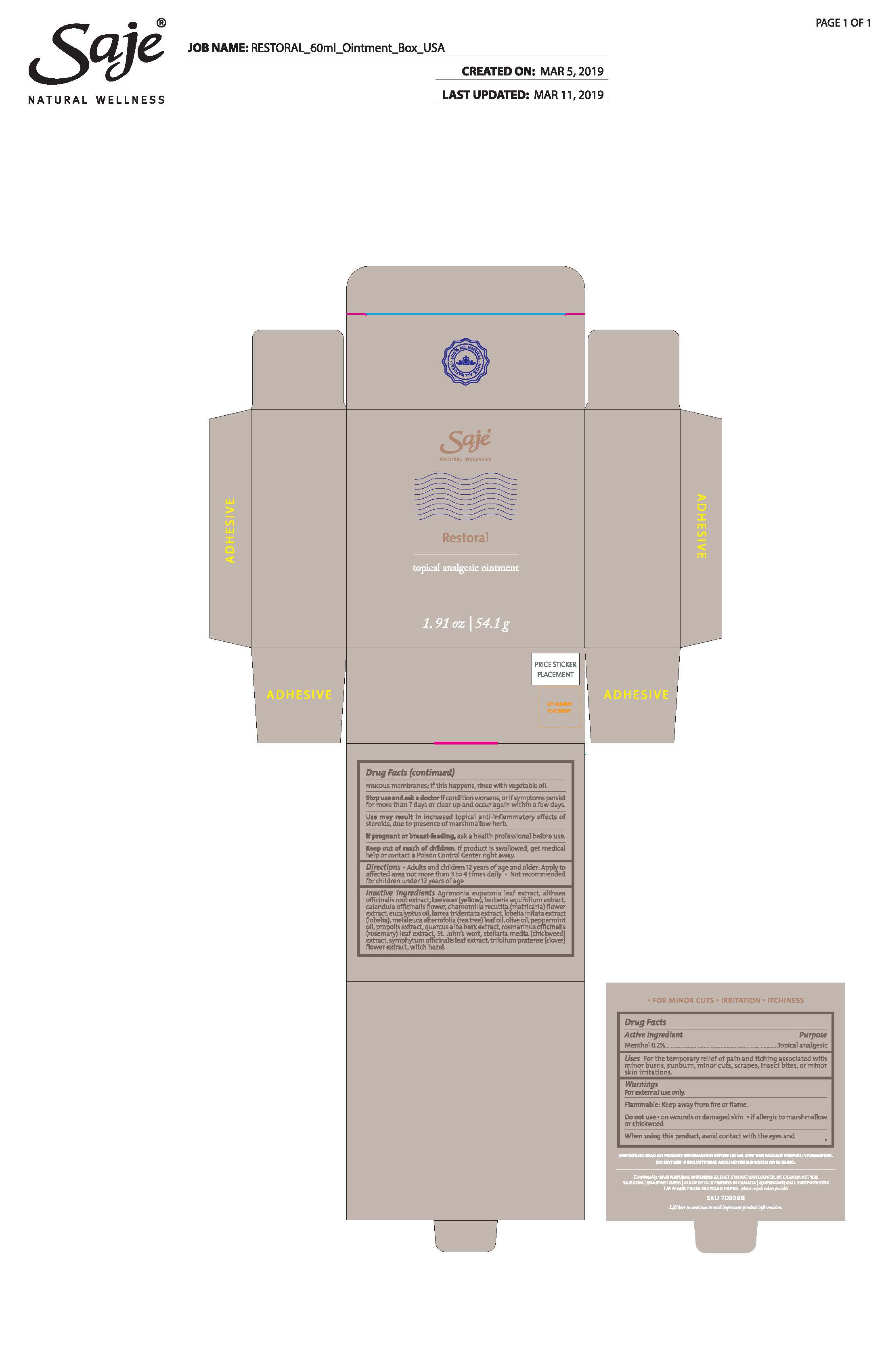
Restoral Menthol .2 g/100g Ointment, 13.5 g
Other active recalls for Menthol (different manufacturers) — 1 · tap to view
🆔 Identity & classification
Where does this data come from?
🏭 Manufacturer & labeler
Where does this data come from?
🩺 Clinical
- Menthol is found in a lot of over-the-counter topical products — creams, gels, patches, sprays, and powders. Depending on the product, it's used to temporarily ease minor muscle an...
- Start with clean, dry skin — free of lotions or creams — before applying the patch. Peel the backing off and press the sticky side firmly to the sore area. Most menthol patches sho...
- Yes, a mild burning or tingling feeling right after applying a menthol product is common and usually settles down within a few days of regular use. What's not normal is severe burn...
- Is that burning sensation after I apply it normal?
Patient education
Supplement & herbal interactions
Where does this data come from?
Ask a licensed pharmacist directly — free, answered by our team.
🧪 Inactive Ingredients / Excipients
Inactive ingredients, also called excipients, are components of the drug product other than the active ingredient. They may include fillers, dyes, coatings, preservatives, flavors, or other formulation ingredients.
💡 Tap an ingredient (hover on desktop) to see what it is and why it’s used.
-
UNII 8Z160YZ4AP
Agrimonia eupatoria leaf is a plant-derived ingredient used in herbal formulations. It may serve as a flavoring agent, colorant, or contribute to the product's botanical composition in traditional remedy preparations.
-
UNII TRW2FUF47H
A plant-derived powder from marshmallow root used as a binder and thickener in medicines. It helps hold ingredients together and can soothe irritated surfaces in throat lozenges and syrups.
-
UNII 746TB9VNDP
A plant extract from Oregon grape root used as a natural preservative and flavoring agent in medicines. It helps prevent microbial growth and may add bitter taste to formulations.
-
UNII P0M7O4Y7YD
A plant extract from calendula flowers, traditionally used in formulations. It typically serves as a botanical ingredient that may provide color, fragrance, or skin-conditioning properties to topical products.
-
UNII M9VVZ08EKQ
Comfrey root is a plant-derived ingredient used in some formulations as a natural thickener and binder to help hold the medicine together and improve its consistency.
-
UNII 2R04ONI662
Eucalyptus oil is a fragrant liquid extracted from eucalyptus tree leaves. It's used in medicines as a flavor, scent, or soothing agent in topical products and cough preparations.
-
UNII PK0TXD049P
A plant extract from creosote bush leaves, used as a natural flavoring agent and preservative in some formulations. It may help maintain shelf stability and add taste to the medicine.
-
UNII 7QFT17RLRG
A plant-derived ingredient from the lobelia plant. It may be used in formulations for its potential flavoring or traditional herbal properties, though its specific role in this product depends on the formulation type.
-
UNII 3VNC7T6Z02
A plant extract from chamomile flowers used as a flavoring and fragrance agent in medicines. It adds taste and aroma to improve how the medicine smells and tastes.
-
UNII 6UYK2W1W1E
A natural oil extracted from olives. It acts as an emollient and lubricant in formulations, helping to soften ingredients and improve how the medicine spreads or flows.
-
UNII AV092KU4JH
A natural oil extracted from peppermint plants. It's used as a flavoring agent to mask bitter tastes and add a refreshing mint flavor to medicines, making them easier to take.
-
UNII 6Y8XYV2NOF
A waxy substance made by honeybees from plant resins and pollen. In medicines, it acts as a binder and coating agent to hold ingredients together and protect the product.
-
UNII 93LP7Y8EGT
A natural extract from white oak tree bark, used as a binder and thickening agent to help hold the medicine together and improve its consistency.
-
UNII IJ67X351P9
A natural plant extract from rosemary leaves used as a preservative to help prevent oils and fats in the medicine from spoiling or becoming rancid during storage.
-
UNII UFH8805FKA
St. John's Wort is a plant extract used as an inactive ingredient in some dietary supplements and herbal formulations. It's included primarily for its traditional herbal content rather than as a structural component like binders or fillers.
-
UNII 2H03479QVR
Stellaria media is a plant extract used in some medicines as a natural ingredient. It may function as a skin-soothing agent or help preserve the product's stability.
-
UNII VIF565UC2G
Tea tree oil is an essential oil extracted from the leaves of the Australian tea tree plant. In medicines, it typically serves as a flavoring agent, fragrance, or antimicrobial component in topical formulations.
-
UNII 4JS0838828
A plant extract from red clover flowers used in herbal or natural formulations. It may serve as an active botanical ingredient or flavor/color component, though its specific role depends on the product's intended use.
-
UNII 101I4J0U34
Witch hazel is a plant extract obtained from the leaves and bark of the North American shrub Hamamelis virginiana. It functions as an astringent and skin-conditioning agent in topical products, helping to tone and prepare the skin.
-
UNII 2ZA36H0S2V
Beeswax is a natural wax produced by honeybees. In medicines, it works as a coating agent and thickener to control how fast the drug dissolves and improve the product's texture and appearance.
20 inactive ingredients listed in the exact product block matched to this NDC.
Label-section wording can be broader than the structured product block and may mention additional formulation ingredients.
Where does this data come from?
ingredient classCode="IACT" elements from the exact product block matched by this NDC. Label-section narrative from DailyMed / the openFDA label index is shown separately when available.Inactive ingredient FAQ
Are inactive ingredients the same for every manufacturer?
Why might an inactive ingredient be missing?
Can inactive ingredients matter?
💲 Pricing
A drug doesn't have one price. Each row is a different public payment system, and none is what you'd pay at the counter — that depends on your insurance. The ⓘ on each row explains what it measures.
| Price system | Per g | Per package |
|---|---|---|
| Retail pharmacies payNADAC · weekly | Not in the retail survey — common for institutional, discontinued, or low-volume packs. | |
| Medicaid paysCMS SDUD · 12 mo | No recent Medicaid claims on file for this NDC — rare and low-volume NDCs are suppressed in the public data. | |
| Medicare drug plans payPart D · quarterly | No Part D plan price is available for this NDC in our data. | |
Where does this data come from?
🔁 Therapeutic equivalents
| Product | Labeler | Pack | NADAC/unit | TE | Status | Price vs. this |
|---|---|---|---|---|---|---|
| Restoral .2 g/100gthis 70983-0022-02 | Saje | 13.5 g | — | — | FDA listed | — |
Where does this data come from?
⏳ Availability & generic status
We did not find an FDA-approved generic match for this exact strength, form and route.
Where does this data come from?
📦 Packaging — all sizes for this product
| Package NDC | Description | Marketing start | Status |
|---|---|---|---|
| 70983-0022-01 | 1 CONTAINER in 1 BOX (70983-022-01) / 54.1 g in 1 CONTAINER | 2018-09-12 | Active |
| 70983-0022-02 You're viewing this | 13.5 g in 1 CONTAINER (70983-022-02) | 2018-09-12 | Active |
Pack size FAQ
What quantity is in NDC 70983-0022-02?
What is the difference between NDC 70983-0022-02 and NDC 70983-0022-01?
What NDC number is used to bill for this package of Restoral Menthol .2 g/100g Ointment?
🧭 About this NDC listing & data coverage
What data is (and isn’t) available for this NDC — tap to expand
| NDC identity (package / product / labeler codes) | ✓ Available |
| Labeler | ✓ Available |
| Product & package description | ✓ Available |
| Marketing category & status | ✓ Available |
| Active ingredient / dosage form / route | ✓ Available |
| FDA label (SPL via DailyMed) | ✓ Available |
| Package photos | ✓ Available |
| Inactive ingredients (structured) | ✓ Available |
| NADAC pharmacy acquisition price (CMS) | — Not published for this NDC CMS publishes NADAC only for NDCs reported in its retail-pharmacy survey. |
| Orange Book / therapeutic-equivalence data | — Not published for this NDC Applies only to products approved under an NDA/ANDA; many listings are out of scope. |
| HCPCS J-code billing crosswalk | — Not published for this NDC Most self-administered / retail products have no J-code — that is normal. |
| Medicaid utilization (CMS SDUD) | — Not published for this NDC CMS reports utilization only for NDCs with Medicaid claims above its privacy threshold. |
Questions about this listing
Is this NDC FDA-approved?
Why is there no price listed?
Is the NDC printed on the package the same as the 11-digit billing NDC?
What do the three segments of this NDC mean?
Is this package still being marketed?
Does this product come in other package sizes?
Who lists this product with the FDA?
Do I need a prescription for this product?
Where does this data come from?
📄 FDA label — Drug Facts FDA SPL
🎯 Indications and Usage ▾
Uses For the temporary relief of pain and itching associated with minor burns, sunburn, minor cuts, scrapes, insect bites, or minor skin irritations
⏱️ Dosage and Administration ▾
Directions Adults and children 12 years of age and older: Apply to affected area not more than 3 to 4 times daily. Not recommended for children under 12 years of age.
⚠️ Warnings ▾
Warnings For external use only Flammable - keep away from fire or flame Use may result in increased topical anti-inflammatory effects of steroids, due to presence of marshmallow herb Drug facts box When using this product Avoid contact with eyes and mucous membranes; if this happens, rinse with vegetable oil Stop use and ask a doctor if condition worsens, or if symptoms persist for more than 7 days or clear up and occur again within a few days Do not use On wounds or damaged skin If allergic to marshmallow root or chickweed if pregnant or breast-feeding ask a health professional before use keep out of reach of children if product is swallowed, get medical help or contact a Poison Control Centre right away
🧪 Active Ingredient ▾
Active Ingredient Menthol 0.2%
🧪 Inactive Ingredients ▾
Inactive ingredients Agrimonia eupatoria leaf extract, althaea officinalis root extract, beeswax (yellow), berberis aquifolium extract, calendula officinalis flower, chamomilla recutita (matricaria) flower extract, eucalyptus oil, larrea tridentata extract, lobelia inflata extract (lobelia), melaleuca alternifolia (tea tree) leaf oil, olive oil, peppermint oil, propolis extract, quercus alba bark extract, rosmarinus officinalis (rosemary) leaf extract, St. John’s wort, stellaria media (chickweed) extract, symphytum officinalis leaf extract, trifolium pratense (clover) flower extract and witch hazel
🎯 Purpose ▾
Purpose Topical analgesic
📋 Description ▾
Principle Display Panel information Restoral topical analgesic ointment net wt. 54.1g (1.91oz) and net wt. 13.5g (0.47oz)